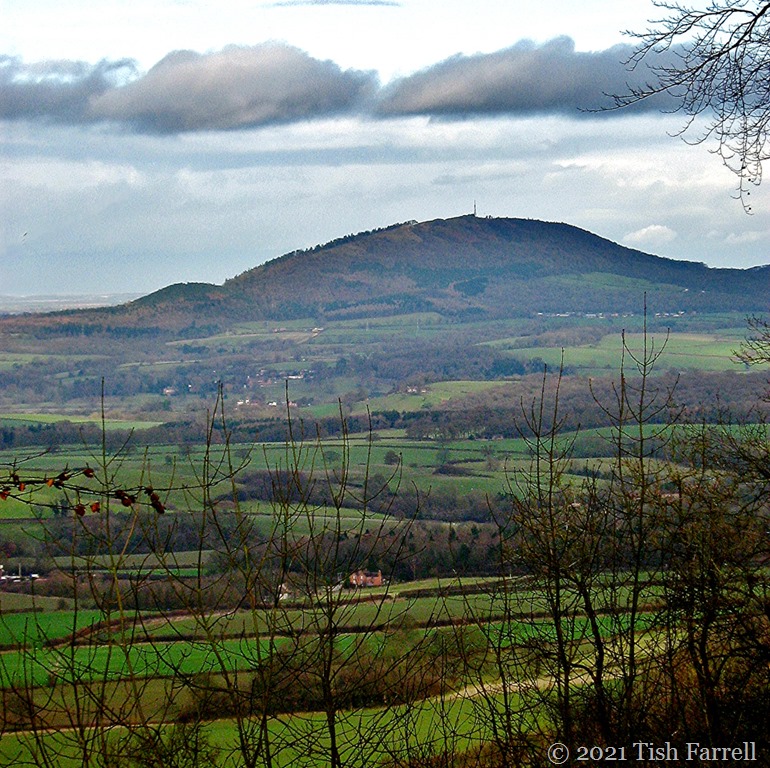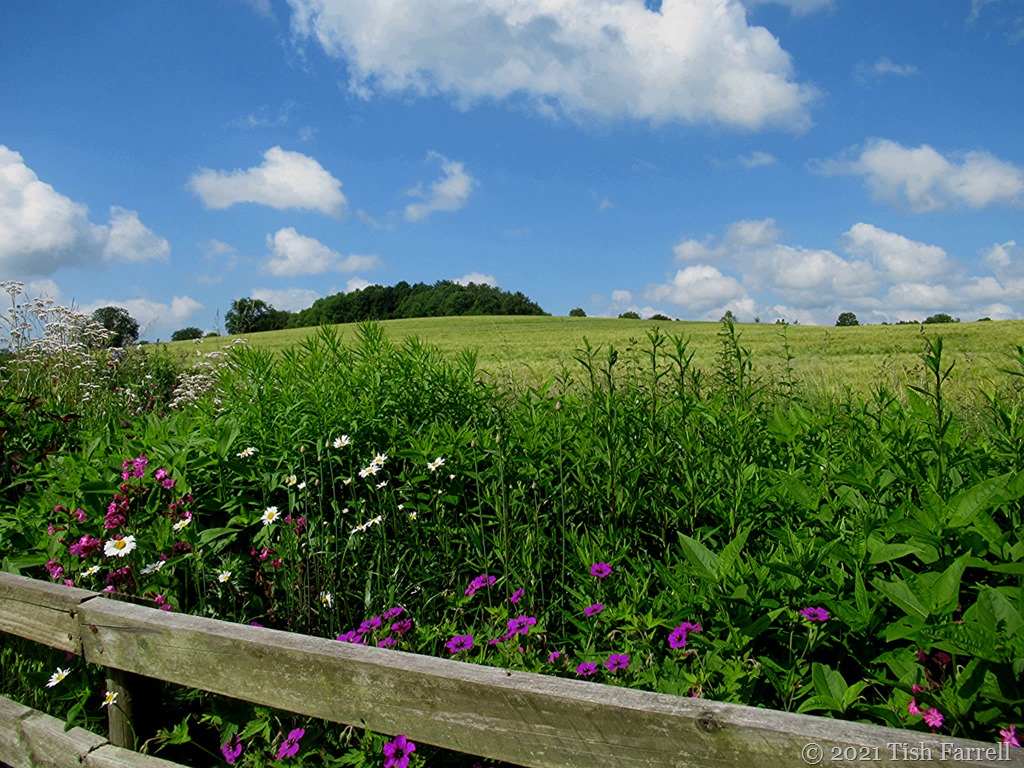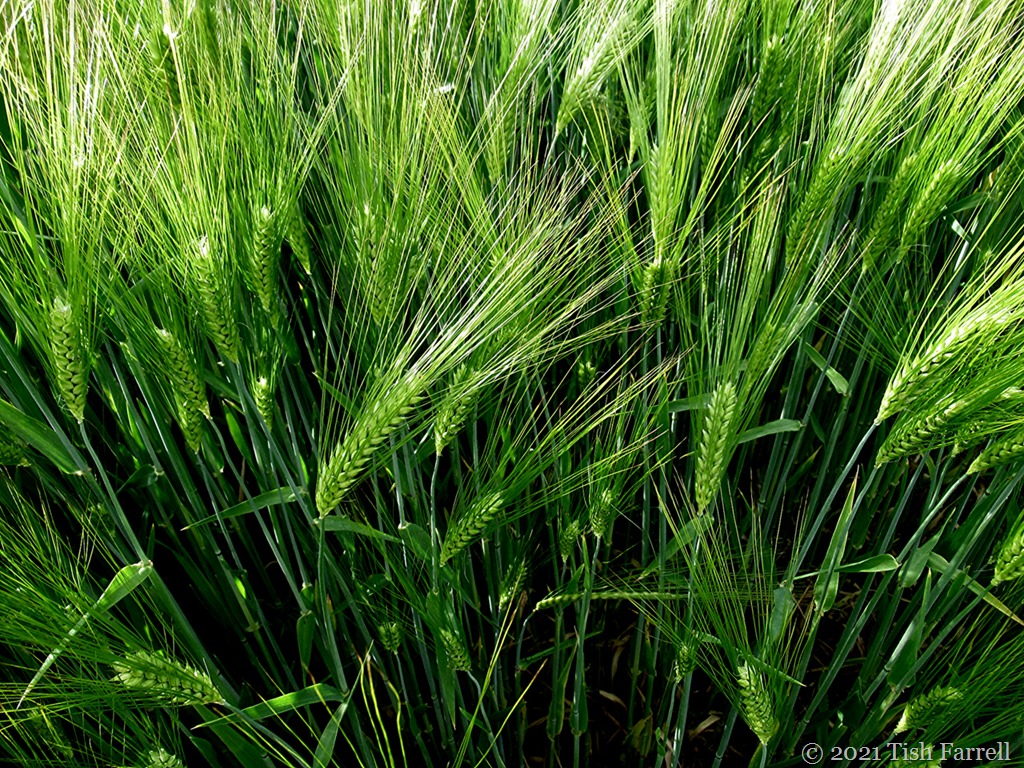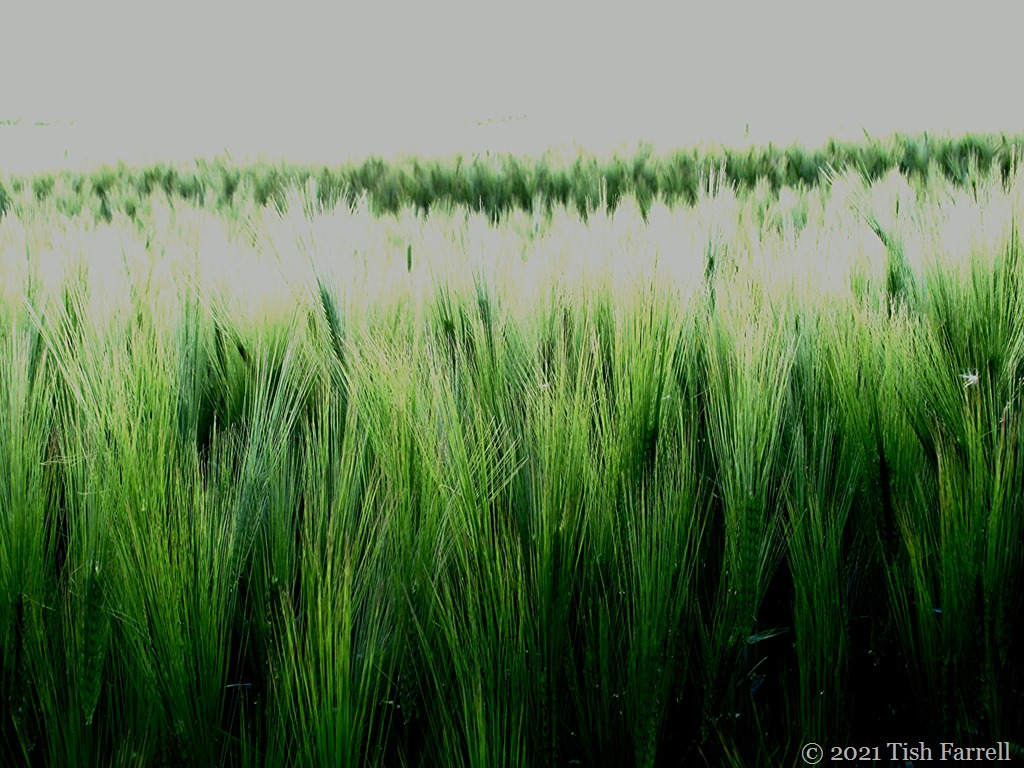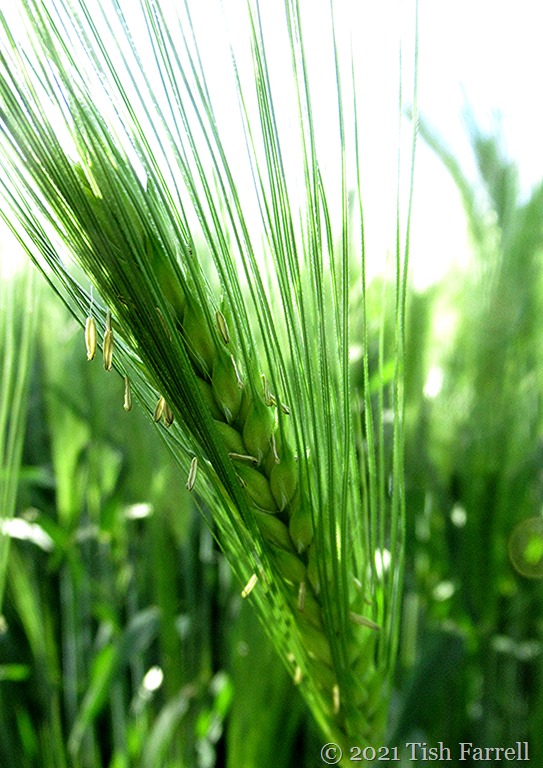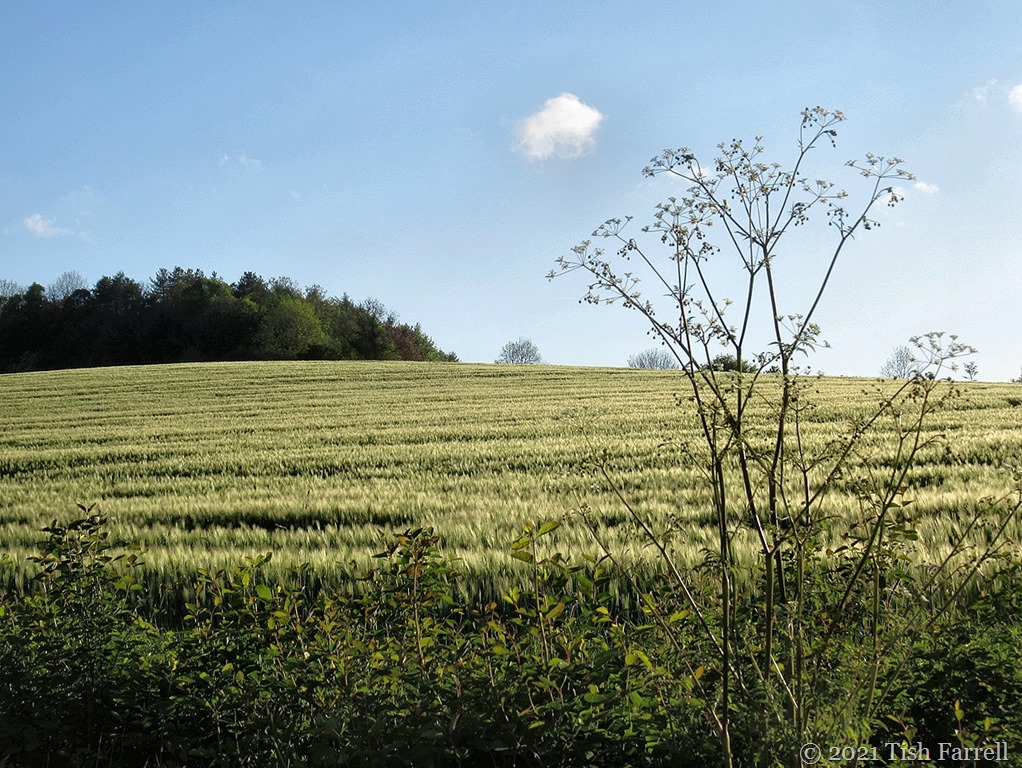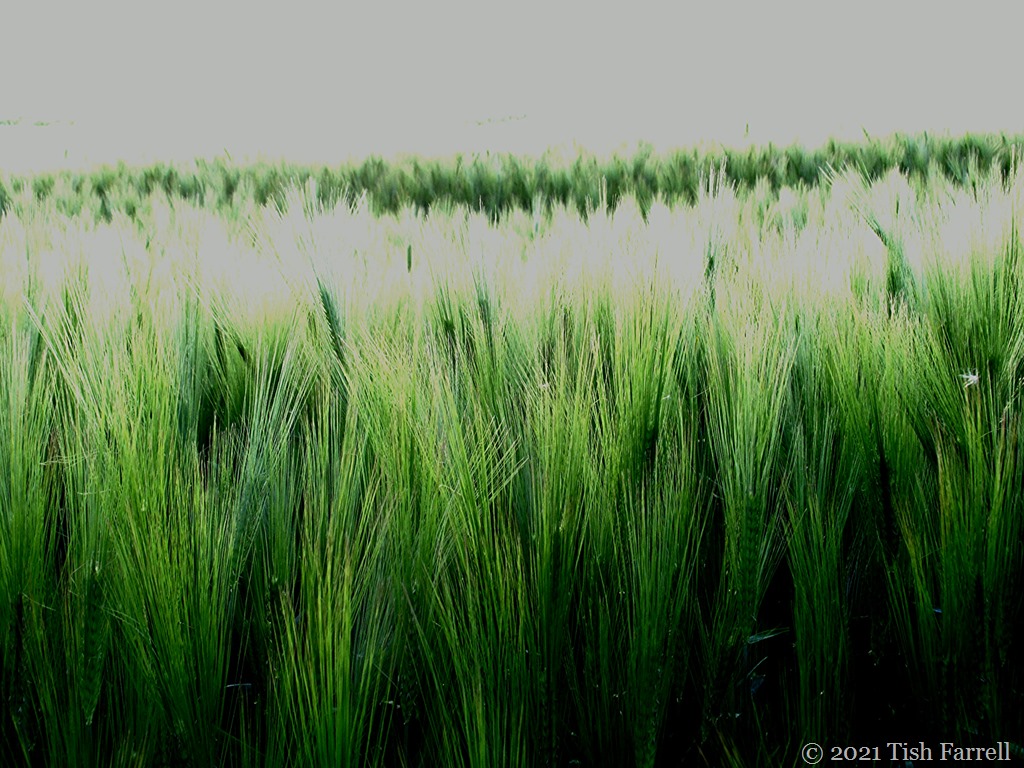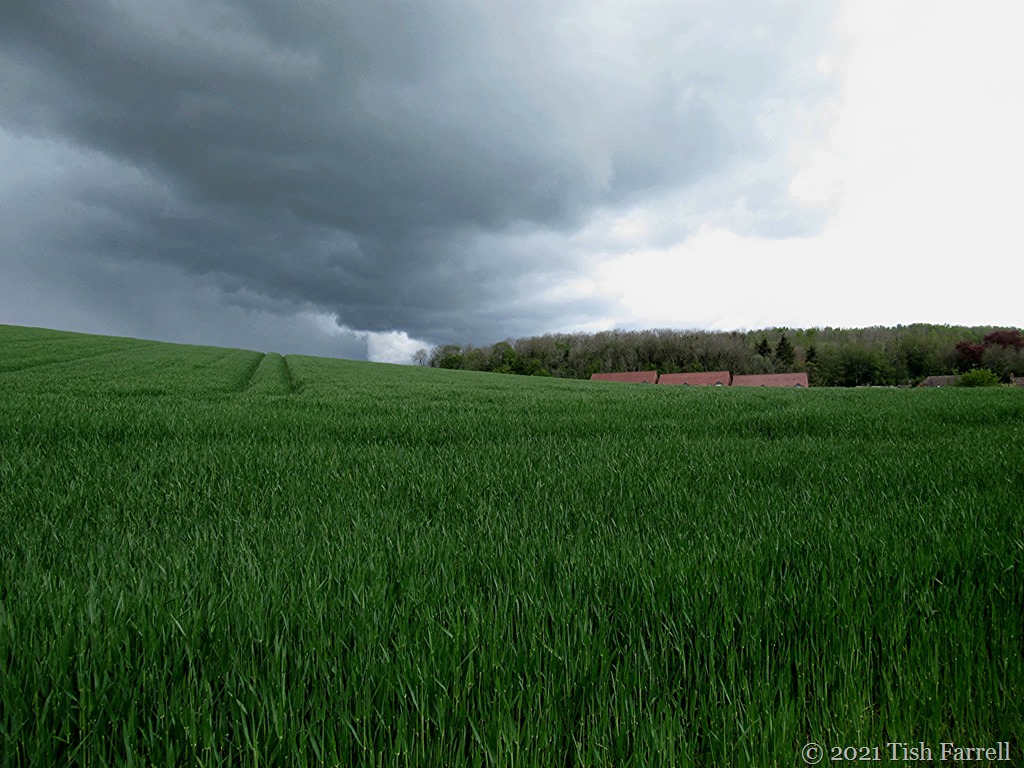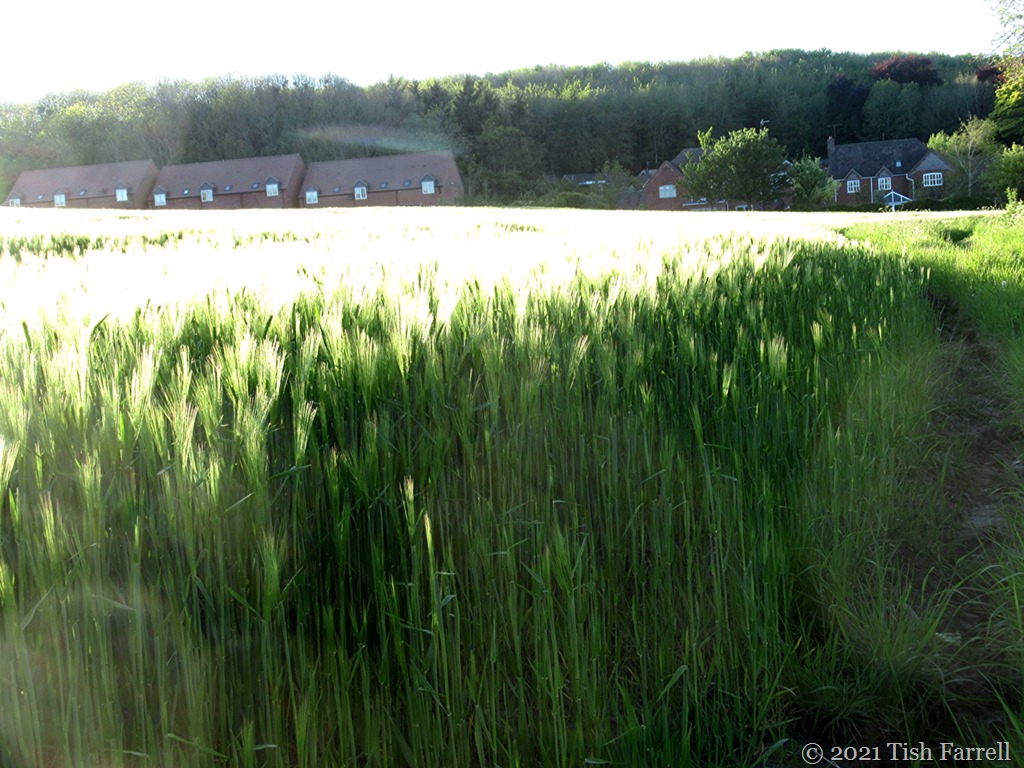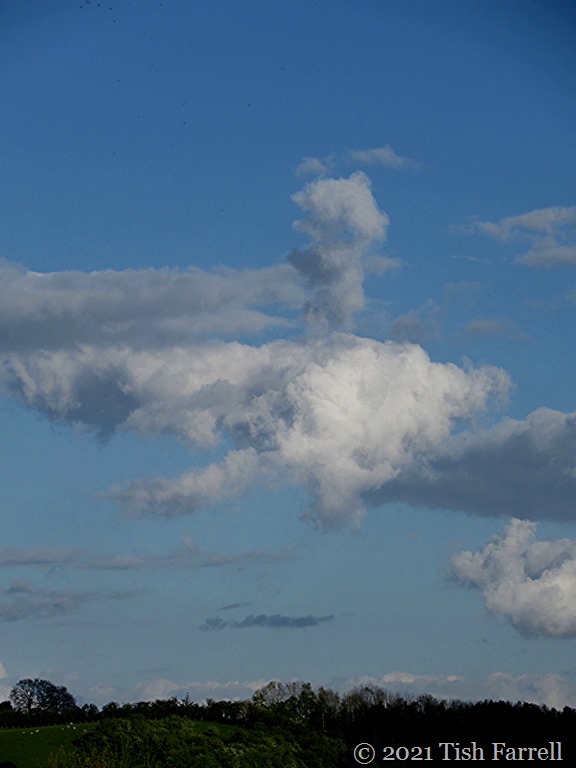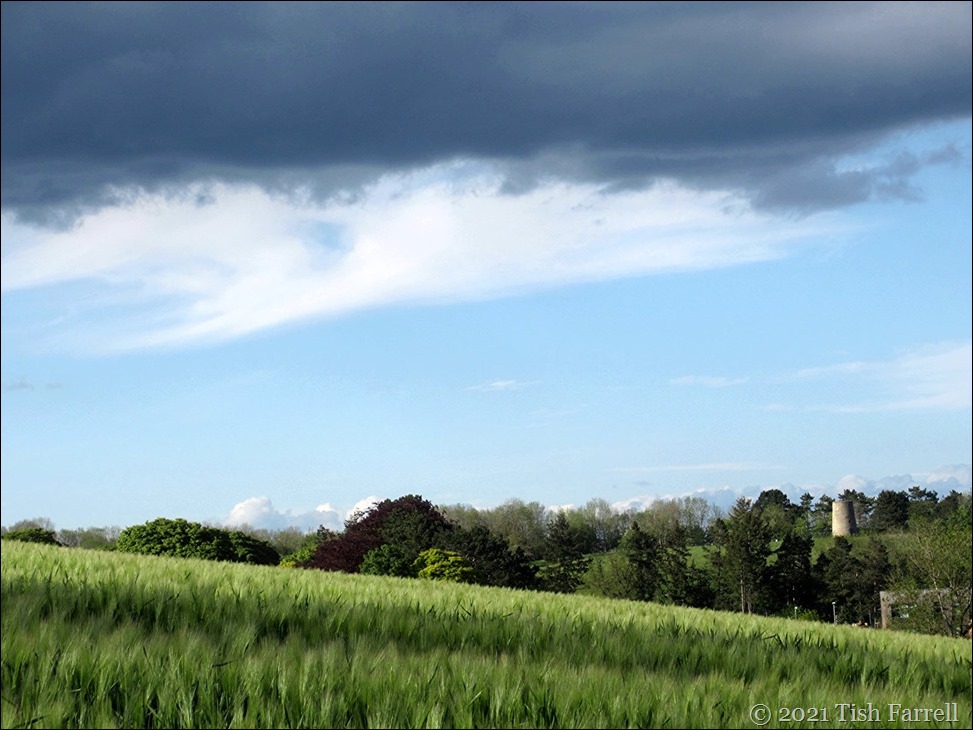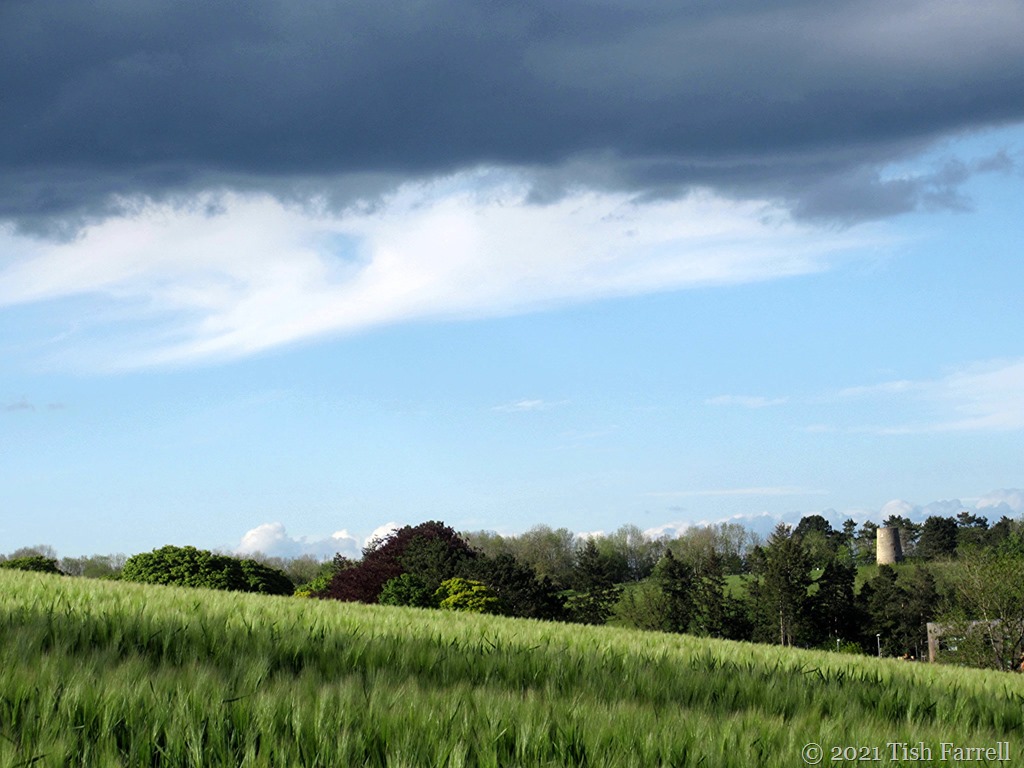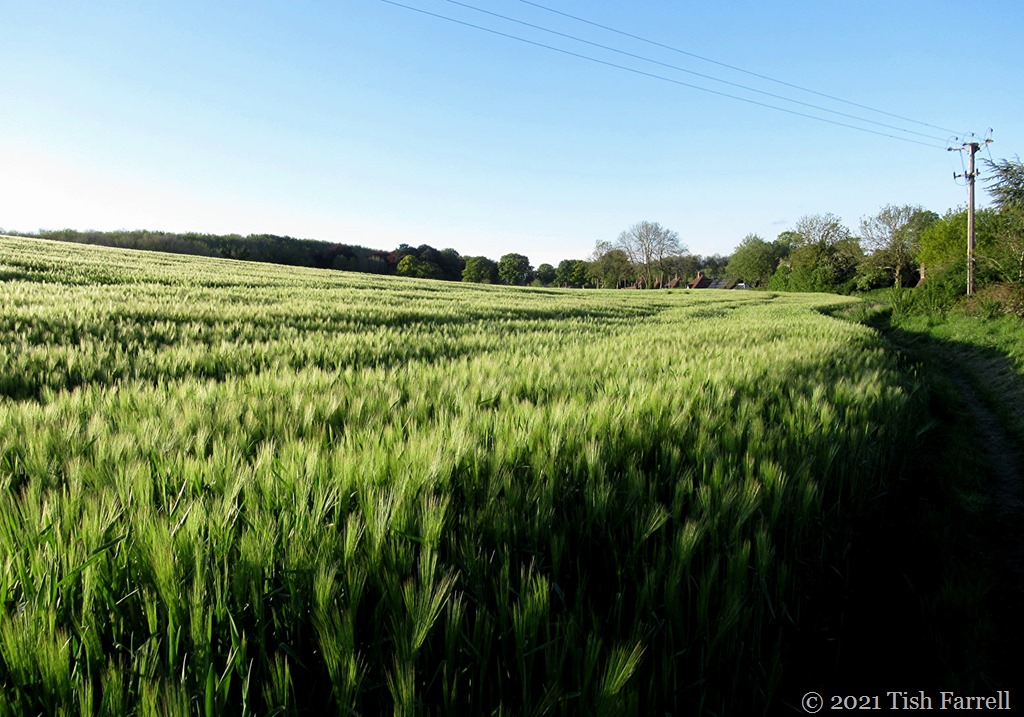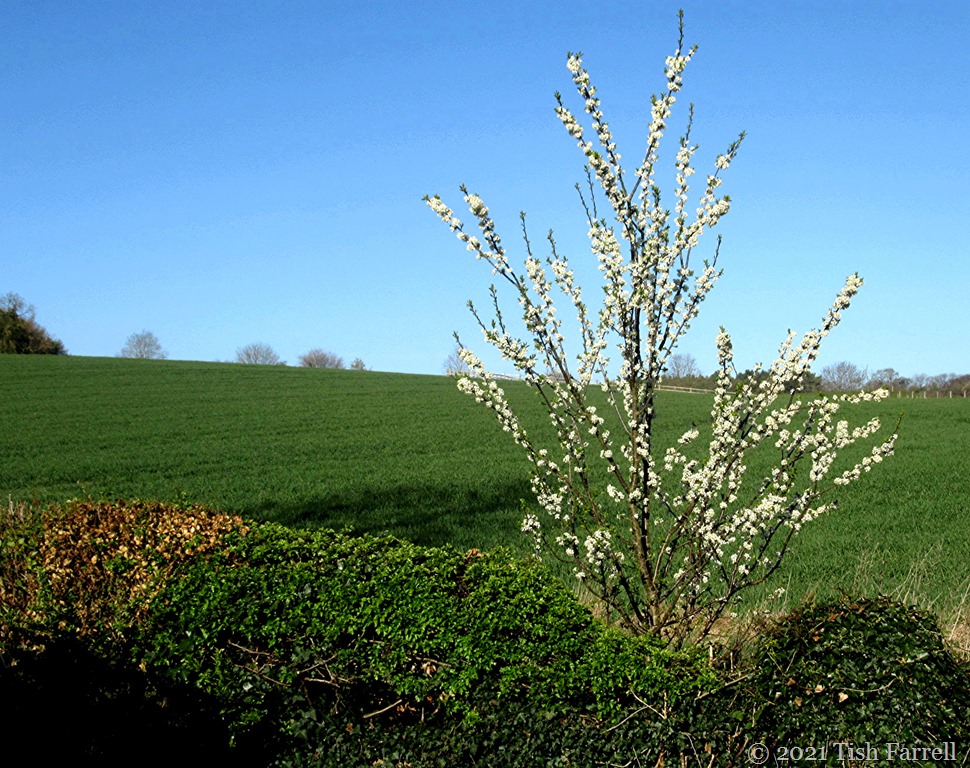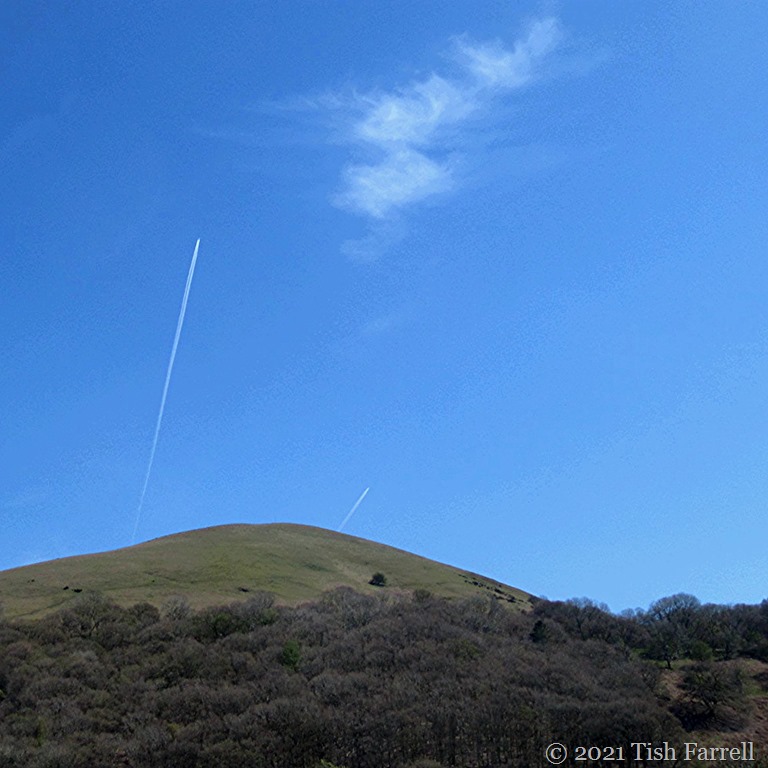
At last! Spring has arrived. Or perhaps I shouldn’t tempt fate by proclaiming it. Anyway, after freezing wind and deluges, here’s the proof of brightness, photo taken two evenings ago. You can see Windmill Hill in the distance. And as for Townsend Meadow and this fluffy looking crop – this year the over-wintered plants that I took for wheat, have recently transformed into barley, their feathery top-knots tall and shimmering in the sunshine. I am in love with the field – the way the light dances over it.
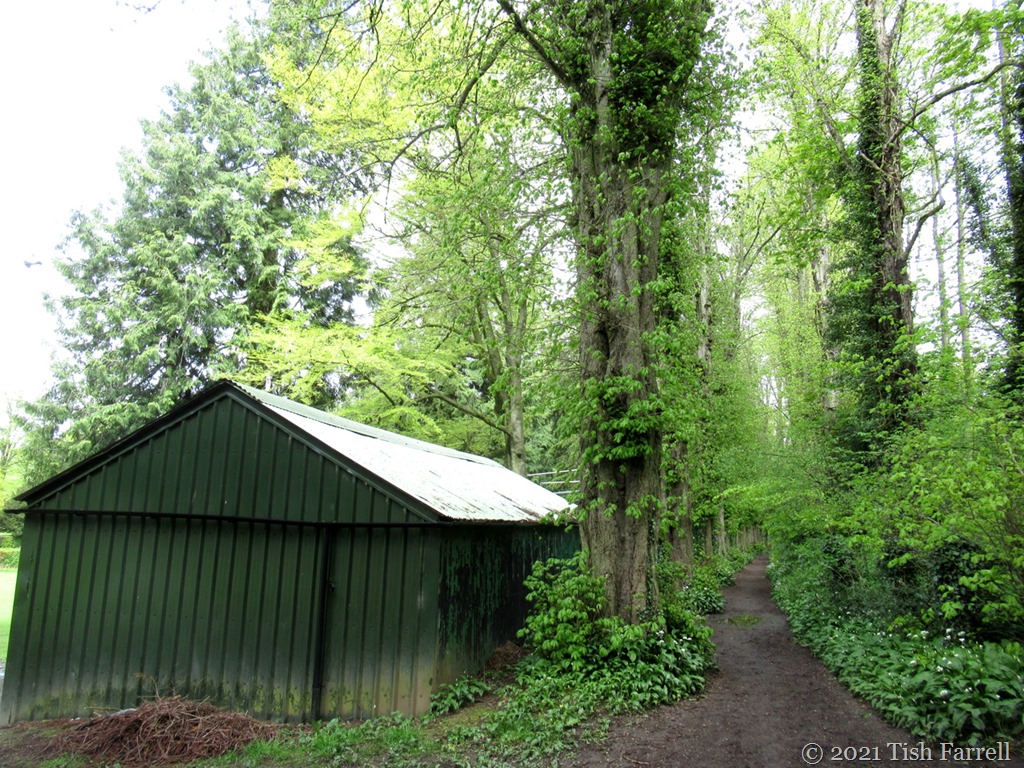
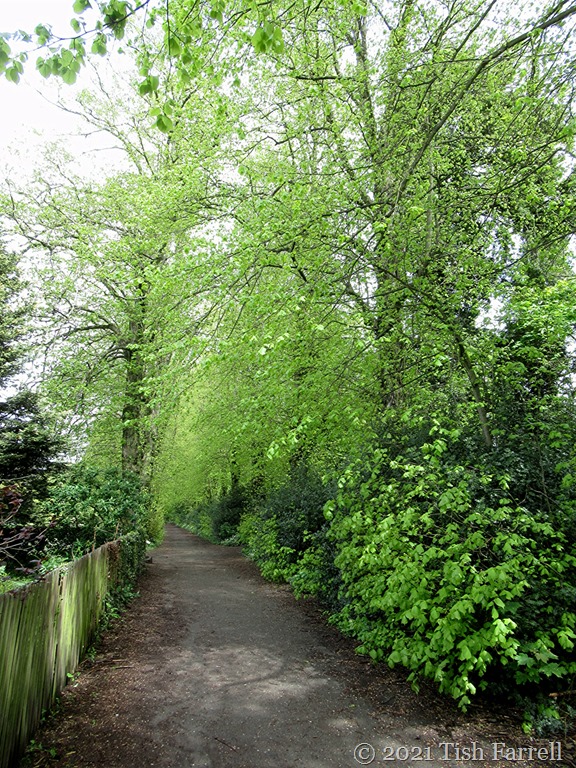
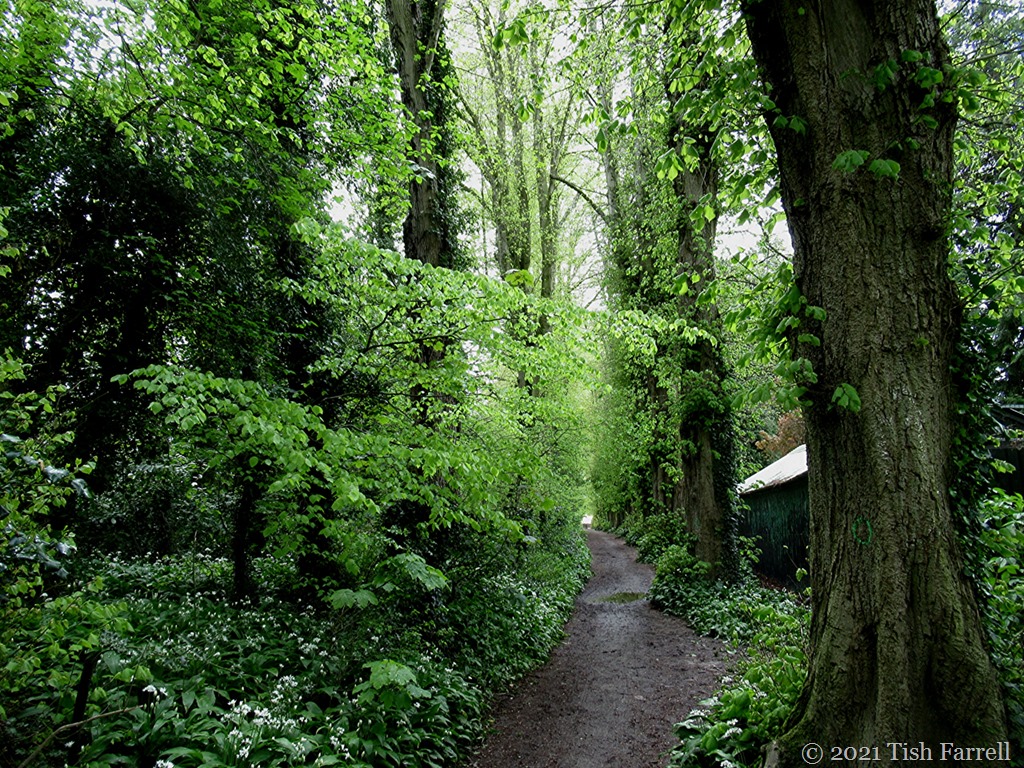
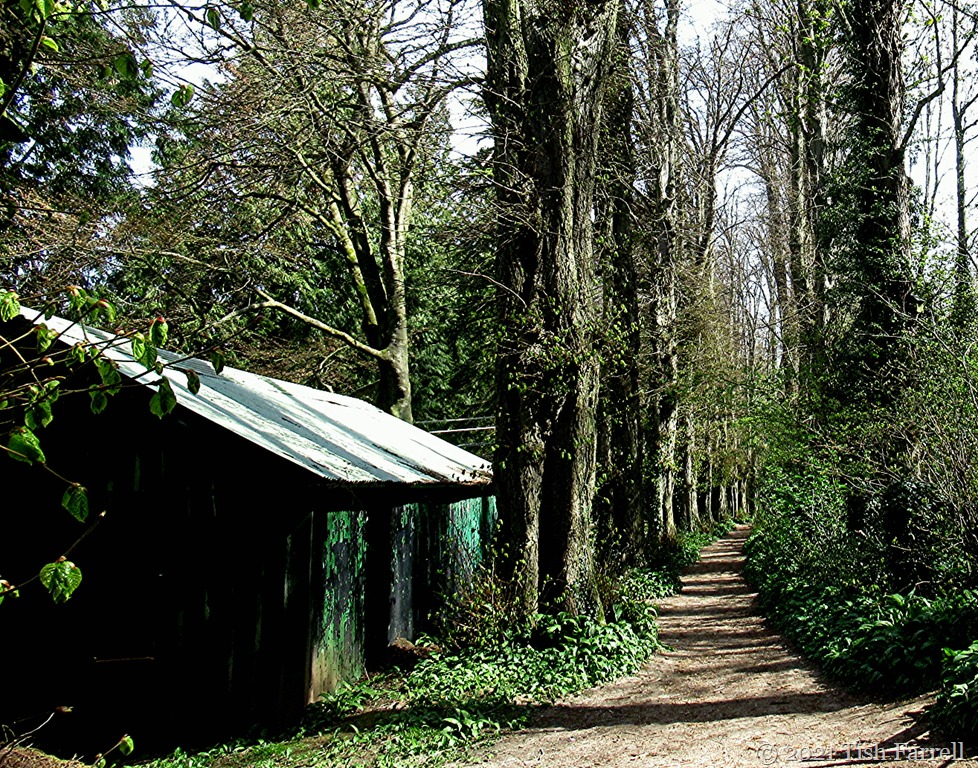
Spring comes slowly to the Linden Walk. The epicormic stems at the base of the lime trees may have had their buds unfurling, but the canopy is only now showing a hint-haze of green. All in all, it has been a very strange month. My favourite on-line gardener, Charles Dowding, who gardens commercially down in Devon, says April has been colder than March, and the nights colder than January. I can believe it. Even on bright sunshine days the air has teeth, as if blowing off Arctic glaciers.
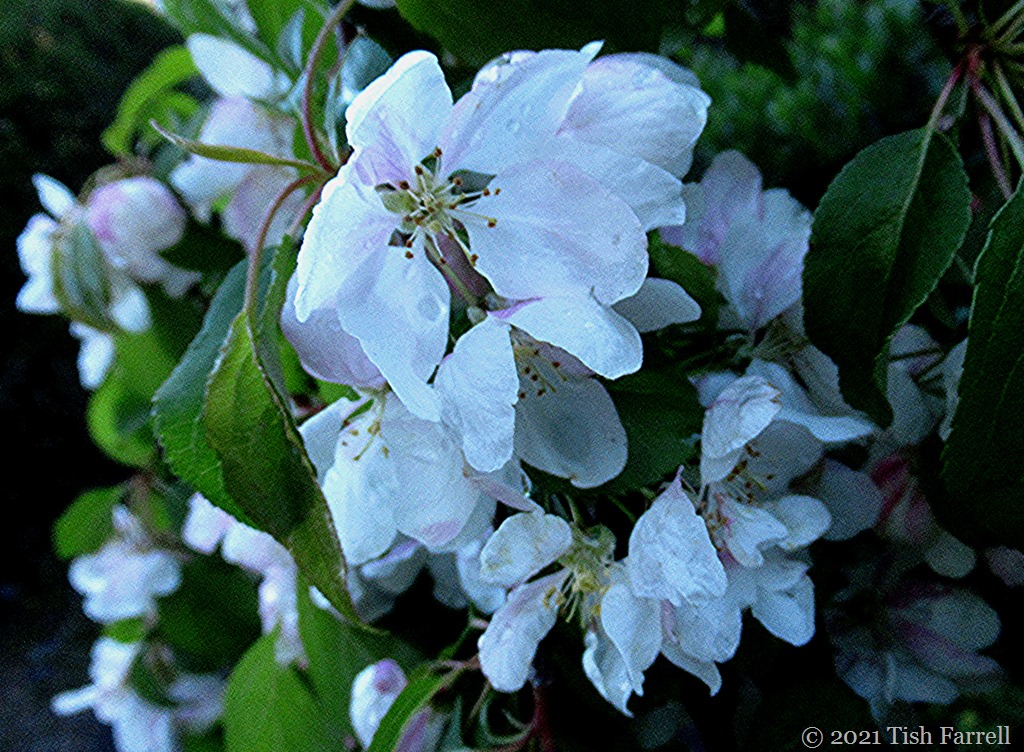
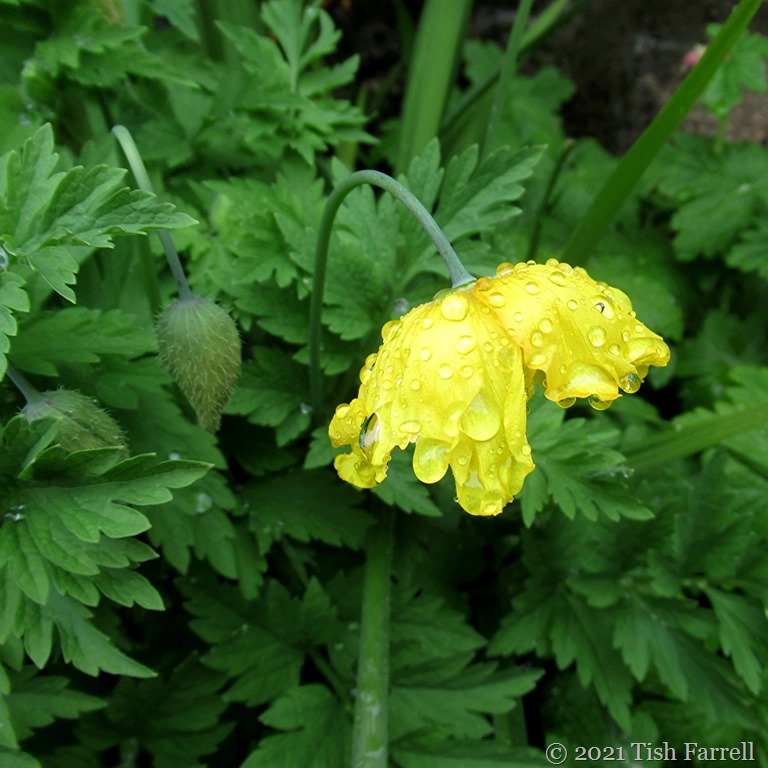
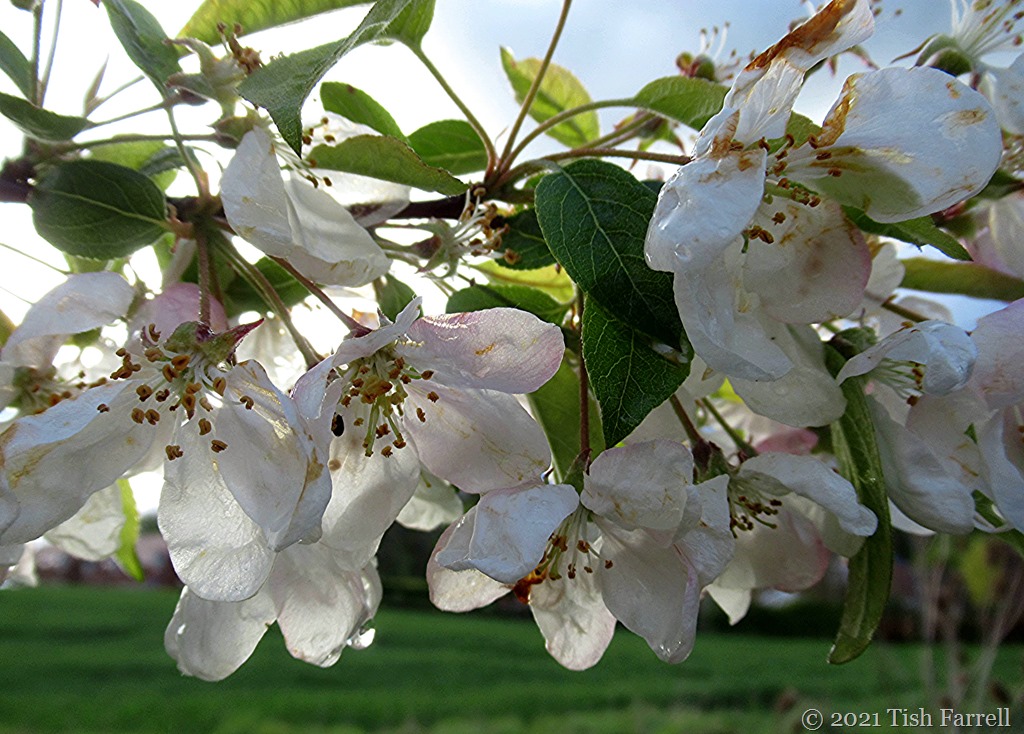
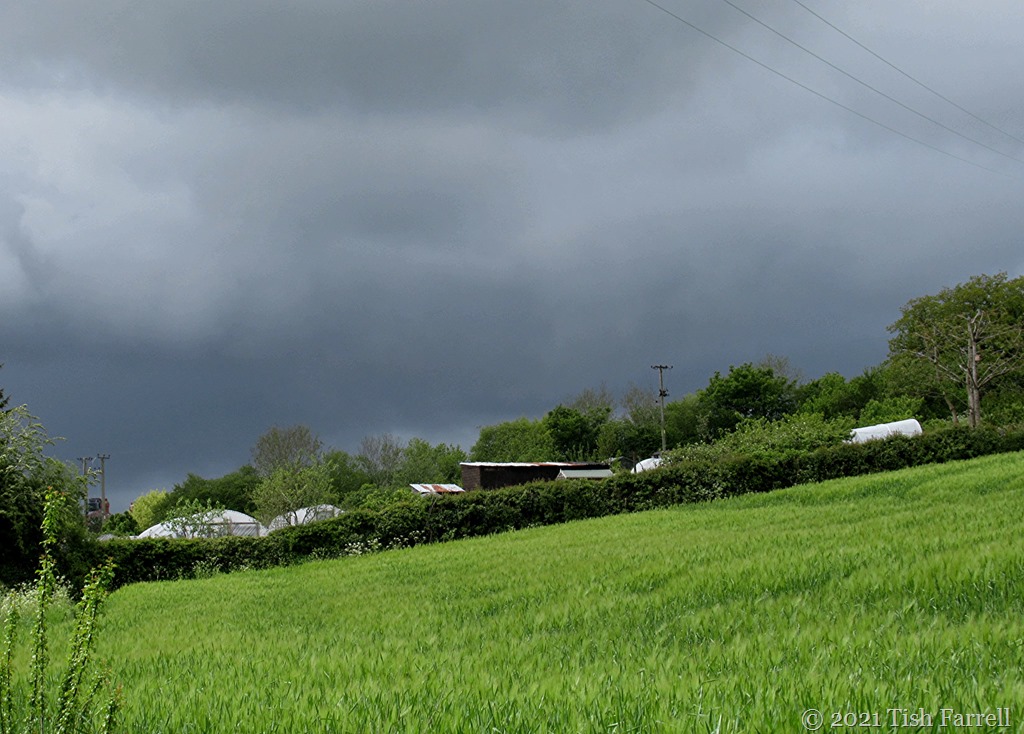
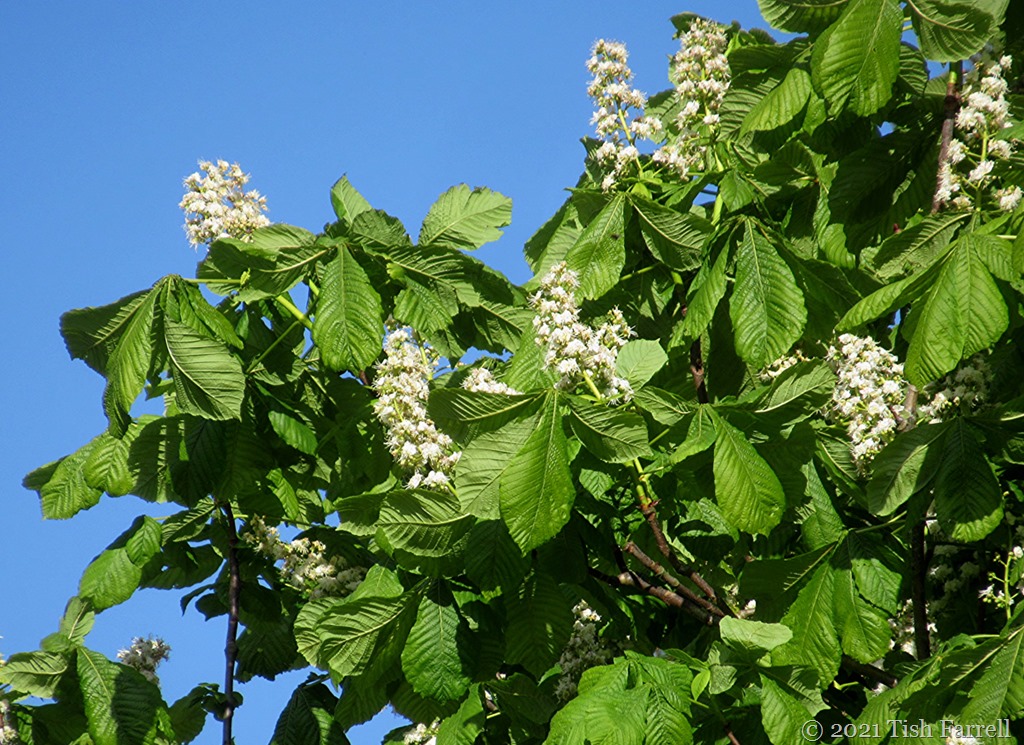
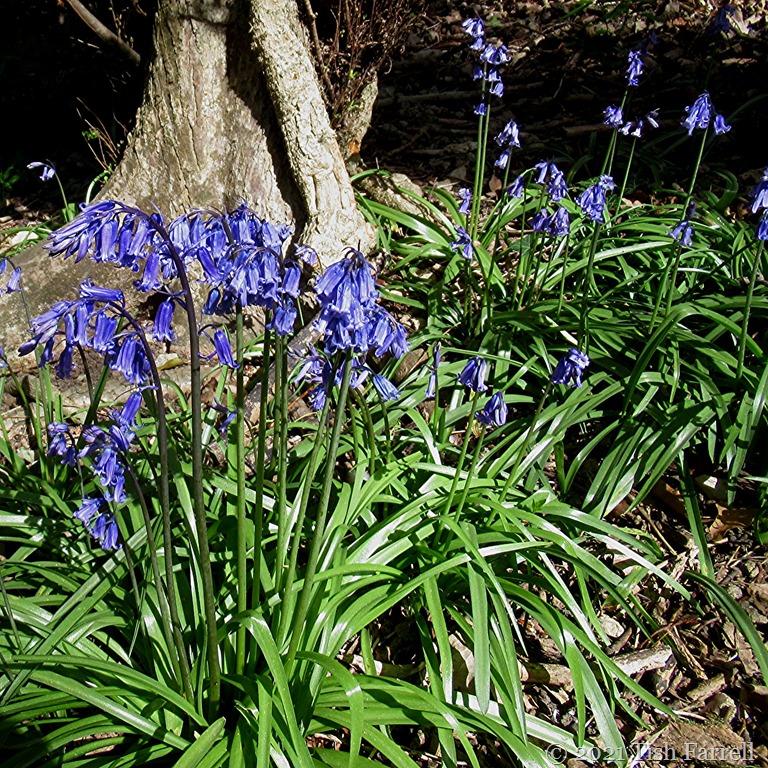
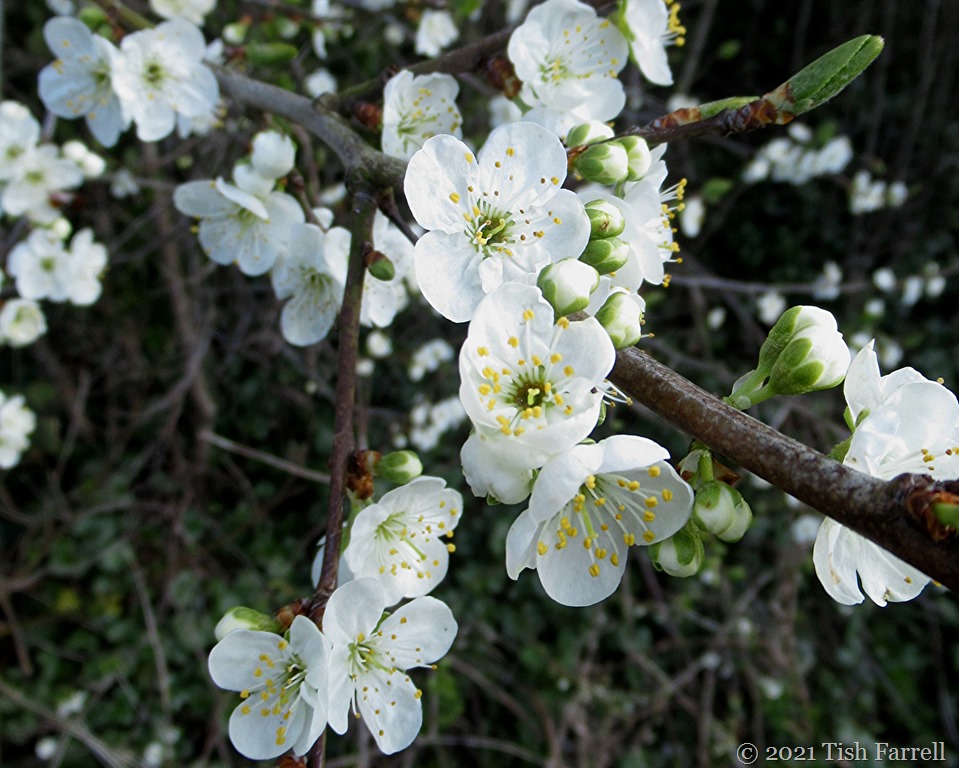
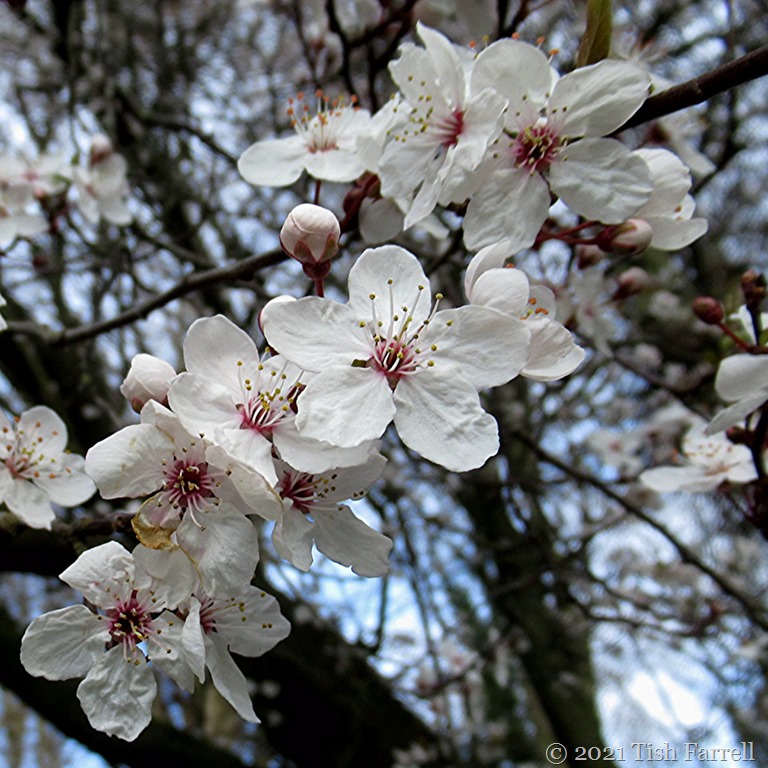
Surprisingly, the icy blasts do not seem to have deterred the fruit trees: cherry, damson, greengage have all been flowering magnificently, and now the apple trees are bursting with blossom. In the woods the primroses, celandines and violets have been flowering since February and now the bluebells are joining them. The wild garlic, too, is running amok in the shady parts of the Linden Field. Meanwhile out on the farms, the fields are already brassy gold with oil seed rape flowers, and the wheat behind the house is growing tall and lush, which is also surprising given many weeks without a drop of rain.
All the seasonal confusion is causing this gardener to dither more than usual: shall I shan’t I sow, pot on, harden off, plant out? One can only adopt the trial and error position and be ready with the horticultural fleece to protect the vulnerable. I have at least managed to get the potatoes and onion sets in the ground and planted out, with protection, some climbing pea seedlings and broad beans. And I have also ventured to plant out some tomato plants and one aubergine inside my polytunnel where the most successful production otherwise is a bed of overwintered coriander which has recently made its own small forest. (Never managed that before).
Of course when I go gardening, I’m still wrapped up in my winter gear – sweaters, scarf, hat, padded parka. The allotment is on an exposed slope above the town, and when the sun goes in, it’s been pretty bleak up there. But then all that clobber gets in the way of many spring season tasks. So please, please, May, could you just turn down the icicle winds. And perhaps bring us a bit of warmth. Oh yes and some gentle rain at regular intervals.
On and around the Linden Walk:
*
Over the garden fence:
*
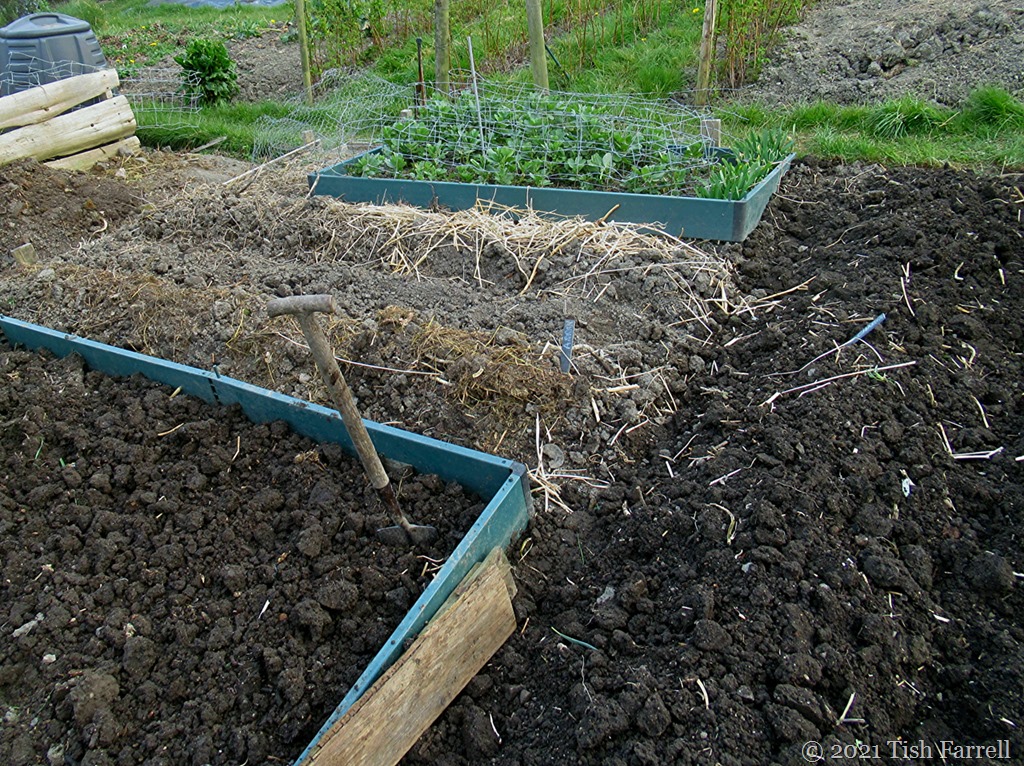
Potatoes planted at the allotment; overwintered field beans behind:
*
Come evening, still need to spark up the log burner:
I took this photo last Sunday: lunch on my sister’s terrace and the Shropshire hills all around. It was the first home ground meet-up since Christmas and so a big and bright occasion for this last April square.
Many thanks to Becky for keeping us thinking brightly all this month. More bright times ahead.
The back of our cottage looks towards the edge of Wenlock Edge, we atop the twenty-mile escarpment, the land dropping off to the west, falling straight, many hundred feet, through hanging woods of beech and ash, oak and yew, wild cherry and service trees, hornbeams, whitebeams, wych elm, field maple, chestnuts, holly, hazel and lime; these the trees that settled here, each species in its own time as the ice sheet retreated from Shropshire some ten thousand years ago and the new soils built up on our 400 million-year-old upthrust seabed.
This thought of departing ice and arriving soil and trees reminds me that the climate has always changed, and is ever changing; even during ice ages there were warm periods. In one such warm phase 125,000 years ago, animals that we of the north now associate exclusively with Africa – hippos, lions, elephants, hyena inhabited the Thames basin where the city of London now sprawls. It’s quite some thought. Another is, and not so flippantly either, that today’s wind across the Edge is so bitingly frigid, that it rouses the suspicion in this gardener’s mind that we might actually be heading for colder times.
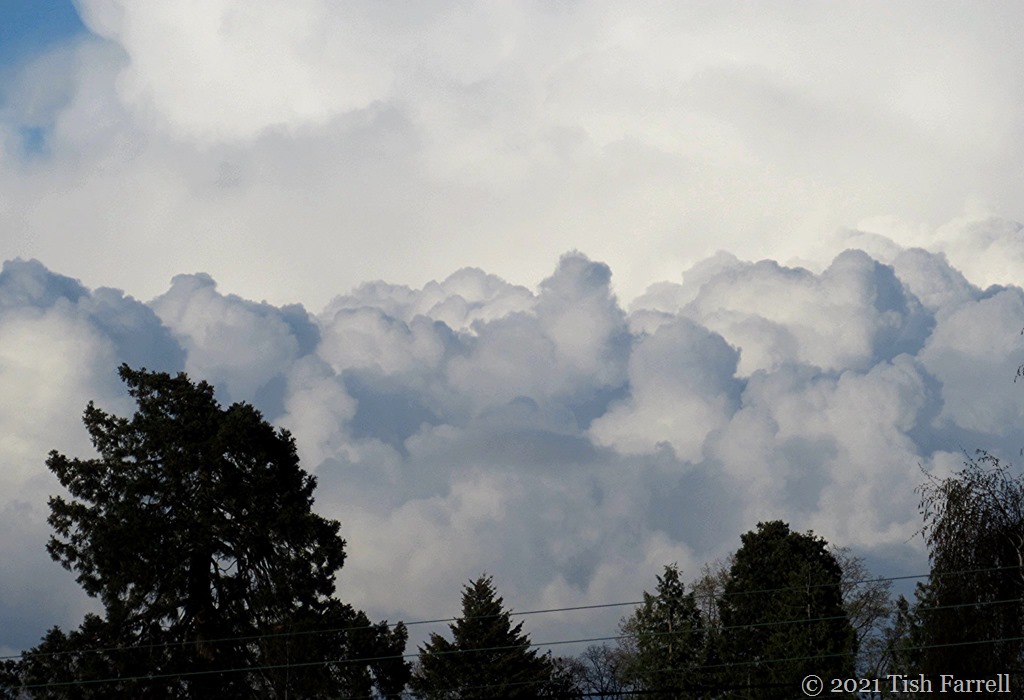
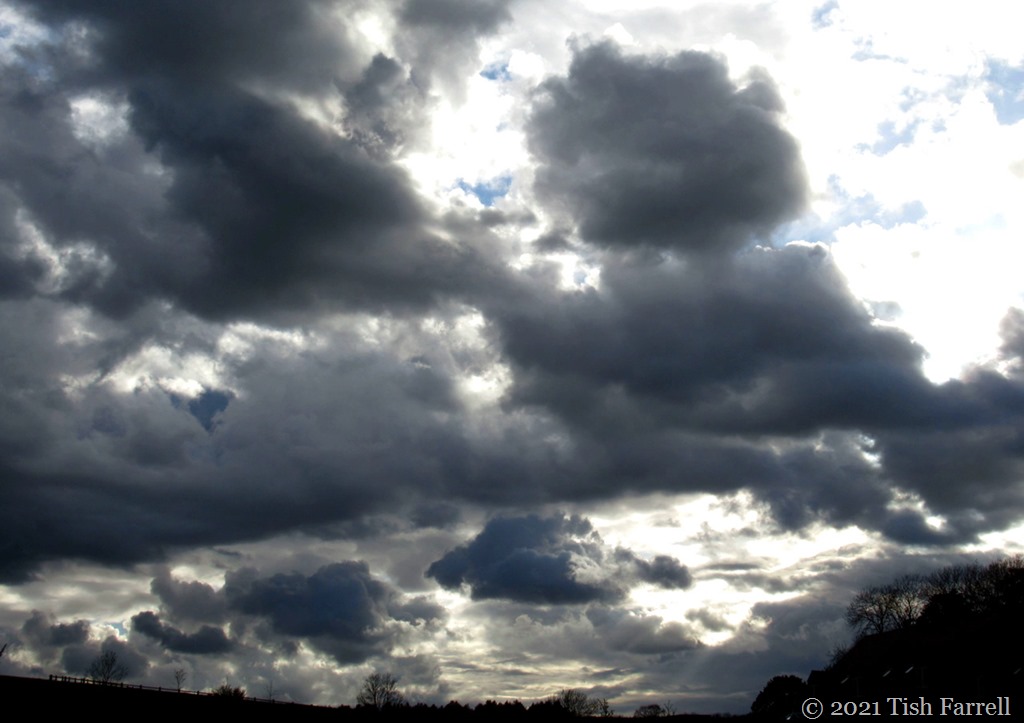
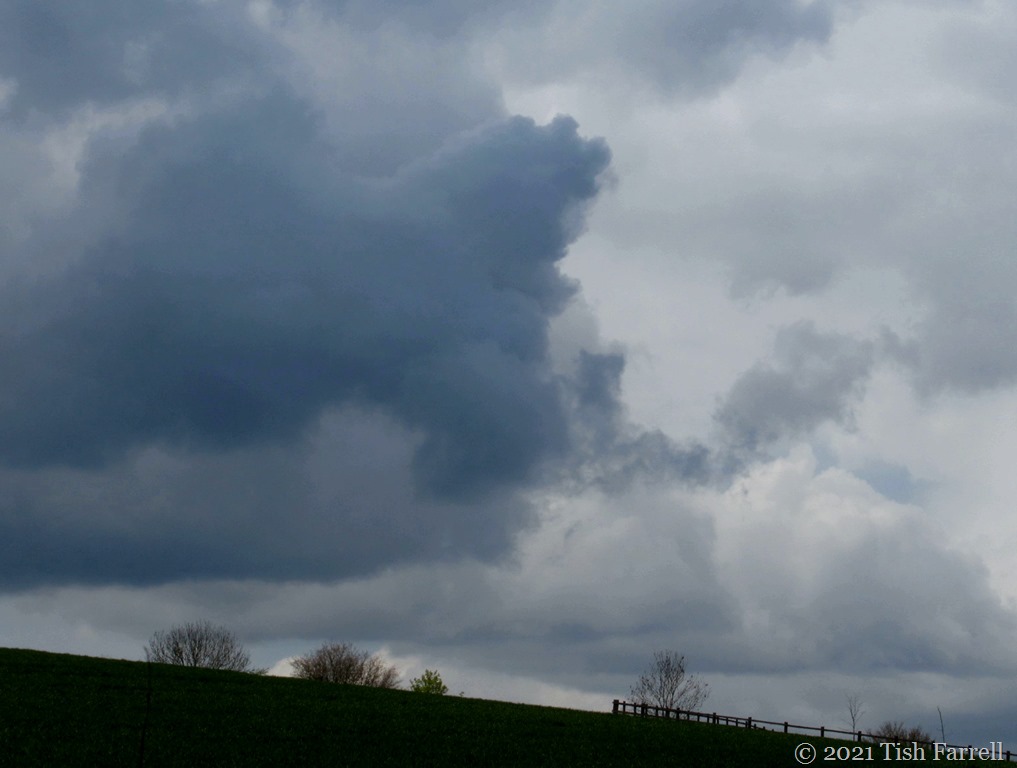
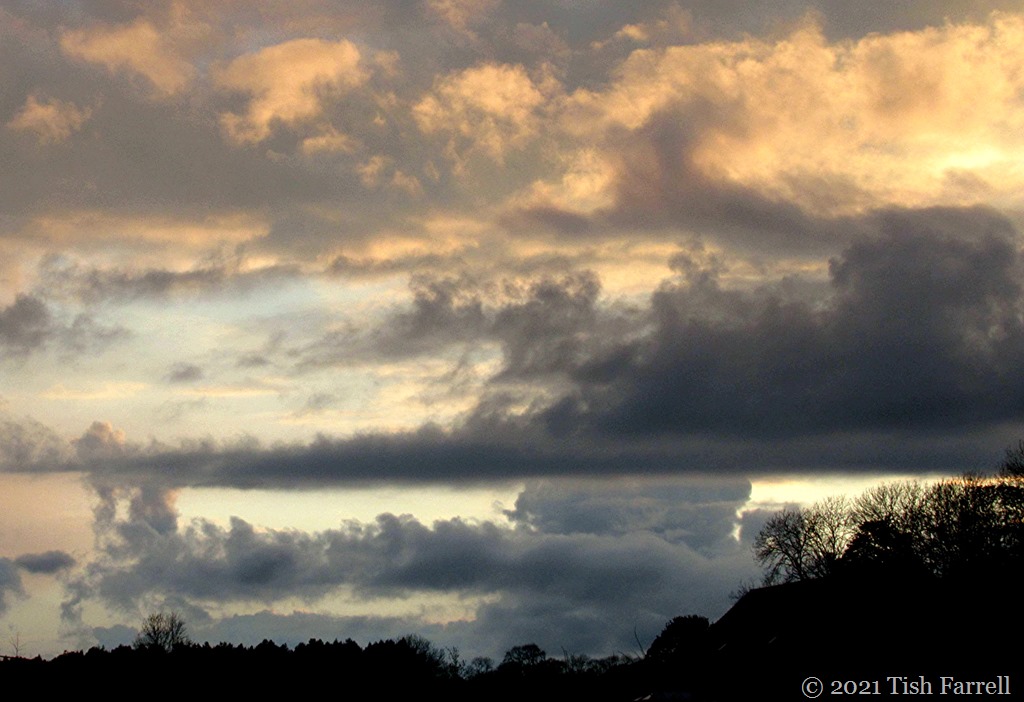
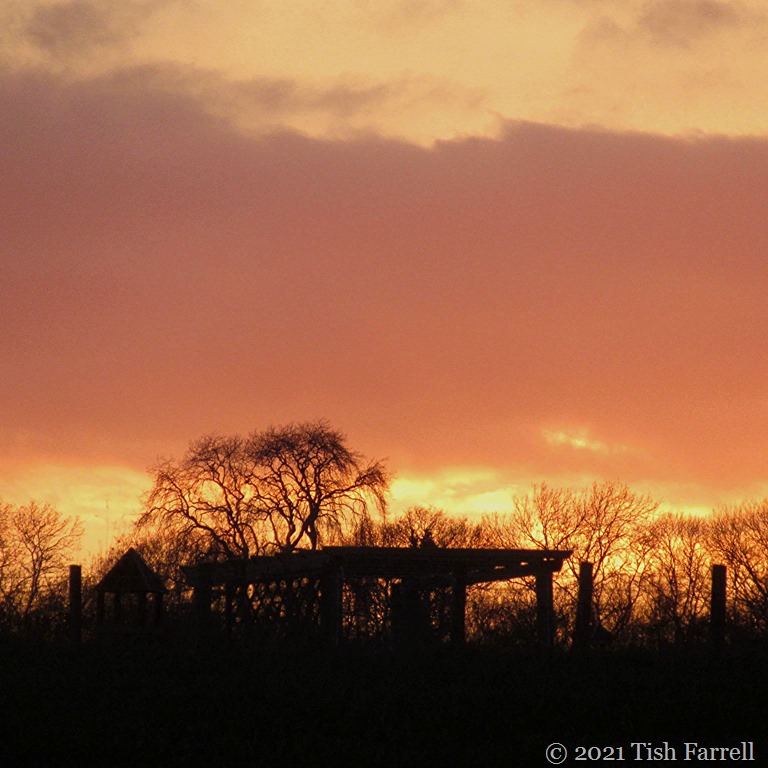
All of which is to say that the congruence of time and climate and geology have much to do with the fine skyscape displays behind our house. That the land drops away beyond the Edge provides us, on this side, with a false horizon, and thus expansive views of atmospheric activity, ever shifting and endlessly absorbing. This particular sunset (header photo) appeared during our recent brief warm spell. A few days ago it came instead with ice-pink ribbons.
Quote from Shakespeare’s Antony and Cleopatra act V, sc 2, l 192
The Loveliest of Trees is the second poem from the Shropshire Lad cycle, and probably the one best known. It is easy from today’s perspective to dismiss the apparent simplicity, sometimes ditty-like quality of these poems. But Housman was a scholar of Olympian proportions, an atheist too and, it is said, suffering in love for a man who could never love him in return. Sensibilities run deep here.
The verses speak of love and loss and going to war; the fleetingness of things; all set against landscapes seen only in the mind’s eye, or as if looking from a long way off across time and space. There are many voices too, even ghostly ones, the sense of old country airs remembered. It is not surprising that they spoke so compellingly to composers who then set many of the poems to music: George Butterworth (Bredon Hill and Other Songs), Ralph Vaughan Williams (On Wenlock Edge), Ivor Gurney (The Western Playland), Samuel Barber (With rue my heart is laden ) to name a few.
Here is Butterworth’s evocation of the cherry tree, sung with perfect poise by Roderick Williams. If you choose to listen you may imagine Shropshire here today. As I write this we are having flurries of light snow just like falling cherry blossom.
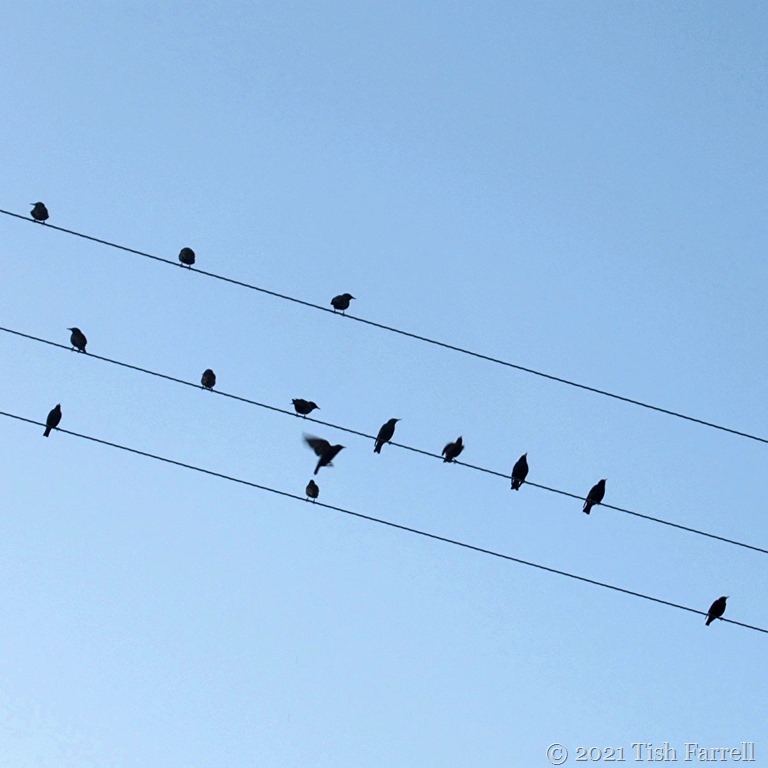
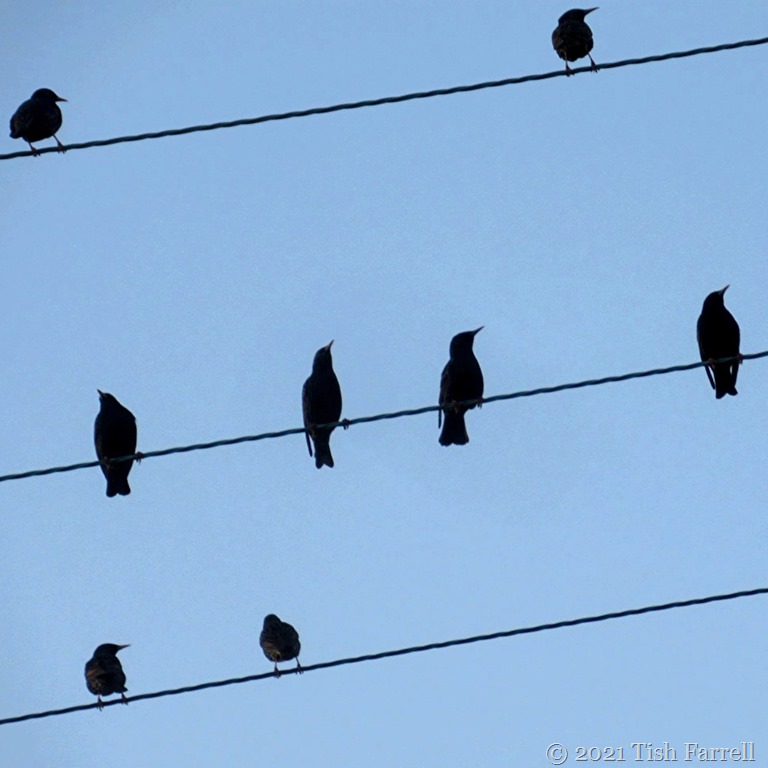
I was on my way home from the allotment (Wednesday’s summer’s evening before the big chill reverse) when I spotted the starlings. These once common garden birds are a rare sight nowadays, and this is a newish colony that seems to have established itself at the north end of the town. I know for a fact that they go every day to a chum’s garden for their elevenses and try to eat all the bird food she puts out. Later in the day I see them around the gardens that border the field path to the allotment. On Wednesday they had gathered on the power lines and were singing away, darting from wire to wire, for all the world like moving musical notes. They made me laugh. Next time if they repeat the performance, I’ll try to film them. For now a couple more bright-spark shots of them.
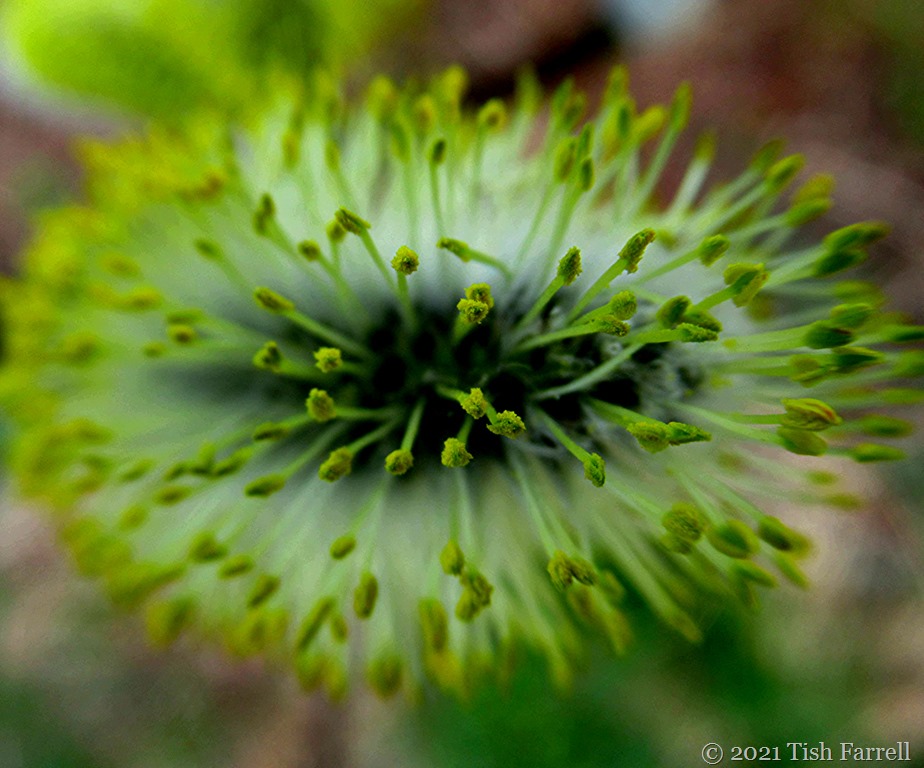
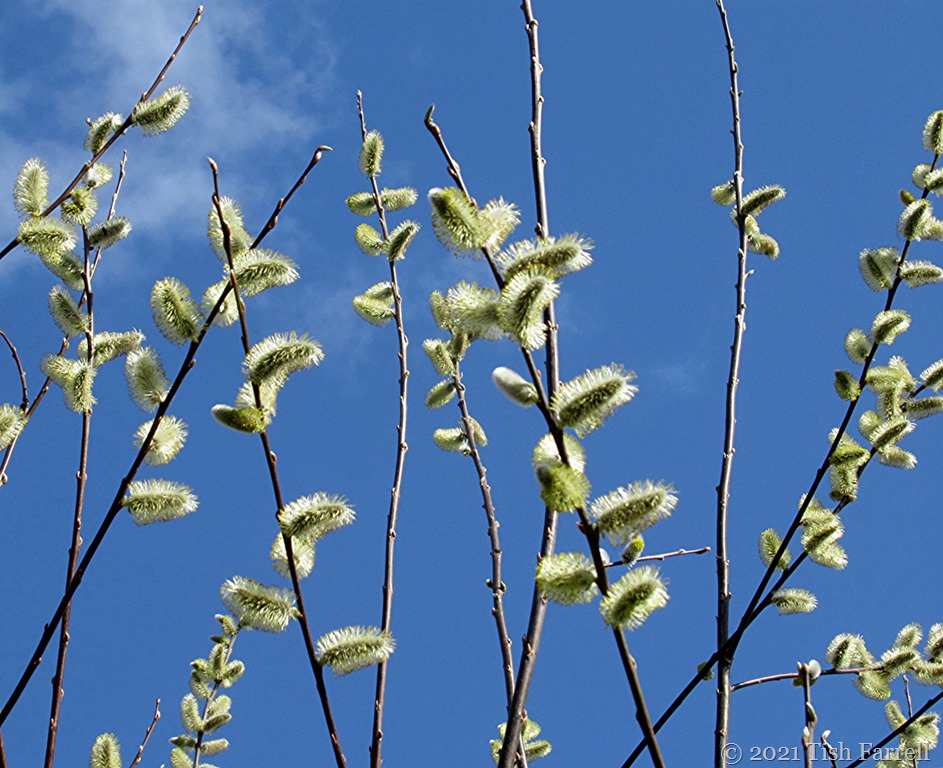
It has an extra-terrestrial look, doesn’t it – this exploding pussy willow catkin. In fact ‘catkin’ sounds too confining a word for such exuberant expression.
Elsewhere around the town signs of coming spring are more reserved: delicate cherry and blackthorn blossom on otherwise bare branches, and earlier this week only a slightly seen green haze about the church yard weeping willow; while everything is otherwise accompanied by a bone-biting wind that has the daffodils and me bracing ourselves.
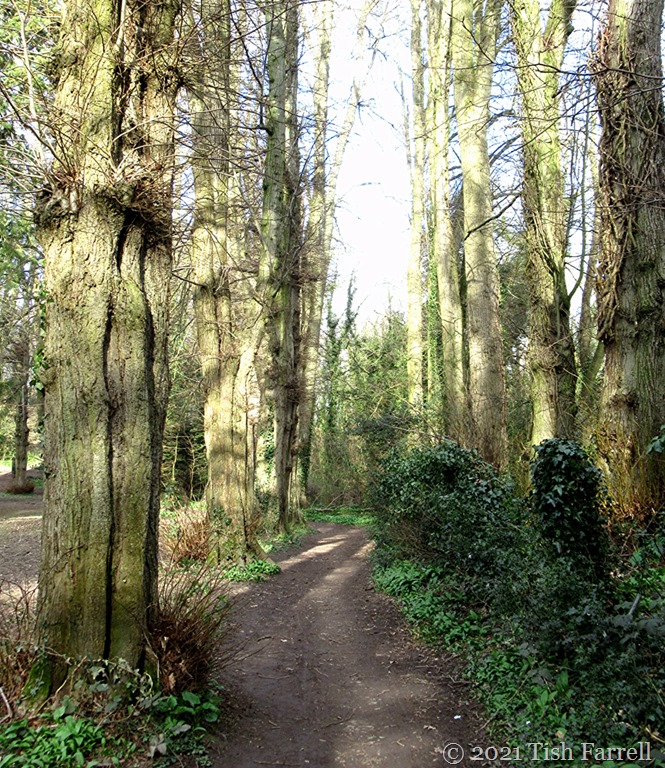
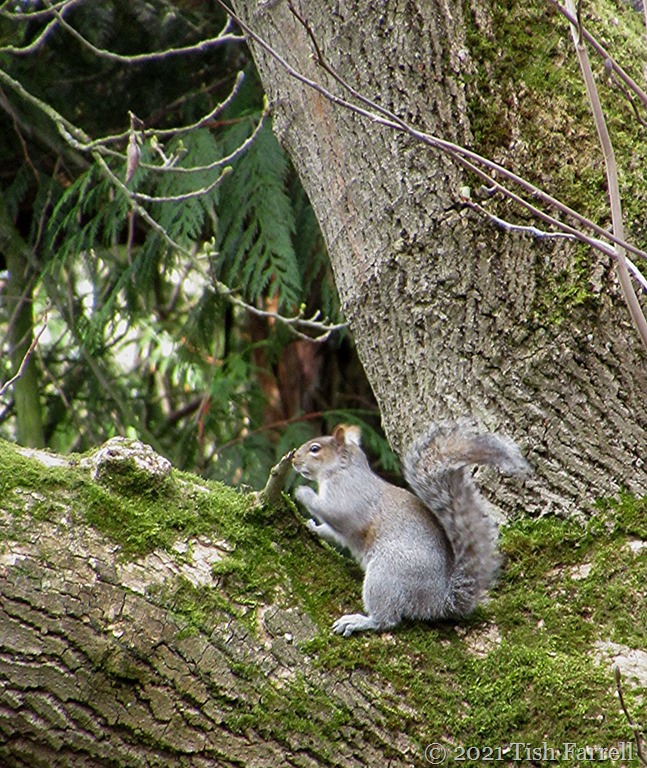
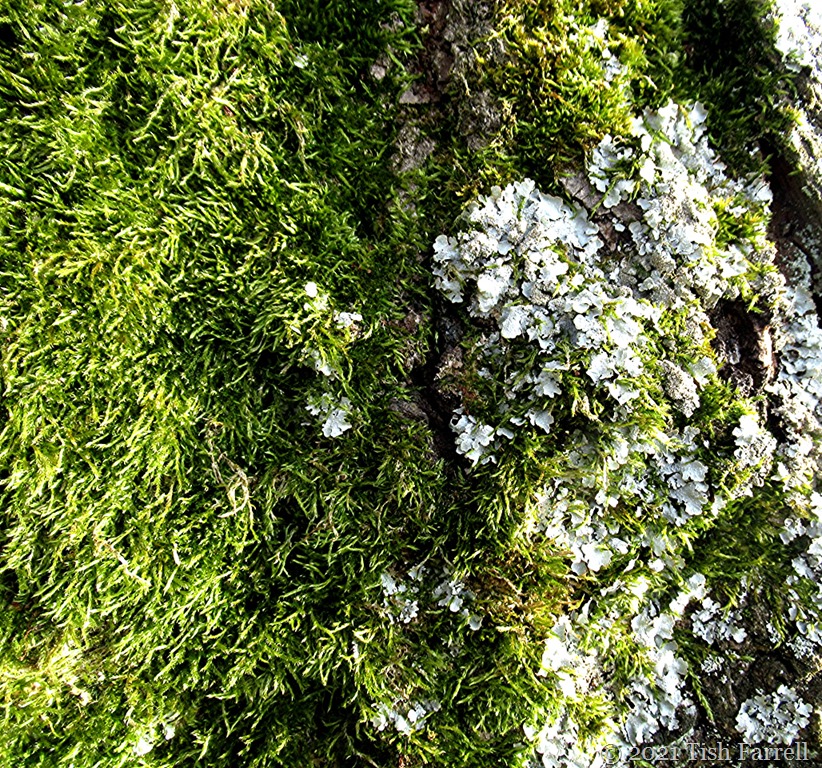
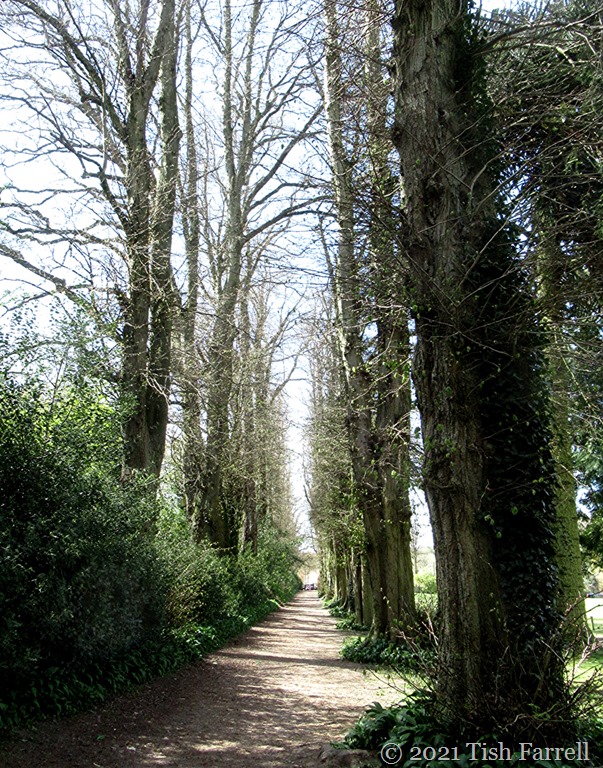
The Linden Walk still looks wintery, although there are carpets of wild garlic everywhere – the leaves good in soups and stews and salads and for making pesto sauce. I’ve also noticed interesting colonies of lower plant life on the lime tree trunks, lichens and mosses and the like. And squirrels…
*
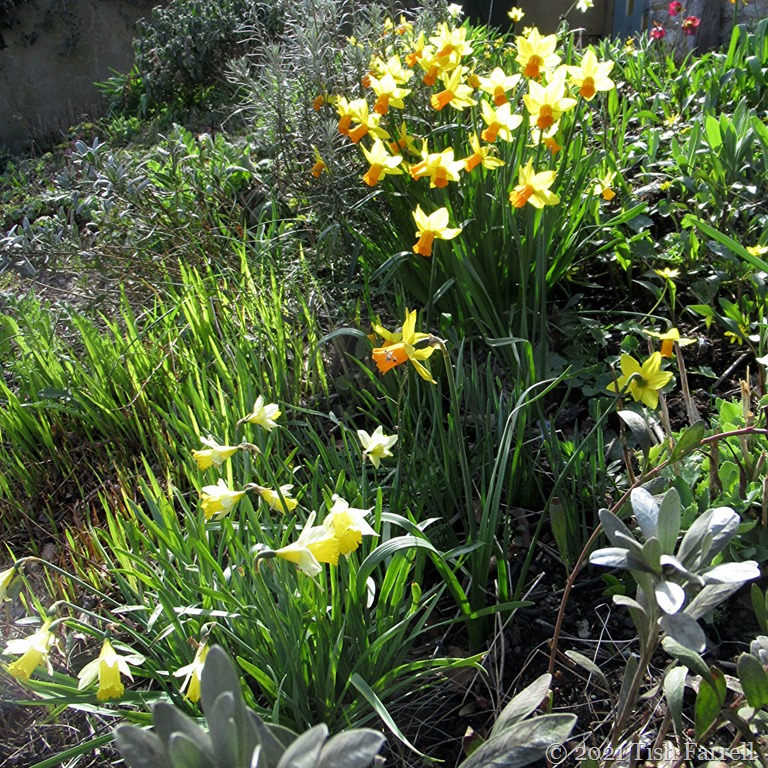
And on the home front the daffodils are lighting up the garden by the road.
*
And stepping out of the back garden gate I came upon a cat with green eyes…
This week Amy at Lens-Artists has set us a fine task – the pursuit of natural light. It’s one of the aspects of photography that fascinates me most; especially when it’s in short supply. Anyway, I instantly thought of the strange light effects that happen across the Menai Strait between the North Wales coast and the island of Anglesey, caught here during various December sojourns on the island. All the views are looking towards the Welsh mainland and Snowdonia.
This year at Travel Words Jude is encouraging us to think hard about colour in our photography. This is the final week for brown – earth shades. From Sunday there will be a new colour scheme to look out for.
Apologies for the swift change in temperatures after yesterday’s balmy temperatures on the Zambezi. Here in Wenlock we have been suffering frigid twirls and swirls of Polar Vortex: snow, sleet, wind, frost and in between, torrential rain. But we’ve had some sun too with china blue skies. Here’s the month’s round-up:
Snowy landscapes: Windmill Hill (including the above with this mysterious snow tree), Linden Walk and Linden Field, over the garden fence…
*
Birds and beasties…
*
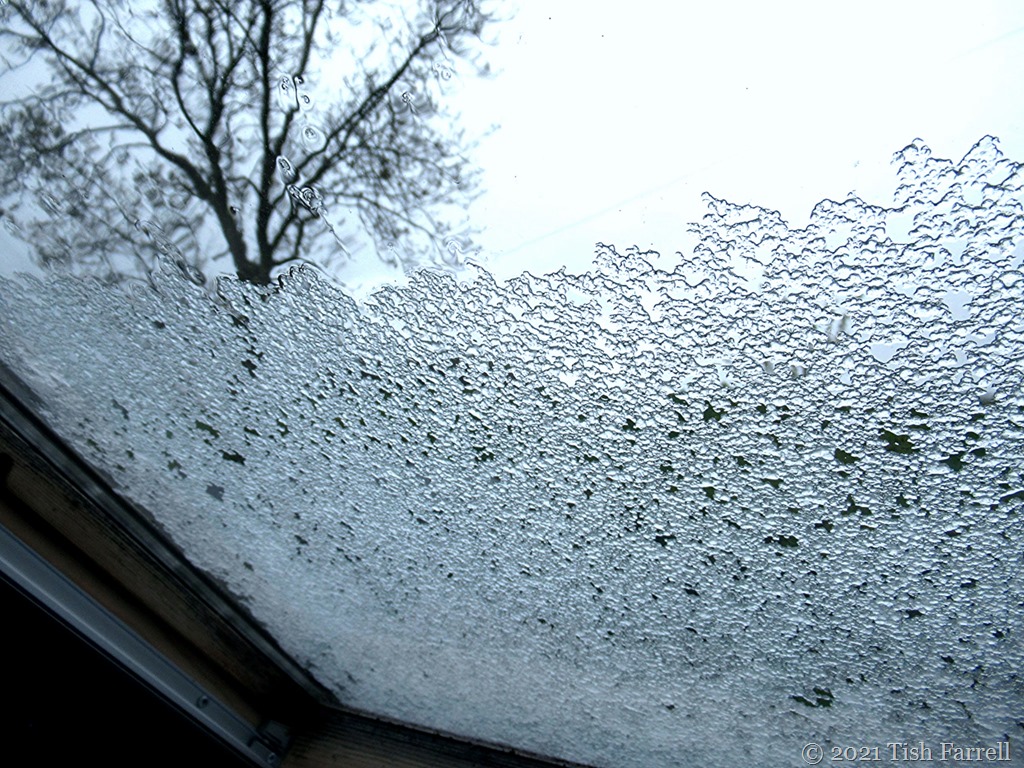
Frost art including some very fancy ice works created by my allotment water butt…