Stiperstones Trail: Not For The Tender Footed

P1050992ed

*

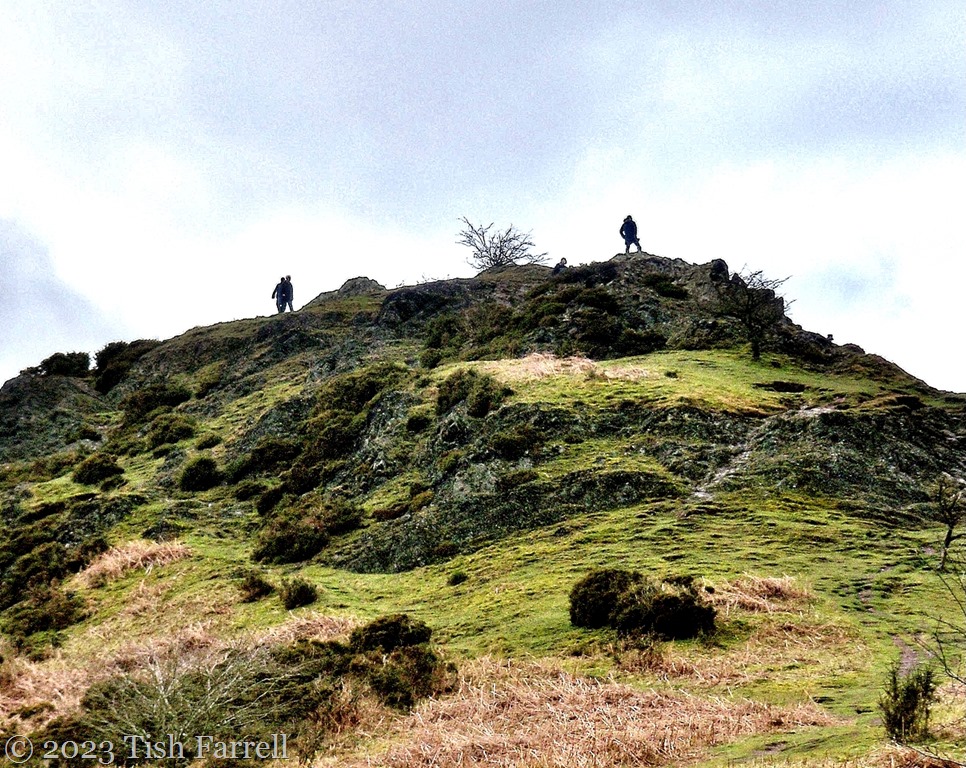
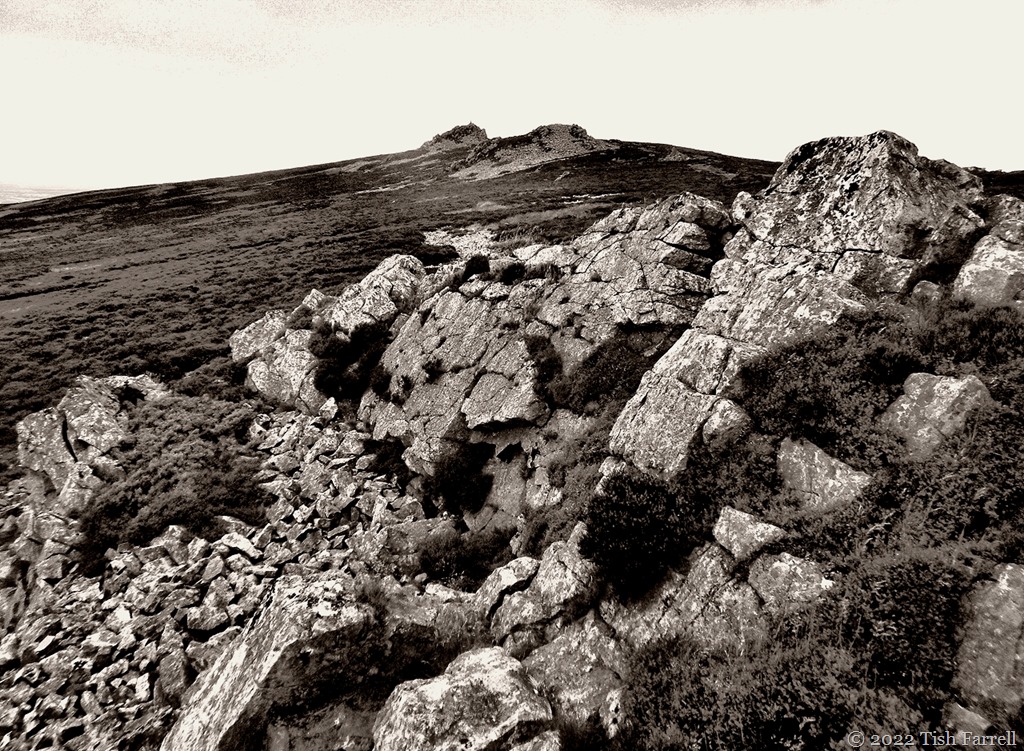
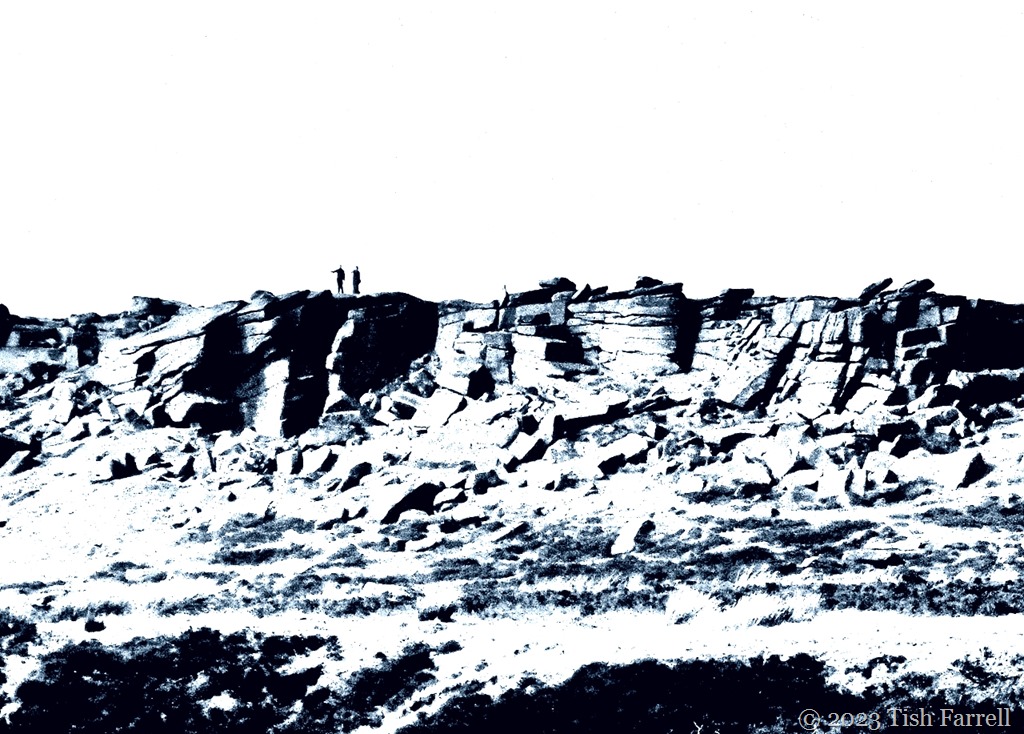
In the last post you saw the Stiperstones in brooding monochrome. Those photos were taken on a dull and windy summer’s day. It was our first attempt to reach the Devil’s Chair. I had never seen it at close quarters. But in the end, the lack of light and the high wind across the tops put an end to the expedition.

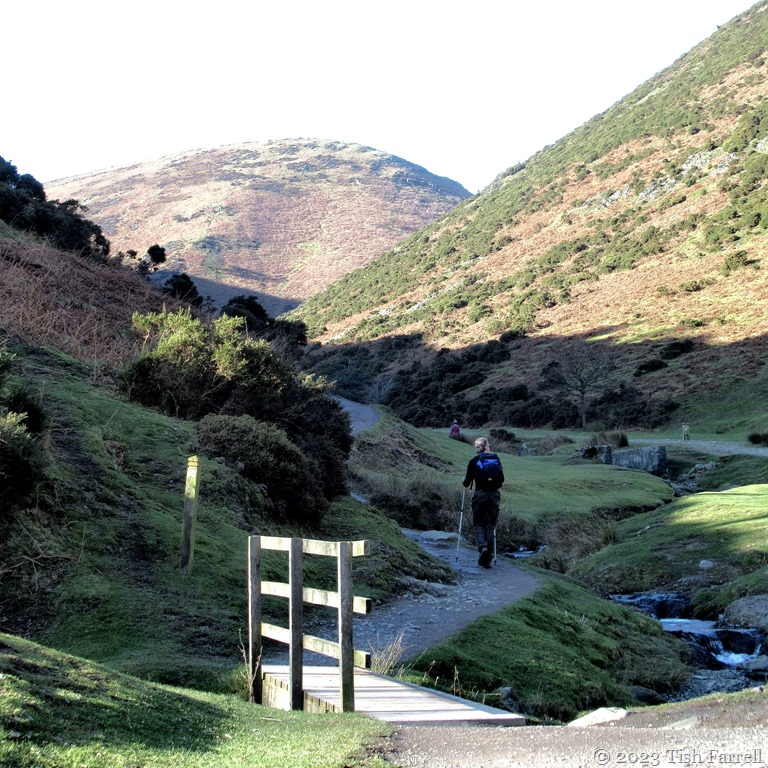
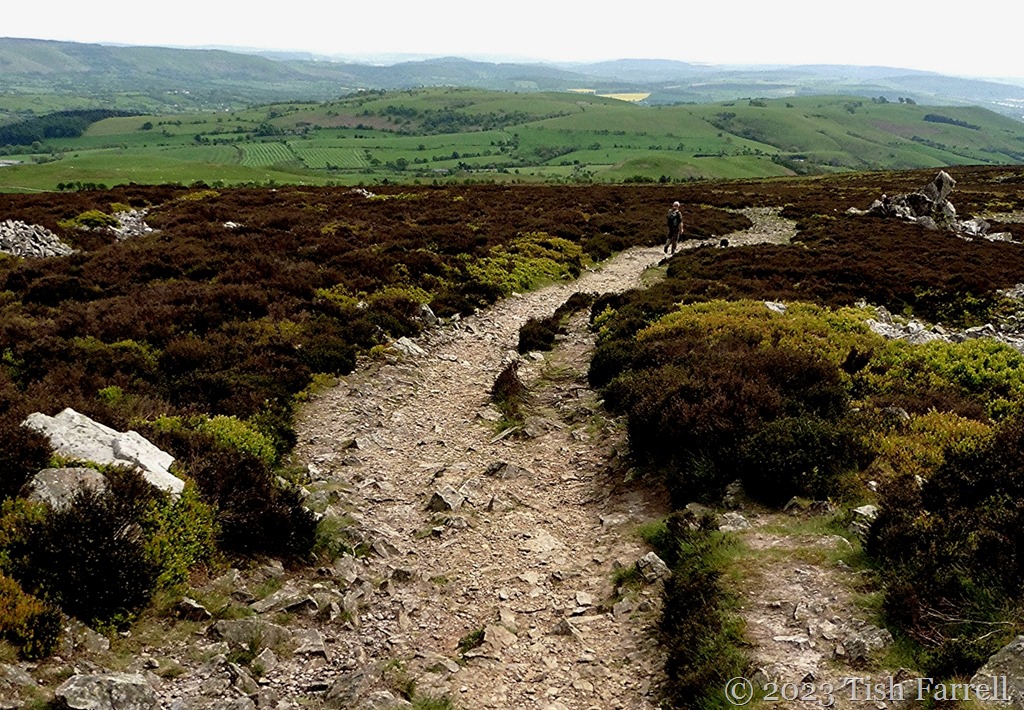
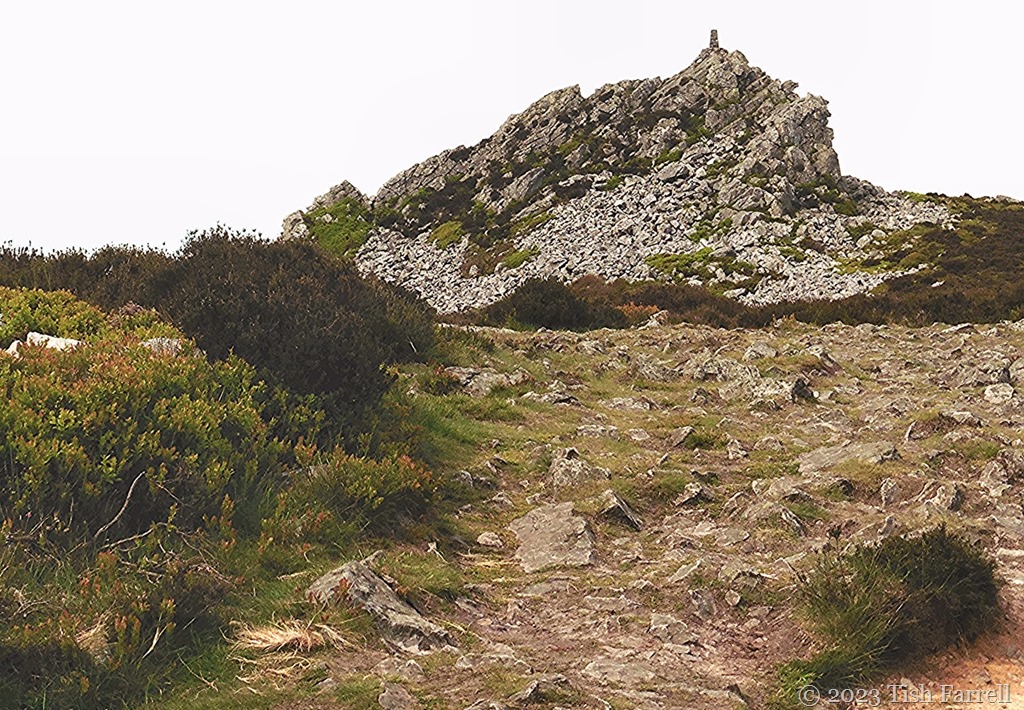
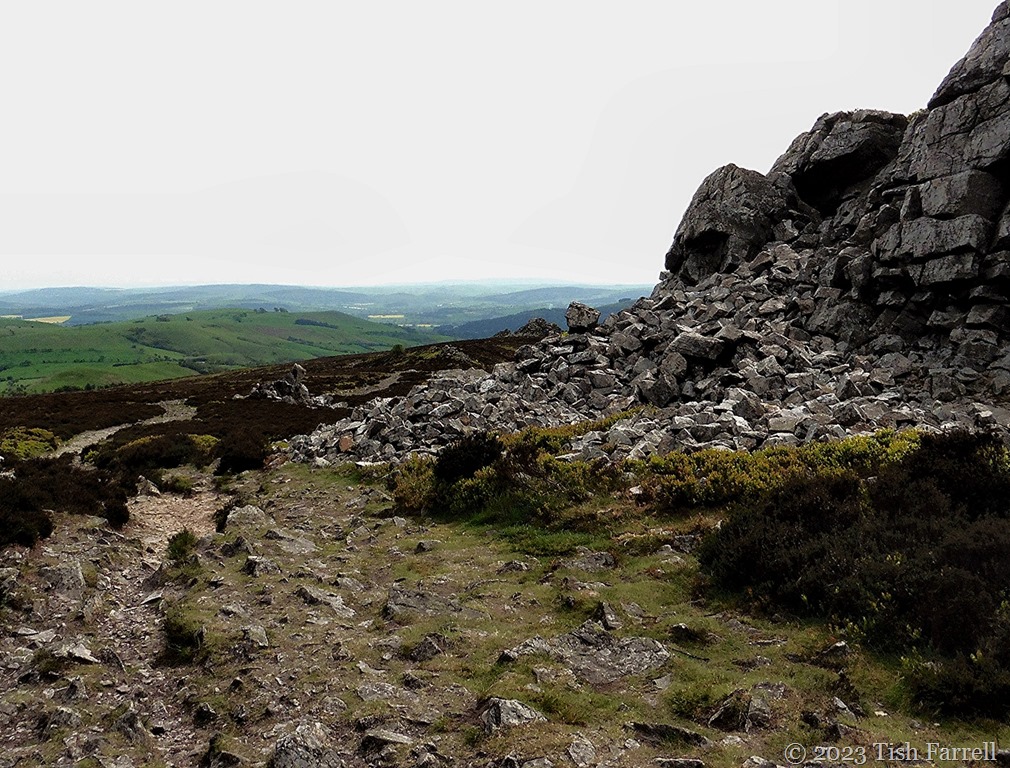
The big problem on this particular trail is the surface. The higher you climb, the worse the path becomes, forming a devilish spread of upended pointy cobbles, designed to turn ankles and gouge soles, even when the walker is shod with sturdy footwear. The wind only made navigation harder: hard to focus with watering eyes. At one point I tried deviating through the heather, but it was a struggle to stride over; and it meant walking twice as far, and the rocks still ambushed me. A retreat was called.

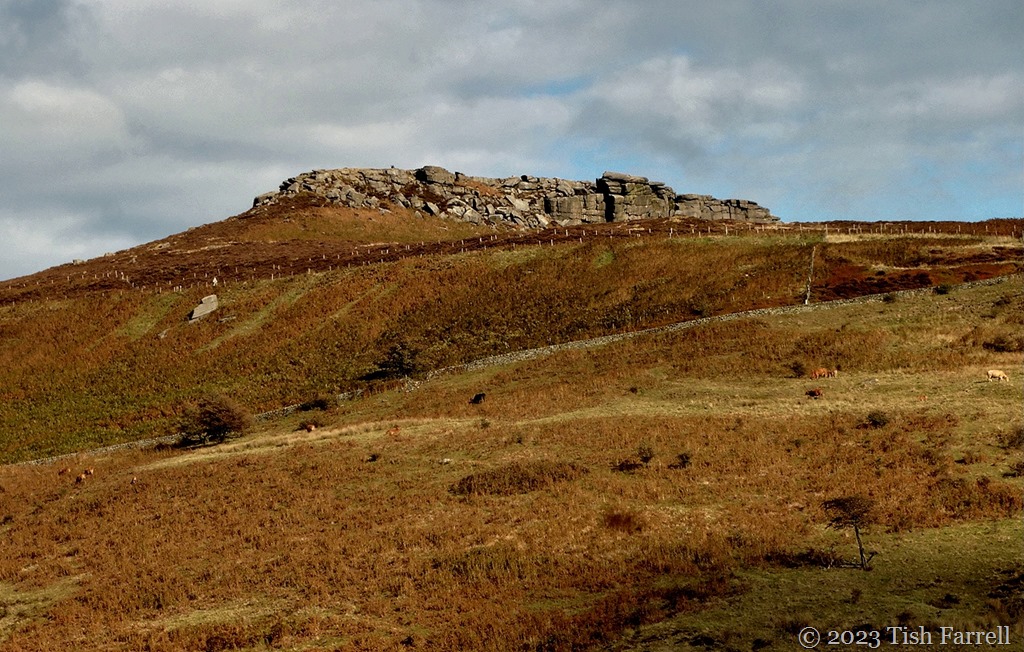
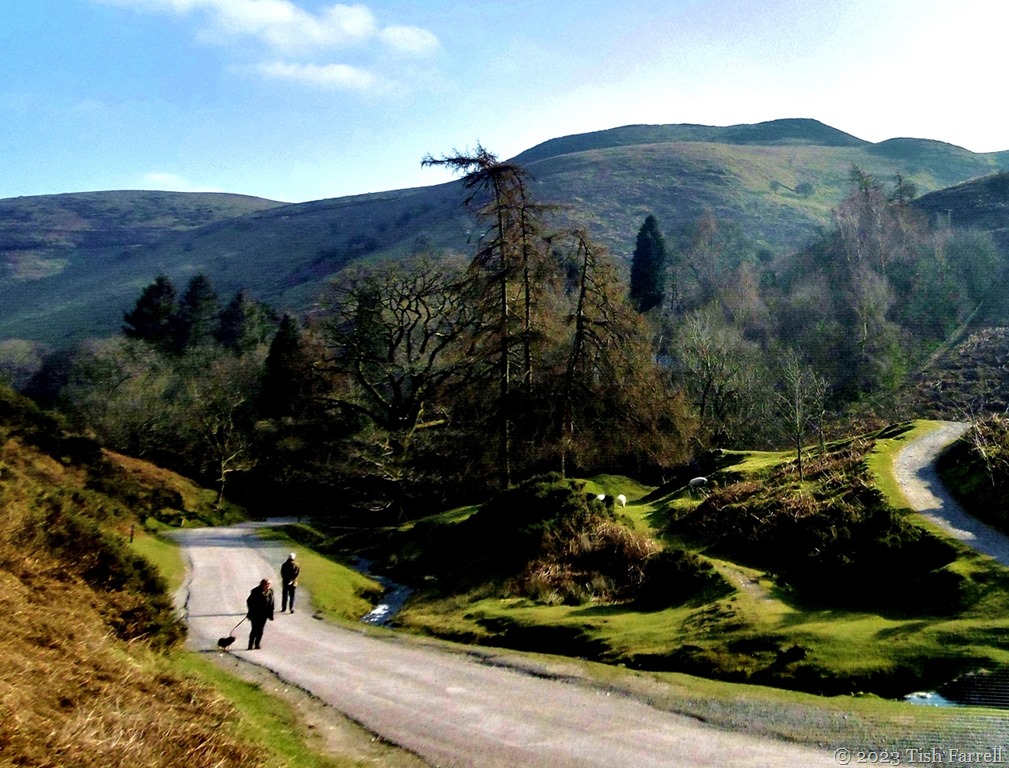
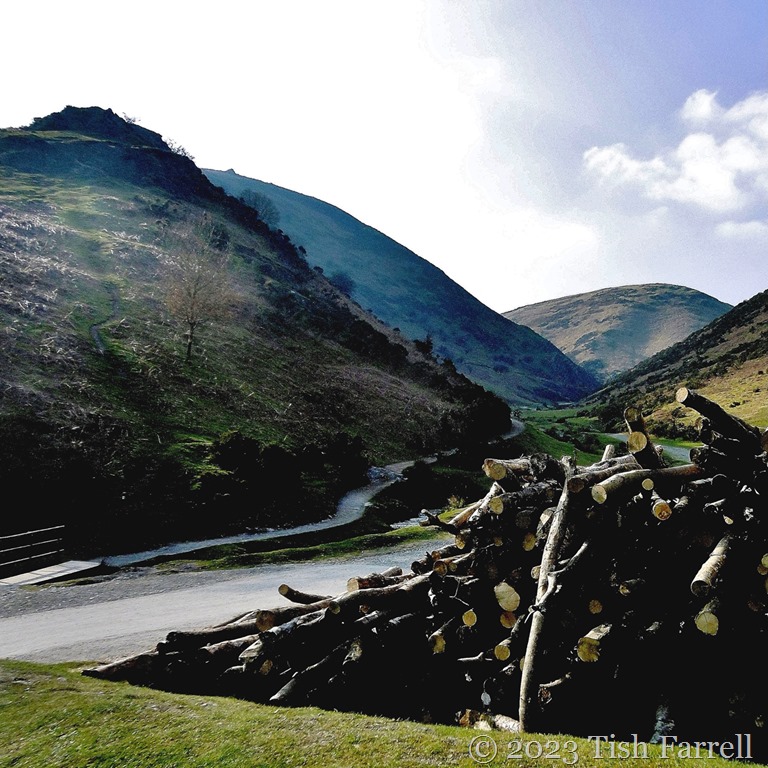
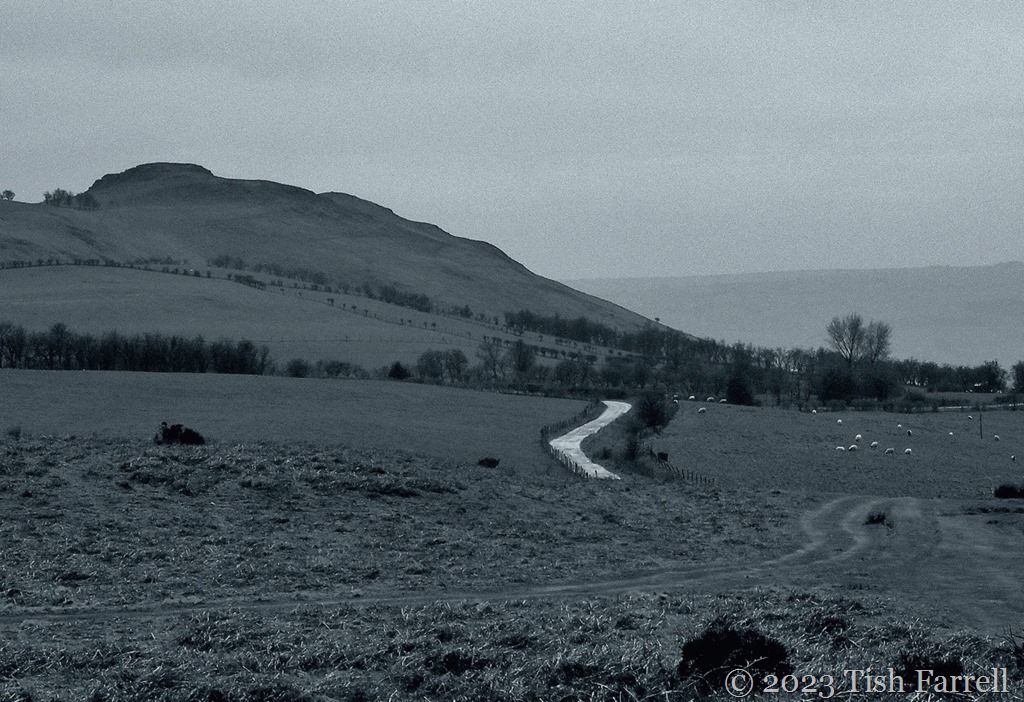
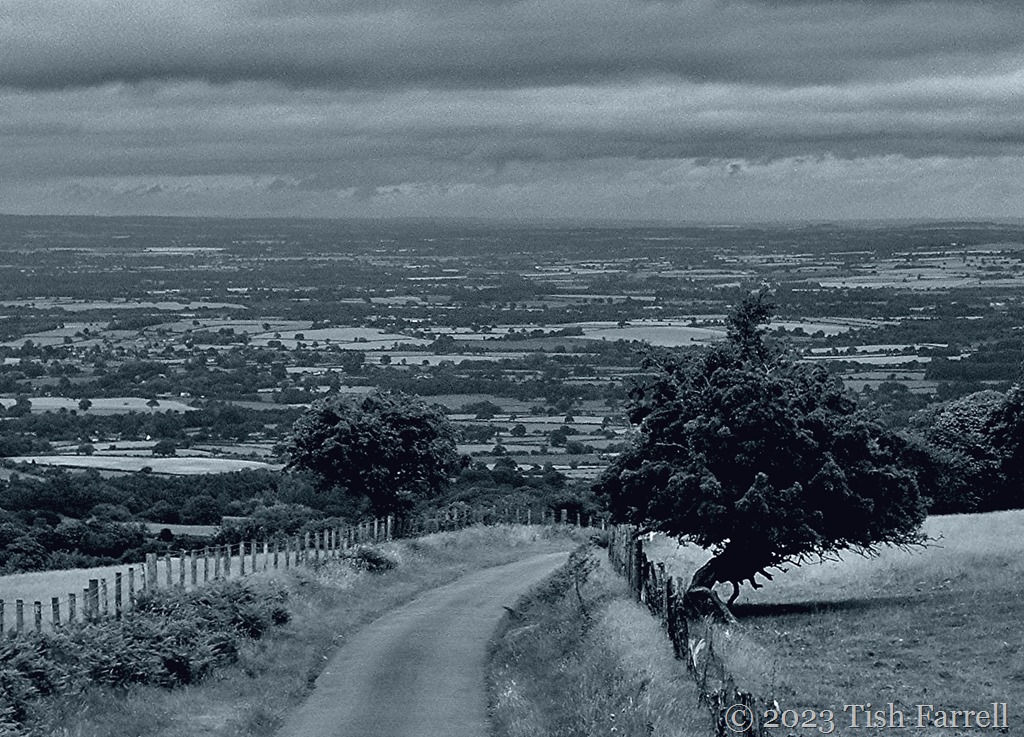
We then made another attempt on a windless sunny day, when these photos were taken, but again were defeated by the terrain; nobbled by the cobbles. Still, despite hazy skies, there were some good views of the South Shropshire Hills as we headed down. And there is no doubting: this is one dramatic landscape, the quartzite rock of the the tors and outcrops laid down 480 million years ago, then fractured and shattered during recurrent freeze and thaw phases of the last Ice Age, 15,000 years ago. Back then, the ice sheet that covered much of Britain lapped against these hills.

It’s quite a thought: the repeated cycles of warming and cooling, cooling and warming that planet earth has gone through over many million years. And here we are in a warmish interglacial (it was apparently warmer in Britain in the Bronze Age, during Roman times and in the Middle Ages), and we’re probably due another cooling, since the geological timetable appears remarkably consistent, or at least it does when one’s dealing in millennia. I’m not sure we’ll like it though, the cooling.

 P1050981ed

P1050999ed

P1050988ed

Cee’s Which Way Challenge: walks

Mysterious In Monochrome: The Shropshire Borderlands

P1030697sepia

This week at Lens-Artists, Anne from Slow Shutter Speed asks us to think about monochrome and black and white photography. Click on the link below to see her post.

My first photo here was edited from a colour image, although however it comes, it’s an odd composition. It was taken at Mitchells Fold, the Bronze Age stone circle on the border with Wales, and I was only aware of the passing figure as I snapped the shot. I neither saw him arrive, nor leave the scene. Gives one a bit of a shiver.

These next two shots were taken with my Lumix point and shoot (before it gave up the ghost), using the ‘dynamic monochrome setting’. It was midday, and in high summer, but the light was penumbral; as if the sun had been switched off. Again very strange, although you can well see why these hills inspired tales of the Devil and gatherings of evil ones whenever mist shrouded the heights.

sepia

P1080542mono

*

This last photo was again taken on the Stiperstones, but on a brilliantly sunny day – a view of the Devil’s Chair (edited from colour). It looks like a ruined citadel, the quartzite rocks catching the sunlight.

IMG_0542bw

Related post: To Shropshire’s Mysterious Stiperstones

Lens-Artists: Black & White or Monochrome Please visit Anne at Slow Shutter Speed. She’s given us a snappy little essay on this topic.

Over The Hills And Far Away…

IMG_3673

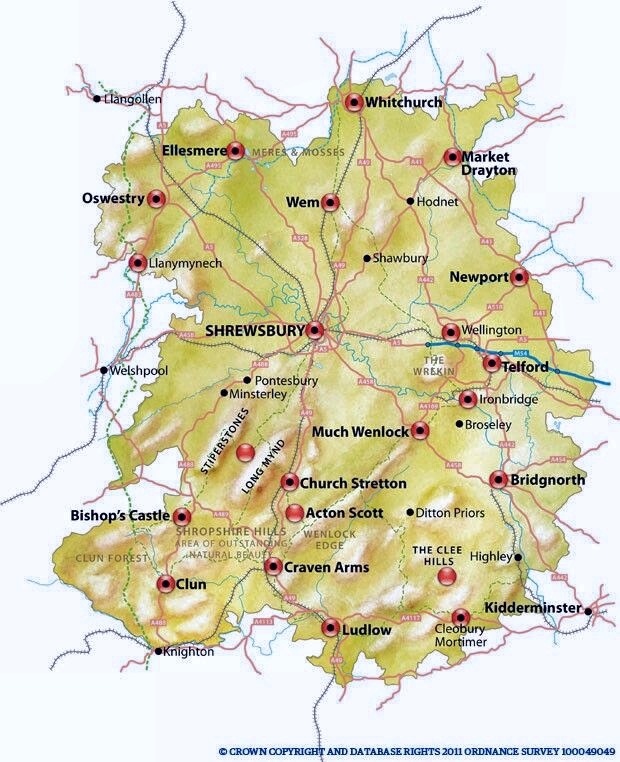
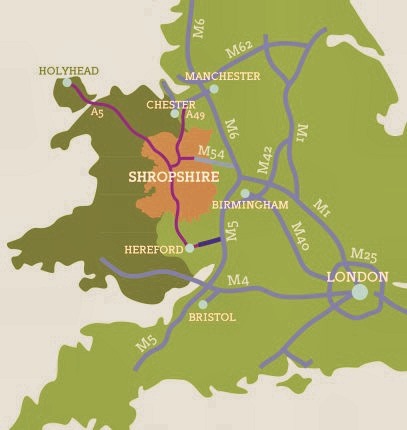
At last. We’ve landed. I’m back. And on a whole new edge; no longer Wenlock, but on the border between Shropshire and Wales. And although we are finally here in body, there’s still a sense of too long in transit; a Rip Van Winkle dislocation in time and space. So just so you and  we know where we’ve come to (from Broseley in the east to the county’s south-west corner just north of Clun), here are some maps.

03b9b2d507fc78c58ec9a4fcc2a4bbc5-2720297223

shropshire-travel-map-407x430-1174062181

*

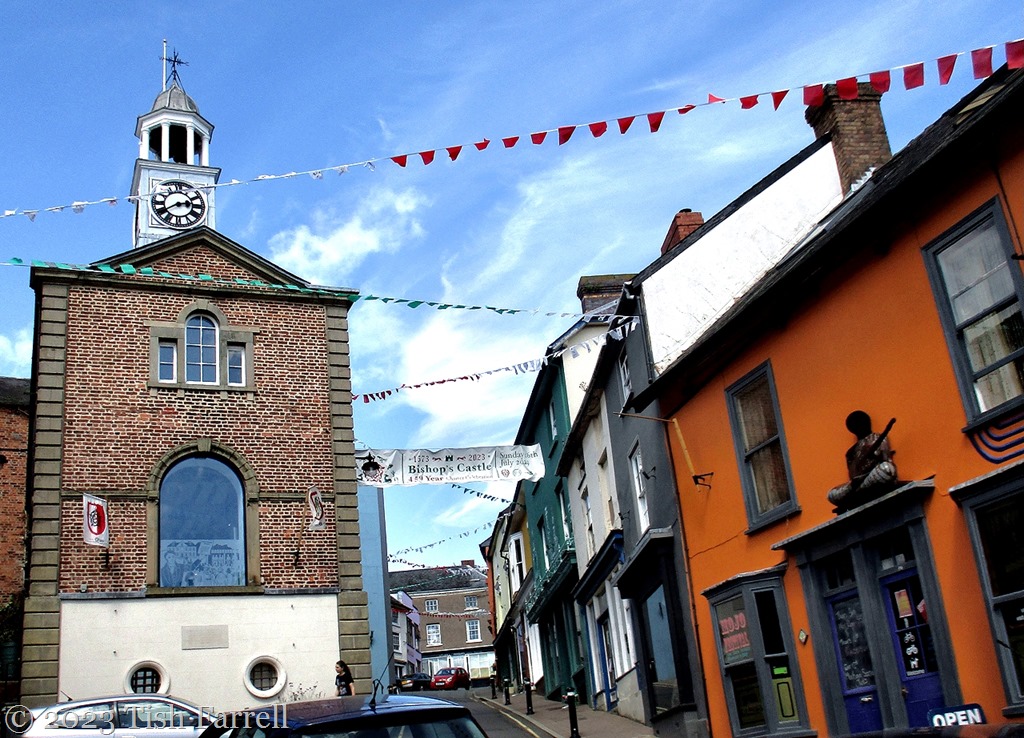
Here we are, then, in the midst of Shropshire’s hill country, not far from the Long Mynd and the Stiperstones. Nor far either from the Welsh uplands. Bishop’s Castle also sits on its own steep hill.

IMG_3642

This is the Town Hall, not quite on the summit. The clock chimes the hours and quarter hours, the plangent tones (when one is half asleep) evoking vague notions of Dylan Thomas’s Under Milk Wood, for although we lack the slow black, crow black fishing boat bobbing sea, I feel sure I will discover some equivalent.

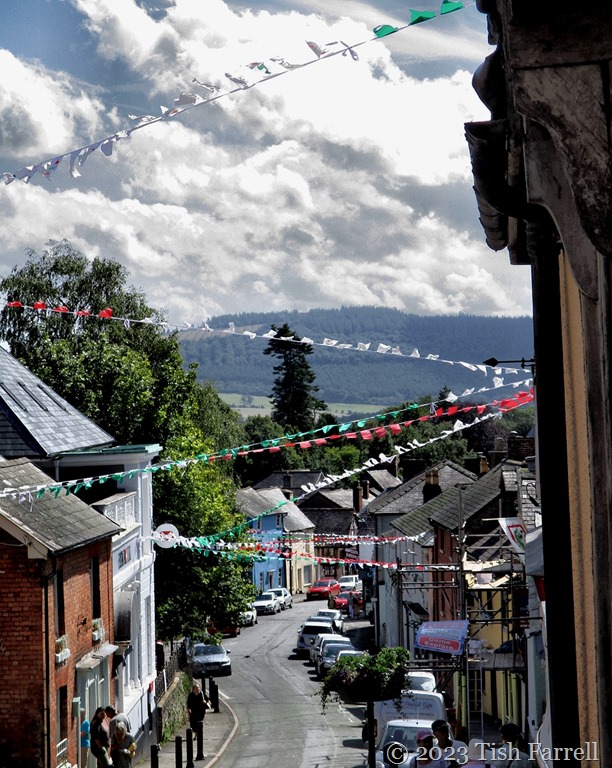
Here’s the downwards view:

IMG_3641

*

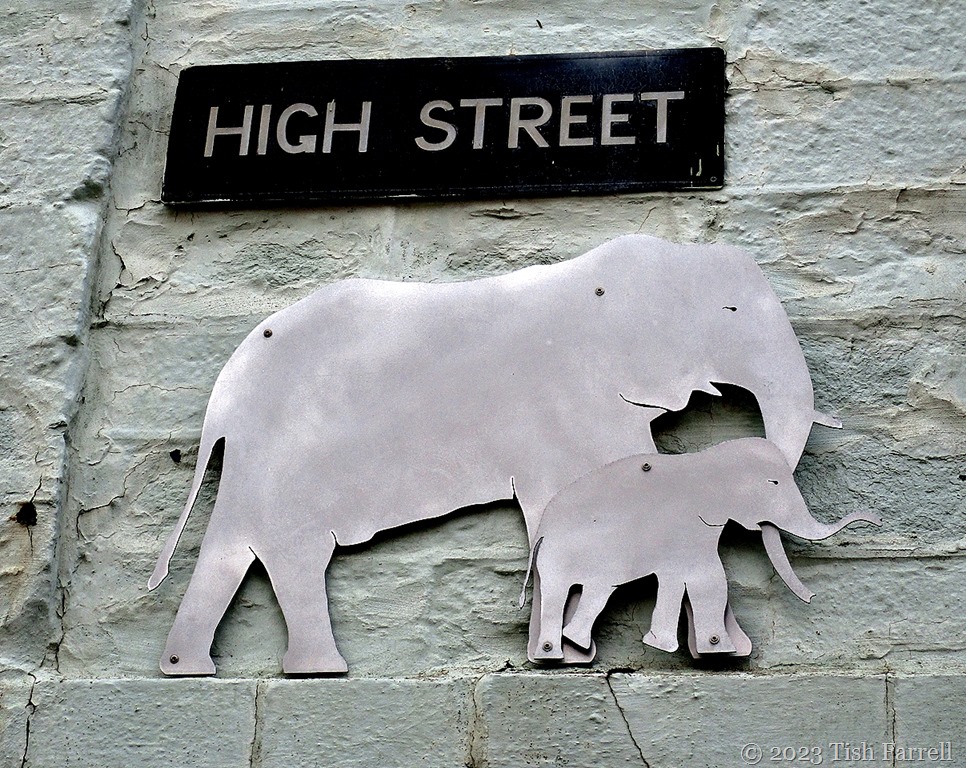
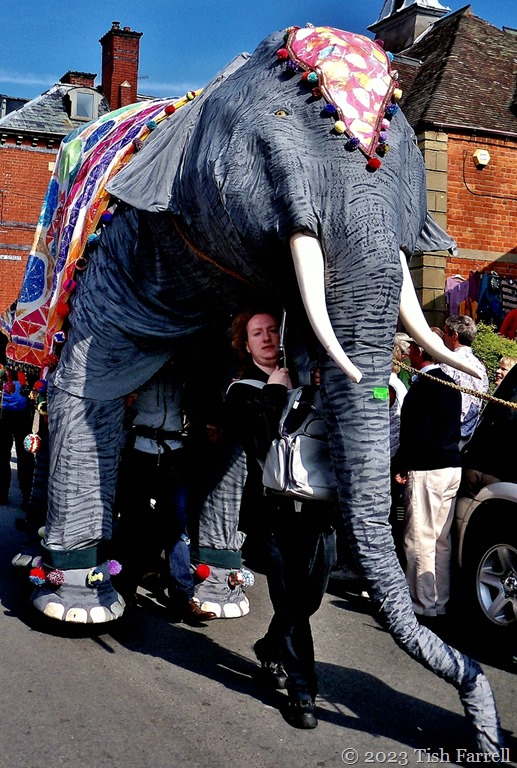
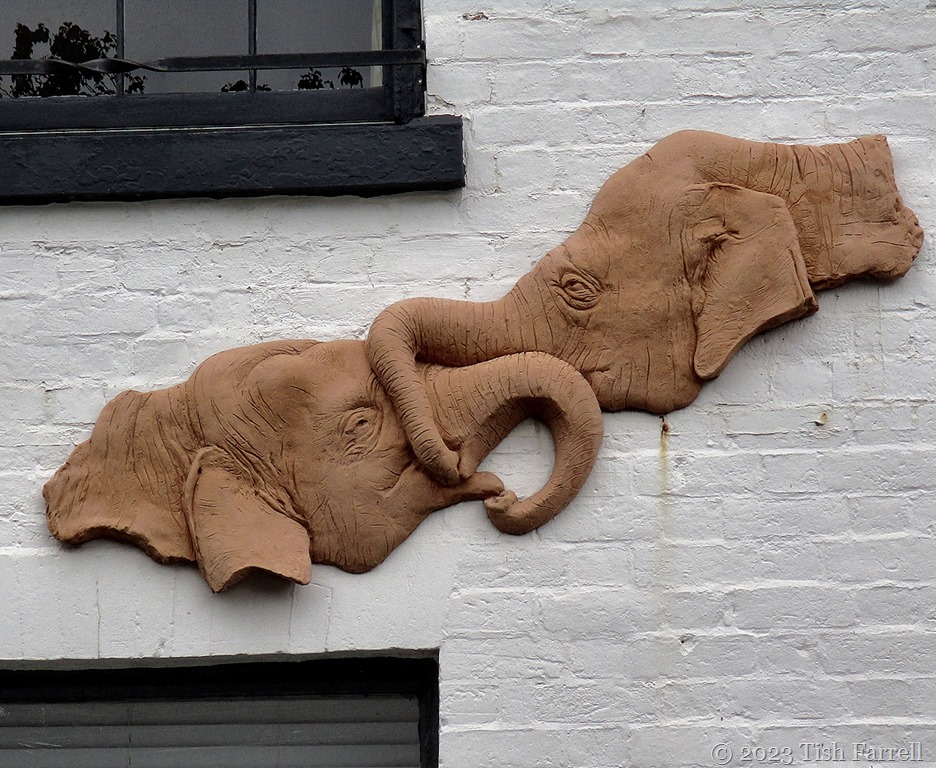
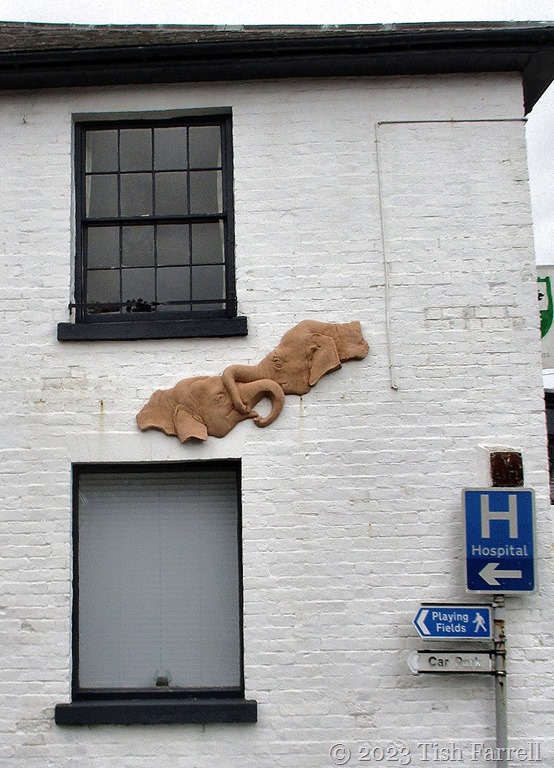
This is the High Street. Curiously perhaps, it features tributes to elephants here and there along its length. The most dramatic and near life-size version is just above the Town Hall:

IMG_3640

*

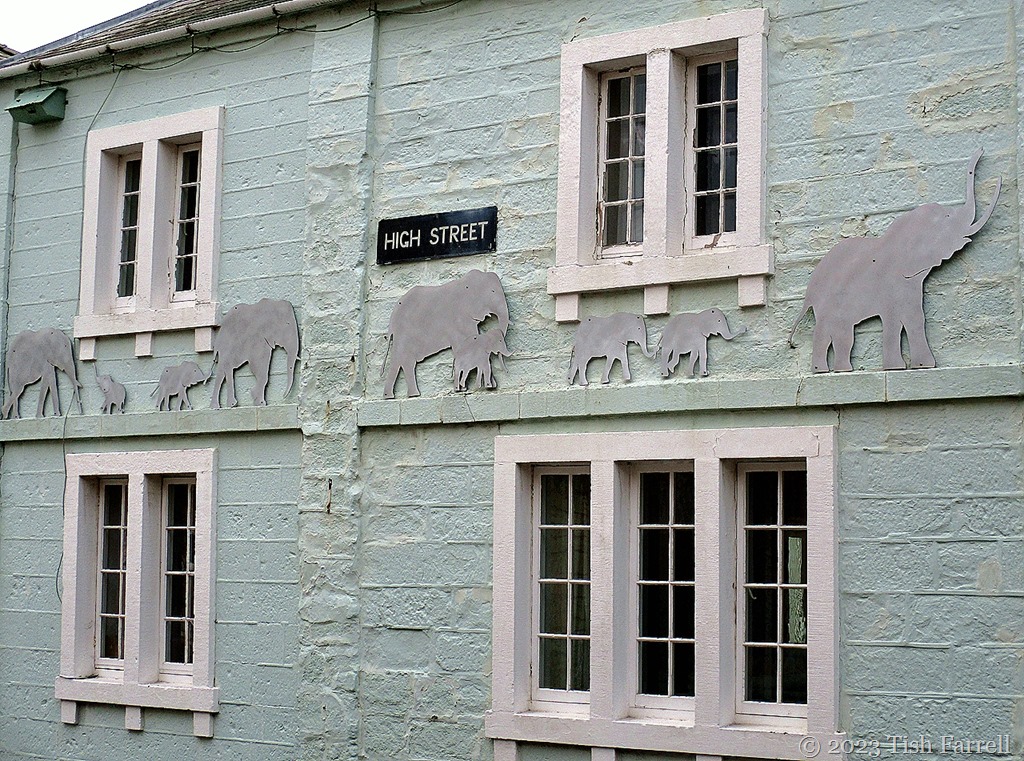
But half way down the hill we find a whole herd:

IMG_3658

IMG_3657

*

And on the corner with Union Street, our new-home road:

IMG_3668

IMG_3669

*

And why the elephants, you ask?

Well, there are two reasons.

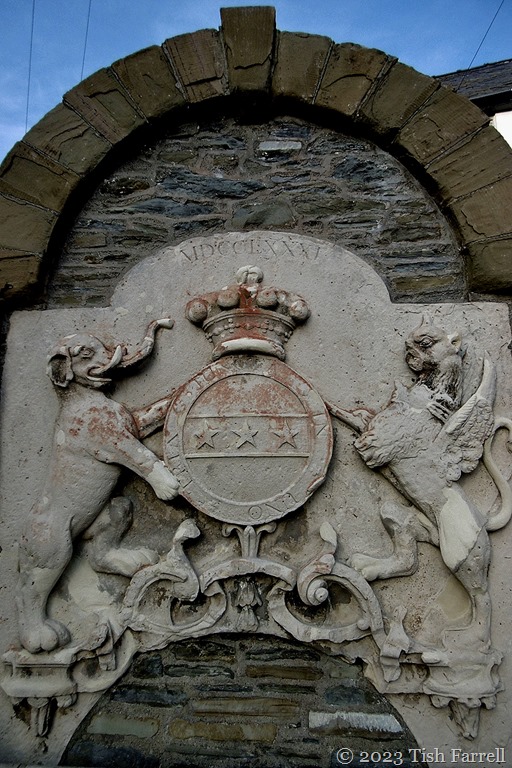
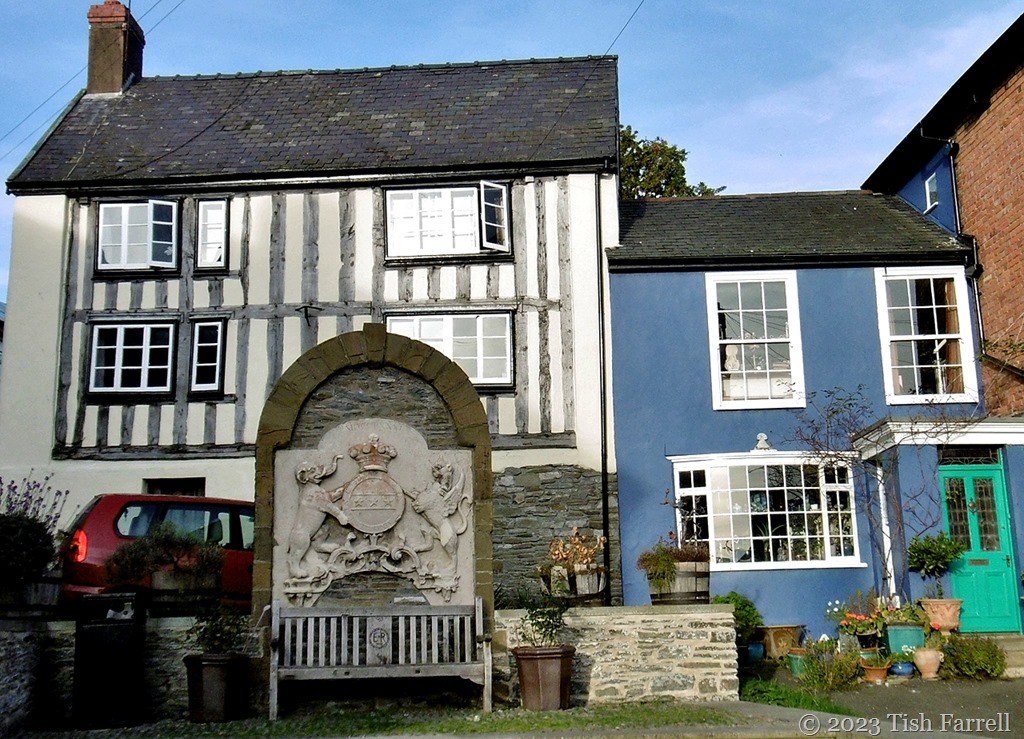
1) In the 18th century, the rapacious Robert Clive aka Clive of India, returned to England with his haul of Subcontinental booty and became Member of Parliament for the rotten borough of Bishop’s Castle. Yes, he bought the votes, folks; married into the Earls of Powys dynasty and included an Indian elephant in his coat of arms (seen here at the top of the town)

P1050898

P1050899

*

2) Across the road from the coat of arms is the Castle Hotel. During World War 2 its stables were used to shelter a number of circus elephants, keeping them safe from bombing raids. When peace resumed and the elephants returned to their owners, it is said that one remained unclaimed and continued to be a familiar sight on the town’s byways.

The Elephant Gate House where the elephants lived has been refurbished and these days is a welcoming holiday retreat for humankind.

And now there’s an elephant I haven’t mentioned, but certainly featured in earlier blog posts on Bishop’s Castle. Please meet Clive, the mascot of the town’s Michaelmas Fair which is due to happen in two weeks time (I shall report back). Meanwhile here’s a photo of him from an earlier fair day:

100_7181ed

*

While I’m here, I’d like to thank all of you who wished us well with second house move since March. Those kind thoughts surely worked, and all went smoothly, and without the snowstorms of the first move. Though on the leaving day I was mightily caught out. Such is the fickleness of the human heart, but I felt more sad about leaving Broseley after a mere six months than ever I did about leaving Wenlock after sixteen years. Goodness! Where did that come from?

But then I probably do know. I fell in love with Broseley’s Jitties, the town’s meandering alleys and pathways that resonated with centuries of people history – of miners and iron workers, potters and clay pipe makers, water carriers and maypole dancers; and all discovered in a place I thought I knew.

It’s a lesson to carry onward. Don’t take things for granted. Look beyond the obvious. And I know very well that Bishop’s Castle has a myriad of tales to tell, from the ancient and antique to the quirkily new. It’s certainly home to many busily creating people.

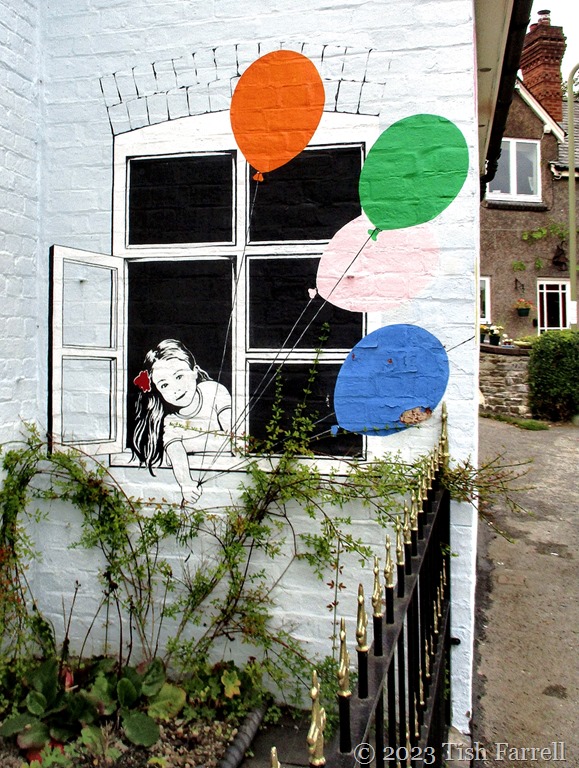
And on that note, here’s a cheery (elephant-free) artwork from the end of our road. You  can’t help but smile:

IMG_3670

*

PS: the header photo is the view from our bedroom window – if I stand on tiptoes.

Simply Does It

P1070611cr

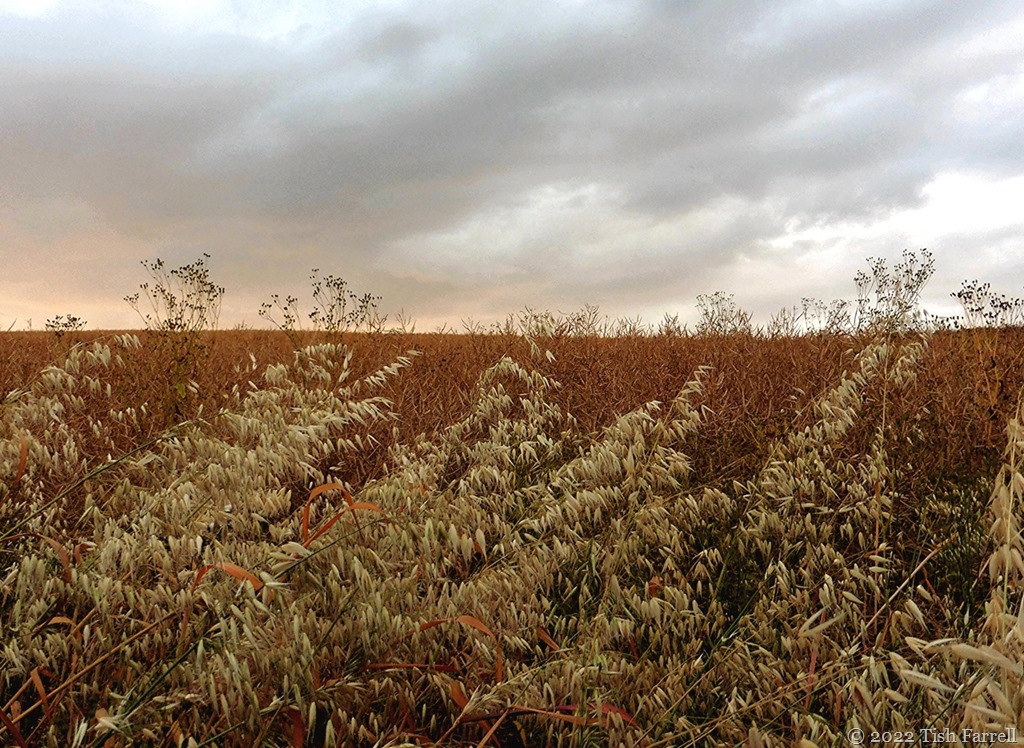
Wild oats and a summer storm brewing: I liked the muted tones in contrasting textures.

*

These convolvulus flowers seemed to light up a shady corner:

100_6691

*

The barley field: shades of green with front row sgraffitto effect:

IMG_0222

*

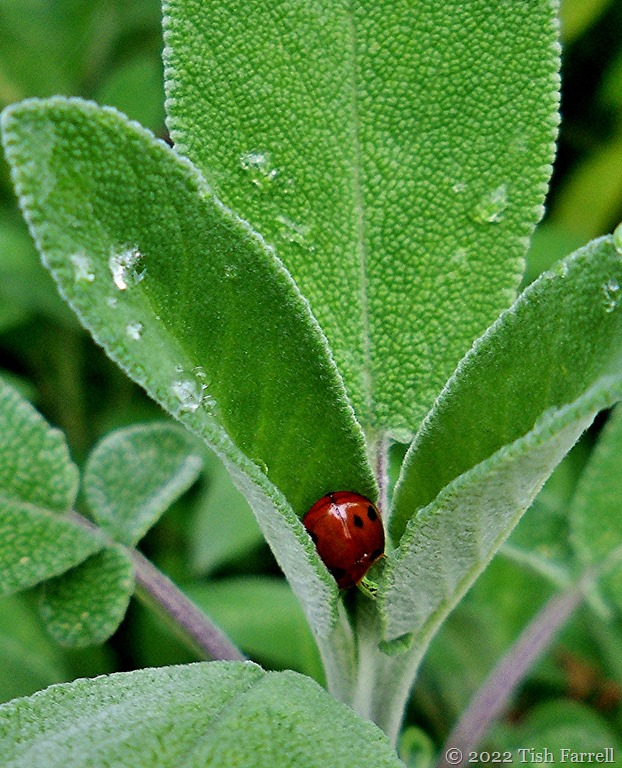
Ladybird sheltering in a sage leaf – what’s not to love?

100_6855

*

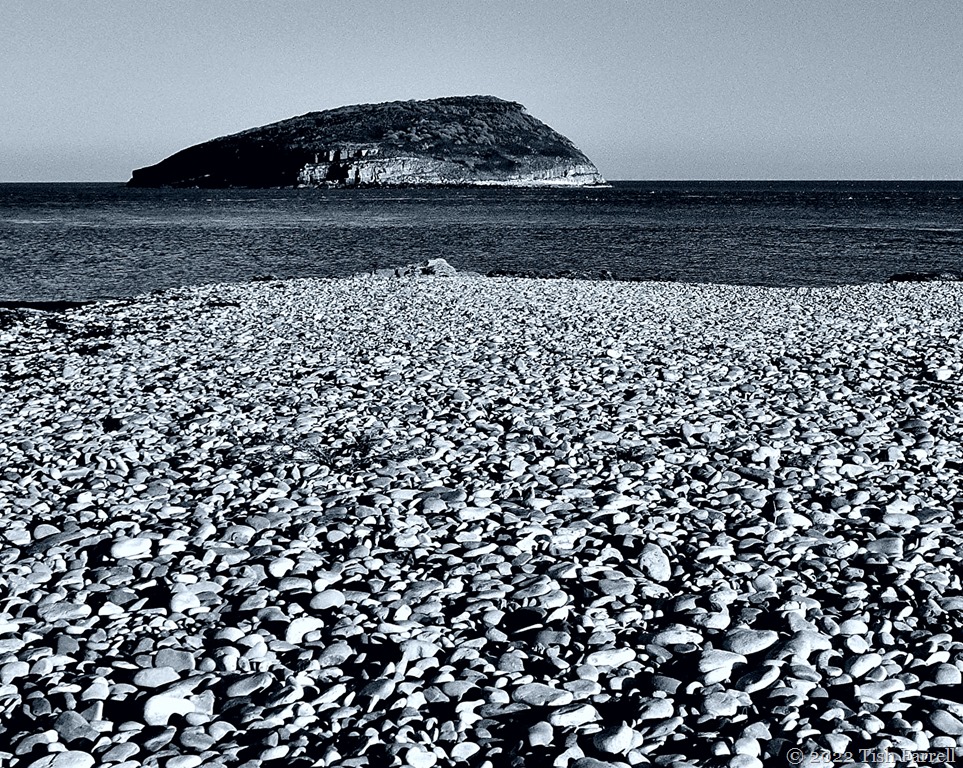
And finally – three photos taken at Penmon Point on the island of Anglesey. In descending order: view of Puffin Island;  looking across Menai Strait to the Welsh mainland;  boy looks at lighthouse.

P1060570cr

IMG_6205

p1060566

Lens-Artists: Simplicity  This week Philo at Philosophy Through Photography sets the theme. Please go and see his inspiring examples.
Nice To Meet Ewe…

Stiperstones 2

*

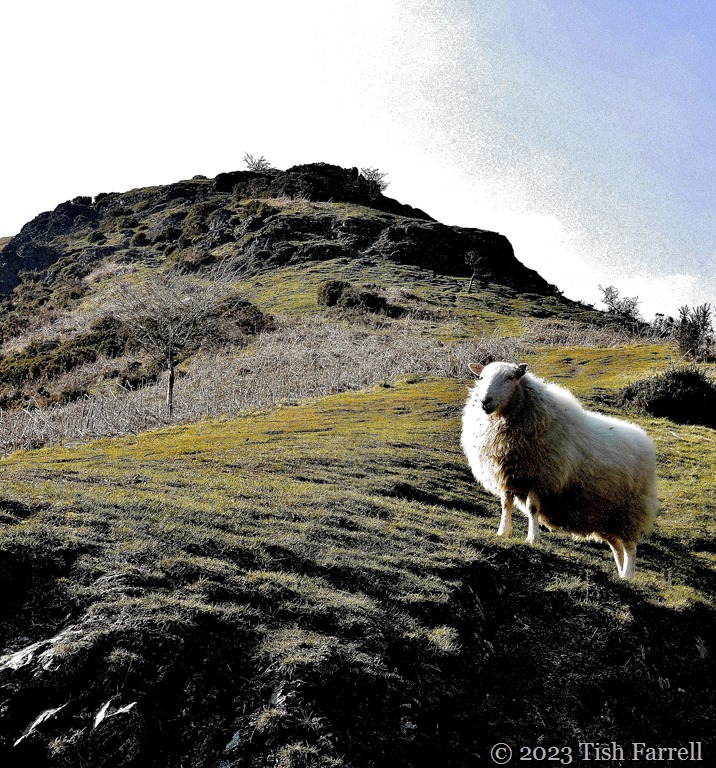
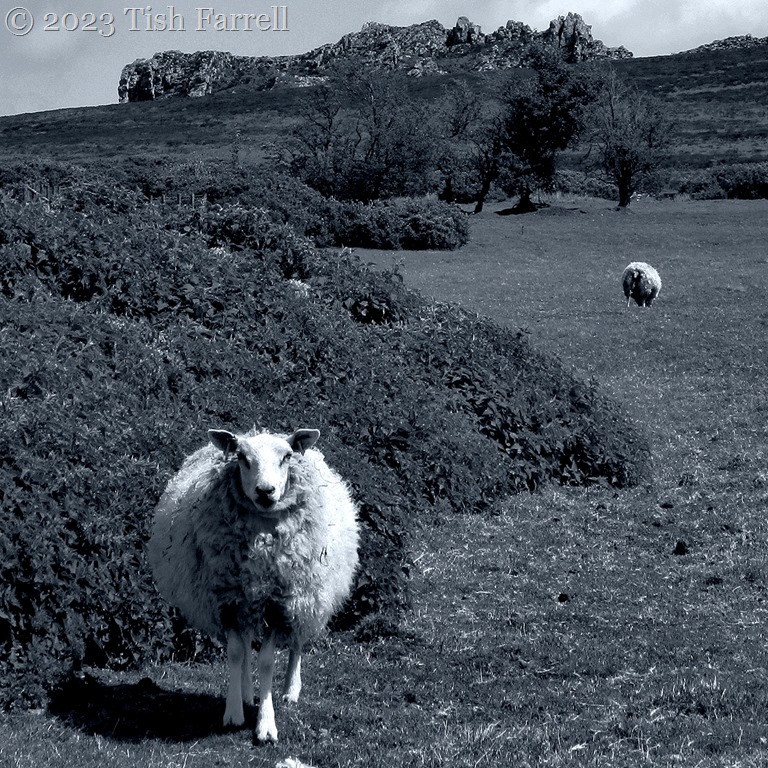
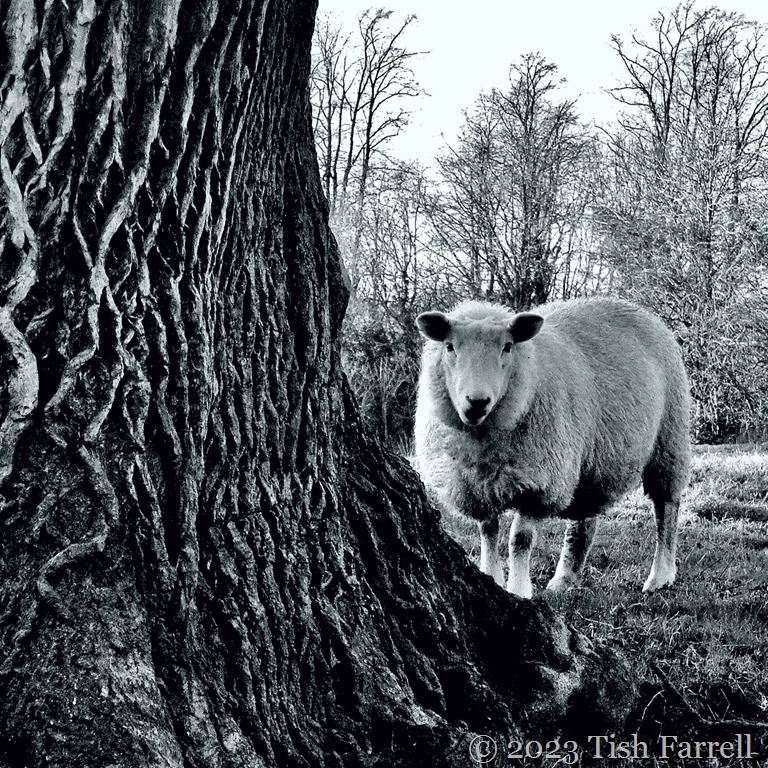
The sheep eyeing me here is posing so neatly beneath the rocky outcrop of the Devil’s Chair. She is clearly untroubled by that landmark’s eerie and supernatural  associations.

This is a stunning landscape, the hills rolling westwards out of Shropshire and into Wales. But it is no easy place to live, the ground marginal, rocky and exposed to all weathers. These days, many farming families struggle and must deploy much ingenuity to keep a viable foothold in the small upland communities, sheep being the primary source of income. Yet, as managed wildernesses go, this is surely priceless terrain; rightly protected and designated an Area of Outstanding Natural Beauty.
It is also a landscape that has been inhabited across five and more millennia. The prehistoric people who lived here left us many signs of themselves – their cycles of living and dying, their field systems and burial cairns, house circles, standing stones, hillforts and henges. The fields, in particular, appear to be at altitudes too exposed for successful cultivation. But then there is also evidence from various post-glacial times indicating the climate was warmer than today, particularly during in the Bronze Age. So perhaps those prehistoric farmers did enjoy their place in the upland sun and a spell of good growing and grazing.
Shropshire hills

There are other historical ironies. The whole locality is riven with old lead mine shafts and workings, some dating from Roman times, but most belonging to the lead mining heyday in the 1850s when the nearby Snailbeach Mine employed 500 men and was known as the richest land per acre in Europe. It is hard to comprehend this now.  Other valuable minerals were also extracted: barytes (the main source of barium used in the taking of X-rays), zinc, calcite, fluorspar and even some silver.

Now lamb chops are the primary resource along with farmhouse B & Bs catering for holiday hikers and cyclists. But also, we can be glad to hear, after many difficult years, hill farmers are now being given credit and support as they continue to farm environmentally protected landscapes.

Here’s a nice story of smallholder Hare Hill Farm and how its owners are making a living with sheep and vegetable growing.

*

a

*

Corndon Hill, Powys border sheep country.

Photo taken from Mitchells Fold Stone Circle

*

P1080526

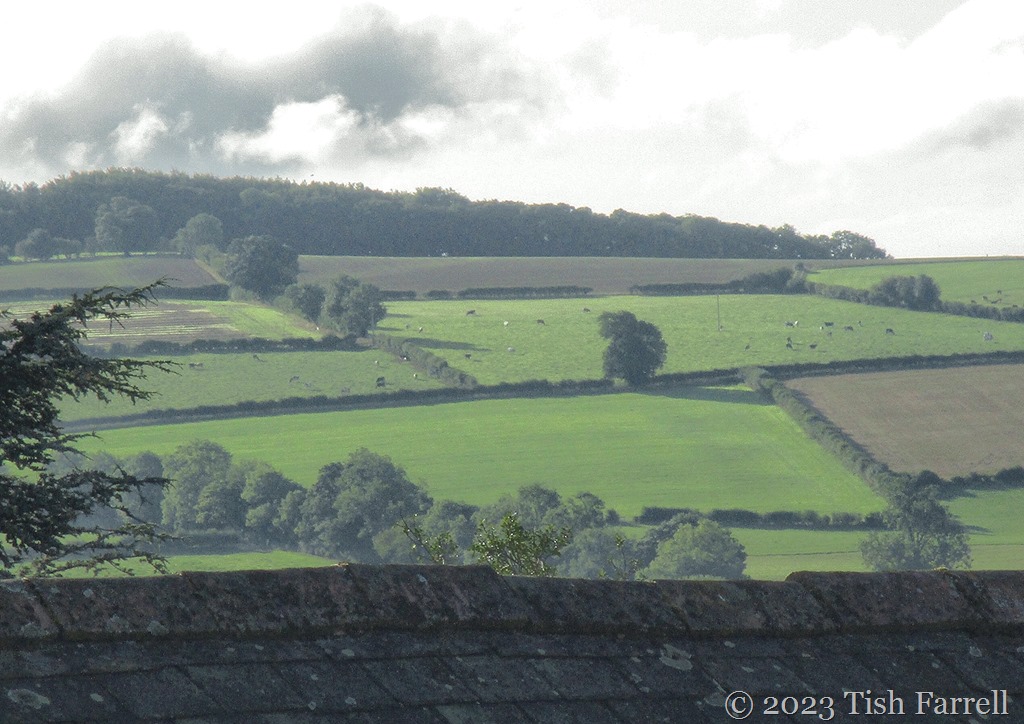
By contrast, the easterly parts of Shropshire below the hill country, are plain-like. As you can see, it is largely farm fields and scattered habitation. Most production is arable (wheat, barley, hay, oil seed rape, root crops including sugar beet, maize) with some beef, pig and dairy farming.

Photo taken from Shropshire’s most famous hill, the Long Mynd.

*

And now for a favourite sheep photo. One of a flock of sheep, so I was told, brought from Wales to Much Wenlock for a spot of sheltered winter grazing on the Wenlock Abbey estate.

sheep

*

To find out more about Shropshire’s Area of Outstanding Natural Beauty and all the things that go on in our beautiful uplands, take a look at the AONB site HERE. Lots of stunning photos.

*

Cee’s Black & White Photo Challenge: all things farm related

This Was May, But Is It Spring?

IMG_3313

It certainly looked like spring as we pursued our May explorations of Broseley’s lanes and jitties – but then looks can deceive. The trees in these photos may be bursting with greenery, the hawthorns hanging in blossom, and the cottage gardens bright with late spring flowers: Welsh poppies, columbines, clematis and wisteria, but this past month has been COLD. Even on the sunniest days we have had winds that feel as if they have just blown over an ice field. In fact, come the first of June, we switched the central heating back on for a spell.

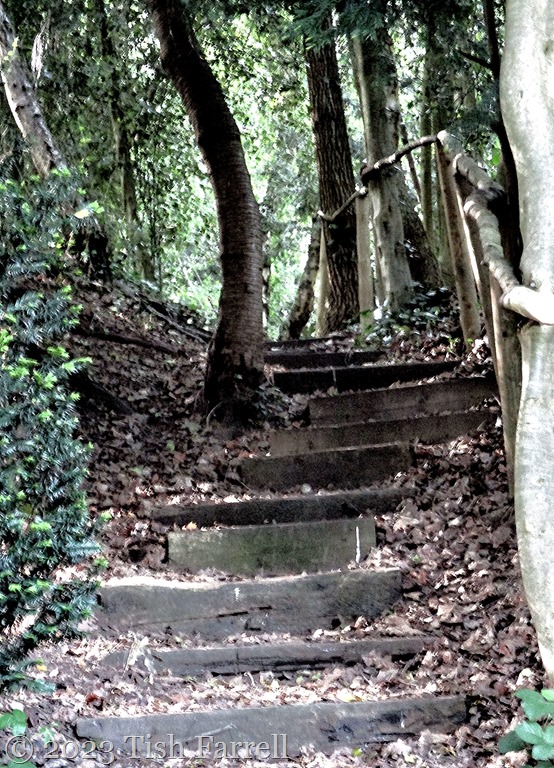
Still, we’ve not let draughty climes stop our walks. We’ve made some special finds too, in particular the Haycop Nature Reserve, a wooded ridge a short walk from the High Street. It was once a coal mine (1760-1860), the coal extracted from it coked and used for firing two nearby blast furnaces. Later it was used to fire local brick kilns.

The mine shafts were capped in the 1970s and the ground reverted to grazing land. Then in 2007, the Haycop Conservation Group began restoring the natural habitat, including the pond that had once been the holding pool for pithead winding gear. This week when we visited the flags were definitely ‘flying’:

IMG_3370 cr1

IMG_3369cr

IMG_3363

*

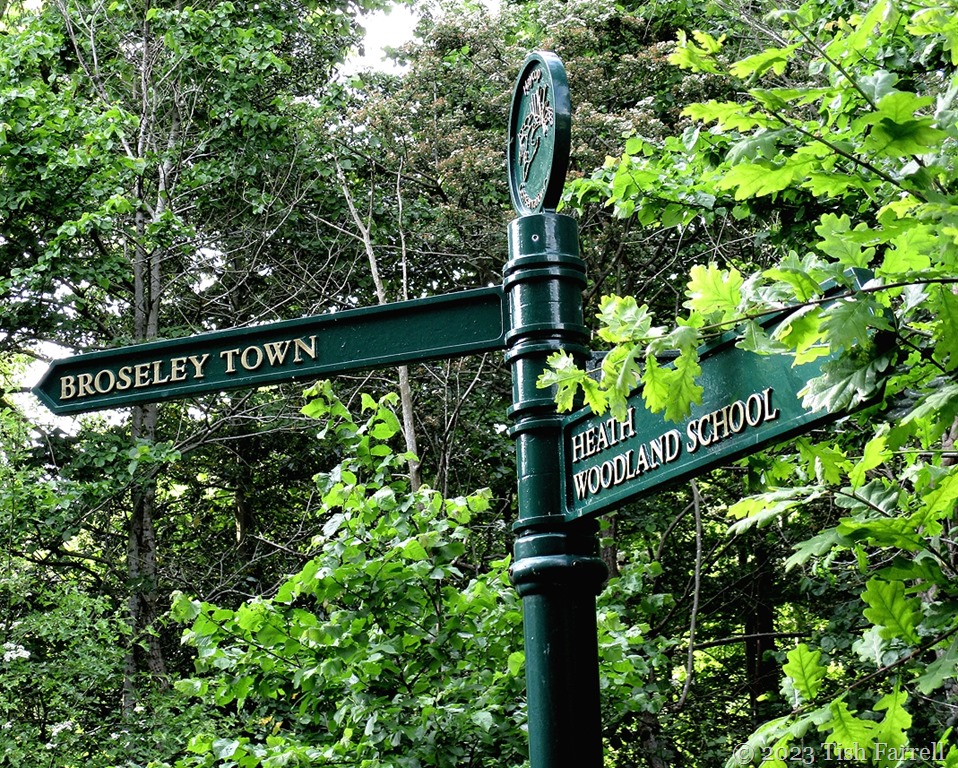
The 9-acre site is a warren of trails through mature woodland, meadow and heath, the main paths smartly sign-posted at intervals, and provided with information boards highlighting the local wildlife, including several varieties of butterflies, moths and dragonflies and some 58 bird species, among them sparrowhawks and nuthatches. From the top of the ridge there is a fine view of the parish church, All Saints, built in 1745 and an excellent example of the perpendicular:

IMG_3383

IMG_3378

IMG_3385

IMG_3381

*

Looking at these views now, it’s hard to envisage Broseley in its industrial heyday (17th to early 19th century), the fumes from steam engines, furnaces, kilns and coking ovens, the clatter of waggons on the network of wooden railways, the carts pushed by humans, hauling coal, bricks and iron through the town to the River Severn.

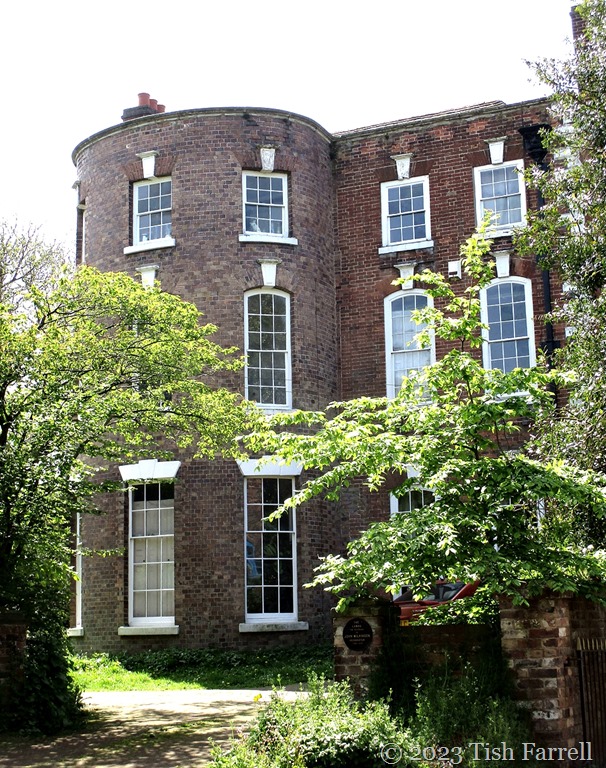
One of Broseley’s famous industrialist residents was John ‘Iron Mad’ Wilkinson, who pioneered the use of cast iron, including the first iron boat, and the accurate boring of cannon. By way of thwarting any attempts of industrial espionage, his two furnace sites were in secluded spots just outside Broseley at Willey, on land owned by the lord of the manor. From 1763 he lived in the town, not far from the church, leasing a rather grand house called ‘The Lawns’. Nearby was a building wherein he operated a mint, producing his own token currency, a common practice among ironmasters to keep their workforce in thrall.

IMG_3268

The Lawns was first leased by John Wilkinson in 1763. Later it was the home of porcelain manufacturer, John Rose, who founded the nearby Coalport China Works

*

IMG_3271

John Wilkinson’s mint, next door to The Lawns.

*

IMG_3321

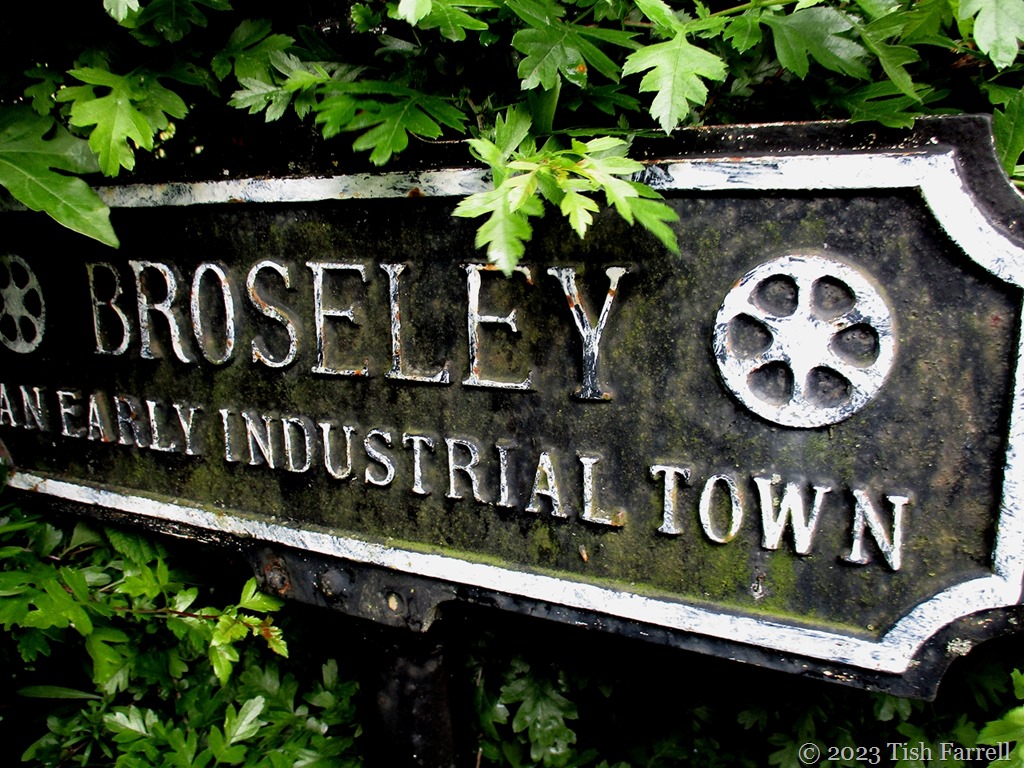
This town boundary sign takes a bit of spotting; the hawthorn hedge is definitely winning.

*

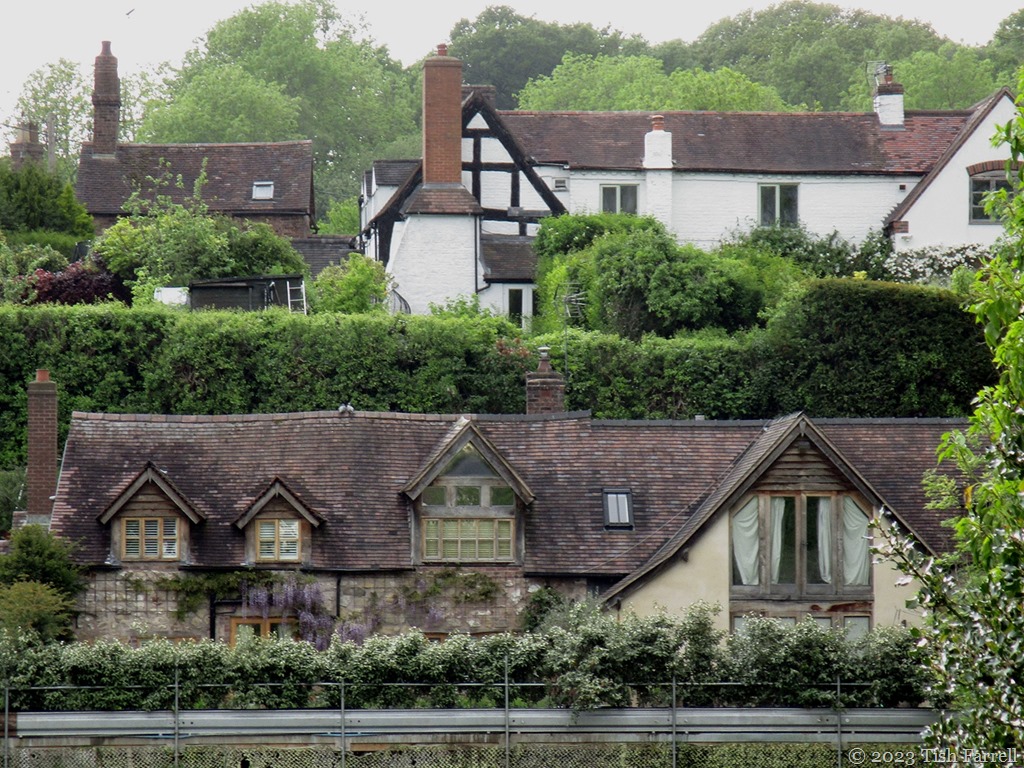
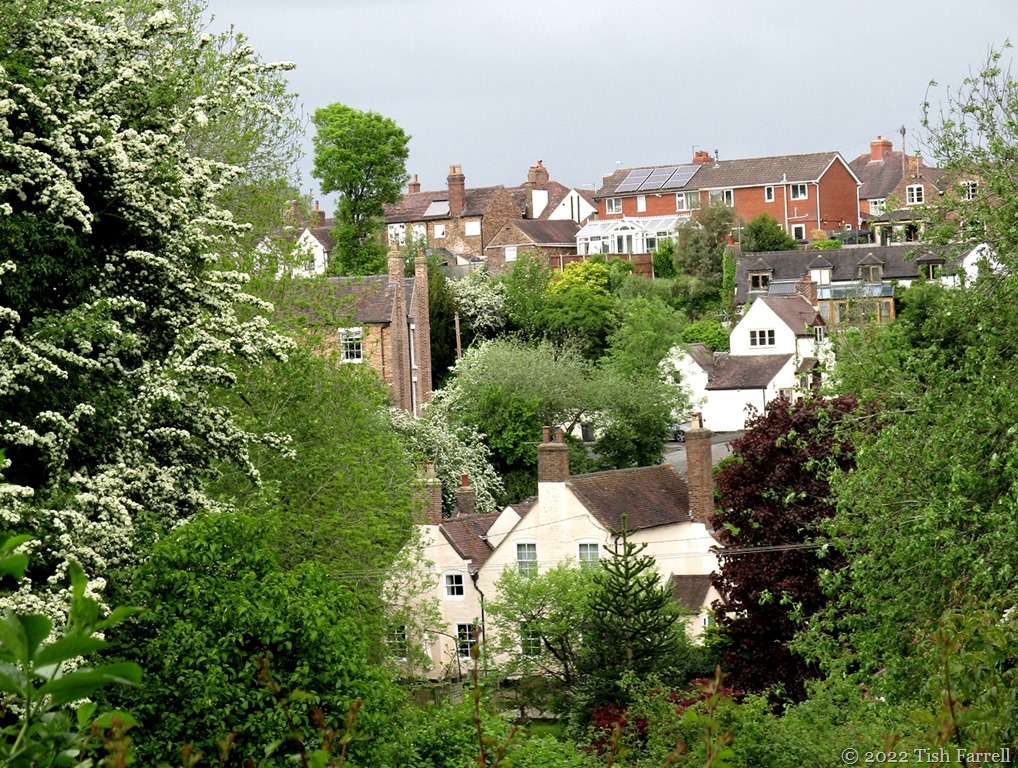
And now for a few ‘hanging’ roofscapes in and around the Broseley Wood jitties:

IMG_3283

IMG_3312

IMG_3320

Speeds Lane – John Wilkinson’s personal railway apparently ran down here to the River Severn – the waggons loaded with iron from his Willey Furnaces

*

And to finish – another visit to the Quarry Road duck and hen ‘farm’:

IMG_3395

The Changing Seasons: May 2023

Kindly hosted by Brian and Ju-Lyn. Please go and see May in their respective home territories – Australia and Singapore.