Out in the Midday Sun: Running Ostrich and Ngong Hills

197

This week over at Paula’s  Thursday’s Special she is inviting us to break rules with our photo taking. This shot of a camera-shy, and thus fleeing male ostrich was taken in Nairobi National Park. I expect when I started to focus on him, he was facing the other way; after all, who wants a snap of an ostrich bum. (I should say that ostriches, so G tells me, are the only birds with external genitalia, and believe me they are surprisingly impressive when glimpsed, though thankfully not visible here).

Also one of the main rules of photography in Africa, particularly when  you are close to the Equator, was simply not to bother trying during the middle of the day. All colour tends to leach away; there may be a heat haze and also dust in the air; and the landscape maddeningly flattens out and stops looking magnificent.

But that is all very well. What else can you do when you find yourself in a Kenyan game park is in the middle of the day. It’s the kind of thing mad dogs and English persons do. Photos had to be taken, and of course later discarded.

The thing I like about this photo, being hooked on Karen Blixen’s Out of Africa, and the ‘I had a farm in Africa, at the foot of the Ngong Hills’ line, was that while I was concentrating on the ostrich, I inadvertently captured the Ngong Hills in distant blue profile. Though largely static, earth tremors apart, they were also hard to photograph. Here, though, I caught them, and you can well appreciate how they got their name, derived from a Maasai word meaning  fist. See those four clenched knuckles.

Otherwise, nothing much is in focus here except perhaps for big bird’s blousy white feathers. All sense of movement is truncated, ‘frozen’ in time under the fierce tropic sun. I still like the photo though.


copyright 2015 Tish Farrell

Elephant tribe versus Man tribe: and how the bees are helping

We’ve been watching a very heartening series on BBC i-Player The Secret Life of Elephants. It followed the magnificent conservation work being carried out by Save The Elephants, a charity that operates in Samburu, Northern Kenya, and relies on the cooperation between  the nomadic Samburu people, local smallholder farmers and scientists from Kenya and beyond.  One of the key initiatives is to put tracking collars on the matriarch leaders of particular elephant clans, and also on the large bulls who, outside the breeding season, lead more solitary lives.

Elephants may cover vast distances in the course of their annual migrations. But once they leave the national parks they are more vulnerable to poachers, and also to irate farmers who are tired of having their year’s livelihood consumed in a single night. By tracking and mapping the herds’ movements on computers, and  maintaining channels of communication with the pastoralists and farmers, Save The Elephants researchers  are working out ways to lessen conflicts, and present solutions, and above all, to secure the future for wild elephants.

The Samburu pastoralists have always been wise enough to respect elephants, and are now anxious to do what they can to protect them. This is their view on the matter:


The first man said the elephant is like us, like our brother, and we have to live together, not hunt elephant. That’s what we say we were told at the beginning. That’s what we still believe. The elephant has always been, and will always be, special to us. This is why we protect it now.

Samburu people on the importance of elephants


Scan-130608-0001


For farmers it is a very different matter. People are often killed trying to drive elephants out of their crops.  And so one of STE’s objectives is to work out the best place to erect elephant fencing so that elephants can be channelled away from farming communities as they pass by on their seasonal trek between the river where they congregate to breed,  and the mountain forests where they go to browse.

Fencing, though, is not always the total solution it seems. Elephants are not daft. The old bulls have learned  how to open gates onto the vast European wheat farms that lie to the west of Mount Kenya. But while the large-scale producers can tolerate some elephant grazing, smallholders cannot. For them it is a matter of living or starving.

One of the STE researchers, Dr. Lucy King has come up with a very simple, low-tech and productive approach to keeping elephants out of Kenyan farmers’ cabbage fields.  It began with the discovery that elephants will move off if they hear the sound of bees buzzing. African bees are especially aggressive, and on a very short fuse temper-wise. She thus came up with the notion of placing beehives around farm fields.

Traditional African beehives are made of lengths of hollowed-out tree trunks that are then suspended in trees. These were hung at intervals on the field perimeters, and connected up by tripwires. When the elephants tripped the wires, the hives were duly shaken and out would swarm the angry bees. Elephants would then beat a retreat, leaving farmers with both their crops and a new source of income from the honey.

As Colonel John ‘Hannibal’ Smith was so often wont to say in The A-Team: “I love it when a plan comes together.” In this case, though, it is clearly the work of the B-Team.

Copyright 2015 Tish Farrell


Related:

I’ve written more about elephants in Elecommunication: So Many Connections

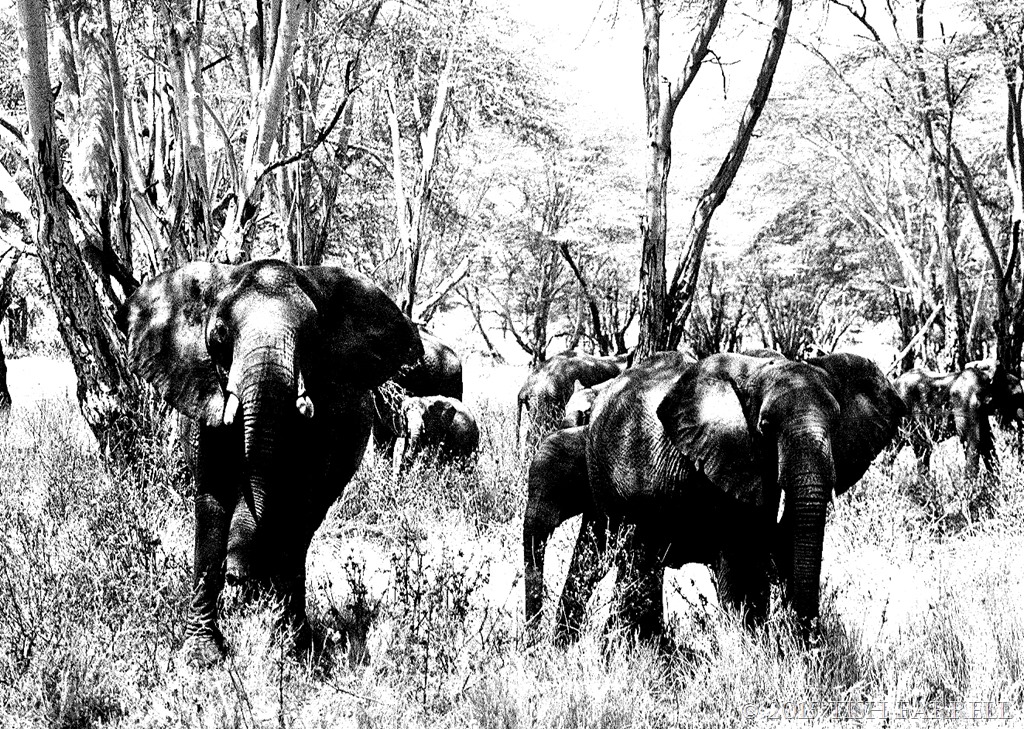
And last but never least, thanks to Paula at Lost in Translation and her guest challenger, photographer Guilhem Ribart. TRIBE is the prompt. For more interpretations, please also follow this link.  I should add that my photos here were taken in Lewa Downs which is part of Save The Elephants’ sphere of operations. The original negatives are very degraded, but seem to have a new lease of life translated into B & W. In fact they also seem to capture the elephantness of elephants rather better than the colour originals, which is interesting when you think about it.

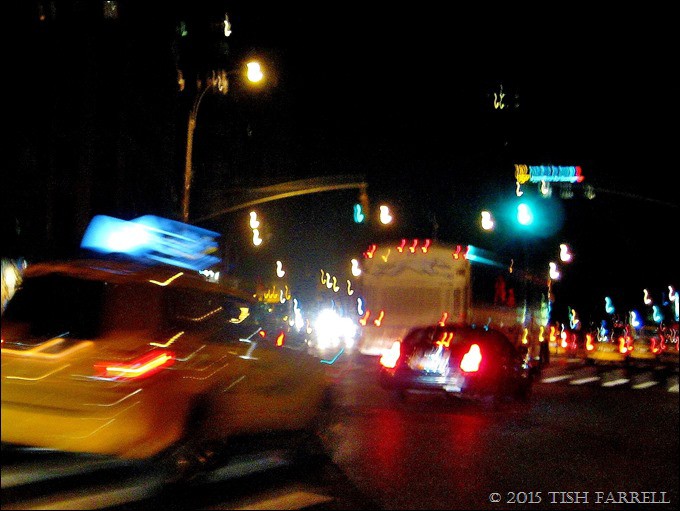
Night-time on Broadway ~ look out, the music’s escaped…

This week artist, Suzanne Miller, is Paula’s guest at Thursday’s Special, and she has challenged us to think and look at our photographs in a more abstract way. This photo was taken after a trip to the New York Ballet at the Lincoln Centre. I’m rather fond of ballet, and had been very much looking forward to the show, but after the first forty minutes, I was so bored I succumbed to rather more than forty winks. It was far more exciting out on Broadway.

To see Paula’s and others’ response to ‘abstract’ go to her post at Thursday’s Special


Life Imitating Art Imitating Life…?

P1000380 - Copy (2)

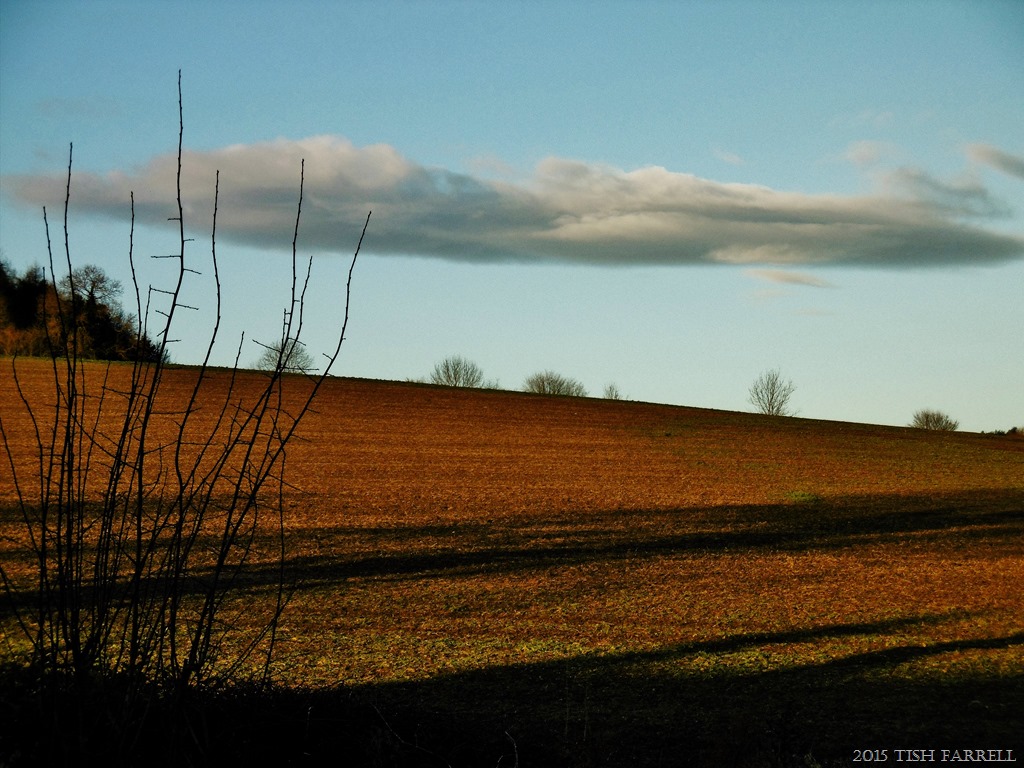
I snapped this the other morning with my little Lumix ‘point and shoot’. It’s the view from our bedroom window. The light was extraordinary, and when I looked at the image again it reminded me of  René Magritte’s The Golden Legend  –  also a view from a window, although with the interesting addition of flying baguettes. What do you think?

René Magritte

You can find out more about Magritte HERE. I like the way he challenges our ingrained perceptions.


To the Isle of Dwynwen, Welsh Saint of Lovers

100_7117

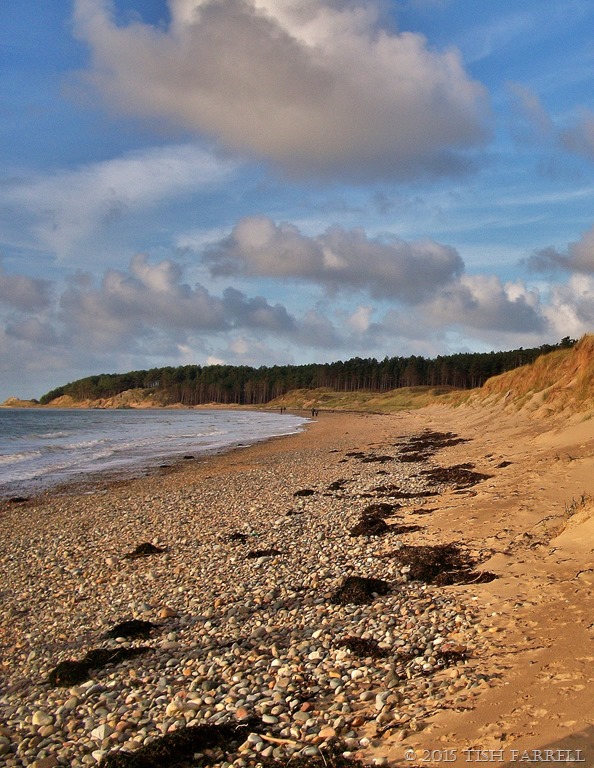
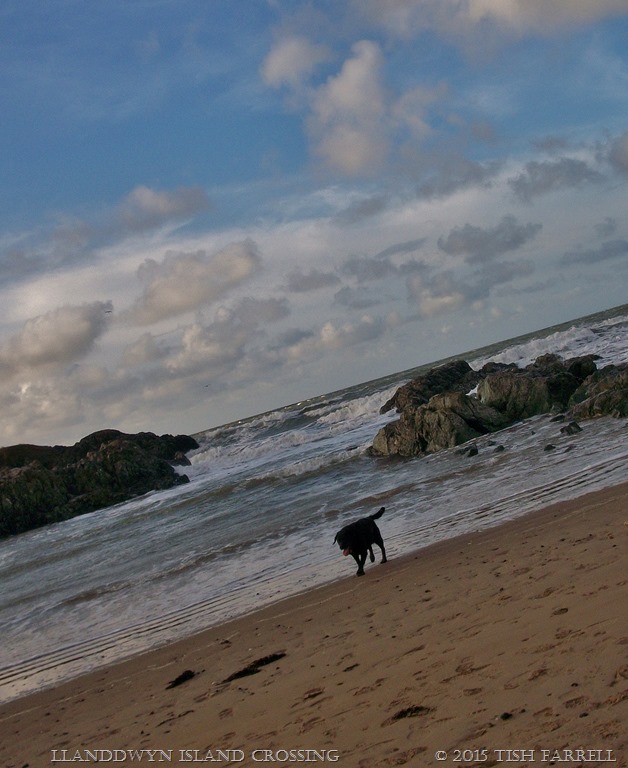
Christmas morning and we find ourselves in a general pilgrimage of families and dogs. We have all had the same idea: to trek along Anglesey’s Newborough Beach to Ynys Llanddwyn, the island sanctuary of Dwynwen, Welsh patron saint of lovers.

100_7140

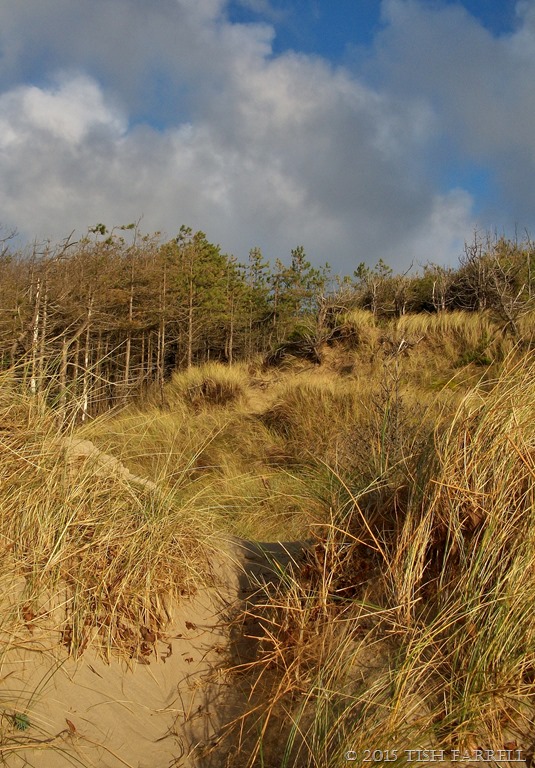
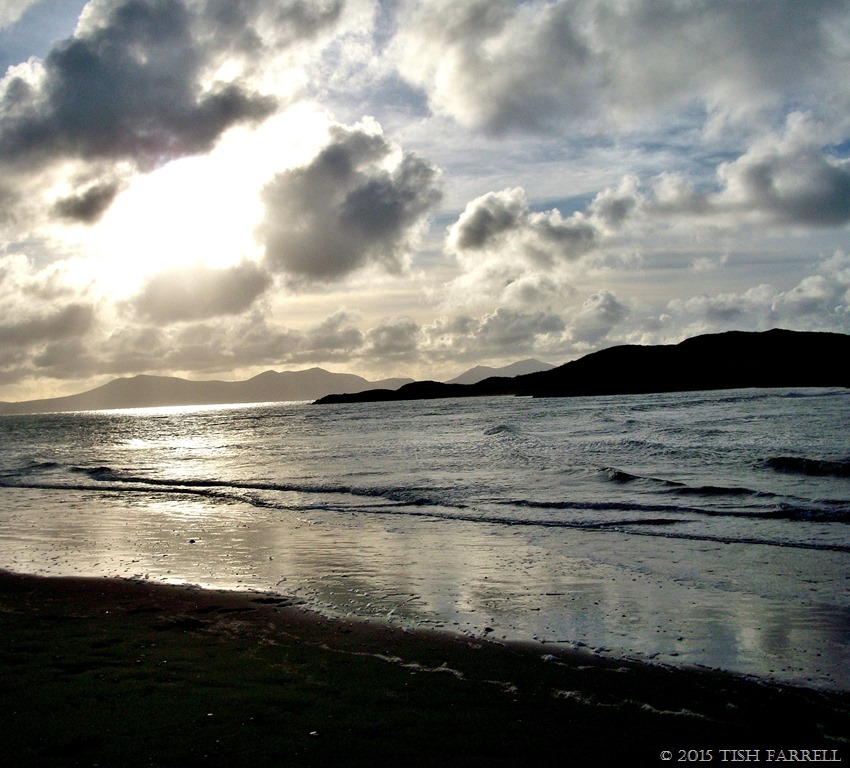
As you can see, the day was brilliant, but down on the shore the wind was bitingly cold. It was a challenge to take photos, but taken they must be. For one thing, the views across the Menai Strait to the mainland’s Llŷn Peninsula were mesmerizing, and had to be captured.

100_7187

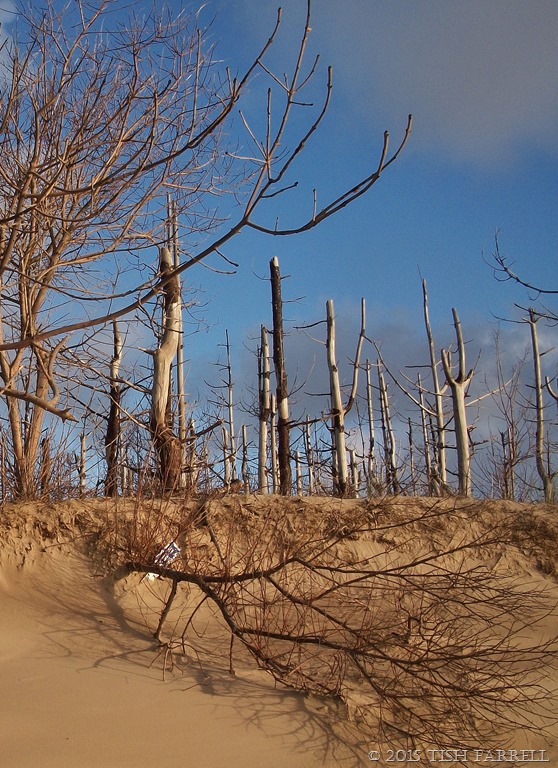
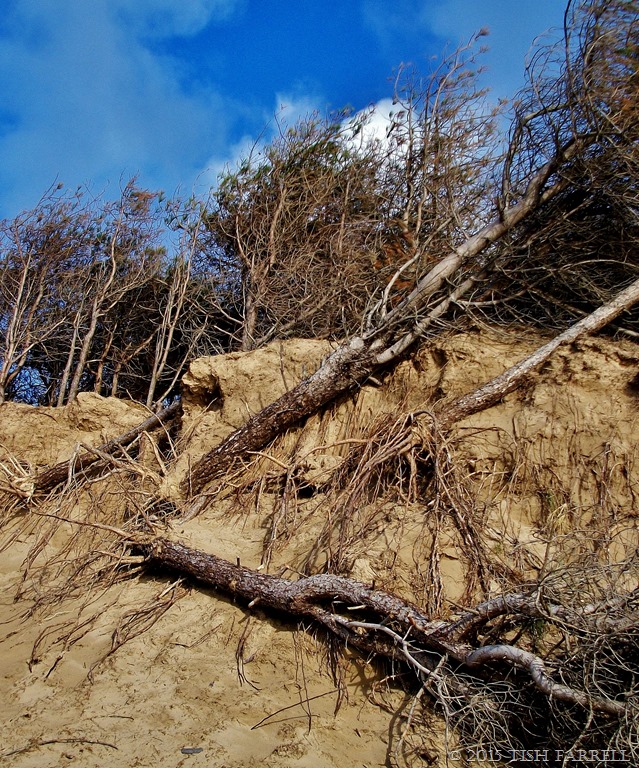
For another, there were some rather shocking scenes of coastal erosion. I promise, though, when we reach the island I will tell you the story of Dwynwen.

First things first. Newborough Beach is some two miles long and ends at the promontory that forms Llanddwyn Island. It is famous for its dunes which apparently arrived there in the great storm of 1331. It was the Feast of St Nich0las (December 6) when the disaster struck, and on that day the wind and sea rose to such a pitch that they drove, from the shores across the Strait, great mounds of sand and deposited them on the once fertile fields and dwellings of the medieval Newborough.

Ever since, many of the dunes have continued to shift, although there have been various strategies to stabilize them. In the sixteenth century marram grass was planted, and this gave rise to a successful local industry wherein the grass was cropped to weave into mats and baskets. Far more recently, in the 1940s, the Forestry Commission planted the promontory with conifers. The small forest that has thrived there since is home to ravens and red squirrels.

100_7131

Now, though, there are new threats from the weather. Last winter severe storms lashed the Welsh coast, causing great damage and much local concern about a future where rising sea levels and erratic storms are likely to figure more prominently.

100_7122 - Copy

100_7128 - Copy

It is a simple demonstration of the power of weather, and instead of arguing about its precise causes we should perhaps be wondering what is best to be done. At the present, the people of Newborough are doing just that. There is an on-going public consultation as to how the forest and nearby salt marsh may be protected. This whole corner of Anglesey is a much treasured resource to locals and visitors alike.

100_7135

Meanwhile, sister Jo’s labrador Molly is hardly concerned with matters of coastal erosion. Nothing a dog likes more than sand in its paws, wind in its ears, some smelly crabs and dead fish to nose, and also to lay claim to everyone else’s stick.

100_7141

She always wins. ALWAYS. Bad luck, Graham.

100_7144

When we reach the crossing place to the island, the tide is still too high to walk across. So we ponder the rocky deposits of pillow lava, that were apparently blown up from undersea volcanic eruptions in the Precambrian era, and wonder if Dwynwen really did choose this exposed promontory for her sanctuary some fifteen hundred years ago. There is no doubting the elevating beauty of the place.

100_7161100_7158

100_7160

And so, as I promised, to Dwynwen’s story. She lived in the fifth century CE, and was one of Prince Brychan’s twenty four daughters. She fell in love with a young man called Maelon Dafodrill who apparently returned her feelings. Yet in a fit of caprice, Dwynwen refused his proposal of marriage. Some say it was because she wished to remain chaste. Others say it was because her father had arranged for her to marry another man. For his part, Maelon made his displeasure at the refusal known by spreading tales that cast doubt on Dwynwen’s honour.

In a frenzy of anguish, she thus took herself off alone to a wood where she prayed to be cured of her passion. And so it was that an angel appeared to her in a dream and gave her a potion that not only erased her feelings of love, but also transformed the spurned lover into a block of ice. Heaven also granted her three wishes. Dwynwen thus asked that Maelon be unfrozen. She then requested that if any true-hearted lover invoked her name, they should be granted their heart’s desire or relieved of their painful emotions. Finally, she sought never to be married, and thence withdrew from the world, founding a convent on Llanddwyn Island which, after her death in 465, became a place of pilgrimage. Her feast day is 25 January, and is celebrated by many in Wales with cards and flowers in the same way Saint Valentine’s Day is marked in many European countries.

100_7175

And so unable to complete our own pilgrimage and reach the island with its ruined church, we retraced our steps, thinking more profanely of a turkey to be roasted, presents to be opened, and a glass of champagne to drink.

100_7191

And it was under this patch of marram grass, as we left the beach, that my Kodak EasyShare gave up the ghost. You could say, then, that this post is its last post. Just as well I still have the memory…

copyright 2015 Tish Farrell

Inspired by Jo’s Monday Walk

See her latest post and other bloggers’ walks at Roker Pier

*

Losing Kui -Final[1]

ON AMAZON AND ePUB BUD

Secrets, conspiracies, tragedy,

dark comedy – a fast-paced

novella of interwoven tales set

somewhere in East Africa

Thursday’s Special: Dusk on Wenlock Edge

IMG_1147

I may have mentioned once or three times that I spend a lot of time watching the sky from our house below Wenlock Edge. Silhouetted in this photo are the wooded slopes of Wilmore Hill which lies between us and the Edge. The land then dips, then rises again until it reaches the scarp, at which point the ground simply falls away alarmingly through a hanging woodland of giant beech, oaks and ash. Far below the trees stretch the farm fields of Shropshire. And so from our vantage point the Edge gives us a false horizon, providing a stage for much interesting weather-watching. Hours can slip away…days. There’s a real danger of finding oneself turned into Rip Van Winkle. Maybe it’s already  happened…

*

For more evocative dusky scenes, or to post your own please go to Paula’s Thursday’s Special and be inspired.

*

image

Farewell, Little Digital…

100_7187

My trusty Kodak EasyShare camera died on Christmas morning. We were striding along Newborough Beach on Anglesey, in North Wales, me happily snapping away here and there. As you can see, the light was wonderful, and the mountains of Snowdonia across the Menai Strait, a mystic blue-grey. And then the camera began to die. Touchingly, it’s last shot is of me with my specs on, peering down at its lens, and wondering what on earth was going on with it. Under the circumstances, I’m not sure how the photograph happened, but happen it did. (An unintended selfie?) And so there you have it, little Kodak’s last click. Aaaah.

100_7193

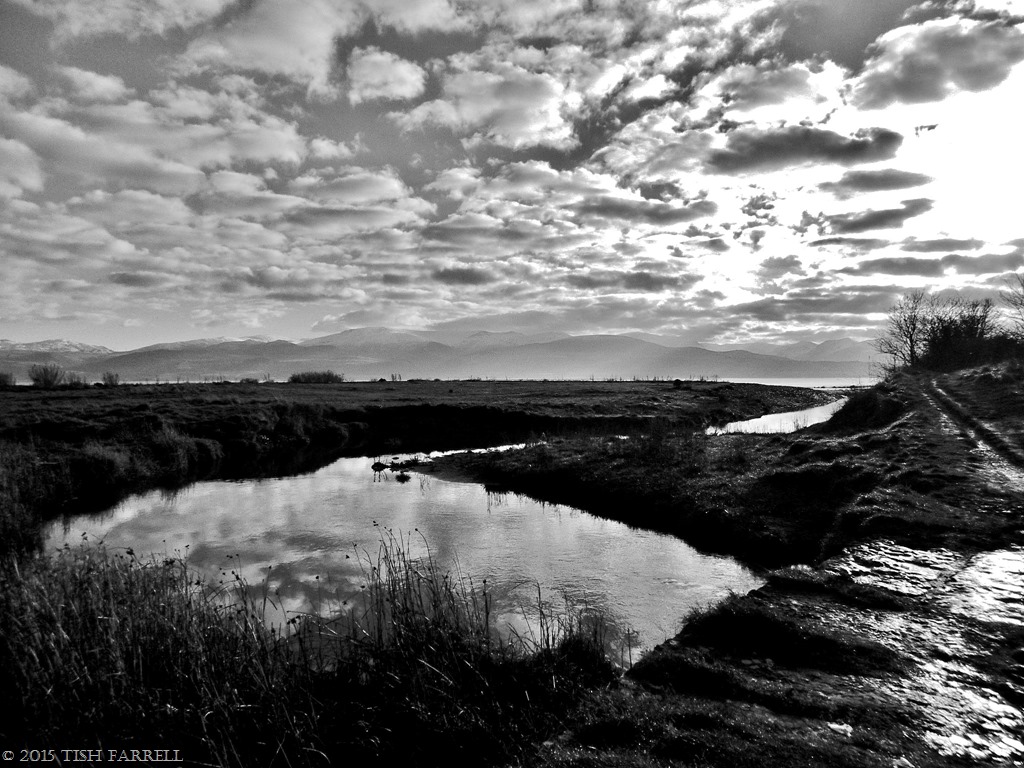
Perhaps it knew what was coming; that I was about to desert it for a smarter, whizzier model. For yes, when we got back to the house, and the present opening, it was to find that Santa, aka the Team Leader, had bought me a new Lumix Panasonic. Oh, so many more modes and functions. But at least it has forced me to make one New Year’s Resolution: to learn how to use it properly. There! Now I’ve committed myself in print. Anyway, here’s a preliminary attempt in monochrome mode: looking towards mainland Wales.

P1000153

From My Window in Wenlock: Trucks…

100_6404 (2)

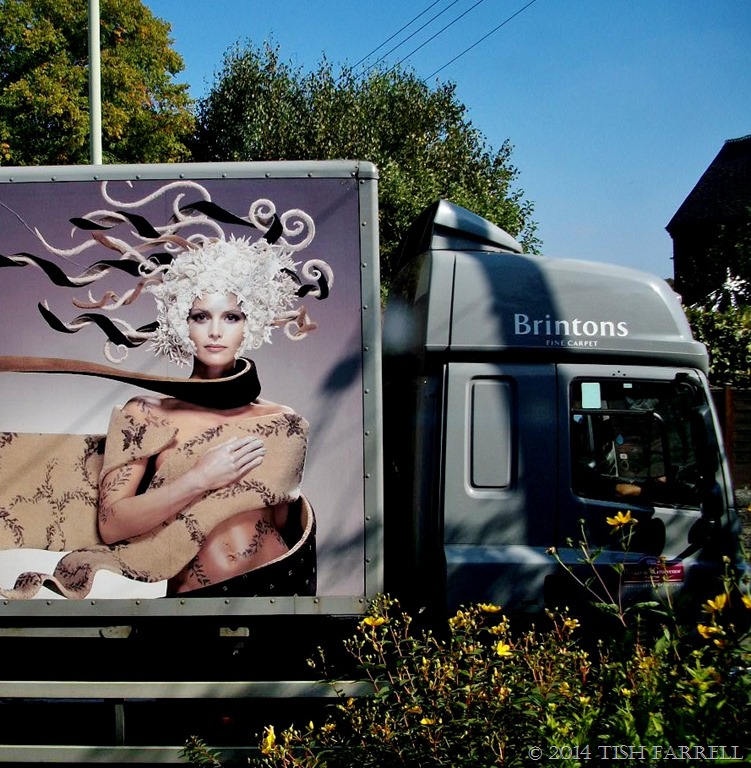
The other day I was astonished to look out of my kitchen window and behold this perplexing vision on the side of a carpet truck. It was a bit like spotting a unicorn. Well, what do you think this image is saying carpet-wise? Hey, come unravel me? Anyway, it made me laugh. And some days you do need a sense of humour to live where we live.

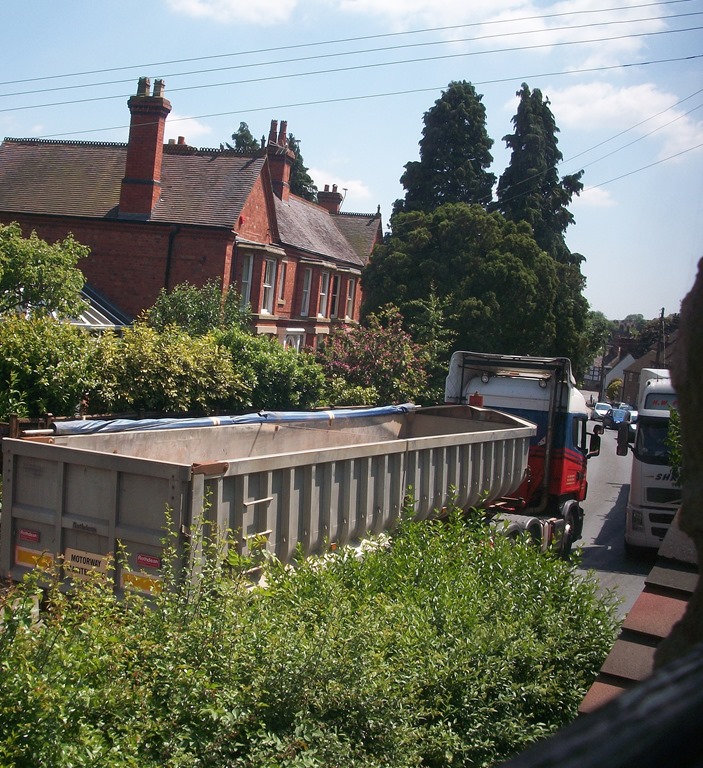
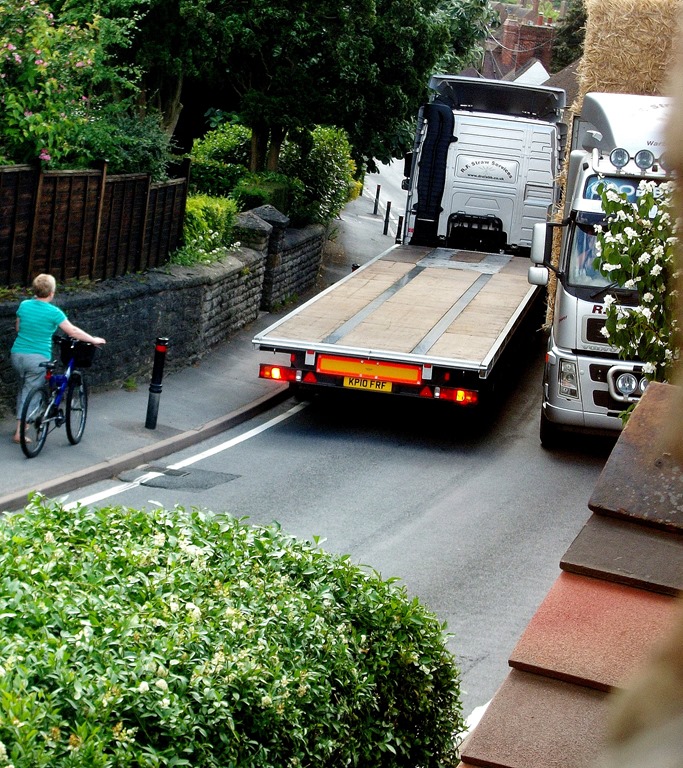
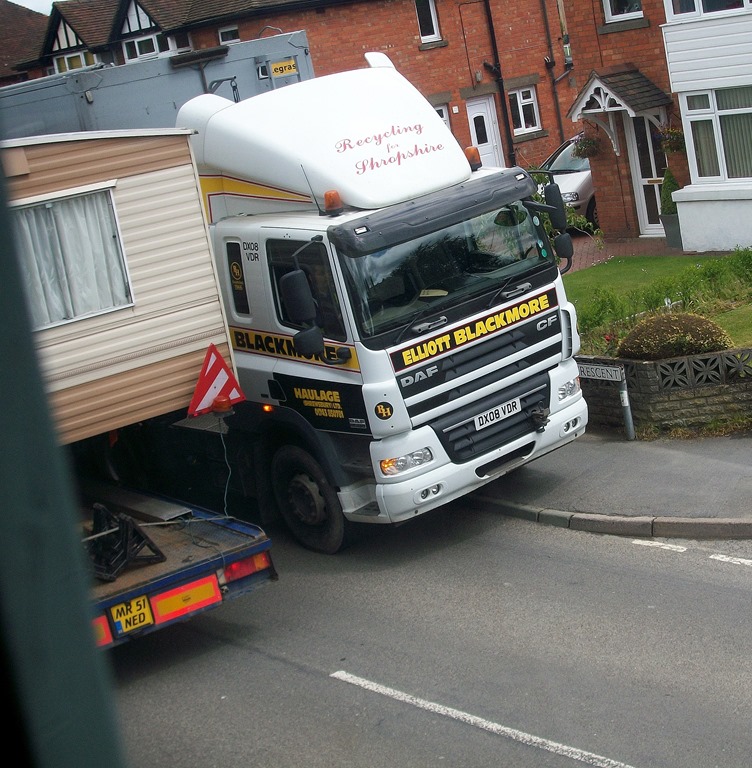
Trucks are a daily feature of Sheinton Street, a town lane that somehow in the 1980s was upgraded to an ‘A’ road. This means it is designated as a “through road”, and that there should thus be nothing on it to impede the flow of traffic.

Anyone who has read my previous post (By the Silurian Sea) will know that while the back of our cottage mostly overlooks farm fields and woods, the front is very close to this road. Along it come all manner of large vehicles – many so big that they get jammed together trying to pass one another. This includes school buses, and combine harvesters, garden fencing lorries and clay trucks. Sometimes they block the road completely. Not good news if you are trying to get to hospital in an ambulance. There truly is no other way to go without a huge detour.

Over the years I have captured a few of these HGV encounters. I call the phenomenon Truck Stuckage. Most of the photos are taken from my upstairs office window. See what I get up to when I’m supposed to be writing. (I know: it’s hard to say what is more oddball – the photos or the person who took them). And not only do I snap stills, I also from time to time put short video clips on You Tube so I can forward the links to Shropshire Council’s chief highways engineer. She’s called Alice. I think we are on first name terms. She doesn’t know what to do about this road, but a team of consultants has recently been employed to think about what might be done. Or not.

In the meantime, if the trucks get any larger, we will need the local fire brigade on permanent standby to unravel the stuckage. They will have to do this before they can answer any emergency calls north of Sheinton Street. One can see where the “through road” designation begins to fall down somewhat:

100_1908

Cee’s Odd Ball Photo Challenge

Rambling Tales: My Little Pony, Windmills, Olympian Dreams

100_6661

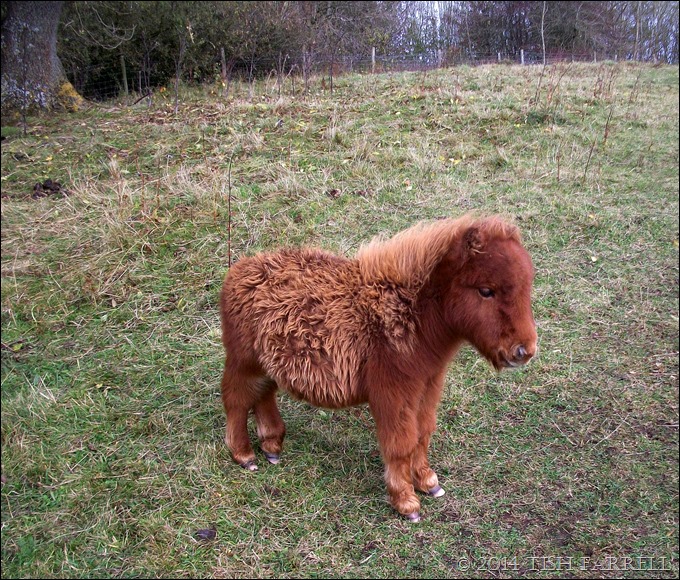
For a small community a lot goes on in Much Wenlock. In fact you  never do know what you will find even a stone’s throw from the doorstep. So it was that on a recent  foray up Wenlock’s Windmill Hill, and for quite another purpose, G and I met up with this astonishing little horse.  Given its newness on the planet, I was impressed by its air of stolid self-containment. It did not move an inch as I walked around it snapping photos. I asked it a few questions of course, but it seemed lost in thought. I even felt it might be having an identity crisis: I am a real little horse, aren’t I? Or am I?
100_6654

Then at last it reached a happy horsey conclusion and went off to do a bit of grazing with the other little ponies. But please do not ask about the man in the next photo. He has the most irritating habit of walking into my shots. Does anyone else have a man who does this? Here, though, he is perhaps adding some sense of scale, a factor drilled into me as important during my student-archaeologist days. And archaeology, not little ponies, was the real reason for this outing to Windmill Hill.

100_6656

In the background you can see the limestone tower that gives the hill its name. It is a famous local landmark, and only a short walk from our house. In its time, it has been both a watch tower and  a windmill. Carved stones from its interior suggest construction dates of 1655-57, but none of the members of the Windmill Trust, the volunteers who look after the monument, has been able to discover quite what the mill would have looked like during its working life.

On the day of our visit a small archaeological dig was taking place beside it to investigate the possibilities of earlier human activity on the site. We went to see how the diggers were getting on, but disappointingly they said they had not found much that was particularly old. There were broken clay pipe stems  of course– a feature wherever you turn a spadeful of earth around the town. Clay pipes were an important manufactured product here in the 17th century, and clearly used extensively by the locals as well as being exported.

100_6665

On finding there had been no great discoveries, we wandered off across the hill. In early and late summer the pasture here is covered in wild flowers typical of a limestone meadow – orchids, cowslips, agrimony, wild thyme, St. John’s Wort, knapweed, drifts of yellow Lady’s Bedstraw, but now the grassland has a tired look, though clearly tasty enough for the ponies.

We scanned the fields all round. Recent lidar remote sensing surveys have revealed the existence of extensive mediaeval remains a few fields away from the windmill, and also the possible outline of a Roman villa. In any event, there would have been much human activity in the area from at least 680 AD when Milburga, the daughter of the Mercian king, Merewahl,  became abbess of Much Wenlock Abbey. Her land possessions were extensive. She also later became a saint, renowned for all manner of odd miracles.

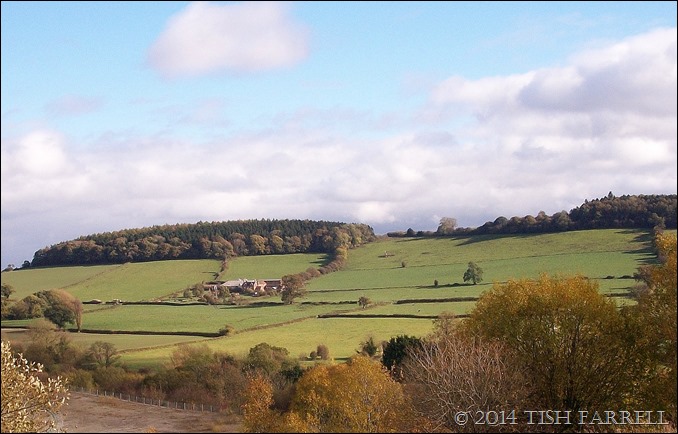
But great antiquity apart, the views from the hilltop reveal everyone’s idea of  a typical English farming landscape, although it does not come without its adjacent ‘blot’. The ground immediately behind the hill falls away into a bleakly huge quarry with a deep pool of strangely turquoise water.
100_6670

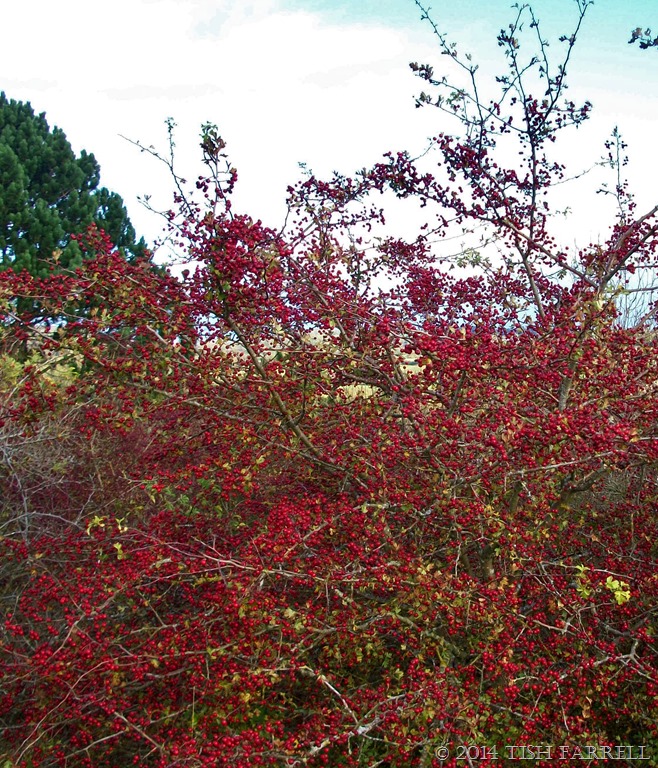
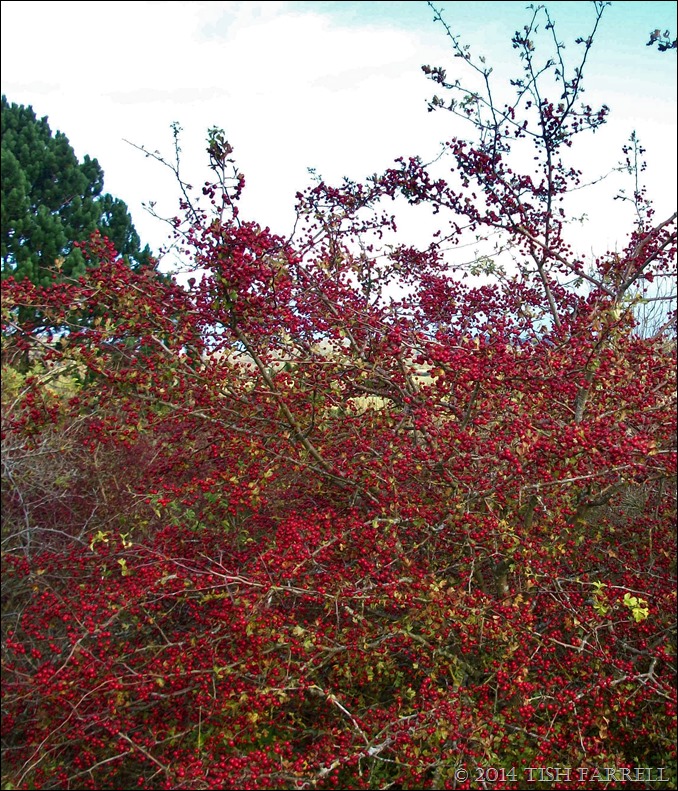
Now disused, the workings are screened by conifers, and also by this astonishing display of hawthorn berries. Plans to turn the site into a diving school with log cabins seem to have to been dropped.
100_6669

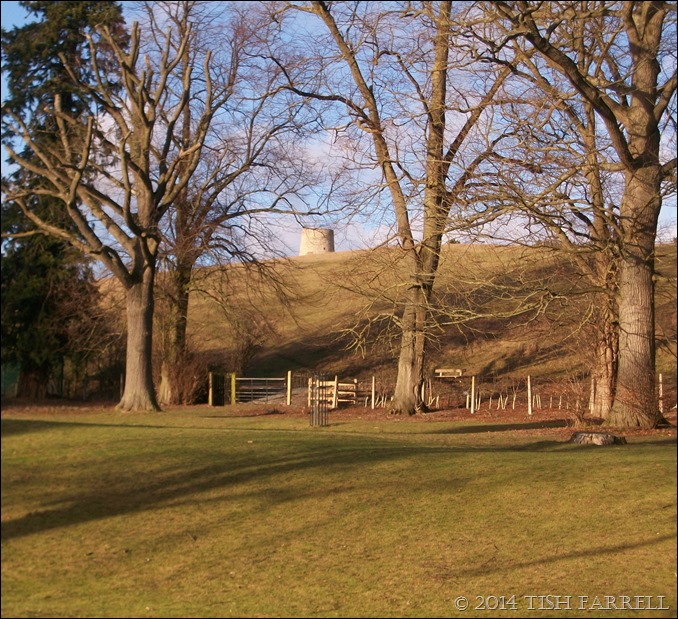
At the foot of Windmill Hill is the Gaskell Recreation Ground, or Linden Field. Having long been used for village cricket and bowls, it was bequeathed to the people of Much Wenlock in the 1930s by a descendent of the Gaskell family who owned much of Milburga’s former domain. It was here too, from 1850 that the first modern Olympian Games took place every year, attracting athletes from across the country. The man responsible for reviving this prestigious sporting event was the town’s local doctor, William Penny Brookes.
067

Every year, thousands of visitors would come to watch the games, arriving on the Olympian Special train. The station was conveniently situated  beside the field, the bringing of the railway being another of Penny Brookes’ successful projects for the benefit of Much Wenlock. The field was bare of trees in those days, so spectators could sit on Windmill Hill, amphitheatre-style, and have a fine view of track and field events.

Penny Brookes was also a campaigner of national standing. It was he who argued for the introduction of physical exercise into Victorian schools. He even did clinical trials to prove how young bodies grew well as a result of it.  His fame spread, and in the 1890 Baron Pierre de Coubertin, charged by the French Government to improve the physique of the French army, came to Wenlock to see Dr. Brookes’ Olympian Games for himself.  An elderly Penny Brookes apparently took this opportunity to share his ideas with the younger man, but sadly died four months before the launching of the first international Olympics in Athens in 1896. De Coubertin did, however, pay tribute to the Shropshire doctor’s vision: 

” If the Olympic Games that Modern Greece has not yet been able to revive still survives today, it is due, not to a Greek, but to Dr W P Brookes.”

The Much Wenlock Olympian Games still take place on the Linden Field every July, and attract sportsmen and women from around the world. The Olympic Association also acknowledged Much Wenlock’s contribution to the modern movement with the naming of the Wenlock Mascot in the 2012 games.

*

But now here we are heading homewards, taking the path that runs down edge of the Linden Field, and beside the old railway line. Here William Penny Brookes left another legacy. He planted an avenue of lime trees – the Linden Walk. Many of the trees are around 150 years old and still going strong. The scent of the blossom in summer is transporting, but the walk is beautiful any time of the year. It is one of the town’s many treasures, and accessible to all.

100_6680

As I stopped to take this photo, a young woman went powering past me, clearly in training for some event. But as you can see, that man is also there again. It is a puzzling phenomenon – how he is ever in my sights.

copyright 2014 Tish Farrell

Jo’s Monday Walk

Flickr Comments