Never Mind Warhol’s Banana…

100_4197

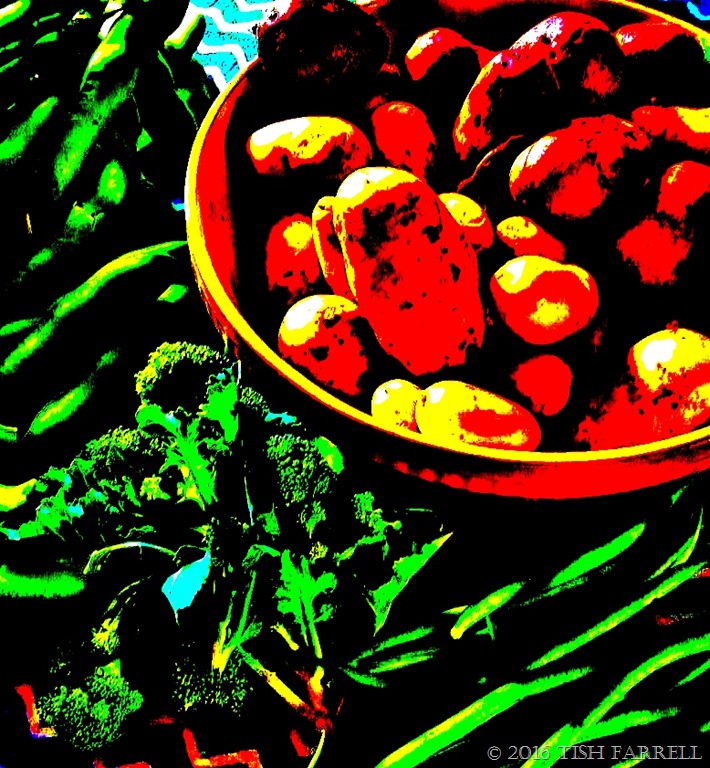
…just look at my spuds!


This is my take on the Daily Post’s ‘life imitates art’ photo challenge – a posterized  still-life of last summer’s allotment harvest. I suppose you could also call it a potato print. Anyway, it is my nod to Andy Warhol’s poster art:

image

Andy Warhol’s Banana

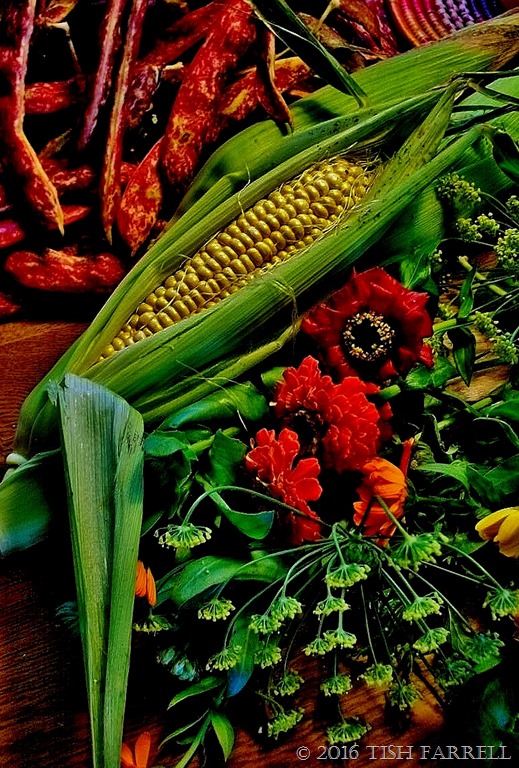
Of course, as a gardener, I regard anything I grow as a work of art. Coming up next are borlotti beans, corn, zinnias and dill – rendered on the kitchen table after the Flemish still-life school:

100_4927

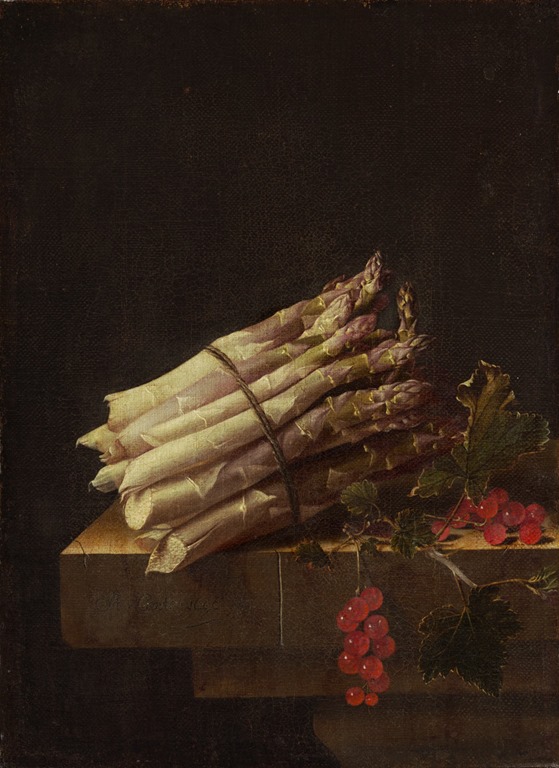
Looking ahead to this year’s garden produce art works, I’m  just hoping that my asparagus beds might do something wonderful, then I could come up with something like this. I have the red currants:

A11591.jpg

Dutch, active 1683 – 1707
Still Life with Asparagus and Red Currants
1696
Life Imitates Art

Winter Garden From My Window

P1030045

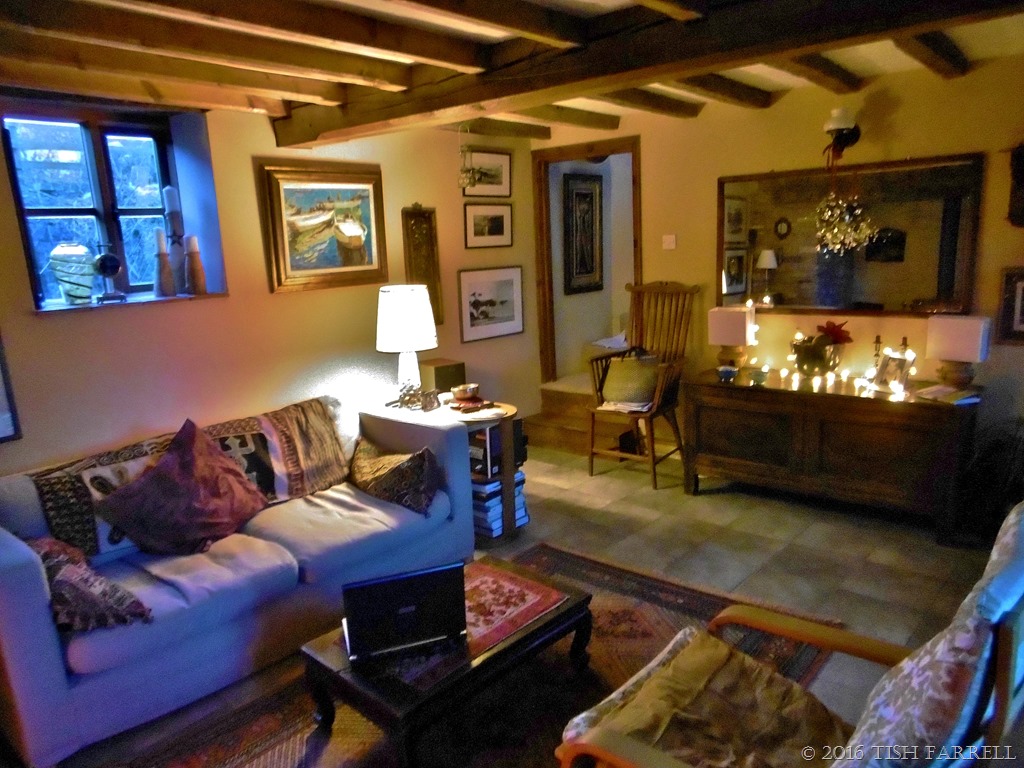
It’s the final week of Jude’s Winter Gardens challenge over at The Earth Laughs In Flowers. This, then, is the view of my garden captured on Saturday afternoon. It’s as much as I’m prepared to show you at the moment, so dreary is it after weeks  of rain. Also there was a definite lack of gardener-input in the autumn. Things just kept on growing and it was hard to know when to chop them back.

So they didn’t get chopped, and the place now has the look of a garden version of Miss Haversham’s attic. But you may just spot (in the bottom right hand pane) a small clump of tete a tete daffodils. Even they  aren’t planted, but are sitting on top of the soil. They were tipped out of a pot bought last spring, at which point I had every intention of re-planting them. Oh well. Neglect hasn’t stopped them thriving. They started flowering at the end of December.

I have to confess that I’m a fair-weather gardener, at least where dampness is concerned. And it really is too cosy indoors. Also unlike the garden, the house is now clean and tidy, which was the real reason I took the first two photos – to document that tidiness is possible. And I’m sharing the proof with the world in an attempt to stem backsliding tendencies.

P1030043

But housework and fair-weather gardening aside, I am getting twinges of planters’ itch. My first delivery of vegetable seeds arrived earlier last week – all those crisp packets of pent-up potential, and now it is February. Hurray! Time to sow the peas and leeks in the allotment polytunnel, and start off the aubergines and sweet peppers at home.

And talking of sweet things, my first sowing of sweet peas on the kitchen window sill is already sprouting. So apologies to Jude for not quite sticking to the winter garden plot. I’m  finishing  this post with thoughts of summer, and deliciously scented blooms to come. And I know she won’t mind because she knows very well that it’s forward-dreaming that keeps gardeners going through the long winter season.

100_7878

copyright 2016 Tish Farrell

Have I mentioned pallet scrattling?

100_8257

No. I thought not. It appears to be an inclination that comes upon men of a certain age, and especially those who possess wood burning stoves and sheds.  Suddenly their eyes are peeled, and whenever they’re  away from home, they’re on the look out for abandoned builders’ pallets. You know, those rough wood platforms that come with deliveries of bricks and tiles, engines and other heavy duty what-not that requires shunting round warehouses on fork-lift trucks.

In our house the fad started with Graham needing a work bench that would fit into the conservatory. This was quickly followed by the need for another bench that would also fit into the conservatory. Fortunately these wants coincided with a big delivery of technical equipment at work. Oh the joy: multiple pallets were suddenly free for the asking. It even determined the kind of car we owned – hatch-back naturally. At one stage there were so many pallets that Graham had to share some with Bob. Not an easy share I can tell you.

Also recycling pallet wood is not necessarily straightforward. This is where the ‘scrattling’ comes in, a word invented (I think) by my sister’s chap, the aforementioned Bob, who is an ardent pallet scrattler. You see there is an art to dismantling pallets  so as to extract the best and most serviceable timber. In fact it is really advisable to watch some You Tube videos for best practice before you start.

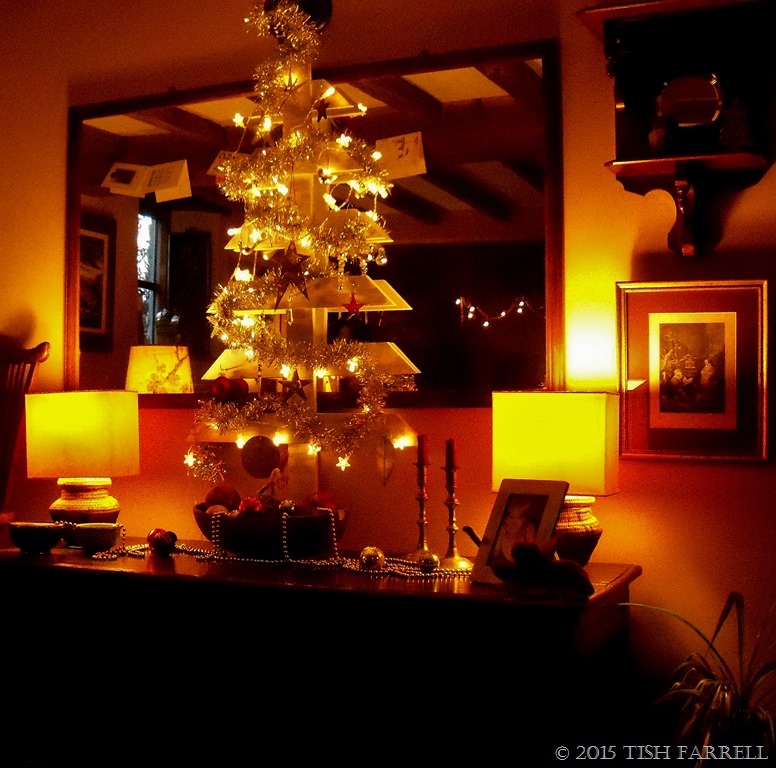
Of course I should not be snide about this most worthwhile of older-man pursuits, I whose allotment is the lucky recipient of pallet compost bins and several raised beds. Also at home this Christmas we have a festive pallet tree, and here it is in our sitting room…

Happy Festive Season Everyone

Our first autumn cauliflower

100_7997

Isn’t nature marvellous. I can’t believe that I grew this bee-eautiful purple-flowered cauli from one very tiny seed.  It looks a bit misty here, because it’s covered in fog. They weather has definitely turned here in Shropshire.

I was so excited when I first spotted it a couple of days ago. I’ve been nurturing the cauliflowers for a long time, feeding them liquid seaweed feed among other things. The seeds were sown in spring, then planted out in early summer in my new plot behind the polytunnel.

It was hard going too, clearing the ground for them. It had not been cultivated for several seasons and was choked with dandelions of epic proportions, and masses of creeping buttercups. The soil was heavy and claggy too. It seemed most unpromising, although I know that brassicas are fairly tolerant of these kind of conditions. For one thing, they like to be solidly rooted. In fact I’ve learned that caulis won’t flower properly if they are not well anchored from the start.

Once I’d planted out the young plants, (along with a handful each of Carbon Gold fertilzer, and worm casts, and an encircling of lime),  I had to make sure they were well defended with a covering of  mesh. This to stem the pigeon decimation that generally goes on at the allotment. The rotters line up on the overhead electricity cables and watch what we humans are up to, and plan their raids for when we’re not there.

Anyhow, they didn’t get this cauli, and we did. I steamed it, and then made a quick sauce with creme fraiche.  Here’s what I did.


Really Amazingly Quick Cauliflower Cheese

  • Break the cauliflower into florets and steam for a few minutes.
  • Drain, reserving a cup of the steaming water in case you might need it.
  • Melt a small piece of butter in the now empty pan.
  • Add some chopped garlic and/or sliced onion. Cook until soft and translucent.
  • On a moderate heat, stir in a small tub of creme fraiche. Stir it until it warms through. If it seems too thick, add a little of the reserved vegetable water, say a tablespoon at a time.
  • Season, and add any fresh chopped herbs of choice.
  • Stir in a couple of handfuls of grated hard cheese. I use pandano.
  • Then toss the cauliflower in the sauce and serve.
  • Any other quickly steamed vegetables can be included in this – peas, carrot sticks, chopped kale, chard, leeks, celery. Whatever appeals. Good served with a jacket potato, or Italian black rice.


So here you have MY flower of the day, as inspired by Cee’s Flower of the Day. I thought maybe we should give vegetables a look-in on the floral display front. Mind you, I don’t know what Cee will think. Aw, she’ll love it.

copyright 2015 Tish Farrell

Pushing the boundaries: welcome to my new web design page

The following themes are now available at this address:

P1020229

‘The Miss Haversham‘

*

P1020239

‘Galadriel’s Garlands’

*

P1020250

‘Wired’

*

P1020252

‘WWW.’

*

100_7596

‘Web Apps ’

*

100_7634

‘The Neuron’

*

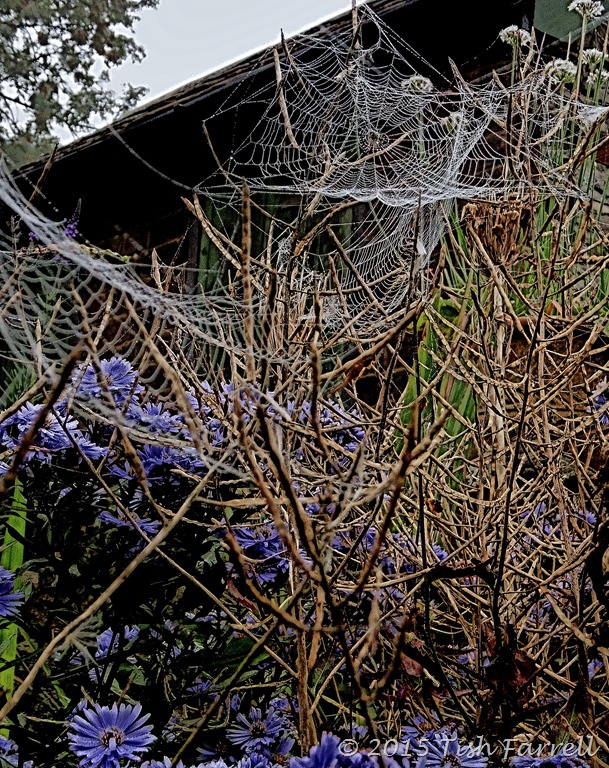
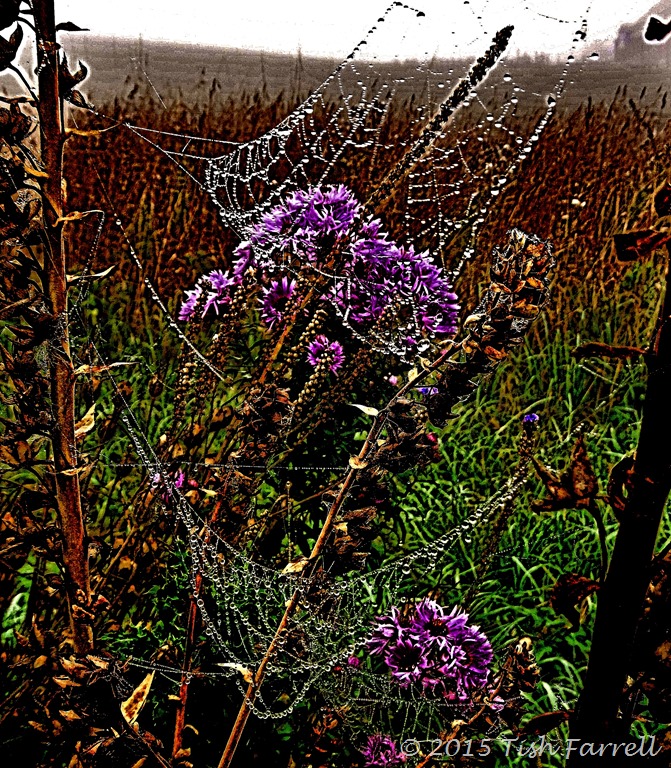
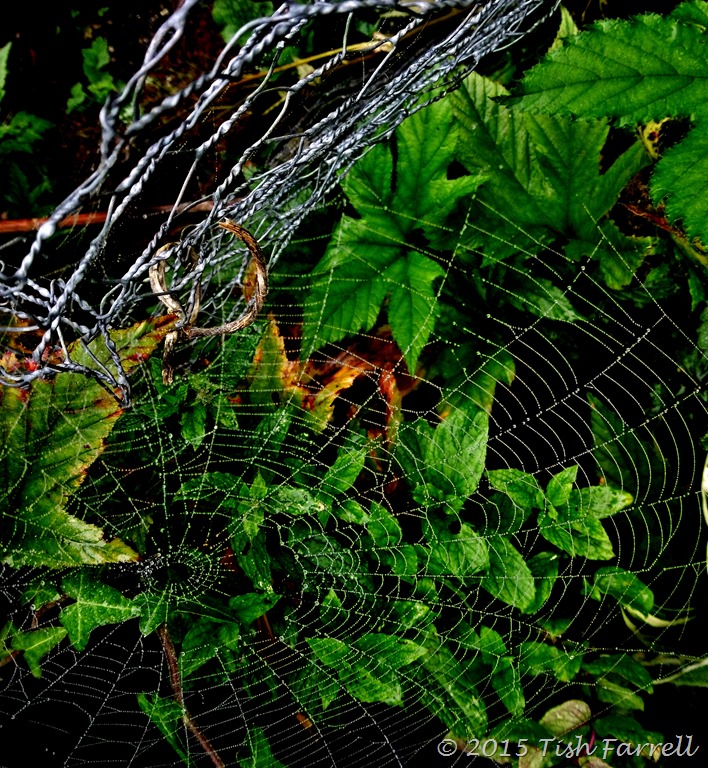
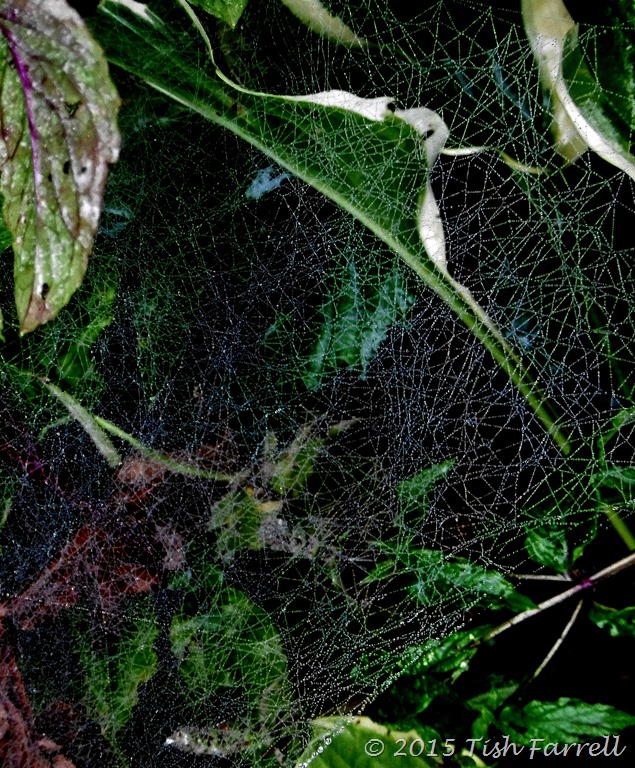
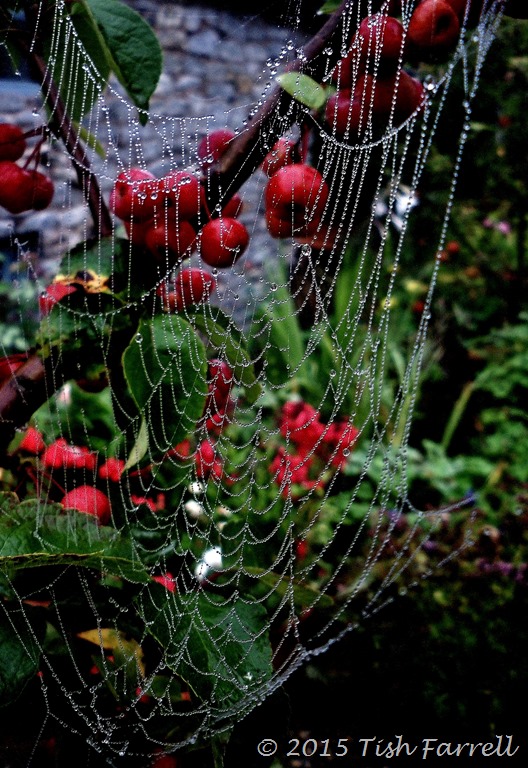
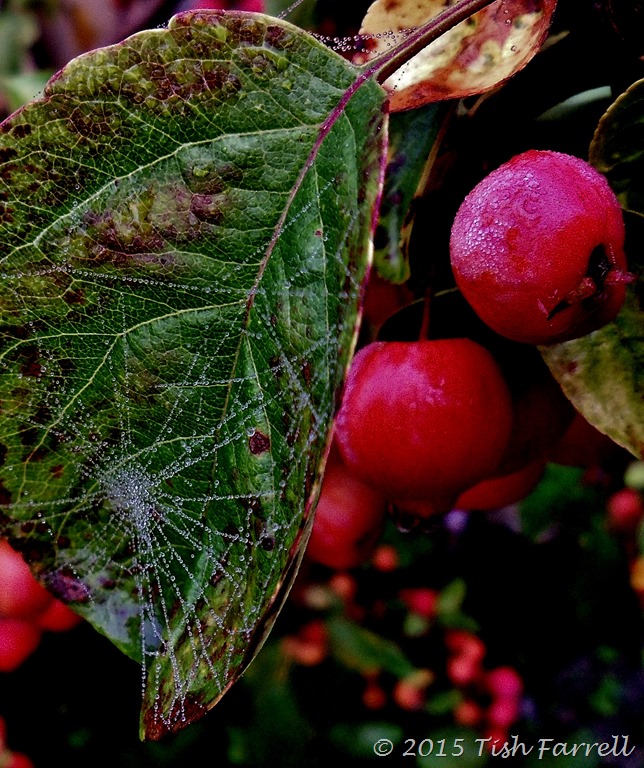
When I looked out of my bedroom window this morning all was dull and dank. There was no view of the Edge, only fog on the field that in the past two days has been  harvested, harrowed and re-sown, and is anyway looking gloomily autumnal. But when I walked out into the garden I found every leaf and stem was glittering with dewy webs.  So much spinning and weaving in the night – a thousand spider-stiltskins run amok. And even if you don’t like spiders, you can still admire their fog-enhanced artwork. Well, can’t you?


Boundaries

Help, Mr. King! My polytunnel needs editing

100_6203

I have written elsewhere how gardening and writing become mixed up in my life. But just see what happens when you don’t rein in your gardening writing, when you let your setting run riot. Words, like plants, need a certain space to perform well; to be the stars of the show; to say their piece effectively.

I never intend to over-create. In fact my internal critic warns against it, whether gardening or writing. The polytunnel mayhem is of course easily explained: I simply had to  plant out every last tomato seedling. How could I not, when I had nurtured each one through the cold spring months that seemed never ending?

All I can say if you write like this, and then don’t engage in some ruthless excision tactics, you will not be able to find the tomatoes for the overgrowth.

On the fiction writing front, Stephen King (On Writing: A Memoir) would call this kind of chaos “a thicket of description”. It’s what happens when writers become too attached to the minutely researched details of their setting, and then feel they can’t sacrifice a single beloved element.

It can also happen when you start a story in the wrong place, and then flounder about trying to write yourself to the right place. It’s like planting all your tall-growing tomato plants at the front of the bed, and then wondering why you, or anyone else can’t see what’s going on behind with short varieties. This, then, is also a setting problem: you have not planned the planting scheme and stuck to it (more or less).

All of which is to say, there comes a point when you have to take out a whole batch of words and shoot them – this so the survivors have room to expand and thrive (the excess tomato plants you could of course give to someone else.)

Stephen King explains the situation further (pp 138-9). He gives an example of using a real location as his setting for a piece of narrative, in this case the Palm Too restaurant in New York. It is somewhere he knows. As he starts to visualize the place, he summons the first four things that strike him. These, he says, are likely to be ‘the truest and the best’ details. He also says he can  make up a few other things too, but there is really no need for more:

“This isn’t the Taj Mahal we’re visiting…and I don’t want to sell you the place…it’s not about setting, anyway – it’s about the story, and it’s always about the story.”

Put another way, you could say that fiction writing is never about the writer. To create, you need to GET OUT OF THE WAY. And the better you succeed in this, the better the story. This is not to say that the writer’s experiences and cast of mind do not inform/infuse the narrative, but think conduit and transit time, rather than compendium drag.

Words are fiction’s conveyance to transport readers out of themselves and into the lives of others in new/penetrating/exciting /inspiring ways. The words need lift, energy, vivacity. Anything that snags transition must be cut.

This is probably the hardest lesson for the starting-out writer to believe, let alone put into practice. But it is a truism: less is almost invariably more. Not believing this is one of the reasons we have slush-piles, and why publishers now mostly shut their doors to unsolicited submissions. It’s the reason why I have too many tomato plants in my polytunnel, when I could have made the best of, say, half a dozen of the strongest plants.

But then as Stephen King advocates, practice (lots of practice) will yield improvement. So I vow to improve in my prose and in my planting. For now I leave you with Mr. King’s brief words on the means to create viable settings:

“The key to good description begins with clear seeing and ends with clear writing, the kind of writing that employs fresh imagery and simple vocabulary.”

100_6937 N.B.: use only the brightest and the best tomatoes, and not too many.

Happy writing!


Related: Errant muse? But there’s still life at the allotment

copyright 2015 Tish Farrell

Secrets, conspiracies, tragedy, dark comedy

– a fast-paced novella of interwoven tales

set somewhere in East Africa

Strawberry Vodka Revisited

100_6756

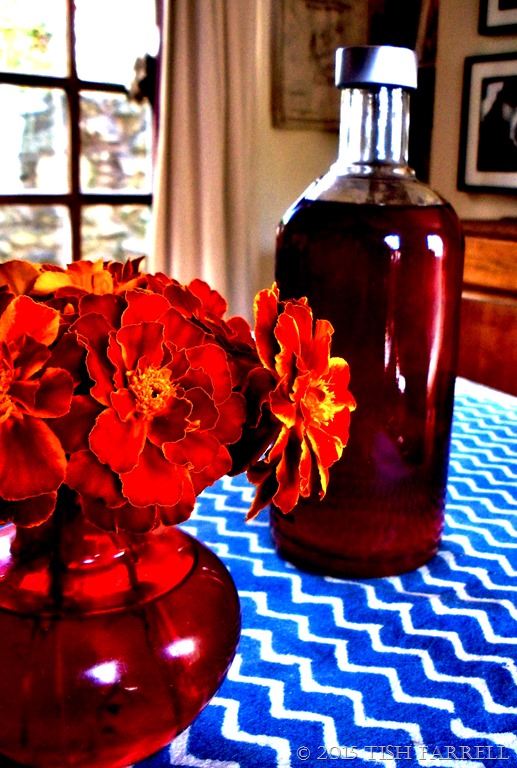
Some of you will remember that back in early July I posted Jane Grigson’s recipe for Strawberry Vodka. A good six weeks on, it has been duly shaken not stirred, kept in a dark, cool place, drained and strained, and here is the result – back in the vodka bottle (not the vase, although the liquid contents do look similar). Obviously during the decanting process we had to have a little sip or three. All I can say is this stuff is sure to add gleam, both inside and out. Also the only travel involved in procuring this shot  was the trek between allotment and kitchen (me), and off licence and kitchen (Graham), and then to the sofa for a lie down (me again).

Strawberry Vodka Recipe


P.S. And if you are groaning because you missed the strawberry season, then this recipe will surely work with late summer fruits: plums, damsons, black currants, autumn raspberries, although you might need to add a little more sugar.


For more shimmer and shine please visit Ailsa at Where’s My Backpack where this week her theme is ‘gleaming’.

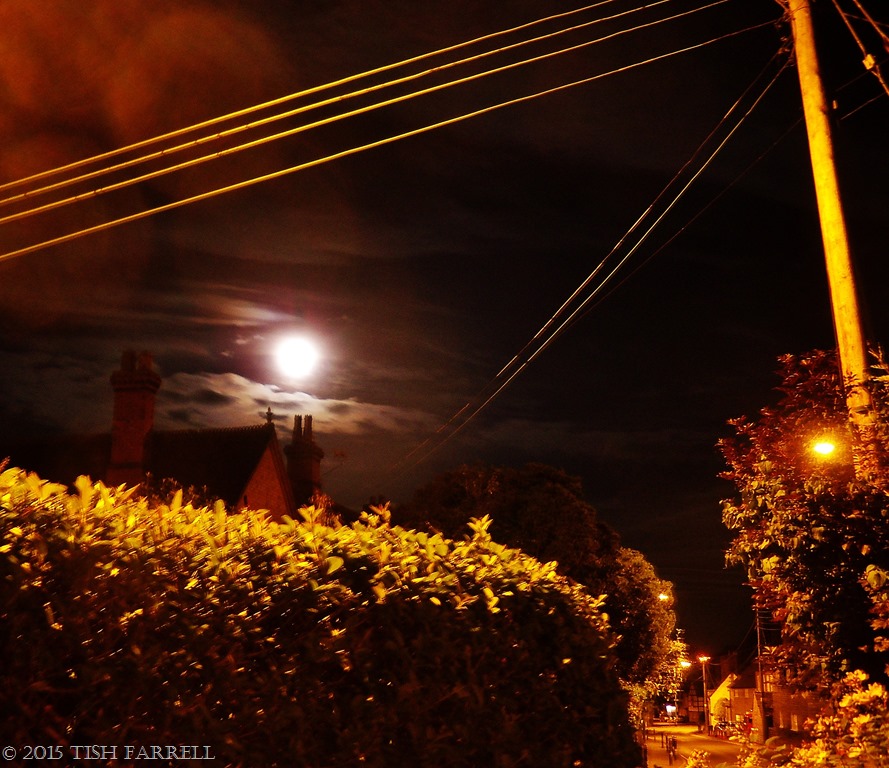
Moon competing with street lights

100_6514

There’s  all sorts of flare going on in this photo, not least around the moon. The pink smoke, and golden hedge effects are courtesy of a tall street light out of shot top left. I was trying to capture a blue moon. I even used a tripod. I’m not sure where the light on the right came from as there isn’t an actual street lamp on that side of the road. Anyway, if you peer hard you can look down the curve of Sheinton Street towards the town centre. It looks a bit like a film set. In fact isn’t that Mary Poppins coming along the road? Chim-chiminee, chim-chi…

Thursday’s Special: Flare

Please visit Paula at Lost in Translation for more flare