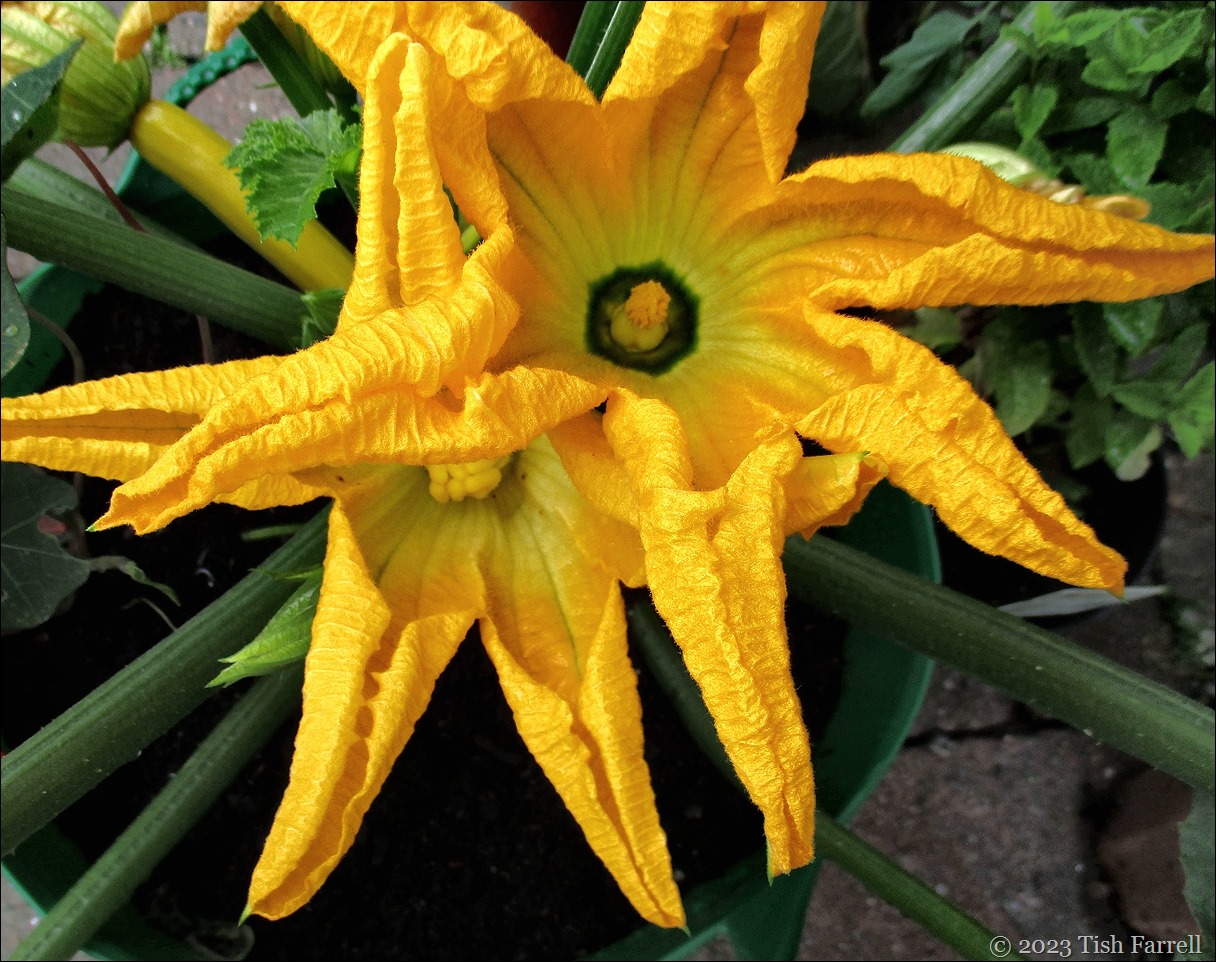
Most of you who come here often know that the Farrells are in transit, currently in a rented house while waiting to buy a new home. To say the process is stressful is an understatement. It’s also meant giving up my allotment plots, so I’ve been very glad to be able to potter about with some container growing.
Because it is true what they say: gardening is good for both mind and body, even in a scaled-down version.
The container approach also proves you can grow fresh vegetables with a fairly small amount of space or physical effort (if these happen to be issues) and any container will do, including small pots which are particularly useful for growing successional salad stuff.
But first, the big pot planting.
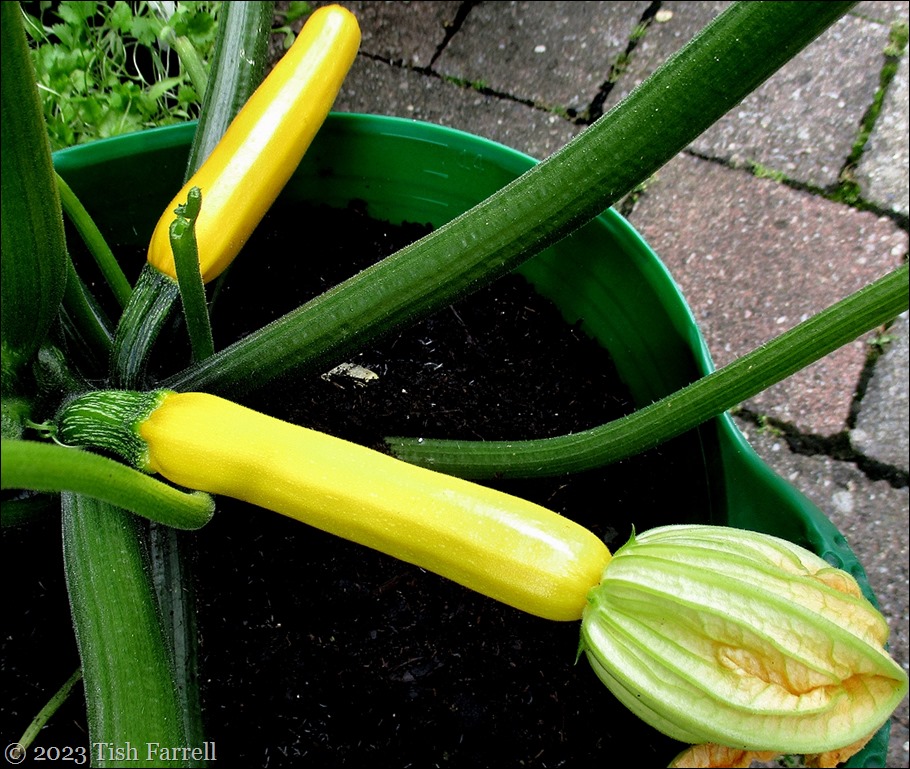
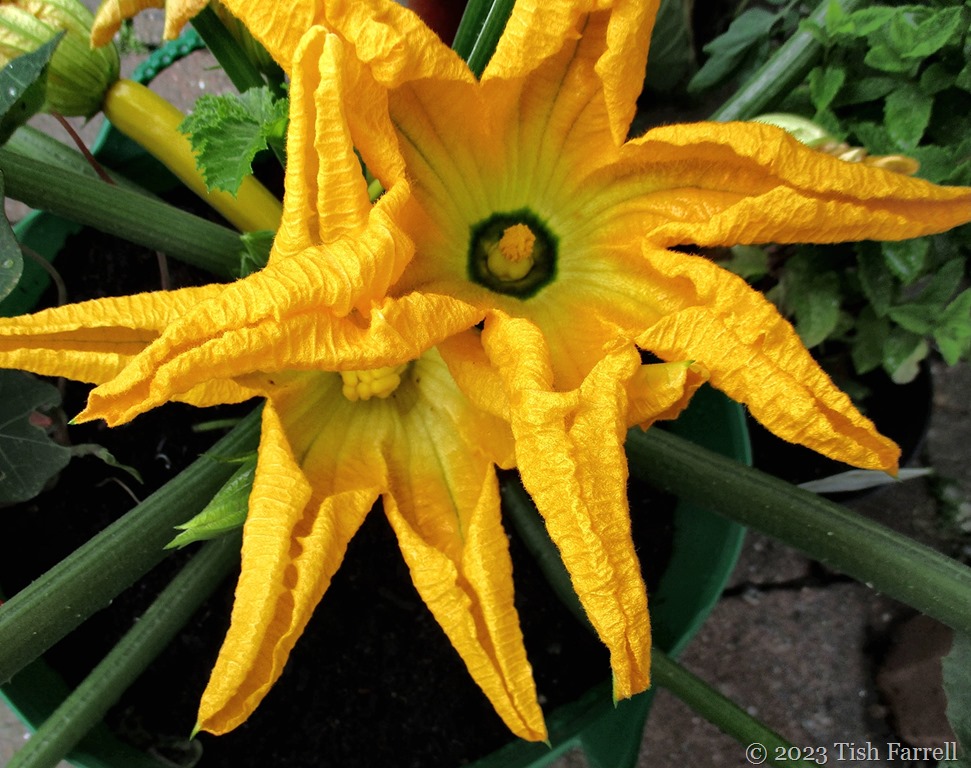
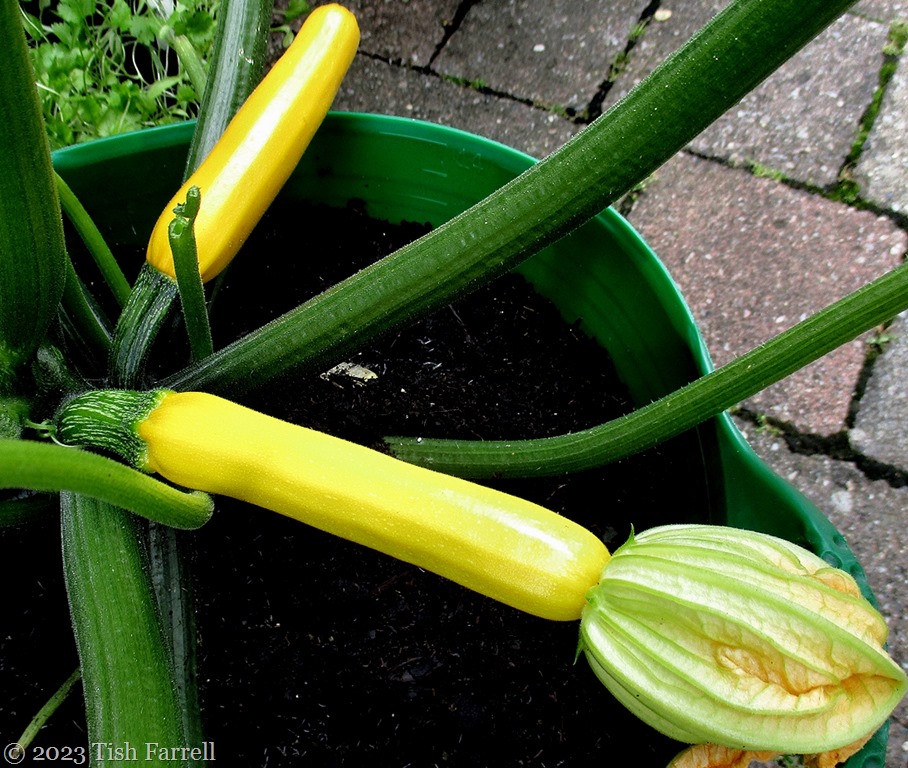
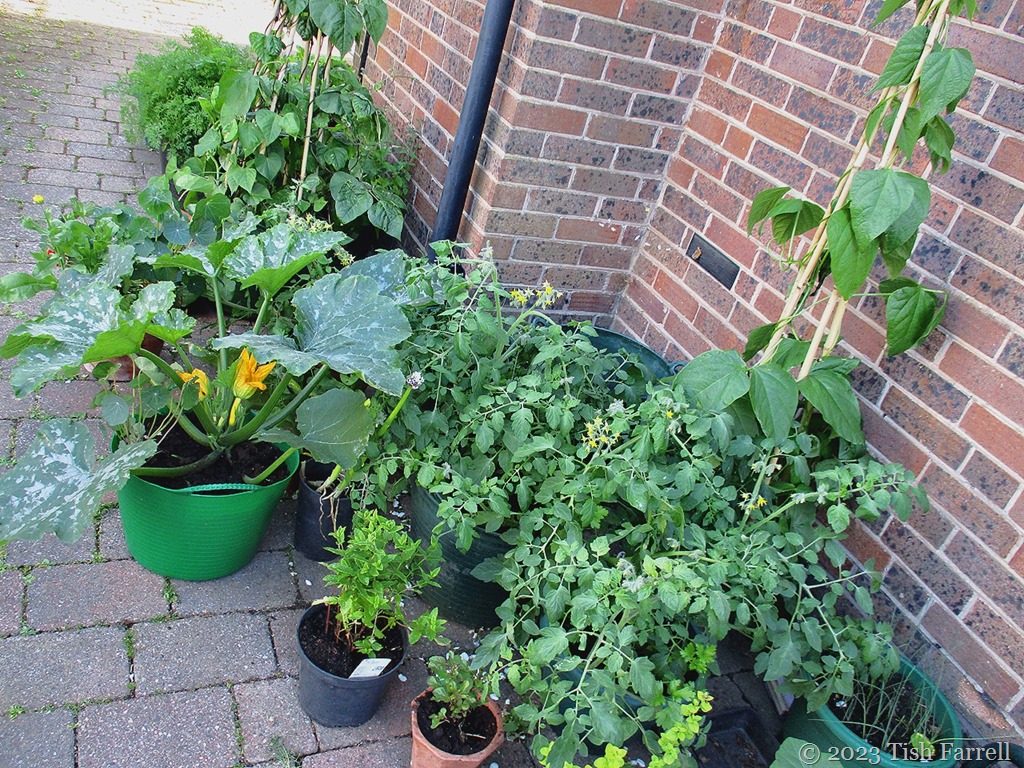
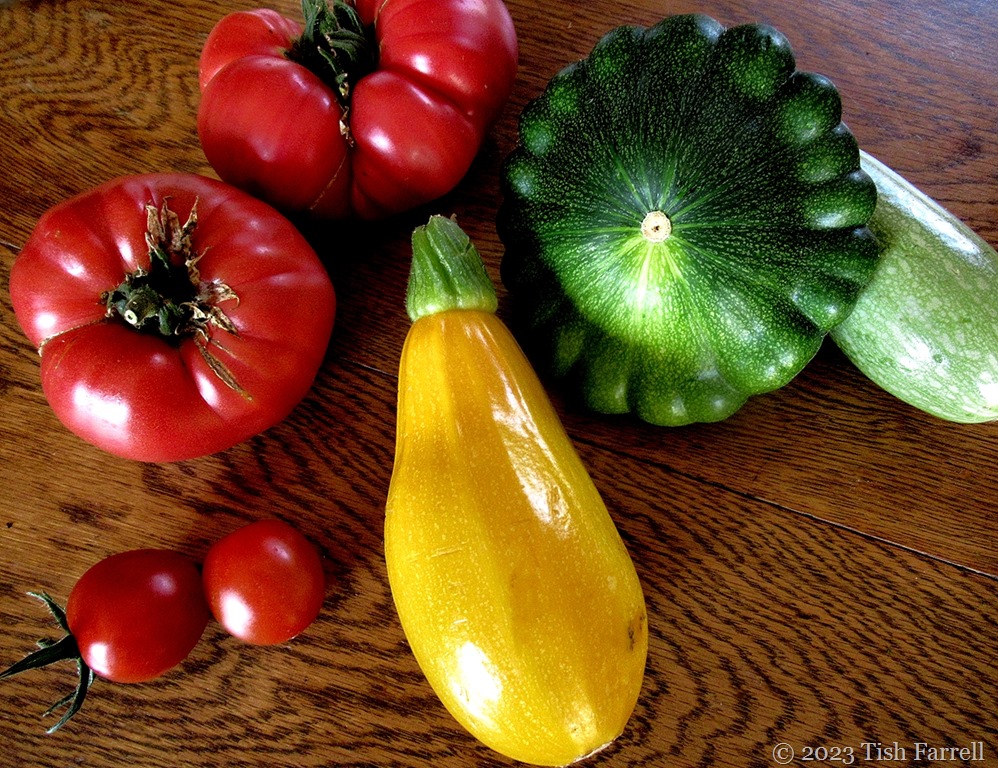
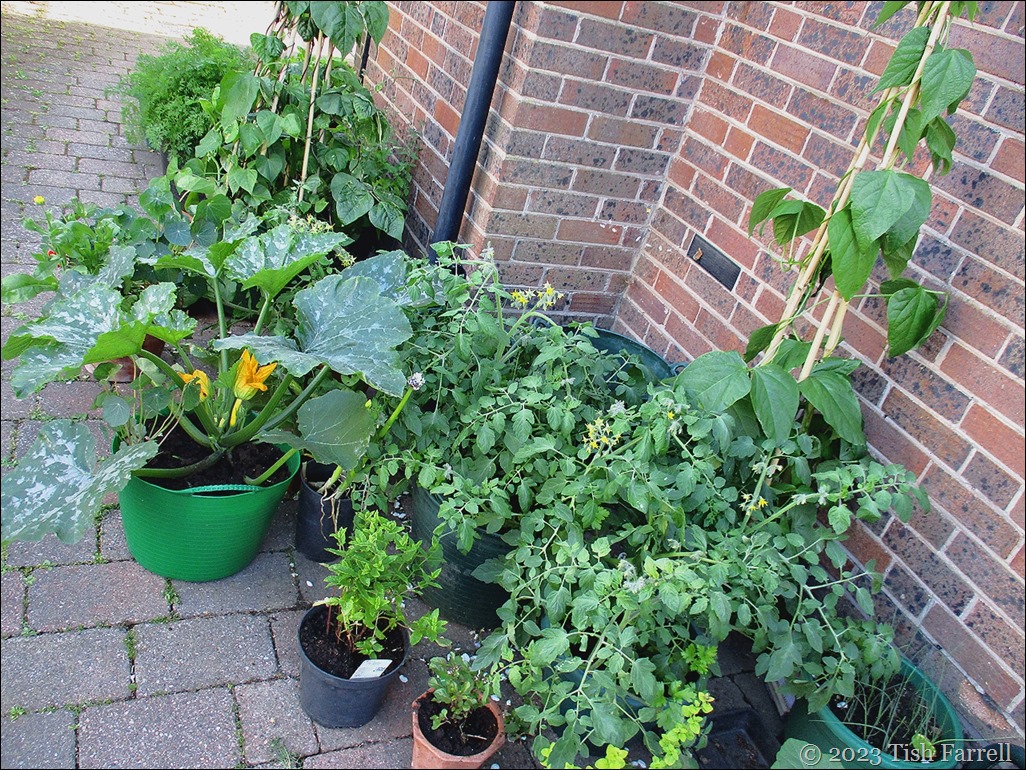
With a further move on the horizon, I did have a very strong motive for resorting to container growing. If a pot is still cropping (or about to crop) when moving day arrives, it will be coming with us. To that end, the yellow courgette plant is in a builders’ two-handled bucket for easier transportation.
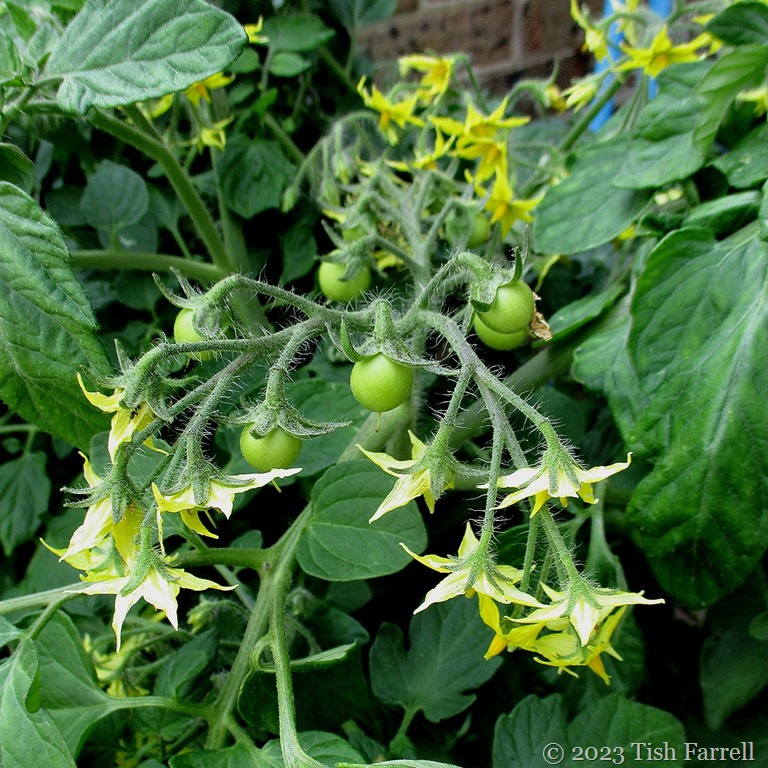
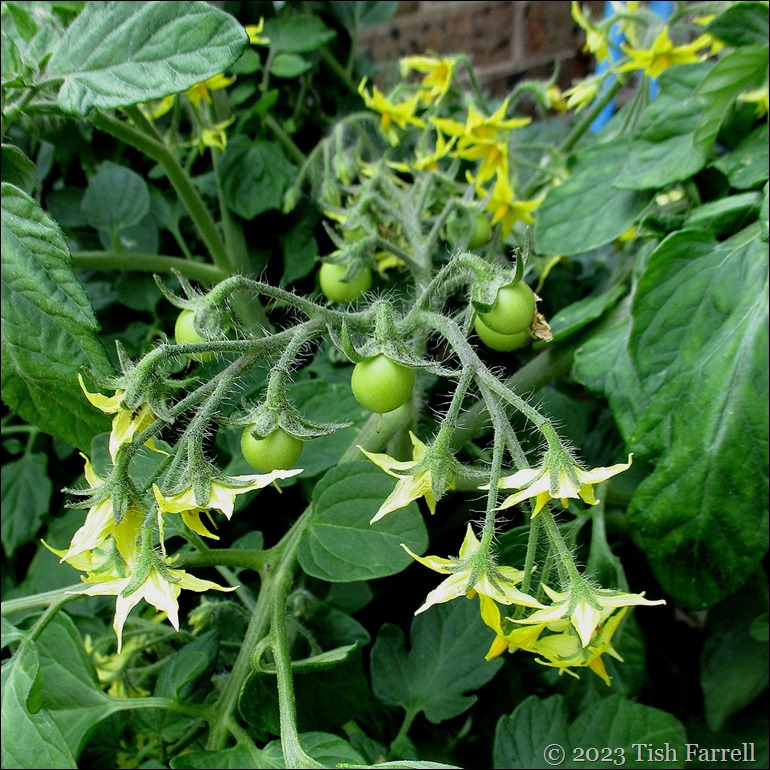
Then I was much perturbed about missing our usual tomato crop. To cover eventualities – as in just in case we’re lingering in Broseley longer than expected, I’ve planted a couple of cherry tomato plants in the garden border – Sungold and Piccolo, but I’ve also put some in large flower pots, two plants to a pot. And I’ve grown Tumbling Tom, which have been bred to dangle from hanging baskets and so don’t need staking. Again, I have these in transportable builders’ buckets, and despite the ongoing gales, they are growing well with masses of flowers, and showing the first signs of fruiting.
*
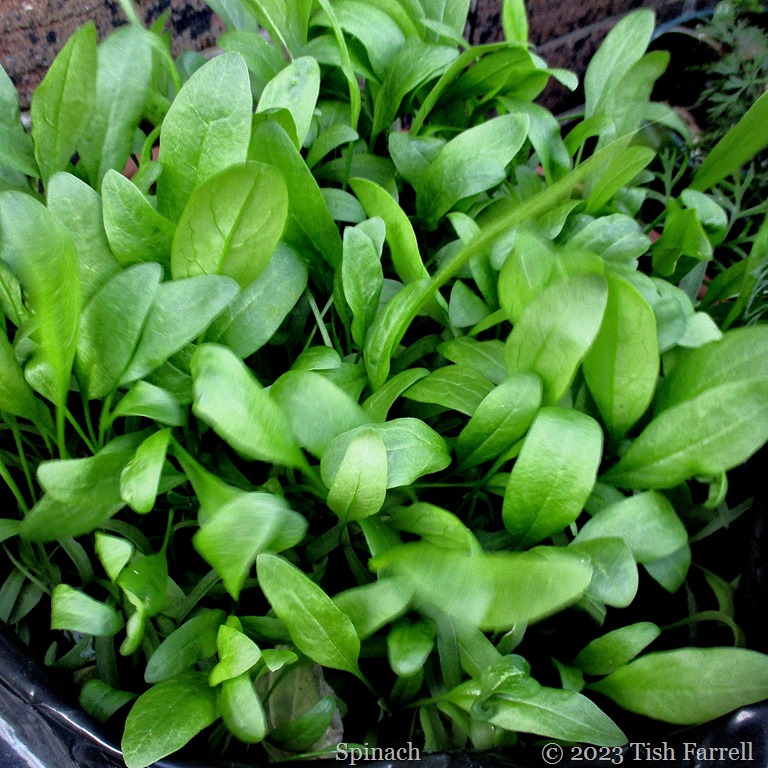
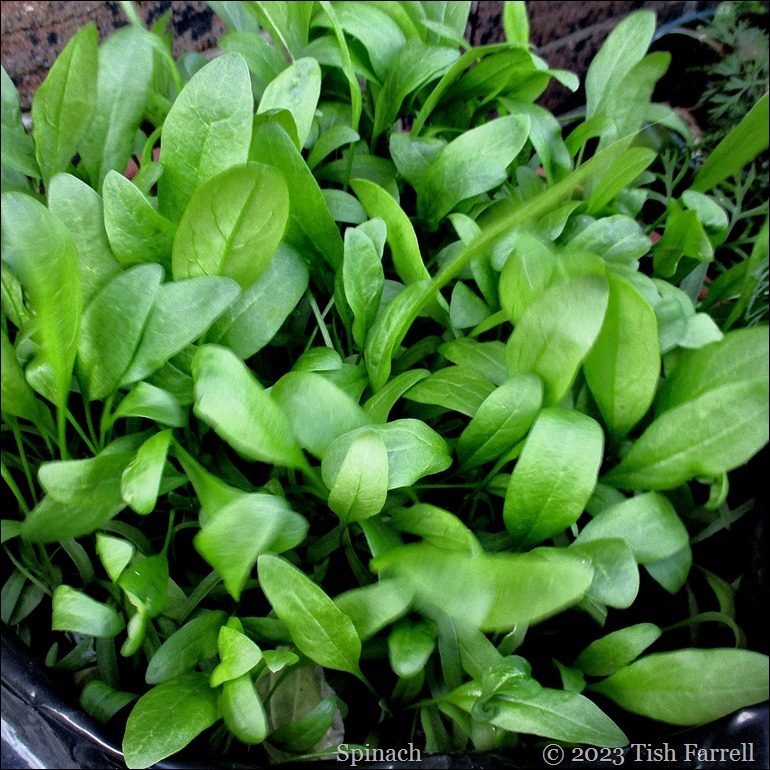
I do have lots of big clay pot, but realizing they would be too heavy and cumbersome to move when filled with compost and plants, I decided to use old compost bags (added drain holes in the bottom), with the tops rolled back to make a firm and grabble edge, and then popped into a clay pot for stability. These have proved excellent for growing successional crops of rocket and spinach. The latter usually bolts quickly in summer weather (not that we’ve had that since our few hot days in June; it’s more like early autumn), but growing it for baby leaf for salads or wilting into casseroles and curries seems to work just fine. It also grows very quickly.
*
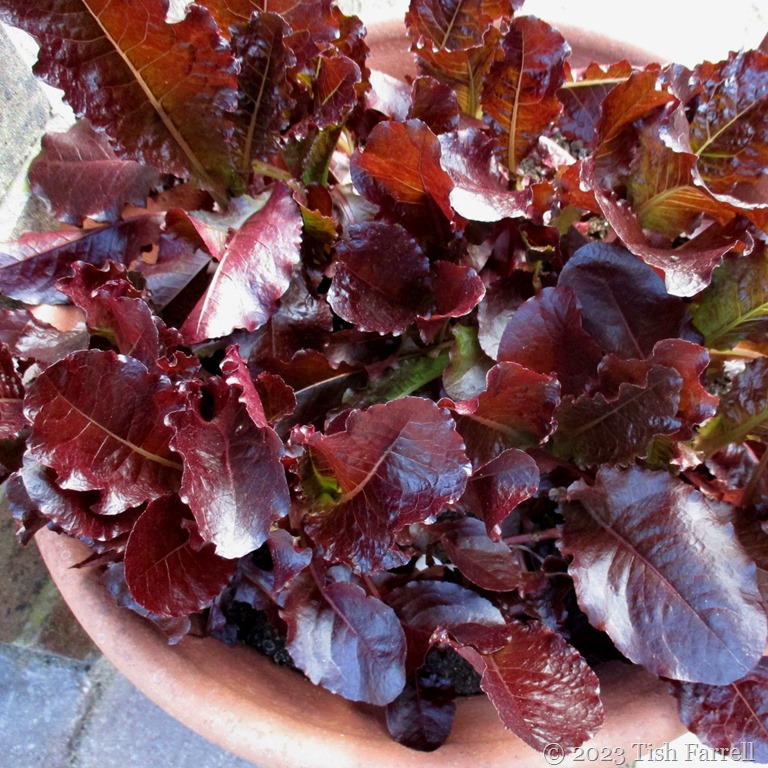
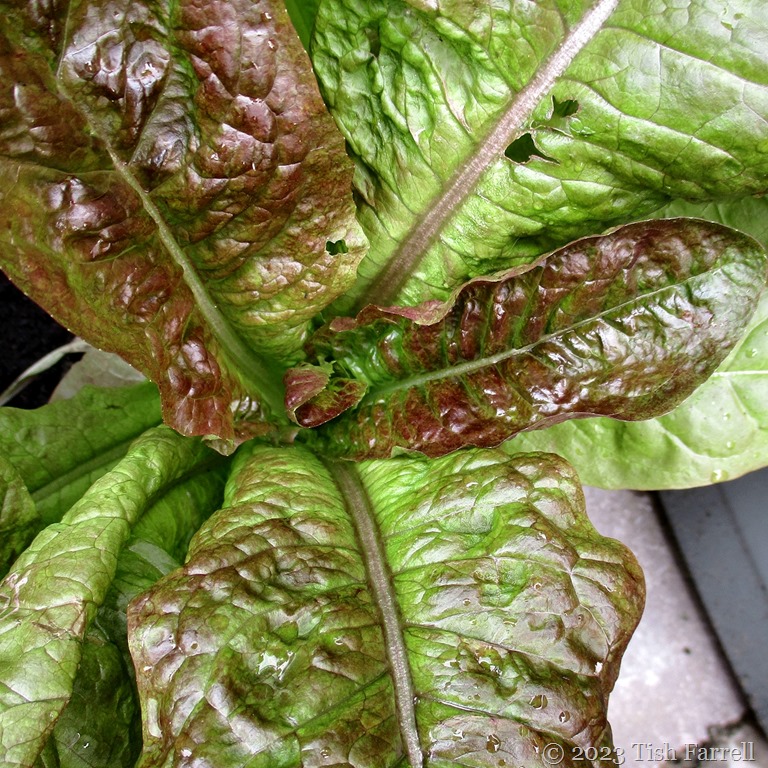
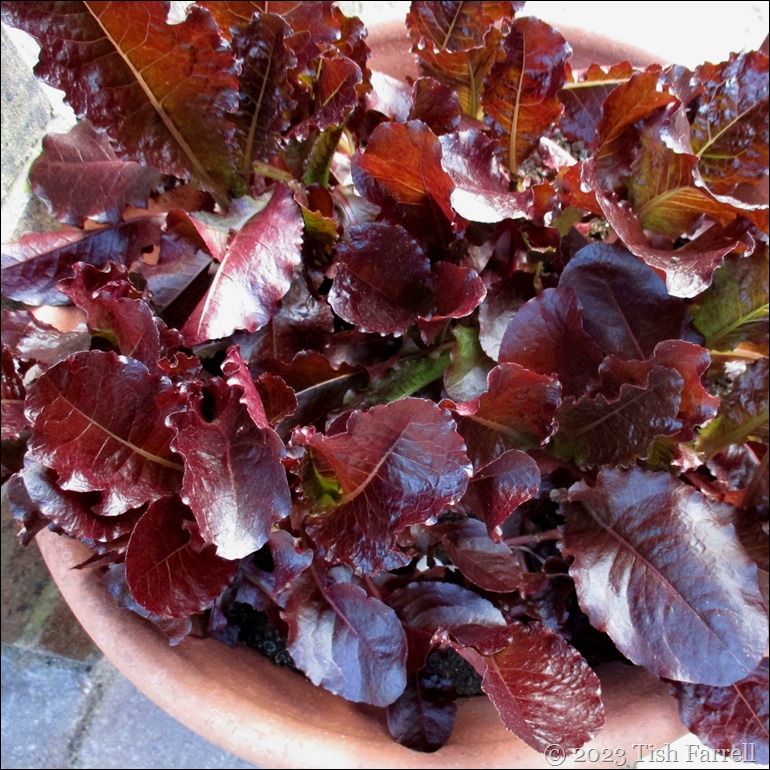
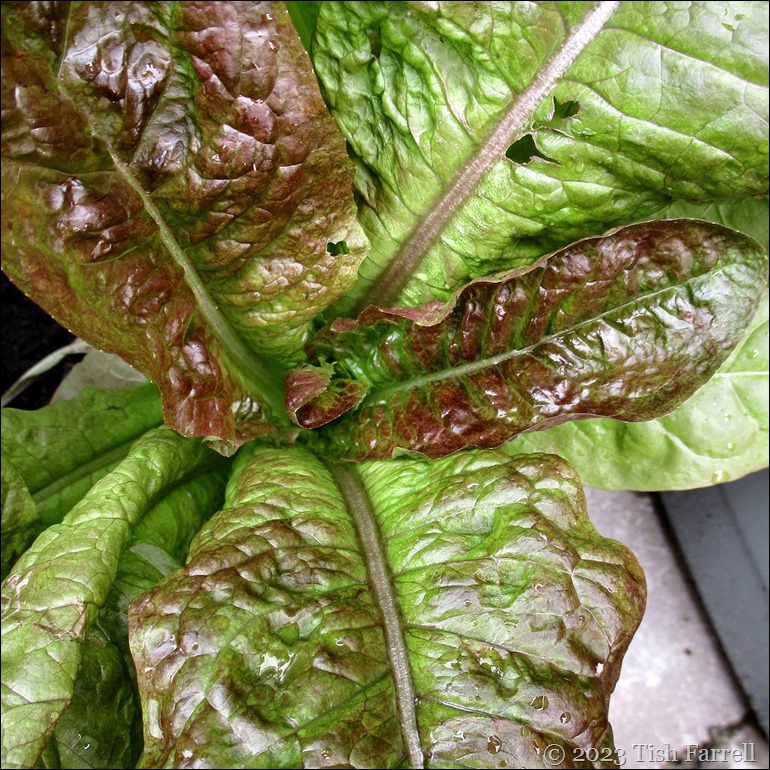
Lettuce can be sown all season, and best done anyway in small-pot, successional sowings. Some I’ve left unthinned, and just cropped the leaves; others I’ve thinned and planted out in compost bags to grow into proper lettuce.
*
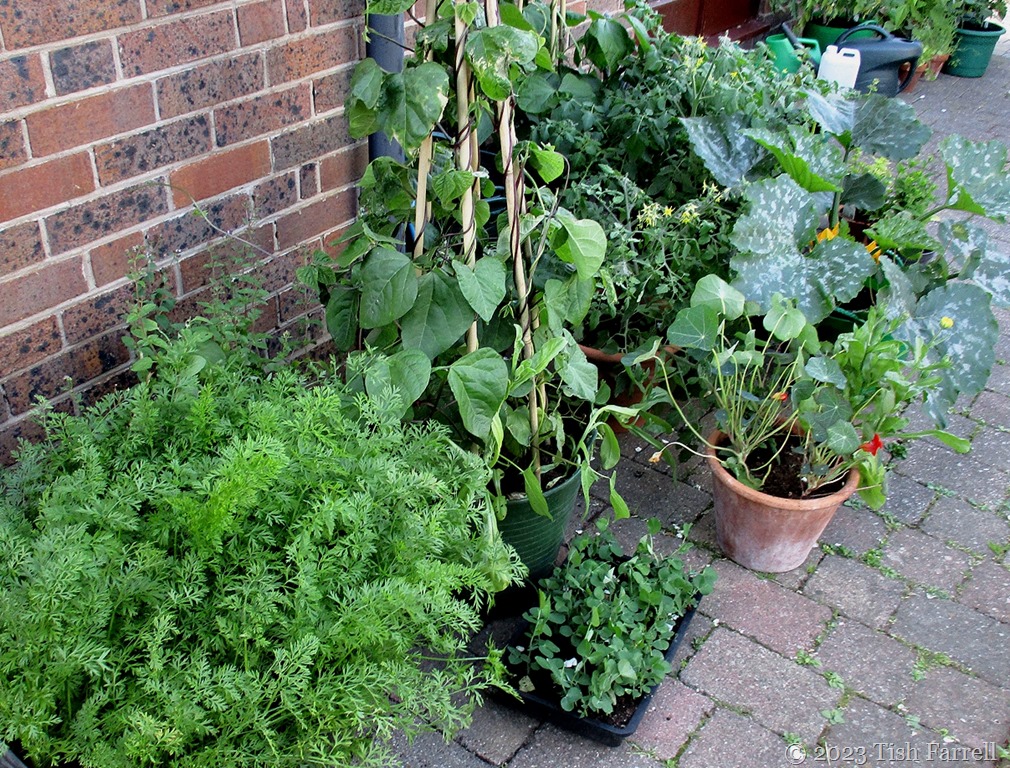
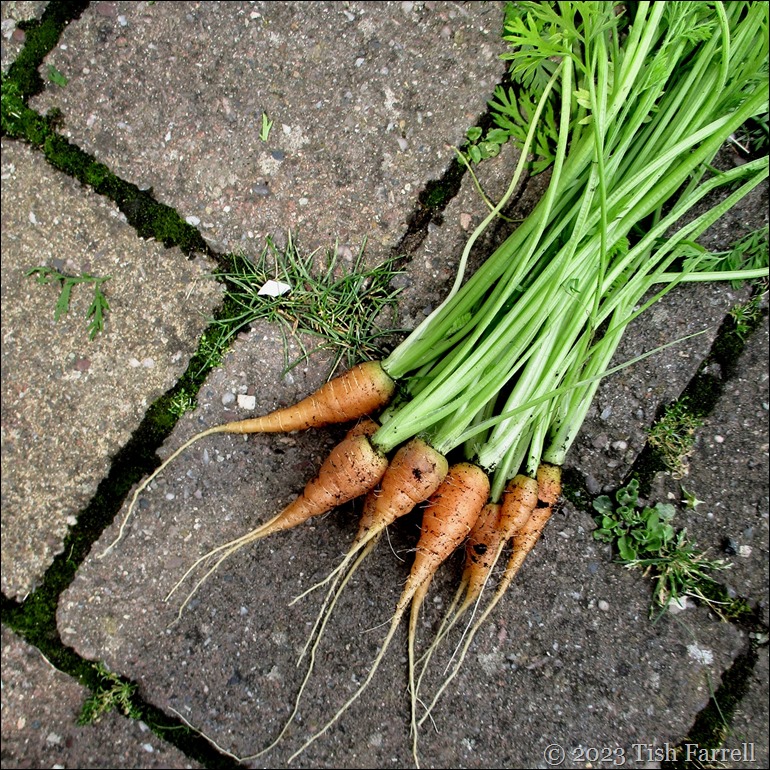
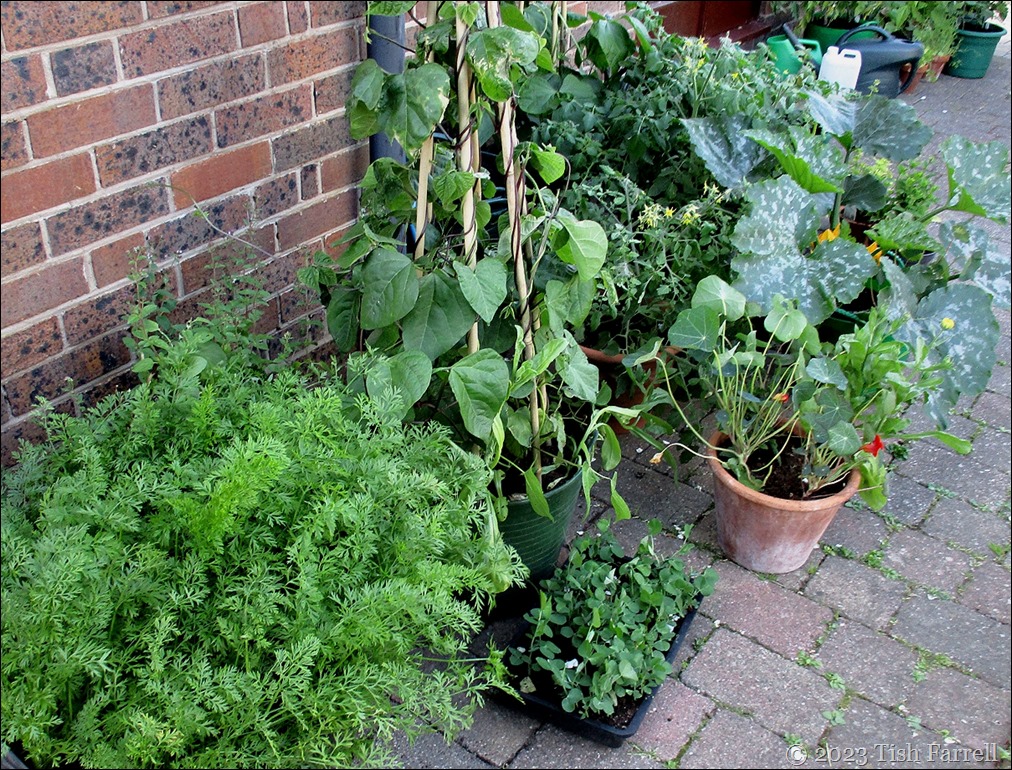
For the last few years I’ve tended to grow carrots in buckets, especially late summer sowings which provide a crop for winter eating. This year I sowed some back in April, and now have a big bucket of carrots seedlings, some of them just big enough to pull. We ate this little bunch steamed with broccoli and tahini lemon sauce.
*
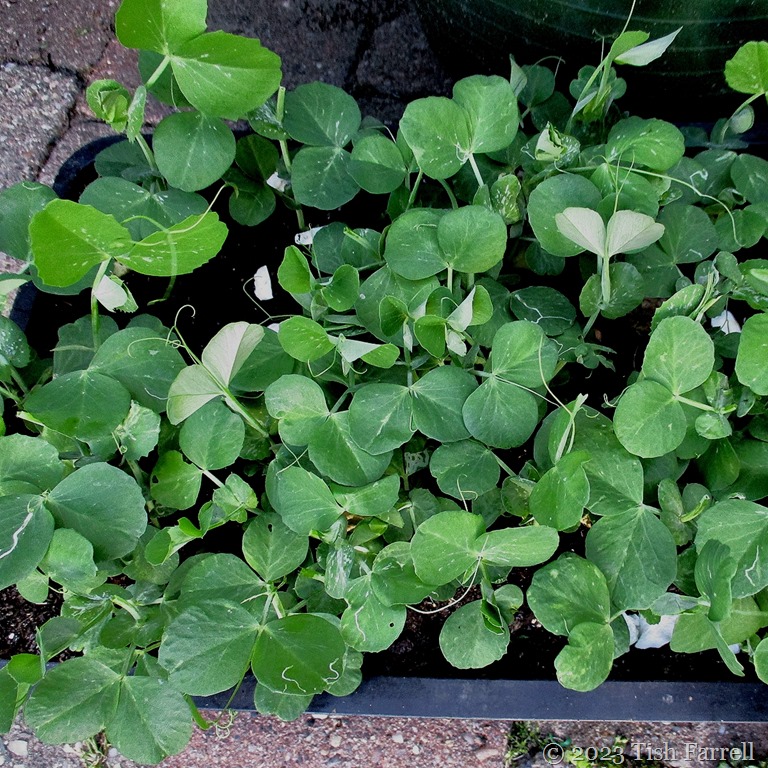
And now a big shout-out for pea sprouts. This is a first for me, though why I’ve not thought of it before I really don’t know. I was able to use up all my old pea seeds too. Again, these can be grown in a series of 5 inch flower pots, sown successionally, or in standard seed trays (a layer of compost in the bottom, peas popped across the whole surface about an inch apart or a bit closer, and an inch of compost on top).
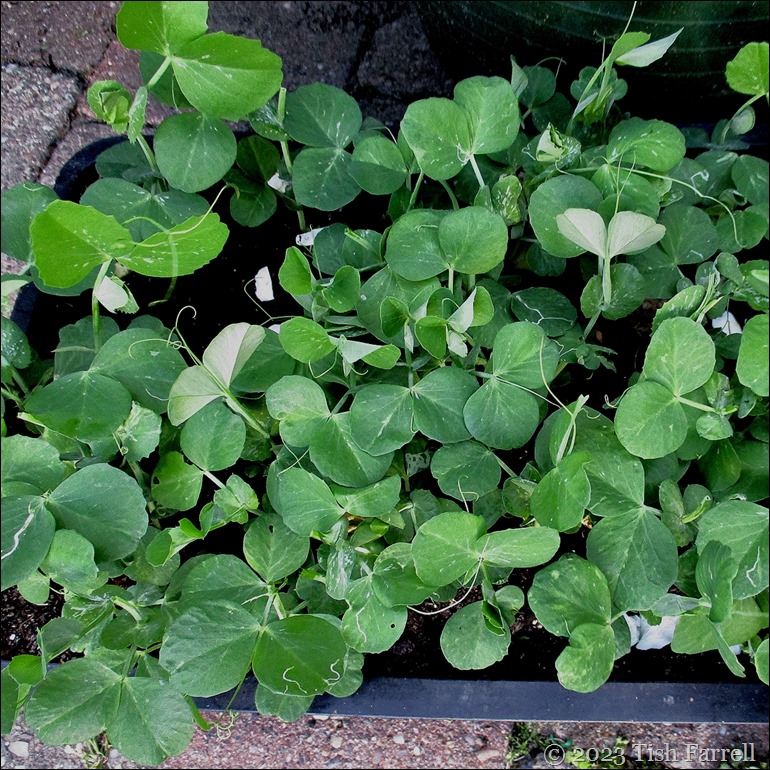
This tray has been recently cut i.e. when the stems are about 4 inches long. If the tray is kept well watered, then there will be further crops, maybe 2 or 3 more cuttings. We use the sprouts both in salads and for cooking.
Other potted crops include spring onions, leeks, pot marigolds and nasturtiums (for salads and prettiness), parsley, basil, dill, mint, coriander and oregano. I also have a bucket of climbing Violette French beans, and another of borlotti beans. I’m not sure how they’ll work out. The French beans have been beaten up by the winds (there has been no ‘hottest ever’ global warming in Broseley only shivering) but they are at least beginning to flower.
So there you have it: the Farrells’ moveable feast, and in the interim, the makings of a green salad to accompany every supper for the last couple of months. The exercise is making me re-think my gardening practice. The biggest advantage (apart from the moveability) is that container growing seems to help focus the mind on small, successional sowings, something I rarely seemed to manage on the allotment. You do need to keep an eye on the watering however. Wind, in particular, can dry out pots very quickly.
And now for some views of the back-door veggie plot:
*
I hope this might have enthused some of you to get potting. You can’t beat a freshly plucked green salad.