Of Acrow Props And Potatoes: June Update

IMG_5385ed

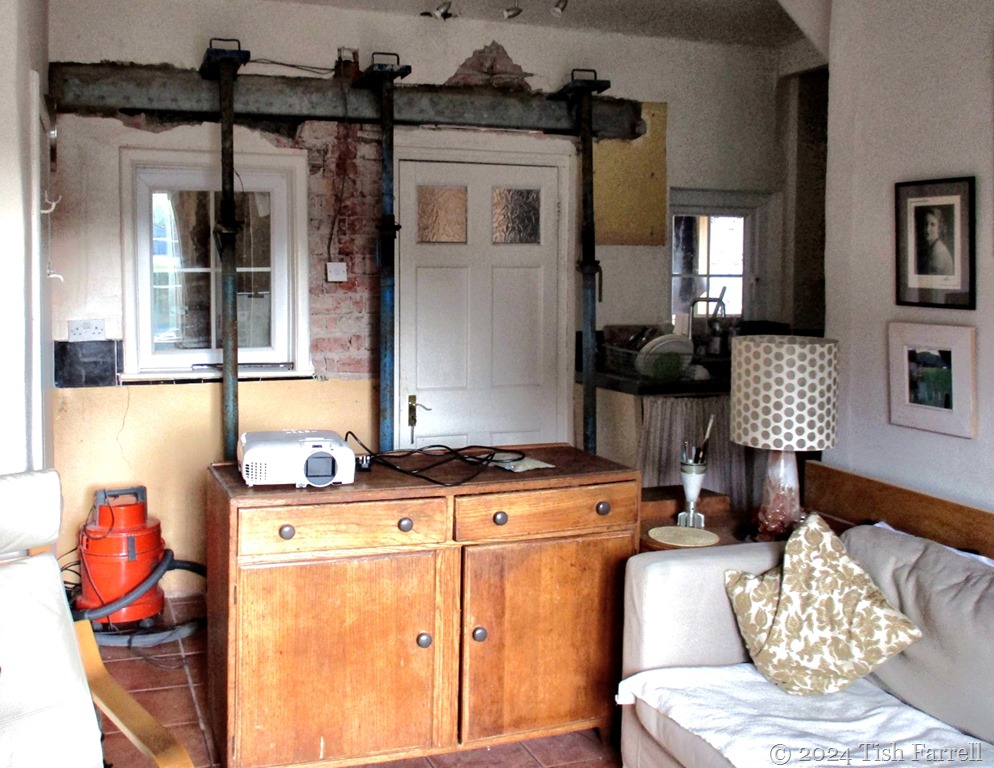
I hadn’t actually asked the question, as in how many stages are involved when it comes to demolishing a section of load-bearing house wall. I suppose I had wondered how the two steel beams (inside and out) would be inserted in the sitting-room-kitchen wall. And logically I would have assessed that this must be done before the actual wall, window and door were knocked out.

I also knew that this would not happen until the new kitchen extension was nearing completion (several weeks away). In other words I had not prepared myself for a double dust-storm event, mostly because the chaps, as in other half and builder Alan, had given me only scant (evening before) warning of the beam insertion process.

But the dust!

It was all I could say when I learned what was planned. Alan raised his eyebrows – part apology, part goes-with-the-territory. Plastic sheeting was duly taped, floor to ceiling, across the back of the sitting-room and across  the ‘L’ of the kitchen. More sheets were thrown over all the furniture, doors that could be shut were shut, and then the hammering began – first the plaster, then the wall whose bricks, as bricks go, are strangely adamantine. It’s likely they were made just down the road, in the days when Bishops Castle had a  brickworks.

And so here we are, a week on, still dusting; an activity that will doubtless segue into demolition phase II sometime in August.

But at least the acrow props have gone now and the furniture is back where it was, also a critical factor in a small house where we presently have more stuff than rooms to put it.

IMG_5378ed

*

We’ve also been receiving deliveries  – the front garden now looking like a builders’ yard.

IMG_5395ed1

*

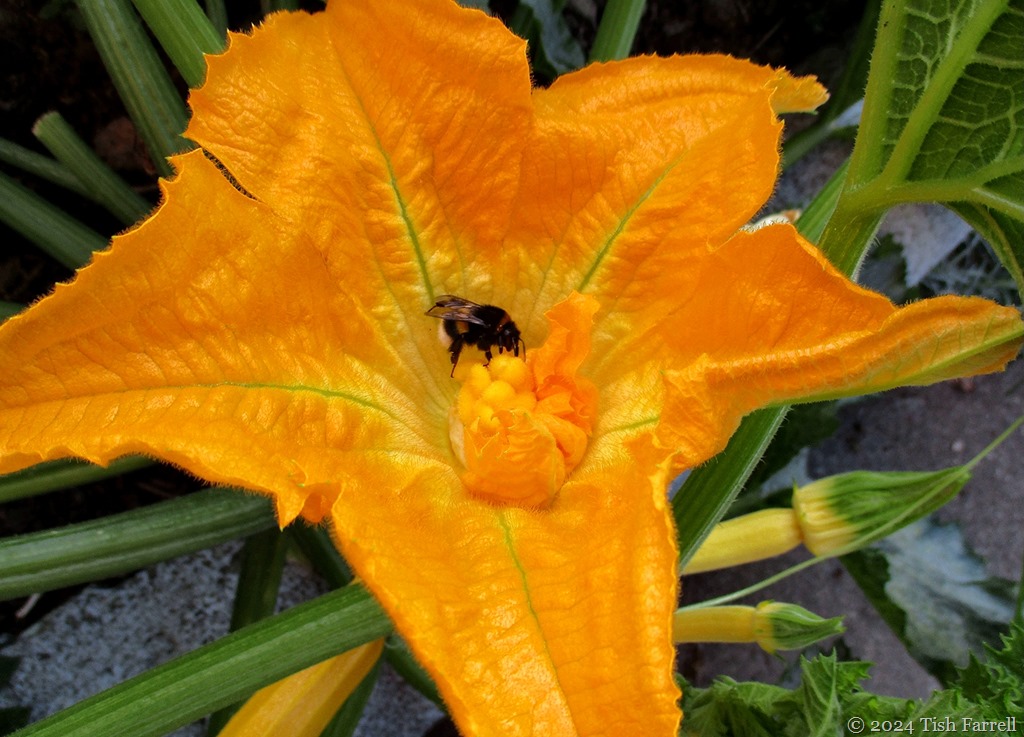
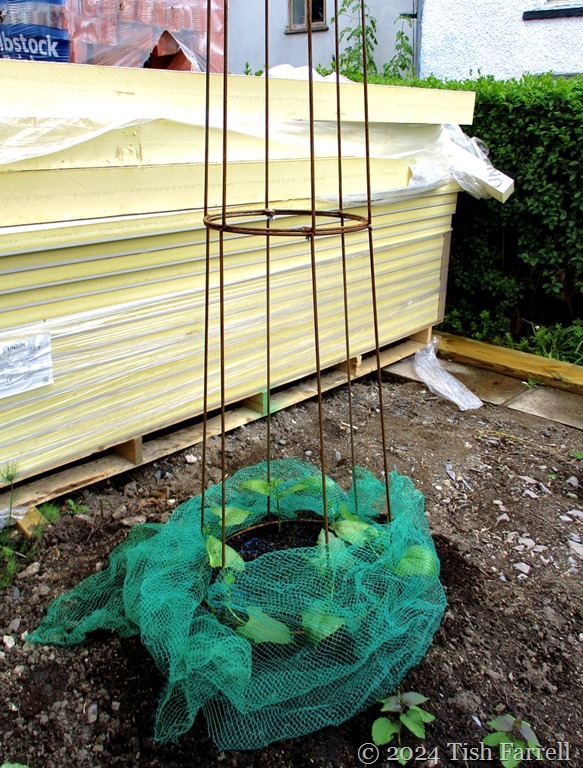
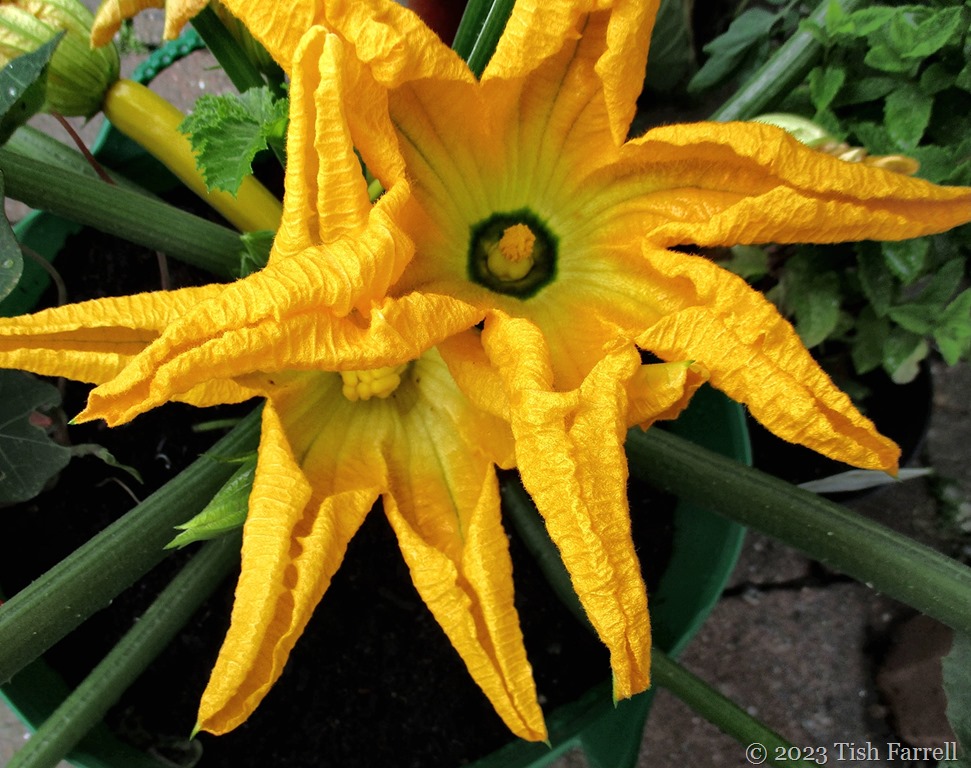
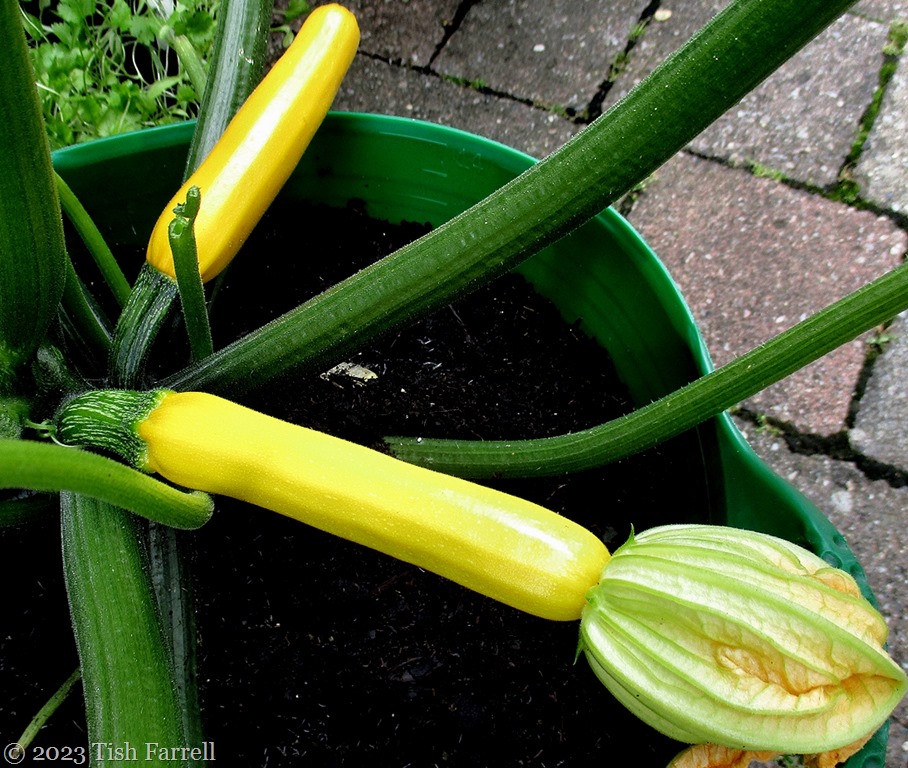
One half has been commandeered for supplies, it being the most accessible space for unloading. But I’ve hung onto a small corner and put in some Gigantes butter beans and two yellow courgette plants, tucked in between the insulation boards and the front door. Well, can’t miss the planting season, can I. And that border is particularly sunny. I popped in some Korean mint (Agastache) too.

IMG_5403ed

IMG_5405ed

*

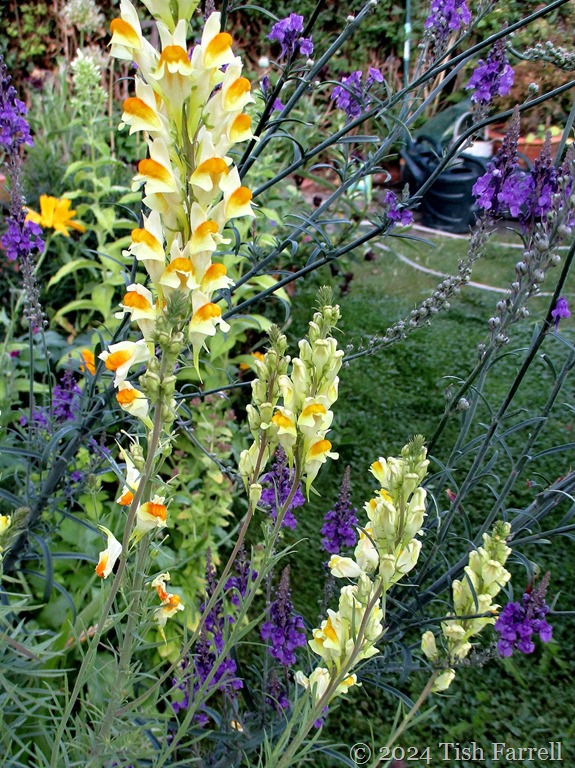
As to the bed on the other side of the front path, I staked a claim back in April, so the roofers wouldn’t bury it in waste tiles. I’ve put in three small rows of potatoes – Rocket and Charlotte, which have sprouted well. There’s also the beginning of a herbaceous border under the sitting-room window: a lone delphinium accompanying some young alcalthaea plants (a cross between mallow and hollyhock), knautia and verbascum, blue geraniums and achillea, a purple toadflax with has turned out to be pale pink.

IMG_5401ed

*

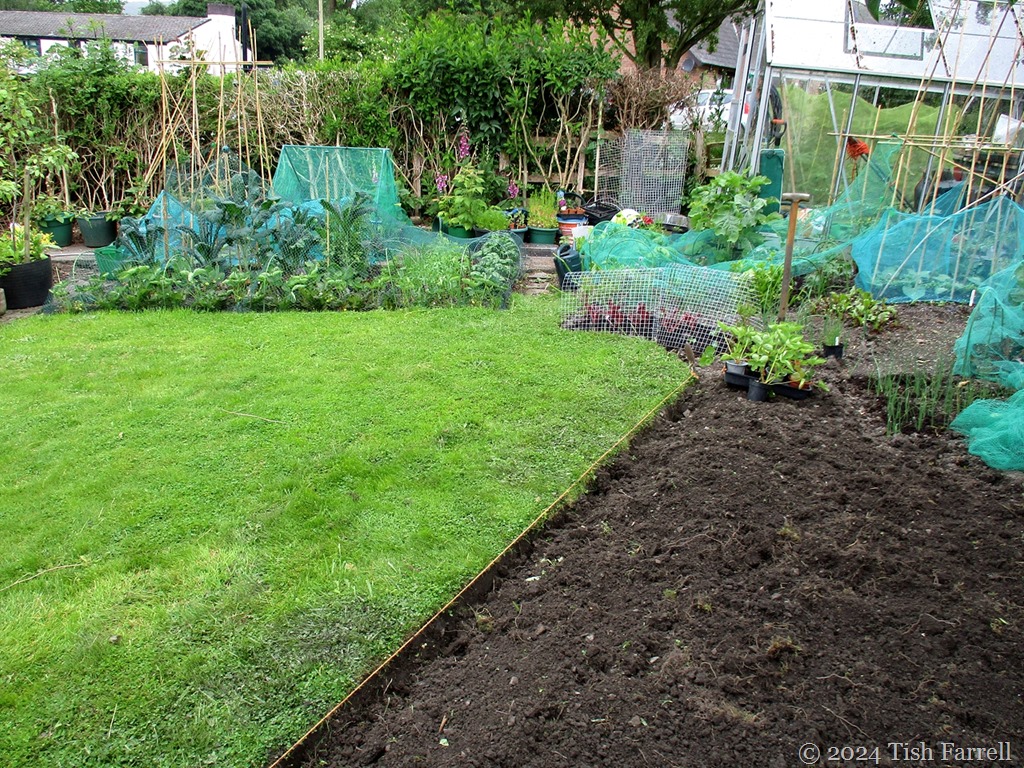
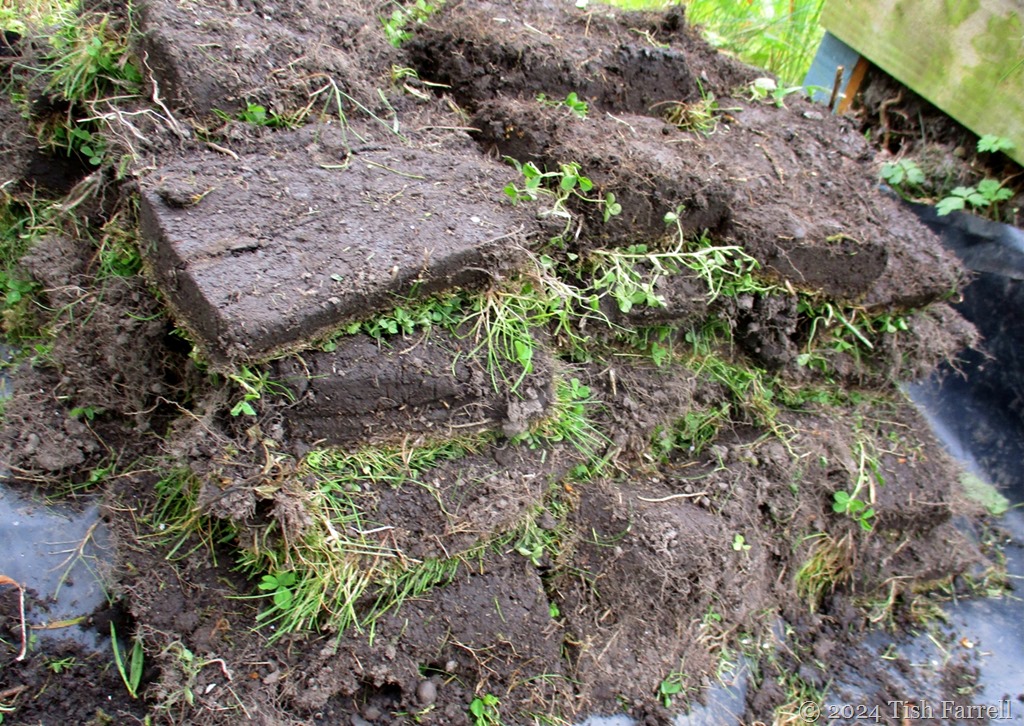
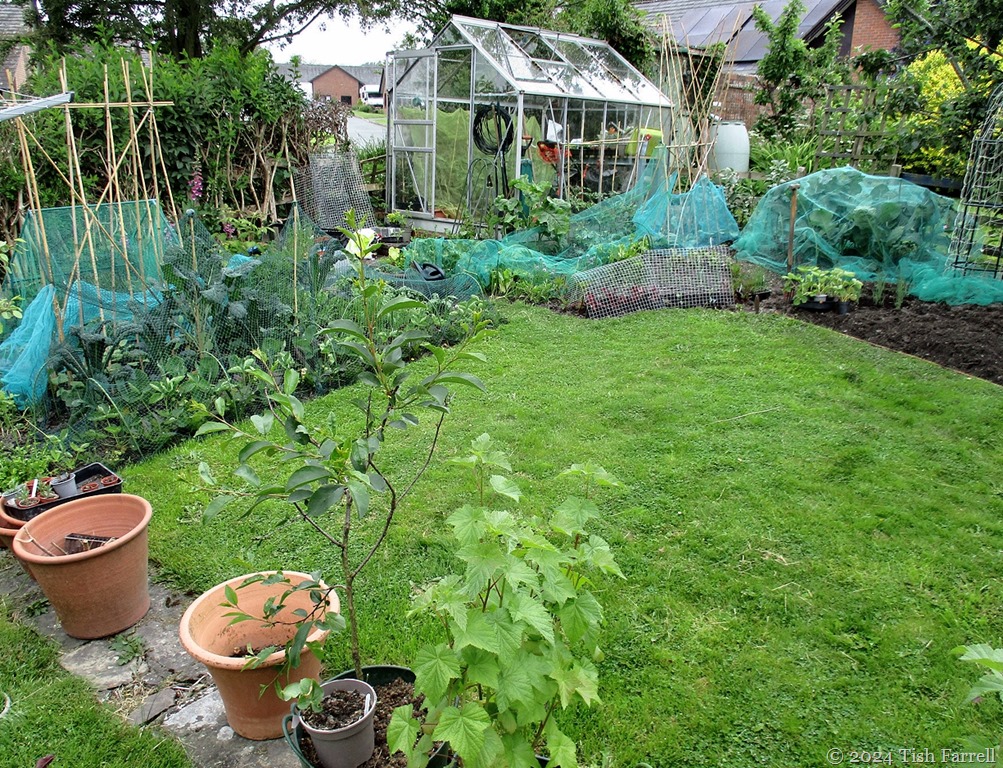
Meanwhile out in the back garden, the lawn has been continuing to disappear. Most of the turves are in the compost bin which is now full. I’m now stacking the rest, leaving them to rot down.

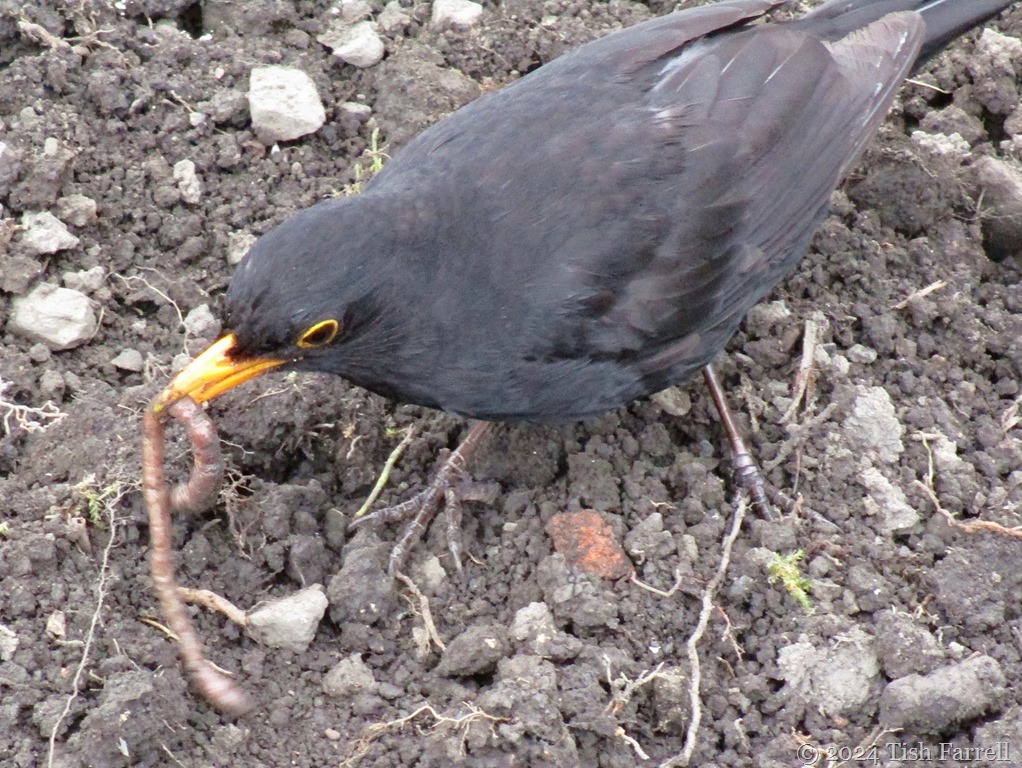
The more I dig, the bolder the blackbirds become, nipping in around my feet. I watched one carefully gather a stash of worms on the lawn whence they could not easily escape. When the bird had a good beak full, off it went, doubtless to feed a fresh brood of nestlings.
IMG_5408ed

IMG_5419ed

IMG_5427
*
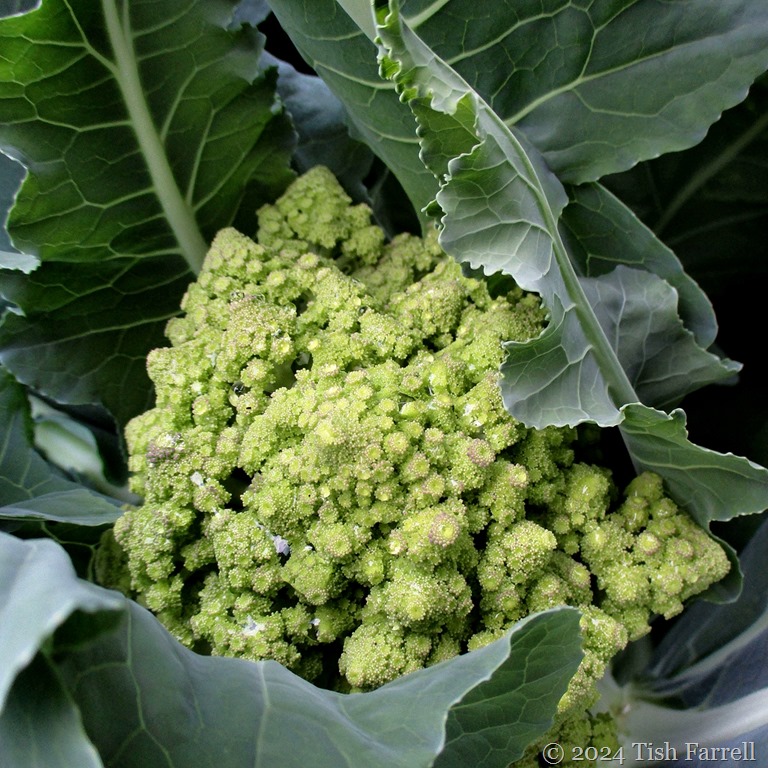
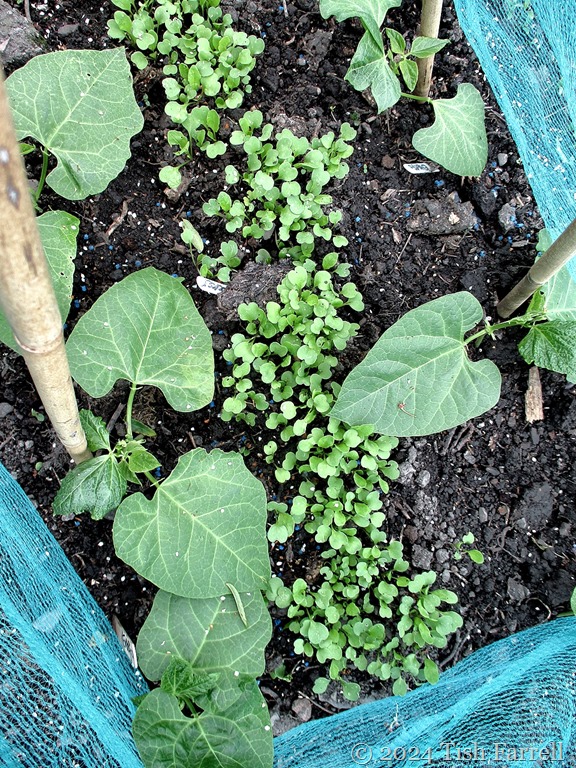
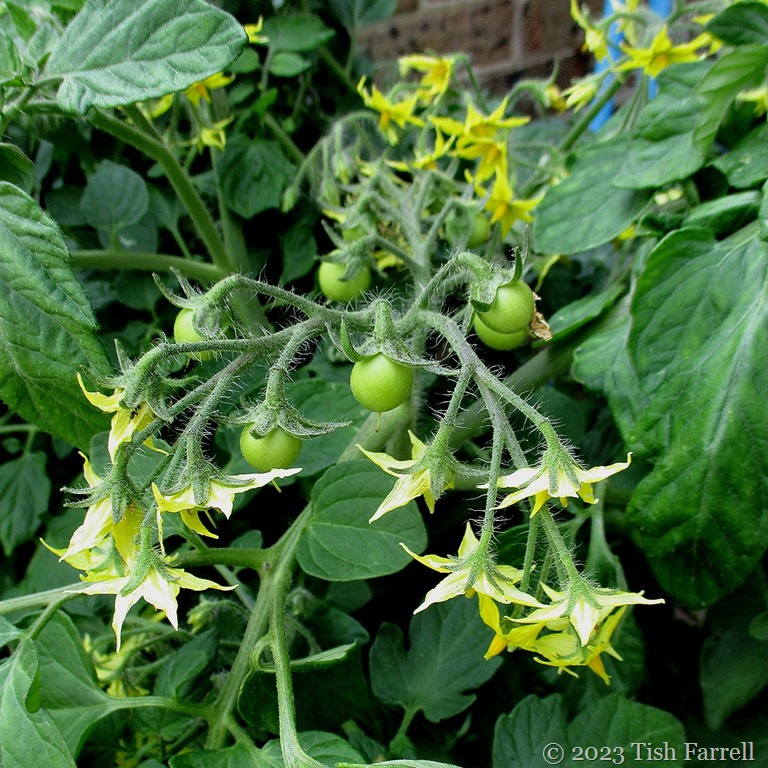
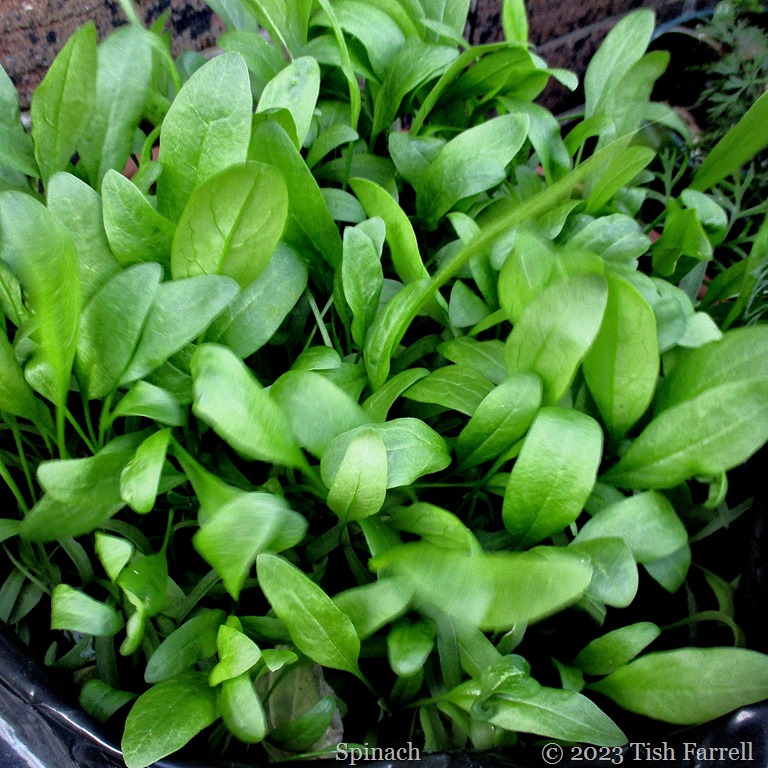
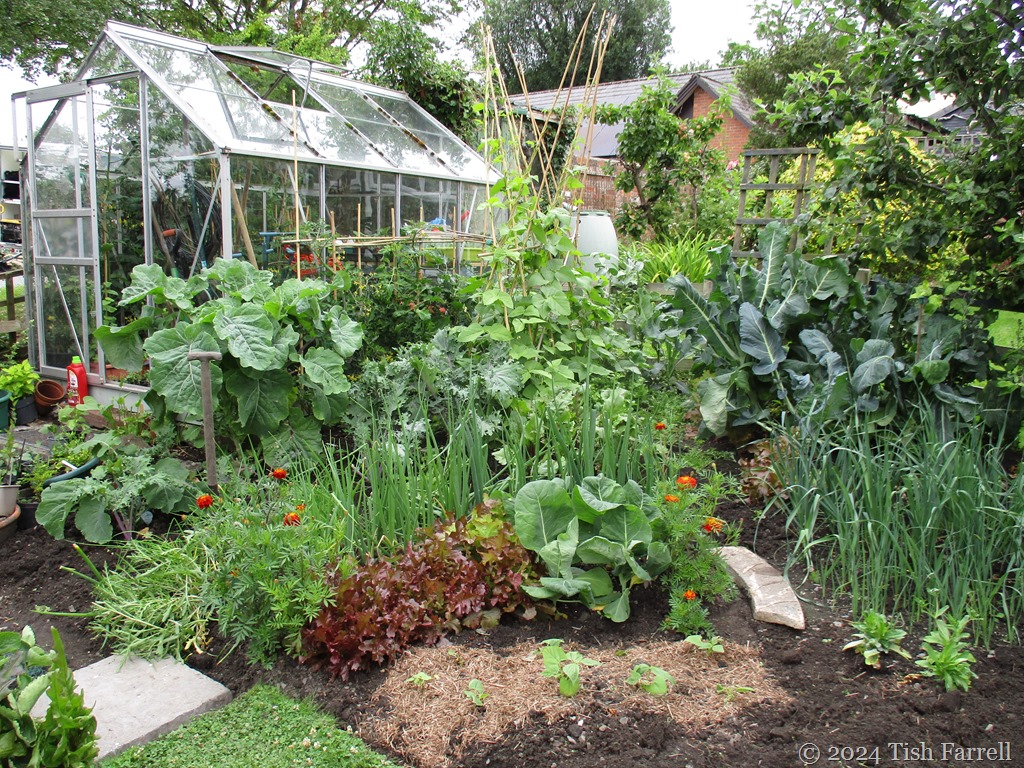
Much like the house, the garden is chaotic. Somewhere there’s a plan. For now, I’m simply pleased to have all kinds of kale, spinach and lettuce busily thriving. We’ve even had a handful of early purple sprouting. There are field beans forming at the top of the garden where the Romanesco caulis are growing ever more gigantic leaves, though no sign of flowers. There are tomato plants inside and outside the greenhouse. Strawberries are plumping up alongside cabbages, spring onions and Moroccan Cress, and the Emergo runner beans are looking pleasingly robust, though not yet climbing their sticks. In the interim, I have some rocket (arugula) growing mid-row. It needs thinning out.
IMG_5409ed
IMG_5412ed
IMG_5416
IMG_5410ed
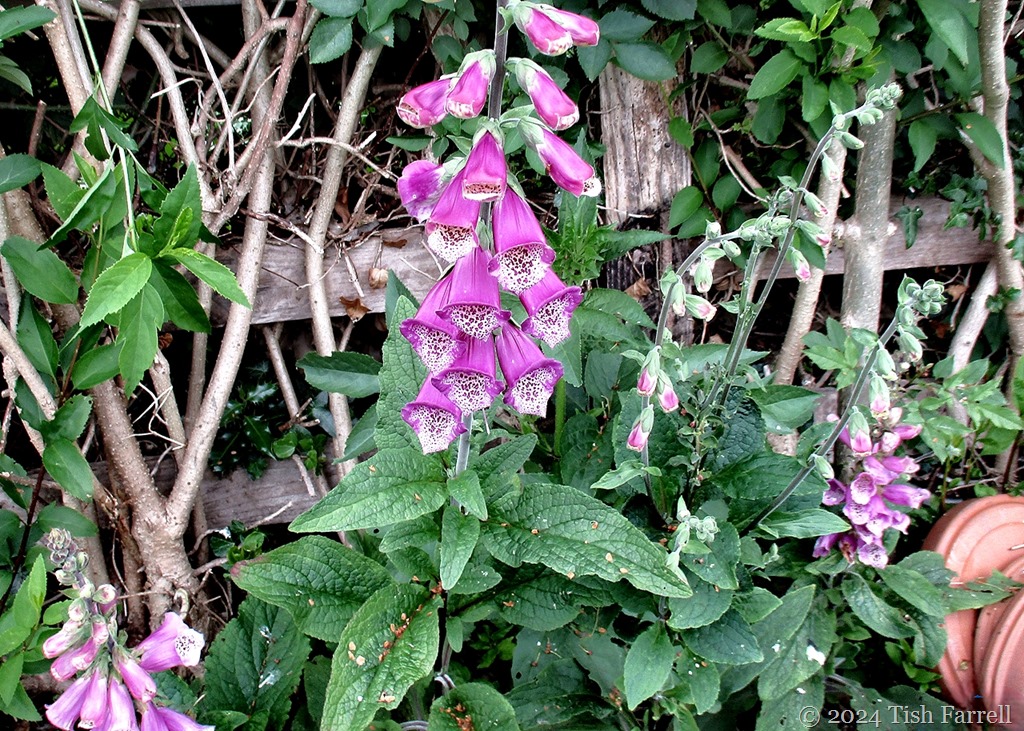
The horrid hedge still needs much work. I now see it’s full of sycamore and ash trees, some quite substantial, while the actual original hedge of holly, hawthorn, weigela and privet has been much mutilated by years of being squashed behind chicken wire and under great boughs of ivy. But that’s a job for autumn. I anyway think we’ll need a man with a chainsaw to cut it down to size so the lower quarters can regenerate. I’ve planted foxgloves to brighten up the bare patches.
*
So here we are in June with thoughts of summer, thoughts being the operative word. For although the gardens around the town say it is summer, the weather says otherwise. All this week builder Alan has been complaining of the cold, resorting to his winter windproof jacket. We’ve been going around  wrapped up in sweaters, lighting the wood burner each evening. And for sure we’ve had some sunshine, but the wind has an icy edge, and it’s hard to escape it. Still, the spuds are looking good, and apart from the dust, there is much to be happy about.
IMG_5401 header

All Burgeoning At The Hurst

sq20

Yesterday felt like summer. It was also ‘open garden’ day at The Hurst, near Clun, a place English-speaking writers, seasoned and aspiring, will know well since it is one of the four ‘homes’ of Arvon, the charity that fosters creative writing through its residential courses, festivals and retreats.

But before Arvon arrived at The Hurst, the other key writerly connection is that it was, until his death, the home of playwright John Osborne (1929-1994). He and his fourth wife, journalist, Helen Dawson, are both buried in the tranquil graveyard of Clun parish church. (See earlier post In the footsteps of the Green Man for photos).

Clun is only a short drive from Bishops Castle – an easy afternoon out then. Others thought so too, and it was pleasing to see how many had come along for homemade cakes and tea, garden rambles and to support the Shropshire Historic Churches Trust, a charity whose grants for repairs and preservation “help keep buildings open not only for worship and community use but also as quiet places for prayer and reflection.”

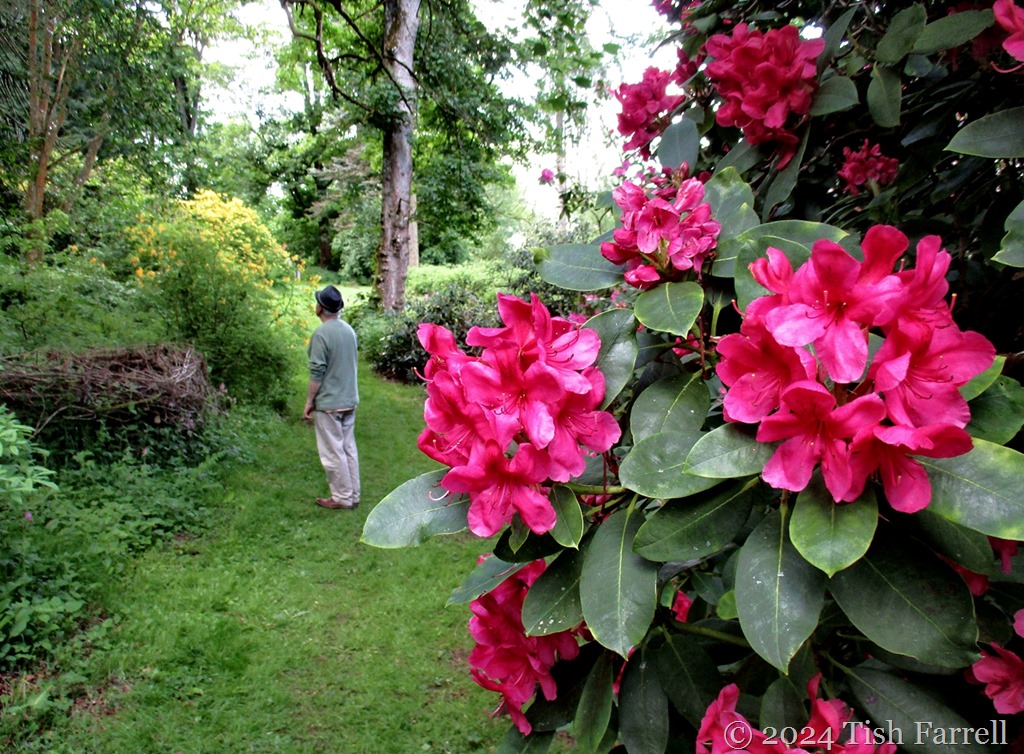
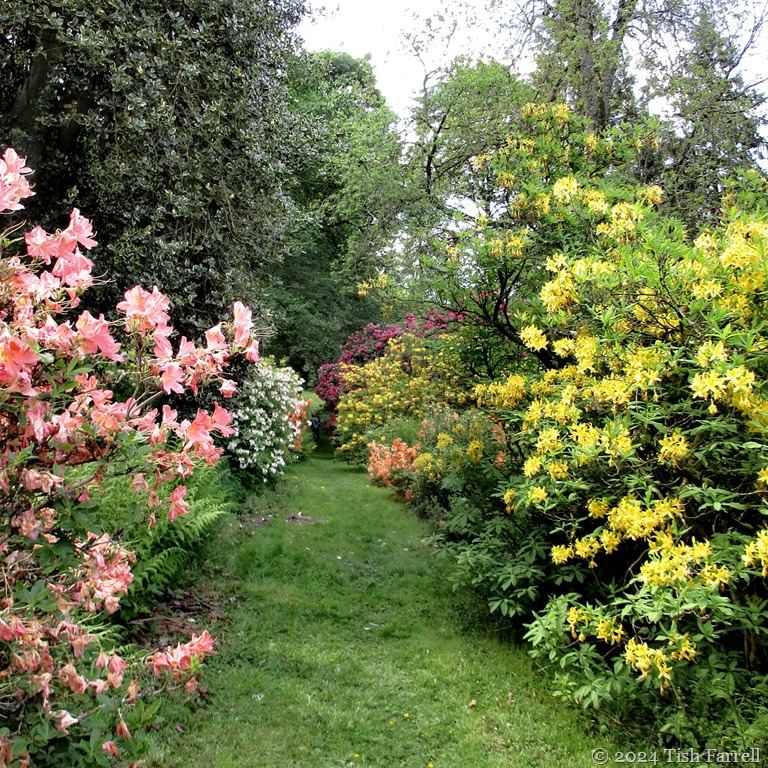
The Hurst sits on a hillside, forest all around, and with grounds that are more arboretum than formal garden. Long grassy avenues  lead you on between azalea and rhododendron borders, while overtopping all, are magnificent, mature trees. Please feel free to wander and enjoy the sun-dappled paths.

IMG_5309

*

IMG_5296

IMG_5292

IMG_5298

IMG_5300

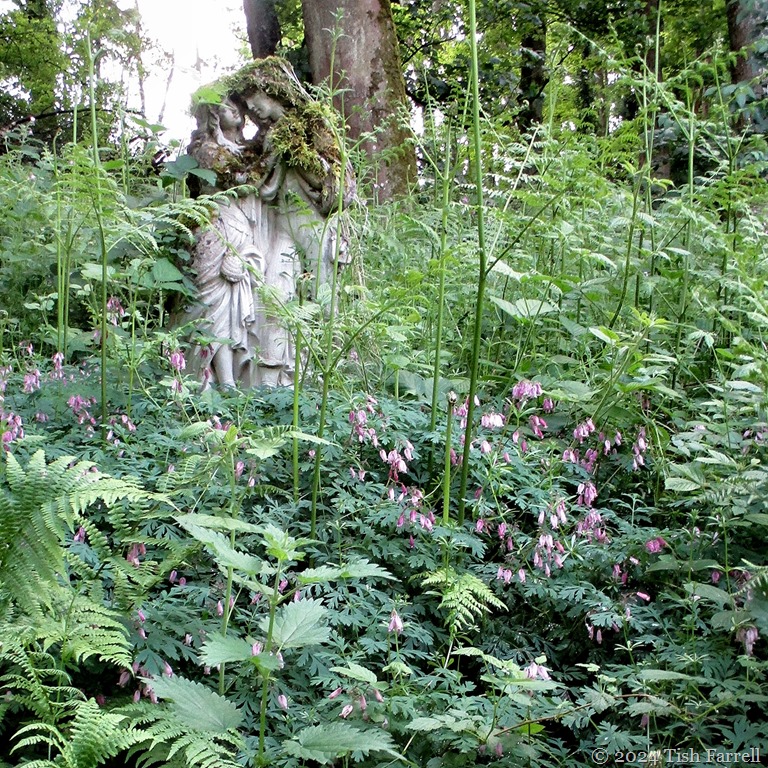
All the lush greenery wafted over us like a tonic. And the mossy lovers above the bank of Dicentra ‘Love Hearts’ raised a smile.

#SquaresRenew  Becky’s May challenge: a daily square format header photo featuring themes of renewal, moving forward, reconstruction and burgeoning.

sq20 header

Leading You Up The Garden Path

IMG_5211ed

Each day For the month of May Becky is hosting a square format photo featuring one or more of the following themes: move forward, burgeoning, reconstruct, renew. And so here, on all those fronts, is the kitchen-window-to-be with a view on another ‘work in progress’ – the garden. The hawthorn tree over the hedge is doing the burgeoning.

The house extension has been forging ahead too, and while super-builder Alan has been putting up the inner timber frame, I have been digging up the lawn. I started doing this last summer, soon after we’d moved into The Gables, but got no further than two beds along the garden path. Even so, they are already looking promising, bursting with spinach, Swiss chard, coriander, various kales and cauliflowers. (Everything has to be netted against pigeon plunder).

But then came the wet and frigid winter, and so the digging mostly had to stop until March.

IMG_5216

Our garden ends at the fence behind the greenhouse, and I’m now expanding an existing narrow bed along the entire fence-line. First on my list has been rooting out the ground elder and phygelius seedlings, followed by making a well composted trench for runner and butter beans. The trench is done and the bean row will run parallel to the greenhouse, but with space enough for some outdoor tomatoes beside the greenhouse.

Against the back fence are a few field bean plants (mini broad beans), now busy flowering, and next to them is a small plot of sprouting broccoli and green Romanesco cauliflowers for late summer cropping.

It’s a pity everything has to be netted, but the pigeons are remorseless foragers, including testing things they don’t really like and leaving lots of shredded leaves – the rotters.

Meanwhile the kitchen is looking like this:

IMG_5213

A brick-skin with parapet is next on the agenda. There will then be double doors filling the open space, and a roof lantern illuminating the cooking department. The further half of the back house wall will then be knocked through to the main sitting room to create an open L-shaped living space on a roughly east-west axis.

But for now it’s all blue-sky thinking, and not least some serious musings on how the new roof lantern will affect the interior light. Hmmm:

IMG_5210

*

#SquaresRenew

hawthorn header

Bishops Castle Days

IMG_4645ed

At last. Three days of fine weather, days that feel like spring. Days for sowing seeds – Tuscan kale, Swiss chard, spinach, carrots, cauliflowers, leeks…

…for digging up the lawn and mowing what’s left of it…

…for tackling the ‘hedge of iniquity’ that runs the length of the back garden, extracting the tangle of ivy, holly, privet, hawthorn, sycamore and ash from the chicken wire that some erstwhile inhabitant has laid along the entire inner perimeter so creating an interweaving thicket of manic vegetable intensity that is impossible to cut properly. Meanwhile, inside the hedge the ivy has grown stems as thick as mooring ropes, looping and leaning, causing the holly to loop and lean too and think it is a creeper…

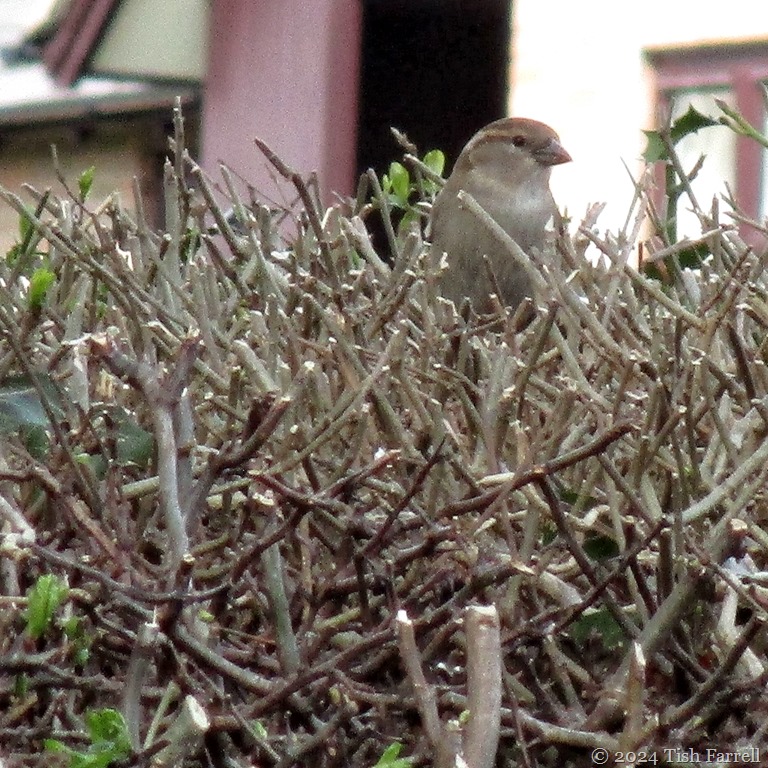
But I’m dealing with it calmly – one snip at a time. The only problem is my presence hedge-side keeps the sparrows away from their feeding station, and at the moment they are ravenous. I’m giving them a break while I write this post.

*

IMG_4696

*

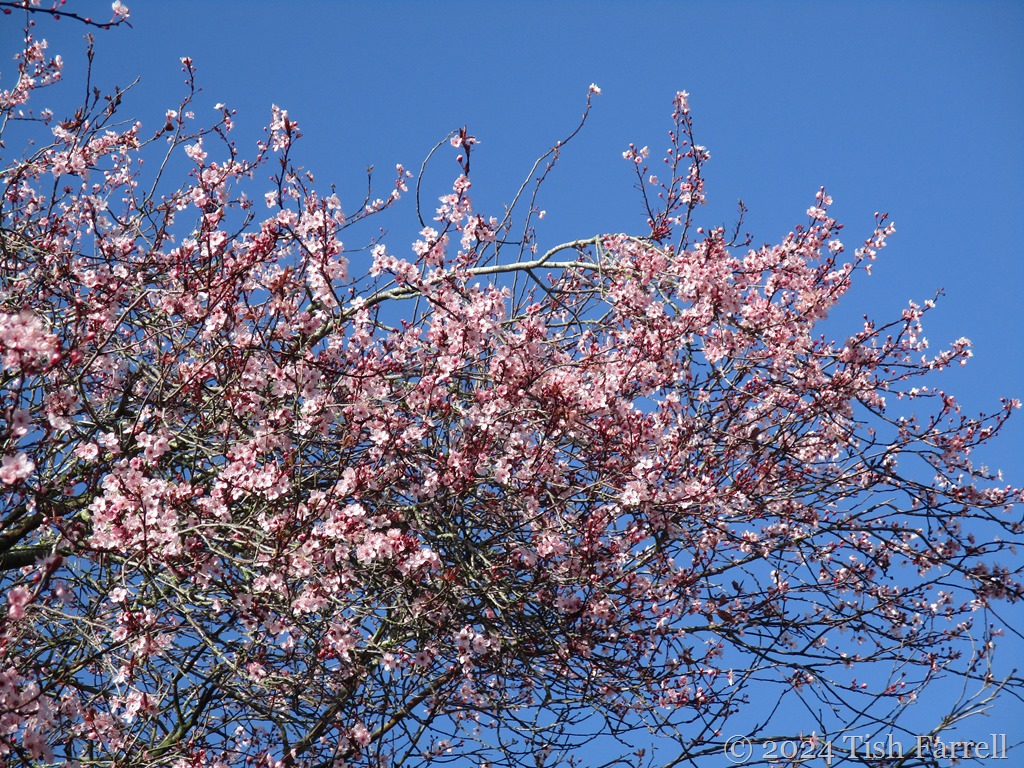
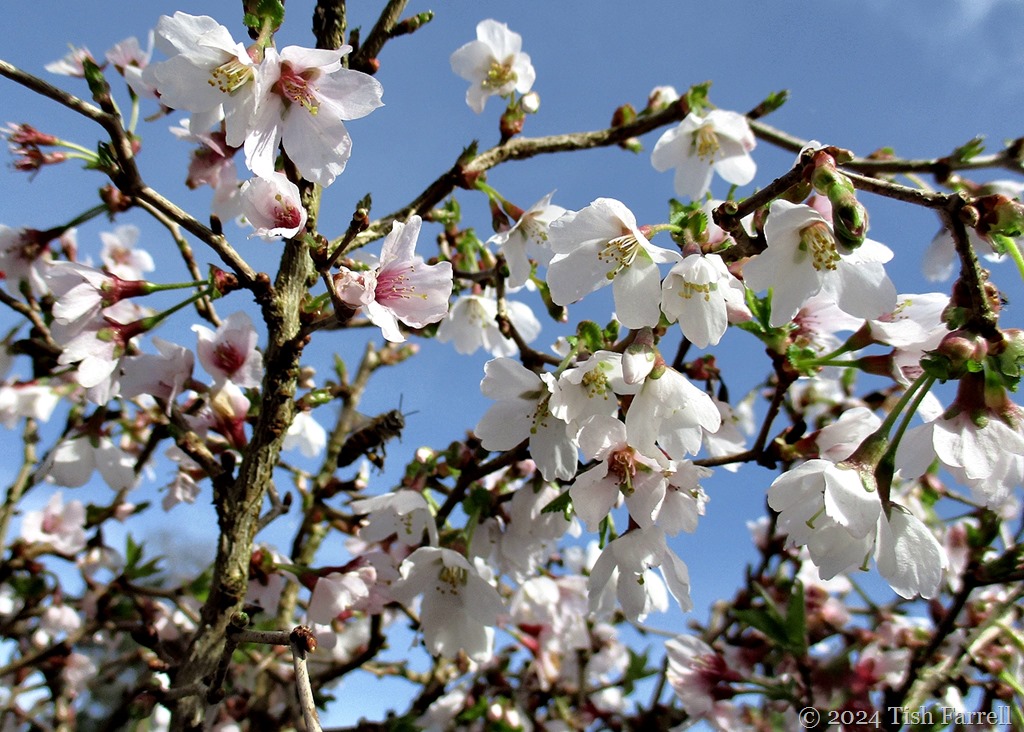
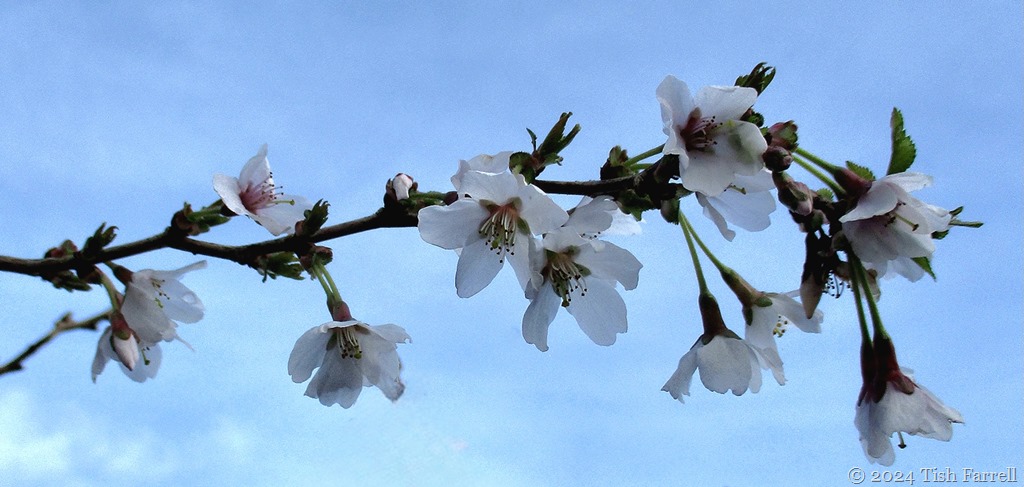
For the last few weeks, through chilling winds, frost, rain and rare bursts of sunshine, we’ve been blessed with cherry blossom. Not our tree, but one growing just over the hedge near the back door. Now, the flowers are fading and falling and when we go outside, we’re sifted with tiny petals. The terrace flagstones too. It looks like confetti.

*

cherry

IMG_4741ed

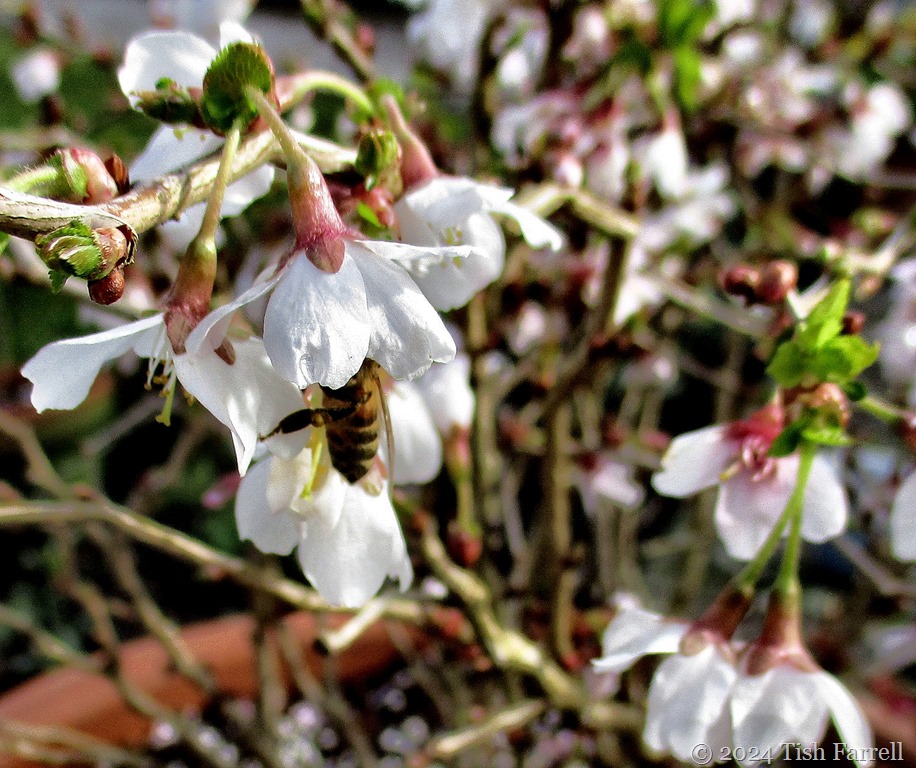
But our own small cherry tree has begun to flower. It’s a Japanese variety, Kojo-no-mai, more of a shrub than a tree, and in time growing to around seven feet high and wide. It will be fine in a pot until the garden is finally ready for it. (Which won’t be soon). And while it’s so small, it can best show itself off on the terrace wall, where the honey bees have already found it. In fact as I was busy transplanting a Dame’s Violet (brought from the Wenlock garden) in the bed behind it, I suddenly realised my head was filled with bee-hum. Happy bees.

*

bee

bee2

*

As I work in the garden I lose track of time. This is a special Bishops Castle feature, the locals tell us. I hear the Town Hall clock strike the quarters between the hours: one chime for a quarter past, two for half past, three for quarter to. You can see the dilemma.

Sometimes a red kite drifts up and up over the garden. I feel myself lift and drift a little too.

*

sparrow

*

We’ve become avid sparrow watchers since we set up the bird feeding station. This was created from an existing tall post (of no obvious purpose) that rises from the hedge of iniquity, and seems to belong to the era of the dreaded chicken wire application. Anyway, it’s good for suspending feeders, and we can covertly watch the birds from the kitchen window. I like the way they pop in and out of the hedge.

Mostly, they’re good at taking turns.

*

IMG_4747

*

Lately, with the drier weather, dust bathing is the thing. The sunny front garden is a favourite spot. We’ve lifted all the ugly paving slabs that covered the two borders, leaving a skim of loose mortar on the soil. Ideal for synchronous avine plunging and dousing. On Monday, over lunch, we watched four go at once: essence of sparrow-joy as they worked the dirt through all their feathers. Later, as I go out to the shop,  I spot the four neat little hollows left behind. There’s an inclination to cup my hands and gather one up. Yes. Sparrow-joy. There’s much to be said for it.

Happy Spring , North-dwellers


P.S. As I write this, scaffolding is going up around the house, a two-day job apparently. Next week the roof is coming off. Heavens!

IMG_4743crop

How Did My Garden Glow…

IMG_8709

There’s more than a hint of nostalgia in my choice of photos here. With the turn of the year and the first hints of spring, I am thinking about gardening; and more especially, of gardens left behind and the things I used to grow there.

IMG_3706

100_4929

IMG_6237

P1020262cr

*

The new home garden, though small, has potential as they say, but much like the house, every part of it needs attention. We’ve had the hedges cut into shape and the apple trees  pruned. The greenhouse is all but mended, and the slab for Graham’s shed is laid and ready for his latest creation. But the biggest challenge is reining in the overall infestations of ground elder, ivy, Spanish bluebells and a devilish creeping shrub with red tubular flowers that seems intent on taking over the place.

Basically, when it comes to fresh planting, we’re pretty much at ground zero, with an awful lot of ground to shift. And while it is feasible, with serial determination, to clear areas of the invaders, it will likely take a few seasons to do so. All of which means holding back on plans for any permanent planting, at least on the herbaceous and shrub front. I am resisting using weed killer.

The invaders’ persistence is not such an issue when it comes to making vegetable plots. They can be cleared and weeded every year at the end of the growing season, and again in spring. In fact it has crossed my mind to grow this year’s potatoes in the front garden where we’ve lifted a load of unsightly paving. I’ve also thought of using that space for a mixture of annual flowers, beans and greens, i.e. cottage garden style. I probably will do that. After all, you can grow climbing beans up sunflowers. They like to cohabit. And it seemed to work at the Broseley rental house where I made a quick-fix garden last year.

In the meantime, I’m thinking of starting some perennials off in pots. I know we will miss the allotment raspberries, so I’m trying a small bush variety called Yummy . It will apparently grow well in containers, at least in the short term. I’ve also rescued a few of the previous occupants’ plants from the infested beds, and ‘quarantined’ them in pots too, thus capturing any remnant ground elder which can be carefully unpicked during re-potting or planting out.

But then I’m truly missing our Evereste crab apple tree from the Sheinton Street garden. It’s a very slow grower, so if I do give in to buying a replacement, it might well manage in a big pot for a while.

IMG_2123ed

*

So: onwards and upwards. I’ve come to the conclusion it is my lot in life, much like generations of my Hampshire gardener ancestors, to wield a spade, endlessly making new gardens wherever I end up living. You  may expect some of the results to crop  up here. For now, some very pleasing ‘borrowed landscape’ from back in the autumn – the rowan tree over the hedge by the greenhouse. A wonderful birds’ pantry.

IMG_3951

Lens-Artists: warm colours  This week Egidio wants to see warm colours in our photos. Please see his blog post for some wonderful warmth and inspiration.

DSCF0053

September Harvest

IMG_3868ed

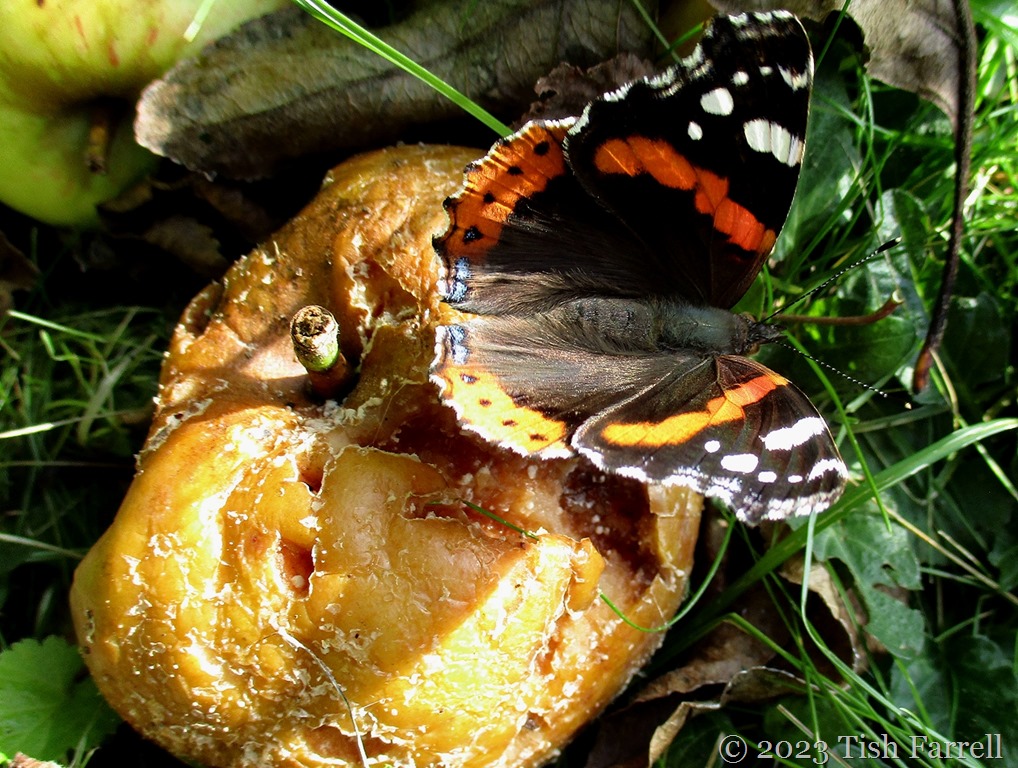
Warm winds this afternoon, and a flurry of Red Admiral butterflies about the garden. Also out on the lawn, the alcoholic waft of gently fermenting apples – windfalls from our gnarly trees. The trees are in need of serious remedial work – if reclaiming them is even possible. Most of the fruit is spoiled before it falls – lots of pests and diseases, and some very spotty articles. But that said, there’s been enough good fruit to make a few pots of cinnamon and honey poached apple. And more to come.

As for this Red Admiral, it was spending a lot of time supping from a very rotten apple. I wonder if butterflies get squiffy. It might account for all the whirling about that was going on as I hacked away on project-liberation-greenhouse. It’s almost free from the overbearing hedge, but a lot of broken panes where hawthorn and ivy branches have leaned too heavily. For now, though, it’s good enough to shelter two bucket-planted tomato plants brought from Broseley. They’re still fruiting, if sporadically.

Our other tomatoes are an outdoor container variety, Tumbling Tom. They ripened very nicely on the terrace wall during our week of hot September weather. Here they are doing just what it says on the packet: cascading from their pots in profusion – out of summer and into fall.

IMG_3702ed

Gone To Pot…The Backdoor Veggie Plot

IMG_3547ed

Most of you who come here often know that the Farrells are in transit, currently in a rented house while waiting to buy a new home. To say the process is stressful is an understatement. It’s also meant giving up my allotment plots, so I’ve been very glad to be able to potter about with some container growing.

Because it is true what they say: gardening is good for both mind and body, even in a scaled-down version.

The container approach also proves you can grow fresh vegetables with a fairly small amount of space or physical effort (if these happen to be issues) and any container will do, including small pots which are particularly useful for growing successional salad stuff.

But first, the big pot planting.

IMG_3578ed

With a further move on the horizon, I did have a very strong motive for resorting to container growing. If a pot is still cropping (or about to crop) when moving day arrives, it will be coming with us. To that end, the yellow courgette plant is in a builders’ two-handled bucket for easier transportation.

Then I was much perturbed about missing our usual tomato crop. To cover eventualities – as in just in case we’re lingering in Broseley longer than expected, I’ve planted a couple of cherry tomato plants in the garden border – Sungold and Piccolo, but I’ve also put some in large flower pots, two plants to a pot. And I’ve grown Tumbling Tom, which have been bred to dangle from hanging baskets and so don’t need staking.  Again, I have these in transportable builders’ buckets, and despite the ongoing gales, they are growing well with masses of flowers, and showing the first signs of fruiting.

IMG_3591

*

I do have lots of big clay pot, but realizing they would be too heavy and cumbersome to move when filled with compost and plants, I decided to use old compost bags (added drain holes in the bottom), with the tops rolled back to make a firm and grabble edge, and then popped into a clay pot for stability. These have proved excellent for growing successional crops of rocket and spinach. The latter usually bolts quickly in summer weather (not that we’ve had that since our few hot days in June; it’s more like early autumn), but growing it for baby leaf for salads or wilting into casseroles and curries seems to work just fine. It also grows very quickly.

IMG_3475

*

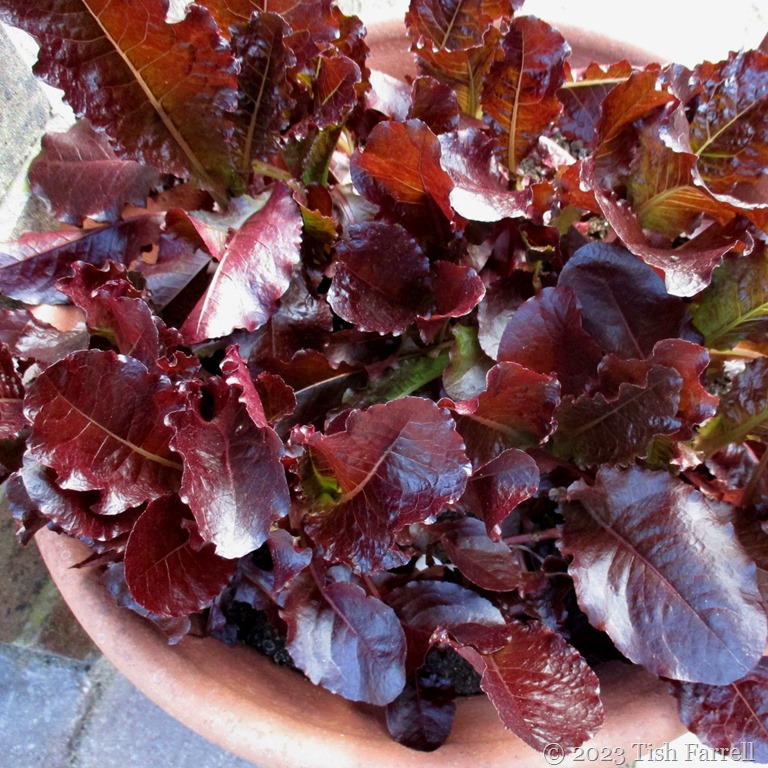
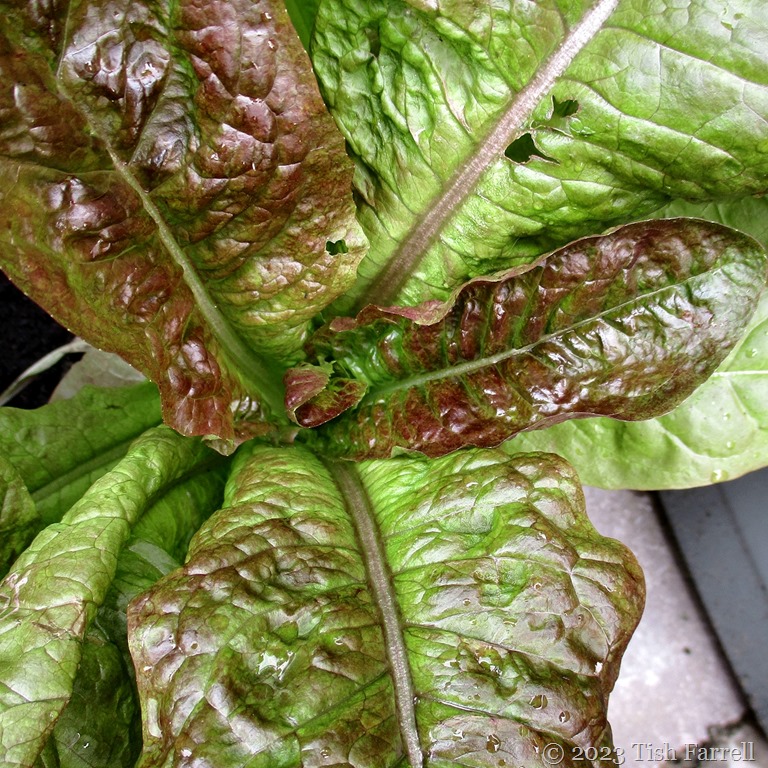
Lettuce can be sown all season, and best done anyway in small-pot, successional sowings. Some I’ve left unthinned, and just cropped the leaves; others I’ve thinned and planted out in compost bags to grow into proper lettuce.

IMG_3478

IMG_3590

*

For the last few years I’ve tended to grow carrots in buckets, especially late summer sowings which provide a crop for winter eating. This year I sowed some back in April, and now have a big bucket of carrots seedlings, some of them just big enough to pull. We ate this little bunch steamed with broccoli and tahini lemon sauce.

IMG_3606

*

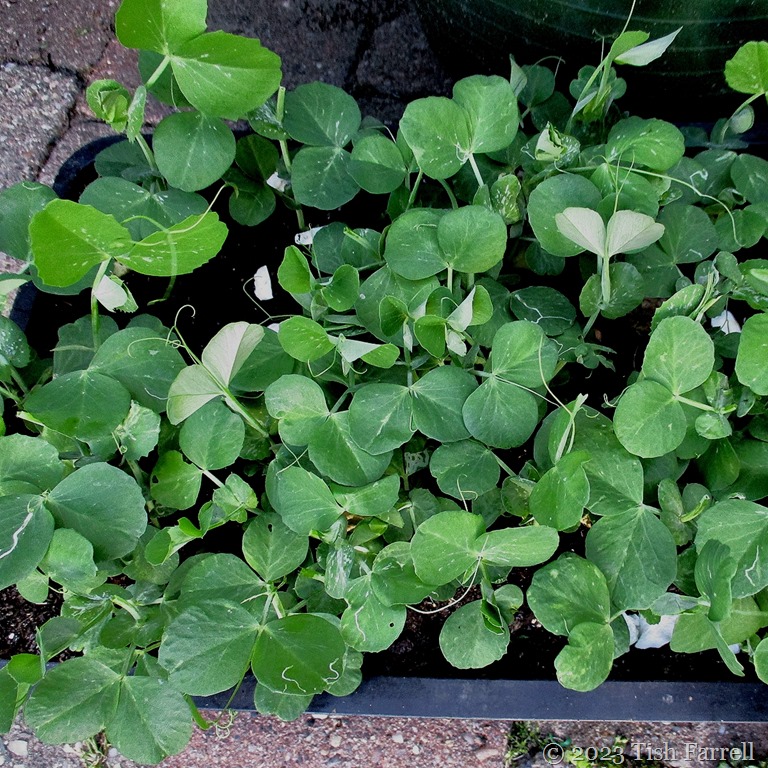
And now a big shout-out for pea sprouts. This is a first for me, though why I’ve not thought of it before I really don’t know. I was able to use up all my old pea seeds too. Again, these can be grown in a series of 5 inch flower pots, sown successionally, or in standard seed trays (a layer of compost in the bottom, peas popped across the whole surface about an inch apart or a bit closer, and an inch of compost on top).

IMG_3480

This tray has been recently cut  i.e. when the stems are about 4 inches long. If the tray is kept well watered, then there will be further crops, maybe 2 or 3 more cuttings. We use the sprouts both in salads and for cooking.

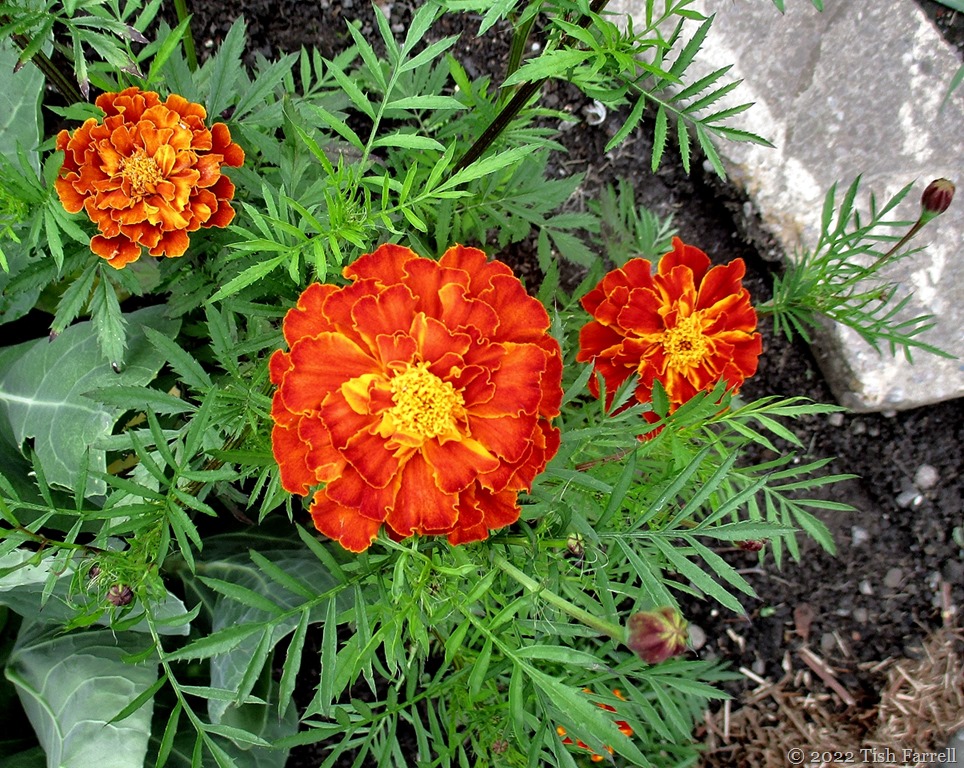
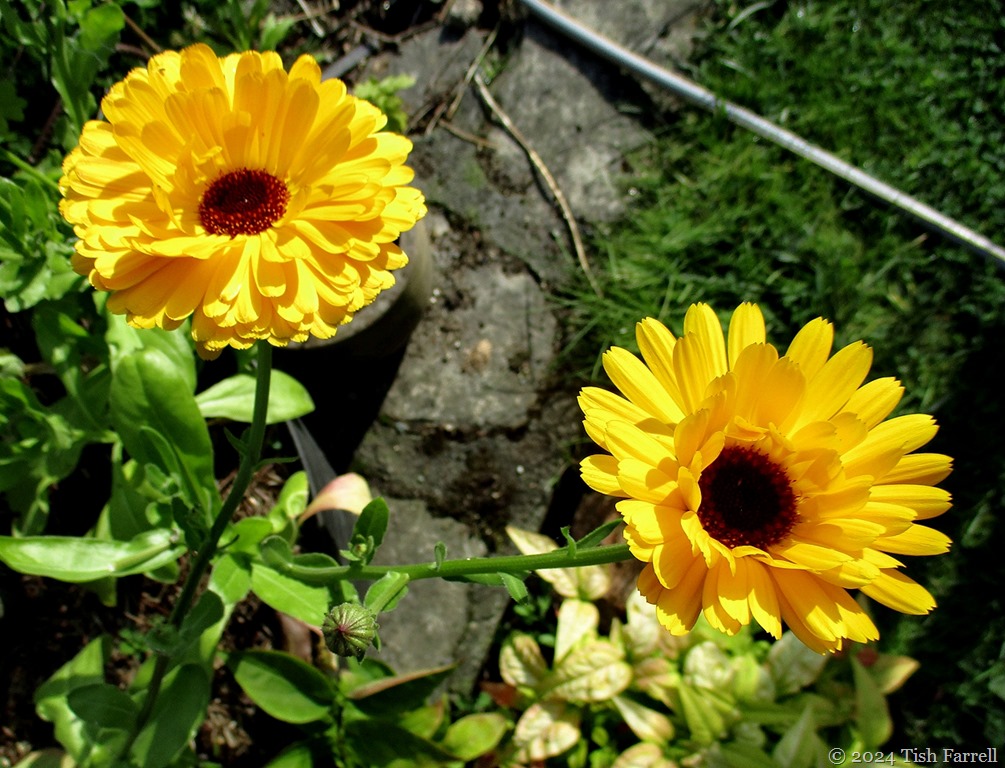
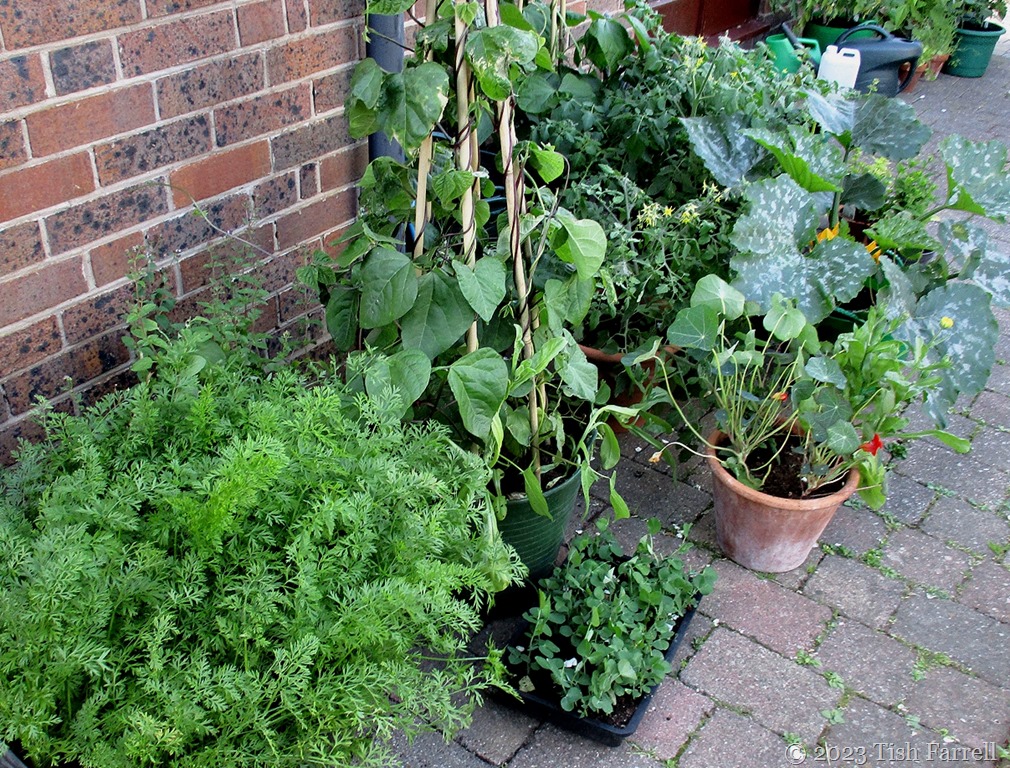
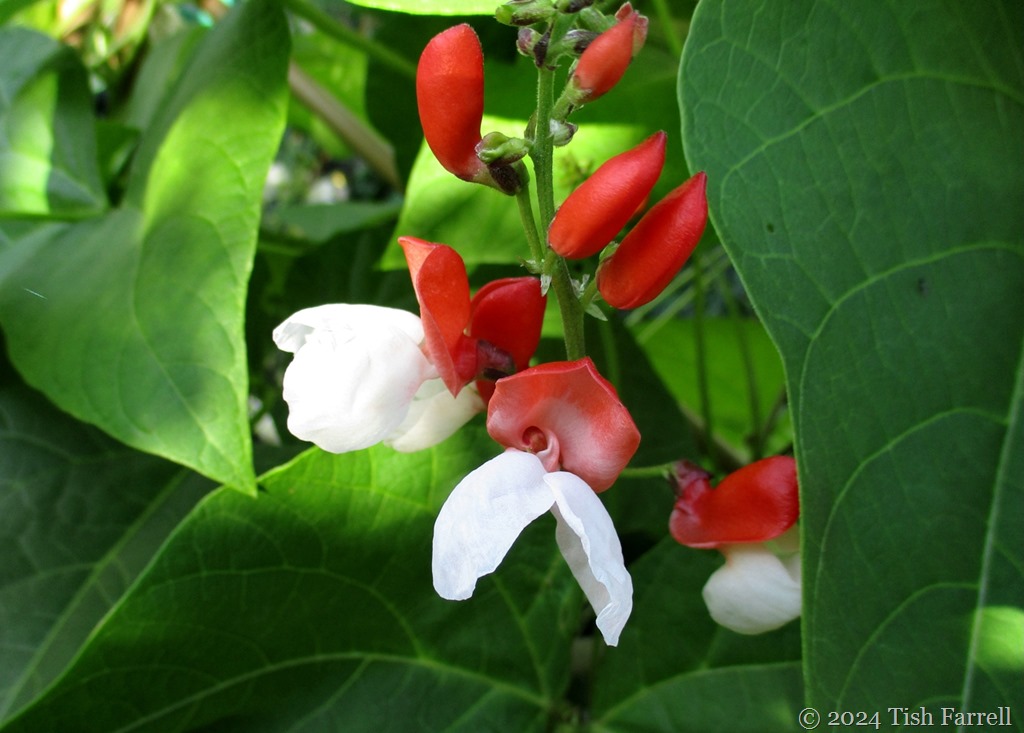
Other potted crops include spring onions, leeks, pot marigolds and nasturtiums (for salads and prettiness), parsley, basil, dill, mint, coriander and oregano. I also have a bucket of climbing Violette French beans, and another of borlotti beans. I’m not sure how they’ll work out. The French beans have been beaten up by the winds (there has been no ‘hottest ever’ global warming in Broseley only shivering) but they are at least beginning to flower.

So there you have it: the Farrells’ moveable feast, and in the interim, the makings of a green salad to accompany every supper for the last couple of months. The exercise is making me re-think my gardening practice. The biggest advantage (apart from the moveability) is that container growing seems to help focus the mind on small, successional sowings, something I rarely seemed to manage on the allotment. You do need to keep an eye on the watering however. Wind, in particular, can dry out pots very quickly.

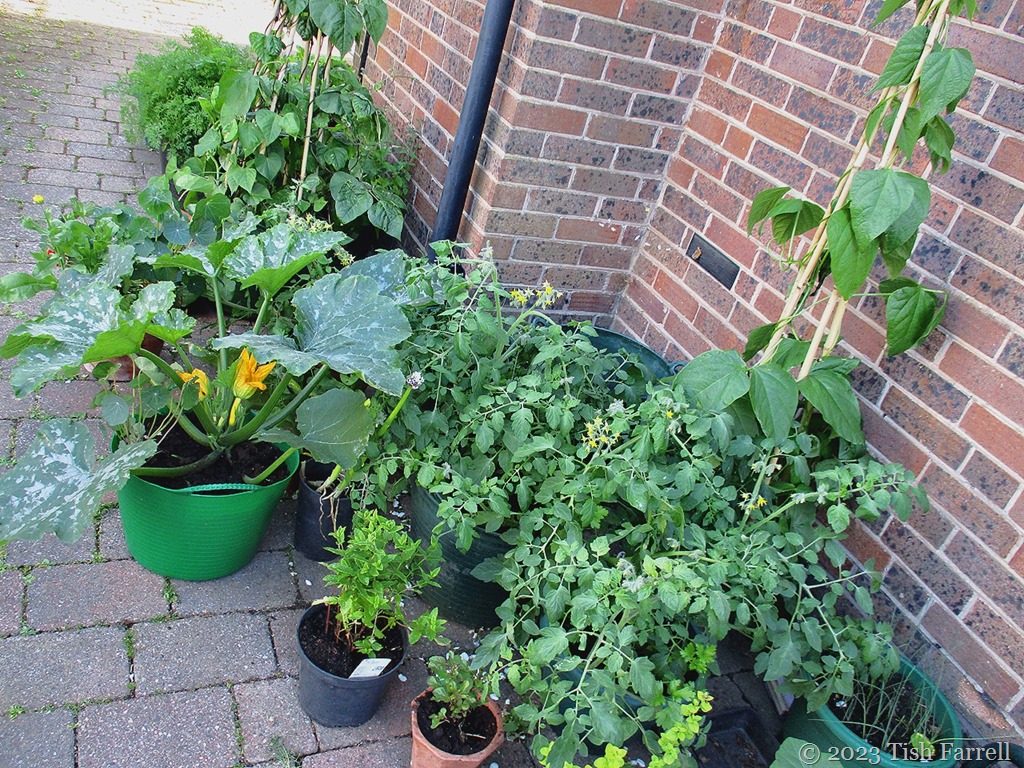
And now for some views of the back-door veggie plot:

IMG_3479

IMG_3473ed

*

I hope this might have enthused some of you to get potting. You can’t beat a freshly plucked green salad.

Quick Fix at The Opium Poppy Cafe

poppy bee and hoverfly

I’ve settled a few herbaceous cuttings in our rental house garden – geraniums, helianthus, Michaelmas daisies, centaurea, valerian, and oregano, and they’re all doing rather well.

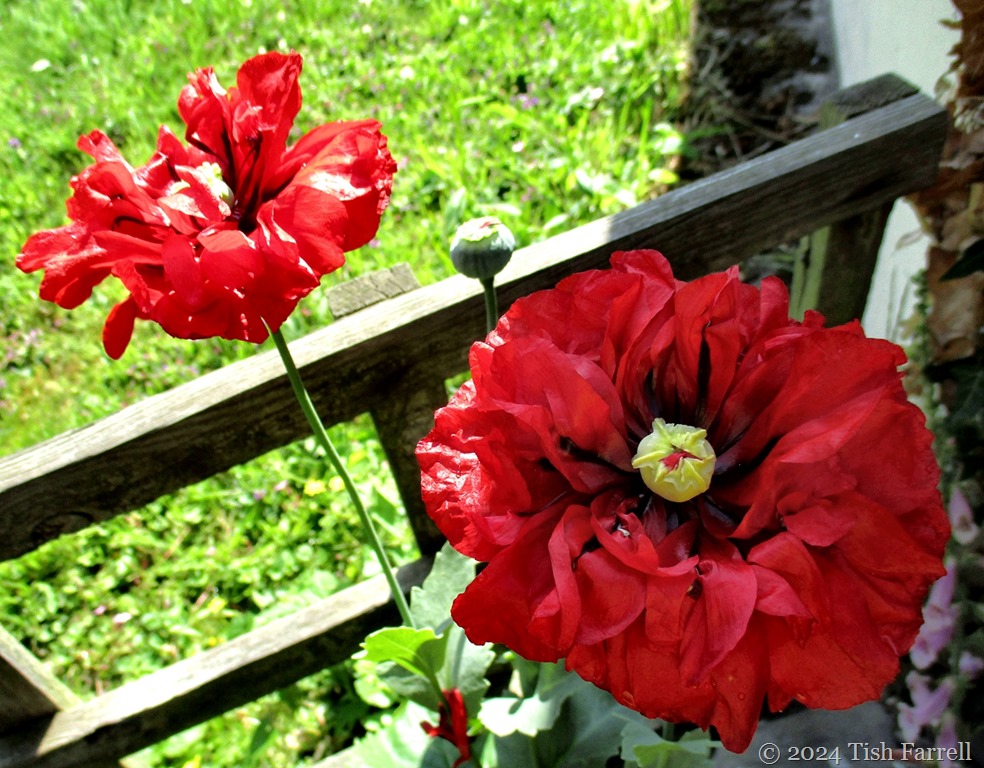
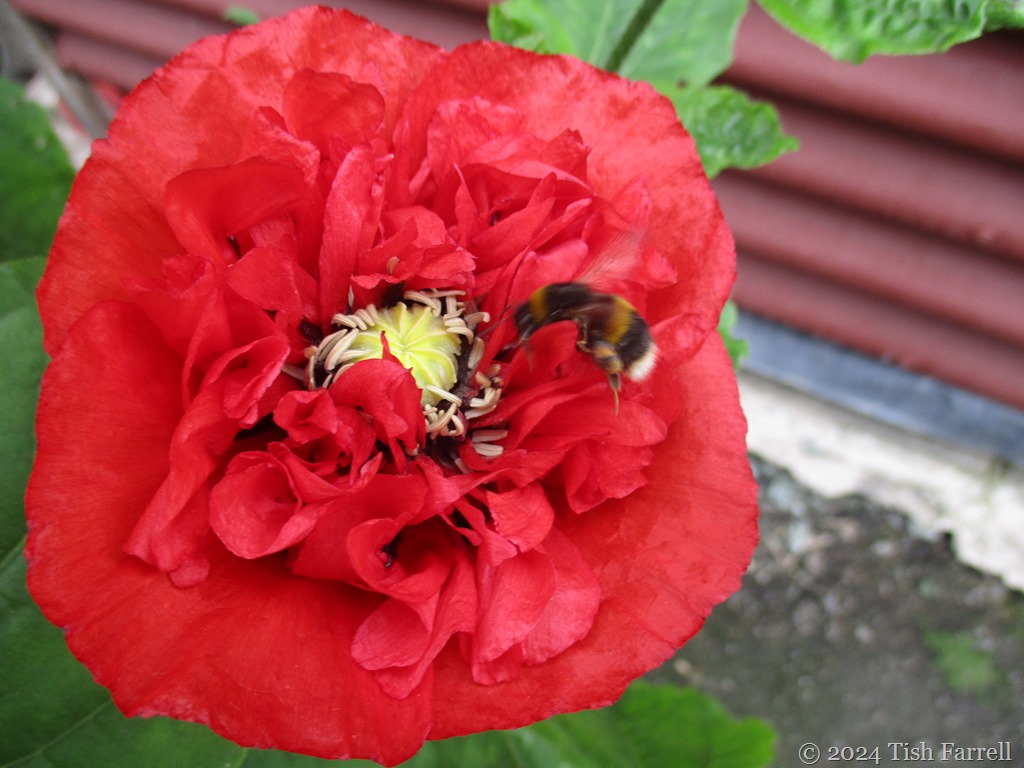
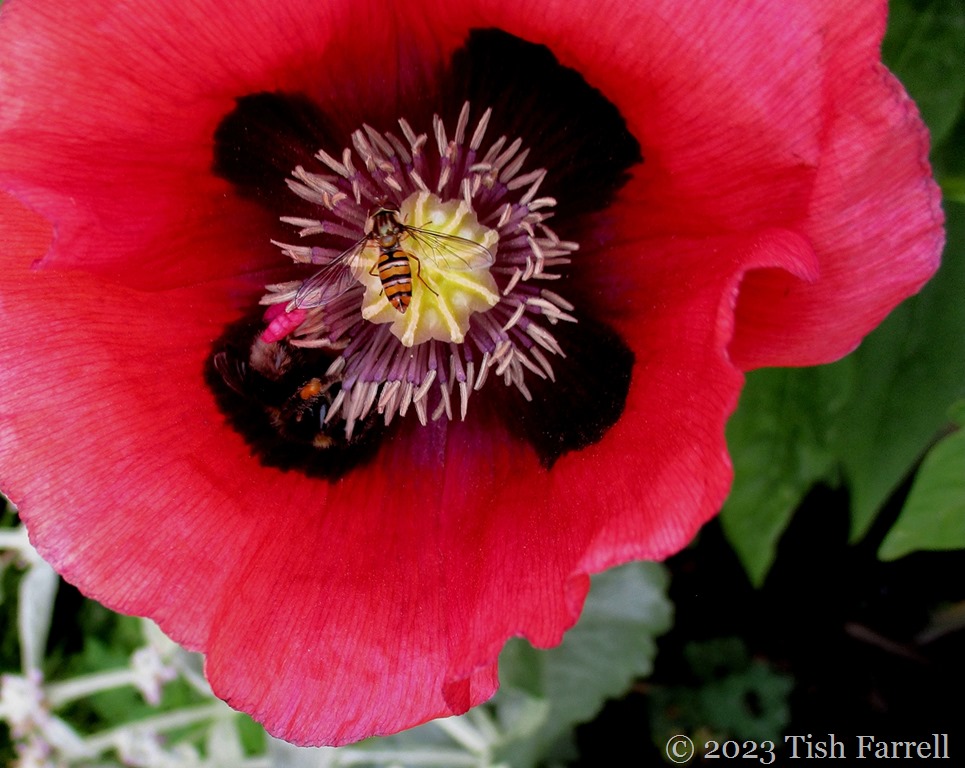
But this opium poppy brought herself, and this morning proved a hot spot for a bee and hoverfly feeding frenzy. Visitors included a white tailed bumble bee and a flurry of marmalade hoverflies.

https://youtu.be/v3abVg6pwWE

Backlit From The Wenlock Archive

P1050321

This week Ann-Christine at Lens-Artists wants to see our backlit subjects – always an appealing approach as far as Mrs. Farrell’s concerned. This year, though, the sun has been so tricksy – more going than coming – there seem to have been few chances for new naturally  backlit shots.

Which means dipping into the archive: a Much Wenlock retrospective in other words; I know some of you won’t mind revisiting Sheinton Street.

IMG_0777cr

Underneath the Horse Chestnut tree, last summer on the old railway line

*

IMG_0323re

Wild Arum Lily/Cuckoo Pint/Lords and Ladies last spring on Windmill Hill

*

IMG_7453cr

Evereste Crab Apple blossom over the garden fence

*

IMG_7572

On the kitchen table: lilac and hawthorn blossom

*

IMG_8160

Looking up into the ‘upstairs’ garden: lemon balm and montbretia leaves

*

sqIMG_0652

Winter sunset in the Sytche Lane rookery

*

IMG_8700

Late summer sunset on Townsend Meadow with nettles

Lens-Artists: Backlit

Still Life After The Allotment

100_4930

*

I’m still pondering on how I feel about giving up my allotment. Hmm.

But then given the long, wet and laboured lead up to spring, I know the soil on my plots will be cold and claggy and in no way suitable for any kind of cultivation. Probably for weeks yet. I also know the wind will be whistling up there, and I can do without the added chill factor. Yet there’s no denying it (as I look at these photos), we’re going to miss the produce, freshly gathered as needed and all grown without the taint of pesticide.

IMG_3242

100_4196

IMG_7438

IMG_8513

IMG_8531

IMG_8566

IMG_9646

*

We do have a small garden at our rented house, and I’ve already sown lettuce, rocket and spinach in big buckets. I have them covered in a large plastic covered cloche affair, and they’ve all germinated despite unpromising temperatures. I’m also going to get carrots going in large pots (they anyway often work better in containers) and peas in seed trays for sprouts. Yesterday I sowed cherry tomato seeds (in heated trays on the kitchen cupboard) and hope to plant them out along the sheltered walled border, though at this rate probably not till June!  And then there might be room for some French climbing beans.

On the other hand, we might suddenly find we’ve bought a house. In which case, my (mostly) portable garden will be moving with us.

Lens-Artists #246: Still Life  This week Patti sets the theme, a favourite with me when it comes to photographing garden produce. I’m sure I’m not the only one to see beauty in freshly dug new potatoes.