Thursday’s Special: Organized Noise

100_8271

This week Paula’s guest at Lost in Translation is Tobias  M. Schiel. He has set us a challenging challenge entitled Organized Noise. I think I have the gist of it – and this is my take on what he says (so if I’ve got it all upside down and backwards, Tobias, please tell me) – that you can use the camera’s eye to frame everyday  ‘stuff’ and ‘clutter’ that of themselves do not have aesthetic appeal. In other words, the photograph itself endows the scene with creative interest and possibility through framing, focus and cropping. It thus exposes something intrinsically or extrinsically fascinating in a context that we might otherwise screen out as uninteresting or unworthy of particular notice. As Tobias says, this is more likely to work in the abstract.

So I’m  not sure that this photo of a stricken pine on Cornwall’s Seaton beach quite fits the bill. But I’m posting it because the scene as a whole caught my attention. The tree had been blown off the cliff.  The way it was lying suggested to me a crash-landed dragon, the peeled trunk in the foreground its snout and eye.  But with a more abstract eye, the main thing that struck me about this pile of beach debris was the vivid range of colours – materials natural and unnatural.

Maybe this next shot is a better example? – a close up of some of Seaton’s amazing geology:

100_8281

In his explanation, Tobias says that this approach is used in musical composition, but as a writer I can see that this photographic version is also a visual analog for what the best creative writing does: that is, it takes a scene, or a detail of it, something that others might miss altogether were it not for the affecting way in which the writer chooses to delineate it, often mixing heightened reality with metaphorical abstraction.

Thanks to Paula and Tobias for hosting this fascinating challenge.

copyright 2016 Tish Farrell

On The Rocks

P1020559


P1020558

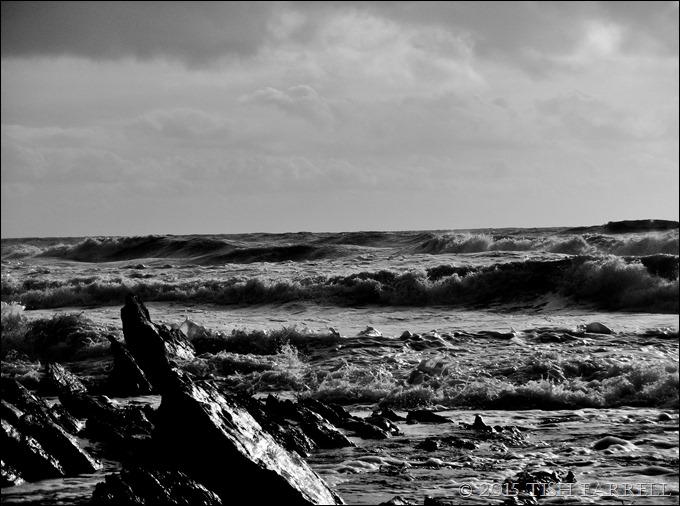
Over at Lost in Translation Paula is challenging us to show her ‘moody’. So here are my moody seaside shots in Looe, Cornwall, captured on Christmas Day on my Lumix’s Dynamic Monochrome setting. There was hardly any light, but I liked the silhouettes these young people were creating between rocks and surf.

Please visit Paula for more bloggers’ moody views.

copyright 2016 Tish Farrell

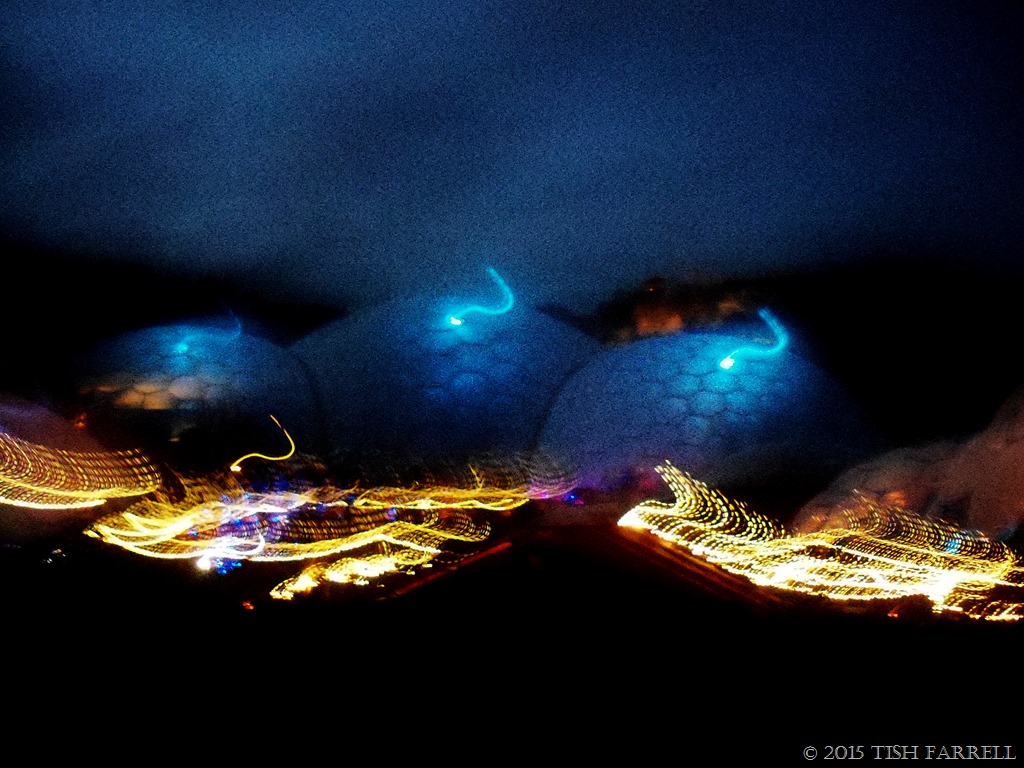
On Sunday we went to Eden and this is what it looks like…

100_8377

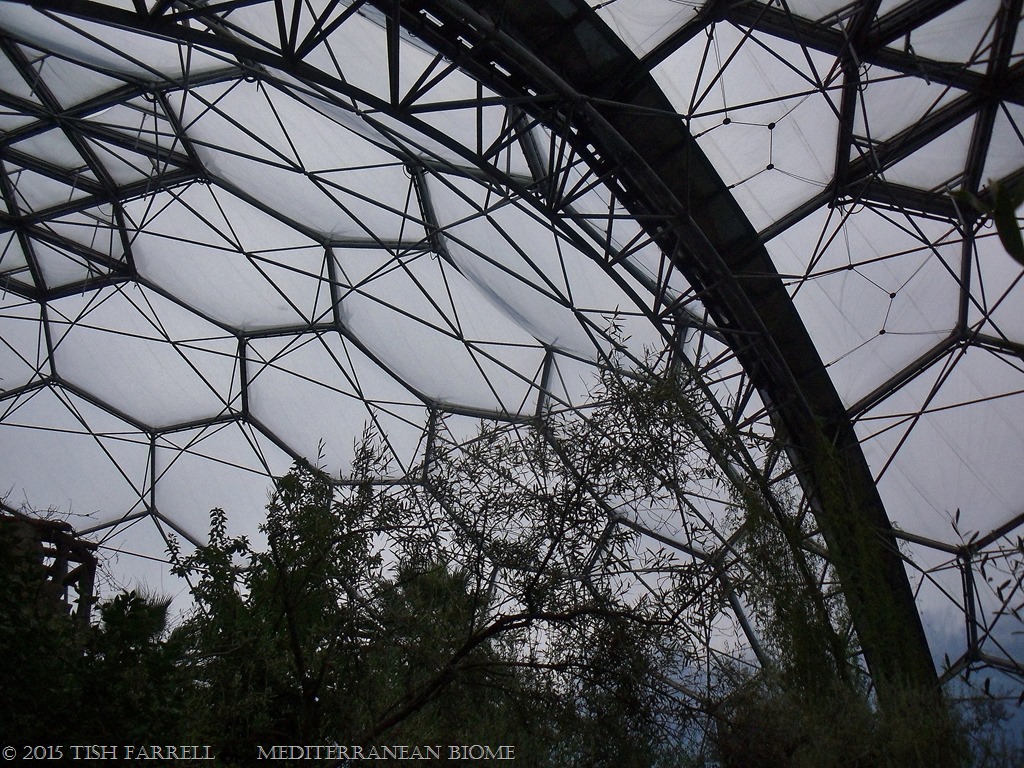
At least this is what the Eden biomes look like in December twilight, and courtesy of some dodgy photography. I think the effect suits it – this bold and inspirational project to wake us up to the knowledge of our total dependence on plant life. For one thing – without trees we couldn’t breathe very well. It’s interesting that we’ve become so divorced from natural-world-reality that we do not  instantly remember this, and from time to time (or even continuously) need it pointed out to us.

There’s more about the project in an earlier post: Making Eden: new patterns for living? And at the Eden Story you can see how a disused Cornish china clay pit was transformed into this world-famous educational visitor attraction that teaches us how to regenerate and nurture the Eden we have on earth. More power to their purpose.

100_8349

White Horses All Of A Lather at Port Wrinkle

P1020925

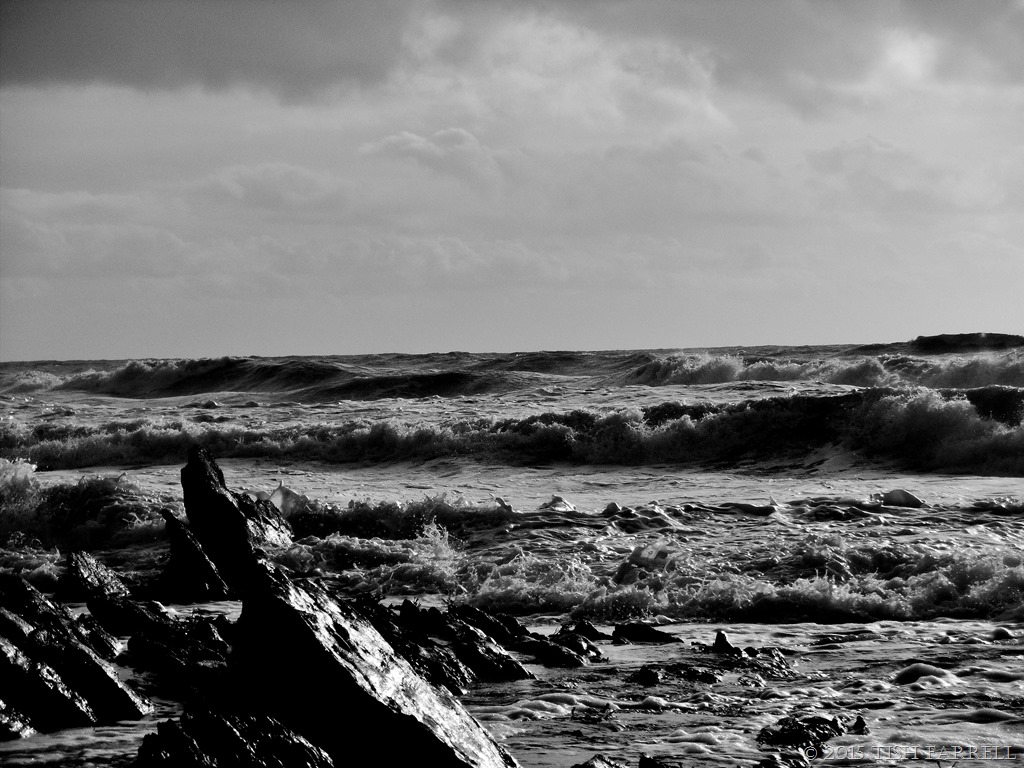
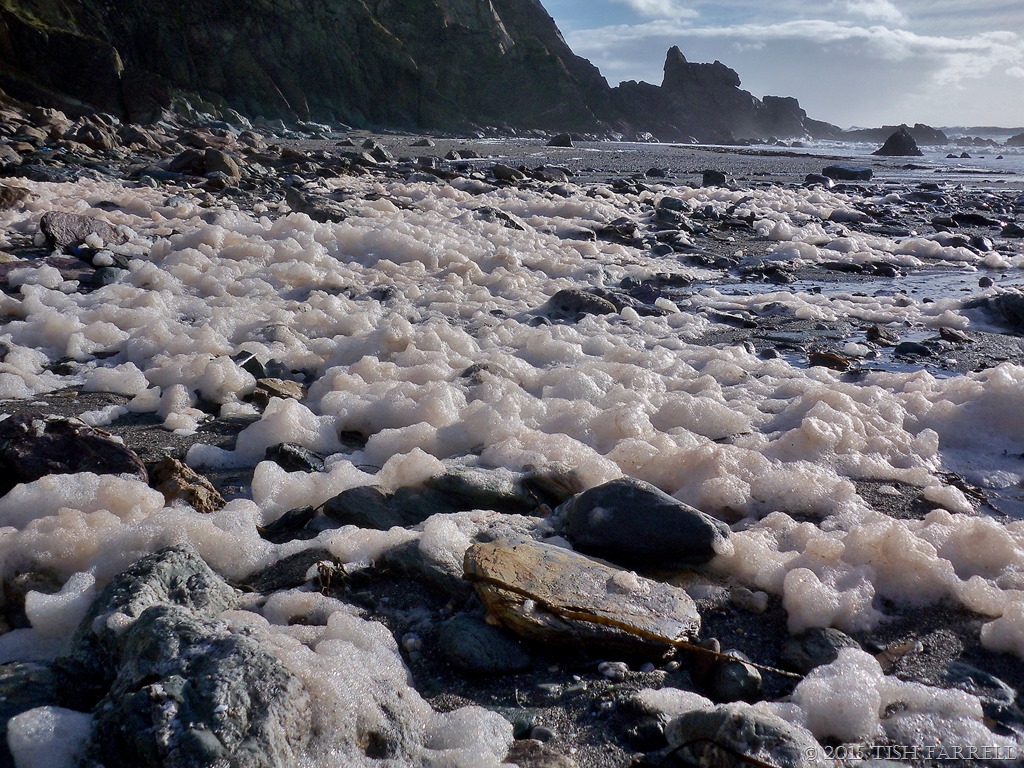
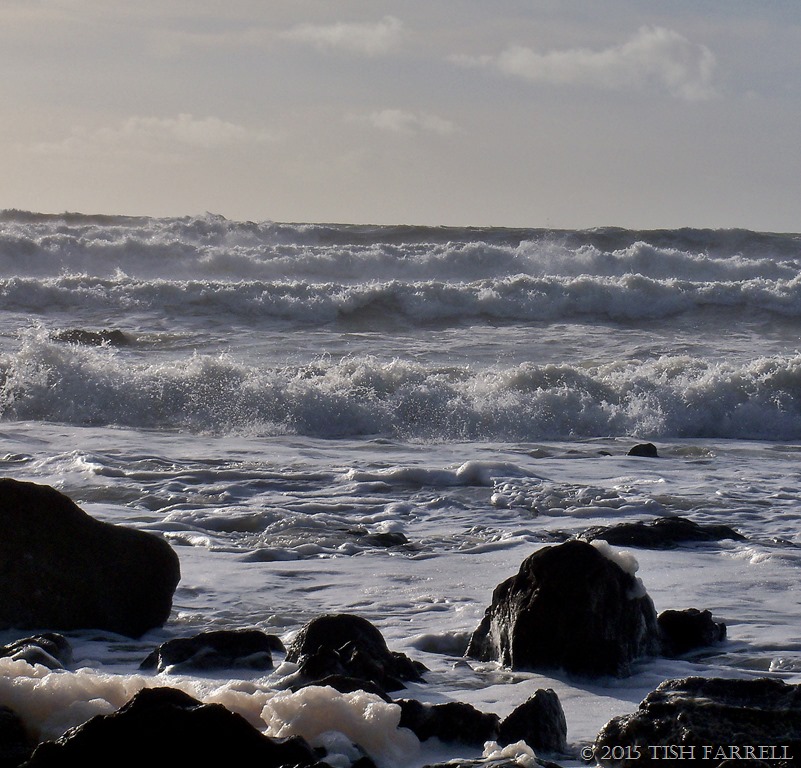
Talk about elemental energy. This morning the sea was in such a boil at Port Wrinkle that the beach was filled with spume. It was blowing across the rocks like thistle down, then settling in shivering masses – as if a prelude to some alien hatching. What it might turn into who can tell, but all that whipped up air filled us to the brim. We all but galloped up and down the beach. Yee-HAAA!

100_8448

100_8466

100_8460

World Soil Day & December at the allotment

100_8168

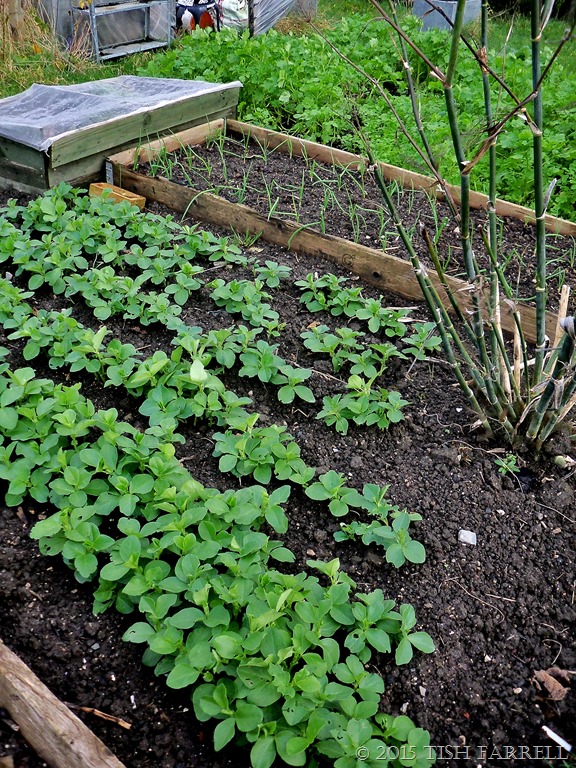
Here is my path to the allotment. I’m a bit fixated on it, and have been snapping it at different seasons. I like the way colour has leached from the grasses.

The allotment looks bleak at this time of year, not improved by the fact that many of us are untidy allotmenteers. There’s all sorts of unsightly takataka lying about – things that might come in handy for something, sometime. I’m guilty of it myself, and of course when you take on a plot, you inherit your predecessor’s junk. I’m gradually whittling mine down.

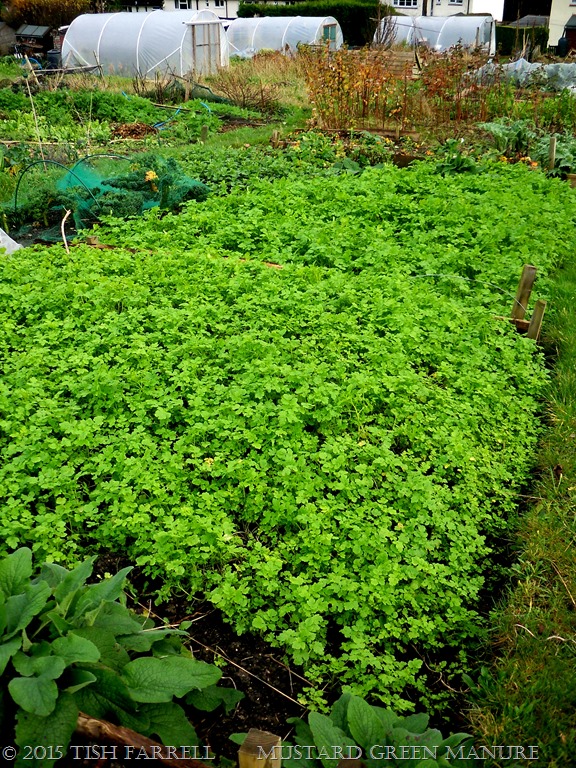
There are also jobs I haven’t done – edging the beds, giving the paths a final mow while I had the chance. But I did sow my mustard at just the right time and now have an impressive crop.

100_8136

I’m growing it both as a cover crop and a green manure. If we have a hard winter it will probably be frosted and die down by itself. For now it’s still growing, and if it survives till spring I’ll cut it down and probably just let it rot on the  soil surface. With green manures it is usual to dig them in before they flower. But I’m beginning to have second thoughts about digging, much as I enjoy wielding my grandfather’s sharp bladed spade.

For years I’ve known (vaguely) about No Dig Organic Gardening, just as I’ve long known that mulching crops produces sturdier, tastier produce that needs little watering. But it has taken a while for the penny to completely drop.

No dig cultivation is not simply about saving labour. It’s about protecting and nourishing the soil. And since today is World Soil Day, there can be no better moment to think about this totally essential, life protecting, life enhancing substance. If our soil is degraded and low in nutrients, then our food is not giving us the nutrition we need to stay strong and healthy. M.S. Swaminathan, India’s ‘Father of Green Revolution’ calls this ‘hidden hunger’.  Paradoxically, we suffer from it even in rich countries where we eat all day, and it contributes to (and some would say lies at the root of) much chronic disease.

Soil anaemia also breeds human anaemia. Micronutrient deficiency in the soil results in micronutrient malnutrition in people, since crops grown on such soils tend to be deficient in the nutrients needed to fight hidden hunger…Managing our soil and water resources in a sustainable and equitable manner needs a new political vision.

M.S. Swaminathan

100_7997

All my gardening life I have tended towards the traditional notion that digging the soil well, weeding, and adding plentiful compost is a ‘good thing’. Yet after 8 years of digging, weeding and forking in compost on my allotment plot, I’m seeing only marginal improvements in the soil: i.e. it’s a little better than it was.

In dry weather the soil surface still turns brick-hard,  which in turn constricts plant growth, (and in some cases  ‘bonsais’ the plants) making then weak and susceptible to pests. I then have to do a massive amount of watering which is not ideal either; it discourages the plants from rooting deeply.

Also every time you slice through the soil with a spade you disturb the complex community of bacteria, fungi, protozoa, and nematodes that support vibrant plant growth.

Better, then, to thickly pile shredded garden waste over the entire soil surface, and allow a microenvironment to establish underneath. The mulch gradually breaks down as all the matter is digested and re-digested, creating a nutrient rich, moisture retaining medium.

I now realize I need to cultivate a cohort of  jobbing domestic gardeners who will let me have their shredded garden waste rather than taking it to the recycling centre. In the meantime I decided on a little experiment.

Lacking the necessary quantities of gardeners and their shreddings, I spent three hours hours yesterday digging out my partially rotted compost bin, and spreading it several inches deep over four square metres of exposed soil. It was a messy process after days of downpours. But it’s amazing what lengths this writer will go to to avoid writing the novel.

The trouble is, rooting around in one’s compost heaps, turning stuff over, redistributing it, tends to be rather more satisfying than staring at the computer screen and straining one’s brain to dig out the right words.

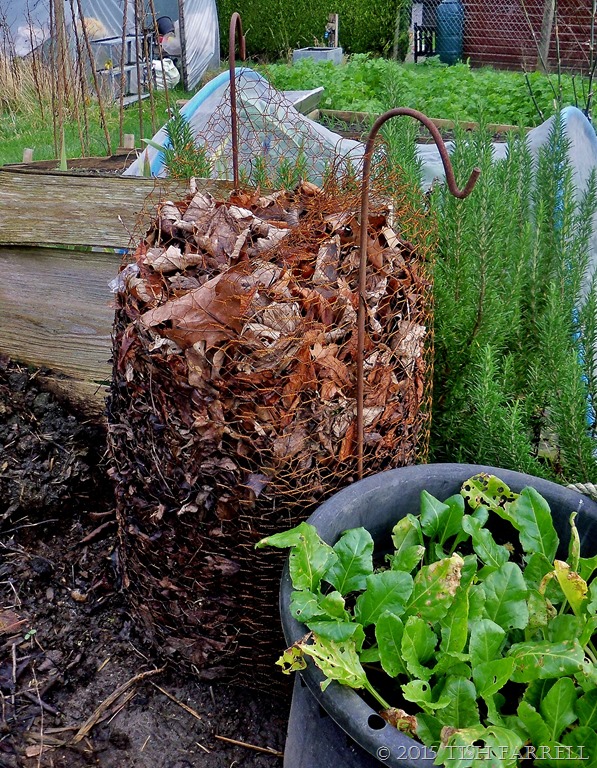
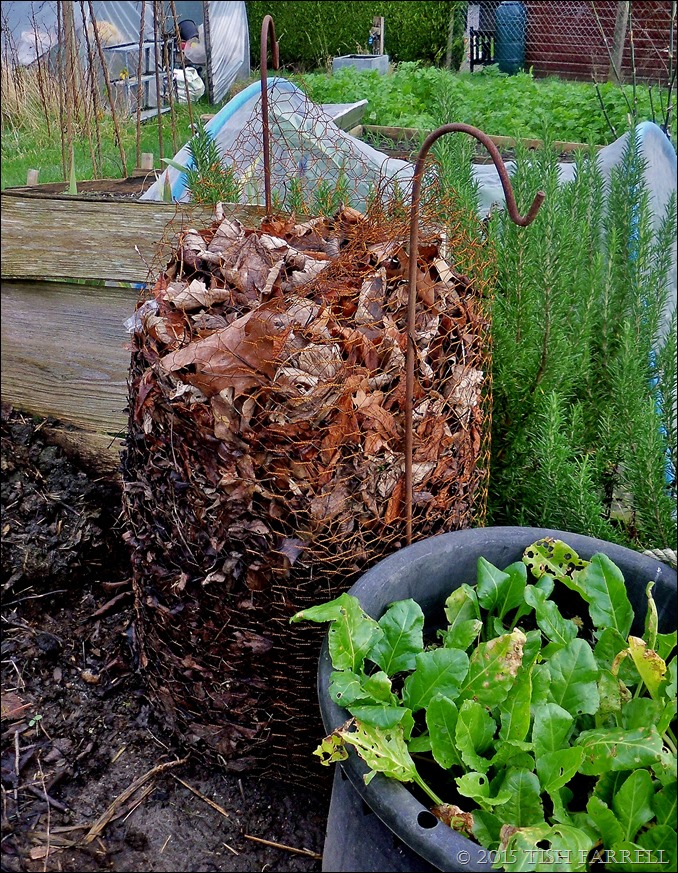
I’ve also been making simple ‘silos’ out of chicken wire, to collect the leaves and so make leaf mould. This will take a year or two, but I might try and speed the process up next year by adding in some grass mowings. The resulting dark compost is just the stuff for seed sowing, so hopefully there will be some in  spring 2017.
100_8138

And I’ve been busy in the polytunnel. The summer’s ludicrous tomato forest is long gone and the last of the fruit turned into soup, sauce and chilli tomato jam. Now all has been raked over and planted with winter salad stuff – Chinese mustard, chard, pak choi, purslane, perennial rocket, lamb’s lettuce, Russian kale. I also have some parsley in there, onions, garlic, leeks and a bucket each of carrots and Florence fennel. The fennel probably won’t grow much, but we can eat the feathery leaves.

And just in case we do have the promised hard winter, I already have the fleece ready to lay over the young plants. Last year was pretty mild, and I found that once I put fleece over everything, the plants continued to grow, if only a little. I also have two small water butts filled to the brim and stationed inside. Their presence is supposed to provide a slight increase in temperature within the polytunnel. They are also handy when the allotment water supply is switched off for the winter.

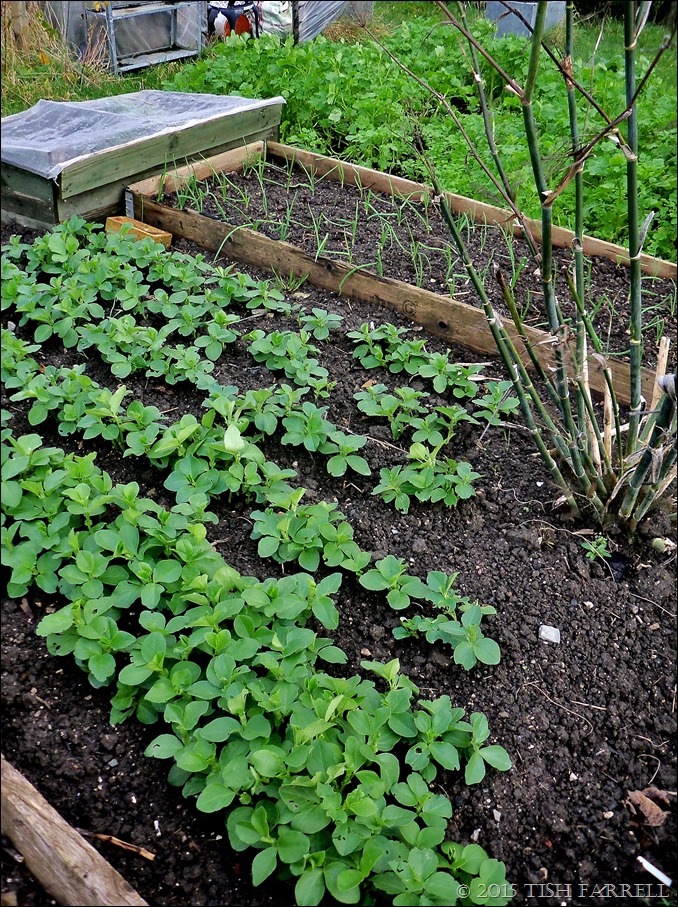
Meanwhile, out on the plot, there are still lots of crops to harvest – carrots, leeks, kale, small amounts of  perennial spinach, and cauliflowers. The Brussels sprouts, cabbages, purple sprouting and Romanesco broccoli are all coming along. The field beans have sprouted, likewise the overwintering Radar onions.
100_8139

I know I am very lucky to have my allotment. But everyone can do some gardening, even if you only have a bucket. In fact a bucket is great for growing carrots. Lack of space need not be an obstacle. A single raised bed of one square metre, topped with layers of mulch can be intensively cultivated with leafy crops. And remember, there’s no need to dig it. Also mucking around close to soil is good for lifting the spirits. Scientists have discovered it gives off some kind of anti-depressant molecules.

All of which is to say:

SOIL – WE CAN’T LIVE WITHOUT IT. HEAL IT, AND WE HEAL OURSELVES AND THE GENERATIONS TO COME.

HAPPY WORLD SOIL DAY!


copyright 2015 Tish Farrell

‘Bench’ with a mission

100_7167

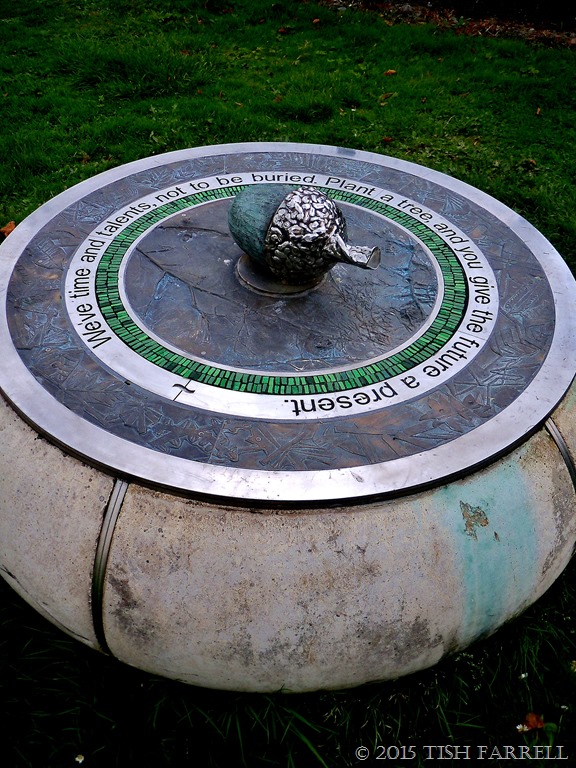
We’ve time and talents, not to be buried~

Plant a tree, and you give the future a present ~


Over at Travel Words’ Bench Series 44 Jude is charging us to find a bench with a message or an autumnal theme. This may not  be a bench as such, but it does have a message and a seasonal acorn. Also, along with the inspirational motto, it was designed to provide a perch and meeting point for the town’s passing visitors.

There are four more of these artworks-cum-tuffets sited around the perimeter of Much Wenlock’s Linden Field, the venue for the Wenlock Olympian Games since the 1850s. The works were created in 2012, the year in which the International Olympic Movement acknowledged Much Wenlock’s historical connection to the modern games by naming one of their one-eyed, androgynous mascots ‘Wenlock’.

Anyone remember he/she/it? Perhaps better not to. The mascots were apparently conceived by a committee, and delivered into the world by a company in Telford. The intention was well-meaning: not to make reference to an identifiable ethnicity, gender, or known human disability.

Here on home ground, members of our local William Penny Brookes Foundation decided to mark the town’s Olympics connection by commissioning community sculptor, Michael Johnson, to work with local school children, and Wenlock poet, Paul Francis. Their brief was to celebrate the life and work of the Wenlock Games’  founder, Dr. W P Brookes. If you click on the Michael Johnson link you can see the other four pieces. The designs on the bronze panels were derived from work by the town’s school children.

The frame is stainless steel with  stone side panels and bronze sections on top. Every tuffet has a piece of thought-provoking text, each one relating to William Penny Brookes’ major contributions to the town’s wellbeing.

100_7028

I love the idea of them, although I’m not too sure about the weathering capacity of the stone component. I just wish they were sited in places where more locals and visitors might see and appreciate them, and indeed sit on them for a spell: perhaps on the High Street, in the Square, on the Church Green opposite the doctor’s former home.

Anyway, this particular tuffet definitely has a mission to propose. Should you choose to accept it, please note, this tuffet will not self-destruct, but the world might be happier.

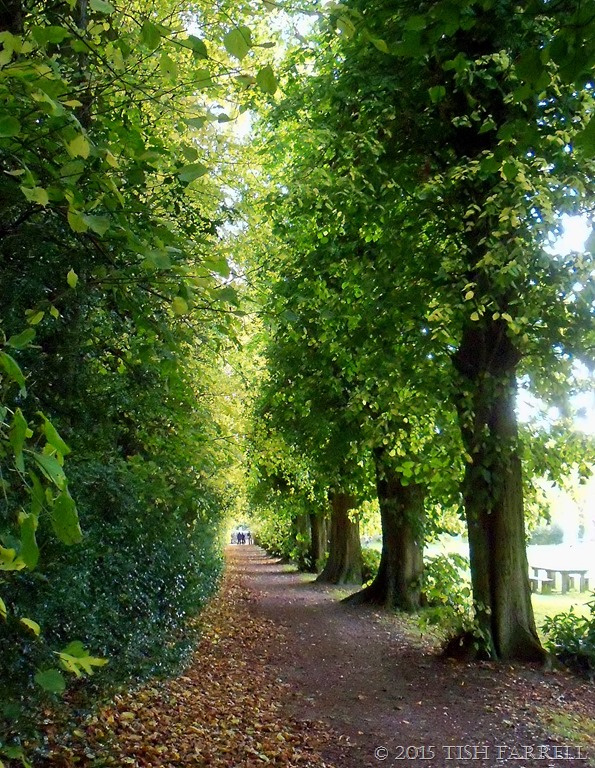
I’m thus leaving you with a view down the Linden Walk that borders the field and was planted by Dr. Brookes over a century ago. It is a joy to walk here whatever the weather, and whatever the season. So yes: more trees needed.

100_7851


We’ve time and talents, not to be buried~

Plant a tree, and you give the future a present ~


In my garden after the rain

100_6854

Ladybirds seem to have been in short supply this year, so I was pleased to find this one nestling in my sage bush. Like bees, we absolutely need ladybirds. They are our natural pest controllers, preying on aphids and scale insects that can otherwise cause massive damage to food crops. As I was taking this photo, I was also delighted to scare off the harvestman spider that was creeping up on the ladybird. If you look in the bottom right corner above the copyright notice, you can just see the spider’s legs. Yikes!

*

100_6836

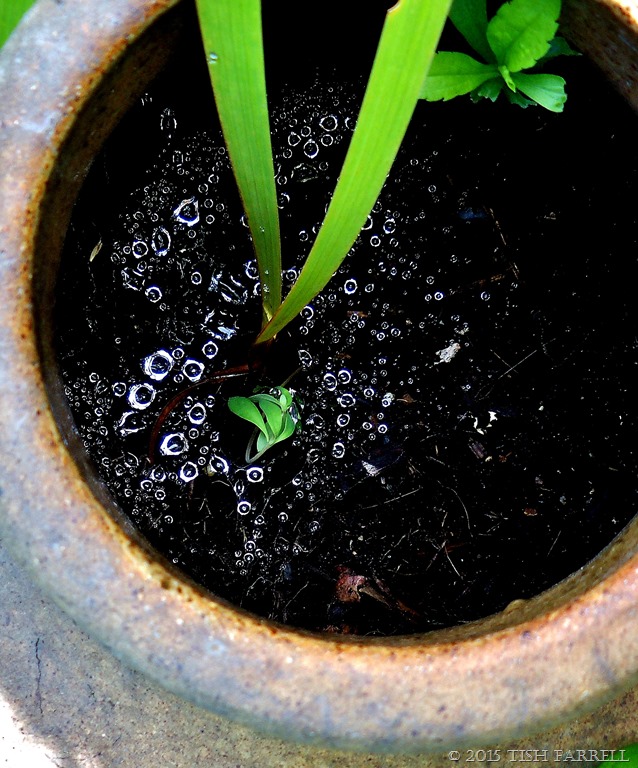
And here’s more evidence of spider activity: ambush exposed by raindrops in a garden pot.

*

100_6857

Now for one of my favourite plants in the garden. The flowers of this later flowering phlox remind me of jasmine and are half the size of the usual cottage garden varieties. It has just the faintest subtle scent, and doesn’t mind shade.

*

100_6863

Heuchera is another wonderful plant, and especially for ground cover. It comes in several hundred variations, and although understated on the floral front, it more than makes up for this with colour-bursting leaves that last all spring and summer. Also I see there’s spider lurking top left. I think it’s another harvestman. The bright green leaves amongst the heuchera are self-sown aquilegia seedlings. More granny’s bonnets to look forward to next year then. You never know what colour the flowers are going to be either – mauve, purple, pink, red, white. It’s one of the best things about plants that do their own gardening.

*

100_6832

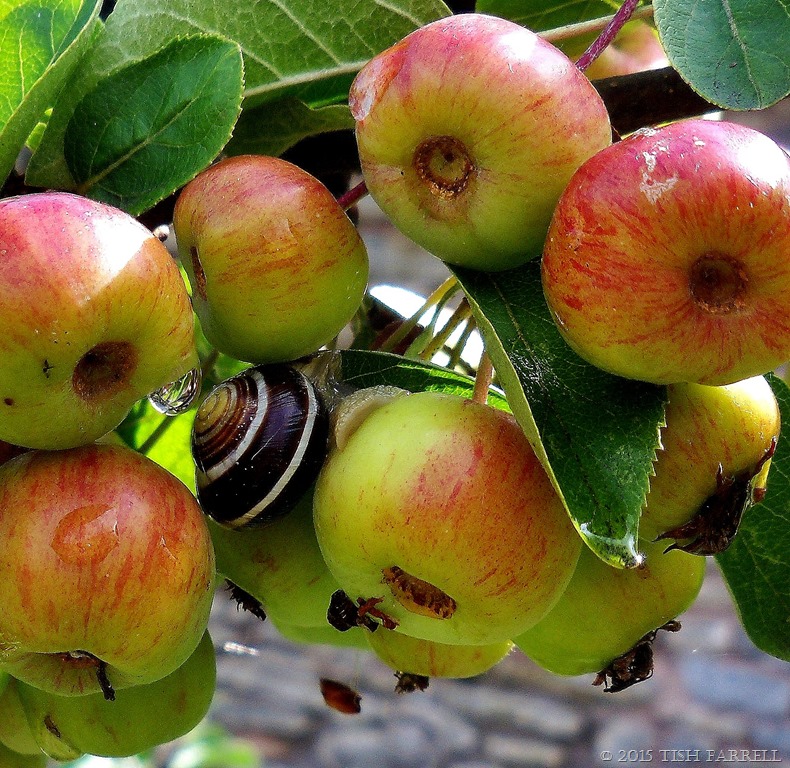
The tiny fruit on our Japanese crab apple are just beginning to take on their autumn colour. Soon they will be a deep russet red. I don’t think snails eat apples. At least I’m giving this one the benefit of the doubt; it’s probably just been sheltering from the rain.

*

100_5373

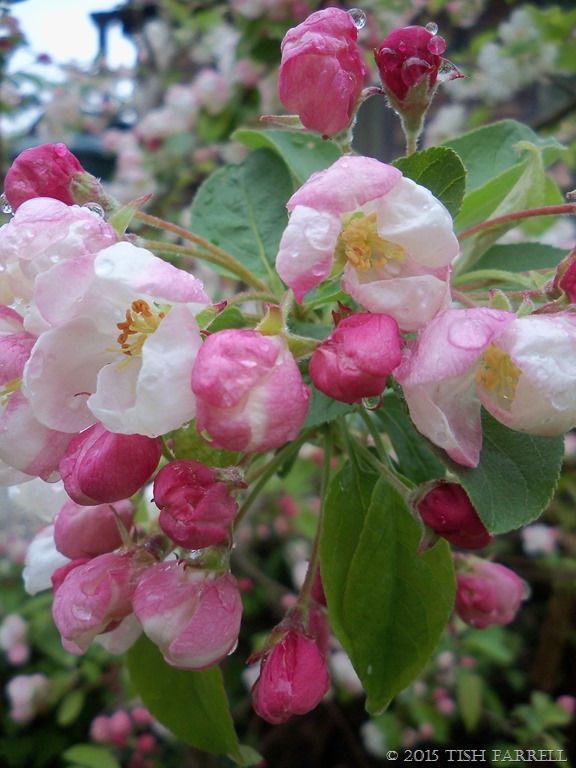
And now for a flashback-fastforward: the crab apple tree in April – spring past, spring to come…

Today Was a Good Day

Getting down and dirty in a Shropshire meadow

100_5683

So much goes on beneath our feet, and beneath our gaze. For instance, if you want to find out what is going on in an English meadow, then you need to get down and in amongst it. There’s a whole other world down there, or maybe a thousand tiny universes. On the other hand, finding a meadow in the first place could well be a challenge. They have been dwindling since the 1920s. Mechanisation – bigger machines and bigger fields – plus a continuous drenching of agrichemicals has done for most of them. (One local landowner once told me he had to give his brussels sprout crop 14 separate dressings of pesticide).

Of course we have to be fed, but I often wonder if mass-production monoculture is the only way. I also wonder if there are perhaps still unrecognised consequences of us so radically down-sizing our natural biodiversity, and that what currently seems advanced, scientifically devised, and wealth-creating might in the end prove ill-conceived and ultimately impoverishing. But then perhaps we do not think it matters to lose potentially useful medicinal plants, or rich habitats that support a host of insects and other life forms, or to fail to rear our stock on the best and most varied herbage, both for their good and for ours.

In  Much Wenlock we are lucky to still have several limestone meadows; fortunate too that they have been officially designated Sites of Special Scientific Interest, which gives them some protection. They do need to be managed however. A meadow does not just keep itself. My father used to talk of being roped in as a lad to help with mowing the hay in his village. He said the menfolk would walk in step, spread out across the field, each swinging his scythe with an easy, even rhythm.

These days how many people know how to use a scythe without cutting themselves off at the ankles? Our surviving meadows thus require the seasonal addition of grazing animals to keep them in some sort of order, usually after the summer wild flowers are over. And of course, in the past, the hay from a wildflower meadow would have provided farm animals with a wealth of mineral nutrients and vitamins, dietary additions that humans, too, would have benefitted from, particularly in the milk they drank.

Even back in Shakespeare’s time, the consquences of mismanaged land were well understood. The following passage from Henry V  Act V Scene II is thus much cited by meadow management proponents:

The even mead that erst brought sweetly forth
The freckled cowslip, burnet and green clover
Wanting the scythe, all uncorrected, rank
Conceives by idleness, and nothing teems
But hateful docks, rough thistles, keksies, burs,
Losing both beauty and utility.

In fact the whole of Burgundy’s speech in this scene is a condemnation of bad agricultural practices – “husbandry doth lie on heaps, corrupting in its own fertility.”

All of which is to say, wherever we live in the world, we would do well to pay attention to the ground beneath our feet and to what is going on there. Our long-term health, the health of every living thing, depends on the quality of the soil. Right now most of it needs some concentrated TLC.

My home county of Shropshire is one of England’s biggest agricultural counties, with many large gentry-owned estates of ten thousand acres and more. And so, apart from the upland sheep grazing of the hill country, most farming here is highly mechanised. Of the few exceptions that still practice traditional mixed farming, Pimhill Farm is one of the most noteworthy. It has been managed organically by the Mayall family since 1949 – wheat, oats and dairy – so it proves it can be done. Their oat products are fantastic. Even their humble, savoury oatmeal biscuits taste out of this world, and porridge made from their oats is unbelievably creamy (no milk needed). You can read the Pimhill story by following the link.

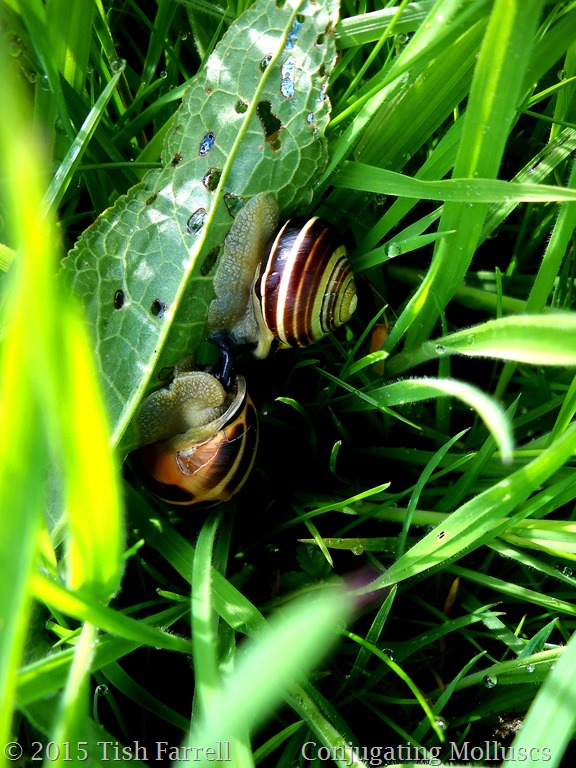
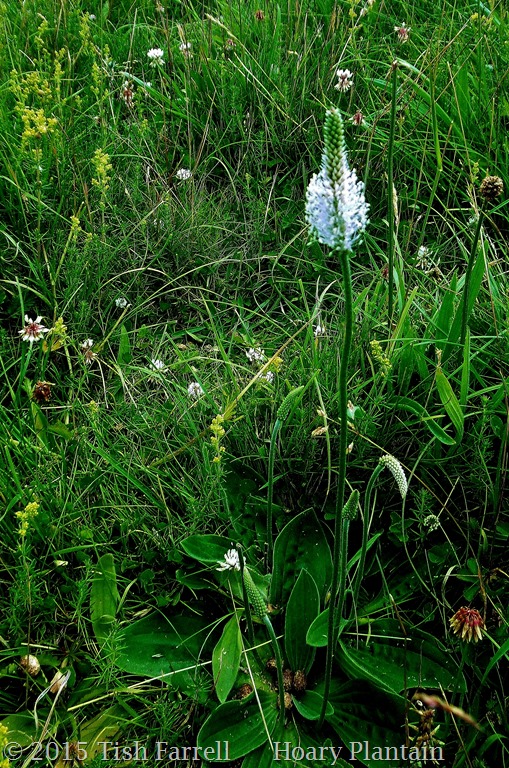
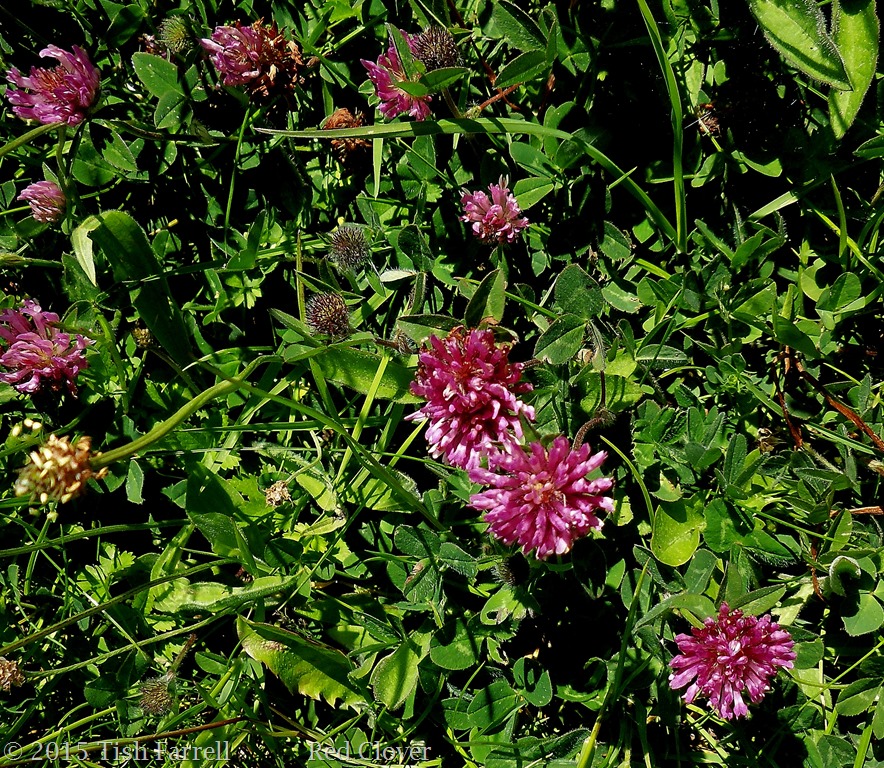
And now I’m putting my soap box away in order to get down in the dirt in my local meadow on Windmill Hill. Please also imagine the sweet and subtle scents of grasses, thyme and Lady’s Bedstraw that may only be fully savoured by lying down with them. First, though, look out for the snails:

100_5451

P1010617

100_5651

100_5460

100_5985

100_5950

copyright 2015 Tish Farrell
Beneath Your Feet

#PimhillFarm #organicfarming

Bumbles in my borders

P1010778

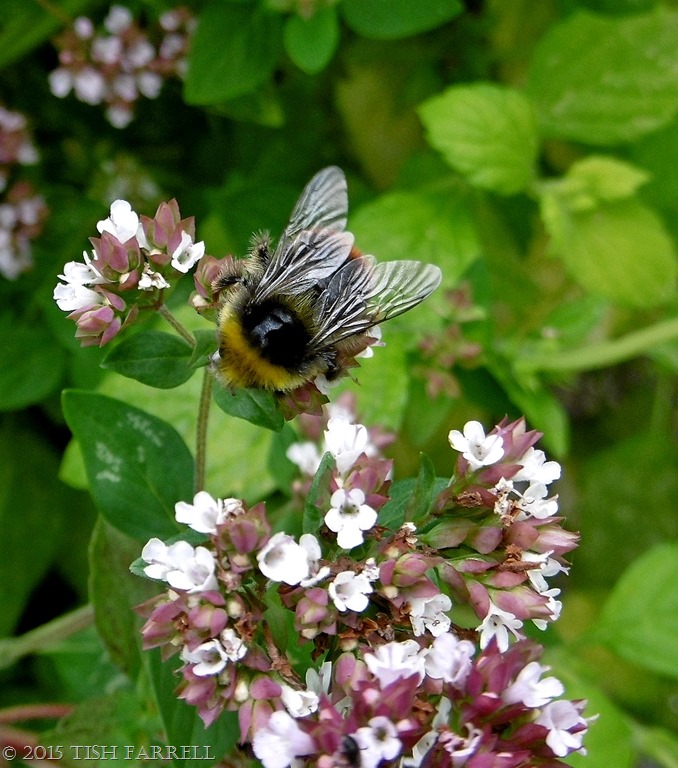
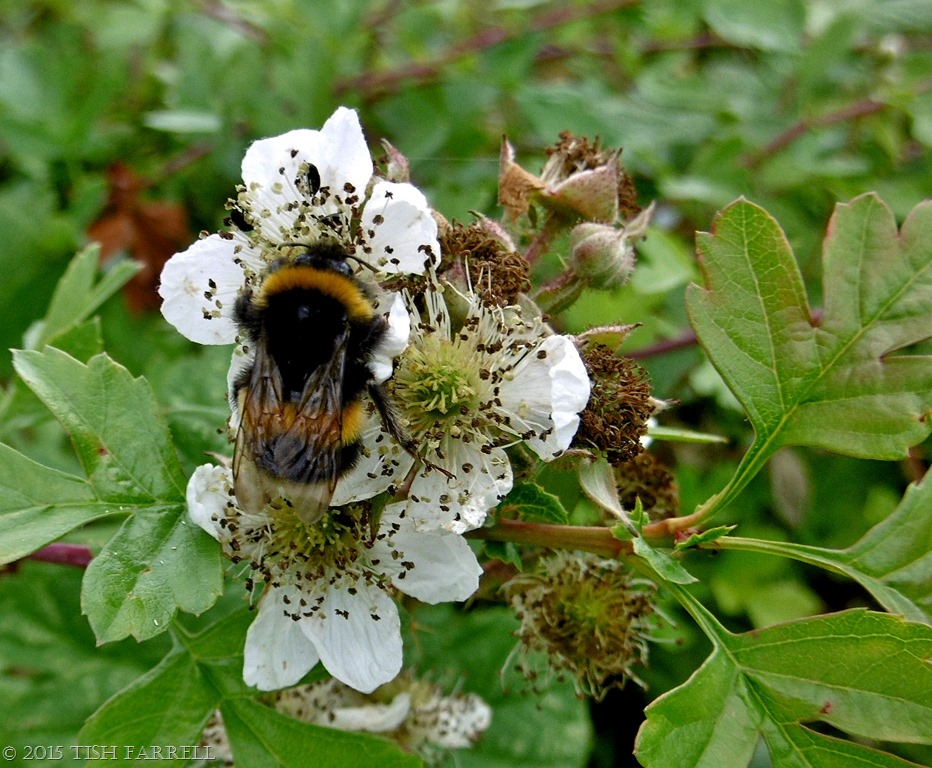
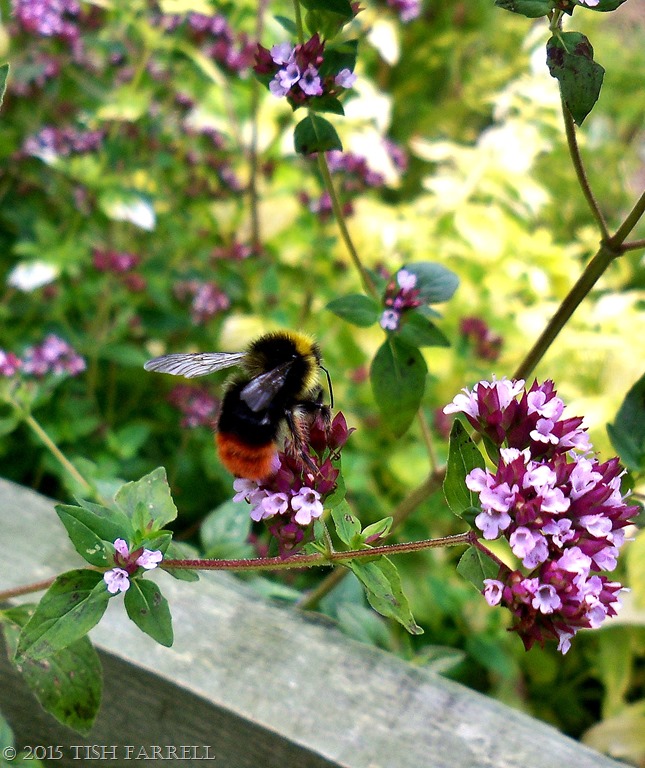
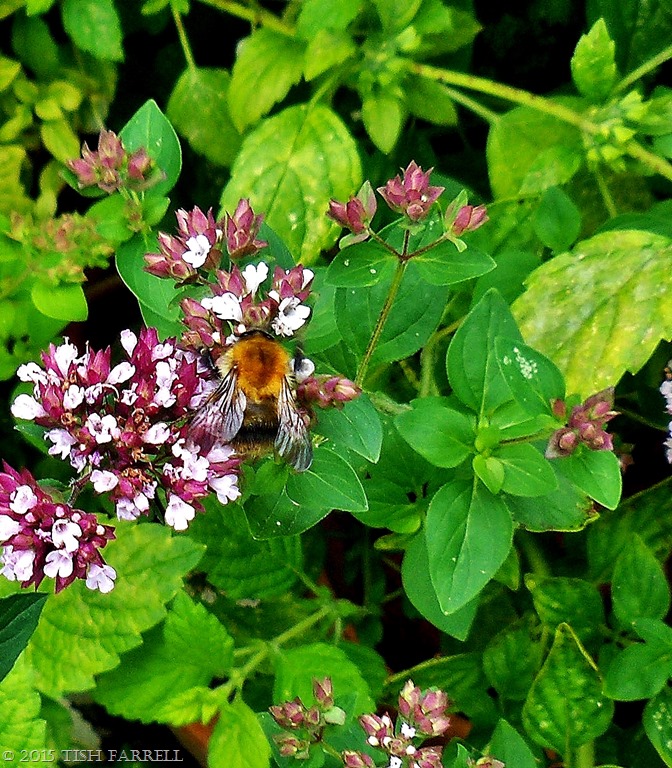
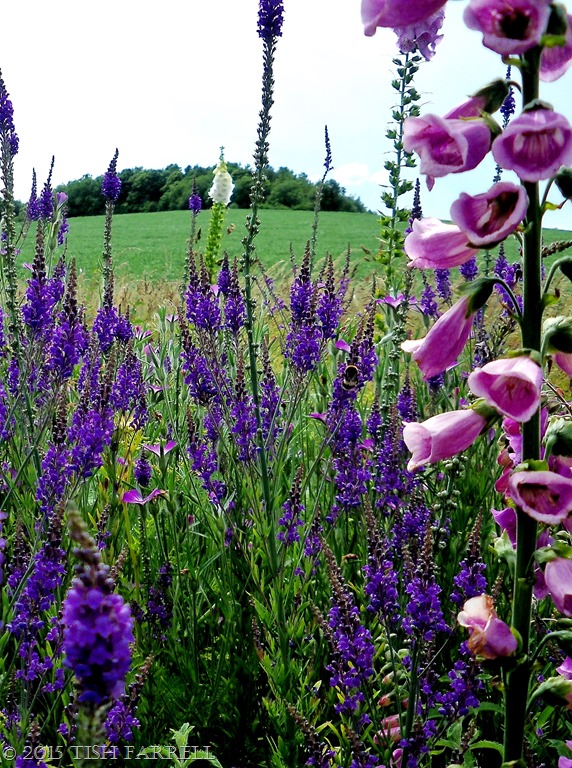
A couple of summers ago we took out a length of hedge between our back garden and the field. It was a thicket of alien snowberry and overgrown ash tree seedlings, and a nightmare to cut. Now we have a simple fence, a rampant herb and wildflower garden that grows itself, and a view.  We also have masses of bees.

Back in the spring they foraged on the columbines; later on the spires of self-seeded purple toadflax and foxgloves. Now they are gorging on oregano and bramble blossom. I spotted at least three varieties of bumble bee this afternoon, but apart from the red-tailed bumble below, I’m having problems identifying them. For those of you who wish to try, there is an excellent identification page with a video at bumblebeeconservation.org

P1010768

100_6468

100_6453

100_6050

copyright 2015 Tish Farrell
Close Up