The Weather In The Garden

IMG_4585

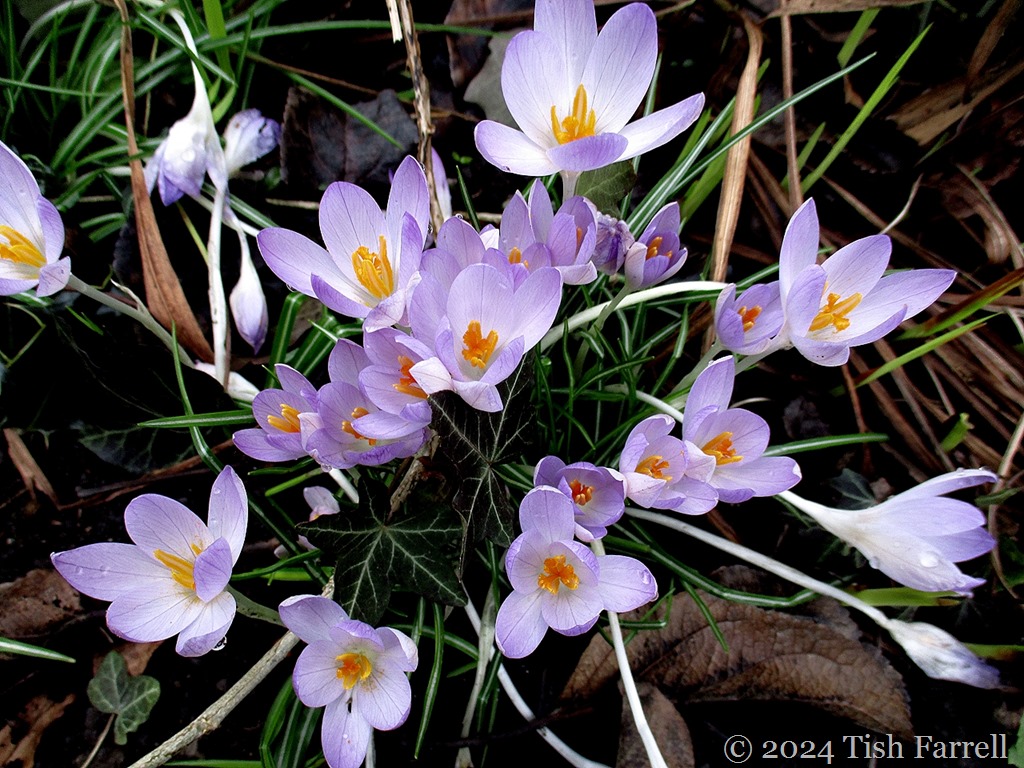
So far this week at The Gables we’ve had frost, biting wind, and yesterday an all-day deluge with wall to wall gloom. But today, St. Valentine’s, the rain has held off. In fact it’s been almost warm, with a glimmering of sunshine, and up in the top garden this clump of seedling crocus was in full fanfare.
IMG_4590

*

And not only that,  Mr. Whippy, the ice-cream man, was back in town. Jangling rendition of O Sole Mio up and down streets. And then while I was snapping the crocus, along buzzed a honey bee, the first I’ve seen and heard this year.

Anyone would think it was spring.

But then February can be a tricksy month in England, ambushing us with a day of sudden warmth, only to whip up more icy blasts just when we’ve been daft enough to cast off our thickest winter woolly.

So: best not to count one’s spring chickens too soon.

This bee, though, is definitely seizing the moment, making the most of fine weather, and a rich pollen harvest. (Note the gathering sac on the rear leg; full pollen facial thrown in). What’s not to love.

IMG_4624ed

IMG_4605ed2

IMG_4622ed

Happy Valentine’s Day!

Lens-Artists: Weather This week Anne at Slow Shutter Speed  has us weather watching. Plenty to inspire us in her lively photo essay.

Quick Fix at The Opium Poppy Cafe

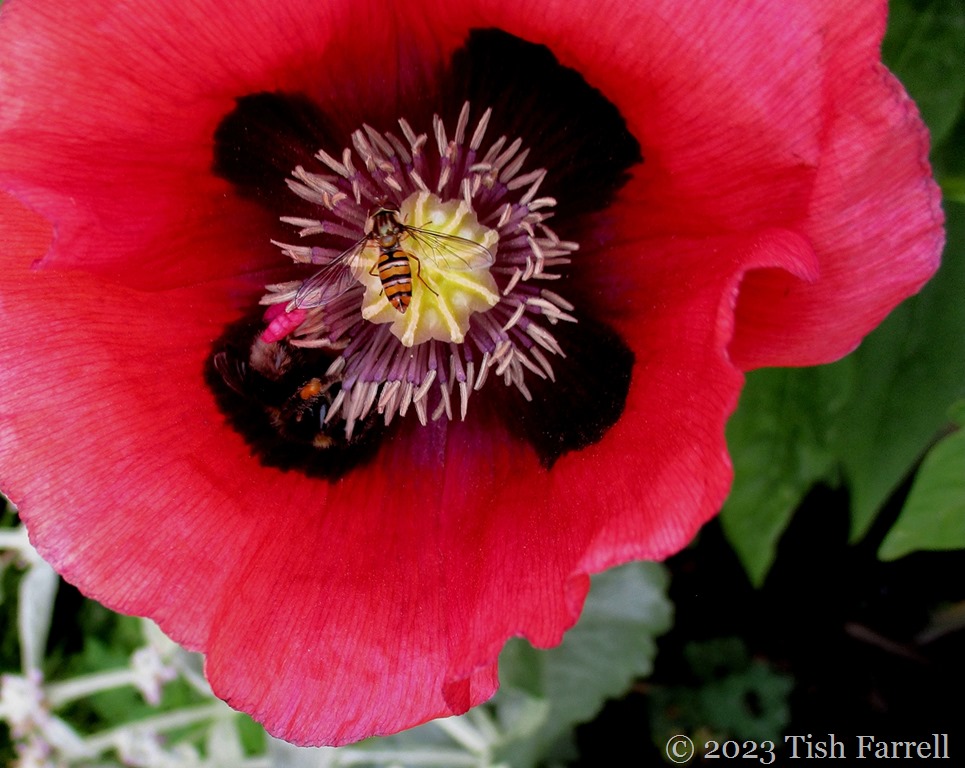
poppy bee and hoverfly

I’ve settled a few herbaceous cuttings in our rental house garden – geraniums, helianthus, Michaelmas daisies, centaurea, valerian, and oregano, and they’re all doing rather well.

But this opium poppy brought herself, and this morning proved a hot spot for a bee and hoverfly feeding frenzy. Visitors included a white tailed bumble bee and a flurry of marmalade hoverflies.

https://youtu.be/v3abVg6pwWE

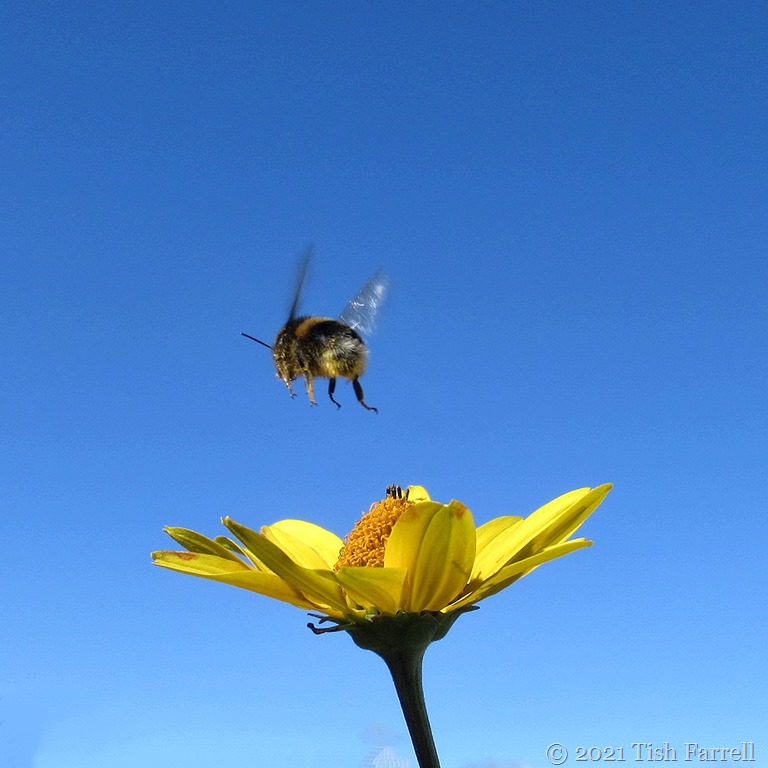
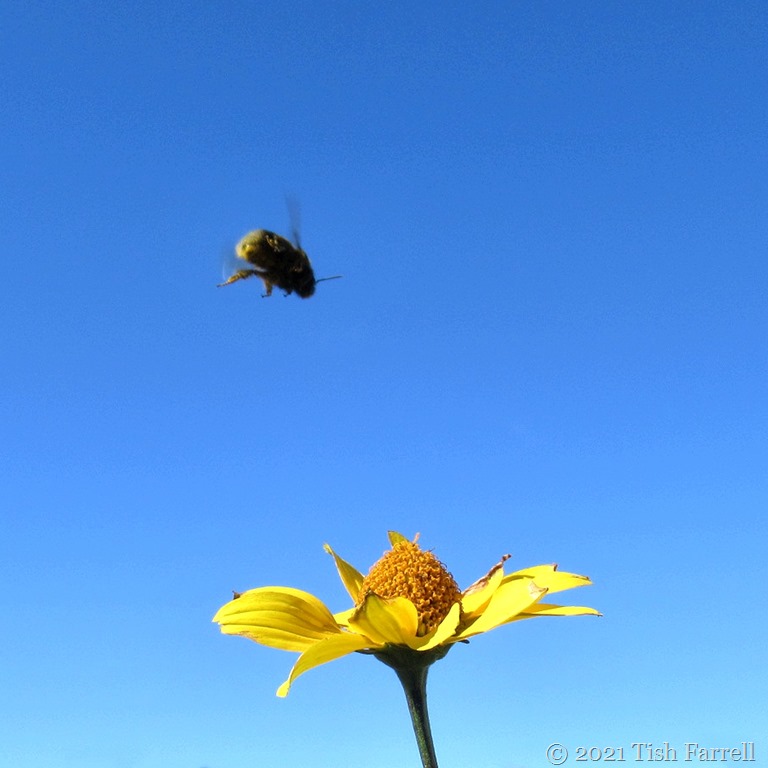
Bumble Bee Dreaming…Bzzzzz

IMG_0520

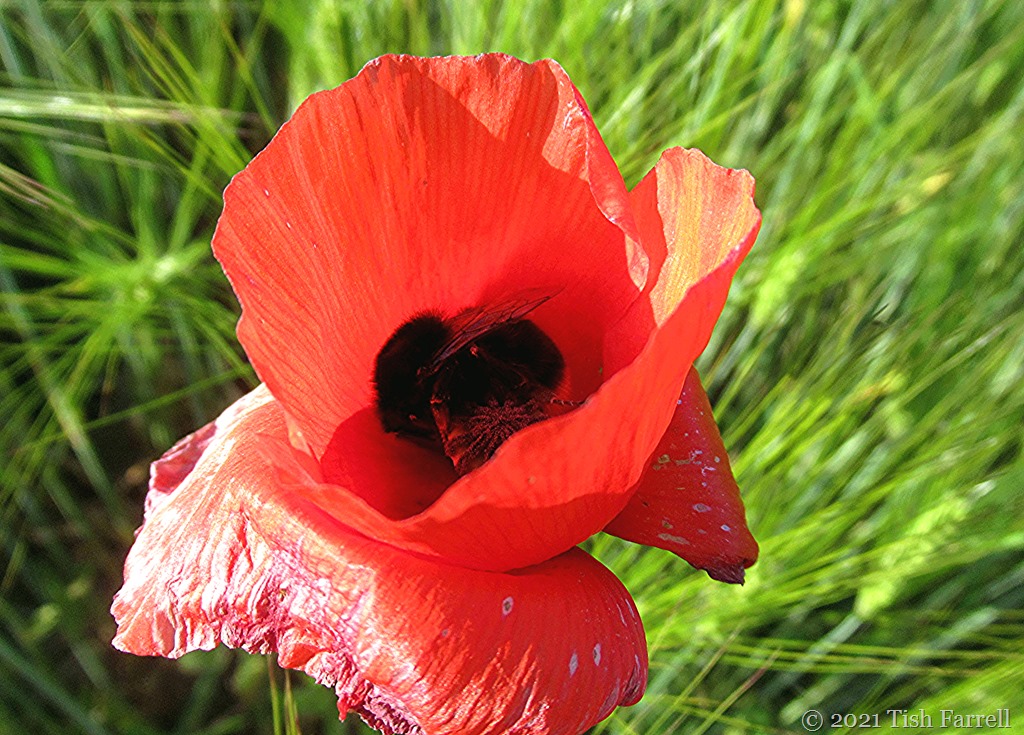
One single corn poppy amongst the barley in Townsend Meadow, and snug inside a fast-asleep bee. And what cosier spot, dappled late-day sun through gauzy drapes, the gentle swish of barley all around. I wanted to curl up inside there too, and dream whatever it is bees dream. Sad to say my curiosity got the better of me. After I took this shot, I gave the poppy stem a gentle nudge – just to be sure the bee was sleeping not dying – and off it zoomed. So sorry, bee, for spoiling your siesta.

copyright 2021 Tish Farrell

Phacelia: Bee-Kind & Soil-Kind

IMG_0121

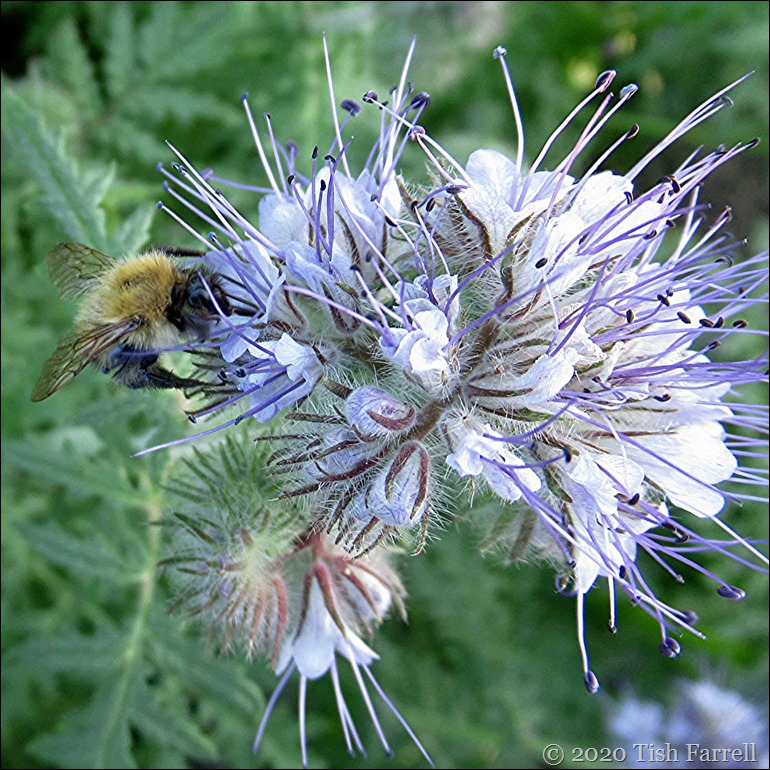
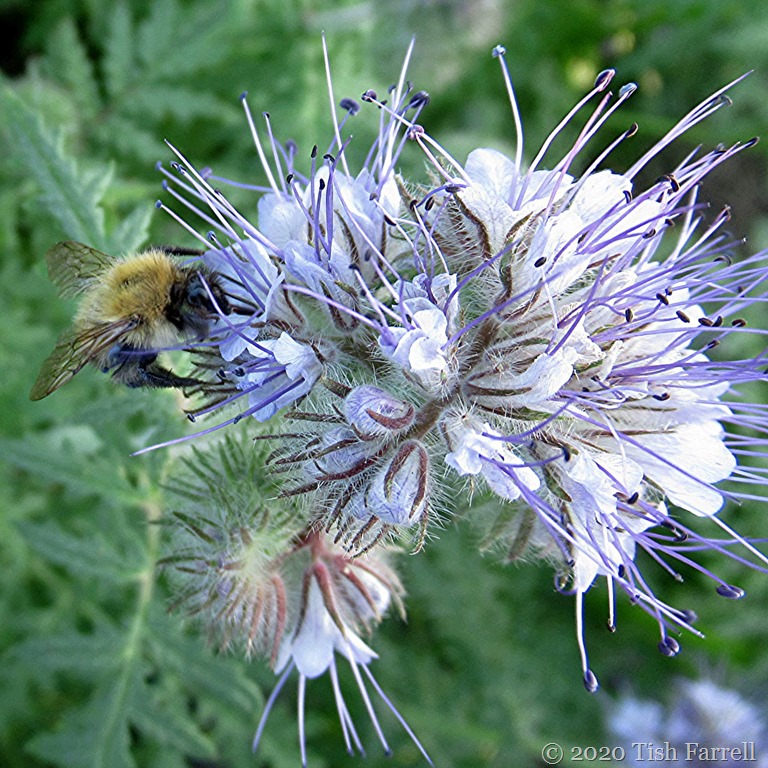
If you want lots of bees and hoverflies in your garden then phacelia (native to the Americas) is a good choice. It can be sown from spring to late summer and its mauve flowers, delicately scented, provide nectar all day long for foraging insects. The hoverflies can return the favour by also eating the aphid pests.

On the soil front, I grow it at the allotment as a cover crop. This year I sowed it in mid summer after I had harvested the broad bean plot. It is always good to keep bare earth covered, and the fleshy, ferny vegetation supresses weeds and holds on to nitrogen.

I also grow it as a green manure (other examples: clover, mustard, rye, alfalfa, fenugreek, field beans). Traditionally phacelia, like mustard, is ‘dug in’ before it flowers to stop it seeding. But I prefer the ‘and’ and ‘and’ approach, so I leave it to become bee pasture. Also, I’m trying not to do too much digging, an activity which apparently disrupts the soil’s natural fertility-enhancing systems. Instead, I let it over-winter, or at least until the first frost when it will simply collapse. I‘ll then leave the resultant ‘mulch’ to go on protecting the soil surface from leaching and fertility loss. Meanwhile the root system will rot down and help to improve soil structure.

With any luck, come next spring, I should be able to plant or sow directly through it.

If I’ve sown the seed too thickly, which is easy to do as it is very small, I thin out some of the excess growth through the growing season to feed the compost bins. Or best of all, pick a now-and-then bunch of flowers and bring them home for the kitchen table.  Such a generous, life-enhancing plant.

IMG_0109

IMG_0108


KindaSquare #1 October is here and Becky bids us to show her all ‘kinds’ of squares. Please pay her visit to find out more. As ever, the main ‘rule’ is the header photo must be square.

A Prickly Perspective

IMG_9104sq

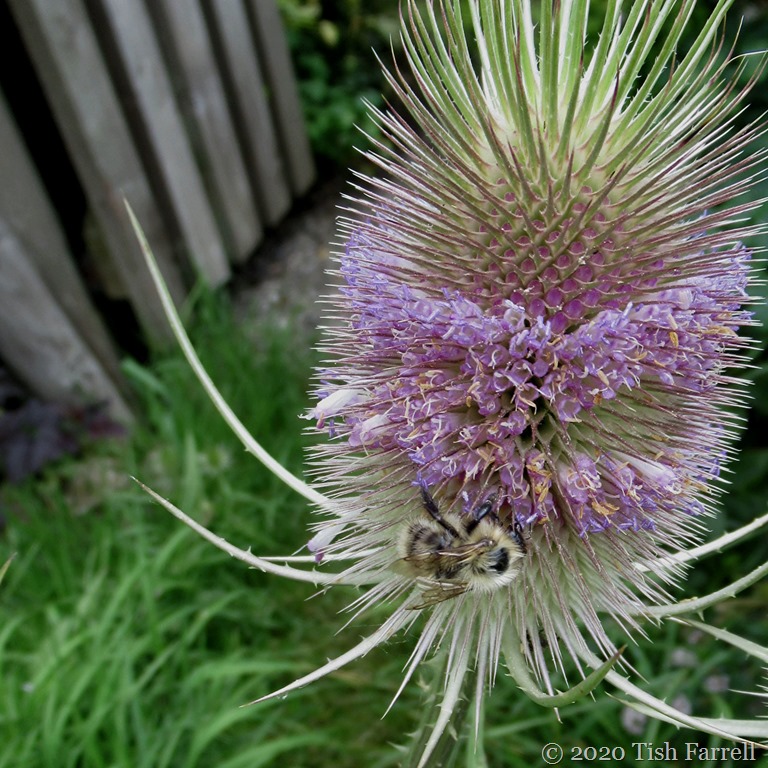
This thistly entity is a teasel flower. It is borne aloft a magnificently statuesque plant most often to be found on waste ground. It seeds promiscuously and every part of the plant is prickly. In past times some of those prickles were put to good use. The dried flower heads were split and pinned to a cruciform structure, called a teasel cross or card (a bit like a table tennis bat) and used in the weaving industry to raise the nap on finished cloth.

There are photos and more information HERE.

I’m sorry I can’t tell you what kind of little bumble bee this is; the ID charts defeated me though my best guess is a carder bee. (Which would be appropriate).  I anyway like the way its colour scheme ‘goes’ with the teasel’s ashy tones. I also admired the way it picked its way so gingerly through the spiny elements to reach the nectar in the tiny segmented florets.

This scene was captured over the garden fence in the guerrilla garden, where all is presently thriving. Here is a field-side perspective with the teasel bringing up the rear. I transplanted it as a seedling found on an abandoned allotment plot. I might just regret the introduction, but for now it’s looking rather splendid.

IMG_9102


Square Perspective #27

World Bee Day Today 20th May

IMG_2675

I’ve written lots about bees on this blog, and I guess most people who come here know how important they are to human existence; their overall busy bee-ness and the way they pollinate flowers that produce so much of our fruit, nuts and veg. So to celebrate bees here’s a gallery of snaps taken in the garden and up at the allotment. All, with the exception of the blue cornflower shot taken last month, are from the archive. At the moment the bees are zooming round too fast to have their pictures taken. Anyway more power to their pollinating…


This slideshow requires JavaScript.

United Nations World Bee Day

Bee-fuddled Bumble ~ A Case Of Too Much Pink?

IMG_4723

To my eye this looks like one inebriated bee, O.D-ed on pollen and caught here, flat-out among the rhododendrons at Rosemoor.

It was a year last May and we were on our way back to Shropshire from Cornwall after a very special event, the christening of Graham’s god daughter, and we decided the route home must include a deviation through Great Torrington in Devon, and thus a visit to the Royal Horticultural Society’s garden at Rosemoor. It is a magical place, both of itself and its setting in the River Torridge valley, and you probably need to spend a whole day there to do it justice; or better still, stay several days in Rosemoor House and so see the gardens out of hours. Here are a few of the RHS website highlights – not one garden but several gardens.

And here are some of my highlights, pink and otherwise, though we weren’t too lucky with the light. Click on any image to view as a slide show:

In the Pink #25

Sundowner Bee At The Allotment Cafe

IMG_1662

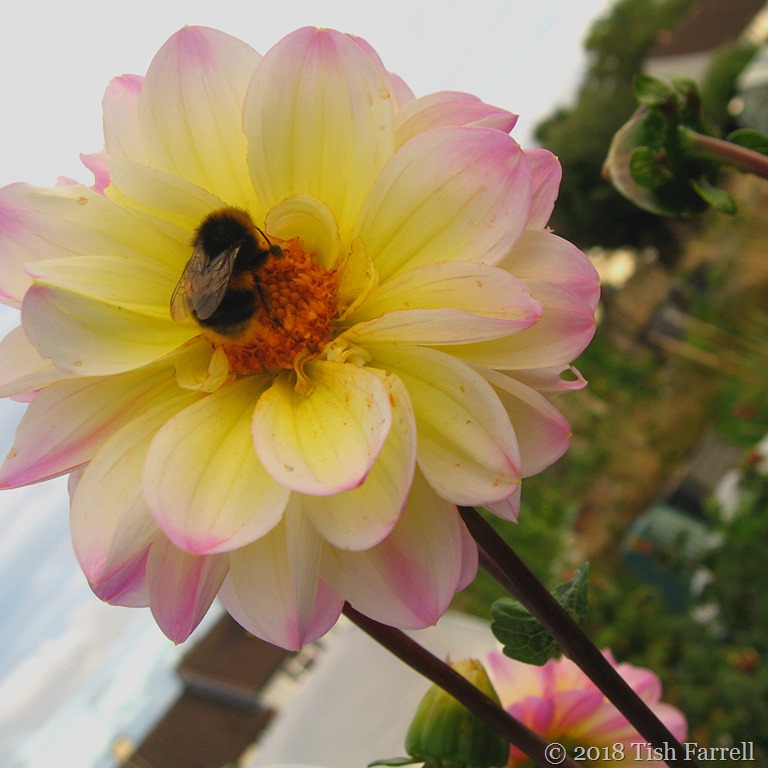
Can one post too many happy foraging bee shots? I’m thinking not. This particular bee was caught the other evening, enjoying the day’s final tuck-in on an allotment dahlia. I’d gone up there to pick runner beans, tomatoes and autumn raspberries, and to deliver a big bag of compost makings to one of my several heaps.

The dahlias in question have been grown by my plot neighbour Mark. He only grows  flowering plants – and with the sole objective of providing for insect life. Of course these late season blooms give everyone who comes to the allotment gardens a burst of pleasure. It’s as if they have captured the best essence of summer in their petals and want to share it with the world. Blooming lovely.

IMG_1664

Lens-Artists #11  small is beautiful  Amy asks us to show her the little things that give us pleasure, however they strike us.

In the Pink #16