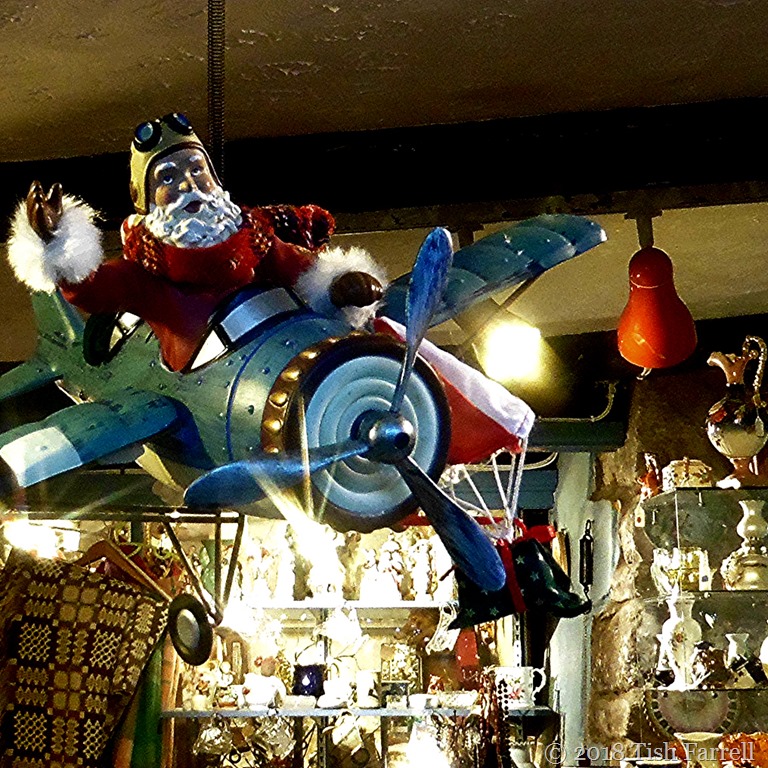
The bad news is he doesn’t seem to have left much room for the pressies. And already he looks to have had a tot too many of the Christmas spirits.
Happy Holidays Everyone

The bad news is he doesn’t seem to have left much room for the pressies. And already he looks to have had a tot too many of the Christmas spirits.
Happy Holidays Everyone
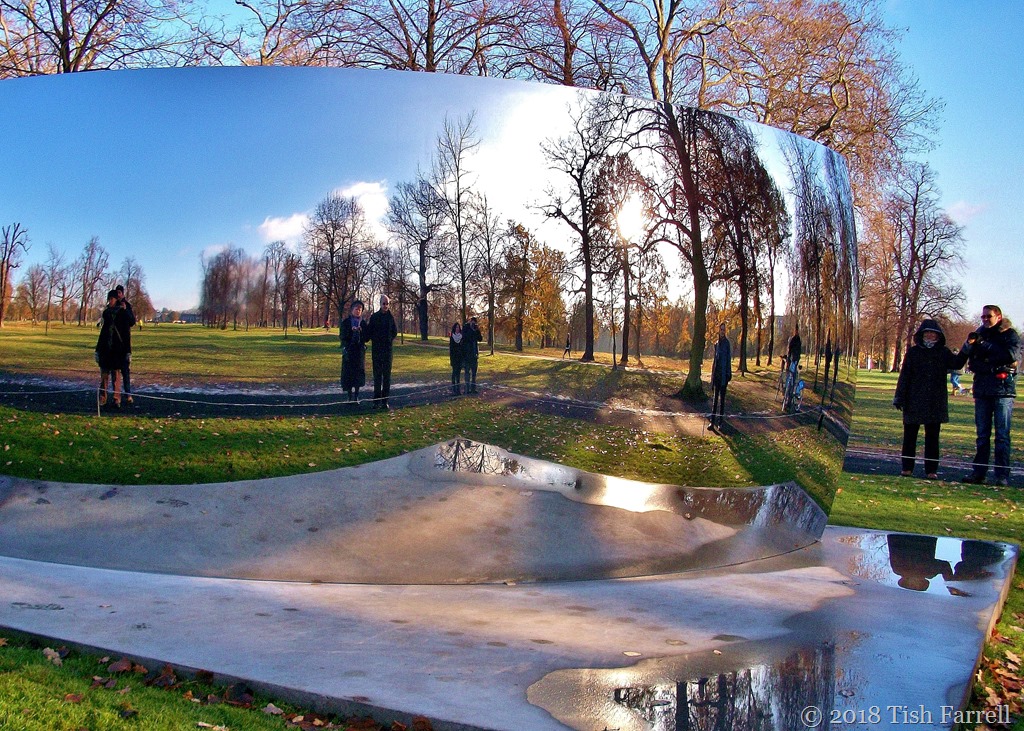
C-Curve by Anish Kapoor and reflective puddles courtesy of the rain god; photo taken several freezing Decembers ago in Kensington Gardens. You can spot the Farrells looking a bit stiff – centre twosome on the left.
Lens-Artists ~ Reflections Patti set the challenge this week. Her fantastic photo of the Chicago Bean sculpture by Anish Kapoor reminded me that I had photos of his work too.
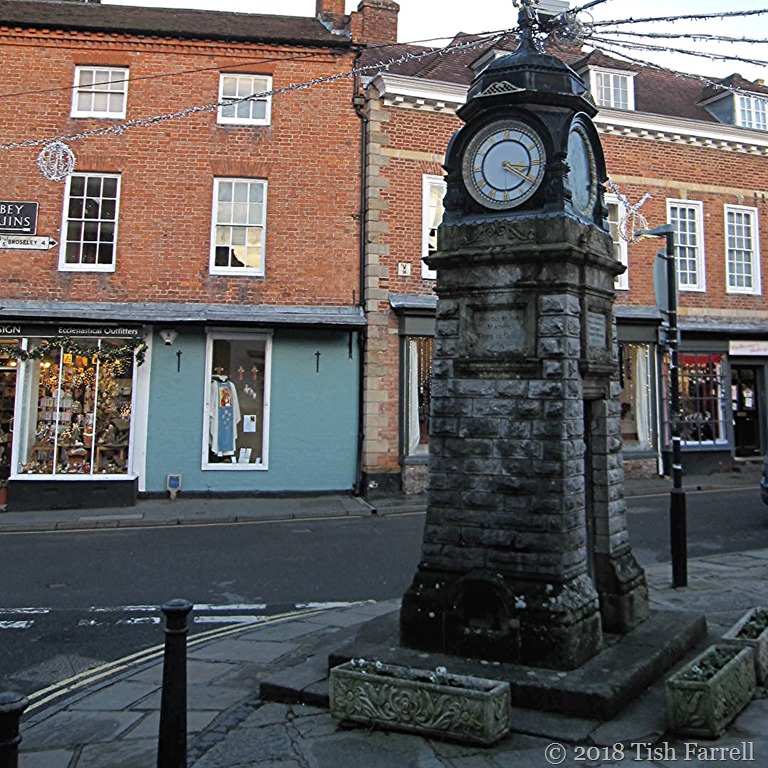
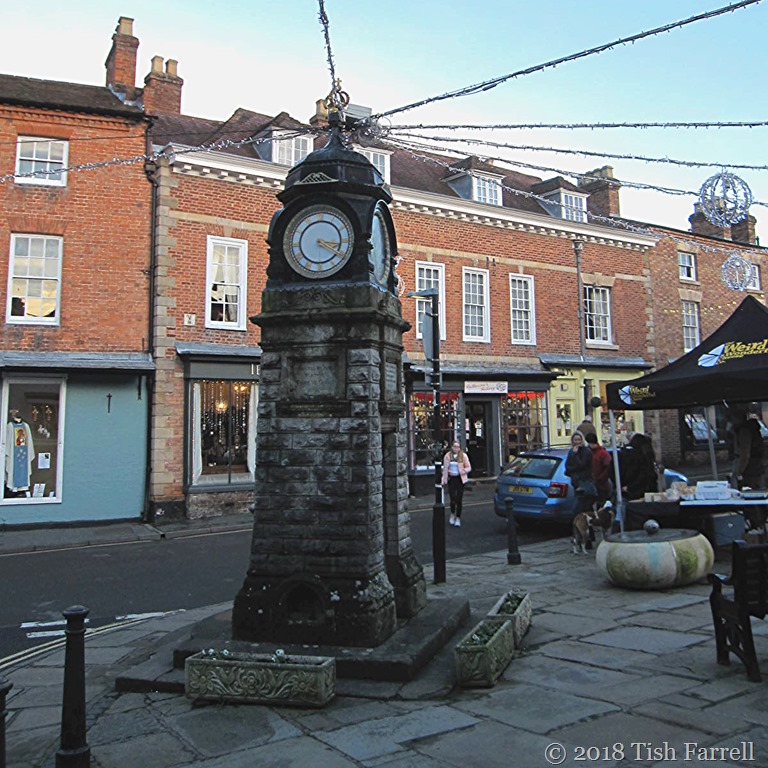
Well it had to be done for Becky’s December ‘time squares’, didn’t it? Here we are in Much Wenlock’s town square complete with Victoria’s diamond jubilee clock cum water fountain. It’s 3.20 on the ‘next shortest’ day, and we have almost-sunshine. Keep it up weather gods.
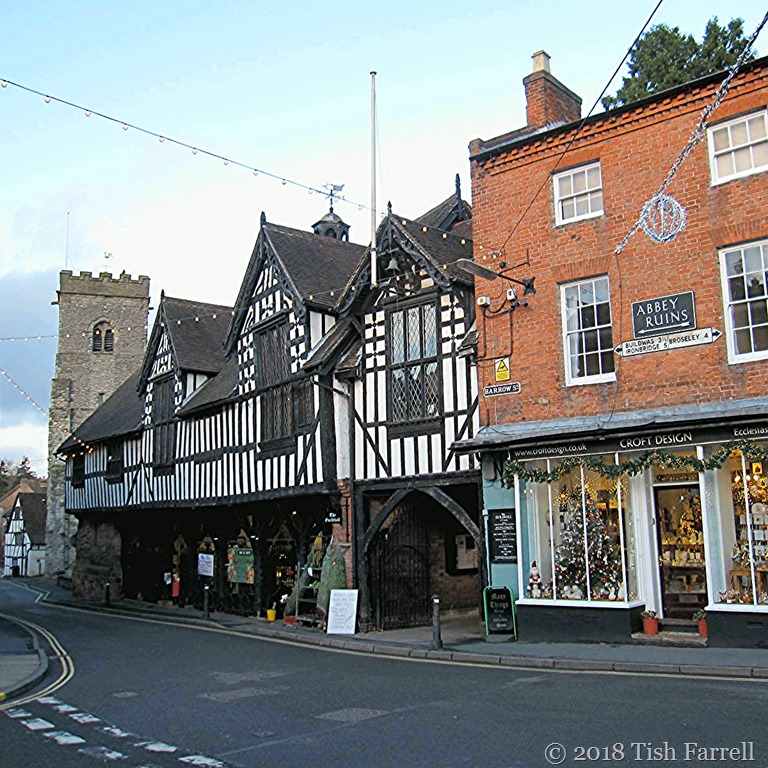
In case you’re wondering about our shops, straight ahead is our ecclesiastical outfitters, an unusual provision in a small town. Coming up next is the clock’s view of the sixteenth century Guild Hall with its veggie market and the medieval parish church beyond:
*
And in the other direction one of our several cafes, Catherine’s Bakery and A.J’s household goods store. In the Square itself is the weekly cheese stall. Not exactly bustling on the last Saturday afternoon before Christmas:
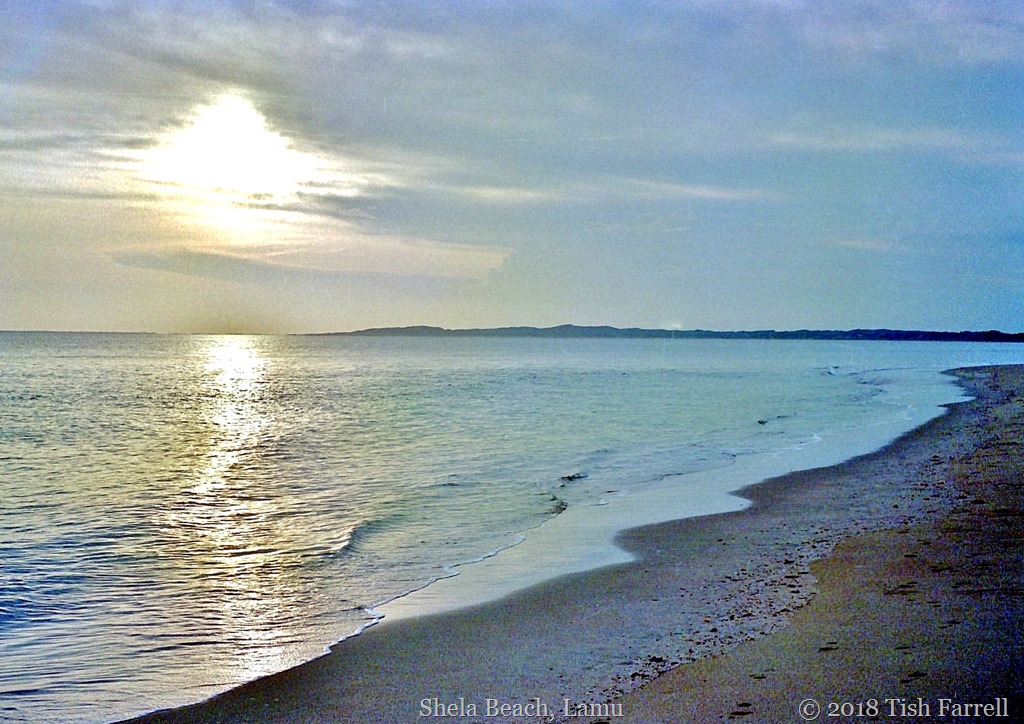
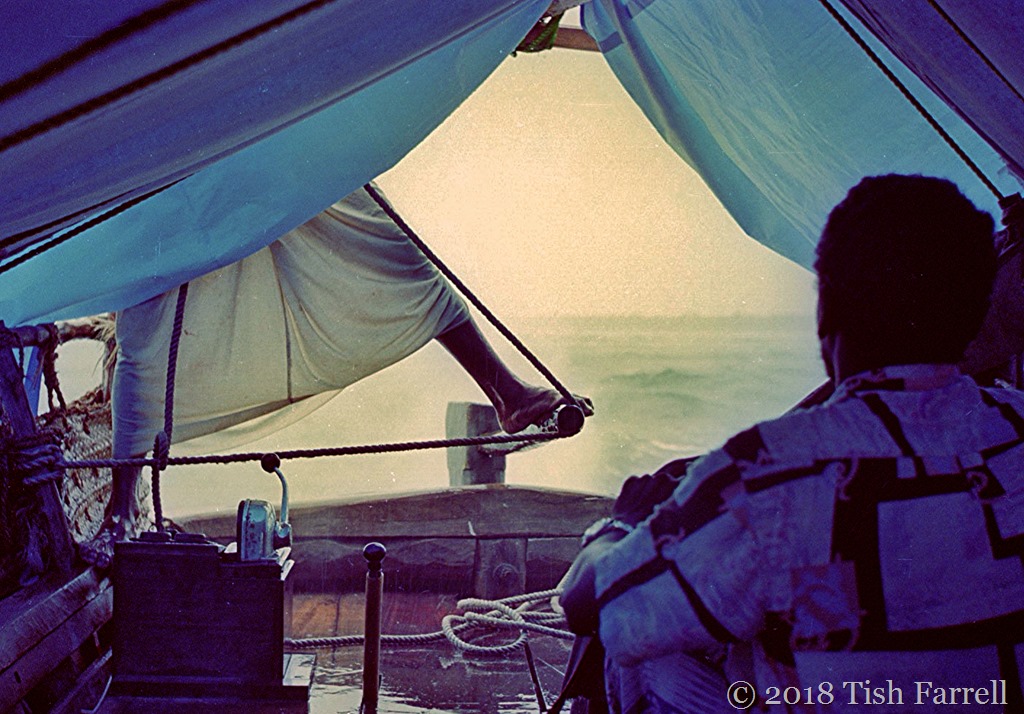
December is usually the time of the short rains in Kenya. I say usually because these days the tropics are especially affected by climate change so nothing is certain when it comes to weather. It is also the hottest time of the year, and in the upcountry regions, the season for planting. Here on Lamu Island (above) it is also tourist time, although the year we spent Christmas there it was scarcely crowded. This photo was taken on Christmas Eve as the sun was setting. There were about six other people on the beach. Earlier that day we had arrived in a sudden squall which made the dhow crossing to Lamu from the air field on Manda Island a touch exciting. We visitors all huddled under the awning while the stalwart captain kept us on course across a choppy, foggy strait.
*
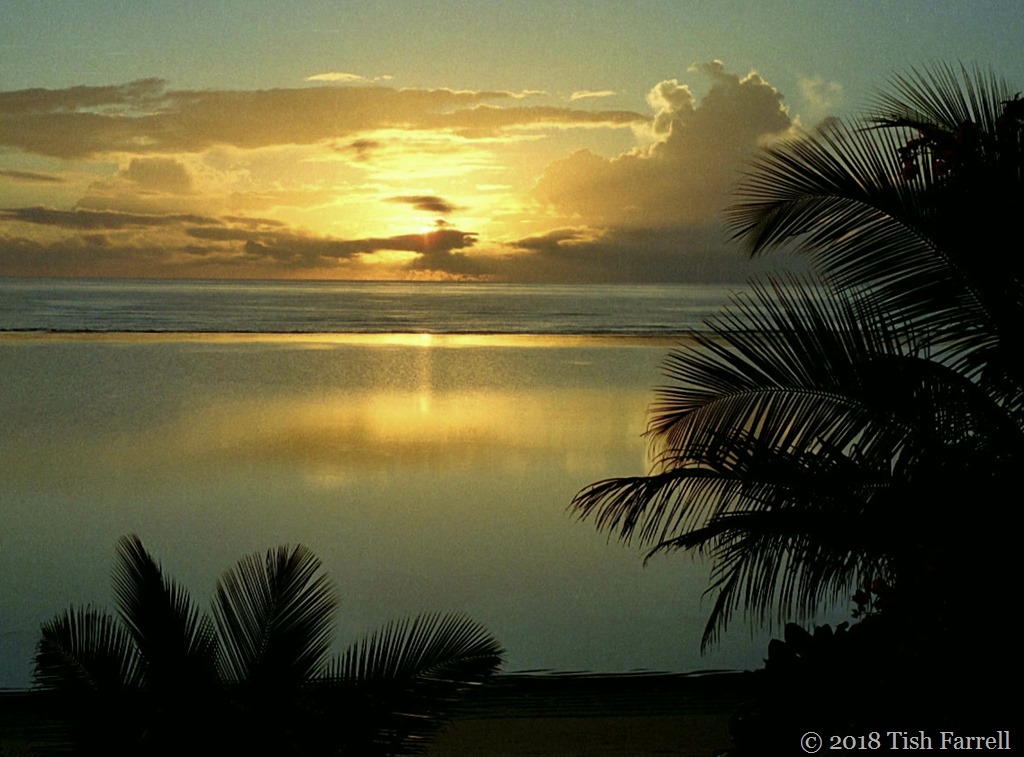
Most of our Christmases were spent on Tiwi beach south of Mombasa. Not a busy place either. Here’s the sunrise over the lagoon at Maweni one Christmas morning long ago.
*
And some ageing views of the lagoon in head-on sunshine:
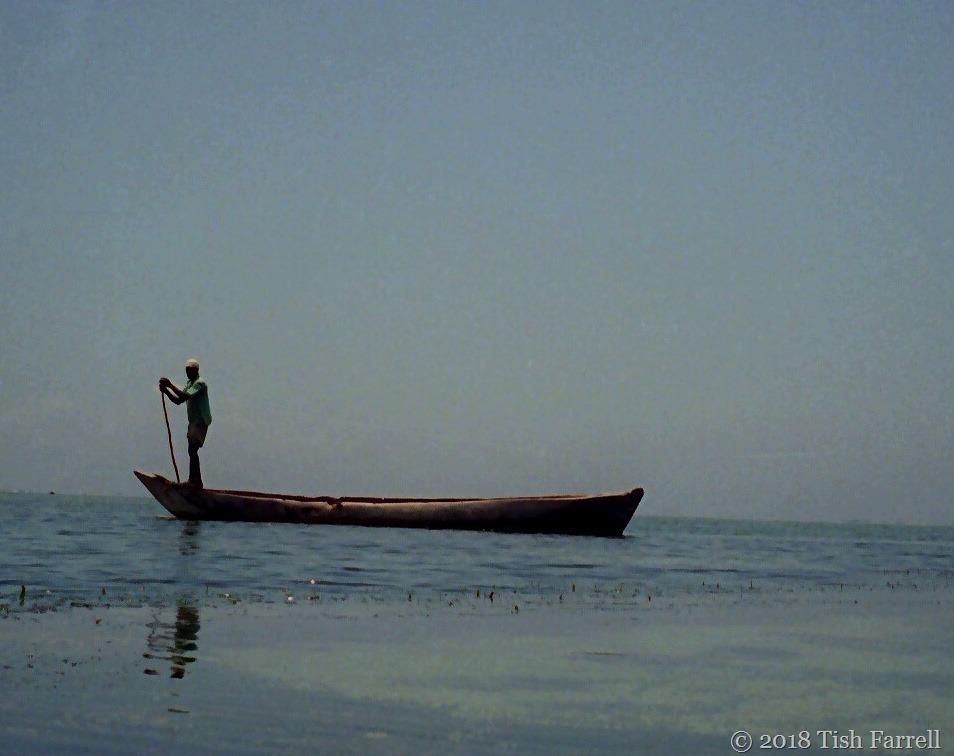
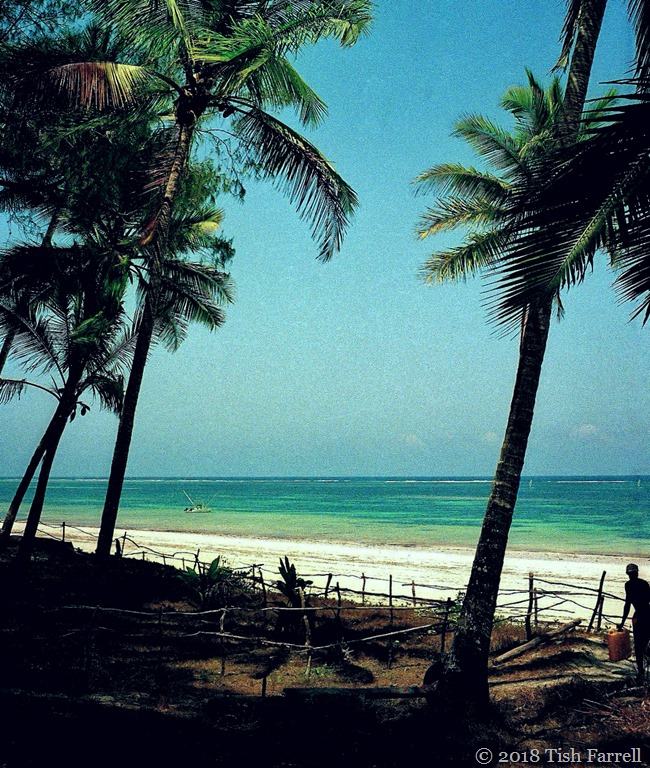
Thursday’s Special ~ please visit Paula to see her colour prompts. As you might conclude, they include aquamarine, cyan and golden.
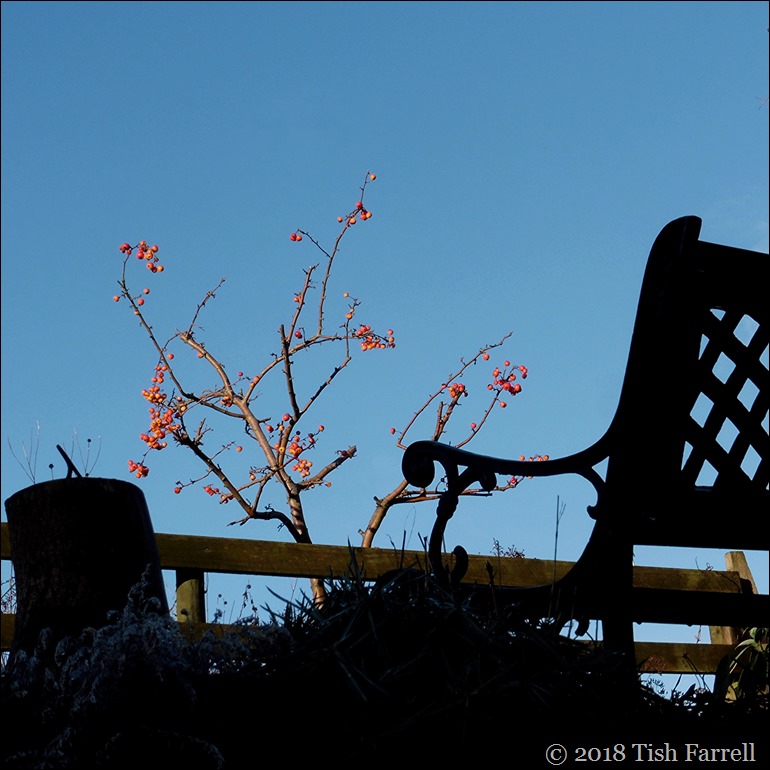
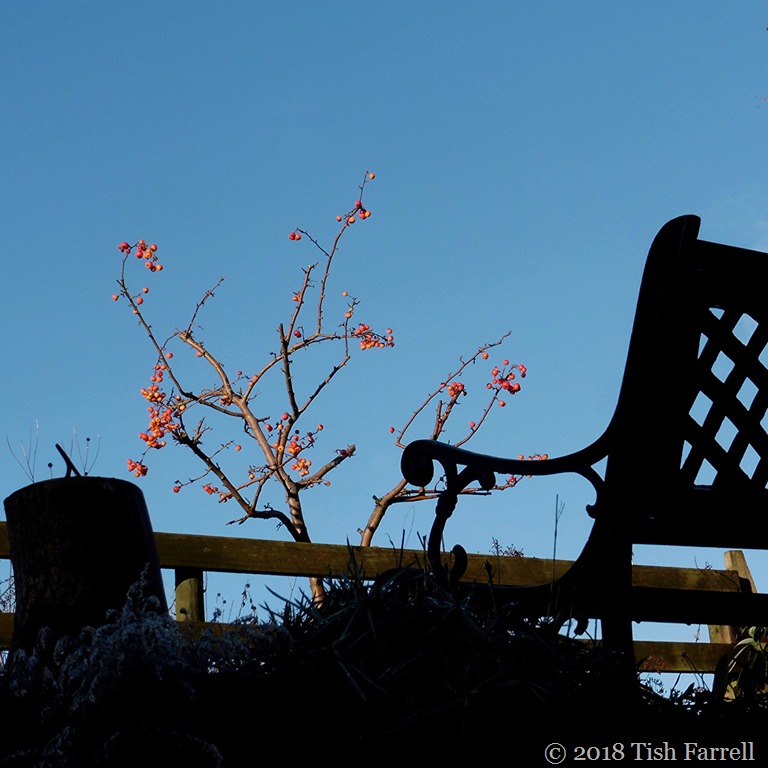
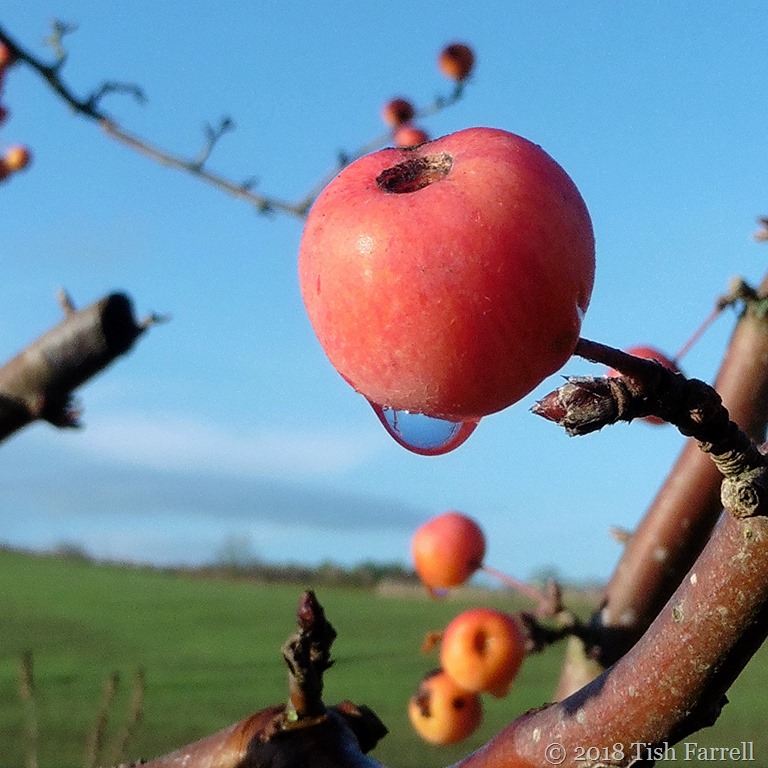
This morning with the sun on their faces the crab apples seemed to glow like tiny lanterns. I’ve noticed that as the temperature drops so their colour deepens to a rosy gold. Not that they will last much longer. The blackbirds have been busy foraging. Better enjoy them while we can then.
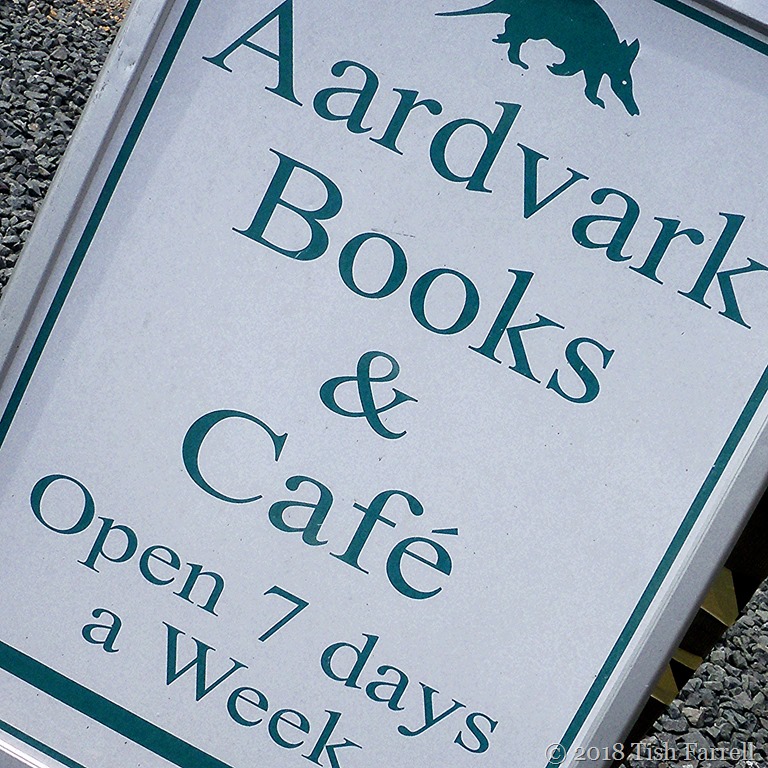
…where book burrowing souls can spend lots and lots of time while being sustained by coffee and delicious home made cakes.
You can find Aardvark Books just up the lane from the 300 yard cloud hedge (see previous post) – a barn full of books – old and new – on a working farm with butterscotch coloured cows out in the yard and fine country views all around.


And it’s not only the books, but the inscriptions inside some of the volumes: handwritten words that speak of previous owners, or heartfelt sentiments expressed to long ago friends in the gift of a very particular work, and you the late-comer voyeur can only guess at why it was chosen and wonder at the kind of person for whom it was meant.
But there are also disturbing thoughts beyond the ghosts of relationships past. Standing among these mountains of books, you are also left feeling that if all of them have been well read, shouldn’t we be more enlightened and wise than we often seem to be. Or does the fact that so many books can be discarded like this (hopefully, if doubtfully to be reclaimed by somebody sometime) tell quite another story about our present condition? Time to get thinking perhaps?

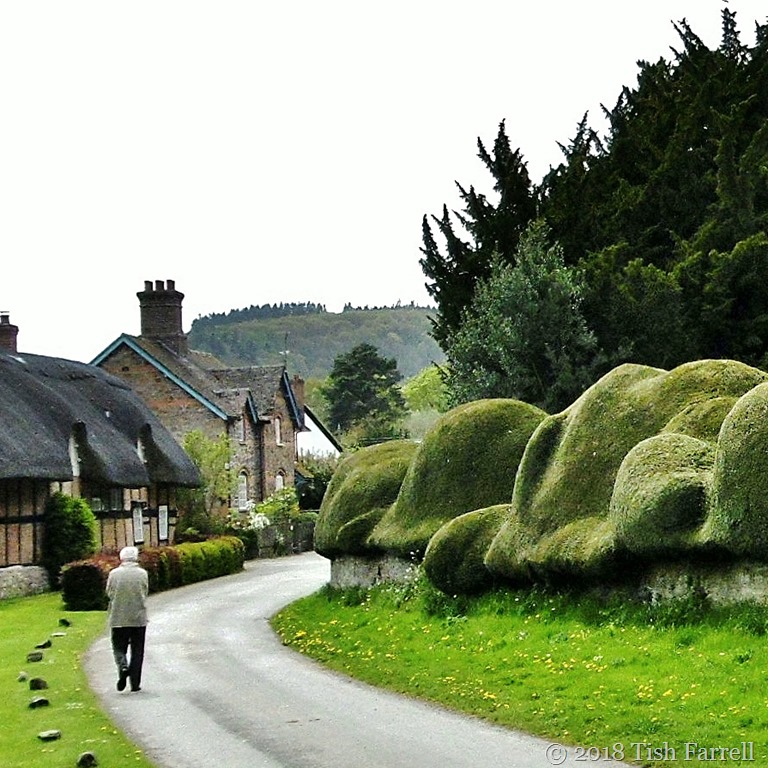
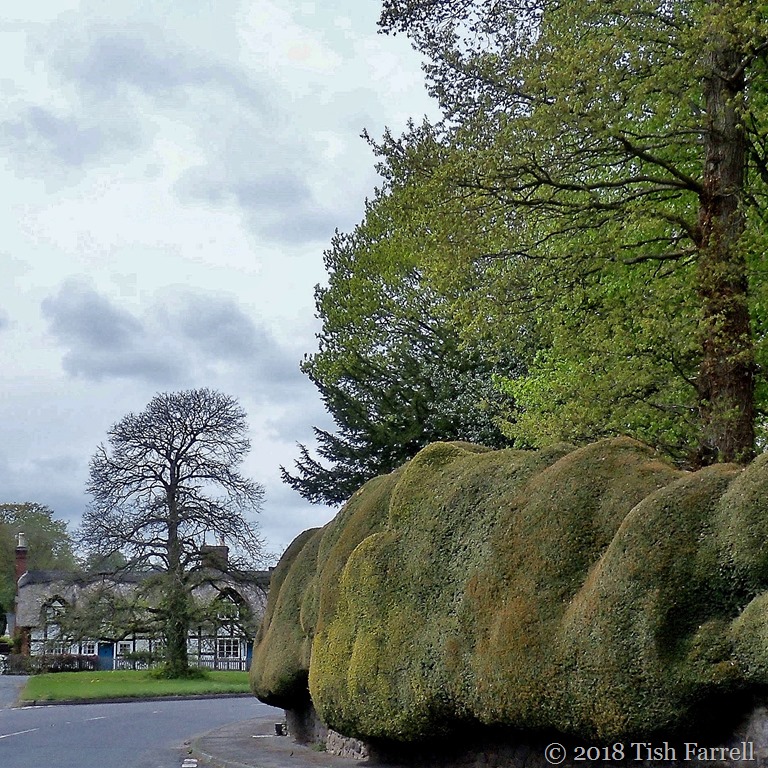
It’s 300 yards long too, so one can only imagine how much time and effort it takes to keep this yew hedge looking so fine. It surrounds the grounds of Brampton Bryan Hall, and its next-door predecessor, the ruined Brampton Bryan Castle. It and the whole village are remnants of the feudal past, the manorial Harley family having been in continuous residence here for 700 years. I have not been able to find out when the form of this hedge was first conceived, or who thought of doing it. Or, indeed, who has the job of trimming it.
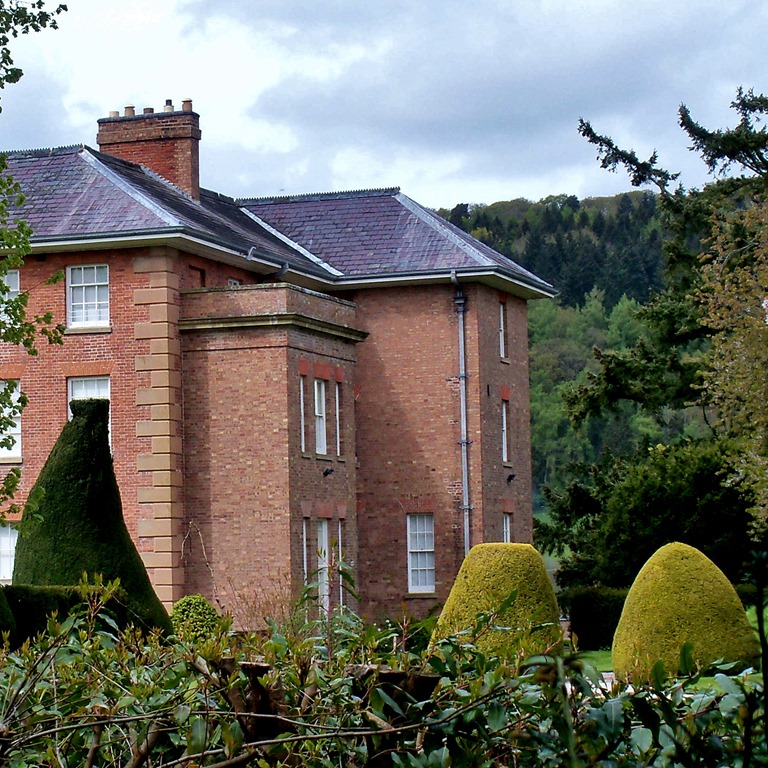
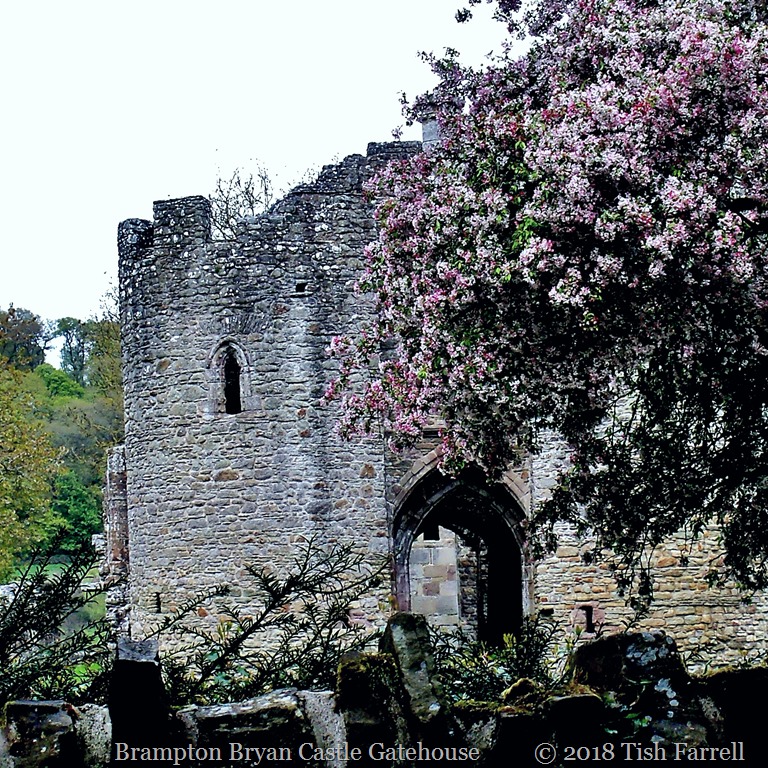
The village is in Herefordshire, but close to the borders of Wales and Shropshire. There is mention of a castle here in Domesday (1086) and of building work in the 13th century. Doubtless it played its part during the Norman domination of Britain. Four centuries later, during the Civil War it was subjected to two sieges by Royalist forces.
During the first attack of 1642 that lasted several weeks, the castle was held for the Roundhead cause by Lady Brilliana Harley (there’s a name to conjure with) along with a band of locals and 50 soldiers. Her husband, Sir Robert, statesman and member of the Long Parliament which sat throughout both Civil War periods, had left her ‘to man the fort’ while he was in London attending to parliamentary business.
There was something of a truce during 1643, but by this time Brilliana was ailing and she died of pneumonia in October 1643. In the following spring there was a second siege. This time the Royalist forces arrived with mines and more powerful artillery, and so had their way. The castle was sacked and burned, the three Harley children taken off to be imprisoned in Shrewsbury. But not long afterwards the Royalist cause was lost, and Sir Robert was paid the equivalent of £1 million in compensation for the destruction of his home.
Looking around the peaceful little village today, and at that apparently all-enduring hedge, it is hard to envisage the place as a battle ground. These days we have entered the Age of Quaint & Picturesque. Which reminds me, the hall grounds were used in scenes from the Merchant Ivory film of E M Forster’s Howard’s End.
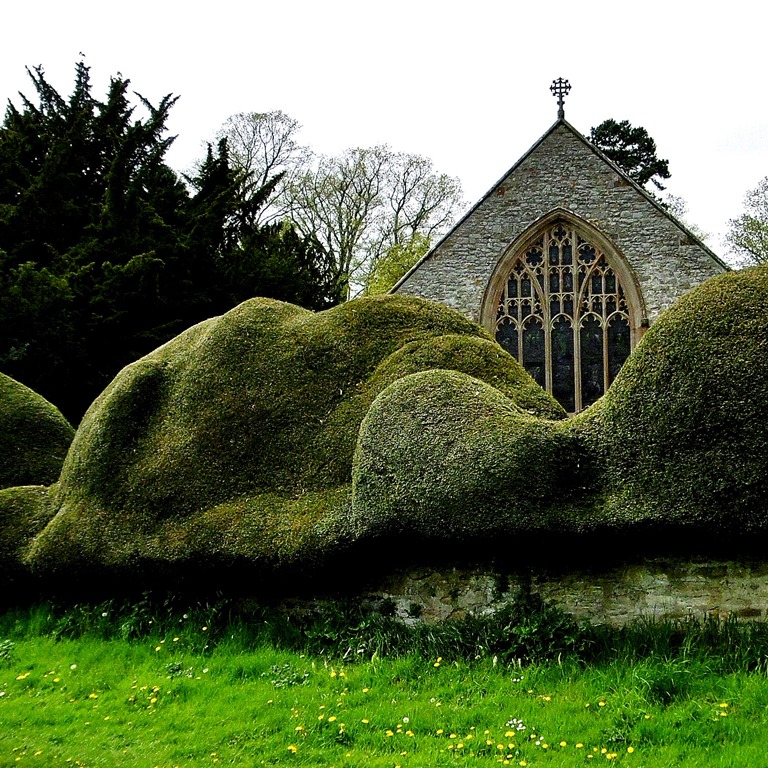
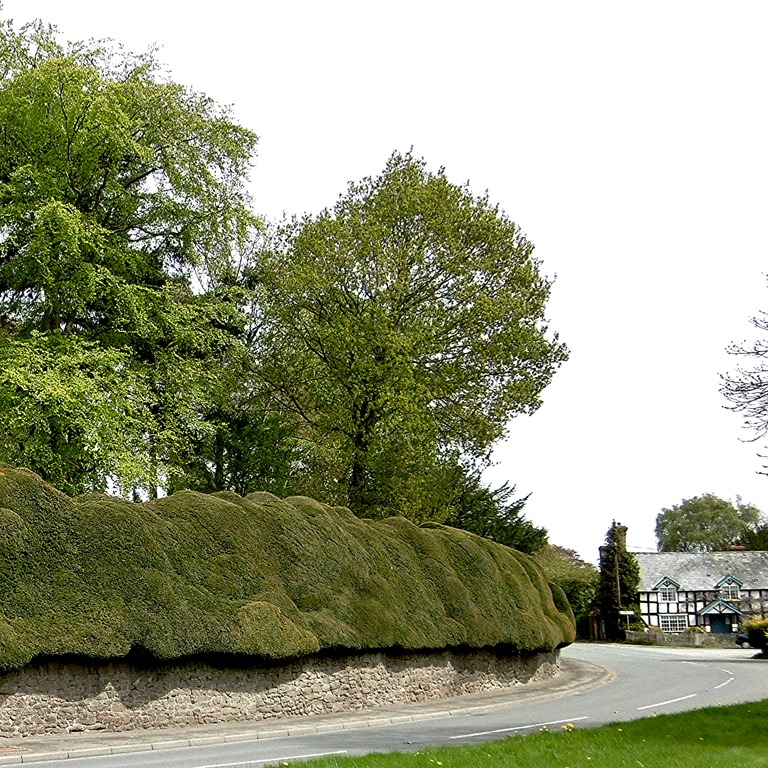
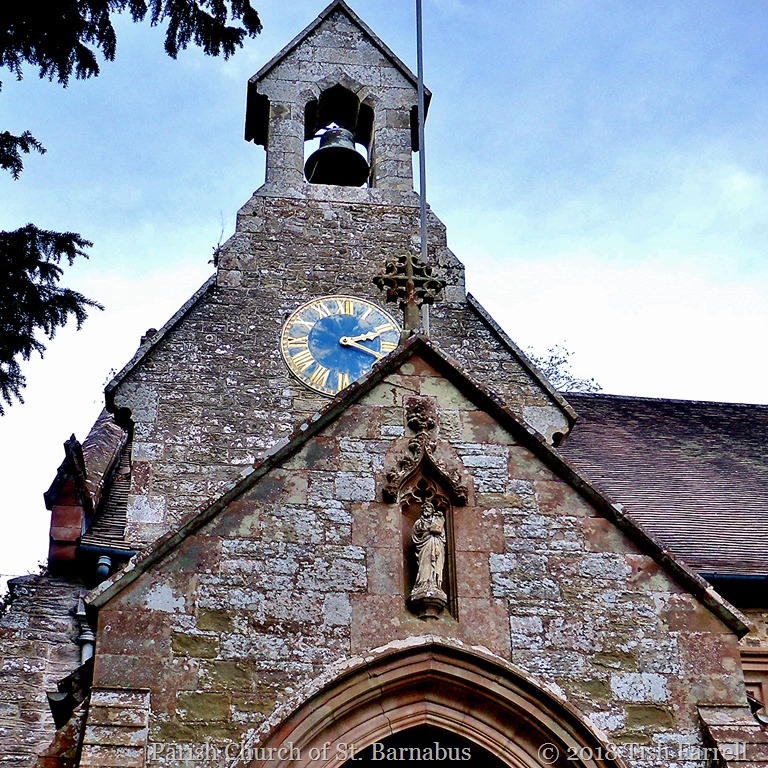
The parish church stands in front of the castle gatehouse, and my photo of the latter was taken looking over the churchyard wall. Built in the 1660s, it is one of only six churches built in England during the Commonwealth period. Timbers from the castle’s great hall were re-purposed here.

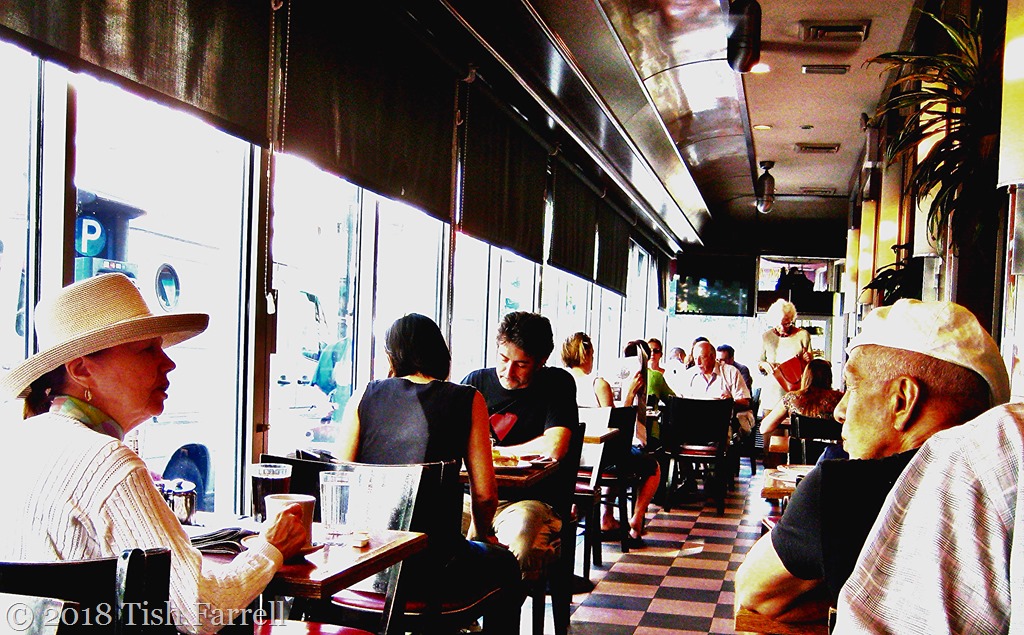
Sadly this particular Manhattan Diner in Upper West Side is no longer there, though there is another of the same name not far away on Broadway. We were staying across the road in the Beaux Arts style Hotel Belleclaire (much revamped in the last few years) and since they did not have a restaurant, we were advised to come here for breakfast along with their other guests. The place had a pleasing ease-yourself-into-the-day atmosphere, but what I liked most was that Upper West Side residents also came here every day for breakfast. I rather felt that this easy cross-the-aisle conversation had been continuing for years, morning after morning, familiar, but not too familiar.
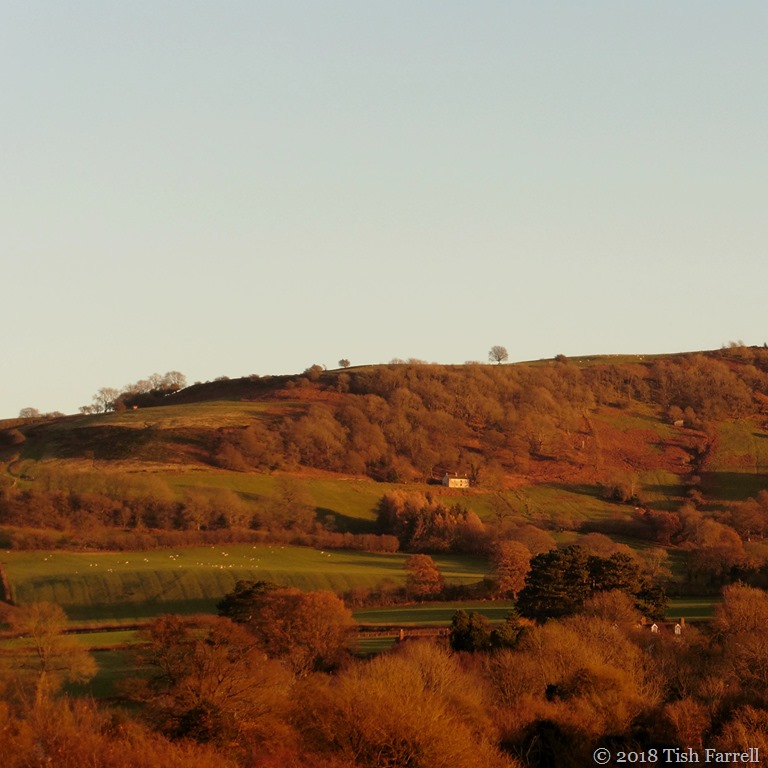
This photo was taken last December when we spent a few days in the England-Wales border town of Hay-on-Wye. I was standing in the main car park as the landscape lit up. It was very very cold, a prelude to the big snow that happened soon afterwards. Thankfully it waited till we had made it home before it descended. Travelling on rural Hereford and Shropshire byways under two feet of snow would not have been a good experience.
Hay is a tiny town on the banks of the majestic River Wye, but though small it has a world-wide reputation, both for the number of its second hand book shops and now as the home of a famous annual literary festival to which I have yet to take myself. Anyway, here’s a glimpse of the book shop that started it all, a place where one may spend many many hours. It also has a very excellent cafe and a cinema. So much bliss under one roof.


