Organized Chaos In Rookery Wood

IMG_0632

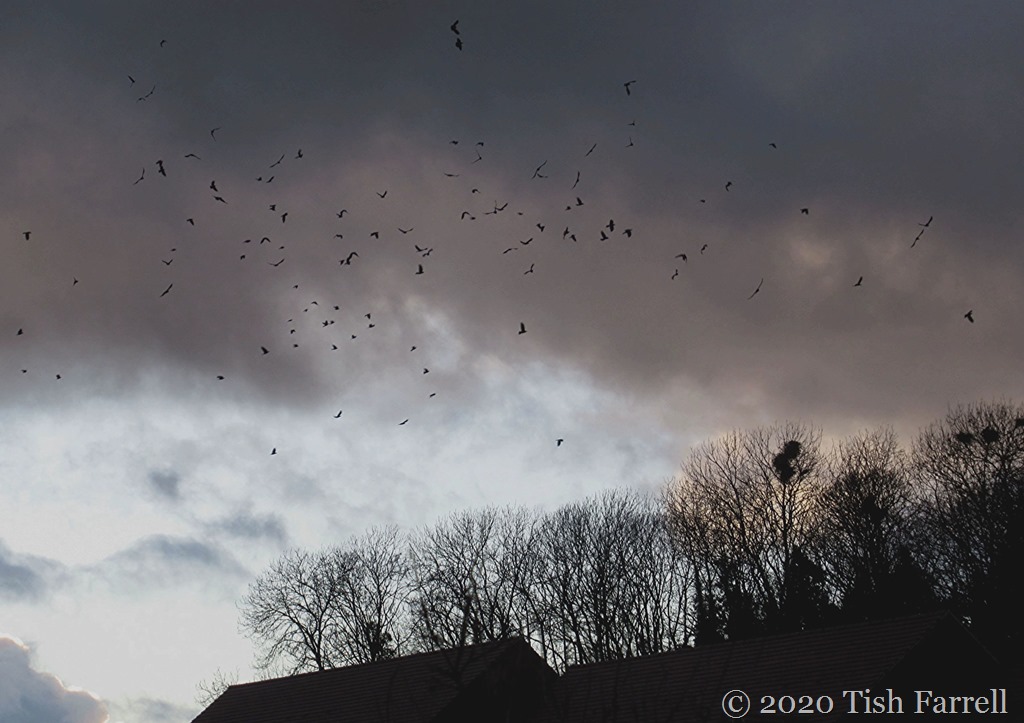
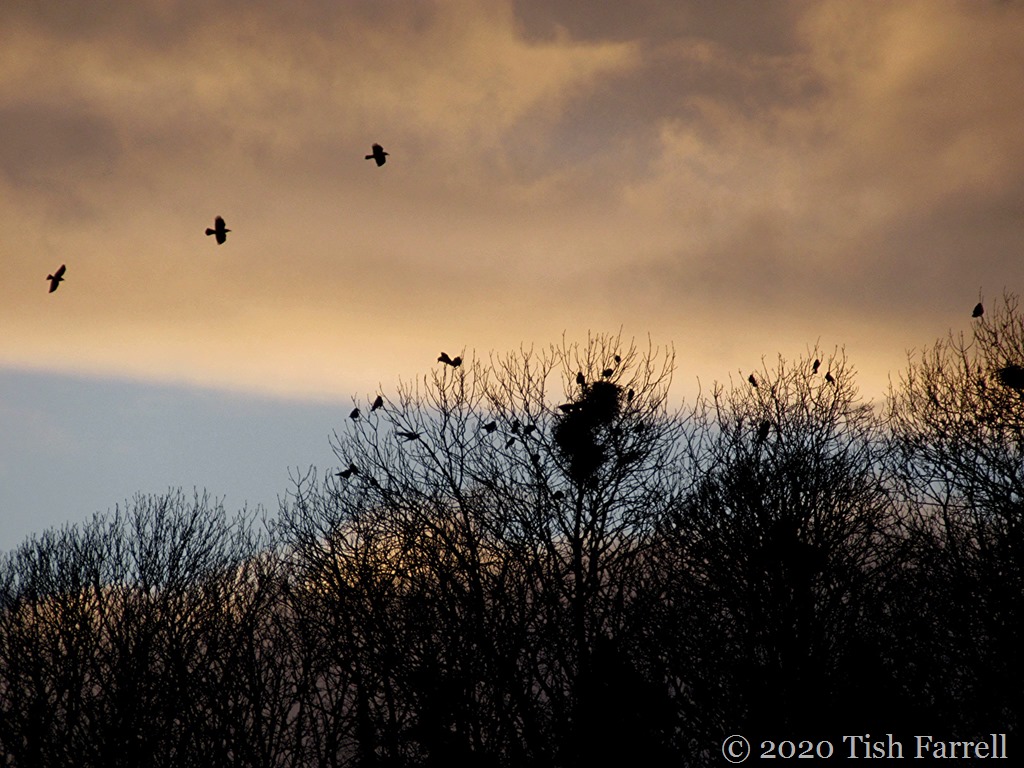
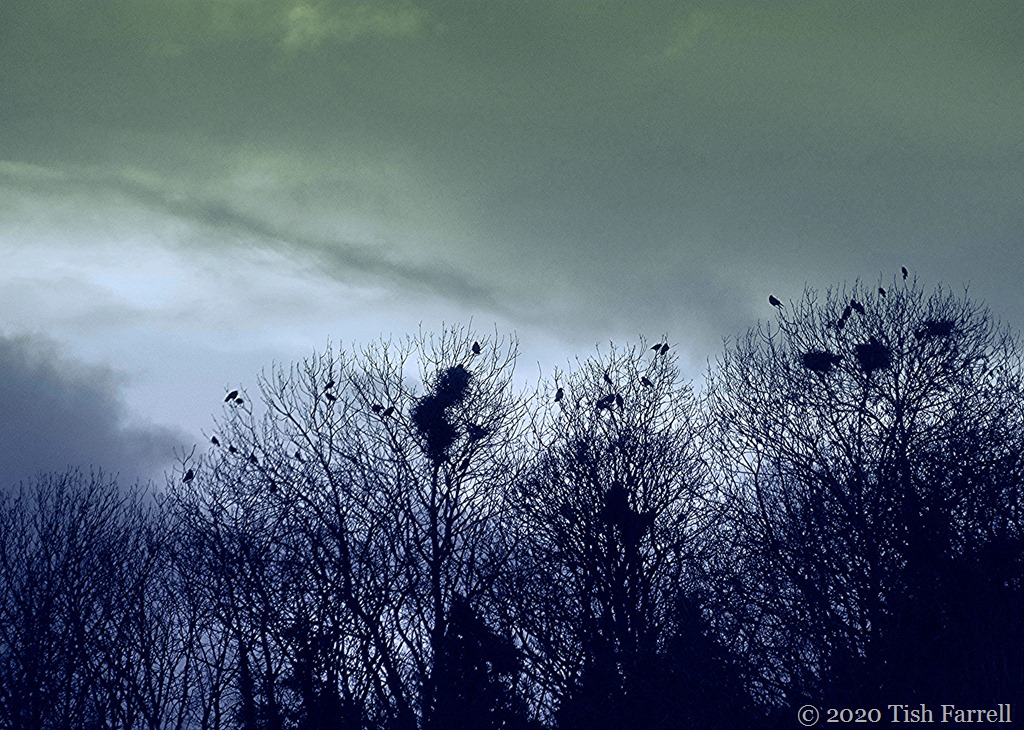
As with cloud-watching over Wenlock Edge, so with keeping an eye on things at the rookery behind the house. It’s endlessly fascinating: a visual meditation if you like. One thing that happens after the rooks return each twilight after the day’s foraging in the fields, is that there’s a general settling in the treetops. The roost is also shared with a large number of jackdaws. For a time after the general homecoming all seems peaceful, just some low-level muttering between fellows.

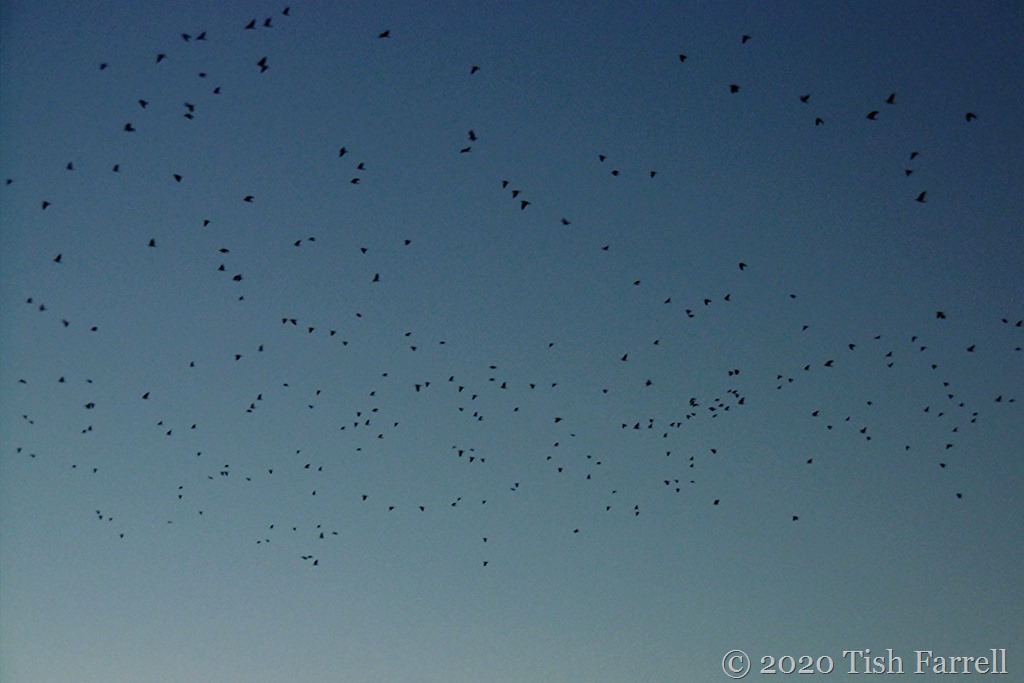
And then for no obvious reason (at least not to me) there’s a mass explosion from the wood, followed by a great whirling and swirling, which then may, as spring approaches, evolve into a full-on balletic extravaganza.

IMG_0630

Cohorts of rooks and jackdaws divide and swoop, re-gather, execute a Mexican wave, divide and swoop on and on. The show may last for several minutes. If you happen to be walking over the field when it happens, as I was last night returning from the allotment, it can be almost elevating; the sense of avian energy lifting your heels from the earth. Wheeee-eeeesh!  Let me join in.

P1050780

*

But then, just as suddenly, it all stops. The birds alight in the wood, and all is quietness again. Perhaps it never happened.

IMG_0658

*

IMG_0676

A small helping of earth magic for challenging times.


Lens-Artists: Chaos

Daffodils!

IMG_6963

Today I’m thinking we need to find joy in the small things around us. So here are some of my garden daffodils, still spritely despite onslaughts of wind and downpours.

It’s all too easy to be laid low by the news headlines. The mass media is having an field-day of fear-mongering and finger-pointing. They should be ashamed of themselves. Fear disempowers. It is highly contagious. It makes situations many times worse than need be. Vigilance and common sense are our best protection AND sources of straight forward information. The World Health Organization provides daily worldwide updates along with full details of Coronavirus as they are learned.

Spirits up, everyone!

Reflections From The Edge

P1060987

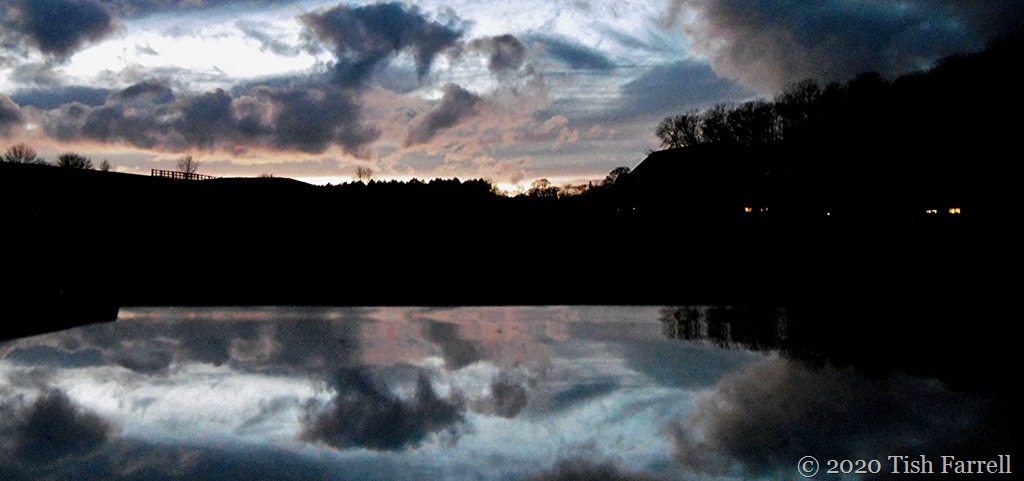
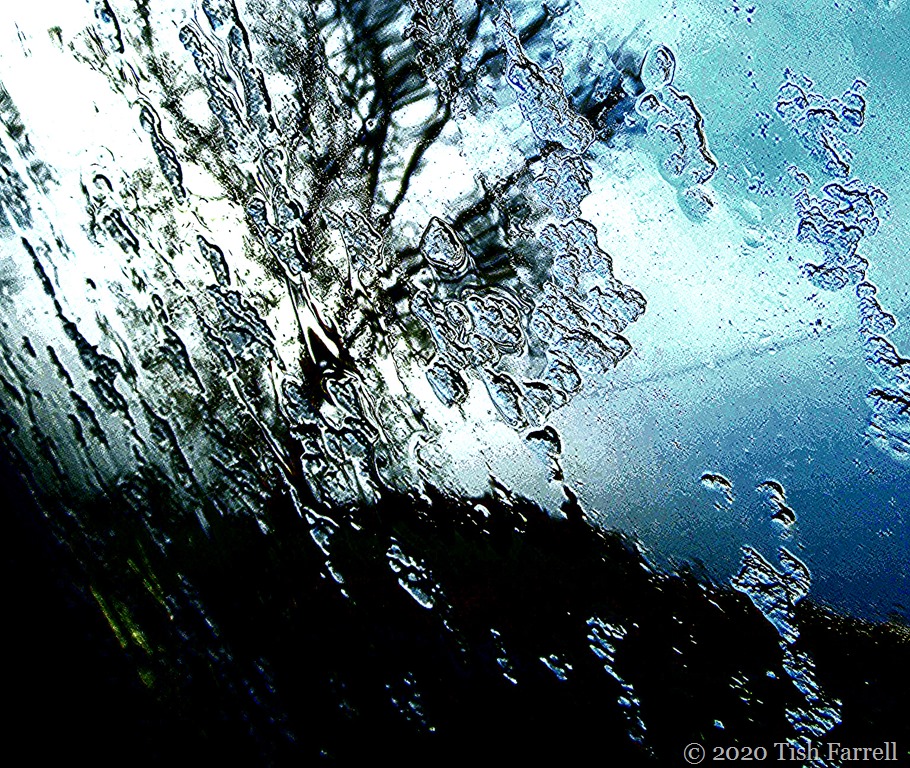
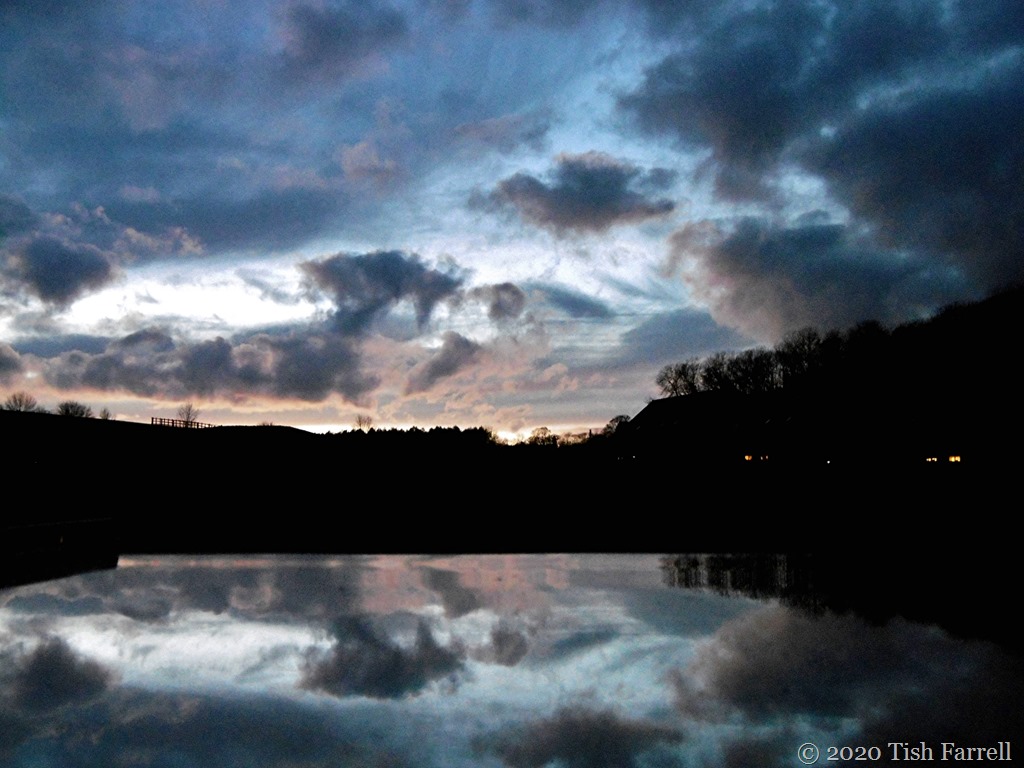
Twilight over Wenlock Edge and in my office roof-light; captured by opening the window to the horizontal and placing my little digital camera on the back of the frame. Click and there you have it – the Edge between two sky-worlds; cat’s-eye watchers looking on?


Lens-Artists: Reflections Thanks to Miriam at The Showers of Blessings for this week’s theme.


Windmill Hill From Many Angles

P1050007 resized

‘A good photograph is knowing where to stand ‘   Ansel Adams

This week Patti at Lens-Artists wants us to think about changing our perspective as we compose our shots. She prefaces her post with this very helpful quote from the great Ansel Adams. It’s certainly a tip worth chalking up in VERY BIG letters on the memory blackboard.

Of course there can be other options –  lying down for instance, which is what I was doing to take the header photo. Then there’s the matter of choosing the time of day, which will then affect where you stand (or lie). Different seasons may well provide new angles. And also the setting of your chosen subject. So with these notions in mind I thought I’d post a gathering of my Windmill Hill photos, taken over the last few years.

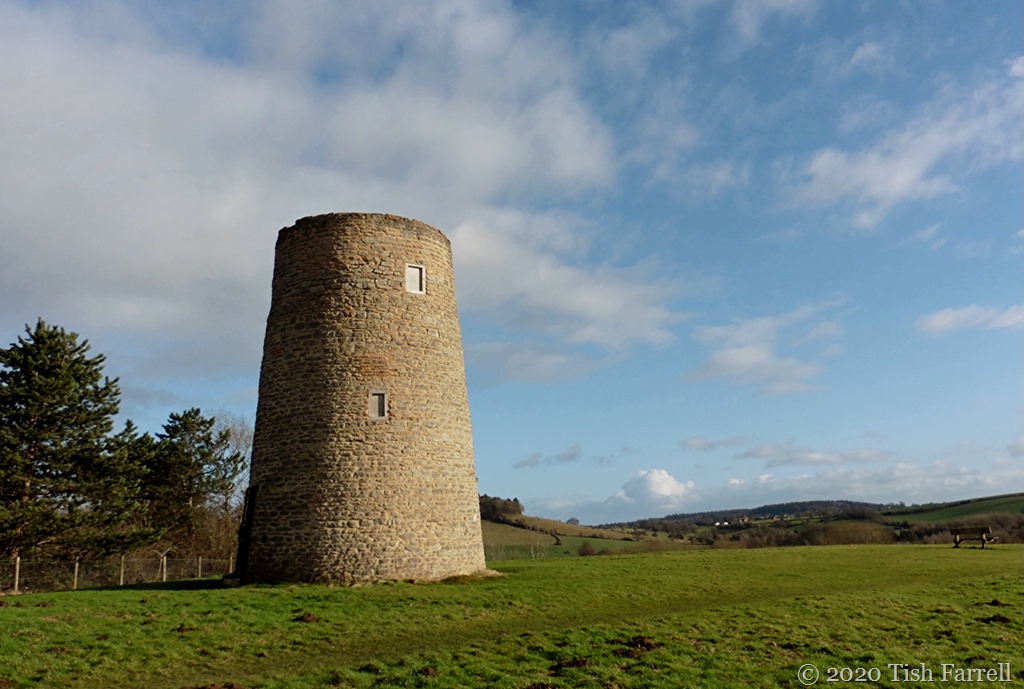
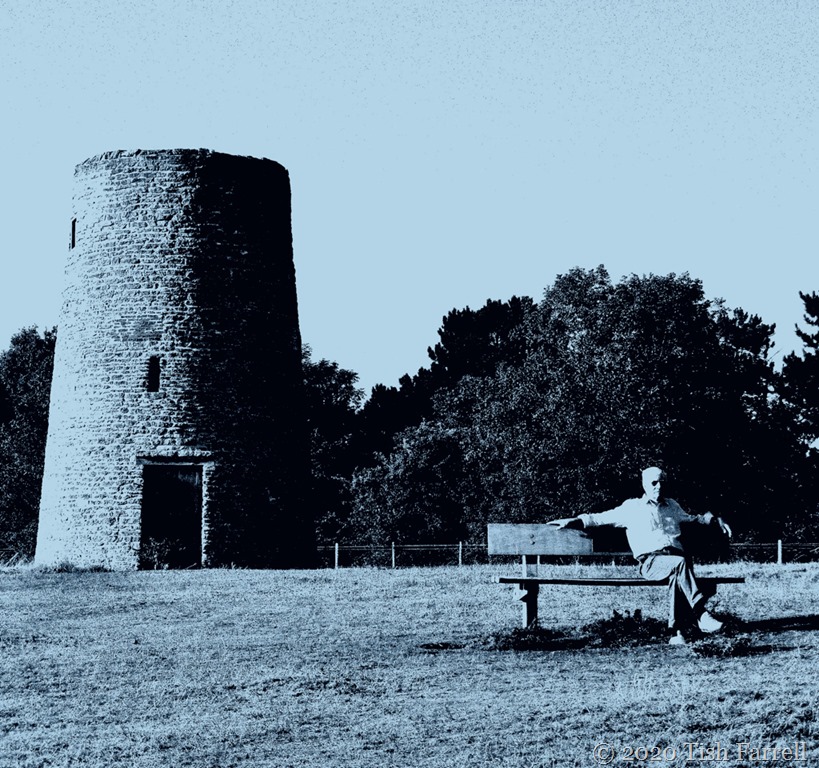
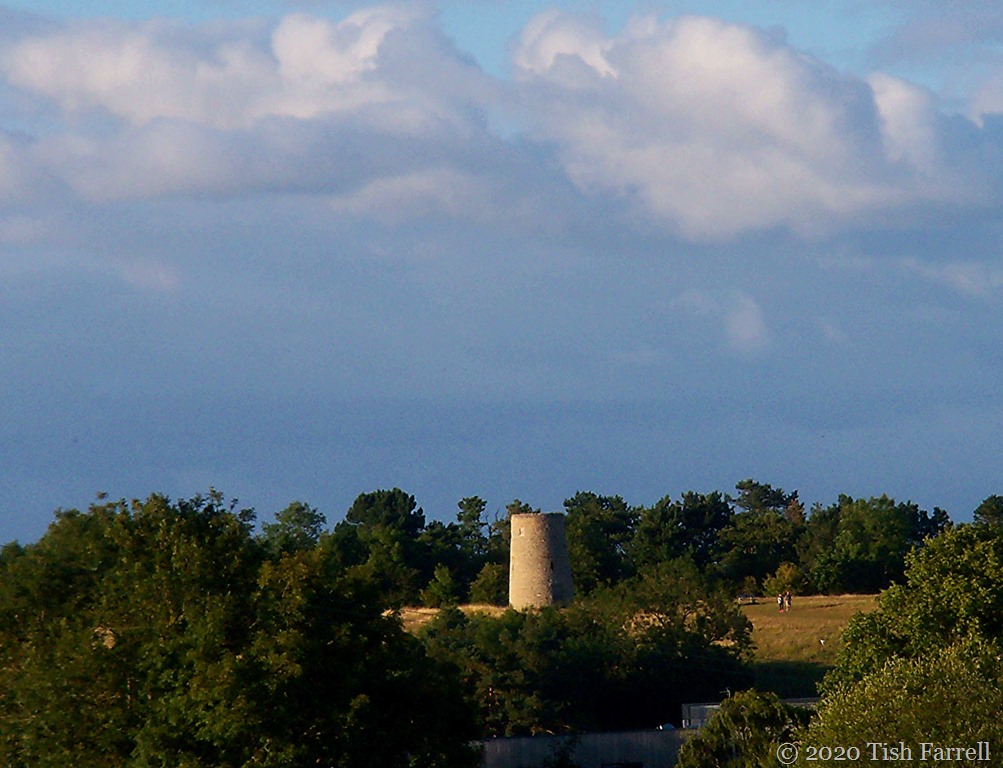
Of itself, the windmill is a rather underwhelming subject, and I have ended up taking masses of very flat looking photos. I have discovered that it helps to get beneath it somewhat, whether lying down or finding a good spot further down the hill. I’ve also found that late afternoon light can produce a bit more interest – even mystery. This next photo is my Wenlock version of Daphne Du Maurier’s thriller tale Don’t Look Now. Who is that swiftly retreating little figure in the gloaming?

P1030046resized

*

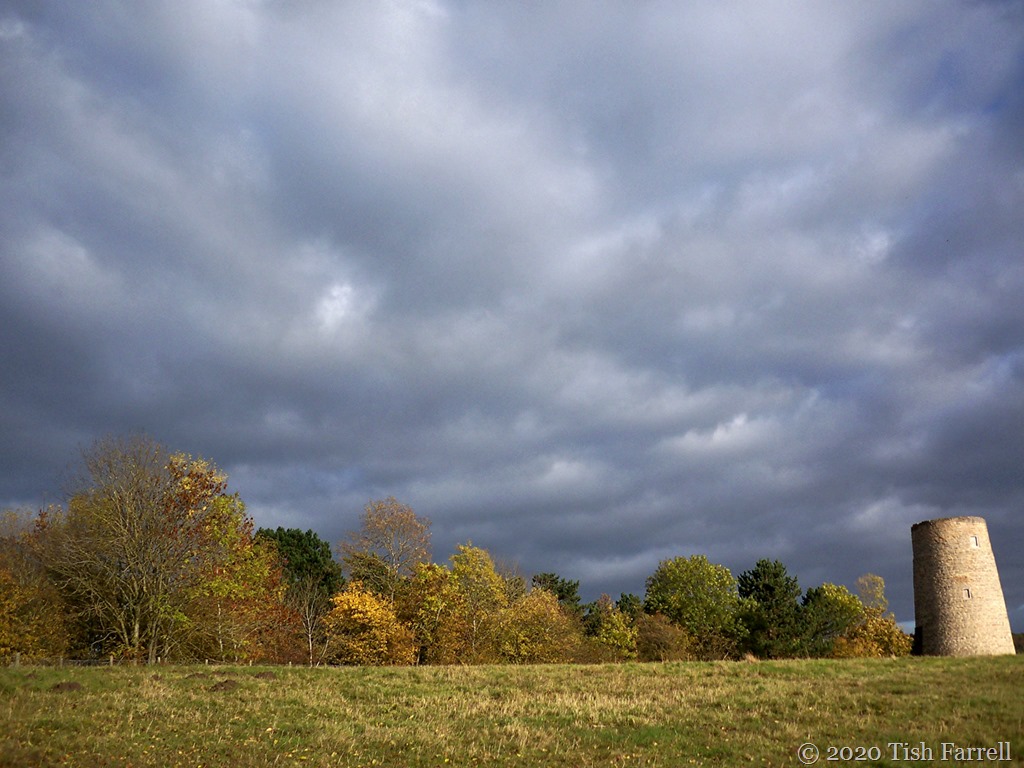
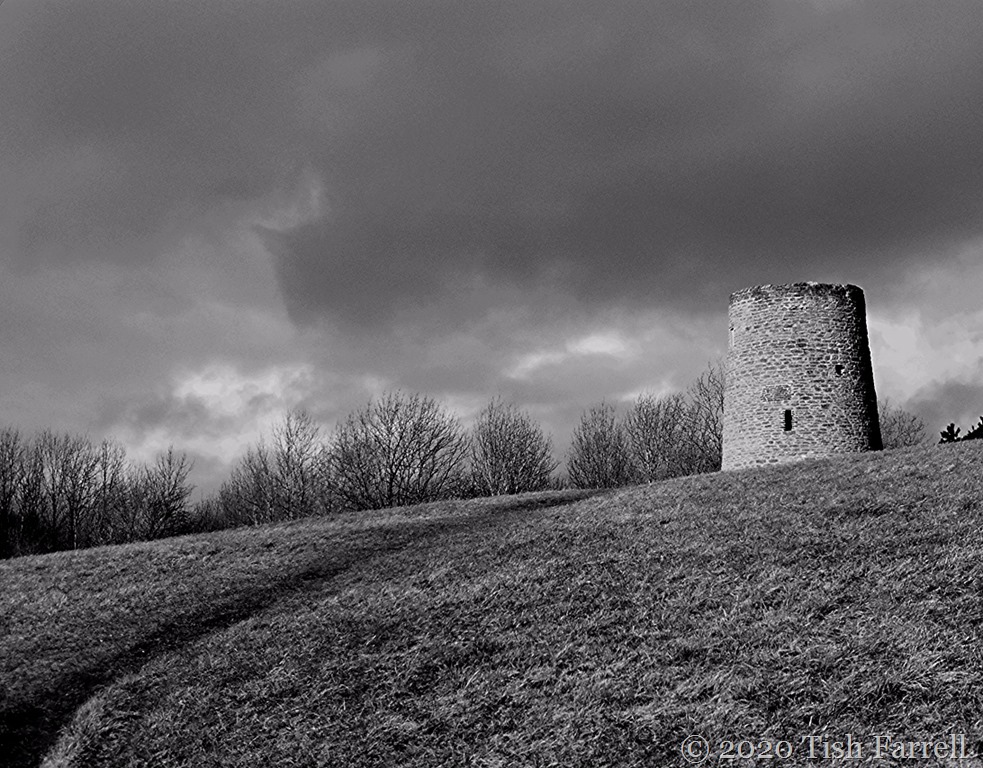
Here’s one of the more ‘obvious’ shots. The cloudscape and perhaps also the sun/shadow on the stonework add the main interest:

P1040246

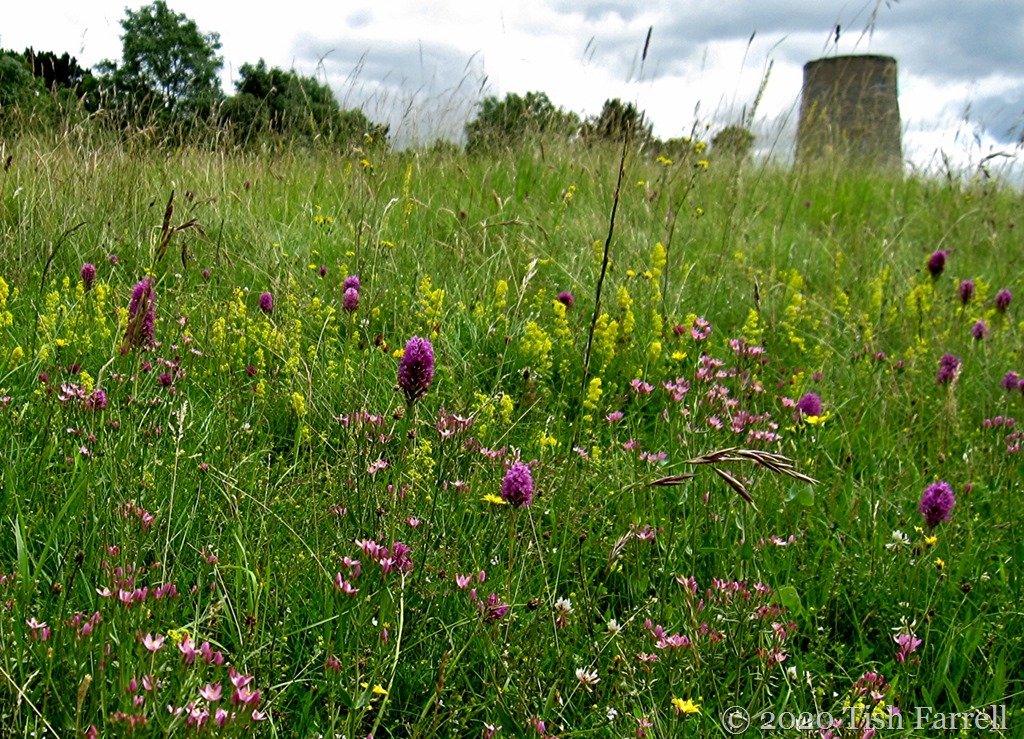
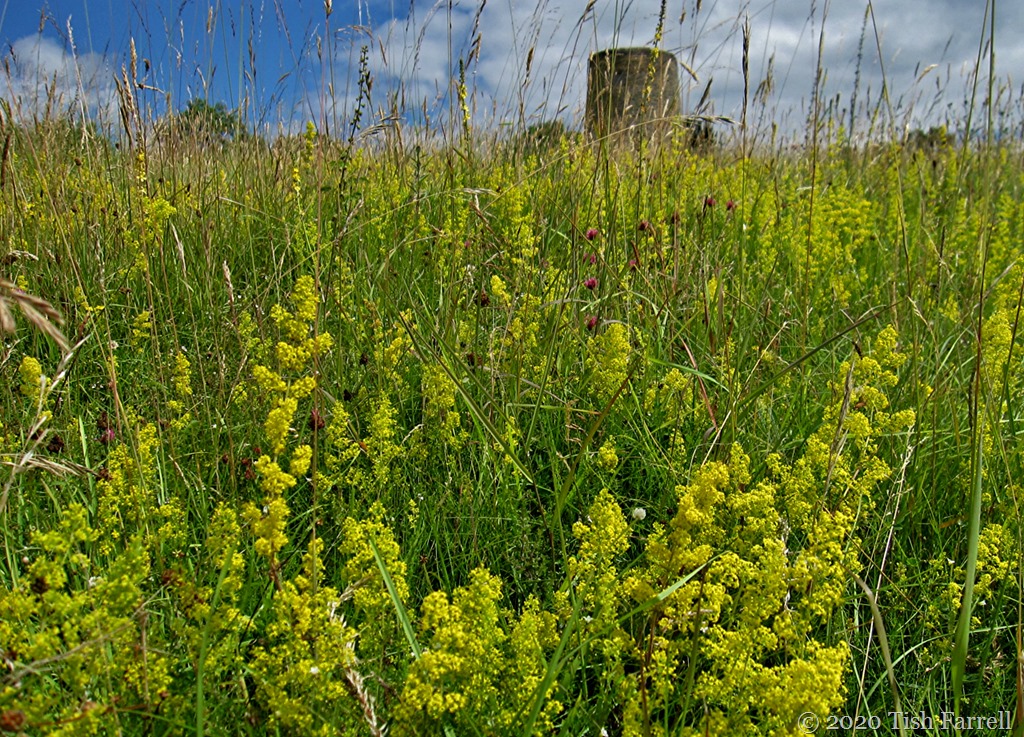
Another thought is that even when you’ve fixed on a particular subject, it’s always good to scout around it, to see what else might catch your eye/have some bearing on the composition. E.g. one of the important things about Windmill Hill, besides the windmill, is the fact its hill is an ancient limestone meadow – a rare escapee from the effects of industrial agriculture. So come early summer I’m often lying down, in the next photo among the pyramid orchids, soapwort, white clover and yellow ladies bedstraw. There’s an added benefit too – the close quarters inhalation of bedstraw fragrance. Aaaah! No wonder it was used in mattresses for women brought to bed during childbirth.

IMG_2154

IMG_2167

*

And in late summer my eye is on the knapweed and the great array seeding grasses:

IMG_2113

P1010975

Midsummer sundown

*

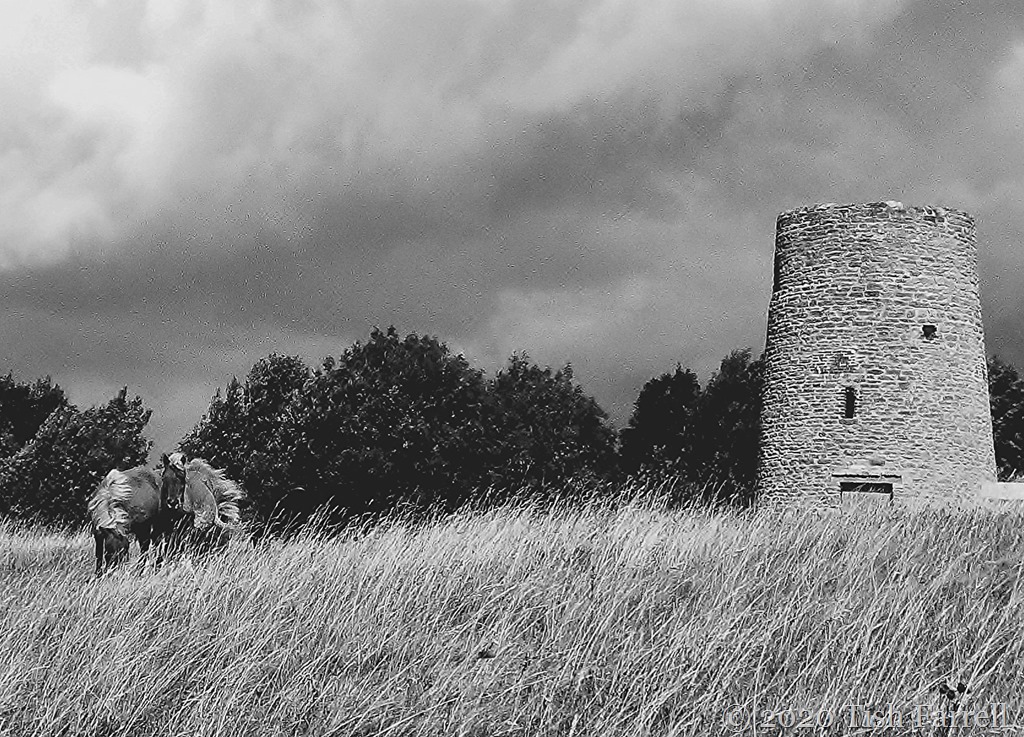
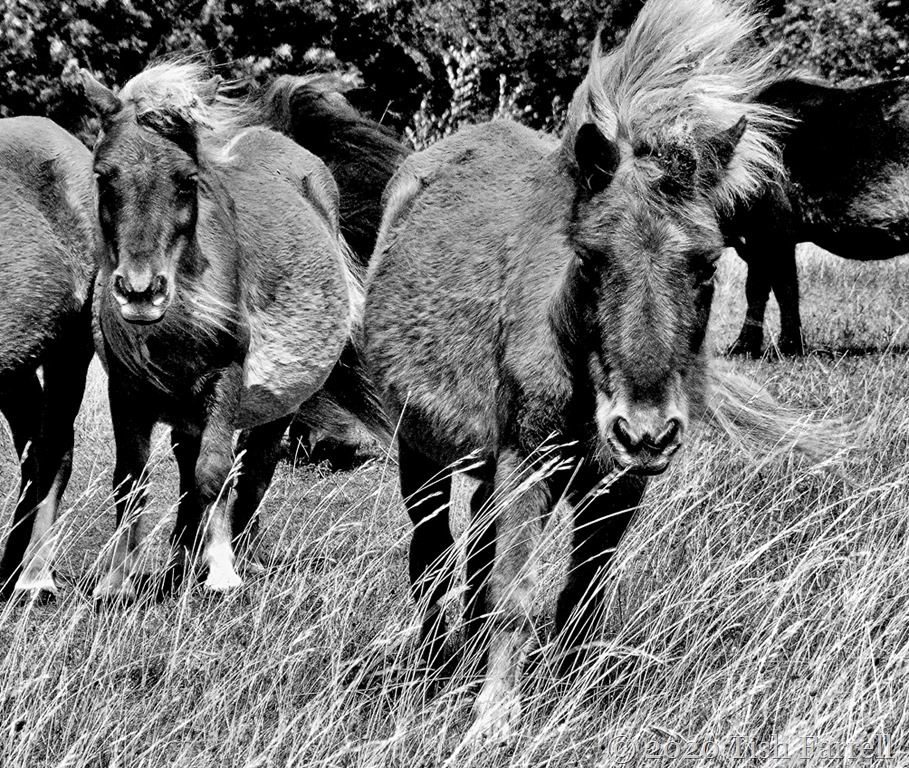
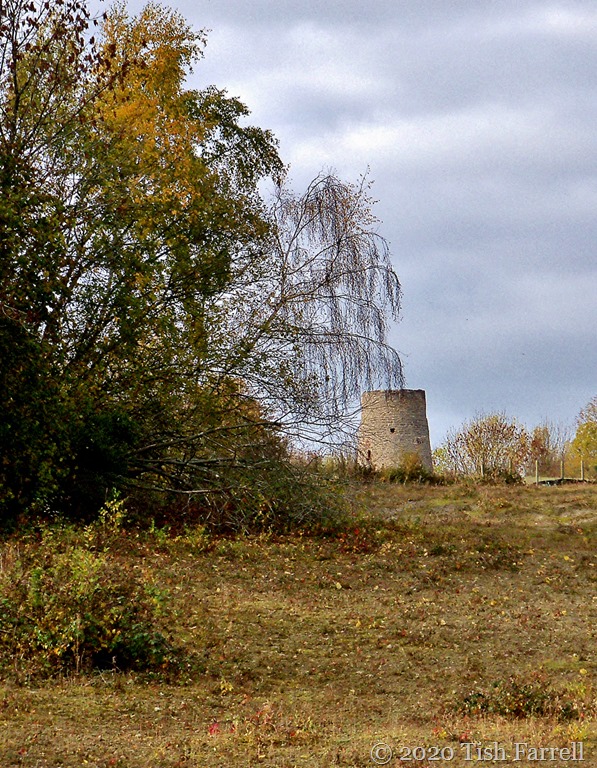
And then there are the autumn shots. A few years ago a bunch of small horses used to be brought in at summer’s end to graze the meadow. Then sadly their owner could no longer keep them and they had to be sold. For the past two years the Windmill Trust has had the hill mown and harrowed instead. This new approach has created a massive increase in orchids:

P1010942

P1010943

100_7835

100_7821

*

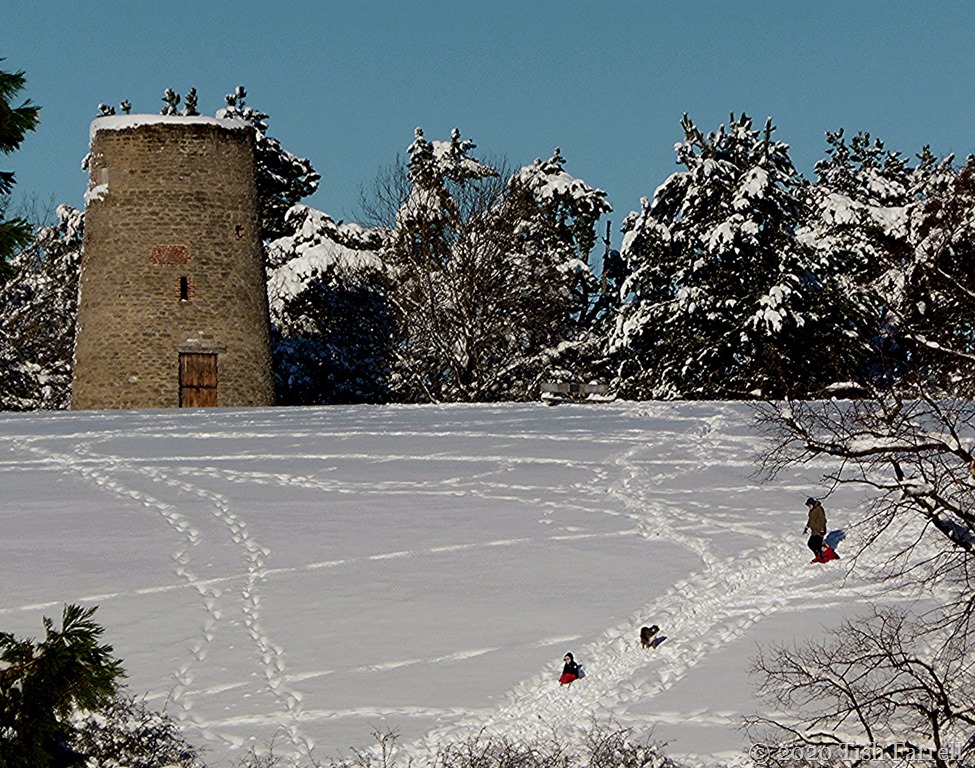
Winter:

P1040237

P1030665

P1040019

*

And then there are the views from Windmill Hill:

P1000684resizede

P1020259

Bunking off games? The William Brookes School is at the foot of the hill.

*

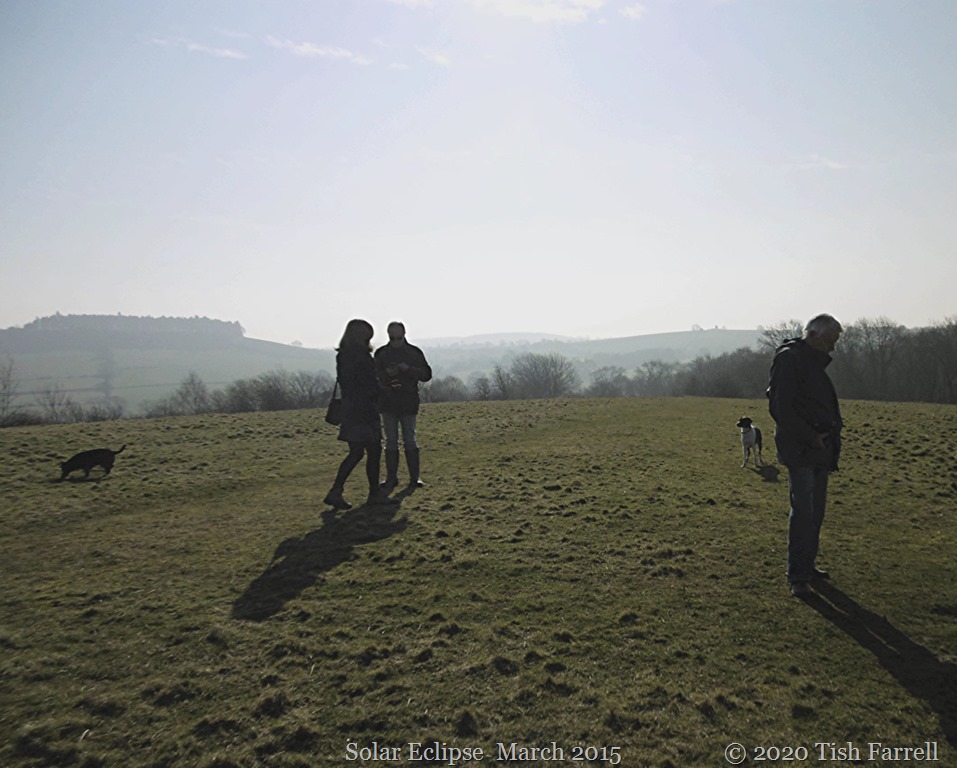
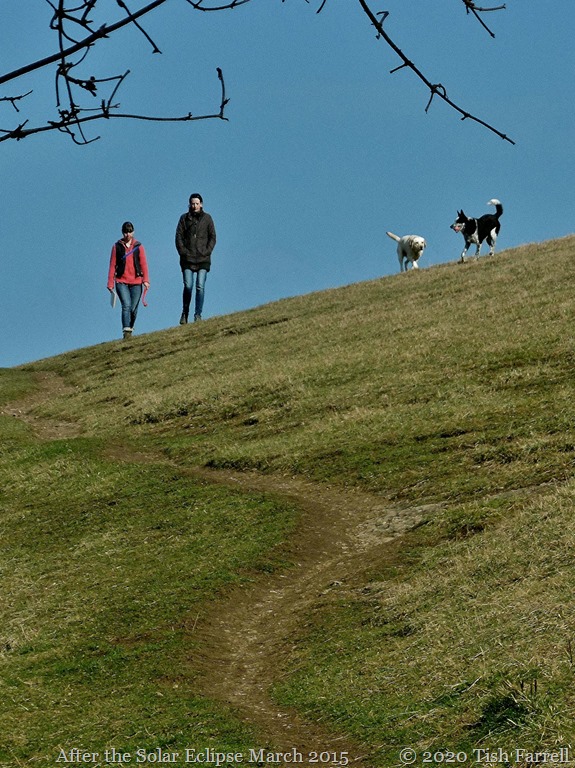
Windmill Hill can be a very sociable place. It’s a favourite spot for Wenlock’s dog walkers. There are other gatherings too: windmill open days, summer orchid counting; and in the next photo we are gathered during a solar eclipse when the world turned very still and cold and ethereal:

P1000747

P1000782

Last but not least, here are some long-distance views from Townsend Meadow behind our house. The final photo also shows the oil seed rape in full bloom and a corner of the William Brookes School:

100_6749

P1050568

Lens-Artists: Change Your Perspective


This slideshow requires JavaScript.

Background Patterns ~ Lily Between Leaves

P1080229

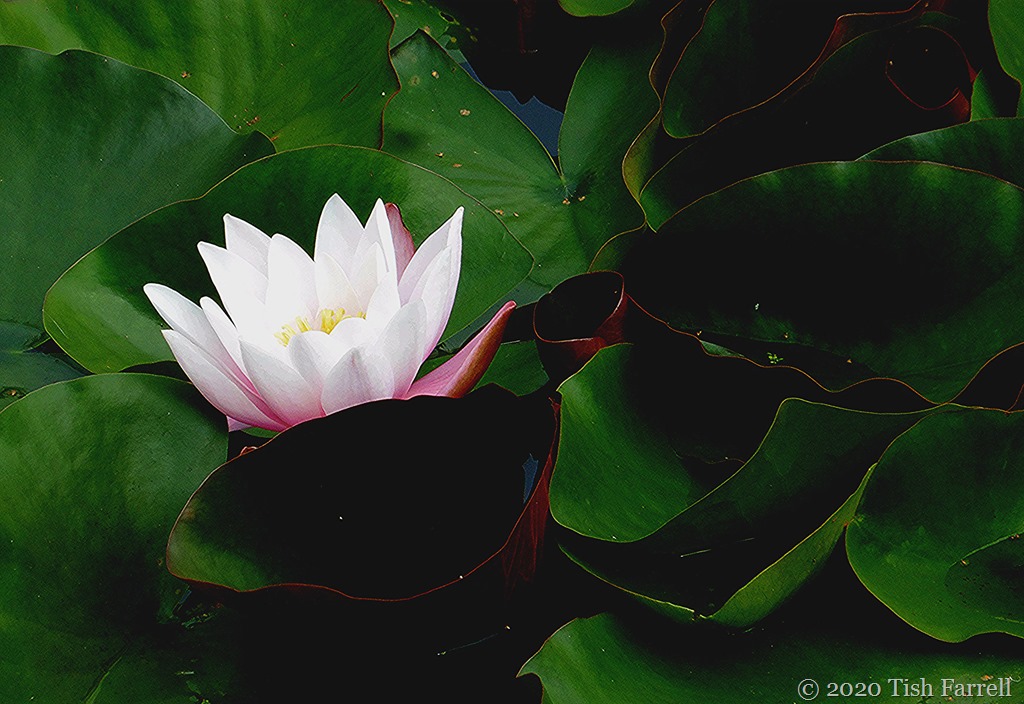
Month by month Jude at Travel Words is challenging us to join her in a mission to improve her and our photography. February’s topic has been about ‘patterns’, and the final assignment (I’m on the last lap here) has been to use pattern as a background for a more substantial subject. She says it isn’t easy, and she’s right! Anyway, here’s my best shot at it, though I’m thinking my background is too much in my foreground. Further pondering required.

Background Patterns

The Changing Seasons: February

IMG_6748

There’s been little chance to take photos this month. We have had altogether too much bad weather: two storms and one on the way; rain that has been raining since the end of September; wind, sleet and hail; and for poor people who live near the River Severn, horrendous floods. Nearby Ironbridge has been deluged, the water breaching the flood barriers. Our county town, Shrewsbury, has been returned to the bad old winter flood days of the 1960s, this despite its modern flood defences. (You can go here to see the BBC coverage.)  In Much Wenlock ten homes on the High Street were treated to a slurry of liquid mud and gravel courtesy of run-off from surrounding hillsides delivered by road into their living rooms and parked cars.

There is much that could have been done since our region’s last big floods in 2007-8. No one seems to drain fields properly, or maintain lane and roadside ditches as they did in my childhood, interventions that would at least help to slow the flow. In fact our verge-side ditches seem to have mostly disappeared, presumably filled in and sacrificed to road widening. And so in times of heavy rains when highway drains may become quickly blocked, our roads serve as highly efficient flash flood delivery systems.

We need to start thinking about better water catchment management, and especially on our denuded uplands where our rivers rise.

Australian farmer initiatives show how all our water catchment areas could be managed better with the addition of ‘leaky weirs’ set at intervals down water courses: rocks, tree trunks judiciously placed to create a series of delta effects. No need for hugely expensive hi-techery. Such simple methods not only hold back flood water and sediment, but hydrate surrounding land and foster regrowth of bank-side vegetation that in turn restores biodiversity, providing resilience too in times of drought. AND, most importantly of all, reducing soil erosion.

BECAUSE apart from the absolute misery caused by flooded homes, the impact on life, health and livelihoods, the biggest long-term loss to us ALL, is the fertile soil that floods carry away. Once it is gone, it is gone. Many of our soils are already mineral depleted. This will ultimately have an impact on the quality of food produced and on human health. The way we treat the land, always clearing, forever taking out with an eye to greater efficiency and higher productivity, but without ever replenishing adn rebuilding, is a good way to degrade local and regional weather systems.  In fact creating land resilience and restoring the natural environment are probably the most useful things we could be doing now this minute to mitigate future extreme weather events.

And before too much blame is laid at farmers’ doors for industrial farming practices, the UK and Australia, it seems, have various laws that forbid landowner interference with water courses on their land. They must seek official approval to do anything that impacts on water flow. In the UK, riparian owners have some very serious responsibilities which include ensuring the clear movement of water through their properties.

Here’s an interesting video showing how leaky weirs work, and showcasing the pioneering efforts of farmers and the Mulloon Institute in New South Wales:

*

And back on the home front and to fend off sensations of all round rising damp, here’s a photo of my drying washing, taken on the one day this month when it was worth hanging it out in the garden. Nothing like filling one’s sheets with wind and sunshine; always makes for the best sort of sleep, I always think.

IMG_6811


The Changing Seasons: February 2020

Sue has a very lovely gallery of photos this month. Please go and see.

In Search Of Lost Time At Elmenteita ~ Back To The Old Africa album

IMG_0004

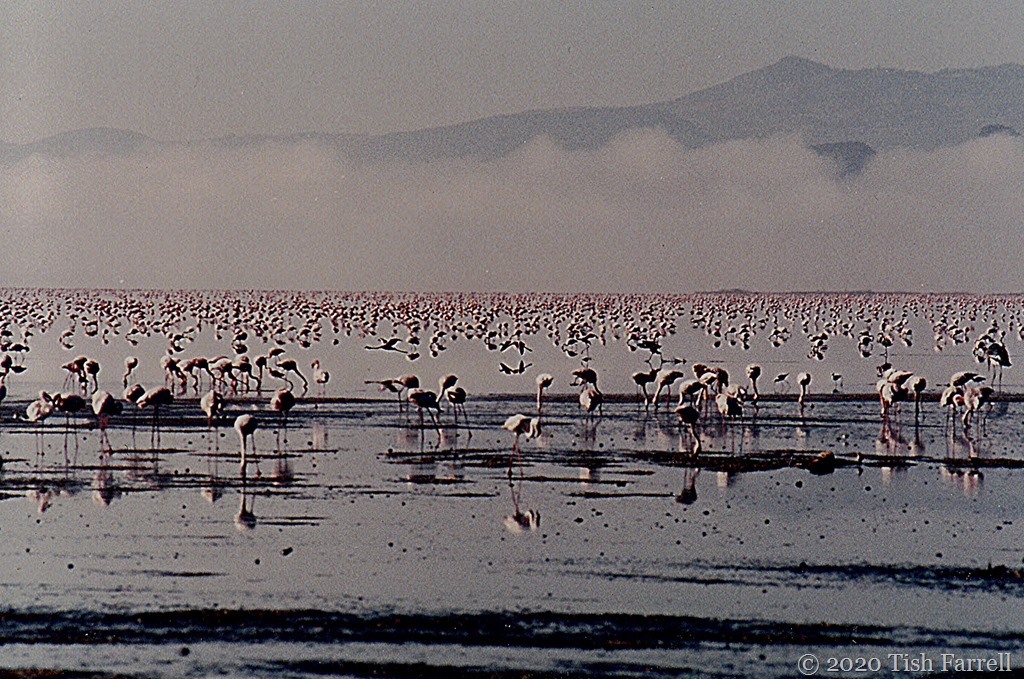
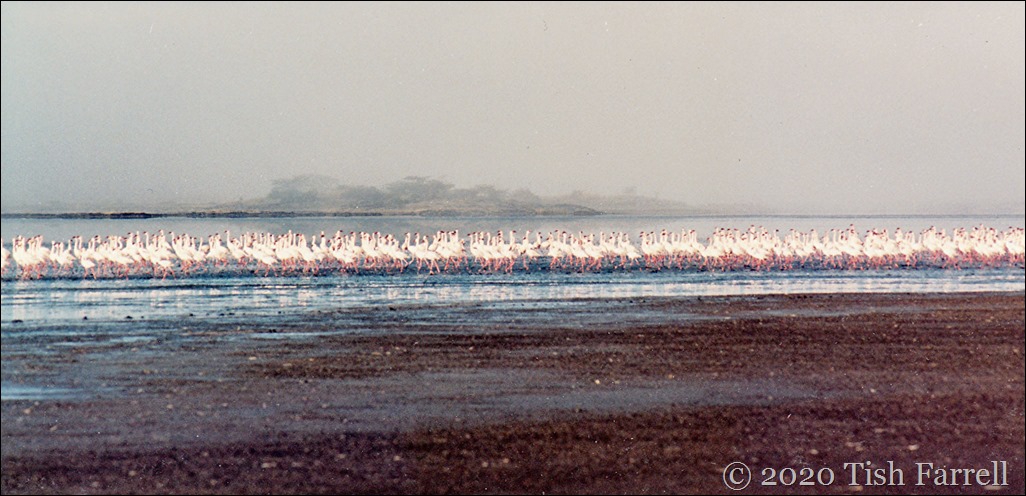
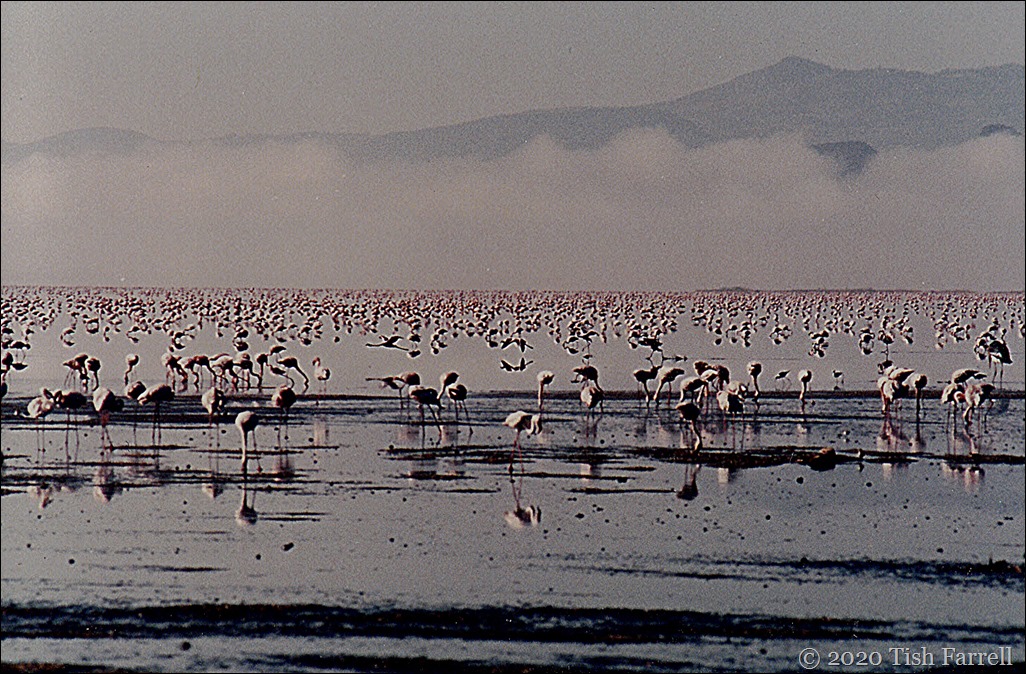
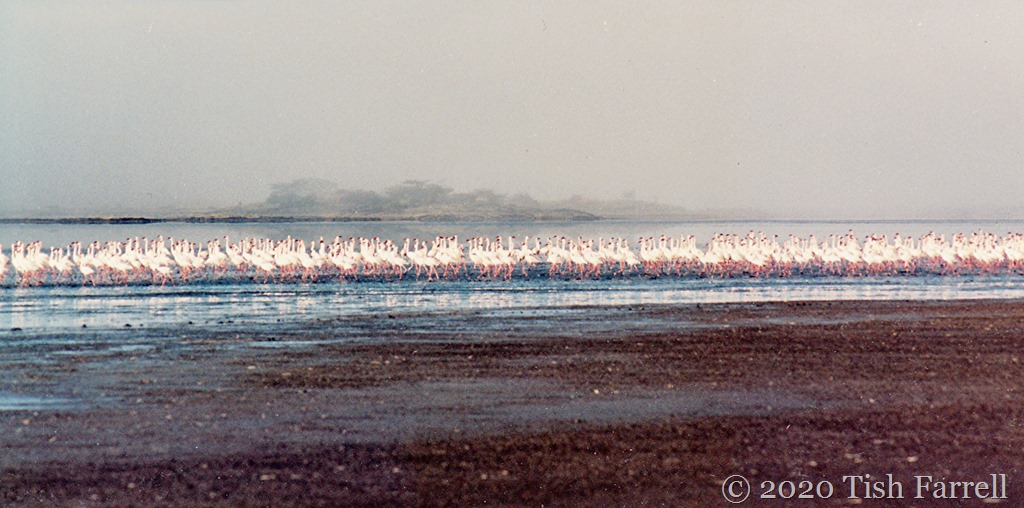
Flamingos at dawn on Lake Elmenteita, Kenya

What better way to spend wet and windy days than trawling through old photos: scenes of times past when we lived in Kenya. So all thanks to Tina at Lens-Artists who this week sends us off on a treasure hunt through the photo files. Images may include sunsets, sunrises, birds, mountains, expressive portraits and a host of other things – in combination or otherwise. For the full list, follow the link at the end of the post and be inspired by Tina’s own treasure-hunted photos.

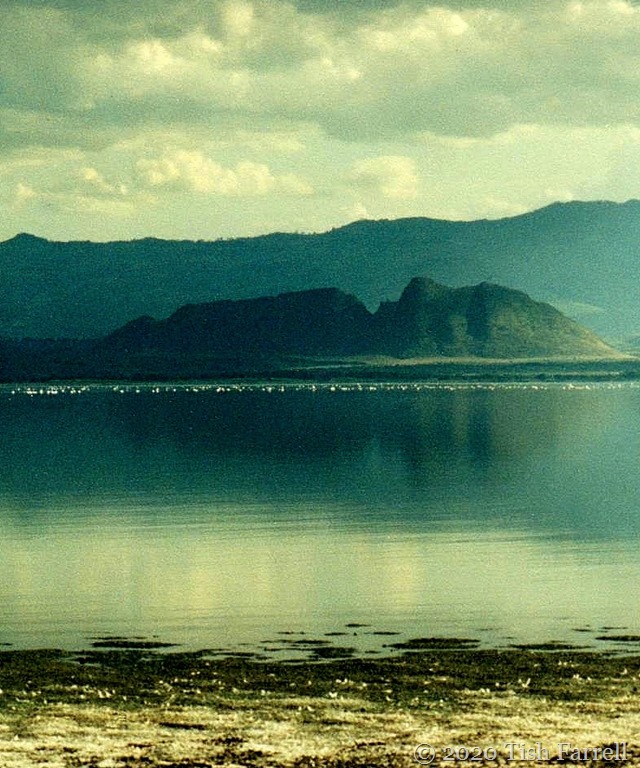
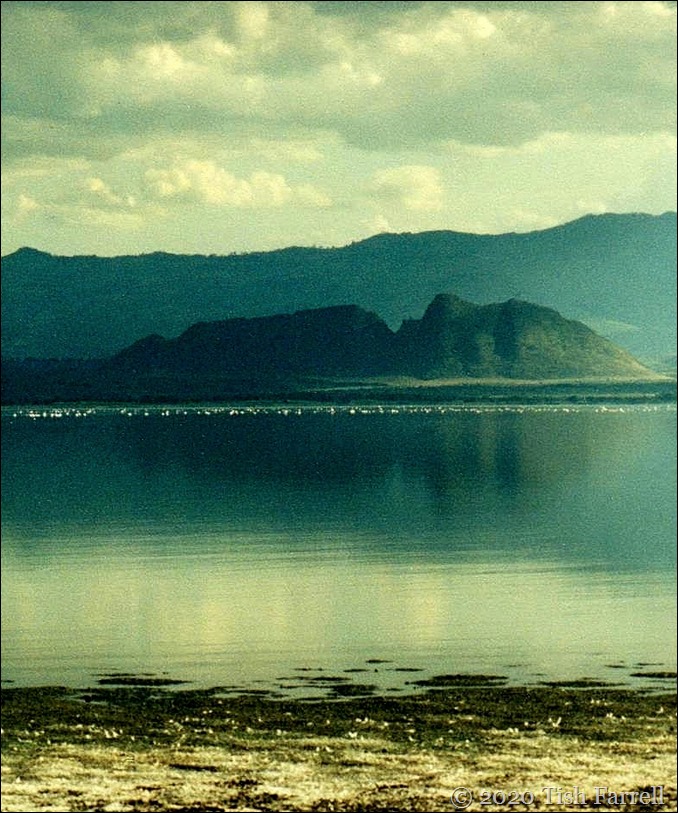
Meanwhile, I’ve chosen photos taken at different times but in a single place where we often stayed – a tented camp on the shores of Lake Elmenteita – a 2-hour drive up the Great Rift Valley from Nairobi. The camp had gone now, but the 46,000 acre wildlife sanctuary that surrounds the lake may still be visited. It is now the Soysambu Conservancy, the land still owned by Lord Delamere, whose grandfather, in the early 1900s, was one of first British colonial settlers in Kenya.
001

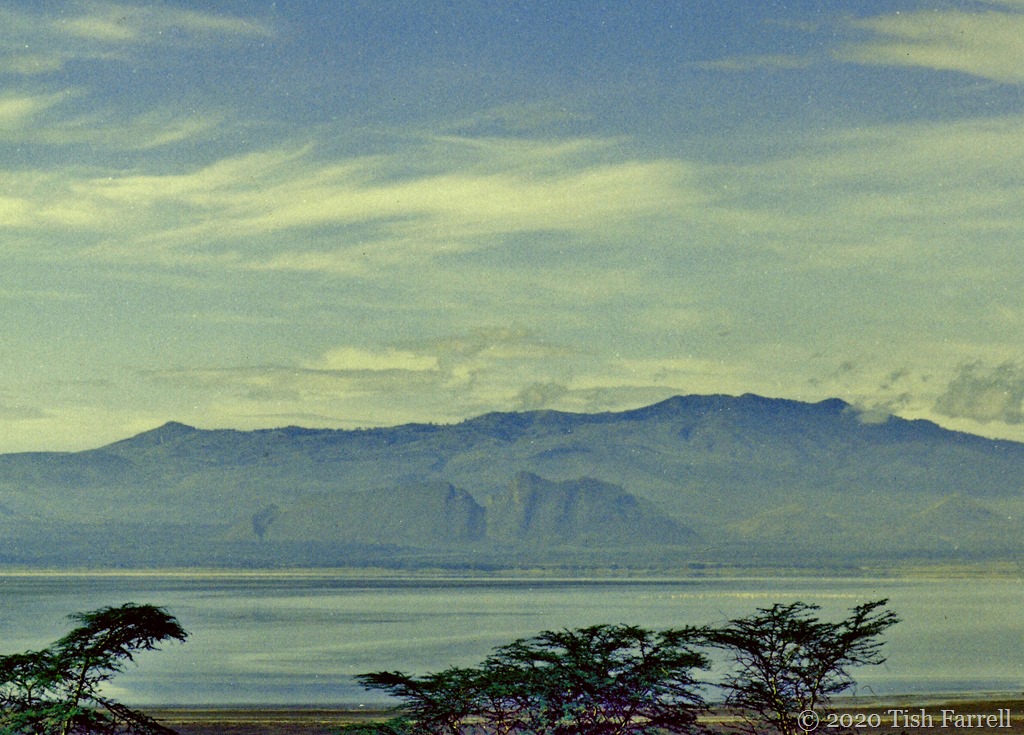
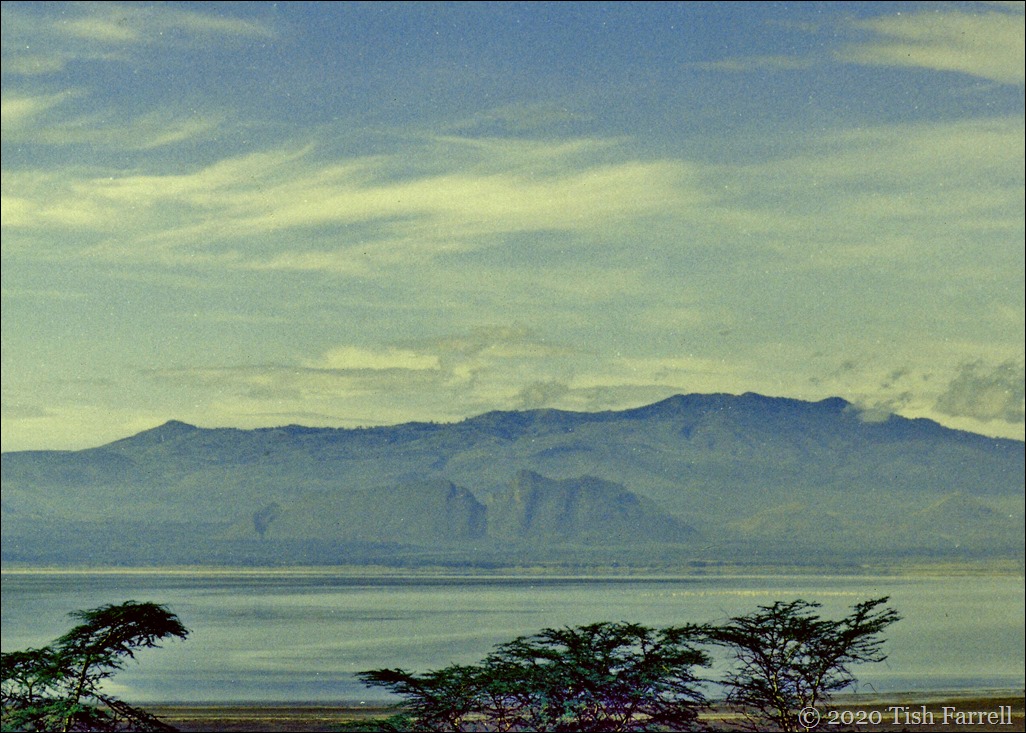
The Eburru massif is still volcanically active. The light here changes every second.

*

The pioneering Delamere ranch at Elmenteita was never successful, the soil too thin on volcanic bedrock and lacking in vital minerals, a fact well known to local Maasai herders who had long avoided grazing their cattle around the lake. Their name for the place could have offered further clues. In Ki-Maa Elmenteita means ‘place of dust’, their oral accounts telling of times when the lake blew away completely, leaving only a dust-plain.

These days the water levels rise and fall, but in any event the lake is both shallow and intensely alkaline, being one of a string of soda lakes along the floor of Kenya’s Great Rift. The waters are rich in crustacea and insect larvae which support large flocks of Greater Flamingos, and also blue-green algae that keep even larger numbers of Lesser Flamingos well fed. On rocky islands beneath the rugged cones and scarps of the Eburru massif pelicans breed.  While around the lake, in marsh and acacia scrub, some 450 bird species have been spotted. The sanctuary is also rich in all manner of plains game: gazelle, eland, impala, waterbuck, zebra, giraffe, warthog, dik-dik, buffalo. And then there are monkeys, aardvarks, spring hares, zorillas, porcupines and rock pythons.
IMG_NEW

My memories of course are forever fixed in the 1990s, and as an antidote to the kind of nostalgia-wallowing that inevitably overlooks the modernising needs of Kenyans, I should just mention that the volcanic steam vents of the southerly Eburru hills are now being exploited on an industrial scale to generate geothermal power as part of Kenya’s greener, cheaper energy initiative.

Now for my ‘treasure’ trawl:
elmenteita_0001

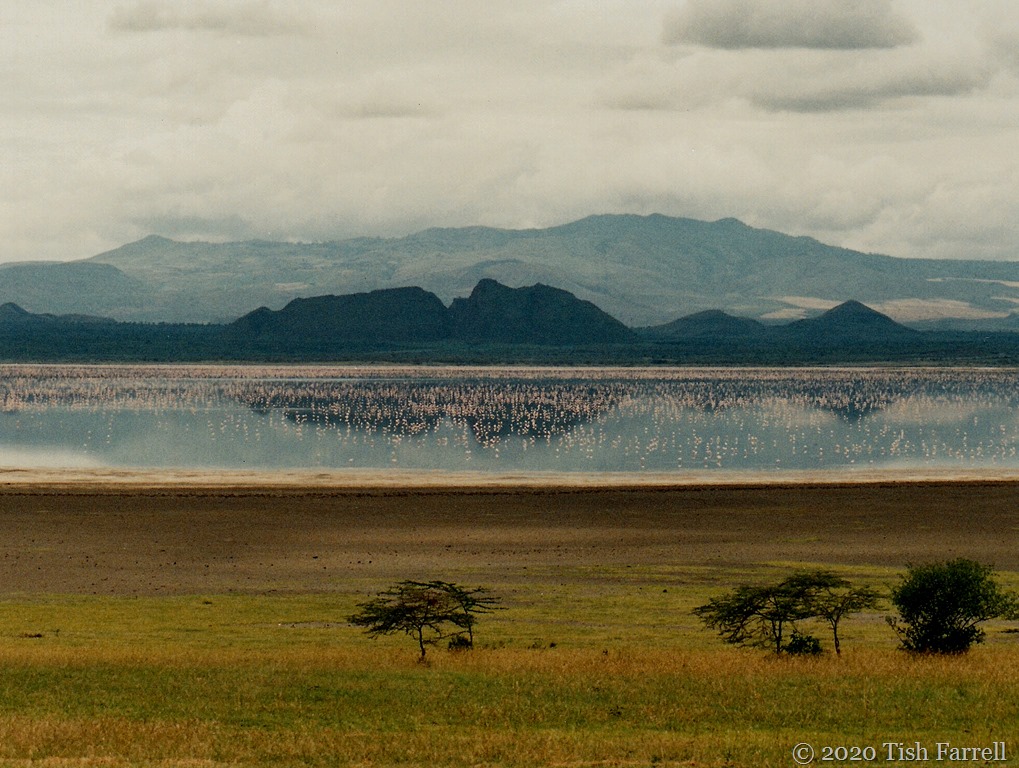
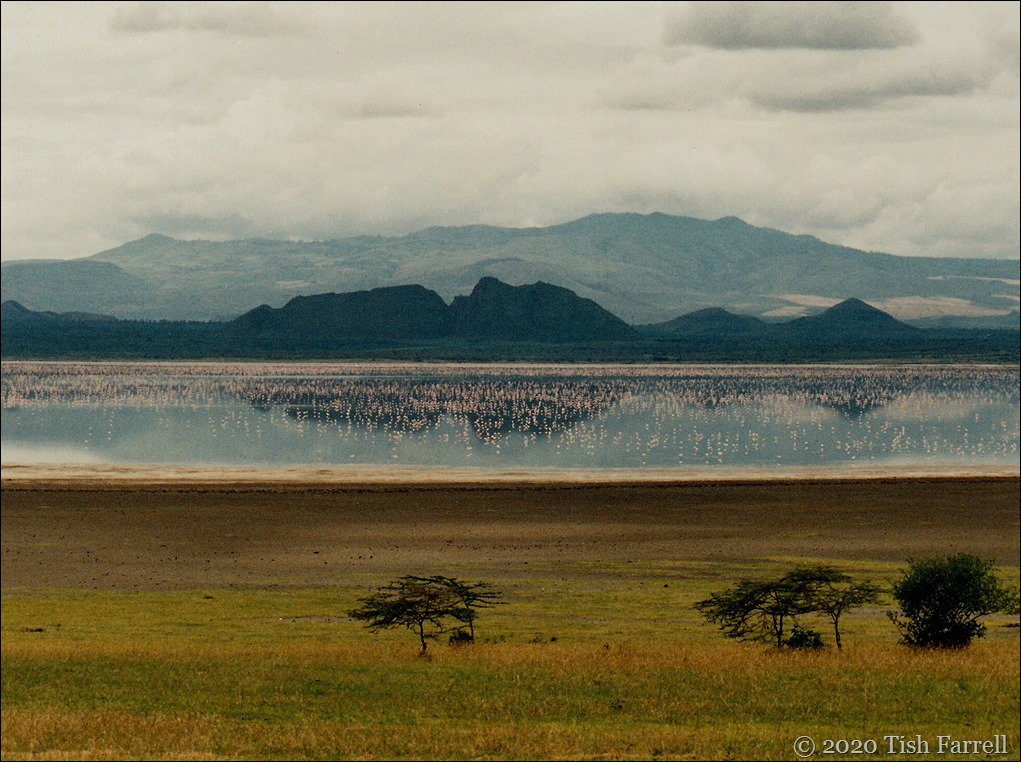
Who scattered  those rose petals on the lake?

I’m including this photo because it shows that East Africa can have very dull weather, often for weeks in July, August and September when it can also be quite cool. The bush is very dry during this period – the main rainy seasons being the short rains in late October – November and the long rains late March – June: if they happen, that is; some years they miss altogether. This last year there have been life-threatening deluges across East Africa. The other striking feature here is the exploded volcanic cone across the lake, traditionally known as the Sleeping Warrior, but also dubbed Delamere’s Nose on account of the original pioneering lordship’s hooter that so impressed the locals.

People portraits:
Scan-130601-0001cr

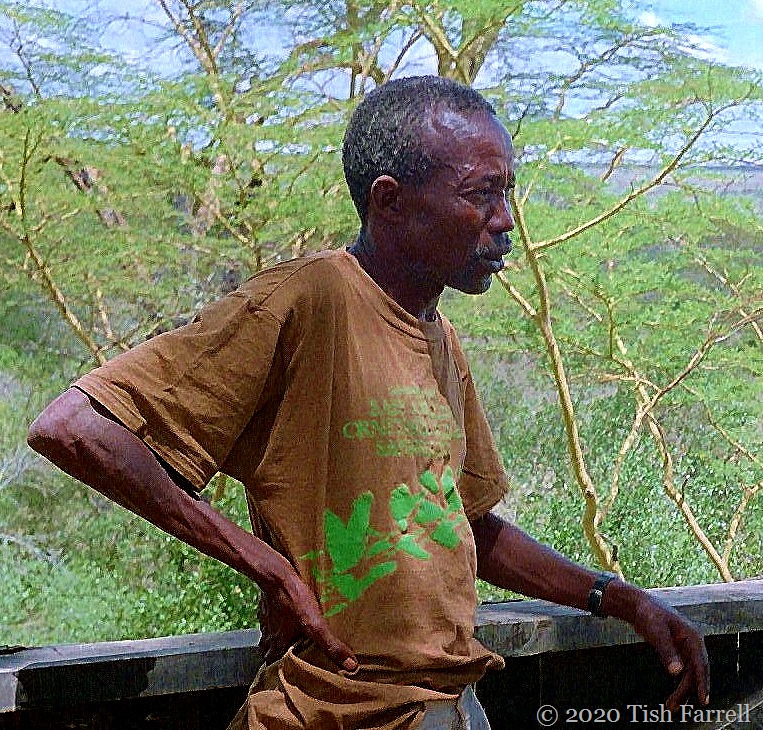
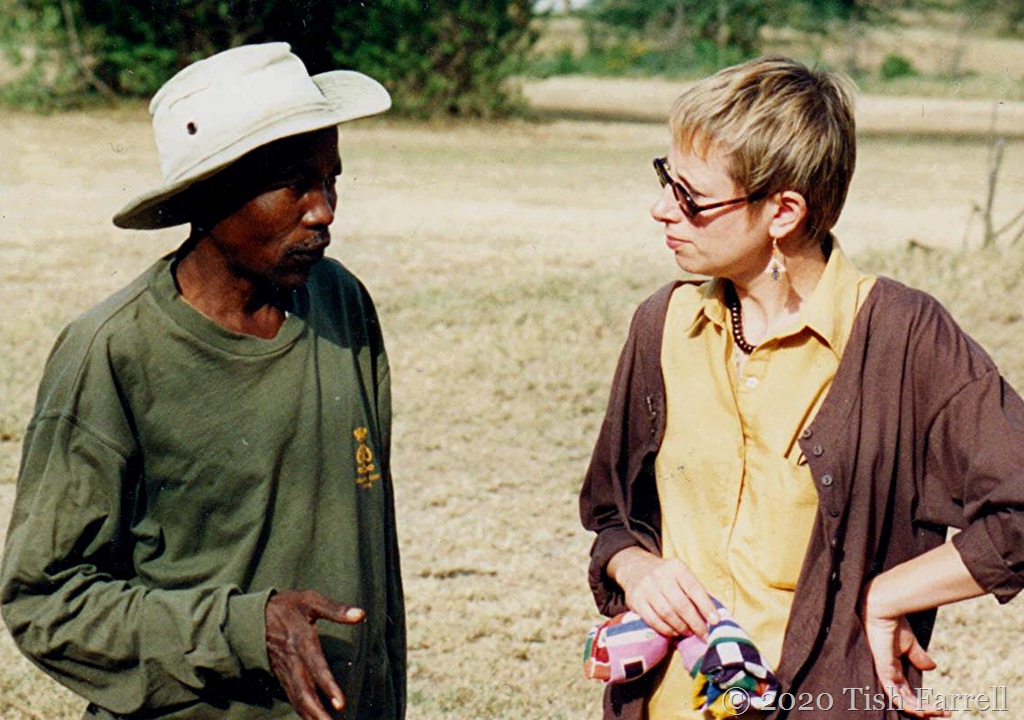
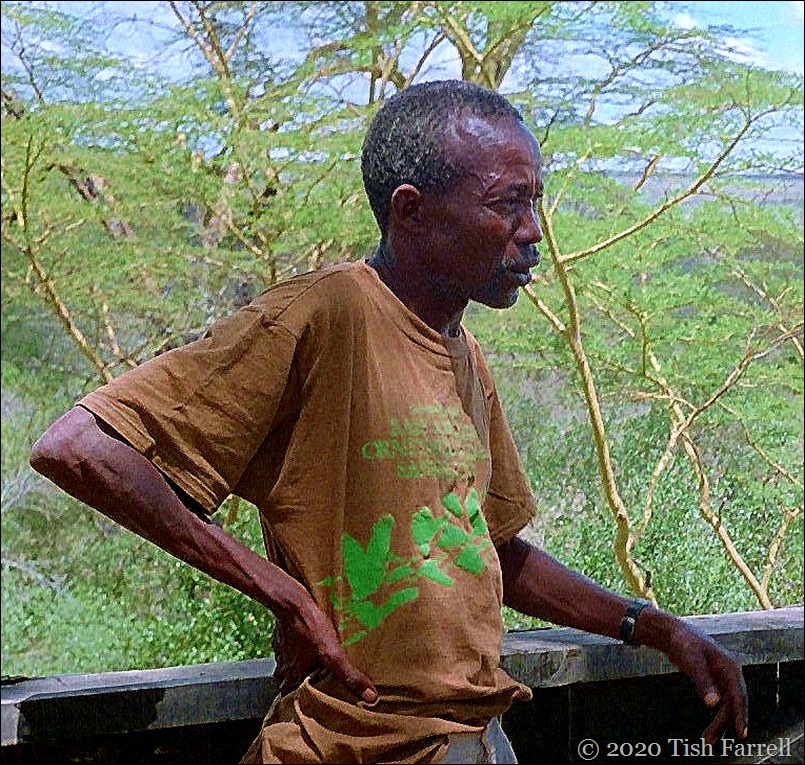
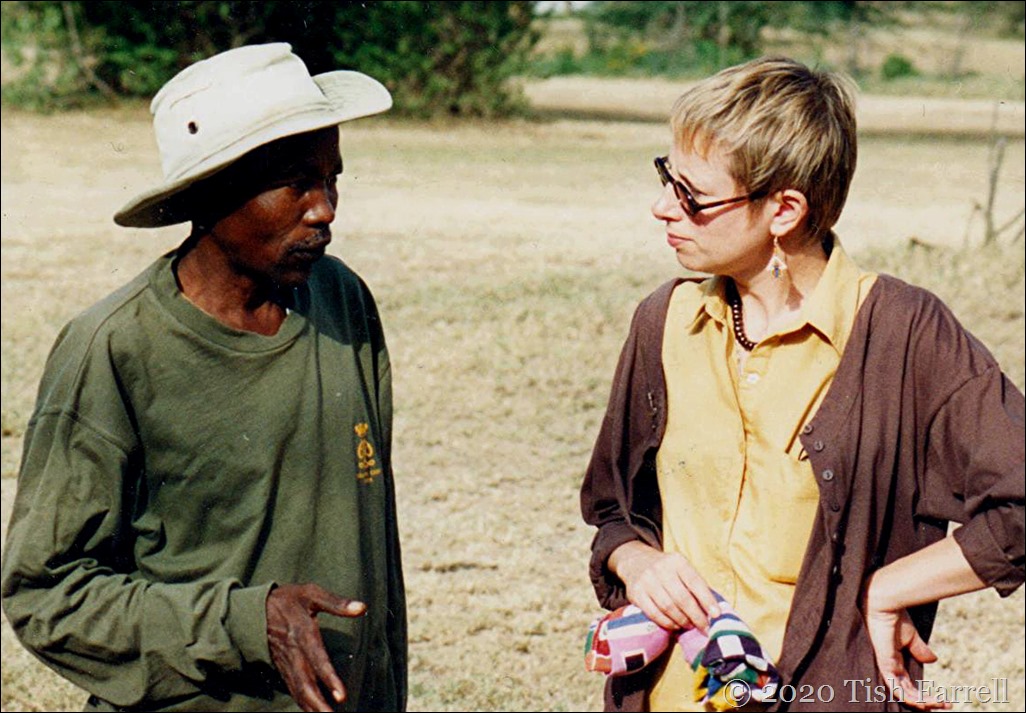
Paul Kabochi, camp ethnobotanist and medical herbalist. There was not much he did not know about the wilderness, the ways of its wildlife and the healing properties of plants and trees. His  animal tracking expertise was often called on by the BBC in the making of wildlife documentaries. The times I spent with him, walking through the early morning bush, or out on night drives, are fused in my heart.
002 (2)

Paul Kabochi and Jo Bickerton on an ethnobotany walk.

I think it was at this point that Paul invited my sister to stick her finger in the top of a harvester ants’ nest. Jo, newly arrived in Africa, but quick as a flash, balked and suggested he might stick his own finger in the nest. This is not the best of photos, but I love the body language: total engagement in more senses than one.

An unexpected portrait:
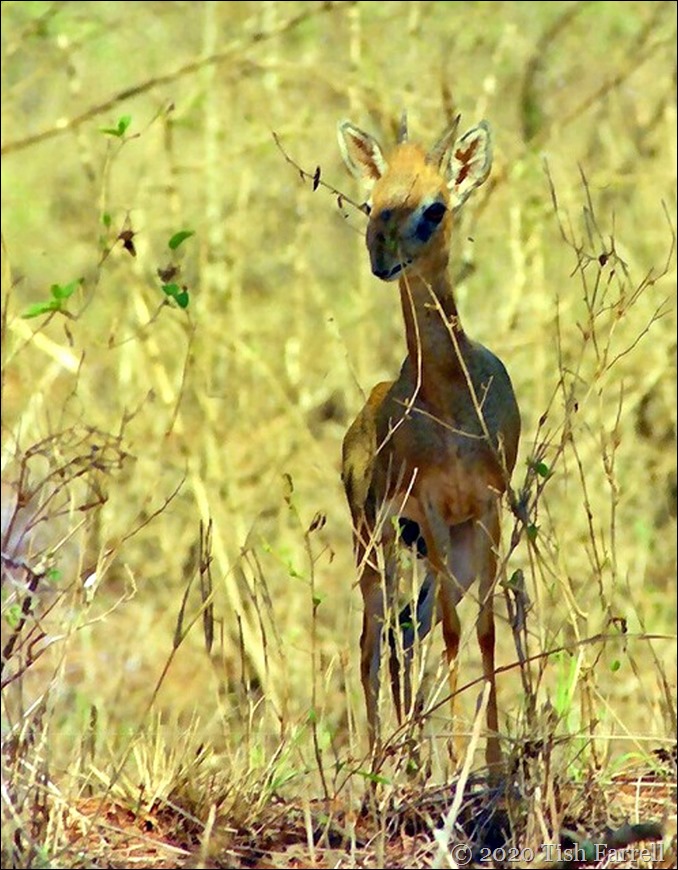
scan-140504-0005resized

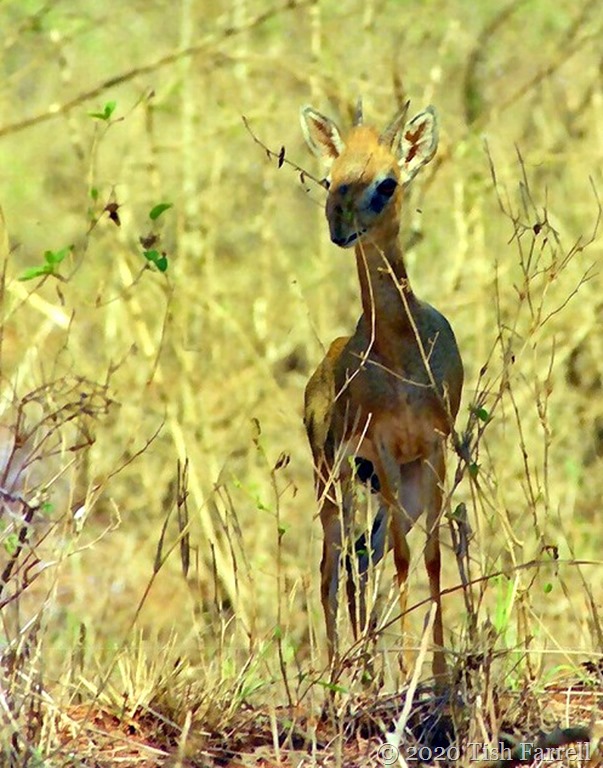
This tiny Kirk’s dik-dik is not much bigger than a hare. They are rarely spotted during the day, so I was lucky to see this one; even more that he stayed to have his photo taken.  Unlike most larger antelope, dik-diks live in monogamous pairs, staying closely together, the male marking their territory with dung middens and secretions from the  conspicuous glands at the front of each eye. Each couple generally avoids  their immediate dik-dik neighbours, though when boundary disputes do occur they can lead to fierce combat between the males.

*
IMG_0005_NEW

Lens-Artists: Treasure Hunt
 

In And Out And Round About Much Wenlock

P1060098

Below Wenlock Edge on the way to Westhope.

*

P1030868

The Downs Mill lane two winters ago.

*

P1010717

Much Wenlock High Street, Reynold’s Mansion built in the 16th and 17th centuries  on the immediate left.

*

P1000499

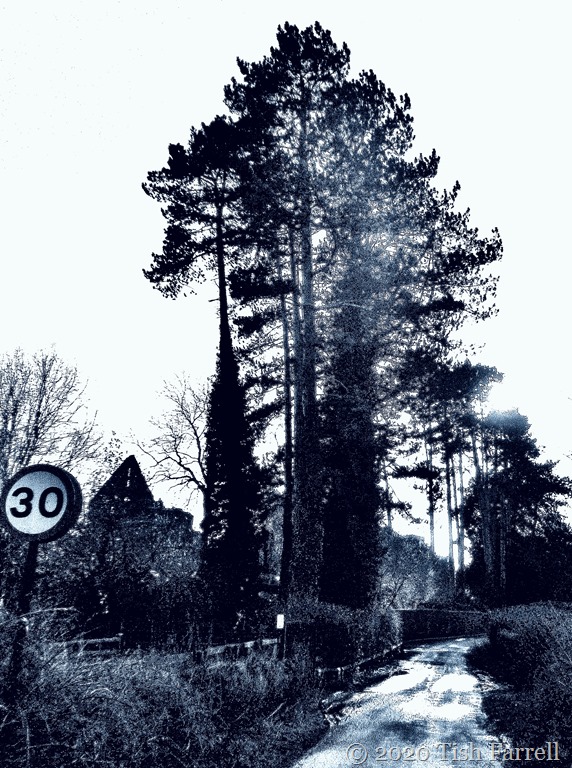
The lane by Wenlock Priory ruins and some fine Corsican pines.

*

100_8719

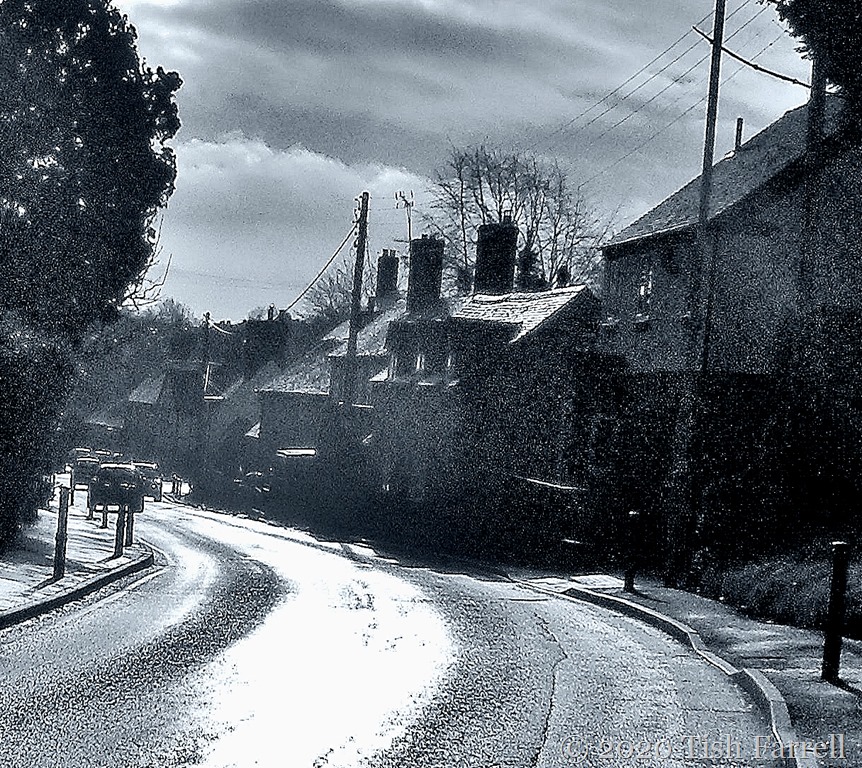
On home territory – a shining on Sheinton Street.

Cee’s B & W Photo Challenge: roads

The Beach Bicyclist

P1060354

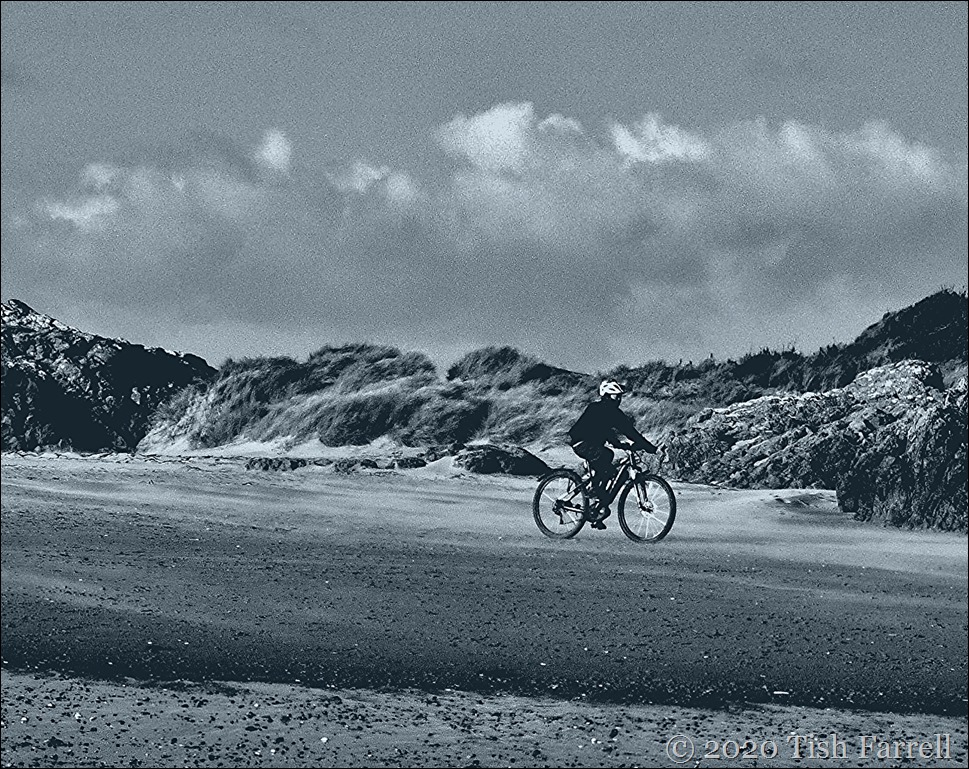
It’s years since I rode a bike. In fact I wonder if I still can, though I do remember the precise moment when I first mastered the skill and forward momentum suddenly happened. Just like that – after hours of wobbles and falling about. What a sense of freedom. And so I’m thinking if I had a handy beach I might well give it another go. Softish surface to land on for one thing. But what joy to whizz over tide-washed shores, sea wind in one’s face, gulls wheeling in their own particular way.
Looking at this photo now I’m beginning to feel envious of this unknown cyclist caught plying Newborough sands a few Christmases ago.


Cee’s Black & White Photo Challenge: cycles – one, two, or three wheelers