Catching the wave: learning to shoot lying down

100_5992

Photography-wise, you could say this is a case of learning from one’s subject.

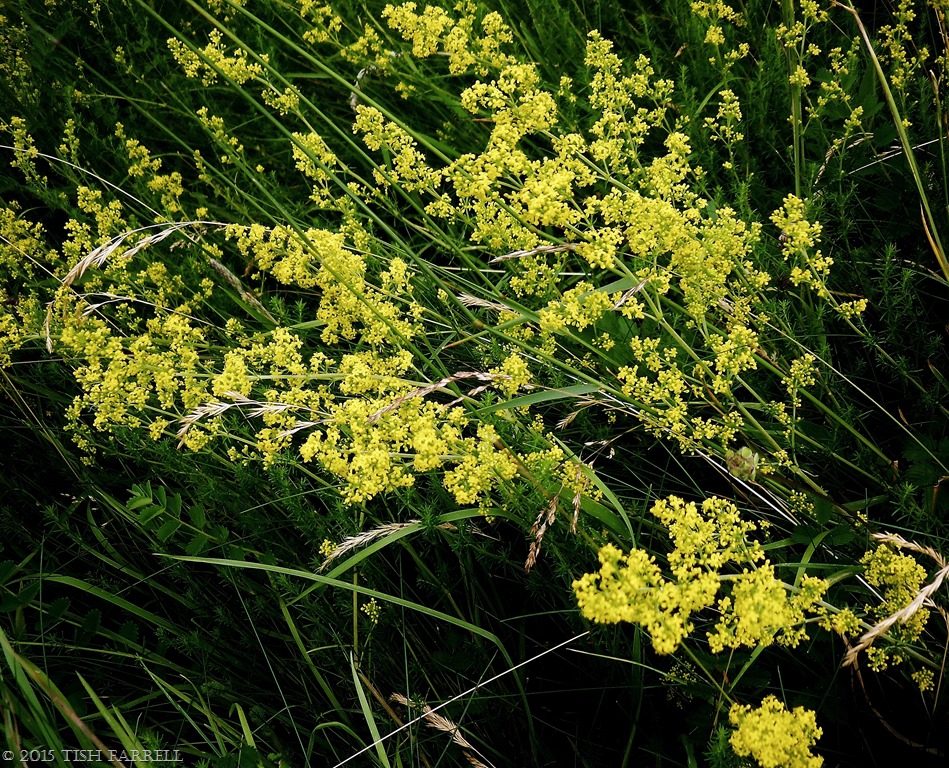
Anyone who joined me on last week’s walk around Windmill Hill, will probably know  that this drift of yellow is commonly known as Lady’s bedstraw or Lady’s tresses (Galium verum). When dried it smells of freshly mown hay, and so was once added to mattresses. Given these supine associations it seemed fitting that the only way to capture its essence was to lie down with it in the grass.

And lying down certainly reduces operator wobble, although there wasn’t much I could do about the summer breeze.  So I caught that too. And since I have yet to devise a ‘scratch and sniff’ widget, you must now use your imagination to summon a fragrance with subtle notes of gardenia plus a dash of fresh acacia honey. Mmmm. I don’t know about you, but I’m feeling a snooze coming on, borne away on a tsunami of sweet, golden, flowers. Happy dreams.

copyright 2015 Tish Farrell

Inspired by Jennifer Nichole Wells One Word Photo Challenge: tsunami  Go here to see Jennifer’s fascinating miniature world, and other bloggers’ interpretations for OWPC.

I’m also linking this to Lucile de Godoy’s Photo Rehab at Bridging Lacunas. Please visit her and her community of photo bloggers for a great boost to your creativity.

Wild orchids for Meg, meeting Marathon Man, then elderflower sorbet to finish

100_5645

In case you don’t know Meg she is presently in Warsaw, and if you want to get in lots of vicarious walking with fascinating things to see (and sometimes eat) please join her there. Anyway, this wild orchid is for her, and so is this walk, since it took me back to Windmill Hill (which is actually only across the road from my house), to search once more for signs of spring.

At least last Friday the sun was out, but we still have a continuous chilling wind. As I may have said elsewhere, it feels as if it has blown across an ice sheet before ending up in Shropshire. Brrr. So far it looks as though ‘clouts’ will not be cast in June, never mind in May. I, for one, am sticking to my many garment layers, which may or may not include a vest.

But back to the orchids. This one took some finding, but I had promised Meg I would look. She had read my mention of limestone-meadow plants in an earlier post about Windmill Hill, and wanted to see more. This lovely little plant, about a hand’s span tall, has the plain name of Common spotted orchid. It was growing at the foot of the hill, and I had seen the darkly spotted leaves a week or so before. They are definitely being slow to flower this year. They probably don’t like the wind either.

To find them I went the long way round, once more up the Linden Walk whose ancient limes are now bursting into juicy green clouds. Soon (I hope) they will be flowering, and then I can get high on the scent, as well as on the sight of them. (Herbalists use lime flowers as a sedative, quite a strong one, so don’t use the flowers without expert guidance). Good old Dr. William Penny Brookes, Much Wenlock’s erstwhile physician, and the man who planted this avenue over a hundred years ago, knew what he was at on the life-enhancing front. Bravo Dr. Brookes.

P1010454

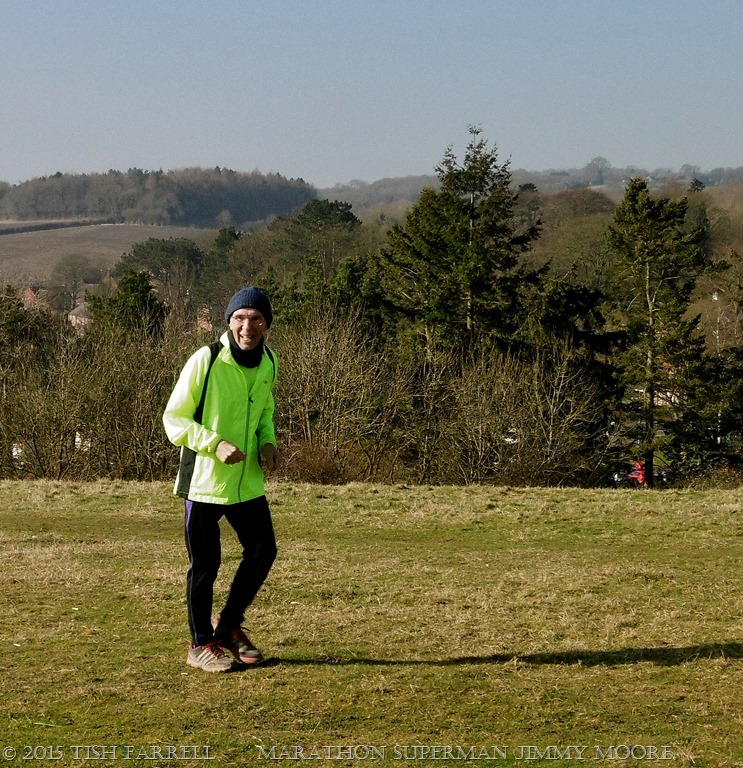
Once out of the Linden Field and onto the hill, I’m taking the low path around the bottom when along comes octogenarian, Jimmy Moore, our local marathon man. He’s out on his morning run – an example to us all. He’s raised over £30,000 for charity. Seeing him approach in his buttercup yellow shirt is enough to lift the spirits sky-high. Keep on running, Jimmy.

P1010423

As he passes me, he still has breath to crack a joke, and to say my photo of him will doubltless be worth a fortune. He speeds away, and I meander on, peering into the meadow grass.

The cowslips are over, but there are low growing clumps of Common bird’s foot trefoil, Lotus  corniculatus if I am not mistaken in my identification from the classic Keble Martin work on British flora. As you can see from its pea-like flowers, it belongs to the legume family.

100_5572

Up the hill to the windmill and there are carpets of buttercups, and a little family pretending the windmill is a castle. I like overhearing their interpretation of these remains. I shall think of them differently from now on:

P1010446

The search for orchids next takes me along the hedge line where the open meadow becomes woodland. And here I find the first elderflowers of the year. I love their creamy colours, and they make the most delicious sorbet (recipe at the end).

100_5667

The flowers also make a fragrant tea that is anti-catarrhal, and when mixed with peppermint is a good remedy for colds and flu.  The elder tree itself has magical connotations, and features in many traditions of indigenous peoples around the world, including North America’s First Nations’ tales. The dark purple berries are of course now used in a commonly available anti-viral that goes under various names that derive from its botanical name Sambucus. The berries’ efficacy was trialled some years ago by Israeli scientists, if I remember rightly, and used to treat HIV- patients. They are thus, not by any means, ‘a quack cure’.

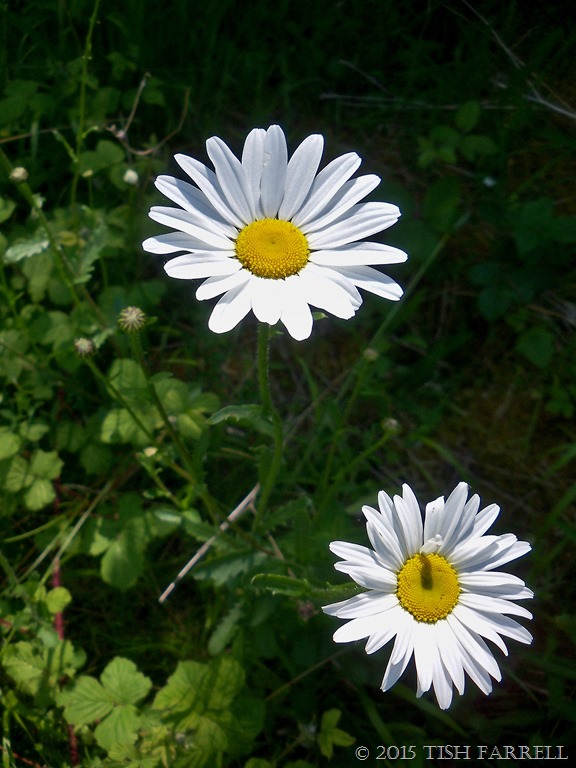
Into the wood, and the flowers of my earlier spring walk (which you can find HERE) the arum lilies, violets and wild garlic, are over and, beyond a few tiny wild strawberry flowers, there’s not much to be seen until I reach the roadside verge. First the Oxeye daisies…

100_5644

And then the orchids, although so far only a handful are in flower. Here’s what they look like before they bloom, along with a glimpse of a wild strawberry flower at 3 o’clock:

P1010434

And now as promised a recipe:


Elderflower Sorbet

8oz /1 cup/ 250 gm  fair trade unbleached granulated sugar

1 pint/0.5 litre  water

2 lemons

2/3 big heads of elderflowers


First pick the elderflowers  when they are freshly open , and on a dry day. Shake out the bugs but  do not wash. Keep the heads intact.

Pare the rind finely from the lemons, and squeeze out the juice.

Heat the water and sugar in a pan, starting gently until the sugar has dissolved,  add the lemon rind and then boil briskly for 5 minutes.

Remove from the heat. Add lemon juice and elderflower heads. Leave to cool.

Strain  into a suitable container and freeze. After an hour or so,  when the sorbet is slushy and starting to set , you can give it a good mash with a fork to break up any crystals, and return  it to the freezer.

Alternatively, strain and churn in an ice cream maker.

This sorbet is delicious with  fresh strawberries.


And guess what, as I finish writing this post the wind has dropped, and it is suddenly HOT.  Just the weather for sorbet. Hurrah!

P.S. It didn’t last, so we had broad bean soup instead.

copyright 2015 Tish Farrell


Please do drop in on Jo’s Monday Walk and Meg’s Warsaw2015 if you are up for some more interesting excursions.


Seeking Spring ~ A Walk on Wenlock’s Wild Side

100_5445

I knew there was only a small window of opportunity. At nine thirty yesterday morning there was sunshine. Go out there at once, I told myself. The way the weather is these days, it might be the last you see of it. Carpe diem and all that.

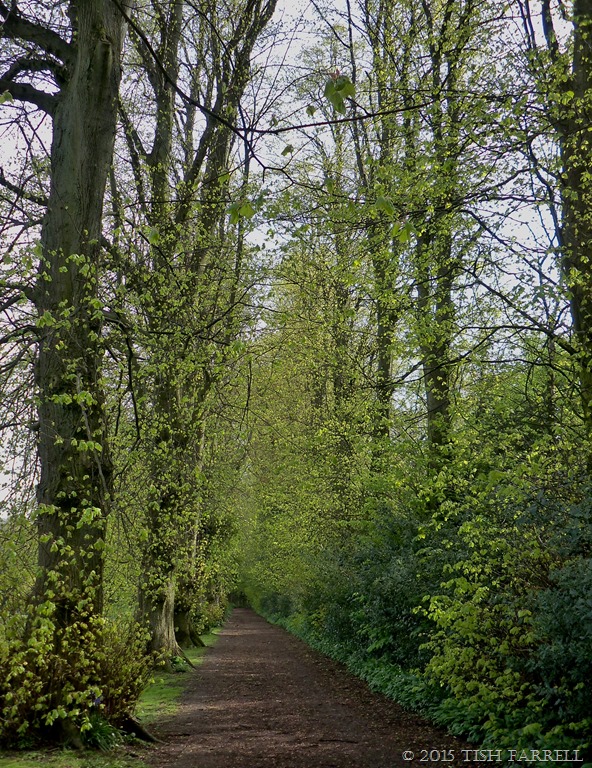
So seized it I did, and it was certainly warmer to the touch than it has been for many days, and as you can see from the above photo, the ancient, and thus arboreally wise lime trees on the Linden Walk definitely think it is spring.  Drifts of green. Blissful.
P1010309

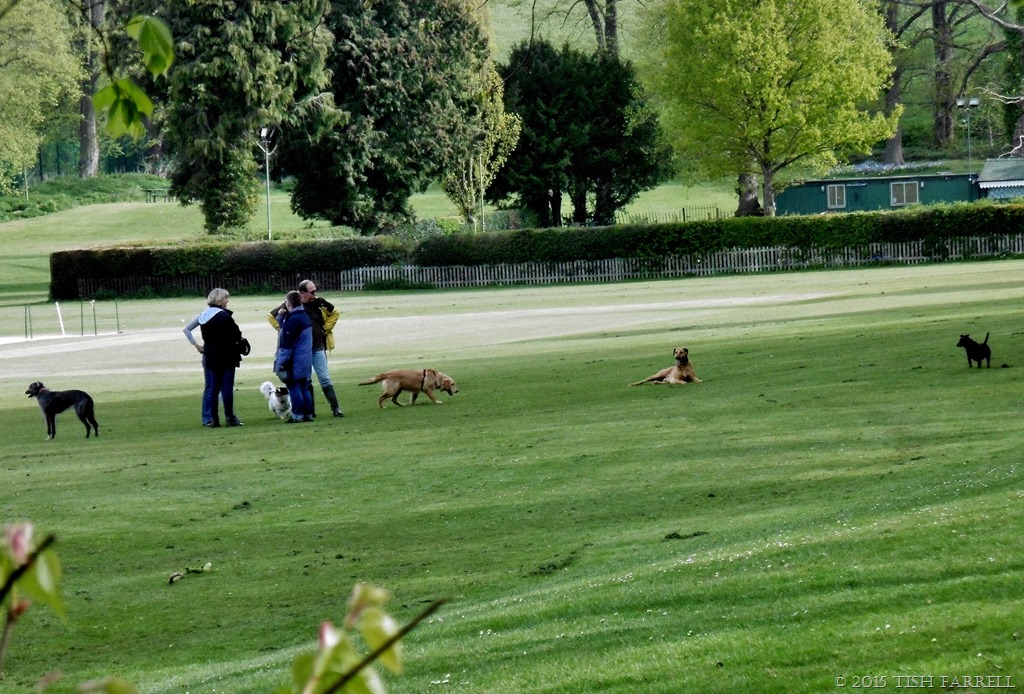
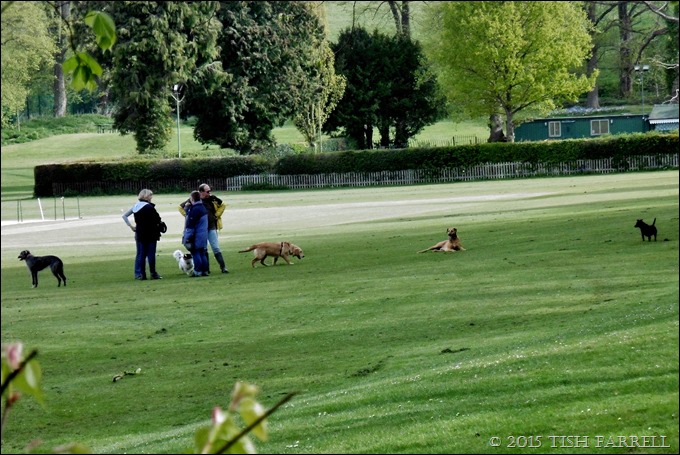
The dog walkers, too, were out en masse, owners chatting amiably on the Linden Field quite as if it were – well, spring. And despite Thursday’s appalling election results (Scots Nationalists excepted) and the return of a government that treats food banks as something to be proud of, and regards the nation as a resource for unbounded fracking, everyone I met seemed pretty cheerful. I will thus make no further mention of Tory attrition and spoil the moment.

The little green building you can see in the background behind the dog walkers is Much Wenlock’s Bowling Club HQ. It occupies a re-cycled railway carriage, a relic from our erstwhile lovely railway that once ran beside the Linden Walk and, until the 1960s, when the wretched Dr. Beeching axed thousands of miles of Britain’s railways, linked Much Wenlock to the outside world. But enough! Too much negativity already.

I headed off behind the Bowling Green to see what was growing on Windmill Hill. This quest was motivated by Meg at Snippetsandsnaps. In response to an earlier post here, she said she would like to see more of what happens on the old limestone pasture on which the windmill stands. I’d mentioned the wild orchids for one thing, so I thought  (given our erratic climate) I’d better go and check if they were flowering yet.
100_5459

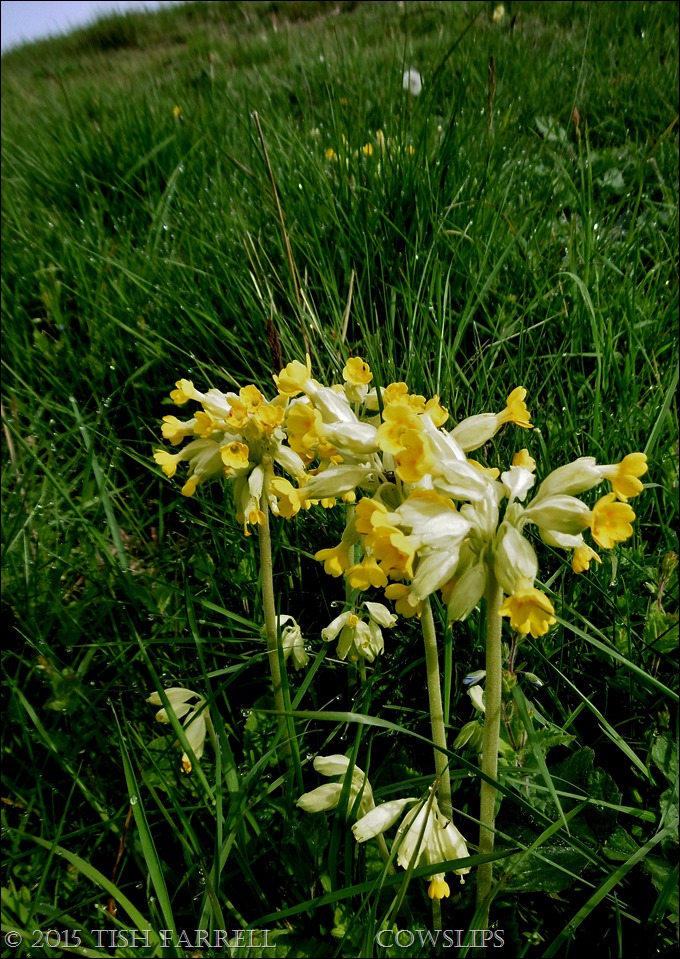
They weren’t. Still too early. But the first thing I spotted were the cowslips, also known in Olde Shropshire as cowslops. The richly eggy coloured clumps were growing here and there. In the past they would have grown in yellow meadowsful all around Much Wenlock. I even remember them. When I was a child, my parents would make a point of driving out from Shrewsbury where we lived, simply to visit them. We’d have picnics amongst them.
P1010322

Once, too, cowslips were an important resource. In the days before modern farming methods seriously reduced their habitat, Wenlock’s school children would absent themselves from class at the National School in order to help with the annual gathering. The flowers were used to make herbal infusions to combat coughs and bronchitis, and in a town regularly doused in limestone dust from the quarries, bad chests would have been a common problem.

Doubtless, too, the town’s doctor, William Penny Brookes, (he who inspired the modern Olympics and planted the avenue of lime trees that we have just walked along), supported such an activity. He practised for the last fifty years of the 19th century and, as well as being a physician, he was also a highly knowledgeable herbalist, having trained both in medicine in London and herbalism at the renowned University of Padua.

And this was by no means quackery in action as some are wont to call herbal medicine. After all, from where does Big Pharma get so many of its notions if  not from trying to concoct synthetic (patentable) analogues of the deemed active chemicals teased from botanical compounds? All of which is to say, we lose our plant heritage at great cost to our future well being, to say nothing of the planet’s well being.

Besides which, flowers can mean fun and festivities. Cowslips were also used to make wine, and to strew the paths of spring brides. Mm. Just think of the air filled with their subtle, sunny scent in times when May was WARM.

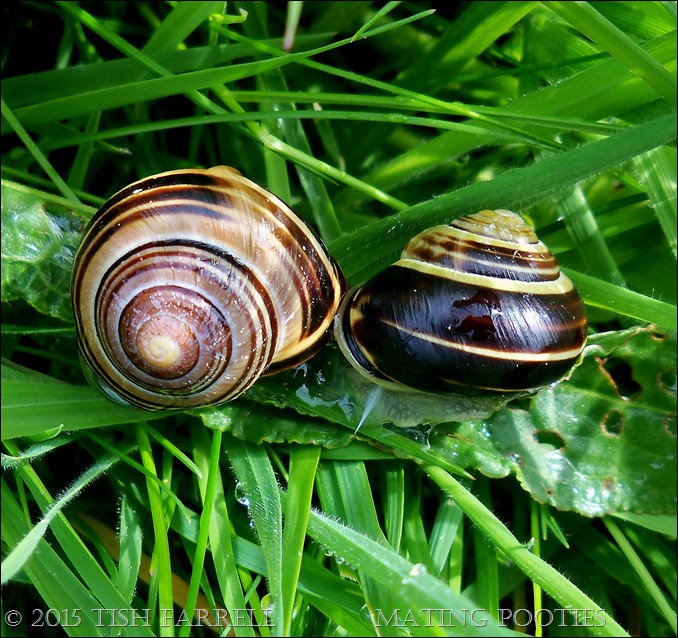
And talking of warmth and nuptial pursuits, the next thing I came across while snapping cowslips, was a pair of mating molluscs, also known Cepaea nemoralis (Linnaeus, 1758), Britain’s commonest snails. Spring has certainly made this pair frisky, but I will spare you the more intimate shots, and leave you with their rather pleasing  Northamptonshire dialect name of pooties. Canoodling pooties then.
100_5452

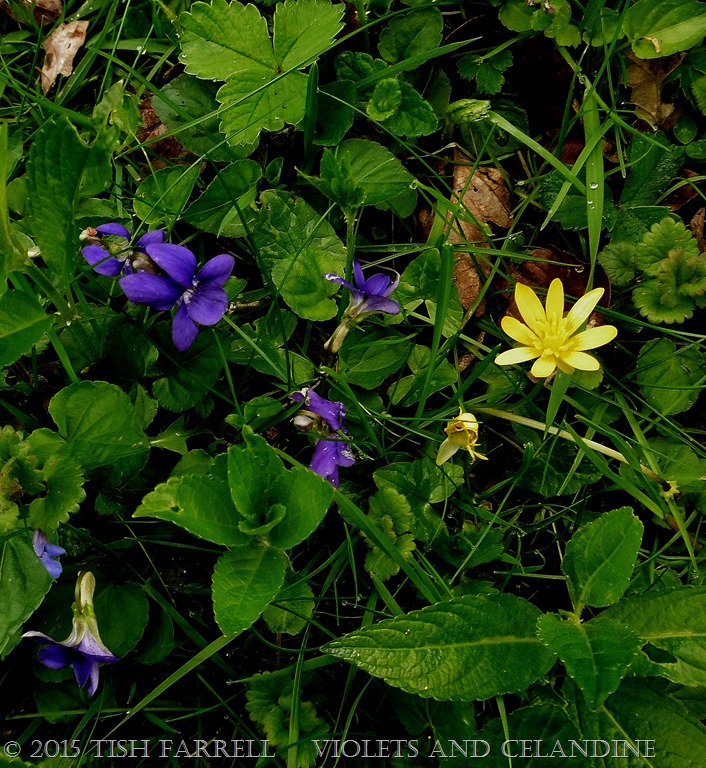
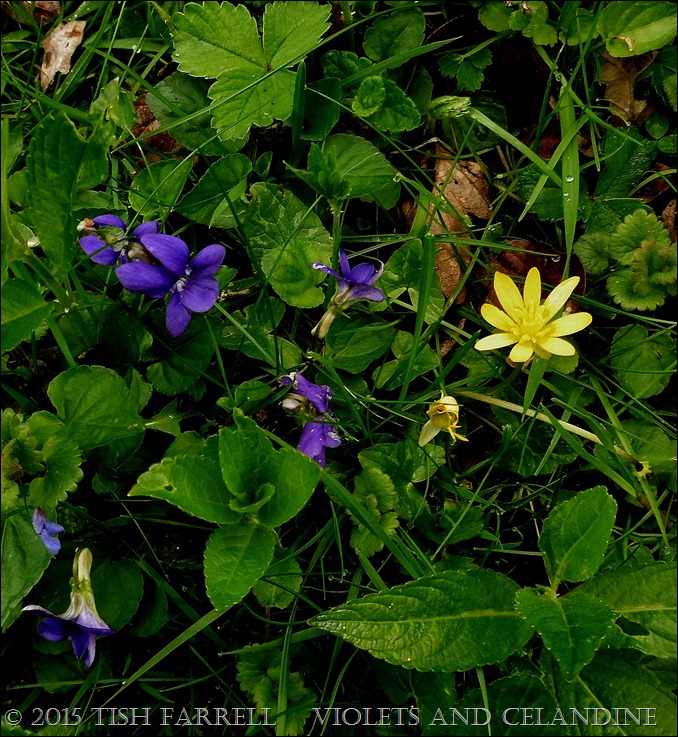
Windmill Hill has more than its open, calcareous pasture. There are wooded flanks to the north and south and here, beneath the trees, I found violets and celandines. You can also see leaves of tiny wild strawberry plants (north of violets), germander speedwell (northeast of the celandine), and sprigs of Dog’s Mercury at the bottom of the shot.
P1010366

*

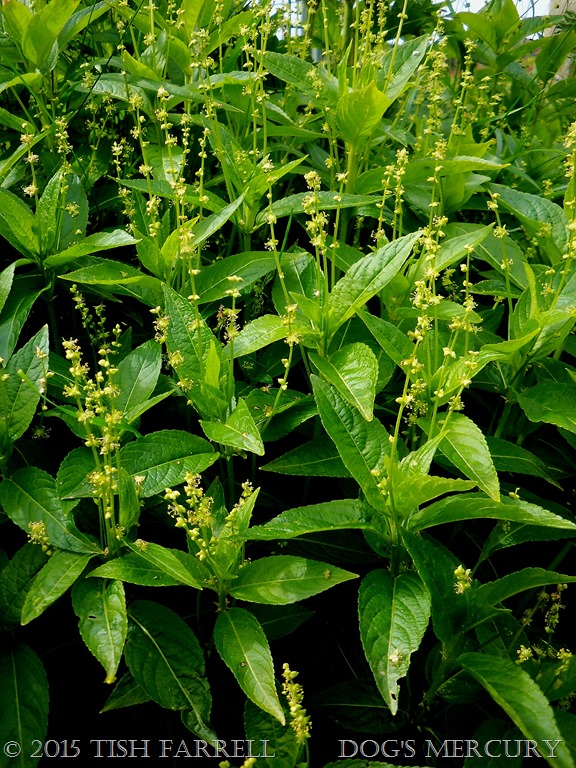
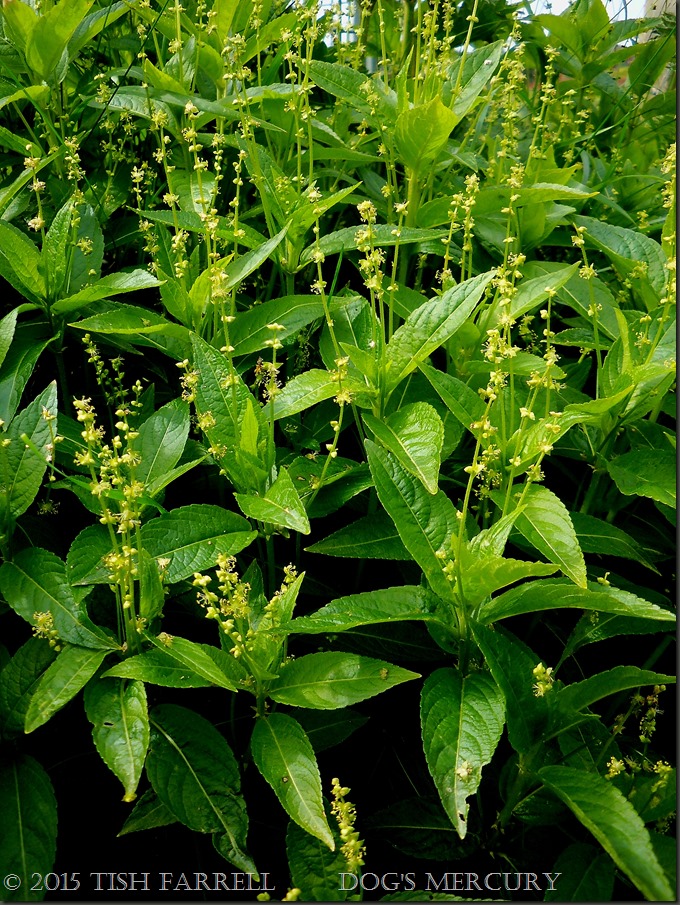
And coming up is Dog’s Mercury (Mercurialis  perennis  or Boggard Posy) in full flush. This unremarkable looking plant is a member of the spurge family and very toxic, a fact reported in a letter from Shropshire in 1693 and published that year in the Philosophical Transactions of the  Royal Society, 203 VIII. The letter gave a detailed account of how one  Mrs. Matthews had gathered, boiled and then fried the herb with bacon for her family’s supper. Two hours later there was much purging and vomiting followed by heavy sleeping. Sadly one of her children died after remaining unconscious for several days. Mr. Matthews, however, reported going to work the next day three hours late, but feeling as if “his Chin had bin all Day in the Fire.” He had therefore been forced keep his hat at his side as he worked, filled with water, so he could keep dipping his chin in it.
100_5469

*

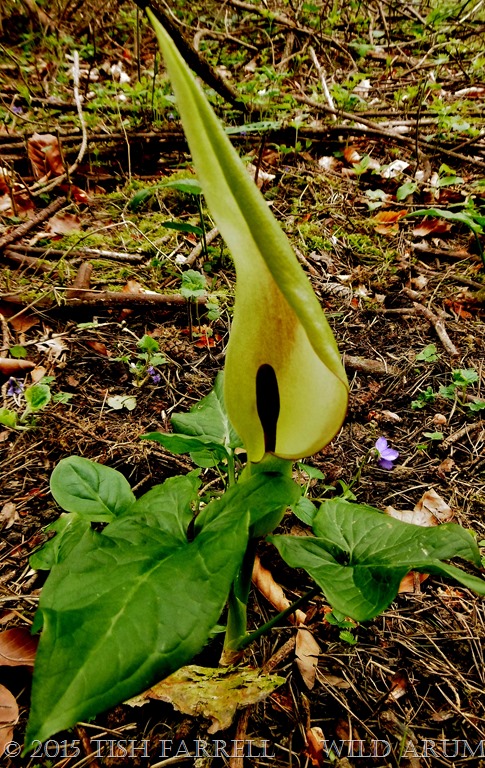
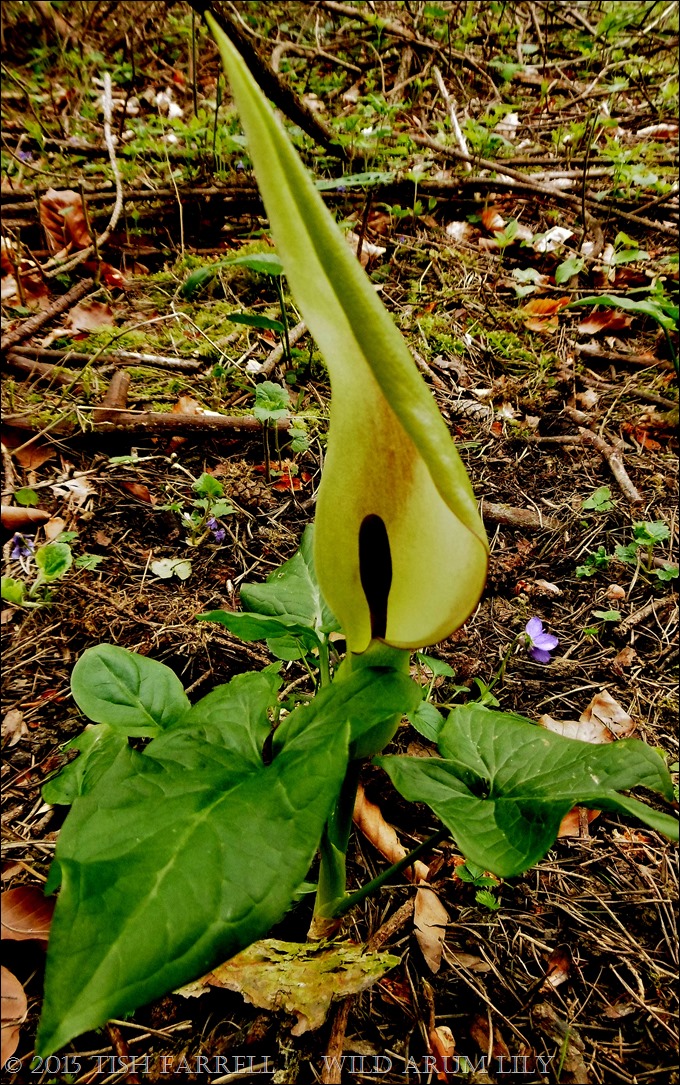
This next plant, Arum maculatum,  also has toxic characteristics. And it has a host of intriguing country names, some of them certainly alluding to what William Shakespeare referred to in Hamlet as ‘country matters’. For instance we have Lords-and-ladies, Ladies and Gentlemen (Shropshire version), Devils and Angels, Willy Lily, Cows and bulls, Red-hot-poker. Then there are the more curious Jack in the Pulpit, Cuckoo-pint, Fairy Lamps and Shiners. Its hooded sheaths (spathes) do glow in a faintly sinister, not to say priapic fashion in the shadiest spots. When done flowering, and presumably duly fertilised, the sheath collapses in a disturbing manner. In the autumn, though, there are spires of fire-red berries that light up gloomy days.

As to usage, in the times when people still wore lacy ruffs, the arum roots were crushed to make starch, although the processing apparently gave the launderers nasty blisters on their hands. It presumably did not do much for the ruff-wearers’ necks and faces either. So yes, it’s also good to remember the toxic properties of plants along with their more healthful aspects.
P1010337

*

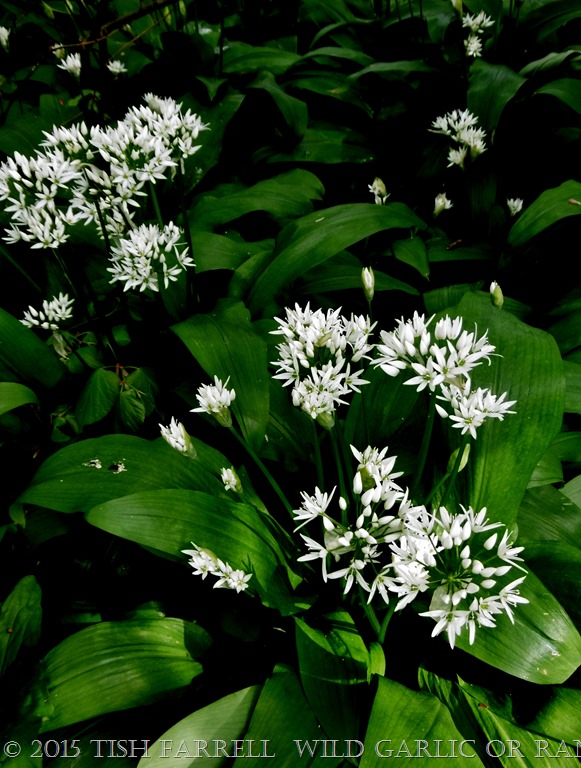
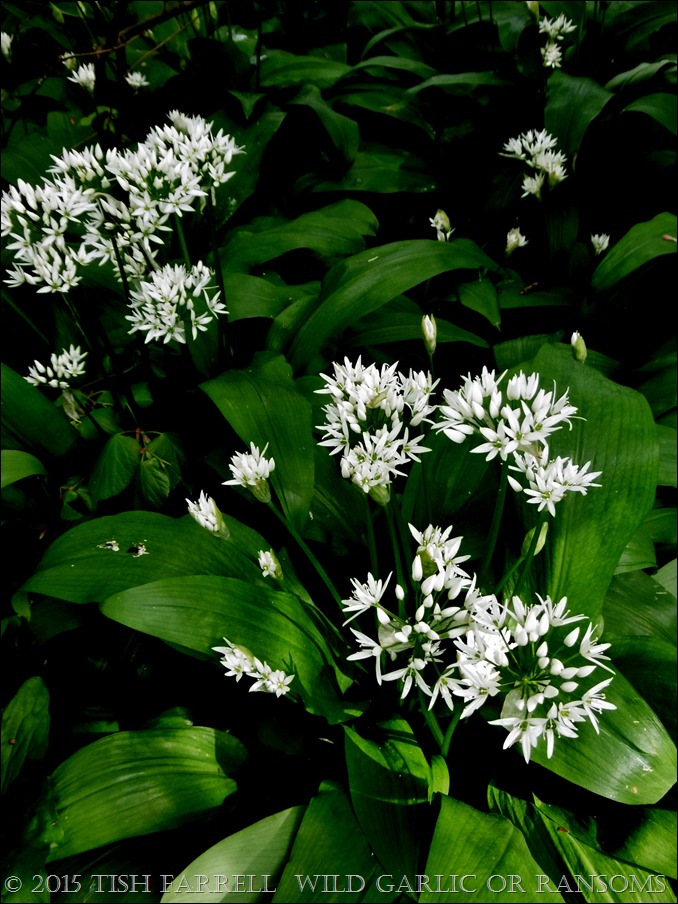
And now for something seriously edible, if you like garlic and onions, that is. The Wild Garlic or Ransoms (Allium ursinum) grows in profusion at the foot of Windmill Hill, and especially along the banks of the old railway line. Those who don’t care for the smell will appreciate its vernacular names of Stink Bombs and Stinking Nanny.
P1010304

But you can certainly cook, or add to salads, both the leaves and the flowers, and their flavour is not as strong as the smell suggests. Excellent wilted in olive oil with pasta, for instance, or in soups – cream of potato and wild garlic say.

This wild garlic photo was taken while the sun was still shining, and as I said at the start, I knew it wasn’t going to last. Even if I hadn’t read the Friday forecast of rain by noon, followed by more rain all day, the green woodpeckers would have warned me. As I headed down the hill and along the old railway line their cries, known as yaffling, dogged my footsteps. It’s interesting how this member of the woodpecker family likes to alert everyone to a coming downpour. In Africa it is the red-chested cuckoo that performs reliable rainbird duty.

100_5494

Those yafflers were dead right too. As I turned for home, the sky was leaden, and the first drifts of rain were falling through the trees. Bye bye sun!  But then the old railway line is a good place to be whatever the weather. It is one of the town’s most popular footpaths, and it is hard to imagine that along it the Great Western steam engines once came rattling into Wenlock – the Olympic special bringing thousands of spectators to the annual Wenlock Olympian Games on the next-door Linden Field; goods trains from South Wales coming to collect limestone from Shadwell Quarry behind Windmill Hill. These days, then, there a trees as well as leaves on the line (NB for those living outside the UK,  ‘leaves on the line’ has long been the old British Rail’s excuse for non-arriving trains.)

Finally, I’ll leave you with a few more shots of botanical specimens discovered round Windmill Hill and along the railway line. Clearly the natural world is busy cracking on – full of vim and vigour – even as I shiver in the cold wind, and hang on to my much layered clothing. That’s good to know though – that nature will out, even if, as time goes on, it may not quite do what we expect.

100_5488

100_5483

100_5490

copyright 2015 Tish Farrell

Reference: Richard Mabey Flora Britannica

Forces of Nature

This post was also inspired by Jo’s Monday Walk at restlessjo, a great venue for walkers, whether in body, mind or spirit.

 

A bench with many views and a windmill

P1000684

P1000674

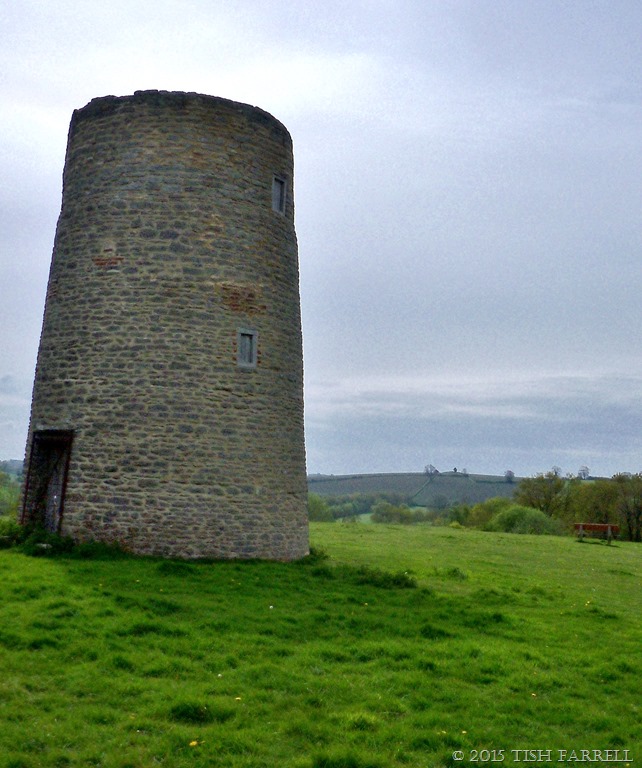
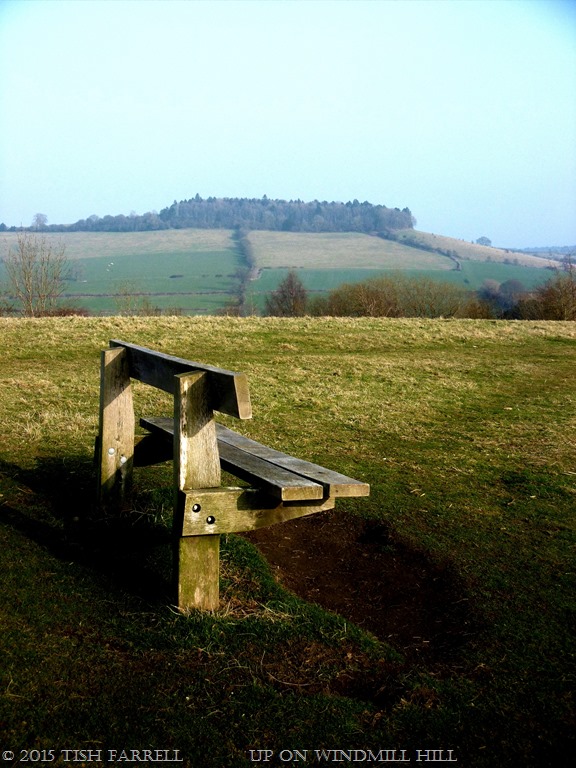
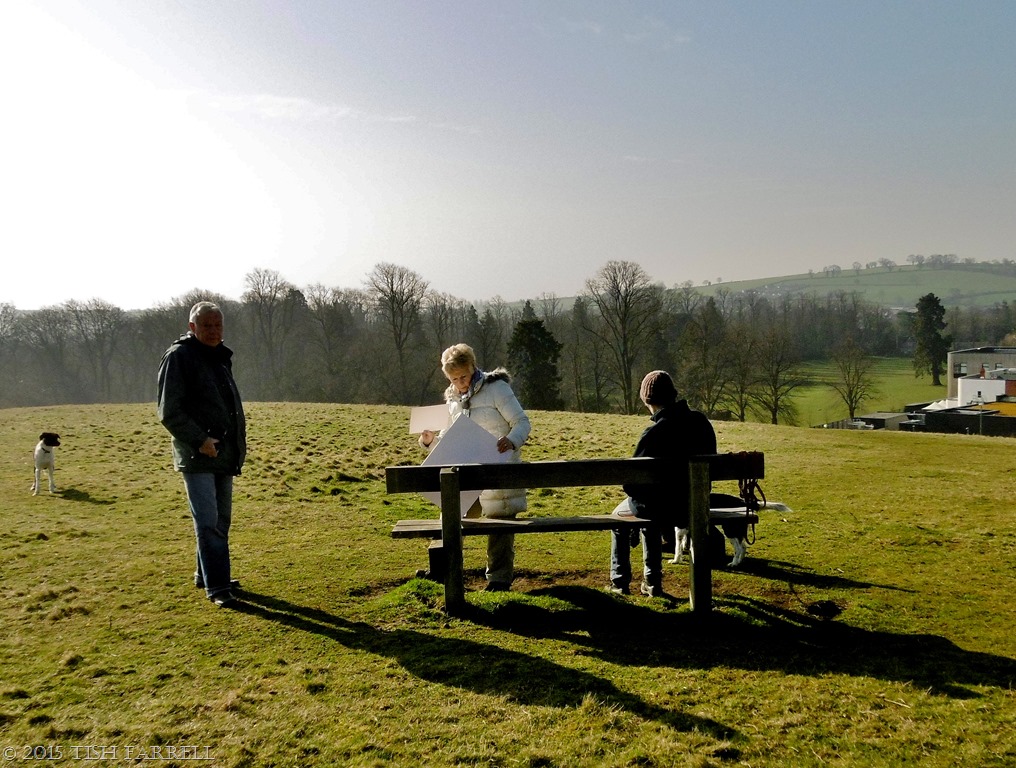
This bench is only a short walk from our house, although a bit of a steep haul up Windmill Hill. The windmill itself is quite a landmark in Much Wenlock, although much about its history, and how it looked when in use, remain to be discovered by the stalwart Windmill Trust whose members take care of it.
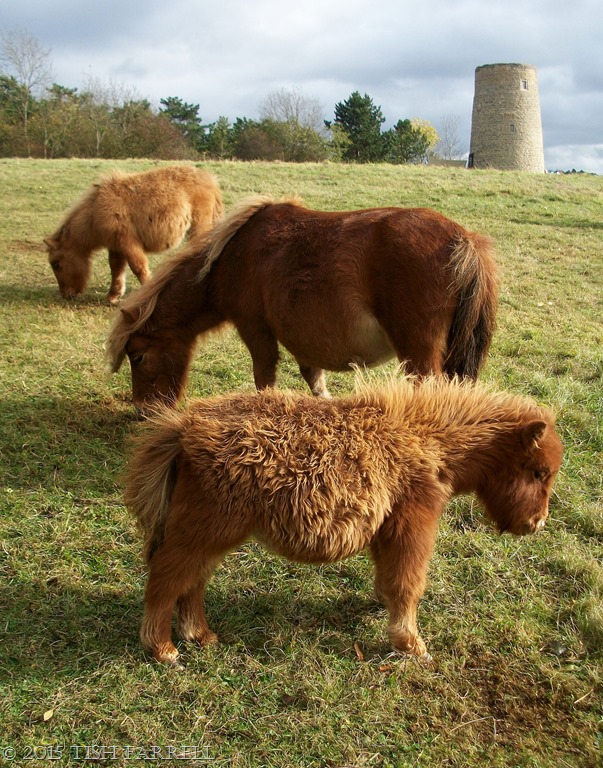
There is always something to see from this bench, quite apart from the views across Shropshire. Even the vegetation is interesting. It is a rare remnant of limestone meadow, and in late spring there will be cowslips and orchids here, wild thyme and primroses. Later there will be agrimony, giant  knapweed, St John’s Wort, yellow bedstraw and hare bells. Sometimes the miniature ponies graze here, all part and parcel of preserving the meadow.

100_6660

*

Recently some of us combined dog walking and watching the eclipse from here. And while we were doing that…

P1000748

… we also caught a glimpse of local marathon hero Jimmy Moore, apparently eighty years old this year, and still out training.

P1000750

He, more than most, has done so much to uphold the values of the town’s erstwhile physician, William Penny Brookes (1809-1895). Brookes reinvented the Olympic Games in Much Wenlock in the 1850s, and provided the inspiration for the modern Olympic Games.  The Wenlock Olympian Games are still held every July on the field below and at the nearby William Brookes School. The three-week series of contests attracts athletes from around the world. Jimmy has also coached many youngsters  participating in the Wenlock Games.

P1000685

P1000736

And finally, I thought I’d pass on some Olympian glow on this Monday morning. You can just see the windmill in the background, the William Penny Brookes Academy on the left, and the community’s own Linden (Olympian) Field in the centre ground. Besides, it is not good to linger about, sitting on benches, splendid though their views may be. Latest medical opinion informs us to keep standing up.  Or to quote Tom Petty and the Heartbreakers  “if you don’t run, you rust.”  Walking, however, is probably best for most of us.

Copyright 2015 Tish Farrell

At Travel Words during April, Jude is looking for benches with a view

Eclipsed in Much Wenlock on World Happiness Day and Taking a Solar Selfie

100_5065 Here I am on top of Windmill Hill, Much Wenlock’s landscape landmark, and this is the only way I could see the partial eclipse – with my back to it, and camera at the ready. We had such clear skies, and the sun was so bright that we remained bathed in sunshine throughout this cosmic event, although it did seem very cold. Lots of people who were out walking their dogs had gathered  at the windmill too, one lady monitoring the process through a pin-hole viewer. This is the scene before me as I take the photo over my shoulder: windmill and pointer. Had the eclipse actually happened? P1000779 P1000764 P1000788 Aftermath. I caught the sun in the trees as I walked home across the Linden Field. This, incidentally, was the place where the Much Wenlock Olympian games were, and are still held every year. They were devised in 1850 by the town’s physician and herbalist, Doctor William Penny Brookes, and went on to inspire the founding of the modern Olympic Movement. Windmill Hill provided the natural viewing platform where spectators sat to watch the events. See how this little town of ours spread its good hearted influence around the world. Wishing everyone joy on this, International Day of Happiness   #eclipse #International Day of Happiness

…of wolf farts, windmills and the Wenlock Olympics

It has to be said that wolf farts are pretty hard to find, even with expert guidance. And yet I had been led to believe (and by the Guardian no less) that if I visited a certain, well-known location near me, I would most surely discover them. And so, on a sunny winter’s day last week, when I set out on the curious quest, I was not anticipating difficulty. Far from it. The ground was dry underfoot and visibility good and I had been well primed by Paul Evans’ Wenlock Edge column (Guardian 10 January 2012) which not only gave me full details of said quarry, but also included a very good photo for accurate identification. The piece seemed unequivocal too. Wolf farts were to be found on Windmill Hill, and in January too. What prospect could be more beguiling for the writer-prevaricator, and especially in the after-Christmas lull when not much is happening in the natural history line? So I pulled on boots and woollies and set out in search of them. It’s amazing how many ways there are to avoid writing the novel.

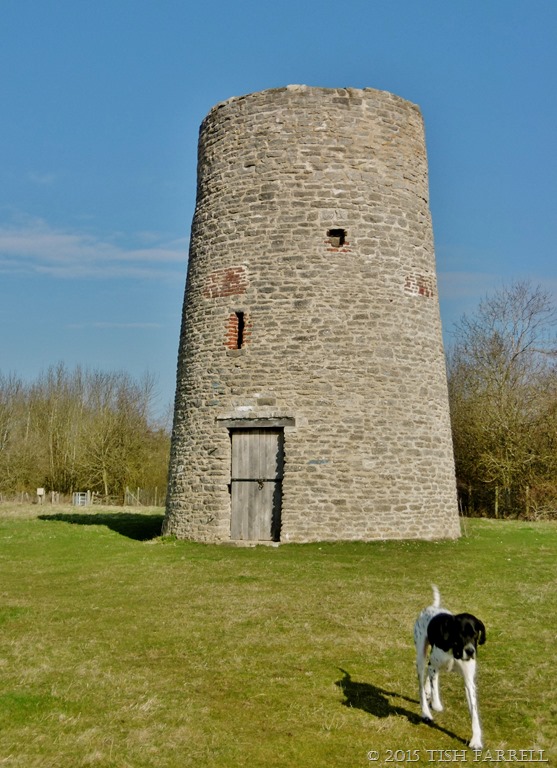
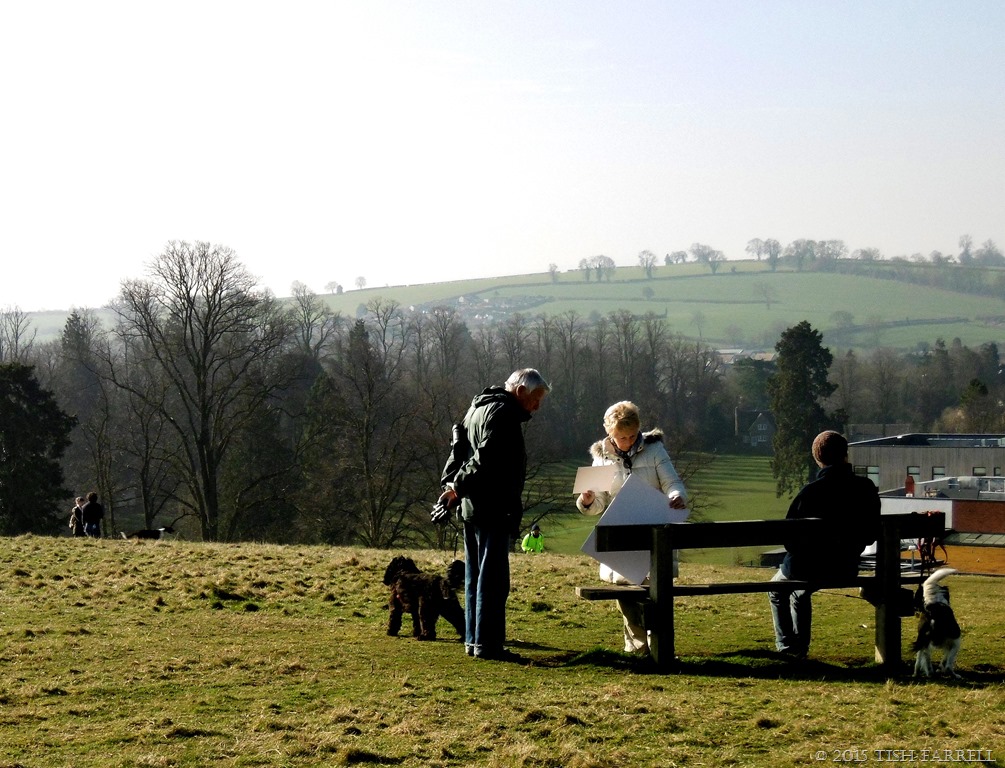
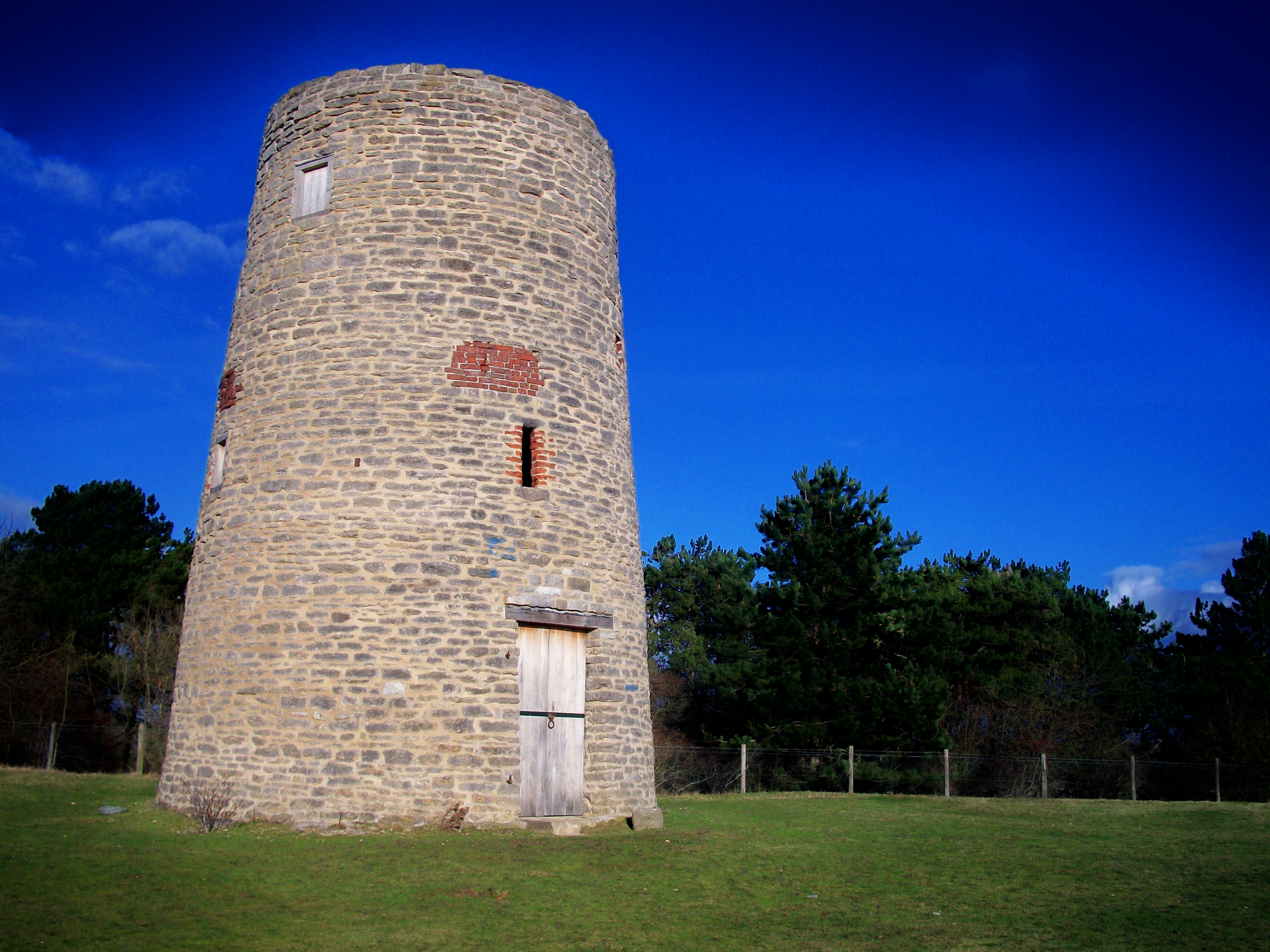
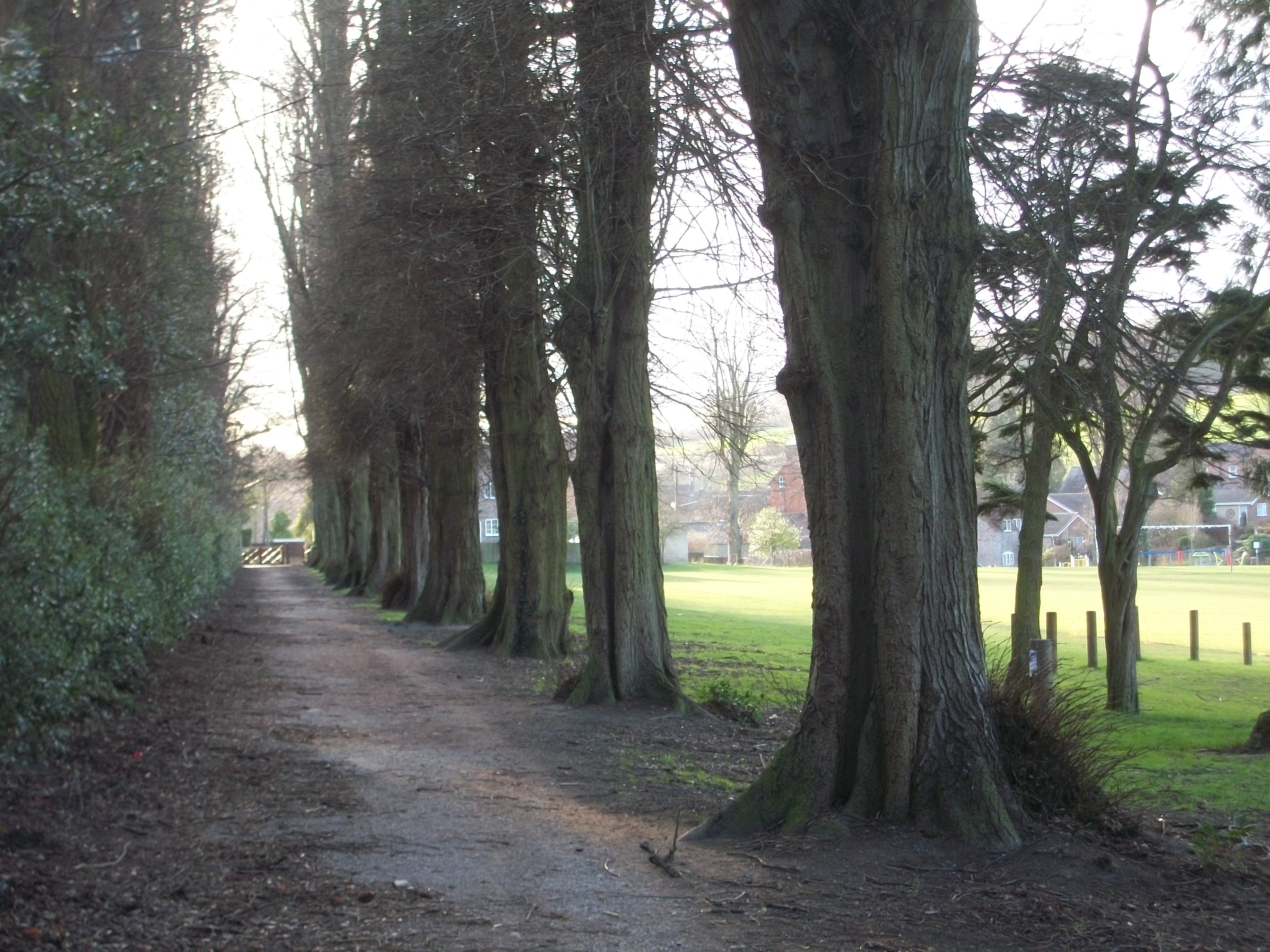
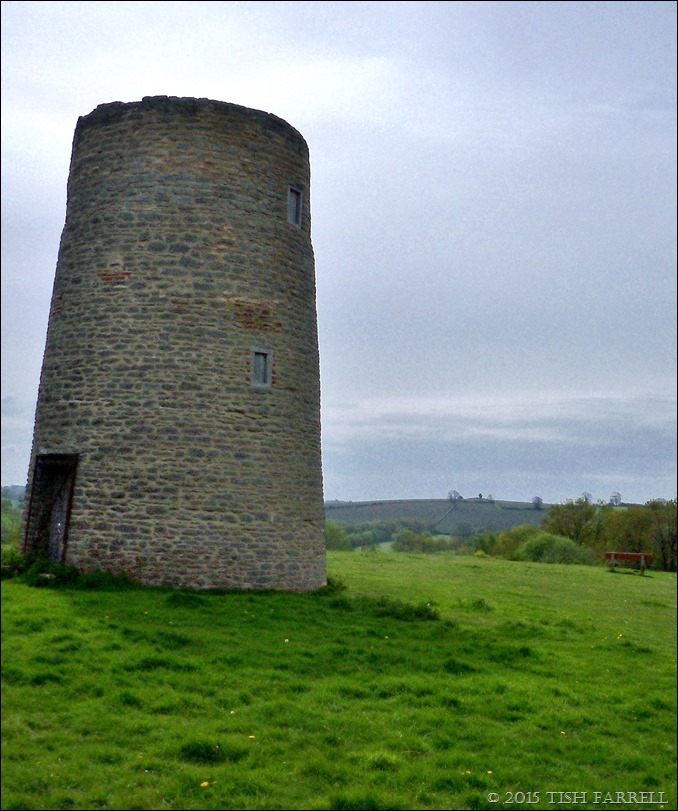
Finding Windmill Hill is the easy part of the enterprise. The old stone tower on its summit makes it a striking local landmark, though something of a mystery since there is no record of how this tower looked when complete and few clues as to what kind of windmill it once was. The limestone ridge on which it stands, with the disused Shadwell Quarry at its back, is a five-minute walk from my house. You can reach it either by striding across the Linden Field beside the new William Penny Brookes School, or you can follow the path beneath the towering limes of the Linden Walk. The trees form a cool sweet-scented arch of greenery in summer and Doctor Brookes, a trained herbalist and therefore well versed in the calming properties of lime flowers, planted them there over one hundred years ago. According to tree experts the limes could last another hundred and fifty years, although they wag their fingers at local cricket enthusiasts who, in season, drive over the roots while parking their cars for a good view of Sunday cricket on the Linden Field. The case of trees versus cars is guaranteed to raise tempers in the town.

The Linden Field once belonged to the Gaskell family, the town’s local worthies who lived in the Abbey beside the ruined Wenlock Priory, but in 1935 it was bequeathed to the people of Much Wenlock for their enjoyment and recreation. That the townspeople have problems hanging on to their rights as beneficiaries is another source of local irritation. But then the most important fact about the field is that it is the site of the Wenlock Olympian Games. These were begun in 1850 by the town’s doctor, William Penny Brookes, in a bid to improve everyone’s health and wellbeing, and later provided Baron Pierre de Coubertin with the model for the modern Olympic Movement. People argue about this too, but at the top of the field is the oak tree planted in 1890 to commemorate the Baron’s reconnaissance visit to the town to see the games for himself. Today, visitors who come to the field say there is nothing to see in the Linden Field. But then that’s history for you; invisible for the most part. However, should the see-nothings feel like returning between 12-15 July 2012 they will find the 126th Wenlock Olympian Games in full swing, with a wide range of serious athletic contests to be watched and enjoyed.

The old Penny Brookes games also included all the familiar events – pentathlon, archery, football, hurdles and long jump (called the running long leap), but there were also bicycle races on penny farthings and tilting at the ring, a mediaeval jousting sport wherein a galloping horseman speared a ring with his lance. Prizes were lavish with olive wreaths to crown the victors and Dr. Brookes himself designed and paid for the gold and silver medals. Then there were also the fun events – blindfold wheelbarrow racing, climbing the greasy pole and chasing the piglet. Something for everyone in fact and not a hint of a risk assessment. As might be expected, the games were hugely popular and spectators and competitors came from far afield, many arriving by train, since the line ran conveniently beside the field. And for those who wanted the best possible view of the games, then Windmill Hill provided the perfect spectator vantage point.

Which brings me back to the wolf farts. Not forgotten, but by the time I’ve hiked up the steep hill to the windmill, I’m a little out of breath and thinking I need to get into training, perhaps with some piglet chasing?  I begin to comb the limestone meadow that was cropped in autumn by a fleet of russet-coated Shetland ponies. This is where the wolf farts are supposed to be. Somewhere. It’s not a very big hill after all, and I can walk across the top in less than two minutes. I scour the northerly slope first, rooting among the weathered pony droppings and coarse vegetation from which, in late spring, will sprout spotted purple orchids, and later, agrimony, harebells and knapweed.

I decide that Paul Evans has been pulling my leg, but anyway work my way back in a southerly direction. And this is what I’m looking for:

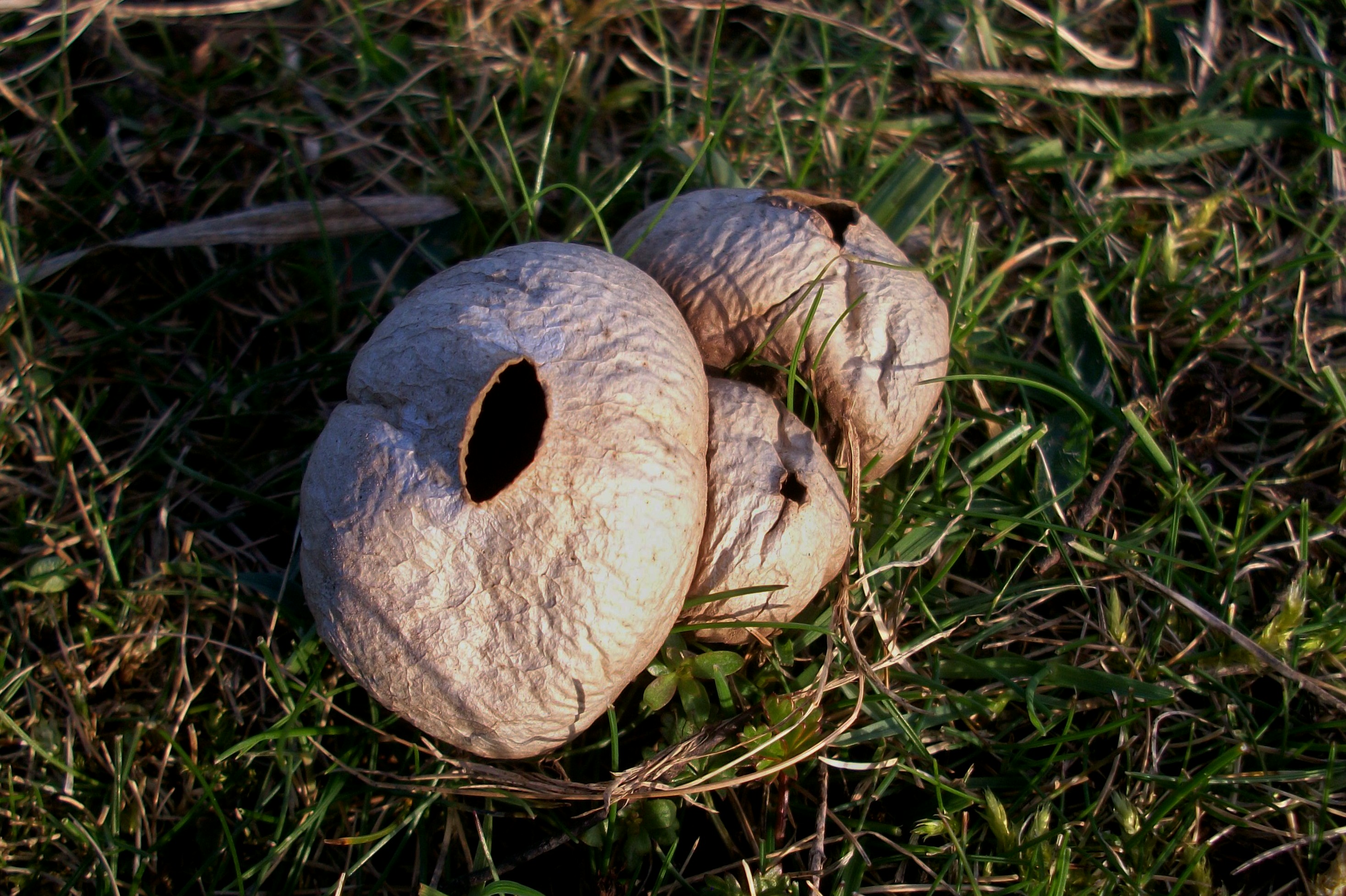
the common puffball, Lycoperdon (from the Greek lycos wolf and perdomai to break wind). It has other names too, including the devil’s snuffbox. And finally I get my eye in. I had been seeking something altogether too substantial, imagining the white, marshmallow-like fruiting bodies of autumn. In fact the first one I find is quite tiny, paper-thin and bone coloured, the size of my fingernail. Then there are others – cigar coloured, a couple of centimetres across and yes, very like Shetland pony droppings. They are empty husks now, barely clinging to the thin soil, their spores spent, leaving tiny orifices like shocked little mouths. Then I find one still containing some spores and squeeze the sides. Out puffs the brown-black dust, as fine as photocopier ink. Later I read that inhaling too many spores can lead to lycoperdonosis, a life-threatening respiratory condition caused by the spores lodging in the lungs.  Won’t do that then. Won’t breathe them in. And that seems all there is to be said and done concerning wolf farts. Quest done, I lose interest, stand up and survey the old quarry behind the windmill. There’s a deep pool of unearthly blue water, apparently some seventy feet deep, and the surrounding land is going to be developed with holiday chalets and a dive centre. It’s then, as I’m looking for signs of building work, that I see large segments of the quarry have been staked out with low green plastic fencing. Later I discover this is newt fencing. Why it is there is another story, one that I don’t entirely believe – something to do with separating opposing amphibian gangs and newt fights. Oh come on! At this rate I’ll never get back to the novel. It’s far too exciting outside.

Copyright 2012 Tish Farrell

Paul Evans @ www.guardian.co.uk/environment/thenortherner/2012/jan/10/country-diary-wenlock-edge/

Wenlock Olympian Society @ http://www.wenlock-olympian-society.org.uk/