The birds: who, where, when?

100_2835

Evelyn Mary Ashford 1923-2013

*

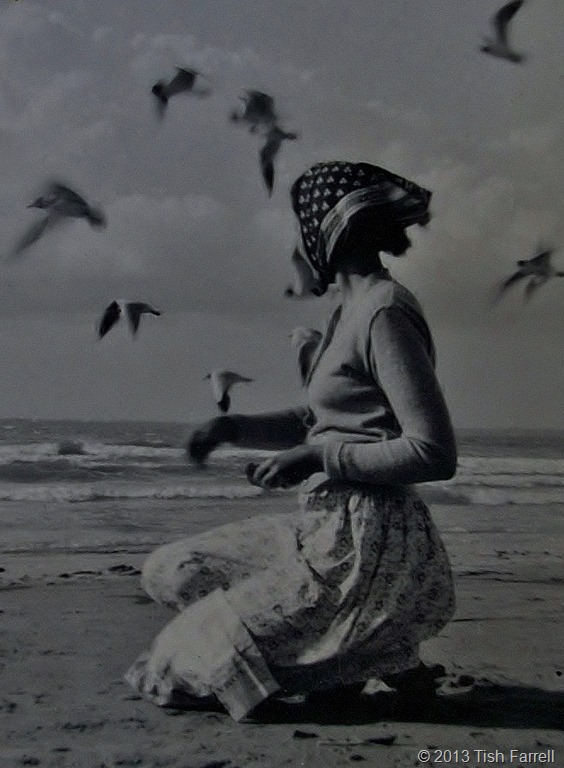
Some time-travelling is definitely called for  to unravel the context of this photo. It was scanned from a tiny loose snap found inside in my Aunt Evelyn’s photo album. Frustratingly, there were no accompanying details. I am sure, though, that it is Evelyn. Also the girlish pose would suggest late teenage years. Since she lived in Cranleigh, Surrey, and nowhere near the sea, and as I’m assuming that working people did not go on holiday during war-time, my guess is that this photo was taken sometime before the summer of 1939.  There is no clue either as to location, or who the photographer might have been. There is only this frozen moment in time as Evelyn throws bread to the gulls, the paper it was wrapped  in pressed by the breeze across her knee.

Evelyn died this autumn at almost 90 and a half. She lived a good and creative life despite many set-backs. Somehow this striking shot of her amongst the wheeling birds captures much of her spirit.

For  more of Evelyn’s story see earlier posts:

Grand girl, great prospects…?

The Many Faces of Evelyn Mary Ashford

Eve trig 1

© 2013 Tish Farrell

For more birds:

Ailsa’s Travel Theme Birds

MAX510’S BLOG

Zebra Designs and Destinations

Figments of a DuTchess

vackrare.com

Postcards from home and away…

Edge of the Forest

Wind in the palms on Kenya’s coral shores

Scan-130603-0061

Tiwi Beach, South Mombasa

*

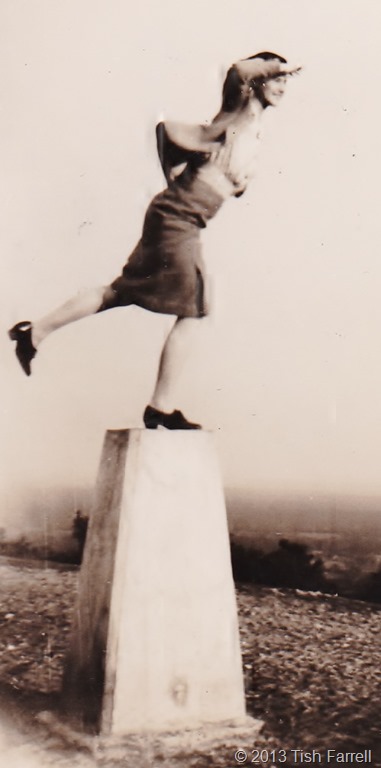
These leaning coconut palms and the photo of me holding on to my hat remind me that there is nearly always a breeze on Tiwi Beach. You need it too. In the hot season, around December to February, it makes the sticky tropical humidity bearable. It also keeps malarial mosquitoes at bay.

Scan-130520-0018

Don’t let go! Me, at Capricho Cove, too many years ago

*

But the tropical breeze is not so good for kite launching. The team leader never did get his kite airborne.; the wind endlessly beating it into the sand. No matter. I think we decided that kite flying was probably too active an activity, even at the day’s end. Much better to crack open a Tusker beer, one almost chilled in

Graham tries to fly his kite

Graham not flying his kite at Maweni Cove.

*

the beach cottage’s rackety  refrigerator.

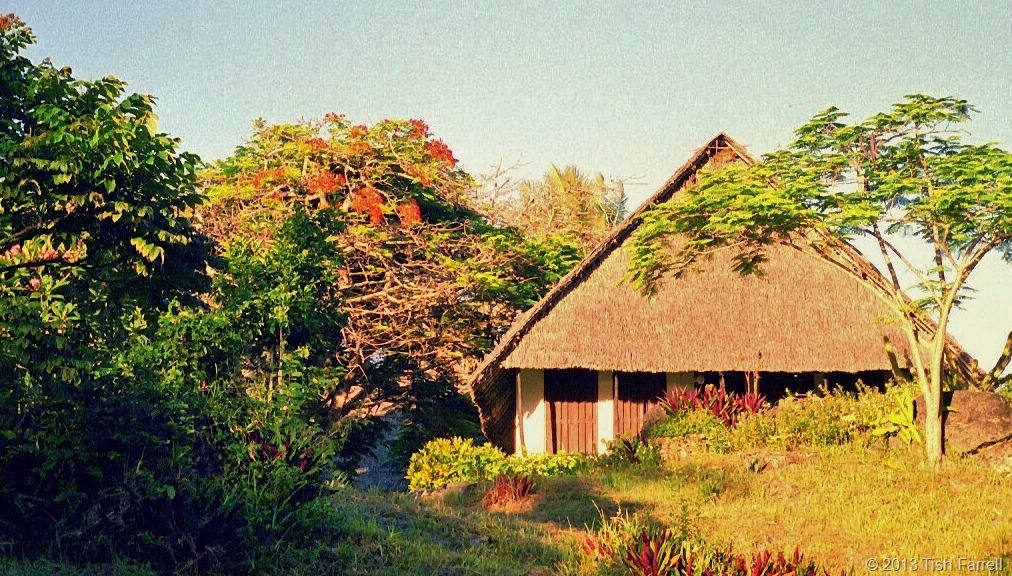
Maweni cottage at sunset

Maweni Cottages built in the Swahili style.

*

In the holiday season, and especially at Christmas, these beach villages tend to be the haunt of expatriates (especially aid workers), and mixed race families who do not always receive the best of treatment in Kenya’s fancy beach hotels. The cottages are designed to keep out too much sun and let in maximum draught: coral rag walls, high makuti  thatch, glassless windows and shutters with moveable slats. This is of course a European take on indigenous Swahili architecture.

I have written in another post about Swahili culture and how it might be said to have been shaped by the monsoon winds: the north-easterly Kaskazi that for centuries brought Arab merchant ships down the coast of Africa; the south easterly Kusi that blew them away again after a windless sojourn during which sailing dhows were beached and repaired and liaisons with African communities forged.

From this age-old congress between Arab seafarers and Bantu farmer-traders, came a blending and melding of body, mind and spirit that evolved into the urban coastal people whom we know as the Swahili. Their language, KiSwahili, is also a fusion: of Arabic and Bantu vernaculars, and as such, presents a fascinating exemplar of multicultural integration that has forged a distinct identity of its own. That’s something to ponder on, isn’t it: how different races can create together; how it took the monsoon wind to bring them together?

Salamu (Greetings)

Scan-130429-0098

A Word A Week Photo Challenge: Wind: go here for more wind stories and see the ones below:

http://irenewaters19.com/2013/12/19/a-word-a-week-wind/

http://hamburgundmeehr.wordpress.com/2013/12/18/a-word-a-week-photograph-challenge-wind/

http://geophiliac.wordpress.com/2013/12/18/a-word-a-week-photography-challenge-wind/

http://bambangpriantono.wordpress.com/2013/12/18/a-word-a-week-photograph-challenge-wind-angin-the-wind-blown-flag/

http://schelleycassidy.wordpress.com/2013/12/17/a-word-a-week-challenge-wind/

http://mang0people.wordpress.com/2013/12/17/a-word-a-week-photograph-challenge-wind/

http://emiliopasquale.wordpress.com/2013/12/16/a-word-a-week-photograph-challenge-wind/

http://sillarit.wordpress.com/2013/12/16/a-word-a-week-photograph-challenge-wind/

Related:

Weekly Photo Challenge: Culture (The Swahili)

Travel Theme: Beaches (Mombasa)

Yum Kaax to the rescue? Or how to hook reluctant readers…


Z Boston Harvard 11

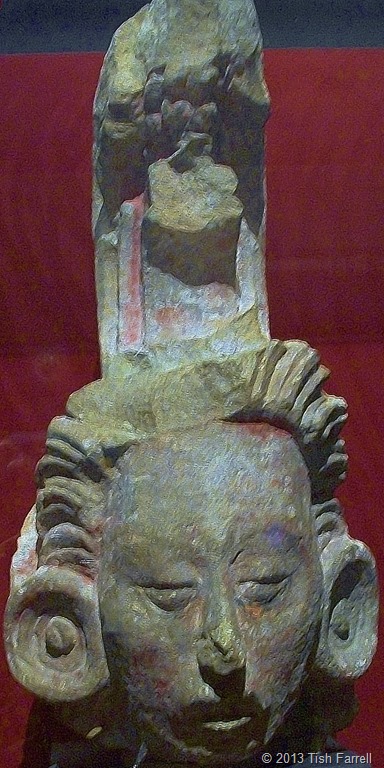
Yum Kax (Yoom Kosh) the Mayan Corn God

Peabody Museum, Harvard University

*

I may have mentioned once or three times that I write ‘quick-read’ fiction for  young teens who are not too keen on reading. For those of us who cannot imagine ever being without a book, it is often hard to understand why some people struggle to ever pick one up.


The thickness can deter some doubtful readers. Pages dense with text also intimidate.  Ransom Publishing  thus produce slim readers with plenty of white space on the page.  More importantly, perhaps, for teen readers, they are now also published in various e-book formats including Amazon Kindle, and e-pub and pdf versions at Hive.


The stories in the Shades 2.0 series are aimed at twelve-year-olds with a reading age of 9-10 years. They are around six thousand words in length, i.e. short story sized. But, to create interest and momentum, they are divided into  several chapters  (with cliff hangers), and then spread  unthreateningly over 64 pages.  The aim is to build reading muscles by creating works that are small in scale but big enough in content; mini novels if  you like: do-able and hopefully un-put-downable.

*

Shades covers for REPRO Batch 3_Layout 1

*

The stories in the series cover many challenging themes and in all genres – from the trials of an apprentice apothecary escaping London during the Black Death of  1665  (Plague  by David Orme) to Jill Atkins’ Cry, Baby which tells what happens when schoolgirl, Charlie, finds she is pregnant. 


And where does Yum Kaax come in? Well he features  in my story Stone Robbers, putting in a surprising appearance when Rico, the angry young hero of the tale, stumbles into a robber trench in an ancient Mayan city. But that’s all I’m saying, except to add that the part he plays in the story was  inspired by the real and accidental discovery of a magnificent Mayan mural at San Bartolo, Guatemala back in 2001.

Stone Robbers, then, is both an adventure and a quest.  Rico has a score to settle with an old adversary, Enzo. Then he discovers that antiquities thieves have been looting the ruined city near his home. Between Enzo and the stone robbers, lies yet another conflict: Rico’s fury at his Mayan heritage, this in a Guatemala where Mayan people are still second-class citizens. Suddenly it all seems too much to handle, and then the Corn God puts in an appearance…

*

Available on Amazon Kindle and on Amazon in book format.

Shades covers for REPRO Batch 2_Layout 1

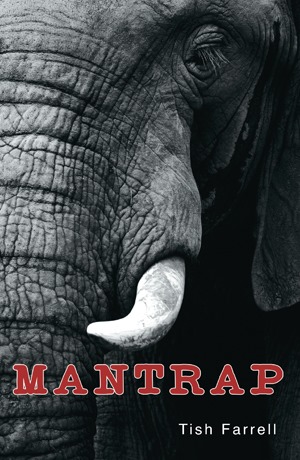
Also in the Shades 2.0 Series  Mantrap – a story about elephant poaching set in Zambia.


For more about Ransom and Shades 2.o series

Banner


See more bloggers’  YYY-stories at Frizz’s YYY-challenge 

Xmas Greetings!

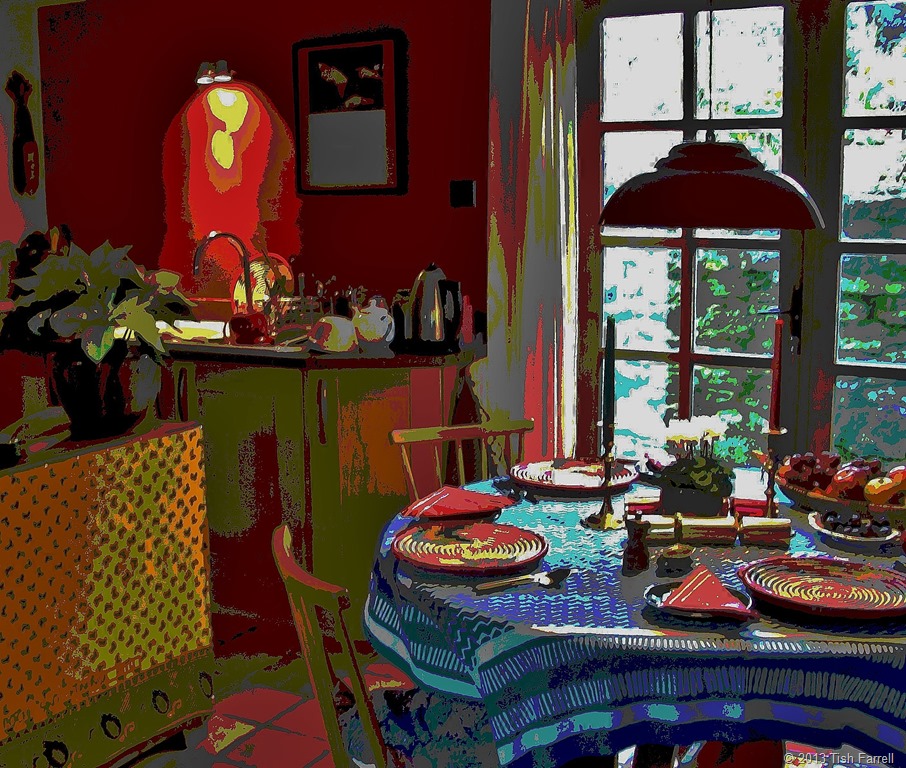
The heart of our home is our kitchen, and here it is last Christmas before the prosecco was opened and the cook had gone awry – i.e. postered not plastered. It is also  my Christmas card to all fellow bloggers and followers. It’s been wonderful getting to know you. I’ve learned so much, and enjoyed everyone’s splendid photos, insights and viewpoints. Thank you, too, for all your viewings of my blog and the many encouraging and heart-felt comments.

So here’s wishing you joy at the year’s end, and fine prospects for the year ahead, wherever you are on this wonderful planet.

Onwards and upwards, one and all. Keep sharing and caring on this our virtuous version of the world-wide web…

Tish x

______

Frizz’s X-Challenge: more Xs here and below

The Official Blog of Gathering Books: X for Xeric

Beyond the Brush: Xamining Xamples of the XXX Rating

Travel with Intent: X is for…Xenomania


Warrior Wind-Singer of Llyn


holiday 027


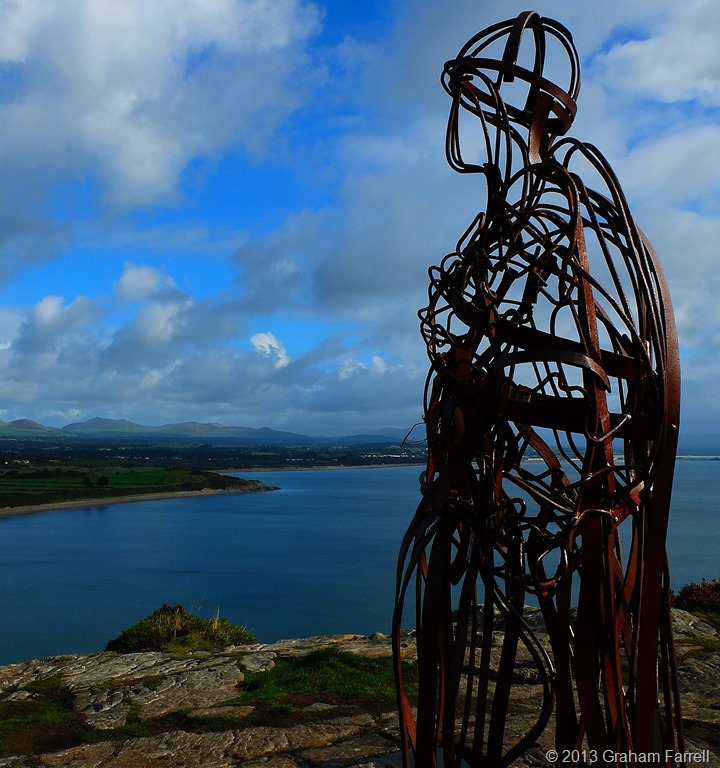
It is said that the Iron Man of Mynydd Tir y Cwmwd sings in the wind. I can believe it too: bold laments of long ago battles, a proud Celtic warrior fending off invading Roman governors and power-hungry English kings. Sadly, the cause was lost on both fronts, although at least these days Cymru,* Wales, has its own Welsh Parliament, and Cymraeg, the Welsh language, is nurtured, learned in schools and spoken widely with great pride. And so it should be. It is one of the world’s wonderful languages, the words formed from the rush of sea on rocks, the wind whistling down from the heights of Yr Wyddfa** (Snowdon, Wales’ highest mountain). Under past times of English domination much was done to stamp out the Welsh culture altogether. It is what invaders do – belittle, ban, override  heartfelt expressions of a conquered people’s culture.

{*roughly pronounced Kumree and Ur Oithva}

100_4536

Llyn Coast Path, Mynydd Tir y Cwmwd

*

Recently I have been writing much about preserving and respecting heritage (Valuing the Past…and also Is the Past past saving in The Heritage Journal) but I recognise, too, that nothing stays the same – at least not in the physical world. The Iron Man is a case in point.


The first man standing was a carved ship’s figurehead placed there in 1911 by Cardiff entrepreneur, Solomon Andrews.  Andrews had bought the nearby grand house of Plas Glyn-y-Weddw some twenty years earlier and turned it into a public art gallery, the first of its kind in Wales. Today the house is the home of the wonderful Oriel Gallery, run by a trust, and the place where Welsh creativity is celebrated.

holiday 026

Oriel Plas Glyn-y-Weddw from Llyn Coastal Path

*

The ship’s figurehead did not fare so well. In 1980, after it had been set on fire by vandals, local artist, Simon Van de Put replaced it with a figure of an ancient warrior made from recycled sheet steel. As had been envisaged, the warrior , exposed to the sea winds, weathered away until only his boots remained. But in 2002 reinforcements arrived, delivered to the headland by a helicopter and winch.

Today this new Iron Man surveys Cardigan Bay with the kind of stance that says  he means to stay. In fact I’m not altogether certain that he might not also be a woman. This warrior, then, is the work of local craftsmen Berwyn Jones and Huw Jones.

To me the rope-like ironwork  suggests sinew and muscle. It is thus simultaneously  symbolic of both decay and regeneration; a rare act to pull off.  The tilt of the head is dignified, but wistful too. I would like to feel I have the courage to stand up behind this guardian.

I am not Welsh of course. As far as I can tell my ancestors were Anglo Saxons and Normans. But if we do not celebrate the best of our culture, our own and other peoples’, then think how much is lost – all those things that make us  truly well nourished humans – the poem, the saga, the dance, the metaphor, the hymn, the riddle, the rune, the touching words, the art – all that makes us recollect and care, confers insight and wisdom, gives us heart and good heartedness. For now though I take joy in the knowledge that when the wind blows across Mynydd Tir y Cwmwd (The Headland), even though I am not there to hear it, the iron warrior sings.

100_4534

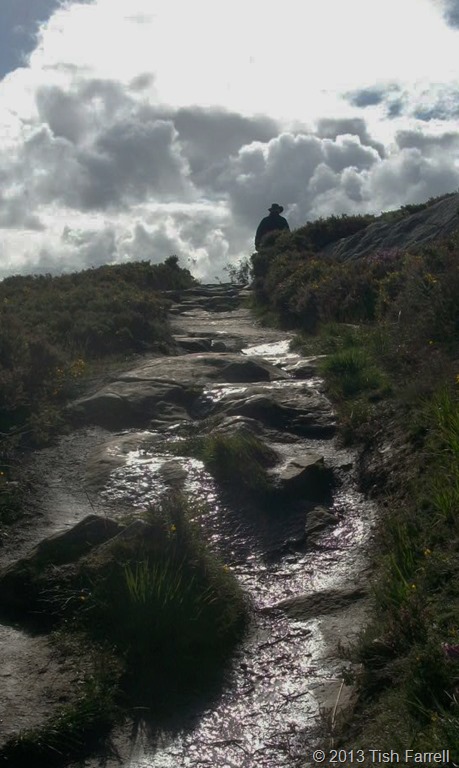
The cliff top path to the Iron Warrior


© 2013 Tish Farrell

Related:

For more on Oriel Plas Gwyn-y-Weddw

http://www.oriel.org.uk/

http://www.oriel.org.uk/en/home/lost-woodland/69-winllan-history


Frizztext’s WWW Challenge

And also: Ailsa’s Travel Theme: Sky

Elecommunication: so many connections

Scan-131109-0009.jpg

Elephants: “The animal which surpasses all others in wit and mind.” Aristotle

*

Do you remember when you first discovered there were such things as elephants? And didn’t childish intuition tell you at once that these animals were among the world’s most wonderful creatures?

Over the last few decades scientists have proved that they are in fact wonderful – and in all sorts of ways, not least their ability to communicate over large distances. Then there is their highly developed matriarchal society. They are also one of the most intelligent species on earth. They are good at problem solving. There are many cases of their altruistic acts. For instance they have been known to help wounded humans in the bush, even going so far as placing exposed individuals in the shade, and then keeping guard over them against predators.

But proof apart, it is probably anyway beyond most people’s comprehension that some forms of humanity see elephants purely as a resource – killing them for ivory, or a trophy head to brag about to their shooting chums.
Scan-131109-0004.jpg

The word elephant, I’ve just read somewhere on Google, comes from the Greek word elephas meaning ivory, so already we have a clue as to the literate world’s  (one hesitates to use the word ‘civilized’ here)  once primary relationship with elephants. But then this is not the only kind of man-elephant relationship. The killing of elephants is not always about the pursuit of luxury goods. Indigenous African peoples, such as the small-statured Mbuti hunters of the the Congo forests, have long hunted elephant for food, and also possibly scavenged dead ones. One beast, killed once in a while would keep a hunting band going for many days as well as providing large amounts of meat to trade with farming neighbours for other goods.

The fact that there have always been hunters like the Mbuti who will tackle an elephant, makes them in turn desirable allies and trading partners to less brave outsiders who crave only the ivory. In East Africa, from at least the start of the first millennium AD, Arab dhow merchants relied on locals like the Akamba people to bring ivory to the coast to trade. In the nineteenth century the Swahili slavers set off into the interior to grab for themselves a combination haul of humans and ivory, the poor human captives being forced, while they still lived, to carry the elephant tusks hundreds of miles back to the coast.

There are far older stories too.  The tomb biography of Prince Harkhuf of Elephantine records that four thousand years ago this Ancient Egyptian general headed at least four major expeditions into the African interior. One objective was to test the waters for a take-over of the neighbouring Kingdom of Nubia. But there were also valuable resources to garner: ivory, leopard skins, ebony, precious stones. One expedition went beyond the Mountains of the Moon, the Rwenzori Mountains on the borders of Uganda and Eastern Congo, and so into the territory of Mbuti hunters.

The tomb account includes a letter from Harkhuf’s Pharaoh, Pepi II Neferkare  who, on becoming Egypt’s ruler at the age of six, longed for nothing more than his own pygmy,  he “who danceth like the god”. The letter contains strict instructions as to the pygmy’s care, and especially on the voyage back down the Nile so that he does not fall in the river. Anyone who has read Colin Turnbull’s The Forest People, will know that the Mbuti are renowned for their performances of complex polyphonic singing and energetic dancing conducted in praise of their Forest Creator. Neferkare’s letter would suggest that the Mbuti were already well known to the Egyptians thousands of miles away, and the primary source of this relationship was mostly likely to have been the Mbuti’s provision of forest produce including ivory.
Scan-131109-0022.jpg

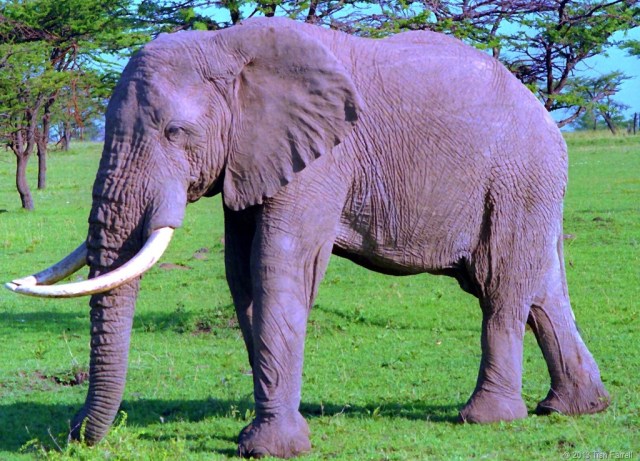
But the biggest assault on elephant-kind has all to do with the arrival of the gun. A major killing spree began in the late 1800s in the Congo – then a private fiefdom of Leopold II of Belgium (think Joseph Conrad’s Heart of Darkness and the Congo River stations set up especially to export ivory and wild rubber from the forest hinterland). In East Africa the slaughter began at a similar time under British colonial rule – first British and European aristocrats out to make their fortunes, then by hunters,like John Hunter,  employed by the colonial administration to protect settler plantations from elephant damage. The ivory hunters of course always sought out the animals with the biggest tusks. So much so, that when the likes of Denys Finch Hatton and aviator, Beryl Markham began scouting for ivory from the air, the big bulls of Tsavo were reputed to hide their tusks in the undergrowth whenever they heard a plane.

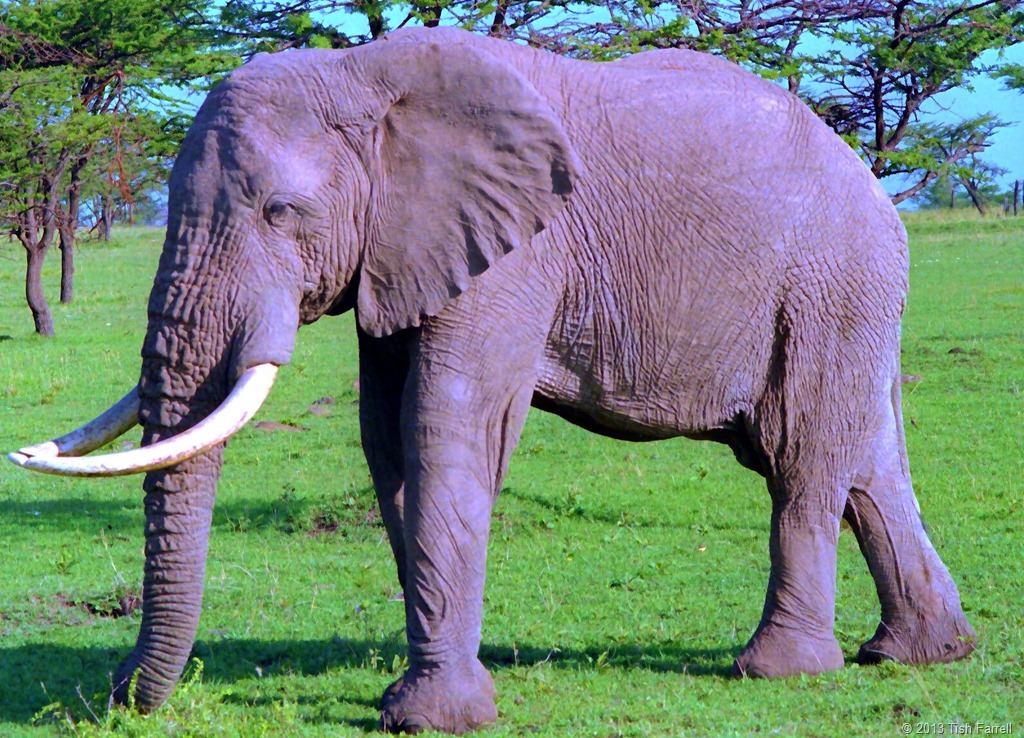
What was taking place, then, was a most unnatural selection. The biggest and best elephants had the biggest and best ivory. The gene pool of present day elephants has thus been ravaged by a century of mass killing. After the colonial era, the armies of civil war conflicts across the continent, continued the job started by colonial sportsmen and administrators. After the Idi Amin regime in Uganda when much wildlife was decimated, the tusks of the elephant population that gradually re-established itself were either puny or did not develop at all. And an elephant needs his tusks – not least for rearranging the landscape (clearing trees to favour grass growth) and mining for water sources and essential mineral salts.

And why did this killing begin? Because humans thought that ivory re-fashioned into billiard balls, piano keys, and objets d’art was more valuable than embedded in living, breathing elephants. Some people still think this.

001 (3)

But back to the elephants and those extraordinary things that scientists have been discovering about them. For one thing, the infra-sound throat rumbles that vibrate through the earth can convey information to other elephants at least six miles away. It would appear, too, that they can pick up seismic movements over far greater distances than this. Researchers have observed that when it started thundering in Angola, thus signalling the start of the rains and fresh browse in that quarter, elephants one hundred miles away in Etosha National Park, Namibia, set off there. Apparently the tips of trunks, toes and heels are especially sensitive to vibration. Working Asiatic elephants have also been known to detect tsunamis and make for higher ground, thus saving any humans who happened to be riding on them at the time.

When it comes to communicating amongst the immediate herd or with potential predators, elephants have a whole range of calls and gestures, depending on the circumstances. These include ear-splitting screams and trumpeting, rumbles and grunts, crying and barking, head shaking and ear-flapping, trunk slapping, dust-kicking, throwing missiles, ear spreading, standing tall, and making mock and real charges.

Scan-131109-0021

While their eyesight is not acute, and especially in bright light conditions, they have a keen sense of smell. An elephant will  thus continuously read its environment and, using the tip of its trunk like an antenna, decode all manner of messages by scanning urine, faeces, saliva, and the secretions from their fellows’ temporal glands (found on the side of the head mid way between the  eye and ear). Also, when it comes to acts of aggression from humans, elephants will remember these and continue to identify such aggressors by their smell.

And that’s the other marvellous thing. Elephants do remember. For much of the year the males and females live separately usually only congregating for mating purposes. The females roam in small family groups led by an old matriarch. Within that matriarch’s head is a lifetime’s accumulated wisdom that she uses to manage her daughters, granddaughters and their offspring, and so keep them healthy and safe. Elephants left bereft of their elders through culling or poaching, are known to flounder and panic without the old ones’ guidance. 

Scan-131109-0032

010 (2)

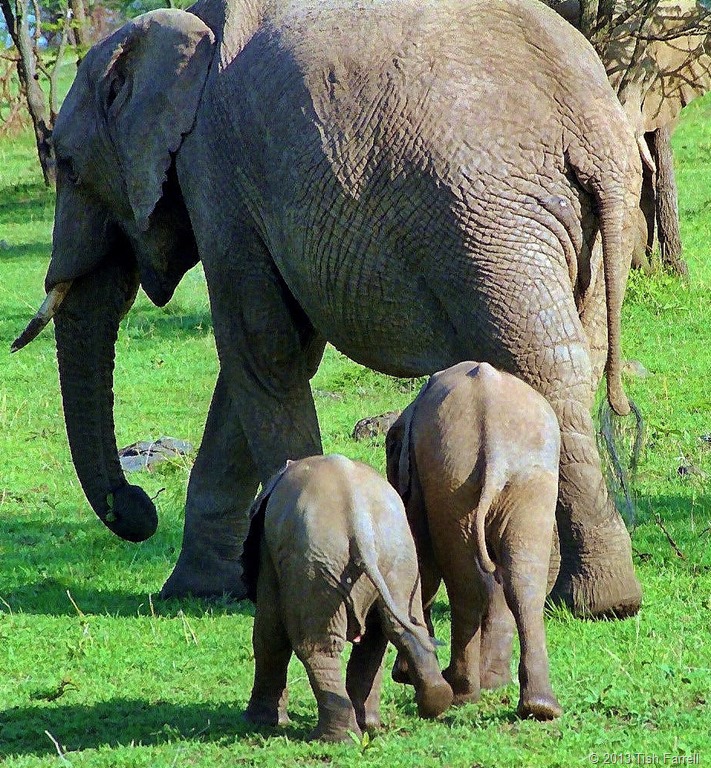
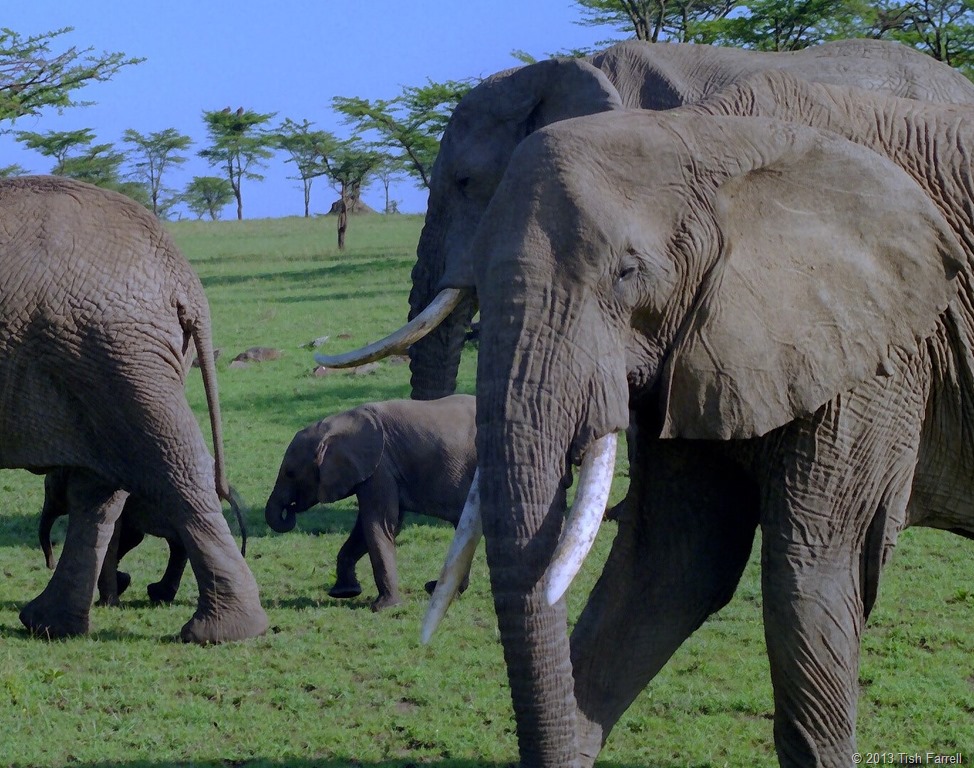
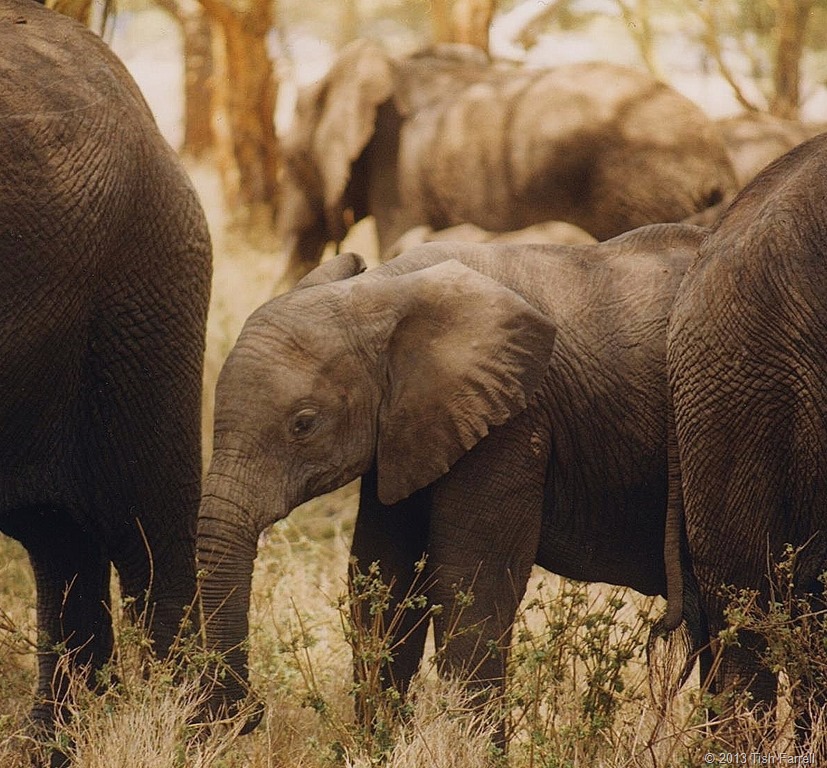
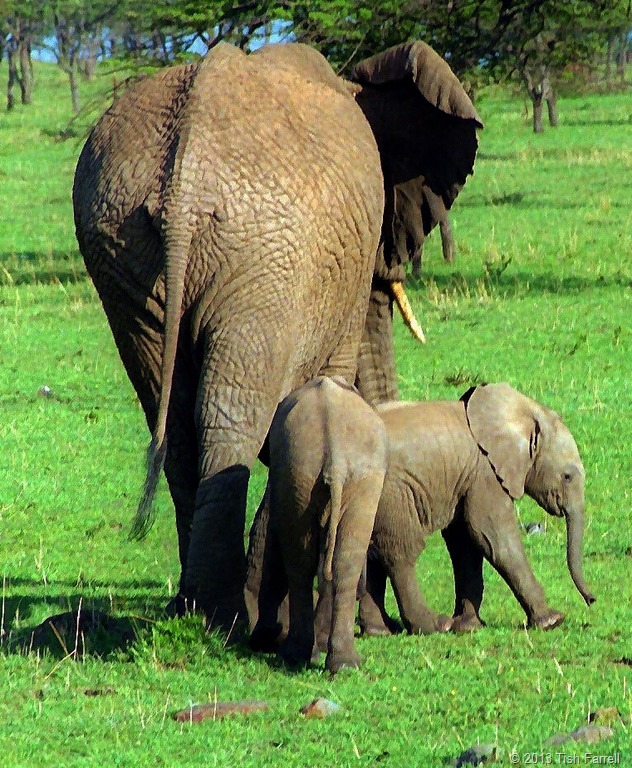
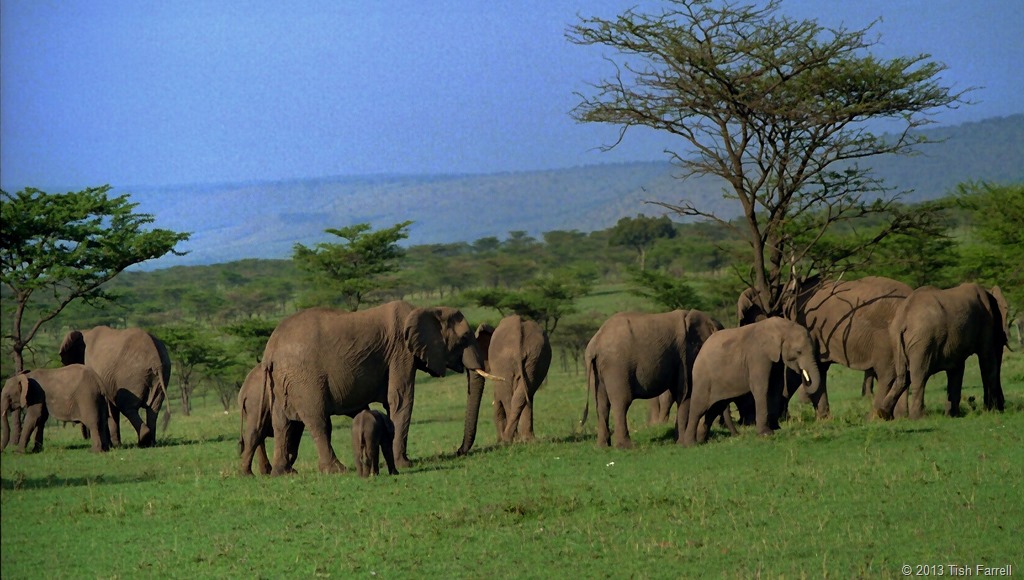
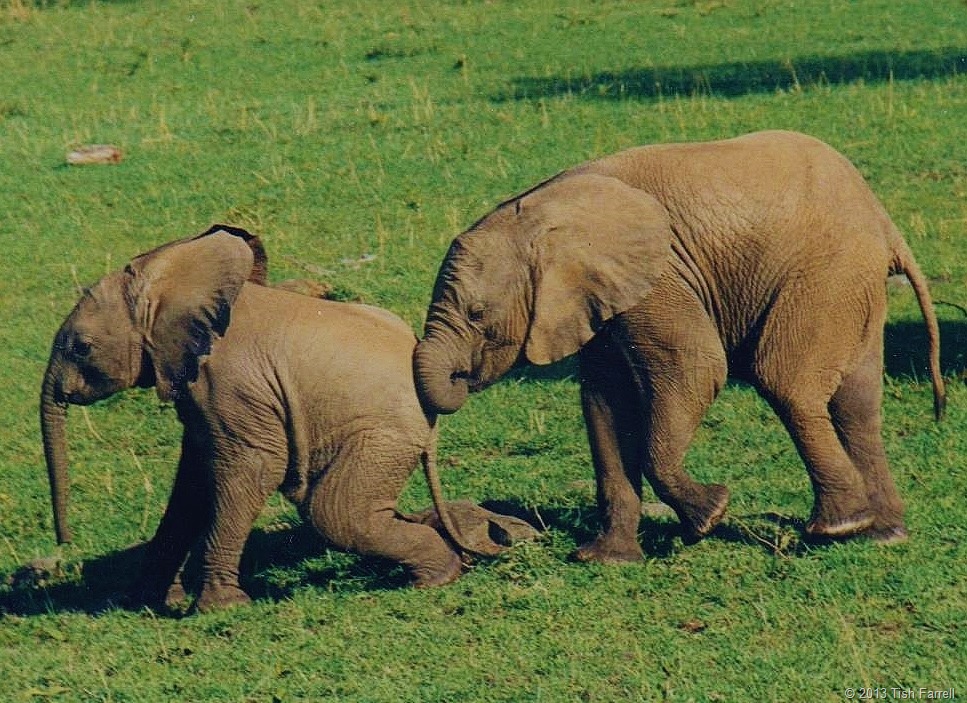
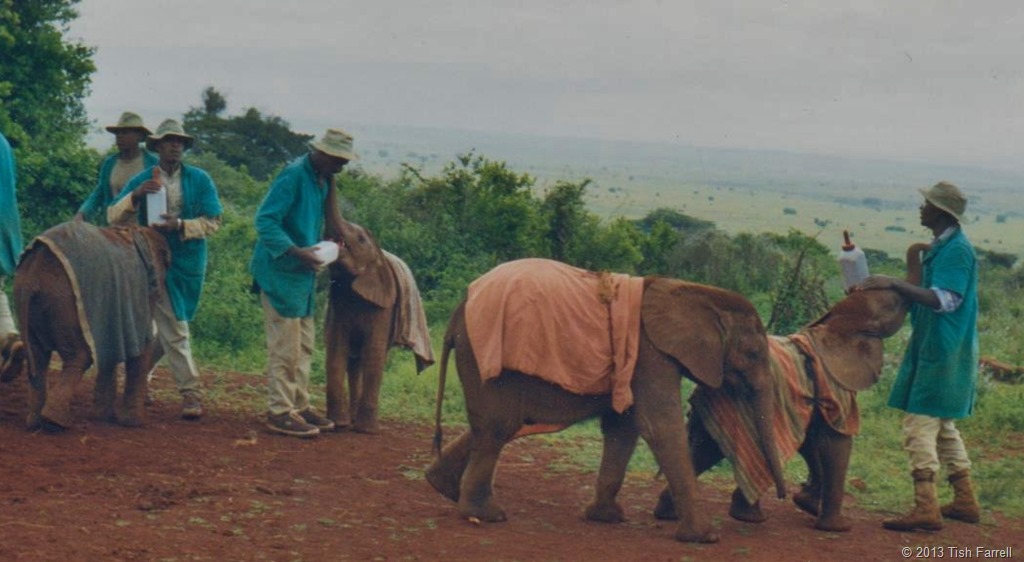
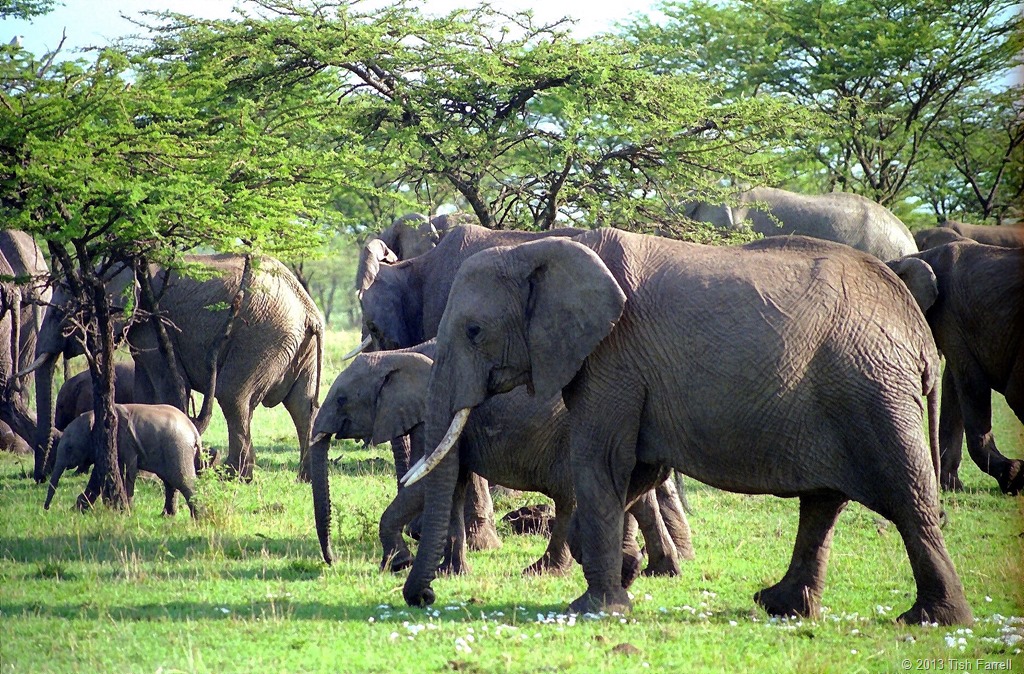
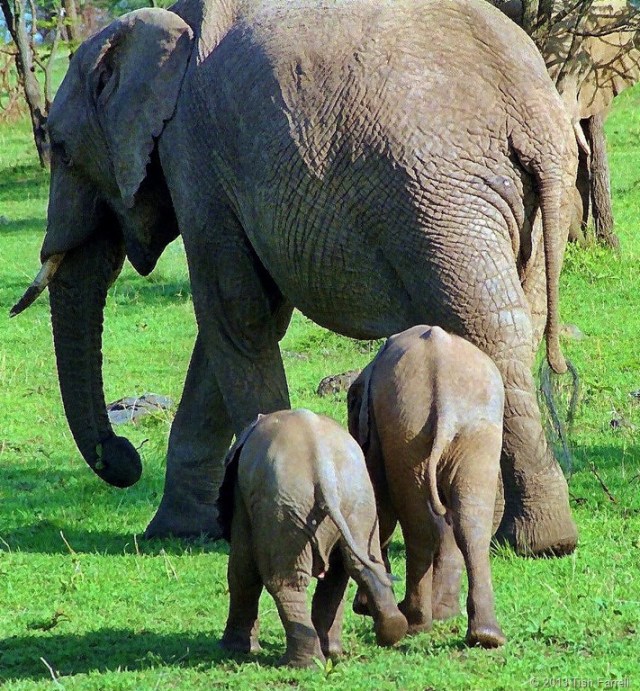
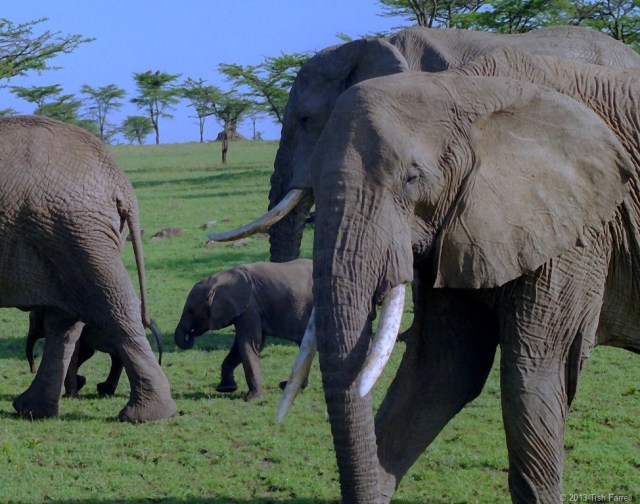
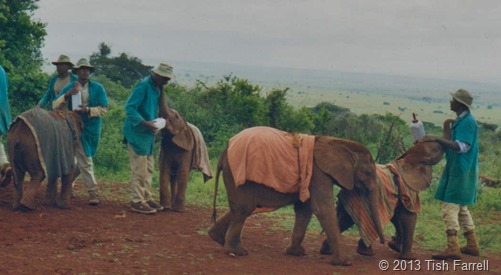
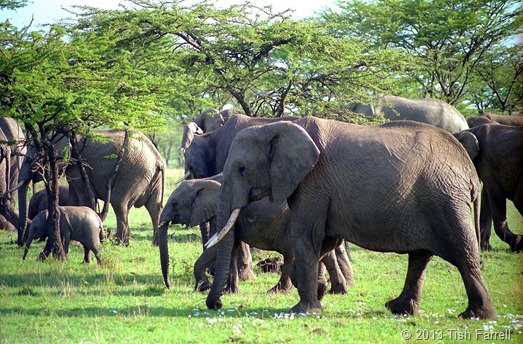
As you can see from some of these photos, mostly taken outside the national park  in Kenya’s Maasai Mara, elephants are not only highly sociable, but also very tactile. They spend much time wiggling against each other and touching each other with their trunks. Even older elephants like to play, and there are a whole range of gestures that they use to invite general romping. As the work of Daphne Sheldrick has shown at her Nairobi elephant orphanage, an orphaned elephant will die, not so much because it is short of food, although the right infant milk formula is very important, but because it does not have a continuous show of affection and reassurance from family members.

Sheldrick has learned how to provide for this vital need by assigning a human keeper-parent to every baby; duties, apart from feeding and playing, include spending the night with their charges. When the time comes to repatriate adolescent elephants to the wild, the lack of matriarchal knowledge creates a considerable challenge to making a viable transition. This was well shown in the BBC series The Elephant Diaries.
018

The Elephant Orphanage, Nairobi

*

More sobering to learn is the fact that elephants, not only have a similar life-span to us, but they also do understand death. In the past, conservationists have found to their cost that elephants are utterly traumatized by witnessing culling events. Where elephants have been wounded by poachers, their comrades will stay beside them and try to lift them or feed them grass. Once an elephant has died, the herd may remain with the corpse of several days. The young ones have been seen to cry. The survivors will then cover the dead one with branches, leaves and grass. During colonial times, a Kenyan district officer once confiscated a poachers’ stash of ivory, only to find that in the night, the local elephants broke into the store and carried off the tusks.

There is, though, another side of the elephant-man story, and especially where they compete for the same territory. In a single night’s  foraging, elephants can wipe out a whole season’s crops in a farmer’s smallholding, and that means starvation for the family concerned. They will also kill humans if they consider themselves provoked. Bulls in must are quickly irritated and are especially dangerous at such times, as are mothers with small calves.  In poor communities poaching ivory can become an attractive proposition where local bigwigs and foreign buyers seem to be offering them a small fortune to do so. The only way to protect both elephants and would-be local poachers is to give communities reasons to protect elephants. That means a fair cut of tourist dollars to provide for schools and clinics and a a better standard of living all round.

There are many thousands of elephants still roaming African, but they are always under threat. Most nations’ wildlife parks are under-resourced when it comes to vehicles, equipment and manpower. Much protection of wildlife is in fact done by owners of private game reserves in conjunction with local communities.  In the meantime, we need to thank those African rangers, men and women, who daily risk their lives for often little pay, to protect their countries’ wildlife from human rapine. They are indeed true heroes.  We might also stop to ponder on whether some of the resource grabbers funding the poachers  might not have closer connections to our own lives than we care to admit.

Ailsa’s Travel Theme: connections

© 2013 Tish Farrell

For more about ivory poaching:

Dear Kitty. Some blog Ivory trade legal in the USA
Scan-131114-0004

For more about elephants in general: Elephant Voices

Related posts:

Elephants, E-books and Enticing Reluctant Readers  #amwriting

Songs from an Inland Sea: “On Wenlock Edge”

This week’s Word Press writing challenge, with its musical theme, has set off a whole host of notions. In fact this may just be the post where all the strands of my  ‘writer on the edge’ blog come together. This, though, is only a proposition and by no means a promise.  One thing I can promise:  there is some very fine music at the end. And for those of you who do not know the  English composers Ralph Vaughan Williams (1872-1958)  and George Butterworth (1885-1916), then please consider this an early solstice gift. And if by chance you do not care for it, or indeed anyway, by all means pass it on.

So to return to the notions.  Those of you who  have read my past posts will probably know that I live on the edge of  Wenlock Edge, a twenty-mile limestone scarp that bisects the county of Shropshire from the River Severn above the Ironbridge Gorge, to Craven Arms on the borderland with Wales. Aeons ago this now wooded, much quarried ridge was once a shallow tropical sea lying somewhere off East Africa. Today, and especially now through bare wintery trees, you can look out from its summit and scan a great panorama – the farm fields, villages and hills of Shropshire.

*

As I’ve said in other posts, there is a lot of history in this place – over 400 million years’ worth. Too much to embrace. But in the recent past (geologically speaking), you might have looked out from the easterly end of the Edge onto the smog-laden valley of Coalbrookdale as the Quaker ironmasters stoked their blast furnaces and helped fuel an industrial revolution. Travel back a further 1500 years and to the north you would have gazed on the impressive public buildings and sprawling settlement of the Roman city of Viroconium. Or in earlier times still you might have witnessed the building of the great Iron Age hill forts on the Wrekin and in Mogg Forest, or perhaps glimpsed some Bronze Age smiths plying the ancient ridge-top trackway en route for Wales.

*

The Edge, then, is full of spirits, and  it is not surprising that it has long inspired artists, writers and composers. And so we come to the music, or rather, we come first to the work that inspired the music – A E Housman’s A Shropshire Lad.  This collection of sixty three poems has been described as a gift for composers. The poems are written in the style of traditional ballads. And if at first they seem too obvious in their rhyme and rhythm, then look again. These are songs of loss and fleetingness – lost youth, lost love, the soldier’s death. That they are set against some scene of suggested rural perfection only heightens their poignancy. The work, too, somehow anticipated the bleak waste of the Great War, and so it was that, when the time came,  A Shropshire Lad went with many a soldier into the trenches.

Housman’s  sense of melancholy and loss stem from his own life: his mother died when he was twelve, his brother Herbert was killed serving in the Boer War, and his deep love for another man was unrequited. Nor did his work A Shropshire Lad have a very good start. Although it has remained in print since publication in 1896, in the beginning Housman could not find a publisher and had to pay to have the first five hundred copies printed. At first, too, there was a lukewarm reception. But within a few years, and much to the writer’s surprise,  its popularity suddenly grew. This in part was due to the fact that several composers seized on some of the poems and set them to music.

In 1909 came Vaughan Williams’ song cycle On Wenlock Edge. The work’s title is taken from the opening line of poem XXXI: On Wenlock Edge the wood’s in trouble. You can hear the storm-driven trees in the opening of the first video clip where English tenor, Ian Bostridge goes on to talk about his recording of the work with Bernard Haitink.  You also see him in rehearsal singing one of the most moving poems. It is written in the voice of a ghostly young ploughman returning home to see how his girl is faring. Here are the first two stanzas.

XXVII

“Is my team ploughing,

That I was used to drive

And hear the harness jingle

When I was man alive?”

*

Ay, the horses trample,

The harness jingles now;

No change though you lie under

The land you used to plough.

*

The entire Vaughan Williams song cycle sung by Anthony Rolfe Johnson is performed in the third video below. Other composers inspired by the poems include Samuel Barber and Ivor Gurney (The Western Playland and Ludlow and Teme). I could not find clips of these works but I did find George Butterworth, who was a friend of Vaughan Williams. He set eleven of the poems to music including Is my team ploughing. He also composed the orchestral rhapsody A Shropshire Lad. It is yearning, elegiac piece, performed in the second video and accompanied by Shropshire scenes. Butterworth himself was killed on the Somme in 1916, his composer’s career barely begun.

So,  you may ask, how does this all fit with ‘Tish Farrell – writer on the edge’? Well I suppose it comes down to this. As a fiction writer, or indeed a blogger, my focus is ever on the evocation of place (both through time and space) and how it resonates through the lives of the people and events I write about. And so I love the fact that the place where I live and have known most of my life has inspired so much creative work. And, indeed, continues to do so. In fact, I’m planning to feature more of it on this blog – the artists of the Edge. I am, anyway, fascinated by the process by which, in wonderful synergy, one person’s work inspires another’s creative response, thus building into a  body of cross-referencing works. See what good things we can make when we listen in good faith to each other.

Wenlock Edge of course has its own music. I hear it most when I’m working on my allotment – the windrush in the woods, the mewing buzzards, the calls of rooks and jackdaws, and through it the chiming of the church clock. I screen out the traffic sounds of course. So here we have it: the rural idyll that never was, the music of Vaughan Williams and George Butterworth evoking the peculiarly human need to long for something we cannot have, and finally Housman’s  own words from poem XL:

   Into my heart an air that kills
From yon far country blows:
What are those blue remembered hills,
What spires, what farms are those?

That is the land of lost content,
I see it shining plain,
The happy highways where I went
And cannot come again.

*

And now, courtesy of Gutenberg Press, here is your copy of  A E Housman’s A Shropshire Lad.

100_2138

Frizz’s S-Challenge

Weekly Writing Challenge: Moved by Music

© 2013 Tish Farrell


Two by Two in Maine: too many reasons not to go

IMG_0234

Two whooshes of spray Portland Head

*

IMG_0164

Two  yellow gables in Ocean Park

*

IMG_0075

Two windows on the Downeaster – Boston to Portland ME

*

IMG_0152

Two azure light streaks on Portland Library

*

IMG_0366

A bear and her bucket, Boothbay Botanical Gardens

*

The Farm 31a

Two ‘Ls’, a Bean and a Boot in Freeport

*

IMG_0317

Two spans over the Kennebec River, Richmond

*

IMG_0119

Pumpkins two by two with a few extra ones, Portland

*

IMG_0207

Two blurry men or is it the photographer?

*

IMG_0213

Two fences with dangling bits, keeping the beach tidy at Orchard Park

*

IMG_0315

Beach house supper: lots of things in twos

*

IMG_0294

Two watch the sea on Old Orchard Beach

*

111

Two embrace, Ogunquit Museum of American Art

*

110

Two zinnias and a monarch

*

Two chairs and another chair in Ocean Park

*

Portland Head

Two promontories on the way to Portland Head

*

The Farm 14

Two armchairs with art by Matt Hausmann, family collection, Richmond

*

Related:

Only One Ogunquit: the little gallery by the sea

Marvellous Multicoloured Maine

Posted in response to:

A Word A Week Challenge: Two

More twosomes here:

geriatrixfotogallery

Elizabeth Krall

Woolly Muses

Ese’s Voice

rajnishmishravns

Steve says…


Island of Old Ghosts

014

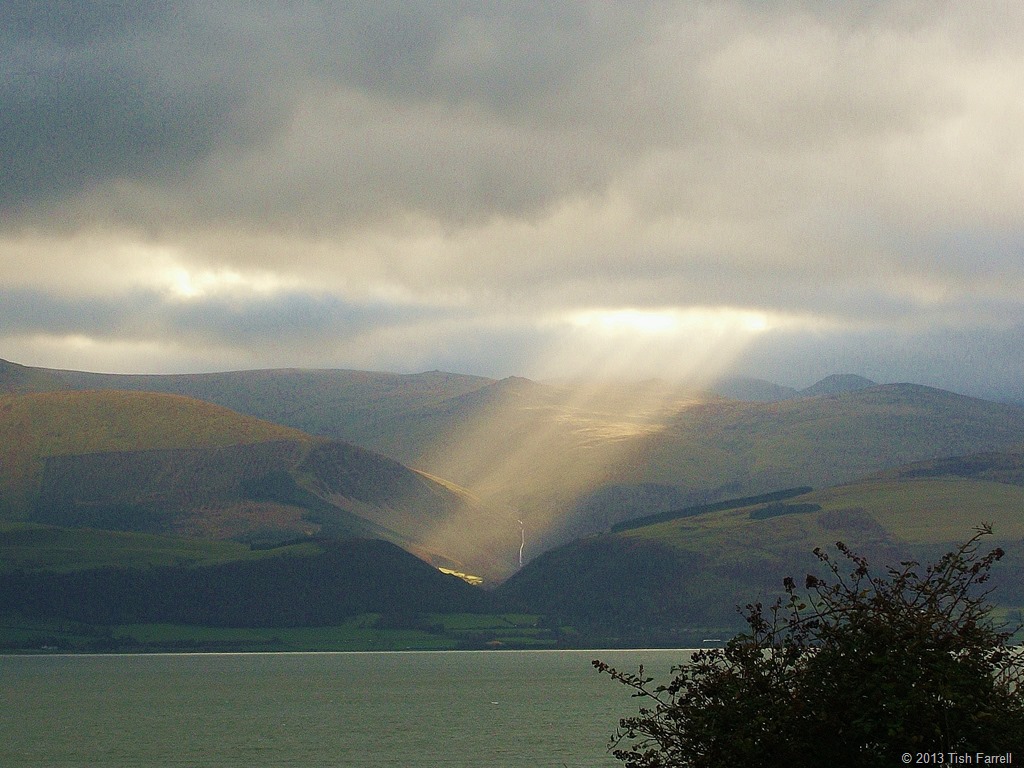
There are ancient, bloody-minded spirits here on Ynys Môn, the island where the Celtic druids made their last stand during the Roman conquest of Britain. This place, otherwise known by its Viking name of Anglesey, lies just off the coast of Wales, the narrow Menai Straits between. One Christmas morning we came here to Penmon on the island’s north-east tip. The light was very strange that day, darkness already gathering at noon. Then across the Straits, above the mainland, the sun bore down like a searchlight.

002.jpg

Penmon is the site of an early Christian monastery, founded in the 6th century by St Seiriol, but the roots  of Ynys Môn’s sacred, and now mysterious practices, are far older than this. Across the island there are Neolithic and Bronze Age chambered tombs, and then there is the spectacular Celtic Iron Age hoard from Llyn Cerrig Bach, a seemingly sacrificial lake offering of weapons, chariots, slave chains, and highly crafted regalia. The Romans claimed that in their groves the druid priests made human sacrifices, but little is known of these people beyond the gory account in the Annals of Tacitus. What is known is that the Romans conducted a ruthless campaign against the Celtic clans of Wales. Anglesey, with its powerful druid priests, was the last bastion of British resistance. Here is how Tacitus describes the Menai Straits battle of nearly 2,000 years ago. Suetonius Paulinus, Governor of Britain, was in command.

He therefore prepared to attack the island of Mona which had a powerful population and was a refuge for fugitives. He built flat-bottomed vessels to cope with the shallows, and uncertain depths of the sea. Thus the infantry crossed, while the cavalry followed by fording, or, where the water was deep, swam by the side of their horses.

“On the shore stood the opposing army with its dense array of armed warriors, while between the ranks dashed women, in black attire like the Furies, with hair dishevelled, waving brands. All around, the Druids, lifting up their hands to heaven, and pouring forth dreadful imprecations, scared our soldiers by the unfamiliar sight, so that, as if their limbs were paralysed, they stood motionless, and exposed to wounds. Then urged by their general’s appeals and mutual encouragements not to quail before a troop of frenzied women, they bore the standards onwards, smote down all resistance, and wrapped the foe in the flames of his own brands. A force was next set over the conquered, and their groves, devoted to inhuman superstitions, were destroyed. They deemed it indeed a duty to cover their altars with the blood of captives and to consult their deities through human entrails.

Annals of Tacitus translated by Alfred John Church and William Jackson Brodribb 1884.  XIV chapters 29-30. You can read the original work by following the link.

*

008

For more about Anglesey