More Ancestor Sleuthing In High Peak: The Hatter Of Smalldale . Robert Jackson . 1786-1857

P1080336cr

You can waste spend hours, days, weeks pursuing long-dead forebears. I think we might call it obsessive compulsive distraction disorder. On the other hand, on the plus side,  the activity can present very particular lenses through which to glimpse hitherto unthought-of aspects of our past. But more of this later.

In the meantime, my current pursuit has turned up a host of great grand elders, down to the 10th generation, the result of following only one branch of a great great grandmother’s tree. She, by the way, was Mary Ann Bennett of Bradwell, married to George Brayley Fox of Callow Farm, Highlow. And one of the odd things I’ve discovered is that her grandfather and the 4th great grandfather I never knew I had, one Robert Jackson, hat maker and native of the lead mining village of Smalldale, Bradwell (1786-1857) spent his last years as tenant of an isolated farm in the rugged uplands between Highlow Hall and Abney, a next door neighbour in fact of fellow Duke of Devonshire tenants, my Callow Fox farming ancestors.

Robert Jackson wasn’t alone at the Oaks. John and Mary, children from his second marriage to Hannah Eyre were living with him, both around the thirty age mark in the 1851 census. Whether their mother ever lived there is unknown. In 1841 the family still had the hat business in Smalldale, but by 1848 Hannah was dead, having seemingly died in another place altogether, several miles from either Oaks or Smalldale. I’ll come back to that.

Old_Bradwell

Bradwell in the late 1800s

*

For geographical reference, the nearest city to High Peak is Sheffield, only a few miles north east of Hathersage (top right corner); Manchester to the north west:

Bradwell Grat Hucklow Highlow map

*

This next photo, looking across to Highlow from above Hathersage, shows the general lay of the land between Callow and The Oaks (Offerton Moor above Callow).

P1080998 Callow Farm

And a closer view of The Oaks farm taken from the web:

Photos kindly supplied by Geograph, and may be reused subject to this creative commons usage licence Oaks Farm

So: a remote quarter to hive off to after 60 odd years of living and working in the fume ridden, busy industrial environs of Smalldale and Bradwell. The lonely farm that the hatter took on was only 32 acres, presumably all grazing in that exposed location, and although it was by no means unusual for Derbyshire folk have at least two principal occupations: e.g. farming and lead mining; farming and butchery; farming and millstone cutting or scythe-making or joinery or running delivery services, the late-day switch from hat making to upland  stock-raising at first seems surprising.

But then what about the famous Bradda Beavers!

On the other hand, one of Robert’s mainstay hat lines would have been the Bradda Beaver, a sturdy, brimmed hat made from thickly felted sheep’s wool. Their manufacture began in Bradwell and Smalldale the 17th century, and for a time the export of this highly durable headgear to London for further shaping and finishing was extremely lucrative. The trade supported several Smalldale and Bradwell hat-making families over many generations (In particular the Evans and Middleton families).

The hats were also sold in large numbers to local miners since they were both water resistant and stalwart enough to support a tallow candle for deep-mine prospecting. Robert’s own father, Christopher Jackson, was a lead miner, but his mother, Sarah Middleton, may well have belonged to Smalldale’s hat-making Middleton dynasty, and perhaps it was through her that he took up hatting rather than mining.

Bradda Beaver Peak District Mining Museum

Bradda Beaver Photo: Peak District Mining Museum

*

The Bradda Beaver in the photo is a rare survival and now to be found in the Peak District Mining Museum in Matlock. The felting process apparently involved many rounds of heavy labour – carding and steaming and planking the fleeces. It is likely, then, that Robert Jackson knew his sheep. It is also likely, in the face of declining business, that he wished to secure the farm tenancy with his son’s future in mind. And sure enough, after Robert died in 1857, the records show that John remained at the Oaks until his own death in 1888.

Interestingly, father and son both put this address on their respective gravestones: ‘The Oaks, Highlow’, albeit in different graveyards (Great Hucklow and Hope). It makes me wonder if there isn’t just a touch of ‘social climbing’ by association – even in death? Highlow with its gentry and aristocratic connections was a location with cachet – both of status and romance. And there was always the annual tenants’ ball at Chatsworth to attend. Family legend has it that one year, around her eighteenth birthday, my Great Grandmother opened the ball with the Duke of Devonshire.

But back to gravestones and other odd discoveries.

P1050588

In the midst of ancestor searching a week or so ago my external hard drive died. It was while I was trying to assess the extent of file loss that I came across the photo above, taken several years ago on a ramble round Derbyshire. For some reason I’d opted to go to the small hamlet of Great Hucklow, halfway along the lane between The Oaks and Bradwell. I’d  simply wanted to get the gist of the village where I knew Fox family members had been lead prospecting in the early 18th century.

When we got there it was all surprisingly rural and, in search of something particular to explore, we’d ending up pottering around the redundant Methodist Chapel’s tiny burial ground, and that’s when I found this prominently placed stone, thought the addition of the Oaks address noteworthy as I also knew the Callow Foxes had farmed there in the 17th century, and so taken the stone’s photo. It is thus rather strange to now find I’d had passing ‘communion’ with the remains of an actual ancestor, though why he and Hannah chose to be buried there is a mystery. Until that point, as far as I have discovered, all family rites had taken place in Church of England parish churches; but now here was a non-conformist element (much in favour in mining communities). And what was Hannah’s connection with Great Hucklow. Had she died while visiting relatives there and her burial become a matter of some urgency?

Then I discovered Robert Jackson had left a will, which for the small sum of £1.50 could be ordered on line from the Government will and probate office. Often old wills are short on specifics, especially if there is a surviving wife. This one, though, threw up more surprising aspects, not least several bequests involving the former hatter’s ‘lead mines and shares in lead mines’. In other words he was leaving the rights, rents and income from a series of lead seams or rakes, along with barns and cow houses, in various named fields in Great Hucklow.

The beneficiaries apart from Mary and John, were ‘dear daughter Jenny Bennet’ from Robert Jackson’s first marriage, and ‘dear granddaughter Mary Ann Bennet,’ whose own mother, Hannah, Jackson’s eldest daughter from the first marriage, had died soon after giving birth. Jenny Bennett, as it turns out, was both Mary Ann’s aunt and her step-mother, having married her dead sister’s husband, Richard Bennett, lead miner of Bradwell, a year after Hannah’s death.

Phew! What a rigmarole. But presumably it was Jackson family proximity in Highlow that provided the opportunity for Gt Gt Grandmother Mary Ann Bennett to meet George Brayley Fox. She was only 22 when she married him at Hope in 1860, and he was pushing 40. Not only that, an elderly widowed Robert Fox was still head of the Fox family at Callow. He had lost his own Mary Ann back in 1845, she the locally named ‘London Lady’ of unknown origins whom he had wed by marriage bond at Southwell Minster, Nottingham in 1812.

P1080338

At the time of the 1861 Callow census Robert Fox is 83. It is perhaps telling that the newly married George and Mary Ann are recorded as ‘domestic servants’ (shades of Wuthering Heights?) Mary Ann is probably about to produce her first child, and it seems more than likely that step-mother Jenny Bennett and daughter Harriet, who are named as visitors, are at Callow for this very good reason. When the first son arrives he is christened Robert Jackson Fox, so honouring both grandfathers.

And finally a Great War connection…

There’s surprising historical postscript to the Smalldale-Bradwell hatting business. It’s what I meant by those unexpected lenses through which we glimpse small and telling historical details. The trade in Bradda Beavers struggled on in the late 19th century. Only one Derbyshire company survived into the twentieth century. But then came 1914 and the horror of trench warfare and the pressing need for soldiers’ helmets. The earliest ones were made in the nearby steel-making city of Sheffield. I came across this account from Julie Bunting in The Peak Advertiser 14 Aug 1995:

Long after hat making ended in the Peak, the design of the old Bradda Beaver was resurrected in a manner which deserves wider recognition. It came about in the early days of the First World War when British soldiers at the front were in desperate need of suitable helmets. Research centred on the steel making city of Sheffield, where in 1915 Walter Sissons, of W. G. Sissons & Company, silversmiths, suggested a pattern to the Munitions Committee. The die for the prototype was made from a plaster cast of an old Bradda hat, taken by Walter Sissons junior, who lived in Bradwell. The pattern met with instant approval and the Trench Warfare Department placed an initial order for one million helmets at 4s 6d each.

Of course establishing a die for the first Sheffield production was only the start. The Tommy’s ‘tin hat’, also known as the Brodie helmet, underwent several modifications through the course of the war.

Alfreton War Memorial 1

Photo:  Sleeping Gardens: War Memorial ~ Alfreton, Derbyshire


BradwellLeadMiners

And here are a few examples of Braddas as worn by some of the older members of the Bradwell Rake Head miners in the 1860s. (Photo: Bradwell Ancient and Modern 1912 by Seth Evans.)

Rights to mine for minerals in Derbyshire were held by the ruling monarch, a prerogative commonly known as the ‘King’s Fields’. These rights were mediated and overseen via rulings from the Barmasters and jurors of the Barmote Courts set up from 1288 at a number of locations across the lead field. I think it would be fair to say that lead miners did not care to answer to too many other people. There is still a surviving courthouse or Moot Hall in Wirksworth. Meetings are still held there. One way or another, besides the miners and their monarch, all social strata had some involvement in the lead trade during the heyday from the 17th to the early 19th centuries – dukes, gentry, parish priests, merchants, blacksmiths, joiners, lawyers, shopkeepers, candle makers, publicans, farmers…and yes…hatters.

Wirksworth Barmote Court 1814

copyright 2021 Tish Farrell

Related posts:

So what did Great Great Grandfather George Brayley Fox keep in his barns in 1892?

Lost down the time-travelling rabbit hole with Great Great Aunt Sophia


Historical sources: census returns for Hathersage, Highlow, Eyam, Bradwell; records of Hope and Eyam Parish Churches; Robert Jackson’s will; Seth Evans Bradwell Ancient and Modern 1812

Pose Perfect

img_8433

This week Lisa at Our Eyes Open  asks to see photos of birds we love. To be honest pheasants are  not a favourite, though their plumage is certainly magnificent. What I love about this pheasant is that he stopped to pose by the Sweet William. It shows him off so very nicely, don’t you think. After that I wasn’t too keen on him, and reverted to grumpy gardener mode. The photo was taken near my allotment plot and I didn’t need him nibbling and pecking among my veggies.

Bird Weekly

Life In Colour: Yellow

img_2856_thumb

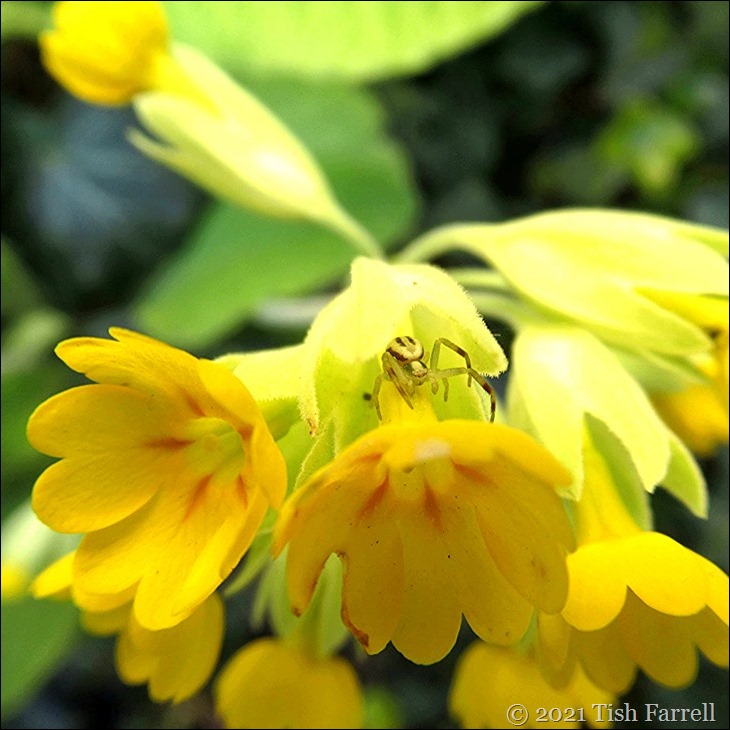
The wayward Polar Vortex has apparently been behind the recent frigid weather events in the northern hemisphere. But at last there’s been a shift in the UK: from locked-down locked-in C minuses to double-figure plus. Even so, it’s hardly warm and the garden, though defrosted, looks as if it’s been shot-blasted. And so to encourage it and me into thoughts of spring, I’m posting this very exuberant sunflower. Soon be time to sow some seeds for this year’s crop.

In the meantime I’m wondering if the Dyer’s Chamomile in the guerrilla garden over the garden fence will have survived the cold. It made such a show a couple of years ago, though I remember when I sowed it, the packet described it as a short-lived perennial. I’m thinking a fresh sowing won’t hurt. There are times when you can’t have too much yellow.

IMG_2793

IMG_2858

Over the garden fence: Dyer’s Chamomile and Townsend Meadow under wheat


Life in Colour: Yellow

Elementally Exhilarating And A Cautionary Tale

Bodnant daffs cr5

A scene of things to come in the northern hemisphere – daffodil extravaganza. But not just yet. The leaves may be pushing up through the soil, even a few buds showing, but spring is on hold, as in icily gripped. We had more snow last night, only a dusting, but the temperature feels Siberian. So to brighten things up I’m reprising these photos from a visit to Bodnant Garden in North Wales, taken in early spring a few years ago.

I’m lucky to still have them.

Bodnant daffs cropped

Which brings me to this week’s moderate, though potentially horrendous disaster on the computer front, the bottom line of which is: do not put blind faith in an external hard drive for storage purposes! Back up the back up. And then back that up too.

I’ve had so many ‘lost file’ situations over the years – dying computers being the main cause. So I should have known not to keep my photo files on an external hard drive without some consistent backing-up routines. I’m also thinking that leaving the thing mostly attached to the PC was not a good idea – not least with Windows 10 wretched updates so often on the rampage. They seem to create total system muck-ups before and after they happen.

Anyway, the storage failure is not as bad as it might have been, and I have enlisted  the aid of an IT whizz to see if he can extract the files. I can also retrieve some lost shots from my blog though I’m not looking forward to doing that. In the meantime more cheering daffodils are called for. It was wonderful to see the effect they had as soon as people clapped eyes on them – and not just the children.

Bodnant daffs cr7

Bodnant daffs cr10

Life In Colour: YELLOW  Jude has given as a new colour to think about in February. Guaranteed to lift the spirits.

Our Town ‘On The Farm’

P1060230

The path to Bradley Farm

*

Walk out of Much Wenlock in any direction and you will almost instantly find yourself amongst crop fields or pasture. Our town is quite literally ‘on the farm’. The field name behind our house on Sheinton Street says it all: Townsend Meadow. In the nineteenth century it really did mark the town’s end. I also remember when there was still a working farm, Brook House Farm, in the town centre, one of the last of its kind. These days the farmyard buildings have been barn-converted and gentrified. I recall glancing through a newly installed window in the roadside barn and seeing a small grand piano standing where once winter-housed cattle huffed in their straw filled stalls. Odd to say, but when the farm went, it seemed the town had lost its heart.

Brook House Farm 17th century last town farm

after the harvest

IMG_1479

There are also small fields within the town boundary. Our scenic route to the shops features the path beside the Cutlins, the meadow where various members of the Highland Cattle clan, aka the MacMoos, are often installed.  And then, when you reach the kissing gate at the bottom of the path, and after all decide not to go shopping, you can turn up the lane by the Priory ruins and be eyed up by sheep in the Priory Park. Baaaaah!

P1060951


Cee’s Black & White Photo Challenge: anything farm related

Changing Seasons: This Was January 2021

IMG_2091

Apologies for the swift change in temperatures after yesterday’s balmy temperatures on the Zambezi. Here in Wenlock we have been suffering frigid twirls and swirls of Polar Vortex: snow, sleet, wind, frost and in between, torrential rain. But we’ve had some sun too with china blue skies. Here’s the month’s round-up:

Snowy landscapes:  Windmill Hill (including the above with this mysterious snow tree), Linden Walk and Linden Field, over the garden fence…

IMG_1646

IMG_2048IMG_2012

IMG_2110

IMG_2096

IMG_2040

IMG_8993


*

Birds and beasties…

IMG_1675

IMG_1689

IMG_1845

IMG_1869

IMG_2087

IMG_2089


*

Frost art including some very fancy ice works created by my allotment water butt…

IMG_1890br

IMG_1885

IMG_1876sq

IMG_2135

IMG_2136

IMG_1725sq

IMG_1729

*

And the first signs of spring…

IMG_2076

The Changing Seasons: January 2021

Dreaming Upstream Zambezi

Zambezi sundowner trip

There were many things we saw and did while living in Zambia and Kenya that were hard to process – even head on; even when fully present. It was as if the actuality dial in one’s brain kept sliding out of tune, sparking dissonance: am I here or am I simply observing myself here, courtesy of an imagined translocation from the pages of some hyper-real travelogue. I mean to say, how could I possibly be taking a sundowner boat ride up the Zambezi. How had I come to this place where I never expected to be?

We were living in Lusaka, Zambia, at the time. That posting had been unexpected too, notice given only on the day we exited Kenya after ten months there. Suddenly Graham was on another short-term attachment, this time to the EU Delegation, managing the distribution of food aid to drought-stricken villages. Then one day an old school friend, en route from the UK to New Zealand, wrote suggesting he and partner make a visit, but he could only get incoming flights to Harare. OK said G. We’ll drive down and pick you up.

And so began a fantastic make-shift safari – out of Zambia into Zimbabwe – crossing the border (and downstream Zambezi) at Chirundu then heading south for Harare. Then on further south through Masvingo to Great Zimbabwe. After that a loop west and north through Bulawayo, the Matopos and Hwange National Parks and back to the Zambezi and the Zambian border at Victoria Falls. And so one evening we found ourselves on a sundowner cruise, ambling upstream between Zimbabwe and Zambia. But then again perhaps that wasn’t really me.

IMG_0004_NEW

IMG_0003_NEW_0001

*

I couldn’t end this final ‘up’ post in Becky’s inspiring month-long challenge without a downstream view too. Look out! Here we go – up and over the knife edge – Victoria Falls – Mosi-oa-Tunya – The Smoke That Thunders. Way-haaaaay…

IMG_0001vic falls

zambezi header


Square Up #31  A big big thank you to Becky for helping to keep our spirits up all through January