For Love Of Patrinia ~ Six On Saturday

Wildegoose 1

These first few photos aren’t from my garden (if only), but here to illustrate gardener’s lust [1] ~ that moment when a new plant begins to root itself in the psyche, aka mental compost, until you know that you simply have to have it.

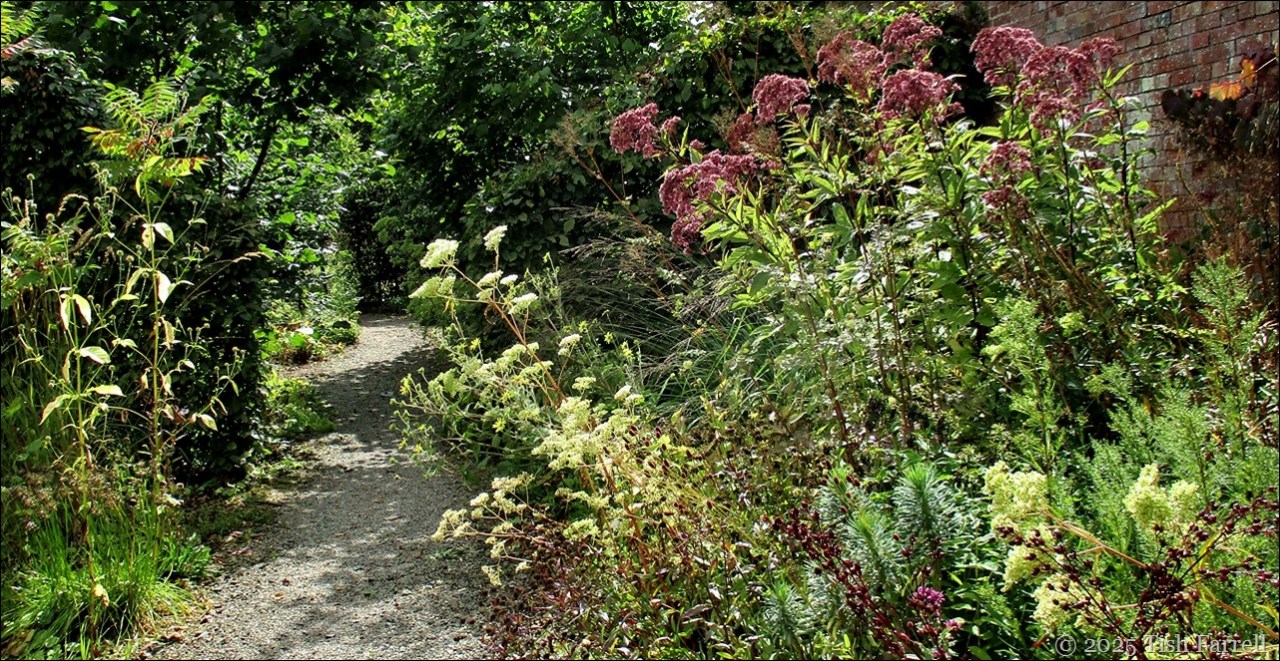
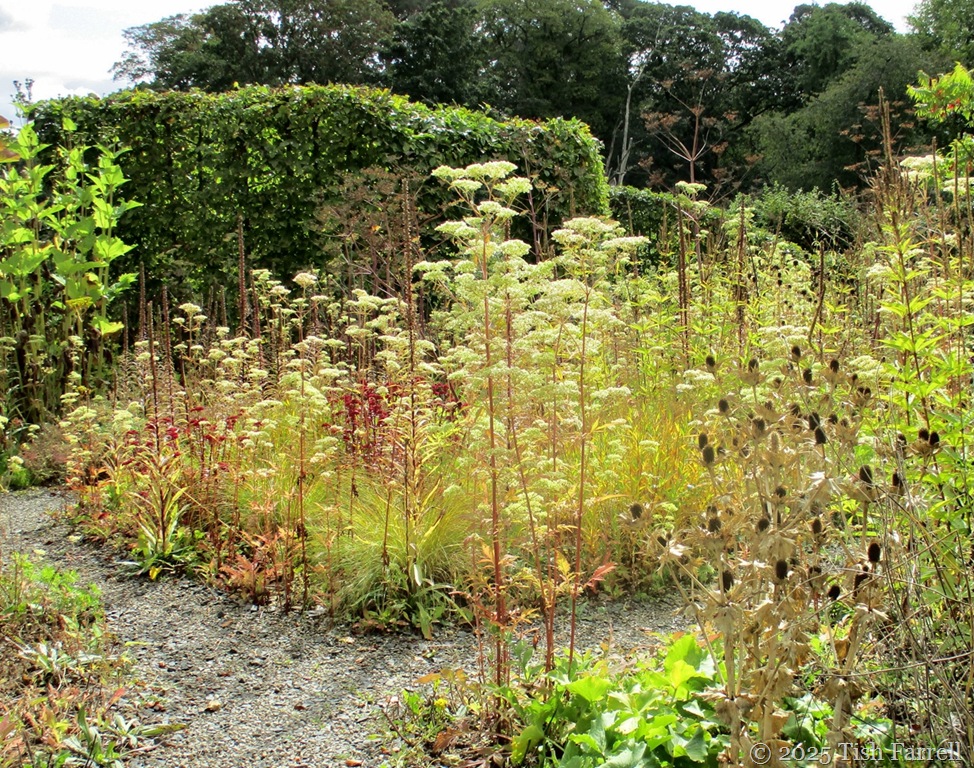
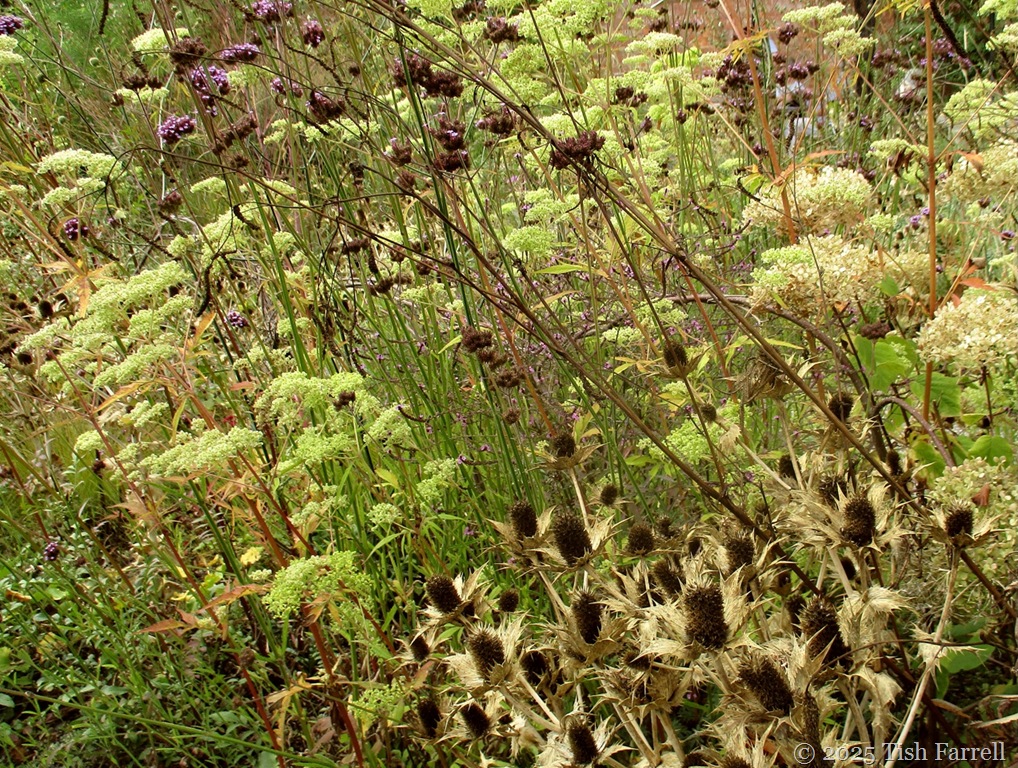
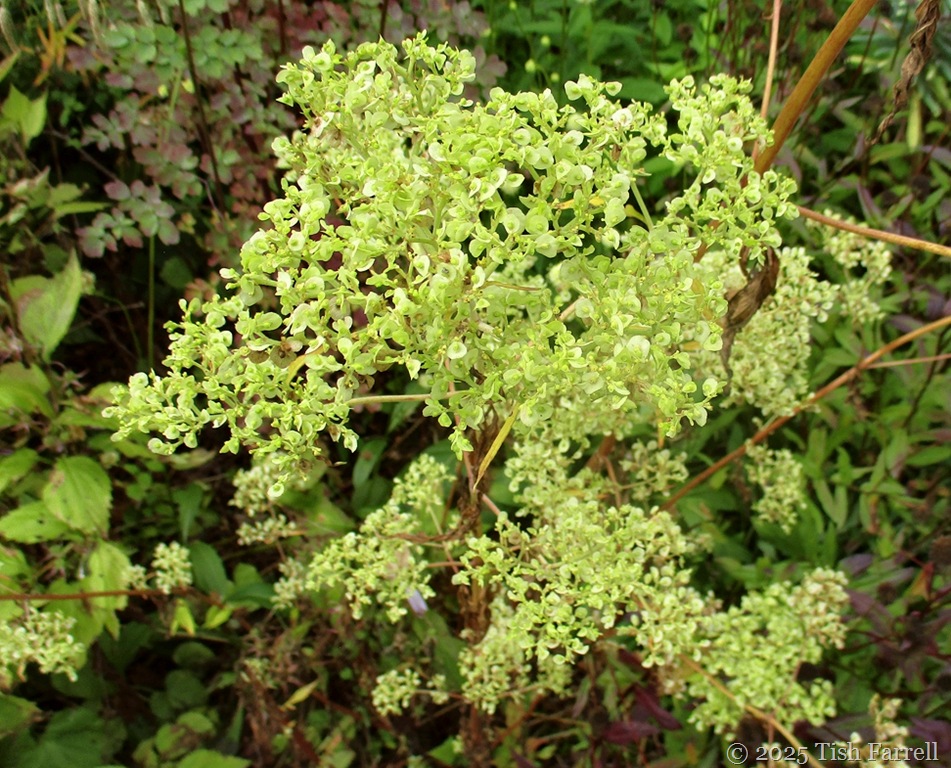
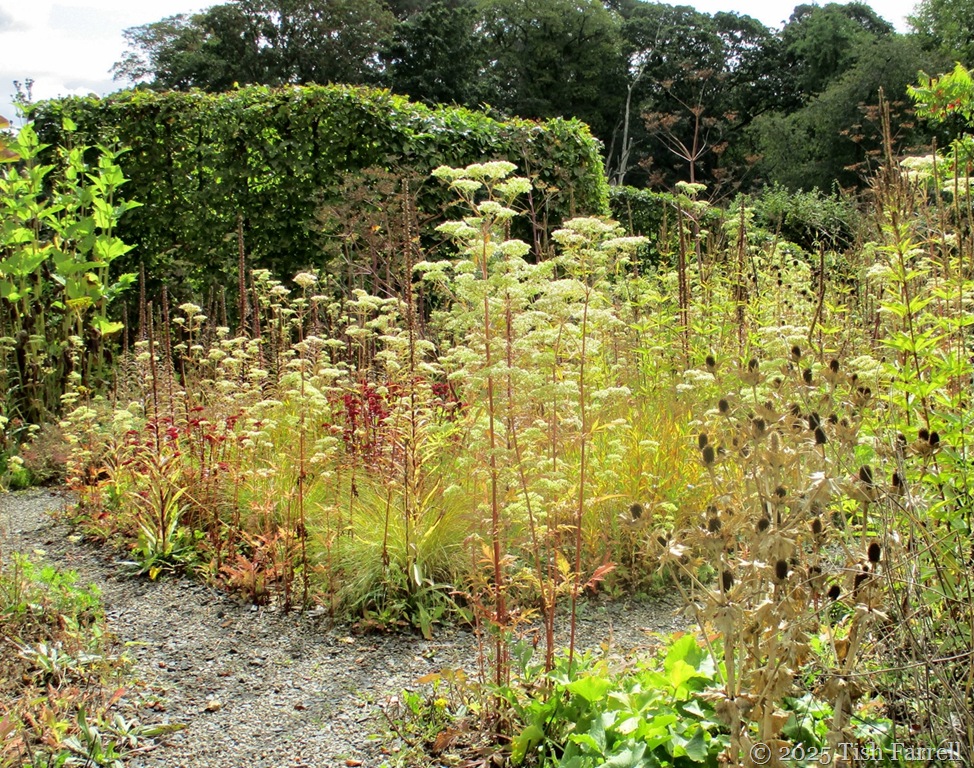
Well, that’s what happened last week when we went to visit the walled garden of Wildegoose Nursery here in Shropshire. (See previous 2 posts). It was a hazy day, but everywhere the garden was alight with the frothy, apple green seedheads of Patrinia monandra/aff punctiflora [2] a tall and gracious plant, and one quite new to me. (And yes, it does seed itself everywhere, but I was told unwanted stems pull up easily). 

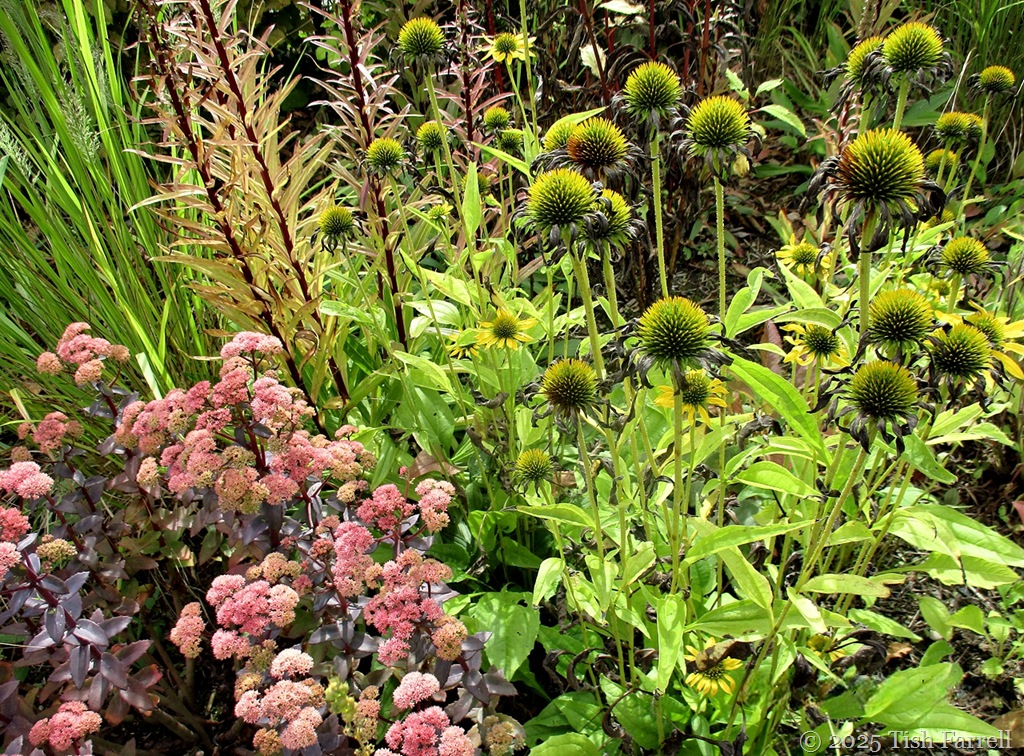
At Wildegoose it sets off not only the reds and bronzes of late summer sedums, Eupatorium, and Heleniums, but also the fading stems of Verbena, Sea Holly, Echinacea and Hydrangea:

Patrinia 4

Patrinia 3

It’s a perennial, clump forming (50cm wide), hardy plant, with spreads of tiny yellow flowers from July to September. The seedheads, though, can last well into the winter. The plant was first collected in China by the Gothenburg Botanic Garden, or so the Beth Chatto site tells me.

And the reason I was looking there, was because it was only later when we arrived home, and I was scanning through the photos that I suddenly saw how lovely Patrinia might look in our so much smaller garden. And I knew Wildegoose was about to close for the winter, and that we were unlikely to get there before it did…And so to postal sources, although of course the plant, if ordered now, will naturally come pruned of those lovely seedheads…(Oh, the self-inflicted anguish of the besotted and too impatient gardener!)

*

Meanwhile, back at The Gables we’ve been having a week of thunderous downpours with intermittent spells of warm September sunshine; April showers on steroids. The lawn is quite rejuvenated, although I hate to tell it, now it isn’t rock hard, I’m going to dig more of it up to make a new strawberry bed. (Psst. Don’t tell Graham).

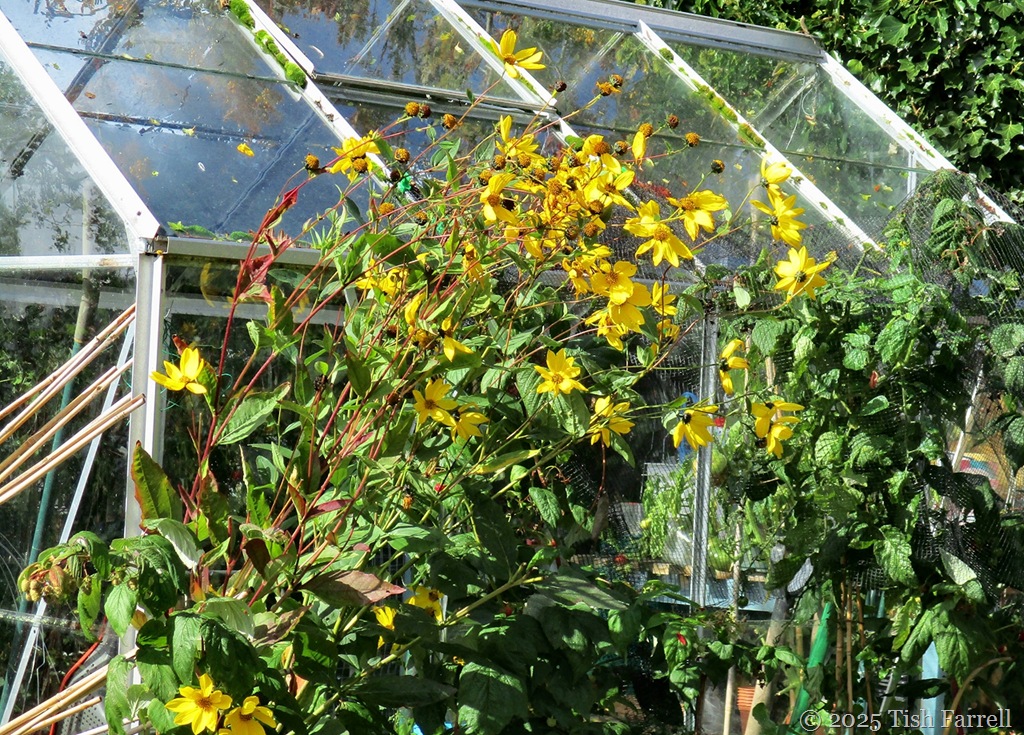
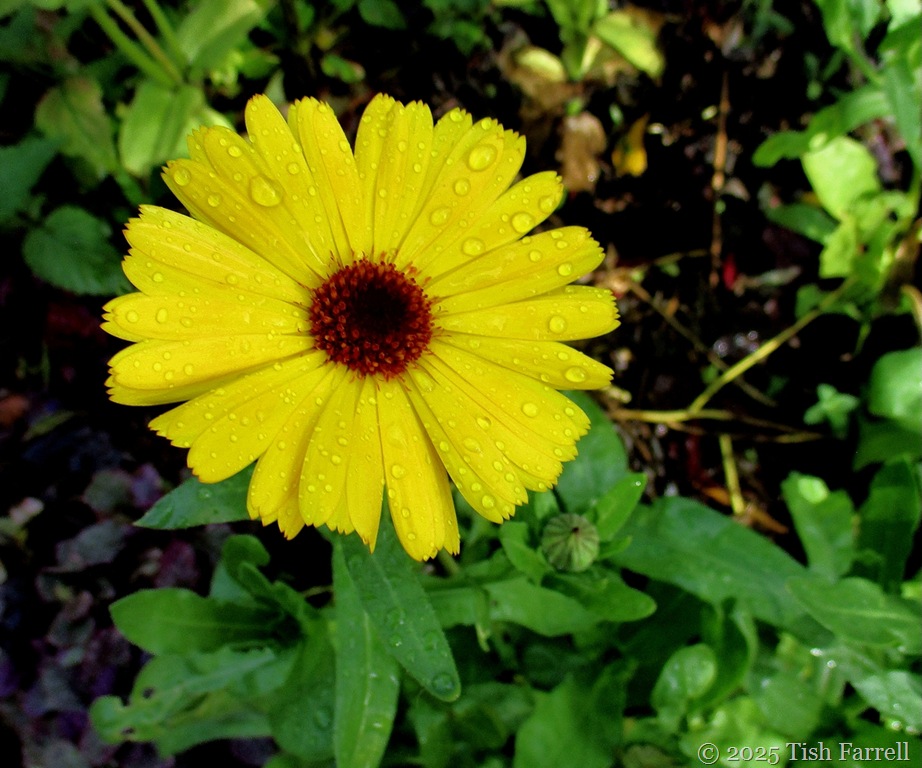
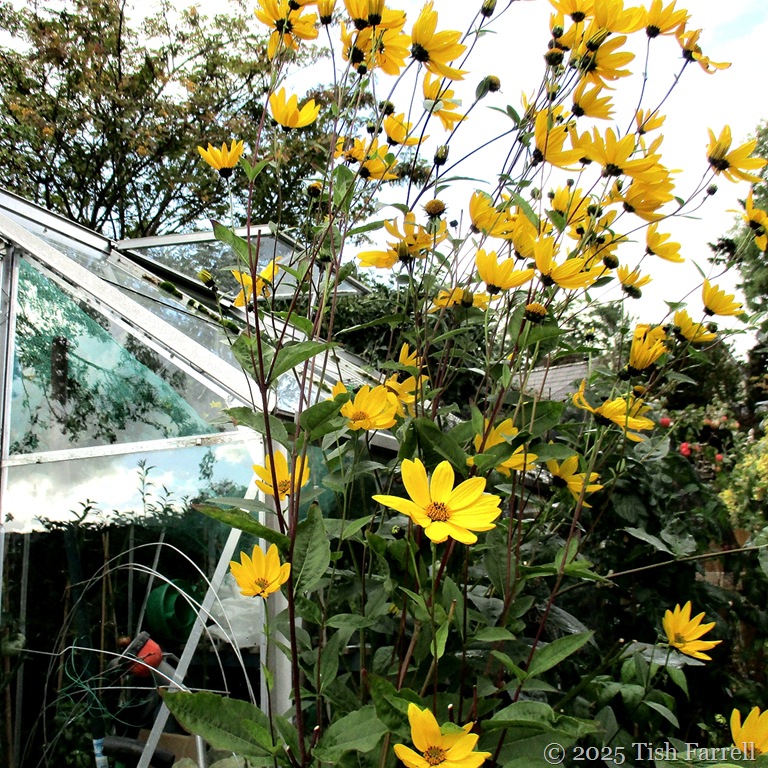
So yes, we are heartily glad of the rain, even if it comes like swift deliveries from Niagara Falls. The Helianthus [3] by the greenhouse is certainly having a new lease of life. It’s lighting up one of the shadier parts of the garden, an unexpected full-on display when it’s already been flowering for weeks.

helianthus

helianthus 2

*

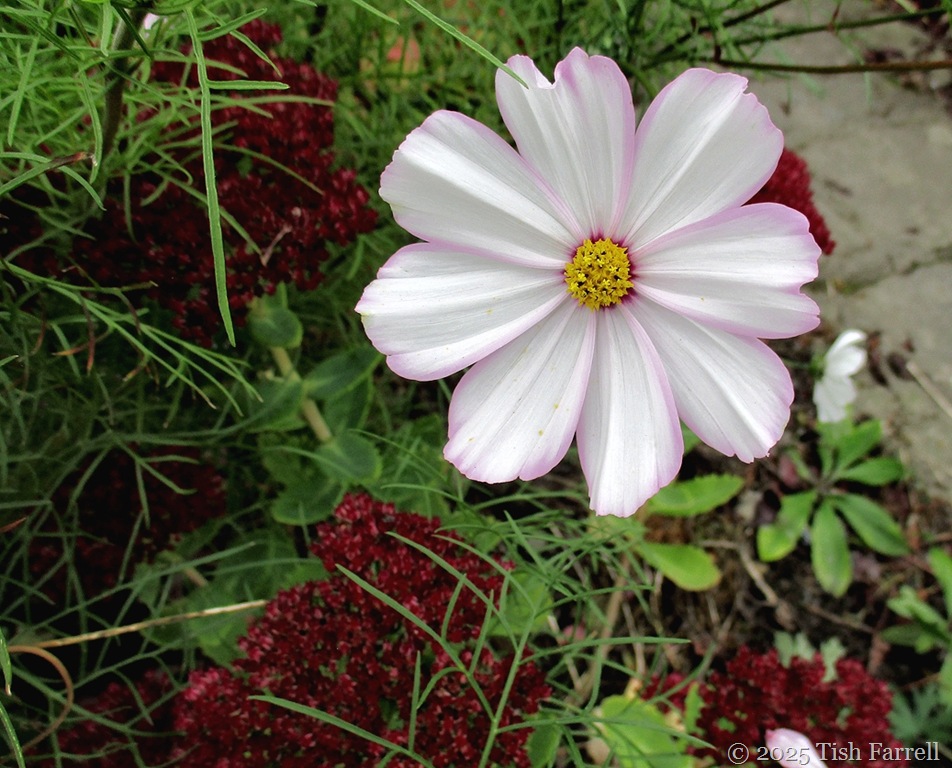
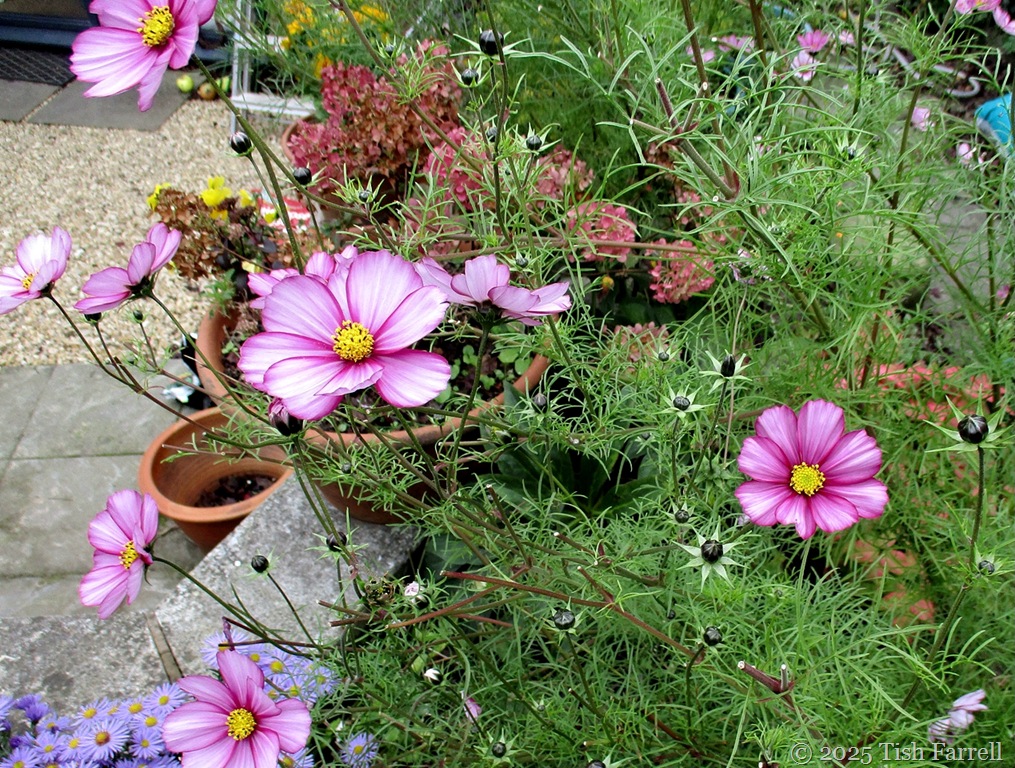
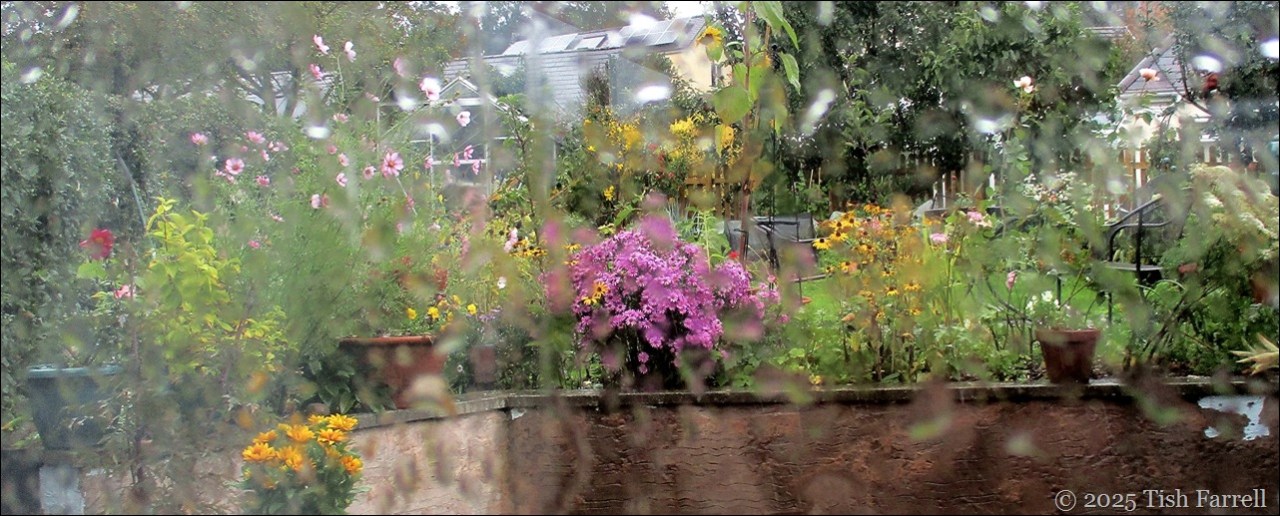
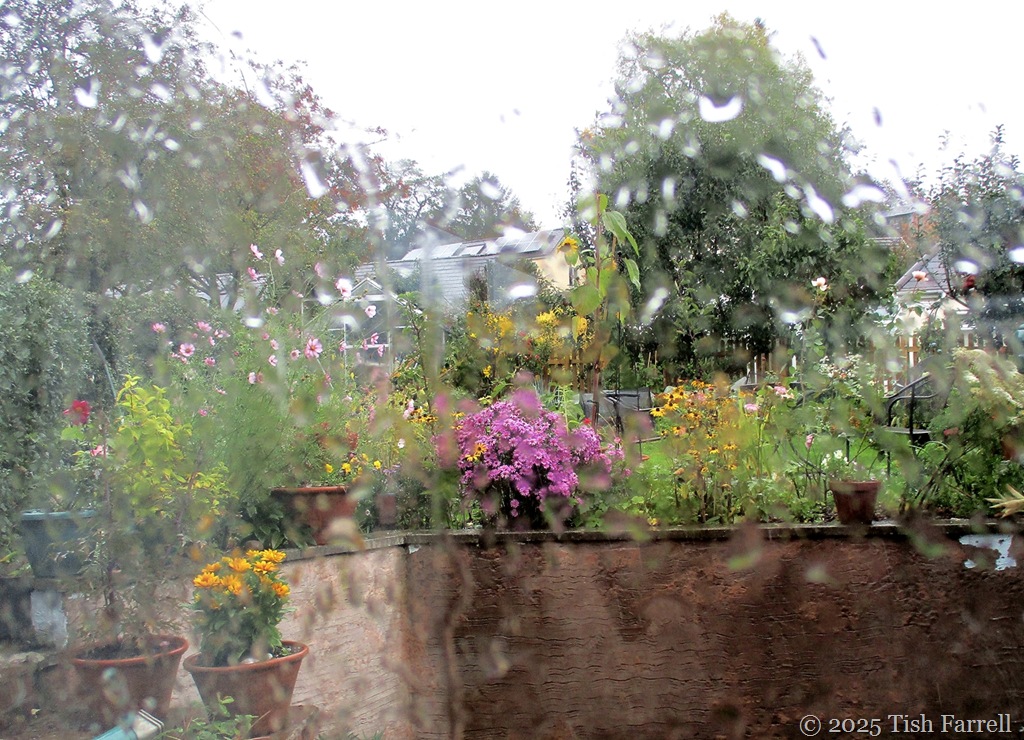
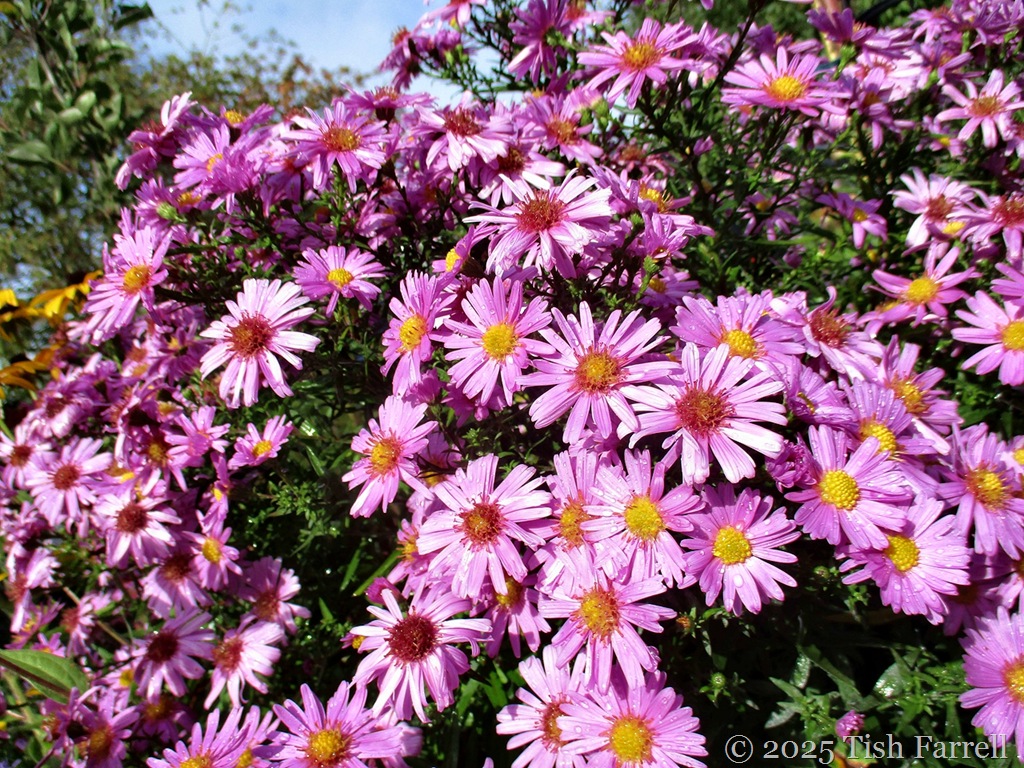
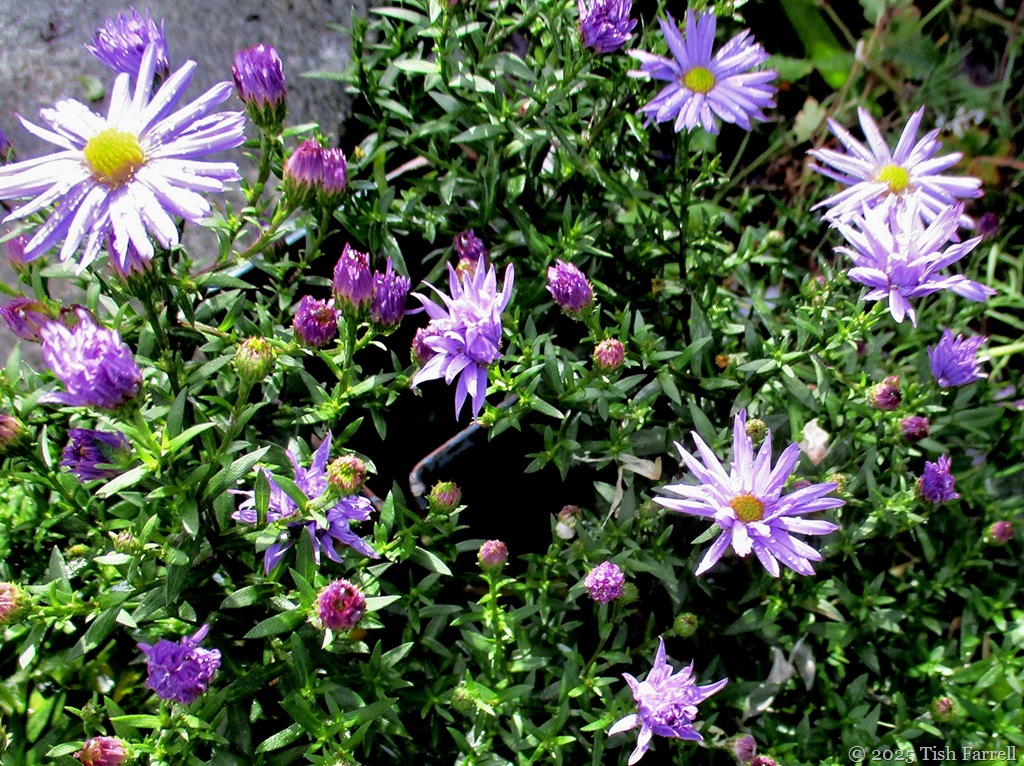
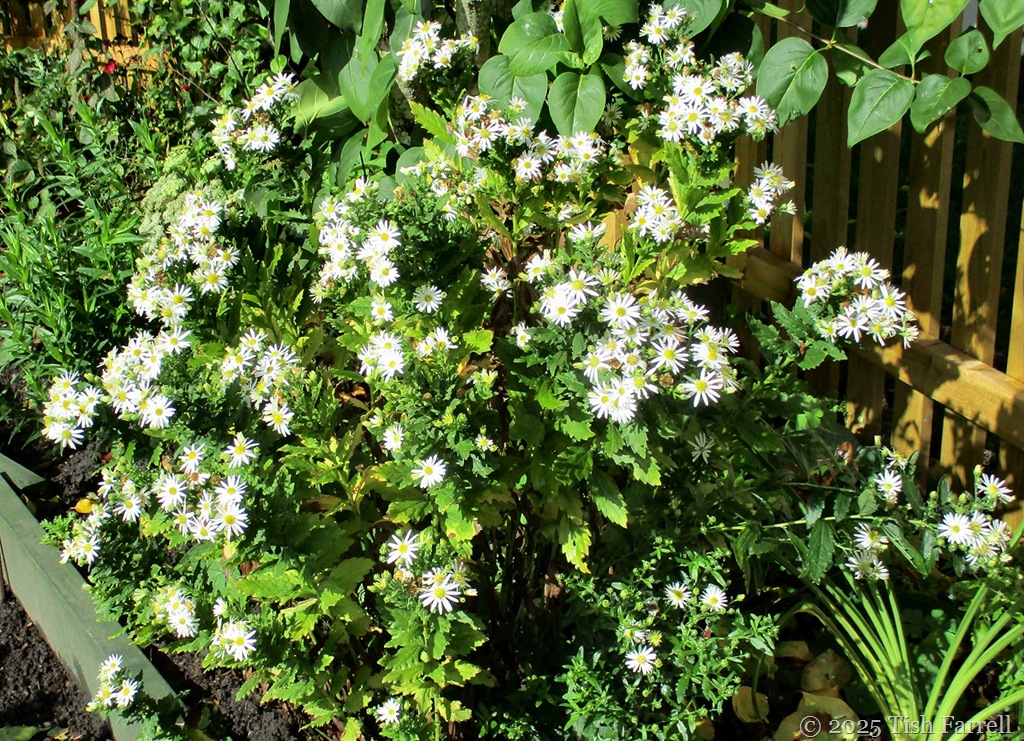
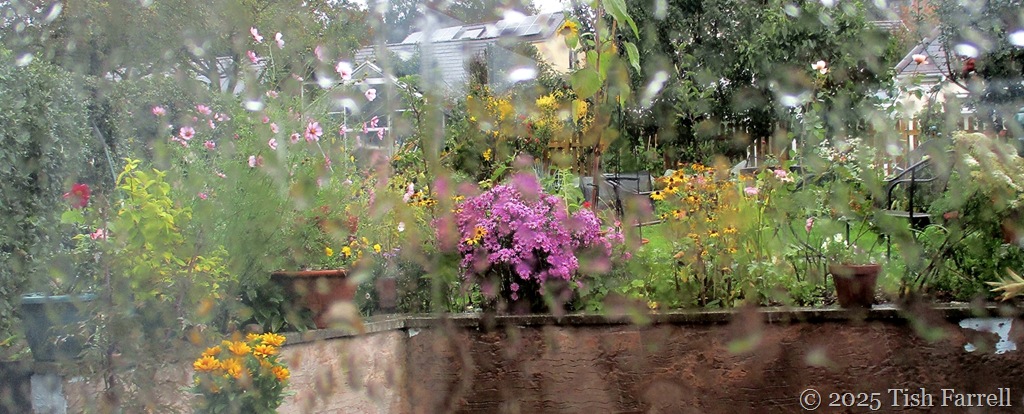
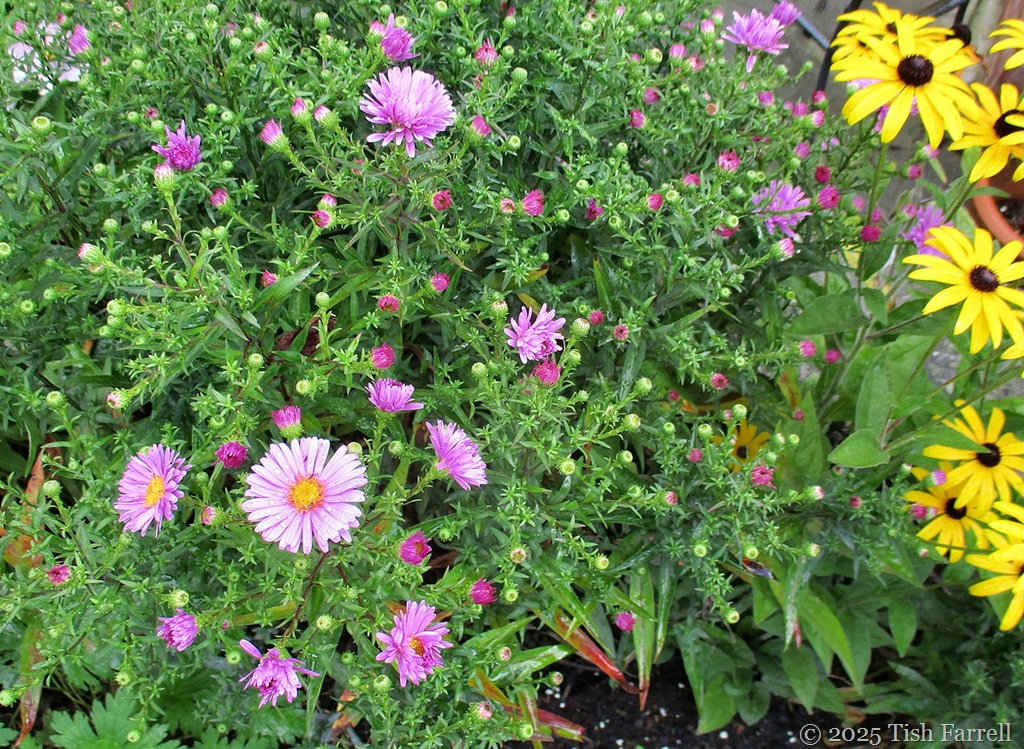
In the border along the terrace wall, the Michaelmas Daisy [4] is at last beginning to flower. It’s been a mass of buds all summer, but was obviously saving itself for more autumnal days. It should be splendid in a week or so, and especially if the Rudbeckia keeps going.

michaelmas daisy

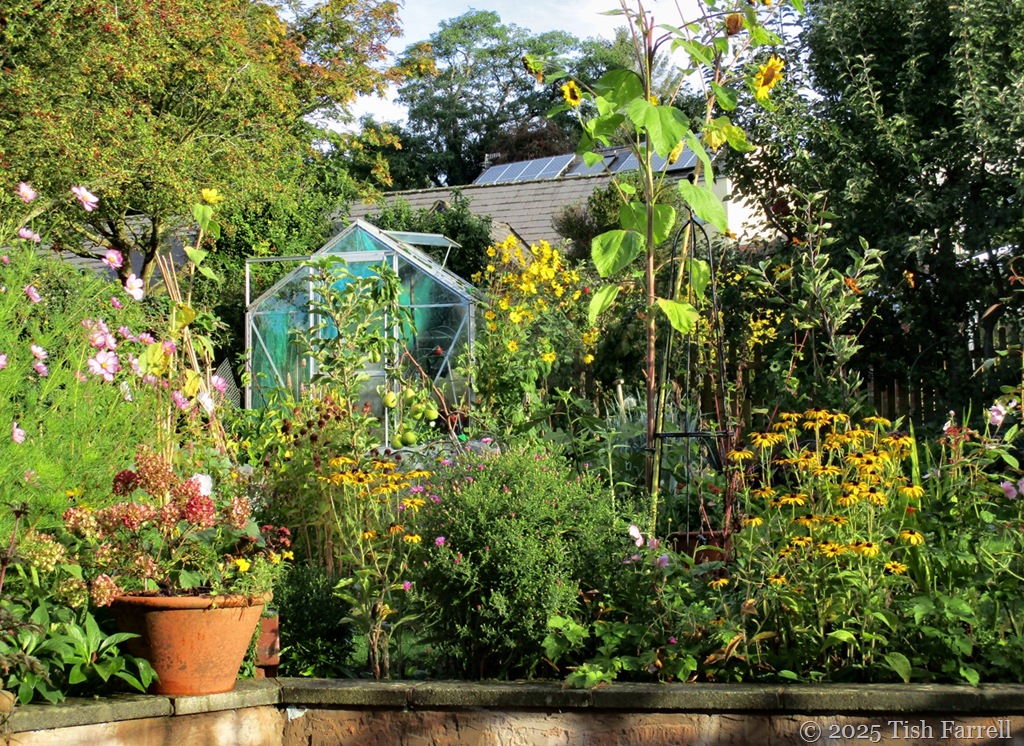
back garden

*

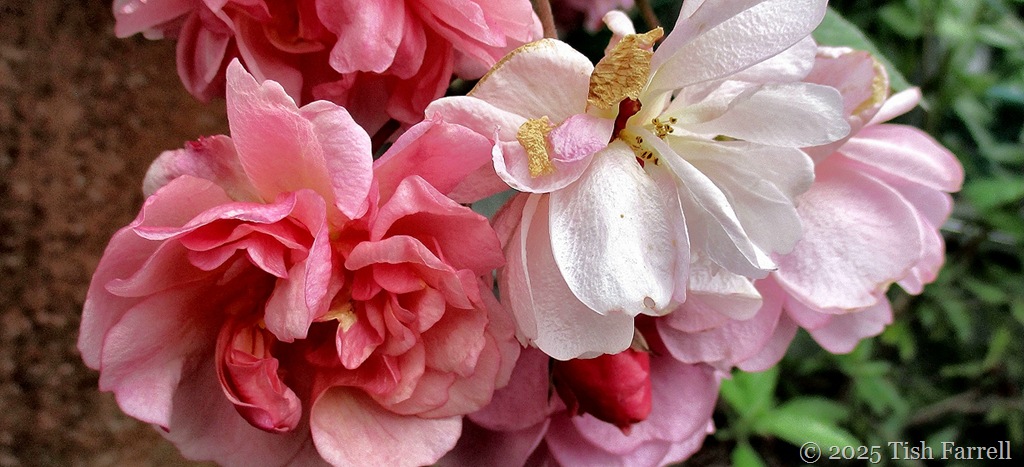
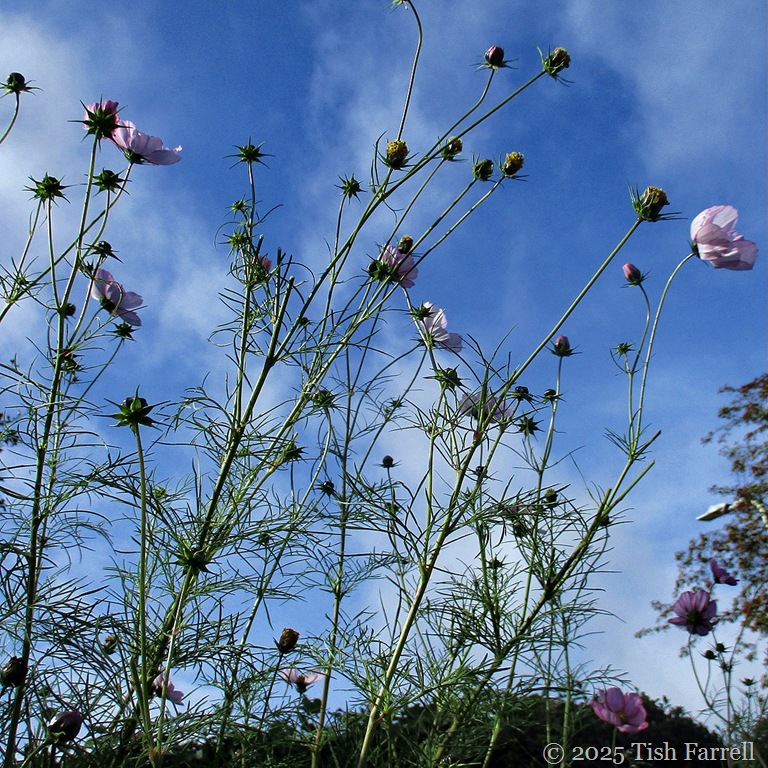
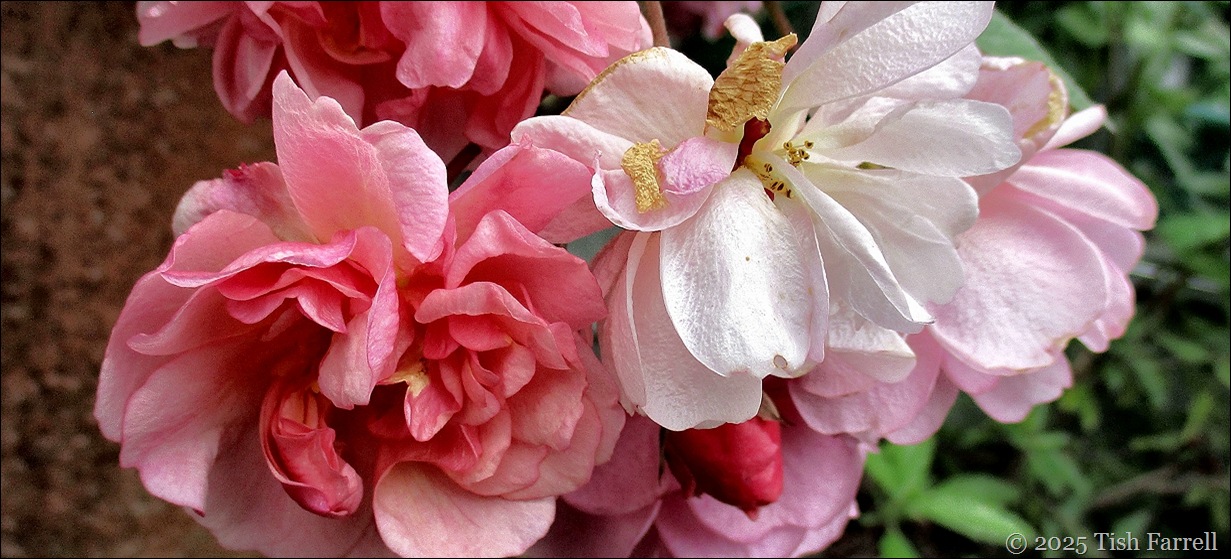
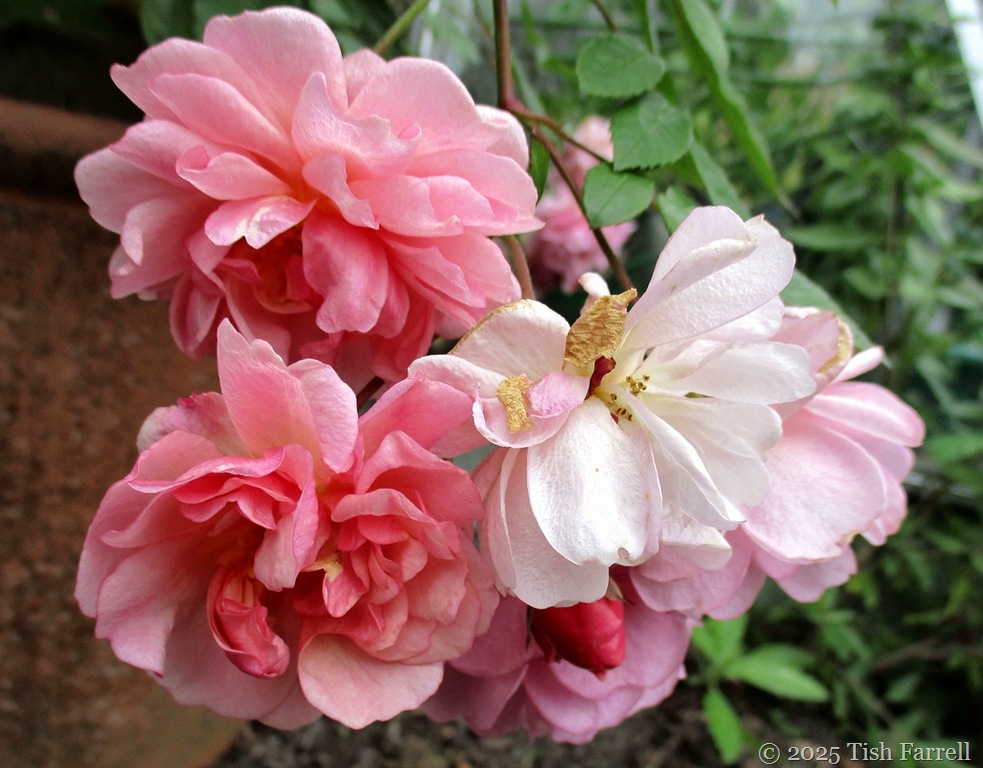
Further along the border, between the Japanese Anemones and Selinum, St. Cecilia rose [5] has been spurred into a second flowering. We inherited her with the garden. She was in a poorly state, but though the flowers, when fully open, are rather wan and saintly, and thus none too remarkable, I decided to nurture her. She anyway smells quite nice, and is appealing when the buds are seasonally dewdropped and seen beside the presently seeding heads of  Selinum.

St Cecilia and Selinum

St. Cecilia 2

*

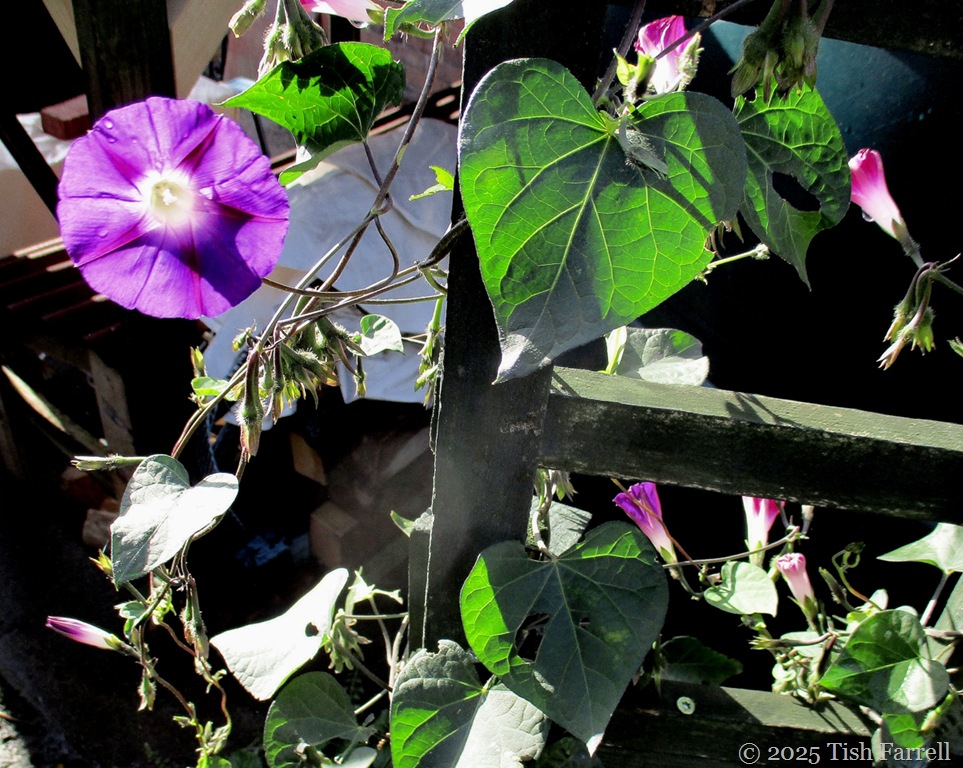
And finally the Morning Glory [6] growing on the trellis by the oil tank looks to be enjoying the cooler, wetter days. I’m surprised it’s still going after the torrential downpours, the flowers lasting longer through the day too.

morning glory

Happy gardening, folks, whatever your hemisphere.

Six on Saturday Please visit Jim in Cornwall for his week’s garden news.

‘Drawn from the Earth’ ~ Art In The Garden At Wildegoose Nursery

large female bust 2

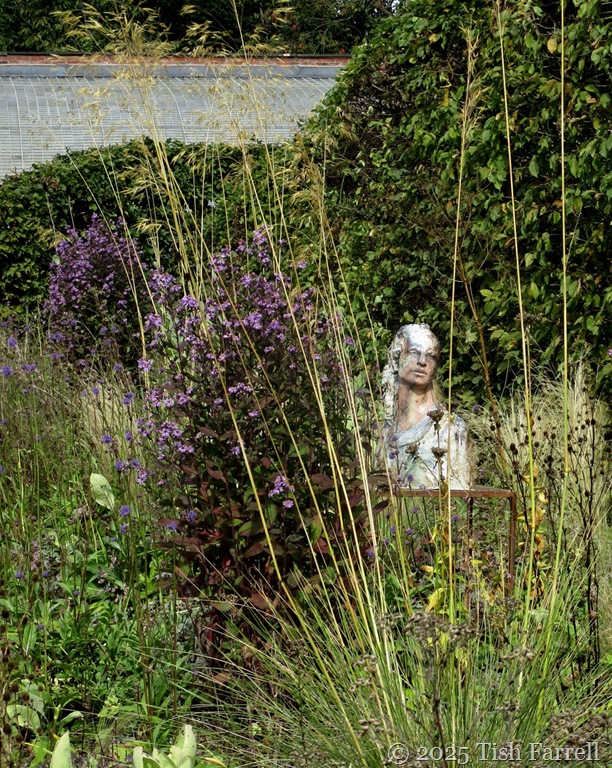
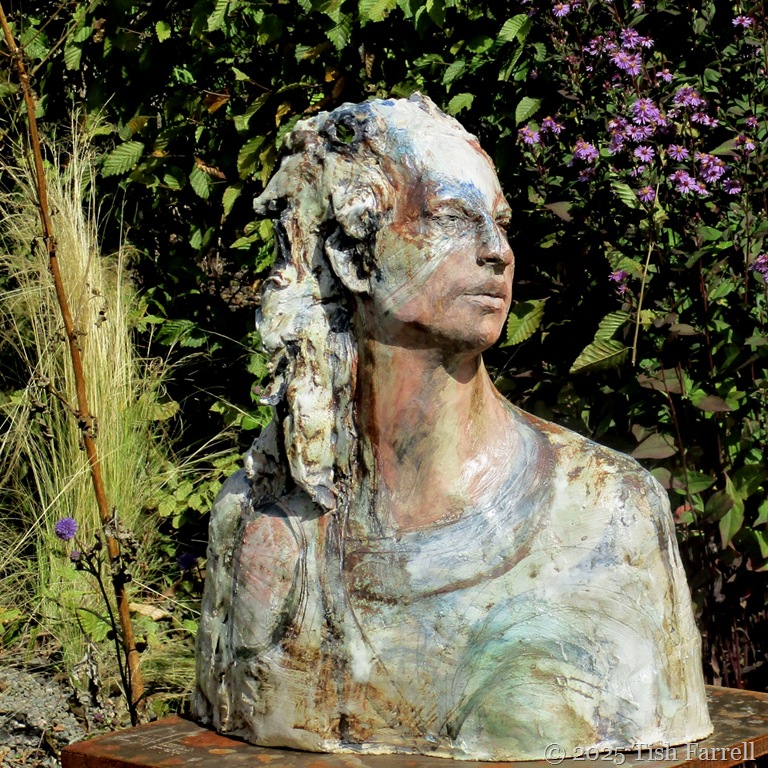
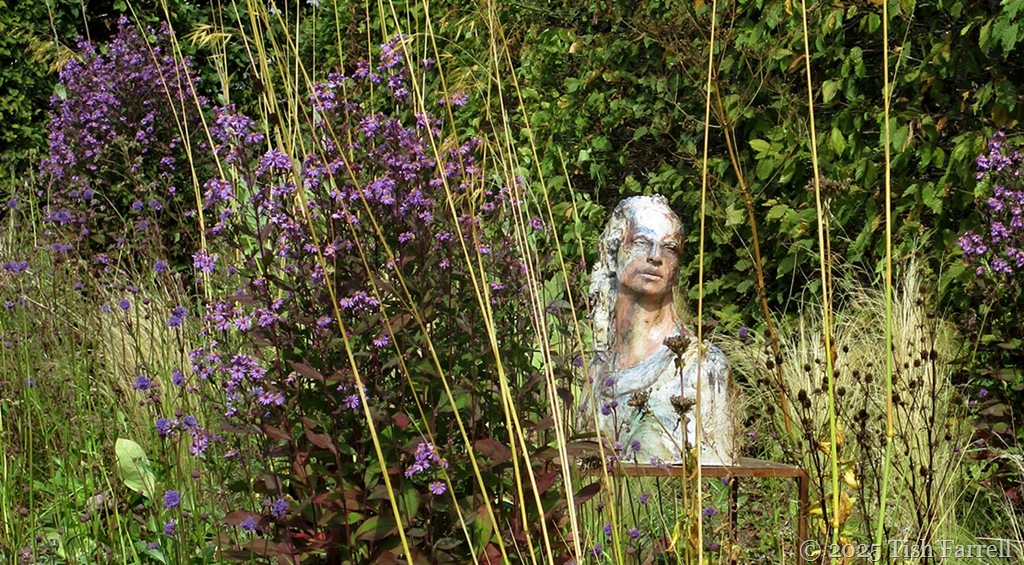
In the last post I said I’d show some of the artworks from Mary Elliot’s ‘Drawn from the Earth’ exhibition, hosted last week by Wildegoose Nursery.  The setting is a series of garden ‘rooms’ created in an old and magnificent walled garden. The late summer plants and grasses made an otherworldly backdrop for Sharon Griffin’s ceramic figures.

large female bust

Her work is haunting. To come upon her pieces, as if by chance, in a garden that is slipping into autumn, gives them added drama; a life almost. There’s a sense of ‘old gods’ invoked; forgotten stories being retold.

Or in her own words:

I make work which explores the universal human condition…clay allows me the freedom for pure expression; a re-connectivity with the land and ancestral storytelling…

art 4

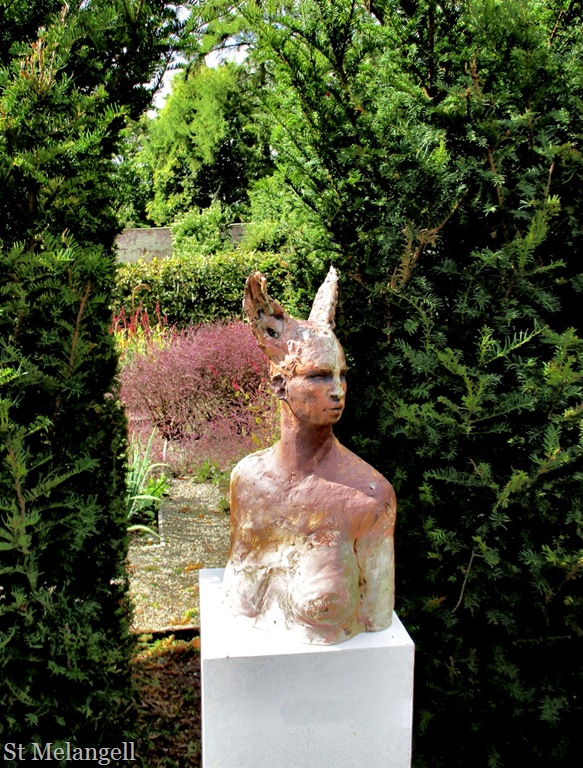
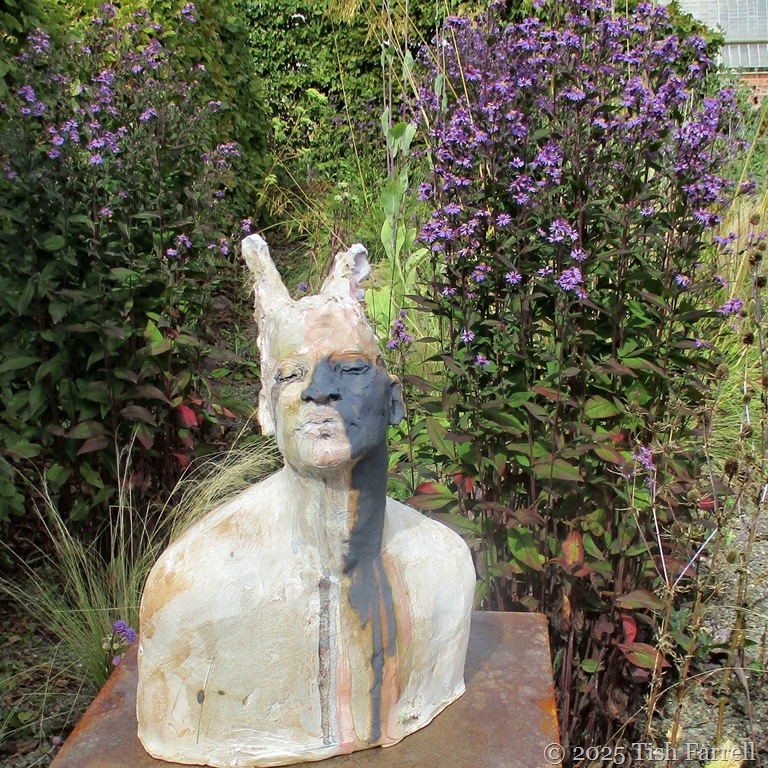
faun with shadow ears

Faun with a shadow face and deer ears

*

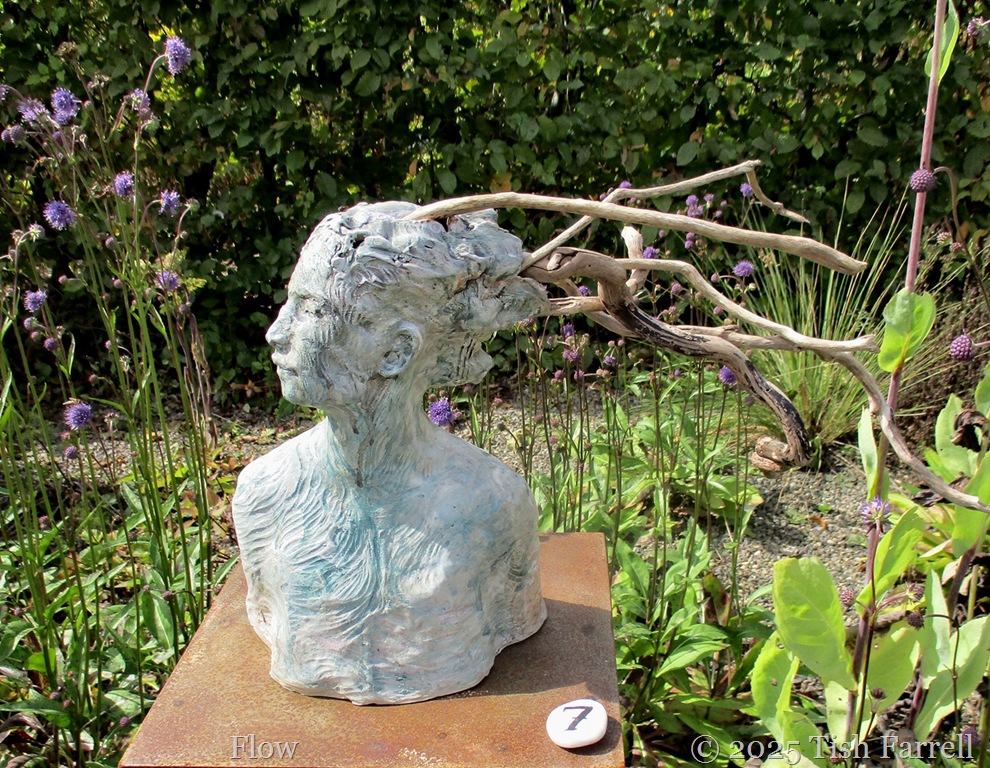
Flow

Not so blind that I can't see Sharon Griffin

‘Not so blind that I can’t see’

*

small figure

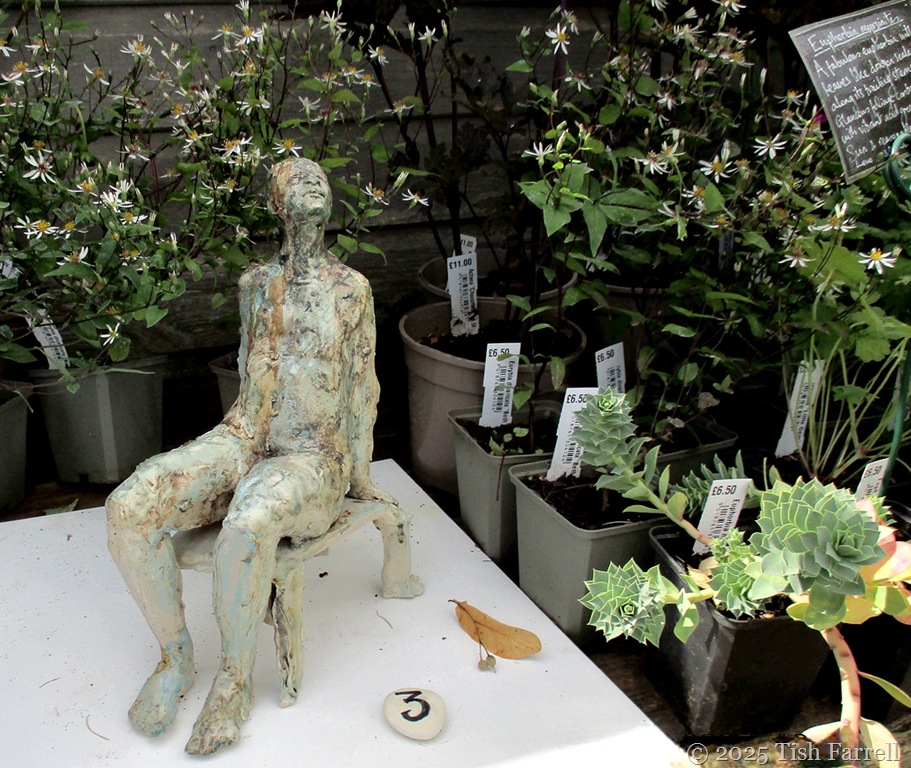
And on the plants for sale table: ‘The Gardener’

*

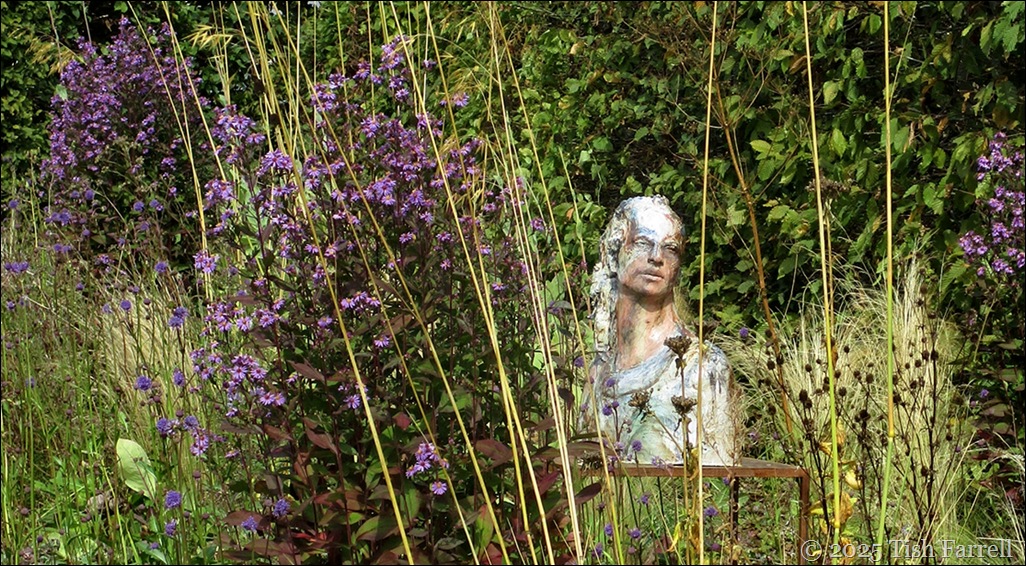
I only came upon this one work by sculptor, Glen Farrelly.  It’s called ‘Formation’. I perhaps find it more personally appealing than the Sharon Griffin works. i.e. in the sense I could see myself living with it. I loved its setting amongst the pale green Patrinia seedheads and red sedum, the spires of dying flower stems and grasses.

Art 4a

*

And finally some more views of the gardens – plants making their own end-of-season artworks.

echinacea and ice plant

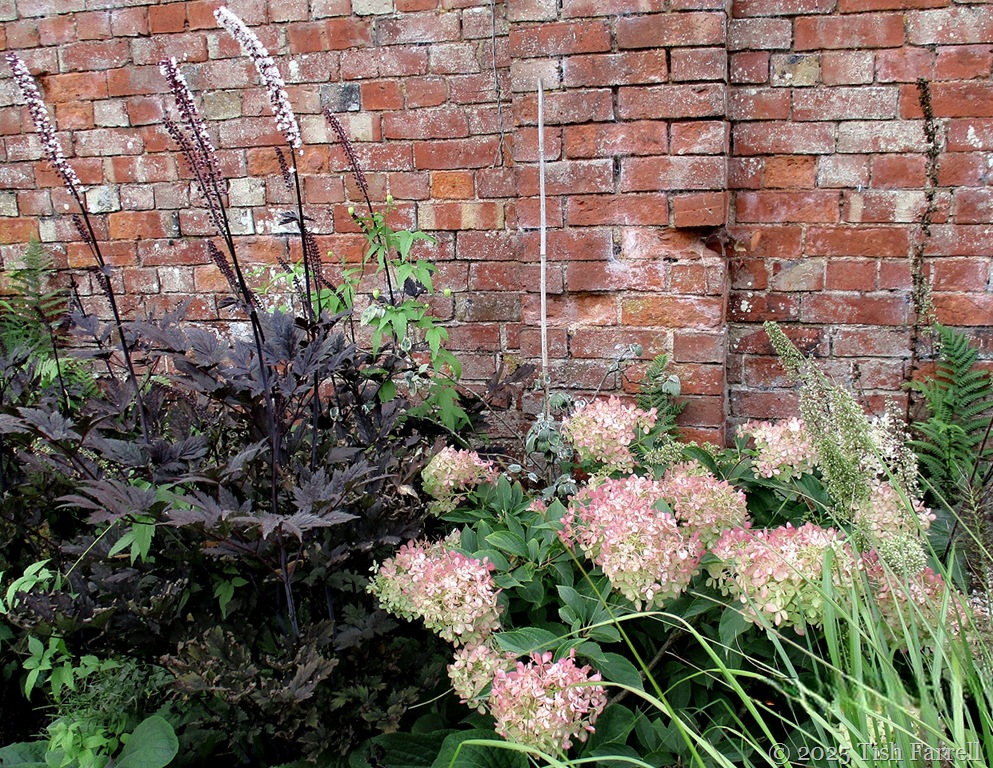
hydrangea and actaea

Wildegoose 1

wildegoose 2

*

Mary Elliot’s drawings and paintings can be seen HERE.

header 2

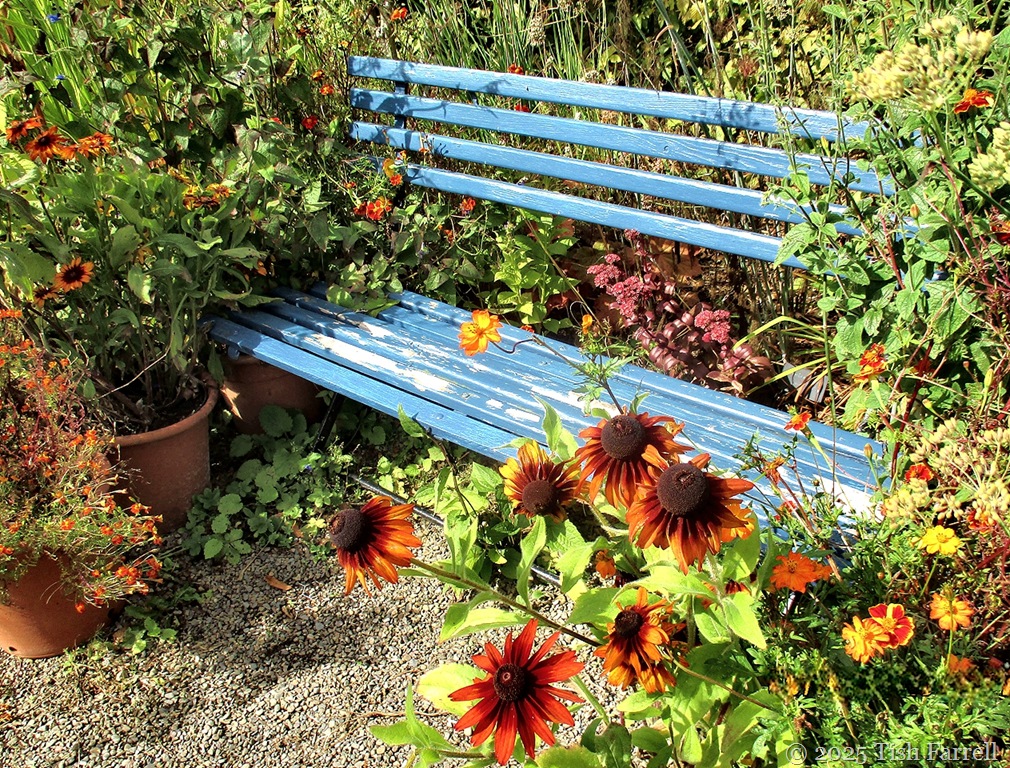
The Blue Bench At Wildegoose Nursery

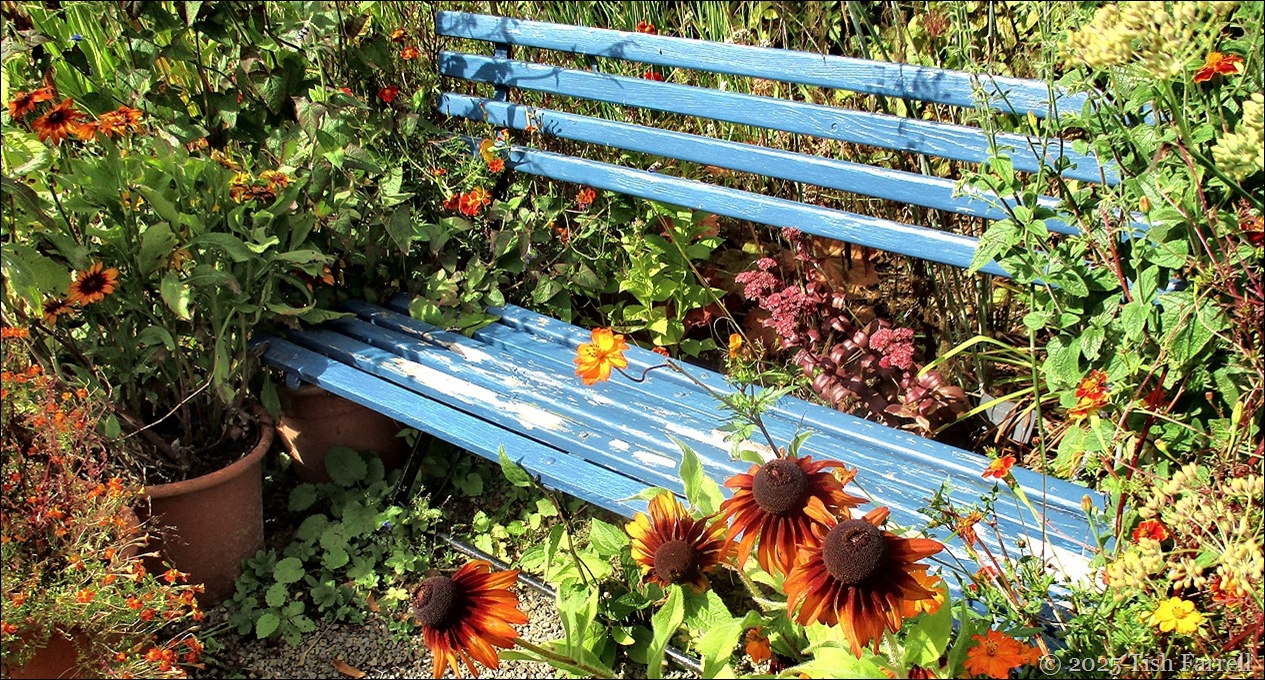
blue bench Wildegoose Nursery

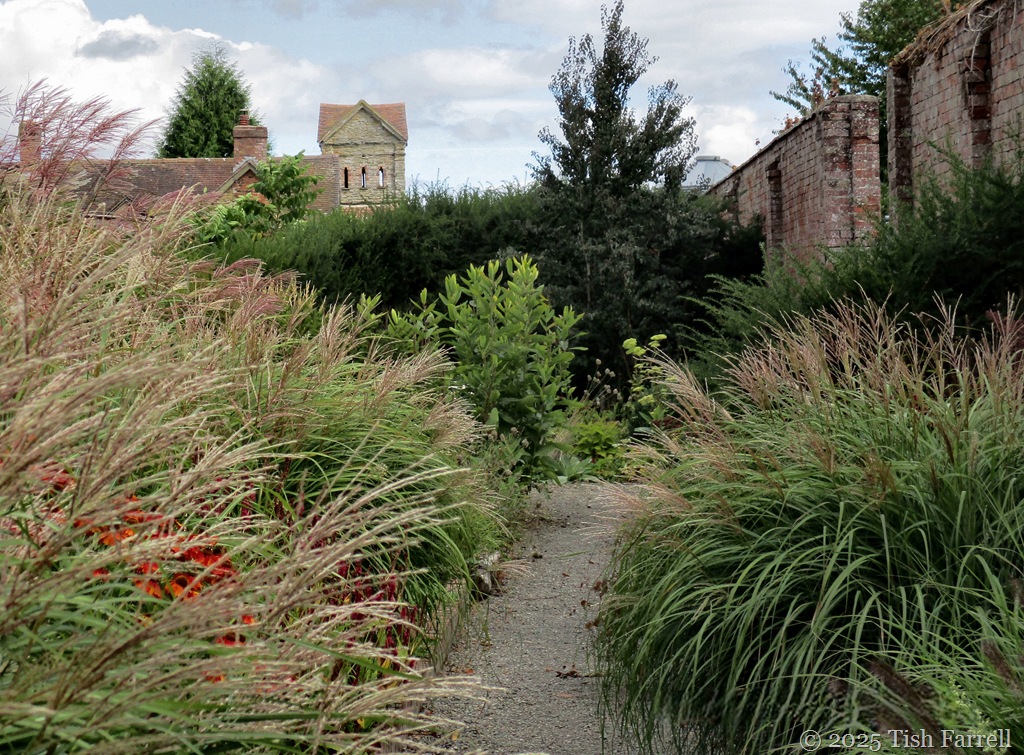
It’s quite a while since we last visited Wildegoose Nursery. It’s a longer drive from Bishop’s Castle than it was from Wenlock. But this is no excuse. It is the most beautiful place, the nursery created in what was once the walled vegetable garden of Millichope Park, Munslow. (You can read the story of all that has been created, plus splendid photos HERE).

The walled garden itself is planted in a series of ‘rooms’, showcasing the nursery’s range of plants for sale. It is only open during the planting season from March to late September. There are umbrella-ed tables and a pleasing cafe serving delicious cakes and lunch-time snacks made from the garden’s produce. And there are some very magnificent Georgian glasshouses which have been restored and once more put to growing.

glasshouse 2

Every one of those several thousand glass panes had to be replaced. But the reason I’m showing this particular shot, is because there’s a potting bench in view – i.e. to go along with the header bench for Jude’s Bench Challenge. (I also know she knows all about Wildegoose.)

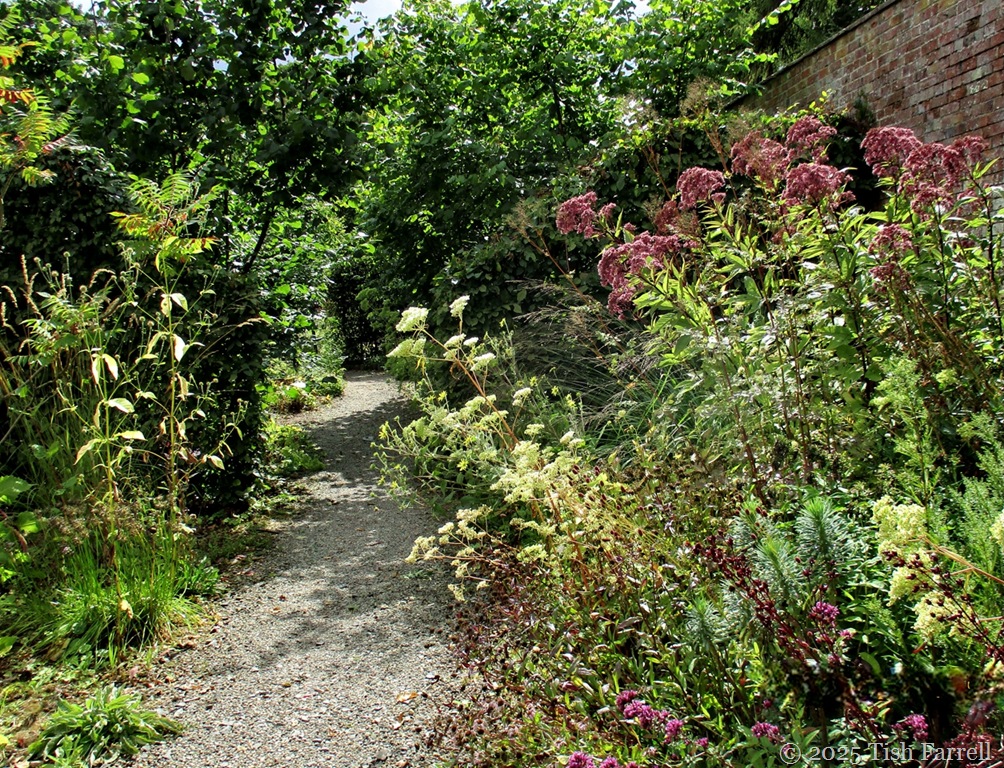
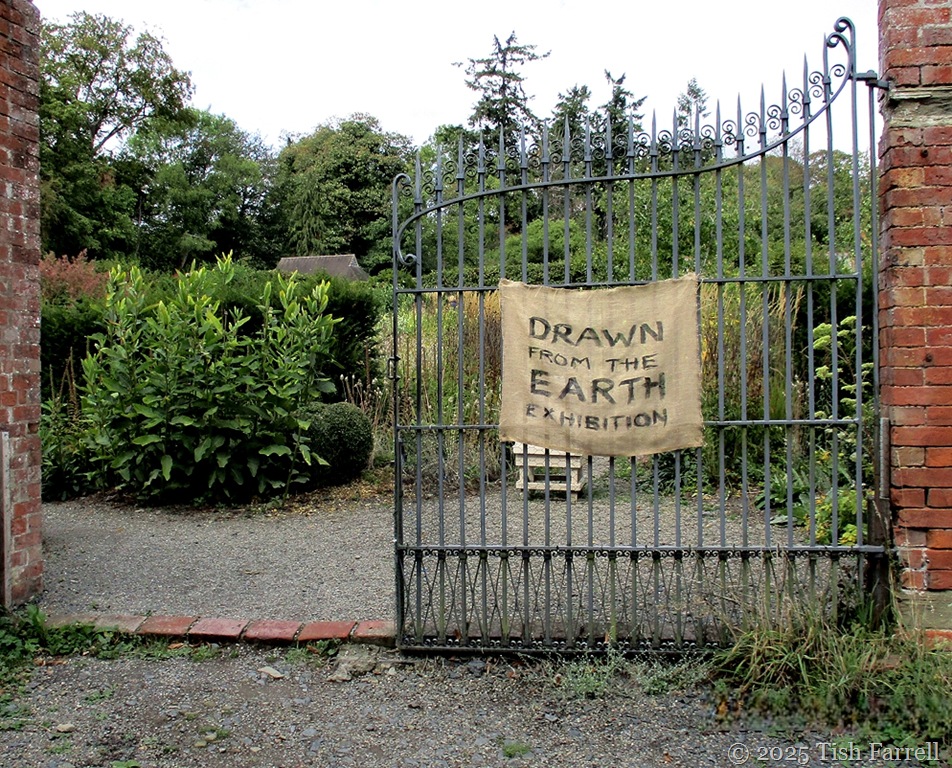
The reason we roused ourselves to go there last week was because one-time Wenlock chum, Mary Elliot, artist and former 20/20 Gallery owner had put on a four-day art exhibition there Drawn from the Earth. She was exhibiting some of her own work too (much of it inspired by the Wildegoose gardens) and we’d hoped for a general catch-up. There will be more of the exhibition in the next post. For now a glimpse of the garden in its autumnal colours:

wildegoose 3

*

And coming up in the next post:

drawn from the earth

*


Late Bloomers: Six On Saturday

sunflower

The garden looked shell-shocked after this week’s deluge. Rain at last! But rather too much at one go. “It never rains but what it pours…” etc etc. Anyway, the giant sunflowers [1]  held their own and are still putting on a show. Then there were the almost immediate signs of revival by the lawn which had been dusty brown all summer. This reminded me of our Kenya days when our lawn of tough Kikuyu grass was reduced to looking like old sacking during the long dry season. But come the short rains and up would spring masses of green shoots,  an instantaneous green sward.

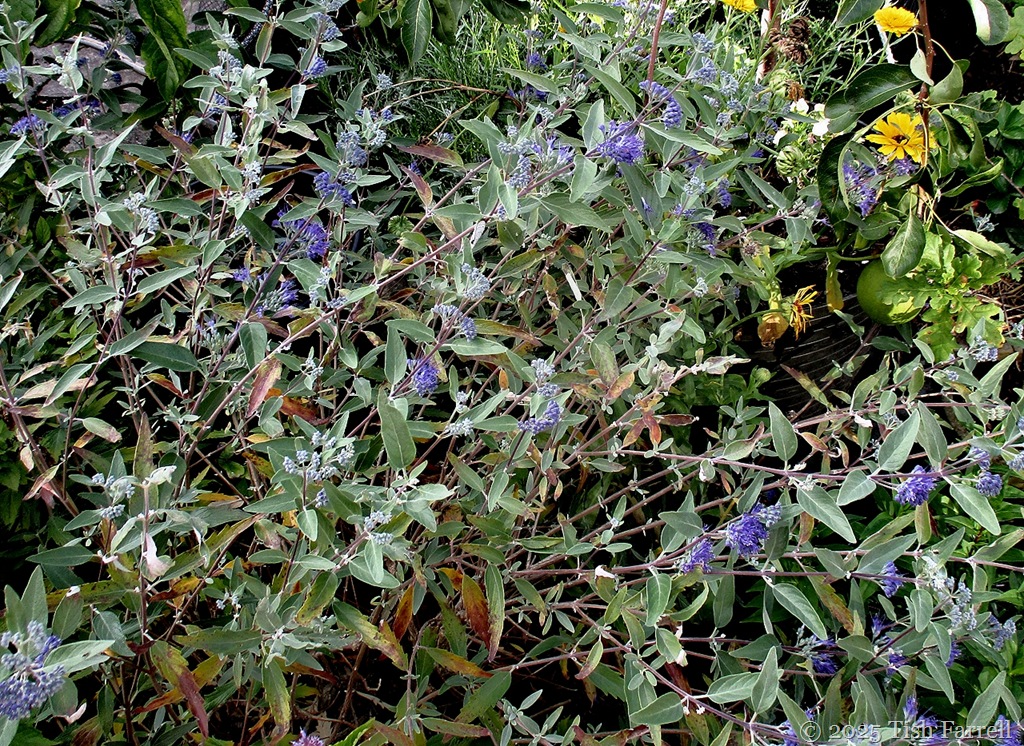
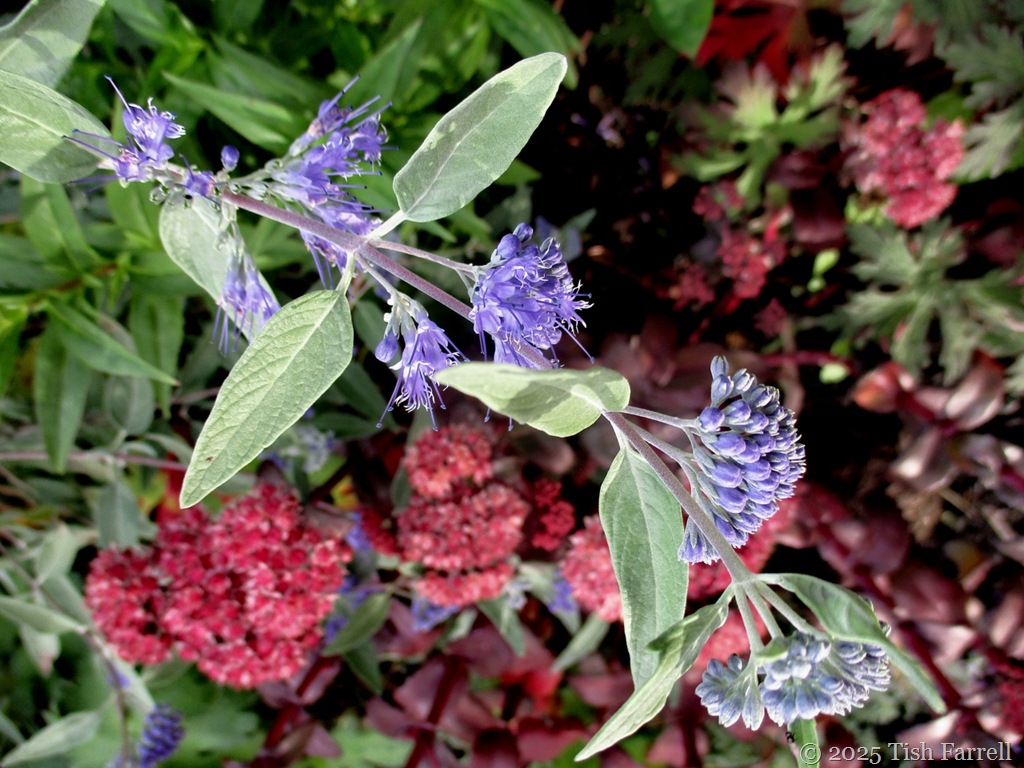
The rain stirred the caryopteris [2] into flowering. It is supposed to be late, but this year seemed particularly so. As a shrub, its structure is rather underwhelming. The small silver-grey leaves and lax stem tendencies make it look rather like some unkempt garden escape on waste ground. Or maybe it was just the way I pruned it. The instructions said give it a good cut back.  Or then again, maybe it is simply the effect of a long, dry summer. This variety is Heavenly Blue. And if the overall look isn’t too exciting, the sapphire sprays are gorgeous, and bee-life loves them.

caryopteris heavenly blue

caryopteris detail

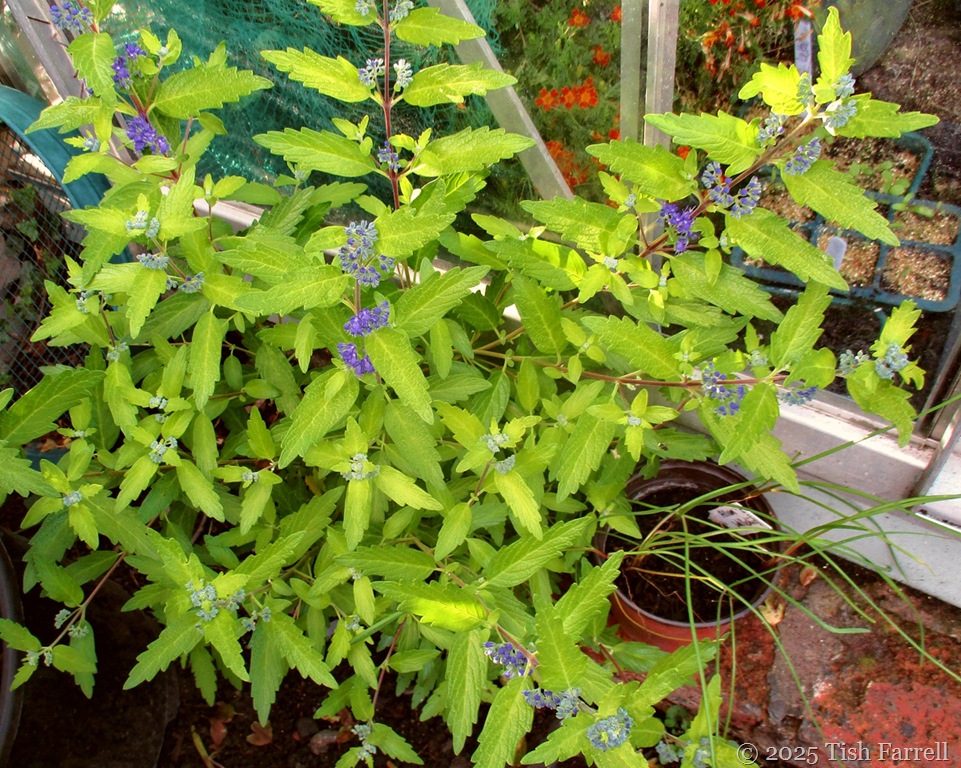
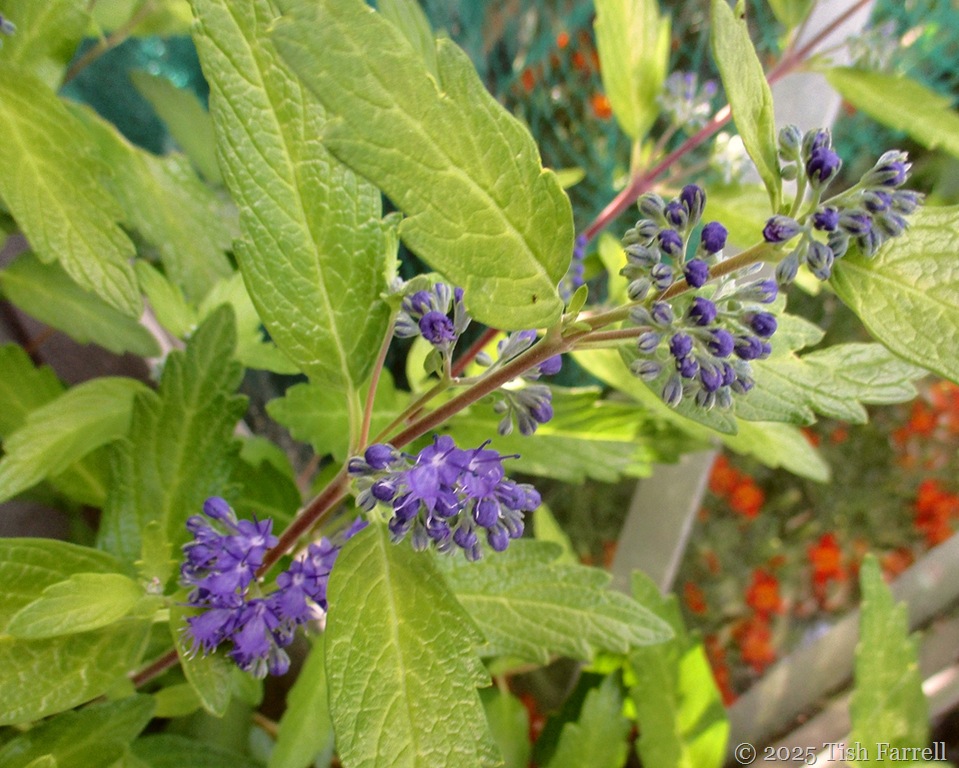
I have some other young caryopteris shrubs by the greenhouse. These have yellowish leaves and are a variety called Gold Crest. At the moment, their shape is rather more appealing. Also the contrast colours of flowers and foliage is pleasing.

caryoptros gold crest

caryopteris details gold crest

*

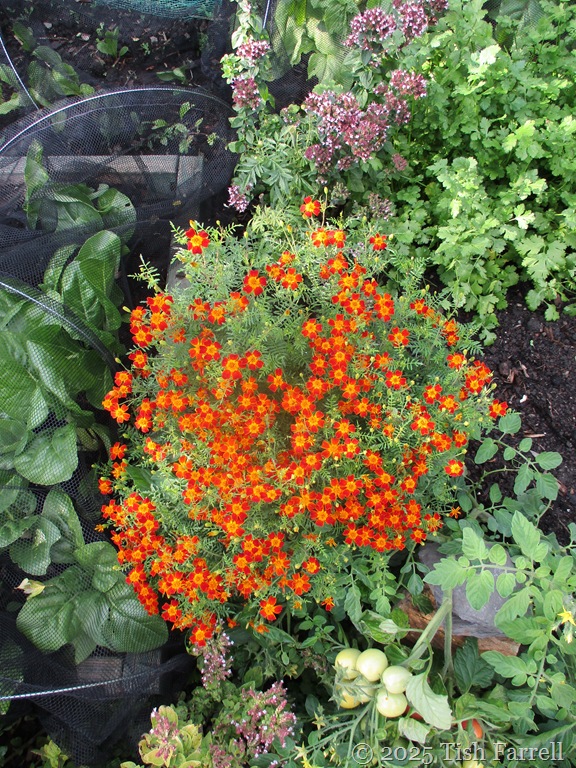
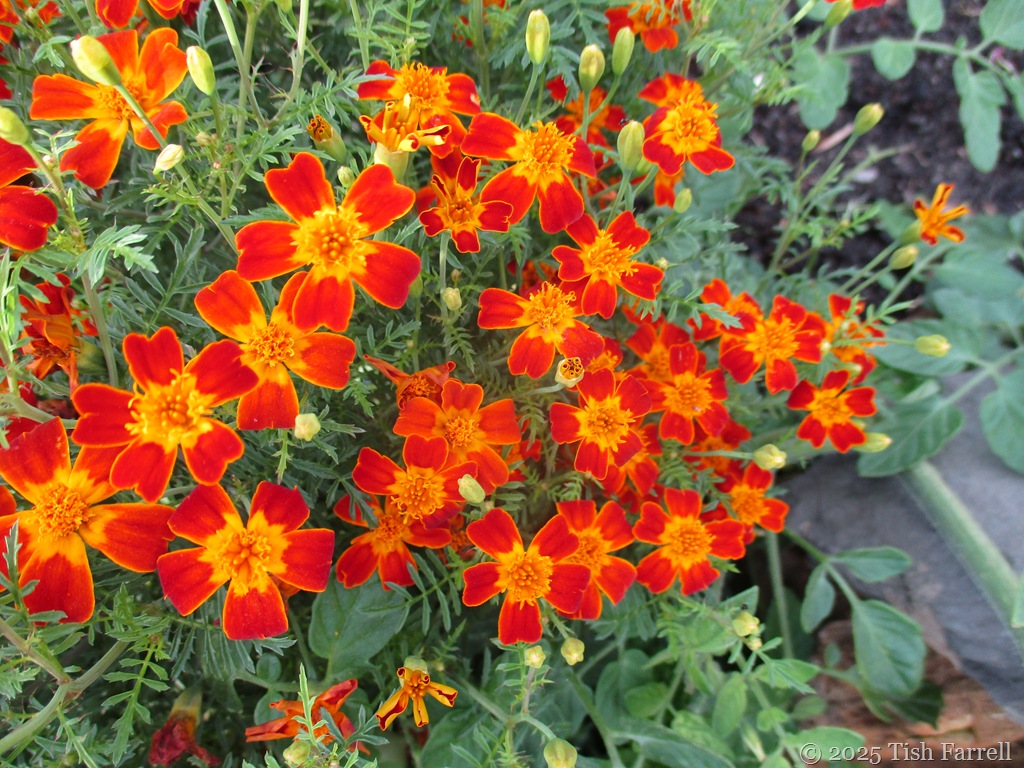
The French Marigolds [3] have also appreciated a good dousing. Grown from seed this spring, Red Gem has been flowering all summer. She’s supposed to deter white fly, so I planted her out in the greenhouse amongst the tomatoes, and also between the raised beds where I have a rather late performing Tumbling Tom cherry tomato. The individual flowers are tiny but it’s still a good show.

IMG_8845

IMG_8844

*

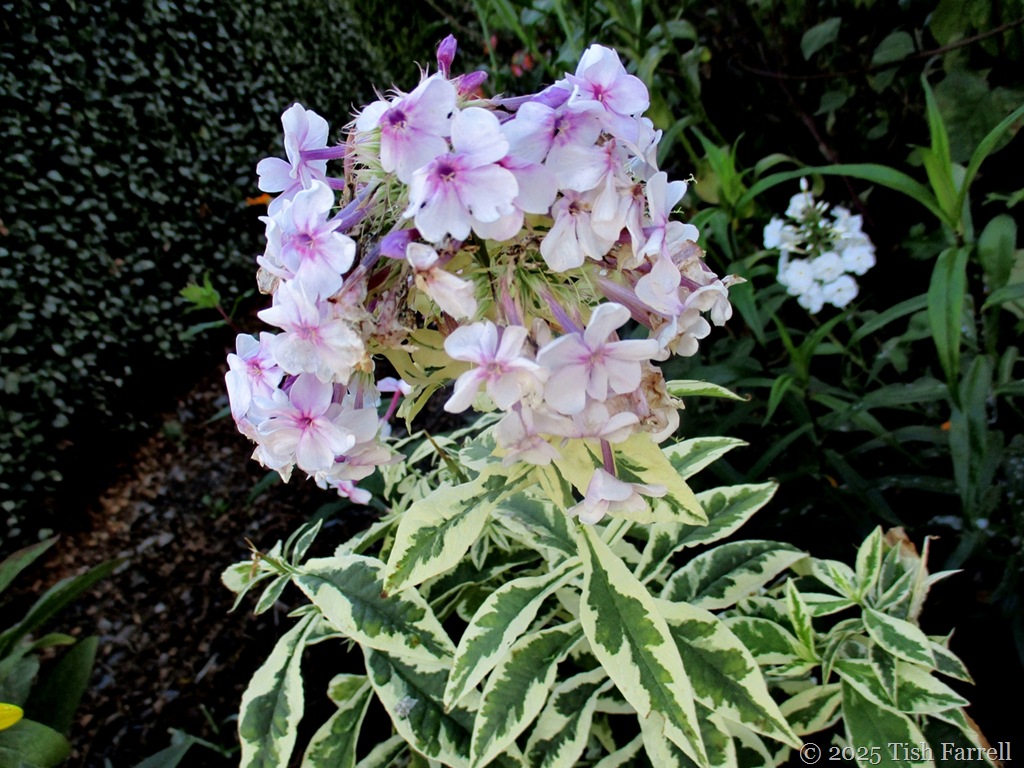
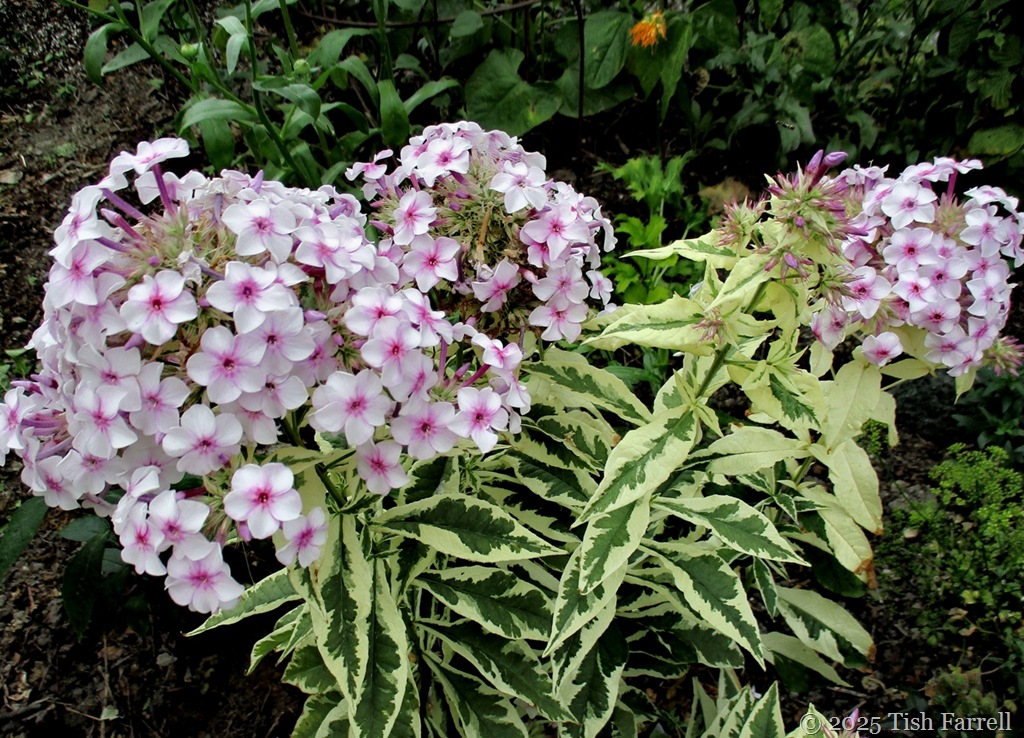
Another plant that’s done well until this week is one of my new favourites: phlox Norah Leigh [4]. I should have featured her when she was in full bloom. But she still has a few flowers, and although I’m generally unkeen about pink, I find the contrast with the variegated foliage very attractive. I’m becoming a bit of a phlox fanatic.

Here she is after the heavy rainstorms:

Norah Leigh

And here she is a week of so ago, before the rain: a stalwart show considering the dry weather, and that I only bought her as smallish specimen back in the early summer :

Norah Leigh 2

*

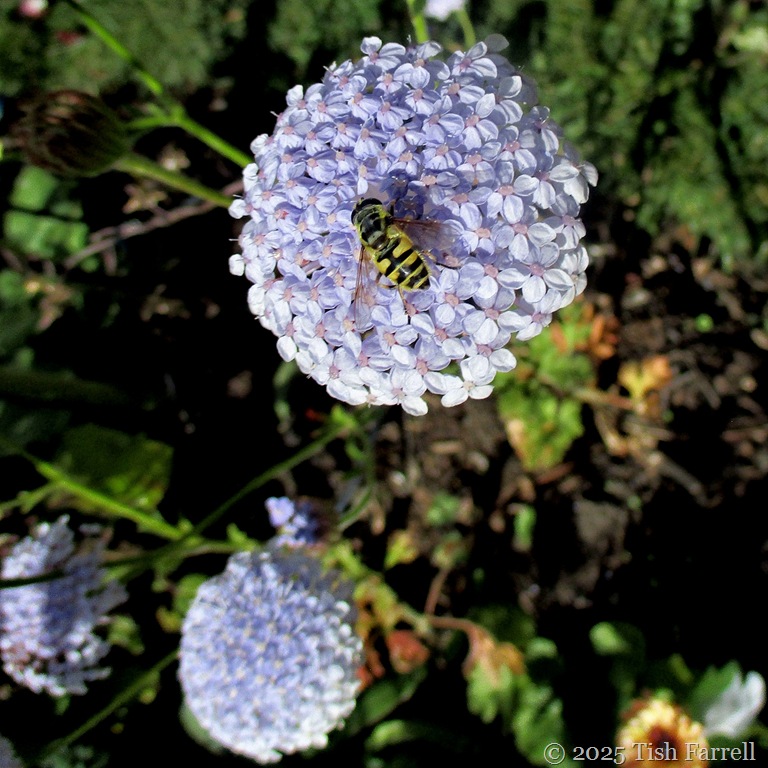
Some of the seed grown Madonna Lace Didiscus [5] are still going too. Also much loved by insects. When the flowers fade they transform into little silvery sputniks – quite magical on a dewy September morning.

lace flower

*

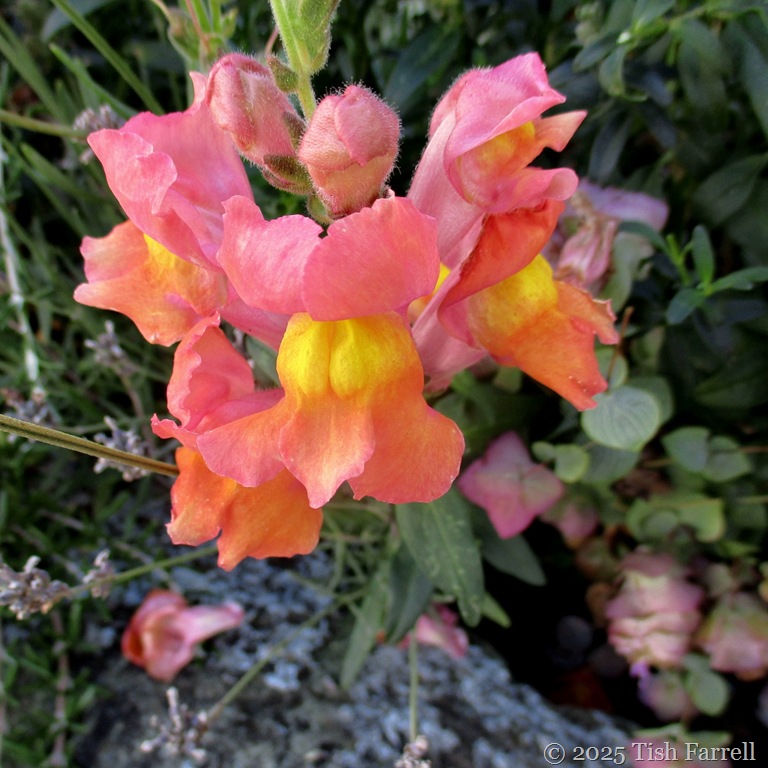
But the prize for the longest flowering flower this year goes to the self-sown and -grown snapdragons [6]. They’re on their third blooming round at least, and the plants are now growing quite shrubby with masses of seed heads among the latest flowers. The original volunteers have made some new plants in the course of the summer and these are also flowering now. And there’s me thinking that our front garden soil, which is full of old paving mortar and mashed roof tiles is somehow problematical. Norah Lea and the snapdragons are clearly loving it.

snapdragon

*

back garden

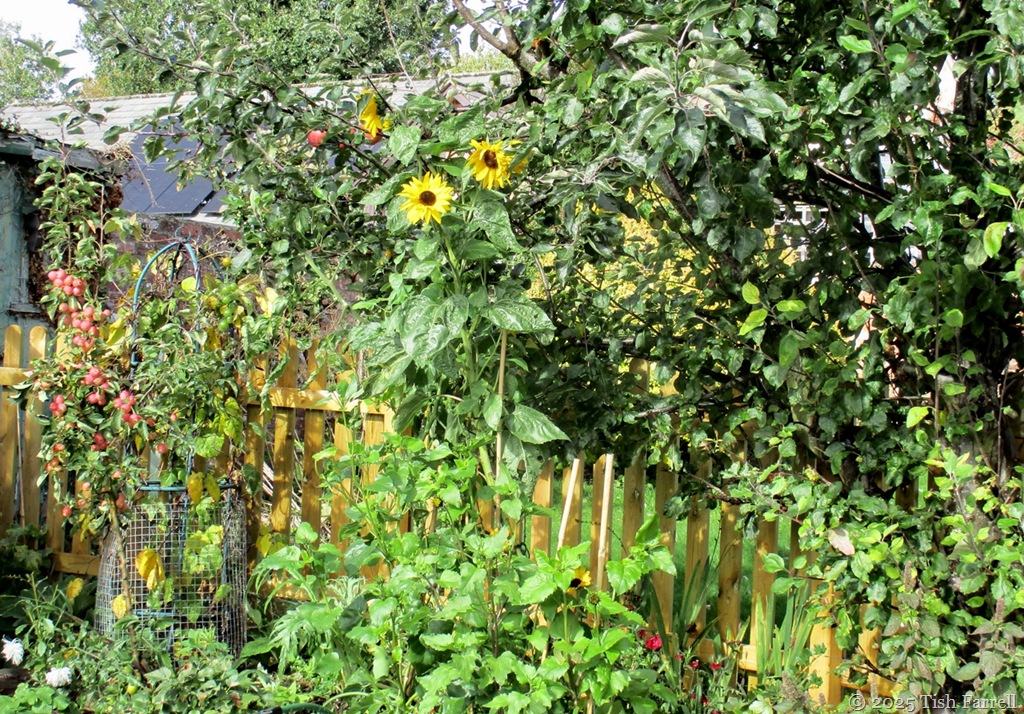
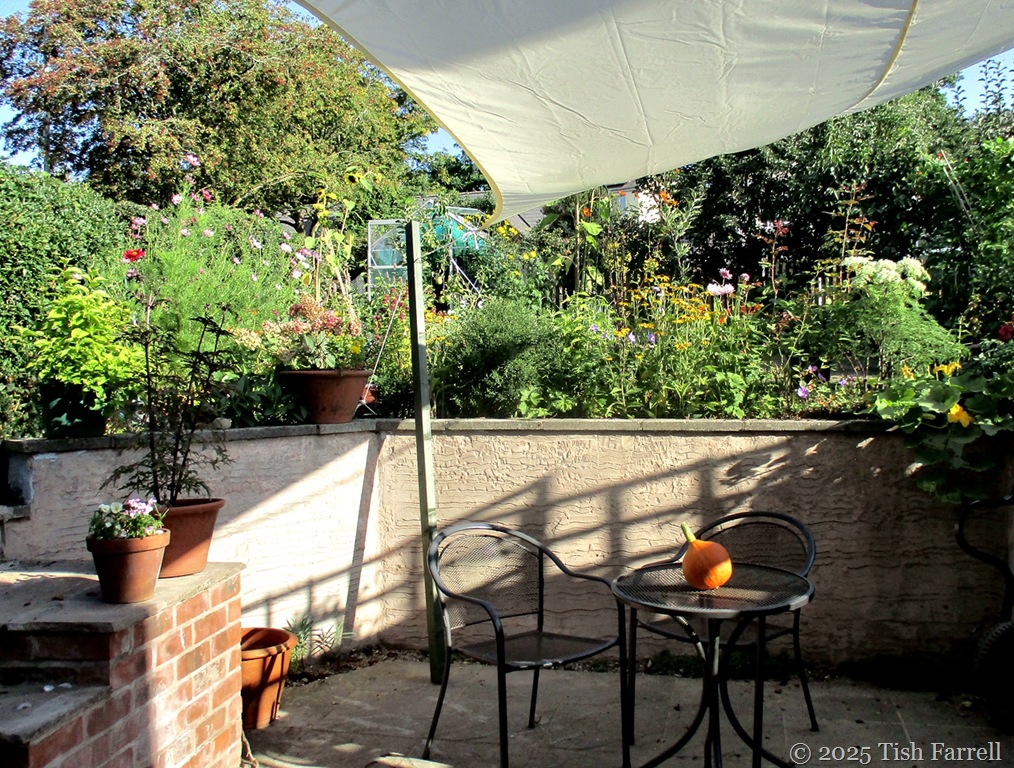
Late summer in the back garden. He who-builds-sheds’ wing shade is obscuring the sunflower view from the kitchen door, though we have been glad of it. Here’s what it’s hiding:

sun in sunflowers

Six on Saturday  Please call in on Jim and see what he’s been up to in the garden and at the allotment.

Scavenging The Old Africa Album

Hippos Naivasha

This week at Lens-Artists, Anne from Slow Shutter Speed sends us on a virtual scavenger hunt. I haven’t been in the old Africa album for a while, so I thought I’d have a rumage there. A virtual mini safari as well then.

‘Wavy lines’ tops the list. The header thus features a wavy profile of hippo ears, eyes and noses in a wavy Lake Naivasha in the Kenya Rift Valley.

*

Maasai Mara elephants

This herd of Maasai Mara elephants was in a very peaceable mood. They walked around us as we were parked up eating a picnic breakfast. I’m thinking elephant hide would feel pretty ‘bumpy’ should one ever dare to try it, especially the trunks.

Whereas cheetahs must be wonderfully ‘soft’. They also wear nice ‘circular’ spots. This female was having an afternoon siesta when we pulled up beside her in a safari truck. She didn’t look at us, but simply posed like a professional, well used to having her photo taken.

cheetah

*

And more ‘patterns’. This time stripes. Zebras come with wavy ones:

Zebra sunset Maasai Mara

And then there’s another Kenyan speciality, patterns-wise:

Digo girls in kanga wraps

Cotton kanga wraps come in pairs with vivid designs and snappy Swahili slogans on the hems, here worn by Digo girls on Mombasa Beach.

*

Tiwi fisherman

Now for ‘smooth’ water and a smooth dug-out canoe on Tiwi lagoon. A Digo fisherman under the midday sun. I’m guessing he’s looking for reef lobster.

And as for ‘cool shadows’,  here’s me escaping to some at a Tiwi beach bar. Not so much too hot, as too bright to see out on the white coral sand. Aaah! Those were the days.

Cooling shadows

*

Lens-Artists: Virtual Scavenger Hunt  This week Anne at Slow Shutter Speed sends us on a photo quest, five to ten of the following: wavy lines, bumpy or soft texture, patterns, things circular, rectangular, smooth, made of glass, something with water in it, with green eyes, a wheel, a camera, cool shadows or jewellery…

Hippos Naivasha header

Strains Of Autumn

apples

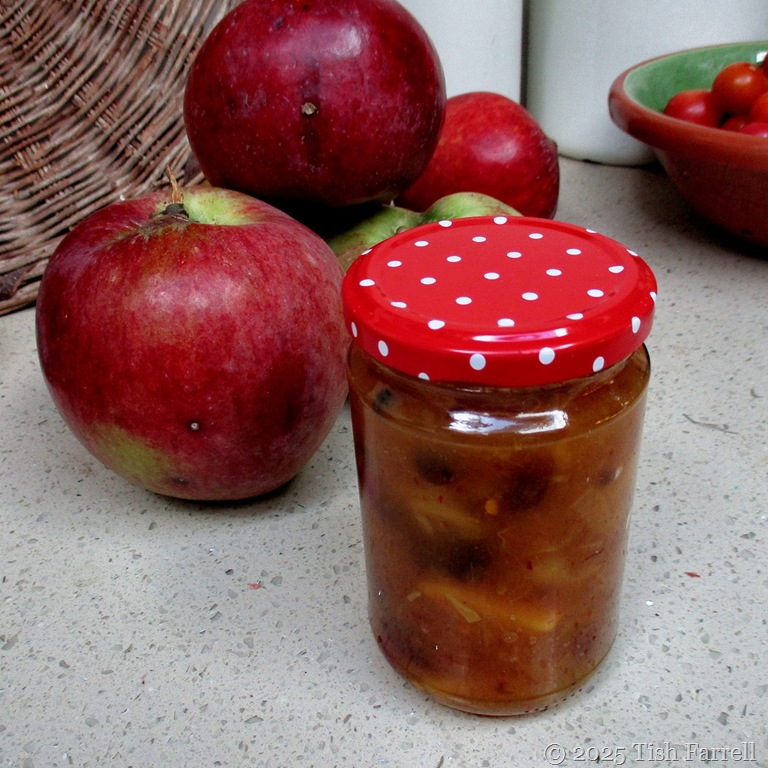
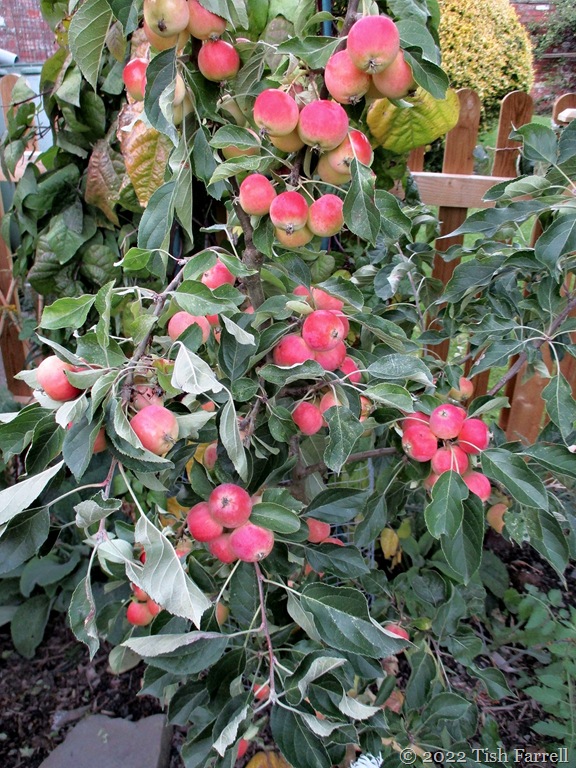
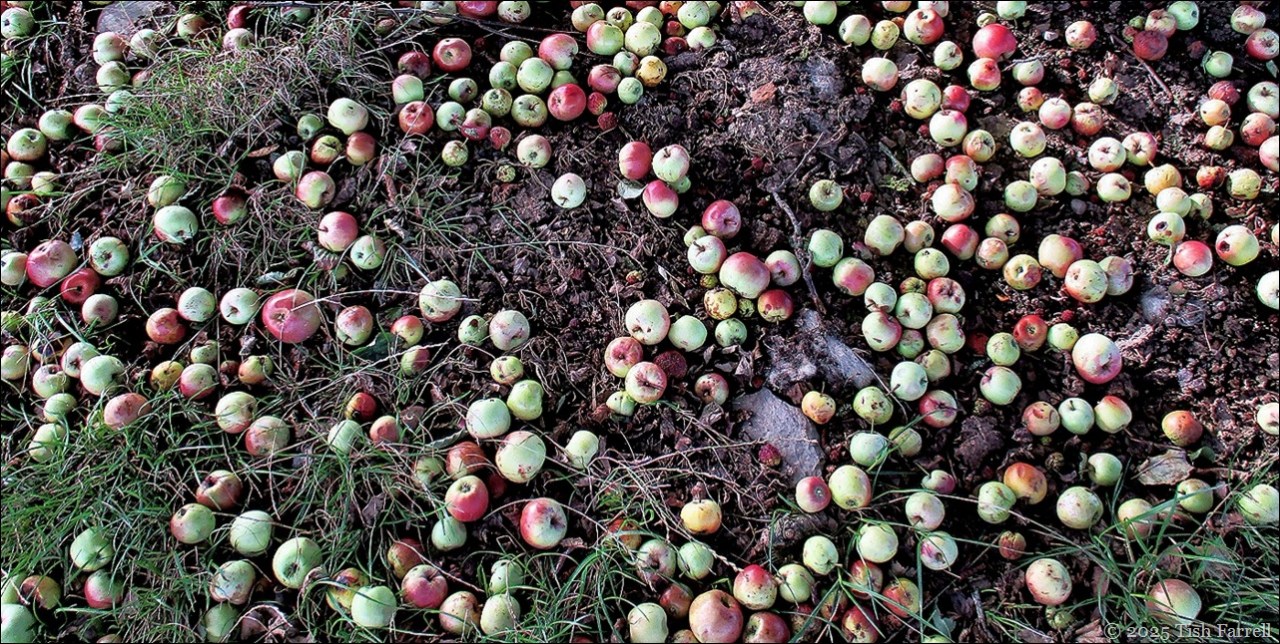
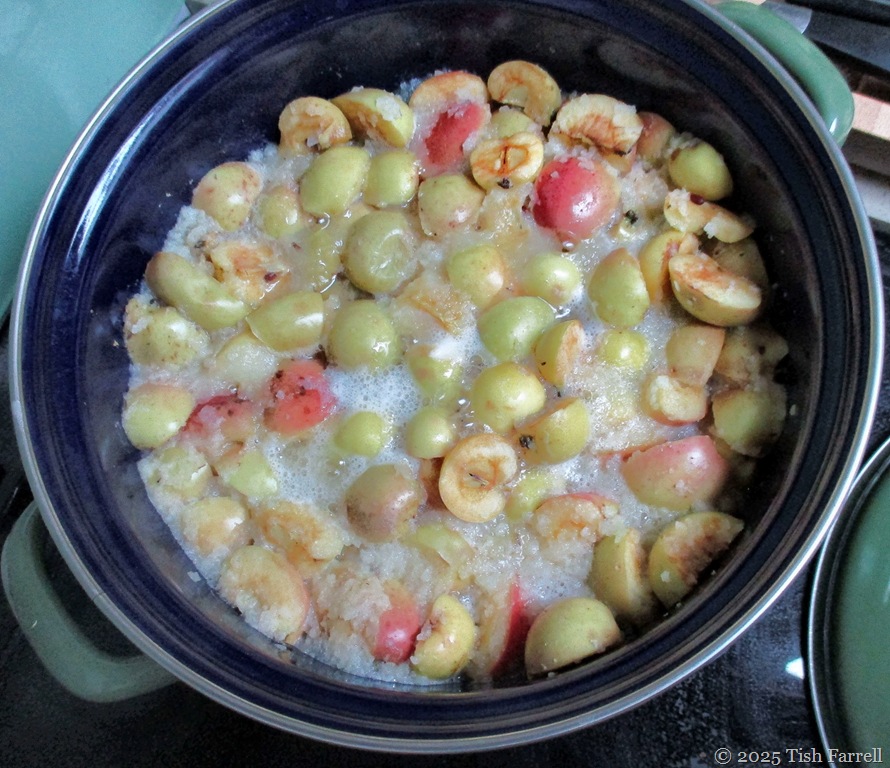
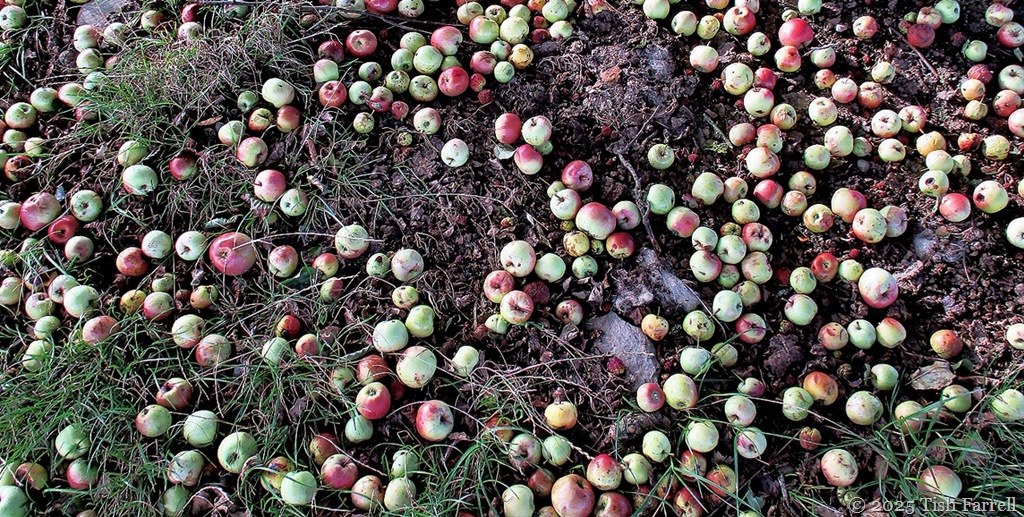
Around the garden peripheries there’s the heady scent of fermenting fruit. This year the apple (1) crop is phenomenal. Our three old trees are crammed with fruit, even though we’ve tried to thin them out. The apples are not ripe yet, but in the last few weeks many have been falling off. They are now rotting happily, giving the plants along the garden fence a rather solid (vaguely alcoholic) mulching. Of course the blackbirds and the wasps have been eating some of them. Many, too, were damaged, diseased or infested before the fall. We have yet to get to grips with what ails the two cooking apple trees. The Crispin eaters in the photo above seem fairly healthy, although they have been dropping a lot of unripe fruit. But the cookers look like this:

IMG_8812

*

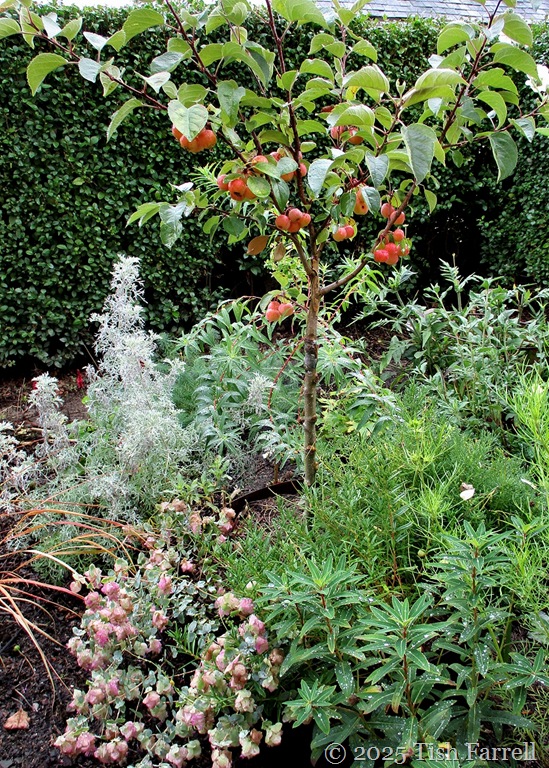
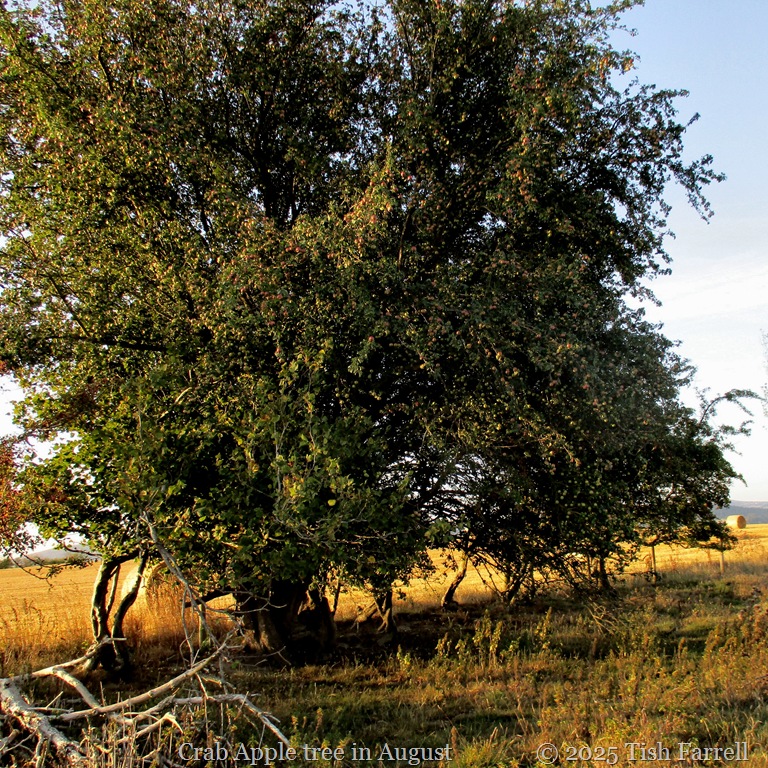
By contrast,  the crab apples are taking on a rosy glow. The little tree at the top of the garden is now much happier since we’ve had some rain and cooler temperatures. The many weeks of drought certainly stressed it:

crab apple

*

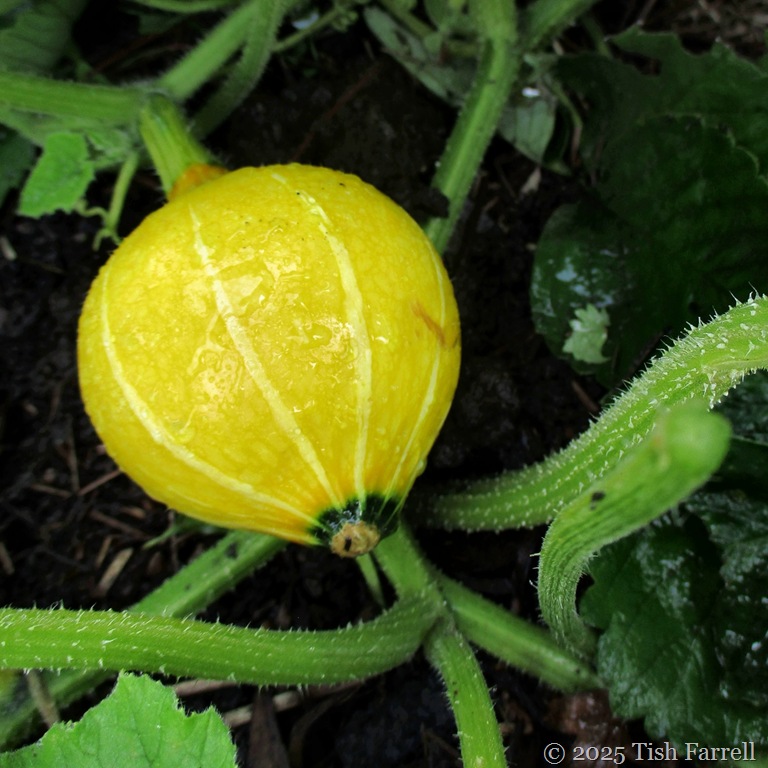
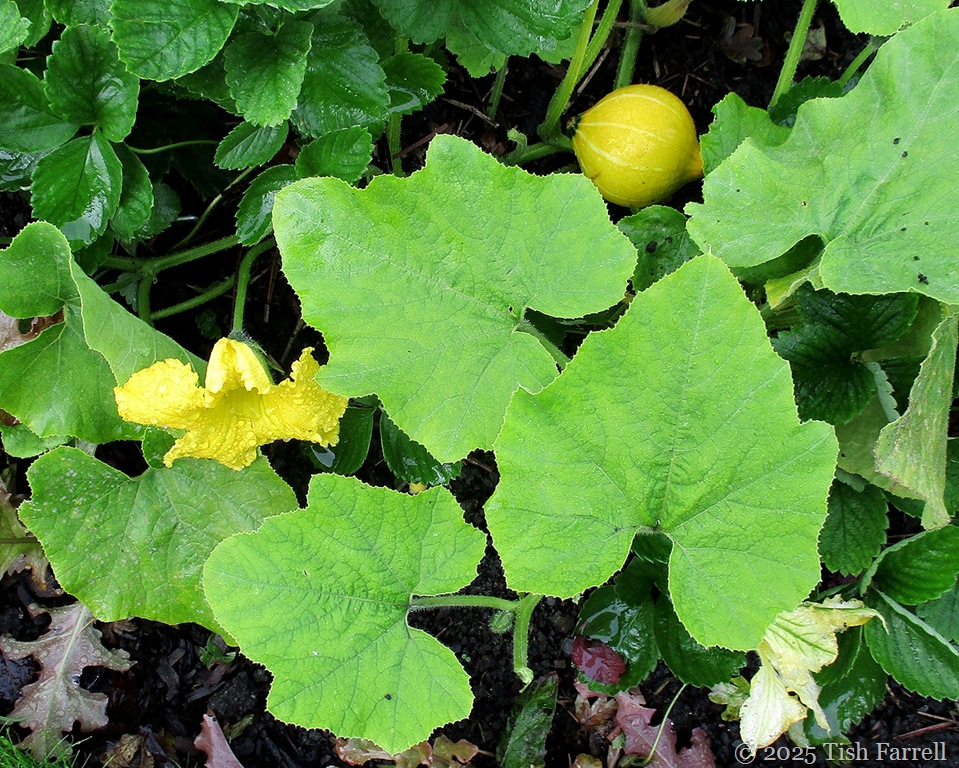
I’ve now harvested my two Uchiki kuri squashes (2), one from each plant on the side wall border. I was hoping for more (3-5 per plant were promised on the packet) but after a flying start and much vigorous growth (and feeding), the plants suddenly seemed to give up; three small squashes turned brown and died. I have two more plants (planted out later in the top garden) still looking hopeful, with a tiny squash each, but I notice there are now only male flowers being produced. These, on the other hand, are very lovely, smell delicious and are a magnet for bee-life (see previous post of bees on the razzle). Anyway here we have the outcome of all that bee foraging:

uchiki

*

The bean (3) harvest has been somewhat sporadic too, although on two occasions  I’ve had sufficient spare runner beans to make several pots of runner bean chutney – always welcome in the winter months with jacket spuds. Since this week’s rains, the plants look as if they are rallying and there’s more blossom along the pole tops. There are also signs of a further crop of Violette climbing French beans. They’ve been coming and going all summer, producing in usable quantities, but it’s meant no gluts to pass on to neighbours as happened last year.
violette beans

*

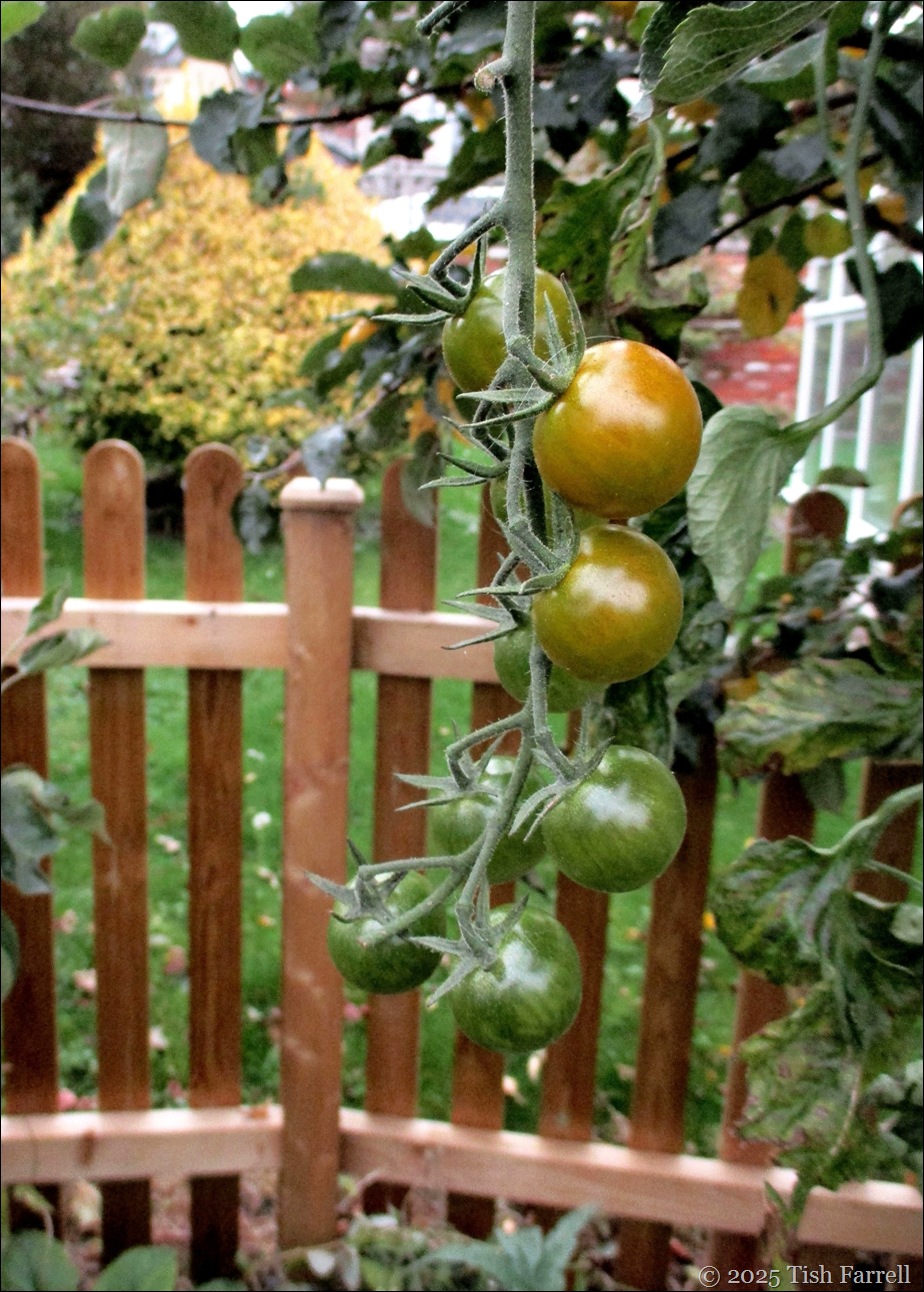
Also just ripening are my Cherokee tomatoes (4). They’re an heirloom variety I’ve not grown before, and I was a bit wary of giving up extra Sun Gold space in my small greenhouse. They started to form fruits and fatten early in the summer, and I wondered if they would ever ripen. The one plant I put in the garden by the runner beans has been leading the way.

cherokee tomatoes

Meanwhile the Sun Gold cherry tomatoes have been producing a few handfuls every day, though look to be fizzling out in the greenhouse. Surprisingly, two rather ropey plants put outside fairly late, are now doing quite well. One growing up a Polka raspberry cane, and the other keeping close company with the big cooking apple tree.

IMG_8589

*

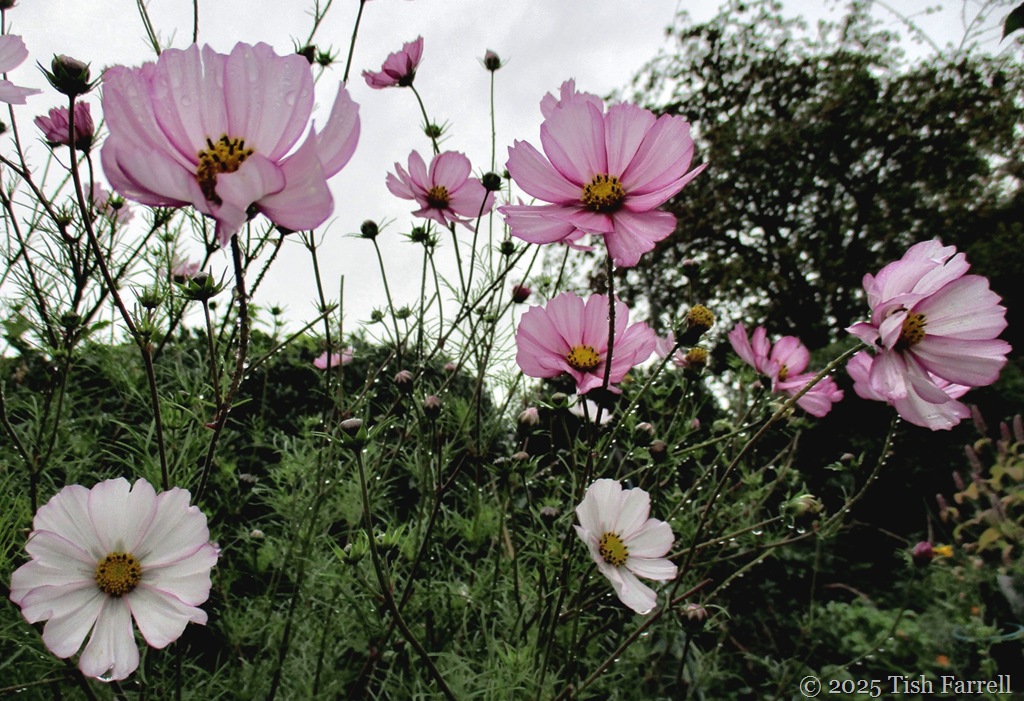
And now is the time for the late summer flowers. The rudbeckia (5) are presently the stars of the borders, especially the Goldsturm which is a mass of flowers. I bought the original plant (since split into several more) at the Bishop’s Castle Michaelmas Fair, the month after we moved into The Gables two years ago.
rudbeckia

Then there’s the super-tall Rudbeckia lacinata Herbstone by the hot compost bin. It’s been going strong for several weeks now and looks to be about eight feet tall. I think the rotten apple mulch plus residue escaping the hot bin might be spurring it on.

rudbeckia lacinata herbstone

*

Finally, a plant I brought from our Wenlock garden – Selinum (6). I’m glad I did, although I was worried that it wasn’t thriving.  It’s just coming into full flower after a summer show of ferny leaves that looked pretty droopy most of the time. It’s related to wild cow parsley (Queen Anne’s Lace) that flowers in late spring-early summer. But unlike her, puts on a welcome spread for insect-life in late season. I love its structural beauty, the filigree looks.

selinum

Six on Saturday Jim at Garden Ruminations is our host. Please go and see what he’s been up to.


apples header

Befuddled…

IMG_8764

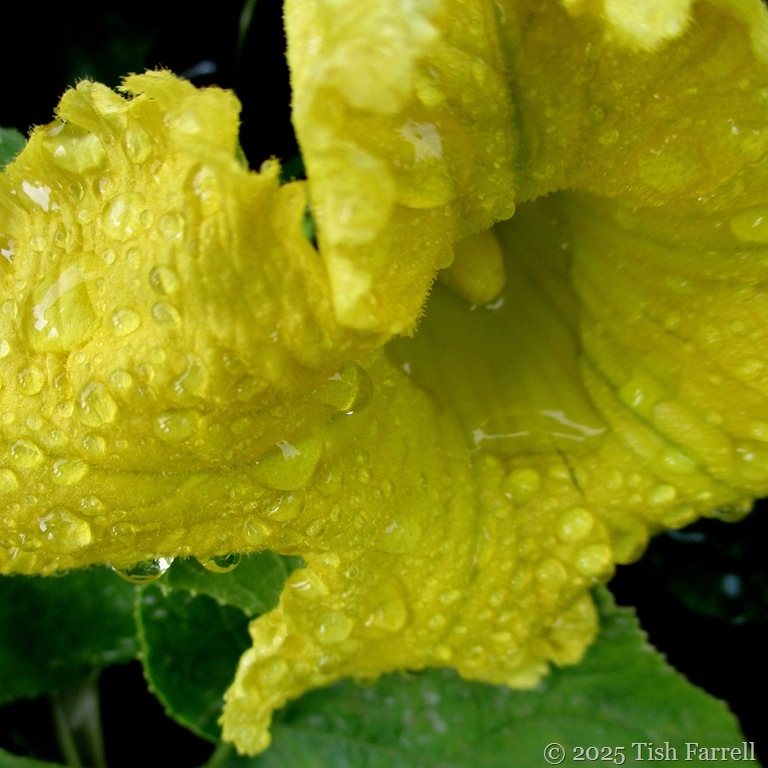
It’s been a sixes and sevens sort of a day – perhaps nothing new in the Farrell domain. It started off beautifully. At nine this morning the garden was filled with hot sunshine. There was a wind, but it felt warm, and it was wafting the scent of squash flowers across the lawn. Who knew that Japanese squash flowers smelled so lovely. And why would they need to when they already make such a show – little suns on stalks. Anyway, the bees were crowding in, not only drilling into the nectar chamber beneath the single stamen, but also bathing themselves in pollen.

Talk about a bug bacchanalia. It was all bees knees and no decorum. Each bee shoved its way in, regardless of existing occupants. After much frenzied barging about, followed by concentrated scoffing, it stumbled out again, looking slightly dazed, before diving into another squash flower.

tangle of bumbles

*

Perhaps the bumble and honey bee punters knew the squash bar would soon be closing. For so it was. By ten o’ clock, summer had gone. The wind turned cold; sky was dark and down came the rain in short sharp bursts. We needed it of course, but for a spell it seemed as if autumn had dropped in too, the seasons changing before our eyes. All very disconcerting.

The squash flowers were spoiled of course, their petals sadly deflated.

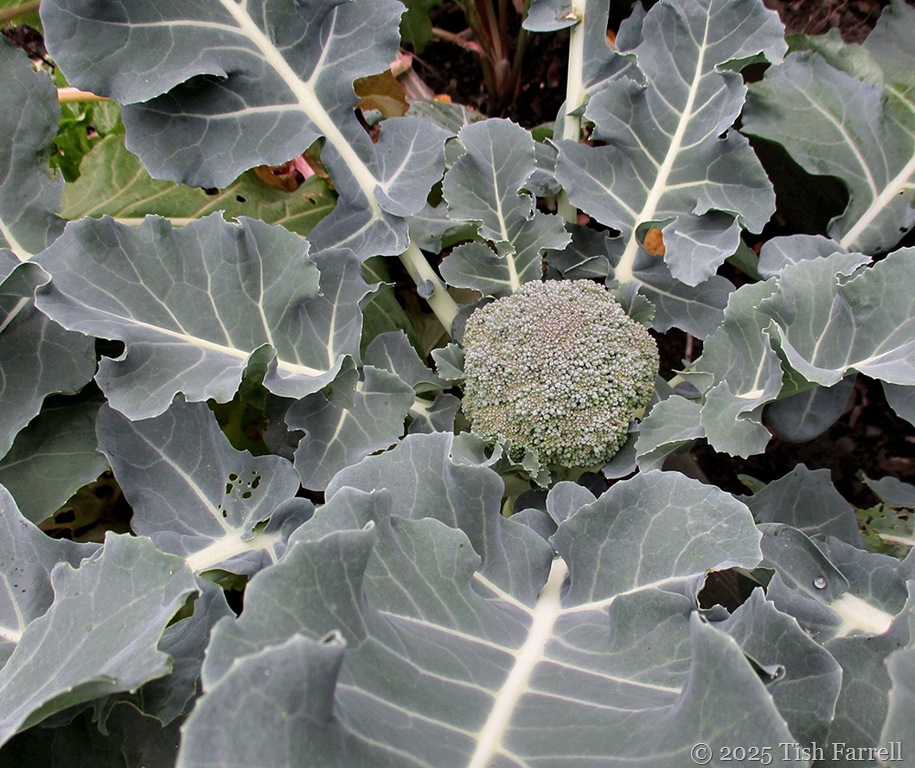
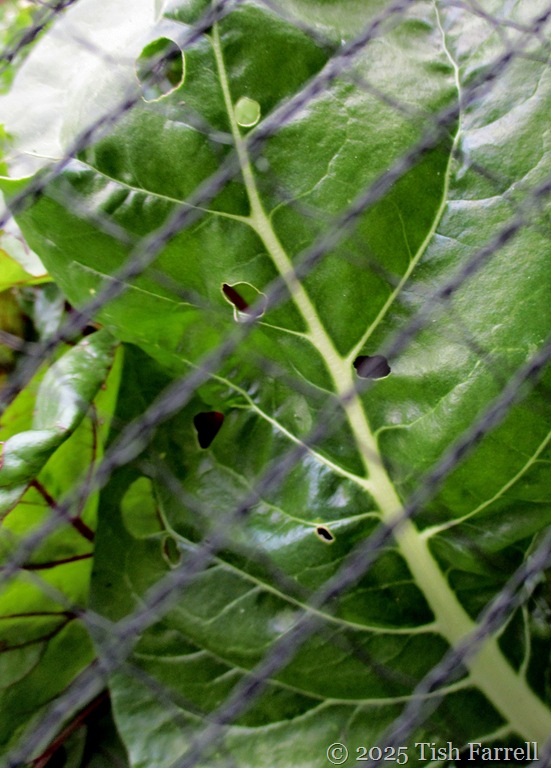
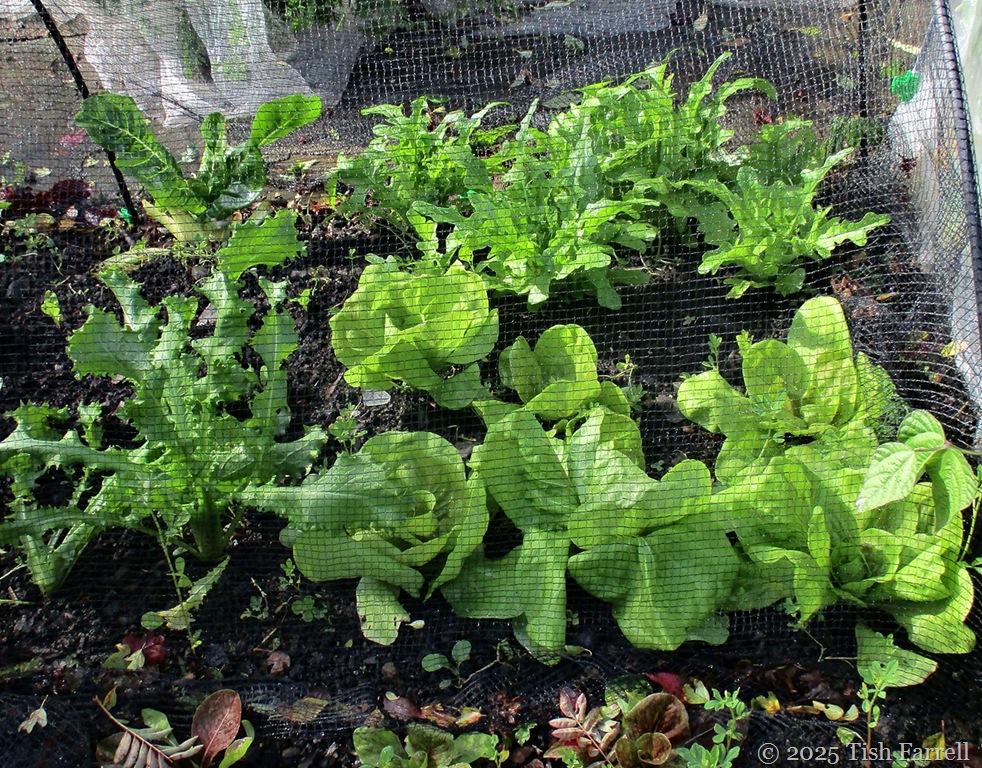
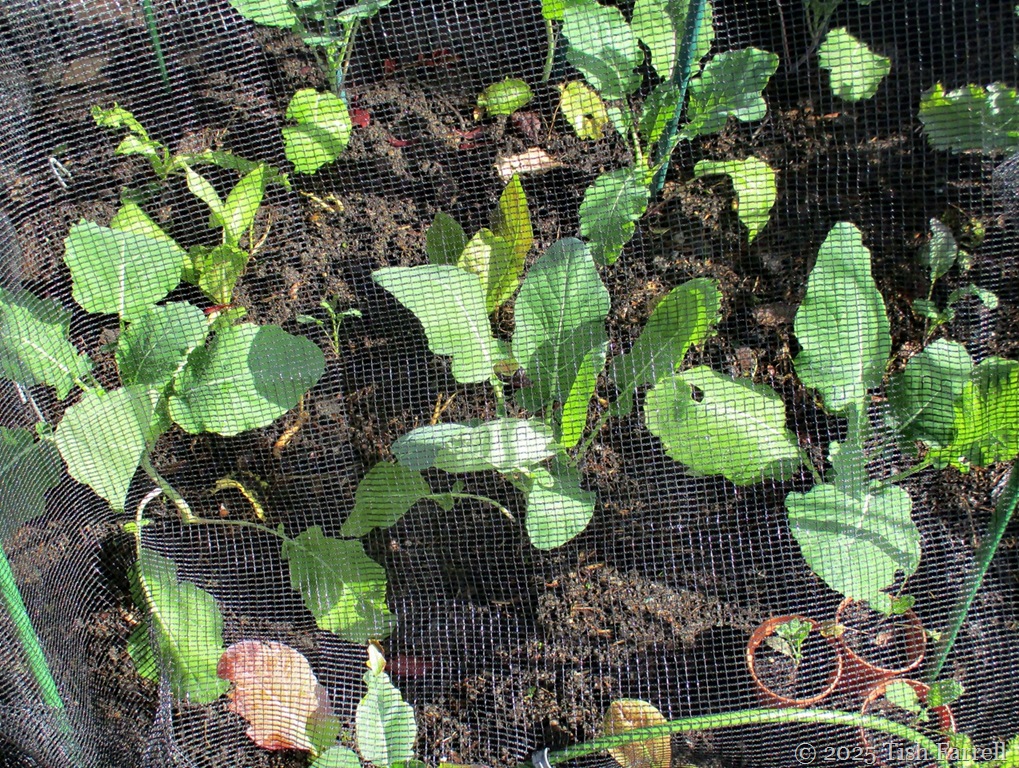
Grey skies loomed on with more rain threatened. With the sudden coolness, it seemed like a good time to plant out cabbages, though I still had to fend off all the white butterflies who for weeks have been trying to lay their eggs on my netted kales and caulis.

And then something odd started going on with the town hall clock. Sometime around lunch time it began to chime. And then kept on chiming in somewhat drunken fashion. I think it must have chimed at least twenty ‘o clock, and I vaguely wondered what this might mean, and if we’d suffered some kind of Rip Van Winkelish space-time shift. And would we care if we had.

Meanwhile, between showers, he-who-build-sheds, pressed on with his construction that looks like a car port but isn’t for the car. The sun and blue sky returned. The squash plant developed several new buds nicely set up for tomorrow’s opening. Inside a deflated one I found a bumble having a kip. I didn’t disturb it.

Just another day at the Castle.

squash header

copyright 2025 Tish Farrell

As We Walked Out One August Evening

IMG_8622ed

So why don’t we have supper with the elephant? says I. We can take a picnic.

It was Sunday evening, and he-who-builds-sheds had been toiling all day on a new construction. (We call it ‘the car port’, but it’s not for the car.) The response was not altogether encouraging. I knew he was thinking of the hill climb in the heat. I thought of it too, but the notional destination outweighed resistance. I packed a couple of small cool bags with spicy cooked chicken, bulgar wheat salad, apples and some elderflower kombucha.

We set off a little after six. The sun beamed hotly. (What a summer we’ve had).

The walk I had in mind is a climb of two parts, the first being the short sharp yomp up our street to the top of the town. This haul can be alleviated half way up from our house by deviating into Laburnum Alley, a shady ginnel of ancient walls and overhanging greenery, that wends more gently around garden perimeters, and brings you, breathing easily, into Welsh Street.

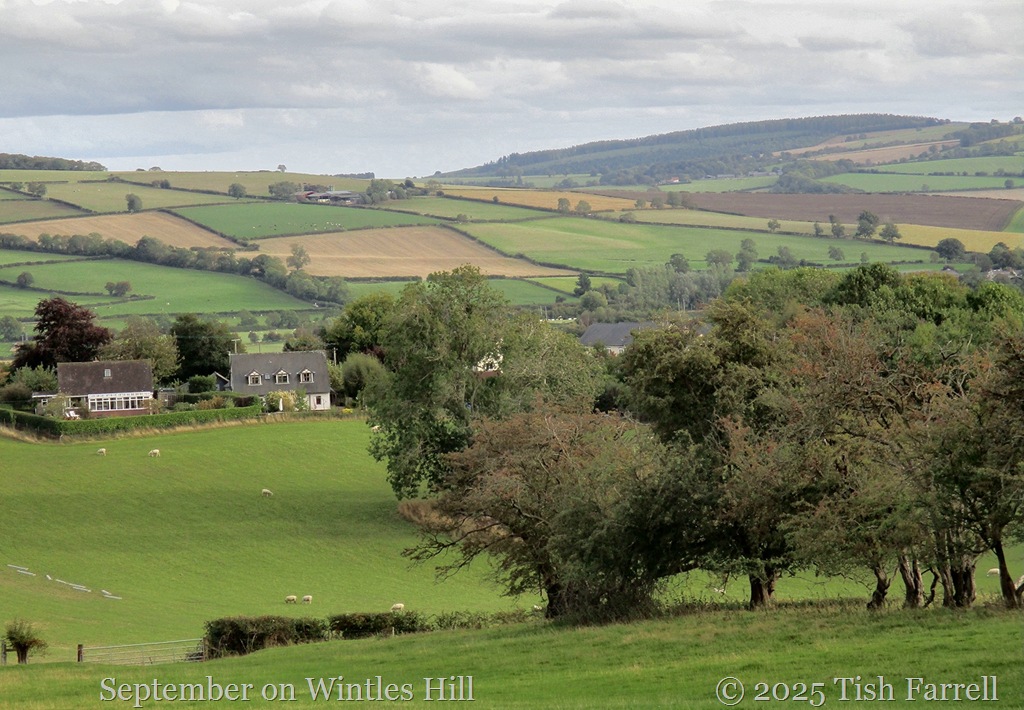
Next there’s an even stretch along the road around the Wintles mini eco-village before we head into the shade of this settlement’s privately owned (but freely accessible) woodland enclave of vineyard, allotments, and bosky meanderings. The Shropshire Way also bisects it. We pass through the gate into the field behind the gardens, and start the main climb. We’re headed towards Wales now, the Long Mynd our right.

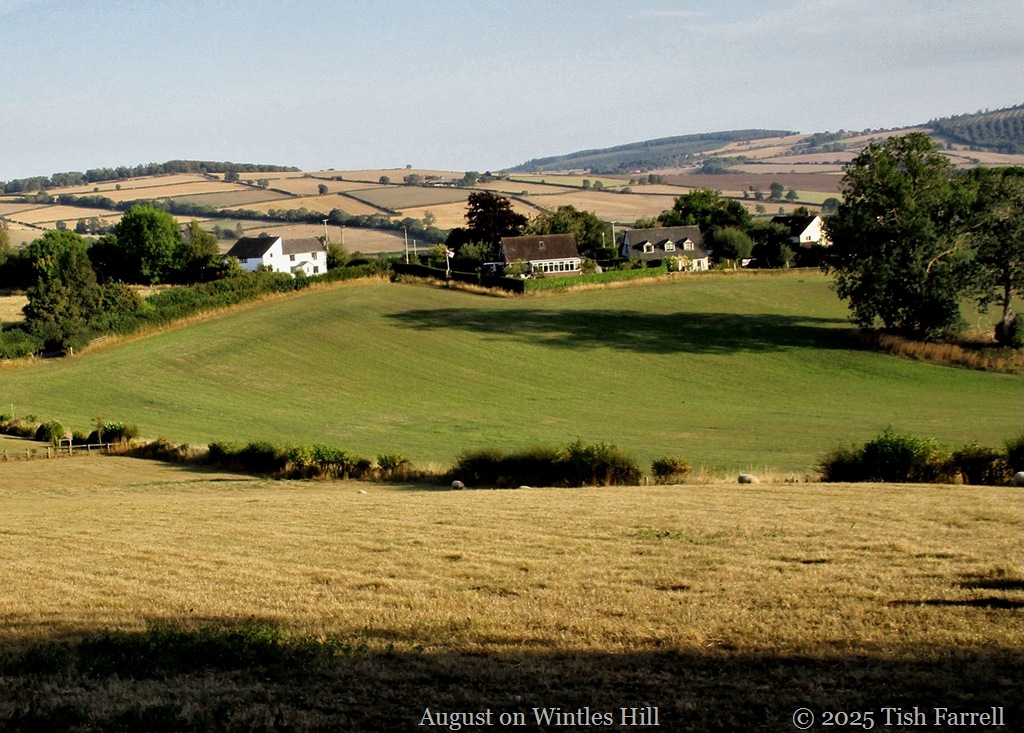
The field behind the Wintles woodland still looks remarkably green, this despite the months of drought. But above us, the fields are pale ochre, shorn of pasture or wheat, the hedgerows tousled, fringed with dead grasses and thistles bursting with down.

IMG_8613 ed

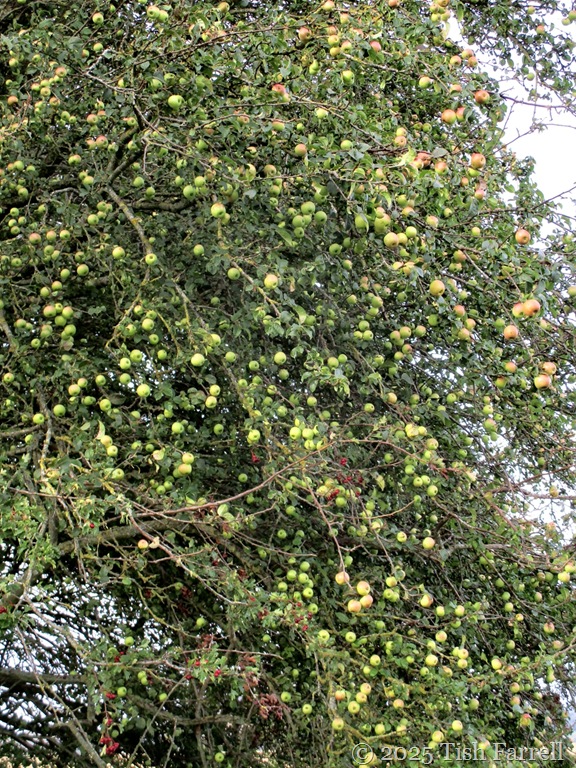
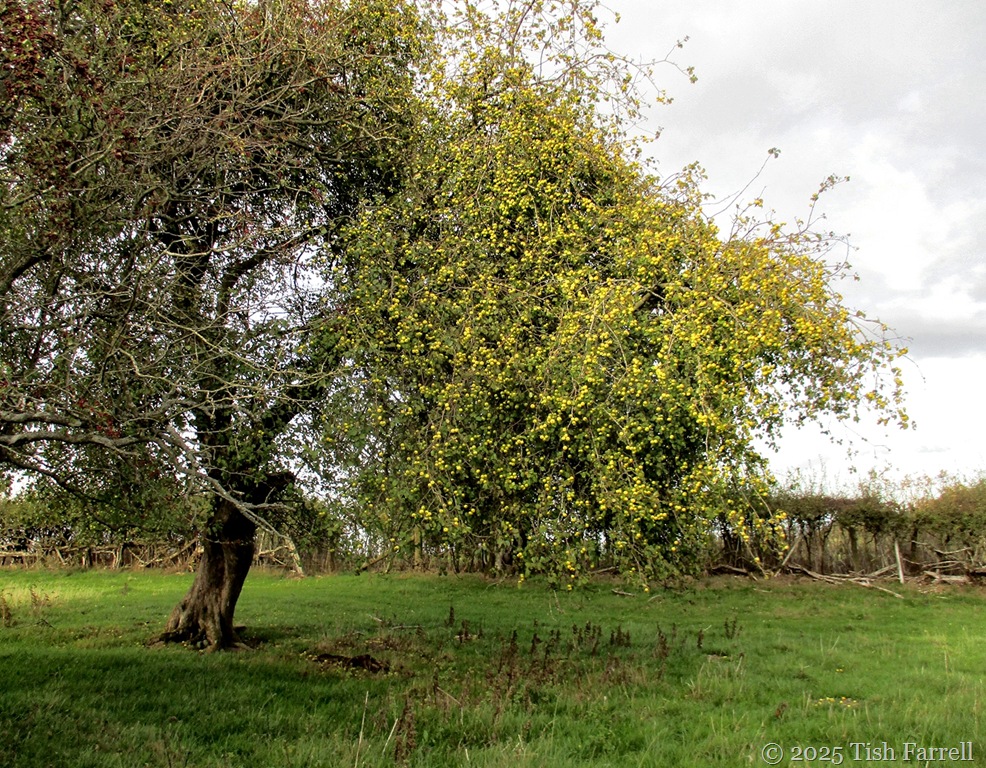
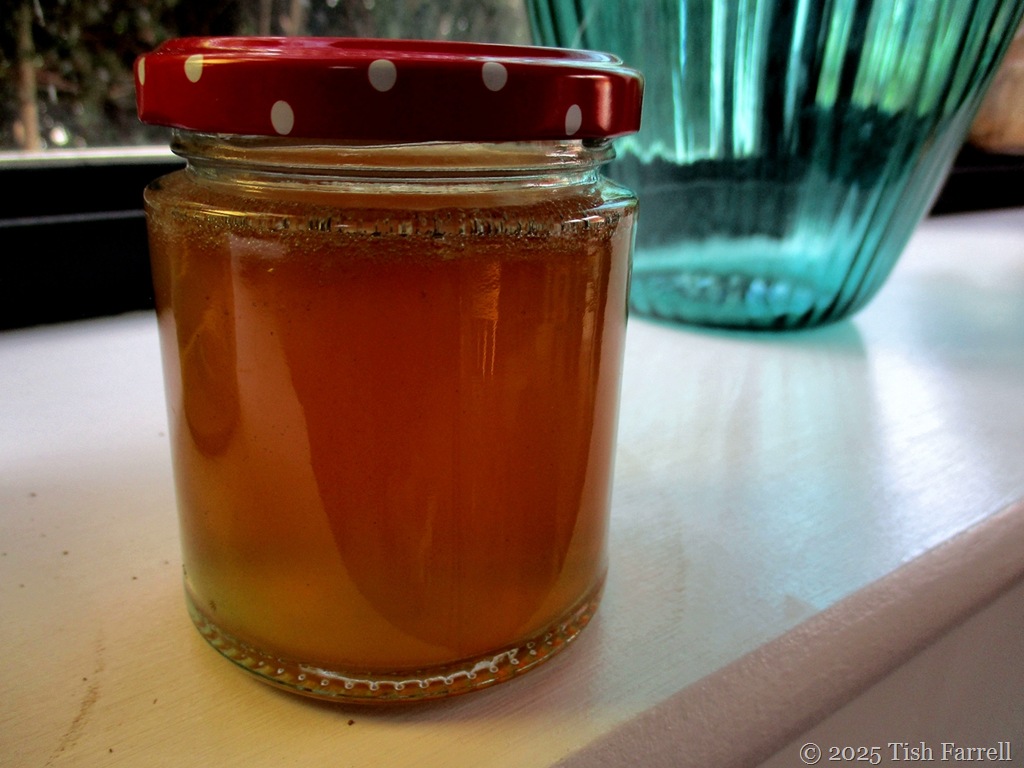
The few sheep we pass seem happy enough, and we begin to see that not everything has suffered from the lack of rain. The red clouds of the berry-laden hawthorns are astonishing, so copious is this year’s crop. The elders, too, are weighed down with ripe black berries, and later we see bushes of fat blue sloes (think passingly of making sloe gin), and then come upon a crab apple tree so crammed with fruit it is almost too good to be true. Excitement mounts. Crab apple jelly will definitely happen – if not yet, then very soon, and feasibly in quantities for all of Bishop’s Castle.

But first the picnic. We follow the footpath markers through two gates and into the trees below Foxholes Campsite. There’s a good view of the Longmynd now…

Longmynd

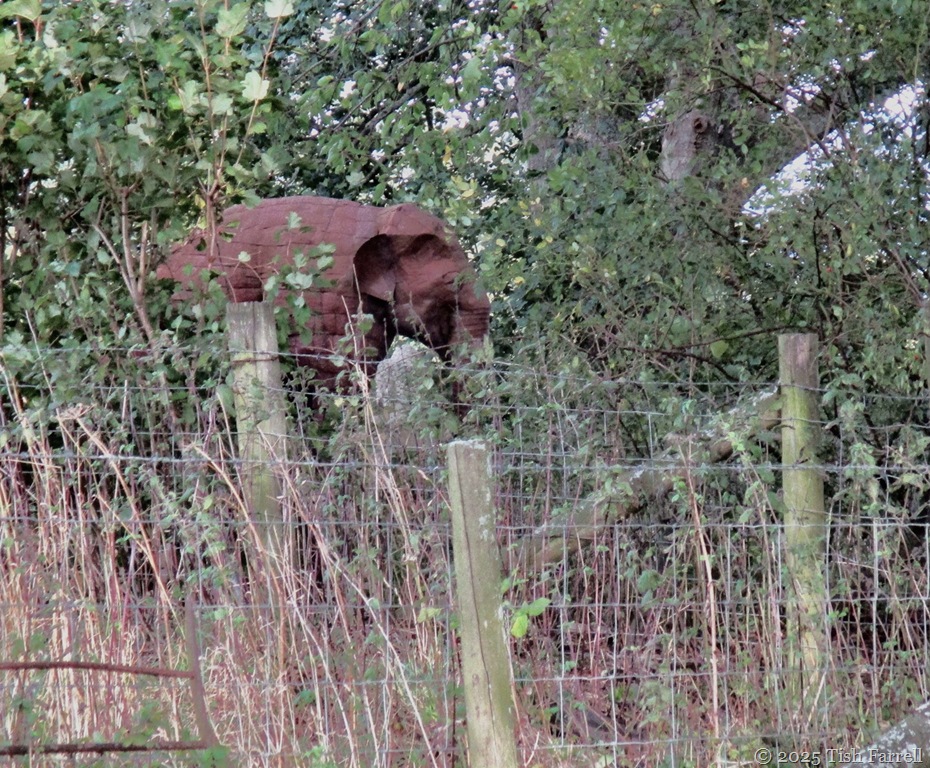
…and there is also an elephant…an Asian elephant…

elephant 2

*

Some of you will have seen this before, and I’m sorry to say that I’ve still not tracked down who made her or why she is here in this particular spot.

*

IMG_8627ed

But here, then, was the envisioned picnic spot.

We ate our supper, sitting on a fine seat commemorating a lost love, greeting camping folk as they passed by, listening to the breeze in the trees. The elephant did not have much to say. Nor did Buddha who was sitting near us:

Buddha

Just some quiet communing.

Once we’d eaten, I thought I could risk suggesting a little more climbing. This time to the top of the hill to see the views towards Montgomery.

It was here we found the crab apple tree.

crab apple and haw accessories

crab apple tree

*

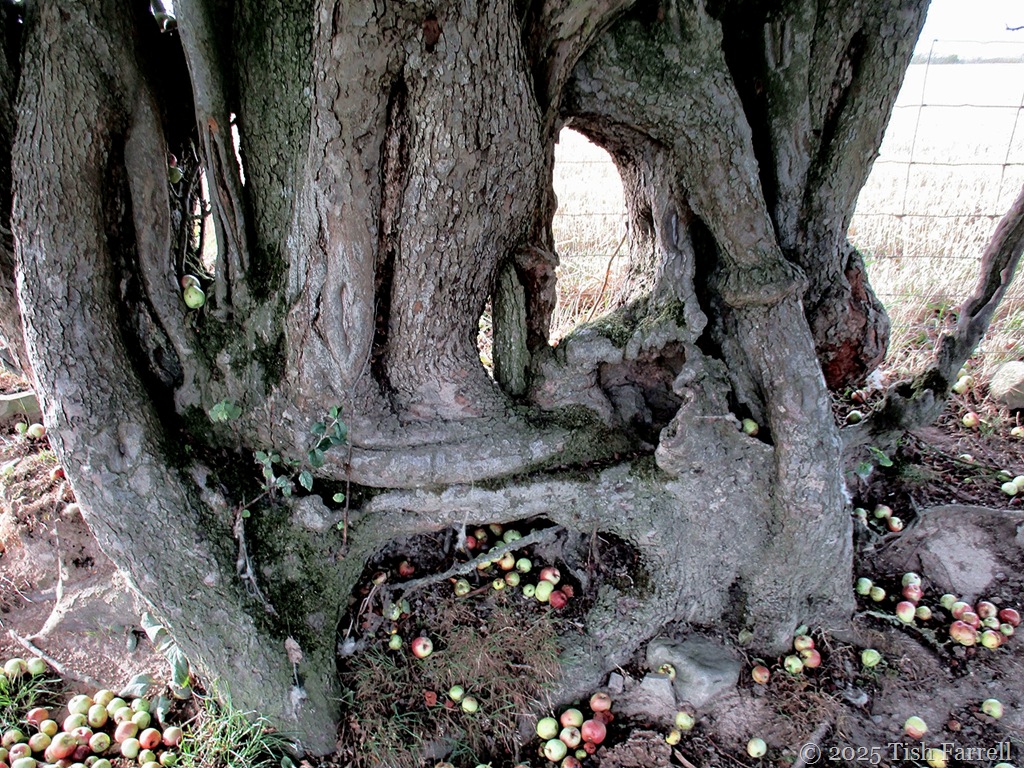
And next to it a fallen giant with its own elephantine qualities. It looks to have been struck by lightning many moons ago:

tree window

tree rings

*

And beyond it the wheat field, the crop harvested and the straw bound in roundels, which for some reason are always appealing:

stubble

*

Then it was time to turn for home, slithering down the hill on sun baked ground…IMG_8666ed

*

…and on down the hollow way, back to the Wintles.

hollow way

*

We should do this more often, we said when we arrived back at the Gables.

copyright 2025 Tish Farrell

Bees, Bugs, Blooms and Borlotti

bees squash

[1]  Earlier in the summer I grew some uchiki kuri squashes from seed and planted a couple on the boundary wall. This is is the wall that had a ‘flower’ bed in the middle of it and was originally choked with Rose of Sharon shrubs, Spanish bluebells and ash trees. I wasn’t expecting too much of it once I’d cleared it, but it seemed like a useful space that could not be wasted. Much to my surprise the squashes have taken off like magic beanstalks. Even had to stop them heading off for the top of the town.

The leaves are huge and the flowers are wonderful. Bumbles, honey bees, beetles and hoverflies think so too. They are currently getting drunk, shoving their way into the male flowers, and drilling down into the nectar below the stamens. In the process they are bathed in pollen. They can’t seem to get enough nectar and don’t care how many of them squash in there, or if they are different species.
And this is what they have made.
squash

So far it’s about a hand’s width across. There’s a slightly larger one behind the oil tank, and a couple of smaller ones besides. Thank you bugs and bees. Some of you seem to be sitting around the garden with hangovers.

*

IMG_8437

[2] The runner bean plants are still looking good and there is a mass of blossom, but so far they have been slow to set and the cropping sporadic. Too hot for them it seems. We’ve still had very little rain, apart from a good cloudburst on Thursday which added a few watering cans full to the water butt. And it certainly refreshed the garden, but did not last long enough to really penetrate the soil. The days have been much cooler though, and today there are signs of more beans coming. The bees have certainly been doing their best here too.

bumble and beans

*

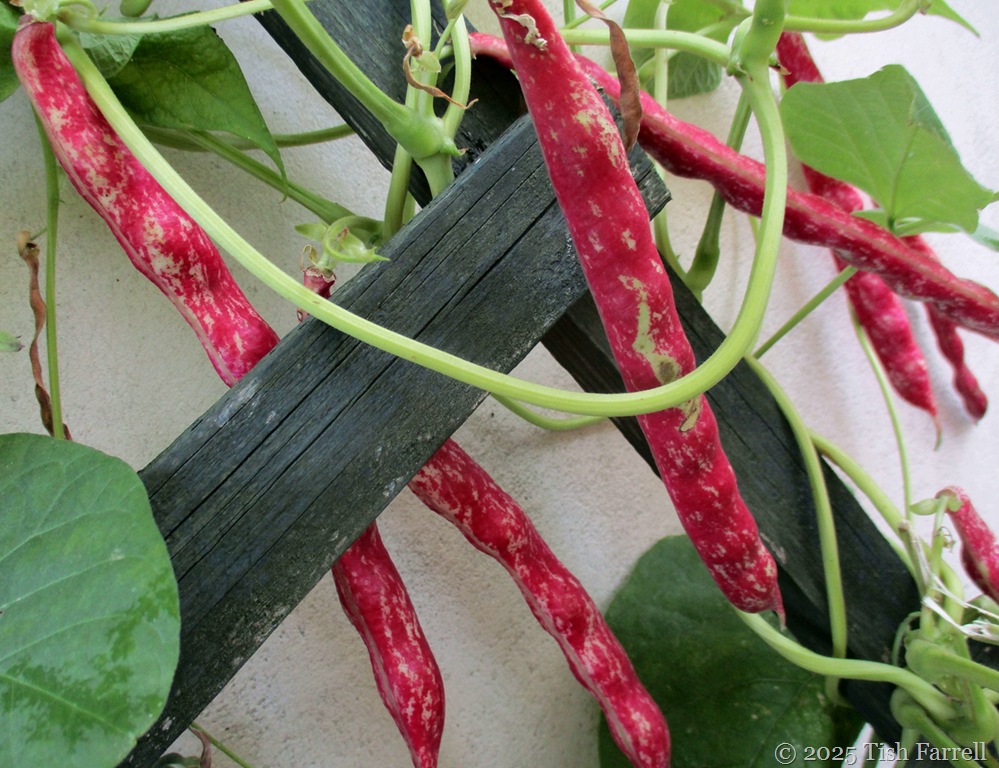
[3]  When I had my allotment I used to grow big rows or wigwams of climbing borlotti beans. Here at The Gables I haven’t the space. Instead, I have half a dozen plants growing up an obelisk in the front garden, and also a few more plants growing up some trellis beside the neighbour’s garage wall in the aforementioned border bed i.e. between the squashes. The beans are just beginning to set, but have a long way to go yet.

Meanwhile, in the bed in front of the runners, I have a short row of dwarf borlotti beans grown from seed. This was the first time I’ve grown them, and goodness, much like the squashes they zoomed off almost as soon as I’d planted them out. Already there are clusters of fattening pods. I love them for their colours as well as for cooking. So fingers crossed for a reasonable crop and no bean-boring bugs.

borlotti

IMG_8519

These are the climbing borlotti beans growing up some recycled trellis, and propped against next door’s garage, glimpse of squash plant to the rear. Some peas under the mesh in front are presently being nibbled. Graham, wearing his plant pathologist’s hat, tells me it is pea weevil. We entertain all bugs here – the good, the bad and the weevils.

*

[4]  It’s been a struggle stopping the herbaceous borders from flagging. In the front garden we left all the privet hedge cuttings on the flower beds to provide a bit of protection. I had mulched a number of plants earlier in the summer, but the blackbirds have kept moving it everywhere but under the plants.Most annoying.

Still, things have survived, and now the late summer flowers are coming to the fore, and especially the Agastache, which I grew from seed last year. It’s another plant frequented by insects, including the cabbage white butterflies. I love its mauvy purple spikes, and the aniseed scent of its leaves.

IMG_8524

bumble agastache

*

[5]  When I was thinking how to plant the front garden, I was much beguiled by Alcathaea ‘Parkallee’. I’d spotted it in a garden catalogue and was attracted by the fact that, as a crossbred hollyhock and mallow, it was immune from rust that frequently attacks hollyhocks. It also looked very pretty and so was among the first plants I bought for new garden.

It’s been flowering beautifully, despite the drought, but it does grow very tall, and thus has a tendency to flop over. I’ve found that cutting off the top few feet to put in a vase doesn’t seem to detract from the overall display. They anyway last very well as cut flowers too. Probably because they’re actually getting some water!

Alcathaea1

Alcathaea and bee

*

[6] And now it’s also time for sunflowers. I’ve grown all sorts, including the short Sunspot and some giant ones. Early summer plantings were zapped by some nasty bug and I had to cut off the main stems. Most annoying. Except now we have whole bushes of small-headed but long stemmed sun flowers which is actually very pleasing. You can see some orangey ones in the pot in the first Alcathaea photo.

 sun in sunflowers

The long…

…the tall

sunspot sunflower

…and the short Sunspot:

IMG_8432

*

It’s hard not to smile back at a sunflower Smile

Six on Saturday  Join host Jim at Garden Ruminations: lots of lovely plants and planting schemes.