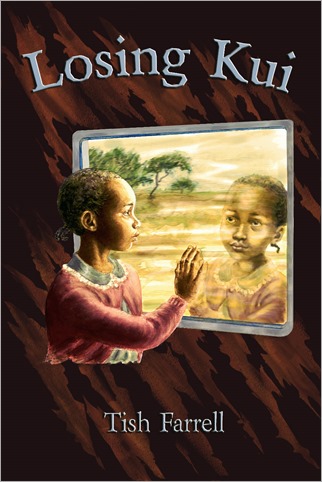
Losing Kui ~ an extract

Losing Kui-1First published as El Nino and the Bomb, Cicada Magazine 2008, now a Kindle e-book

artwork: Kathleen Collins Howell


MONDAY

First light, Kimiti Farm, Ingigi

Kui wakes – a golden starburst in her head. When she opens her eyes the idea is there. She does not know where it comes from, but it seems to have something to do with Baba, her Daddy Julius, whom she rarely sees because he works in the city, far away from their village.

Thinking of Baba gives her a sickly, sinking feeling. Yesterday he came when she and Mummy were on their way to church. Kui spotted him first. There he was, so smart in his dark city suit, picking his way up the muddy lane. She wondered why he did not have on rubber boots as she and Mummy did, or carry a brolly since it had started to rain again. She wanted to run and hug him, but Mummy gripped her hand more tightly saying, ‘No, Kui. Stay under the umbrella. You will spoil your best clothes.’ And then Baba was there, standing over her, but before Kui could open her mouth to greet him, he and Mummy were face to face, and it was all stabbing words and hard eyes.

‘I am taking Kui to church,’ Mummy said, speaking the words in a way that gave Kui a crushing feeling in her chest. ‘We will return at supper time.’

Baba made a cross face. ‘You know what I think about that.’

Then Mummy said, ‘Yes, Julius. Your godless views are well known to me.’

That did it. Kui tried to twist her hand free and run back to the house, but Mummy’s hand gripped like iron claws. Next Baba was shouting, ‘For God’s sake, Faith. I’ve come to see you, don’t you understand? I’ve spent good money on fares and now you say you’re taking the child to wail and pray all day. Well dammit woman, I’m going to the pub.’ And he did too, striding off in the opposite direction towards the village shops. Kui watched him go, picturing him stepping inside Jimmy Mwangi’s bar where she knew many of the village men went on Sundays.

And so that was that. Baba had gone. No hello. No bye-bye. He did not even notice her new church dress that Granny had bought for her. For the rest of the day she kept thinking she had done something very bad. Pastor Benson’s loud shouting did not help. Sins came flocking round her head like swarms of biting flies, and the priest’s cries of Repent! Repent! sounded like curses.

When she and Mummy came home from church it was nearly night-time, and the rain had turned to a misty drizzle. While Mummy made their evening meal, Kui took Mummy’s big umbrella and went back to the farm gate to wait. In the growing darkness she heard the frogs in the hedgerows pipe louder and louder, and the crickets chatter like crazy, but Baba did not come. She and Mummy ate their ugali and greens alone as they usually did, and then Kui went to bed. For ages she lay very still in her little room, listening out for him. Then the songs of bugs and frogs filled up her head and she stopped listening.

It was the slamming house door that woke her. Then the rain came beating on the roof, and then there was a bad row with Mummy’s voice rising above the rain noise:

‘Drinking away Kui’s school fees again-

‘Treating the whole bar-

‘How can you be so irresponsible, Julius?

‘My God. Kui is five. She should be in school-’

At first Baba did not say much. Then he let out a roar that sounded just like Lois, Mzee Winston’s old cow, who often stood by their fence and bellowed like that when she was unhappy.

‘I’ll kill you, slut. Insulting me…your…your husband…how dare you-

‘Peasant. Whore

‘How’d I know that child is mine?’

Then the fight really started and Kui had to wrap her head in the blanket to shut it out. The next time she woke there was only the pounding rain and blackness and Baba snoring loudly next door.

Now, though, there is light at her window and she is wide awake, the idea shining like the Wise Men’s star. She will go and live with Granny. Then she will never again wake up to find a stranger-ugly-Mummy leaning over her bed with swollen eyes and crusty blood on her lips. Also if she stays with Granny, Baba will stop hurting Mummy, and Mummy can come on the bus and visit her at Granny’s house.

Kui’s heart flutters like a small bird against her ribs. She must hurry. Already Jo-Jo the cockerel is crowing good morning on the shed roof. Any moment Mummy might come to help her dress. But she does not need help, does she? She is a big girl now. Soon she will be going to school. Granny will take her. She slips out of bed, shivering in her vest and pants, and quickly pulls on the church frock she was wearing yesterday. She cannot reach all the buttons, but never mind. Granny will say Ah! My little princess, as soon as she sees her. The pale blue satin is soft as silky sky and the net petticoats float like clouds around her legs. As she pulls on the long white socks and fastens the straps on the patent shoes she thinks she is just like Cinderella going to the prince’s ball. Then she spots the big pink cardigan on her shelf. Granny made it for her birthday, along with the matching bonnet with its big fluffy tassel. She puts them on.

Next she wonders how to leave the house. She can tell from Baba’s snoring that he is on the sofa by the front door. If she creeps by on tiptoe he will not wake, but she doesn’t want to smell his breath. She turns to the window. One bar of the thief-grille is broken. It is wide enough to squeeze through. She climbs onto her bed and opens the window, then hitching up her skirts, wriggles through, and climbs down onto the wooden bench outside. Pleased at her escape, she waves at Jo-Jo, puts her finger to lips (Ssssh), then jumps lightly into the mud that make ugly splashes up her socks. Oh dear. She rubs the stains worse, then skates off down the rain-soaked path. She is glad she has on her best church shoes instead of the ugly rubber boots. The slippy soles are good for mud-skating, and Mummy is not there to tell her off.

Out on the lane it is foggy, but the rain has gone. She passes no one, although there are some big boys climbing the mango tree outside Mzee Winston’s gate. Then down at the corner by the tea collecting shed she sees the minibus Joybringer taking on passengers. She knows it is Joybringer because it has golden rain round the back window and Mickey Mouse is waving to her. She also knows that this is the bus that she and Mummy take when they go to see Granny. While the tout is on the roof tying down a bicycle, she slips aboard, dodging between a mama with a basket of eggs and a man waiting to load a large iron roof sheet. She worms her way through the forest of legs and bundles to a corner space on the back seat.

She has no money for the fare, but she will tell the tout that Granny will pay when she gets off. Also, she is not sure which stage to ask for except that Granny always meets them at the big shopping centre past the coffee farm. Kui looks forward to that bit of the journey. The shop by the bus stop has beautiful pictures of black and white cows painted on its walls, and Mummy tells her that the pictures are there so everyone can know it is the butcher’s shop, even people like Kui who cannot read yet. Granny will be waiting by the cows, and when she sees Kui she will cry, ‘See what joy the Joybringer brings me’ and give Kui a big hug. Then they will go hand in hand down the windy track to Granny’s little wooden house, and Granny will stir the coals on her hearth of three rocks and make the special porridge that she always makes, and give Kui a big cup of milky, sweet tea from her thermos flask.

Kui licks her lips, then hugs herself with excitement as Joybringer speeds off through the village. How glad she is to be visiting Granny. How grown up she is to be travelling on a bus all by herself.

~

5.30 a.m. Kiarie Farm, Ingigi

Even as daylight sifts through the bedroom curtains, Winston Kiarie knows there is something wrong. The worry that has haunted him for weeks now roots like a jigger under a toenail. All night he has lain awake, listening and wondering – on and on, as the clock ticked off the hours. All night the rain has burst like gunfire on his iron roof, boiling out his gutters, threatening to explode expensive window glass. In the black hour before dawn, with Rahab snoring beside him, he finally understood the meaning of water on the brain. He had it. Lying there in his own bed, trapped like a man inside a waterfall – the drenching, drumming deluge. Where did such rain come from? Never in his long life had he known weather like it, the short rains becoming long rains, the long rains forgetting to stop.

Then the jigger-fear started up. ‘They’re unnatural,’ it nagged, ‘these rains they call El Niño. Now is the time of soft mists to ripen winter maize, not of flood and tempest to devastate the land. Mark my words. Some great evil is abroad.’

And in the darkness Winston found himself muttering, ‘Yes. Yes. It’s what I thought. Some even say it’s the end of the world.’ This thought made him tremble, and quickly he probed the dark for more rational explanations. Fear, he knew, always loomed largest at night. The jigger was probably exaggerating. By day its pronouncements might not seem so ominous.

Yet with the dawn Winston finds that the word ‘unnatural’ still running round his head. He watches the curtains lighten by degrees. Hears the rain stop hammering, but still the fear is there. Sighing, he hauls himself from the bed where Rahab still snores, gently tucks the blanket round her. Not even the jigger fears can put off the morning routine: a trip to the latrine, milking, then a big mug of tea.

Through the crack in the curtains he can see that all is greyness out in the yard. He struggles stiffly into pants, shirt and the bright blue pullover that Rahab made for him in the days when she could still conjure knitwear from two steel pins, a fat ball of yarn and some secret inner vision that he could never fathom. At the kitchen door he pulls on the old English sports coat, up-ends and shakes his rubber boots before putting them on (so clammy on bony old feet) then, unbolting the door, steps into the yard.

Outside, his hands fly skywards. Thank Ngai. No rain. Only wet mist, and that at least is seasonal. He slip-slides through farmyard mud, heading for the path to the long-drop latrine. In the slow-going he thinks that, at their age, he and Rahab could probably do with one of those modern indoor bathrooms that may be found in smart hotels. But then it would be costly to build, and the drainage hard to manage with the farmhouse perched as it is above the Great Rift. Besides, the long-drop is conveniently downwind; it serves well enough if it is dug out regularly, although the thought of this chore makes him sigh. Like much else these days, such jobs get no easier.

Shunting across the yard, his boots are soon so caked with mud that they are hard to lift. This gives him the oddest sense of moving forwards only to slide back to where he started. For a moment he stands still to check progress and, glancing back to the kitchen door, suddenly sees the funny side.

Ha! Moving forward to slide back? Sounds like some joke government slogan. Well, isn’t that how life is now: everyone striving, but then ending up worse off than before? He must tell Rahab over their breakfast cuppa. Even she will see the humour of it. At least he thinks she might. Yes. Moving forward to slide back. What a joke.

He stops at the cattle pen to scrape the excess mud from his boots. At this rate he might never reach the privy in his lifetime. Two Ayrshire cows and three Jerseys push their faces at him over the fence. Five lots of breath make white plumes in the mist. Winston briefly pats each dewy nose in order of seniority: Lois, Lola, May, Primrose, Mumbi. All present. All correct. And yet?

He turns and looks around the farmyard, scanning the acanthus hedge where the fog hangs in shrouds. But it is not the fog that disturbs him; it is something else. It is silence. Not even a dove or starling calling. After the night’s thundering rain so much quietness is uncanny. He thinks of Rahab then, and wonders if she is awake yet. She sleeps so much these days; not even last night’s din disturbed her. Sometimes she seems to slip into another world, as if she is submerged in an old-age, silent fog all her own. He wonders if the endless rain is to blame (water on the brain?). All he can do is hope that she will come back to herself.

He presses on slowly across the yard, telling himself that he is not the only one to be worried by weather. Two days ago, during a lull in the rain, he and Rahab walked to Ingigi’s general store. They needed tea and maize meal. Along the lane the lantana bushes steamed under a misty sun, and people stopped to commiserate over the general quagmire. Not everyone was complaining though. Outside their neighbour’s Faith Muthoni’s place little Kui and another child were playing shop. They were having a fine time shaping rounds of mud and mango leaves, and setting them out on a banana leaf.

‘Mud pies,’ Kui cried when she saw them. ‘I will give you a good price.’ Then she dissolved into shy giggles when Rahab sparked into life and ordered ten. Winston at once repeated the order, trying to join in the children’s fun. The only problem was he could not be sure if Rahab was joking.

Further on at the market crossroads they found a big crowd trying to shunt Joybringer out of the mudslide that had spilled down the plum orchard above the bus stop. While the windows sparkled with old Christmas tinsel and Mickey Mouse grinned like a mad thing, tempers began to fray. City-bound travellers were suddenly sprayed in mud from a spinning back wheel, and this was the moment that Sergeant Njau turned up and tried charge the bus driver for causing a public nuisance. It was very poor timing on the sergeant’s part. Also Winston was astonished to learn there was such a crime. But Sergeant Njau had pressed his luck too far this time. The passengers, furious that any fine would be added to their fares, turned on him. The officer, faced with a mob of such unexpected ferocity, muttered something about ‘mitigating circumstances’, and quickly retreated to the Police Post.

Meanwhile Jimmy Mwangi, the local bar owner, caught Winston’s eye.

‘It’s like the Plagues of Egypt,’ he said, nodding at Sergeant Njau’s departing back. ‘If we’re not scourged by flood or drought or bugs eating our crops, it is swarms of bloodsuckers like him. Making money from other people’s misery. I ask you.’ But before Winston could think of a suitably non-committal reply, since he had learned from past experience not to voice opinions about officials in public, Samwel the butcher chipped in, ‘End of the world, that’s what this El Niño means. God is reminding us to repent, sending us these mudslides and floods. The Millennium will soon be upon us.’

By then Winston wished that he and Rahab had stayed at home, away from such alarmist forecasts. Even when they reached Quality General Store, Mrs. Kuria wailed that there had been no maize meal delivered and surely God was sending an absence of ugali to punish them for their wicked ways.

Winston could summon no suitable response to this either. Now, though, he thinks the doom-mongers may have a point, but only so far. God, he is sure, is not the culprit. Recently he has been reading the newspapers more carefully. He has learned, for instance, that the felling of the highland forests is changing the Rift Valley’s climate, lowering the water table, and loosening the light tropical soils so that they wash away with every rainstorm. On top of this, everyone knows that officials have been plundering the valuable hardwoods for years, and then clearing the rest for charcoal burning and bhang farming. And so, with the sacred soil thus exposed, El Niño strips the land as a slaughterman flays a carcass.

He knows where that soil ends up too. He discovered this quite by chance, three weeks ago when he called in at Jimmy Mwangi’s for a glass of home brew, something he did not usually do. As he stepped into the bar, there on the T.V. was a scene that stopped him in his tracks. An aeroplane was flying over the Tana Delta, and filming the vast red slick as it spread into the Indian Ocean. It did not take him long to realize that this was the outpouring of their very own river that rose in the High Rift hills; their own good earth flowing into the sea. The image of a severed artery sprang to mind. He began to feel faint. And that is when he knew. The homeland he had fought for in his youth was simply bleeding to death – kwisho and bye-bye. He turned on his heel and went home without ordering the drink.

Even now, recalling that scene gives him a stabbing feeling in his guts. He hurries onwards. When he reaches the drier ground of the hillside path he strides out, sidestepping the chickens coming the other way. (How the devil have they got out?) But there’s no time to think about that now. He throws back the wicket gate at the end of the path, takes the long-drop key from his trouser pocket, and steps into the field. But as lifts his hand to the place where the door should be, he finds there is no lock to open. No door either. Winston’s hand hangs in space. The latrine is gone. The ground it stood on too. Nothing left but a bloody mud slick.

It takes another second to sink in. Ngai, help him. Now he knows what the jigger meant. His life’s work is gone – the plots of coffee, tea, maize, the terraced banks of cattle grass – all swept away by a massive landslide from the hills above. Only the red subsoil remains. And something else. A big rusty egg lying in the dirt where the latrine should be.

Winston drops his trousers just in time. Dear Lord. Then finishing fast, he runs to warn Rahab. He knows what that giant egg can do. Forty-four years it must have been lying there on his farm. Forty-four years waiting to blow.

‘Rahab. Woman. Move!’


Losing Kui -Final

Available in Kindle at:

Amazon.co.uk

Amazon.com

YOU DON’T NEED A KINDLE READER TO READ OR DOWNLOAD E-BOOKS.

GET A FREE KINDLE READER APP FROM AMAZON FOR ALL OF YOUR DEVICES HERE


Secrets, conspiracies, tragedy, dark comedy – a fast-paced novella of interwoven tales set somewhere in East Africa

Things are going from bad to worse in Ingigi village. No one knows why five-year old Kui has gone missing. Nor does Sergeant Njau want to find out. He has his own problems, pressing matters that are far from legal. Then there is the endless rain. Will it never stop? Some Ingigi folk think it means the end of the world. Old man, Winston Kiarie, has other ideas. He senses some man-made disaster, and when it happens, it is worse than his worst imaginings. The fierce storms are causing landslides and throwing up British bombs, unexploded for forty years. Their discovery is giving the Assistant Chief ideas: how to make himself very rich. And then there’s young Joseph Maina and the primary school drop-outs thinking they have found treasure, and about to do something very foolish. Meanwhile, is anyone looking for Kui?


Available also on ePub Bud for Nook, iPod/iPhone etc HERE 

© 2014 Tish Farrell
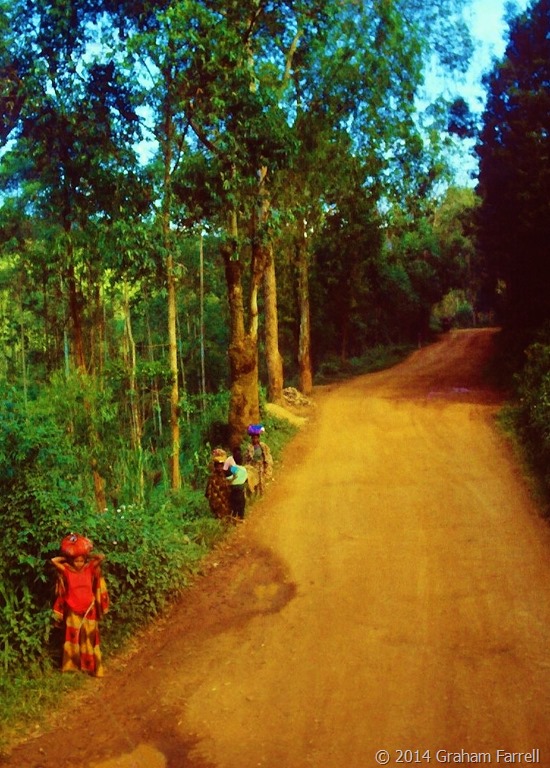
 

Taking the slow road ~ tarrying not typing(#mywritingprocess)

Scan-130703-0009

On the road at #mywritingprocess with thanks to Tiny at tinylessonsblog.com

*

As others on this writerly blog tour have said, some writers are the bees’ knees at doing anything but write. I would be one of them. When the time comes to sit down at the desk there is the sudden compulsion to go somewhere else – anywhere else. This morning I left the computer to scrub the grout between the bathroom tiles. (So absorbing). Later I mooned over pots of recently sown runner beans, and what? Waited for them to grow? Of course. No writing skills needed in Beanstalk Land, only nifty footwork to elude man-eating giants. (Hm. And I could pick up a golden harp while I was there; learn to play, might inspire me to…) You get the picture.

So what is this doing something else all about? OCDD – obsessive compulsive displacement disorder? Why do we put ourselves through this? It was the first question I asked myself when Helen Kuusela aka Tiny at www.tinylessonsblog.com invited me to join this blog tour. I was so busy asking it, I forgot to thank her. So thank you again, Tiny, and hello to everyone on this fascinating writing safari. I forgive you, one and serially, for putting me on the spot.

As to the OCDD, I have a theory, one based on extensive personal observation. When procrastination sets in, and especially after an early full-of-promise burst, your inner truth-teller is trying to make contact with your writing brain. Something is not quite adding up. This is the moment for some pointed self-examination: are you writing yourself into a dead end? Have you started in the right place? Do the voice/situation/setting ring true? Is your plot/concept/premise sound, and does it truly have sufficient substance and energy to become the story/novel/poem you envisaged? Are you writing from within, or only from the surface?

These can be very painful questions and, rather than rolling them around your mind, I find asking them outright and OUT LOUD has better results. The inner truth-teller seems to respond better to vocalized interrogation. Also, the process of outlining the work to an audience, and by that I mean a willing listener who does not interrupt, can reveal both the intrinsic problems and the possible solutions. As you talk, the remedies to stuckness will likely pop out of your mouth. Listen out for them. A passive listening post is thus an essential aid. Your dog, cat or canary would be a good choice. Successful children’s writer, Michael Morpurgo, says he first outlines his stories to his sheep. And as I write this, I’m thinking that a Dictaphone could be a good idea too. If anyone has other notions on this, please tell me.

And now for THE questions:

1) What am I working on right now? In my head, filing cabinets and paper piles I have many works in various stages of creation: picture book scripts, teen novels, a grandiose scheme (possibly two novels for adults) set in colonial East Africa. This last project I’ve been working on for several years – stalled at various points by doubt; then by the annoying tick that says I need to do more research. (This can be another OCDD trap, so it’s wise to keep checking). I am heartened, though, when I hear writers such as Barbara Kingsolver say that it took her nearly thirty years to acquire the wisdom to write the magnificent Poisonwood Bible, or that Tolkein found himself stuck in the Mines of Moria for a whole year, wondering how to write his way out. Such admissions remind me (once I have checked back with myself AGAIN) that the time it takes to finish a piece of work, is the time it takes to finish it. Not everyone can write a book a year. And now I think of it, I’m sure I read  that the marvellous short story writer, Alice Munro, takes eighteen months to write a single story. And when you read her, you know why. She distils whole novels into her short form.

For now, I’m recycling my ‘back catalogue’ of published short stories, creating new editions as Kindle e-books. I have just kindled Losing Kui, a novella originally published by Cicada Magazine in the U.S. a few years ago. On one level it is a tragi-comedic view of everyday life in a fictitious East African country during the late ‘90s. On another, you might call it an allegory, but I leave it to readers to decide what I mean by that.

2) How does my work differ from others of its genre? I am truly not a fan of categories, although I know marketing persons insist on them. What matters to me as a reader and writer is a well-crafted story, whether it is a 300-word picture book, Hilary Mantel’s Booker winning Wolf Hall or a Lee Child thriller. Most of my published work comprises short stories/novellas that are accessible to both adults and teens, and so I suppose you could call them crossover literature. Books for young people are anyway not so hide-bound, and may combine several so-called genres: real-life and historical narrative inter-threading with fantasy/magic realism. I find myself increasingly attracted to this combination.

3) Why do I write what I do? I had always meant to be a writer, but it was only when I went to live in Africa during the 1990s that I found a REASON to become one. In Kenya I was confronted with big landscapes and big human issues in which my own country had long played a questionable part. Suddenly I had a viewpoint and a focus and a territory. I was incensed too, by the wholesale imposition of western ‘values’ that left young Africans thinking it uncivilised that their forebears lived in mud and thatch homes. That’s one of the things that spurred me to write contemporary fiction for African young people. See (Latest books).

Some 14 years after returning to the UK, I’m still teasing out stories begun in Africa. I keep meaning to head for other lands, and one of my Ransom quick-reads for teens, Stone Robbers, is set in Guatemala. I suppose I am driven by the desire to tell stories about people who do not have a voice in the wider world, or who live in ways that are fast disappearing. In the margins between tradition and consumer modernity there are the kinds of drama and conflict that every story needs to make it work.

4) How does my writing process work? My people always arrive first. Even if I can’t clearly visualise them, I have a strong sense of them and their particular dilemma. After nearly 20 years of writing I have amassed quite a crowd, all waiting for their stories to happen/move on/finish. To discover what their stories may be, I always do a lot of research – too much probably. But without fail, the ‘what happens’ always emerges from this reading. In that sense, I do not make things up. How the works come together thereafter depends on finding some sort of imperative. This could be a writing competition deadline, or a publisher’s call for a certain kind of work. As Tiny says in her post, you do need deadlines. And perhaps, to come full circle, a lot of writer’s OCDD is also down to not knowing who will want to read/publish the work once it is done. While it remains unfinished, both failure and success are forever postponed. Keeping to your chosen path is hard to do, and I’ve written more on this HERE. But now please meet Celestine Nudana from Ghana, West Africa. clip_image002 She will be heading out on the next leg of  the #mywritingprocess tour (26 May).  She has been blogging at Reading Pleasure since 2012: http://readinpleasure.wordpress.com/  and believe me it is always a pleasure to visit her there. 

Celestine is Senior Assistant Registrar at the University of Professional Studies, Accra, Ghana. She is married and has three boys. She attended the University of Ghana, Legon, where she read English and Theatre Arts, majoring in play writing. She also has a Masters in International Affairs. As well as being a passionate reader and book reviewer, she has also developed a special talent for writing haiku, although she says she is still at the learning stage. Even so, her work has been included in two recent anthologies: Western Haiku: A Collection, and Ballads, bothproduced by Dagda Publishing UK, an  independent publisher who aims to show-case the freshest poetry and literature by new writers from around the world. The works are available as e-books. She has also had her flash fiction published in1 Photo 50 Authors 100 Words edited by Madison Woods.

She says of herself, “I am a romantic at heart, and love a good romance story, though I shy away from erotica. Almost all my poems focus on love, or aspects of it.” Celestine has written romantic fiction for serialization in several Ghanaian newspapers, and deployed her play writing skills to produce radio serial dramas that deal with topics including child health and female sexual reproductive health. So here is a woman who writes on many fronts. I’m looking forward to hearing what she has to say about her writing life.

*

Now here is my second writer introduction. She was a bit held up, so this is a last minute addition. I’ll let her speak for herself:


Hello! My name is Vashti Quiroz-Vega. I’m a writer of Suspense, Fantasy and Horror. I also enjoy mixing in some Humour and Romance into my stories. From the time I was a young kid, writing has been my passion. I’ve always been a writer; I just didn’t know it until  much later. For me, it is easier to express my thoughts on paper than with the spoken word. I enjoy making people feel an array of emotions with my writing. I like my audience to laugh one moment, cry the next and clench their jaws after that. My love of animals and nature are often incorporated in my stories. You’ll read intriguing things about various animals, nature and natural disasters commingled with my character-driven novels. I love to read almost as much as I love to write. Some of my favourite authors are Stephen King, M. Night Shyamalan, Michael Crichton, Anne Rice, J. R. R. Tolkein, J. K. Rowling and Dan Brown.

Vashti's Web Photo (361x640)

http://vashtiqvega.wordpress.com

 *

RELATED POSTS:

This fiction writer’s path: five things learned along the way

Writing tips: Knowing your place

Errant muse? There’s still life at the allotment

TO SEE OTHER WRITERS’ POSTS IN THIS TOUR, GO TO THE READER AND USE THE SEARCH TAG: #mywritingprocess

Rooti-toot-toot, it’s spring at the allotment: up close and vegetal

100_5367

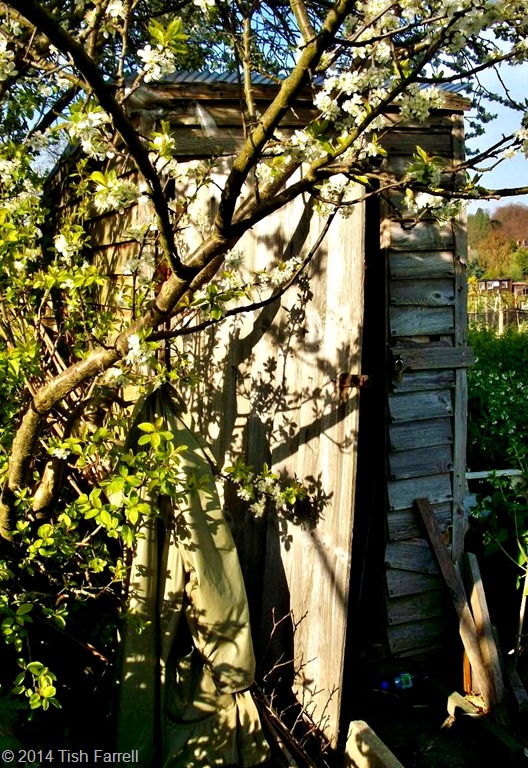
Well the old shed has made it through another year. A couple of bits have fallen off, but last year’s application of internal bracing by the Team Leader, aka Graham, has kept its tendency to list in an easterly direction in check. Would that we all had such a bracing. Over the winter it housed a poor mummified mouse, and snails still go to roost in there. I’m not showing you the inside, though. You definitely do  not want to see in there.

100_5374 (2)

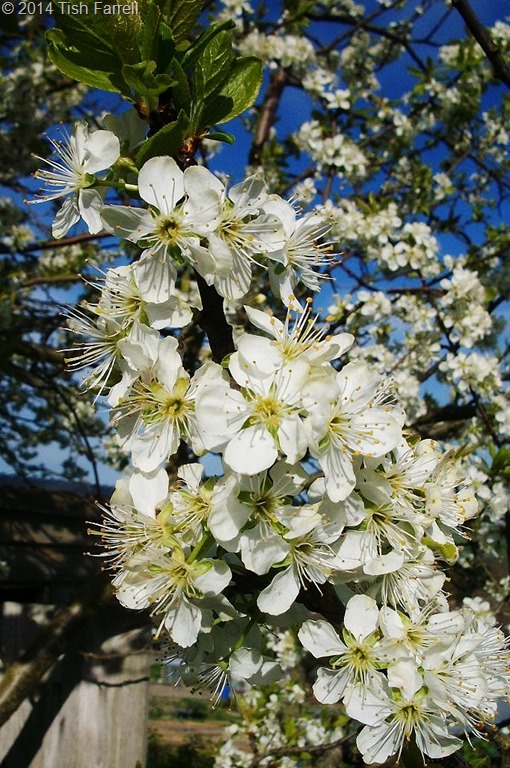
Instead, here is the ancient greengage tree with its delicate blossom. Already I’m wondering if it will give us some fruit this year. Greengages are notoriously temperamental, and after the magnificent crop in my first year of allotmenting that had us, and all our friends and relations, dribbling with delight over bucket loads of luscious harvest, it has borne very little. That was seven years ago. Maybe this year is the year then.

100_5362

There are loads of jobs to do, not least digging. The endlessly wet autumn and winter meant that winter digging was impossible, so there has been much to catch up on. Meanwhile the weeds are literally having a field day, which makes this the the season of dandelion beheading. (Sorry, dandelions). They are sprouting up all along the paths between everyone’s plots, and I’m afraid I find great satisfaction in slicing off these cheery faces with my strimmer. Their replacements are anyway there the next day, beaming vigorously.

100_5637

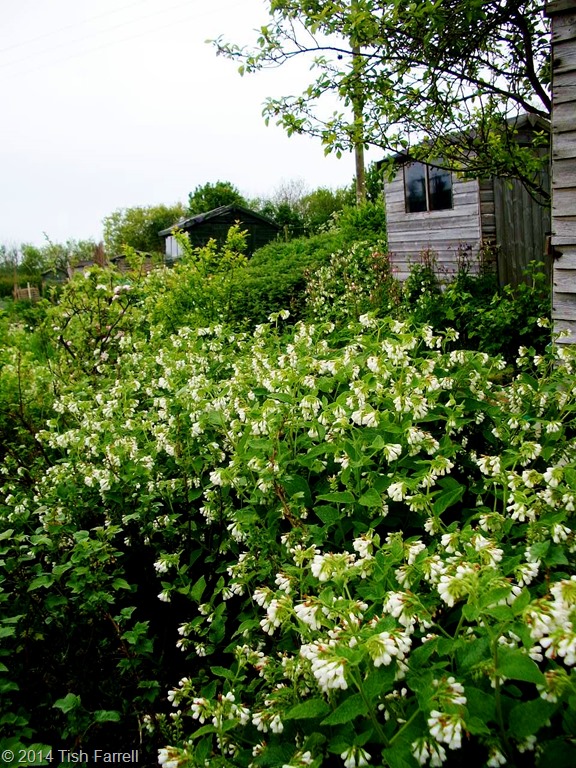
Then there is the comfrey forest to manage. This plant I crop and cherish. You cannot have too much of it, and it obligingly grows  itself in a huge clump beside the shed. If you cut it down after flowering, it will grow again and again during the summer.

Comfrey, as I have mentioned before, is the organic gardener’s dream plant. It comes in other shades, pink to purple through blue. Its ability to mine otherwise inaccessible  nutrients from the soil (dynamic accumulation I believe this is called) and repurpose them in its foliage make it an endless source of cost-free fertilizer. It is one of the reasons why you can’t look in my shed. I do my brewing in there. And no. It’s not what you think.

100_5645

For those who missed an earlier post on this, I stuff old compost bags with the comfrey’s  top growth, seal them with clothes pegs, cut a hole in the corner of each bag, and prop it over a bucket and wait. In the warmth of the shed the vegetation soon rots down, giving out a dark and evil looking liquid that collects in the buckets.  This stuff is pretty smelly, although nowhere near as pungent as the slimy residue left in the bag, which then ends up on the compost heap. The liquid I  decant  into old plastic bottles, and use as a feed through the growing season. It is 3 times richer in potassium that farmyard manure, but it must be diluted 1 part comfrey essence to 15 parts water.

The blurry bee above would not stay still for the shot, but that’s another good thing about comfrey. Bees like it. As I took this, I spotted at least 4 different kinds: a honey bee and three bumbles of varying liveries and sizes. Having written of the dire things that are happening to bees, it’s heartening to see so many at the allotment doing their work. Thank you, bees.

100_5647

The mild winter has meant that many crops simply kept going without dying back. Yesterday I noticed that my globe artichokes have already made globes almost big enough to eat. In May? What is going on?  But thank  you, artichokes.

100_5611

The Swiss Chard has been magnificent too and kept us going through the winter with fresh new leaves. It is only now going to seed. Nor did I sow it in the first place. It seeded itself around my plot from my neighbours’ plot. Thank you,  Pete and Kate.

100_4188

And now you can look at my Red Duke of York spuds, their foliage just pushing through the soil. I love the purple flush on the new growth.

100_5631

And next are my over-wintered field beans (rather like broad beans I am told, but smaller and tastier). This is the first year I have tried them. The metre tall stems are covered in blossom from tip to root, and the scent is glorious. The bees are busy here too.

100_5620

100_5619

*

And last but not least, the strawberries are flowering like crazy…

100_5616

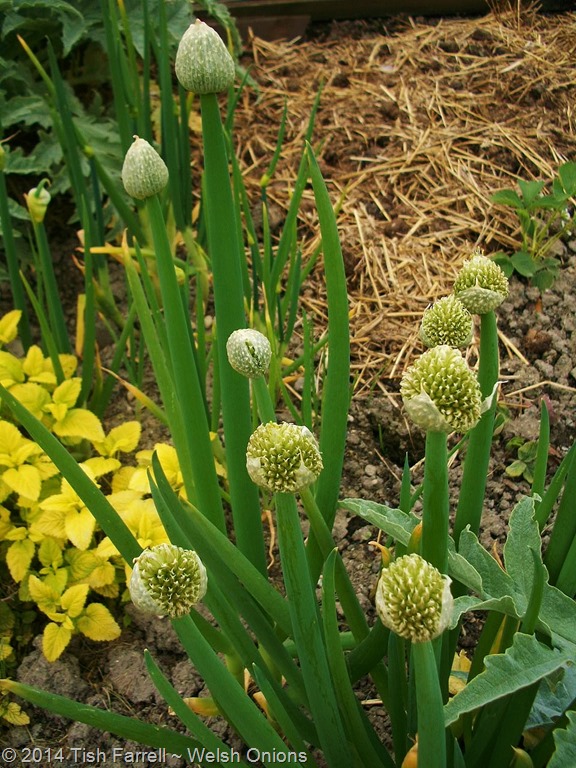
And the Welsh Onions are bursting into bloom beside the Lemon Balm, although I’m not sure whether I should be stopping them from doing this. On the other hand they will look rather splendid as the flowers open, and of course make lots more seed.

100_5613

And finally, the brightest face of all at the allotment, other than mine after too much digging. This is yet another lovely plant that grows itself up there with no help from me, and flowers into the winter. Its petals are lovely in salads, and it makes a good herbal tea that is said to improve pretty much any condition. I can believe it. Simply looking at this flower does you good: the orange goes right through your eyes and into your immune system. A big hand then, for the marigold. TARRAAAAH!

IMG_1137

© 2014 Tish Farrell

Please go to all these places for lots more brilliant stories:

Frizztext’s tagged ‘R’

Ailsa’s Travel Challenge ~ Close-up

DP Weekly Photo Challenge ~ Spring

This fiction writer’s path: five things learned along the way


068

1) Swimming not drowning: there will be (many) false starts

I associate intending to be a writer with learning to swim. I was ten, in my last year of primary school, when I told Mr. Williams, my very Welsh head teacher, that I meant to be a writer. I said it with great certainty, and he listened in all seriousness. He was someone I trusted implicitly. He was also the person who taught me to swim, and to me, decades later, the way he did it still seems a little miracle.

There were several non-swimmers in the senior class and one day Mr. Williams decided to remedy this life-threatening deficiency. Once a week for several weeks he drove us to the swimming pool in the school minibus. He made no concession to the occasion and still wore his smart grey headmasterly suit. Looking back, he probably did this on purpose. It showed he meant business and we were not there to play. The suit’s material had a soft metallic sheen and probably went by the name of Tricel. It somehow had a part to play.

After a couple of trips to the pool I had fully grasped the mechanics of swimming, but was unwilling to give up my rubber ring. Mr. Williams, however, was determined. He told me to walk twenty paces into the pool’s shallow end. He told me to take off the rubber ring. Then standing at the pool’s edge, he squatted down so low that his trousers strained across his knees and shone like silver. His eyes levelled with mine as I stood there – in the water – shivering – without my protecting ring. He told me to swim but I kept standing and staring at his knees, feeling silly and helpless. Then suddenly out flew his arms in a welcoming embrace. ‘Come on,’ he cried. ‘Swim to me. YOU.CAN.DO.IT.’ And such was his look of unconditional expectation that I took to the water and swam.

And the point of this story? Becoming a writer/maker/artist means learning to  grow and nurture your inner Mr. Williams. Along the creative path there may be few external expressions of encouragement. But without the deep-down core of self-belief you will not have the resilience to stay the course, bear the disappointments, handle the rejection slips, or to toil and toil alone for the days, months and years it will take to learn your craft. All of which is not to discourage, but to say that you really have to want to do this.

2) Having formed your intention, do NOT wait for inspiration to strike: you can wait till the crack of doom

Of course learning to swim is not the same as being a good swimmer who can swim fifty lengths with ease and feel quite at home in the water. To become a skilled artisan of any kind, there is the long haul of apprenticeship, probably one that will never end. I, though, and like many would-be writers, went for years, carrying in my head the apparently foregone conclusion that one day inspiration would strike and I would begin to write my own stories instead of reading other people’s.

It rarely, if ever happens this way. Besides which, inspiration is only the starting point, the ‘ah-ha’ moment when your attention fixes on an overheard conversation, or collides with a character on a bus, or gets hooked on some bizarre news event that starts you asking the kind of questions that kick off the story-making process. Mostly, though, you need to seek it out. Because the fact is, even if you are not actually writing, you must be doing the internal work, mentally exploring the stories that you might one day tell, gathering material, keeping watch, feeding that tiny flame of an inkling that says ‘I do have a story to tell’. ‘I do have something important to say.’

Inspiration, then, does not arrive ‘out of blue’ or occur in a vacuum; it needs one, two or several things to rub together. You could say it’s a bit like the slow-going process of rubbing dry sticks together, and trialling likely bits of kindling to get a fire started. In that initial whoosh of a blaze taking hold all is very exciting, but it is only the start. Now the hard work really begins – keeping the fire going, finding suitable material that will burn well – fast or slowly or long enough to cook your dinner. In other words, flash-in-the-pan, quick-fire notions (inspiration) are the easy part. Thereafter comes the sourcing of materials, planning, construction and general project management. You can only truly learn how to do this by doing it. So how to begin?

3) Do not fall into the trap of thinking that reading other writers will drown out your own small voice before you even start: read, read, read…

As an adult, my writing work was largely academic: dissertations, reports, preparing educational materials in various museums. Somewhere along the line I stopped reading fiction; I feared that to do so would distract me from finding my own inspiration, my own voice, my own stories. I have met other beginner writers who said they did the same thing, and especially when it came to books that they thought might ‘compete’ with their own ideas. Yet not to read widely is another form of writer’s self-sabotage. Writers need to read anything and everything they can, and across all genres, and they need to read with attention and discernment. For instance, you can learn a huge amount about story construction by studying an infant’s picture book that contains only around 30 words (Pat Hutchins Rosie’s Walk).

In fact some of the best-crafted storytelling on the planet is for young people – and here I’m thinking of writers such as Richard Peck, Sharon Creech, Robert Cormier, Kate di Camillo, Geraldine McCaughrean, Philip Pullman, Jennifer Donnelly, David Almond. Reading good books with all senses attuned is akin to having mental conversations with other writers; far from swamping your own style/voice/subject matter, listening carefully to what they say and how they say it can help release your very own form of creative expression. This is not about copying ; it is about finding your own truthful response to other writers’ work. Writing a book or a story or a poem is not a contest with anyone else. It is your book, story, poem. Only you can write it. And if in doubt, think ‘Mr. Williams’. At some point you have to get in there and swim.

But of course, having joined the fray, then comes the endurance testing and training, the honing of skills, and goal setting.

4) Being a good writer is not the same as being a good storyteller

Some people are natural storytellers, and especially so when they come from families or cultures where oral storytelling is still practised. Even so, and no matter how you treat them later, it helps to learn the storytelling basics: the beginnings, middles and ends of a story, their possibilities, the ways to build tension and interest, how to manage revelation, crisis and resolution, what it takes to create believable worlds (real-life or science fiction), to breathe life into characters who will then ‘speak’ to readers, to make effective and affective use of language.

All these skills can be learned to some extent by much well-directed reading, including studying a few how-to-write books on the way. But taking out a subscription to a good creative writing magazine or attending a class are the more interactive and less lonely options. The disciplines of entering magazine contests or doing class exercises – reading others’ work with interest rather than envy, writing to deadlines, word counts and prescribed themes are all worth cultivating. They all build the kind of writing muscles you need to best deliver ‘the what’ of the creative process – the  story.

5) Writing fiction does not mean ‘making things up’; it is all about building convincing worlds.

This is something that is easily misunderstood, and it took me some time to grasp explicitly. Fiction reveals imagined worlds and their inhabitants in ways that are truthful in. Integrity and authenticity are key objectives. The setting may be a medieval Russian monastery, a London secondary school, or a planet with two suns, but it must ring true for the reader. Its special characteristics will add depth and texture to the narrative, but above all, they will be dynamic – informing, shaping, adding drama to the characters’ behaviour/situation/dilemmas. This requires considerable research and construction work by the writer, but with the caveat that, at the end of the process, only the writer ever needs to know all this stuff. The reader wants only the most telling details, the ones that, like literary hyperlinks, will take them straight into that special place and engage them wholeheartedly with the characters’ lives. (A fine example of this is Hilary Mantel’s Wolf Hall where she uses historical, social and political contexts to reveal the life and times of Thomas Cromwell.)

To achieve this level of ‘reality’ requires the writer to have strong reasons for telling a particular story. As I’ve said, creating a story from start to finish requires drive and stamina. Passion, pain, compassion and anger are great spurs, but their energy needs to be channelled judiciously. (No ranting or heavy-handed moralizing required and the writer’s self should keep well out of the way). The research part of the project may also demand a whole new reading schedule (encyclopaedias, atlases, internet content, telephone directories, newspapers etc) and, where possible, physically immersing yourself in the places where the story is set.

This is all about knowing your territory as an expert guide would know it. Only then can the alchemy begin. Or perhaps shape-shifting is a better analogy. Because this is one of the most important of all the things I have come to learn from the practise of being a writer: the writing must come from the inside out; writers must inhabit their character’s minds, shoes and underpants; whatever it takes to get inside their skin. For me, this usually means starting with the feet rather than the knickers department. When I wrote about a street girl called Jessicah, she was conjured by a ‘feeling’ in the balls of my feet as she tramped in thin-soled shoes through the African highlands. Years later I can still summon that particular sensation and know it is Jessicah, and start seeing the world again through her eyes. All of which is very strange when you think about it, and probably the reasons why most writers keep writing. For the final truth is that even well-published writers struggle to make a living from book sales alone. Writing then, first and foremost and anyway, has to be done for the love of the thing.

© 2014 Tish Farrell
 

Tish Farrell writes short fiction to entice unkeen teen readers to read in the Shades series at Ransom Publishing. She also writes for Heinemann Junior African Writers, Zimbabwe Publishing House and Phoenix Publishers East Africa. Her short story Flight came third in last year’s International Bath Short Story Award.


Writerly Reflections

Street-wise on Mombasa Beach

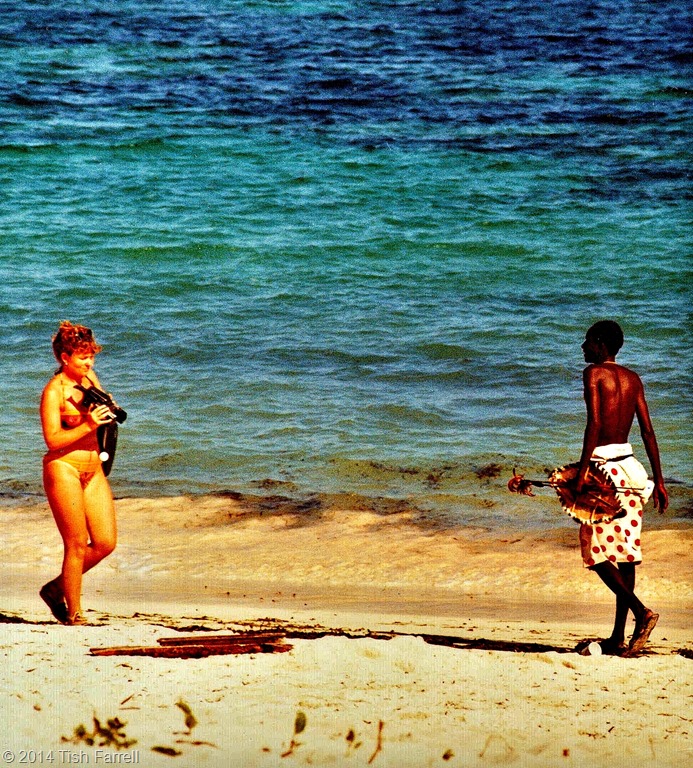
Mombasa Beach is as busy as any street, and like any downtown district anything can be traded there. In the margin between ocean and hinterland, people feel they can live outside accepted moral and  cultural bounds. Kikuyu boys may dress up as Maasai to cash in the ‘warrior’ cachet that is so attractive to European women; white women of a certain age think it OK to flaunt themselves on the sands with lovely young Kenyan boys whose real hope is to be adopted or sponsored through school; dope can be bought along with the kanga wraps and hand-carved giraffes. All, then, may not be quite what it seems in this Indian Ocean ‘paradise’.

003

002

005

006

004

012

013

010


Weekly Photo Challenge: Street Life

Looking inside ‘The House of Belonging’: remembering artist Sheilagh Jevons

House of Belonging detail i

The following is the account of a conversation I had with Sheilagh in 2014, a year before her death. She is sadly missed.

*

I thought it was time I welcomed good friend and artist, Sheilagh Jevons, to this blog. She lives a few miles from me along Wenlock Edge, in the little village of Easthope. There, and in her studio not far away, she creates arresting work that explores the sense of belonging that people have with landscape. From time to time she and I have involving conversations about the creative process – the stumbling blocks, the sources of inspiration, the way we work (or in my case, don’t work).

A few weeks ago she came round for coffee. I wanted to ask her about a painting I had seen in her studio. I had thought it striking and mysterious, and wanted to know what she meant by it. Besides which, it is hard to resist the opportunity to grill an artist when you have one captured inside your house.

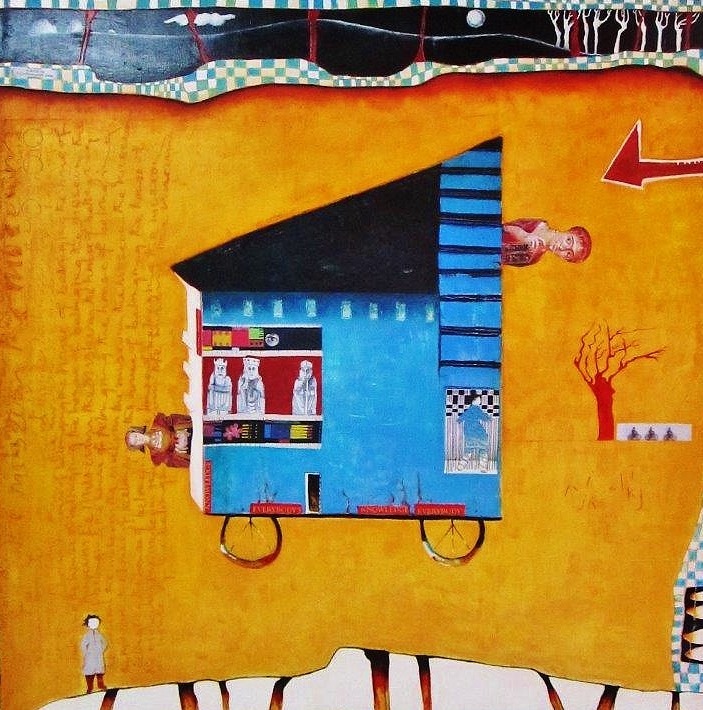
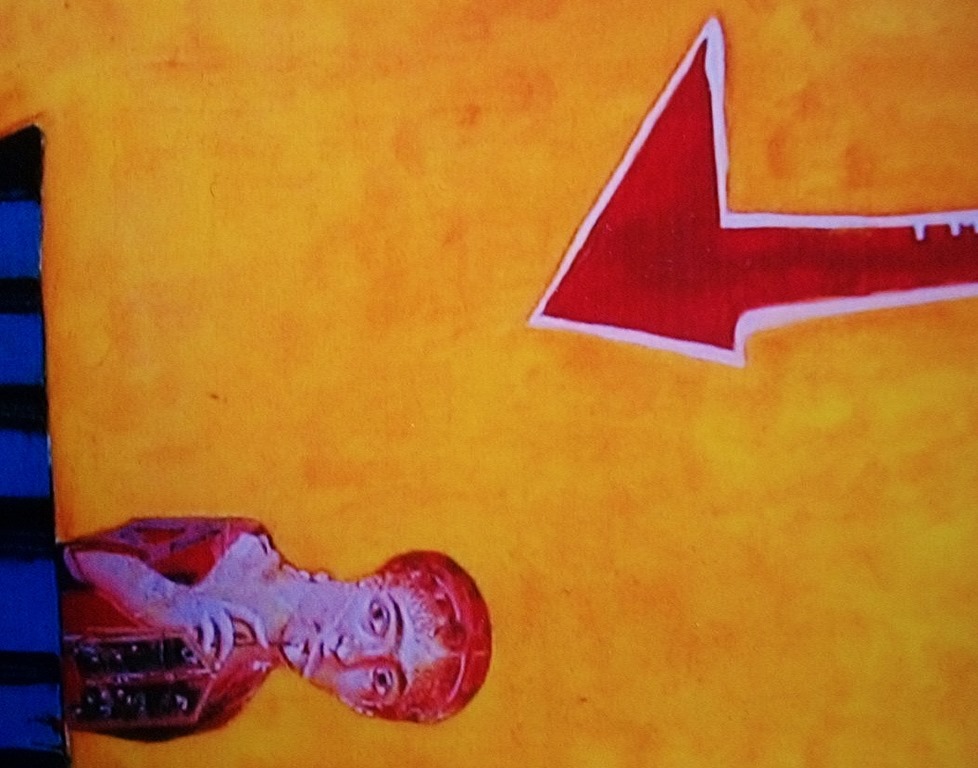
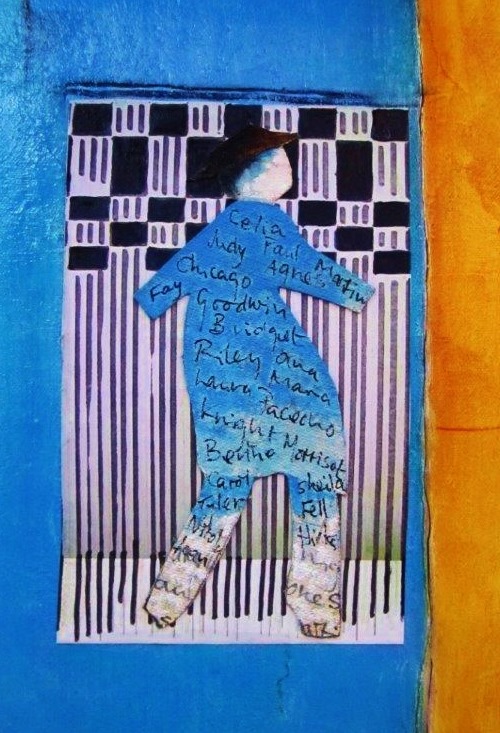
The header image is a small detail from a work called The House of Belonging. This figure has appeared in Sheilagh’s other works and represents women artists. Some of their names are written on the smock, artists perhaps not well known to the general public. Here she pays homage to their work, but also alludes to the fact that, overall, very little work by women artists is to be found in museums. The writing of names and of repeated key-words and equations is characteristic of many of Sheilagh’s pieces. It was one of the things I was going to ask her about. But first, the painting.

House of Belonging ii

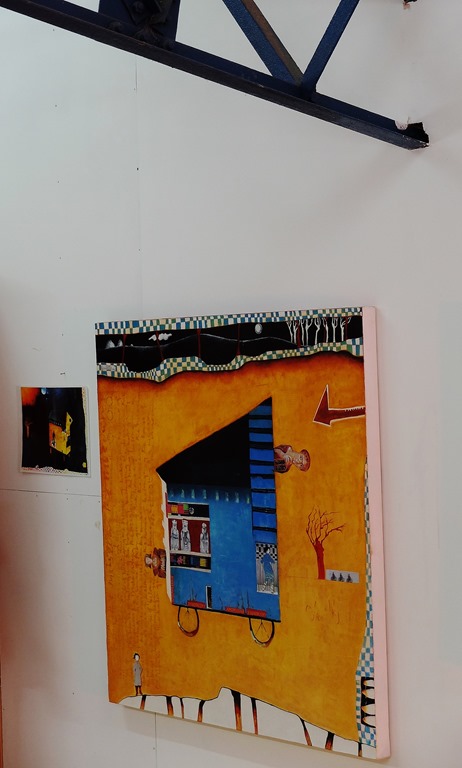
It is a large canvas, some 4 feet (120cm) square. The next photo gives a better sense of scale. Here it is hanging in Sheilagh’s studio:

Shelagh 003

I asked Sheilagh how the work began. She told me that some years ago the idea of belonging had become very important to her. As she says on her website:

Our ‘sense of belonging’ ripples out from our homes to our village, street, town, county, region and country and help to shape our identity…

Key, then, to her work is a sense of connection to land and how that relationship defines us. This in turn has physical expression in community repositories, the places where we keep artefacts, our history, the knowledge of ancestors – all the familiar things we recognise and which tell us something of who we are. In other words, the museum, or as Sheilagh describes it: the house of belonging. The script running down the left-hand margin of the painting in fact repeats over and over the words ‘the museum’, the house of belonging’. The repetition reflects the strong political stance of Sheilagh’s work.

To me this is ‘the writing on the wall’, a statement of collective ownership; The House of Belonging staking a claim. Its contents are manifestations of how humans have interacted with their landscape and the place they call home. Sheilagh also says that adding text creates a certain texture; that the sense of a hand moving across the work creates a connection with her, its maker. The wheeled blue structure, then, is the House of Belonging. The words written inside say ‘everybody’s knowledge’. This is written twice so there can be no mistake. It feels like something to stand up for, a rallying call.

It is also important, Sheilagh says, that the House can move across the landscape to where the people are, rather than the other way round; this makes it more egalitarian. Inside the House are images and artefacts, symbols of creativity. Some of them are stereotypical of ‘heritage’ and therefore instantly recognisable. For instance, the chess pieces (centre left in the painting) are derived from the Scottish Isle of Lewis Chess Set in the British Museum. The set dates from AD 1150-1200 and suggests Norse influence or origins.

House of Belonging Detail ii

Sheilagh copied and simplified the images from a sales catalogue that specialises in heritage reproductions. The placing of the queen in the central position is also significant. She says she feels bound to redress an imbalance: the fact that in most of our media women only occupy centre stage when they are being commodified in some way. And then there is the mathematical equation painted in red beneath the red tree, centre right of the painting. 100_5291 The presence of equations in Sheilagh’s works adds a further layer meaning for her, and although she doesn’t think it necessary to explain them, she is always very pleased when people recognise them. This particular one refers to mathematical research by American academics in the 1920s called The Geometry of Paths. The appearance of equations in Sheilagh’s paintings also has more personal origins. She tells me she started to include them some years ago – after she had been helping her daughter revise for her Maths and Physics A’ level exams. It is another connection. There are many more signifiers in the work: motifs that have links and resonance with Sheilagh’s other works. The red tree above the equation is a symbol of timelessness, indicating ‘forever’ in human terms.  House of Belonging ii - Copy The red arrow in the top right creates a sense of energy and direction; a ‘look what’s here’ sign. There is the sense of a force field, drawing people to the House of Belonging. 100_5294

Finally, we talked about the overall composition. Sheilagh says that she began the work some years ago after she noticed that a small building denoting ‘museum’ often appeared in her landscapes. This time she wanted it to have it as the main subject, and to make it both an enticing and a mysterious place. At this point she also created the friezes at the top and bottom of the picture, these in order to suggest other layers of reality behind the surface painting. The top frieze is the wider, timeless landscape of which the museum is also symbol. The bottom frieze is deliberately ambiguous and suggestive; it invites the viewer to consider what might lie behind.

House of Belonging ii And having created the work’s essential structure, the painting was then abandoned. It was only some fifteen months later, when Sheilagh, looking for a large canvas to start another work, returned to it. She was fully intending to paint over it, but when she looked at it again she suddenly knew how to proceed and completed the work very swiftly. She says it probably is not quite finished, and suspects that something may still need to be added. In the meantime she has been occupied with a large body of work relating to Scotland.

*100_5111 100_5110

Notes and reference materials from Sheilagh Jevon’s studio

© 2014 Tish Farrell

Mao at the Met: a disturbing juxta-position?


“My idea of a good picture is one that’s in focus and of a famous person.”

Andy Warhol


New York 129

Mao Zedong by Andy Warhol (1928‑1987)

Metropolitan Museum of Art, Manhattan

*

Andy Warhol became interested in China in 1971. “I have been reading so much about China. They’re so nutty. They don’t believe in creativity. The only picture they ever have is of Mao Zedong. It’s great. It looks like a silkscreen”.

The following year he began work on the portrait, which grew into ten variations, all based on the portrait that appears in Little Red Book: the thoughts of Chairman Mao.

In 2012 the portraits were part of the touring art show ‘Andy Warhol: 15 Minutes Eternal’.  The exhibition, organised by the Andy Warhol Museum, Pittsburgh, marked the 25th anniversary of Warhol’s death. The Mao portraits, however, did not make an appearance in either Beijing or Shanghai when the show went to Asia in 2013.  The official Chinese view was that the portraits were disrespectful in suggesting that the former leader wore make-up. All the same, Mao Zedong’s legacy is currently undergoing some re-evaluation in China. There are even admissions that mistakes were made. It is a start…


For more juxtapositions go to Weekly Photo Challenge

WP Challenge: In the Background (MMBA in Zimbabwe)

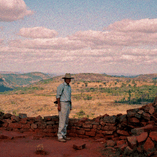
Graham at Great Zimbabwe

Weekly Photo Challenge: In the Background

There’s always a lot of background in Africa: MMBA as the colonial British frequently referred to it – Miles and miles of bloody Africa. The origin of this expression is variously attributed to Winston Churchill, Ernest Hemingway and Robert Ruark. In any event MMBA is always difficult to capture in a photograph.

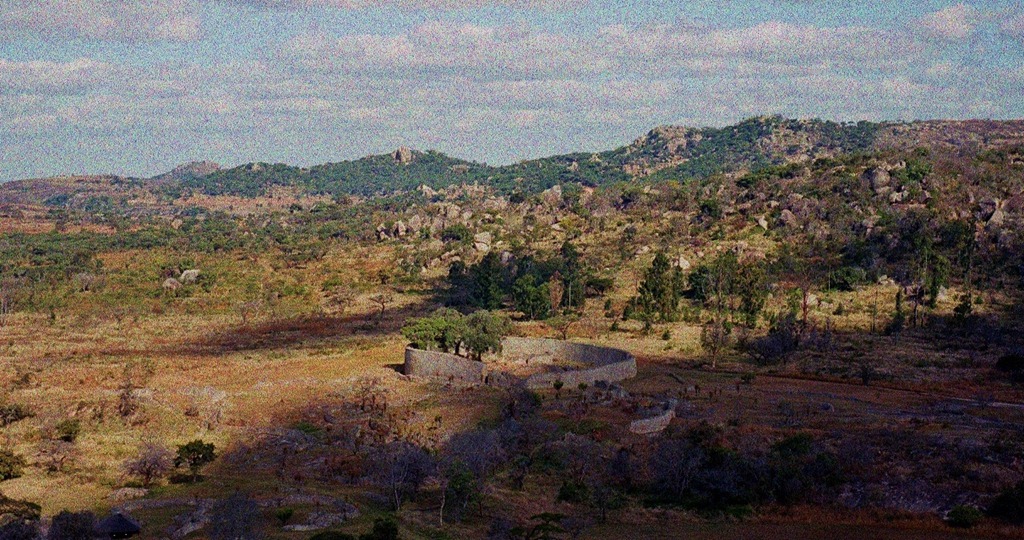
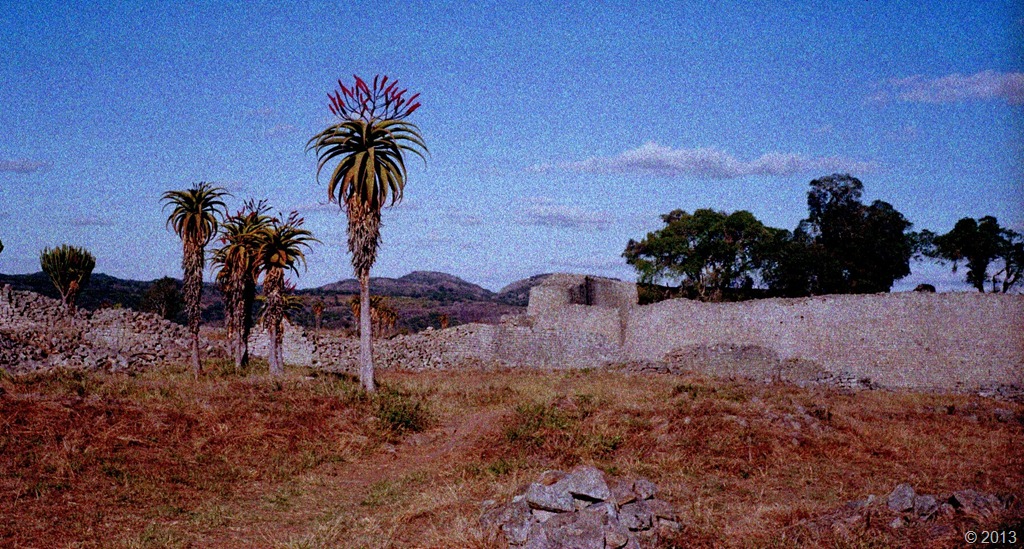
The shot above was taken from the hilltop ruins above Great Zimbabwe. The original negative has degraded a little, but the photograph was also taken in winter-time when the landscape of southern Africa anyway takes on the aspect of an ‘old master’ oil painting.

As ever when Team Farrell go travelling, Team Leader Graham was striking out in front – ‘Our Man in Africa’, while Nosy Writer was busy being nosy and fumbling with the settings on her Olympus Trip. Inevitably, TL ended up walking into NW’s line of sight. Here, though, I’m glad he did. He may be in shadow, but he provides a handy foil for the backdrop. It could be a stage set, couldn’t it? There’s definitely a sense of unreality.

aloes and Great Zimbabwe

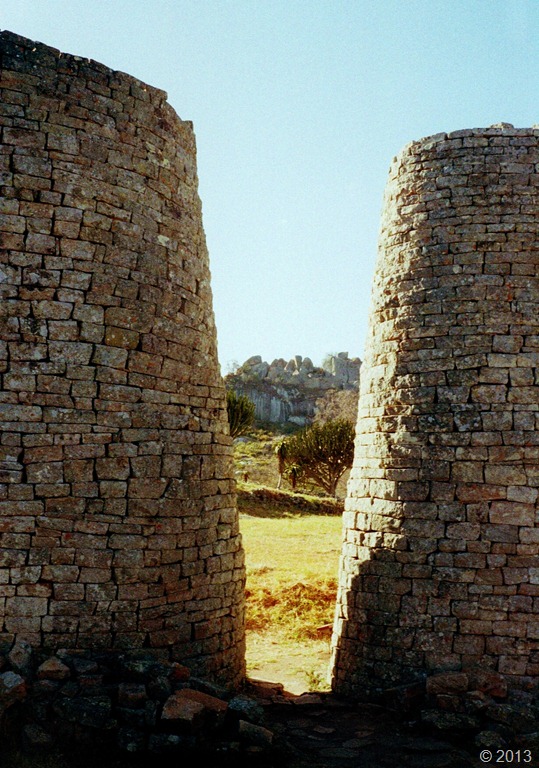
And here’s another painterly ‘in the background’ view: the Great Enclosure of Great Zimbabwe with giant aloes in the foreground. Of course, when it comes to the history of this World Heritage site, ‘in the background’ could well have another  and wholly insidious meaning. When geologist, Carl Mauch, first visited the site in 1871 he was convinced that the massive dry-stone granite walls were the remains of the Queen of Sheba’s lost city of Ophir.  (See also my post on The Swahili). For some decades this view persisted. It was not in the interests of pioneer imperialist Cecil Rhodes for it to be known that Africans had a sophisticated historical heritage. He financed the first excavation by James Theodore Bent whose brief was to ‘prove’ that the complex had been built by the Phoenicians or the Ancient Egyptians. In 1928-9 British archaeologist, Gertrude Caton-Thompson refuted this conclusion, pronounced it African-built but “the product of an infantile mind.”

Some people may be surprised to know how often archaeology is used as a political tool, but it was, and still is.

In the 1960s-70s when Zimbabwe, then Southern Rhodesia, was under the white rule of  Ian Smith’s regime, history was again re-written. Any historians who dared to state that Great Zimbabwe was built by indigenous Africans put themselves at risk, and their work was censored. This led to the departure from the country of many prominent Rhodesian archaeologists including Peter Garlake, both an expert on the ruins, and Rhodesia’s then Senior Inspector of Monuments. His excavations in the 1960s, and those of Paul Sinclair in 1986 fully demonstrate that from around 1200 AD to c. 1500 AD when it was abandoned, the Shona-speaking Karanga people built and lived in this extensive settlement.

Estimates for the population over this period range from 5-30,000. It was a wealthy centre for cattle rearing and for cereal and cotton growing. Gold from mines further inland was brought into Great Zimbabwe, its rulers acting as middle-men in the trade that extended to the Swahili city of Sofala on the Mozambique coast.  In return for gold and ivory, the Karanga imported luxury goods – fine textiles, Persian and Chinese wares, including Ming porcelain.

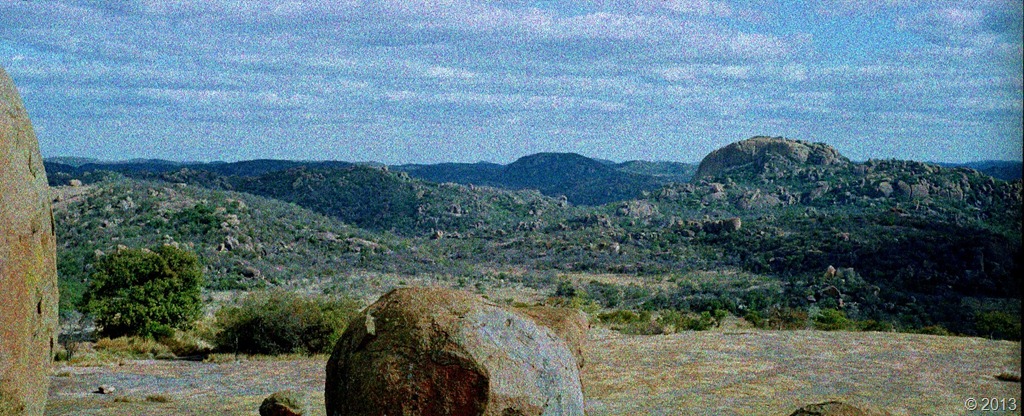
So much for Cecil Rhodes and his racist agenda. Although even in death this man manages to still make his presence felt. He chose to be buried in the Matobo Hills, territory of Ndebele people, and at a place known as Malindidzimu, Hill of Spirits. From here, also known as World’s View, I imagine that he thought he could continue to ‘rule’ Africa. The locals find the presence of his spirit here in their own sacred place quite offensive.

Matobo Hills - view north from Cecil Rhodes grave

View from Cecil Rhodes’ grave in the Matobo Hills, and his stated aim: “I contend that we are the finest race in the world and that the more of the world we inhabit the better it is for the human race. Just fancy those parts that are at present inhabited by the most despicable specimens of human beings what an alteration there would be if they were brought under Anglo-Saxon influence, look again at the extra employment a new country added to our dominions gives.”

From his 1877 Confession of Faith

And as an antidote to that dispiriting diatribe here are some more ‘in the background’ views in Zimbabwe:

Great Zimbabwe entrance

Gateway in the Great Enclosure, Great Zimbabwe

Great Zimbabwe inside the great enclosure

The mysterious tower inside the Great Enclosure

Great Zimbabwe -Tish inside the walls of Great Zimbabwe

Me looking small and very young inside the Great Enclosure. The walls are dry-stone granite – not a lick of mortar.

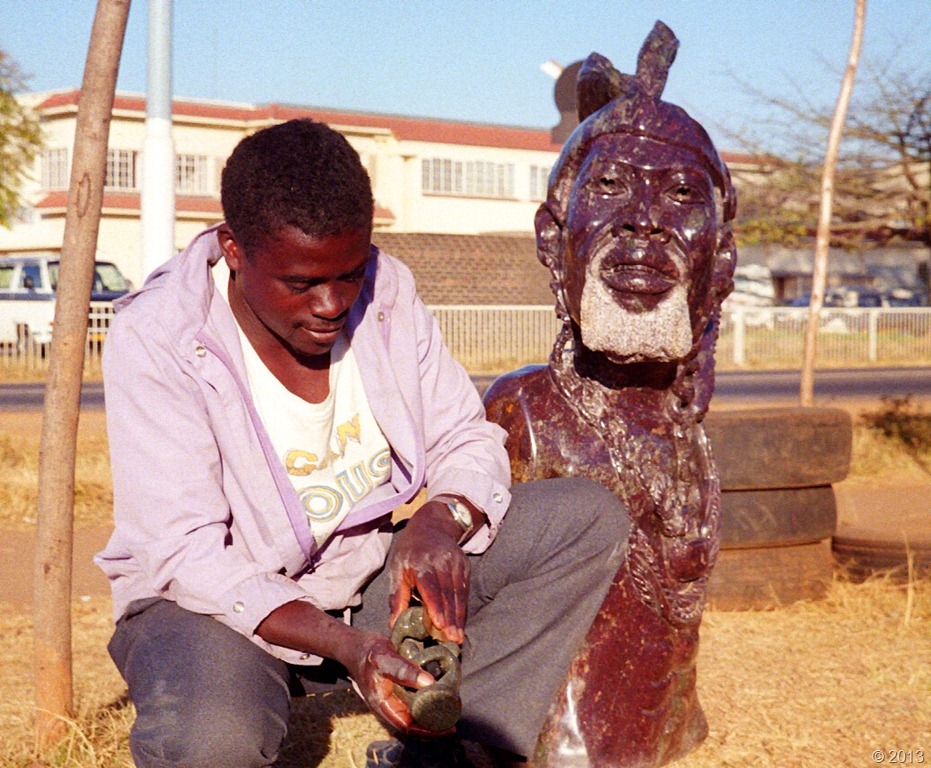
Harare soapstone carver

A roadside soapstone artist in Harare. This bust of a Shona elder is a common subject. Zimbabwe has produced some of the world’s outstanding sculptors.

Great Zimbabwe landscape

Looking down on the Great Enclosure. For decades many Europeans refused to believe Great Zimbabwe was an African settlement.

Victoria Falls and buck

Victoria Falls through a misty spray of mighty Zambezi.

Zambia's Victoria Falls looking along knife-edge to Zimbabwe's falls

Victoria Falls from the Zambian side. Most of the water on this side of the Zambezi is abstracted. My wet kanga wrap nearly took me hang-gliding off the knife edge in a rainstorm, but that’s another story.

Hwange - Dete schoolgirls

Dete school girls, with a train in the background!

Hwange - waterhole and elephants 4

And finally, because this is Africa, there has to be shot with some elephants in the background. Taken in Hwange National Park.

© 2013 Tish Farrell
Pattern for the Skyscraper

Weekly Photo Challenge: Pattern

100_3701

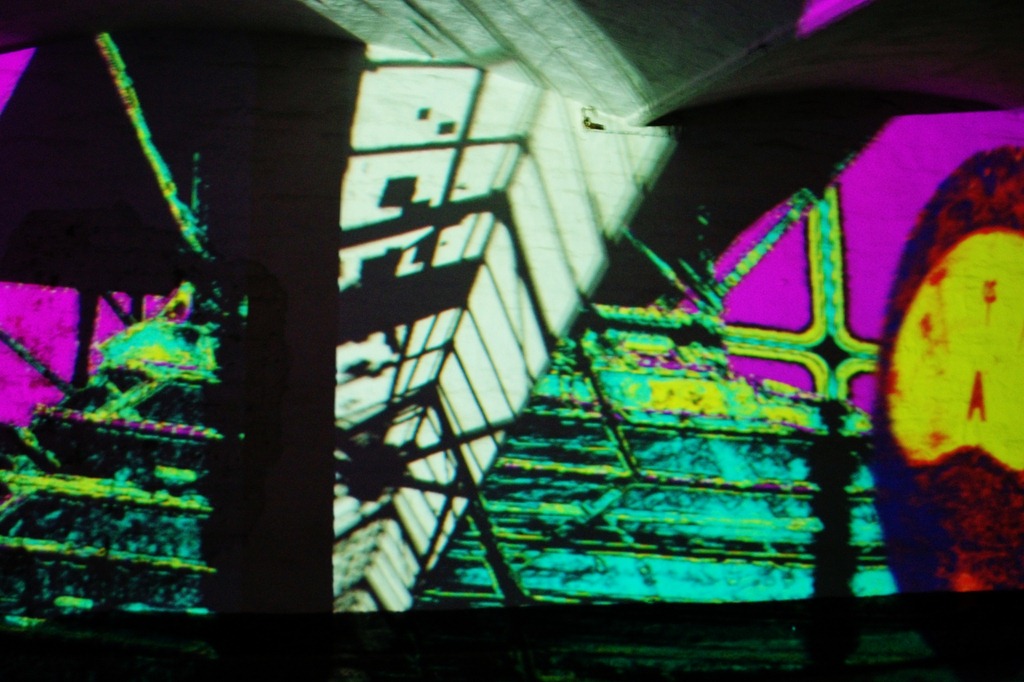
Fractured Light by Andy McKeown, Flaxmill-Maltings, Shrewsbury May 11-12 2013

At first sight there may seem to be no connection whatsoever between Andy McKeown’s magical lightshows (Fractured Light) and the skylines of NYC, Dubai, Chicago, Hong Kong. But believe me there is. In fact there are some clues in the photo below, although they are heavily disguised by the giddy maypole effect of light streamers. Architects should spot them, though – the slender columns of cast iron.  And this is where the another kind of pattern comes in – not in the spectacle of fractured light, but in the venue. On the 11-12 May 2013 the Friends of the Flaxmill-Maltings held an open weekend so Nosy Writer and hundreds of other nosy people could look round this old industrial complex, perhaps for the last time before renovation work begins. Since the buildings have been lying derelict for decades this was something of a celebration, hence the performances by musicians, craftspeople and artists all over the complex.

100_3688

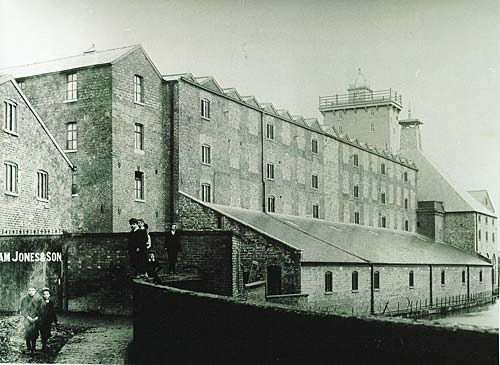
Andy McKeown’s ‘Fractured Light’ was up on the third floor of the Cross Mill, and without the entrancing light show the place would have been dank, cold and cavernous. It was originally the mill where hackling or flax dressing took place, and is part of a late eighteenth century iron-framed building – the first of its kind in the world. This is Bage’s Flax Mill in Shrewsbury, Shropshire, the place where, in 1796-7, the makings of the skyscraper began.

shropshire-uk-map[1]

Shropshire Archives

Photo: Shropshire Archives

Above is the building around the end of the nineteenth century after it had been converted into a malting factory. The main five storey block was the original flax mill. And  its connection with the Manhattan skyline?

New York 214

IS THIS:

Shropshire Archives 3

…a constructional frame of iron columns and beams that ever since has allowed buildings to go upwards.

As with many great innovations, the development of iron framed buildings was prompted by disaster. In 1796, linen magnate, John Marshall and Shrewsbury businessmen, Thomas and Benjamin Benyon had suffered severe financial losses when their timber-built mill in Leeds, Yorkshire, caught fire. Such fires in textile mills were all too common. Flax and cotton dust  are highly combustible, and not only were the early mills built extensively from timber, they were also candlelit. And so when Messrs Marshall and Benyon had the opportunity to develop a new flax mill in Ditherington, Shrewsbury, a fire-resistant building was what they required.  And a good part of the answer lay in an up and coming new material – cast iron.

The late 18th century was the age of cast iron. It was the revolutionary material of choice for engineers and architects of vision. In 1781 the spectacular unveiling of the world’s first iron bridge had taken place at Coalbrookdale, a few miles downriver of Shrewsbury. It was a PR stunt of breath-taking proportions: to use this untried material in such a dramatic and highly visible  setting. But it was not all bravado. There were practical considerations too: the need to span the Severn in order to make a more convenient road link between various iron works, thus replacing a treacherous ferry crossing. Then there was show-off element of achieving this with a single arch that was tall enough to allow swift passage for the sailing barges that plied the Severn from Bristol to Shrewsbury. Usually these large cargo boats had to lower their masts to go under the Severn’s many stone bridges.

At the time, then, the Iron Bridge was a new world wonder and a magnet for celebrity visitors. Coalbrookdale ironmaster, Abraham Darby III, was the man making his pitch for the utility of cast iron, egged on by business associate John ‘Iron Mad’ Wilkinson whose works across the river from Coalbrookdale were being served by the new bridge.   When in 1795, the Iron Bridge was the only bridge to survive unscathed the massive river floods of 1795, it more than sparked the interest of Thomas Telford, ‘Father of Civil Engineering’. At the time he was also in Shropshire, working as County Surveyor. He went on to devise his own astonishing uses for cast iron, not least the Pontcyssylte Aqueduct near Llangollen in North Wales.

But if all this constructional enterprise in iron seems a bit old hat to us now, then perhaps we should try thinking of the River Severn in Shropshire as the Silicon Valley of its day. Cast iron helped drive the Industrial Revolution in all its component parts; it brought us to where we are today. 

The world’s first Iron Bridge, built by Abraham Darby III and opened in 1781. Today, it is a world heritage site and still spans the River Severn in Ironbridge, Shropshire.

While technological developments were proceeding in Shropshire, the possibilities of using iron in industrial buildings were also being explored by Derbyshire cotton spinner and architect William Strutt. He was particularly concerned to find a way to make cotton mills more fire resistant. To this end, he developed the shallow arched brick ceilings with tiled and plaster floors that his friend and fellow Derbyshire man, Charles Bage  was later to use in the Ditherington Flax Mill. He also used sheet iron to encase the mills’ timber beams to inhibit fire damage. All these measures he discussed by letter with Bage who shared his interests. And in 1776 Bage, just happened to be a wine merchant and surveyor, working in Shrewsbury.

And so as the old A-Team phrase would have it, here we have a good plan coming together. Charles Bage was engaged by Marshall and the Benyon Brothers to design their flax mill. There on the banks of the Shrewsbury Canal that Thomas Telford was just then completing, he would create a quite novel construction in iron, and since this was pioneering stuff, he decided to take nothing for granted. He set about undertaking a series of experiments to test the structural properties and strength of iron, and so established the modern discipline of structural engineering. The papers with his calculations still survive.

The Ditherington Flax Mill, then,  was the first mill to be built from brick and iron. It was this mode of construction that led the way for the development of multi-storey, fire-resistant buildings, and whose techniques were later  adapted for the rebuilding of Chicago after the Great Fire of 1871.

100_3717

Cast iron pillar on the ground floor of the flax mill warehouse.

But this is where the story of entrepreneurial enterprise and invention takes a nasty turn. We are, after all, also talking about the growth of the factory and and the enslaving of human beings to the demands of machines and mill owners. In the 1840s there were 800 employees at Ditherington and, as time went on, more than half of the workers were under twenty years old, with some as young as seven. These were the apprentices, mostly orphans and illegitimate children despatched from parish Work Houses in order to learn a trade. At Ditherington, the conditions were reputed to be better than most mills: accommodation in the Apprentice House was strictly segregated, and the welfare and moral upbringing was overseen by a manager. Even so, working hours were long and life was tough. There were cruel and vindictive overseers who beat the children for the slightest mistake, or dipped them head first into a water cistern if they dozed off at their work.  

In 1832 there was a House of Commons enquiry into factory working conditions and Ditherington workers gave evidence. One Samuel Downe, born in Shrewsbury in 1804, told the Committee that he began work at the mill from the age of ten. Of his working hours he says:

       “We used to generally begin at five o’clock in the morning till eight at night.”

And when he was asked if he had been beaten, he said that once he had been beaten so hard that he could not lie on his back to sleep. The reason given for the brutality was  this:

      “I had never been in a mill where there was machinery, and it was winter time, and we worked by gas-light, and I could not catch the revolutions of the machinery to take the tow out of the hackles; it requires some practice, and I was timid at it.”

1024px-Marshall's_flax-mill,_Holbeck,_Leeds_-_interior_-_c.1800[1]

Scene from one of John Marshall’s flax  mills in Leeds c.1800, much as his Ditherington Mill would have looked. (Copyright expired)

Despite such indictments, John Marshall saw himself as a benign employer. He believed that treating his workforce well meant they would work harder and yield greater profit. He thus provided ventilation and heating in the work rooms, and in time added baths and changing rooms. Also in 1834 when there were 92 child employees, they were by then allowed two two-hour sessions, morning and afternoon, for lessons.

Even so, the processing of flax on this vast scale, was a dusty, unpleasant business. The crop had to be dried, then de-seeded by threshing and combing. Then it was left to partially rot for up to three weeks so the stems could be peeled away from the useful fibre. Next this fibre was dried, separated and combed by machine and finally twisted into yarn on  spinning machines.

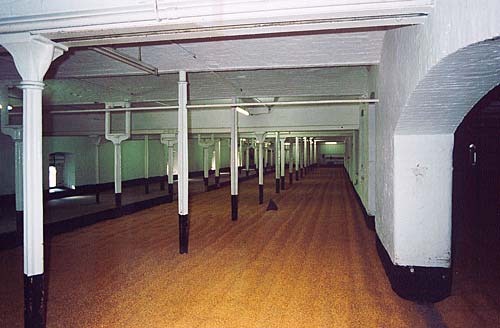
Throughout the 18th century, linen was a hugely important textile. In Shrewsbury flax yarn production took over from the dwindling wool industry, employing many of its skilled workers. During the Napoleonic Wars (1799-1815) Ditherington was supplying the yarn to make Britain’s military uniforms. But with successive generations of owners, and doubtless the growth of the Lancashire cotton industry, the mill began to fail, finally closing in 1886. Some ten years later it had a new lease of life. The five-storey building was converted into the Maltings, making malt for the brewing industry. These works finally  closed 1987, and since then this extraordinary building has been left to fall apart, despite being a Grade I listed building.
294451593_fd23d0623b_z[1]

Photo: Keith 1999 Creative Commons

This, though, is hopefully about to change. Finally, on the verge of collapse, and after much campaigning by the Friends of Flaxmill-Maltings, a partnership of English Heritage and Shropshire Council has put in a bid for funding from the Heritage Lottery Fund. Their plans include a massive regeneration scheme, bringing environmentally friendly office and workshop space to a currently depressed part of Shrewsbury. Perhaps at last this landmark structure will have a bright new existence, and just as Andy McKeown’s light show amazed and energized the Open Day visitors, infuse its occupants with life-enhancing potential, banishing the ghosts of dismal exploitation. 

In the meantime, Nosy Writer, like many others, is rather keen on scenes of industrial decay. So here are a few shots of the Flax Mill-Maltings – pattern of bricks, timber and iron.

100_3728

100_3712

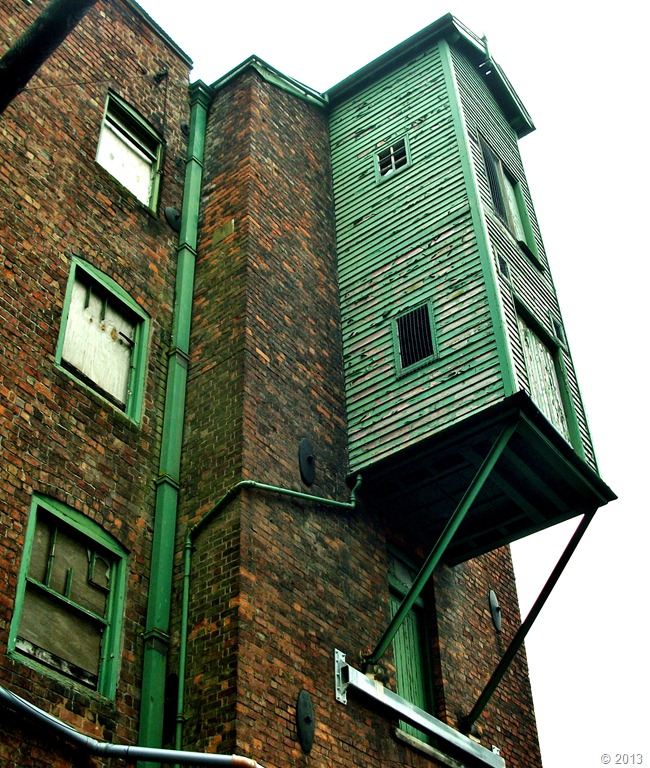
The timber hoist tower was added during the Maltings phase and the ornamental capping put up to celebrate Queen Victoria’s Diamond Jubilee in 1897.

100_3719

100_3706 - Copy (2)

For more info about the Flaxmill project: http://flaxmillshrewsbury.wordpress.com/

© 2013 Tish Farrell