Shadowland: in Wenlock Churchyard

100_6973

100_6972

100_6969

100_6971

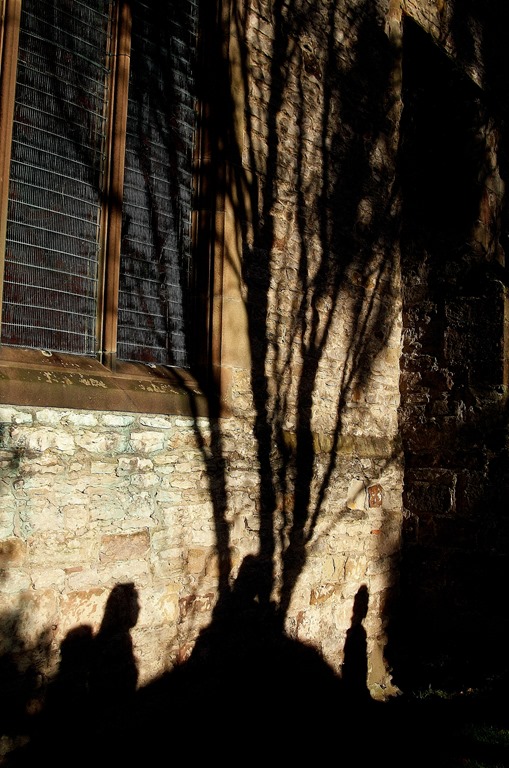
I took these photos today  in a burst of winter sunlight on the wall of our parish church, Holy Trinity in Much Wenlock.  The sequence of shadows has a gothic feel despite the brightness of the light on the limestone wall. My overwhelming feeling was of spirits of the past remembered, the cycle of life and death. This church is very old, possibly with its roots in the 7th century when a Mercian princess, St Milburga was Abbess of Wenlock. A lot of humanity, then, has walked over this ground. It is good to think of them.


DP Photo Challenge; Gone, but not forgotten

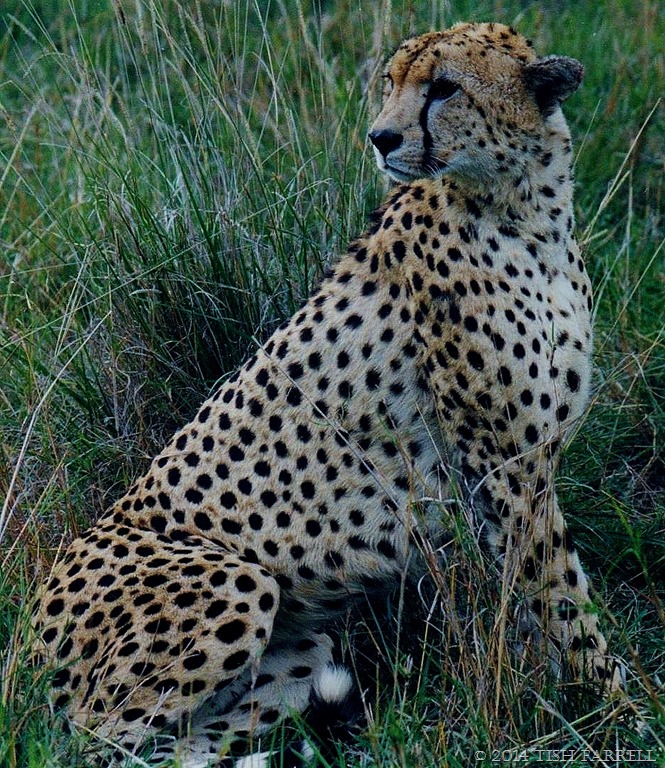
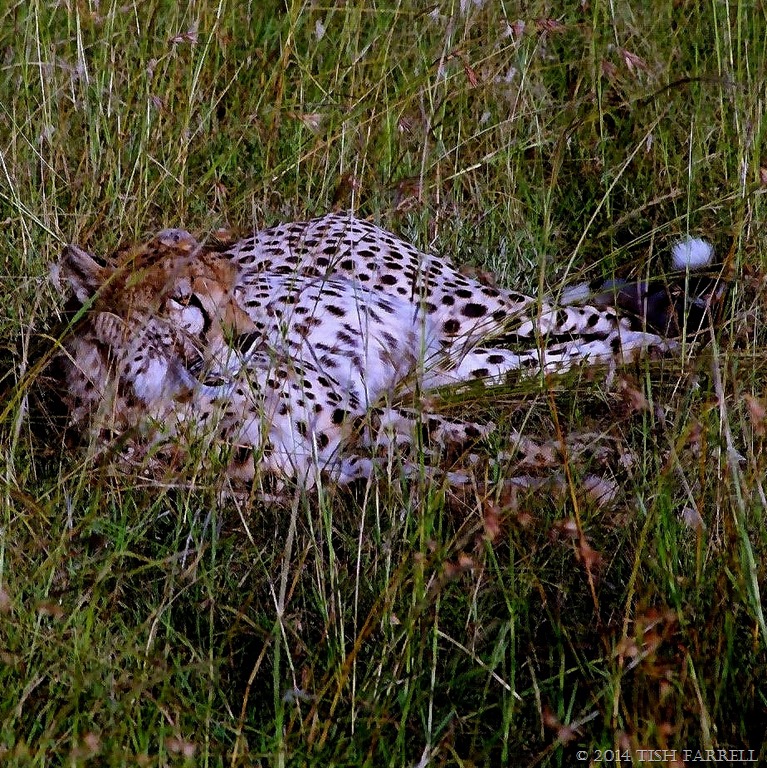
International Cheetah Day

016

Scan-140728-0020

Three cheers for the cheetah. We need to protect their habitat if we want to keep them. Take a look at the Cheetah Conservation Fund site if you would like to help. This organisation, based in Namibia, tries to improve habitat for both animals and humans. You can visit, or go work as a volunteer. Check them out.


Also please visit International Cheetah Day  for wildlife photographer, Paul Goldstein’s gallery of stunning cheetah photos


#PaulGoldstein #InternationalCheetahDay

A Long Road from Makindu

010

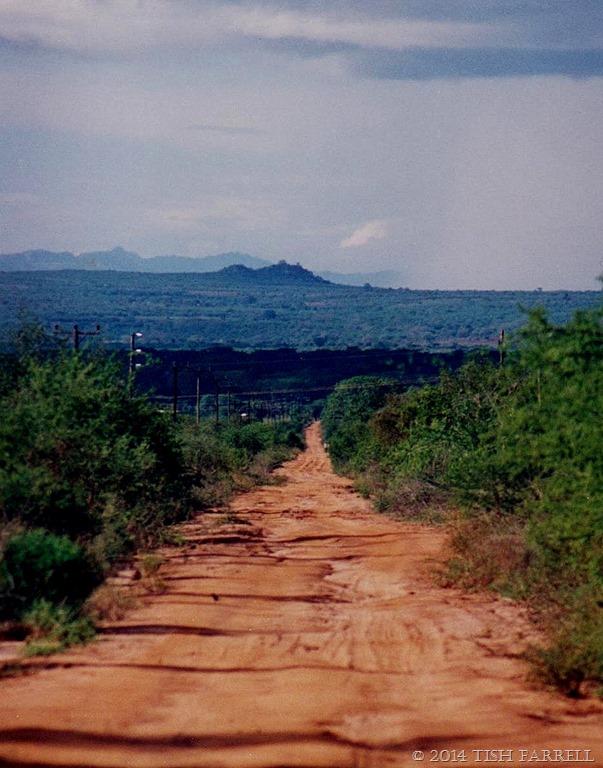
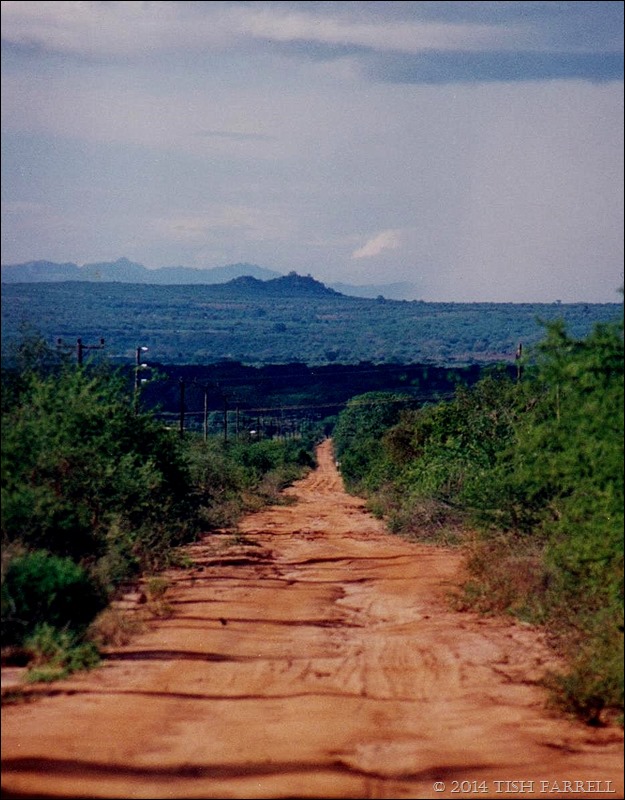
This long dirt road leads from Kenya’s Nairobi-Mombasa Highway to the National Range Research Station at Kiboko, about 100 miles south of Nairobi. The Range Station is a colonial relic, which (if I remember correctly) took over the land of a failed white settler sisal plantation. In more recent times, Kenyan scientists, both at the Range Station and the nearby Kenya Agricultural Research Institute field station, have been continuing the work begun there by British agricultural officers in the early 20th century. The emphasis, as then, has been on trialling crop varieties and developing livestock husbandry techniques to improve the lot of the people who live in this drought-prone region  – the Maasai pastoralists to the west, and the Akamba agro-pastoralists to the east and north.

The Range Station has been monitoring rainfall patterns for over 90 years. When it does rain, it occurs in two seasons – the long rains from March to May, and the short rains from October to December. But the fact is Kenya’s climate is  becoming drier, and it is  marginal regions such as these that are hardest hit. In the ‘90s when we were living in Kenya and Graham was regularly working in this area, it hardly seemed to rain at all. One Christmas I remember driving past roadside stands of maize that were blowing away to dust.

In pre-colonial times, and for several hundred years before the British arrived in East Africa, the indigenous peoples had their own methods of dealing with disaster: they simply moved somewhere else. This was usually to other quarters in their large clan territories, or to places where they extended kinship ties. They would then stay with better off relatives until the hazard had passed. Those who had been ‘taken in’ would be expected to reciprocate should the need arise. This was how things worked. It was pragmatic, and flexible. The migrants would then return to their own homes when they could.

The colonising British,  indoctrinated as they were with feudal-capitalist notions of land ownership, could not cope with such fluid community practices. Once the colonial administration had begun to encourage large-scale farming by European settlers, they felt obliged to establish fixed boundaries around tribal territories so that native land could not be sold to, or settled by the European incomers. It was seen as protecting “native interests.” The only problem was these officially designated boundaries did not take into account local emergency refuge strategies, or indeed many other traditional coping measures that involved moving somewhere else.

Today, and this is perhaps surprising to many outsiders, much of Kenya’s rural population still lives on ancestral land within these former tribal reserves. With little hope of acquiring new land, people’s clan and family holdings have been sub-divided, fathers to sons, down the generations,  often leaving the ground depleted, eroded, and/or wholly insufficient to support family needs.

This in turn has created a situation of migrant labour, where village men travel to the city to work. They rent a room in one of the slums, and live away from home for most of the year while their wives remain in their homeland, cultivating the farm plot as best they can, and rearing the children. The social issues that arise from this kind of fragmented family living do not need to be spelled out.

Now, on top of everything else, there are the effects of climate change to deal with, both globally and locally created. Competition for fertile land and water sources is critical in many places. In this context, then, the British system of land ownership remains one of the toxic legacies of colonialism.  At independence Crown Land became State Land, and so nothing much changed in the title deed/ownership department, apart from much grabbing of state-owned land by officials. It is hard to know how to unpick it all. We have all heard about Robert Mugabe’s attempts to do so in Zimbabwe.

As for the ordinary small holder farmer, they might not be physically confined to their reserves as they were under British rule, but if their land there can no longer support their families, then there is little choice but to trek up the highway to Nairobi and join the swelling millions of slum dwellers who eke out a living there.

However you look at it, this is a long, hard road .

001_thumb[1]

The Nairobi-Mombasa Highway, Makindu District, in the 1990s, looking north towards Nairobi. It has been much improved since our day, but plans to turn this  major trans-African route into a dual carriageway appear to have stalled.

copyright 2014 Tish Farrell


You can read more about what we were doing in Kenya here:

Looking for Smut on Kenya’s Highland Farms


For more long and winding roads travel over to Ed’s place at Sunday Stills.

Medina of Marrakesh

Scan-140829-0052jpeg

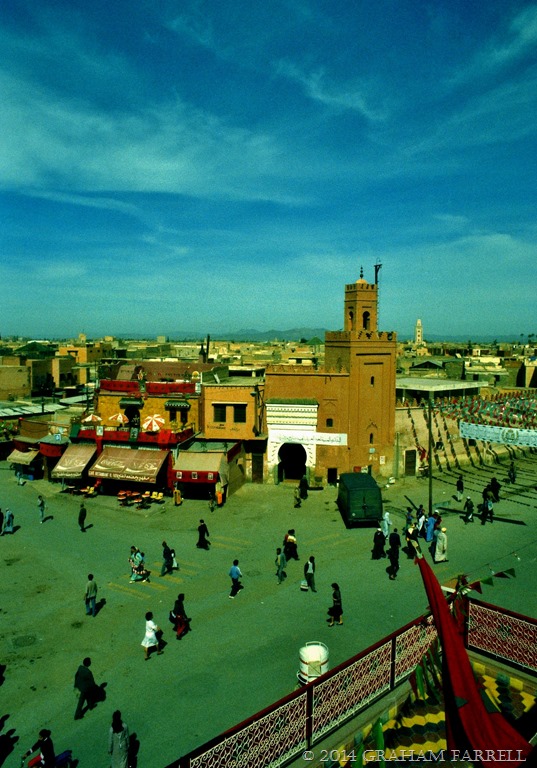
Medina of Marrakesh, Morocco a UNESCO world heritage site

This is one of my favourite photographs from the Team Leader’s, aka Graham’s long ago Africa overland trip. Even the clouds are conspiring to draw the viewer’s eye to the gateway. Click the link underneath the photo to find out more about this fascinating place.

DP Photo Challenge: converge

“Photos are visual spaces where shapes and lines, objects, and people come together.”

 Ailsa’s Travel Challenge: above

Thursday’s Special ~ Take Two Elephants

225

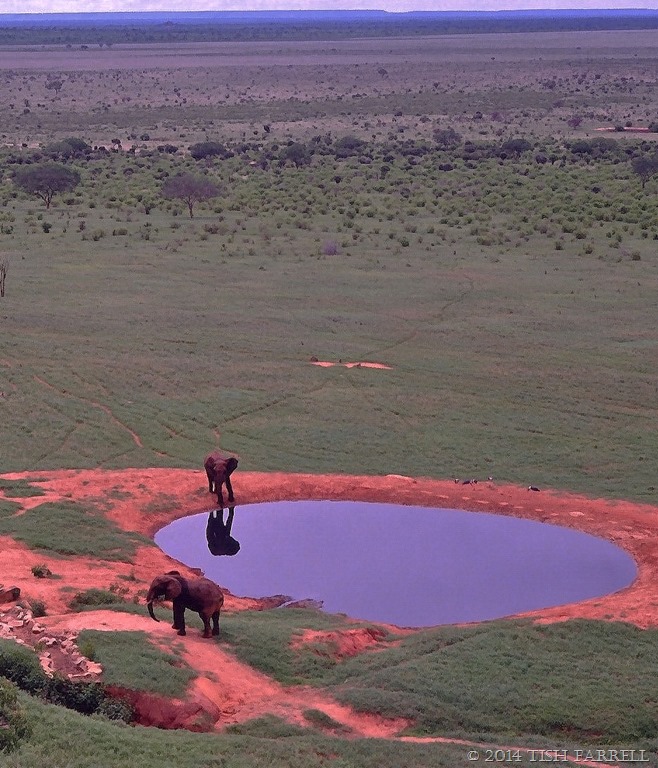
This week at Paula’s Thursday’s Special/Photo 101 the theme is ‘double’. I could have chosen several more striking close-ups of elephants and lions, but this shot is a double-take on double. I like that silhouette in the still pool. Also it is perhaps a more realistic view of how one most often sees wildlife on an East African safari: i.e. it’s usually too far away for a good photo, or else there’s a bush in the way. You can also drive round game parks for many hours and spot absolutely nothing – not even a bird.

This shot was taken from the terrace at the safari lodge in Kenya’s Tsavo East National Park, and such places can offer the best sightings, especially at dawn and sundown. Here you also get a good eyeful of Tsavo’s famously red earth. You can see, too, the web of game trails leading to the pool, and at the very top of the photo, part of the Yatta Plateau. This is a 180 mile long, single finger of lava that runs south east across Kenya from Thika near Nairobi.

Tsavo East  is a vast game reserve (4,500 square miles), mostly thorn scrub and much of it closed to visitors due to incursions by Somali bandits and poachers. Its elephant herds, however, are famous, though frequently under threat. For some truly fantastic images of them, accompanied by expert commentary please fly over to wildlife filmmaker, Mark Deeble’s blog. You will not be disappointed.

Dhow Dreaming ~ Lamu Angles

186

One Christmas, long ago, we went to Lamu, one of Kenya’s Indian Ocean islands. Our trip there was as peaceful as this image suggests, although the nearby mainland has long been preyed on by gangs of Somali Shifta. This then is an idyll with hidden angles, some of them tragic. But for now, please enjoy these Lamu dhows with their triangular lateen sails in this gentle display of synchronised sailing along the Manda Strait.

You could say that Swahili culture was born of the monsoon winds, from the human drive to trade and of prevailing weather. For two thousand years Arab merchants plied East Africa’s Indian Ocean shores, from Mogadishu (Somalia) to the mouth of the Limpopo River (Mozambique), arriving with the north easterly Kaskazi, departing on the south easterly Kusi. They came in great wooden cargo dhows, bringing dates, frankincense, wheat, dried fish, Persian chests, rugs, silks and jewels which they traded with Bantu farmers in exchange for the treasures of Africa: ivory, leopard skins, rhinoceros horn, ambergris, tortoise shell, mangrove poles and gold.

 copyright 2014 Tish Farrell Culture: The Swahili

See also: Christmas on Lamu: Views of a Swahili Community

Daily Post Photo Challenge: Angular

Origins of the Skyscraper: Historic Angles

100_3706 - Copy

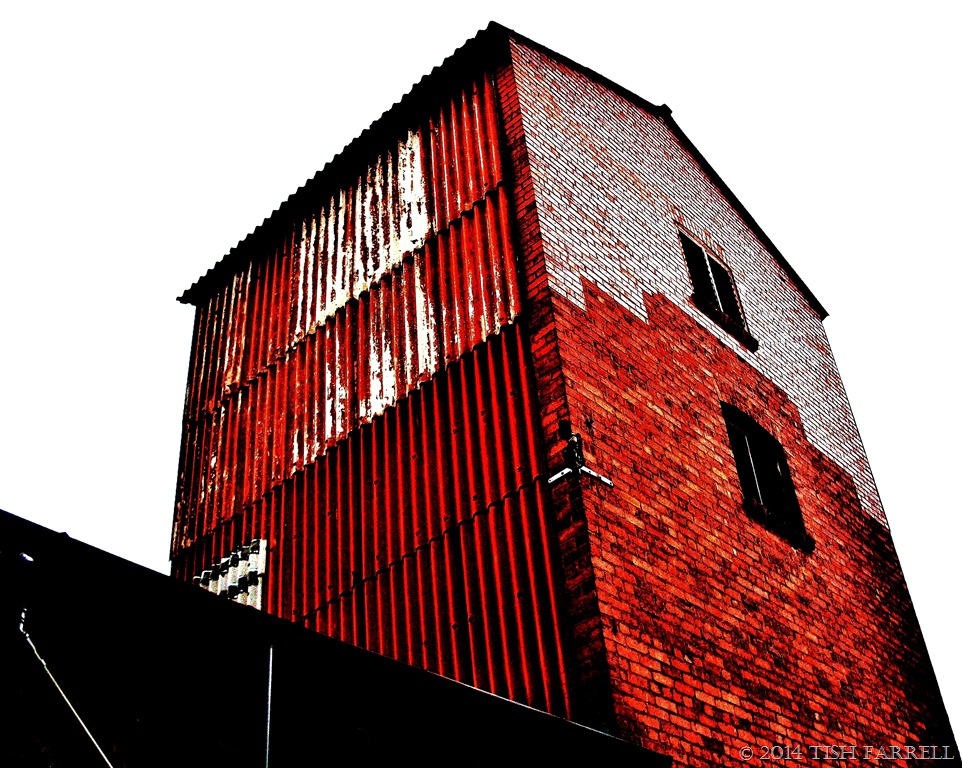
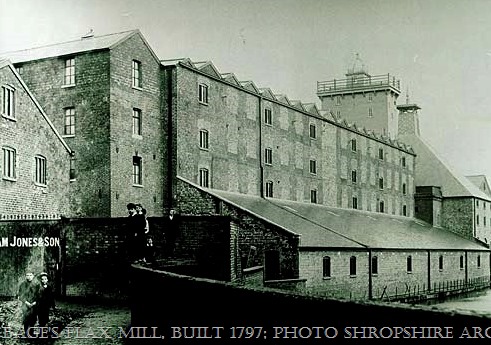
This detail comes from a building, which believe it or not, was THE proto-type for all our high-rise buildings. It is Bage’s Flax Mill, the world’s first iron-framed building, constructed in Shrewsbury, in the English Midlands in 1797. As with much invention, it was driven by a series of disasters, specifically the conflagration of several timber-framed textile factories. Cotton and flax dust is highly combustible, and these early factories were candle lit. The losses to the owners were considerable  (never mind the damage to the workers).  Fire resistant buildings were what they wanted. The techniques of this iron-framed brick clad mill were further adapted in the rebuilding of Chicago after the great fire of 1871.

Shropshire Archives

For more on this and the grim story of the young flax mill workers who were employed here see my earlier post: Pattern for the Sky Scraper

 copyright 2014 Tish Farrell

ANGULAR

Let’s Hear It For The Bees ~ Three Big Cheers

100_3915

There are different kinds of achievement in this shot. The first is that I managed to capture it at all, teetering in a flower bed with my Kodak Easyshare. The sun was full on too so I could not see the camera screen. But by far the biggest achievement is the presence of three bumble bees all at once.

All over the world bee numbers have been declining. Swarms in the US have been especially hit. Over the last few decades many factors have played a part, including habitat erosion, lack of quality forage and disease. But in 2006 honey bee keepers began to report dramatic losses. It involved the deaths of whole hives and has been dubbed colony collapse disorder.

Environmentalists believe the cause to be the neonicotinoids in the new generation of pesticides. They want them banned until unbiased research proves otherwise. It is a sobering thought that without bees to pollinate fruit and vegetables, the US would be left with only three staples that do not require insect pollination: wheat, rice and corn.

To find out more, please visit Dear Kitty. Some Blog.  She has posted a good video that covers this topic. In the meantime, everyone needs to think about what they can do to encourage bees, including growing some bee-friendly plants. We also need to be prepared to pay a little more for organic produce, or to do what we can to grow our own food, WITHOUT chemicals.

This would be a real achievement – not only good for bees, but for us, the soil, and other wildlife besides.

copyright 2014 Tish Farrell


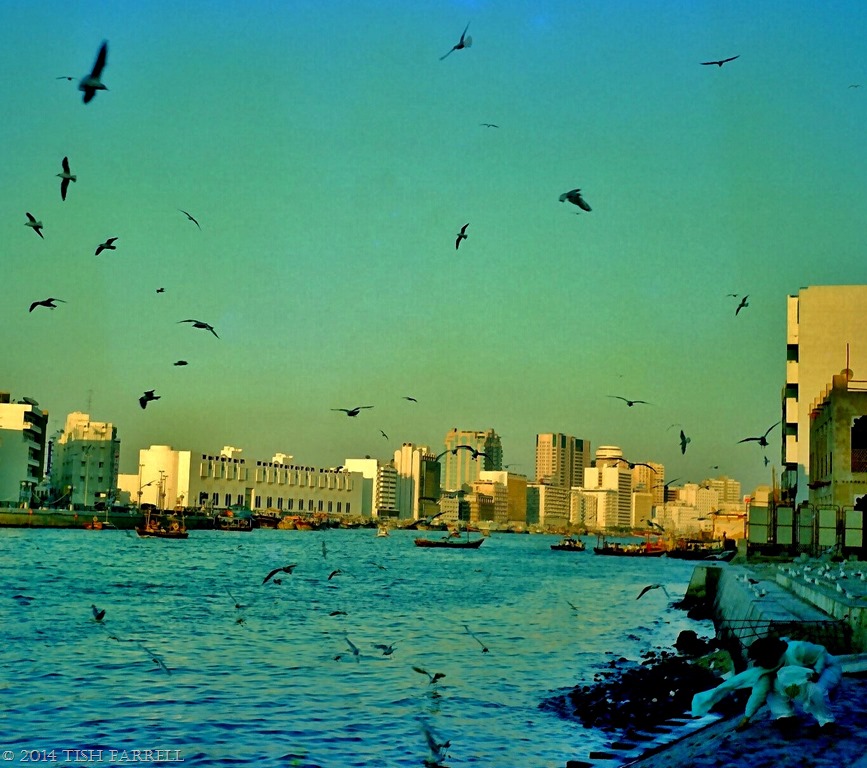
Thursday’s Special: Feeding the Birds on Dubai Creek

2

Following Paula’s lead in her Thursday’s Special slot, I’ve also found a bird photo to illustrate photo 101’s theme of ‘swarm’.  The mood here is  obviously very different from Paula’s dramatic shot; not so much suspenseful, more twilight tristesse.

copyright 2014 Tish Farrell

Treats and Treasures at Entertaining Elephants

DSCF0095

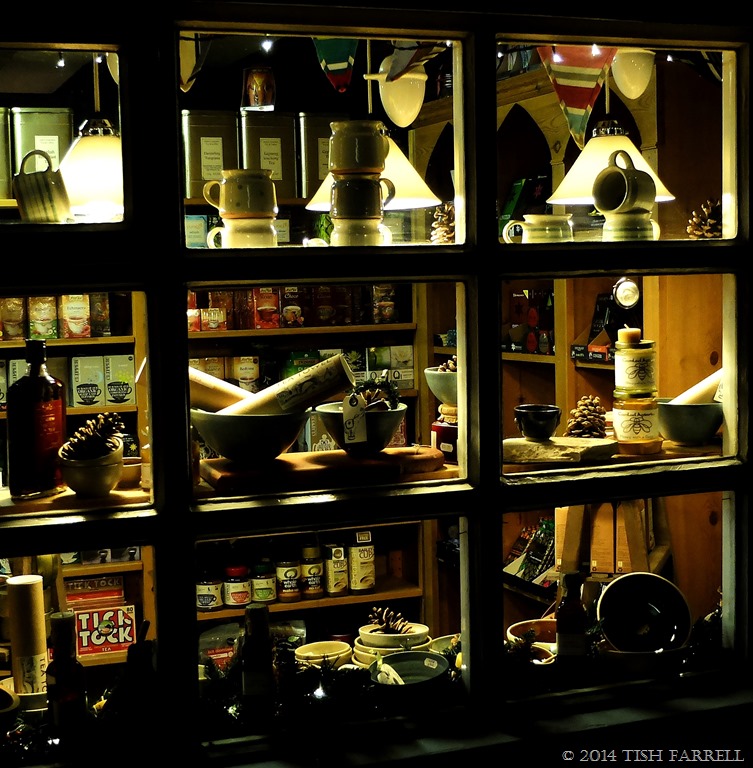
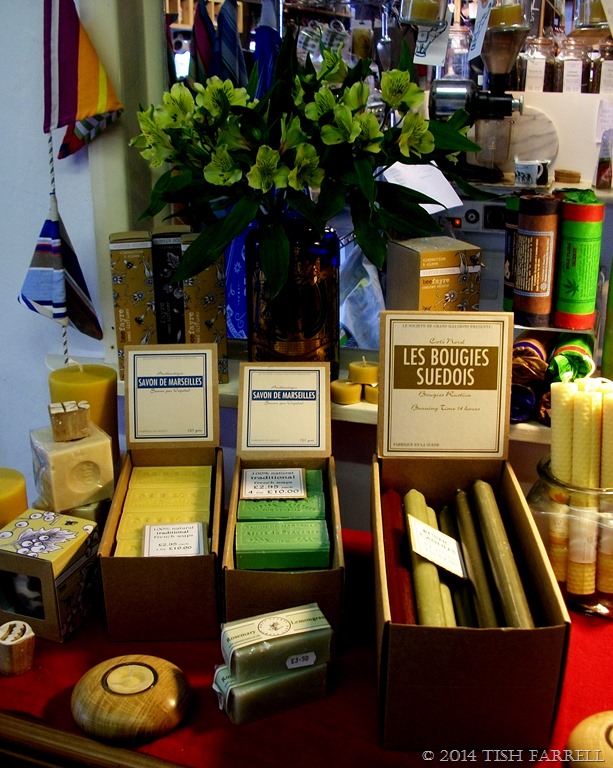
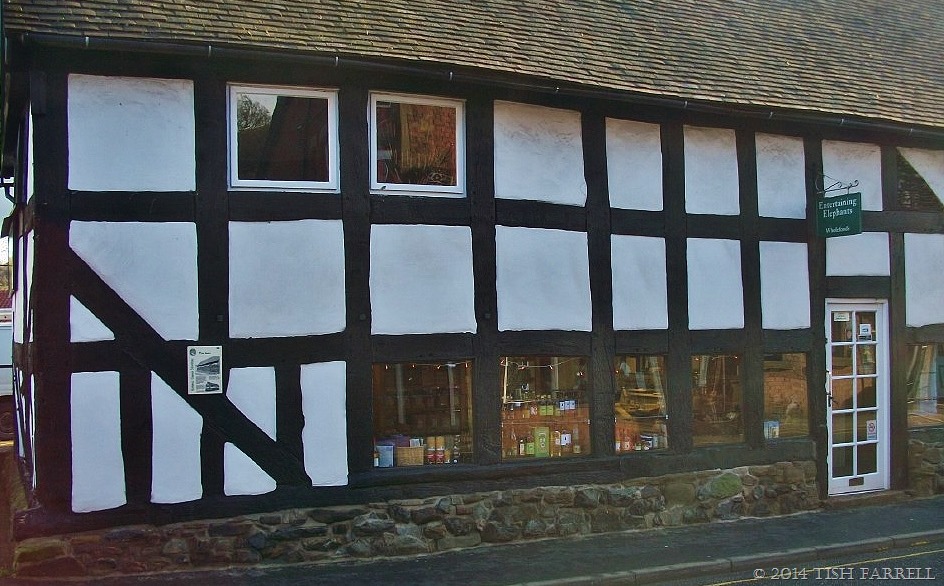
There’s a story that the Duchess of Windsor once had a cushion with words that read: If you are bored with shopping, you are in the wrong shop. With this thought in mind, please step inside my own favourite shop – Entertaining Elephants 0f Church Stretton in the Shropshire Hills.

For the past two years this lovely little emporium of quality foodstuffs, grocery essentials and ethically made gifts and clothing has been run by Jo Bickerton. And before I go much further, I should declare an interest: Jo is my sister. Here she is in her domain. You can  be sure of a warm welcome if ever you visit. I also doubt you will leave the shop without buying something wonderful.

100_6759

*

100_6749

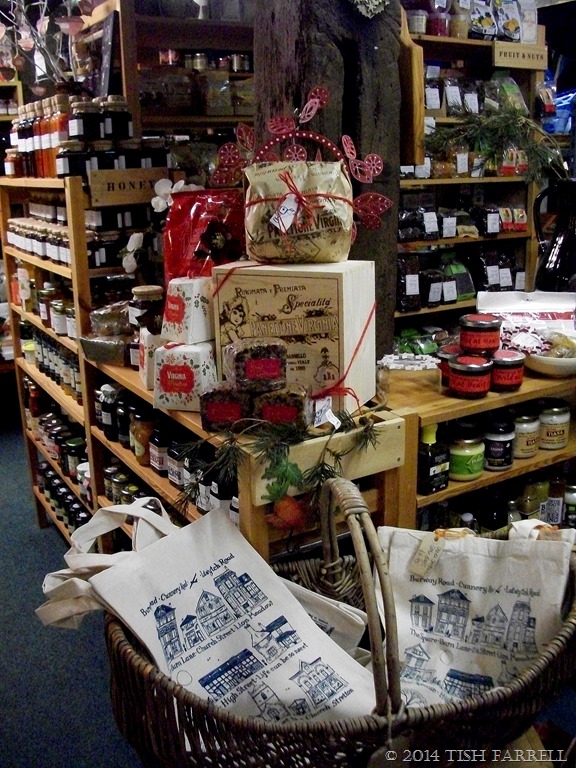
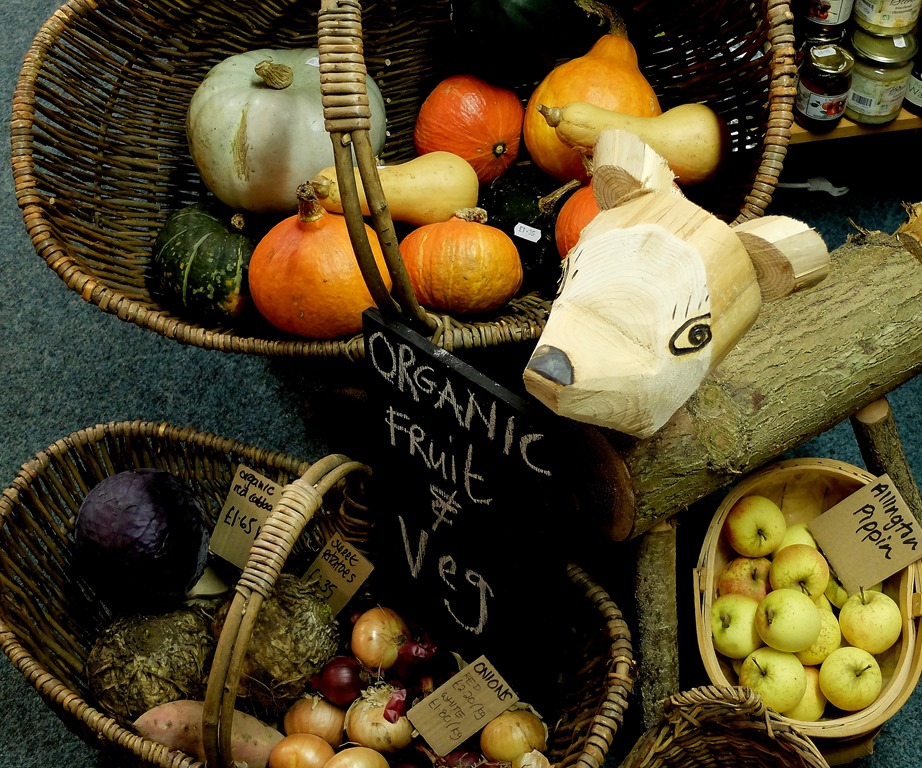
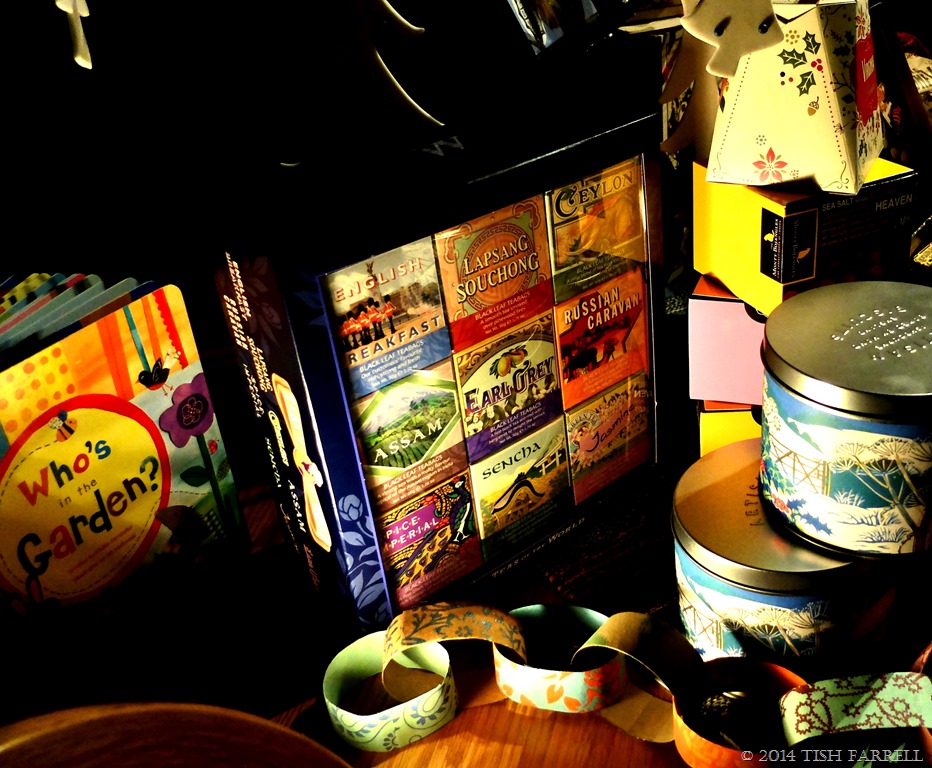
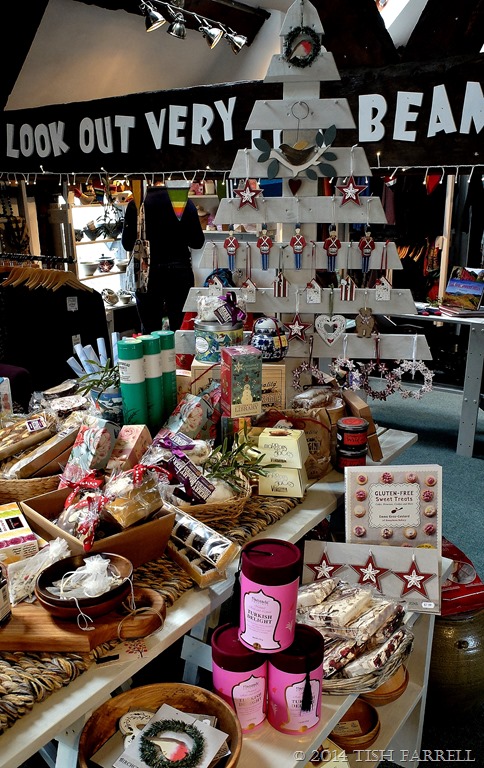
Just now there is an array of Christmas speciality foods, but you can also buy your basic groceries too: free range eggs, Wenlock Edge bacon, Pimhill organic porridge oats. As far as possible, all produce is organic, ethically sourced and fairly traded. Customers with food sensitivities are also catered for. Artisan foods, such as bread, soups and cheeses, are produced locally. The same goes for many of the craft items and artwork. Jo’s guiding principles are that whatever she sells must be well made and life-enhancing.

DSCF9691

100_6687

DSCF0096

*

Upstairs there are more Christmas treats, and also Jo’s latest addition – a range of organic cotton and bamboo clothing.

DSCF0079

100_6751

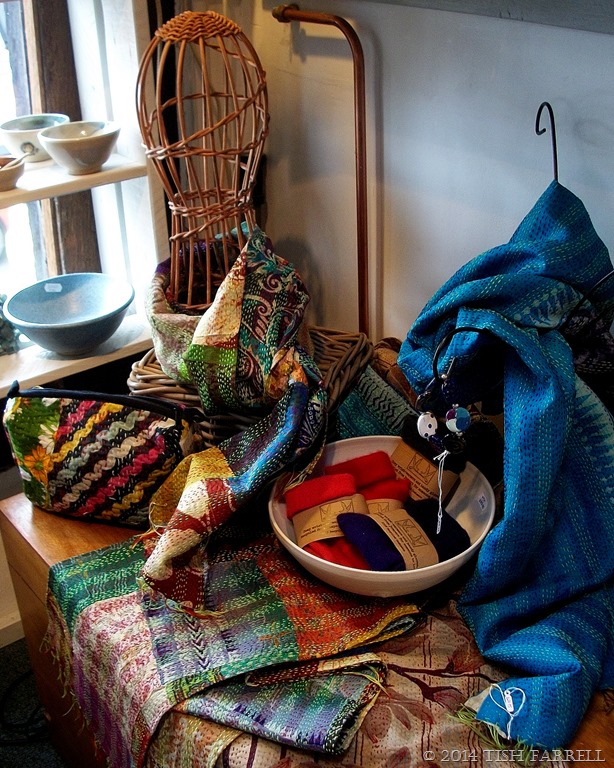
The classically simple tunics, tops, and leggings can be dressed up with stunning recycled sari wraps and scarves, Turtle Doves lovely wrist warmers made from repurposed cashmere knitwear, and necklaces strung from Kazuri beads made in Kenya.

100_6686

*

And in case you are wondering where the name Entertaining Elephants comes from, it was chosen by the shop’s previous owners, from Maurice Sendak’s lovely picture book Alligators All Around An Alphabet.

100_4431

100_3498_resized

*

E is for Entertaining Elephants – every day, not just for Christmas. It’s worth coming to Shropshire just to visit.

DSCF0089

Contact: The Old Barn . 43 High Street . Church Stretton . SY6 6BX

http://www.entertaining-elephants.co.uk

#shoplocally

copyright 2014 Tish Farrell