March: Windswept

P1030512

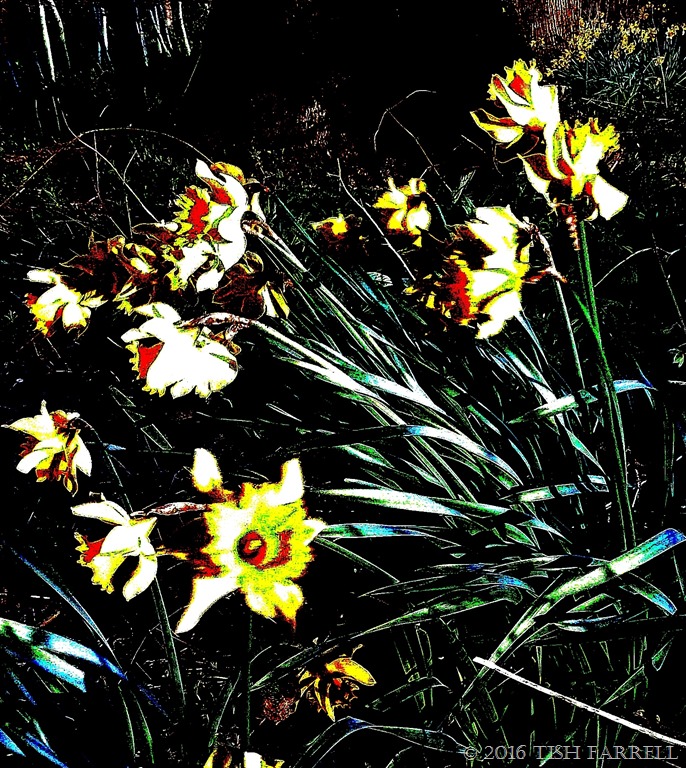
It was blowing a gale when I took the February #ChangingSeasons  photo on Windmill Hill. So too for this March photo. On Sunday the wind was so fierce I could hardly hold the camera steady, and these poor daffodils at the foot of the hill were being whooshed off their roots. You can almost hear their trumpeting distress calls.

So if, as the saying goes, March means to go out as a lamb, and not persist in roaring at us, then it needs to go in a corner and think some calming, and softly woolly thoughts. It does not need to cover us in snow as it did in the early hours of Monday morning. Not that I saw it for myself. I was up far too late, by which time it had melted. Even so, we are left with icy draughts that zoom inside any gap in one’s under-layers, or sting the ears that are silly enough to go outside without a hat.

So what is going on with all this gust and bluster? Is this more El Nino effect? In between the rain and wind storms, spring seems to have been teasing us here in the UK since December. That was when I photographed the first daffodils, albeit in the slightly milder climes of south-coast Cornwall. Meanwhile at home on Sheinton Street, the tulips have been pushing out of the garden pots since January, accompanied by flurries of white flowering currant blossom – all far too early. So spring, if you truly do mean to come this year, please get on with it, and cut out the frigid blasts. Now please visit Changing Season’s host, Cardinal Guzman. This month not only does he give us fine photos, but also a master class in sofa assembly.

Cardinal Guzman: Changing Seasons

There are two monthly Changing Seasons 2016 challenges, and you can join in at any time. Here are the Cardinal’s rules:

The Changing Seasons 2016 is a blogging challenge with two versions: the original (V1) which is purely photographic and the new version (V2) where you can allow yourself to be more artistic and post a painting, a recipe, a digital manipulation, or simply just one photo that you think represents the month. Anyone with a blog can join this challenge and it’ll run throughout 2016. It doesn’t matter if you couldn’t join the first month(s), late-comers are welcomed. These are the rules, but they’re not written in stone – you can always improvise, mix & match to suit your own liking:

Rules for Version 1 (The Changing Seasons V1)

  • Tag your posts with #MonthlyPhotoChallenge and #TheChangingSeasons
  • Each month, post 5-20 photos in a gallery.
  • Don’t use photos from your archive. Only new shots.
  • Rules for Version 2 (The Changing Seasons V2):
  • Tag your posts with #MonthlyPhotoChallenge and #TheChangingSeasons
  • Each month, post one photo (recipe, painting, drawing, whatever) that represents your interpretation of the month.
  • Don’t use archive stuff. Only new material!

Related: My chosen location for tracking the changing seasons is Windmill Hill  and its associated Linden Field – a few minutes walk from my house in Much Wenlock, Shropshire.  Here are the  January and February posts.

Tall Story? Downtown Manhattan From The Staten Island Ferry

New York 009

Doesn’t time just fly. I can’t believe that it’s nearly eight years since we sailed into New York on Queen Mary 2, star of the Cunard fleet. The Atlantic crossing takes seven nights, and seasoned Cunarders will be quick to tell you that this voyage is a crossing (The Crossing in fact) not a cruise. We docked at dawn in Brooklyn after a long and majestic glide up the Hudson River. The Statue of Liberty glowed through the mist. It was May, and a heat wave was brewing.

Over Brooklyn and the dockside cranes a huge red sun was rising. It gave a surreal glow to the instantly recognisable (to us that is) corporate blue and yellow of the new IKEA store (America’s first if I remember rightly). It was set to open the following month, and we later noticed much associated fanfare on bill boards around the city. Free sofa cushions came into it somewhere. I also remember feeling a bit offended that I’d been at sea a week, all pent up for the grand sail-by of the Statue of Liberty and that first stunning glimpse of the Manhattan skyline, only to have this bland blue furniture shed be the next landmark imprinted on my mental landscape.

They should definitely move it.

Anyway, for those visiting NYC by plane rather than ship, you can have the grand ‘sailing into New York’ moment for free, and thus as  many times as you like, on the Staten Island Ferry. Pick your moment for the best shots. Sunset would be good.


Thursday’s Special: tall  Please sail over to Paula’s for more tallness.

Not Something You Often Think Of ~ Self-Renewing Onions


P1010497

Here are my allotment  Welsh Onions as seen late last summer. They are simply bursting to make lots of little onions. The flowers are white, a good  2-3 centimeters across, and the stems are around half a meter tall.  And so yes, they do look like giant chives, but with more vigour and verve. I anyway like their style (admittedly a little Triffid-like) as they try to outdo their globe artichoke neighbours.

The artichokes are also intent on self-renewal, and it’s often a toss up between eating them and wanting to enjoy their wonderful mauve flowers. But then this is what I love most about my allotment – the endless cycle of regeneration. It’s the same for the gardener too, in spirit, if not in body, though I often wonder if I might not respond well to a good dosing with liquid seaweed fertilizer – just about now I should think, with spring at last upon us.

*

This week’s guest challenge at Paula’s  Lost in Translation is Renewal. Please follow the link to see some inspirational shots from Michelle Lunato.

It’s in the stones: messages from alien ancestors?

P1020749

P1020750

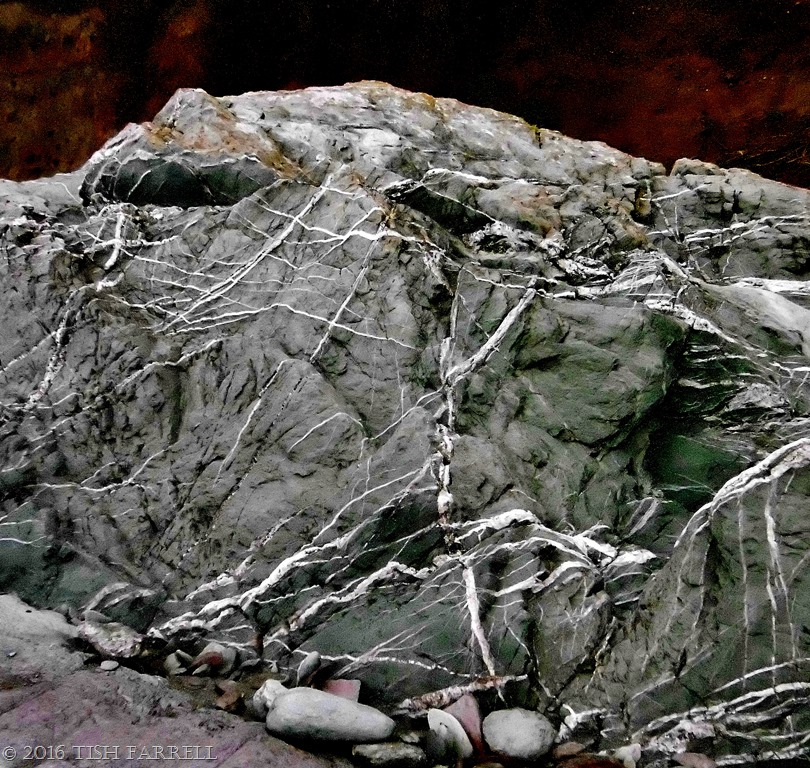
I discovered these rocks on Seaton Beach when were down in Cornwall at Christmas. My attempts to find some sensible information about the geology have so far proved fruitless. So I’m just going with my initial interpretation – that here we have a mythic precursor to runic script left by some race of Northern Giants.

But what are they telling us? Have they left us instructions on how to find a parallel universe? Or could these be warnings to mankind to take better care of the earth? Or maybe they are the crossings-out of an infant Northern Giant learning to write. Can anyone out there crack the code before the rising sea levels claim them?

*

This my response to Meg’s ‘calligraphy’ challenge. She is Paula’s guest at this week’s Thursday’s Special.

The Monochrome Garden: Dandelion Delight?

100_5540

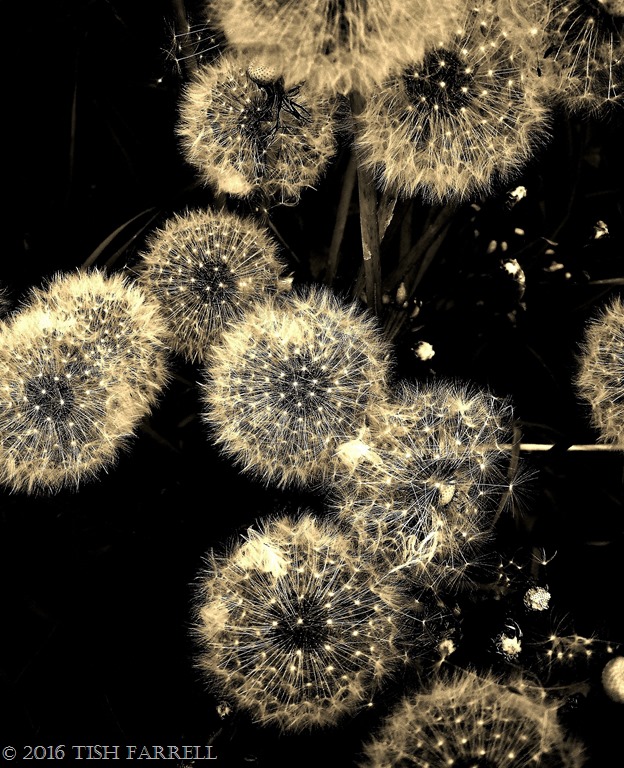
I know most of us gardeners curse dandelions, but don’t they look lovely in sepia? Little constellations. Firework bursts. Spreading those all too viable seed parachutes here, there and everywhere. You can’t keep a good weed down.

But these plants do have their uses too. Young leaves are excellent in salads. Dandelion leaf tea has long been used by herbalists to cleanse the kidneys and lower blood pressure, while the root is mainly a liver remedy, helping to boost the immune system. I do quite like dandelion coffee, perverse as this may sound, although it has to be the real roasted roots, and not the instant stuff, and it’s definitely improved with a sprinkle of raw cacao powder, and a pinch of cinnamon.

The plants of course can develop prodigious root systems. The main tap root drills down into the depths of poor soil, and so helps bring up trapped nutrients. This is one of the reasons why they are so darned difficult to dig up – they are so very busy nourishing the ground. Well that’s their story anyway. I have tried roasting the roots to make my own coffee. Very fiddly. A lot of scrubbing. And then I ate the crunchy roasted bits and didn’t have any left to make coffee. They tasted like root vegetable crisps – weird but vaguely compelling.

And I suppose I have to say  too (somewhat grudgingly) that the flowers’ bright yellow faces are very cheering, although I was a bit cross to find them already grinning at me up at the allotment. In February, for goodness sake? Please give us a break, dandelions. How about a September blooming instead?

Anyway this is my entry for the last week of Jude’s monochrome garden photo challenge. With this particular composition, I’m also thinking a little of Sue Judd’s negative space challenge over at  Paula’s. But please drop in at Jude’s The Earth Laughs In Flowers to see what she and others have been doing with their monochrome compositions. Next Sunday there will be a new  theme: garden wild life, and a chance to show off visiting my reptiles. Yay!

Negative Space In The Mall

100_8969 - Copy (3)

100_8968

100_8964


This week over at Paula’s Black & White Sunday, her guest Sue Judd gives us a fascinating insight into the use of negative space in our compositions. Please go and see what she has to say at: Black & White Sunday: Negative Space

Meanwhile, here are some more of my shopping mall photos. As I mentioned a few posts ago when I showed another version of the second shot, to me the mall is usually a very negative space. I’m also thinking that my metaphorical interpretation of the theme might be rather stronger than my photographic rendering of Sue’s guidelines, but I thought I’d share these rather weird compositions anyway: my study of consumer alienation.

February: Windmill Hill Twilight

There are two Changing Seasons challenges over at  Cardinal Guzman’s.  It’s a monthly challenge and if you want to join in you can find the rules below.

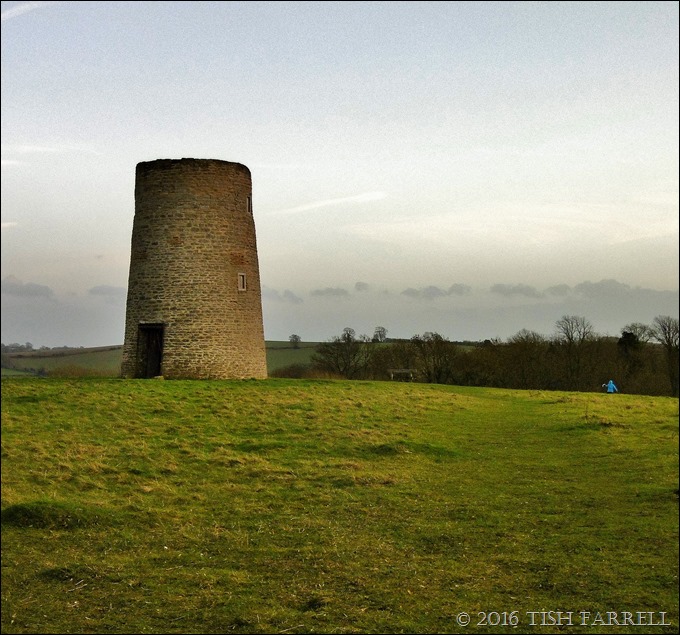
For my February photo I’ve chosen this recent shot of Windmill Hill. I caught it – in this single shot – just as the sun was going down. The landscape is still wintery, but the strange light suggests the possibility of spring. Also the windmill seems more impressive than it usually does in broad daylight. It’s good to see its mysterious side; we actually know very little about how it looked and functioned in this, its 17th century phase, only that it was probably struck by lightning.

Our local archaeologist also thinks it may be standing on or near the site of an ancient trackway, although recent trial excavations have yielded no evidence to support this. But never mind. I anyway like the glimpse (far right) of the swiftly departing small figure in blue. It rather reminds me of Daphne du Maurier’s Don’t Look Now. And yes I know that was set in Venice, but the residual horror is enough to resonate here in Shropshire and so evoke the February chills.

You can see January’s Changing Seasons HERE. In this series I am featuring Windmill Hill and the nearby Linden Field where the world’s first modern Olympian Games were held from the 1850s onwards. The Much Wenlock Games inspired the present day Olympic Movement, a fact that is now recognized. That’s a big claim to fame for our very small town, and I think it’s worth bragging about at every opportunity. Windmill Hill provided a natural auditorium back in Victorian times. Spectators and competitors came from all over Britain, and from the 1860s they could arrive by train, the station conveniently sited beside the Linden Field where most of the events took place.

*

Please visit the Cardinal to see his and others’ changing seasons. And then join in, if not this month, then next.

Here are the Cardinal’s Rules:

«The Changing Seasons 2016» is a blogging challenge with two versions: the original (V1) which is purely photographic and the new version (V2) where you can allow yourself to be more artistic and post a painting, a recipe, a digital manipulation, or simply just one photo that you think represents the month. Anyone with a blog can join this challenge and it’ll run throughout 2016. It doesn’t matter if you couldn’t join the first month(s), late-comers are welcomed. These are the rules, but they’re not written in stone – you can always improvise, mix & match to suit your own liking:

These are the rules for Version 1 (The Changing Seasons V1):

  • Tag your posts with #MonthlyPhotoChallenge and #TheChangingSeasons
  • Each month, post 5-20 photos in a gallery.
  • Don’t use photos from your archive. Only new shots.

These are the rules for Version 2 (The Changing Seasons V2):

  • Tag your posts with #MonthlyPhotoChallenge and #TheChangingSeasons
  • Each month, post one photo (recipe, painting, drawing, whatever) that represents your interpretation of the month.
  • Don’t use archive stuff. Only new material!


In A Glass Darkly: Traces of the Past

P1030291

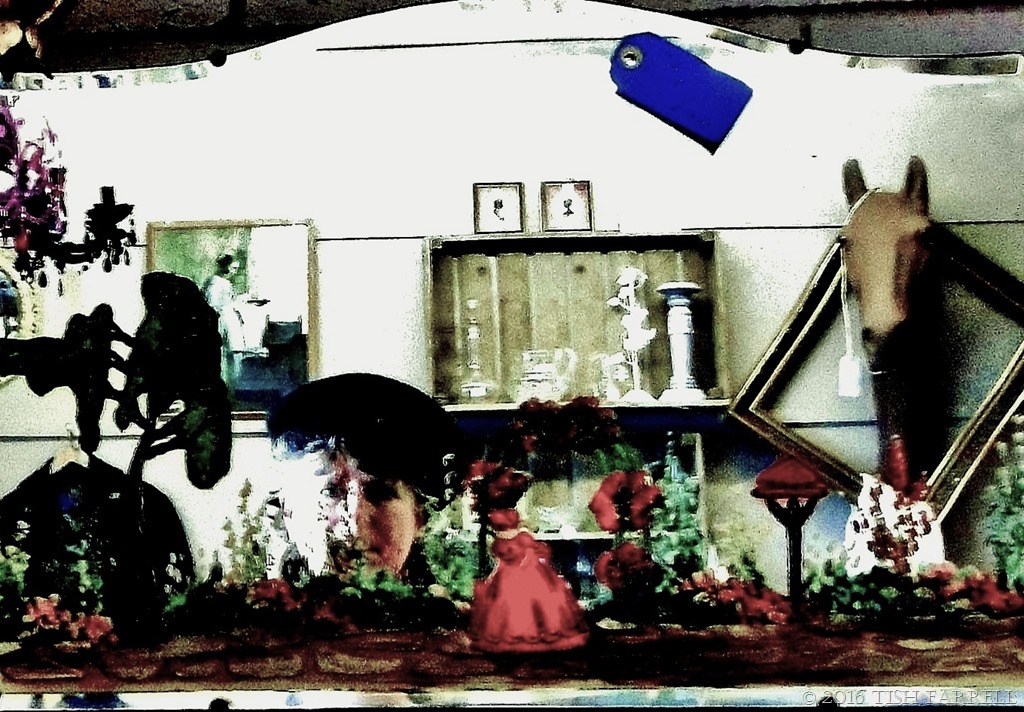
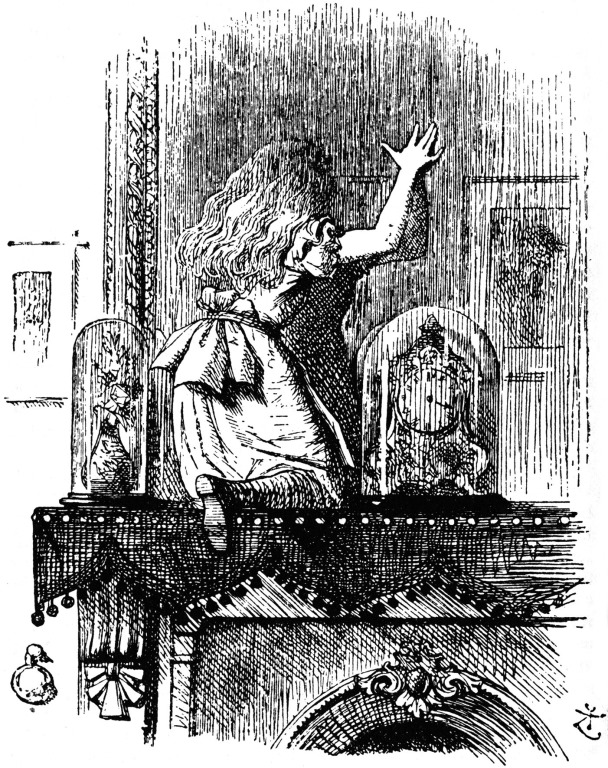
As a child I was fascinated by Lewis Carroll’s Alice Through The Looking Glass.  I would stare into my full length bedroom mirror for ages and ages and wonder if it really might be possible – somehow – to access that other world behind the glass. Unlike Alice, I wouldn’t even have to climb on to the drawing room mantelpiece, which to my mind looked distinctly hazardous and was likely to attract unwelcome attention from mother.

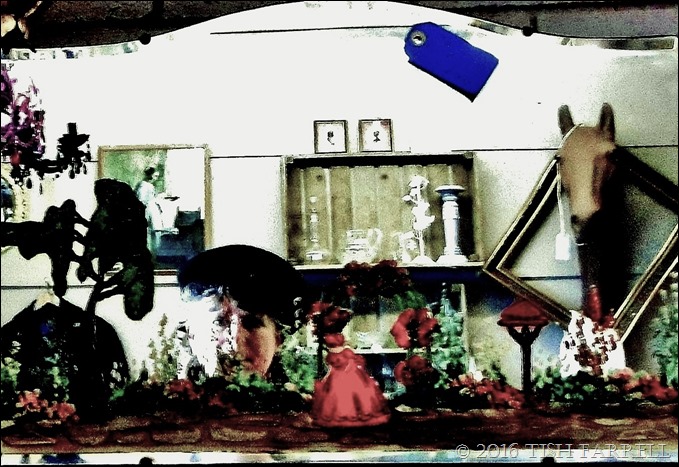
John Tenniel’s illustrations were anyway profoundly disturbing, yet ever drew me to plumb their bottomless depths. All of which is the excuse of the very much older me to spend Monday morning playing with my camera in Bridgnorth Antiques Centre.

See! Just like Alice, I’ve finally arrived in Looking Glass Land. All it took was my magic little Lumix digital. But sorry, folks, I can’t hang around. Must catch up with the White Knight  or I might never make it out again.

Alice through the looking glass

Sir John Tenniel illustrator 1820-1914 ~ Alice Through The Looking Glass by Lewis Carroll


N.B.

In A Glass Darkly  is a collection of strange tales featuring demons, dopplegangers and even a lesbian vampire published by Irish writer, Sheridan Le Fanu in 1872. The vampire story apparently greatly influenced Bram Stoker in his writing of Dracula. I haven’t read these works, but I think they might be worth tracking down.


Please visit Paula at Lost in Translation for more Traces of the Past.

The Writer’s Season: A Pursuit Of Active Dormancy

P1000347

NOTE TO SELF:

There is a time when it is all right for writers not to write. I’ll say this again so I’ll remember. There is a time when it is all right for writers not to write. It is time of preparation, and very much like putting over-cropped ground down to grass so the soil can regenerate. A time of fallowness then, but not of time wasting.

Before the real work can begin, there must be input, a drawing down of resources (like a tree in winter) – reading, researching and general planning.  And when I say ‘not writing’ I don’t mean give up on the writing practice – the brainstorming-stream-of-consciousness splurge, the morning pages, verbal doodling, keeping diaries. In fact do more. These are the equivalent of a musician practicing scales, or a dancer taking the exercise classes before working on a performance. This kind of practice strengthens fluency and, if you’re lucky, opens pathways to your subconscious thinking. It is all part of making ready for creating new work. None of this is for public consumption.

Yet doing sufficient groundwork is probably what most of us balk at. We have been fed with the notion that the best creation only comes in a white-hot blast of inspirational outpouring. We wait for it to happen. And it may never happen. More likely as not, such an approach will become a self-fulfilling blockage prophecy.

Then we may we tell ourselves the lie that if we are not busy producing words for the work in progress, then we cannot call ourselves writers. This may prompt us to start a work too soon simply to convince ourselves that we are being productive. Too often this will also end in confusion, blockage and despondency.

Only when we know our subject in our hidden depths, down in our roots and under the bark, can we best deploy our conveyances (our words) to bring it to the outer world. And I don’t mean ‘know’ in every last detail. Or not exactly. I have in mind Michael Morpurgo’s way. This well known English children’s writer is also a farmer. When he is thinking about a new book, he tells himself the story over and over until he dreams about it. Then he goes out in the early morning among his sheep and tells them the story. Only when he feels it is going down well with the ovine audience does he begin the act of serious writing. In this way he has proposed, explored, processed and internalized a narrative before he has written a word.

What emerges is more likely to be a  work that has intrinsic authenticity and consistency, as opposed to a narrative that has been imposed by the writer from outside, and often feels weak and poorly rooted.

So what do we need? Preparation, preparation, preparation.

But not too much either. I’m suddenly thinking of Edward Casaubon in George Eliot’s Middlemarch, he who ended up so obsessed with his researches that he left no time to write the book.  So a balance in all things. The knack, of course, is to recognize tipping point.

copyright 2016 Tish Farrell

Seasons


Wenlock: “A Rip Van Winkle Kind Of Place”

P1010148


P1010704


P1010744 - Copy - Copy


P1010699 - Copy (2)

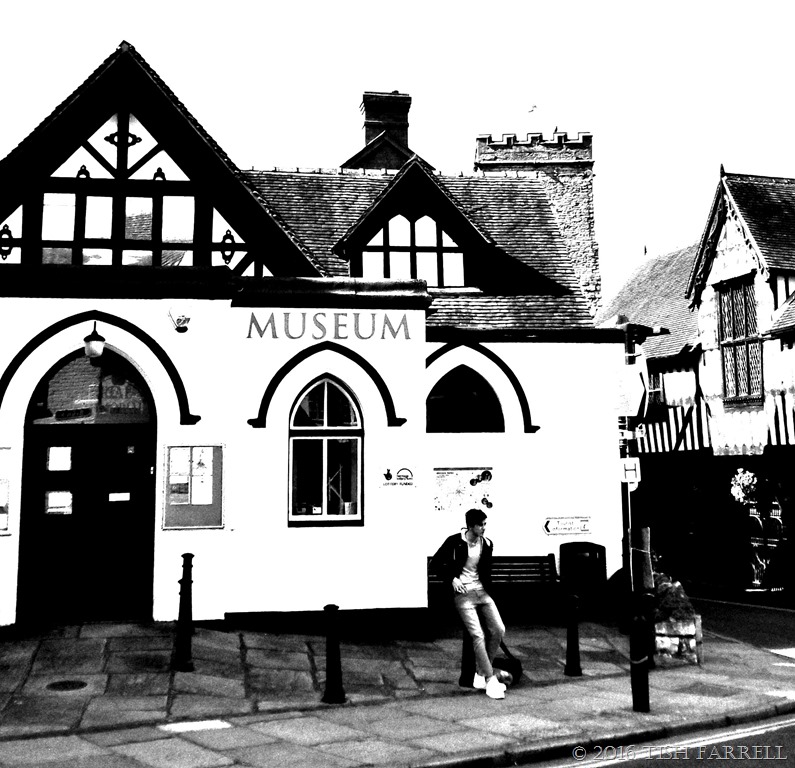
A Rip Van Winkle kind of place – that’s how Shropshire writer Mary Webb described Much Wenlock around a century ago. It was the home town of her teenage years, and the place where I now live and indeed have known for much of my life. Even when we lived in Africa we would visit Wenlock whenever we were on ‘home leave’. We had friends who drew us, and finally led us to settle here on our return to England.

And once we had arrived, we soon found that many of our neighbours, pitched up from far-flung places themselves, had also lived and worked all over Africa. I was therefore only briefly surprised to find that Henry Morton Stanley had once been in Wenlock, staying as a house guest of the Milnes Gaskells, the local gentry who once lived in the old Prior’s House and owned the ruins of Wenlock Priory from which the town had grown up throughout the Middle Ages.

Stanley is not a man I admire, although his brute tenacity is certainly impressive. We also have him to thank for selling the idea of the Congo to another brute of a man, King Leopold II of Belgium, a circumstance from which that Central African state has probably yet to recover.

Still, I won’t go into that now, but I do have a mind’s eye image of Stanley sitting up on Wenlock Edge (the Milnes Gaskells took all their guests there), and picture him scanning the Shropshire plains below as he contemplated the writing of In Darkest Africa.

The landscape that spread before him, with its distant ranges of Welsh hills, could well have reminded  him of that continent. I have seen such vistas in East Africa. But he was a man who ever took his darkness with him. And this makes me wonder. What might our grim legacy have been, in PR terms that is, if he had written of ‘darkest Shropshire’; would the tainted words still be sticking to us today?

It’s a rhetorical question obviously. And I mention all these dark tones and undercurrents only as counterpoint to the  quaint, quiet images above. Much Wenlock definitely has ‘chocolate box image’ tendencies in its now gentrified, ancient streets. I find it good to remember, once in a while, that all is not necessarily what it seems.

*

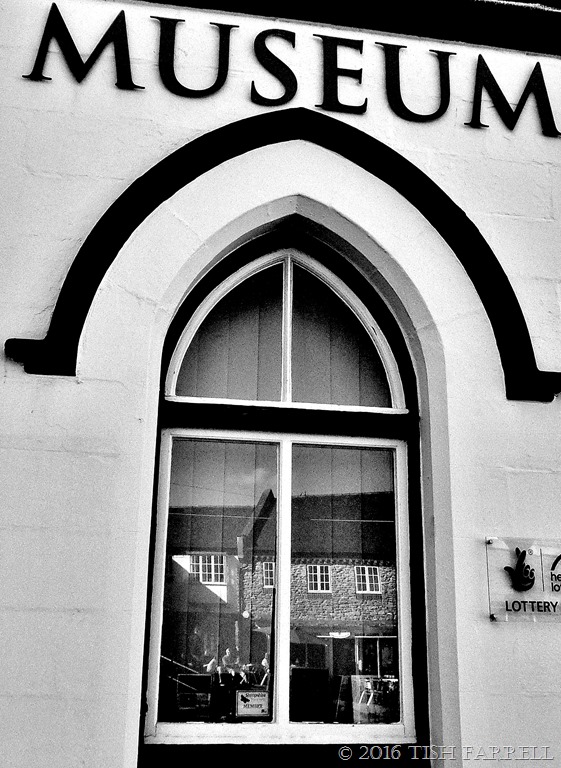
This post was inspired by Paula’s Black & White Sunday Challenge: ‘surreptitious photography’. It is a fascinating theme. The role of surreptitious photographer is something I rather relish, but rarely put into practice. I have a feeling that in this Rip Van Winkle place it risks becoming an obsessive pursuit and, as a writer, I already have enough of those.

But please visit Paula at the link above and be inspired by her photographs. There’s still time to take part. Also check in HERE to see her gallery of  slide shows of all participating photographers’ work. It’s a real treat.

copyright 2016 Tish Farrell