Thursday’s Special ~ Being Serially Arrested In Wales

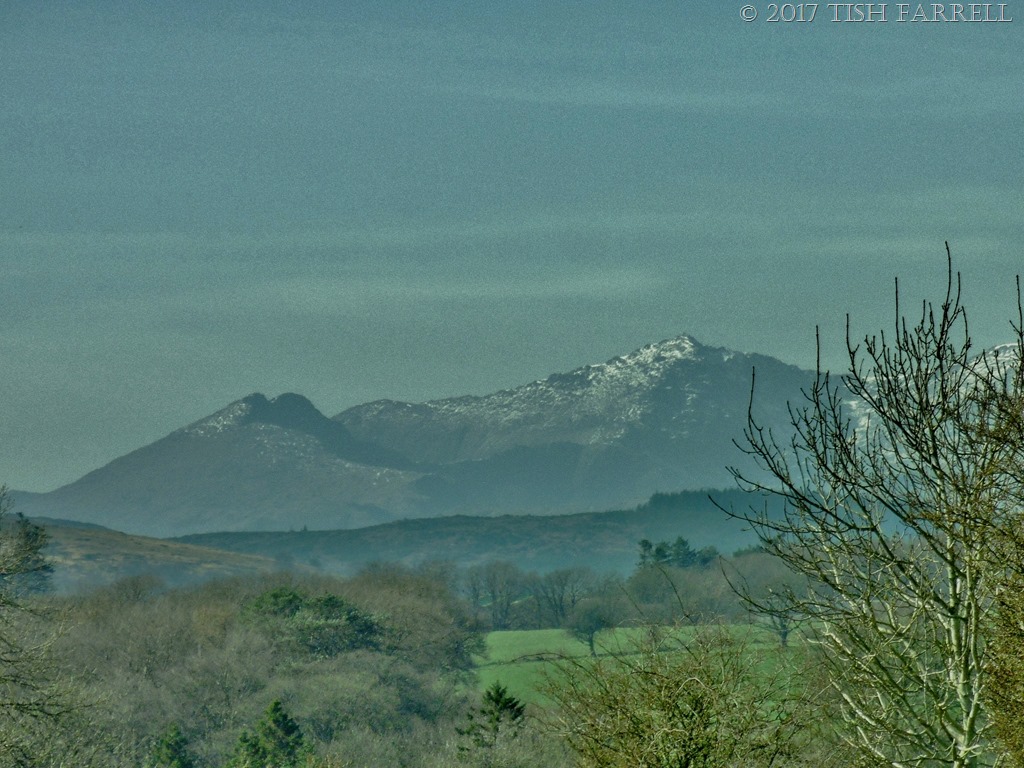
This week Paula’s Pick A Word  challenge is giving me the chance to post more views from our March trip to the Conwy Valley in North Wales. Projecting, arresting, pastoral, convex and communal are the prompts, and this distant shot of snow-dusted mountains pretty much covers the first three. However, I won’t let that stop me.

Arresting is my word of choice for all the following images; Wales was at  its magical, magnificent best – from the glittering waters of the River Conwy to the surreal towers and ramparts of Conwy Castle. It made you want to burst into song. Cue: Land of My Fathers, the Welsh National Anthem, which you can join in with at the end, and so definitely cover the communal. It doesn’t matter if you can’t speak Welsh; humming will do. Besides, there is nothing quite like the quality of Welsh singing voices.

Also look out for Thomas Telford’s amazing suspension bridge in the next shot of Conwy Castle. It was built between 1824-26 to improve access between Holyhead on Anglesey and Chester, and was also part of Telford’s larger road and bridge improvement scheme to enable swift and safer travel to London for Irish Members of Parliament. A triumph, then, in both function and form.

The castle was built between 1283 and 1289, and is another of Edward I’s overbearing edifices to oppress the Welsh. Not only did he invade, he also cleared out the monks who occupied the site and set about building both a fortress and a model town below it, the latter confined by massive defences. Today, these walls still surround the town, and you can walk around them, though I should issue a warning: the wall-top walk is not for the faint-hearted or those prone to vertigo. But if you don’t mind heights, they provide striking views in every quarter.

P1070393

IMG_4124

*

A few miles upstream from Conwy is the market town of Llanrwst. It is claimed that in 1947 its town council made an unsuccessful attempt to gain a seat on the United Nations Security Council as an independent Welsh state. One has to admire this piece of Celtic chutzpah. I’m sorry they did not succeed. P1070238

Anyway, one of the present day arresting features of Llanrwst is this bridge, the Pont Fawr or Great Bridge. It was built in 1638 and still cars drive over it. There are other names too – the Shaking Bridge – because if you tap the central parapet the whole structure vibrates, and also Pont y Rhegi – bridge of swearing, explained by the fact that the carriageway is too narrow for vehicles to pass, and the height of the central arch too steep for forward visibility,meaning that everyone meets in the middle and this happens…!&?#!

The view through the central arch shows the ground on which the National Eisteddfod was held in 1989. The town is currently campaigning for a return of this annual extravaganza of Welsh culture in 2019. Which is a good point to bring on the choir. Croeso – welcome!
Serpent’s Eye View From Llandudno’s Great Orme And A Spot Of Lamb Retrieval

IMG_4230

It was Monday morning, and here we were cresting the head of a sea serpent – the mighty Welsh marine worm. At least that’s what how the invading Vikings saw Llandudno’s Great Orme, and named it accordingly.

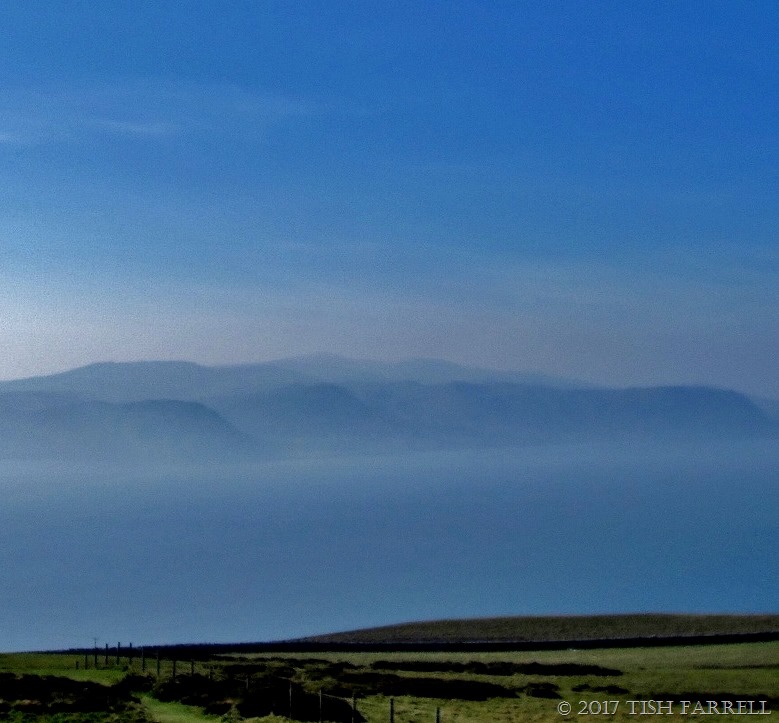
It is indeed an extraordinary craggy eminence that juts into the Celtic Sea, very much like a gigantic head. Amazingly, too, you can drive to the top, and see mountain mirages like this one. I’m looking south down the coast of North Wales, and this real-life illusion took little editing apart from cropping and reducing the brightness.

And now that I’m looking again at this still, blue scene, it is hard to believe it was blowing a gale as I took this photo.

Next are a couple of windscreen shots as we ascend and descend – rather more mythic edits this time and in keeping with this amazing slice of 300 million year old geology:

P1070513

P1070519

*

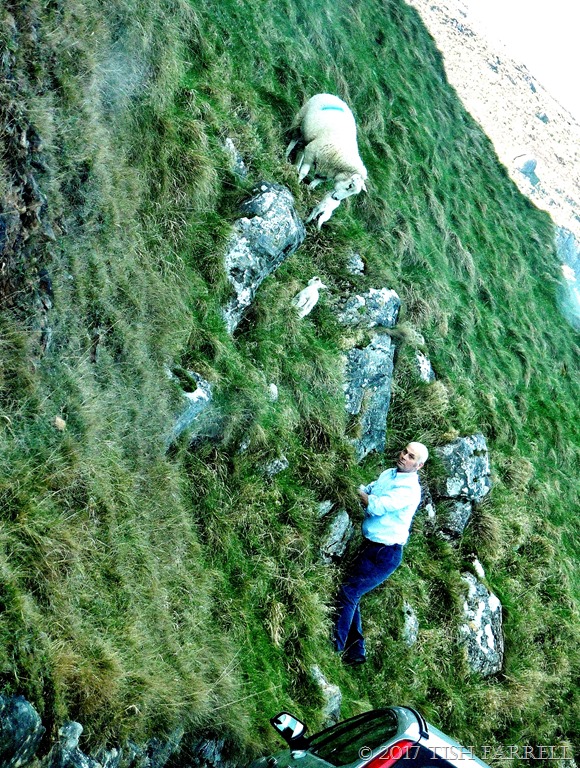
And now we come to Operation  Lamb Rescue –  a kind man restoring very little twins to their mother. They had slipped down the bank towards the road, and couldn’t climb back up. So this was more nightmare than illusion – but with a happy ending:

P1070533

*

Finally, a distant view of the sea serpent, taken from Anglesey on a still, but warm day in late December, when yet again Wales was in dreamy illusion mode. Perhaps we imagined it – the Great Orme, the mighty worm, snaking its way across the Menai Strait:

P1060459


In this week’s Thursday’s Special, Paula asks us for illusions however we wish to present them.

Thursdays Special ~ Winding Our Way Round Kingsand and Cawsand With Some Pirate Tales Thrown In

100_8607

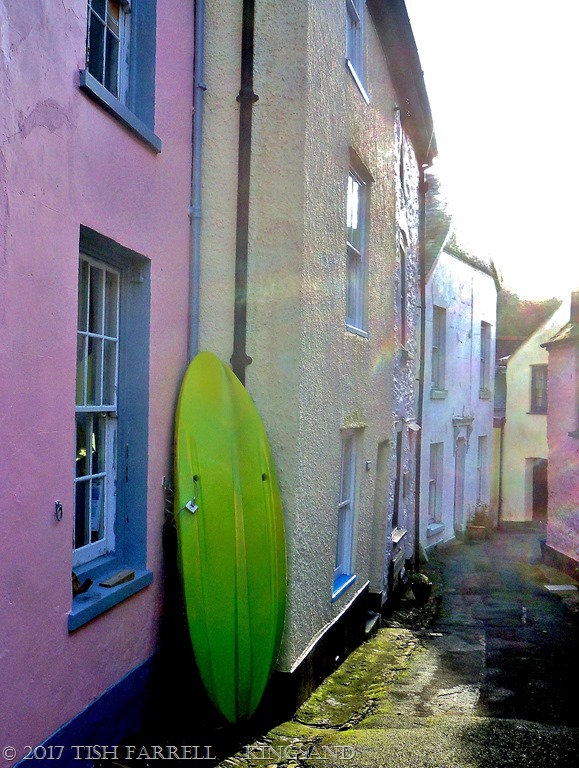
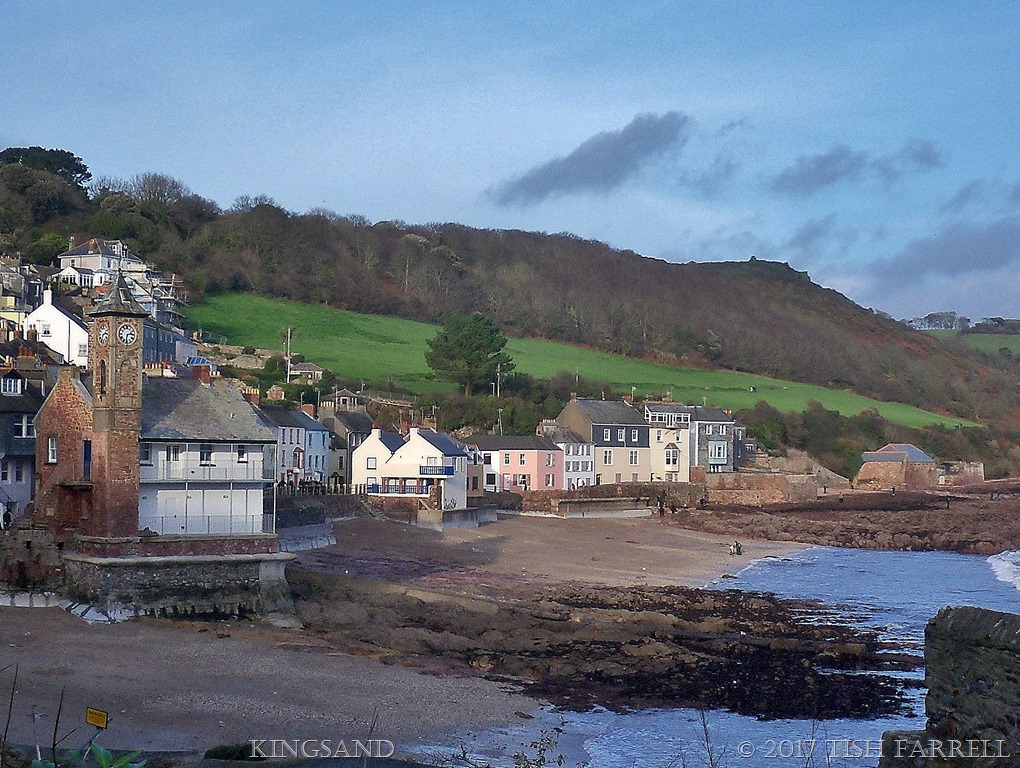
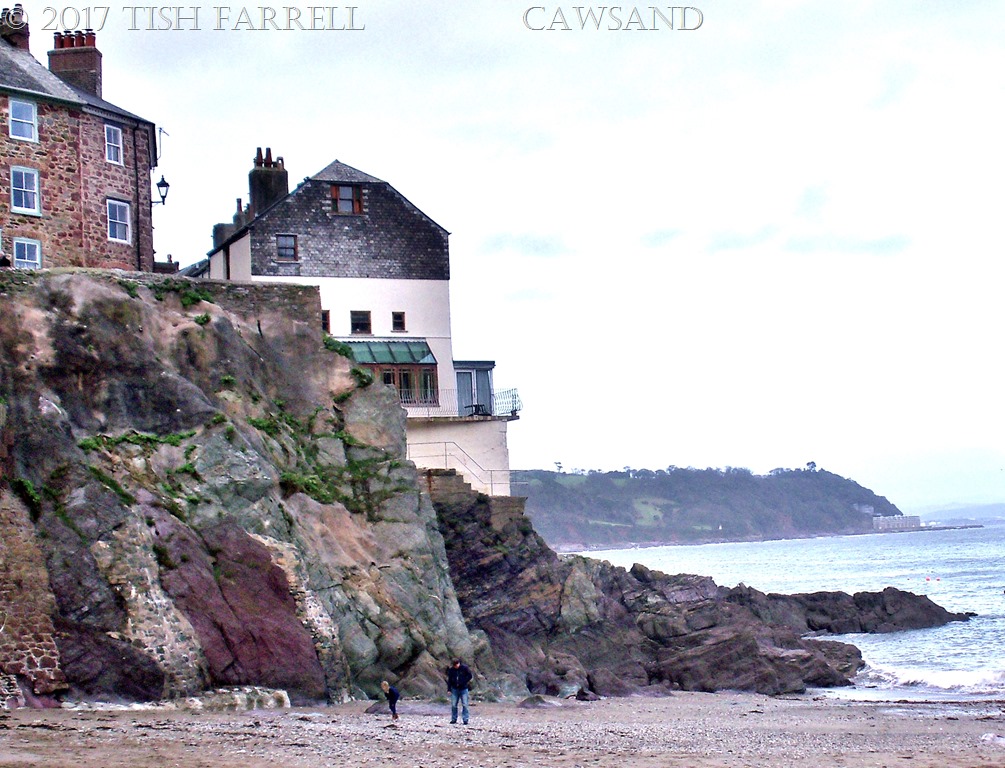
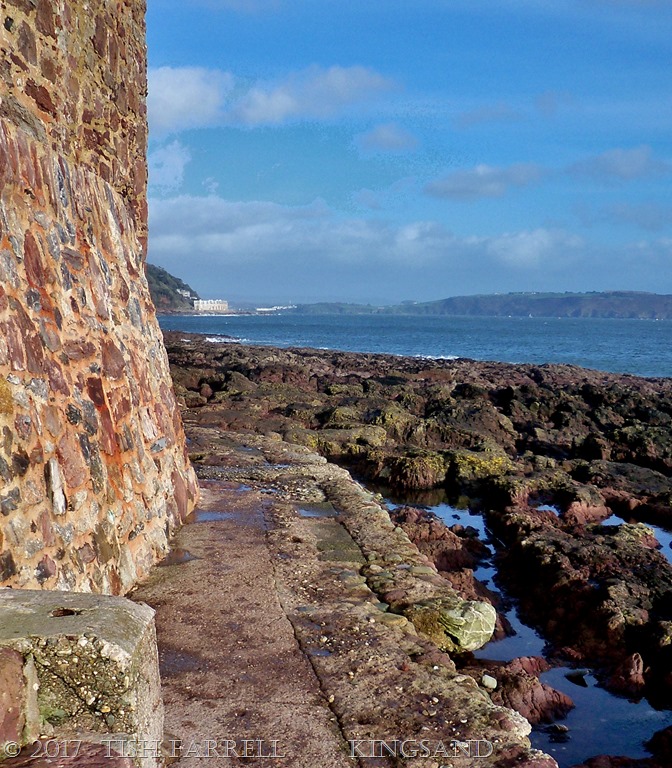
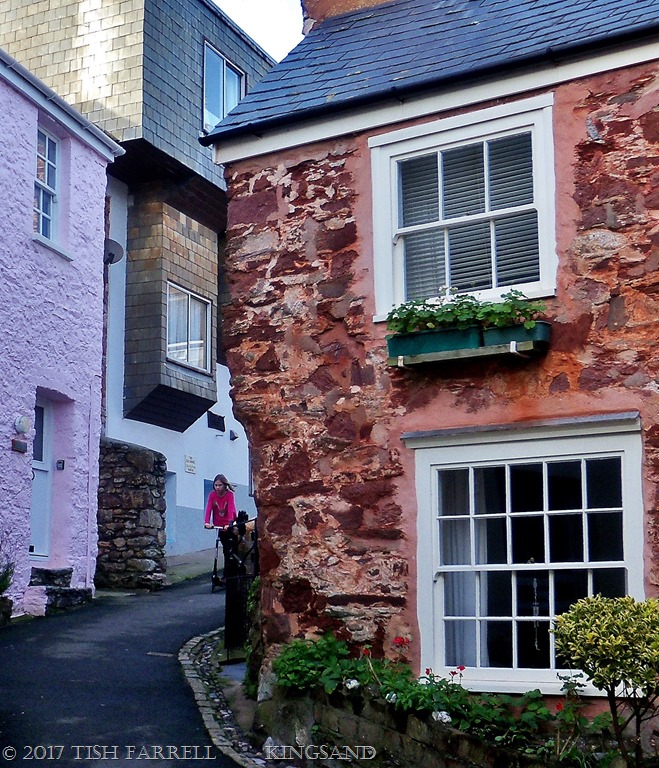
The meandering streets of Kingsand and Cawsand were all but deserted when we went wandering there one winter’s afternoon. The twinned  villages fringe adjoining bays, clinging to the hillside above the Tamar Estuary in south east Cornwall. The river marks the county boundary – Devon, and the port city of Plymouth to the north, Cornwall to the south.

The communities of these rugged shores run together so it’s hard to know when you have left one and entered the other. They have always looked to the sea for a living, although these days this is more about providing seaside holidays for outsiders. The place had a determinedly deserted air during our December visit. Many of the houses are now second homes; unoccupied out of season.

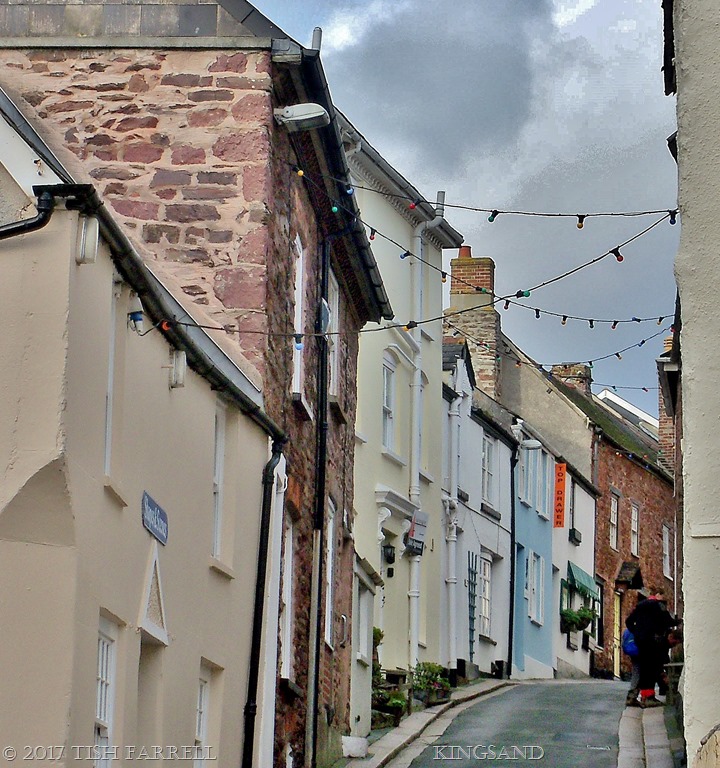
Once, though, it would have been a teeming place – a thriving fishing community from the medieval period, and the centre of the pilchard trade from the early 16th century. You can still see the remains of the fish cellars, or ‘pilchard palaces’ that were built along the shore north of Kingsand. These were for the storage and processing of fish, and there’s a surviving example, the red sandstone building, on the far right of the next photo.

100_8625

Smuggling was the other big business – its heyday running through the 1700s and into the 1800s. The place was a smuggler’s haven in fact – with some fifty vessels dedicated to the nefarious trade in contraband liquor.

And then there were the pirates. In 1604 one especially notorious rogue, a Kent man called John Ward,  upped the stakes of his earlier career as a privateer, and decided to join forces with the Barbary pirates of North Africa. He stole a French merchant ship off the Scilly Isles and headed for Cawsand, even then a well known centre for Cornish smuggling.  Mooring in the bay there, Ward went ashore and set about recruiting local smugglers to join his enterprise as a Barbary pirate.

The Barbary corsairs were slavers, mostly North Africans from Algiers, Tripoli and Tunis, but there were Dutch and Englishmen operating with them too. They terrorised Britain’s south west shores for 300 years, snatching people from their homes. By 1626 there around 60 Barbary men-of-war preying on communities of the Devon and Cornish coasts, and attacks were almost a daily event. A parliamentary committee of 1645 established that there were at least 3,000 English men, women and children held captive in Algiers. It was only in 1816 that combined British and Dutch forces ended their power, at which time four thousand Christian slaves were said to have been liberated.

As for Ward, he and his happy band of recruits wormed their way in with governor of Tunis, he who had made that city rich by providing a haven for pirates and taking a cut of their loot in goods and captives. Ward captured many ships, and directed his own pirate fleet. Then built himself a palace with his ill gotten gains and lived a life of drinking, gaming and swearing, to name the least of the vices he apparently indulged in. One wonders what happened to his Cawsand recruits. Did they ever go home? Ward himself gave up piracy, got married and took to raising chickens. He died of plague in Tunis 1622.

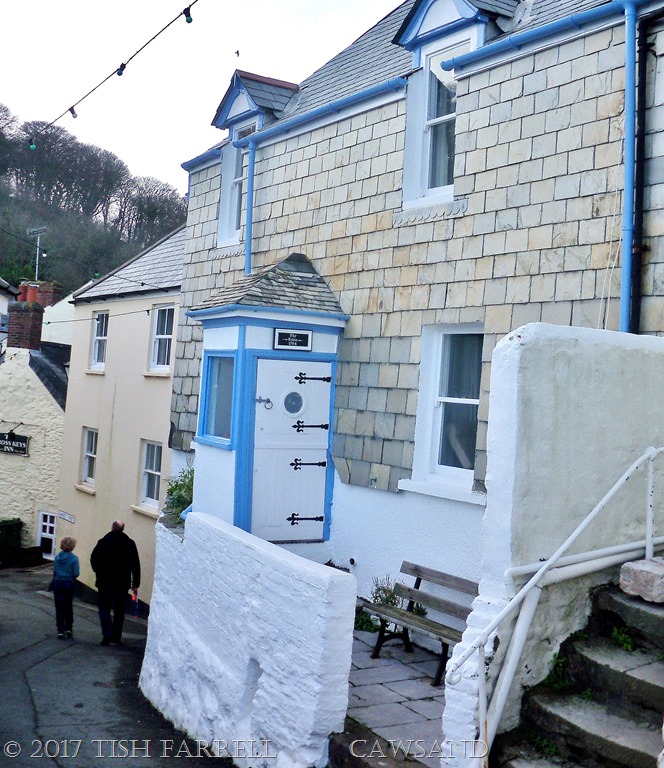
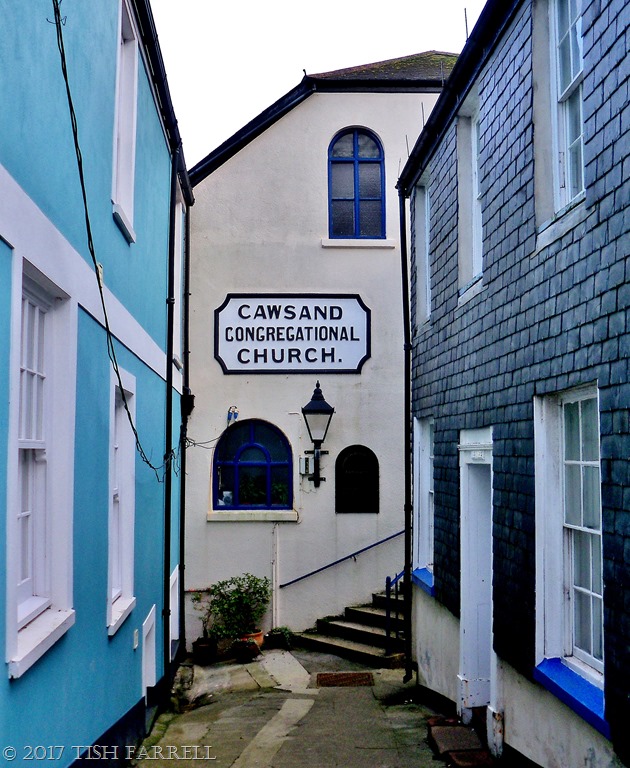
And now, after that little diversion, some more turny-twisty byways and shorelines from Kingsand and Cawsand, accompanied always by the sea’s ebb and flow on the nearby rocks, and the cries of gulls:

100_8643

100_8653

100_8658100_8535

100_8540

100_8565

100_8612

Thursday’s Special: winding.  Please visit Paula to see her astonishing interpretation of this week’s theme.

Thursdays Special ~ Great Zimbabwe Re-Scanned

Great Zimbabawe

I was very pleased that this Thursday’s Special from Paula is another Traces of the Past challenge. I spent yesterday afternoon attempting to scan these photos of Great Zimbabwe. I’ve shown other versions of these images before – scanned from negatives, but either I or the scanner was on the blink, and I wasn’t very happy with the results. Then the scanner broke altogether (it was a whizzo Nikon one too), and that was that.

So yesterday I had a go with some of the original prints on the flat-bed scanner, which then led to a lot of dust-speck removing  – very tedious.

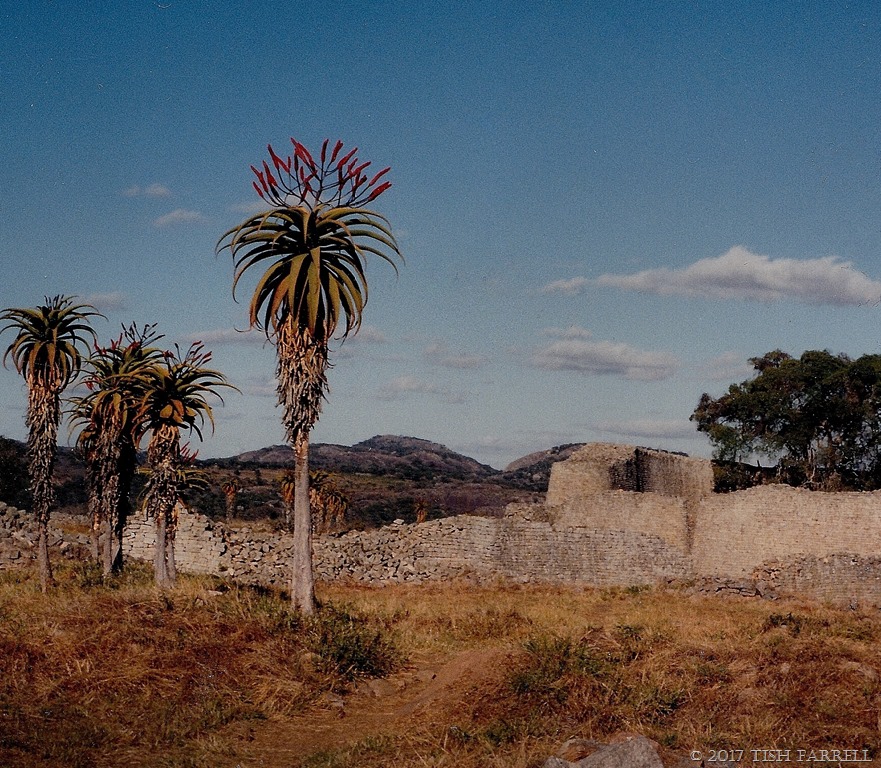
This is the best I’ve been able to do. The first shot shows the Great Enclosure, and the top of the mysterious stone tower within. The sci-fi plants on the left are giant aloes.

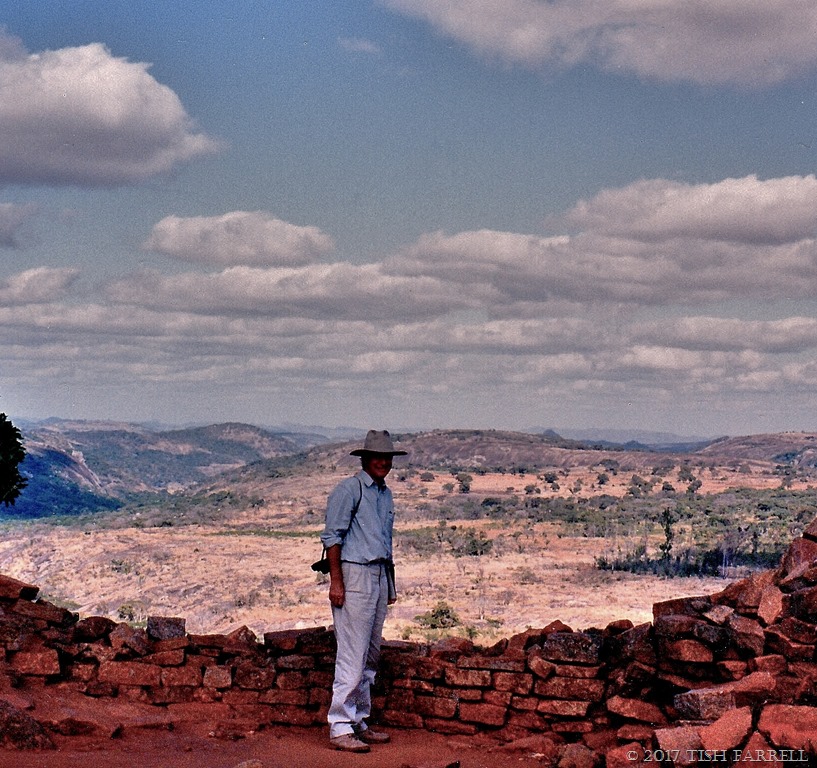
This next shot is taken from the Hill site, where archaeologists have discovered gold and other metal working enclaves.

4_0003

It gives a good sense of the surrounding terrain, although in the heyday of Great Zimbabwe, the environs may well have been a good deal more lush. The citizens’ domestic economy revolved around cattle herding, and indeed, one of the theories for the city’s demise in the C15th is over-grazing. But I’m sure there was more to it than that.

Great Zimbabwe was part of an extensive trade network throughout the period equivalent to Europe’s early Middle Ages. Its  merchants trekked in caravans to the Mozambique coast, taking gold and ivory to trade with Arab dhow merchants of the Swahili seaboard cities. It is very possible, then, that the gold floating around Europe and the Middle East in Crusader times came from Great Zimbabwe. In other words, it was not the remote settlement it may seem today; it was strongly connected to the Old World’s wheeler-dealer networks. Nor was it the only great African city state in southern Africa. So much of the continent’s human history remains to be discovered and told; historian Basil Davidson made a good start, though most of his works may be out of print now. And it was Peter Garlake who wrote the classic work on Great Zimbabwe (1973).

I only wish I’d taken more photos while I was there. We were being distracted by a travelling companion who was intent on not noticing that we were visiting one of the world’s most fascinating archaeological sites. Ah well. Anyway, looking at these photos now, it all looks very dreamlike, and that’s how it felt at the time.

 3

But I’ll leave you with a few hard facts. Great Zimbabwe was built and lived in by Shona people between 1000 and 1500. The enclosure walls, though often monumental, were seemingly never defensive. The entrances are simply open, undefended spaces. The stone came from the nearby granite hills, and was cut and laid without mortar. The walls vary from 4 to 17 feet in width with some reaching over 30 feet in height. It is, in short, a very amazing place, and I have written other posts with more of the history.

But oh, wouldn’t it be wonderful if these walls could speak and tell us their stories!

Thursday’s Special

Thursdays Special ~ A Commanding Presence

IMG_0026

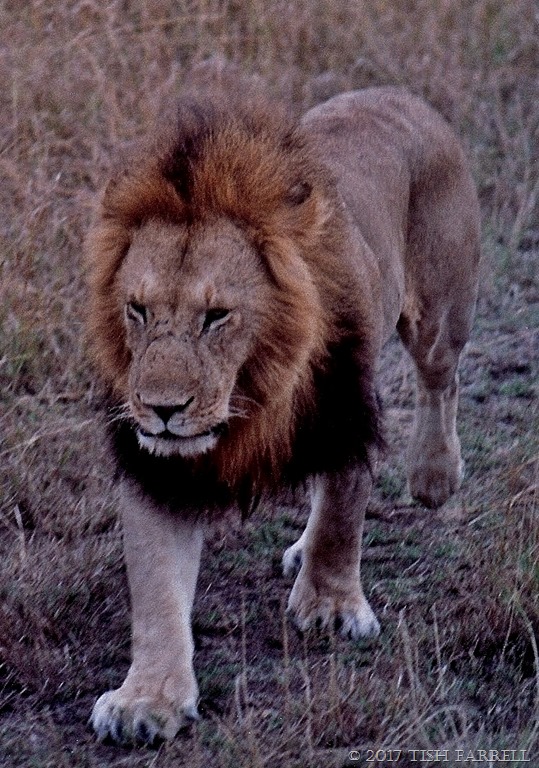
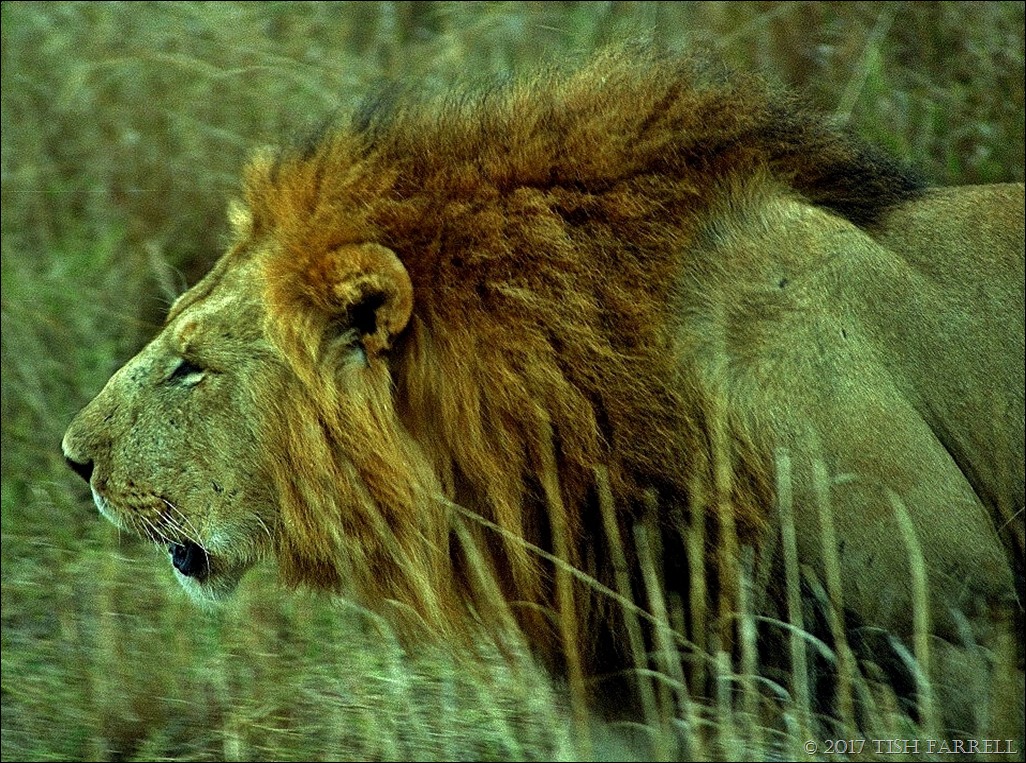
It’s not easy taking a photo of a moving lion, and for all sorts of reasons – not least, the excitement. This is another shot of one of the members of the Maasai Mara’s celebrity Marsh Pride. I think that confident stride definitely says ‘I’m in charge here’. And just look at the size of those front paws! Scarily impressive even in this somewhat aged photo.

We visited the Maasai Mara only three times while we were living in Kenya, but every trip there delivered many breath-taking moments. We were lucky too. Kenyan wildlife guides are among the world’s best – so generous in the sharing of their knowledge – whether of grasses and dung beetles or leopards and rock pythons.

Scan-140726-0004

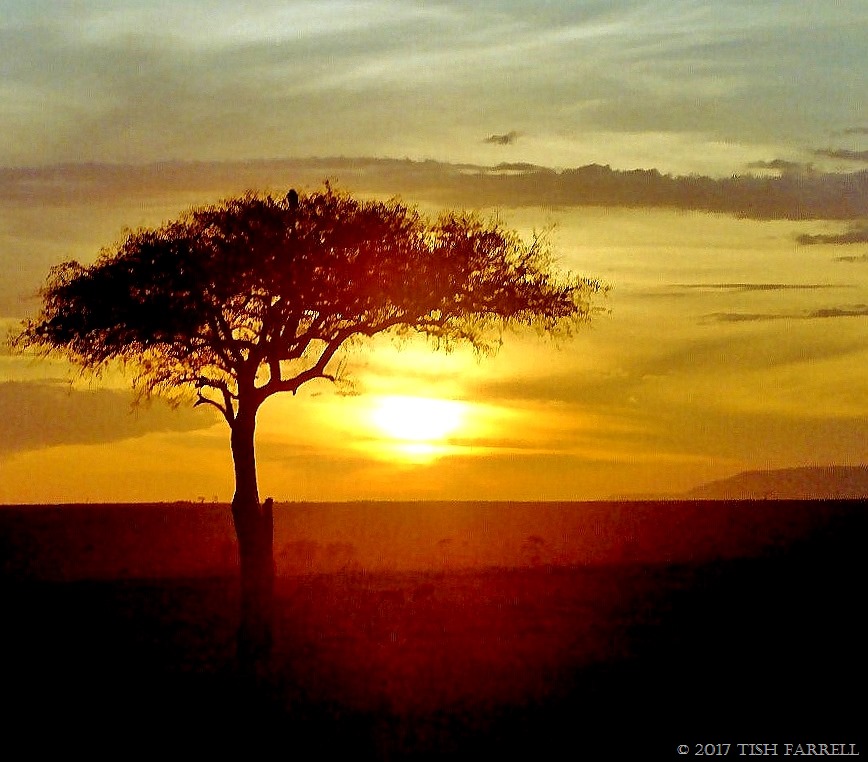
Desert Date  and the Oloololo Escarpment ~ indelible memory Mara-style

*

This week at Lost in Translation, Paula’s  March Pick A Word includes five word prompts: commanding, coarse, gibbous, incremental, indelible. Please see her interpretations and be inspired.

A Matter of Focus ~ Fond Thoughts Of High Summer On Windmill Hill With Greater Knapweed And Assorted Grasses


It’s blowing a frigid gale in Wenlock today; Met Office warnings of 60-80 mph winds as Storm Doris comes tearing through. What a woman! Talk about flighty.

First thing this morning I had to dash outdoors in my nightie to rescue the sweet pea seedlings: they were being blown out of their pots. Not only that, the freshly open daffodils were all askew, and the garden canes whipped off the shed wall into giant Pick-Up-Sticks.  Phew and phew. Just TOO much wind.

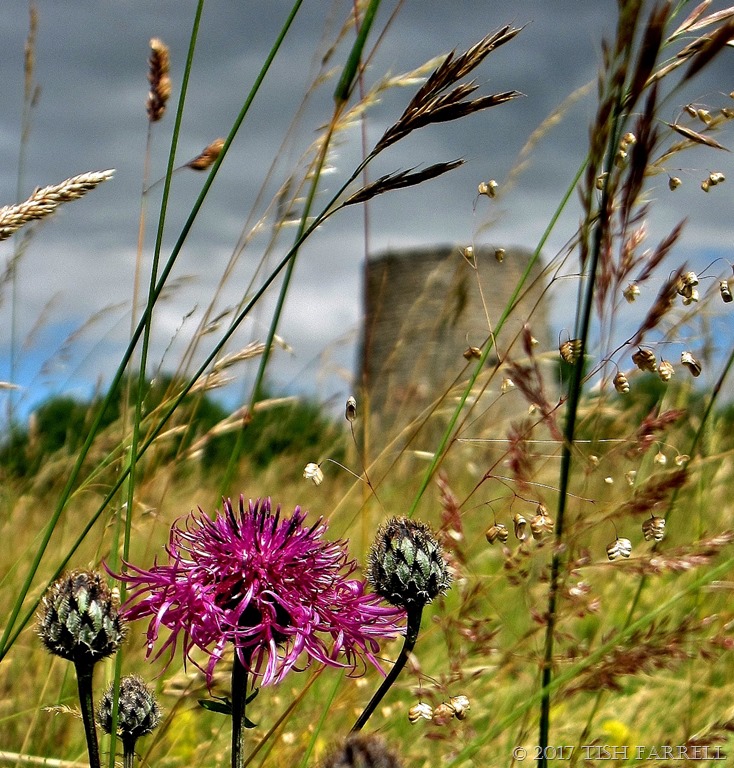
So it’s good to think about warmer weather, of lying in the grass on Windmill Hill, and peering at things botanical with the sun on my head. So thank you, Paula, for this week’s Thursday’s Special.

Focus is the watch word, however we care to interpret it,  and it has had me happily trawling through summer days in my own version of A la recherche de temps perdu. Which also reminds me that Marcel Proust used to do his writing in bed. Today, with all the draughts, and in places where we never knew we had them before, this is a very tempting prospect. So I’m wondering if He Who Recycles Pallets Builds Walls And Binds Books would mind delivering sustenance at regular intervals to the office bed where I might huddle under the duvet with my laptop. Seems unlikely somehow.

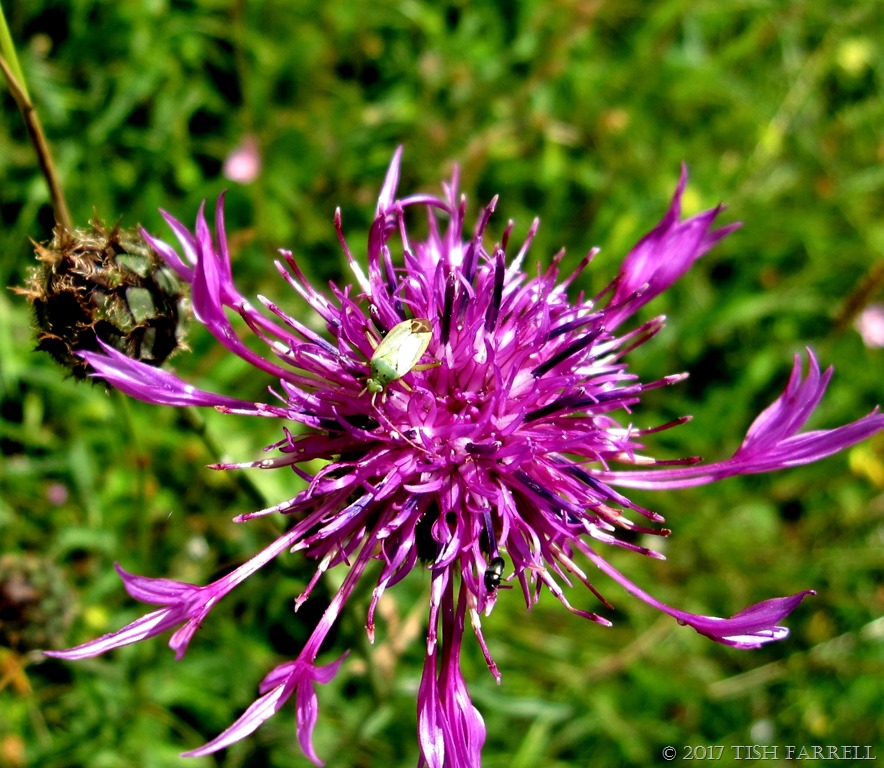
Here’s another shot of the knapweed, this one well and truly open for business along with assorted small bugs:

IMG_2072

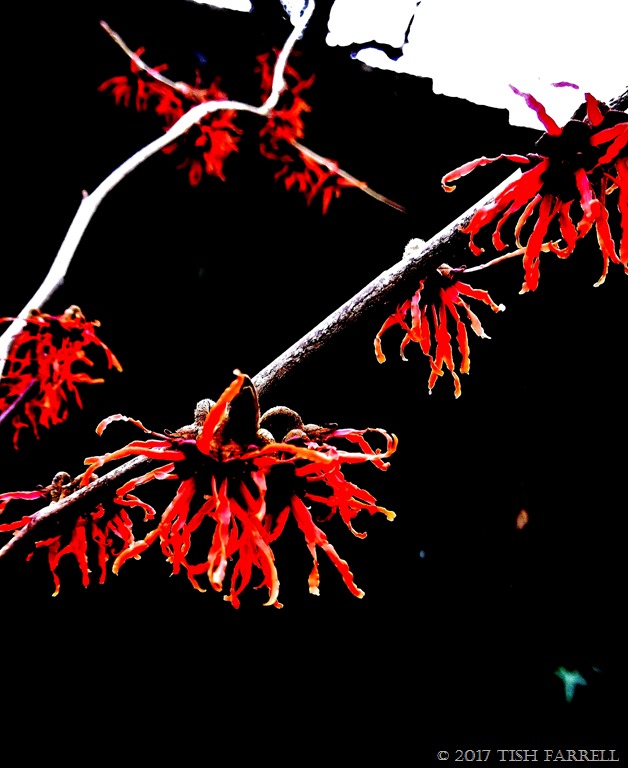
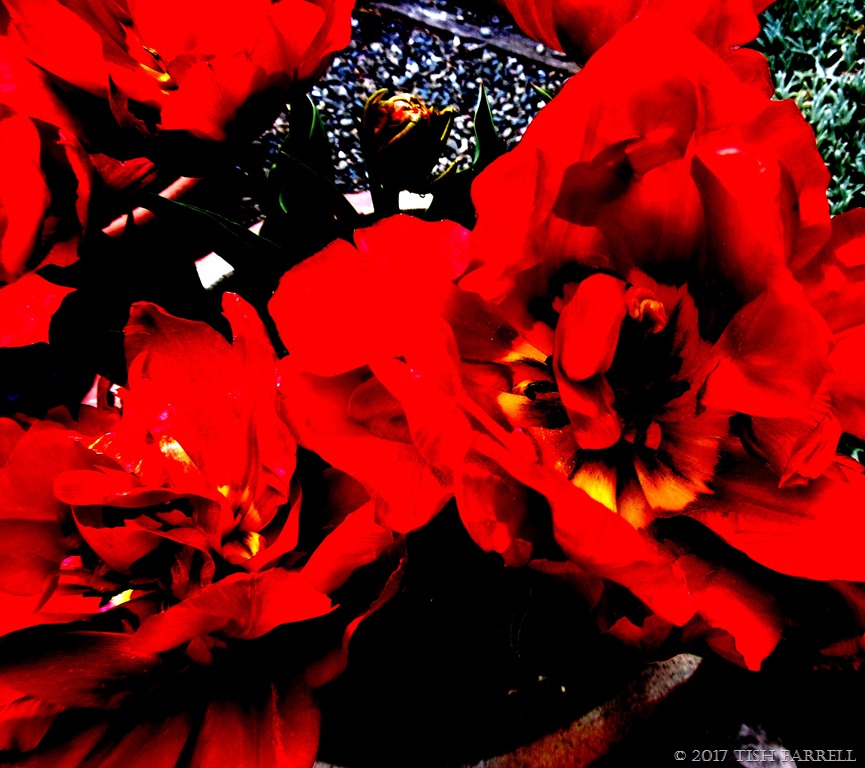
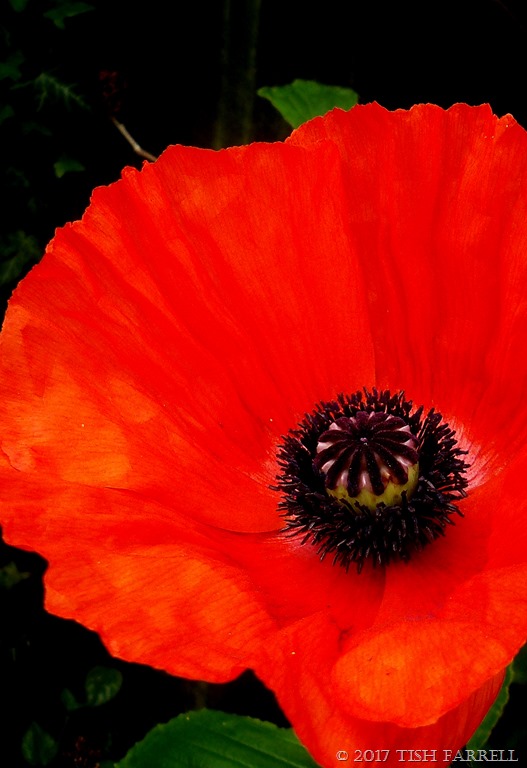
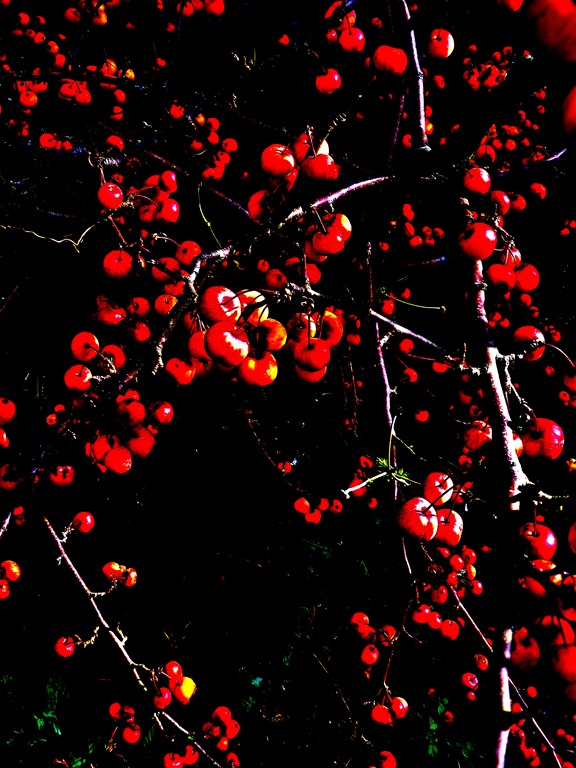
Thursdays Special ~ Les Quatre Saisons En Rouge et Noir

P1000335

P1030851

100_9963

100_8119

From top to bottom: winter witch hazel, spring tulips, summer oriental poppy, autumn crab apples.

*

The flowers on our little witch hazel tree are already brown and shrivelled. It was flowering back in January, and on bleak grey days the ragged clusters of russet petals made it look much like a tree invented by aliens. A welcome sight nonetheless. Otherwise the garden is presently dank and soggy – a scatter of snowdrops and one or two hellebore flowers opening.

But there are other signs of spring – tulips and daffodils shooting up several inches tall, and the oriental poppies making their first leaves. Also the  Evereste crab apple tree which we moved last year, and feared we had killed in the process, is covered in tight little buds; so fingers crossed.

Indoors, I’m fretting to start sowing – packets of seeds, old and new, in piles on the window sills, seed potatoes set out in trays in the conservatory. But it’s all too early to do much outside – the Shropshire soil still too cold and wet for sowing. I’m told by a fellow allotmenteer that the acid test for knowing if the soil is warm enough for growing is to sit on it with your pants down. Yep. Bare bottom pressed to the earth. If you can bear the baring, then it’s OK to plant. But this is not a procedure I could recommend for communal gardens, not unless one’s fellow gardeners are suitably forewarned.

And so, keeping my pants well pulled up, I’m stemming my impatience by starting off globe artichokes, coriander and basil in the kitchen, and nurturing my sweet pea seedlings. They don’t mind the cold conservatory, and probably could go outside now. I shall also sow some leeks in pots, and maybe do the same with beetroot.  And if I were truly organised I could also sort out my seed packets into month order so as not to miss the boat as I did with several things last year.

But it’s all so exciting – another seasons’ round in the offing. More things to learn; more things learned to put into practice. It is, after all, the gardener’s way – to travel hopefully.


Paula’s Thursday’s Special ~ le rouge et le noir

Thursdays Special ~ Profile Of The Leonine Kind

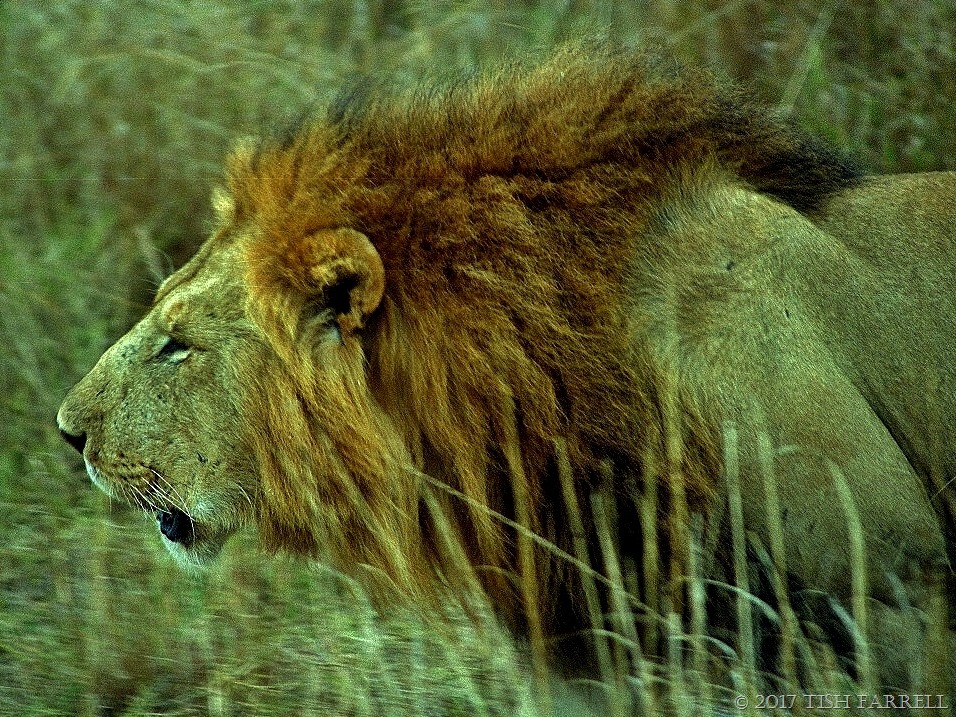
Marsh Pride male 1

We came upon the Maasai Mara’s famous Marsh Pride on a morning game drive out from Mara River Camp. It was August – as close to winter as Kenya gets – the skies leaden, the plains parched and dusty, the whole place waiting for the short rains that will not be happening for another two months; and perhaps not at all. In fact this trip had started out from Nairobi in thick fog, and descending the Great Rift escarpment was even more hair-raising exciting than usual.

But to get back to the lions. The pride was resting up in home territory, most of its members – mothers and cubs – scarcely visible in the grass. For one thing they were the same colour as the vegetation. For another, it is what lions do – disappear in twelve inches of grass.

As we drove nearer we spotted this male. He was pacing through the grass, roaring. This was answered by another male some distance away. It seemed they were busy marking out their patch. They ignored us anyway, which was comforting, though I have to say that lion-roars, especially ones at close quarters, make your spine resonate, and not in a good way.

Another hair-raising exciting moment then.

We watched them for a while from the safety of the safari truck, then left them to it, the roars following us down the track. By which time  we were  wondering if we were really there at all. Out in the African wilds it mostly feels like dreaming.


Profile:     Panthera Leo

                    Simba in KiSwahili

Weight:    Males 420-500 lb/110-135 kg

Length:     Males 5-7 ft/2.5-2 m

Lifespan:  Males 12 years


Thursdays Special: Profile

Please visit Paula to see her fantabulous shot of a snowy owl.

Thursdays Special ~ The Arboreal Position And Why We Can’t Live Without Trees

P1060049

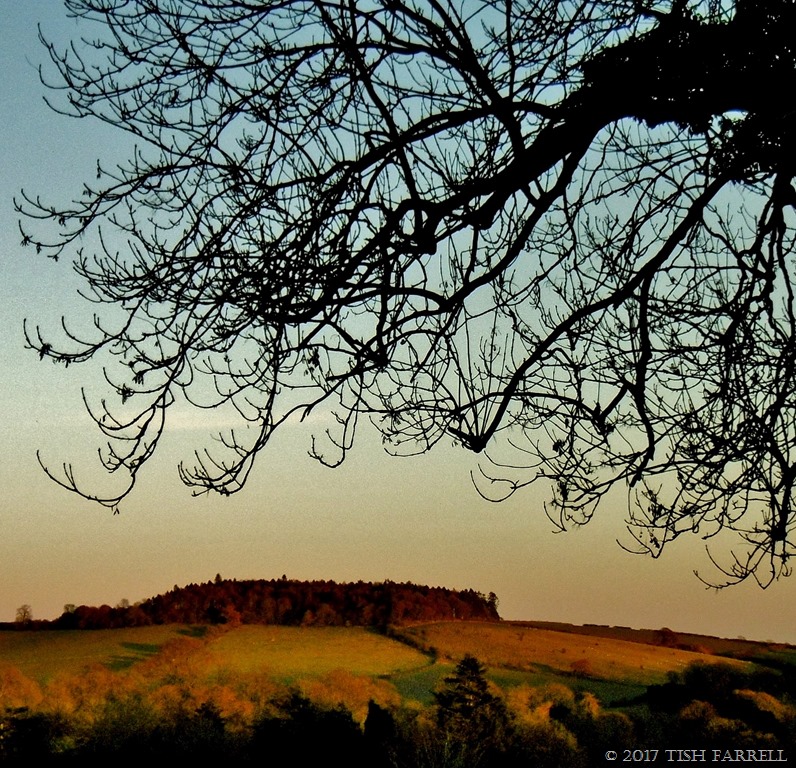
These late day views overlooking Wenlock were taken back in December. Many of the trees, especially the oaks, beeches and field maples, had hung on to their leaves, which in turn were gathering in, and reflecting the winter sun. Looking at these photos now makes me appreciate how well treed we are in our hollow beneath Wenlock Edge, this despite two thousand years of farming.

But then you simply cannot have too many. Our shamanic ancestors were wise in their conception of the world tree at the heart of all existence: trees are essential to our survival. Without them we would have a lot of problems breathing. According to science writer Luis Villazon at the BBC’s Science Focus each of us requires around 740 kilos of oxygen per year, which amounts to 7 or 8 trees’ worth.

But that’s not all. As well as providing us with the air we breathe, trees also stabilize, create and replenish soils. They support biodiversity. They affect the climate including rainfall patterns, and their destruction rapidly leads to desertification and soil erosion. They provide us with many useful products, and in the future we may come to rely on them as a source of essential and cheap medications to which everyone can have ready access.

In the light of all these arboreal gifts, going out and hugging a tree now seems an eminently sane thing to do. In fact I recommend it. At the very least, it will lift the spirits. The tree might like it too.

P1060044


Please visit Paula for her February Pick A Word and be inspired. There is a choice of five prompts, each of which she illustrates superbly: radiating, alimentary, frontal, arboreal, remote.

copyright 2017 Tish Farrell

Frosted Apples ~ Thursdays Special

IMG_3759

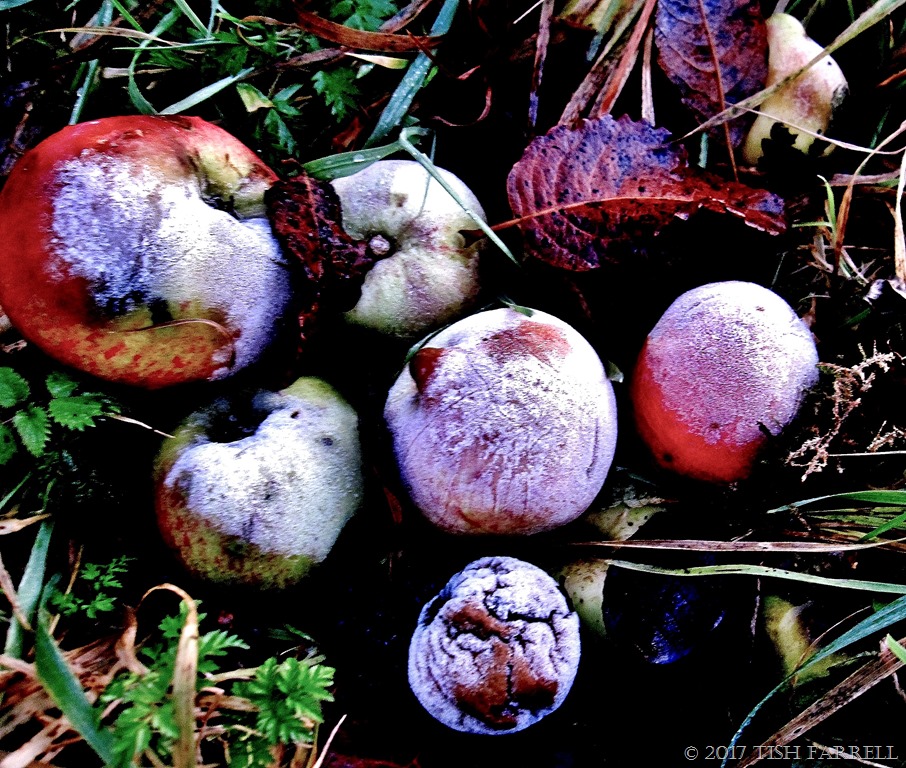
This first photo was taken in December before the blackbirds had begun to feast on the stash of windfall apples out in the field. My last post featured a shot of how the apples look now. Yesterday when I was passing by, there was a whole flock of blackbirds pecking away – at least four and twenty. I’ve never seen so many all once that weren’t in a pie or singing song of sixpence! They didn’t stay to have their photos taken.

IMG_3889


Paula’s prompt this week is seasonal. Please take a look at her inspiring photography:

Thursday’s Special: Wintry