The Carrion Crow

100_7827

A large black bird that feeds on the carcasses of beasts

Dr Samuel Johnson


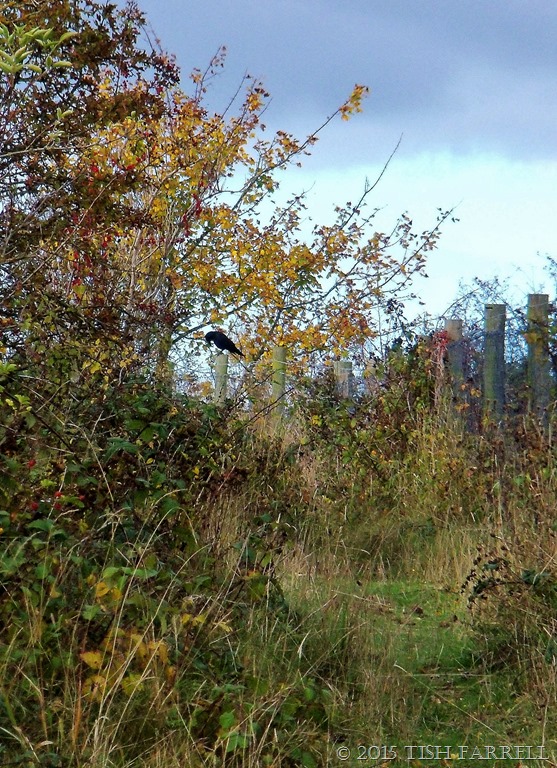
I didn’t think this shot would work. My little Kodak EasyShare was on maximum 5x zoom. But when I looked at the image on screen, I decided it was worth posting. It anyway illustrates an important fact about carrion crows. They are very hard to sneak up on, which is why I couldn’t get any closer and take a better shot.

The next second it was gone, flying off with its guttural ‘kraaar’ call.

Carrion crows are solitary birds unless, that is, they have a mate. This one does have a consort. The pair’s territory includes Windmill Hill, the Linden Field and Townsend Field behind our house; at least this is where I see them foraging together. They are usually a little way apart, rooting  through the grass. They are also notorious egg thieves and snatchers of poultry and pheasant poults, and so are much despised by country folk in general, and game keepers in particular.

When separated, the crows call one to the other. The single ‘kraaar’ that echoes through the trees, or across the fields. It is  a melancholy sound, but also a wake-up call. I find myself instantly responding, scanning the landscape, tuning in to its resonance. What’s going on out there?  Perhaps I have crows in my ancestry.

These birds are very clever. In nest-building season they perch in the tops of trees and watch where the other birds are building their nests.  They also, as their name and Dr Johnson suggests, eat dead animals. Well somebody has to clean up the environment.

You can tell them apart from rooks by their longer, sleeker profile. Rooks are altogether shaggier with a long, greyish bill and a face-patch. Rooks of course hang out in crowds, some of their rookeries being known to have several thousand nests.

But all in all, I like the crows best. They teach me to be watchful.

copyright 2015 Tish Farrell

A bench for circular conversations and well-rounded arguments?

100_7174

100_6327

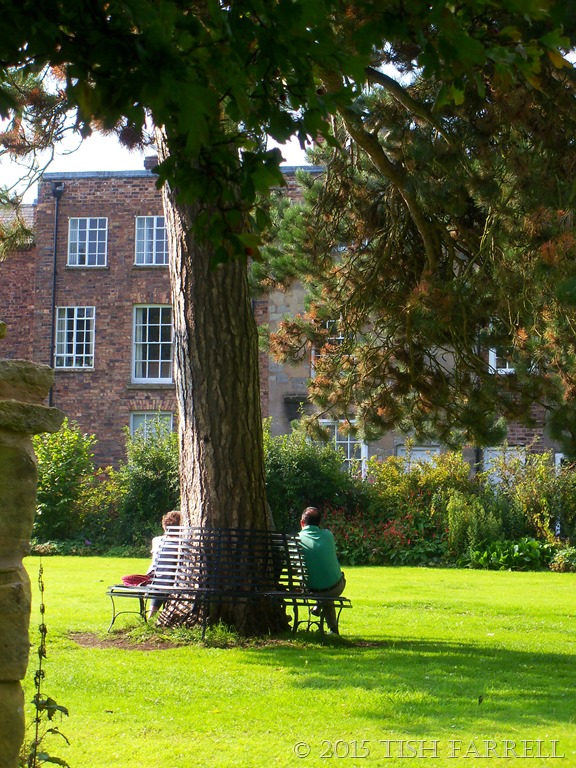
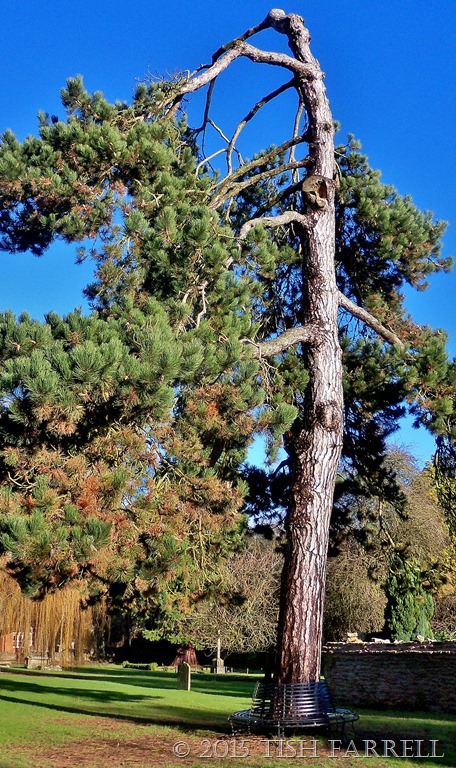
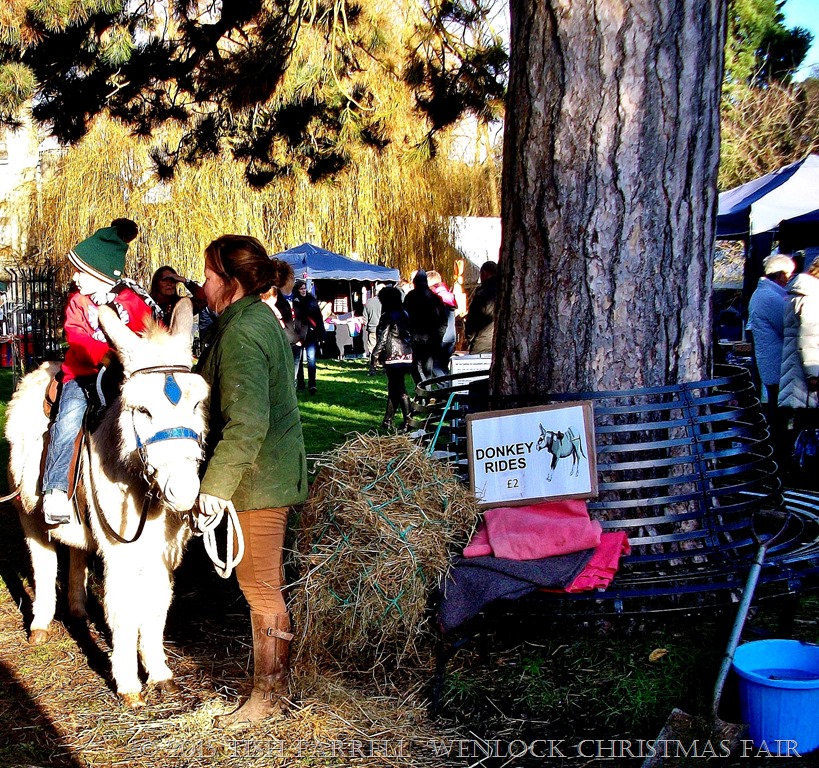
Here’s my bench for Jude’s Bench Series #38. This month she is asking us to find ones made of metal, and this is my favourite town seat. It surrounds a Wellingtonia on Much Wenlock’s Church Green and, apart from its circularity, it is perhaps not the most exciting of constructions. But it is in the perfect setting. And it has so many pleasing views and all through the year too. Things to watch out for include the annual Christmas Fayre and the Wenlock Poetry Festival…

101_4937

100_5154

100_6927

100_5982

101_4928

101_4948

IMG_1047

IMG_1042

Visitors to the annual Wenlock Poetry Festival adding their poems to the Church Green’s Poetree. The next festival is April 2016. Click on the link for more details.

September in my garden

100_7062

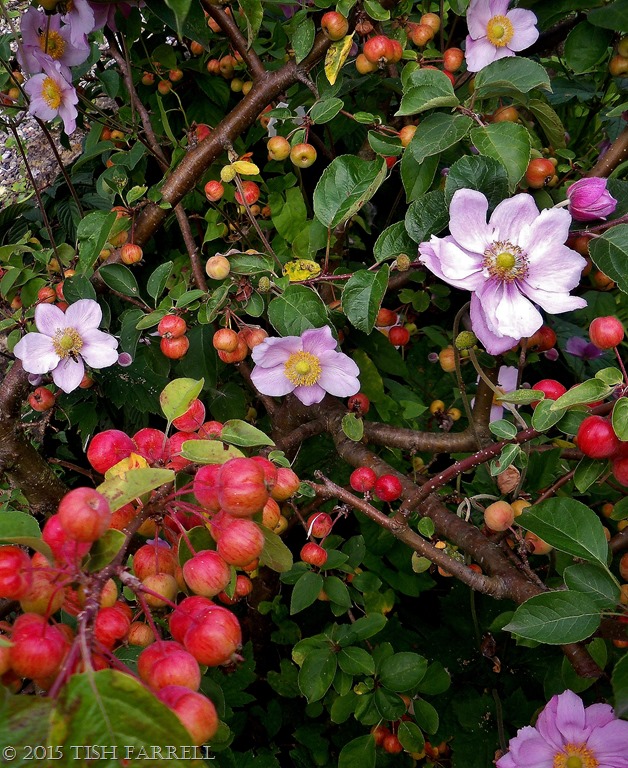
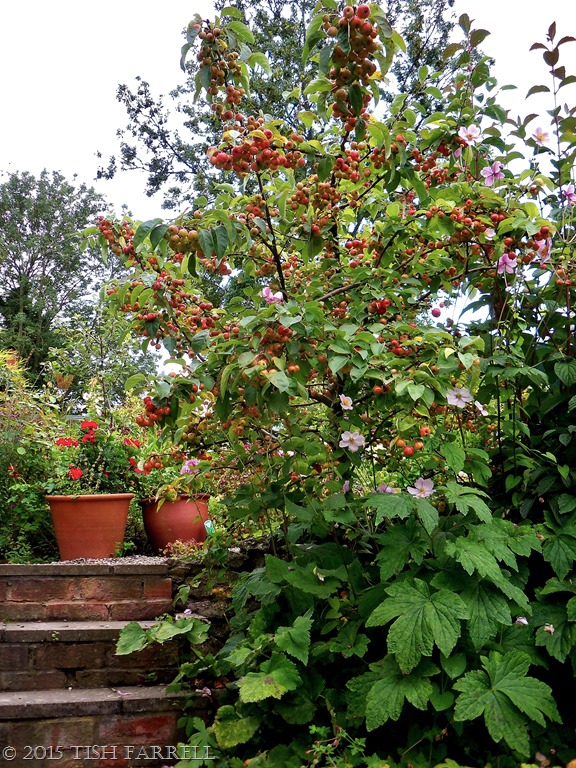
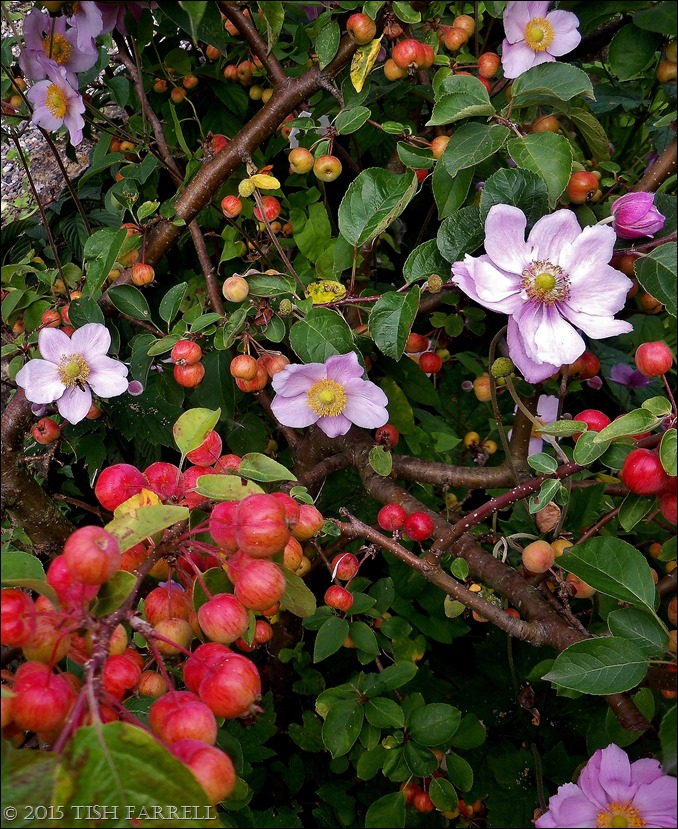
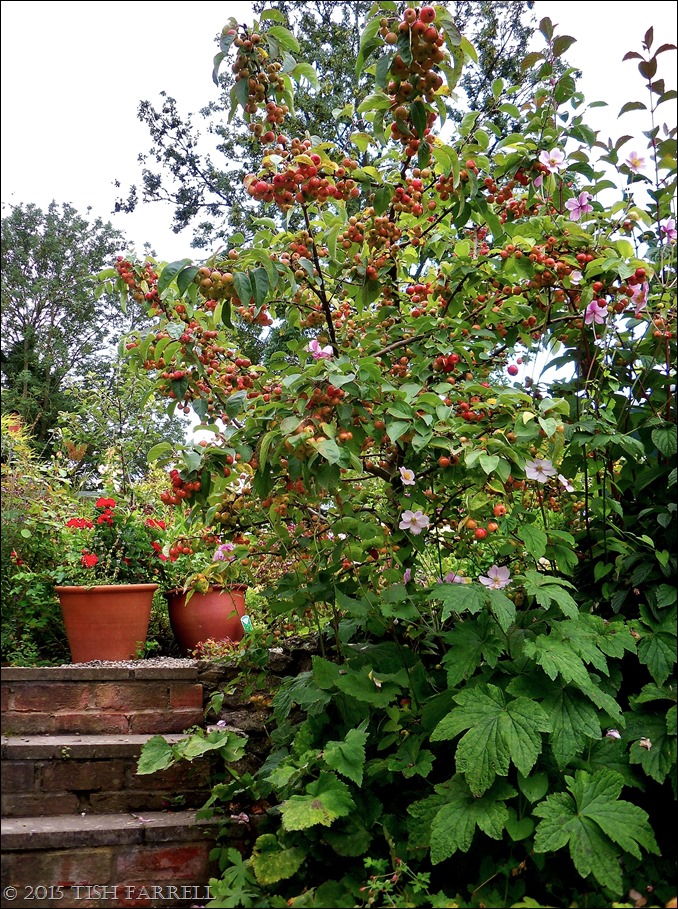
This year, for some reason, the Japanese anemones have decided to take on their close neighbour, the Japanese crab apple tree, in a ‘let’s see who can grow tallest’ contest.

Admittedly, the tree is a small one,  three metres at most, but some of  the anemones are already two metres tall.

This is the kind of gardening I love: where the plants come up with their own ideas. I did not plant the anemones directly under the tree. They seem to have moved in there by themselves, and now use the tree’s protecting arms as they grow ever taller.

Nor is this a colour scheme I would have thought of concocting – pale pinkish-purple, russet red and green. But somehow it’s very pleasing, and especially on the dull days we’ve been having lately.

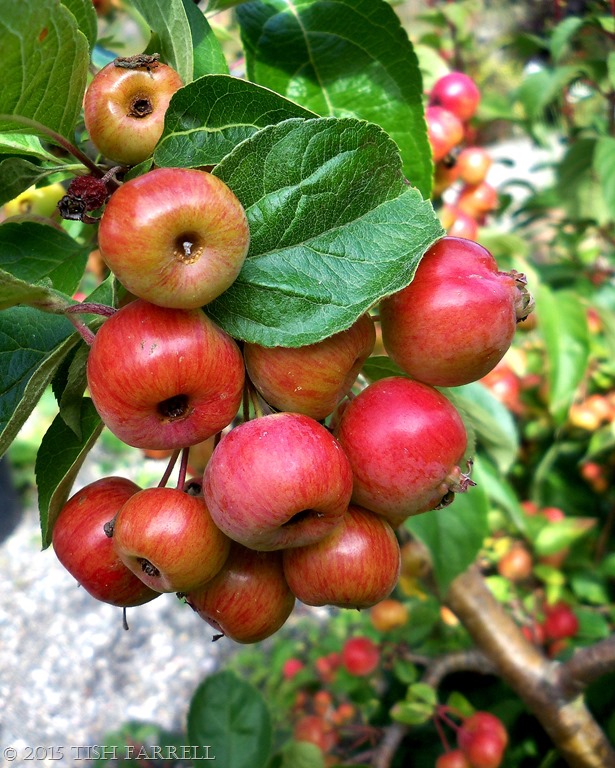
Every day, too,  I see the tiny crab apples turning a deeper shade of red: perfect Garden-of-Eden miniatures,  which reminds me of a comment made by Melanie at My Virtual Playground. One of the times I featured my crab apples she told me they were called pommes sauvages in French – wild apples – an altogether much prettier name. I agree. Although my ‘wild’ ones have been much inbred, and don’t have quite the same sense of abandon of the truly wild ones found in our field hedgerows.

100_7068

The tree is Malus Evereste by the way. It is glorious in spring too. (You’ve seen the picture). It’s growing in a tall bed which gives us an all-year good view from the kitchen French windows.
100_7104

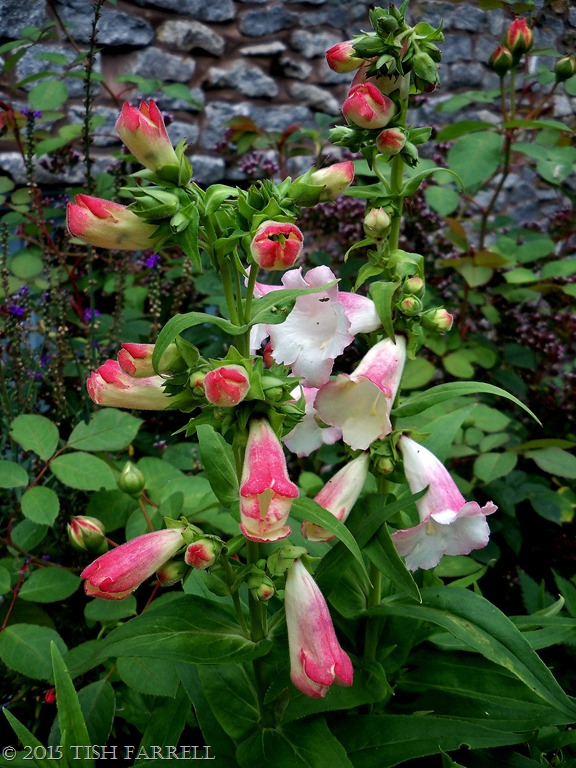
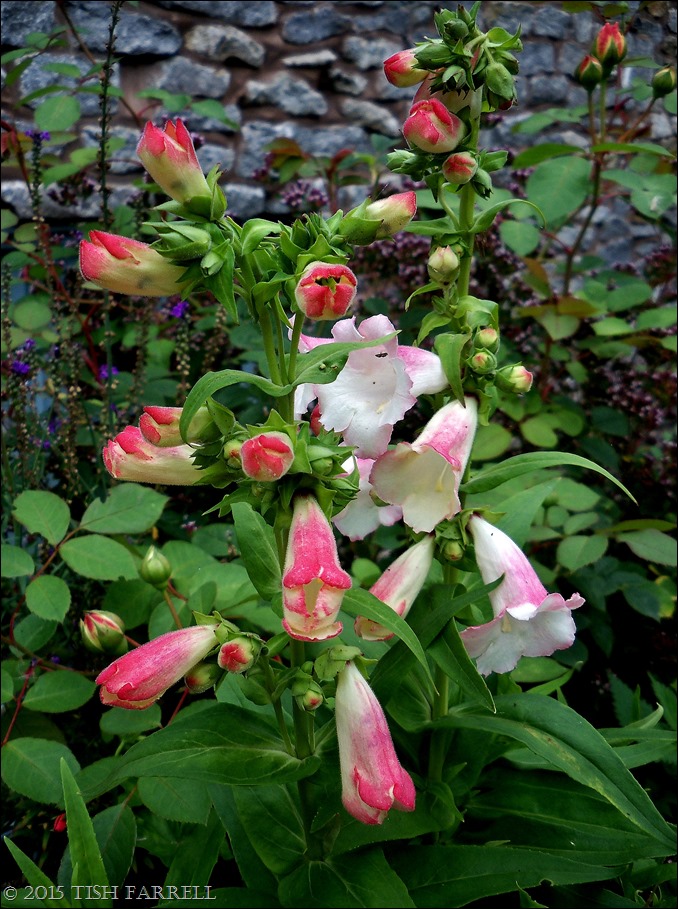
Elsewhere in the garden things are  looking a little dreary round the edges, but there is still some stalwart blooming going on. The red geraniums look bright in the garden pots despite the recent downpours, as does this lovely penstemon:
100_7127

I think it’s my favourite version of this most obliging plant. If you cut down the stems after flowering, in a few weeks time you get another showing, perhaps more vigorous than the first. This variety is called Apple Blossom, but it makes me think of raspberry ripple ice cream – a rather shivery thought on this gloomy day.

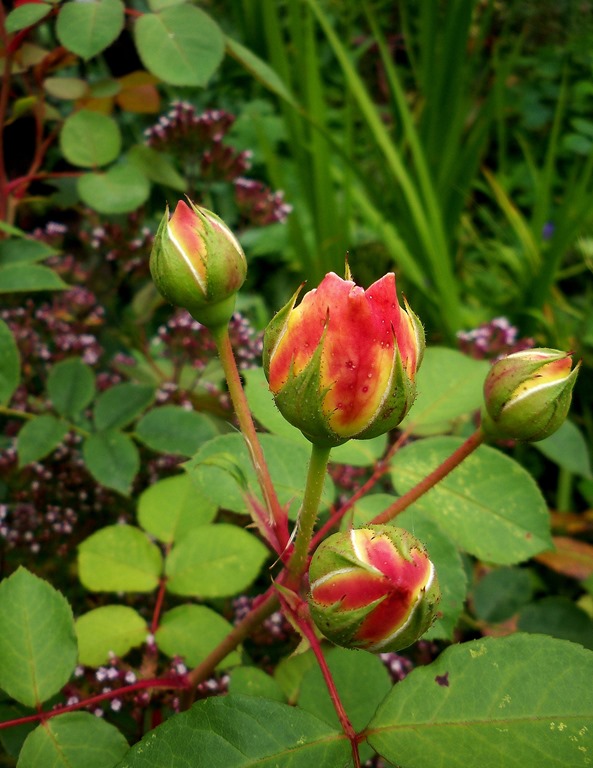
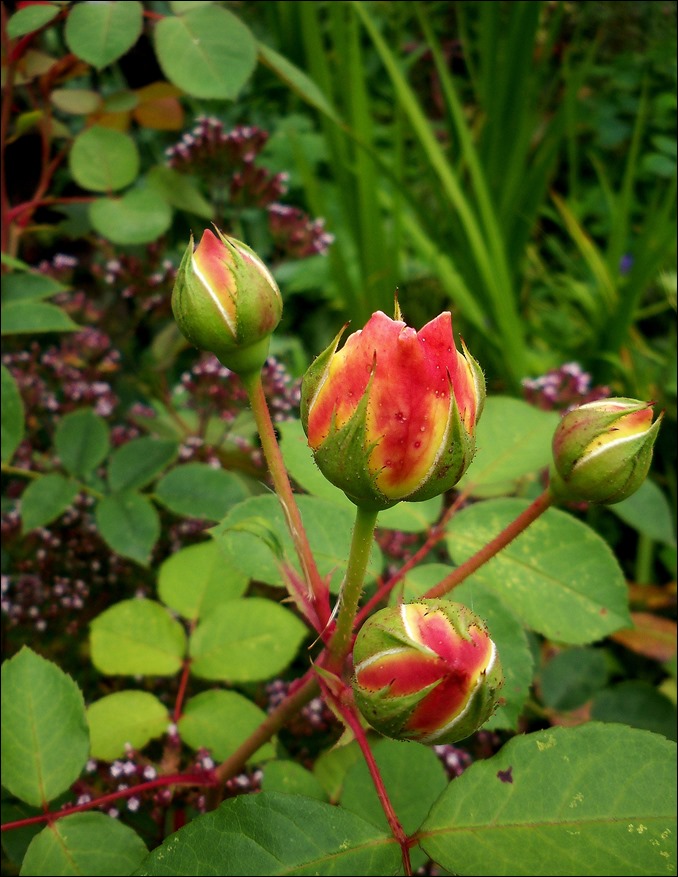
Growing in the bed just behind Apple Blossom, you can see Teasing Georgia. She’s in bud again too. This is such a lovely rose, and opens into dense whirls and whorls of pale gold.

I’m hoping she’ll open before the weather turns weirder than it already is. Forecasters are now promising us the coldest winter ever. But endlessly prone to optimism, I’m further hoping that this is the same order of forecast that in March promised us a barbecue summer and drought. (Hands up all of you in England who managed to fit in more than one barbecue between the wind and showers).
100_7130

Our garden is all over the place and on different levels. This is because circa 1830 the house was built into a steep bank between the field behind, and the road in front.  Later occupants then dug out a rear yard, and added a tall terrace bed, and behind it, a high retaining wall.

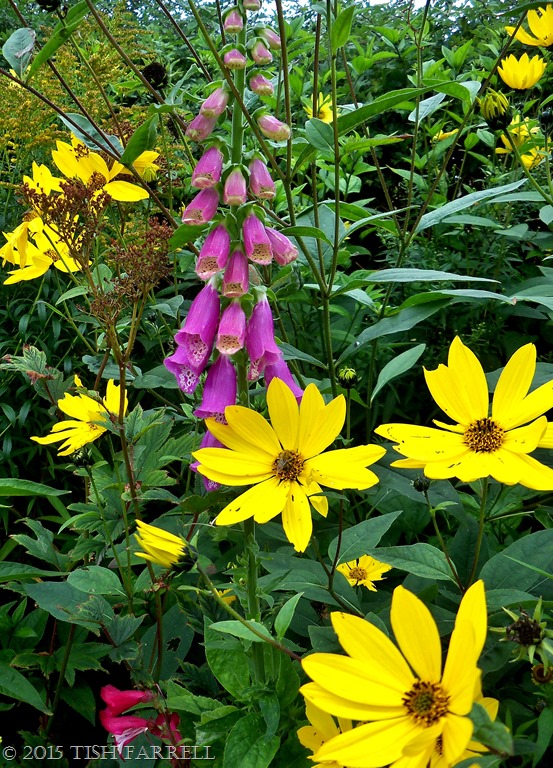
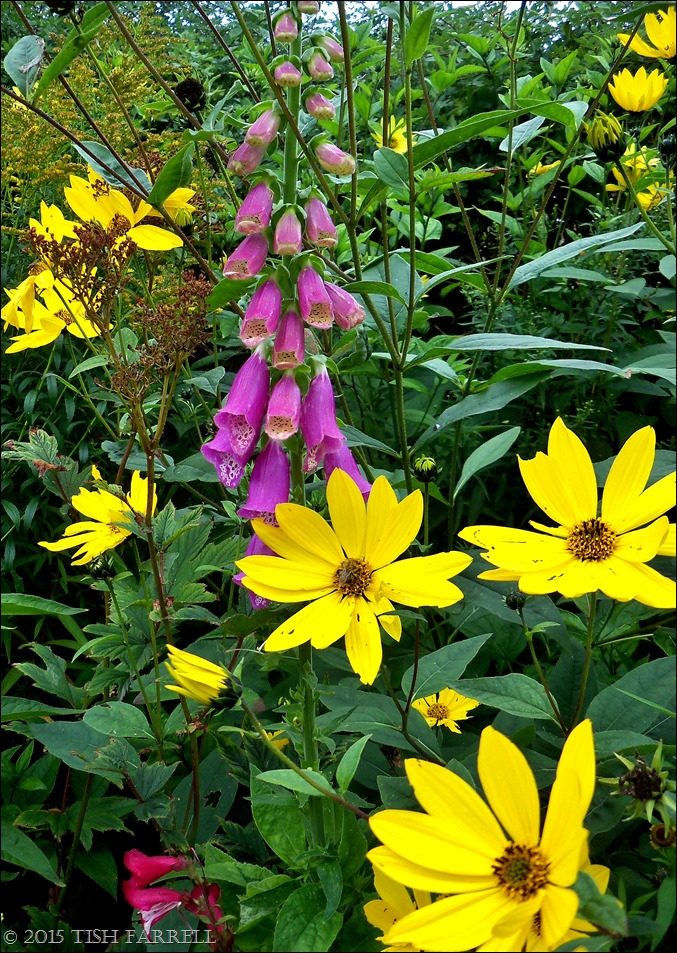
I have yet to get to grips with gardening in so many dimensions, which is why I rather depend on the garden to follow its own design. I also notice that it is devising its own timetable. For instance, what does this June-blooming foxglove think it is doing amongst the late summer rudbeckia?
100_7116

Just to the left of the foxglove is the dead head of meadowsweet. It has a pink flower, which also surprised me this year. This is something else the garden has come up with: creating (somehow) a very vigorous hybrid from the original wild, and cream-flowered meadowsweet that I originally planted.

I shall definitely encourage the new version, and plant out any seedlings. It is a statuesque creation, very tall, and softly scented. Also Meadowsweet, apart from being used to flavour beer and deserts, has its place in Welsh legend. In the Fourth Branch of the Mabinogi, the 11th century transcription of age-old tales, there is the dark story of Blodeuwedd (flower-face), a beautiful woman created by the magicians, Math and Gwydion from the flowers of oak, broom and meadowsweet. The tale does not end well. Blodeuwedd (pronounced: blod-EYE-weth) is also the name for owl, a fact, along with a reworking of the Mabinogion story, that was famously explored in teen fiction by Alan Garner in The Owl Service.

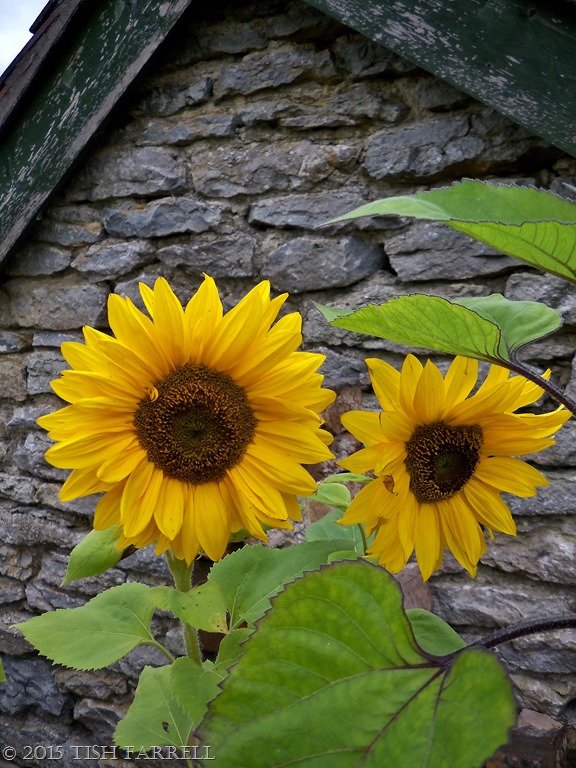
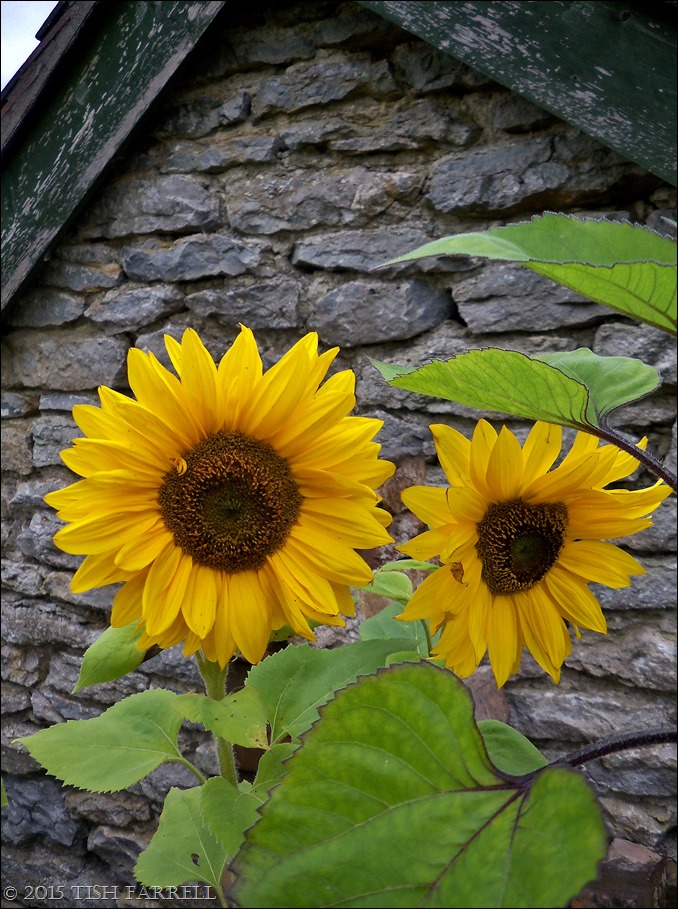
And thinking of  flower-faces, here are two growing in a pot by the old privies (now our two dysfunctional  garden sheds – i.e much head-banging on lintels, followed by standing in one’s own light so you can’t see what’s in there). These sunflowers have taken ages to come out, but it’s nice to see them at last, and especially now the real sun has gone away. It’s hard not to smile back at them, isn’t it?
100_7117

Happy Wednesday!

Inspired by (but with added fruit)  Cee’s Flower of the Day

 

In my garden after the rain

100_6854

Ladybirds seem to have been in short supply this year, so I was pleased to find this one nestling in my sage bush. Like bees, we absolutely need ladybirds. They are our natural pest controllers, preying on aphids and scale insects that can otherwise cause massive damage to food crops. As I was taking this photo, I was also delighted to scare off the harvestman spider that was creeping up on the ladybird. If you look in the bottom right corner above the copyright notice, you can just see the spider’s legs. Yikes!

*

100_6836

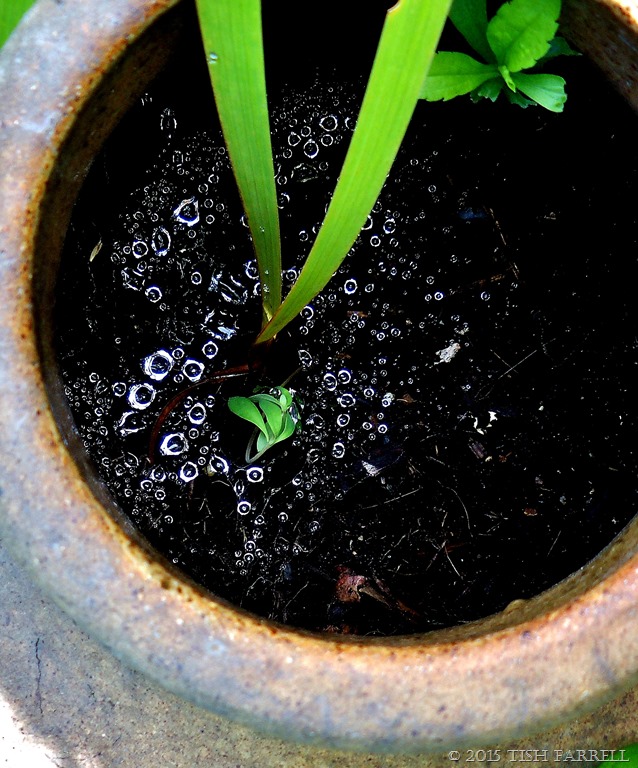
And here’s more evidence of spider activity: ambush exposed by raindrops in a garden pot.

*

100_6857

Now for one of my favourite plants in the garden. The flowers of this later flowering phlox remind me of jasmine and are half the size of the usual cottage garden varieties. It has just the faintest subtle scent, and doesn’t mind shade.

*

100_6863

Heuchera is another wonderful plant, and especially for ground cover. It comes in several hundred variations, and although understated on the floral front, it more than makes up for this with colour-bursting leaves that last all spring and summer. Also I see there’s spider lurking top left. I think it’s another harvestman. The bright green leaves amongst the heuchera are self-sown aquilegia seedlings. More granny’s bonnets to look forward to next year then. You never know what colour the flowers are going to be either – mauve, purple, pink, red, white. It’s one of the best things about plants that do their own gardening.

*

100_6832

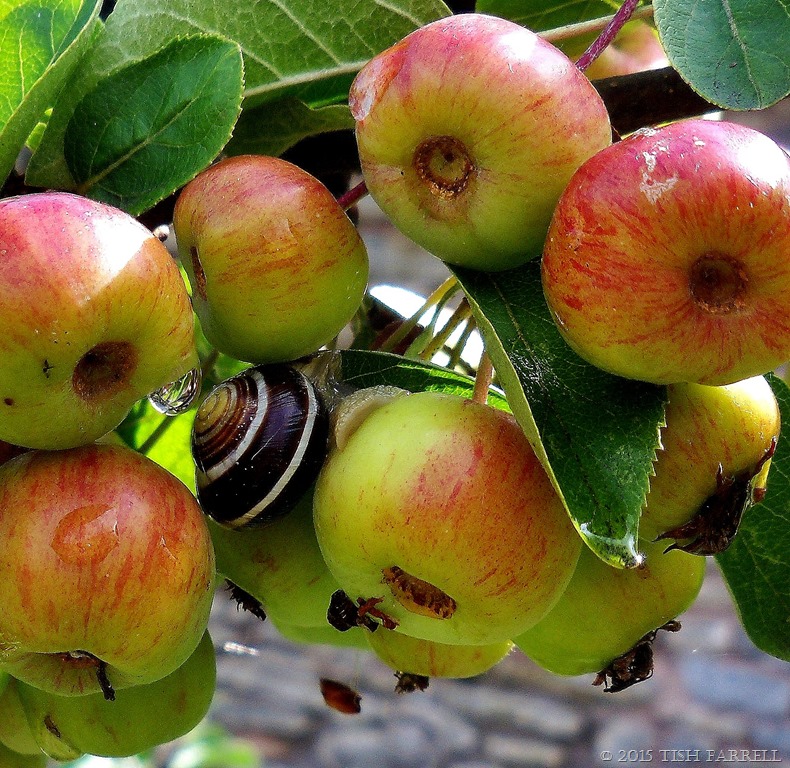
The tiny fruit on our Japanese crab apple are just beginning to take on their autumn colour. Soon they will be a deep russet red. I don’t think snails eat apples. At least I’m giving this one the benefit of the doubt; it’s probably just been sheltering from the rain.

*

100_5373

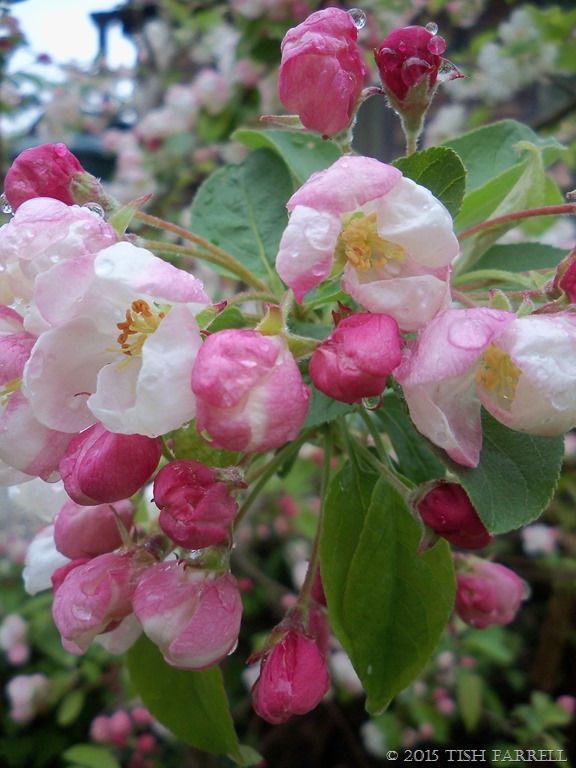
And now for a flashback-fastforward: the crab apple tree in April – spring past, spring to come…

Today Was a Good Day

Strawberry Vodka Revisited

100_6756

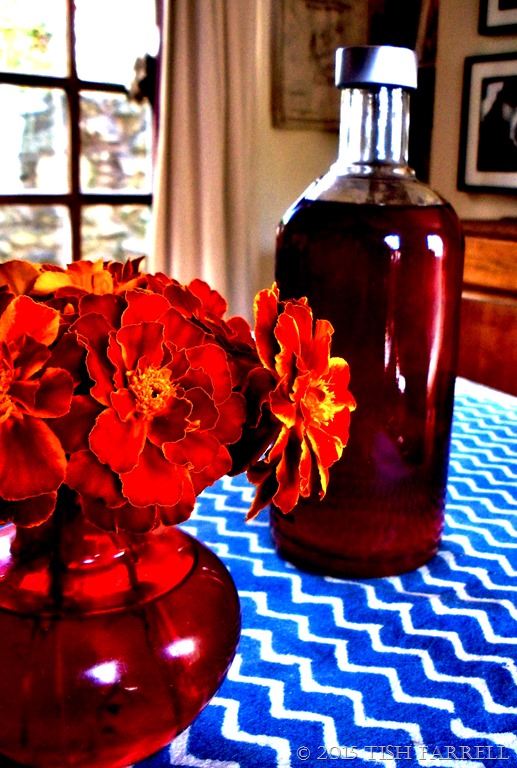
Some of you will remember that back in early July I posted Jane Grigson’s recipe for Strawberry Vodka. A good six weeks on, it has been duly shaken not stirred, kept in a dark, cool place, drained and strained, and here is the result – back in the vodka bottle (not the vase, although the liquid contents do look similar). Obviously during the decanting process we had to have a little sip or three. All I can say is this stuff is sure to add gleam, both inside and out. Also the only travel involved in procuring this shot  was the trek between allotment and kitchen (me), and off licence and kitchen (Graham), and then to the sofa for a lie down (me again).

Strawberry Vodka Recipe


P.S. And if you are groaning because you missed the strawberry season, then this recipe will surely work with late summer fruits: plums, damsons, black currants, autumn raspberries, although you might need to add a little more sugar.


For more shimmer and shine please visit Ailsa at Where’s My Backpack where this week her theme is ‘gleaming’.

Bouquet of Barbed Wire

100_6175

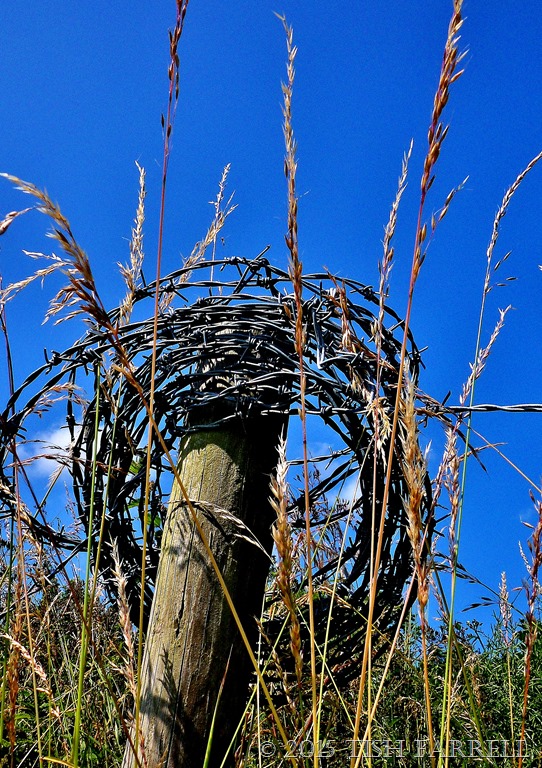
I keep going back to photograph this  well crowned fence post. It is on the boundary between the allotments and the bean field. I first caught sight of it back in the spring when I was out using my Lumix on ‘dramatic  monochrome’ setting. Then it was surrounded by drifts of Queen Ann’s Lace. Now the dying grasses have a nostalgic end-of-season look, and all before summer has hit its stride. But either way, spring or summer, colour or black and white, I find myself captivated by the image. I cannot say why.

copyright 2015 Tish Farrell


This post was inspired by Jithin at PhoTrablogger and his challenge: Mundane Monday #16 in which he urges to go out and find beauty in the ordinary things around us.

Storm Poppies

100_6118

Last Saturday I somehow lost track of five whole hours. There is so much to do up at the allotment – weeding, picking peas, strawberries and raspberries, digging up the new potatoes, tying up the tomatoes in the polytunnel, watering, feeding, turning the compost heap, sowing more peas, constructing pigeon defence systems, wandering about neighbours’ plots, taking a few snaps.

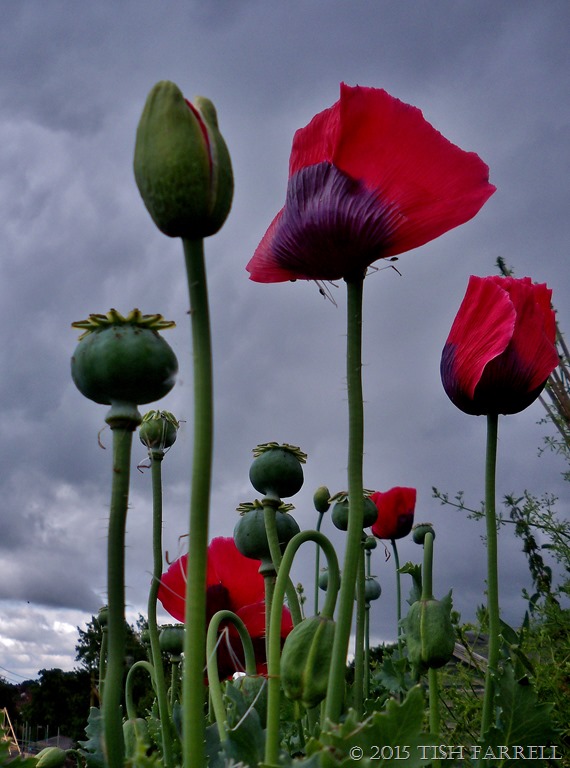
But one of the nice things about having the polytunnel is that when a storm strikes, I can potter around in there until the downpour  passes.  As you can see from the sky, we were in for a deluge, and I caught these poppies just as it was arriving. There was something malignant, I thought, about their stance. Something a little predatory about those seed capsules. Perhaps I’ve been spending too much time in the garden.

copyright 2015 Tish Farrell

Eclipsed in Much Wenlock on World Happiness Day and Taking a Solar Selfie
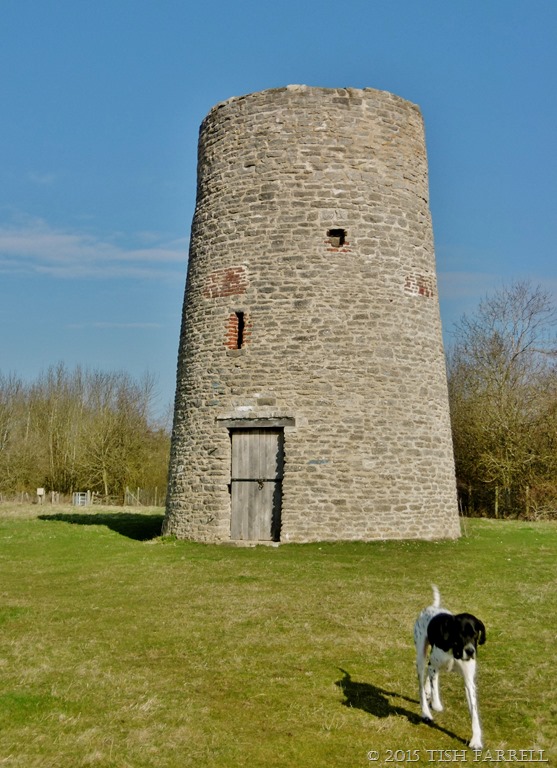
100_5065 Here I am on top of Windmill Hill, Much Wenlock’s landscape landmark, and this is the only way I could see the partial eclipse – with my back to it, and camera at the ready. We had such clear skies, and the sun was so bright that we remained bathed in sunshine throughout this cosmic event, although it did seem very cold. Lots of people who were out walking their dogs had gathered  at the windmill too, one lady monitoring the process through a pin-hole viewer. This is the scene before me as I take the photo over my shoulder: windmill and pointer. Had the eclipse actually happened? P1000779 P1000764 P1000788 Aftermath. I caught the sun in the trees as I walked home across the Linden Field. This, incidentally, was the place where the Much Wenlock Olympian games were, and are still held every year. They were devised in 1850 by the town’s physician and herbalist, Doctor William Penny Brookes, and went on to inspire the founding of the modern Olympic Movement. Windmill Hill provided the natural viewing platform where spectators sat to watch the events. See how this little town of ours spread its good hearted influence around the world. Wishing everyone joy on this, International Day of Happiness   #eclipse #International Day of Happiness

Life Imitating Art Imitating Life…?

P1000380 - Copy (2)

I snapped this the other morning with my little Lumix ‘point and shoot’. It’s the view from our bedroom window. The light was extraordinary, and when I looked at the image again it reminded me of  René Magritte’s The Golden Legend  –  also a view from a window, although with the interesting addition of flying baguettes. What do you think?

René Magritte

You can find out more about Magritte HERE. I like the way he challenges our ingrained perceptions.


Gallery

Guest Challenge: Knowing your place (colour photo challenge)

This week I’m also over at Paula’s blog, Lost in Translation. She kindly asked me to post a guest photo challenge ‘Knowing My Place’. It’s all about finding some cunning new angle that tells you something fresh about a place you think you know very well. To find out more read on, and to see Paula’s own amazing photo response go HERE:

Paula's avatarLost in Translation

tish

 Tish Farrell:

Music: Vaughan Williams On Wenlock Edge song cycle inspired by A E Housman’s A Shropshire Lad

January can be a lowering month – at least in the North. We are expected to burst, sparkling new, into the New Year, when we might feel more jaded than go-ahead. Hopefully this photo prompt will have you seeing things in a new light.
I’ve called it ‘Knowing My Place’, and you can interpret it in any way that strikes you. ‘My Place’ will be somewhere that you think you know inside out: your home town or street, the journey to work, your office, kitchen, garden or desk; your state of mind, or work in progress. Now search it with the camera’s eye. Sleuth out an angle that starts to tell you something new about it.
When I first thought of the prompt I was thinking about my home town, Much…

View original post 289 more words