Zebra ~ One On Top Of Another?

park 11v

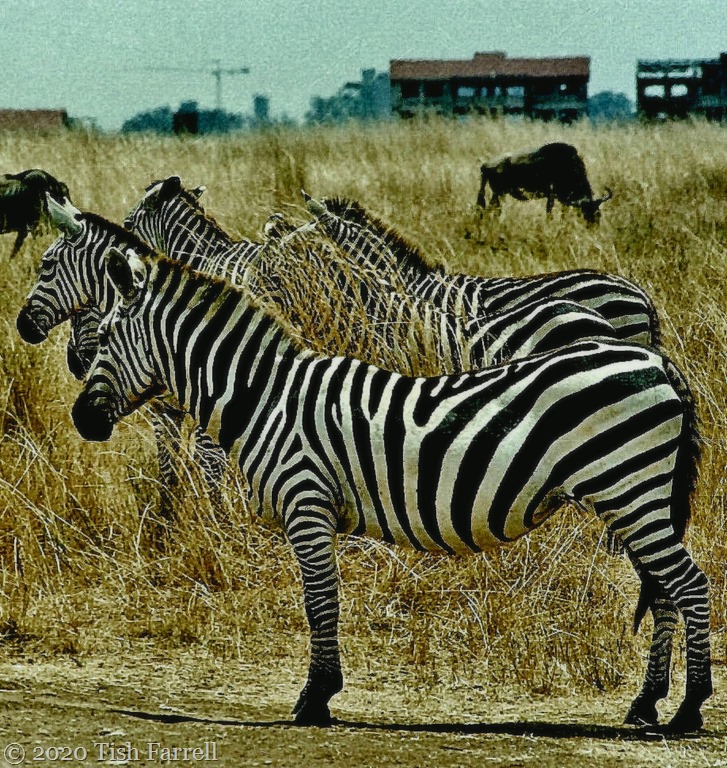
It’s rainy, grey and cold here in Wenlock this morning. But the weather people tell us this is only a temporary set-back and spring should resume tomorrow. In the meantime it seems a good excuse to return to the old Africa album for some equatorial warmth, although it has to be said East Africa can be extremely chilly too. (Not a lot of people know this).  Anyway here’s a snap taken on an unchilly day in Nairobi’s National Park,  city construction work and wildebeest in the background.

So: not so much a zebra crossing as a zebra pile-up.

Happy weekend one and all, however it comes.


Six Word Saturday

Square Tops #18

Top Heavy?

women and animal fodder

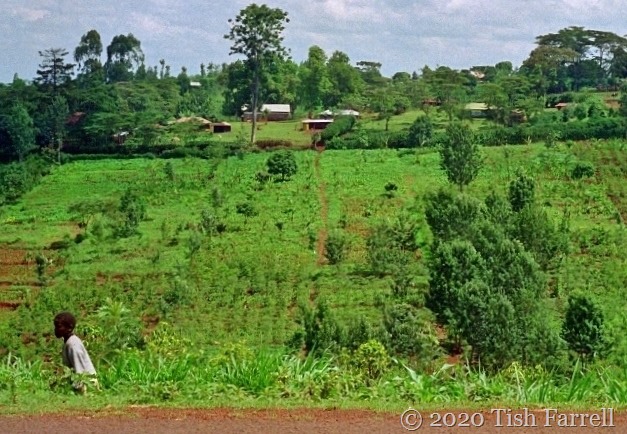
You will need to peer into these hazy photos to see the subject of this post: Kenya’s rural wives hauling fodder grass and maize stalks to feed their cows. And the reason for this particular form of haulage is down to the fact that smallholder farms are indeed small – a few acres or less, and there is little or no pasture for grazing. Farm stock is thus kept in pens, quite roomy ones, and their food brought to them.

While we were living in Kenya I remember reading some UN or similar study on the carrying capacity of African women. It basically said that the loads they habitually bore were physically impossible in relation to the bearing potential of their bodily framework. So here we have it: women working miracles.

It further makes me think of the biblical contention that the first woman was made from Adam’s rib. Clearly this is wrong. These farming women anyway are built from some naturally occurring version of high-tensile steel. In every sense they are the backbone of the nation. I even have some statistics for that too. A few years ago I was writing a school textbook on Kenya, which caused me to discover that 75% of Kenya’s daily food was produced by women smallholder farmers. I don’t expect this has changed much.

IMG_0011 Muranga

The rural wife’s back has a lot to bear then. Much time may be spent each day seeking out wood for the cooking fire. There is water to be got from the stream or water point; the field to hoe; animal food to be gathered; spare produce to take to market; the baby to take to the pharmacy. There may also be much bending over an open hearth preparing meals, the family wash to pound in a bucket, and a broom to be wielded while sweeping out the house and the compound.

‘It is our days’ career,’ a young Kikuyu woman once told me when we met on a farm path. I was ‘labouring’ with clipboard and tape measure, helping Graham with his smutted Napier grass survey. She was bent double under a pyramid of grass for her dairy cow. When I remarked on the huge load, she gave me a lop-sided grin from beneath a canopy of green stems. In perfect English she spoke those five small words – unending hard work endured with good grace.

Kikuyu farmstead 22 - Copy (2)

And of course things have been changing.  Many educated women have made it their cause to return to their rural communities as educators, legal activists, medical workers and agriculturalists to improve women’s lives and livelihoods. Equally, country women have their own ideas about what they need and how this should be achieved. Women’s development groups, local missions and churches all have their part to play in airing ideas and giving women the skills, confidence and, most important of all, access to financing that will allow them to start new enterprises and so gain independence from traditional constraints. And one thing’s for sure: in the matter of ‘backbone’ the farm wives have been well and truly tested.

Square Tops #11

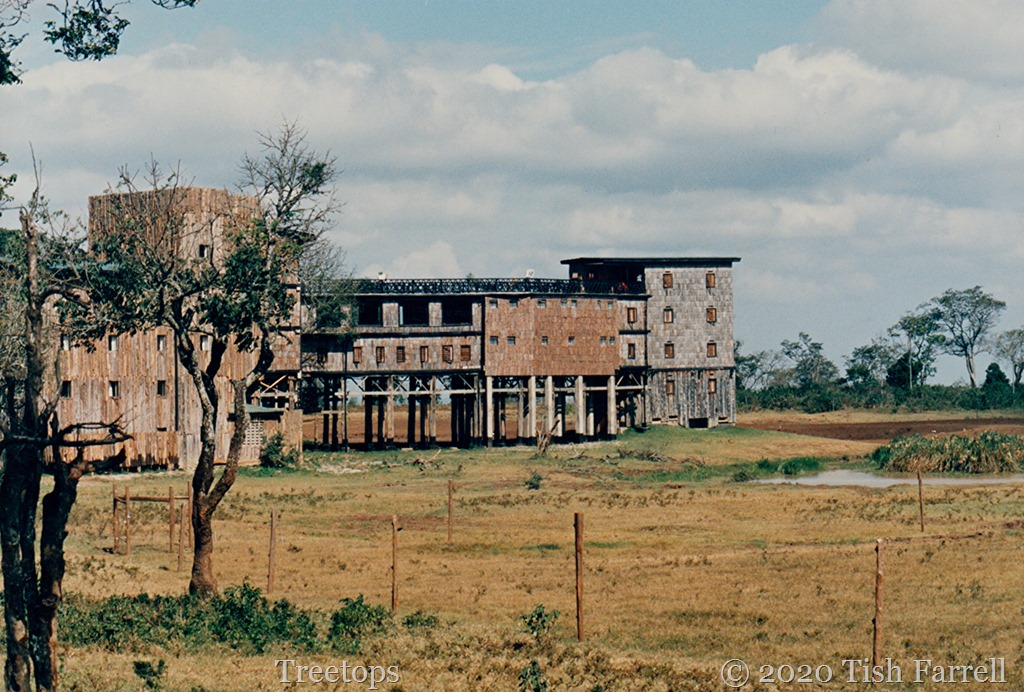
Kenya’s Treetops Hotel

Treetopssq

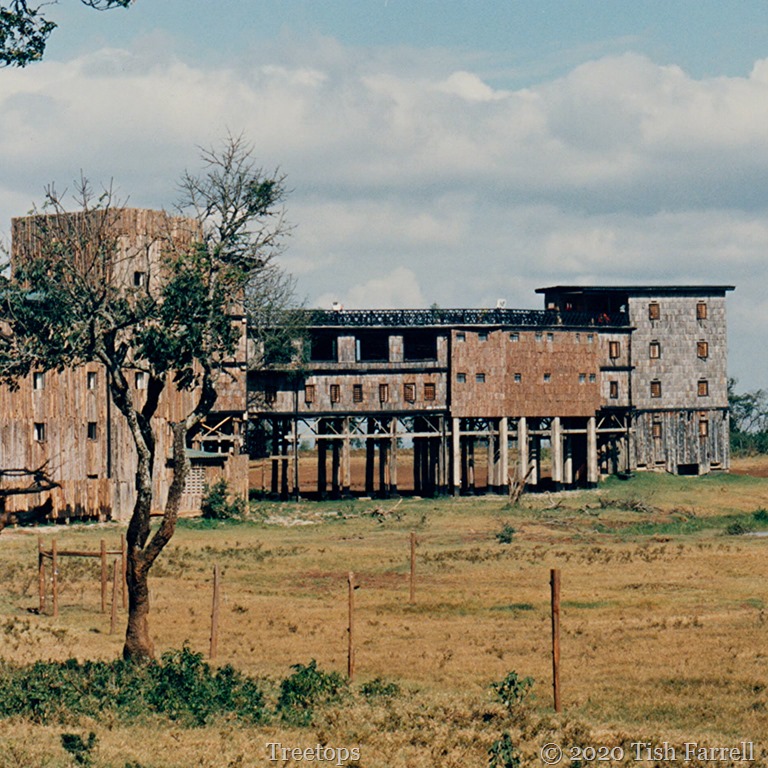
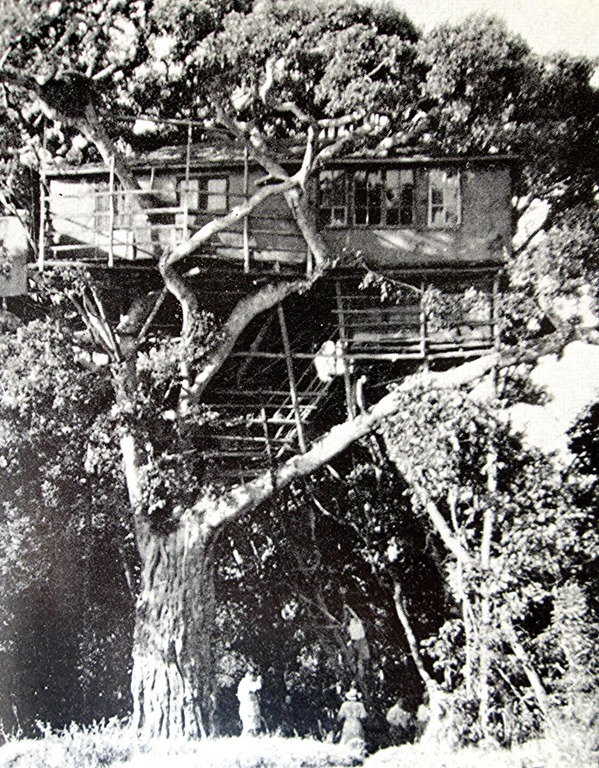
Mention of Treetops in Kenya’s Aberdare National Park inevitably brings up residue of British colonialism, and in particular the extraordinary connection with the UK’s present monarch. The original Treetops was little more than a 1930s bungalow-affair, a rickety contrivance lodged in the branches of an ancient mugumo tree, a species of wild fig which happened to be very sacred to the local Kikuyu people.  Princess Elizabeth spent the night there in February 1952 and, as the well trammelled narrative goes: she went up the tree as a princess and came down a queen, although it was only later in the day that she was informed that her father, George VI had died.

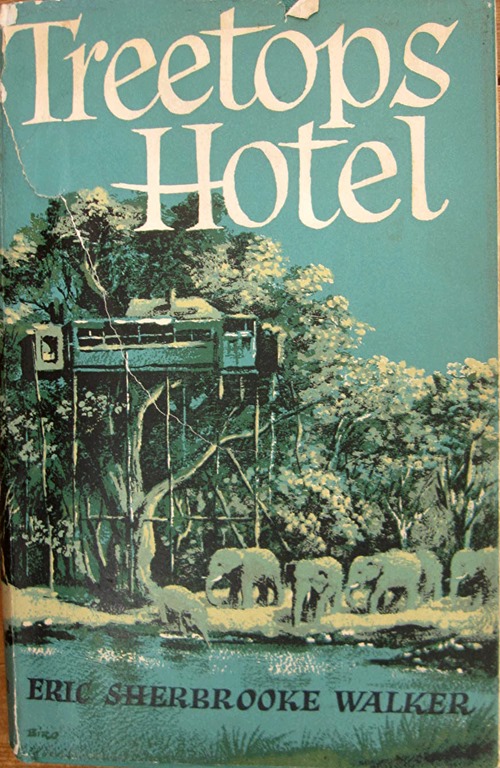
Here’s the original Treetops where the royal party stayed, taken from the book by its builder, Eric Sherbrooke Walker, Treetops Hotel.

IMG_8871

IMG_8873

The Sherbrooke Walkers, like most of the early settlers in British East Africa, were of the officer-gentry-aristocracy class. Eric Sherbrooke Walker had served in the Royal Flying Corps during World War 1, followed by a stint in military intelligence with the White Armies in Russia during the Bolshevik uprising wherein he earned the Military Cross and other honours. After the war, during America’s prohibition era, he took up rum running off the West Indies and made enough money to marry Lady Bettie, daughter of the Earl of Denbigh. They then set off on an adventurous trip across East Africa, which soon left them short of money and in turn led to the notion of setting up their own country house hotel.

011

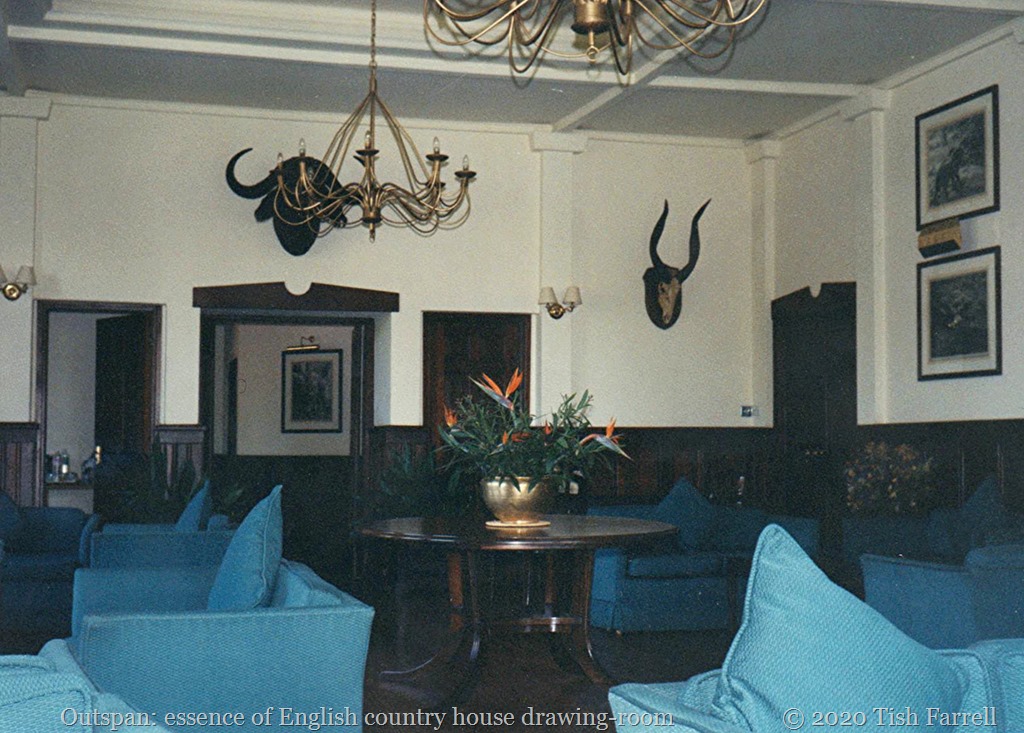
In 1926 they pitched up in Nyeri in the forested highlands of Kenya’s Central Province, bought 70 acres from the colonial government, and set about creating the genteel Outspan Hotel. By the end of 1927 they had built ten rooms and opened for business for the New Year of 1928.  The big attraction to their settler guests, who though well-heeled usually had very primitive facilities on their African farms, were rooms that came with private bathrooms and running water. So began a successful enterprise of country inn-keeping in the English manner but with views of snow-capped Mount Kenya and the Aberdare range thrown in.

The 1920s was the era of the grand East African shooting safaris when the likes of Bror Blixen, Denys Finch Hatton and John Hunter acted as Great White Hunters for extravagant entourages of European (especially British) royalty and Indian maharajas. But by the 1930s, many safari goers had begun to turn their attention from trophy hunting to big game photography – an activity greatly promoted by American adventurers and film makers, Martin and Osa Johnson.

And it was this new craze that prompted the Sherbrooke Walkers to create Treetops. Small parties of guests could spend the night in the top of the mugumo tree and watch elephants, rhino and forest hogs lit up by a spotlight, do more early morning game watching over tea and biscuits before being transported back to the Outspan for hot baths and breakfast. As a unique combination of eccentric British-gentry-rustic with elephants thrown in it could not fail. As more and more visitors wanted to stay there, so rooms were added, and more props put in to hold up the tree branches.

And then in 1954 the original Treetops was burned down. This was during the so called Mau Mau uprising when it apparently became a target for the Land and Freedom Army. Later the place was rebuilt and added to over the years. The header version dates from September 1996, the fourth iteration under the ownership of Block Hotels. When we went I had been spending previous week alone at the Outspan, which still served as ‘base camp’ for Treetops,  while Graham was at a seminar at the nearby Aberdares Country Club. He then joined me for the trip to Treetops.

010

In a letter to my aunt written shortly afterwards I told her that were among a party of 99 – (Israelis, Koreans, an international museums outing, and 40 retired Americans from the Friendship Club) all of us being ferried into the Aberdare National Park in a bus, and then deposited in the bush so we could walk the last few hundred yards to Treetops – ‘a rustic fortress between two waterholes’ was how I described it back then. Before we set off Dishon, the ranger who met us pointed out the well timbered refuges along the path, to be resorted to in case of charging buffalo or elephant. He was also carrying a rifle.

Treetops

IMG

But there were no alarming encounters. In fact we saw no sign of any big game while were there, only the red billed hornbill that sat on the tree outside the dining room, baboons, buck and warthogs.

treetops_0001cr

The rooms were tiny, more like cubby holes, and the building was very noisy. Many of the elderly women guests were up all night. When I could not sleep around 2 a.m. I got up and found them, of all things, putting on their make-up in the ladies’ communal washroom. When the  actual ‘wake up’ call came at 6.30 a.m. the place was surrounded by an Aberdares fog. And so it seemed that whatever romance there might once had been was quite lost. The best bit was driving out of the park through the Kikuyu smallholdings. Out of the stands of maize came files of school children in coral coloured sweaters and jade green dresses and shorts, trotting off early to the local primary school.

Treetops_0001 Nyeri farms

I gather from looking at the current website that Treetops is under new management and the number of rooms much reduced in order to provide en suite bathrooms. It all looks very luxurious, but somehow also misses the point, the batty English tree-house charm of the original. Though whether that was ever at all an appropriate installation in the African highlands is another question.


Square Tops #9

Adopting The Horizontal In The African Bush

horizontal Scan-130519-0002

Ostrich and the Ngong Hills

*

Over at Travel Words Jude is running a photo challenge to help us develop our compositional skills. April’s topic is ‘lines’ and each week Jude asks us to consider them in particular ways. This week it is horizontal lines. Here’s what she says:

“This week’s assignment – Look for horizontal lines. In a photograph, horizontal lines in particular need to be completely level across the frame, because your viewer’s eye will perceive even a slightly skewed horizontal line as uncomfortable to look at or just incorrect.”

For obvious reasons I haven’t been out and about finding likely vistas, but as I’ve been rummaging through my old Kenya photos, I’ve noticed that things horizontal feature quite a lot. I don’t actually recall if I was registering this at the time of taking the photos, since apart from the Elmenteita view, the others were happenstance shots.  Anyway, I thought I’d post them for interest’s sake.

Scan-130603-0004

Impala and rooftops of park rangers’ quarters, Nairobi National Park

*

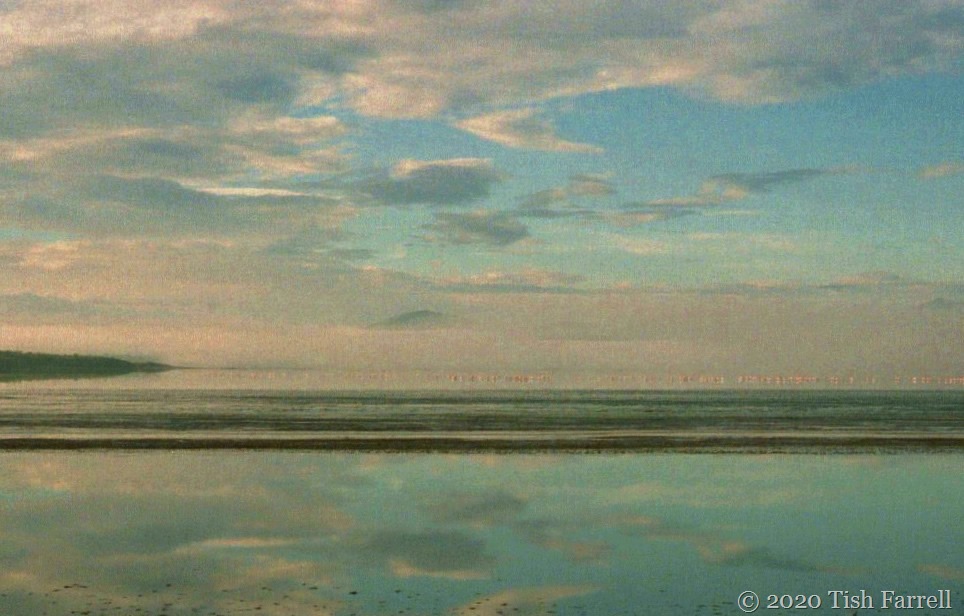
Lake Elmenteita at dawn

Flamingos at dawn on Lake Elmenteita

*

Horizontal Scan-130716-0011 (3)

Hippos going with the flow in Lake Naivasha

*

Travel Words: Photo Challenge April Lines #1  Please visit Jude to see her examples of horizontal framing. Lots of pointers and ideas.

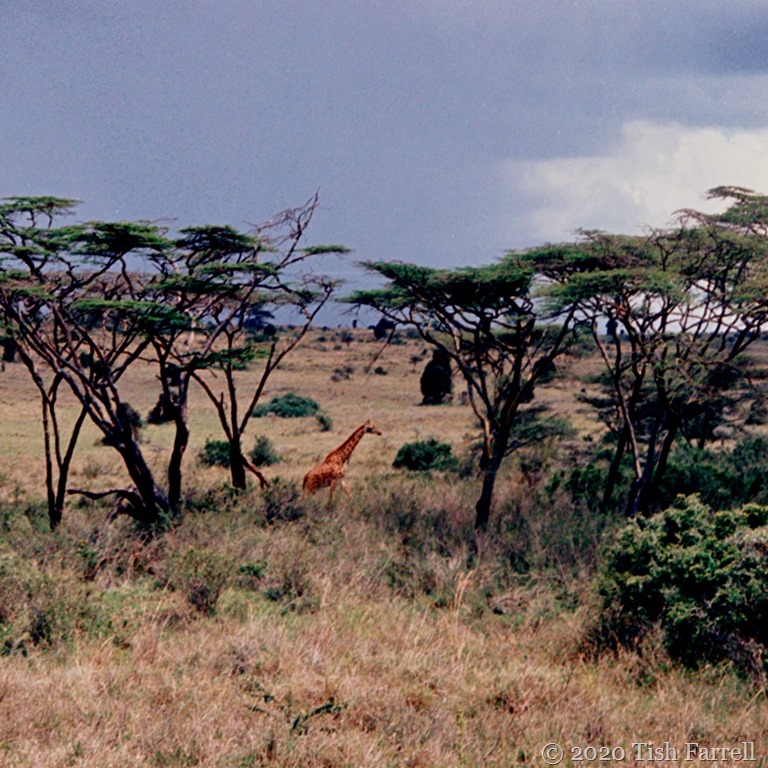
Flat Top Thorns And A Giraffe

Kenya Nairobi Park_0002

The Flat Top Acacia or umbrella thorn is characteristic of Kenya’s wooded grasslands, especially in gullies. It tolerates drought and degraded landscapes and in traditional communities has long served in all manner of useful ways. It provides wood for fuel and charcoal making, and poles for house-building; the frondy branches make good goat fodder; the tiny puffball flowers feed bees; the bark produces edible gum; the roots are nitrogen-fixing; and the tree has medicinal qualities. My Kenyan tree book however tells me that, though quick growing and wonderfully shade providing, it is not a good idea to plant this acacia around your homestead since its branches tend to fall off.

This photo was taken in Nairobi National Park on the edge of the city centre.

Square Tops #7

Longonot ~ This Volcano Has Well And Truly Blown Its Top

IMG_0026sq

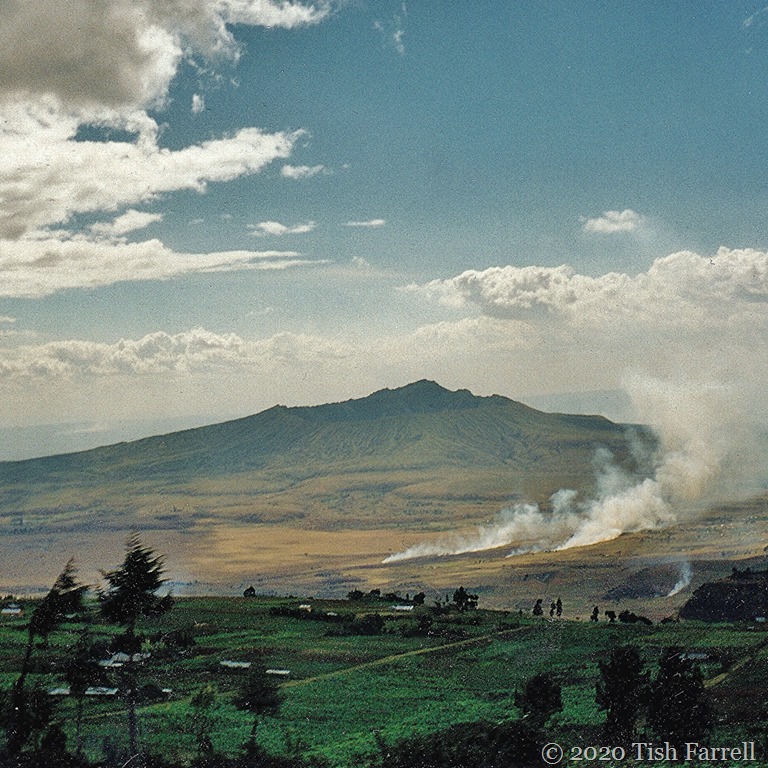
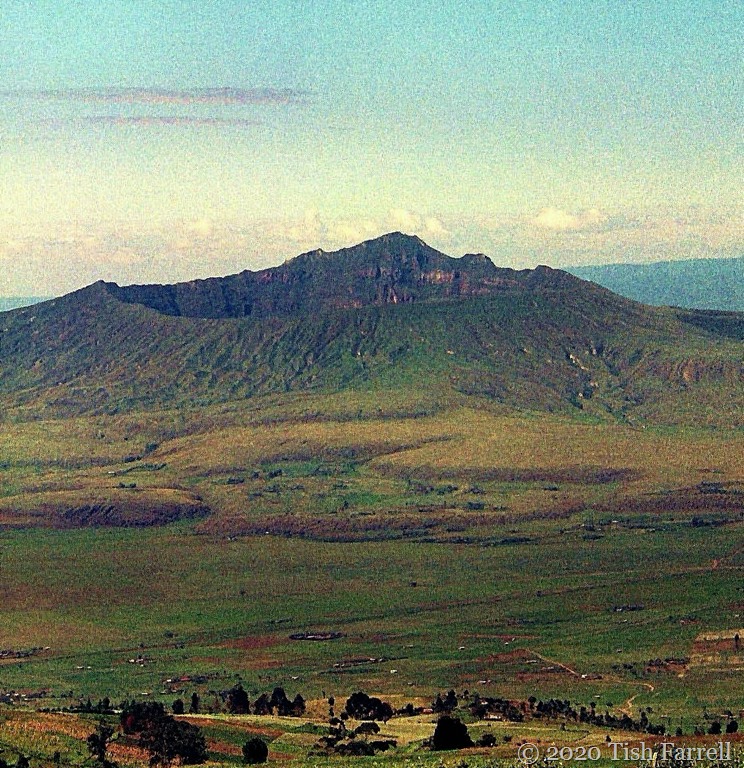
This is Mount Longonot, one of several old volcanoes in Kenya’s Great Rift Valley.  The caldera was formed in a series of huge explosions around 20,000 years ago. Can you imagine it? Any humans standing on the Great Rift escarpment, where I was standing to take this photo, would have had an absolutely astonishing view. And indeed, there would have been people around then – East Africa’s indigenous hunter-gatherers, small statured, fine-boned people whose presence long preceded the 16-17th century arrival of Bantu farmers and the Nilotic cattle herders.

The volcano is officially ‘extinct’ though Maasai traditions make report of fresh lava sometime around the 1860s.There are also active steam vents which Kenya is hoping to exploit to produce clean geothermal energy. You can see more about this HERE with some excellent photos of Longonot. (The smoke on my photo is most likely from stubble burning).

As I mentioned in an recent post about the Maasai Mara, until the arrival of British colonial settlers in the early 20th century, the entire Rift Valley was Maasai grazing territory and the landmarks thus have Maasai names. Longonot derives from oloonong’ot meaning ‘steep ridges’ in Ki-Maa. A fitting description.

But to my mind (and in true Conan Doyle The Lost World style) the most magical thing about Longonot is the hidden forest on the crater floor where zebra, giraffe, buffalo, hartebeest, lion and gazelle may roam. There is a path to the top, but it is quite a hike, nearly 2 miles to reach the rim and a good 4 miles around it. Back in our day you also needed to enlist the services of a Kenya Wildlife Service ranger to go with you, which didn’t always work out. It’s a big regret that we never did do this climb.

Here’s another view of it  showing the oloonong’ot .

Scan-130716-0008 (9)

Scan-130716-0008 (3)cr

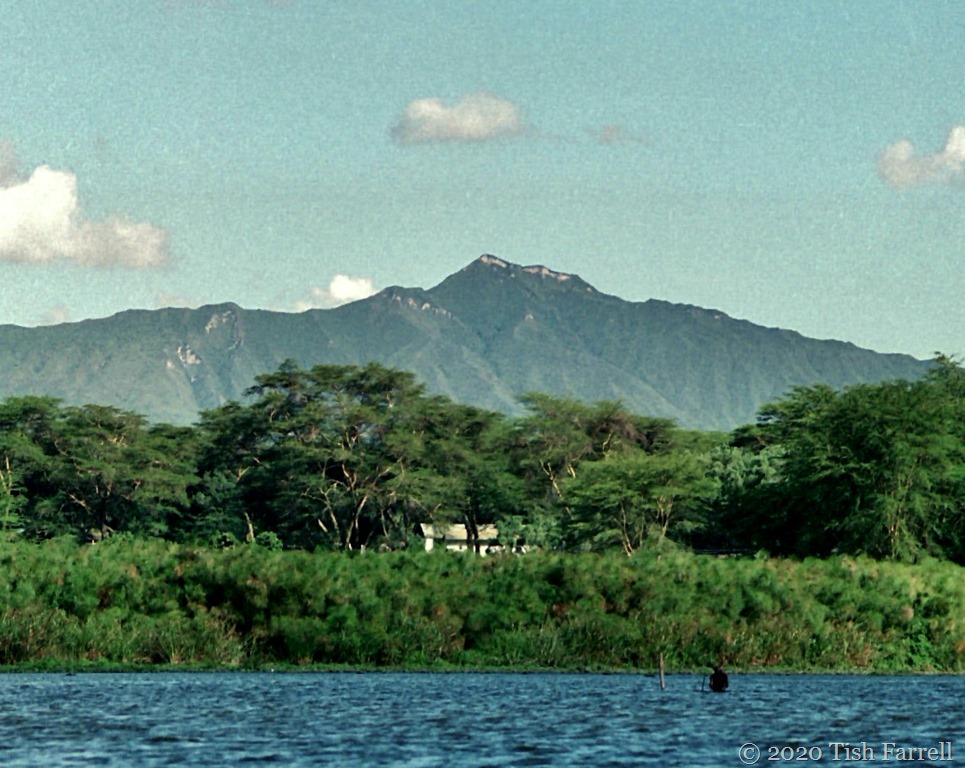
And the highest point of the cone seen from Lake Naivasha (2,776 metres; 9,108 ft): a seine fisherman and papyrus beds (where hippos may lurk) in the foreground.

Square Tops #6

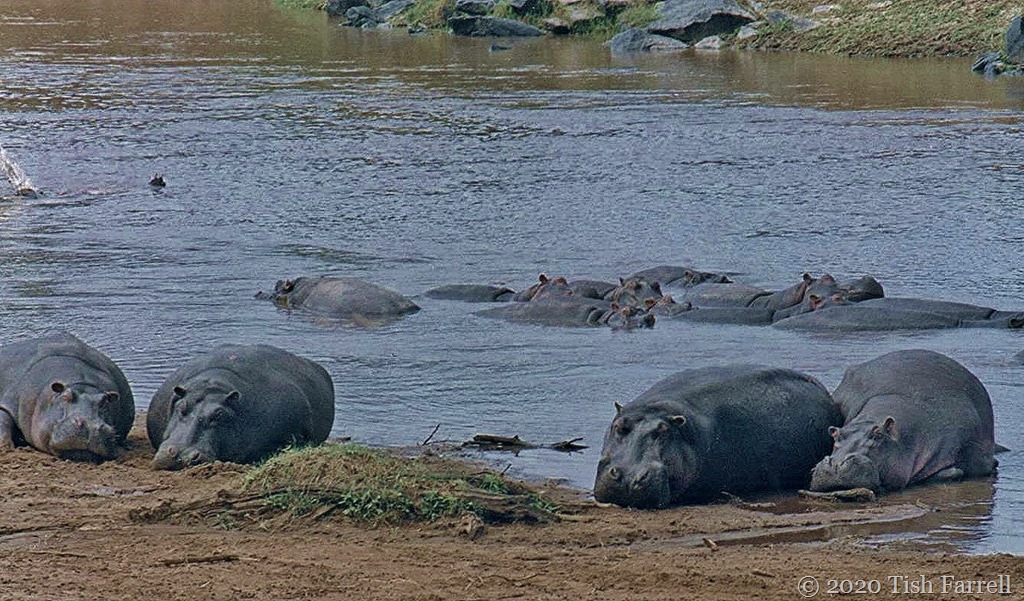
Mara Hippos ~ Sleeping Like Tops

032square

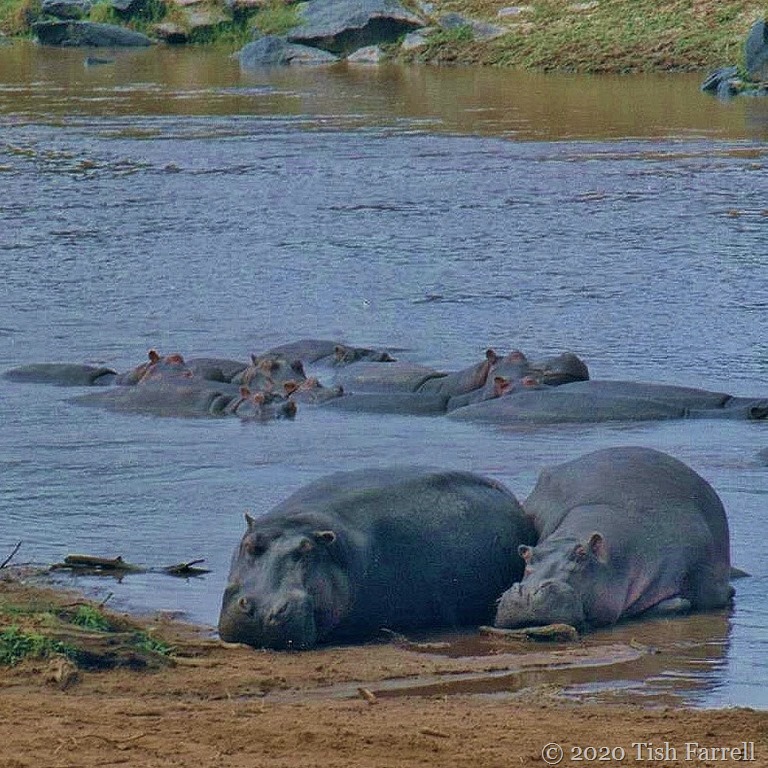
It is fairly uncommon to catch hippos like this – snoozing ashore, though they may do it on sand banks in rivers. Their usual routine is to spend the night in the bush, roving far and wide and chomping masses of grass. Then at first light they start returning to the river so they can be well submerged in their watery territory before sun up. Their hides are  2 inches (5cm) thick, and although a red oily secretion gives some protection, they are very susceptible to over-heating and drying out. It can thus be fatal to find yourself between a river and a hippo intent on swift immersion.

We had our own alarming charging hippo encounter on the Luangwa River when we were living in Zambia. That story is HERE.

These particular sleeping hippos were caught on an early morning game drive, around 7 a.m. We drove right by them along a secluded stretch of the Mara River flood plain. Not an eye’s blink from any of them.

*

032

And the origins of the saying: to sleep like a top?

My Dictionary of Phrase and Fable tells me it relates to the children’s toy, the traditional wooden spinning top. Once well whipped into action, there is a point when the top seems perfectly still and silent.

And here’s an early 17th century usage:

“O for a pricke now like a nightingale, to put my breast against. I shall sleep like a top else.”

The Two Noble Kinsmen a play attributed to a John Fletcher – William Shakespeare collaboration.


Square Tops #5

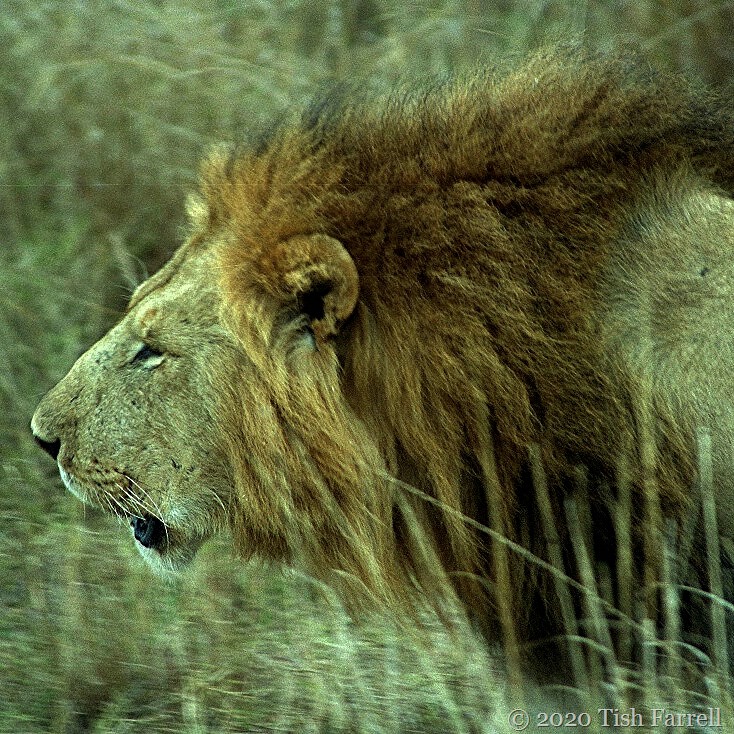
Top Cat

Marsh Pride male 1 - Copy (2)sq

It’s back again to the old Africa album for today’s ‘square top’. This photo was taken on our August dry season trip to the Maasai Mara: one of the senior lions of the Marsh Pride (often featured in BBC wildlife films). He is busy calling to his brother,  the growl-cum-rumble-cum-roar passing back and forth between them; sounds to make the neck hairs tingle. For their part they turned not a single hair nor gave any sign that they registered our presence as our Land Rover passed close by. Humans, what humans?

P.S. Anyone remember the Top Cat cartoons?

Square Tops #3

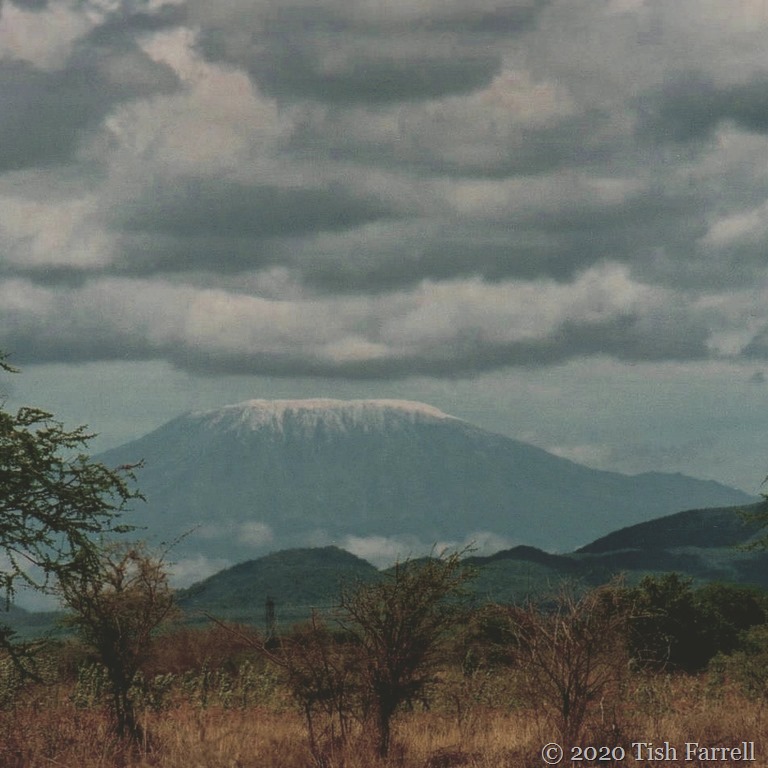
Snow Top With Clouds On Top ~ Kilimanjaro Then And Now

002 (2)

We are told so many things these days. One of them was that the snow on Kilimanjaro would soon be a thing of the past. This photo was taken in Kenya before the prophecy in the late 1990s. We were driving down the old Mombasa highway just south of Kiboko when the mountain put in one of its astonishing appearances, and on a monumental tromp l’oeil scale. It is actually miles away over the Tanzanian border yet it looks as if you could just pop across to it.

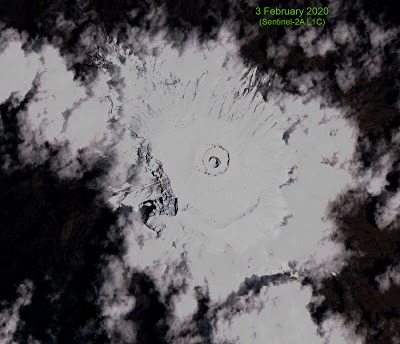
Since Al Gore’s 2006  prognostication, travellers have apparently been beating a path to the summit while the snow was still there. Anyway, people will be pleased to know that there have been recent good snowfalls on the mountain. There’s a very nice researchers’ blog Kilimanjaro Climate and Glaciers blog with posts covering the October 2019 (when snowfalls resumed) and February 2020 when there was further snow. The research indicates some shrinkage of the north and south ice fields in their thinnest portions at lower elevations, but a metre of snow was recorded on the summit on 3 February. The satellites are also keeping their eye on things up there. This next image shows the entire caldera covered in snow.

3feb20_S-2_crop

There could be an important lesson here. The absence or presence of snow on Kilimanjaro has long given rise to controversy. In the 1840s when the first missionaries, Johann Ludwig Krapf and Johannes Rebmann reported back to Europe of sightings of snow on both Kilimanjaro and Mount Kenya, they were ridiculed by the experts: how could there possibly be such frigid matter in the equatorial regions. But there was and there is. Which all goes to show. We must choose our ‘experts’ wisely. Only ones with direct evidence and  well informed experience of REALITY need apply.

SquareTops

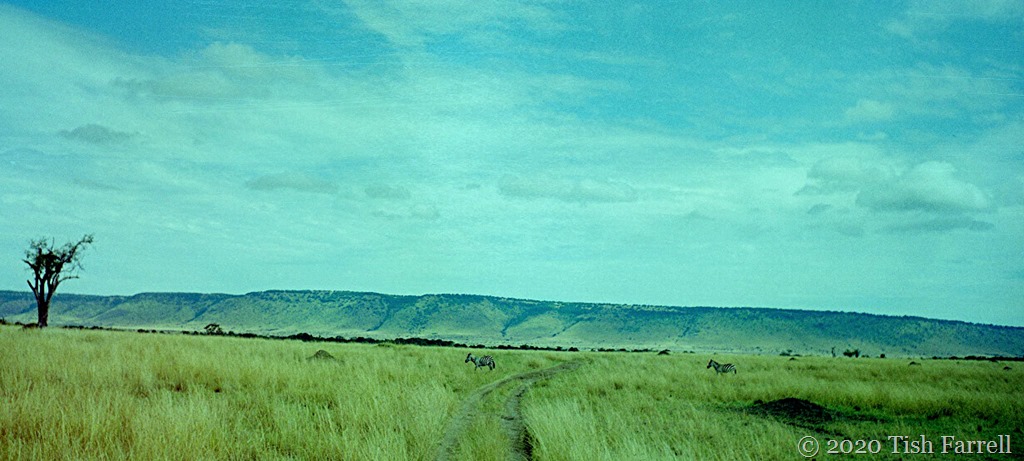
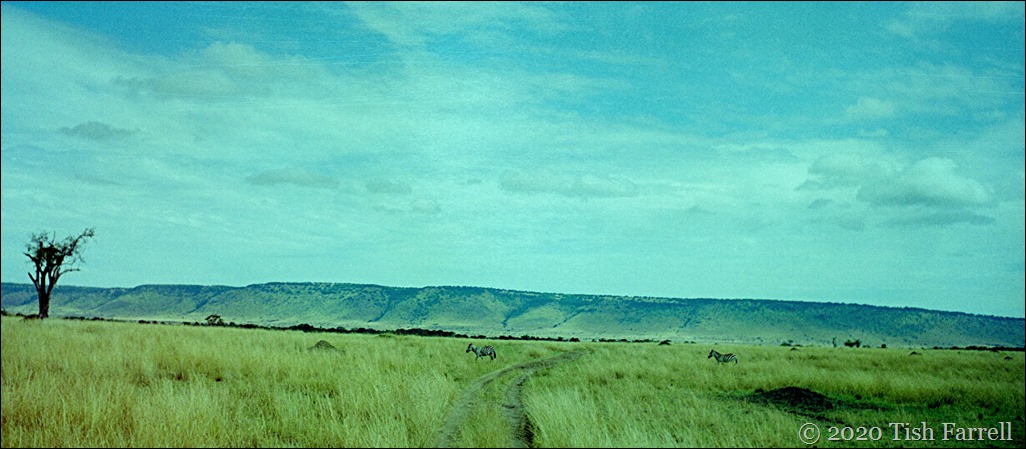
More From The Mara ~ Near And Far Beneath The Oloololo Escarpment

Soit Olololo Escarpment

When we lived in Kenya we made three trips to the Maasai Mara, staying not at one of the luxury hotels inside the national park reserve, but at the small Mara River Camp. The camp’s landlords were the Maasai themselves, the Koiyaki Lemek Wildlife Trust, whose clan elders jointly owned three hundred square miles of plains grazing – albeit a tiny pocket of the Maasai people’s original rangeland i.e. the entire run of East Africa’s Great Rift Valley. Such jointly owned remnant land holdings are known as group ranches, though they not ranches as Europeans understand the term. Here clan members and their families live, tending their herds while also claiming daily game viewing revenue from the foreign visitors staying at the camp.

And in case anyone thinks staying outside the national park might be second best, it wasn’t. In fact there was so much wildlife to see everywhere, there was no need to go into the park proper. Die hard conservationists like to contend that wildlife and humans don’t mix, that humans have a detrimental effect on habitat. This attitude has caused, and will continue to cause extreme hardship to the world’s remaining traditional communities, people who actually know very well how to care for their own natural resources.

But back to our first game drive beneath the Oloololo Escarpment.

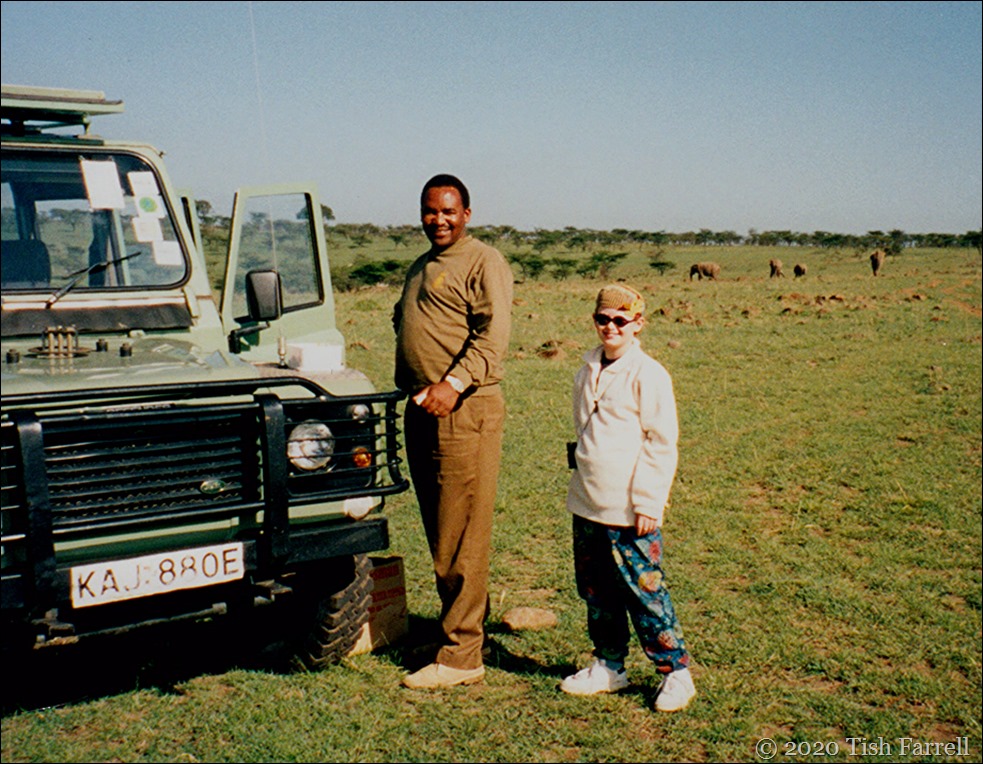
We set out from camp at 3.30 p.m. in a re-purposed Land Rover: six seats in the back, one per window and three viewing hatches cut in the roof. Daniel Mahinda, our driver-guide, was keen to please us. When he asked what interested us most Graham said ‘grasses’. A surprising answer in ‘big game’ territory. He had recently finished his doctoral thesis on smut disease in Napier grass, an important local fodder crop, but I suspected he was being a touch facetious. I had stopped him from taking a nap, saying he could not sleep through Africa. And he had grudgingly agreed. But, looking back, I should have left him in our riverbank tent – to be serenaded by grunting hippos. The crop protection project he was running in Nairobi  was often very stressful, and for all kinds of reasons that could never be foreseen. Probably the last thing he needed was to be bumped around in the back of a Land Rover.
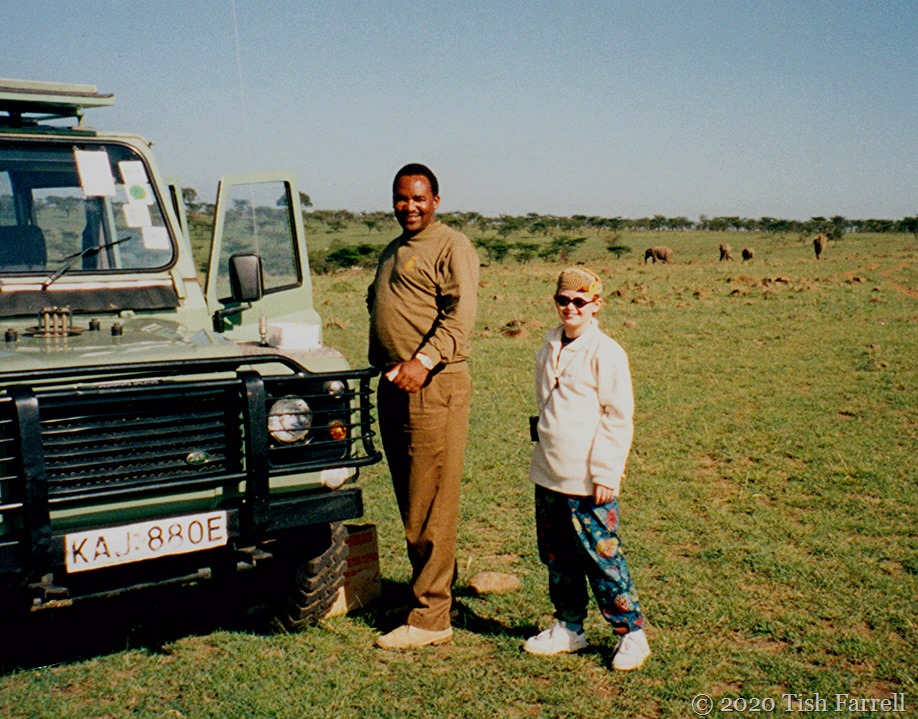
dec 1999

Daniel (on a later December trip) with our niece, Sarah and distant elephants

*

Anyway, Daniel took Graham at his word. Grasses it would  be.  This is what I wrote back then:

As we drive up the rocky valley out of camp there are several stops while Daniel picks us some red oat grass (characteristic of the Mara plains), pyramid grass, Maasai love grass and Bamboo grass. Then we stop to taste the leaves of the muthiga tree (the Kenya greenheart) which are very bitter, and Daniel says the tree’s twigs make good toothbrushes and the bark has medicinal properties – good for sore throats and toothache.

We look at the white tissue paper flowers that hug the ground and the tall sunbird plants (Leonotis leonotis) and the invasive thorn apple (Datura stromonium) and then Daniel picks us a pink flowering spike and says it is called devil’s whip. We also look at the clouds of white butterflies that are clustering round the thorn tree blossom. Then we forget about plants for a while and consider the sooty chat (a small bird that is a Mara speciality) and watch a huge breeding herd of impala. Then we drive along the meanders of the Mara River looking at baboons.

Daniel says there are about fifty in the troop with three alpha-males, and adds that they’re not averse to tackling a Thomson’s gazelle. We see those too. Then there is a grove of muthiga trees with every trunk bearing a series of scars (old and new) from where, over the years, small pieces of bark have been removed to make dawa (medicine). The Maasai are usually far from clinics, and so rely greatly on herbal remedies both for themselves and their cattle.

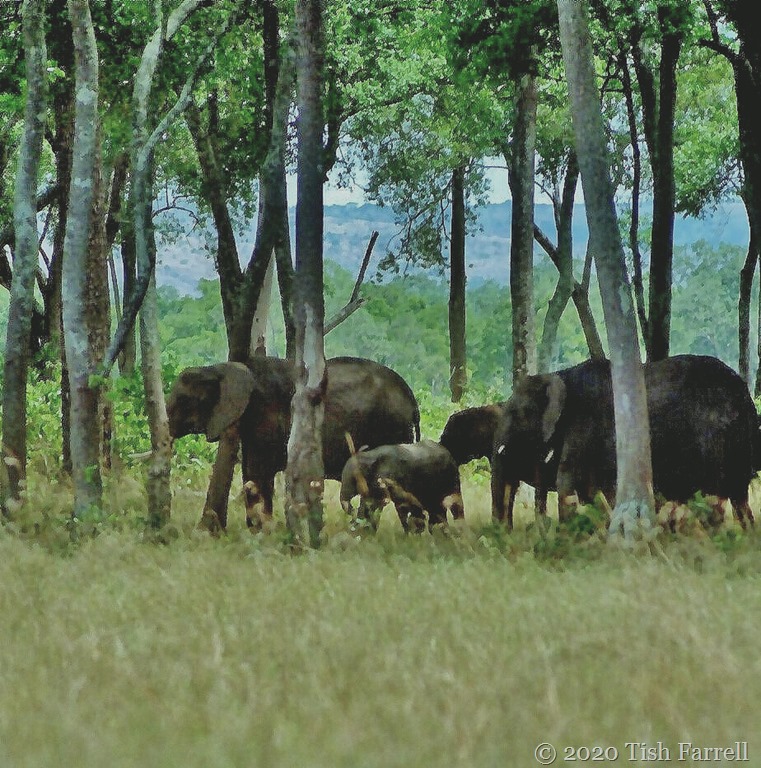
Soon after this we see elephants – first two males, one who shakes his big head aggressively as we draw near. We pause briefly for photos before driving across the marsh to see a family group whose matriarchs and young don’t mind us watching them for a while.
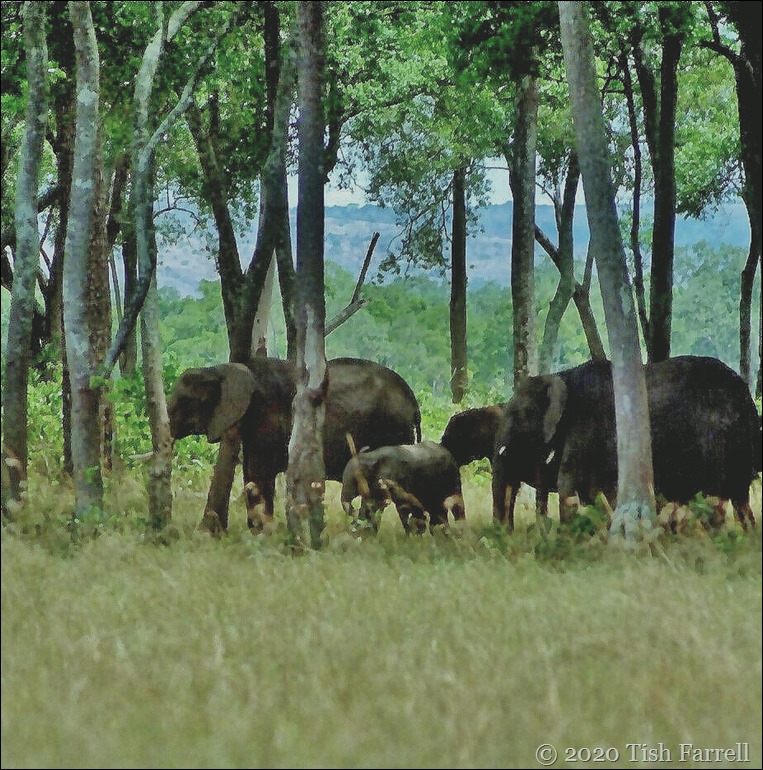
Scan-140726-0020Among the muthiga trees

*


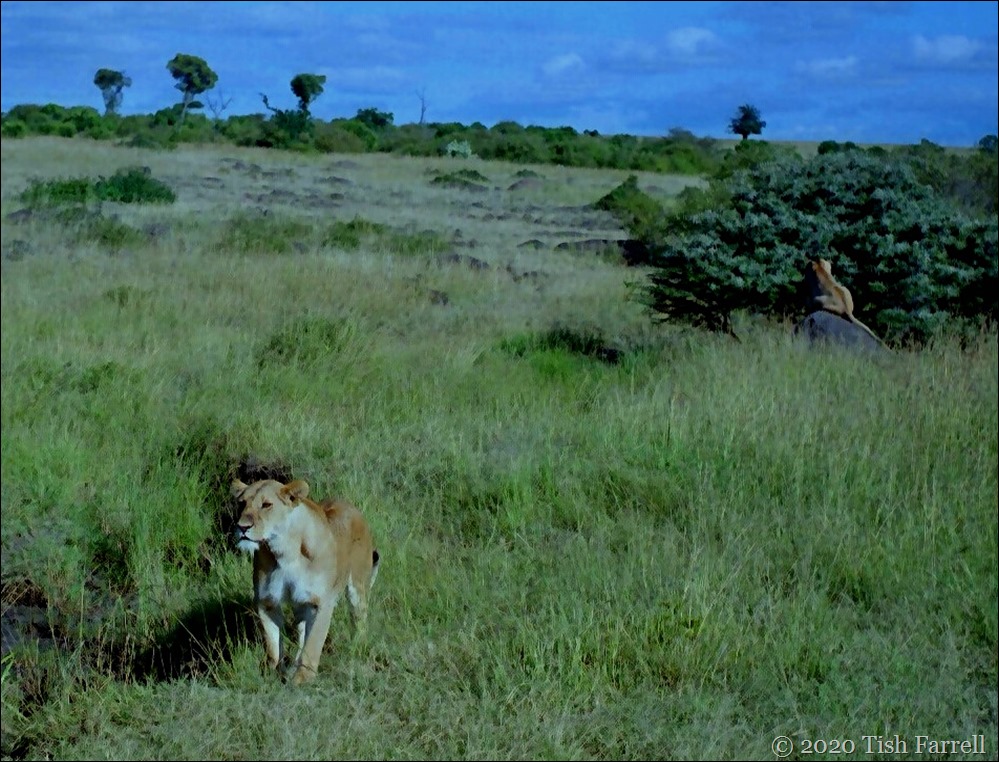
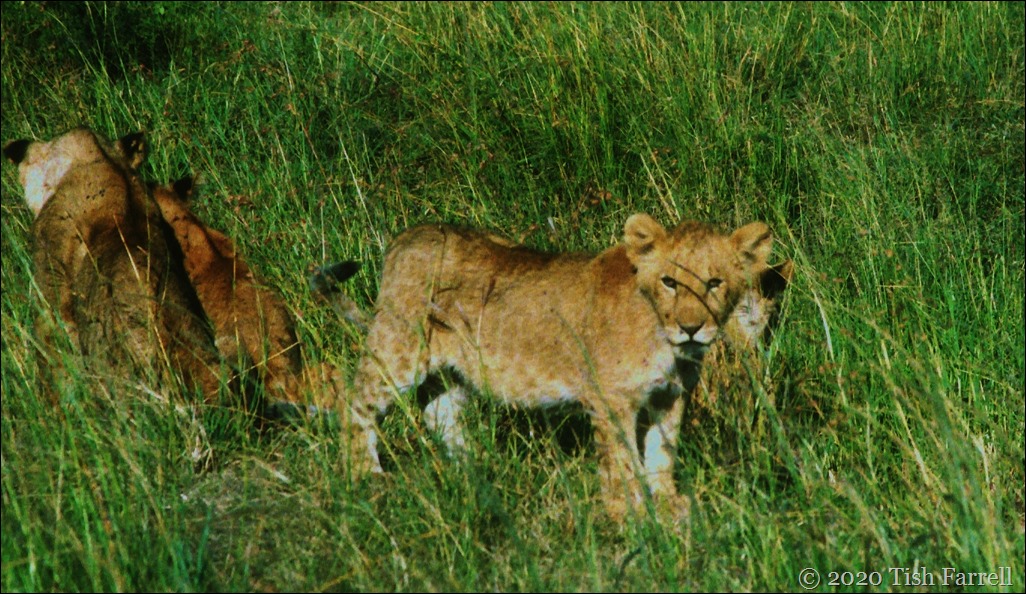
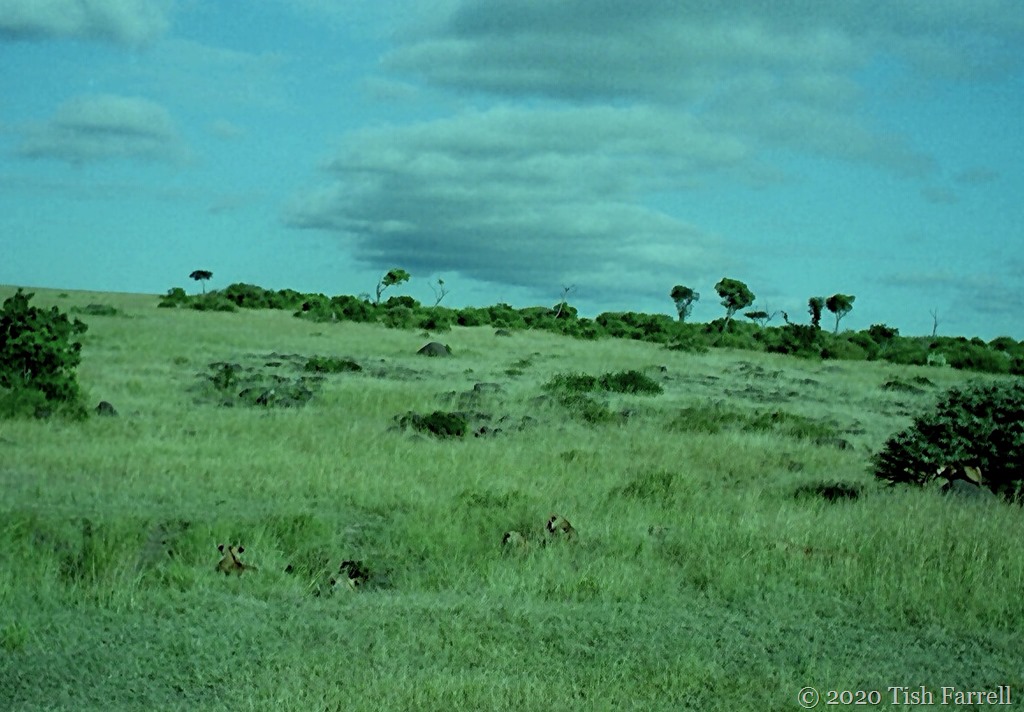
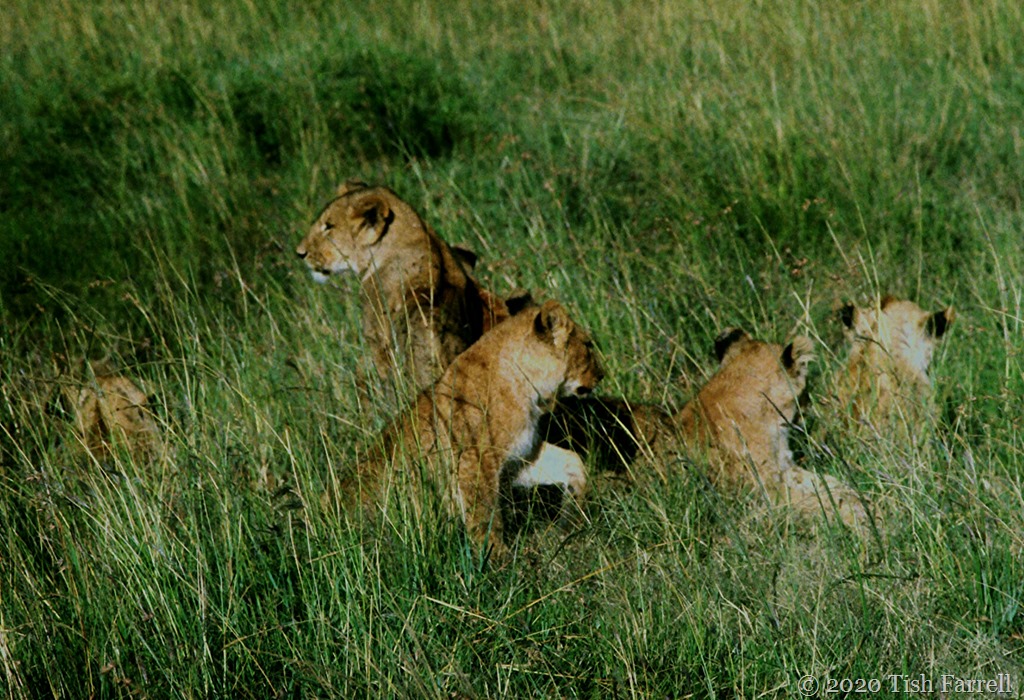
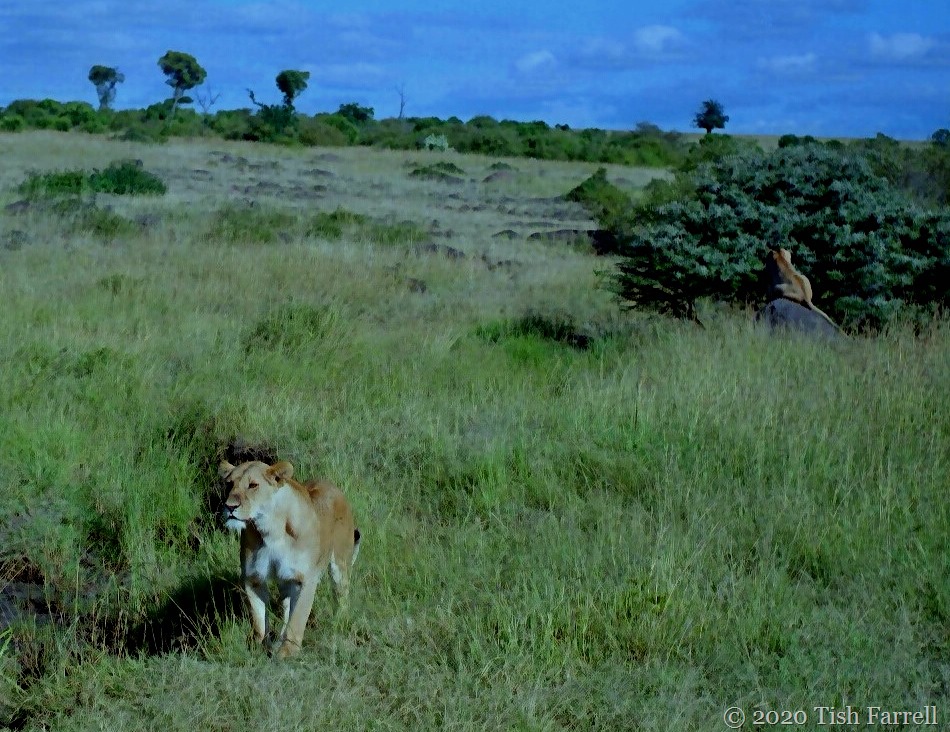
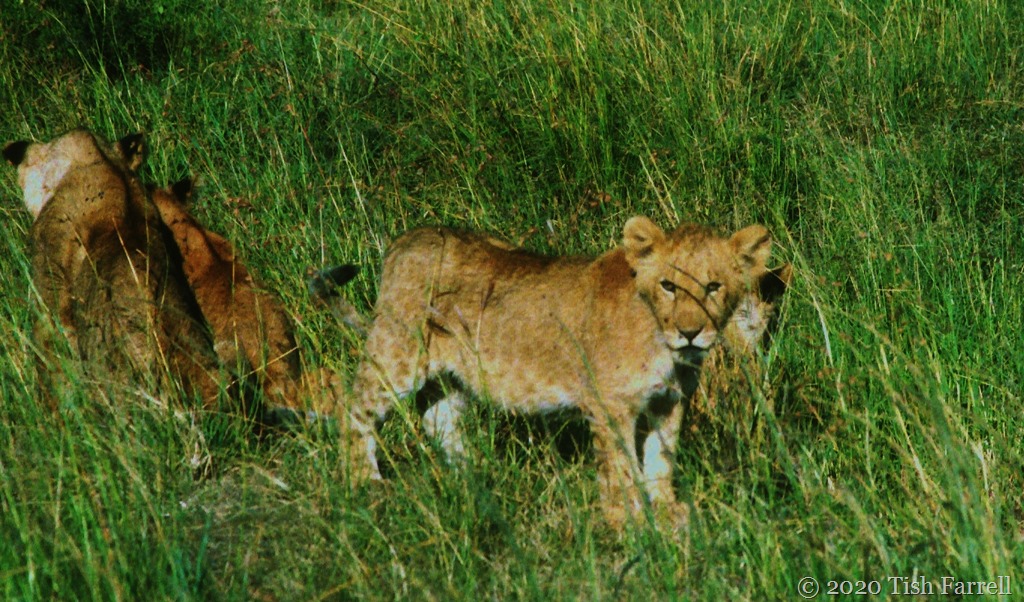
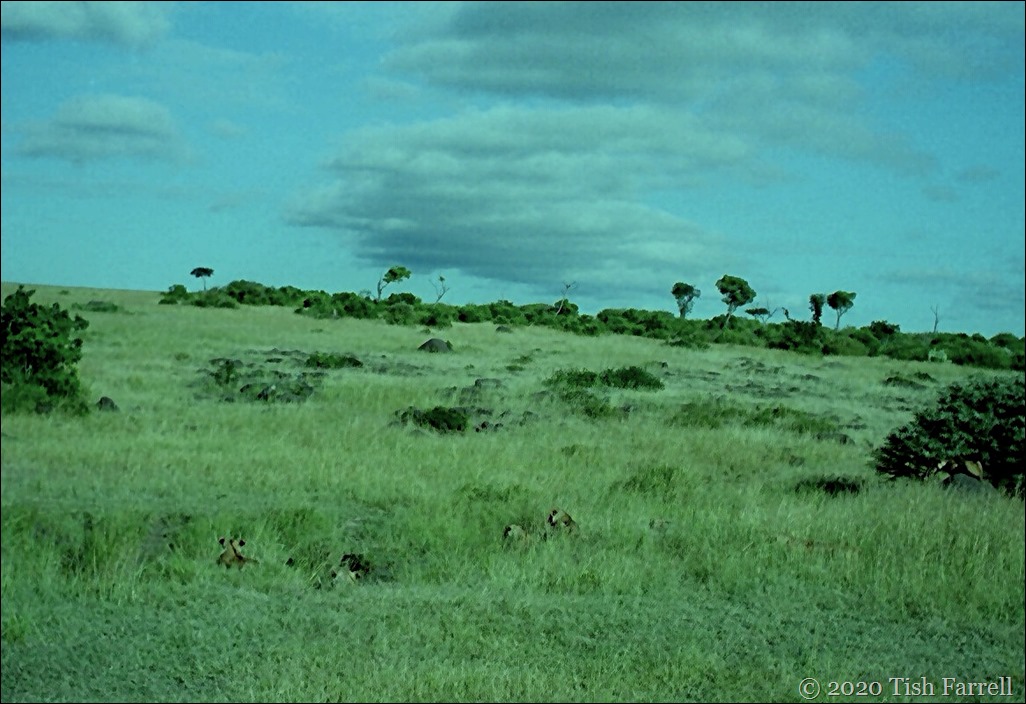
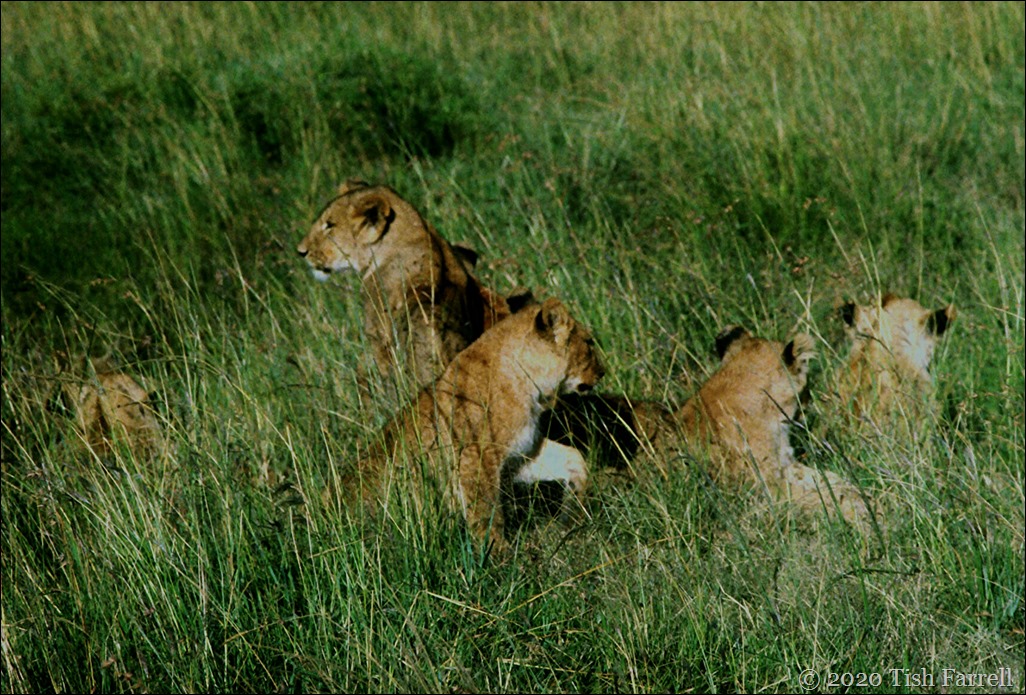
By now it is late afternoon and Daniel has been doing a lot of talking in Swahili on his  truck radio. He sets off with purpose across the open grassland. After a while we see two stationary safari trucks on the horizon. We bump over tussocky ground towards them and pull up beside a swampy bank, and there they are – simba. Cubs and lionesses idling in the grass. The drivers confer over their radios, and once agreed that no hunting is in progress we move in closer. At first Daniel pushes along a grassy peninsula away from the pride and we wonder why, for all we can see is grass. But he knows where he’s going. And when a young adult lion raises his big head, I am stunned. Anyone on foot would scan this meadow-like terrain and not have one inkling that the lions were there. When the head goes down, he is gone: lost from view in twelve inches of grass.
Scan-140731-0033

Scan-130520-0020

Scan-140731-0030 (2)

Scan-130520-0010

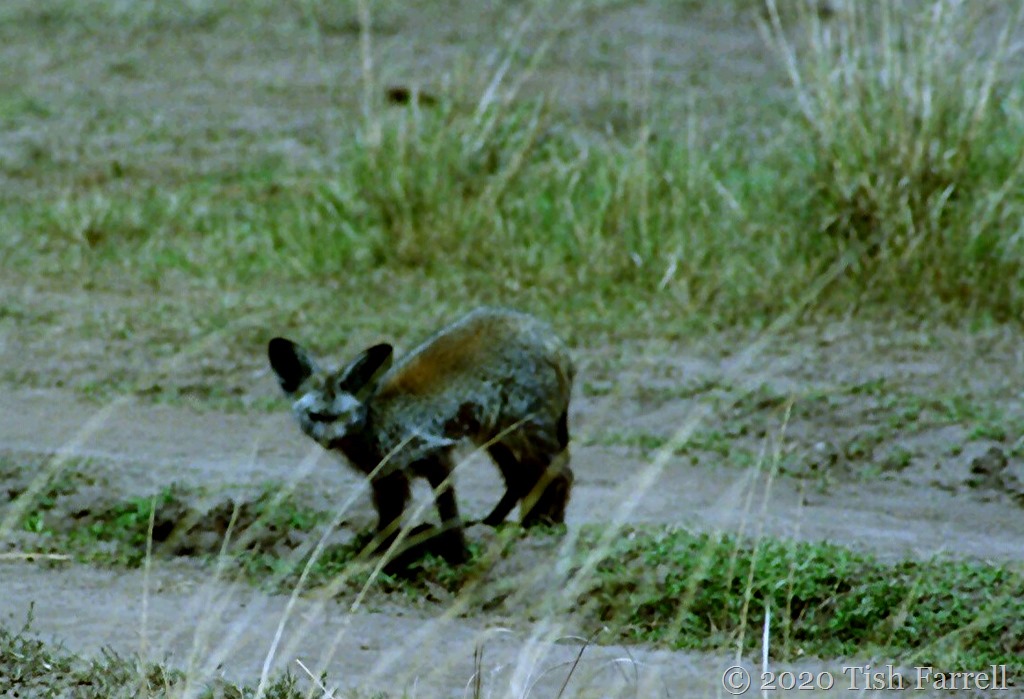
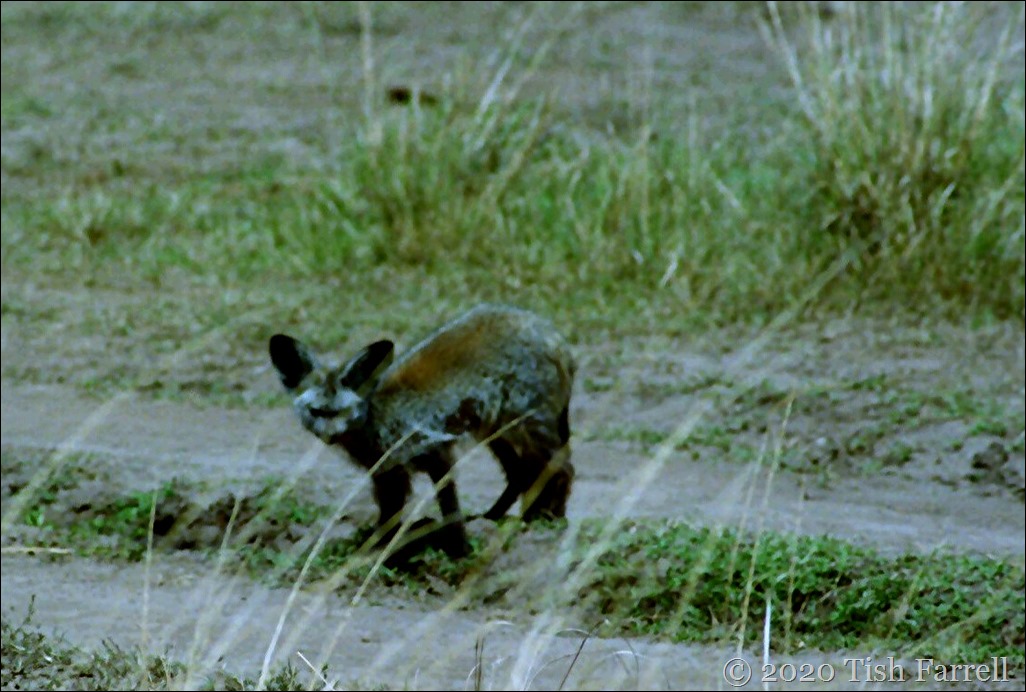
Daniel tells us there are six cubs, survivors from a litter of ten, the other four having died because the hunting has been poor; but, he adds, the wildebeest migration is about to start and these six now look likely to survive. We watch eleven big and small lions till the light fades to grainy grey and then leave them in peace. On the track not far from the camp we see a pair of bat-eared foxes – ‘Very rare,’ says Daniel. They eye us anxiously before trotting away into the grass.
Scan-140726-0025 (2)

copyright 2020 Tish Farrell

Lens-Artists: Distance  This week Tina sets the challenge. One of the safari guide’s key skills is knowing when it’s best to keep a distance and especially when it comes to elephants and lone buffalo.