Seeing my town in Black & White: 2

P1010699 - Copy

In the second part of my black & white tour of Much Wenlock (part 1 here), I was further inspired by Marilyn’s Wednesday photo prompt at Serendipity. This week she chose ‘small town summer’. I thought it would be interesting to see if I could capture that sense without using colour.

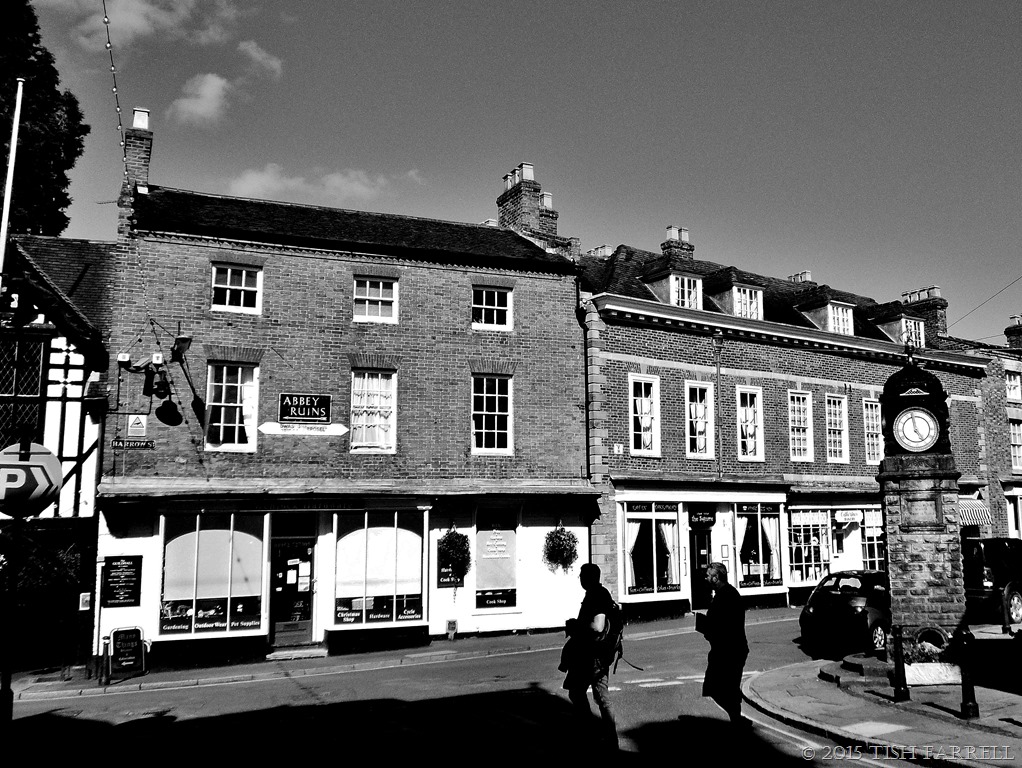
So it is Wednesday, half-day closing. A warm July afternoon. Wenlock is drowsing, although there are some visitors wandering here and there. In the heart of the town, where the High Street meets Barrow Street, a young man is waiting – for his girl? For his best mate? On the right is the sixteenth century Guildhall described in part 1, behind him, the former Victorian Market Hall with its added World War 1 Memorial frontage. This building was also the local cinema in the 1950s. Now it is our museum and tourist information centre, but due to council cuts, it is not open much.

Here, then, is the town centre from the boy’s point of view. There is little of interest for young people. His  posture, the high-lit ‘not-much-happening-here’ of the following street scene triggers my own response – that long-ago sense of adolescent ennui: that permanent sinking feeling of alienation.
P1010741

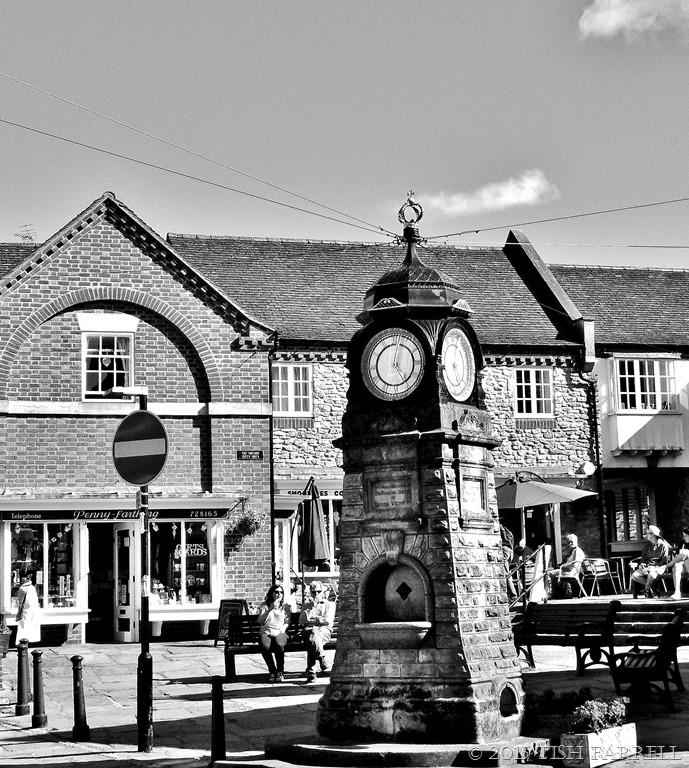
In the five o’ clock shadows past and present coalesce. It could be oppressive. In the Square the Jubilee Clock is a local landmark. Its several faces used to tell different times, but it has recently been overhauled and given a new electronic movement. It was donated in 1897 by a town worthy, erstwhile emporium owner and august alderman, Thomas Cooke. It celebrates Queen Victoria’s diamond jubilee, and would have been in sight of Mr. Cooke’s shop that stood next to the Museum and is currently occupied by the open-all-hours Spar Supermarket.
P1010747

The buildings around the Square are modern – a pastiche of local architectural idioms. But the open space is pleasing. For years it was occupied by a derelict stone barn. These days it is a gathering point for locals and visitors alike, and a good place to sit and watch the world go by, albeit a rather small and slowly moving world.
P1010739 - Copy (2)

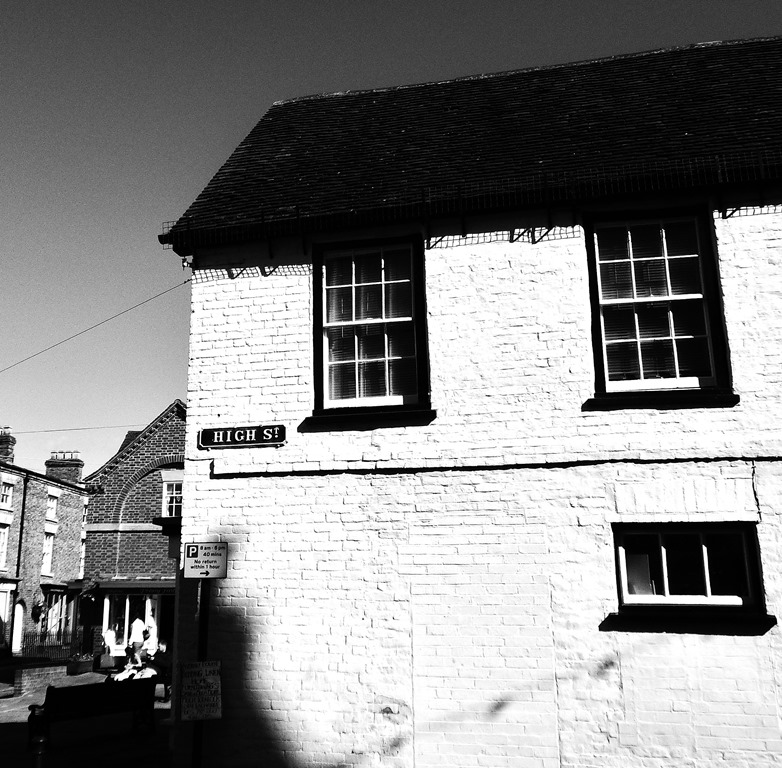
The High Street is difficult to capture. It is narrow, and its east-west alignment means that one side or the other is always in shadow. Then there are the cars in the way, either parking or manoeuvring through. Surprisingly, there is fervent trader resistance to pedestrianizing the street. They think they will lose custom. I think they should at least try it for six months. They might be agreeably surprised at how many more visitors would come to enjoy this little street in peace. It can offer so much hospitality and interest along the way.

For a start we have two ancient inns whose origins go back to monastic times. The George & Dragon is probably everyone’s idea of an unadorned old English pub – all beams and quarry tiled floors.
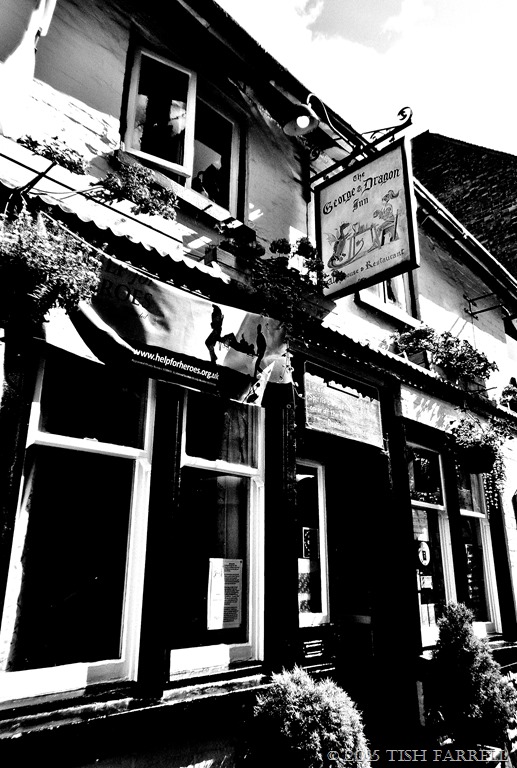
P1010702

The Talbot on the other hand has a 1970s ‘olde worlde’ interior, though it dates back to 1360, and was thought to be the Almoner’s House, a hostel for pilgrims come to worship at the shrine of St Milburga, and also a centre for alms giving. The white rendered facade hides its timber-framed antiquity, but if you step under the arch you will find a pretty courtyard, where there are also nice B & B rooms in a converted malt house should you want to stay longer.
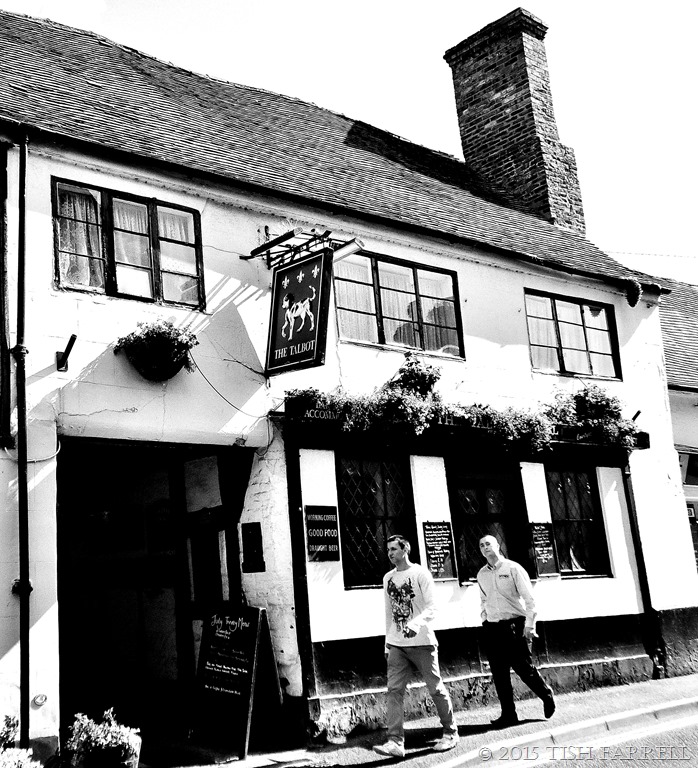
P1010711

There are also two cafes, one with a deli, an Indian restaurant and two hotels. And amazingly for a small town, we have two bookshops – one dealing in second-hand books, and the other an inspirational survivor among the country’s dwindling number of independent book shops. Its owner, Anna Dreda, not only sells new and old books, but she also hosts reading groups for infants and adults, puts on author talks and book launches, and she is the founder of the Much Wenlock Poetry Festival. Browsers may further find themselves offered a cup of coffee or tea, and invited to pass away the hours in one of the cosy corners upstairs. In short, the shop and its owner are among the town’s treasures, and have won national notice to prove it.

P1010709

And it is from upstairs in Wenlock Books that you can sneak a good view of the High Street’s mid-section: Mrs P’s newsagents and sweet shop, the estate agents, and Ippikin, a shop that is its own art installation and is our very special haven for knitters and crafters. These next two photos were taken earlier in the day.
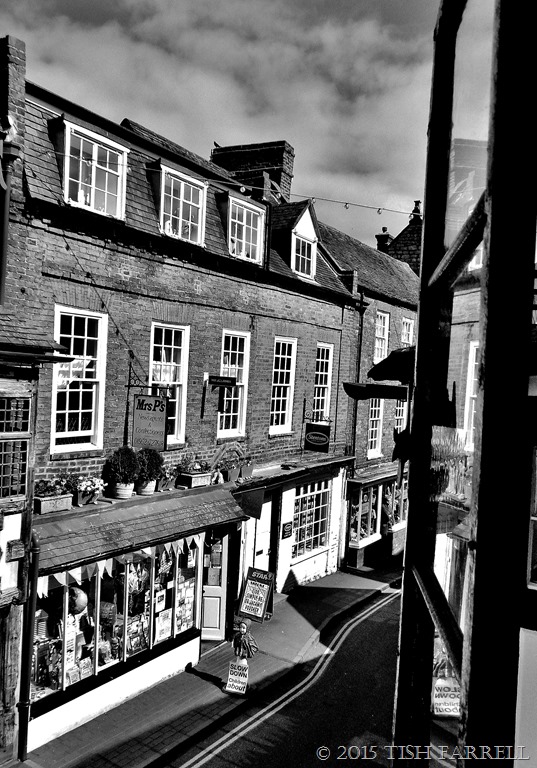
P1010145

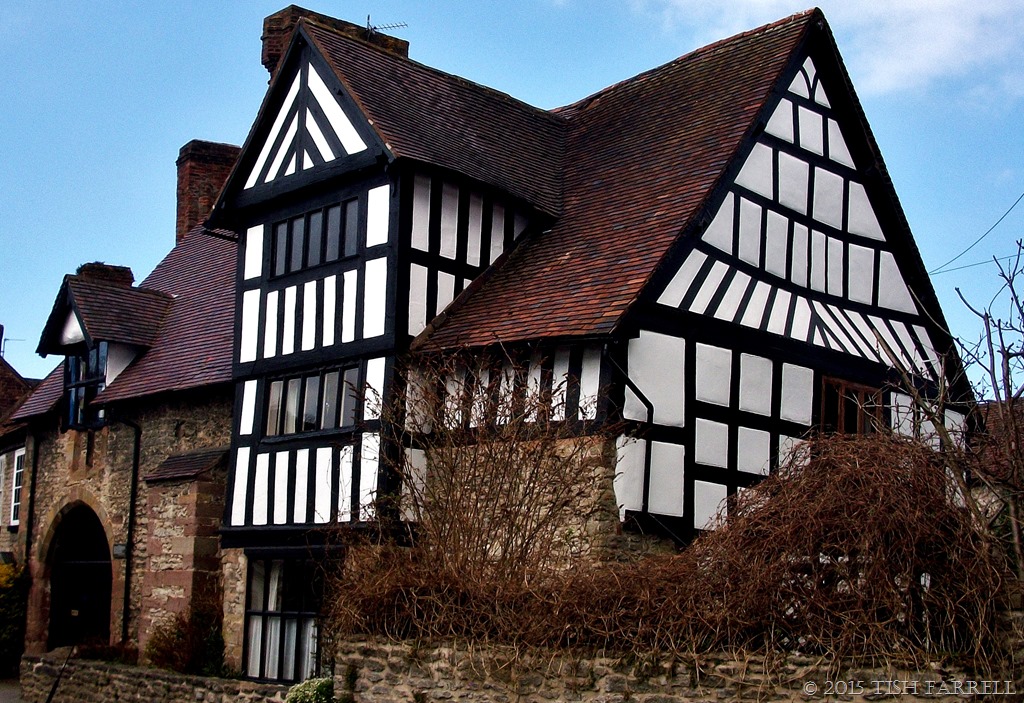
Opposite the book shop is the street’s most impressive historic house, Raynald’s Mansion. Here we have a medieval hall clad first in a flat-fronted building of 1600, and then extended by the addition of three timbered bays in 1680. The property remained in the Raynald family until the late 20th century, and is still a private house. In the nineteenth century it was actually a butcher’s shop, and the rail beside the right hand doorway was an aid to tradesmen lifting heavy loads.
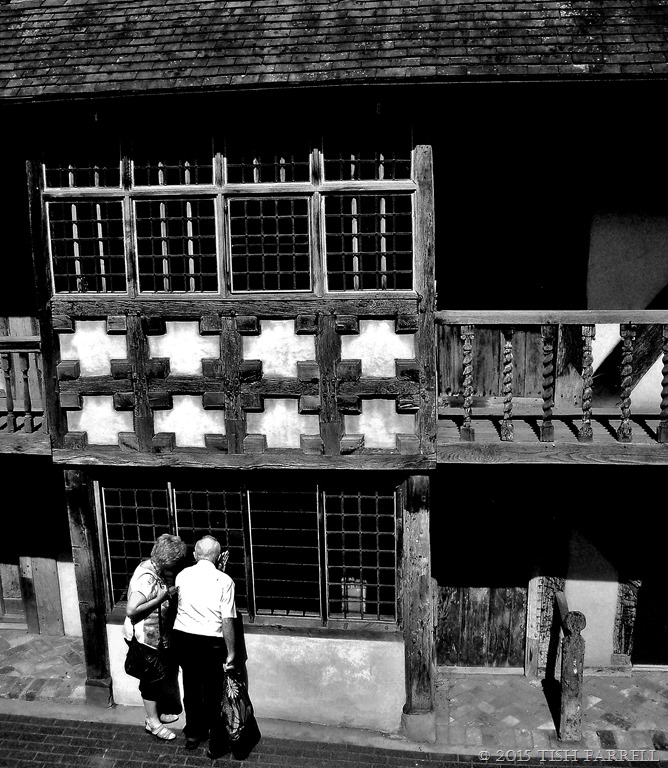
100_6264

P1010714

And next is another town treasure, Twenty Twenty Gallery. I missed it out. It is further back down the street towards The George & Dragon, and every month has a new exhibition of contemporary art, ceramics and jewellery for sale. The owner, Mary, likes to feature the work of local artists and makers.

P1010703


Back again down the street beyond Raynald’s Mansion and The Talbot Inn we have another imposing house, also early 17th century. Up to the 1920s it was the Swan and Falcon Inn. Later it housed our local branch of Barclays Bank until it moved to smaller, less frequently open premises next to the Post Office. The current new owner has development plans for it and its ancient  medieval barns out back, but in the meantime our local wildlife rescue charity has it shop there.
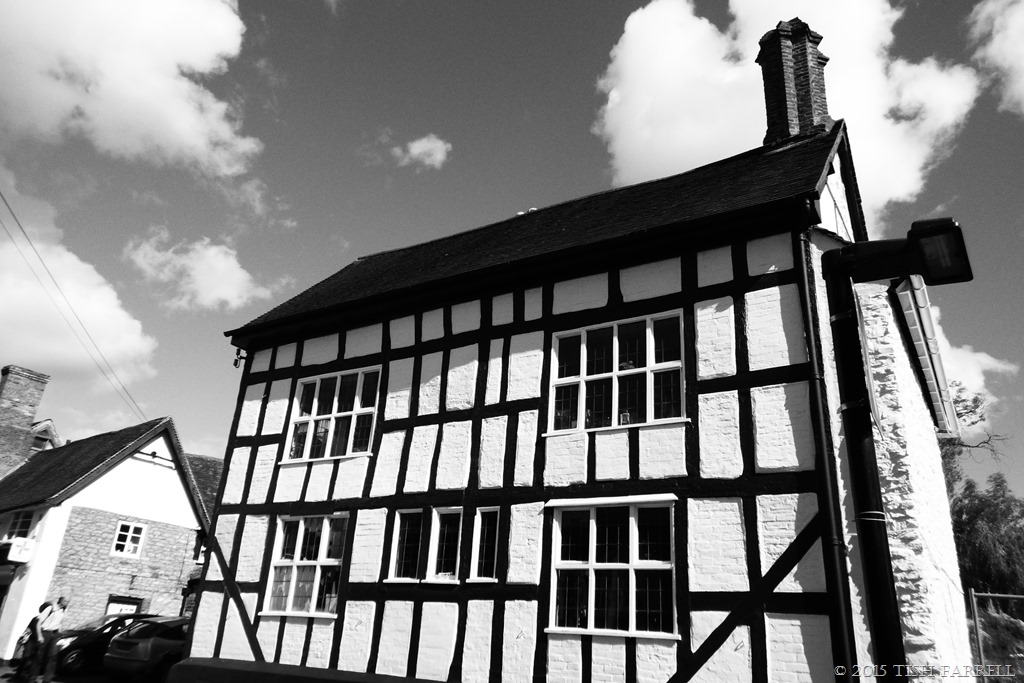
P1010719

And just in case you think all is perfection along our High Street, we do have our eyesore. In 2009 or thereabouts the space next to the old Swan and Falcon was the scene of a general town uprising. A local developer, who had put up an unpopular housing enclave behind the High Street, then erected a house on the street frontage that did not conform to the approved plans. So after considerable agitation, down it had to come, although only after we Wenlockians had frightened the visiting local authority planning committee by our vociferous objecting. It was rather like a similar revolt back in Wenlock’s 1300s, when the serfs, fed up with the domineering Bishop who ruled both Priory and the town, threw down their ploughshares in general protest.

The site itself was once a seventeenth century clay tobacco pipe works, and in more recent years had become overgrown, and thus a well treed wildlife area that helped mitigate the town’s flooding risk. The only problem is that ever since, the space between the Swan and Falcon, and High Street’s terrace of Tudor cruck cottages, has looked like this, one of our less than successful visitor attractions:
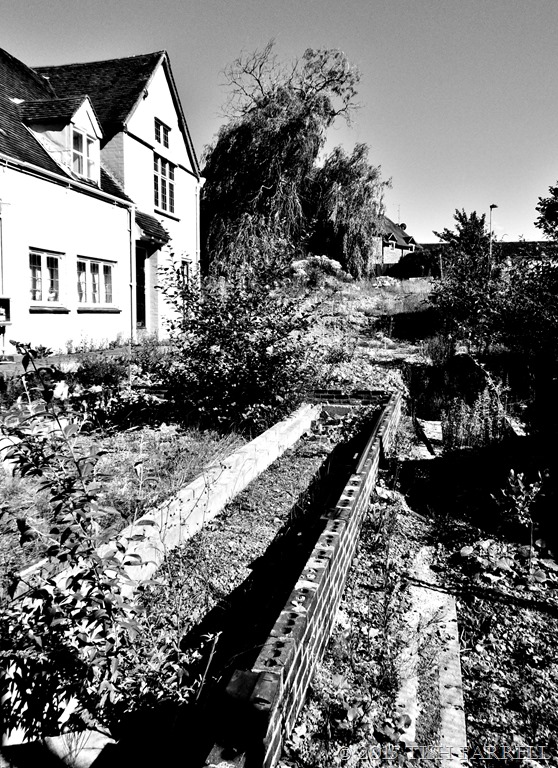
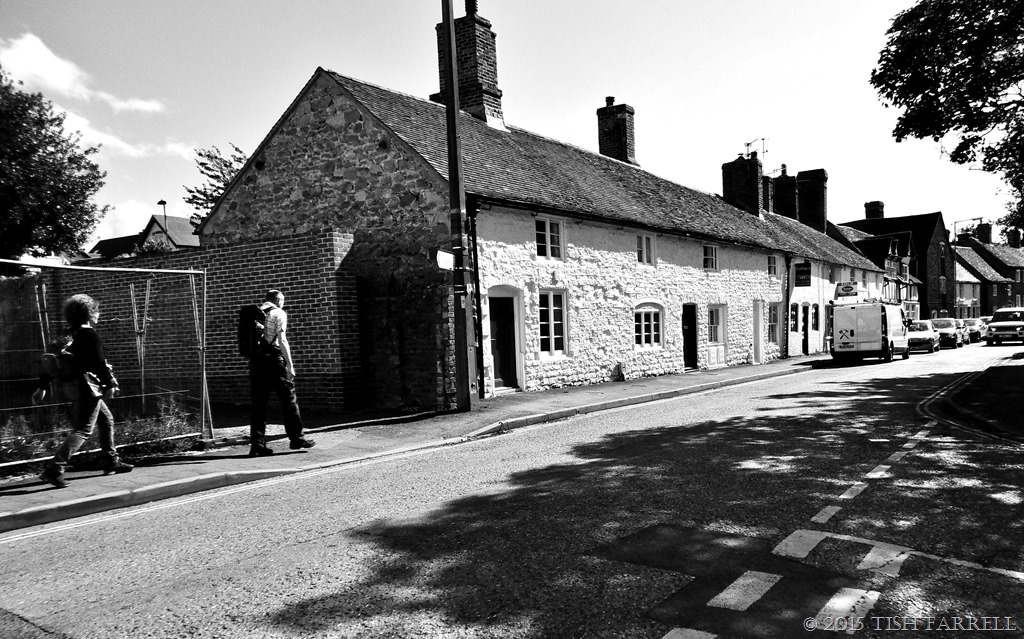
P1010732

P1010720

Somewhat surprisingly, the original planning permission for the housing development, both on the street, and behind it, had been given without any reference to, or consultation with the local authority’s Conservation Officers.  Apparently it was not deemed necessary with a new development, despite the site being in the middle of an ancient town. Anyway, the houses were expensive, cramped inside, and so took a lot of selling, even with offers of free cars. In the end a housing association bought many of them, so at least some families on the local social housing list have benefitted.
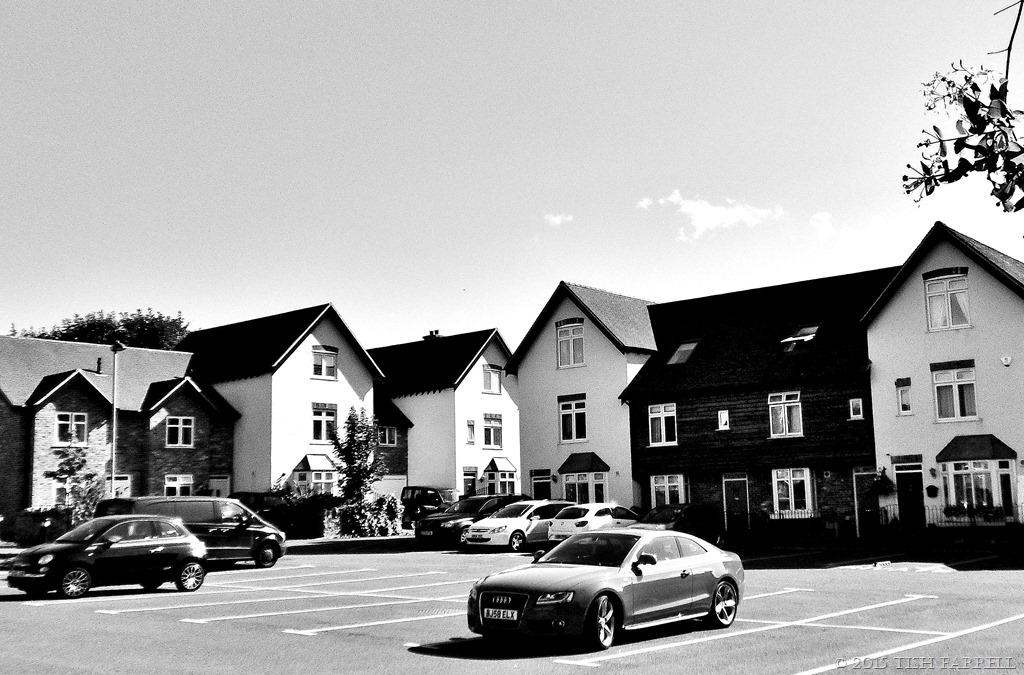
P1010730


P1010721

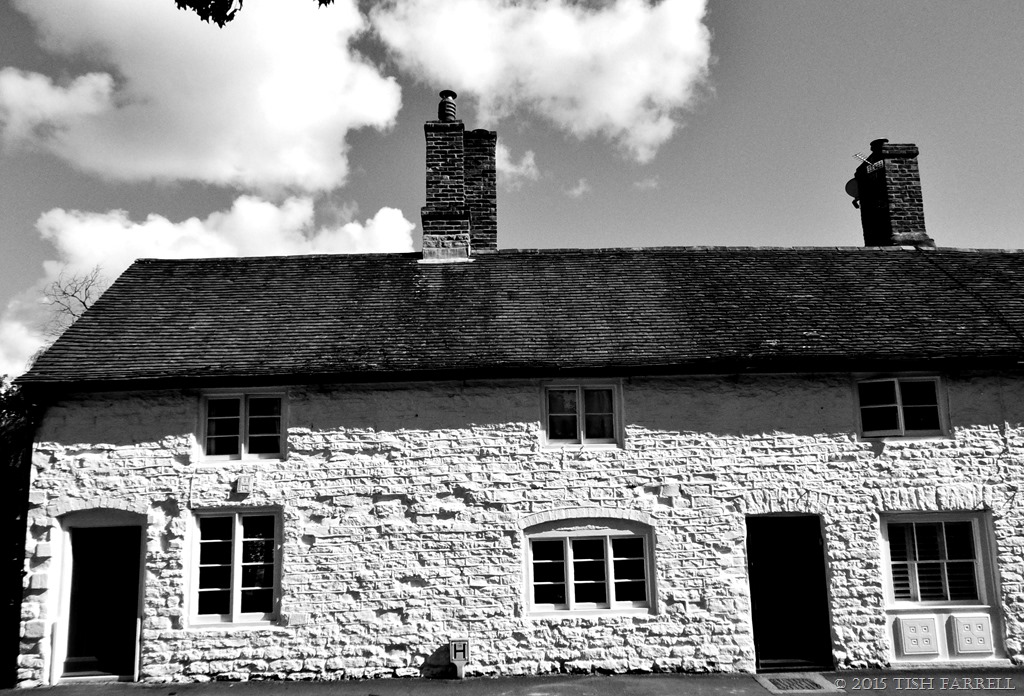
By contrast, this row of cruck cottages some 400 years old, and the new development’s nearest neighbours, are solidly built, remarkably spacious inside, and have very pretty gardens behind them. Lacking the paper thin walls of new houses, there is doubtless little noise leakage between the cottages, although they do lack multiple en suite shower rooms that seem to be a feature of all English new-builds these days. Anyone would think water grew on trees, or that our drainage systems were robust enough to cater for all the washing we think we need to do.

P1010729

Finally, here is one of the town’s loveliest ancient houses Ashfield Hall. I’ve mentioned its history in an earlier post. It was built by one Richard Ashfield who lived in Wenlock in 1396. It is probably on or near the site of the earlier St. John’s Hospital which was a hostel for poor itinerants.

And there you have it: some of Wenlock’ High Street highlights. It is well worth a visit.

copyright 2015 Tish Farrell


Bumbles in my borders

P1010778

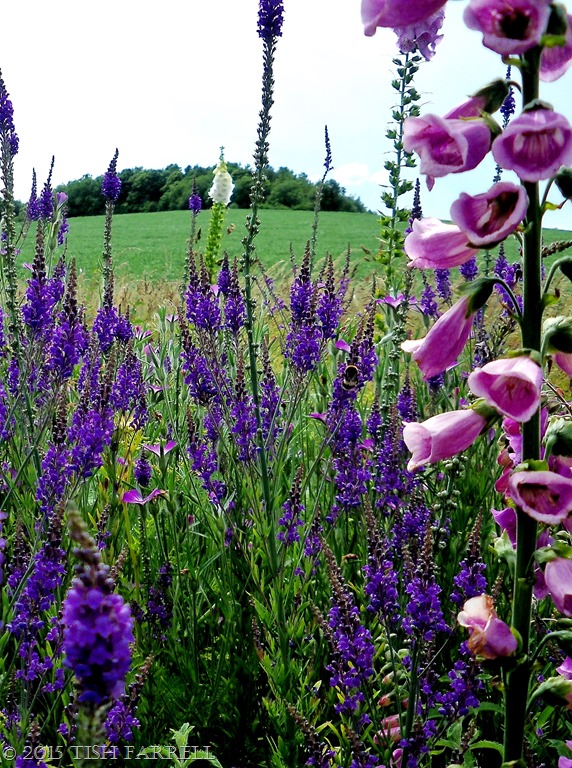
A couple of summers ago we took out a length of hedge between our back garden and the field. It was a thicket of alien snowberry and overgrown ash tree seedlings, and a nightmare to cut. Now we have a simple fence, a rampant herb and wildflower garden that grows itself, and a view.  We also have masses of bees.

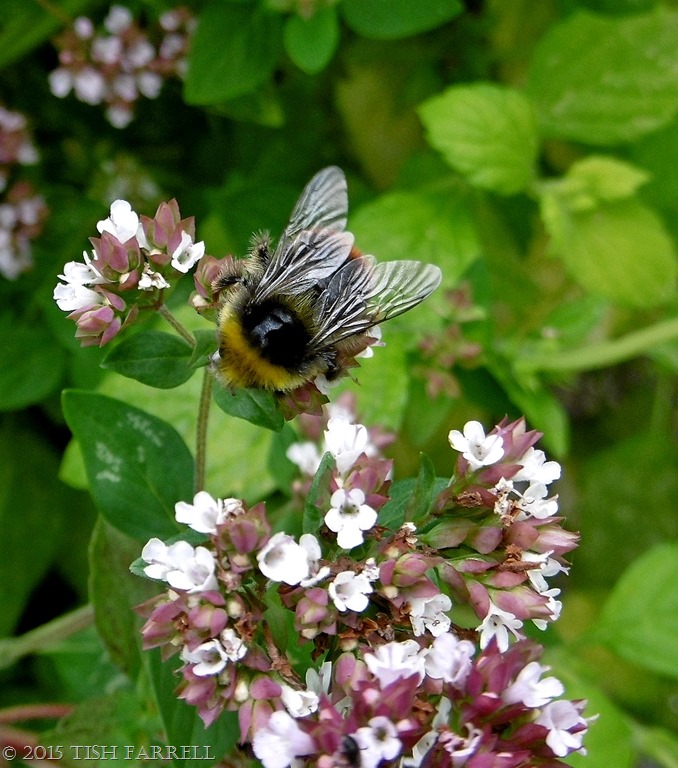
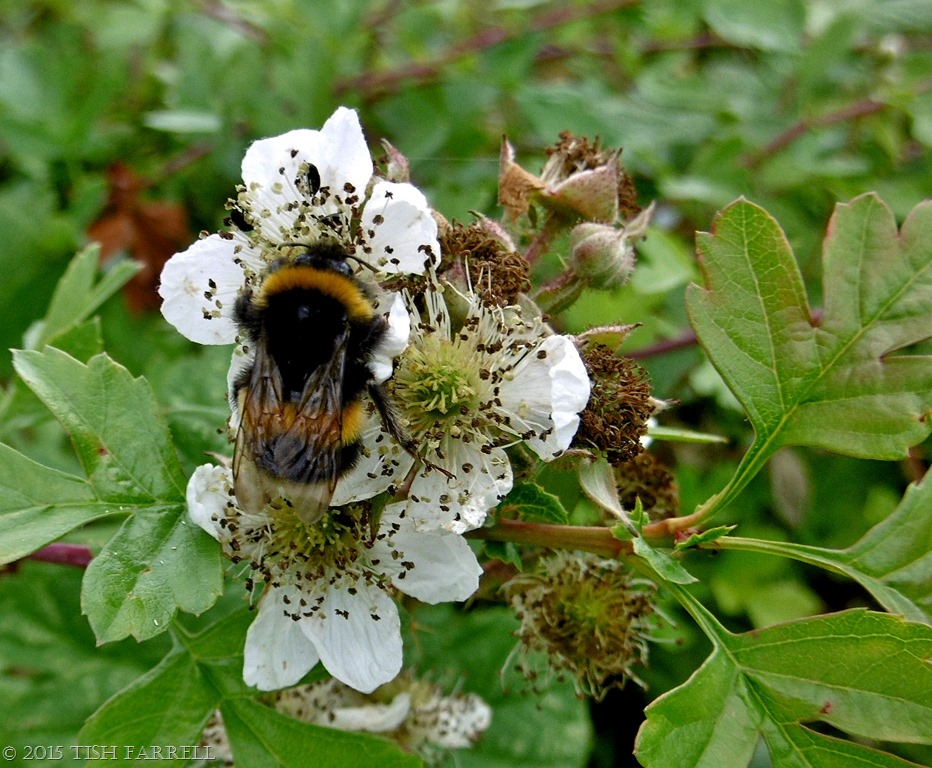
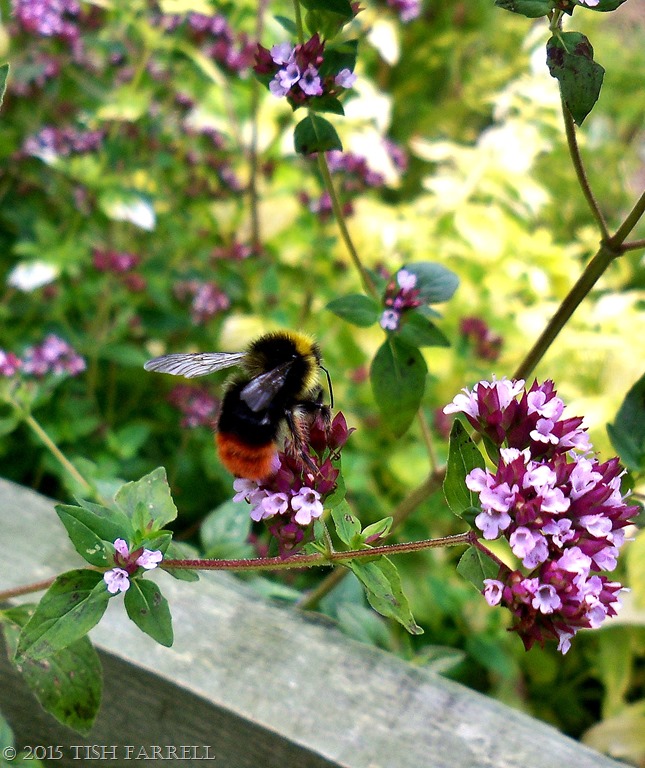
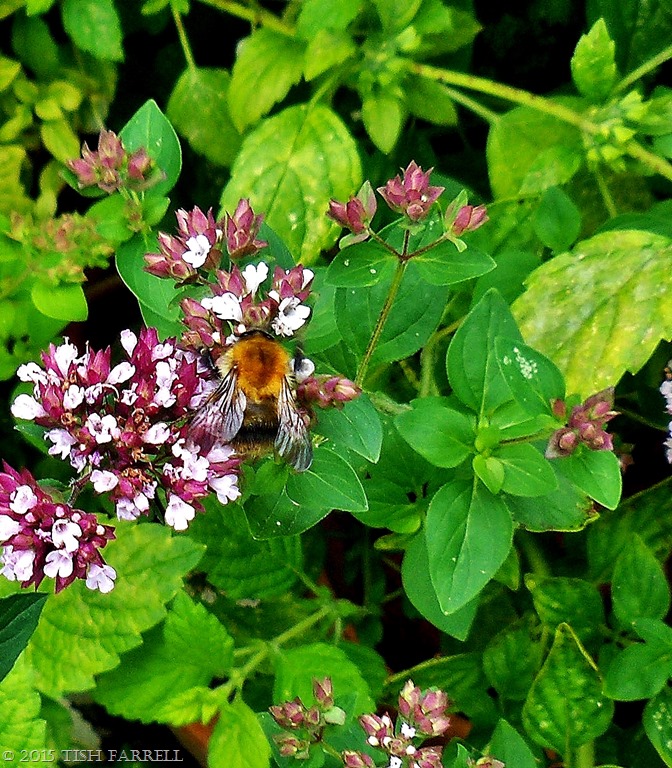
Back in the spring they foraged on the columbines; later on the spires of self-seeded purple toadflax and foxgloves. Now they are gorging on oregano and bramble blossom. I spotted at least three varieties of bumble bee this afternoon, but apart from the red-tailed bumble below, I’m having problems identifying them. For those of you who wish to try, there is an excellent identification page with a video at bumblebeeconservation.org

P1010768

100_6468

100_6453

100_6050

copyright 2015 Tish Farrell

Close Up

Seeing My Town In Black & White: 1

P1010625

In this week’s Black & White Challenge, Cee is asking us to focus on subjects that are more than fifty years old. I’m pretty confident, then, that my home town of Much Wenlock more than fits the bill. As a settlement, it has been continuously occupied for the last thousand years.

The town windmill (seen above) is not quite that old. I’ve begun with it because it is the oldest structure near my house. It  was busy grinding corn from around 1655. Then a lightning bolt struck it in 1850, and it has remained sail-less ever since – either a pity or not, depending on your views on historic conservation.

IMG_1185

On the other hand, I perhaps needn’t have gone as far as the windmill. You might say my own house is something of a minor monument age-wise, much like its inhabitants (?).  It’s original half dates from the 1830s. In the living room there’s a massive inglenook fireplace complete with bread oven that defies my attempts to photograph it well, so you’ll have to imagine it. Instead I’ll take you on a walk down Sheinton Street to see a few of the other sights.

P1010161

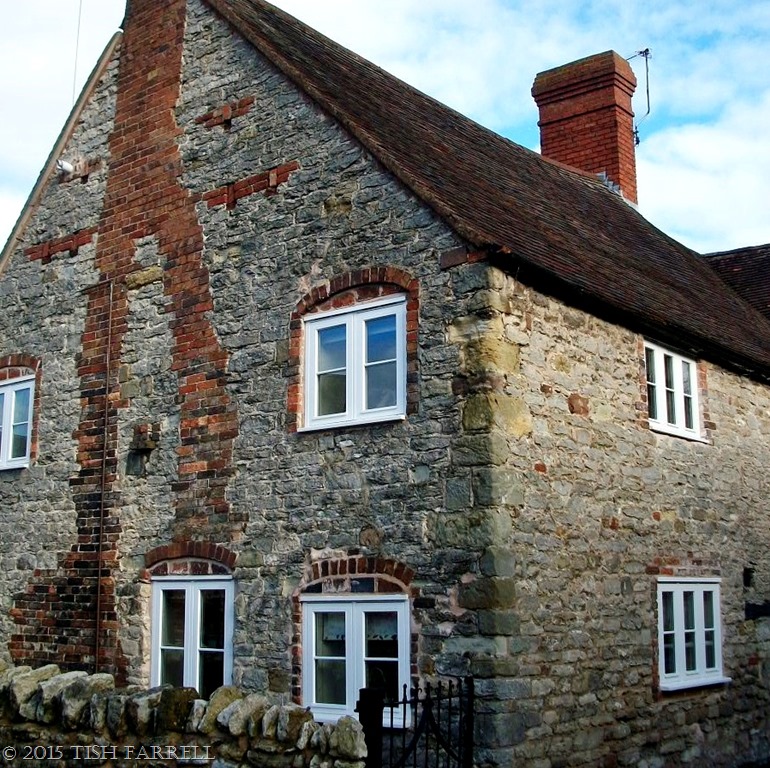
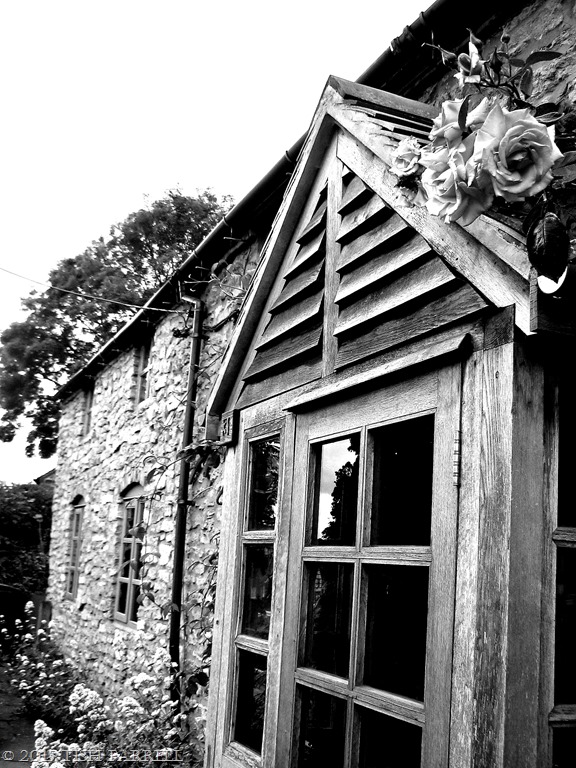
Heading into town, there are here-and-there signs of the medieval origins of many of the cottages, their timber frames concealed or disguised by brick and stone exteriors that have been added in more recent centuries.

Most of these cottages would have once housed artisans, their workshops opening directly onto the street to catch the eye of potential customers. The living quarters, and gardens would have been behind the workshops. In fact, the layout of long medieval burgage plots behind these Sheinton Street properties, and now pretty gardens, are still visible from the field path.

Today, Much Wenlock is a sleepy sort of place, much gentrified, and up-marketed. But step back a couple of hundred years, and much of it would have been grimy and industrial. Not only was there quarrying and limestone burning going on around the town, but within it were once the smoking kilns of the clay tobacco pipe manufacturers, stinking pits for the curing and tanning of hides for leather working, horses and carts churning up the dirt. Brewing was  also a big local trade, as were slaughtering, pewtering, smithing, weaving, and hat and shoe making. The unmade streets were alive with taverns to wet the throats of dusty quarrymen, and the final touch, ambiance-wise, would have been provided by the malodourous effluvia of the Schetbroke, an open sewer of a stream which ran through the town (but now happily culverted).

100_4963

I don’t know the particular history of this rather grand cottage seen above, but it’s a good example of a later stone frontage added to a much older building. Most of the town’s stonework has in fact been recycled from its medieval priory, dissolved by Henry VIII in 1540.

100_6033

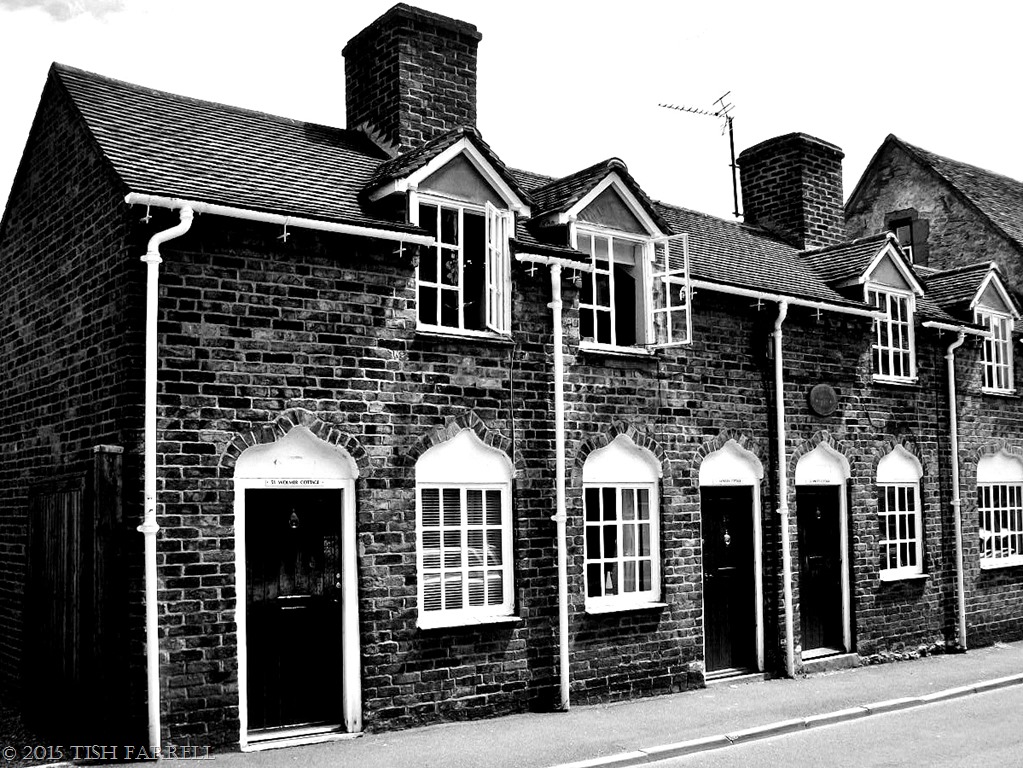
In amongst the antiquity we can also find more recent buildings. For instance, in the space between  medieval neighbours is this little set of picturesque alms houses built in 1810. They are known as Wolmer’s Alms Houses, a charity founded in the town in 1485. They are still operated on a charitable basis for the elderly. I love the brick ogival arches over the doors and windows.

P1010156

At the end of Sheinton Street is Brookhouse Farm. It is now a residential enclave of smart barn conversions, but until fairly recently was one of the last surviving examples of England’s town farms.  I can still remember it in the 1990s as a very rustic farmyard with cattle in the barns. The farmhouse in the foreground was stone-clad in the early 1700s, and is one of several Much Wenlock houses with a medieval hall concealed within it. You might call this the Chinese Box school of architecture.

Then on the opposite corner from the farm is the Bull Ring…

P1000621

…so named after the unsavoury pursuit of bull-baiting that went on here until the early 1800s. By then the timber-framed building  had stood for some 200 years, while Holy Trinity Church, seen behind and in the next photo, stands on the site the Saxon women’s church of St Milburga’s Abbey, founded in c.680 AD as a religious house for both nuns and monks. The oldest part of the present church is the nave which dates from 1150. Other parts were constructed in the 14th and 15th centuries.

P1000408

During monastic times, Much Wenlock was ruled by the Prior under ecclesiastical law. After the dissolution in 1540 a new civil courthouse had to be built. It stands just across the Church Green, and marks the centre of the town. These days the ground floor is the venue for our various markets, while upstairs houses the original law court (now a gallery) and the council chamber which is still used for all Town Council meetings, and has to be one of the most uncomfortable, if august, venues in the whole town.

100_5540

And now we’ll double back on ourselves. Please head under the arch (look out for the man with a camera) and cut across the Church Green for our last stop on this tour – a quick look at Much Wenlock Priory.

P1000494

This is the view from the lane, where the site’s perimeter is shaded by soaring Corsican Pines. We’ll need more time to make it worthwhile buying a ticket to go inside, so I’ll leave you with a photo from one of my earlier visits: a close-up of the monks’ lavabo where they used to wash before entering the refectory to take their meals.

The carved panel dates from c.1180, which is odd, actually. I could swear one of the saints is on his cell phone.  Not so much religious texts, as a direct call to the Almighty?

100_5799

In Part 2 I’ll take you on a black and white stroll up the High Street.

copyright 2015 Tish Farrell
Related:

5 Photos 5 Stories Hidden Wenlock #1

Cee’s Black & White Photo Challenge: over fifty years old

Catching the wave: learning to shoot lying down

100_5992

Photography-wise, you could say this is a case of learning from one’s subject.

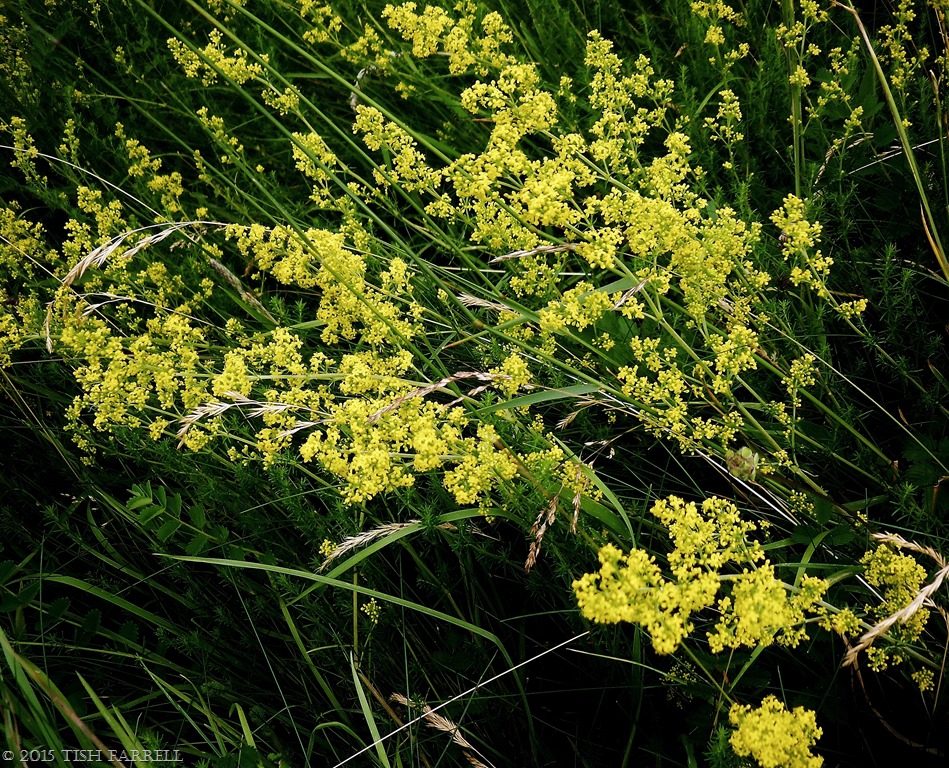
Anyone who joined me on last week’s walk around Windmill Hill, will probably know  that this drift of yellow is commonly known as Lady’s bedstraw or Lady’s tresses (Galium verum). When dried it smells of freshly mown hay, and so was once added to mattresses. Given these supine associations it seemed fitting that the only way to capture its essence was to lie down with it in the grass.

And lying down certainly reduces operator wobble, although there wasn’t much I could do about the summer breeze.  So I caught that too. And since I have yet to devise a ‘scratch and sniff’ widget, you must now use your imagination to summon a fragrance with subtle notes of gardenia plus a dash of fresh acacia honey. Mmmm. I don’t know about you, but I’m feeling a snooze coming on, borne away on a tsunami of sweet, golden, flowers. Happy dreams.

copyright 2015 Tish Farrell

Inspired by Jennifer Nichole Wells One Word Photo Challenge: tsunami  Go here to see Jennifer’s fascinating miniature world, and other bloggers’ interpretations for OWPC.

I’m also linking this to Lucile de Godoy’s Photo Rehab at Bridging Lacunas. Please visit her and her community of photo bloggers for a great boost to your creativity.

Return to Windmill Hill: Of Grasshopper Stalking, Lady’s Bedstraw And Other Random Discoveries

100_6008

Today I thought it was time to check on the floral happenings in our remnant of limestone meadow up on Windmill Hill. It’s a few weeks since I was last up there, and the spring flowers are giving way to summer species. Perhaps one of  the most pleasing finds were these drifts of Lady’s Bedstraw,  seen here below the windmill.

It is also called Lady’s Tresses, and  it smells of honeyed summer pasture. Once it would be gathered and dried and included with the straw that was used to fill mattresses. It was often chosen for the beds of pregnant women, so surrounding those in their confinement with soothing wafts of sweet hay scents.

I think this is a practice we could revive, not that we are allowed to harvest wild flowers. I’m envisaging now a pillow filled  with golden stems. Surely it would be just the thing to send us sleep-fractured souls back to dreamland. And even if it didn’t, it would make being wakeful a pleasure.

100_5898

The spotted orchids  I first found last month for Meg are nearly over (by the way, you should see Meg’s sundews found in Australia’s  Stanthorpe granite country over at Snippetsandsnaps). But following on from the common spotted are the pyramidal orchids, which range in colour from lipstick pink to purple. I also discover from plantlife.org.uk that these, like many orchids, require the presence of a particular fungus in the soil in order to flower.

100_5892

I also discover from Richard Mabey’s treasure of a book, Flora Britannica,  that when the Victorian art critic, John Ruskin, learned that the name orchid derived from the Greek word orkhis  meaning testicle, he urged that the flower’s name be changed to wreathewort. Personally, I don’t think this any sort of improvement. The man was a prude. Besides, the reason that orchids are named after testicles is because their roots’ appearance do a pretty good impersonation of same. Doubtless this was why they were long considered a useful remedy for a lapsed libido – a herbal fancy and fallacy I imagine, so do  not try this at home.

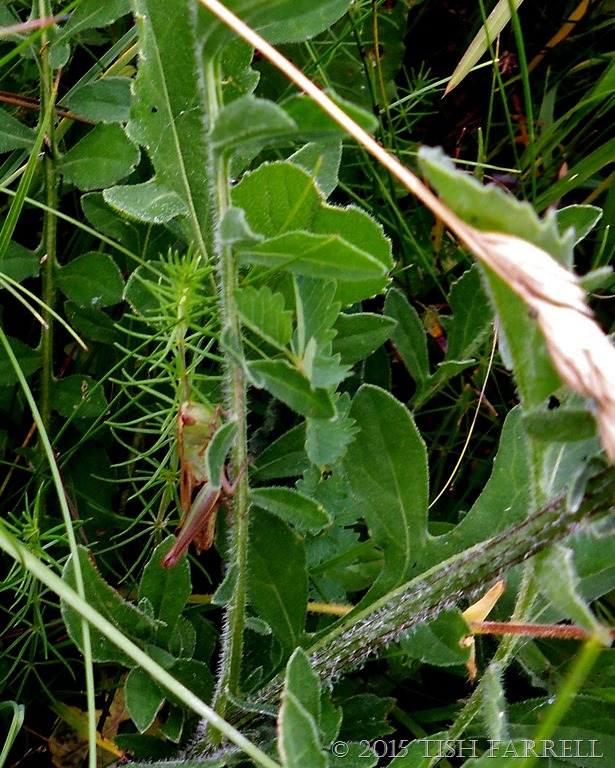
While I was scrabbling around on my knees in the grass, thinking what strange things I have started doing since joining WordPress, I became distracted by a grasshopper. This is not the greatest shot. He is lurking on the leaves of greater knapweed, Centaurea scabiosa. Very well camouflaged I thought.

100_5972

100_5968

While I was down there, because believe me, once you get down on your knees you need to make the most of it, I also discovered some Lady’s Bedstraw caught inside a web. It looks like a shroud. You can just see the tiny spider due south of the flower:

100_5993

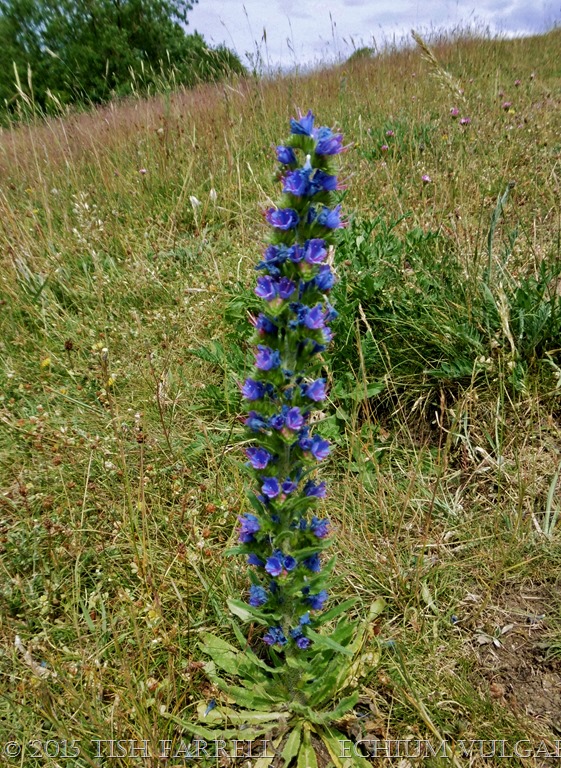
And now here is one of Windmill Hill’s  more sinister-looking plant specimens, – the very upright prickly spires of Viper’s bugloss. Apparently the flower’s fruits resemble adders’ heads, and other names include adderwort and snake flower. As well as colonising limestone areas, you will also find it growing on chalky and industrially contaminated soils. Like other members of the Echium family, which includes borage and comfrey, it is attractive to bees.

P1010611

And here’s another bee favourite – Wild Thyme:

100_5950

Thyme is of course a must in the kitchen. It is also a common medicinal herb. All forms of the plant contain the volatile oil thymol, a powerful antiseptic, which is often included in cough mixtures. I use thyme (fresh or dried) steeped in hot water with honey and fresh lemon juice when I have a cold or cough.

And talking of thyme, it’s time to head for home. So I’ll leave you with one last view of the windmill and some more flowers named after testicles. Not that it’s in any way connected, but I had to lie down in the grass to take this shot – a fine way for the minuting secretary of Much Wenlock Civic Society to conduct herself. It was just as well there were none of the usual walkers and their dogs around for me to frighten:

100_5981

This excursion, but naturally not the bit about the orchid’s etymology, was inspired by Jo’s Monday Walk. Please join her there for some fascinating rambles.

copyright 2105 Tish Farrell

Wild orchids for Meg, meeting Marathon Man, then elderflower sorbet to finish

100_5645

In case you don’t know Meg she is presently in Warsaw, and if you want to get in lots of vicarious walking with fascinating things to see (and sometimes eat) please join her there. Anyway, this wild orchid is for her, and so is this walk, since it took me back to Windmill Hill (which is actually only across the road from my house), to search once more for signs of spring.

At least last Friday the sun was out, but we still have a continuous chilling wind. As I may have said elsewhere, it feels as if it has blown across an ice sheet before ending up in Shropshire. Brrr. So far it looks as though ‘clouts’ will not be cast in June, never mind in May. I, for one, am sticking to my many garment layers, which may or may not include a vest.

But back to the orchids. This one took some finding, but I had promised Meg I would look. She had read my mention of limestone-meadow plants in an earlier post about Windmill Hill, and wanted to see more. This lovely little plant, about a hand’s span tall, has the plain name of Common spotted orchid. It was growing at the foot of the hill, and I had seen the darkly spotted leaves a week or so before. They are definitely being slow to flower this year. They probably don’t like the wind either.

To find them I went the long way round, once more up the Linden Walk whose ancient limes are now bursting into juicy green clouds. Soon (I hope) they will be flowering, and then I can get high on the scent, as well as on the sight of them. (Herbalists use lime flowers as a sedative, quite a strong one, so don’t use the flowers without expert guidance). Good old Dr. William Penny Brookes, Much Wenlock’s erstwhile physician, and the man who planted this avenue over a hundred years ago, knew what he was at on the life-enhancing front. Bravo Dr. Brookes.

P1010454

Once out of the Linden Field and onto the hill, I’m taking the low path around the bottom when along comes octogenarian, Jimmy Moore, our local marathon man. He’s out on his morning run – an example to us all. He’s raised over £30,000 for charity. Seeing him approach in his buttercup yellow shirt is enough to lift the spirits sky-high. Keep on running, Jimmy.

P1010423

As he passes me, he still has breath to crack a joke, and to say my photo of him will doubltless be worth a fortune. He speeds away, and I meander on, peering into the meadow grass.

The cowslips are over, but there are low growing clumps of Common bird’s foot trefoil, Lotus  corniculatus if I am not mistaken in my identification from the classic Keble Martin work on British flora. As you can see from its pea-like flowers, it belongs to the legume family.

100_5572

Up the hill to the windmill and there are carpets of buttercups, and a little family pretending the windmill is a castle. I like overhearing their interpretation of these remains. I shall think of them differently from now on:

P1010446

The search for orchids next takes me along the hedge line where the open meadow becomes woodland. And here I find the first elderflowers of the year. I love their creamy colours, and they make the most delicious sorbet (recipe at the end).

100_5667

The flowers also make a fragrant tea that is anti-catarrhal, and when mixed with peppermint is a good remedy for colds and flu.  The elder tree itself has magical connotations, and features in many traditions of indigenous peoples around the world, including North America’s First Nations’ tales. The dark purple berries are of course now used in a commonly available anti-viral that goes under various names that derive from its botanical name Sambucus. The berries’ efficacy was trialled some years ago by Israeli scientists, if I remember rightly, and used to treat HIV- patients. They are thus, not by any means, ‘a quack cure’.

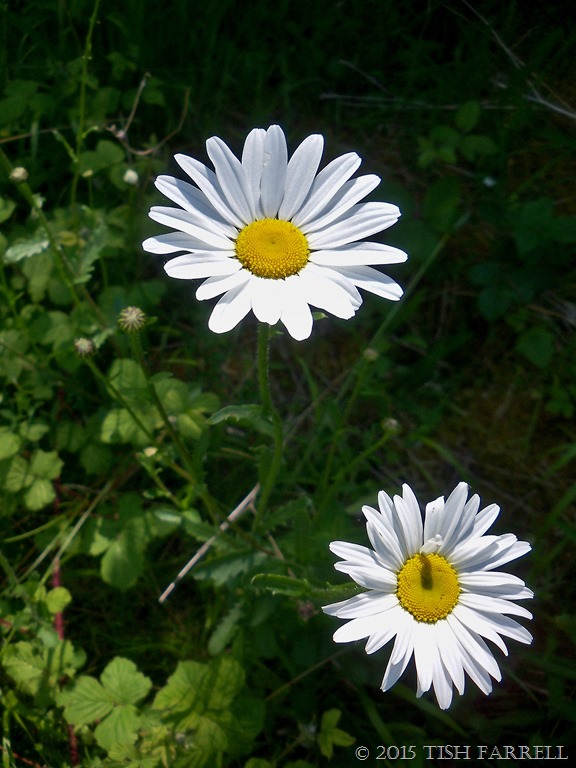
Into the wood, and the flowers of my earlier spring walk (which you can find HERE) the arum lilies, violets and wild garlic, are over and, beyond a few tiny wild strawberry flowers, there’s not much to be seen until I reach the roadside verge. First the Oxeye daisies…

100_5644

And then the orchids, although so far only a handful are in flower. Here’s what they look like before they bloom, along with a glimpse of a wild strawberry flower at 3 o’clock:

P1010434

And now as promised a recipe:


Elderflower Sorbet

8oz /1 cup/ 250 gm  fair trade unbleached granulated sugar

1 pint/0.5 litre  water

2 lemons

2/3 big heads of elderflowers


First pick the elderflowers  when they are freshly open , and on a dry day. Shake out the bugs but  do not wash. Keep the heads intact.

Pare the rind finely from the lemons, and squeeze out the juice.

Heat the water and sugar in a pan, starting gently until the sugar has dissolved,  add the lemon rind and then boil briskly for 5 minutes.

Remove from the heat. Add lemon juice and elderflower heads. Leave to cool.

Strain  into a suitable container and freeze. After an hour or so,  when the sorbet is slushy and starting to set , you can give it a good mash with a fork to break up any crystals, and return  it to the freezer.

Alternatively, strain and churn in an ice cream maker.

This sorbet is delicious with  fresh strawberries.


And guess what, as I finish writing this post the wind has dropped, and it is suddenly HOT.  Just the weather for sorbet. Hurrah!

P.S. It didn’t last, so we had broad bean soup instead.

copyright 2015 Tish Farrell


Please do drop in on Jo’s Monday Walk and Meg’s Warsaw2015 if you are up for some more interesting excursions.


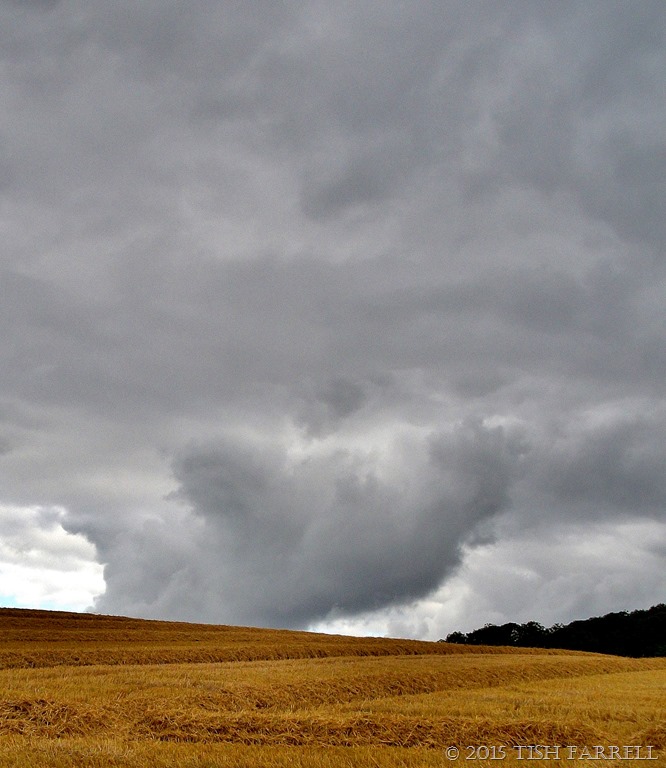
On Edge With Stormy Weather Over Wenlock

IMG_1390 (2)

Before and after last summer’s wheat harvest.

100_6323

As I’ve mentioned once or several times, I spend much time watching the sky behind our house. I never cease to be fascinated by the false horizon created by this low hill. Behind it is a another false horizon created by Wenlock Edge which lies a half mile further on.  Here in Wenlock, then, we see the movement of clouds in the westerly sky  several hundred feet higher than do our neighbours below the Edge. It is a piece of geographic happenstance that makes for dramatic skyscapes. It’s a bit like watching a moving stage set.

I justify the time spent sky watching on the grounds that I need to make the most of this view. Doubtless the local landowner will get his way and one day build a sprawling housing estate here, this despite the fact the town has a Victorian drainage system that cannot cope with any more human effluent. Already, just to add an off-colour atmosphere to the scene, our sewage works is licensed to dump excess untreated waste into the stream which thence flows into the River Severn and through the World Heritage Site of the Ironbridge Gorge. This is clearly what is meant in England when certain politicians bang on about Victorian Values.  Sometimes I wonder how, as a nation, we can be so very smug about ourselves.

The poor drains of course add to the town’s flash flooding risk, and to replace them would cost many millions. We do not appear to have a planning system in this country that says NO to development, even though there is insufficient infra-structure to support it. Developers of course pay a pro rata community levy on the number of houses built, but such amounts could not begin to cover the cost of the kind of remedial work that is necessary. When Wenlock’s population is less than 3,000, why would a water company spend 10 million pounds on such a venture?

The main problem is that the town sits in a hollow behind the summit of Wenlock Edge. The town centre is at the lowest point and thus one of the most vulnerable areas. In 2007 over fifty houses were damaged. Many afflicted families were still trying to restore their homes up to a year later. And while insurance cover may make good the bricks and mortar, it does not bring back the personal belongings that were lost, or quickly eradicate the memory of having a metre high flood rushing through your house.

Mostly of course, the town does not flood, although parts of it are prone to run-off from surrounding hills in times of prolonged wet weather. As far as we know, our house has never flooded, although given its position, built into the bottom of the hill, this is in some ways surprising. There is anyway a low earth bund along the back boundary and, after earlier flood incidents lower down the street, the landowner’s tenant farmer continues to leave a broad swathe of uncultivated ground behind our houses, and then ploughs  in line with it.

In fact to create real problems it takes a certain kind of storm to hit our catchment area. But when it comes there is less than 20 minutes warning before a flash flood. The roads into the town become rivers. Every hard surface speeds up the flow, and given our antiquated system, all the storm water goes into the foul sewer. All of which is to say, as one of the flood alert wardens with the brief of forewarning elderly neighbours, I also have more pressing reasons for watching the sky, and keeping an eye on any storms brewing.

copyright 2015 Tish Farrell

Related:

In Much Wenlock An Inspector Calls

Please visit Paula’s place at Lost in Translation for more fascinating cloudscape photographs.

5 Photos 5 Stories: Hidden Wenlock #5

100_3612

For the final post in this Hidden Wenlock series I thought I’d show you Ashfield Hall, one of the most impressive houses on the High Street. Yesterday I said how many of the town’s ancient timber-framed buildings had become hidden within later stone exteriors. With this house it was rather different.

The left-hand wing with the arch was built some time between 1396 and 1421 by one William Ashfield, a town resident. The impressive timbered wing was added in the 1550s for Richard Lawley. He and his brother, Thomas, were members of a leading local family, and it was they who, after the Dissolution of the Monasteries, bought the Priory and its estate from Henry VIII’s physician, the Venetian, Augustino Augustini.

Augustino seems to have been a slippery type, always short of money. He had been Cardinal Wolsey’s physician before Wolsey lost royal favour. He then became embroiled in the intrigues of King Henry’s ‘fixer’, Thomas Cromwell, who had also been  a Wolsey retainer. One of Augustino’s missions was to go to Germany to lobby support for Henry’s divorce from Catherine of Aragon. The Priory was thus his reward for services rendered. He wasted little time in selling it off, and the Lawleys paid him £1,606 6 shillings  8 pence for it. On the proceeds of the deal he then headed home to Italy.

In the 17th century Ashfield Hall became the Blue Bridge Inn, named after the bridge that crossed the malodorous stream, the town’s open sewer that ran down the main street, and was known for good reason as the ‘Schet Brok’.

Despite the insalubrious quarter, legend has it that King Charles I stayed at the Blue Bridge in 1642, en route for Oxford and the Battle of Edgehill. Thereafter, the place went seriously downhill, and became a lodging for itinerant labourers.

But there are earlier stories than these relating to Ashfield Hall. The High Street used to be called Spital (Hospital) Street, and it is believed that the archway probably gave access to the Hospital of St. John whose existence is first documented in 1267. In 1275 an appeal went out for the Master and Brethren of the hostel “to which lost and naked beggars are frequently admitted for their relief, the house being in great poverty.” Merchants coming to town with grain and other goods to trade were called on to give some assistance. By 1329 the Priory was taking over the premises, although it is not known if they continued to run the charity.

This reminds me, though, of a statistic I read years ago in an economic history of Medieval Europe. It shocked me at the time, but it seems it was the norm pretty much everywhere in the Middle Ages for 20% of the population to be beggars (professional or otherwise) and living off lordly charity. Giving to the poor was apparently an important means by which the rich got over their guilt at being rich, and so gained grace. It was how society worked.

100_4920

By the 18th century, we have a different story. Much Wenlock has some of the most comprehensive pre-1834 English Poor Law records still surviving. The dismal picture they paint is more about local bureaucrats trying to save the town from the expense of supporting any more poor than it absolutely has to.  The destitute were mostly women and children. The women, often no more than girls who had been sent off as apprenticed labour and returned, impregnated by their overseers and masters, were subjected to pre-birth, and post-birth bastardy examinations to determine their right to stay in the parish. If churchwardens and overseers found against them, they were subject to removal orders. Pauper children were sent as indentured apprentices to anyone in need of cheap labour. I have a copy of a Much Wenlock churchwardens’ indenture of 1805 which places

Thomas Williams aged eight years or thereabouts, a poor Child of the said Parish ~ Apprentice to James Barker of Madeley Wood, Whitesmith…with him to dwell and serve…until the said Apprentice shall accomplish his full Age of twenty one years ~

In return, James Barker is to train the lad in the business of a whitesmith (tin working), and give him “sufficient (the quantity is unspecified) meat, drink, apparel, lodging, washing and other things necessary and fit for an apprentice.”

It’s a sobering glimpse of life for the powerless and underprivileged. It shows, too, the disparities between rich and poor, the respectable and socially unacceptable in a small, but  largely prosperous town like Much Wenlock.

Which rather brings me back to the Schet Brok, the town’s once infamous open sewer. In fact it was not until Victorian times that the stream was finally enclosed and culverted, and a proper sewerage system installed. These improvements were down to the town’s good physician, Dr William Brookes, he who also masterminded the Wenlock Olympian Games and inspired the modern Olympic  movement.

The brook still causes the town problems, even though (mostly) we can no longer see it. Come heavy storms on Wenlock Edge, and the culvert has been known to cause terrible flooding, the last event being in 2007. But that, as they say, is another story, although I’ll leave you with some pictures courtesy of Much Wenlock’s Flood Action Group. It is a good example of how the doings of the past, hidden though they may be, can be very much with us.

copyright 2015 Tish Farrell

collagehighst[1]


5 Photos 5 Stories Challenge

Pauline at Memories Are Made of This nominated me to take up this challenge. The idea is to  “post a photo each day for five consecutive days and attach a story to the photo. It can be fiction or non-fiction, a poem or a short paragraph, and each day nominate another blogger for the challenge”.

So today I would like to nominate Anke at Life in Baku. She has been living and working in the capital of Azebaijan since 2012. Her blog is an on-going quest to reveal in words and photos, places and people, their ways of life. Join her on this fascinating journey. 

P.S. To those who are taking up my challenges, I gather from Jo at Restless Jo (who is also doing it this week) that it should be ONE photo. Oh well.

Hidden Wenlock #1

Hidden Wenlock #2

Hidden Wenlock #3

Hidden Wenlock #4


Reference: W F Mumford Wenlock in the Middle Ages

5 Photos 5 Stories: Hidden Wenlock #4

100_7003 - Copy

As I’ve been writing these pieces about the less obviously seen quarters of my home town, I’ve been aware that there is a danger of casting all in a glow of antique glamour.

It’s true that these days Much Wenlock is a very attractive place to visit. For a small town, the range of architecture (representing as it does a thousand years of continuous human habitation), is fascinating. There are grand medieval mansions, and  small stone cottages, and many quirky vernacular details. The magnificent timbered Guild Hall glimpsed below, and dating from 1540, is still the town’s council chamber, and with seats that feel like the rock of ages to those of us who have sat through many a council meeting.

P1000406

But this is all very well. For centuries, life for the labouring people of Wenlock must have been pretty grim, and one of the grimmest places to work must surely have been in the town’s many quarries, known locally as ‘the Rocks’, which I think says it all.

I’ve explained elsewhere how the town sits beneath the twenty-mile limestone scarp of Wenlock Edge, an up-thrust fossilised, tropical seabed. I’ve written, too, of how the limestone has been exploited for centuries, and at least since Roman times. Milburga’s Saxon monastery, parts of which survive beneath the parish church, was built of local stone, as was the grand Norman priory that superseded it. Later, after the Dissolution, much of the stone was re-purposed in many of the town’s buildings, and often used to clad earlier  timber-framed buildings. So it is that many of the town’s oldest surviving dwellings, including a medieval hall or two, are quite hidden from view behind much later stone facades.

100_5025

Other key uses for the quarried limestone were as a flux in the growing iron industry (i.e. from at least the late 17th century) and for lime burning to make fertiliser and building mortar.

For centuries quarrying would have been a manual task with heavy hammers, rammer bars, stone rakes and barrows as the quarrymen’s main tools. The use of black powder explosives, and then gelignite for blasting, was a much more recent practice, and not without its own serious hazards.

Lime-burners also had their kilns near the quarries, but operations were seasonal, and lime-burners did not appear to make much of a living despite the demand for their products.

The quarry featured in this post is Shadwell or Shady Well Quarry. It lies directly behind Windmill Hill, and is the nearest one to our house.

100_6671

P1000654

Workings here seem to have begun only in 1849 when Francis and John Yates of Ironbridge took a 14-year lease of a new quarry in Windmill Hill field, later called Shadwell Rock. They expected to dig 9,000 tons a year ( Glyn Williams Much Wenlock’s Limestone Quarries). In the 1860s the arrival of the railway plus the provision of a dedicated siding, saw Shadwell develop into an industrial operation. The South Wales & Cannock Chase Coal & Coke Company took over the lease, and in 1873 despatched 22,500 tons of iron fluxing stone to the Black Country in England’s industrial Midlands.

The quarry continued to be worked until 1996. Since then it has been left amid growing desolation. A few years ago there were plans to open a diving school with fifty cabins in the woods below the windmiill, but nothing came of it. The water has a strange blue-green hue which makes me think of Andrei Tarkovsky’s film Solaris. The pool is said to be over 70 feet deep and, from time to time, daft young men who have had too much cider, film themselves diving off one of the cliffs. There have been a few near misses survival-wise.

But at least some life forms have been making good use of the cliff faces. Since the blasting stopped peregrine falcons have begun to nest here. The same is apparently true for the other abandoned quarries along the Edge. There are ravens there too, although not yet at Shadwell. Perhaps they will come. It’s a pleasing thought: a case of positive re-purposing.

copyright 2015 Tish Farrell
 

Related:

Sun setting over Wenlock Edge: Or did the earth move?

Old stones of Wenlock: repurposing the Silurian Sea


5 Photos 5 Stories Challenge

Pauline at Memories Are Made of This nominated me to take up this challenge. The idea is to  “post a photo each day for five consecutive days and attach a story to the photo. It can be fiction or non-fiction, a poem or a short paragraph, and each day nominate another blogger for the challenge”.

So today I would like to nominate Hanne T Fisker. She takes stunning photographs. Her blog is called Simplicity of Being, but her compositions brim with textural drama, and the light-and-shade complexities of the natural world. Please take a look at her work.

5 Photos 5 Stories: Hidden Wenlock #3

P1000386

Saint Milburga’s Well is my choice for Day 3 of Hidden Wenlock. (Again thanks to Pauline at Memories Are Made Of This.)  It can be found just off Barrow Street, not far from the back gate to The Abbey which featured yesterday.

There are many strange myths associated with this particular saint, and her affinity with wells and springs: remnant (or not so remnant) pagan beliefs interwoven with notions of Christian miracles. But first some facts.

St. Milburga was a Saxon princess, daughter of the Mercian King, Merewalh, who held sway over much of the English Midlands during the 7th century.  These were turbulent times – the spread of Christianity going hand in hand with securing territory. And Merewalh was a man with a plan. Instead of arranging dynastic marriages for his three daughters, he made them rulers of new religious houses across his kingdom. In this way Merewalh consolidated spiritual and political prestige, commanding both bodies and souls.

According to Milburga’s contemporary, the historian Saint Bede, she was educated for her religious life at the monastery of Chelles in Paris. Then around 690 AD she returned to England and took charge of an abbey in Much Wenlock. It was a community of both monks and nuns, although they worshipped separately. There Milburga presided for the next thirty seven years, ministering to the people of her extensive domain lands.

As I said, there are hosts of legends about her, her healing powers and her ability to strike springs from the ground, and bring winter-sown barley from seed to harvest in the course of one day. There are also tales of her fierce resistance to male suitors, and rivers rising up to thwart her pursuers. After her bones were rediscovered in 1101, the cult of Milburga continued to grow over succeeding centuries. It was said, among much else, that she brought several people back from the dead.

The water from her well was also supposed to have very special powers, curing even blindness. Something of this belief persisted into the last century. Lady Catherine Milnes Gaskell, chatelaine of The Abbey until 1935, relates a conversation with a Wenlock girl, Fanny Milner. Her granny had sent her to fetch some water from the well  so she would be able to read her Sunday scripture, “glasses or no glasses”. This is what Fanny tells Lady Catherine:

“It be blessed water, grandam says, and was washed in by a saint – and when saints meddle with water, they makes, grandam says, a better job of it than any doctor, let him be fit to burst with learning.”


Lady Catherine also relates how the well  had once been long associated with rather less sacred pursuits:

It is said that at Much Wenlock on “Holy Thursday”, high revels were held formerly at St. Milburgha’s Well; that the young men after service in church bore green branches round the town, and that they stopped at last before St. Milburgha’s Well. There, it is alleged, the maidens threw in crooked pins and “wished” for sweethearts. Round the well, young men drank toasts in beer brewed from water collected from the church roof, while the women sipped sugar and water, and ate cakes. After many songs and much merriment, the day ended with games such as “Pop the Green Man down”, “Sally Water”, and “The Bull in the Ring”, which games were followed by country dances such as “The Merry Millers of Ludlow”, “John, come and kiss me”, “Tom Tizler”, “Put your smock o’ Monday”…

Catherine Milnes Gaskell Spring in a Shropshire Abbey

*


These days it is hard to imagine this gloomy and mysterious well being the focus of so much racy celebration. The well’s spring has anyway been capped, so there is no longer any holy water inside. But it might be nice to throw it a good party and wake it up, though I’m not sure about beer brewed from church roof water. Mm. Essence of mossy slates and lead guttering at the very least.

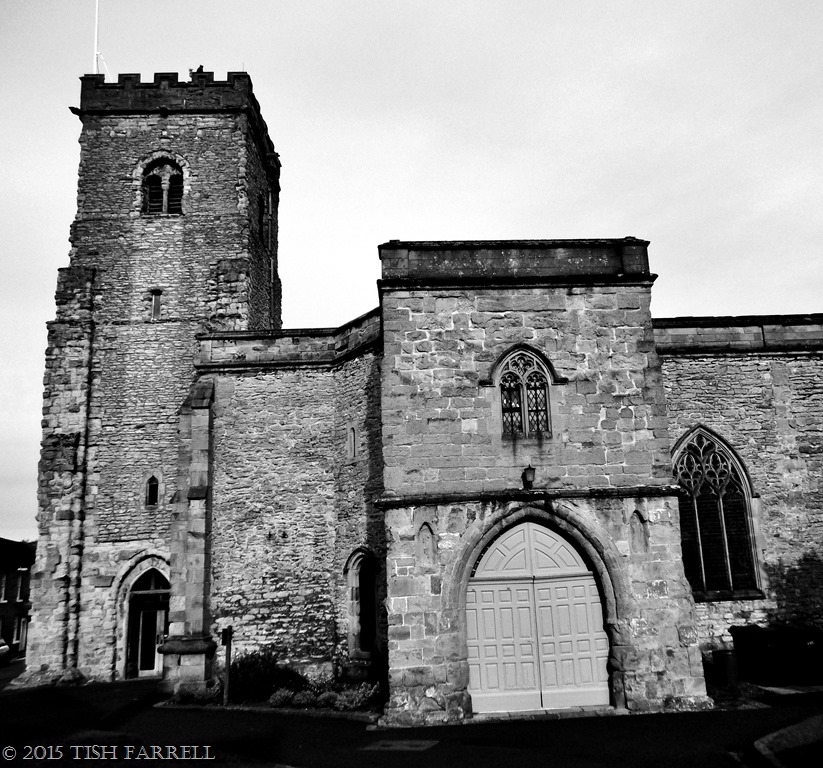
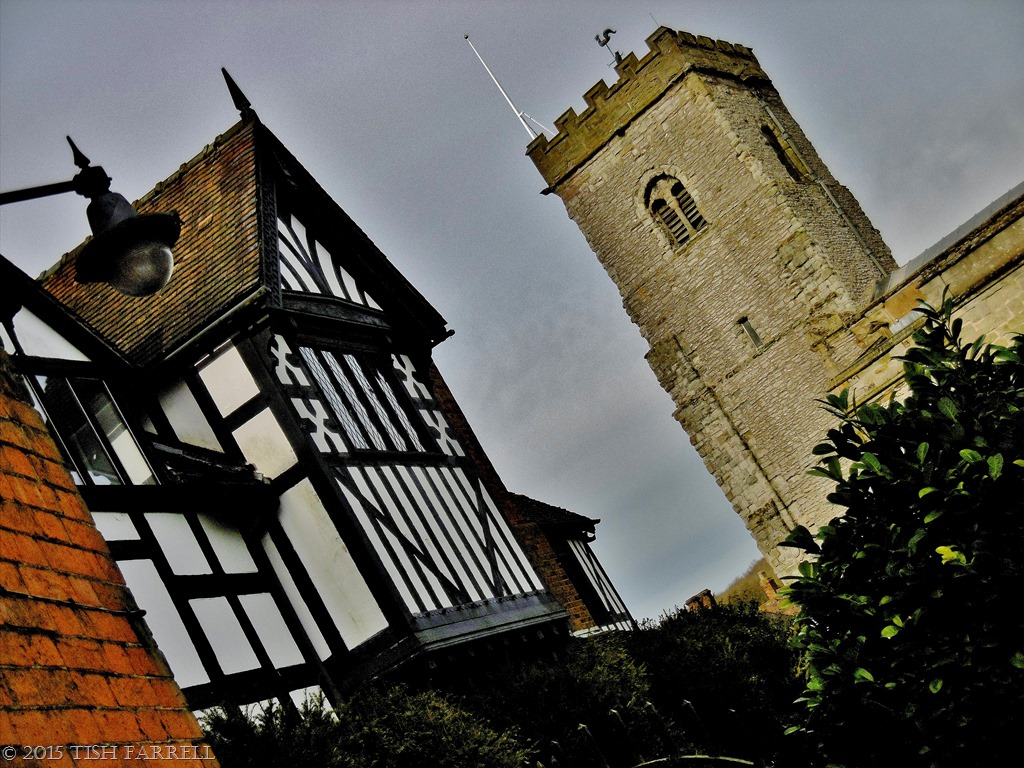
Now here’s a photo of the church in question. It stands on its green in the heart of the town. It was originally part of the Priory, and is said to be on the site of Milburga’s nuns’ church. If you look hard, you will see the plastic owl on the tower parapet. It’s there to discourage the pigeons, although I’m not sure if it works. From what I have seen of them on my allotment, Wenlock’s wily pigeons would know a plastic owl when they saw one.

IMG_1338

copyright 2015 Tish Farrell
 

5 Photos 5 Stories Challenge

The idea of this challenge is to  “post a photo each day for five consecutive days and attach a story to the photo. It can be fiction or non-fiction, a poem or a short paragraph, and each day nominate another blogger for the challenge”.

So today I would like to nominate Janet Weight Reed at My Life As An Artist. For one thing she is a magical water colourist. For another, she is so very generous with her artist’s knowledge and techniques. One of her specialities is humming birds. Go and see. Believe me, they will fly out of your screen.