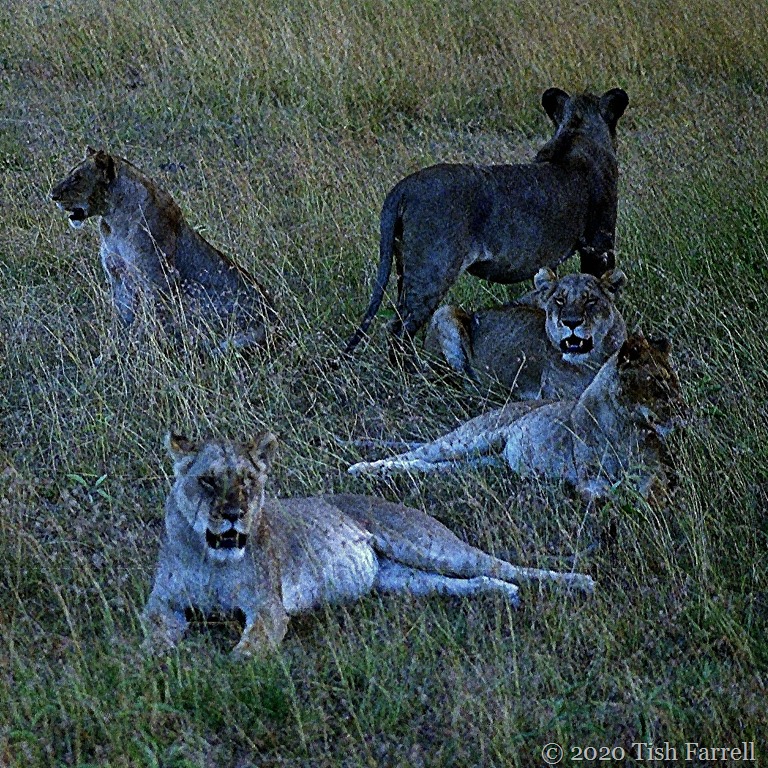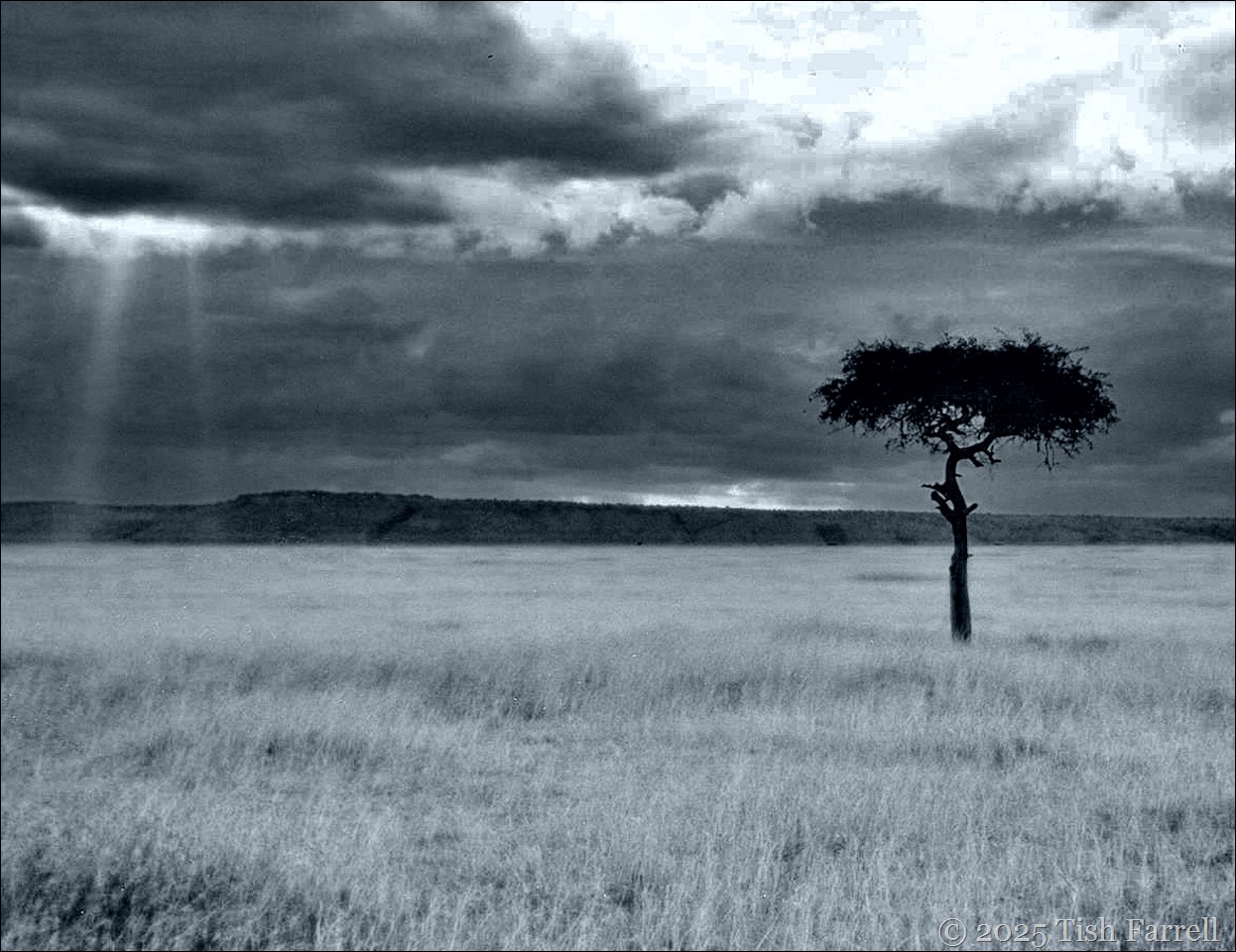
Mara Sundowner: Plains’ Shadows

Maasai Mara sunset

Back to the Farrell ‘once in Africa’ archives for this final ‘shadows’ post.

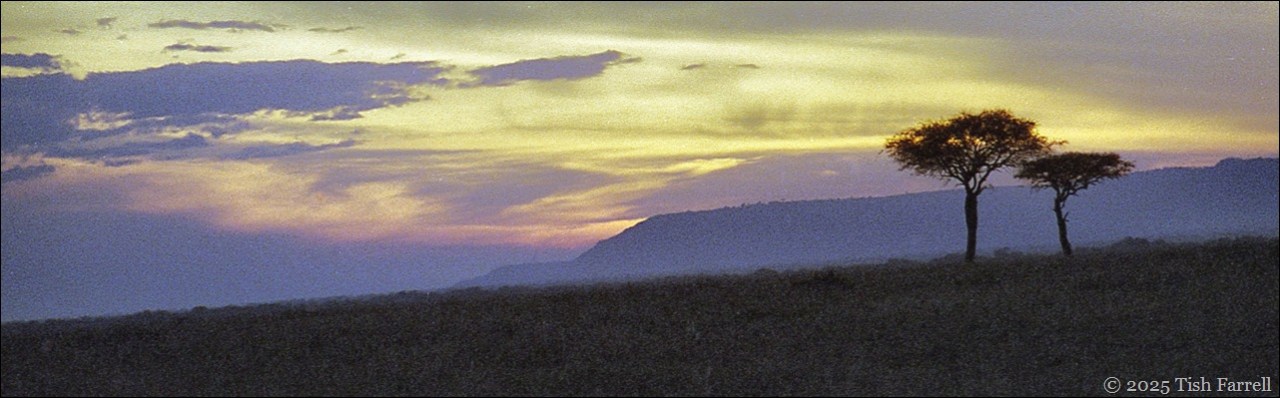
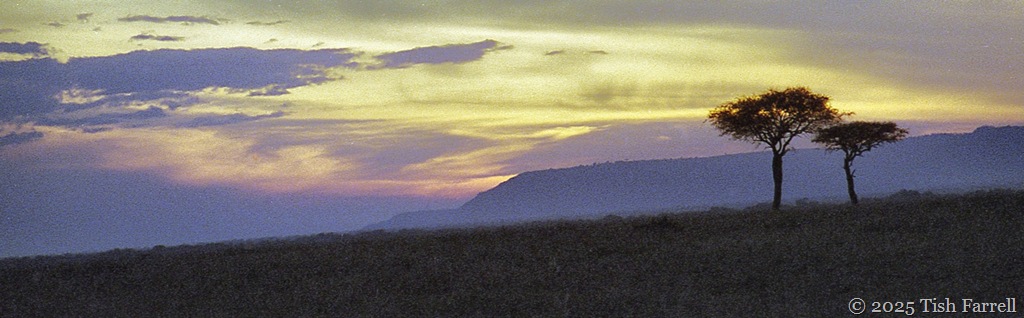
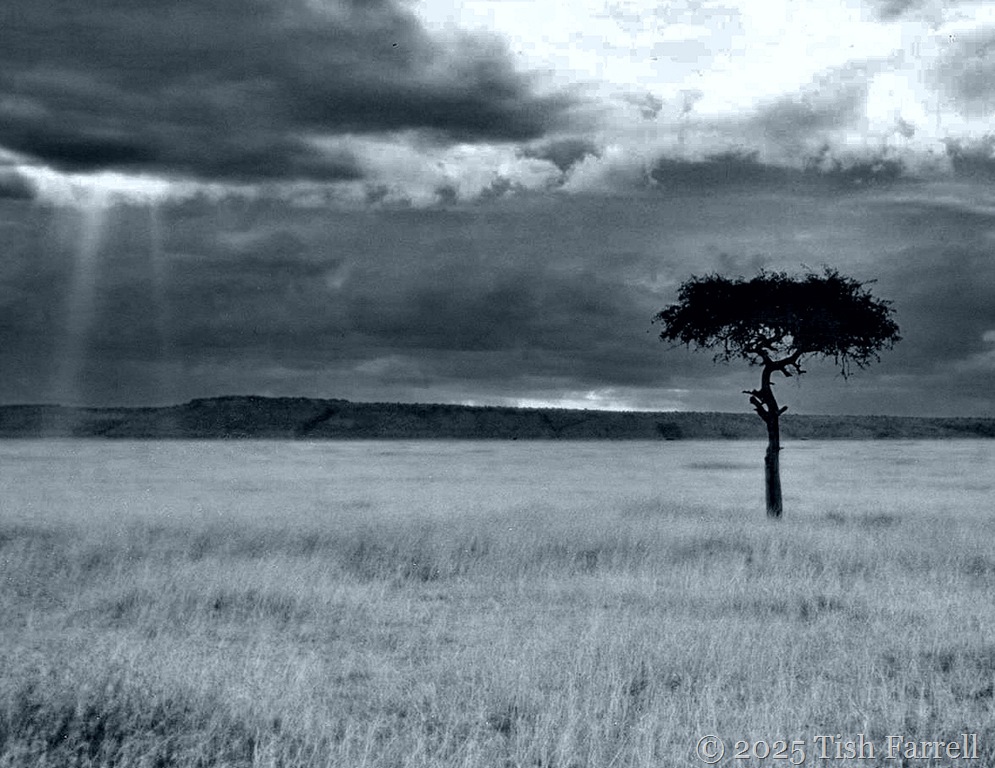
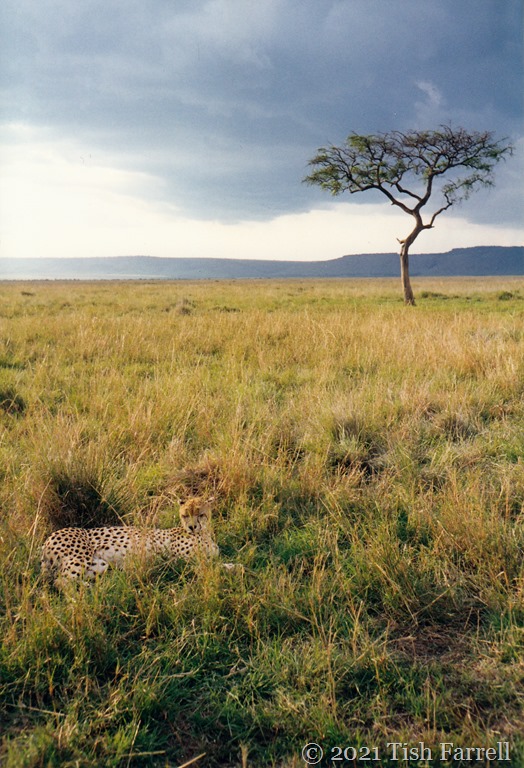
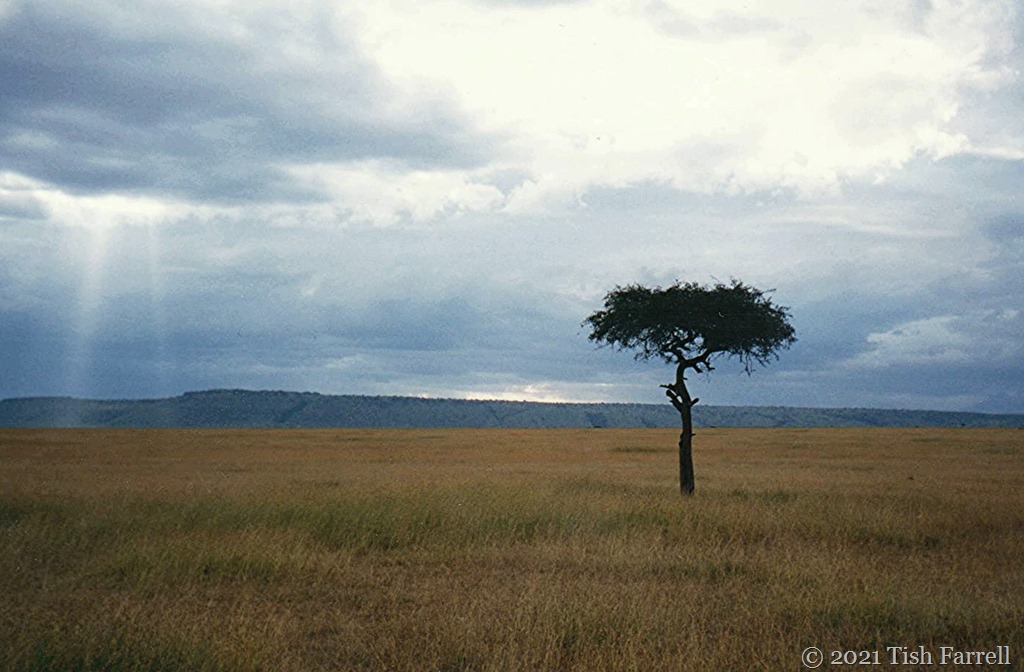
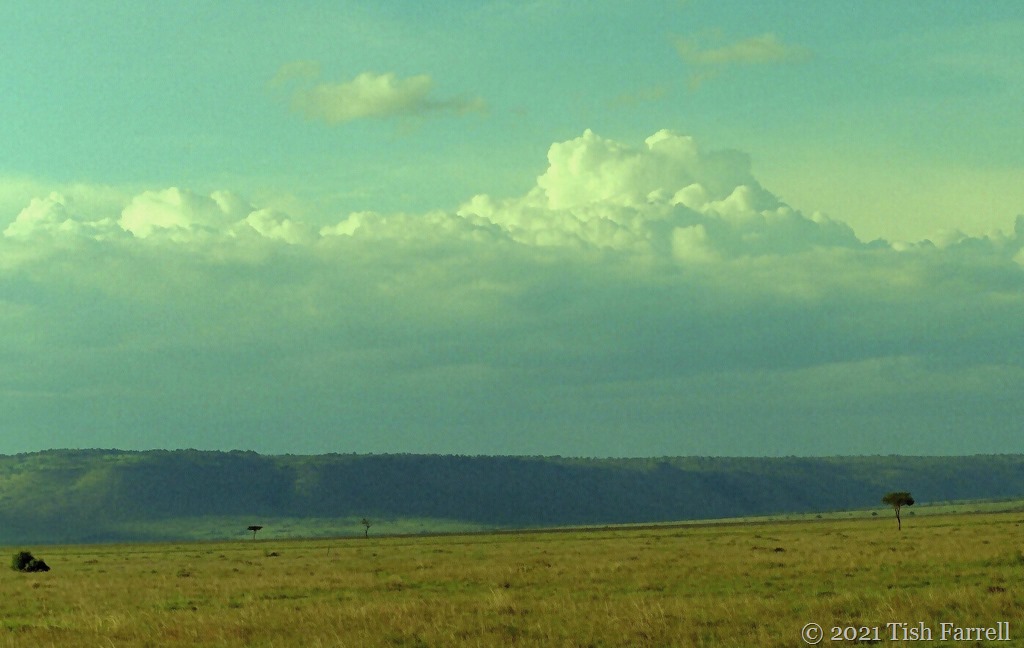
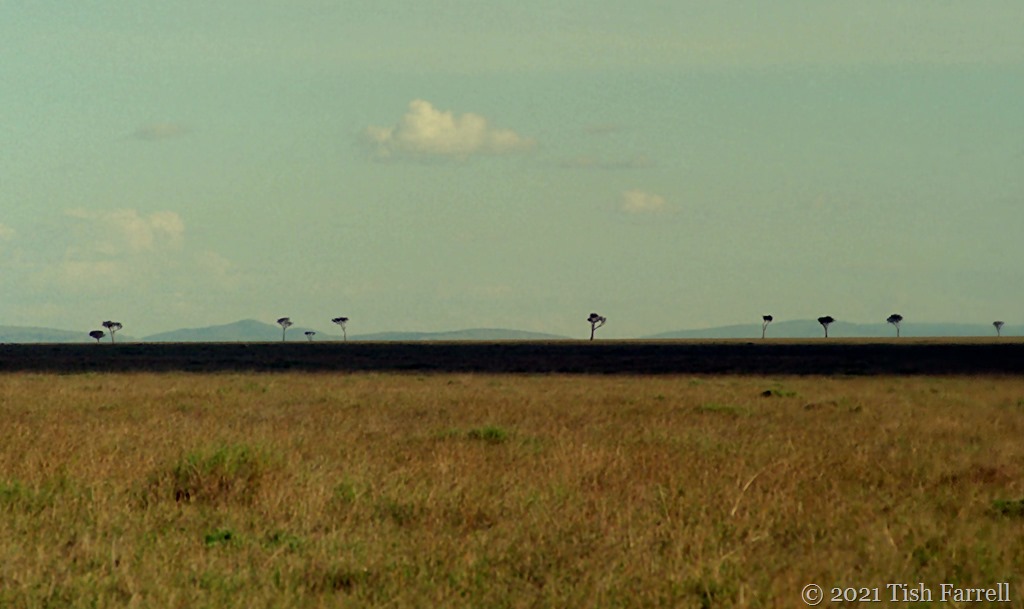
Here we have the Maasai Mara in December, a desert date tree, a shadowy glimpse of the Oloololo Escarpment, lots of stunning memories invoked, plus a few pangs for Kenya days long gone.

And talking of gone, where did this month go? Now as ‘November Shadows’ draw to a close, a big round of applause for Becky who has kept so many of us so well occupied.

Cheers, my dear!

November Shadows #30

Desert date sunset header

Scavenging The Old Africa Album

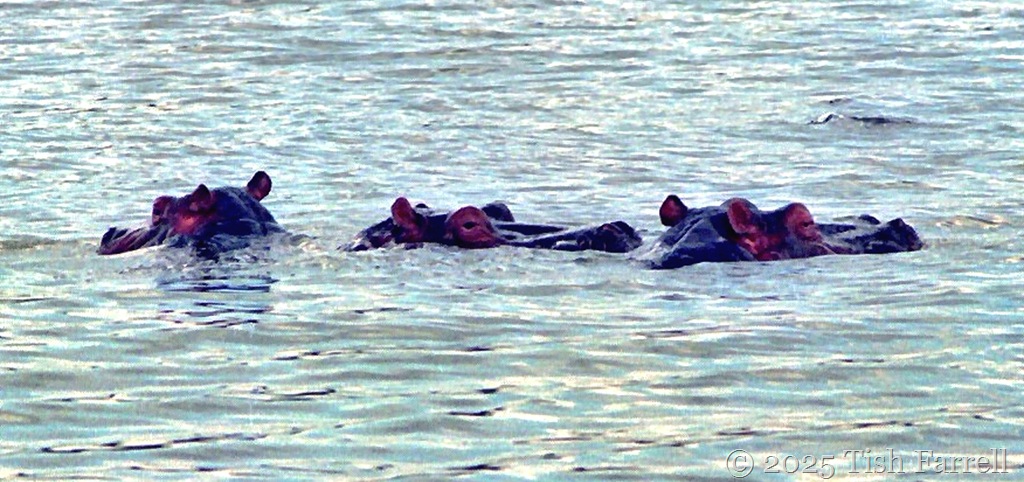
Hippos Naivasha

This week at Lens-Artists, Anne from Slow Shutter Speed sends us on a virtual scavenger hunt. I haven’t been in the old Africa album for a while, so I thought I’d have a rumage there. A virtual mini safari as well then.

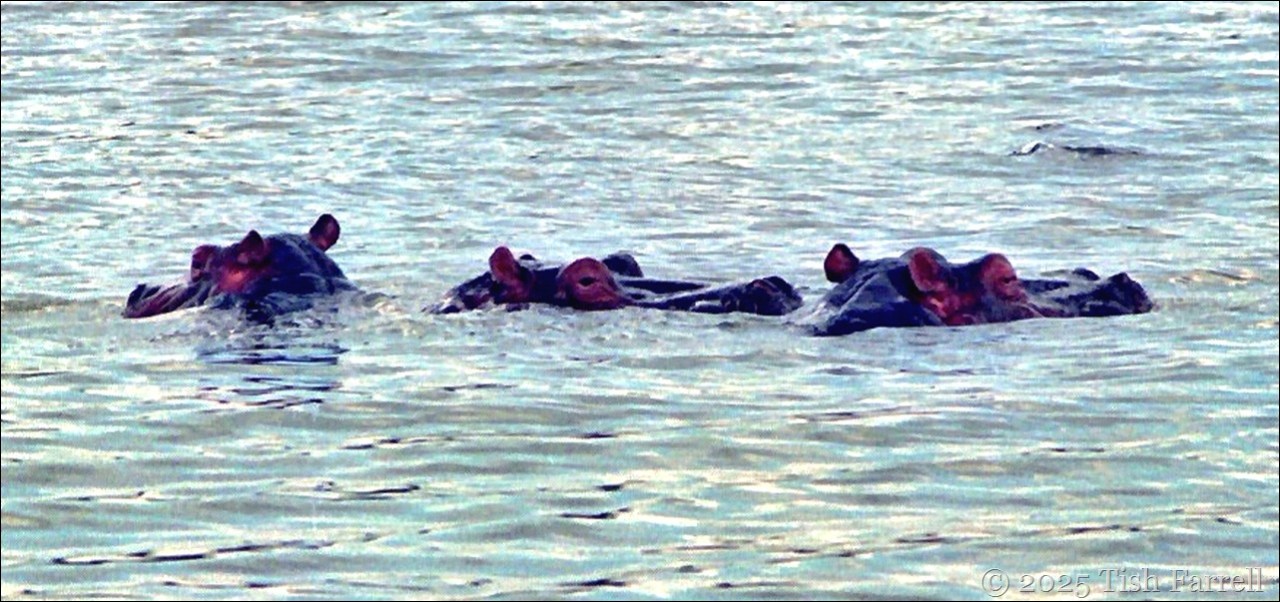
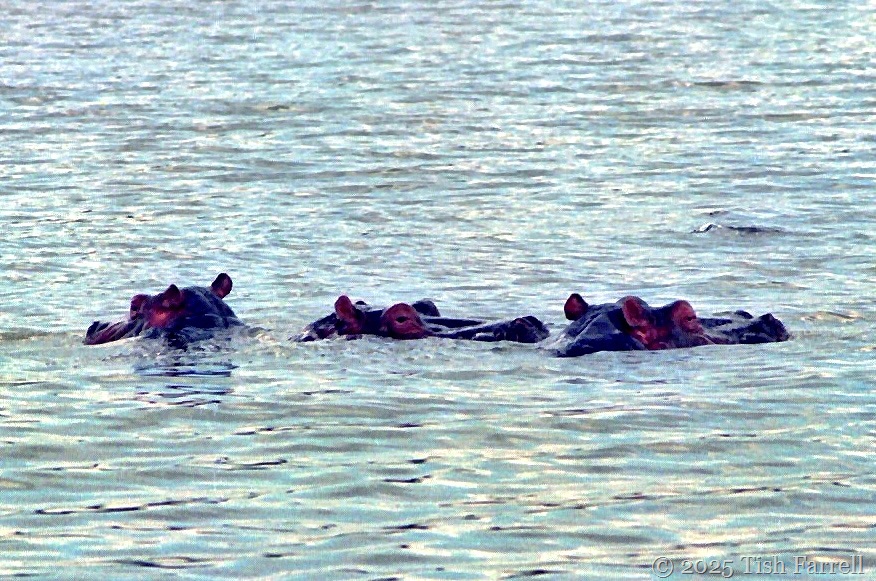
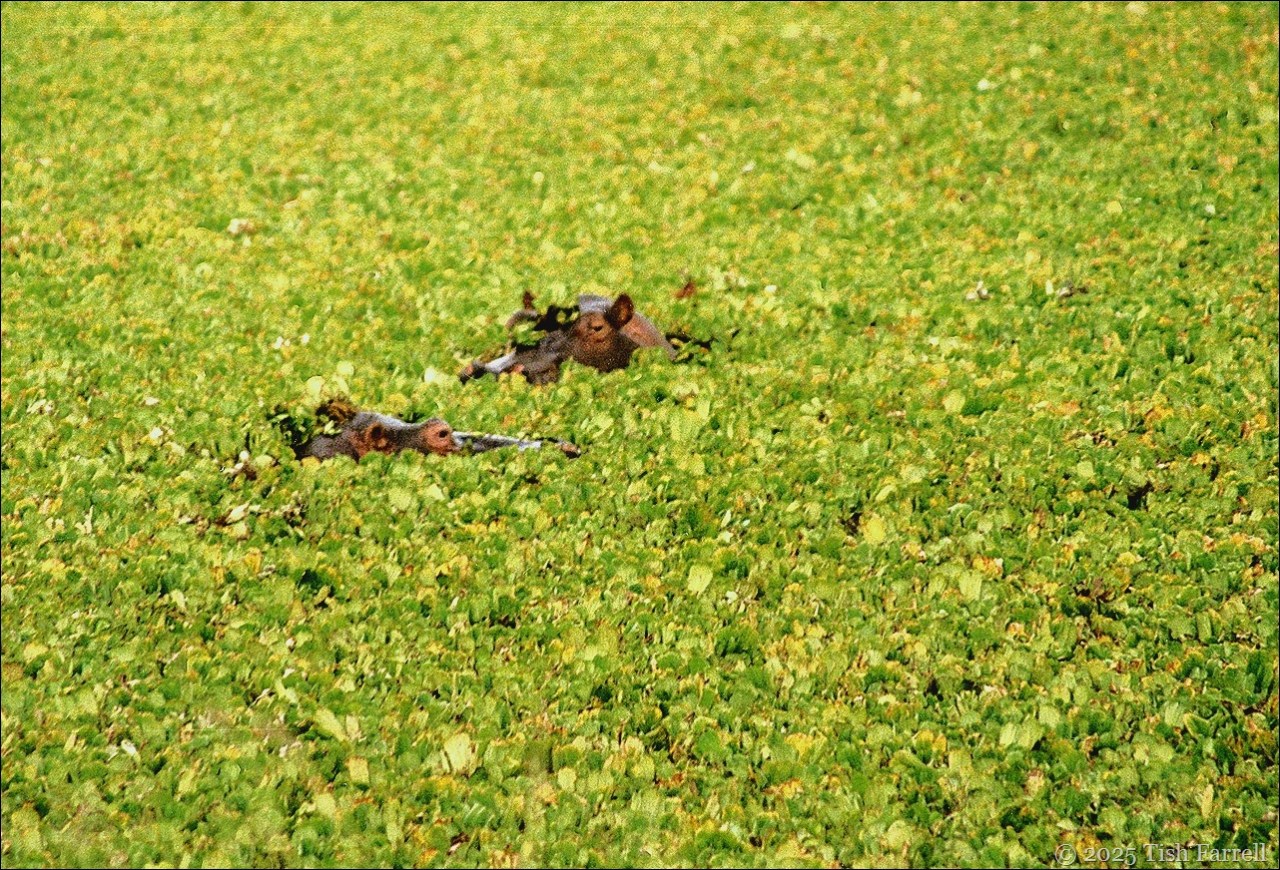
‘Wavy lines’ tops the list. The header thus features a wavy profile of hippo ears, eyes and noses in a wavy Lake Naivasha in the Kenya Rift Valley.

*

Maasai Mara elephants

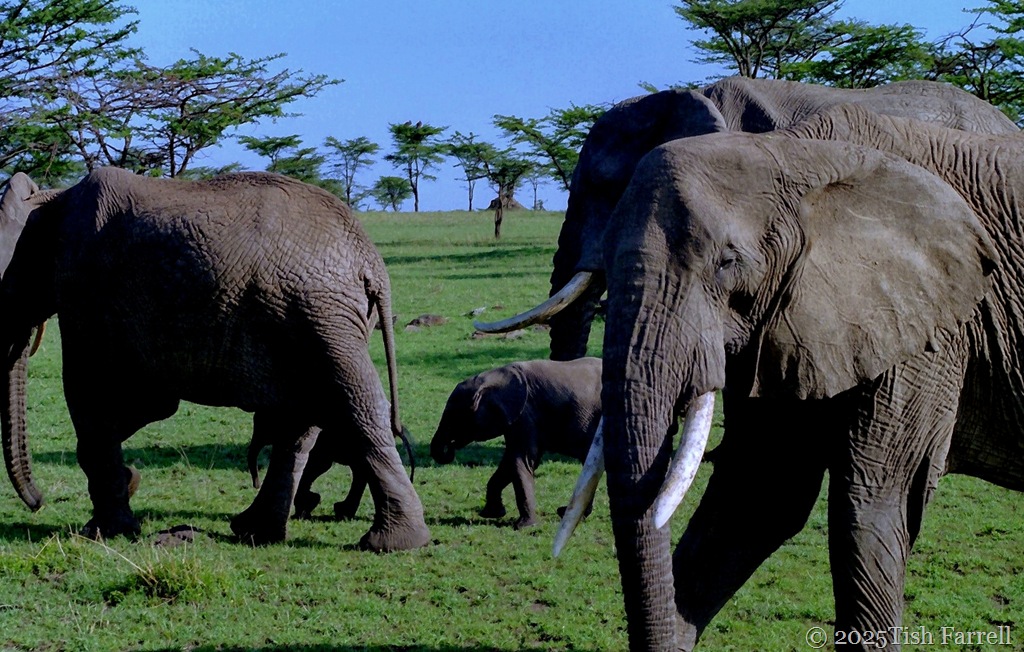
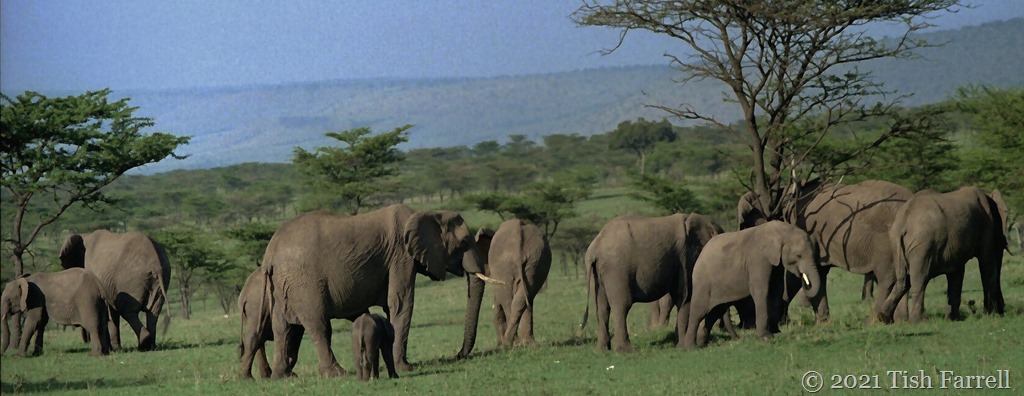
This herd of Maasai Mara elephants was in a very peaceable mood. They walked around us as we were parked up eating a picnic breakfast. I’m thinking elephant hide would feel pretty ‘bumpy’ should one ever dare to try it, especially the trunks.

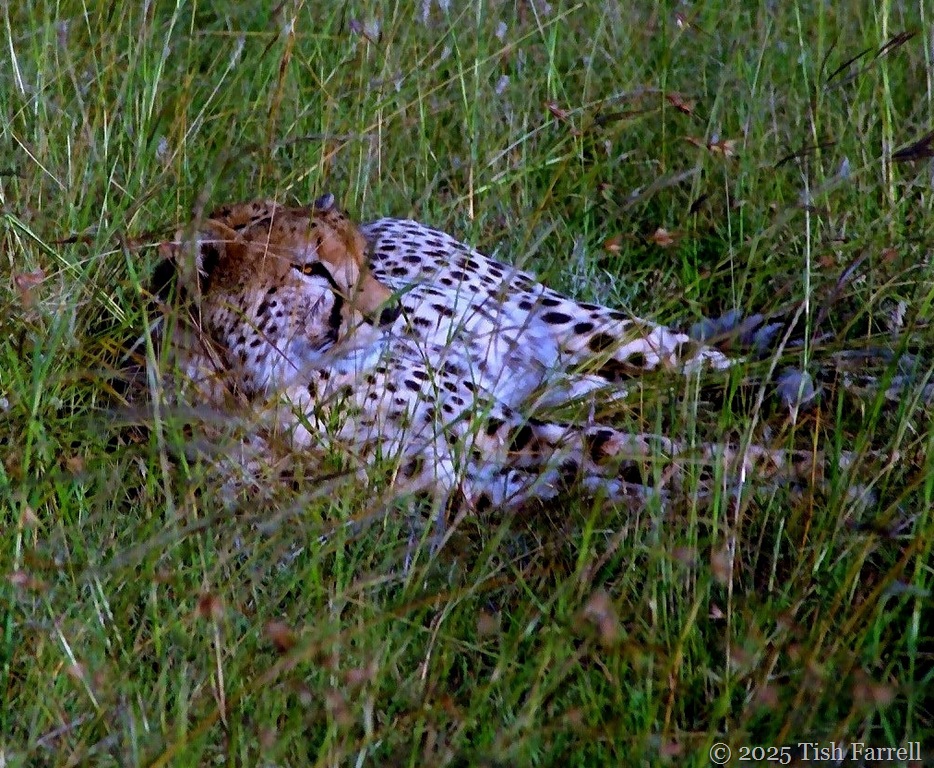
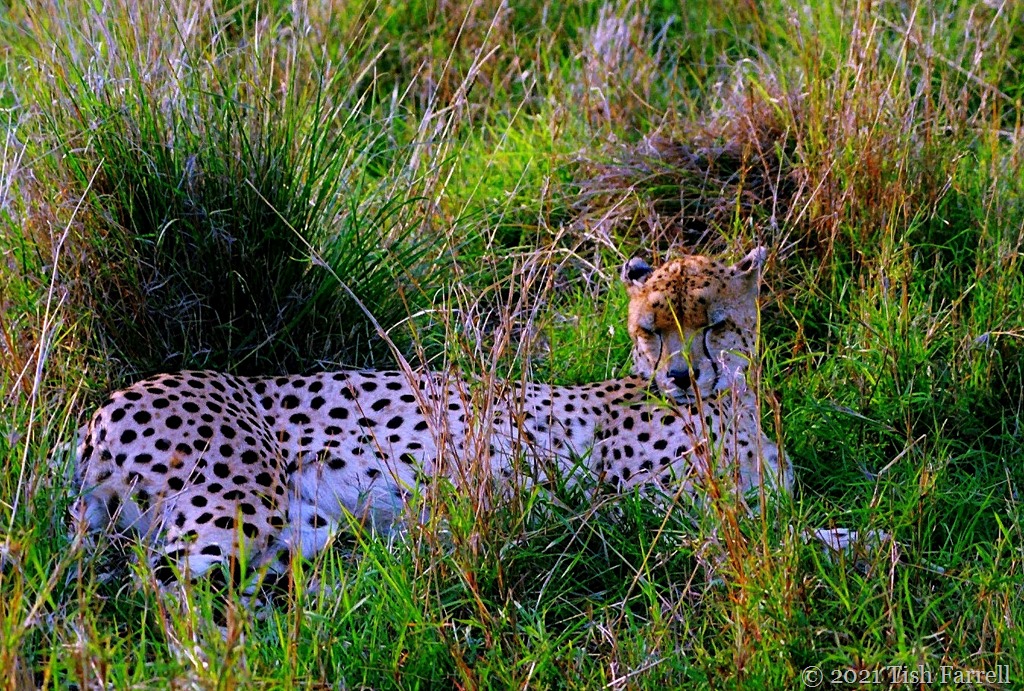
Whereas cheetahs must be wonderfully ‘soft’. They also wear nice ‘circular’ spots. This female was having an afternoon siesta when we pulled up beside her in a safari truck. She didn’t look at us, but simply posed like a professional, well used to having her photo taken.

cheetah

*

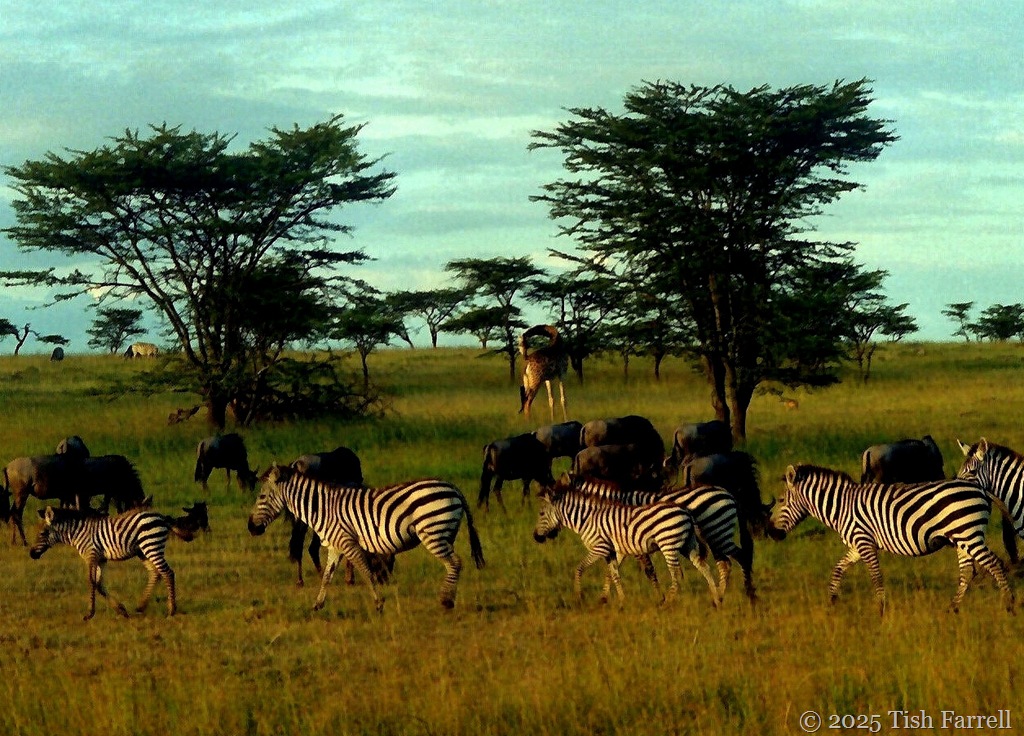
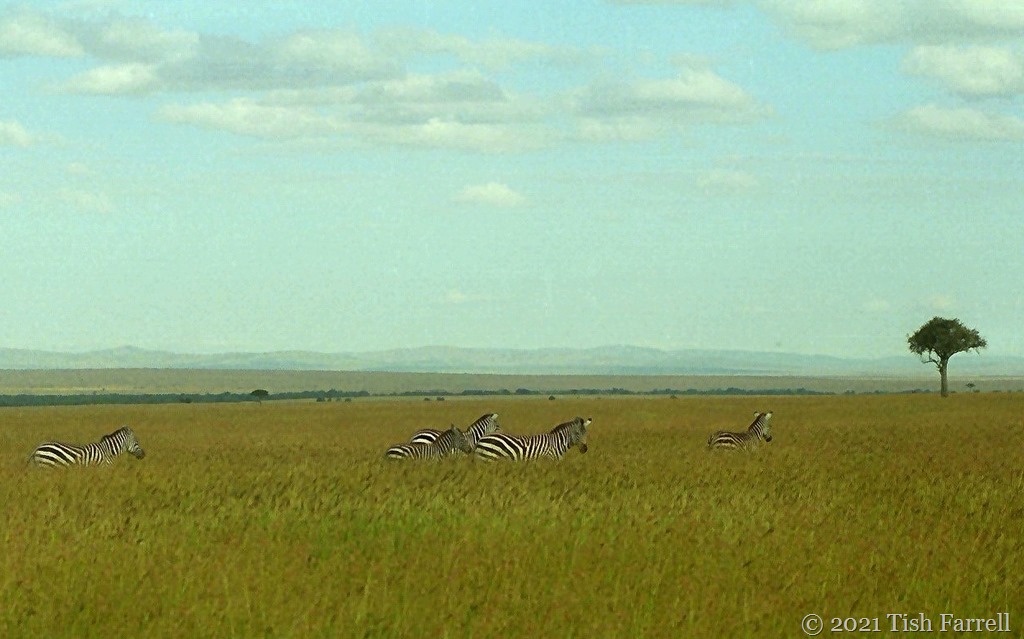
And more ‘patterns’. This time stripes. Zebras come with wavy ones:

Zebra sunset Maasai Mara

And then there’s another Kenyan speciality, patterns-wise:

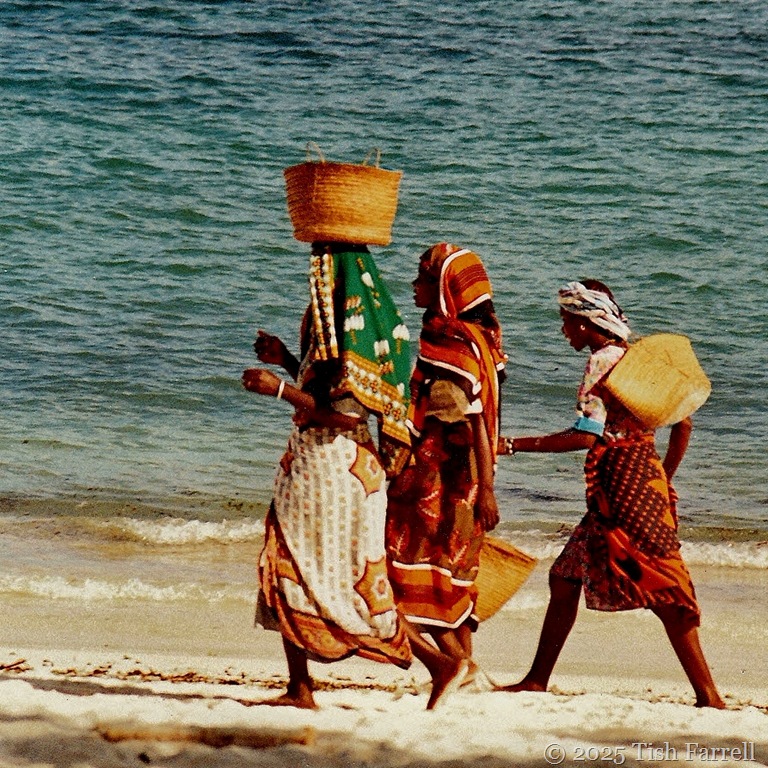
Digo girls in kanga wraps

Cotton kanga wraps come in pairs with vivid designs and snappy Swahili slogans on the hems, here worn by Digo girls on Mombasa Beach.

*

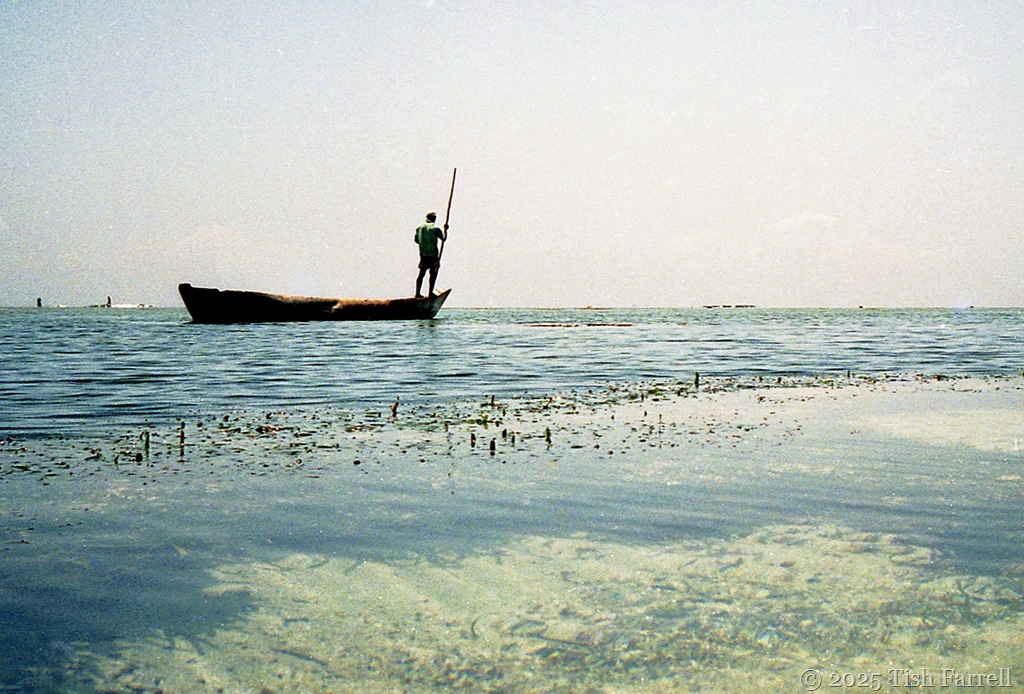
Tiwi fisherman

Now for ‘smooth’ water and a smooth dug-out canoe on Tiwi lagoon. A Digo fisherman under the midday sun. I’m guessing he’s looking for reef lobster.

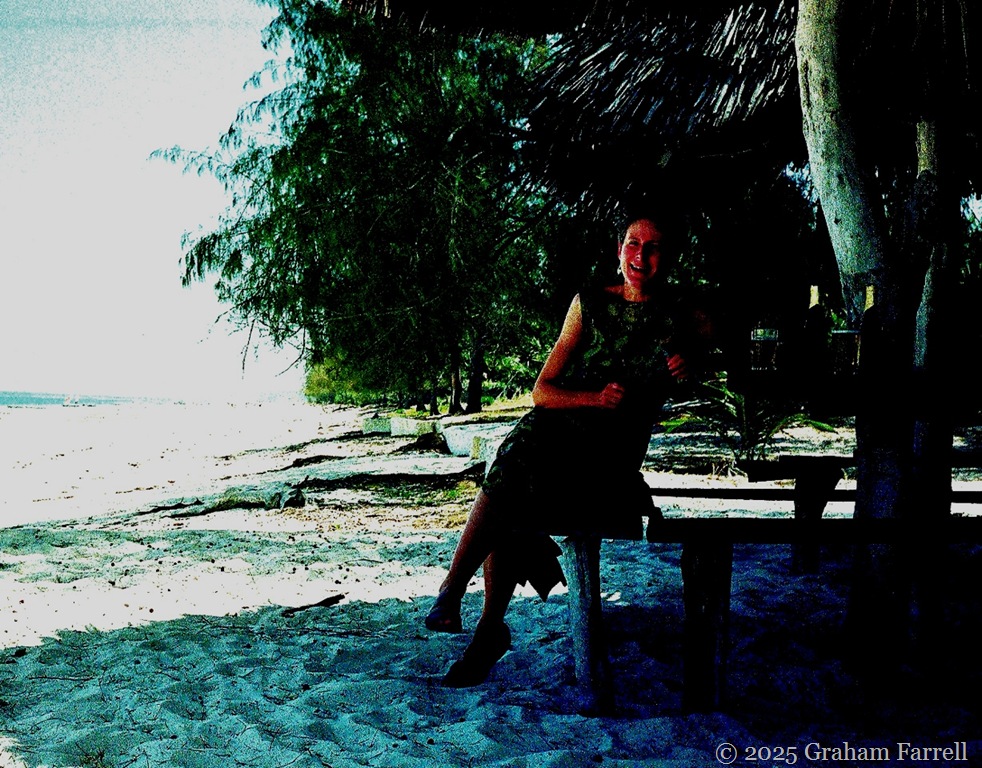
And as for ‘cool shadows’,  here’s me escaping to some at a Tiwi beach bar. Not so much too hot, as too bright to see out on the white coral sand. Aaah! Those were the days.

Cooling shadows

*

Lens-Artists: Virtual Scavenger Hunt  This week Anne at Slow Shutter Speed sends us on a photo quest, five to ten of the following: wavy lines, bumpy or soft texture, patterns, things circular, rectangular, smooth, made of glass, something with water in it, with green eyes, a wheel, a camera, cool shadows or jewellery…

Hippos Naivasha header

Waiting For Rain…In Kenya Past And Shropshire Present

desert date mulului tree

Maasai Mara with desert date tree

*

We’ve been living back in the UK since 2000, our years in Africa increasingly faraway. And yet…

And yet this spring and summer in Shropshire we’ve been very short on rain. The temperatures, too, have recently risen after a cold and windy spring. My gardening self grows anxious. Several times a day I do the rounds of my vegetable plots, checking on the kales, chard, beans and potatoes, the onions and leeks, examining the greenhouse tomatoes and cucumbers for signs of stress. My hands are always dirty, soil crushed under nails, as I prod the soil, testing for moisture levels around the plants.

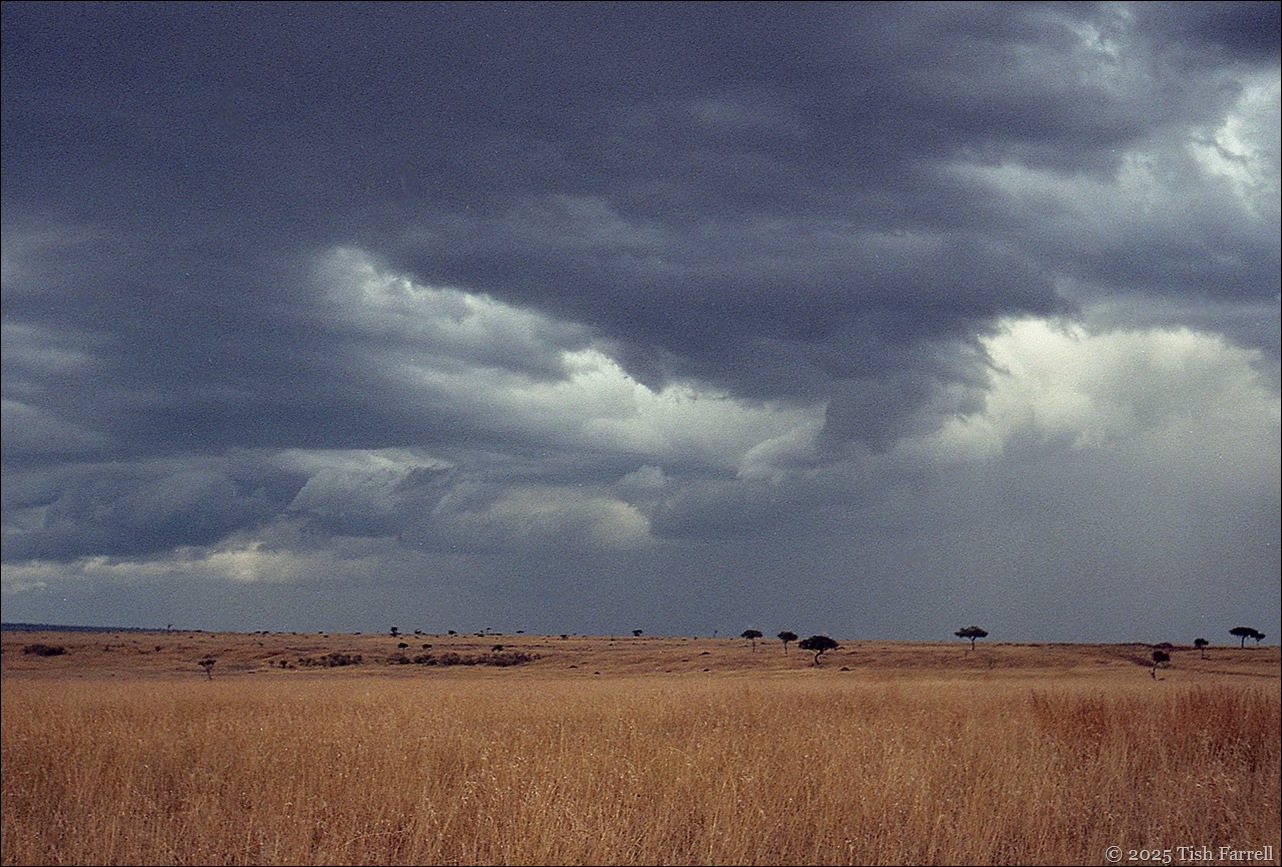
It makes me think of Kenya days, pastoralists like the Maasai depending on rain to replenish the grasslands for grazing, cattle their life-blood in every sense;  village farmers waiting for the November-December small rains for sowing; for the long rains March to May to bring the crops to harvest: lives and livelihoods dependent on monsoon weather systems that are nothing if not capricious.

Nor is this new. Oral history accounts, some going back two or more centuries, make reference to periods of drought and famine. One type of oral record is the memorized male circumcision list that survives in some communities. The rite  was carried out every ten years or so, and the given year commemorated by some notable event. Food shortages were often inferred.

For instance the list for Maragoli in Western Kenya has 1760 as the time of Kgwambiti. Our Maragoli house steward, Sam, interpreted this as people behaving selfishly like animals, suggesting a food shortage. Likewise Vuzililili  for the year 1800, a time when small insects fed on large insects. Then in 1900 Olololo-Lubwoni – refers to a time when jigger fleas (olololo) infested people’s feet, implying that that households were dusty and not swept properly. Lumbwoni is a very thin sweet potato, also suggesting drought and lean times.
img120 ed

Another remarkable source of rains failure evidence is the revised historical events calendar used in the enumerators’ guide to the 1969 Kenya census. At this time many rural householders would have been born in the 19th century, or else reckoned family chronology according to particular past occurrences. For semi-arid Ukambani, a drought-prone region in southern Kenya, it was generally agreed that there had been six significant periods of famine in the 19th century: Ngovo (1868); Ngeetele (1870); Kiasa (1878); Ndata (1880); Nzana (1883) and Ngomanisye or Muvunga (1898).

In the past, too, it transpired that the Akamba people had established emergency strategies via extended kinship allegiances. This involved moving from the worst stricken areas and, for a time, living with relatives who were not so badly affected, or who had their own water-holes. Rules of reciprocity of course applied; this was not charity.

It was important, too, that in pre-colonial times the Akamba had a sphere of far-flung connections through their hunting and trading activities, one that extended into what is now Tanzania. This increased the scope for finding sanctuary from drought-stricken regions, but of course was curtailed when the colonial administration consigned each ethnic group to a designated reserve, basically drawing a line around the territory that each community apparently occupied at the time when the British arrived; self-determination being duly cancelled by a line on a map.

But perhaps the most compelling evidence for the enduringly random state of weather across East Africa is the deeply embedded cultural phenomenon of the rainmaker. Every community had them; perhaps still does. They were often rich and powerful individuals. And contrary to what may be imagined, the forecast of rain was mostly based on informed careful observation of natural phenomena, including the movement of clouds, wind directions, dew formation, the behaviour of particular hygroscopic plants and trees that respond to rises in ground water, the arrival of particular species of birds and insects. Such observations informed planting decisions, the particular crops chosen, the times and places they were sown.

It’s tempting to think our Met Office could learn and thing or two.

And so I ponder again on our lack of rain. Our lives do not depend on the success of our garden produce. The Co-op’s daily deliveries of fresh food are two minutes’ walk from the house. I anyway have an outside tap and a clutch of watering cans. The water is always there. (Or at least it is for now). A luxury however you look at it. But even so, the daily sight of parched soil does seem to trigger some bred-in-the-bone alarm system, all those generations of farmers and gardeners in my family tree worrying…

And so the sky-watching continues, the hopeful eyeing up of every darkening cloud.

And probably also, in the not too distant future when the rain comes, there will be the ungrateful complaint that it doesn’t seem to know when to stop.

*

copyright 2025 Tish Farrell

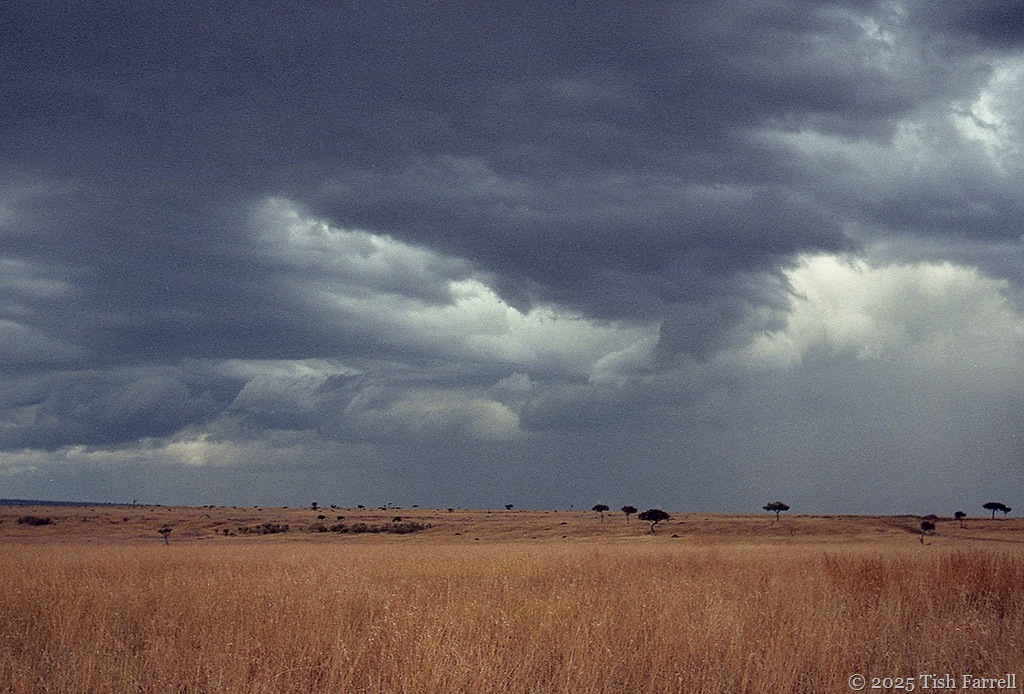
Lens-Artists: Stormy This week Beth wants to see scenes of storminess.

Hippos Under The Carpet…

img039ed2

This past week at Lens-Artists, Tina has wanted to know what we were thinking as we took our photos. This led me back to the old Africa album of vintage slides and photos from when we lived in Kenya.

The header photo did not scan too well, but it was such an unexpected moment, it still makes me laugh.

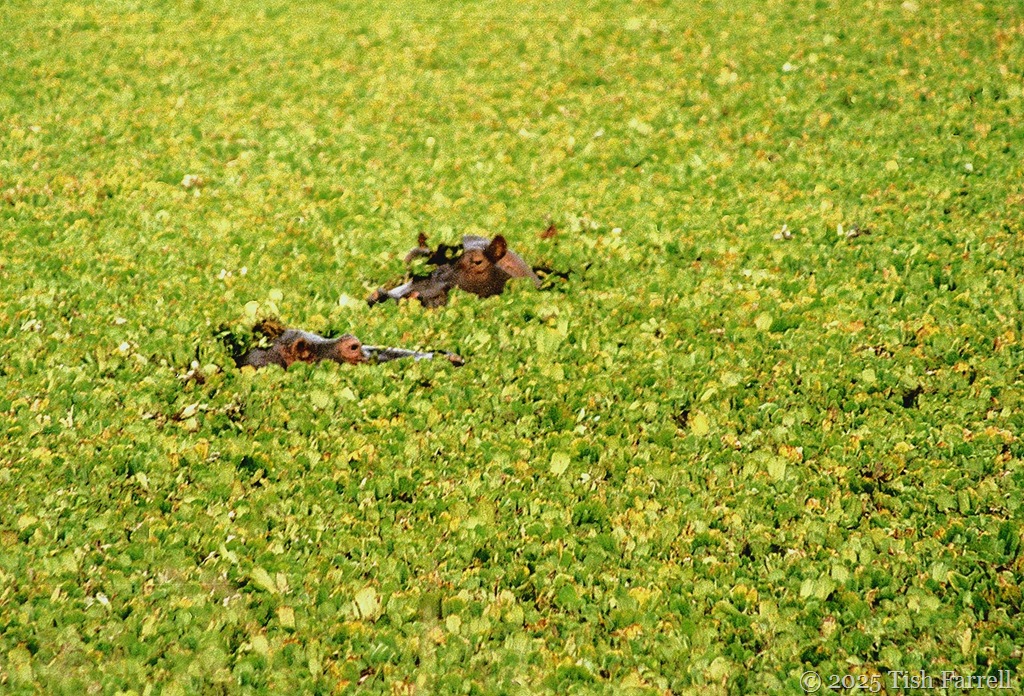
There we were driving along a dry savannah track in the Maasai Mara, the only water (or so we thought) some distance away in the Mara River, when suddenly we were alongside an even spread of water-loving cabbage weed. Weirdly, it seemed to be growing on a level with the grassland. No sign of the water underneath though, and so no sense of depth…

…until up popped the hippos to give us the once over as we passed. It was hard to take in. How could such huge animals have squeezed themselves under this seeming thin layer of weeds. It conjured a surreal image of a large living room with a huge pile rug and numberless unseen hippos lurking underneath.

*

maasai mara_0004ed

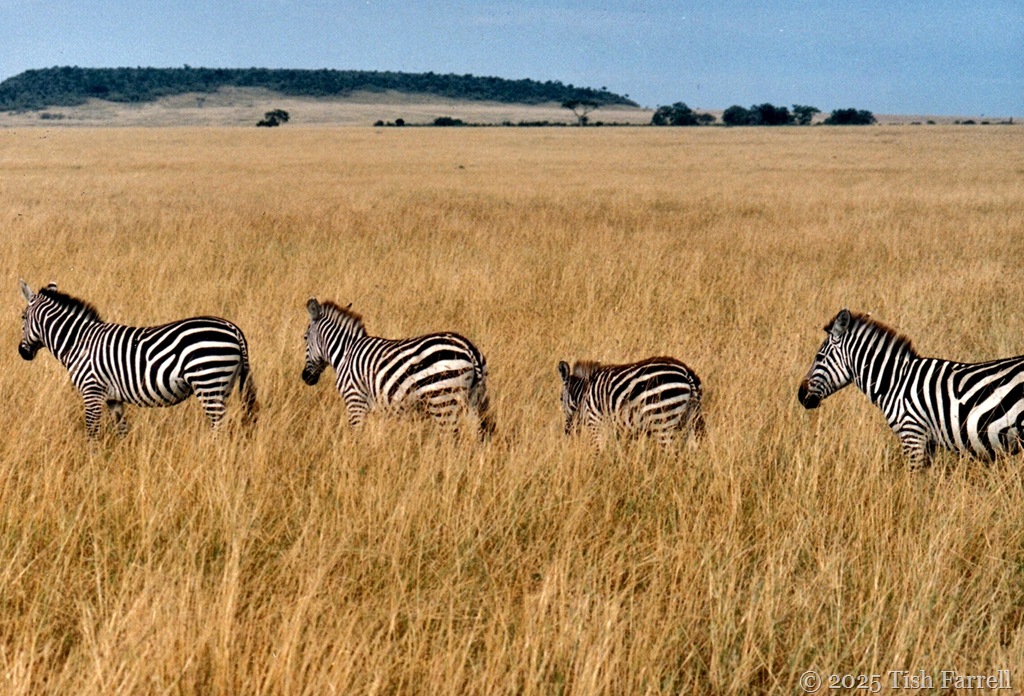
Of course you can tell what I was thinking here: African plains with zebra crossing.

*

cheetah 6

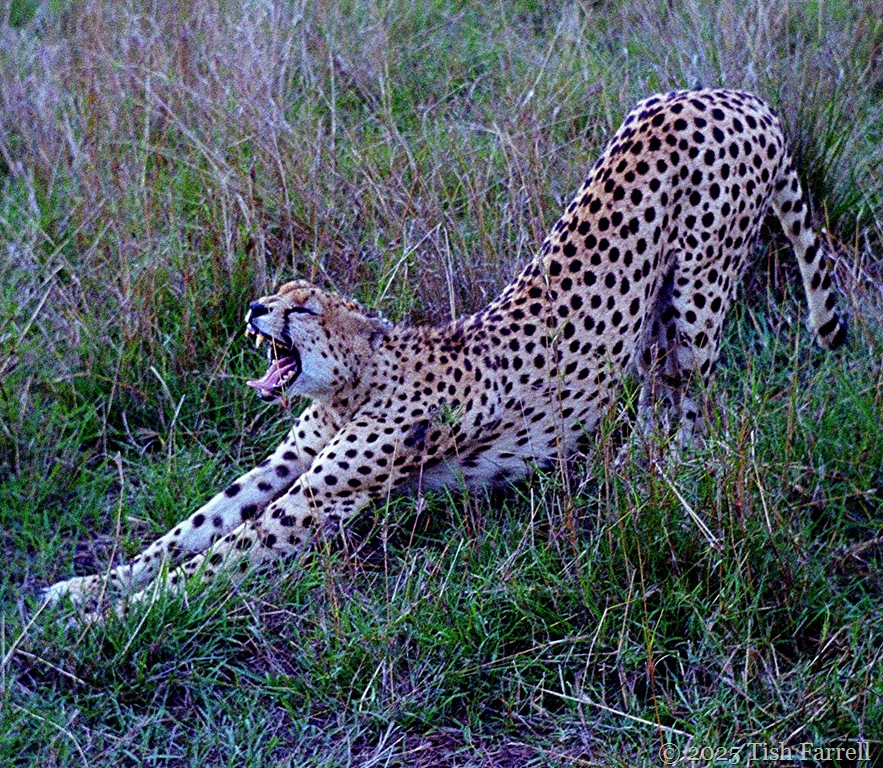
A spot of yoga anyone?

*

Mara 8

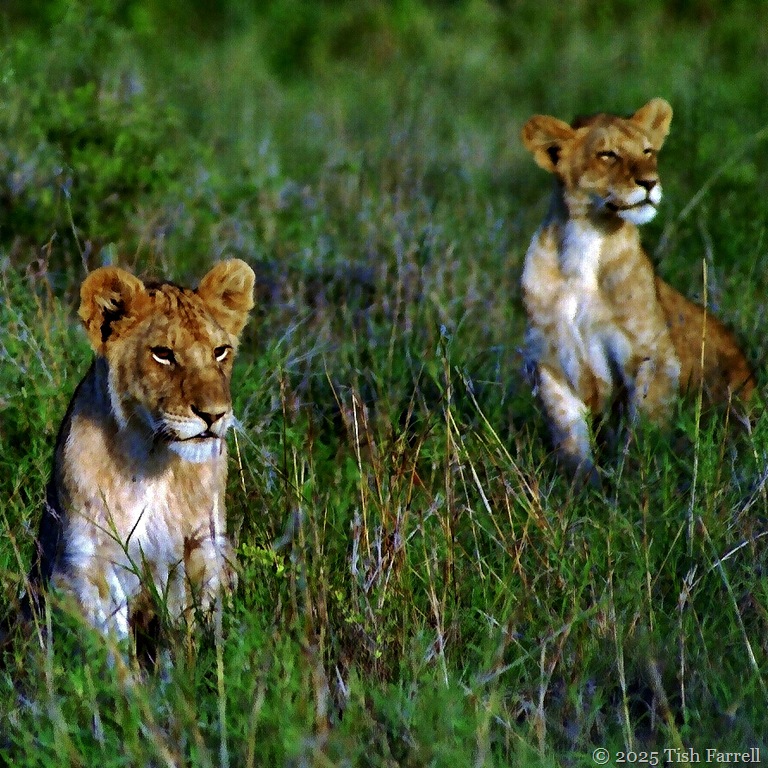
And now who remembers the Bisto Kids advert? That young lion on the right seems to be savouring some delicious aroma; probably not gravy…Aaah! Wildebeest!

Lens-Artists: The first thing I thought of…  This week Tina sets the challenge. What were you thinking when you took the photo.

Once heard…

Marsh Pride male 1 ed

*

…never quite forgotten.

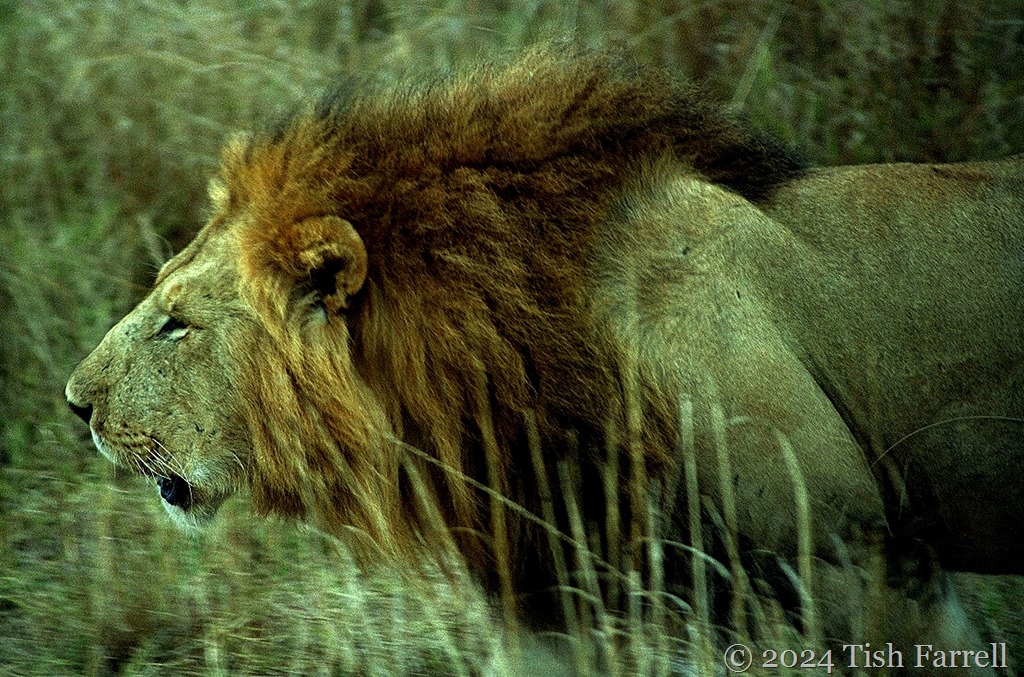
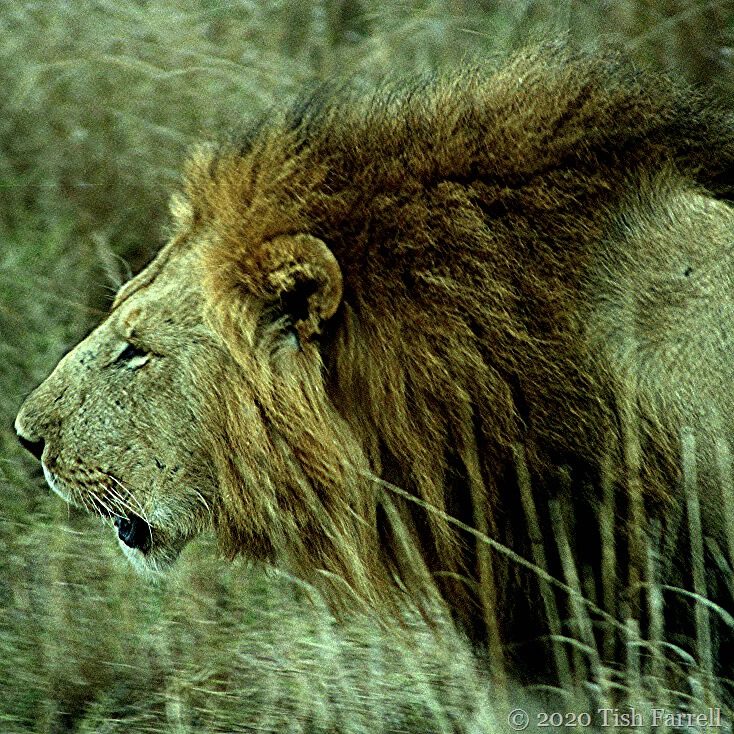
Thrilling and chilling both: a wild lion, in broad daylight, proclaiming his eminence. And not a full-throated Metro-Goldwyn-Mayer lion-roar (there’s no big show of fearsome canines); more a weaponized grunt that carries across the Mara grassland and rebounds against my sternum. And then in my skull.

It takes some moments to re-ground, and assure the nervous system we’re not in danger.  We’re sitting in a big safari truck. The lion does not even look at us, nor appear to register our presence.  We pass by slowly. He parades. Our guide tells us he is the senior male of the Marsh Pride, a group of lions made famous on British TV during the 1990s, when wildlife photographer, Jonathan Scott, documented their movements. This lion, we’re told, is calling to the junior male. Meanwhile the pride’s three lionesses are busy devouring the kill, a hartebeast. They don’t see us either.

But still that resonating roar.

Throwing the voice is part of a male lion’s M.O. A spot of leonine ventriloquy if you like. To make themselves sound bigger and deadlier, they may also choose a dried up river bed for some night-time roaring. The dirt bank of a donga provides a  ‘sounding board’ to amplify the roar which may carry for several miles. Obviously the aim is to let other males know exactly what they’re up against should they dare to infringe territorial bounds.

We drive away, feeling somehow changed. Very small perhaps. It’s August 1999, the last of our seven years living in Kenya. When we return to England for good, what will we make of such days? Did they really happen? Sometimes it’s hard to be sure.

marsh pride senior male

*

To hear that lion call for yourself, there’s a brief clip here:

https://www.youtube.com/watch?v=1e0_4dwF9A4

Lens-Artists: Sound   Donna at Wind Kisses choses sound for this week’s theme – however you care to interpret it. Please pay her a visit.

Quiet Hour In The Maasai Mara

Scan-140726-0005 (9)

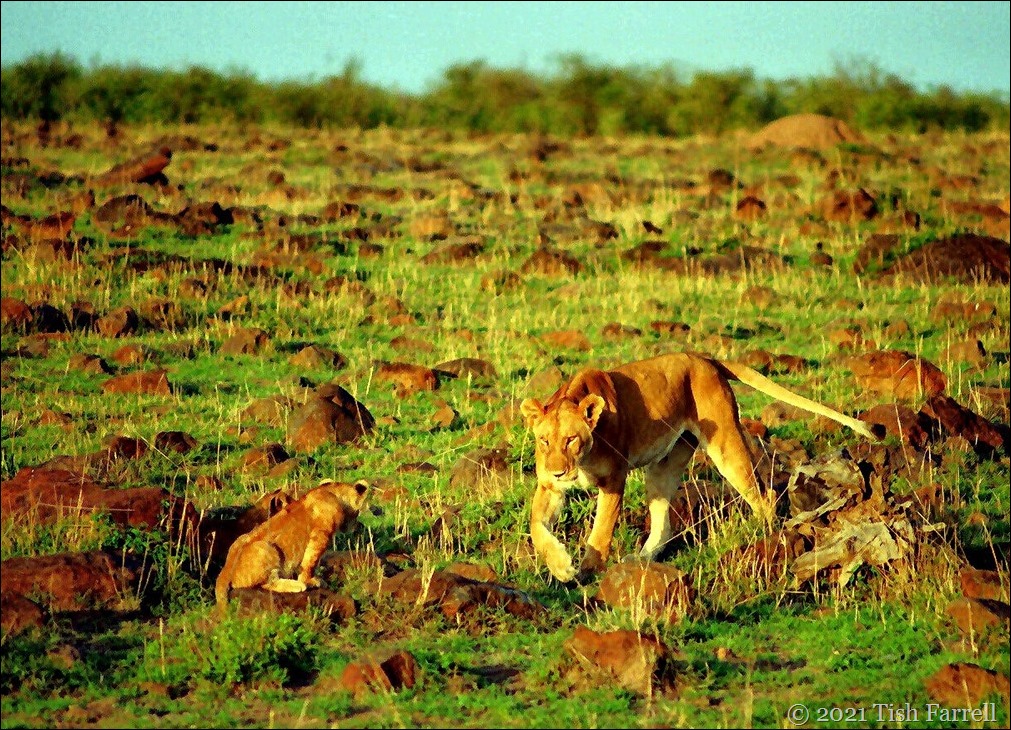
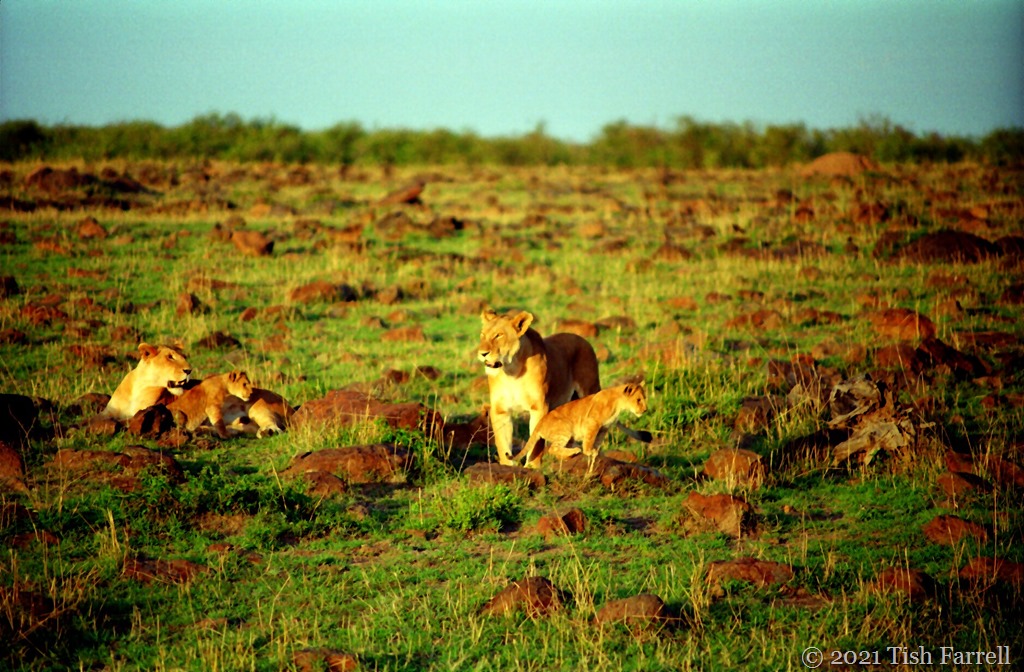
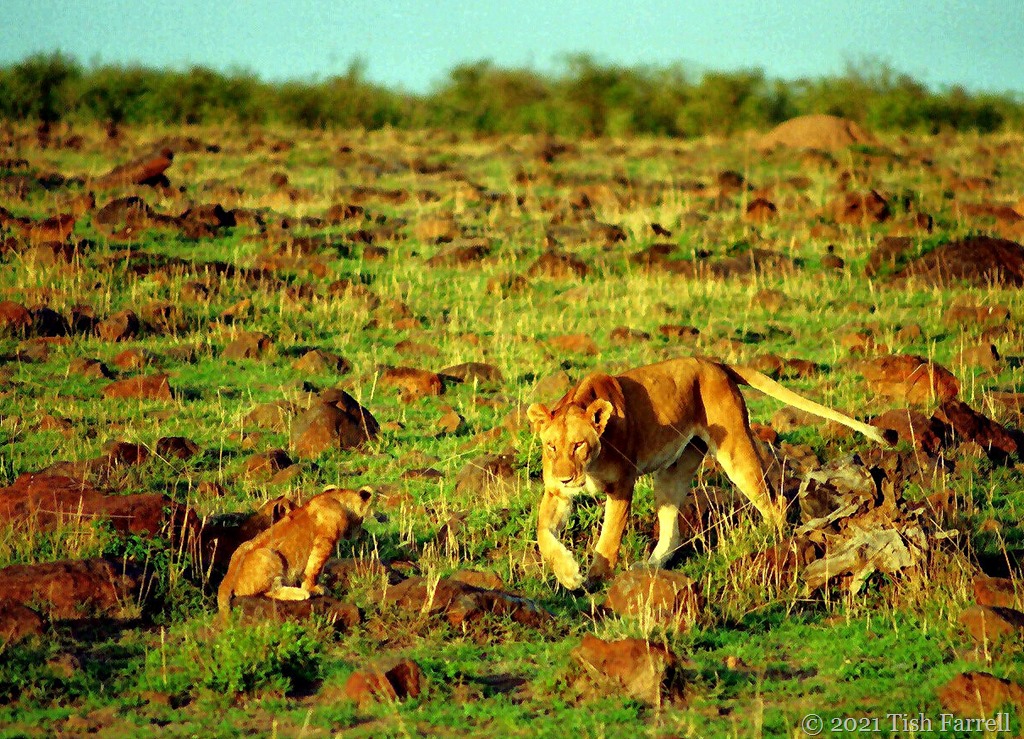
Almost sunset and a good time for mamas to play with the children…

Scan-140726-0004 (8) - Copy - Copy

*

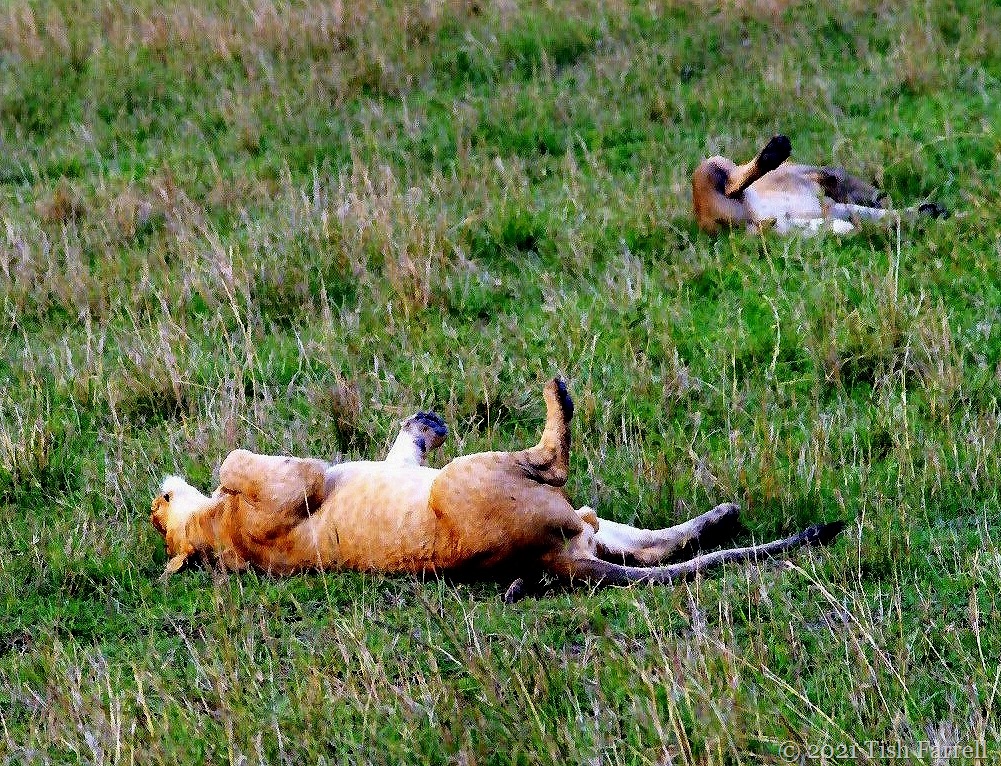
Or for lads to roll and loll…

Scan-140726-0003 (7)

*

Or a cheetah to snooze in the grass beside a mulului tree…

IMG_0012

Scan-130520-0021

*

And then for humans to watch day’s end over the Mara plains…

Scan-140726-0003

Lens-Artists: Serene  This week Patti invites us all to stop and ponder on peaceful scenes. As ever,  these views are from the old Africa album.

Taking The Broad View ~ Mara Grasslands

desert date mulului tree 001 - Copy (2)

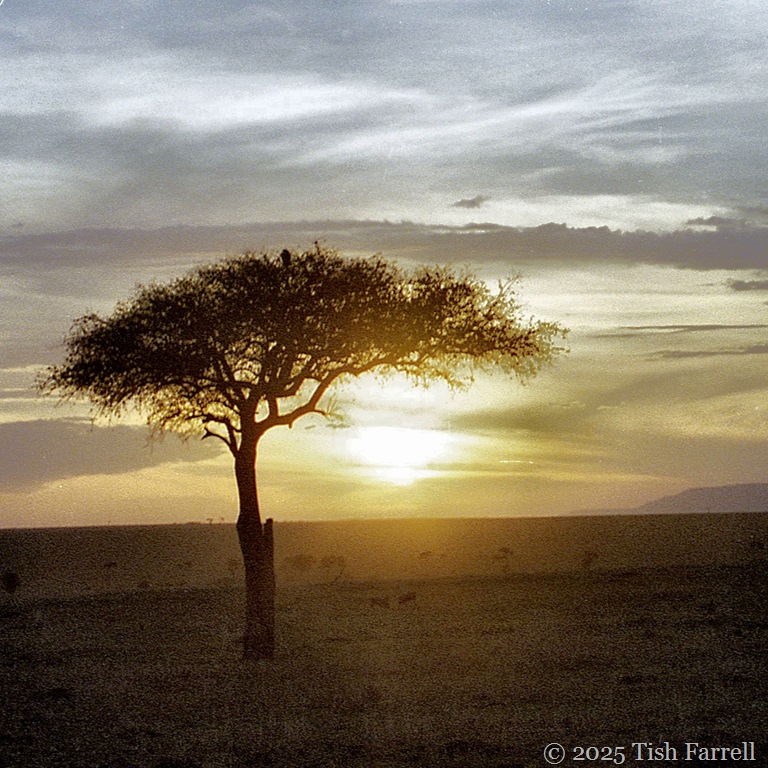
In the rainless months it is the oat grass that gives the Mara plains their golden hue. The small trees with their sculpted looks are desert dates, mulului trees, much browsed by all the local herbivores.

These photos from the Farrells’ old Africa album were taken outside the main Maasai Mara National Park, below the Oloololo Escarpment on territory owned by related Maasai families, locally referred to as a group ranch. Visitors pay a daily fee to group ranch elders. We were lucky to be able to make three trips there while living in Kenya.

Scan-140727-0038

Scan-140728-0018

wide Mara 7

lions wide Mara 30

mulului trees Mara 14

Life in Colour: Gold

Lens-Artists: Going wide

Elephant Totos Playing Up

001 (2) sq

These photos are from our last trip to the Maasai Mara before we left Kenya – this after nearly eight years as ‘displaced persons’. It was late December and our family from the UK had come out to join us in millennium celebrations. Everywhere there was talk of the ‘dreaded bug’ – mass panic of how on the stroke of midnight New Year’s Eve 1999 all world intercommunications and computer functions would be scuppered. At such times one definitely knew there was more common sense to found among animal kind than with humanity.

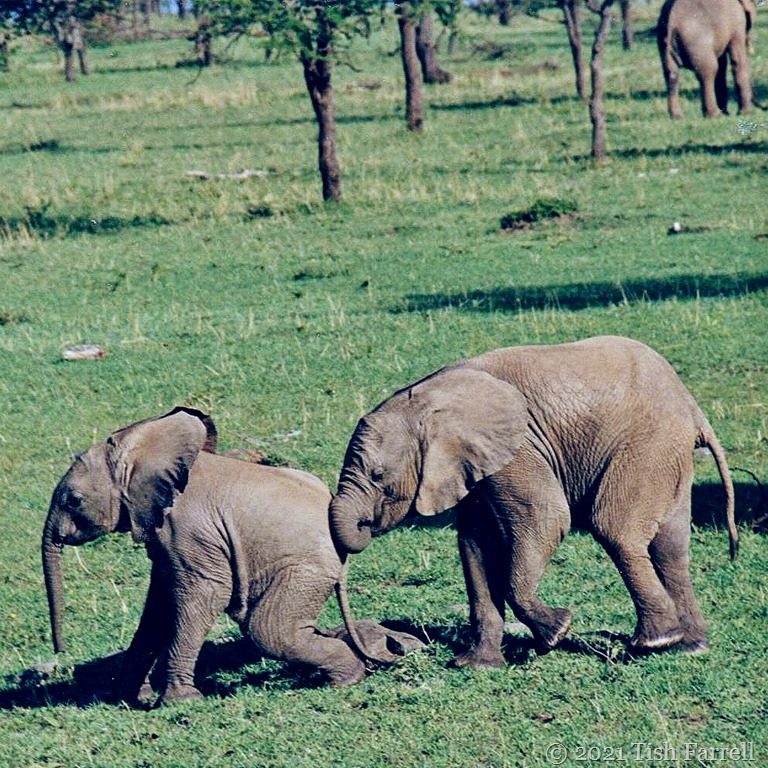
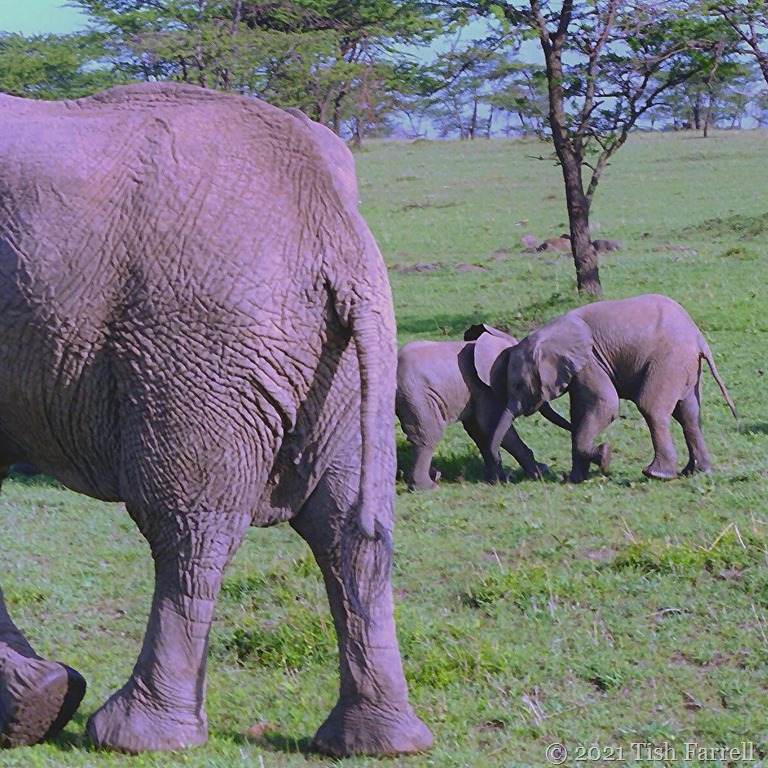
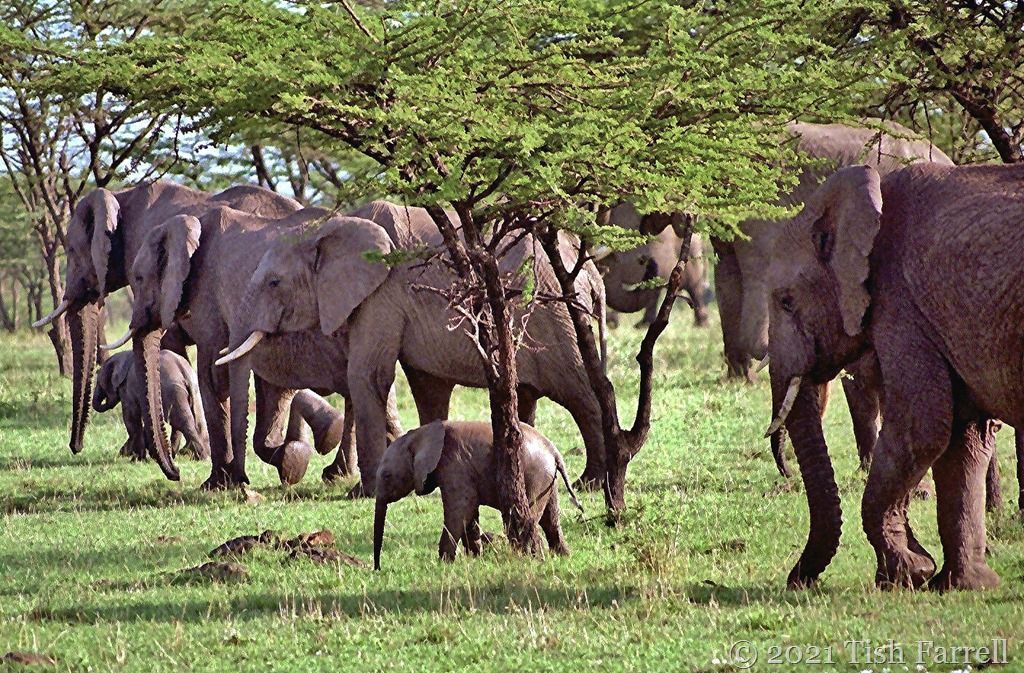
We had left camp on an early morning game drive. Dan our driver-guide had brought a picnic breakfast of mammoth proportions and it was he who decided to stop the truck and break into the hard boiled eggs and pastries just as a large herd of elephants was passing by.  They came so softly, footfalls ever muffled by the large cushions of fat that elephants have in their heels. You could smell them though – the musky, muddy smell that is like nothing else. The adults seemed to be moving as one, a measured ambling pace with no deviation. Only the children weren’t quite coming to heel.

sq

For most of the year female elephants and young live in small matriarchal groups while the adult males pursue a separate existence in their own loose-knit herds. But come the rainy season, all these small groups may gather into a single large herd as they set out looking for fresh vegetation.

They couldn’t have cared less about us; gave not one sign that they had even registered our presence. Later, as it was going dark and we were returning to camp, we met the herd again. Dan stopped the truck and the herd moved around us, close enough to touch. They moved like shadow-ships through the Mara twilight. At such moments you tend to find that you’ve forgotten to breathe.

Scan-130510-0019


Square Up #14

Feeling Kinda Growly

sq Marsh Pride male 1

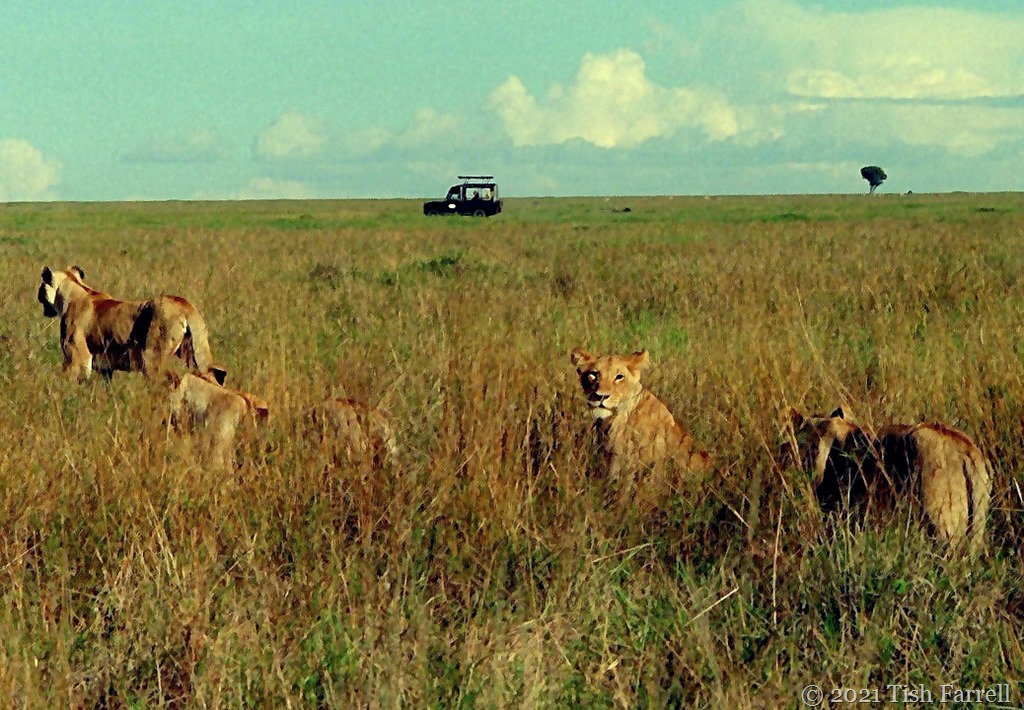
We found ourselves driving through the midst of the Mara’s Marsh Pride at high noon, its members surprisingly active given the usual lion habit of spending the day lying around. They had made a kill, an antelope of some kind, and the ‘under-lions’ were still eating: one very elderly male and three females – while the dominant male prowled the perimeter, exchanging grunt-like roars with another male who was lying in the grass. They seemed quite unconcerned as we stopped to watch, no interruption to the grunt exchange caught here in the photo. Rather puts one in one’s place in the animal scheme of things.
 

KindaSquare #24

So Hard To Like Hyena-Kind, But…

sq Scan-140826-0027jpeg

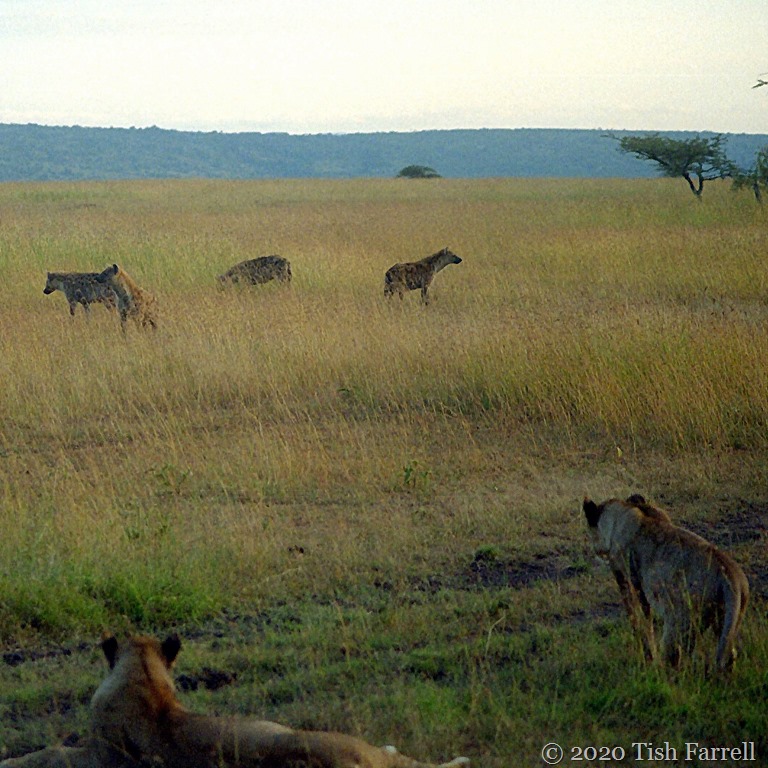
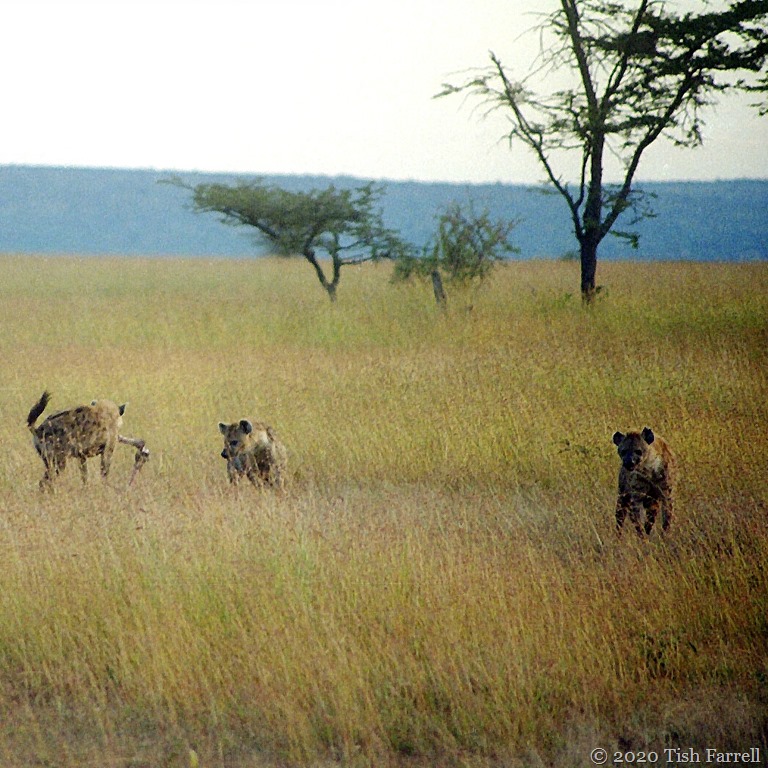
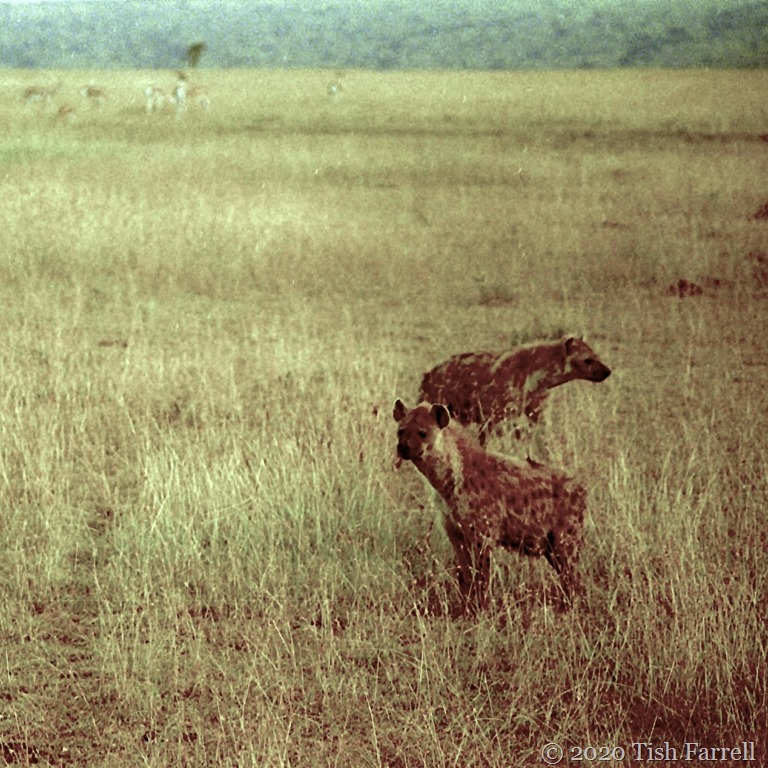
…they are interesting animals, though you certainly would not want to meet one at close quarters. That they are purely scavengers is a myth. They are powerful killers too, and don’t mind the odd human. The spotted hyenas in the photo (taken early one Mara morning) are the largest of the three hyena species, and come with the strongest bone-grinding jaws of any land predator. They live in clans of 5 – 30 individuals and recognise one another by scent.
sq Scan-140826-0026jpeg

Further interesting features include the facts that females are larger than males. They remain in their natal clan for life, are dominant over the males while the largest, most aggressive of them rules over all hunting and territorial defence tactics. The dominant female’s sons outrank all other clan members, and remain in the clan longer than their male age-mates. In the end, though, all the males born from clan females eventually leave to live in nomadic male groups until they can join a new unrelated clan, though this only happens after a trial period wherein they must demonstrate appropriate submissiveness to the new female boss.

sq Scan-140826-0005jpeg

They look ungainly creatures, so low-slung-short-legged in the rear, but this shambling appearance is deceptive too. They can break into a gallop, and sustain speeds of up to 30 miles per hour (48 kph) over distances of  a mile and more. They will chase down adult wildebeest and zebra until the prey is exhausted, and then duly disembowel them. Many pounds and kilos of meat will be gobbled at one go, and every bone crushed and consumed to extract the marrow. I remember once in Zambia, on a pre-dawn drive seeing a hyena so well fed, it could barely drag its stomach home to its den. I’ve read too, that these contents will be turned around within 24 hours, giant meat-grinder style, and the end product droppings quite white from all the processed bone.

Hm. I’m not winning over friends for hyenas, am I?  Still, they do clear up the place when in scavenging mode, as they are in these photos, though the lions were not keen to share their leftovers. But then hyenas, along with other predators, doubtless also help to keep herd animals healthy by recycling the weakest members, and the pursuit itself, predators on the hooves of herbivores, may have a key role to play in the maintaining  the Serengeti-Mara eco-systems.

These grasslands of 10,000 square miles support a million and a half wildebeest, which every year, along with large herds of zebra, migrate between wet- and dry-season pastures. Zimbabwean ecologist, Alan Savory, contends that a key role of predators is to keep herbivores bunched and moving, and that this in turn ensures the continuous sustenance and recovery of the grasslands that in turn support the herds. A virtuous circle then.

So: hyenas do have their place in the natural order of things. All the same, I think I’ll end this post with a photo of the lions who were most determined not to share even though they had  clearly had a very good breakfast:

sq Scan-140826-0008jpeg - Copy


KindaSquare #21