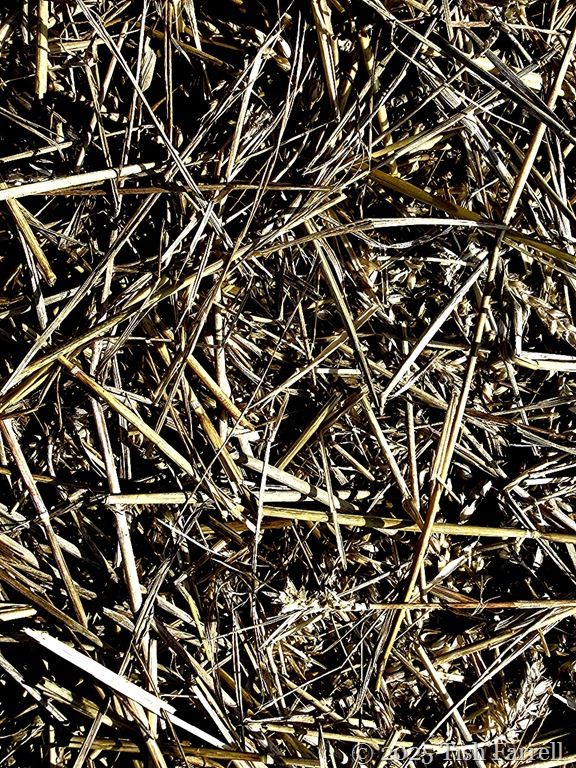
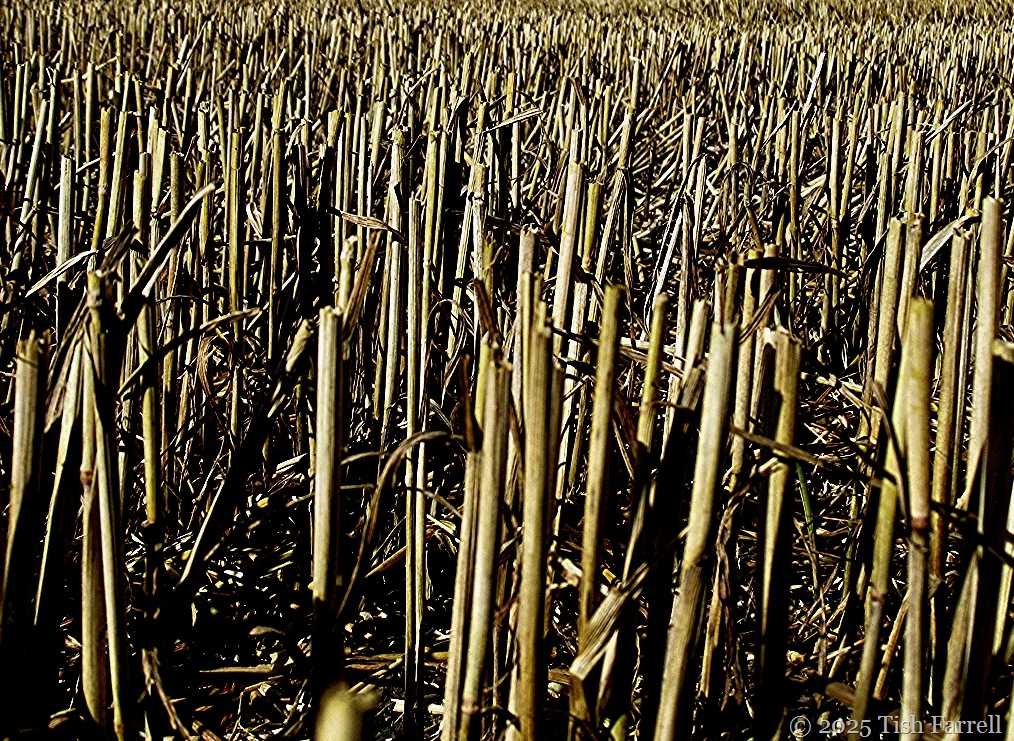
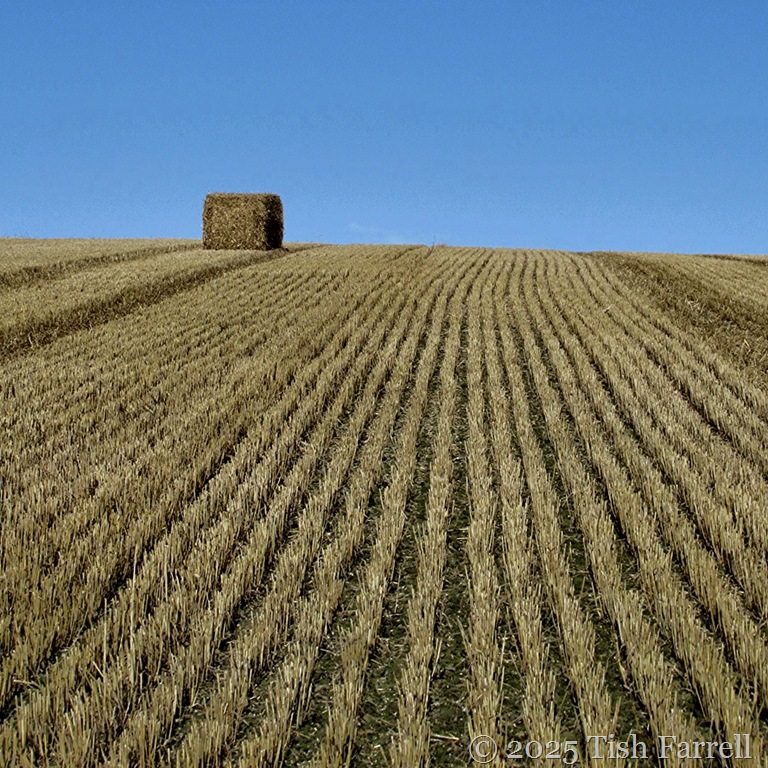
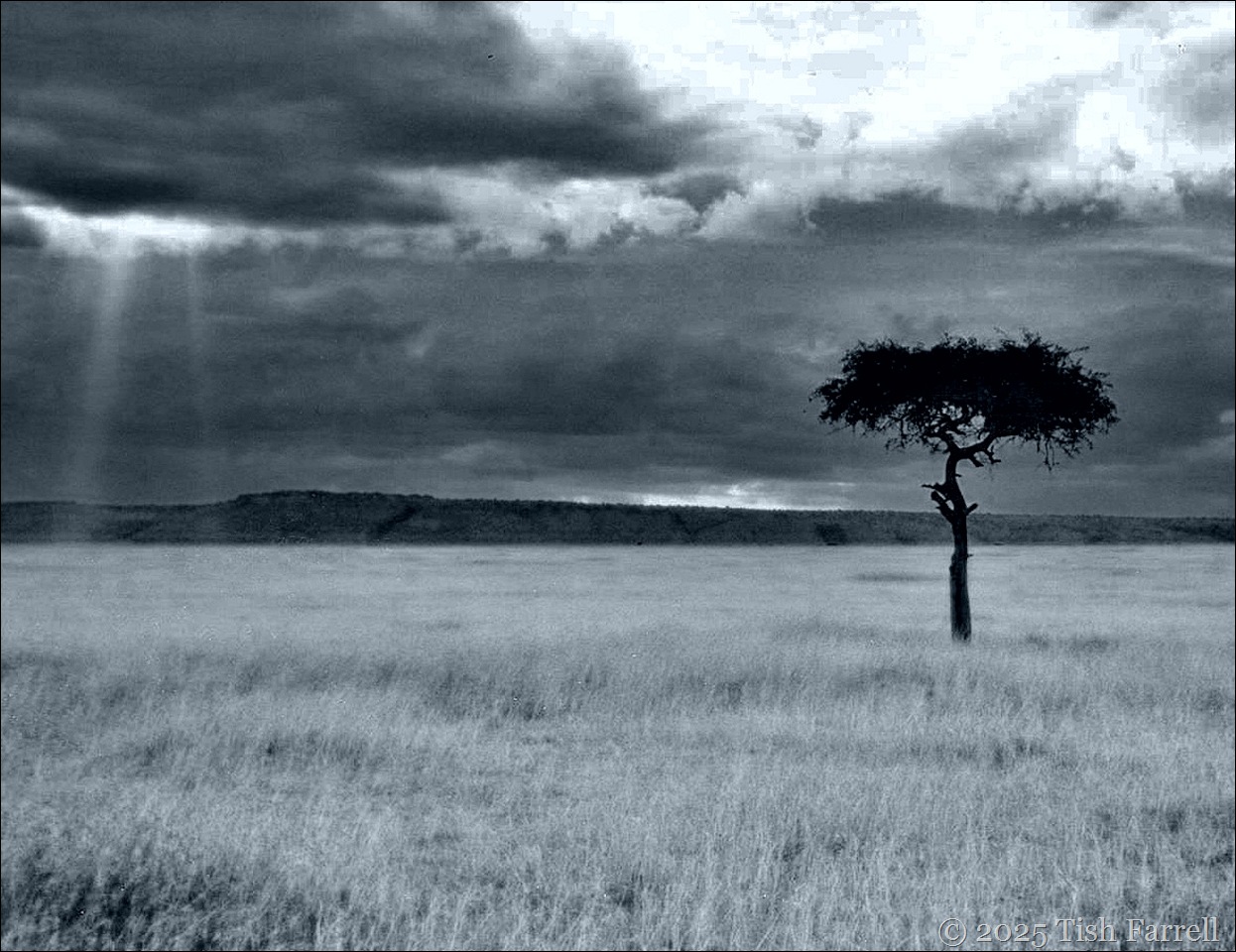
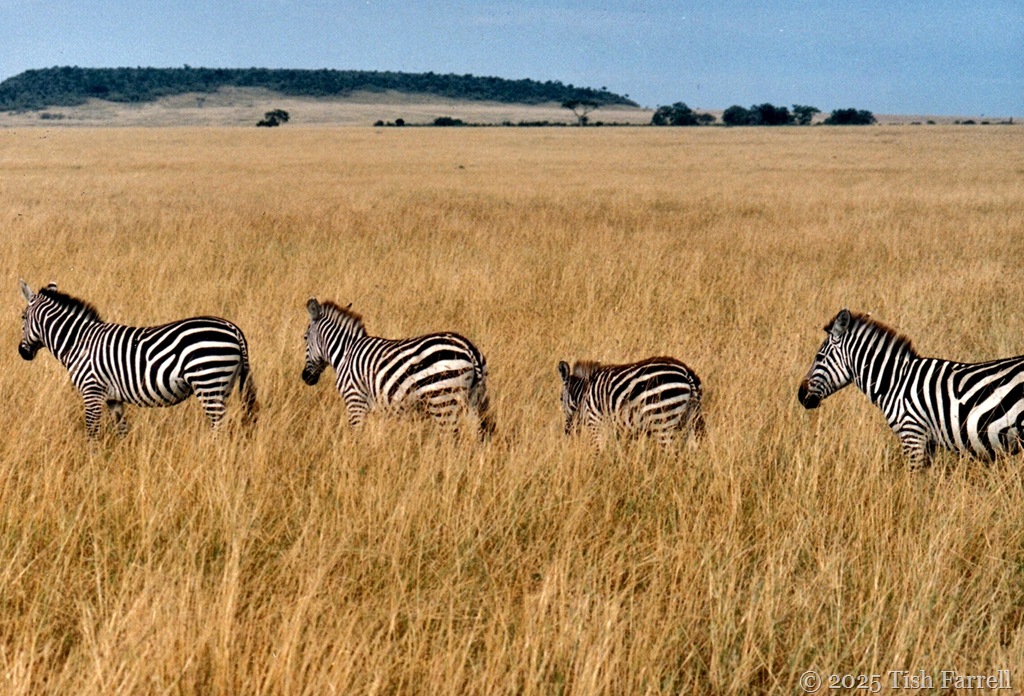
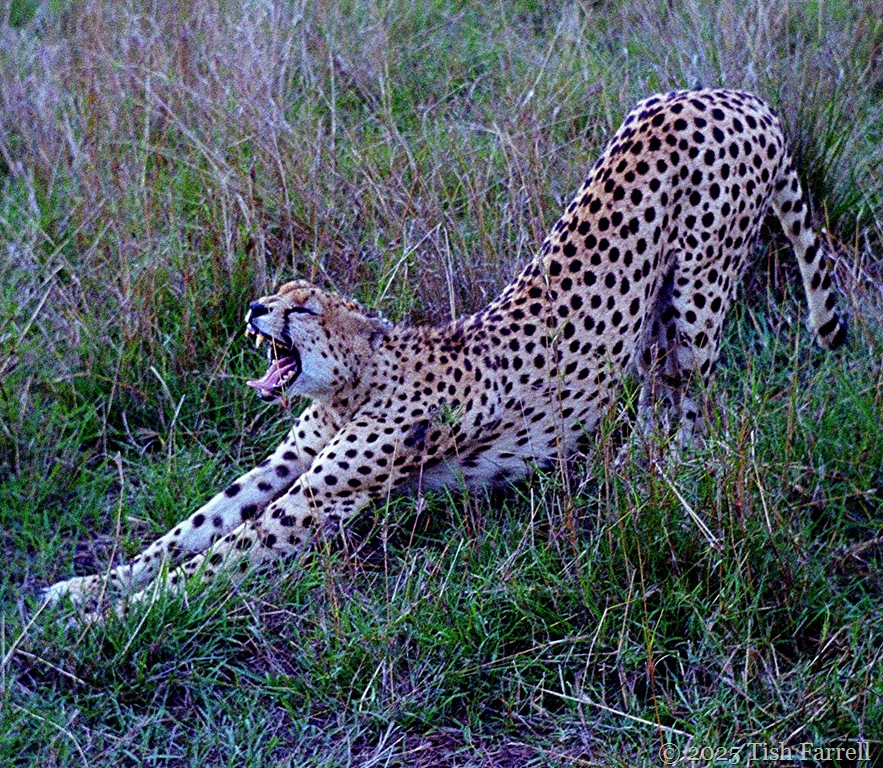
Cinematically Cornish

P1080012cheesewring Bodmin

This week at Lens-Artists Sofia calls for a cinematic approach to our photography.

This is what she says:

“There are a few things that give a photo that cinematic feel: camera angles, bold and high-contrast colours, light, locations, just to name a few. The main objective is to take a shot that is part of a story, there’s mood and a sense of location; our image is but a snapshot of a much wider situation.”

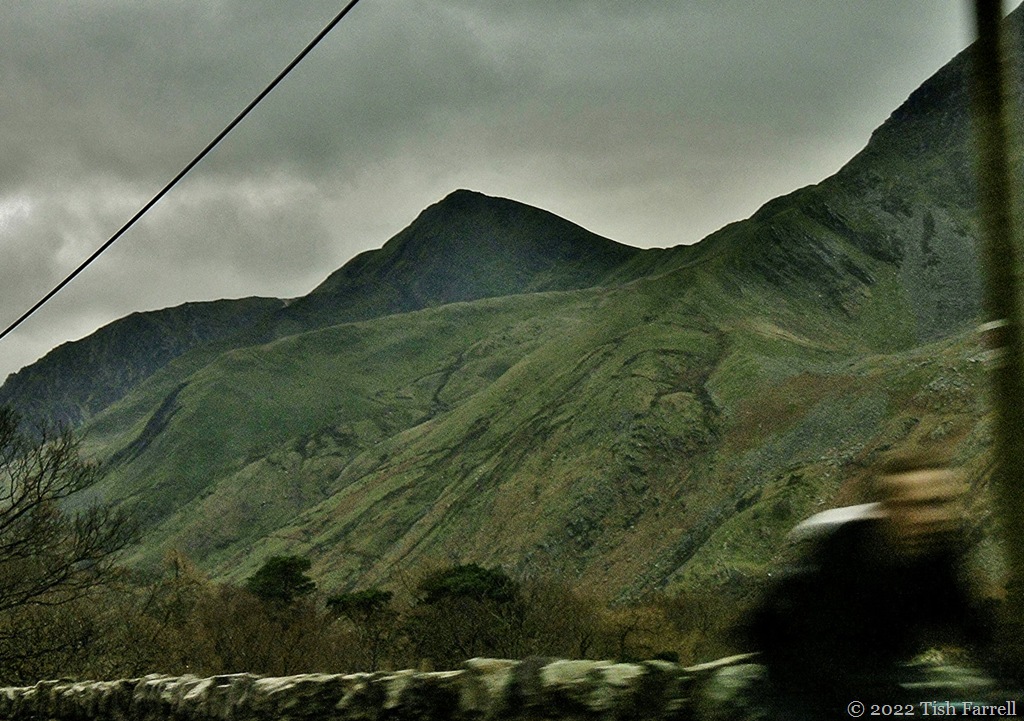
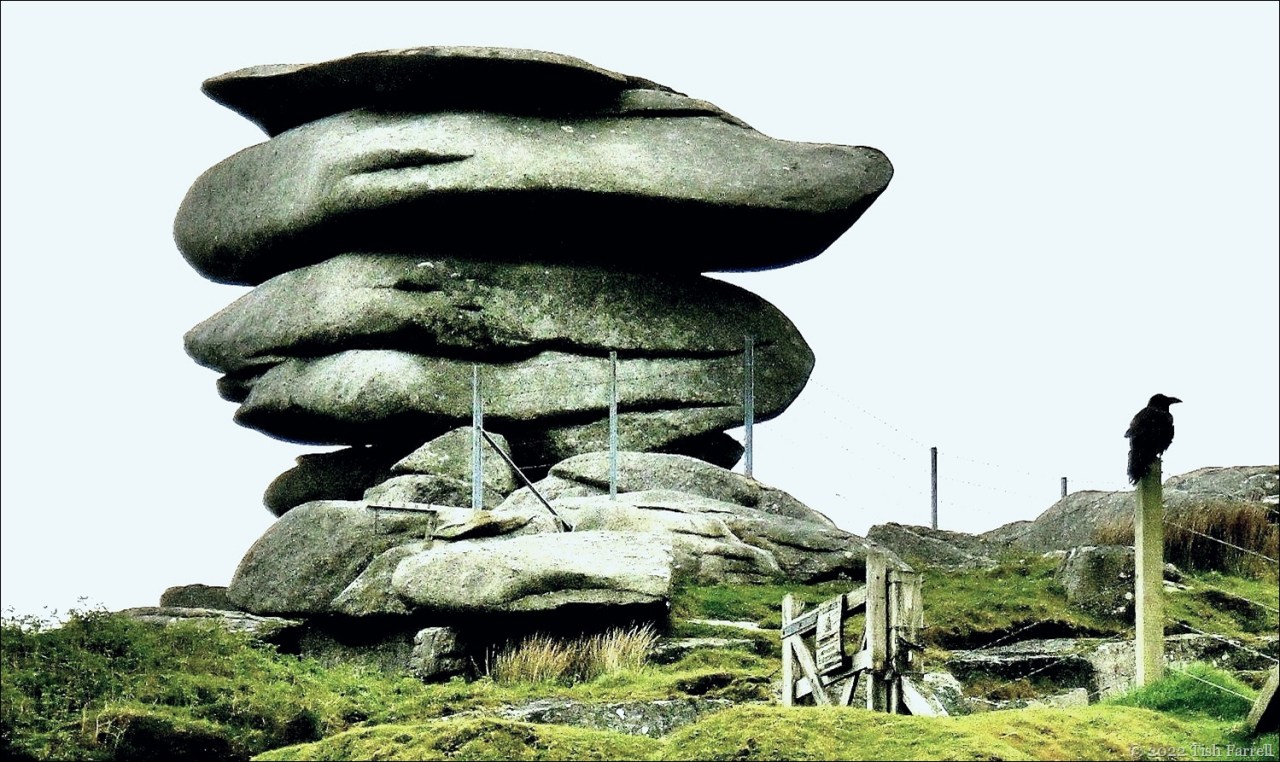
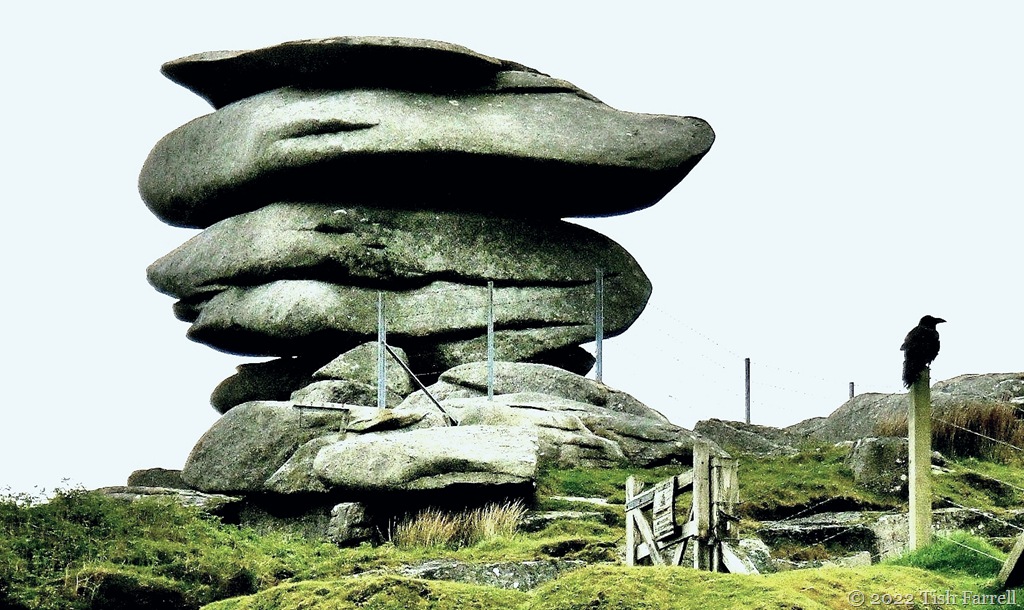
The first four photos here were taken one bleak spring day on the edge of Bodmin Moor near Minions in Cornwall. This, Great Britain’s most south-westerly county is a land of dramatic vistas: of high moors and rugged shore-lines. There are stories everywhere, layered through time like the ‘pillows’ of this granite tor, known locally as the Cheesewring.

The tor has its own stories of course. The first is one of weathering over millions of years, wind and rain driving into its crevices. Then there is the Dark Ages tale, from the post-Roman times when Christian missionaries  were beginning to make their presence felt. The proponents of new faith were not always welcomed, and so the formation of the Cheesewring is explained as the result a quoit-throwing contest between Uther the giant and a saintly missionary named Tue. If Uther won, then the Christian must go. Th giant lost of course.

The Cheesewring name itself has different derivations – either a straining device for making cheese, or else relating to cider brewing wherein the press of apples to a pulp is referred to as cheese.

There also some mystical notions, for it’s said that if you come to the Cheesewring as day dawns you will see the top ring turn three times. Which makes me wonder if that crow might have something to say on the matter.

*

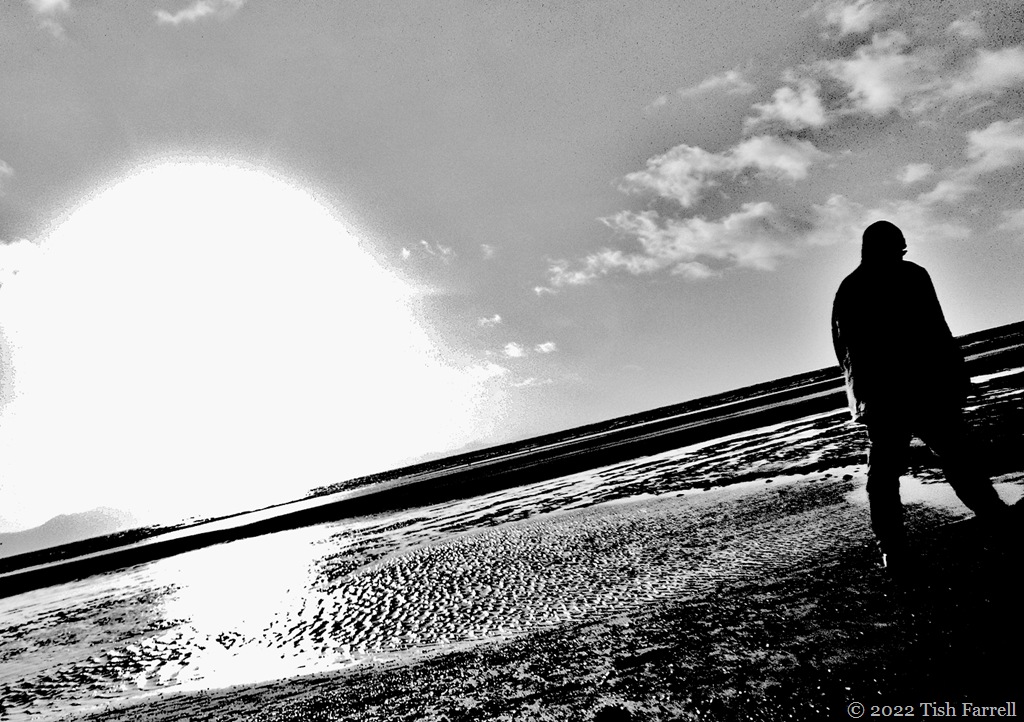
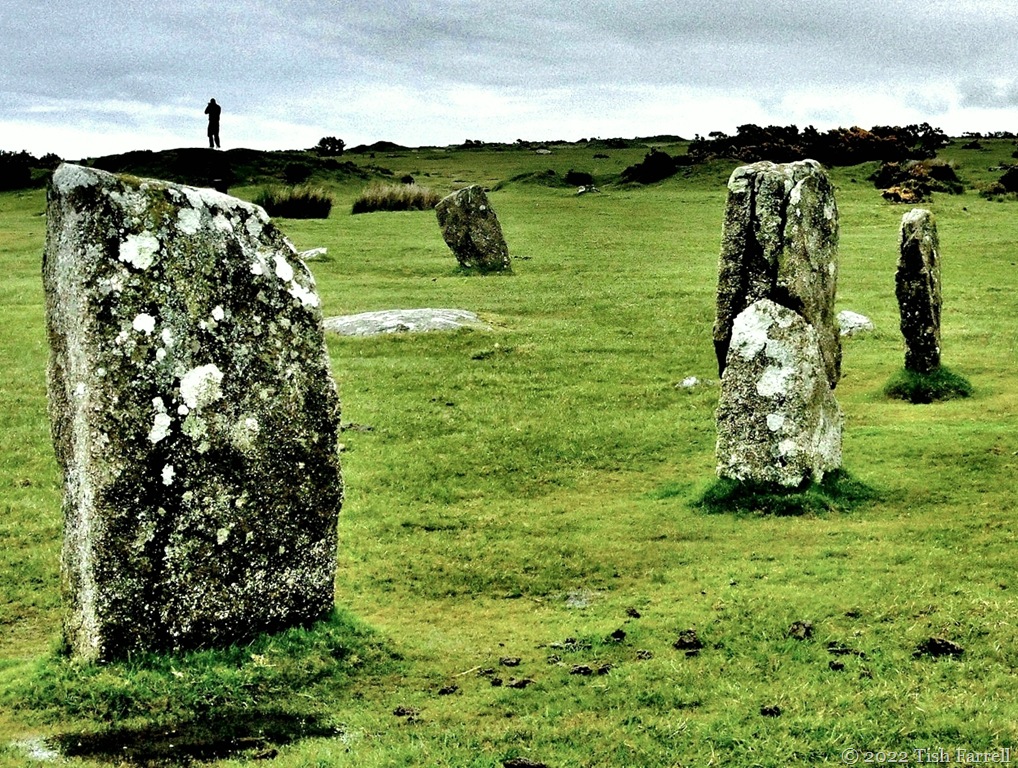
Below the Cheesewring we step back into the remnants of a prehistoric landscape: three Neolithic stone circles called the Hurlers. But as to that figure apparently hovering on the horizon – who knows what time stratum he belongs to.

P1070982ed

P1080022ed

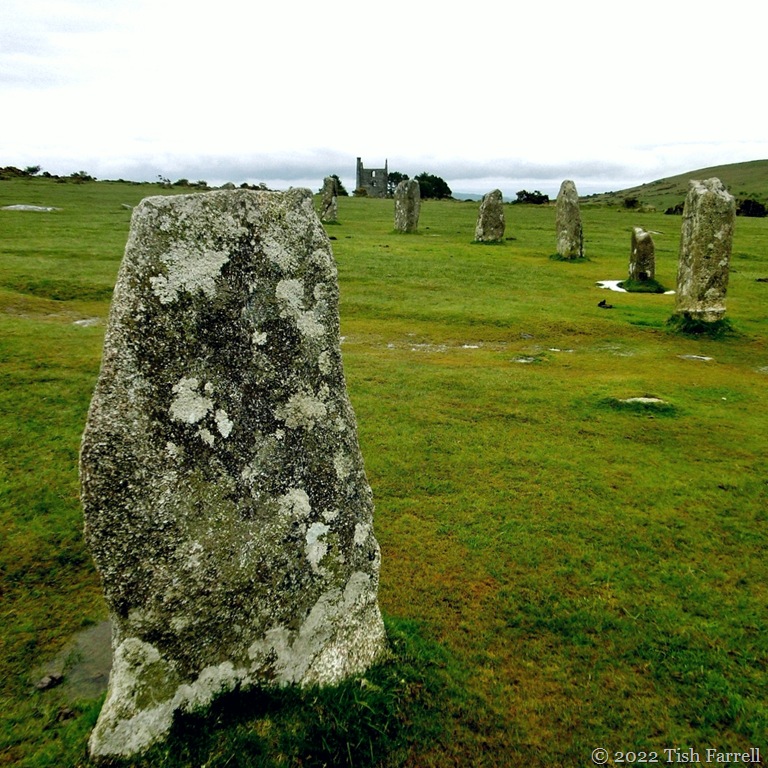
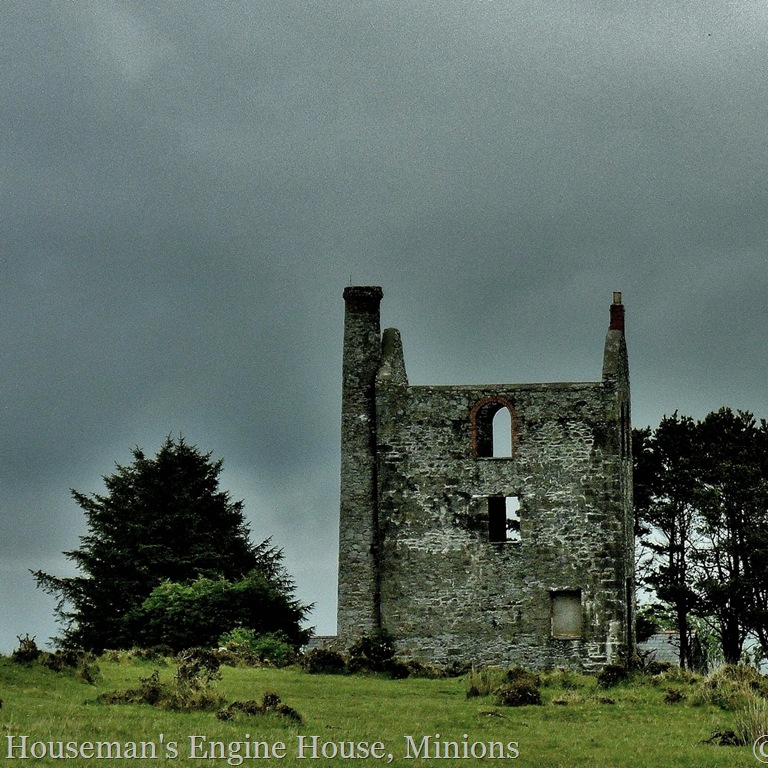
Looking through the Neolithic circle we come to another narrative: one belonging to the 1850s – 1890s when the South Phoenix Mine was churning out train loads of copper, a time when over 3,000 people were employed here – women and children included.

P1070983ed

There is more about these stories at an earlier post: ‘Hurlers and Miners: 6,000 years of heritage on Bodmin Moor’ HERE.

*

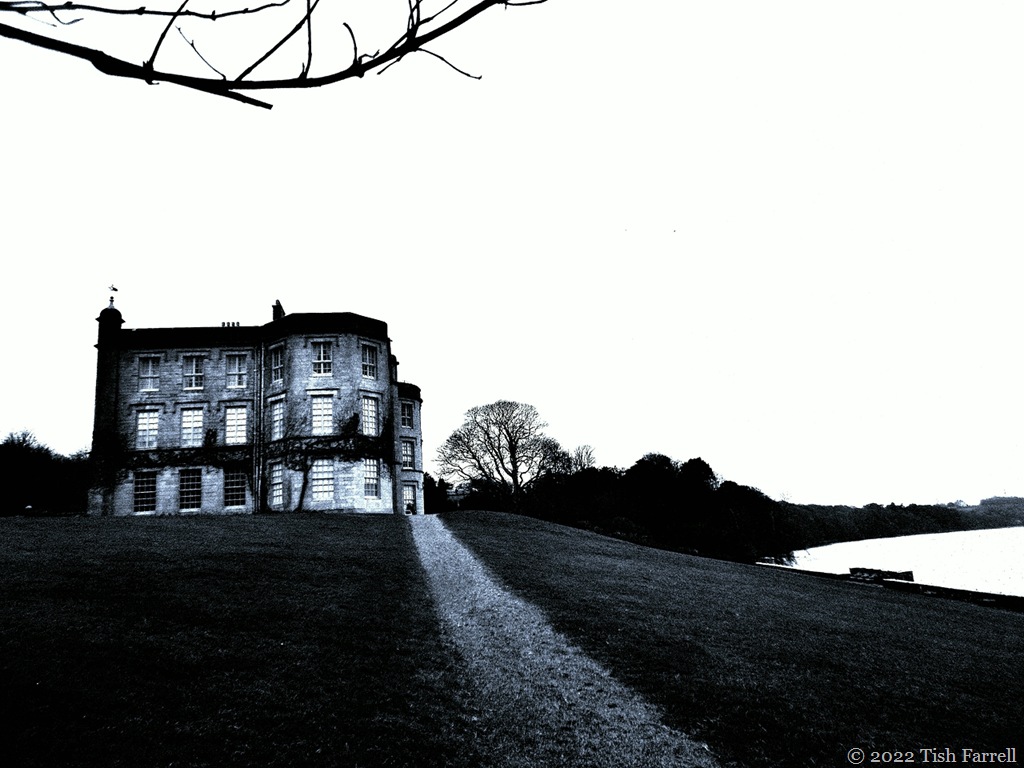
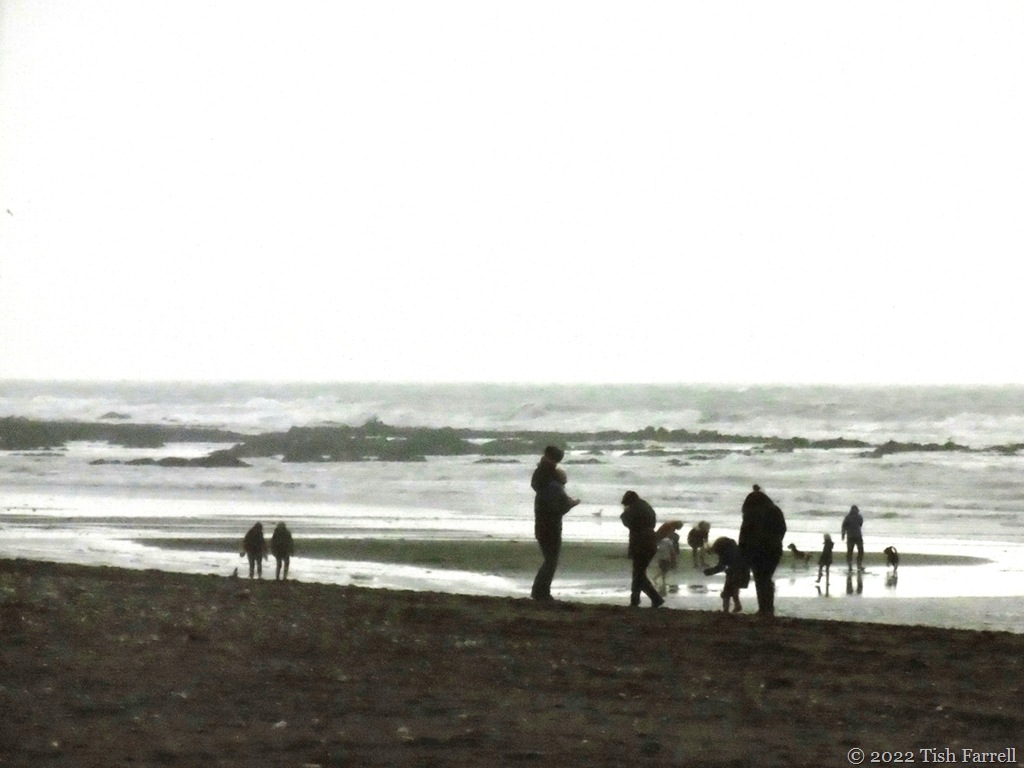
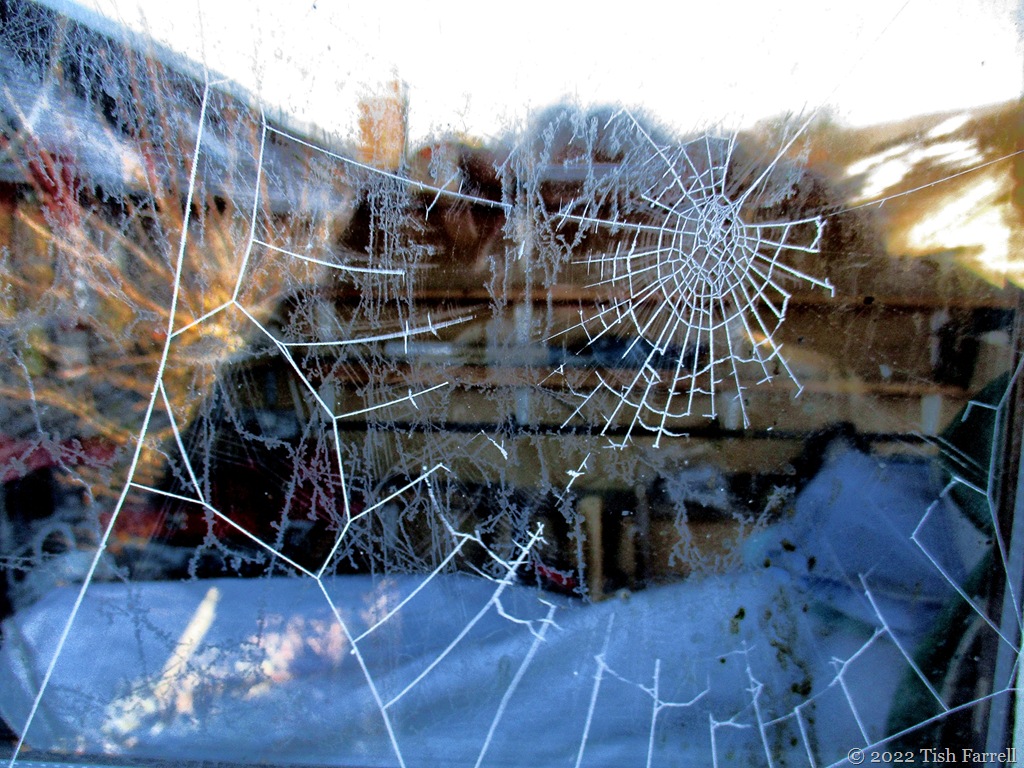
Cornwall does have its own cinematic history. Several Cornish based novels by Daphne du Maurier have made it to the big screen, some in duplicate versions – Rebecca, Frenchman’s Creek, Jamaica Inn, My Cousin Rachel. Her deeply disturbing short story,The Birds, is also set in Cornwall, although Hitchcock chose to transpose it to San Francisco. Du Maurier’s works are usually classed as romances, but they also have dark undercurrents, sometimes touching on the paranormal, their settings the wilds of Bodmin Moor, brooding mansions, sheer-drop sea cliffs, rocky coves and crashing surf.

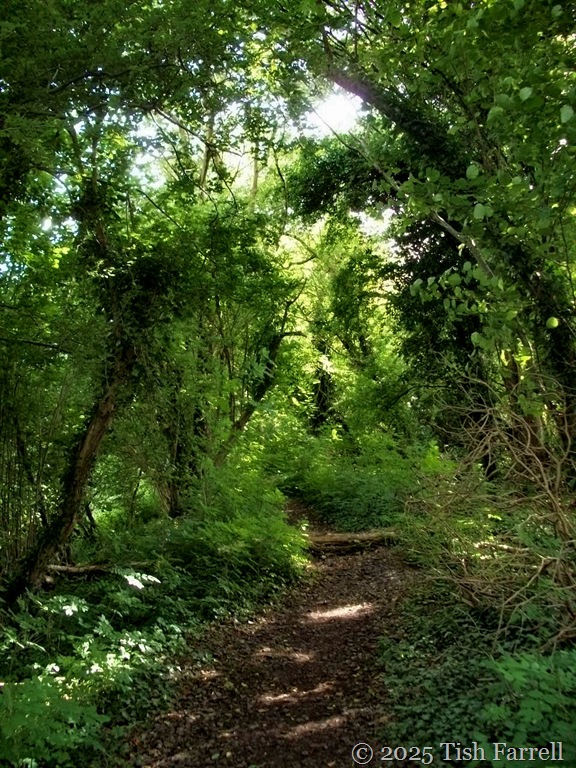
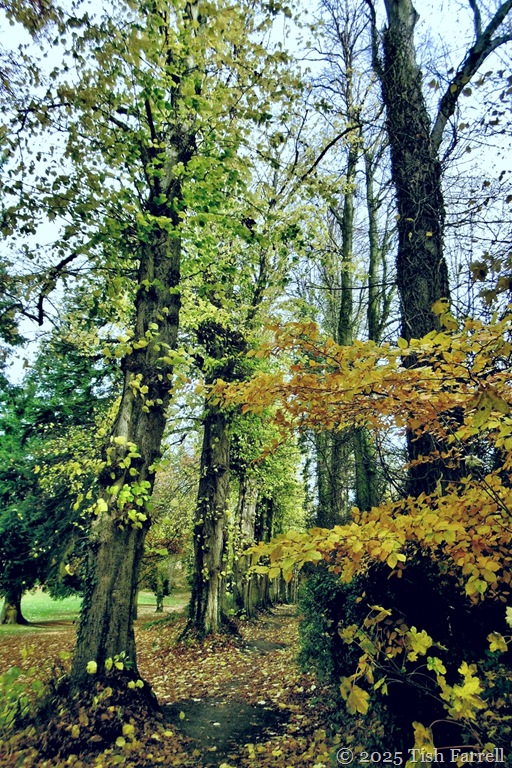
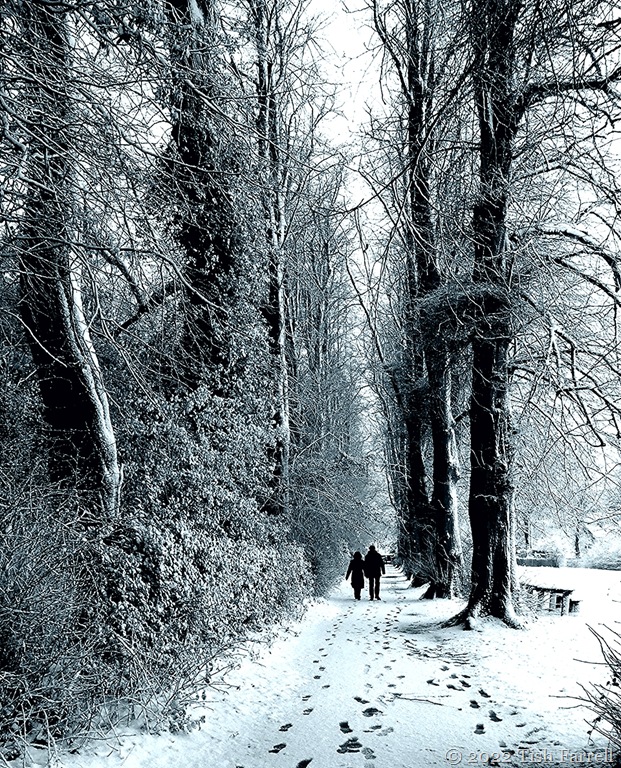
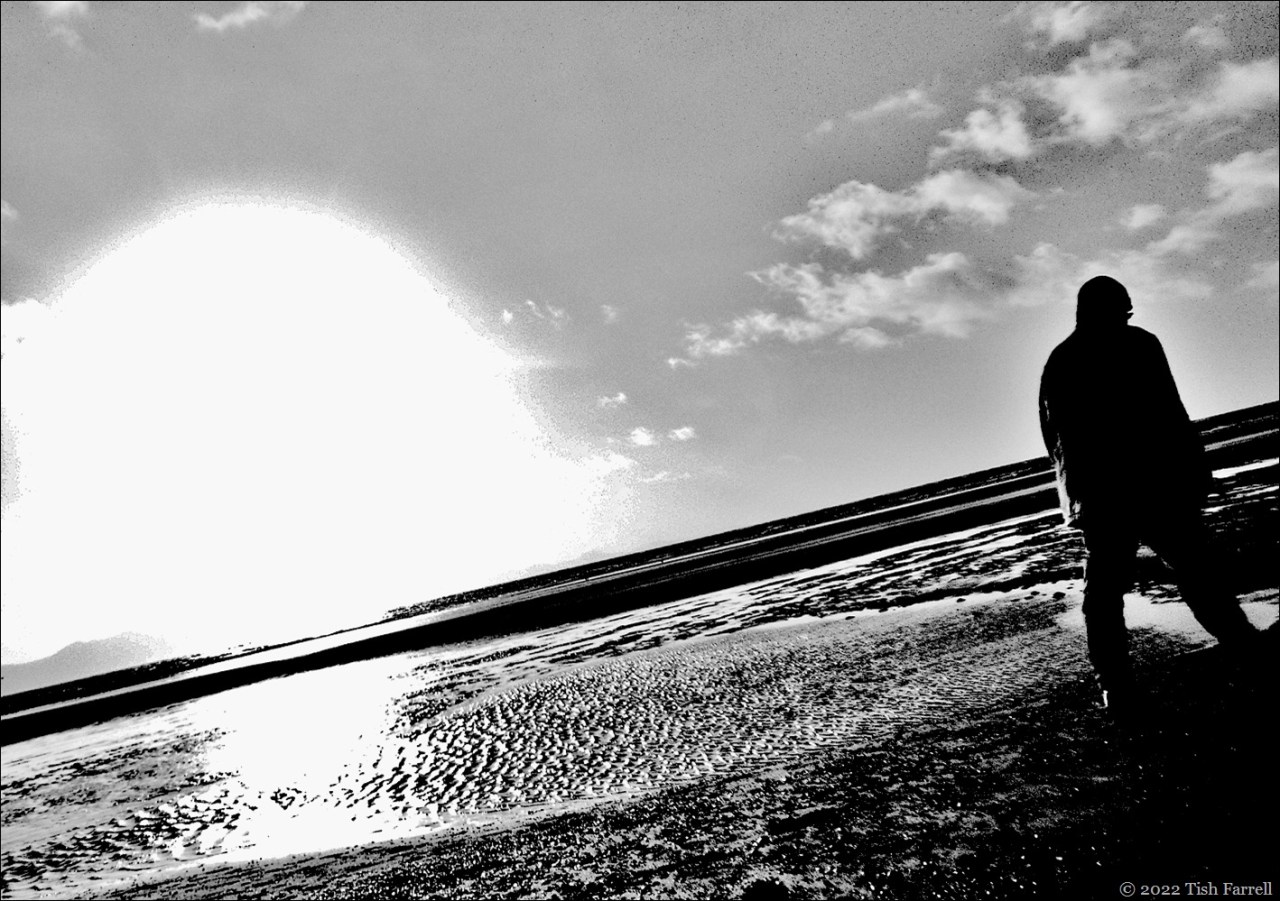
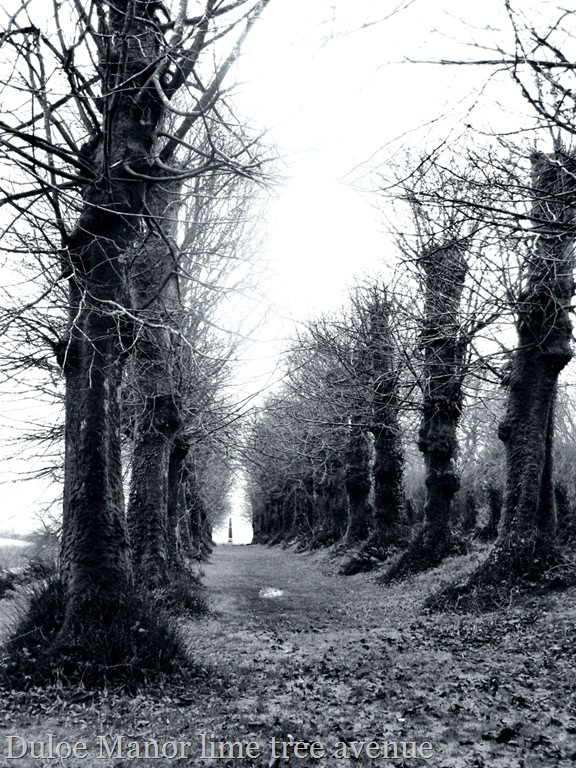
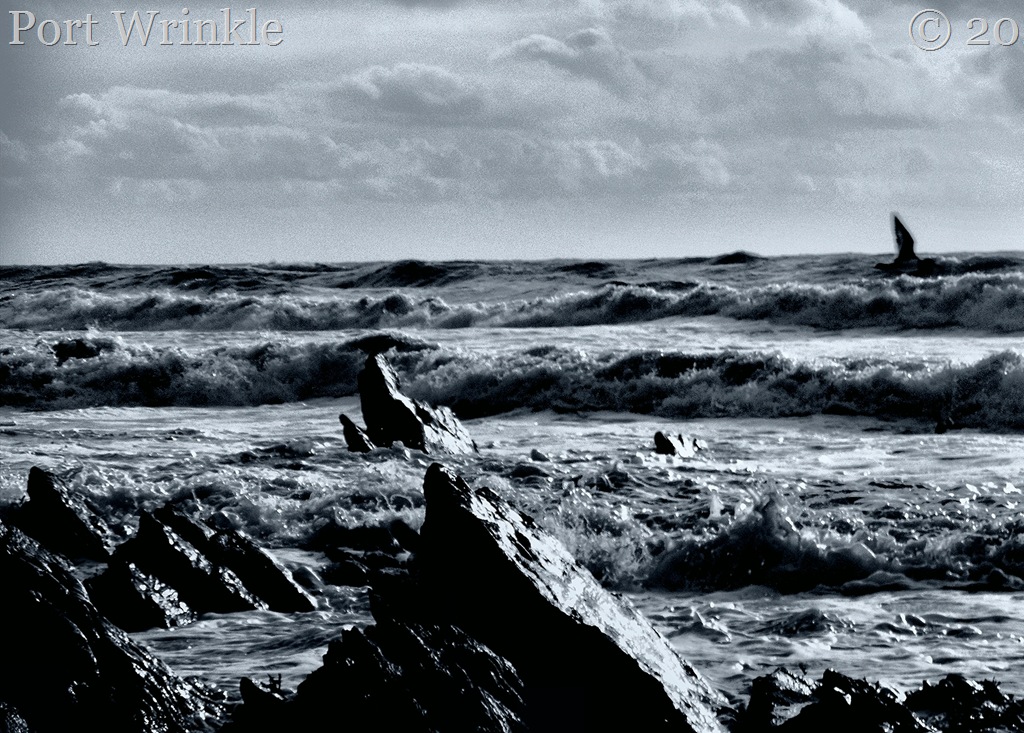
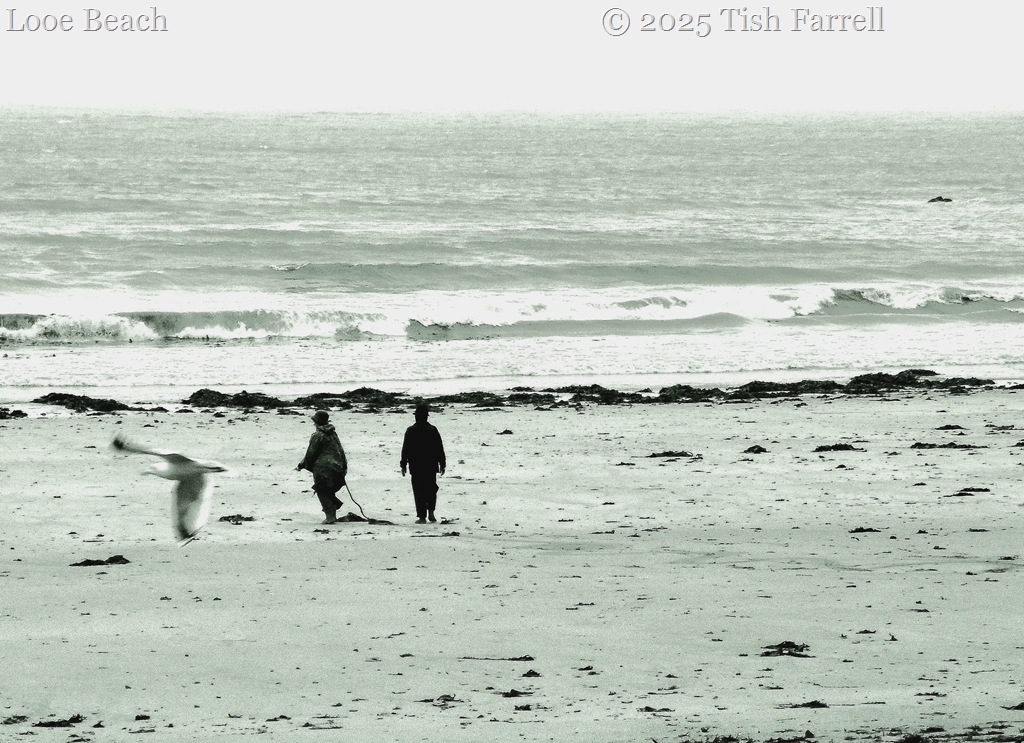
So here are some more Cornish photos, taken one gloomy December, and with a little nod to Daphne du Maurier’s sensibilities.

P1020701ed

*

P1020927 ed

*

P1020611ed

Lens-Artists: Cinematic This week Sofia at Photographias sets the theme.

We’ve Been Having Blue Sky Days…

IMG_7302 blue

*

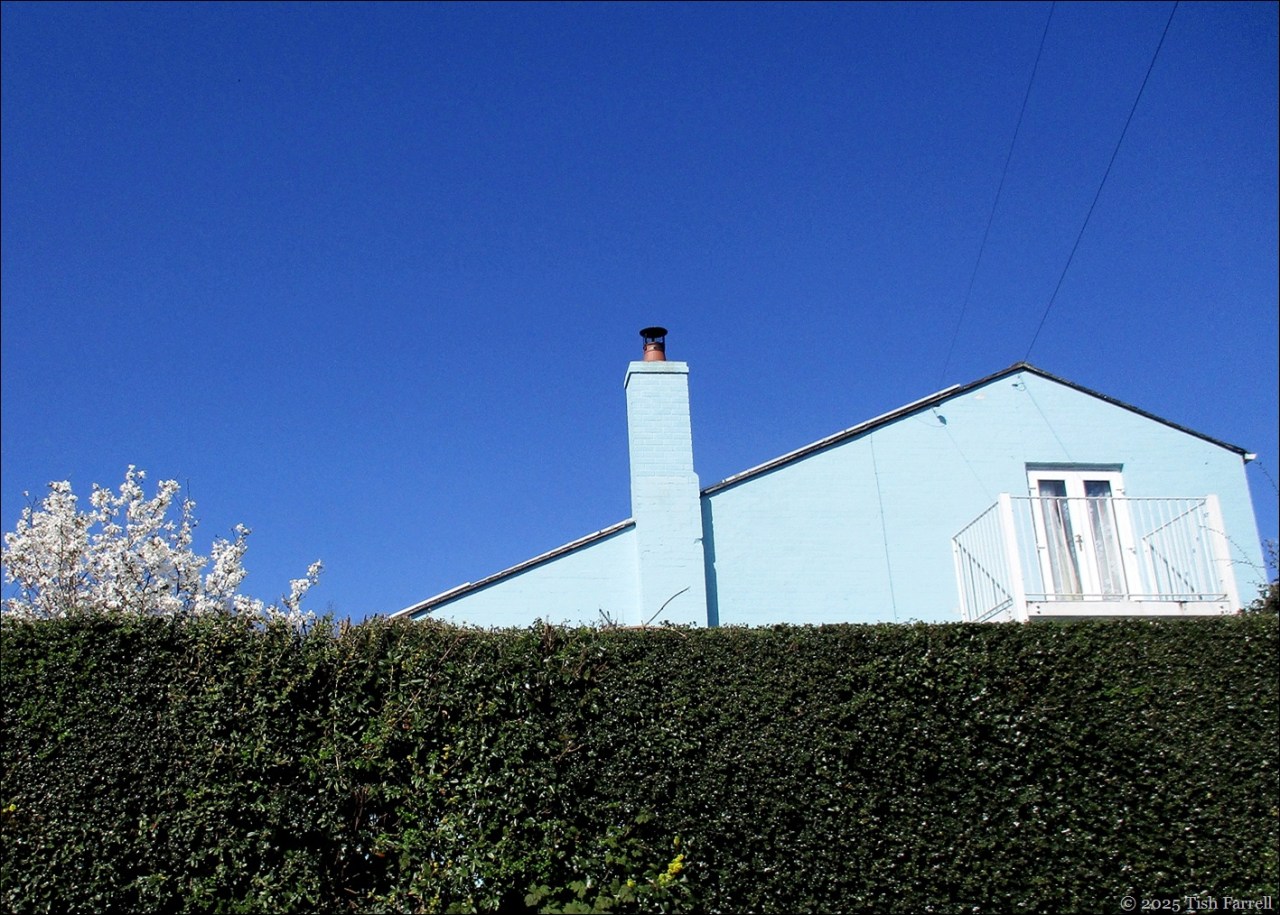
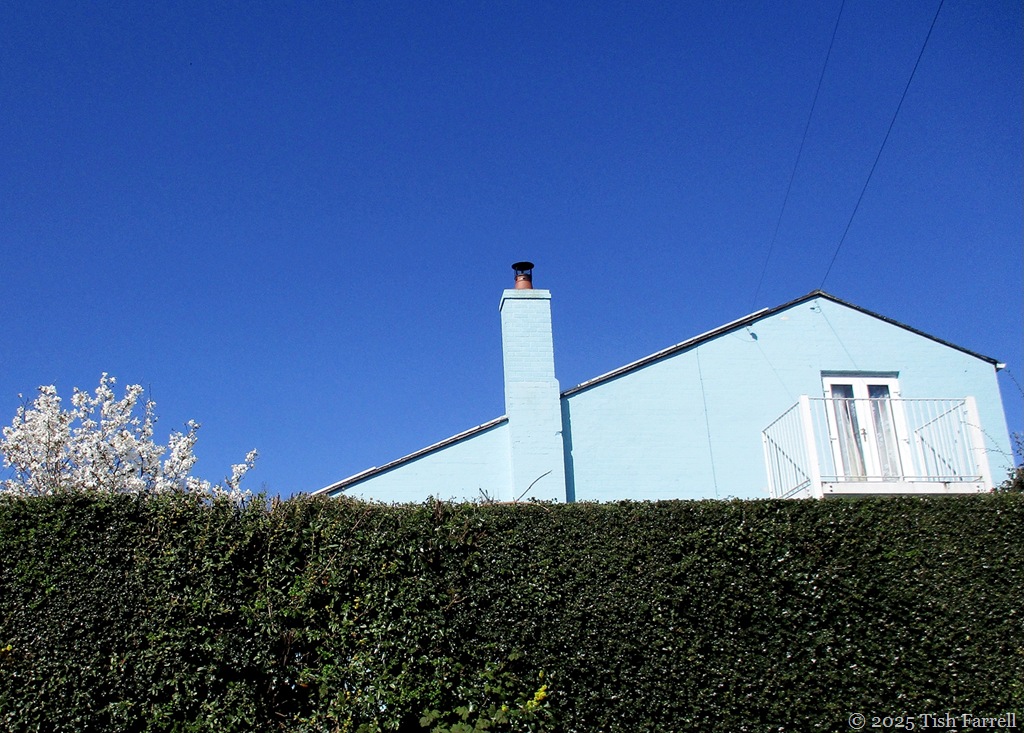
They arrived with the spring equinox on March 20th…

IMG_7303 blue

*

… days hot in the sun, but ice-cold in shade, as if the air came straight off a snow field…

IMG_7307 blue

*

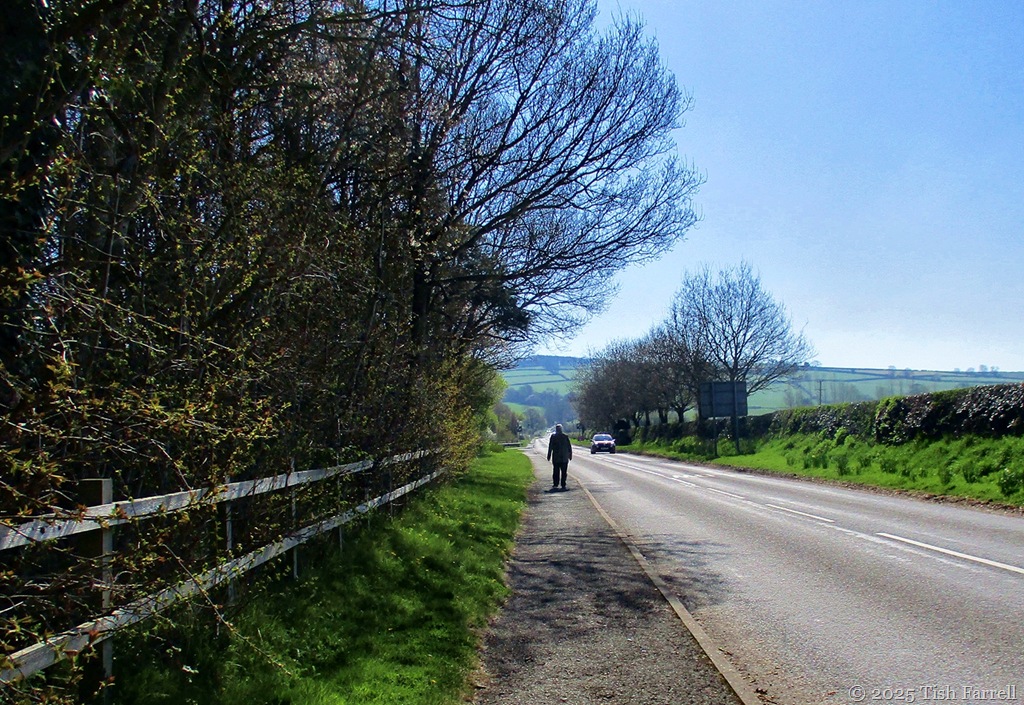
…yet so enlivening, it had us one day walking (instead of driving) to the builders’ merchants on the edge of town…

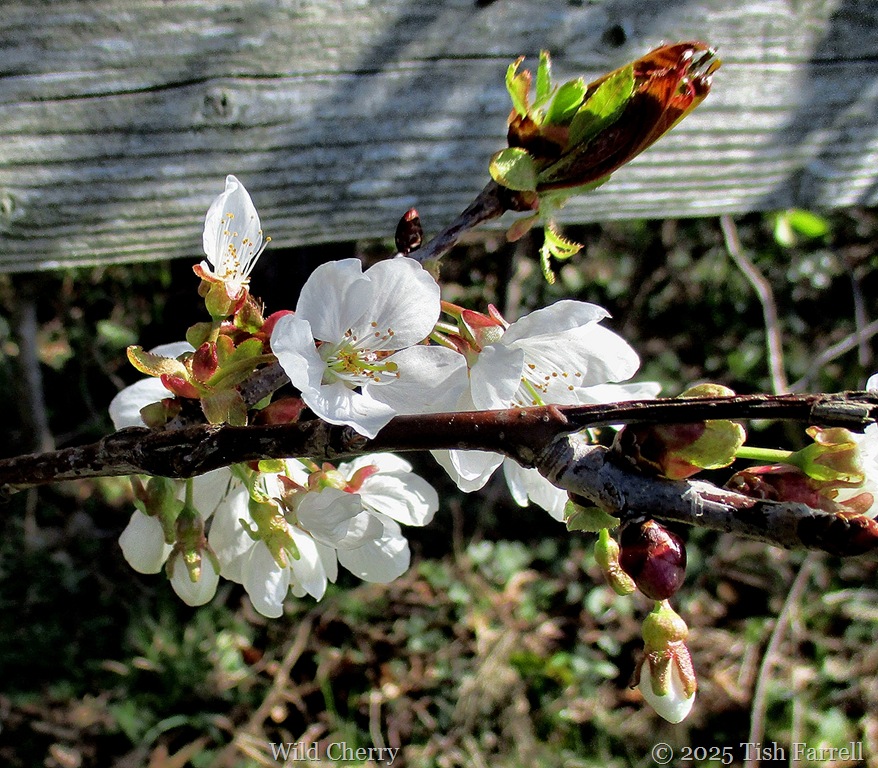
…spotting, as we went, wild cherry blossom, the bright white blackthorn that is everywhere in drifts on farm hedgerows, and then the distant green of wheat fields and fresh grassland.

IMG_7311 blue

*

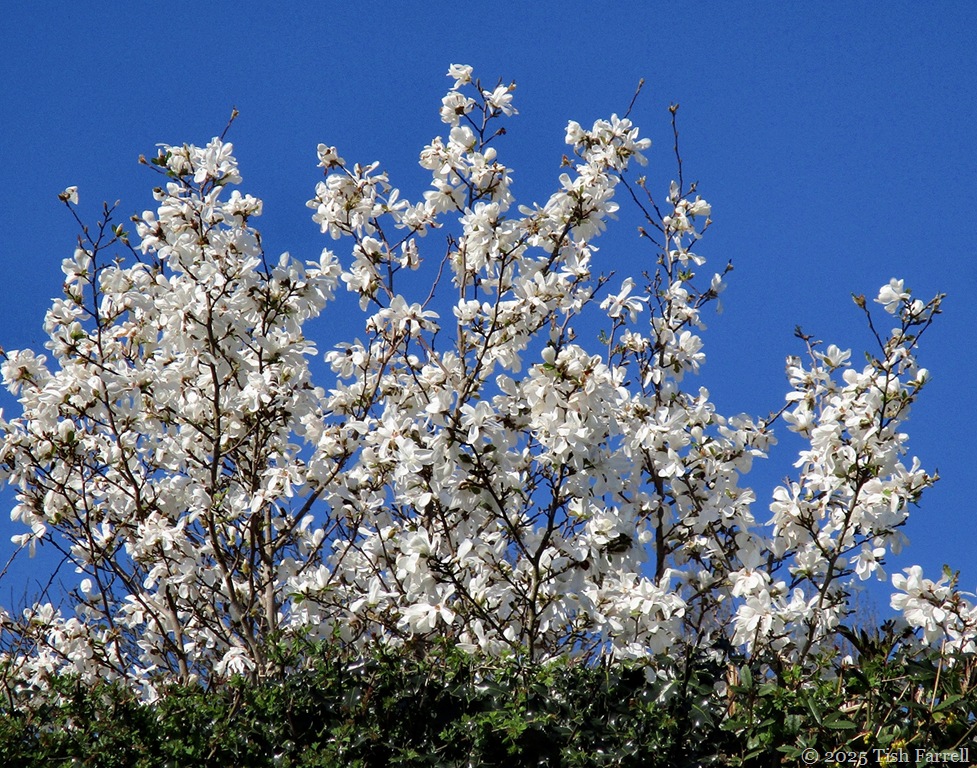
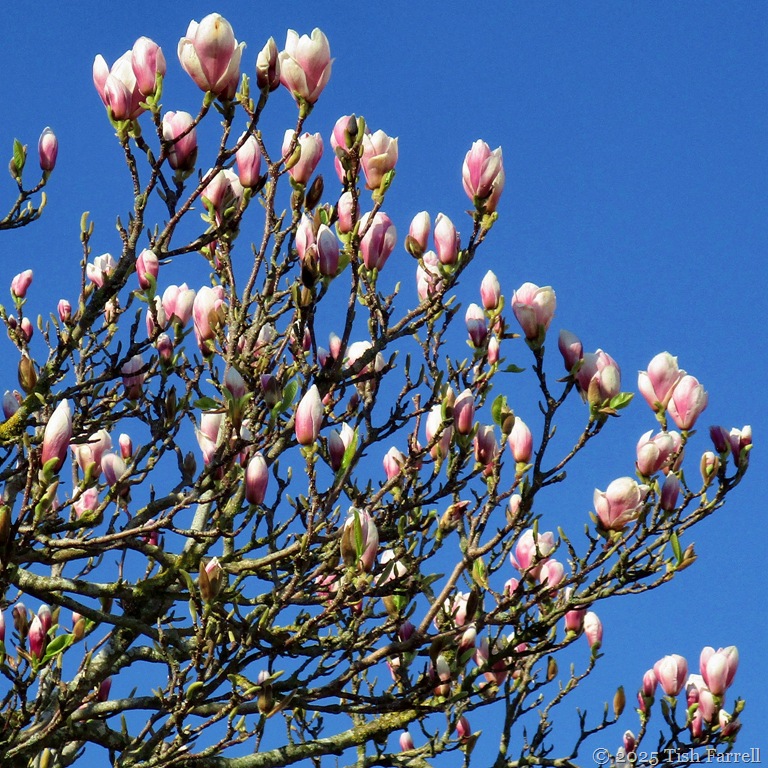
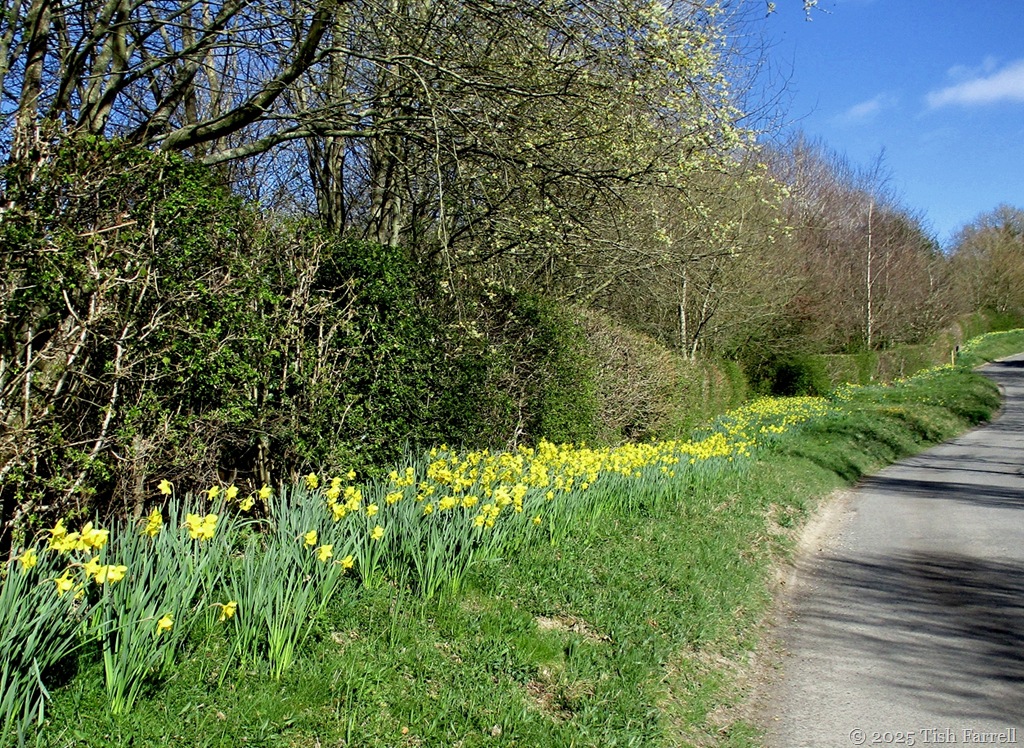
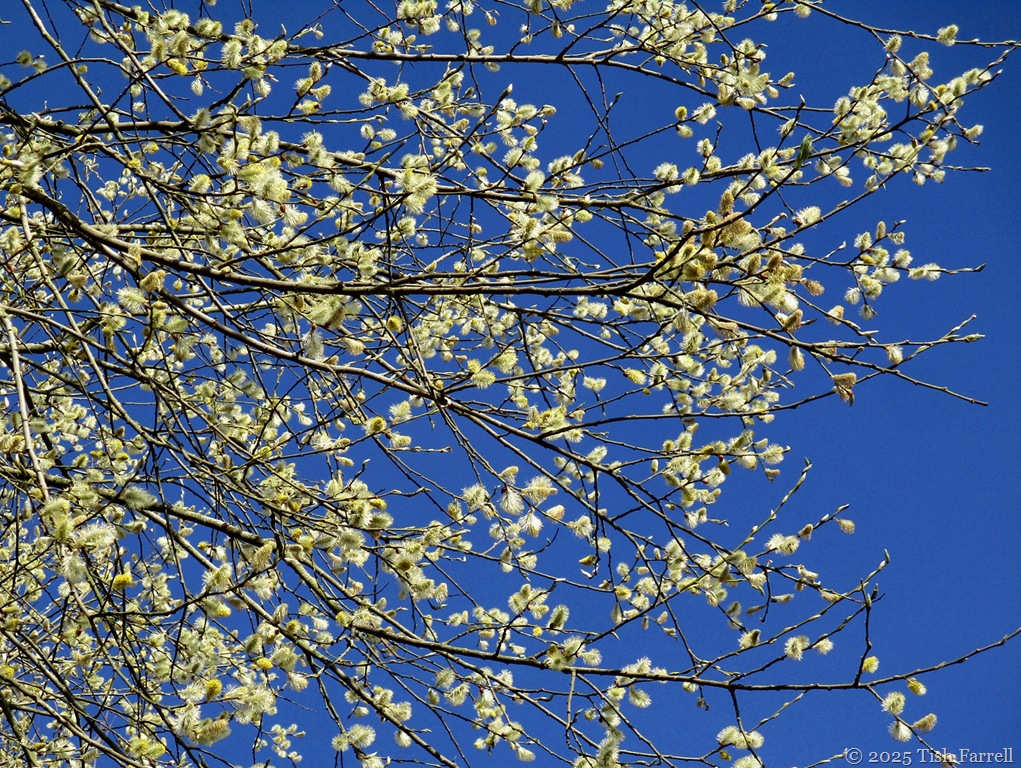
Meanwhile, the town lanes and gardens have been aglow with magnolias, daffodils, pussy willow, forsythia, camellias, fire-red japonica…

IMG_7300 blue

IMG_7284

IMG_7287 blue

IMG_7326 blue

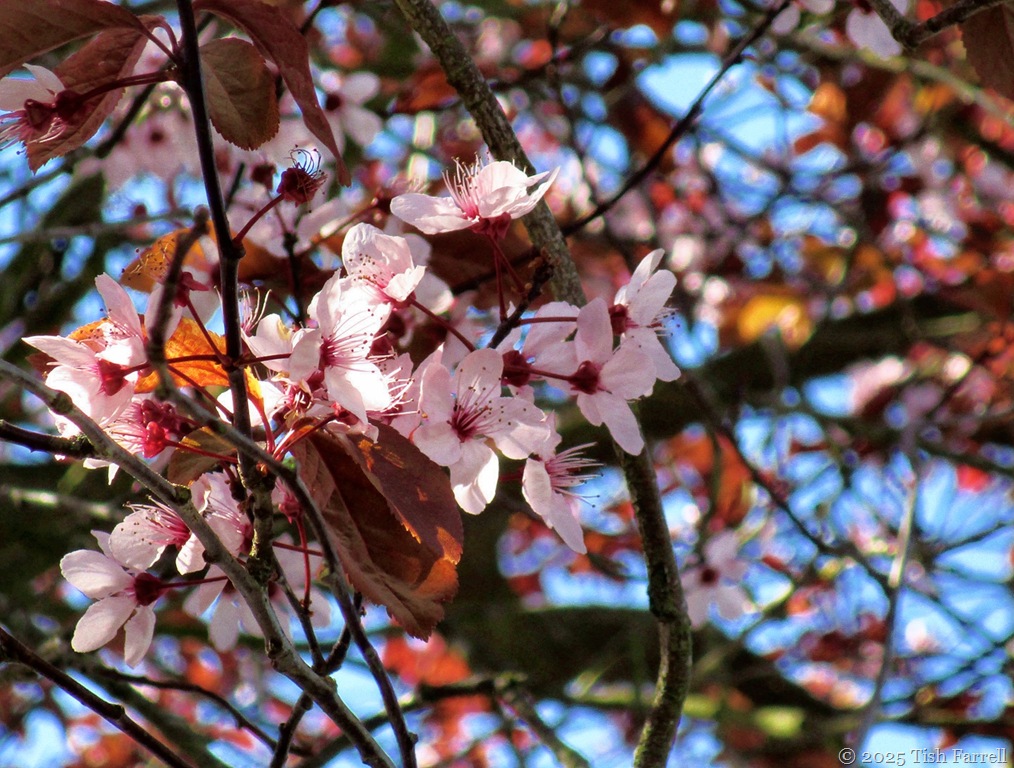
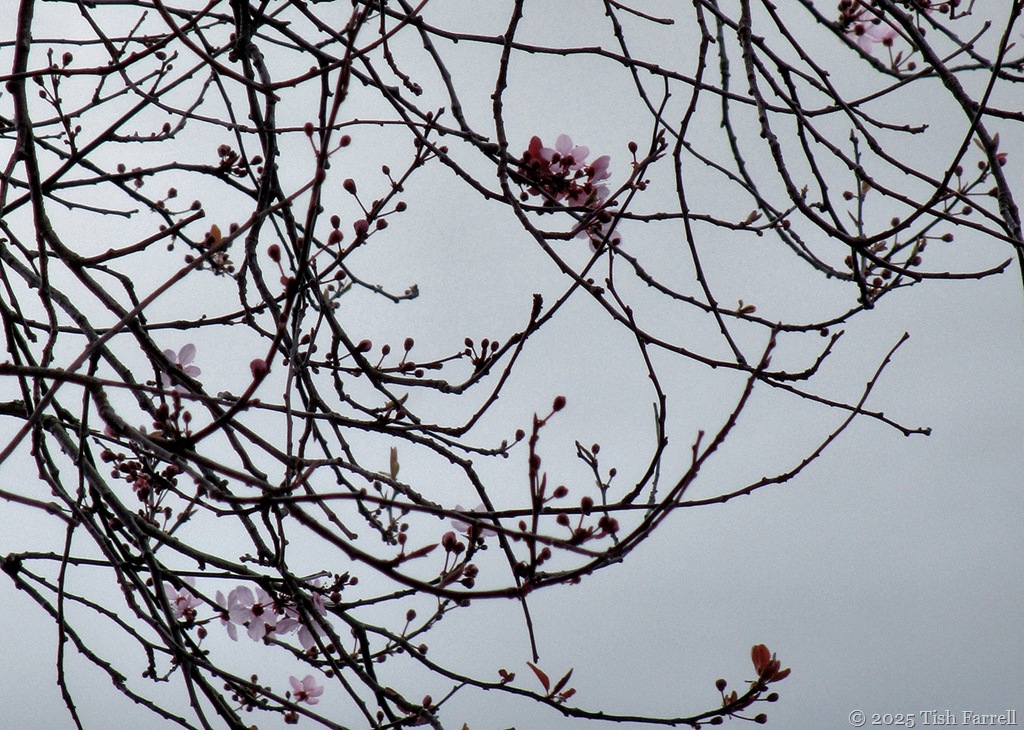
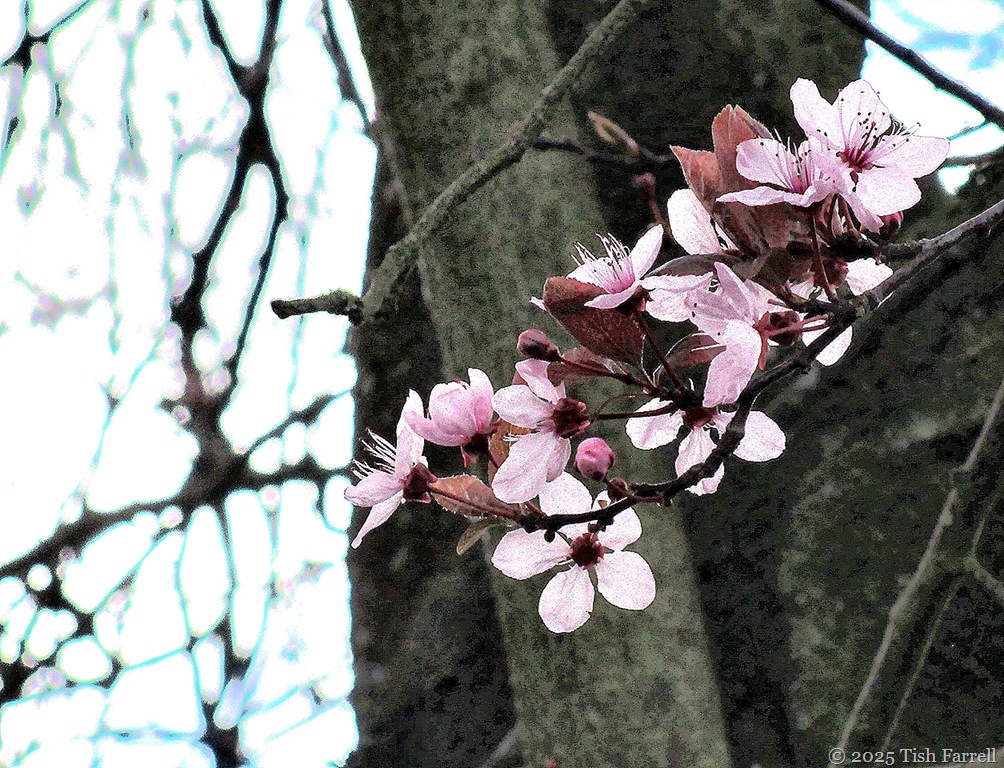
…and the cherry plum by the house has day by day been turning from pink to bronze, as blossom flutters off and gives way to leaves.

*

And so the Shropshire countryside has been drowsing in a haze of vernal glamour: an earth dream of a perfect spring come to life.

The blue sky days turned into weeks, three to be exact. Long enough for us to grow used to blissful weather, to think it ours forever.

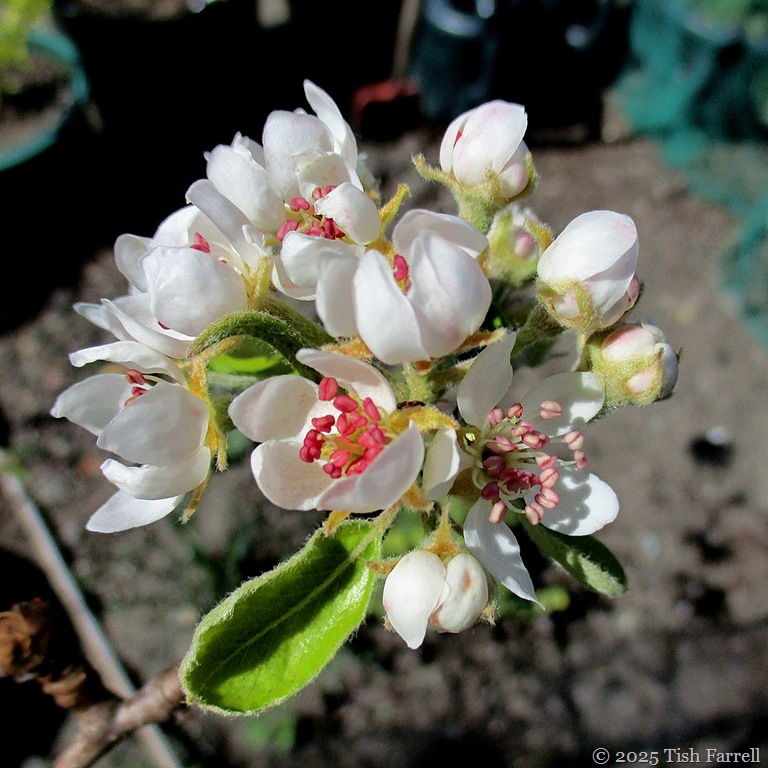
In the garden, our faces turned often to the sun, we noted the little pear tree begin to flower…

IMG_7317 blue

*

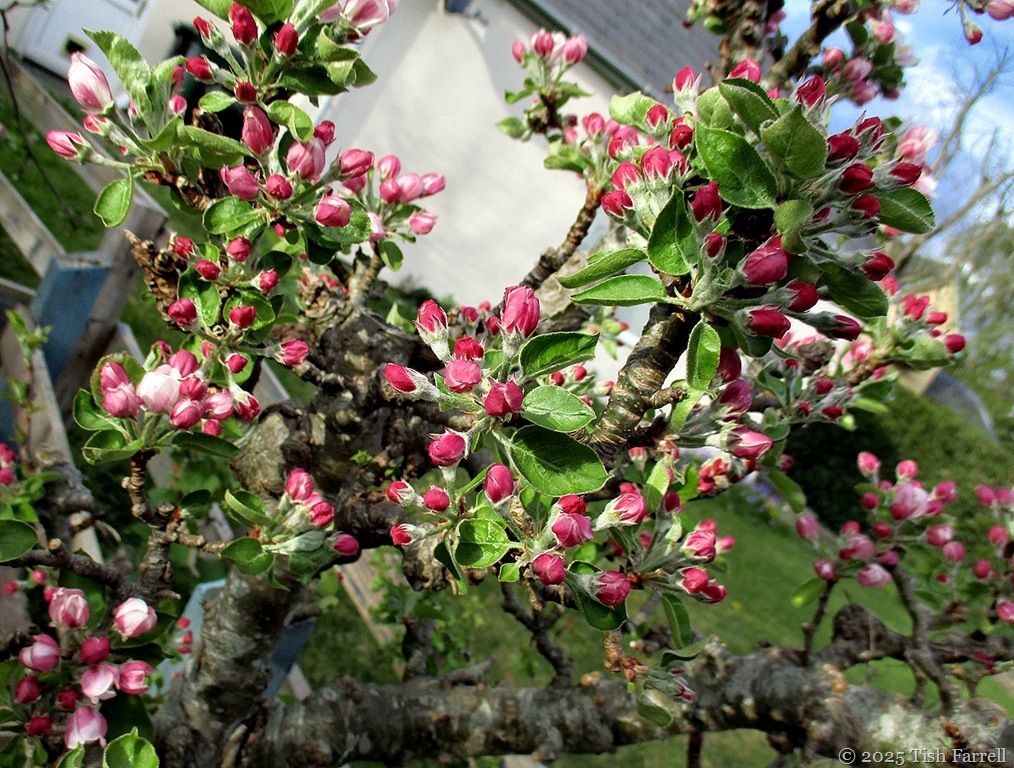
…and the old apple tree by the compost bin burst with buds…

IMG_7361

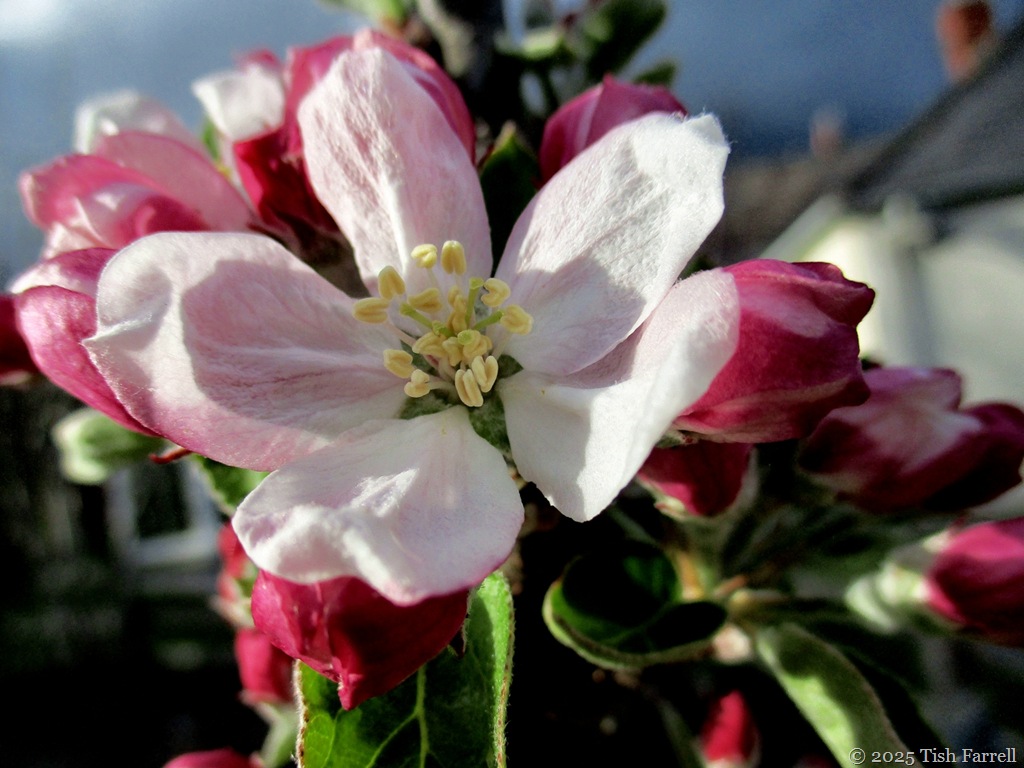
…that then begin to open…

IMG_7366

*

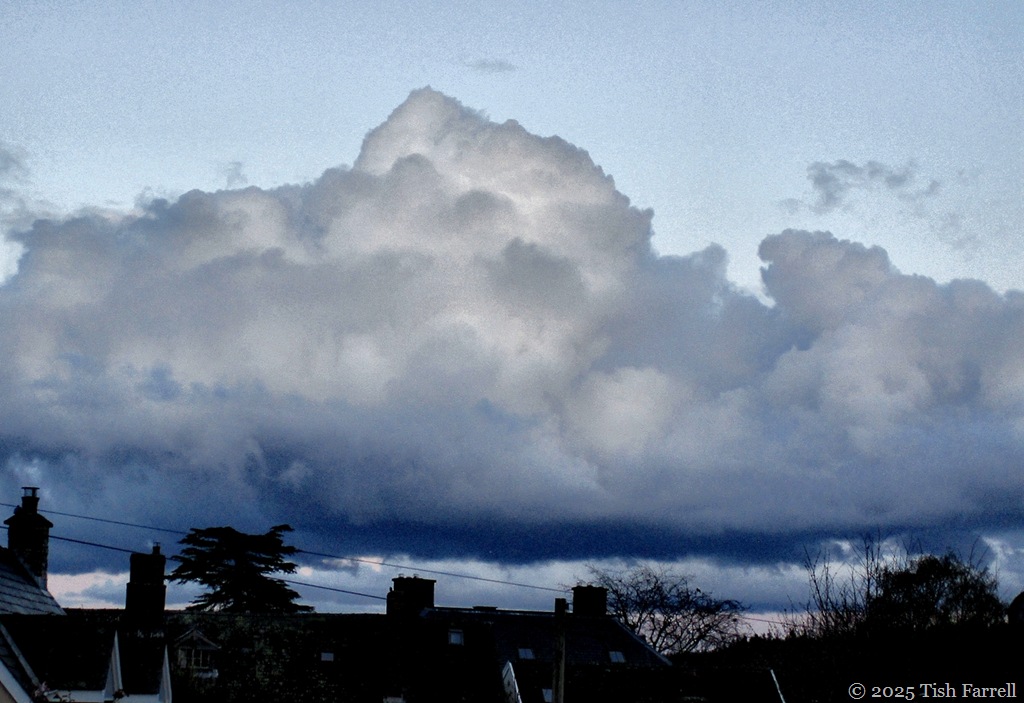
…just in time for Sunday’s full moon and a complete change in the weather…

IMG_7372

*

Today there is grey sky, racing rain clouds and a piercing wind that gusts down the chimneys. It feels like winter when we walk to the shops, clad in sweaters, quilted coats and woolly hats. We’re cast adrift in seasonal confusion. Bereft. Abandoned by spring. How could she do this when we so loved the sun, the light, the crisp air?

Ah, well.  The weather people say the wind should lessen tomorrow, all but doubling temperatures from 6 to a soaring 11 degrees C. There might also be a view of the sun on Easter Sunday morning, but little to see in the following week. Instead, there will be rain, of which this gardener and the nation’s farmers are much in need. So it goes. All chop and change. Perhaps blue sky spring will be back in May.

copyright 2025 Tish Farrell

Lens-Artists: abandoned  This week Anne sets us the topic ‘abandoned’. Please see her post for more serious cases of abandonment.

Weather’s Untamed Ways…

IMG_6969 ed

…from heavenly ethereal to eerily supernatural:

IMG_7161ed

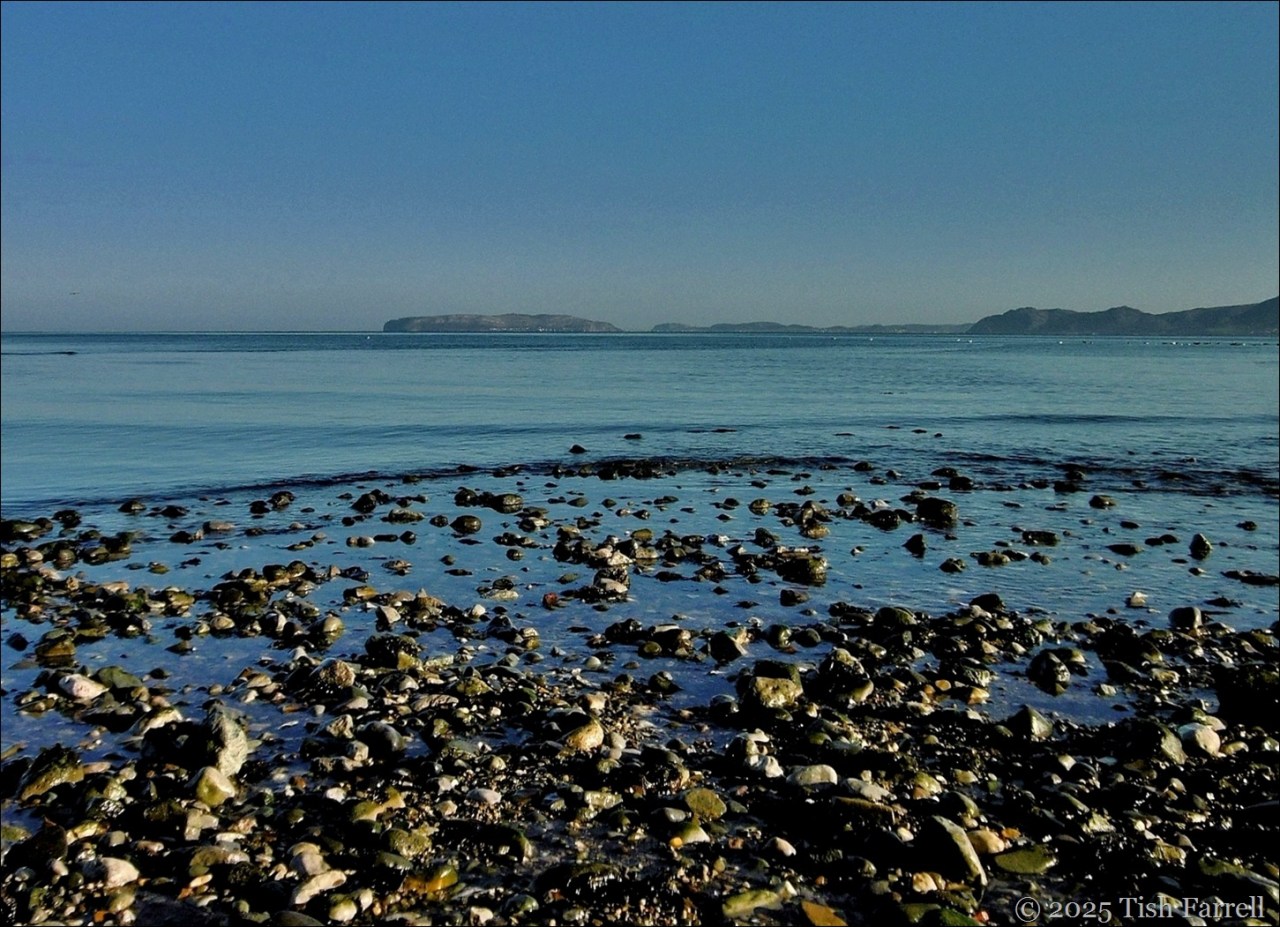
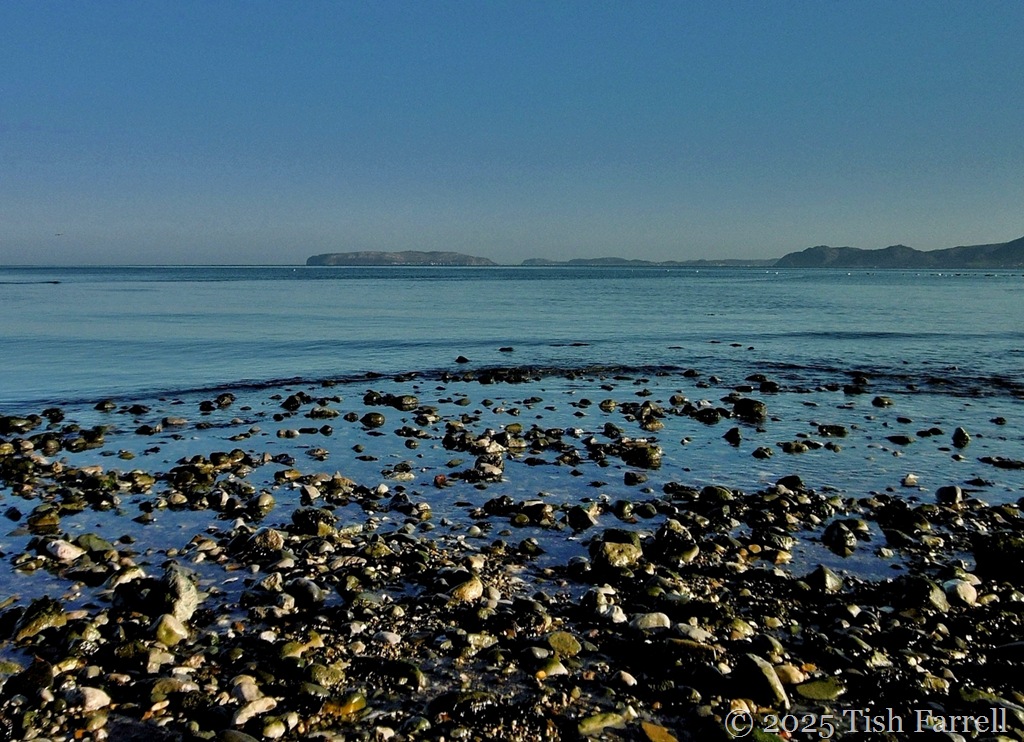
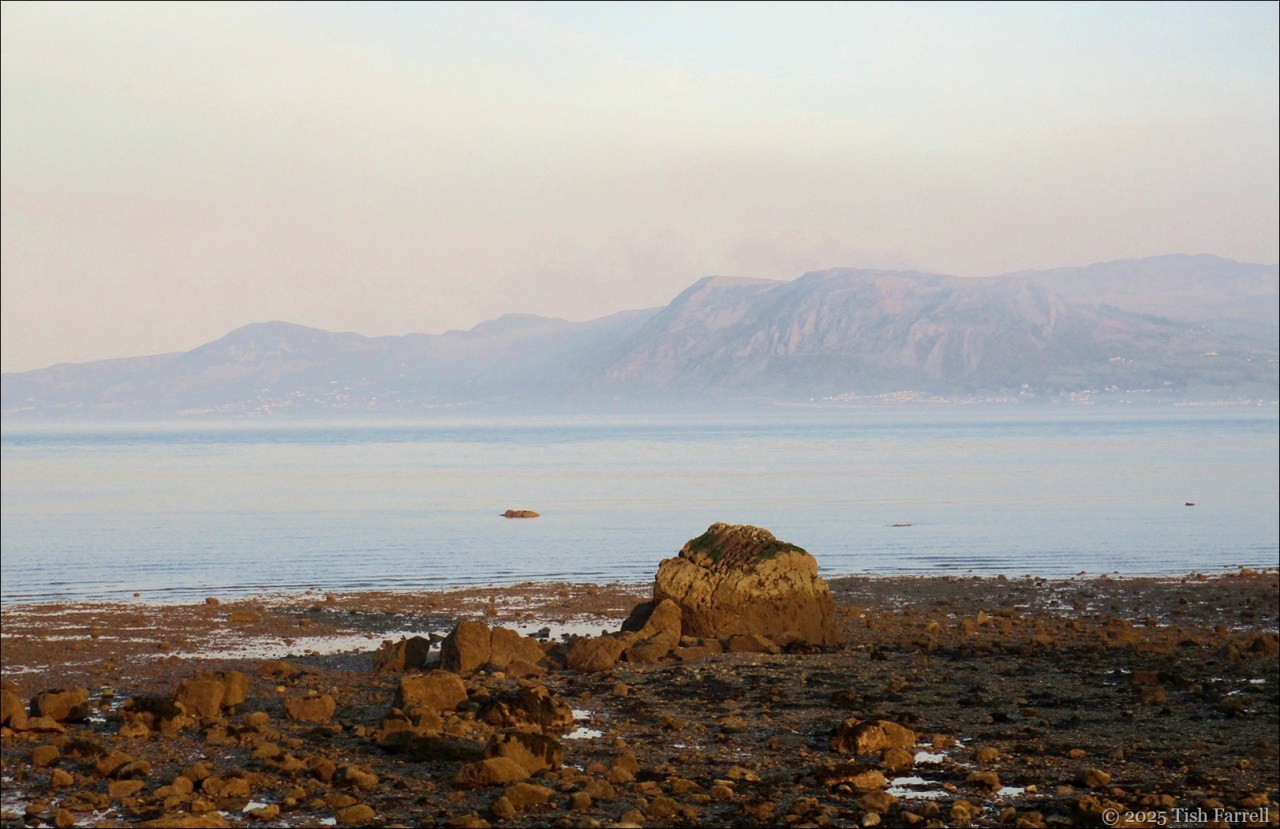
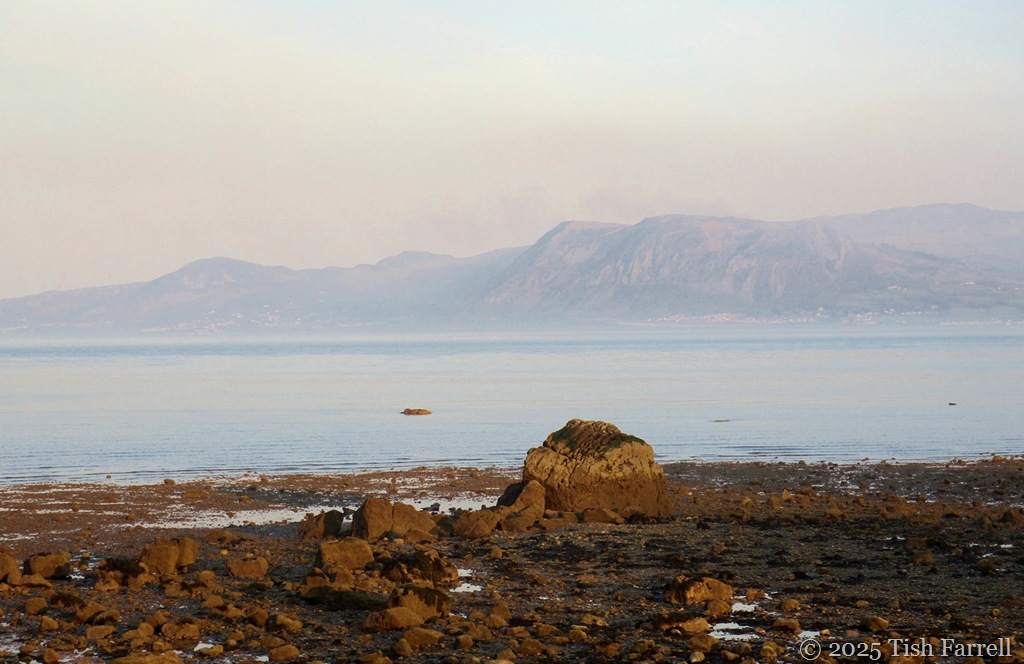
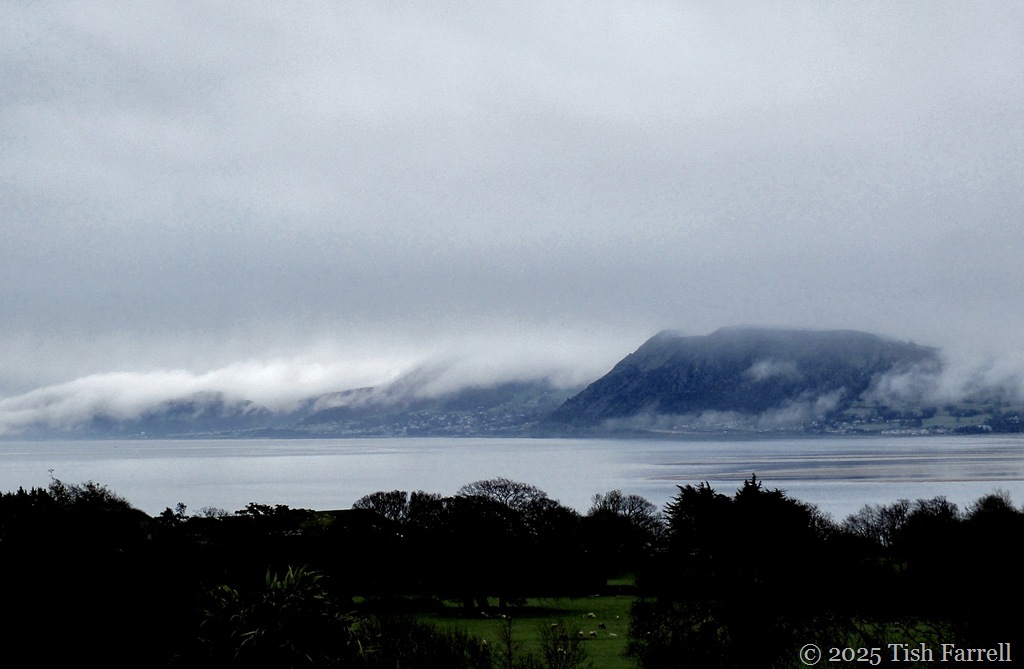
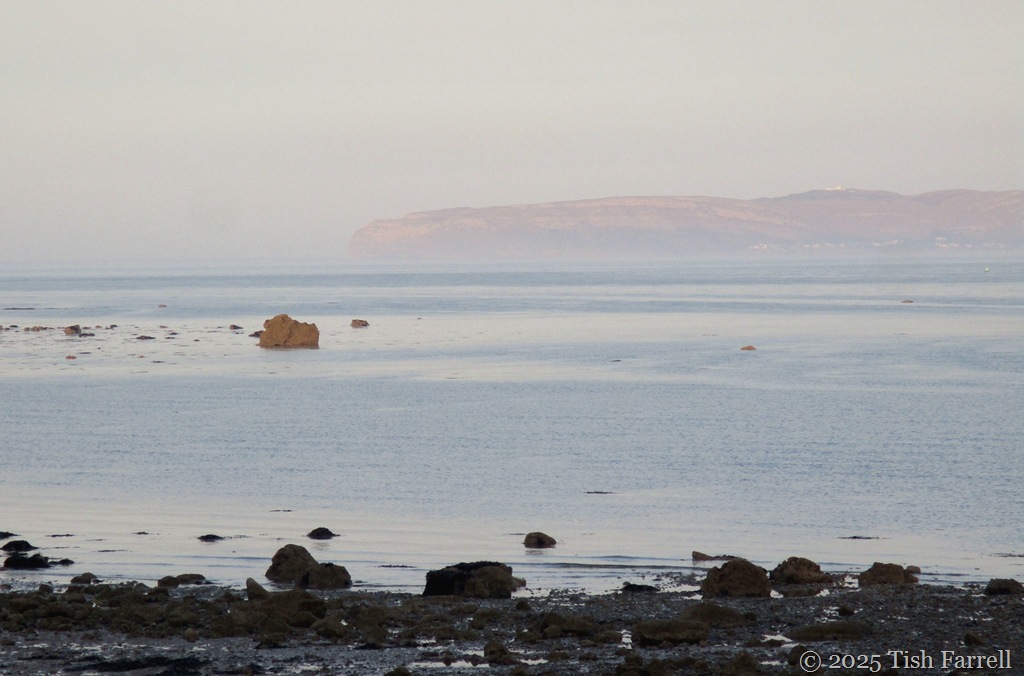
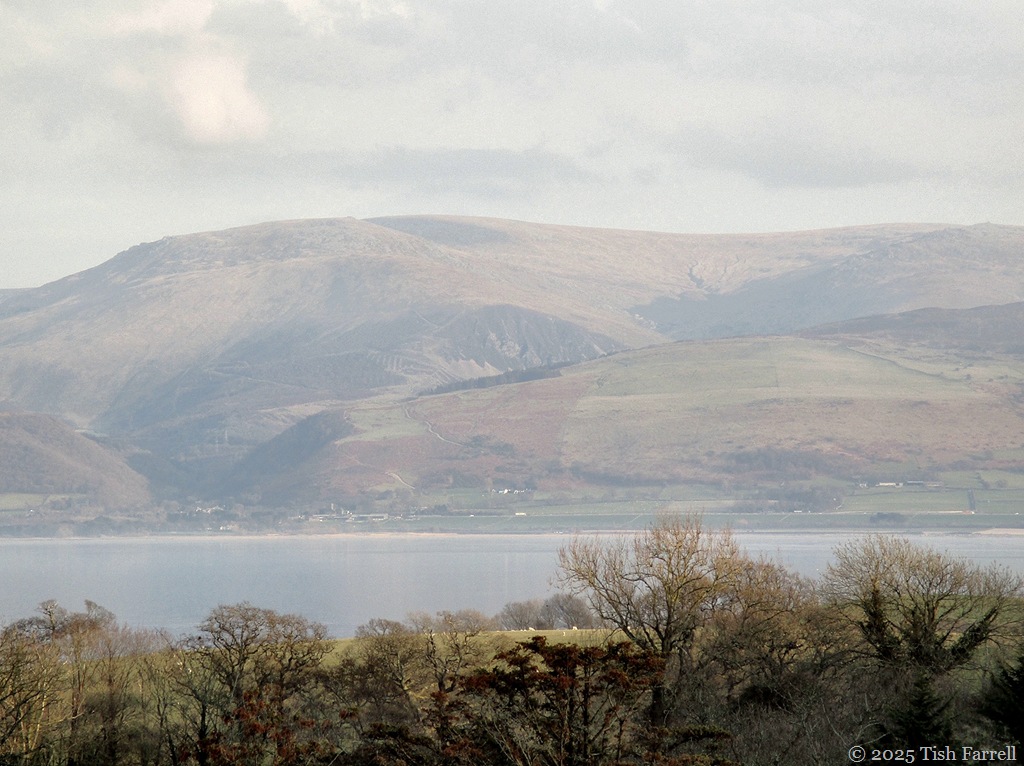
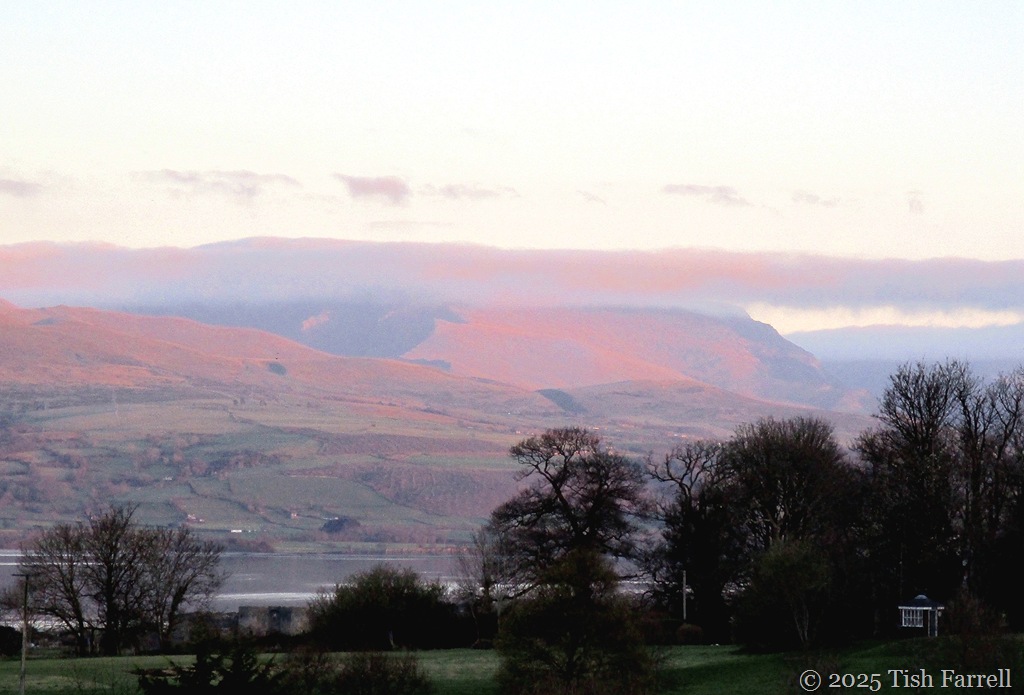
Herewith some recent views across the Menai Strait – from the island of Anglesey above Beaumaris to the Welsh mainland.

We’ve just returned from a week’s stay on Ynys Mon. It was our first March visit to the island, our usual time-slot being late December, and our arrival coincided with both the spring equinox and a spring tide. In fact we had never seen the low tides so low. When the sea went out, sand banks never glimpsed before, became exposed.

You can just make them out in the first photo.  This reminded me of the tales of the Roman invasion of Anglesey around 60 CE and how Governor Suetonius Paulinus equipped his army with flat bottomed boats to deal with the uncertain depths across the strait. But it is possible, too, that there are/were low-tide paths, known only to locals. Perhaps Suetonius Paulinus found himself an informer. The conquest anyway was bloody: the object to smash the power of the Celtic tribes’ druid priests who made their last stand on the island.

There’s more about this at an earlier post: Island of Old Ghosts.

For the mystically or meditatively inclined, you can see how weather watching can enthral; you never know what may happen next; all the elemental forces conspiring: the ever changing light, coastal winds, cycles of convection and condensation, the lunar-solar ebb and flow of tidal waters.

So much weather in a week on this tiny corner of the planet. We had hot sun, biting winds, cloudless blue skies, deep gloom, rain (though not so much for Wales), drizzle, mist, stormy and glass glittering seas.

IMG_7159ed

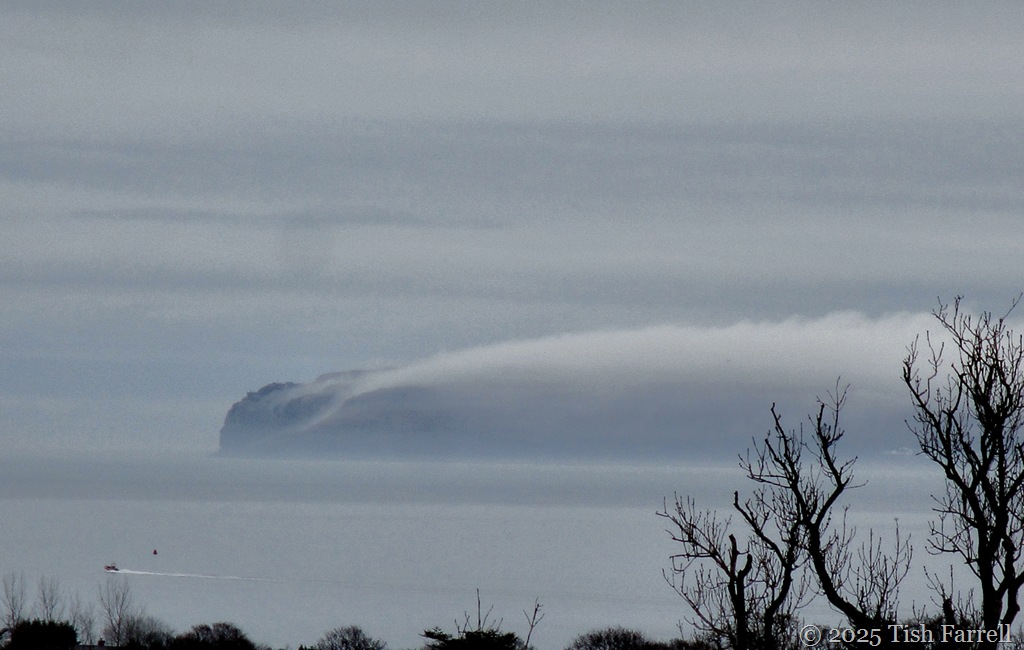
Late one afternoon we watched, with some sense of awe, as this white cloud moved low along the mainland shore, spilling out like dry ice till it reached the Great Orme headland.

And then one evening…

IMG_6971ed2

*

At other times the mainland looked gauzy. It could be a mirage. Or there again it reminded me of the magic painting books we had as children – the wash of colours emerging from the empty page.

IMG_6967ed

IMG_7184ed

Copyright 2025 Tish Farrell


Lens-Artists: Wild  This week Egidio at Through Brazilian Eyes wants to know what wild means to us. Go see what wild means to him.

Catching The Light And Finding Home

IMG_6923 cherry plum sunset

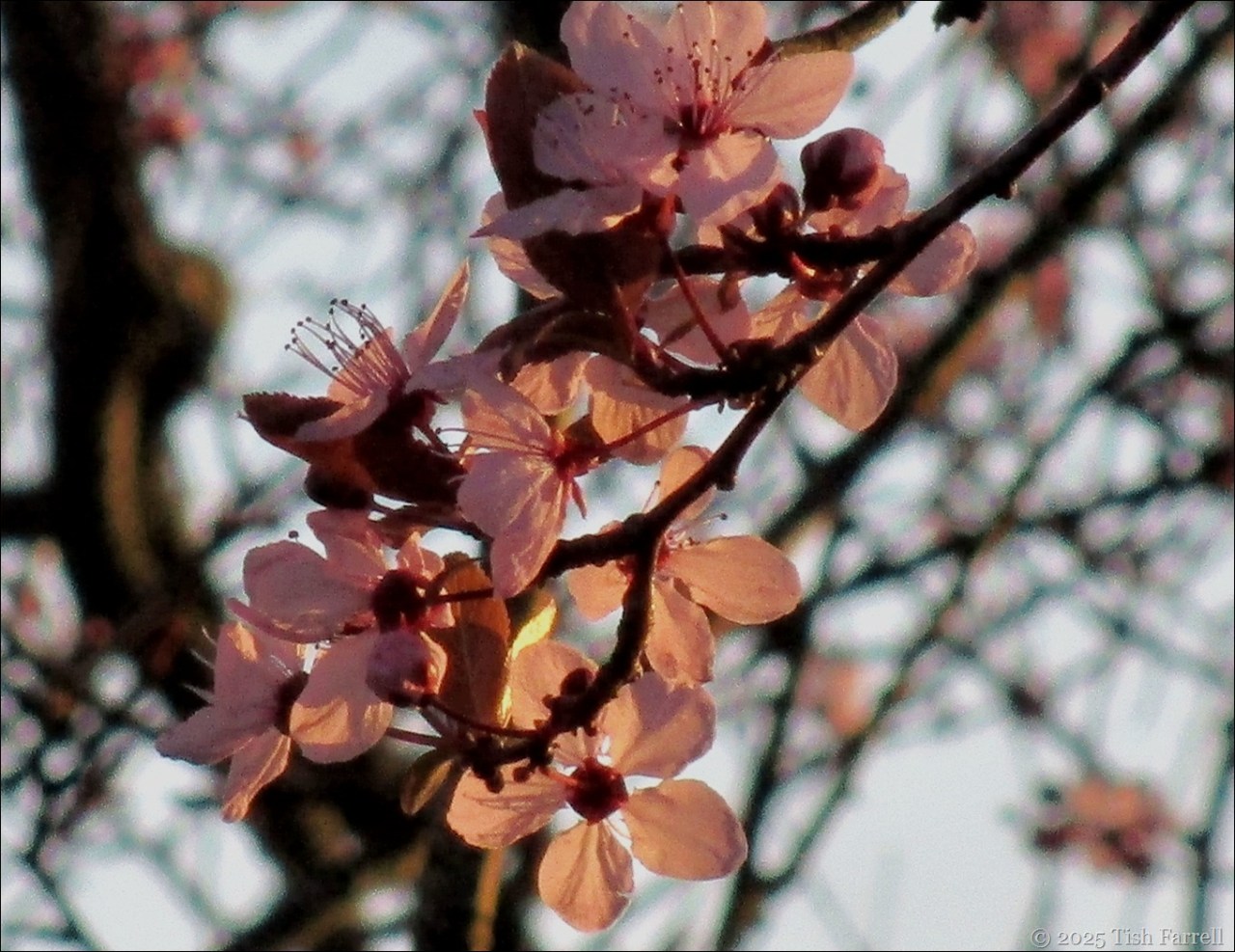
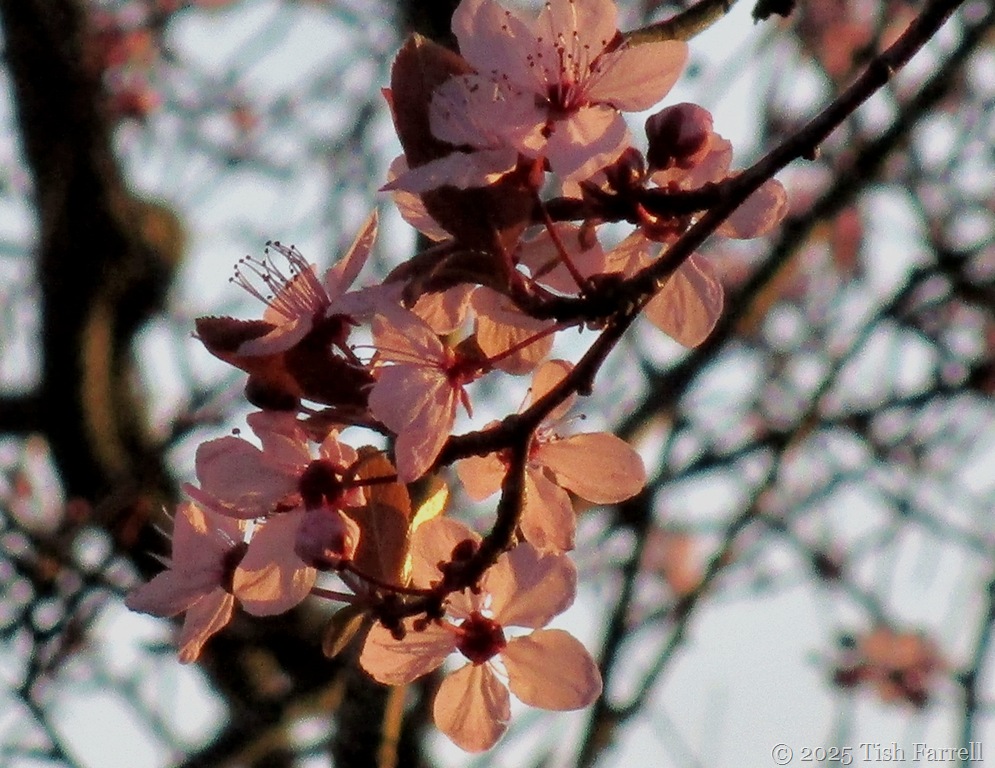
I took the header photo on March 11th, the last rays of sun over Shropshire-out-of-Wales, lighting up the first sprigs of cherry plum blossom. I have only recently identified this tree: Prunus cerasifera nigra – a native species that lives just over the hedge outside our kitchen window. Every day now, and especially when we sit down to eat, we are watching it with special attention. For it seems this tree, which I had started off disliking (for reasons explained below) has become a household treasure, albeit one ‘borrowed’ from the roadside verge next door.

When we planned the kitchen extension (to replace an ageing conservatory attached to our newly bought old house) we did not think too much about the view. The site was tight, constrained by planning regulations, conservation area considerations and an overgrown hedge (although it has been cut back), and so we assumed our new big window would mostly look out on sprawling holly and hawthorn.

But now we find we also have a tree-view. And though I’m not so keen on pink, I cannot deny its loveliness, and especially at sunset. For this was another unplanned aspect: the only possible position for the window meant it faces due west.

IMG_6907ed

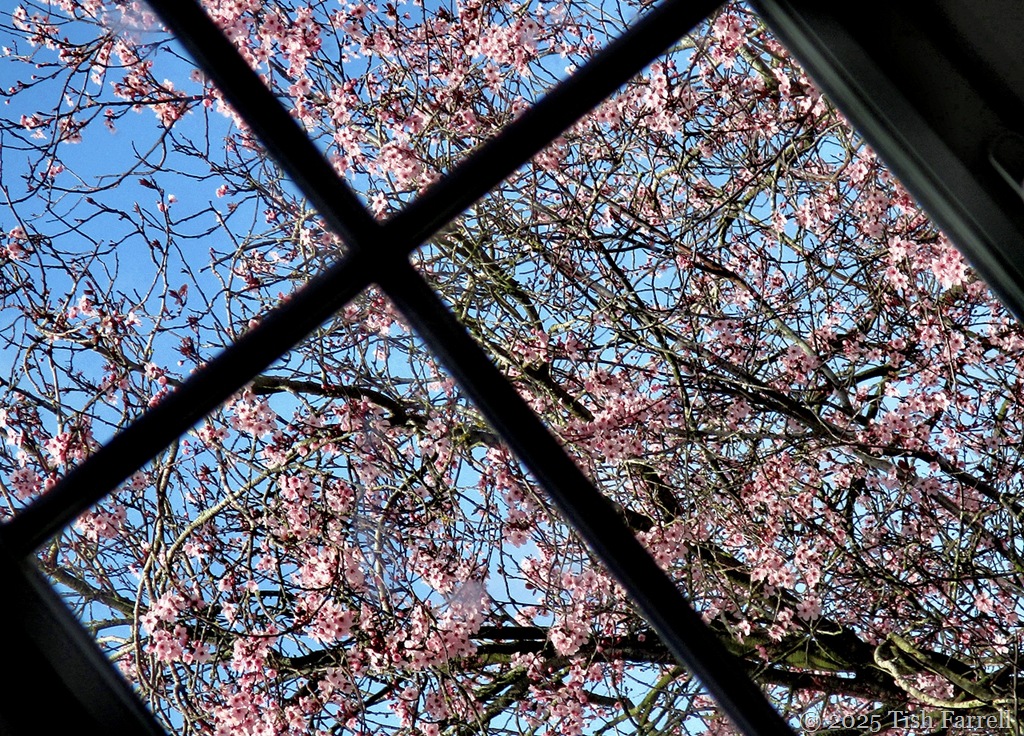
Two weeks ago the branches were still black and bare, a skeleton mesh against wintery skies. One week ago, with the sudden sunny spell, if we looked hard, we could spot tiny slivers of pink on breaking buds. This week we have the first blossom, a good two weeks later than last year, when our February 24th view through the landing window looked like this:

IMG_4676

So much for all the talk of this spring being sooner and warmer etc etc than other springs. Not so in Bishop’s Castle. After the week of warmish weather, the polar vortex is now rolling out cold, cold air day after day, and the cherry plum’s impulse to flower feels arrested somehow. But then that’s alright. A slow flowering will be just fine.

*

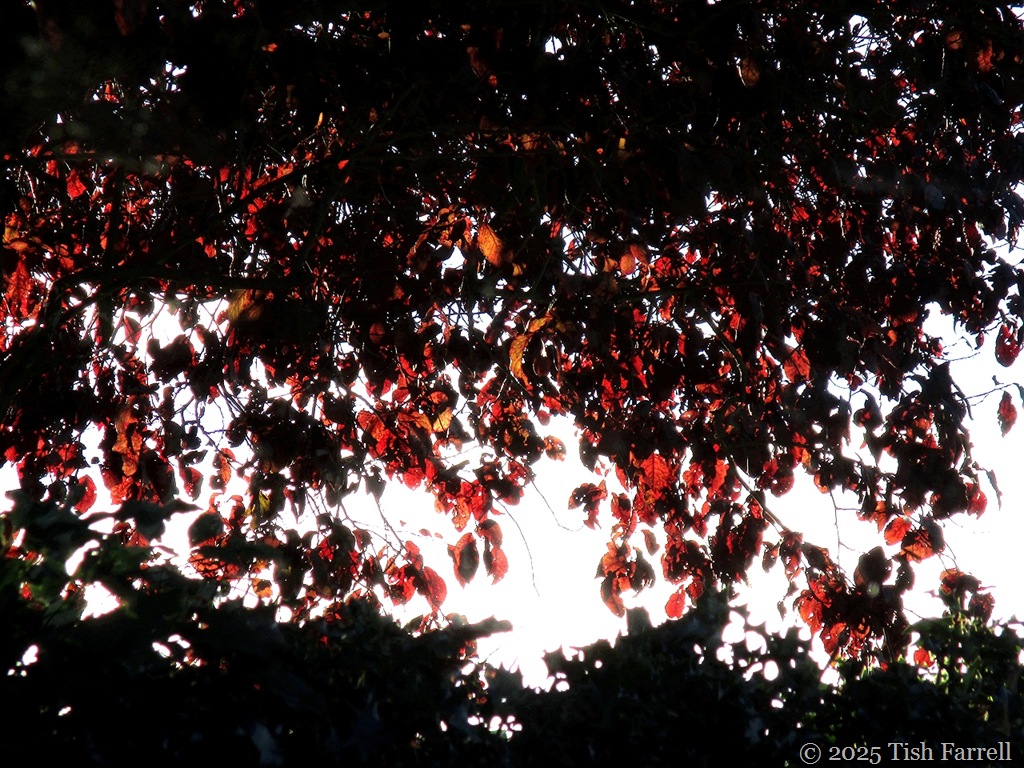
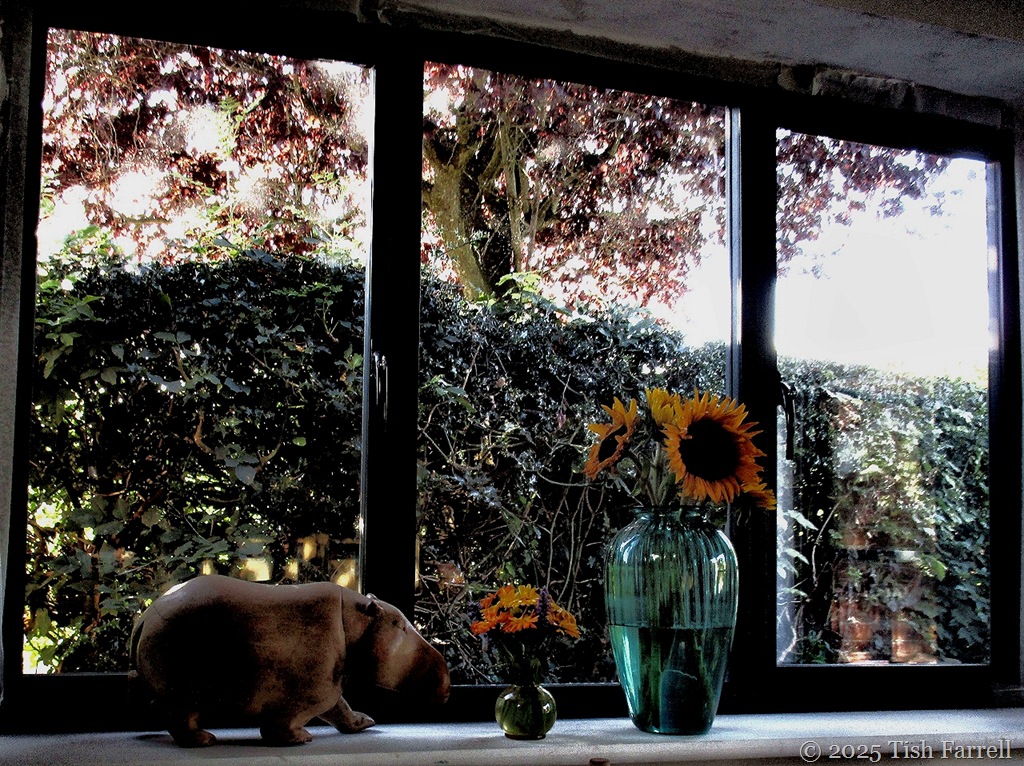
Last spring, as the building work progressed we watched the blossom cloud give way to foliage production. Next we had a dense, dark, rustling canopy, the leaves almost black at first sight, and not very pleasing. When viewed from outside, the tree cast a pool of deep gloom over the garden steps which  I found depressing. But then come August and the kitchen all but done, we found ourselves sitting down to supper with an unexpected light show.

IMG_6006

kitchen window

*

Two months on – and another unexpected view – a November snowfall and an abstract work that made me think of Jackson Pollock’s  Autumn Rhythm, which I think we once encountered in the New York Met, where we’d gone to escape an unanticipated May heatwave.

IMG_6474ed

And so in our new home, with passing moments, hours, days, and months, (two years in August), we are coming to know our closest neighbour, the cherry plum. Its fruits are said to be edible and good for jam. I managed to discover a single one last year. It was deep red and round, bigger than a cherry, with a firm skin that seemed to scrunch when I bit into it. It had a sweet-and-sour taste that made me think of Chinese plum sauce. Back then I did not know about its eating potential, and anyway I think the tree has grown too tall for elder scrumping  forays.

But never mind. It has anyway inspired me to think more kindly about our horrid hedge, and how to deal with some ugly gaps just beyond the window. I’ve discovered cherry plums are good for hedging so I’ve recently planted three white flowered saplings, hoping that (in the not too distant future?) the blossom will cheer both us and passing neighbours. And maybe there’ll be fruit too – for us and the birds.

There are other bonuses of course. When I was out on the far side of the hedge preparing the ground for planting, there was much chatting with locals who wanted to know what I was up to. And indeed, why I’d come to live in Bishop’s Castle, and where was I before. All good questions and a good start too to feeling, after a few unsettled years, that we’ve at last come home.

IMG_6902ed

Lens-Artists: Life’s Changes This week Anne sets us a theme rich in possibility. Interpret it as you may, but first see her post for an inspiring tale of personal development.

This Made Me Smile ~ Once Upon A Time In Kenya’s Highlands

img20241008_11580324ed2

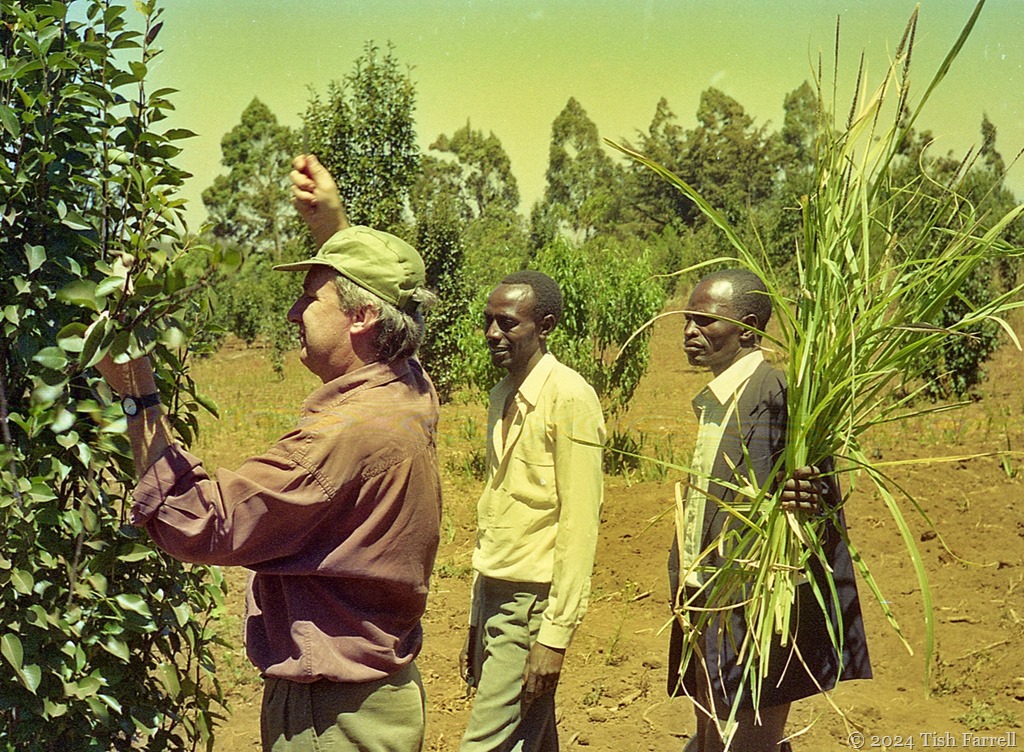
It seemed the greatest gift for this nosy writer when Graham said I could go with him to survey the Kikuyu farms just north of Nairobi. Yes, yes and yes. I would be delighted to look for smutted Napier Grass. And hold the clipboard. And  manage one end of the tape measure.

We were all set then, along with Njonjo, senior driver for the Kenya Agricultural Research Institute, where Graham’s crop protection project was based.

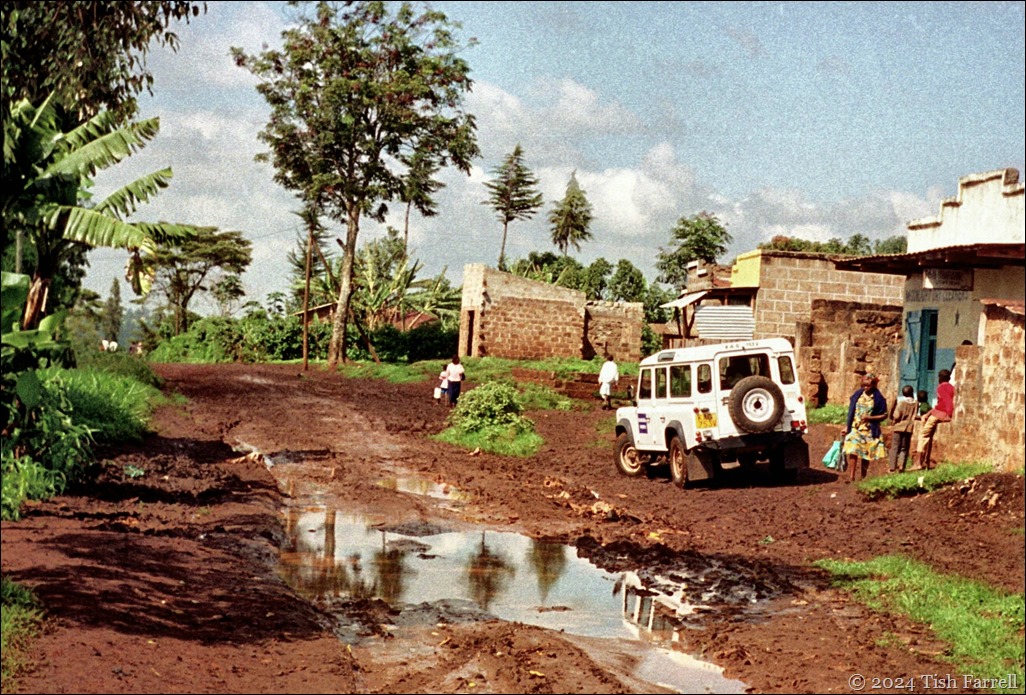
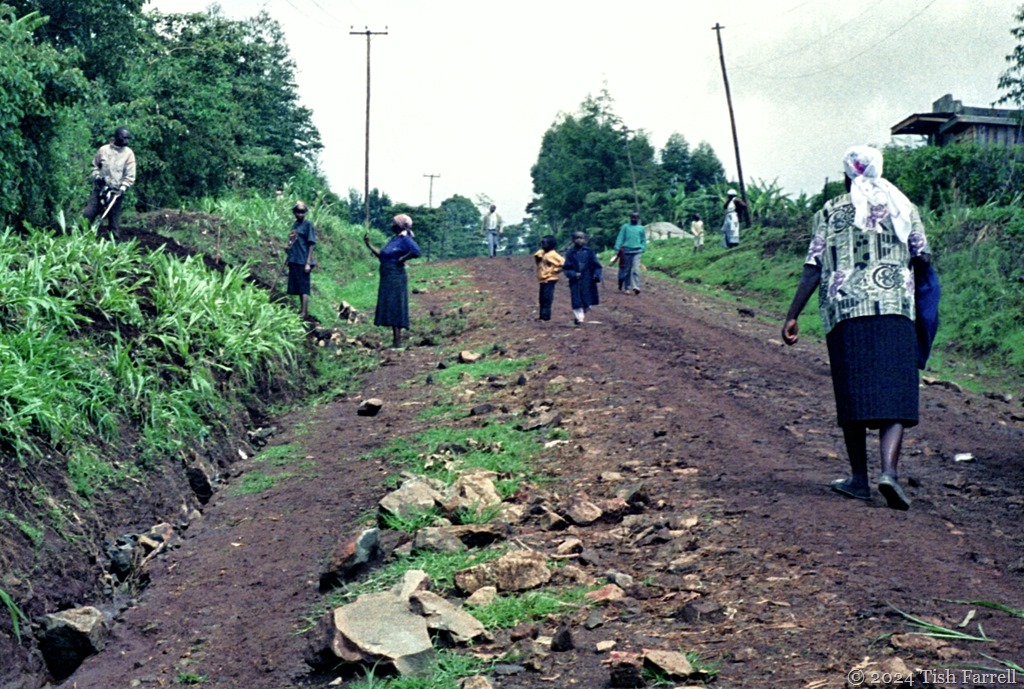
It was the time just after the late 90’s El Nino rains. The Rift escarpment roads were terrible, many of them washed away. In other places great chasms had opened up, or the roads were strewn with boulders brought down the hills by flash floods.  But this was also home territory for Njonjo. He had ancestral land there. A farmer then, when he was not employed as a driver. He anyway handled the Land Rover with great skill, and astonished us, too, by simultaneously negotiating giant pot holes and spotting plots of smutted grass growing many metres from the roadside behind kei apple and winter jasmine hedges.

img138 ed

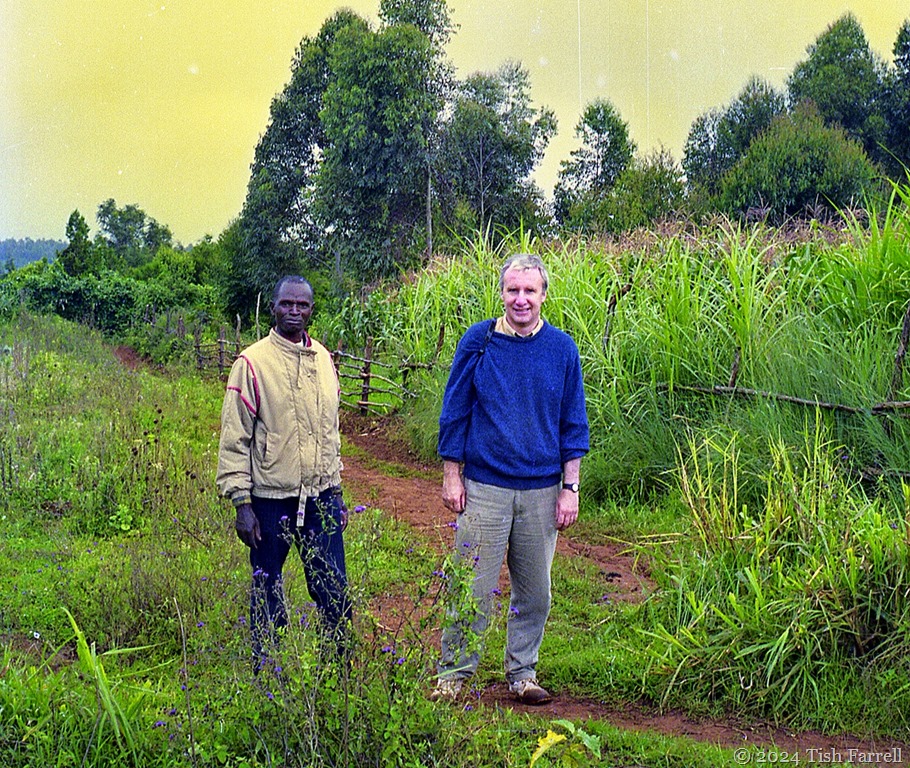
Njonjo and Graham

*

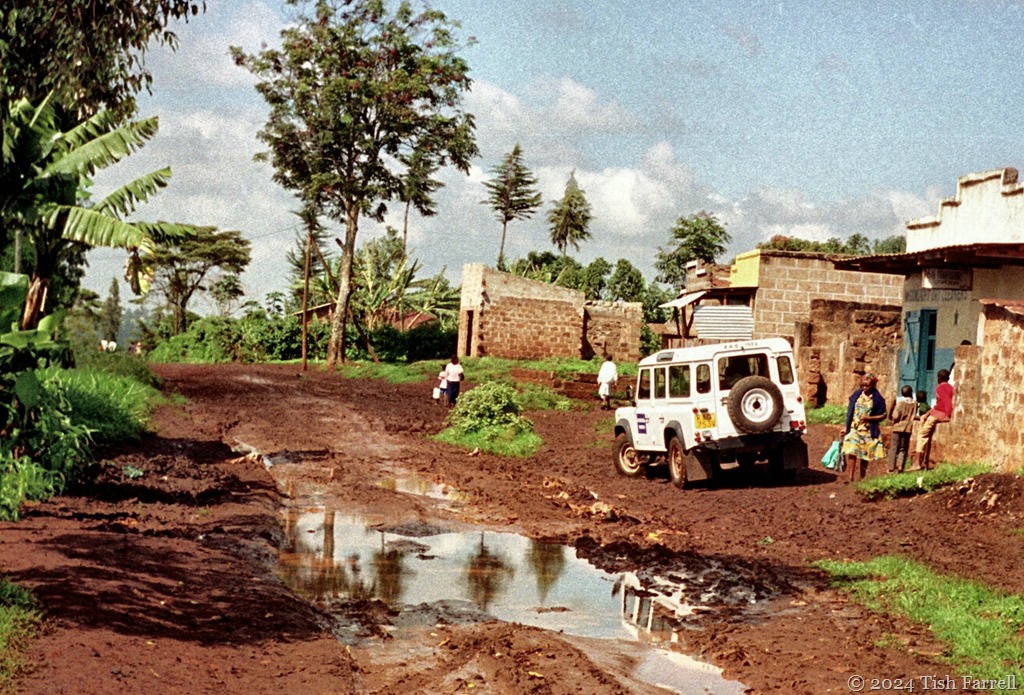
trading centre after El Nino rains ed

Trading centre after El Nino rains

*

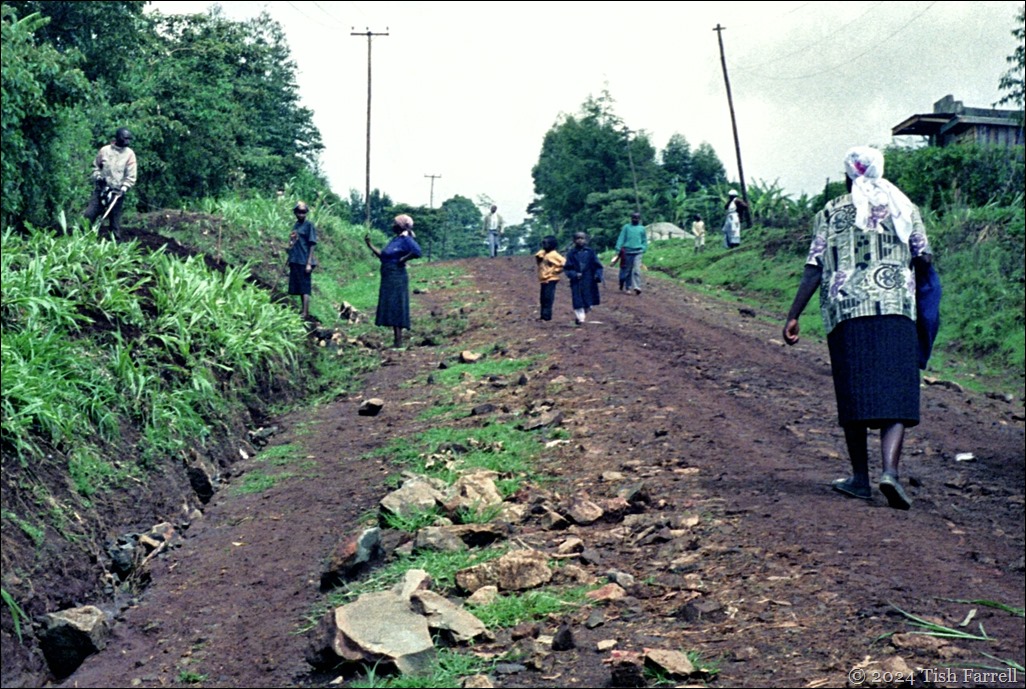
Rift lane after July downpour

*

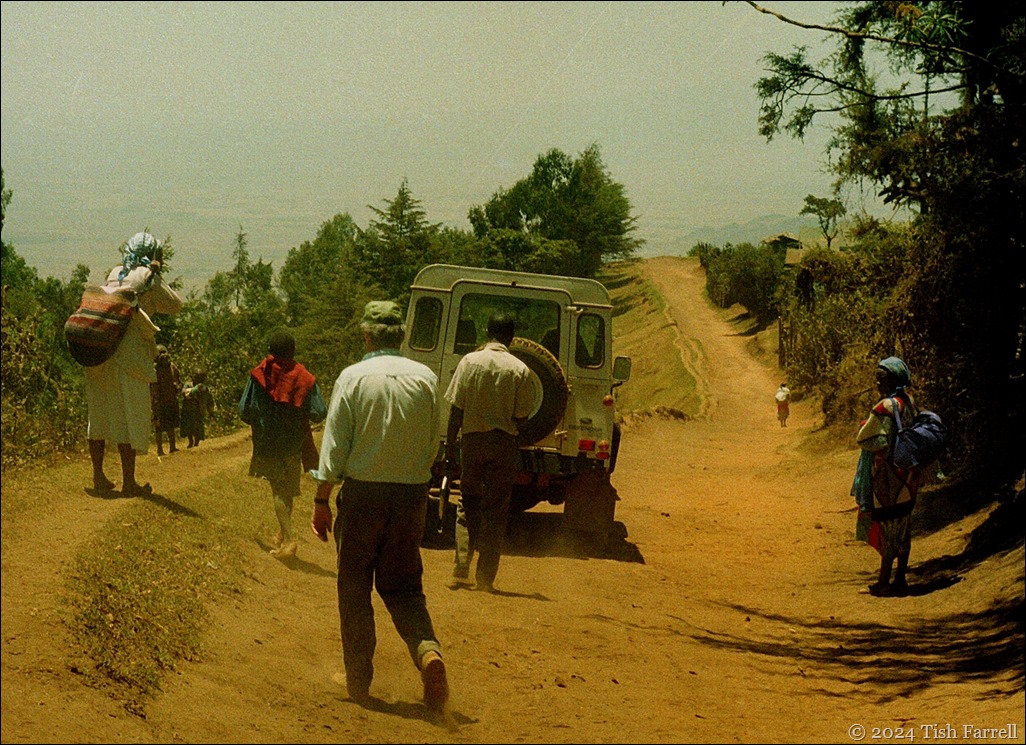
Of course, after a fine spell, the roads baked hard into gullies and corrugations. This next photo shows one of the Rift Valley lanes on the edge of the escarpment. You can just make out the valley bottom through the far haze:
Rift lane 2ed

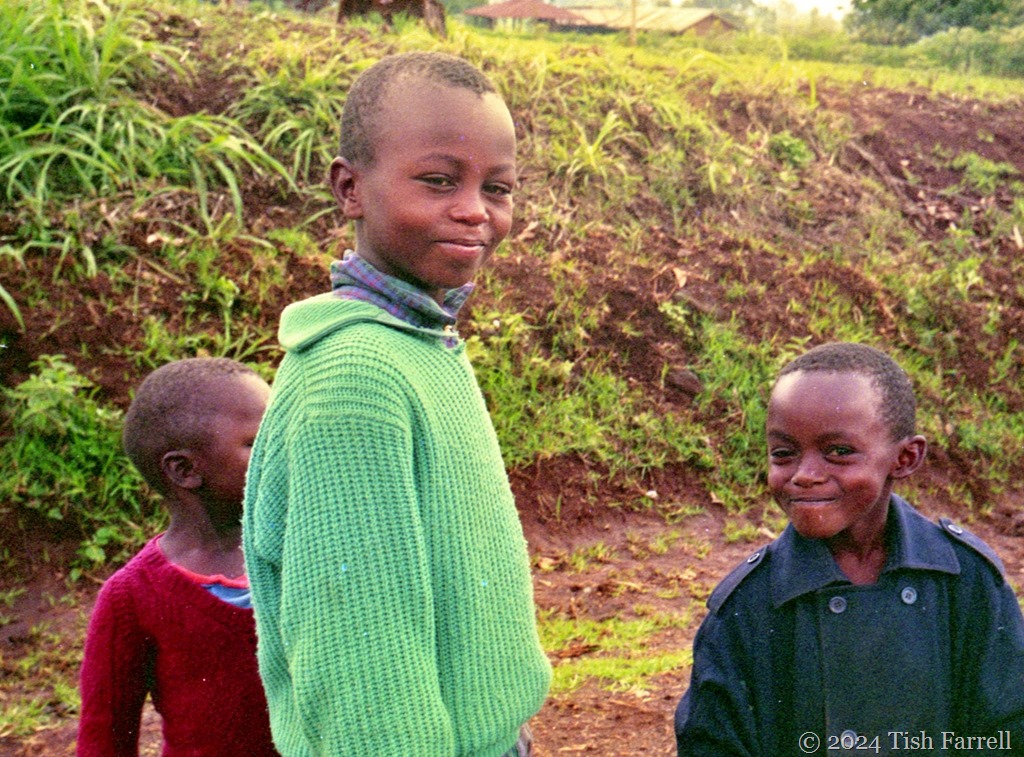
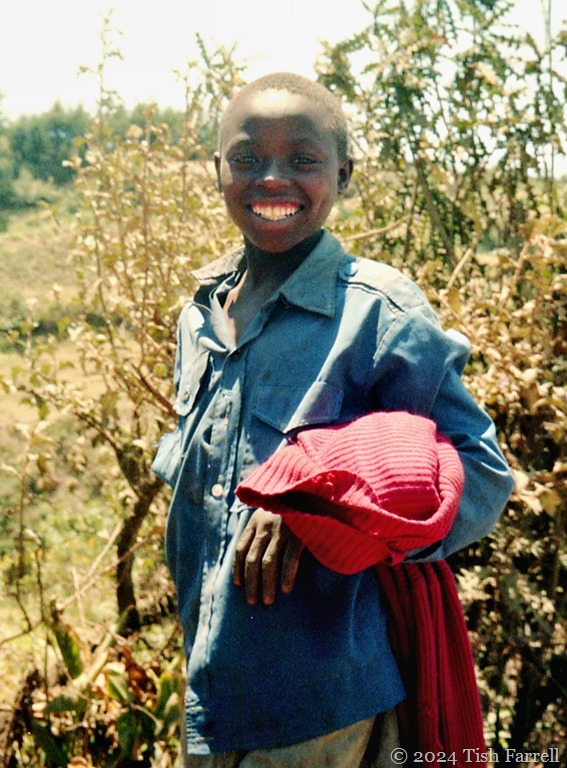
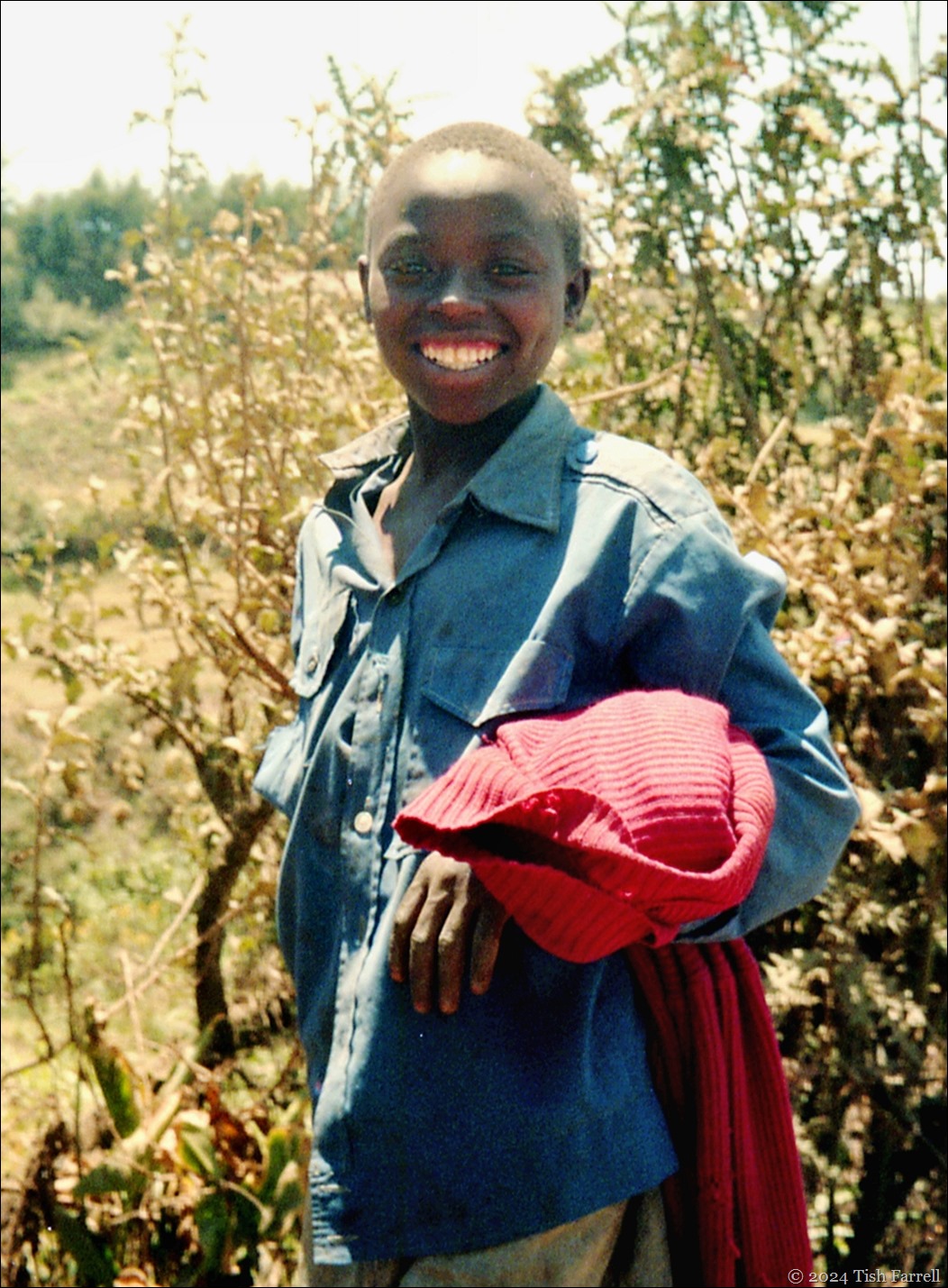
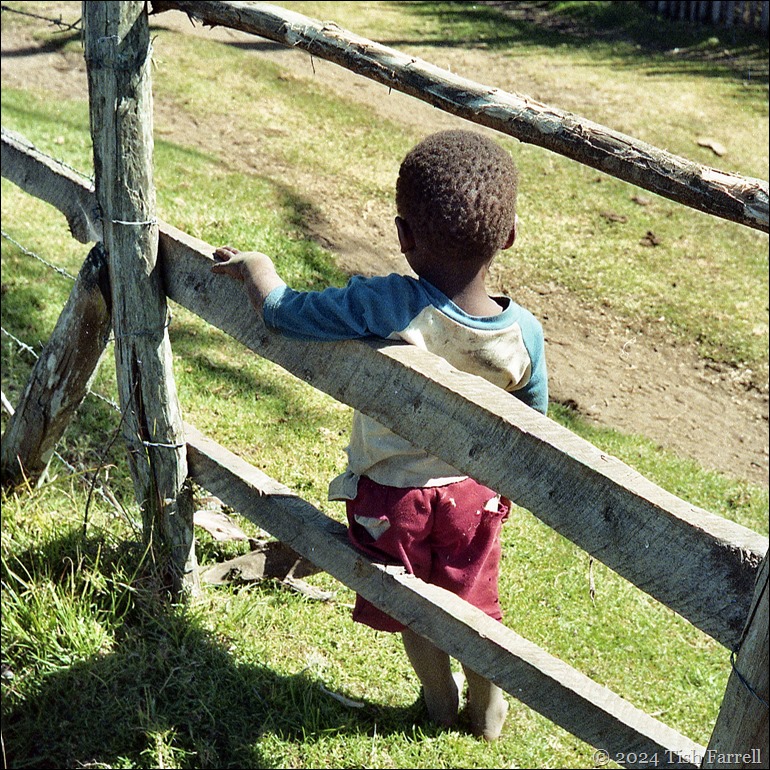
I don’t recall why we were all out of the Land Rover at this point. Probably Njonjo was asking directions. Even locals have problems finding their way across the ridges. Anyway, this was the moment I met this lovely young man:
img125ed

*

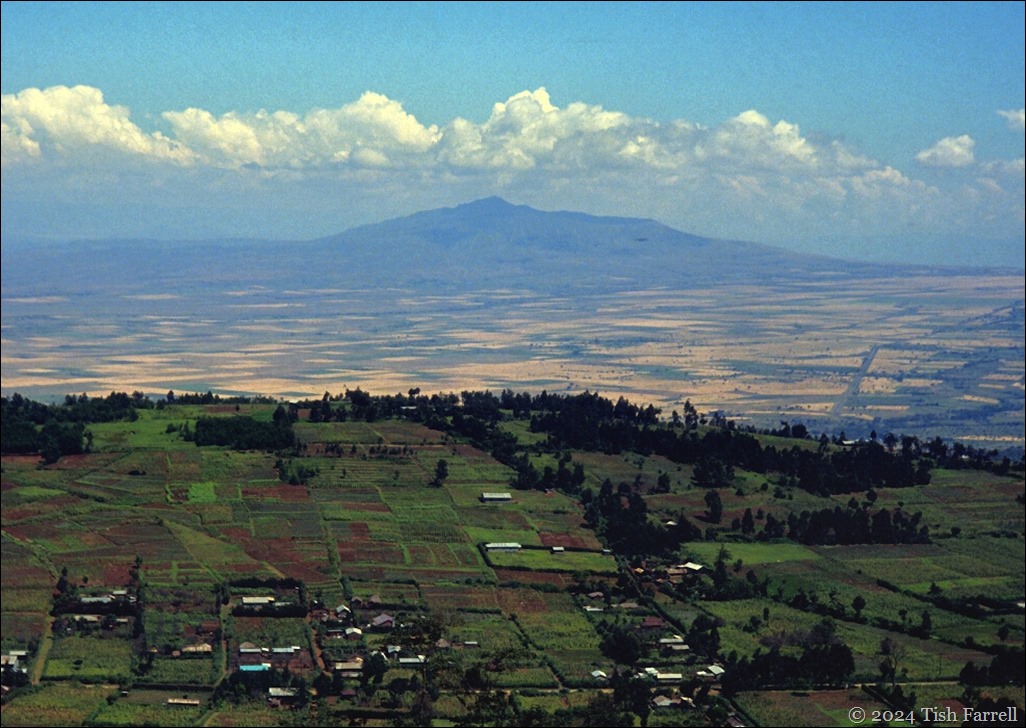
Rift Valley from Escarpment ed

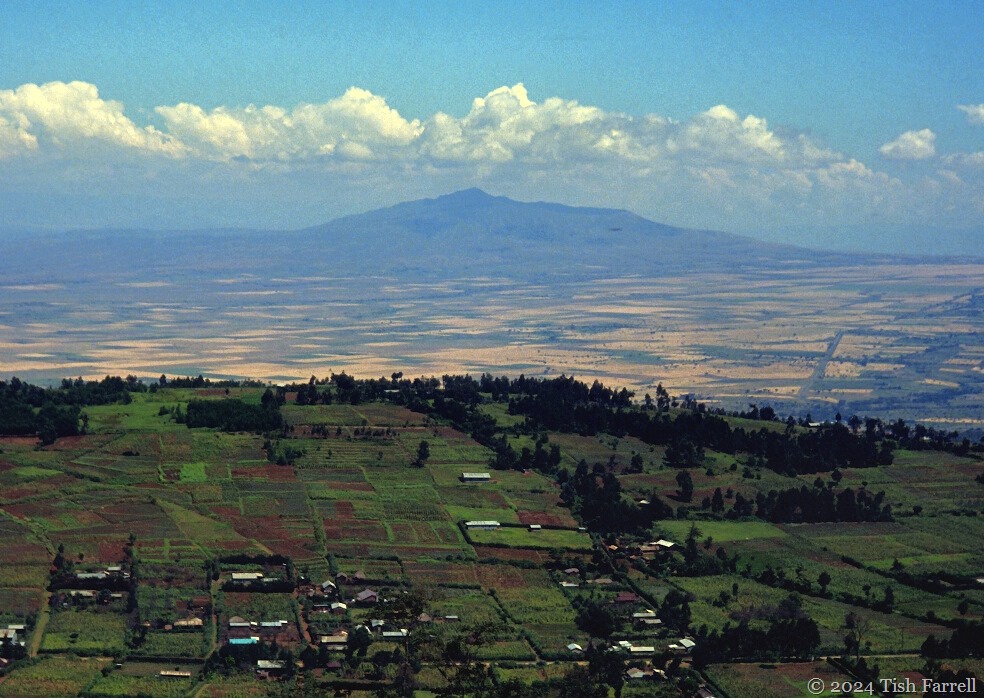
Small-holder farms at Escarpment, in the Rift’s shadow, Mount Longonot in the background

*

As we jolted and slid along the country lanes, Graham was using a GPS to select farms at random. When a location was chosen, Njonjo then took further charge of operations and went to  find the owner of the farm, and talk them into admitting a couple of wazungu , who would like to look at their Napier Grass.

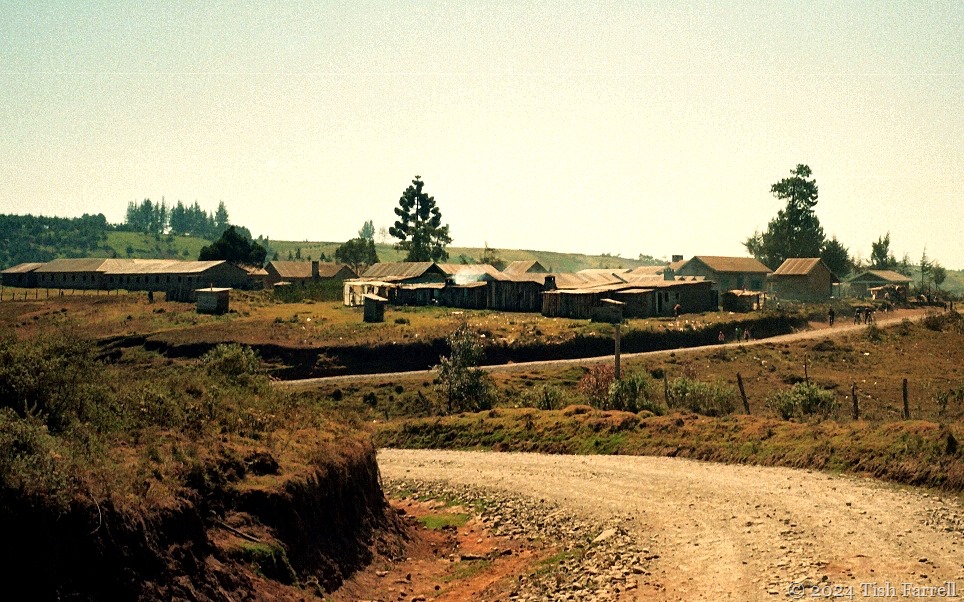
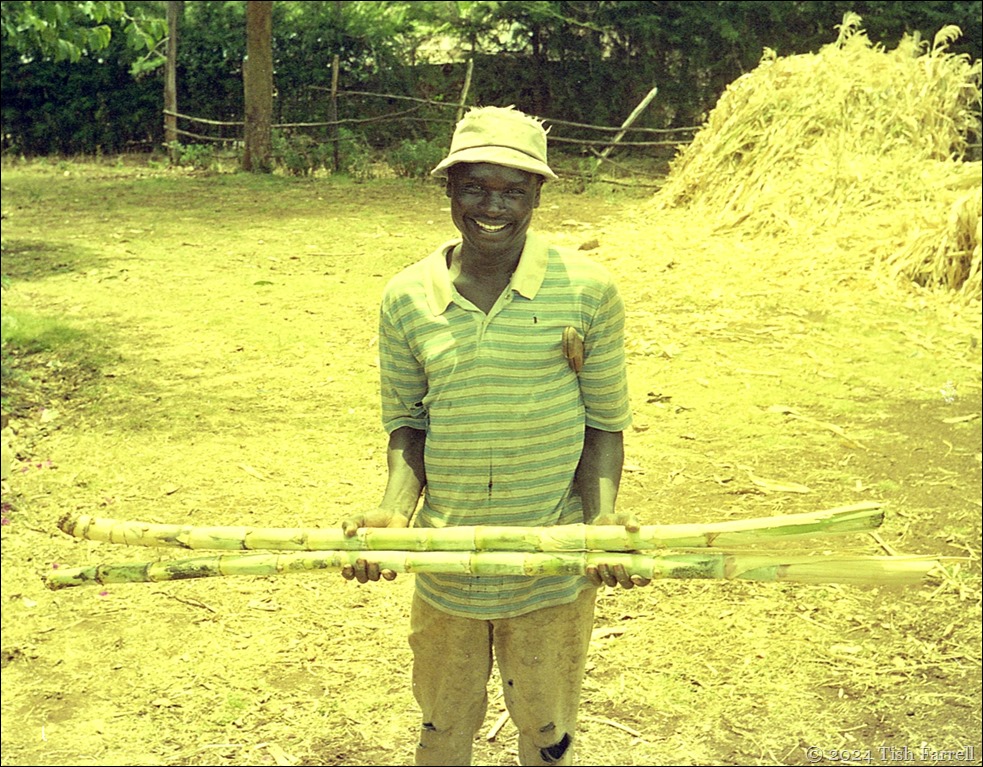
Over the weeks of the survey it became a matter of pride that no one turned us away. In fact the opposite was often overwhelmingly true. Wherever we went, we were met with great courtesy, mugs of tea and presents of farm produce: plums, pears, sugar cane, a cockerel. We had brought useful information that must be reciprocated. Njonjo was particularly adept at fending off serial invitations to lunch, and did so without us seeming too rude. Otherwise the job would never had been done.
img194ed

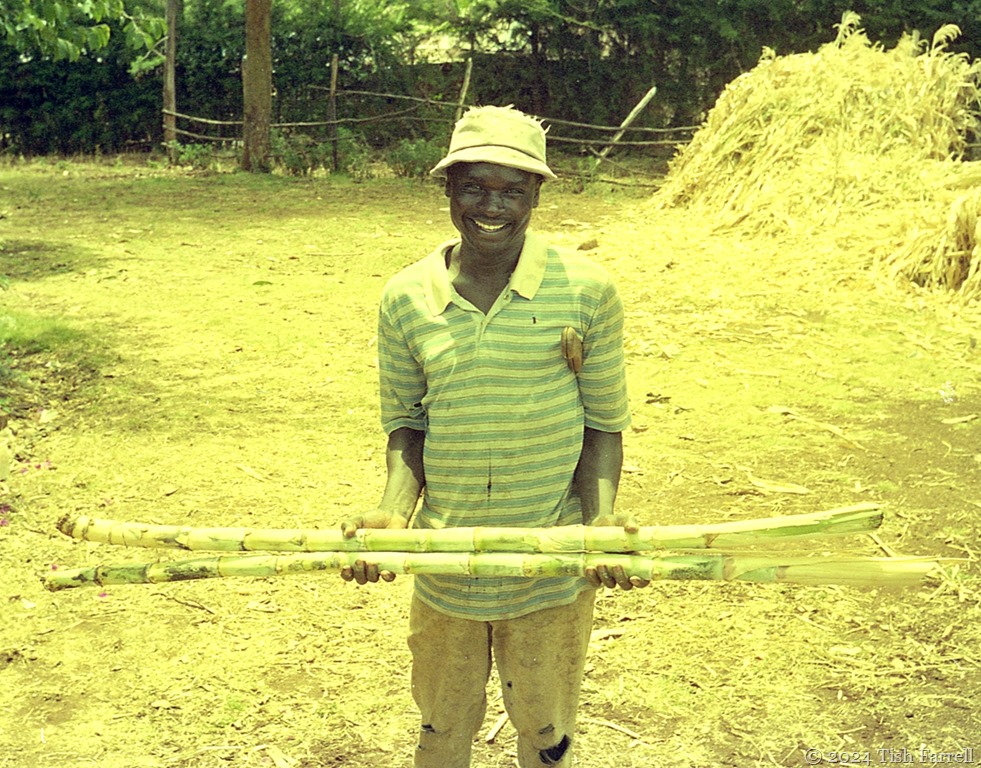
This farmer gave us sugar cane

*

Mrs Njuguna's Farm ed

One chilly morning Mrs. Njuguna served up mugs of hot chocolate before we went to examine her napier grass plot

*
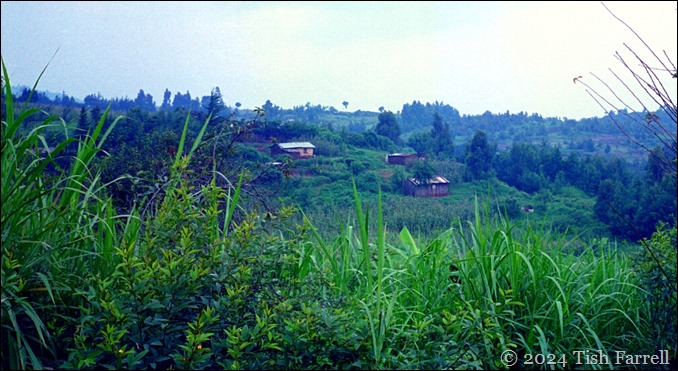
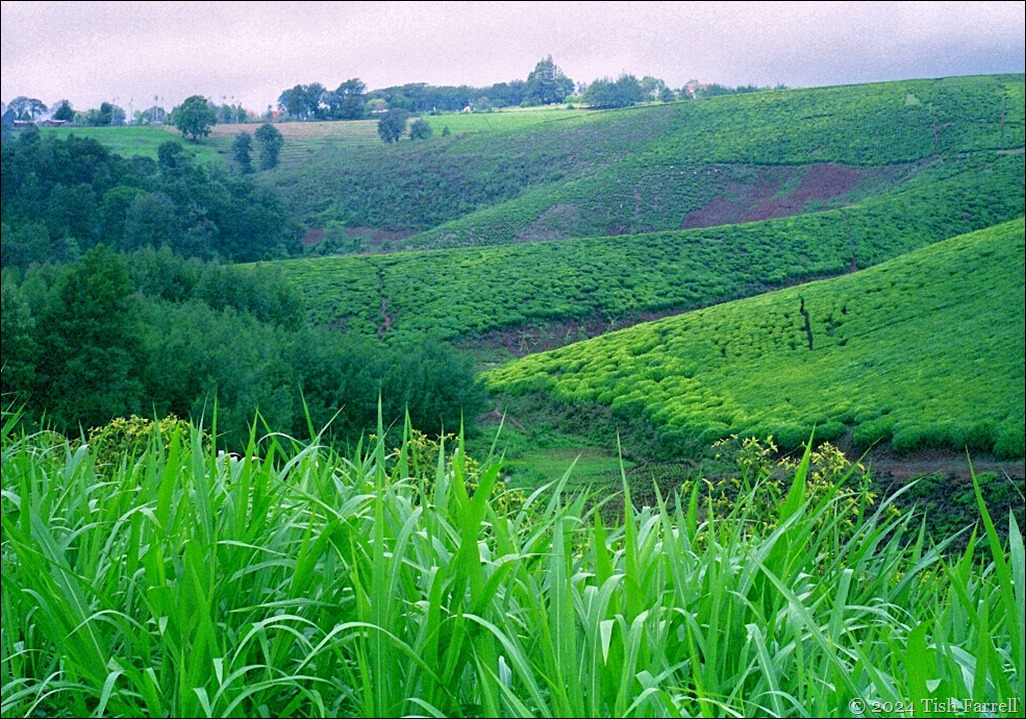
napier grass and farms

tea fields and napier grass

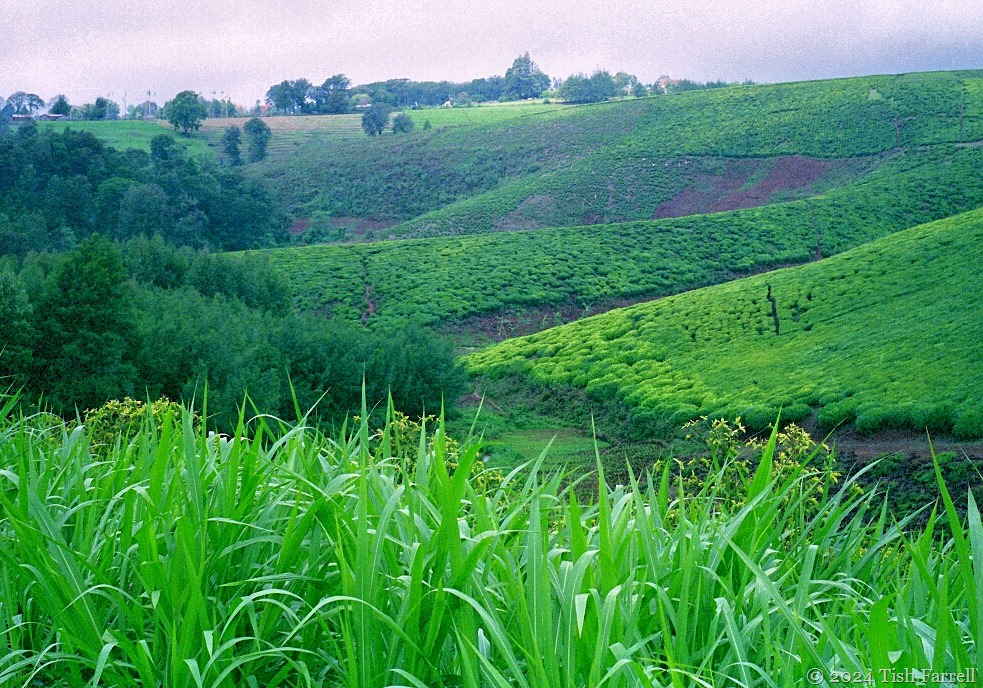
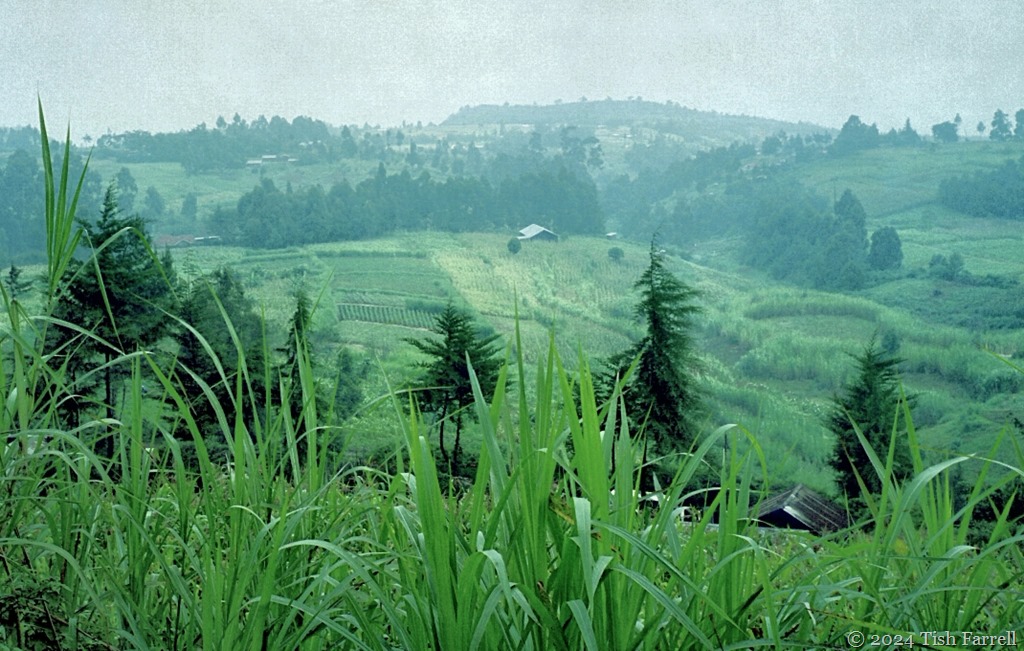
Napier Grass (foreground in both photos)  is an essential  animal food crop for small-holder farmers who zero graze their stock. Zero graze means they have no access to pasture, but grow plots of grass wherever they have space, including on roadside verges, and then crop and deliver the grass to their animal pens. (Commercial tea gardens in the background). Most farms (shambas) are on ancestral land that has been subdivided down the generations and may be only a few acres or less.

*

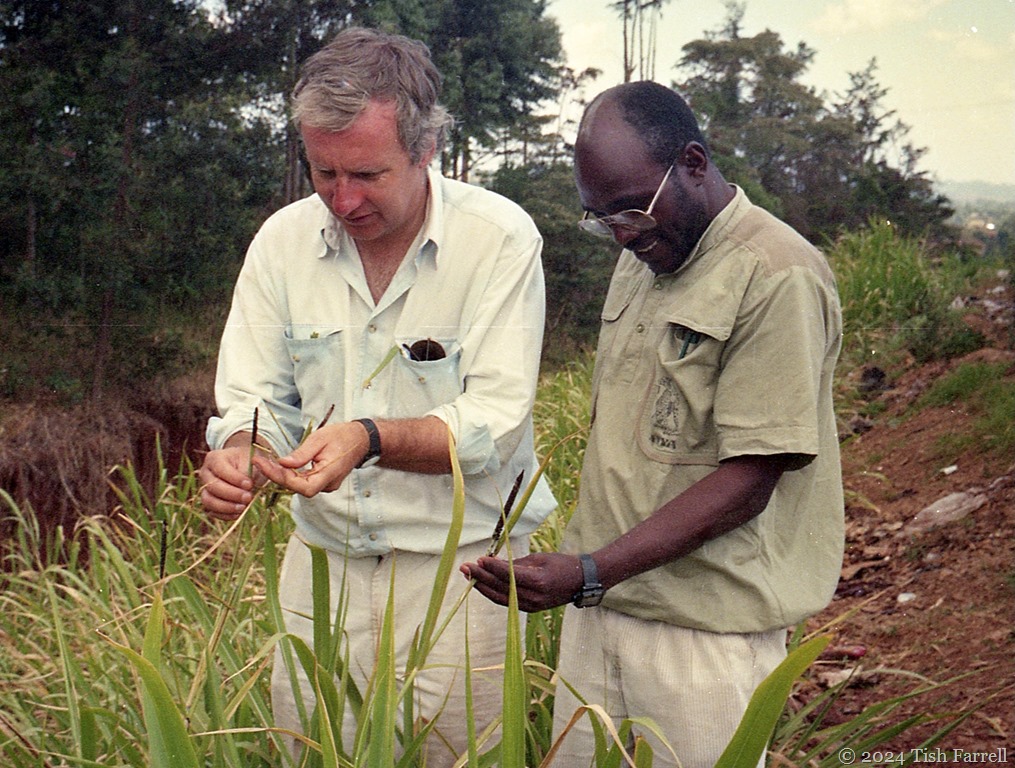
By now you’re probably wondering what Napier Grass smut looks like. You will also have gathered that in this context, smut has nothing to do with off-colour jokes or questionable practices. (That said, everyone found it hugely amusing that Graham was doing a part-time doctoral thesis on smut). It is in fact a fungal disease that attacks grasses, including maize and sugar cane. On Napier Grass it becomes visible when the plant begins to flower; the florescent parts look as if they have been dipped in soot.

Graham and Jackson best

Two happy plant pathologists: Graham with Dr Jackson Kung’u admiring smutted grass growing on a road reserve in Nairobi, as spotted across a busy dual carriageway by Njonjo.

*

The diseased grass isn’t apparently harmful to the animals that eat it, but there are serious implications for farmers who rely on it for zero grazing. In time, smut weakens the plant and so less and less leaf mass is produced. The spores spread on the wind, although Graham thought the most likely source of infection was due to farmers unknowingly giving cuttings of infected plants to their neighbours. The only solution is to dig up the plant and burn it.

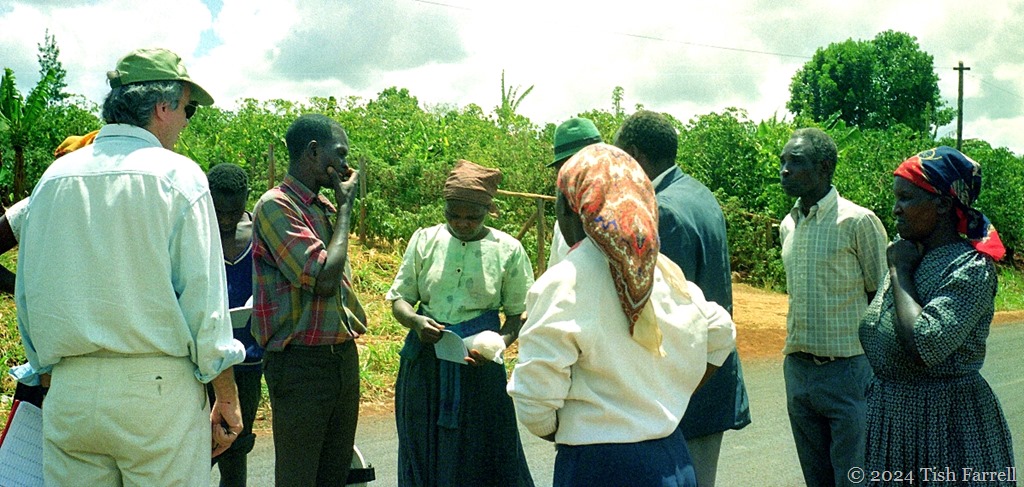
Farmers, predominantly women, were keen to hear anything and everything Graham could tell them. Impromptu roadside smut seminars became a feature, Njonjo providing lectures in Kikuyu or Swahili for those who did not speak English. Graham also distributed information sheets. We never seemed to have enough!
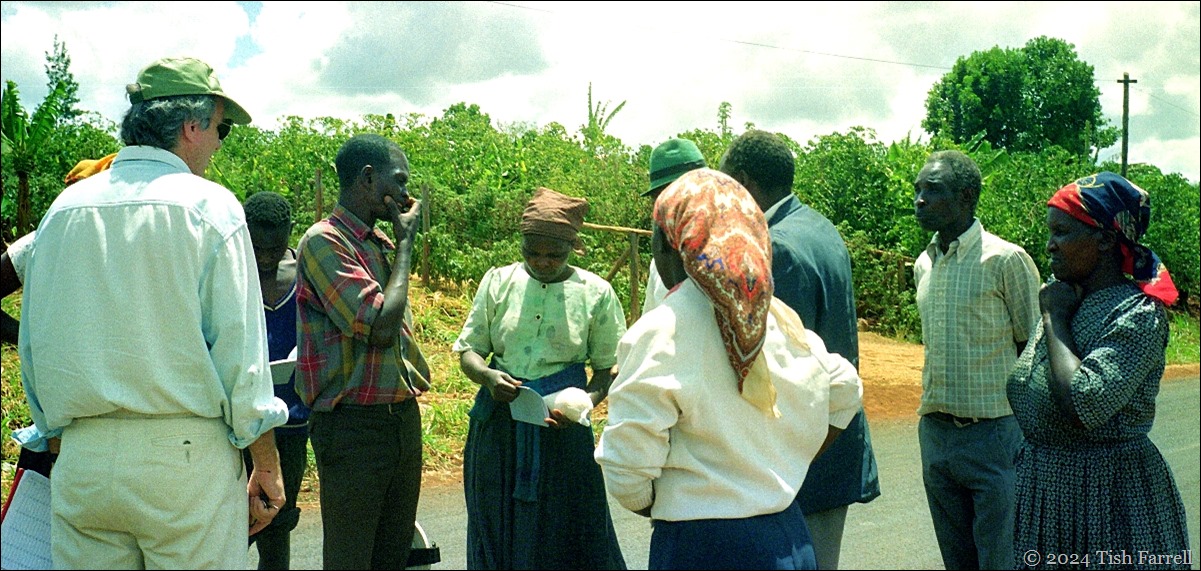
impromptu smut workshop

*

On some of the farm visits, it was inevitable that Graham would be consulted about other plant diseases that farmers had noticed. Here there’s some problem with the fruit trees.

img080 ed1

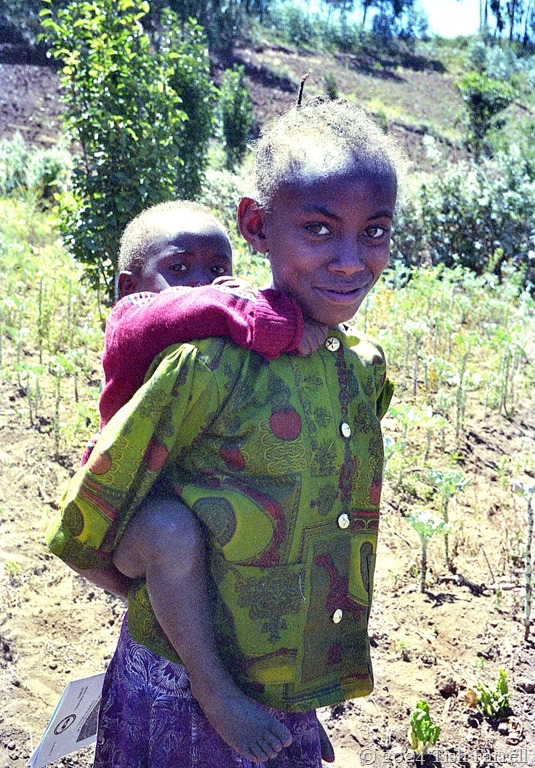
The farmer’s daughter watches us. Her father had handed her one of Graham’s smut information sheets: the school girl in the family…
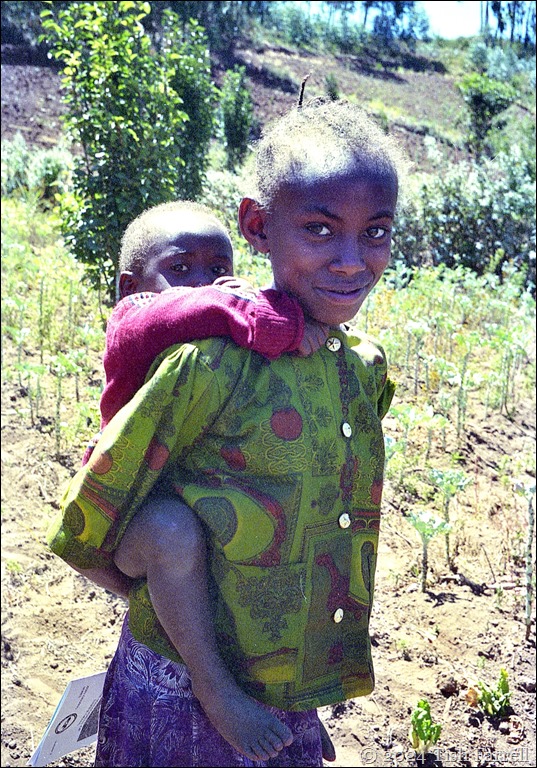
img097ed

*

napier grass on the Rifted

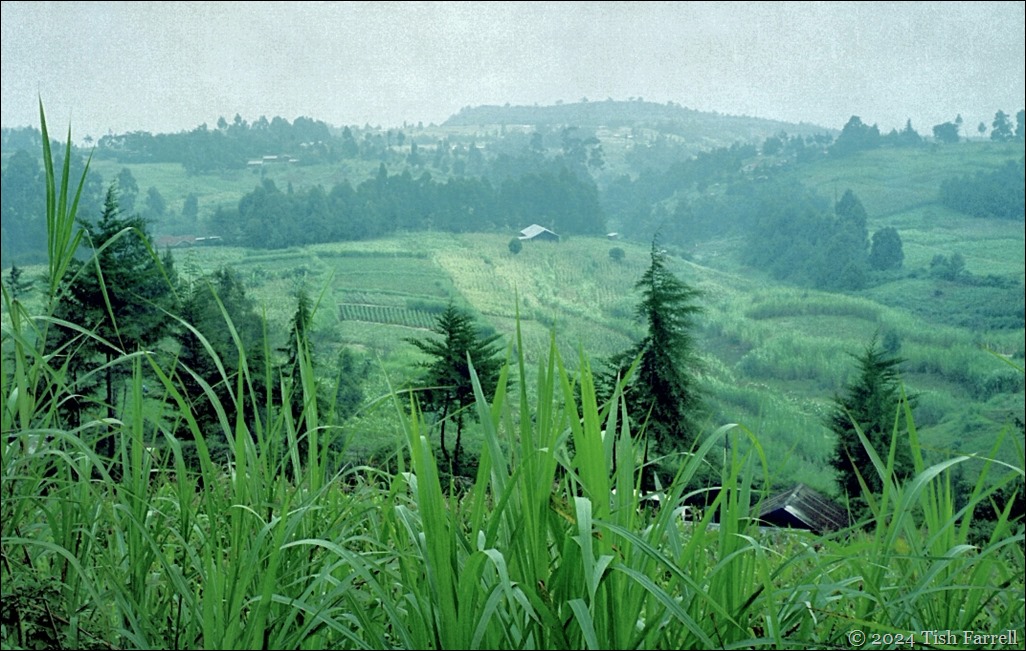
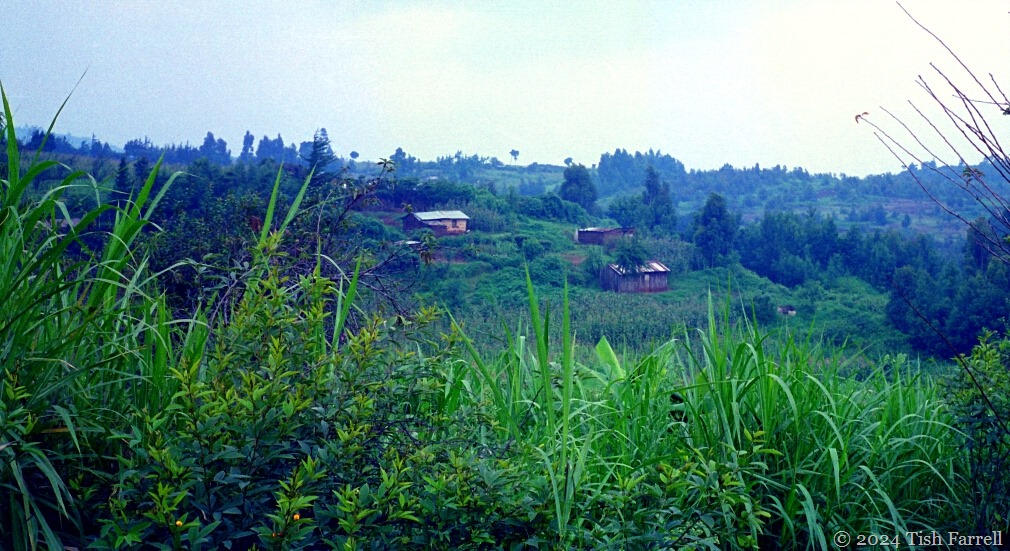
The Kikuyu uplands are mostly 5-6,500 feet above sea level, the settlements strung out along ridges. Although at the tropics, early mornings and evenings can be cool, and especially in June and July, when there may also be fine rain and fog. Some of the highest settlements at around 7,000 ft are in the frost zone, the landscape’s bleakness, with bracken growing along the roadside, reminding me of Scottish uplands.
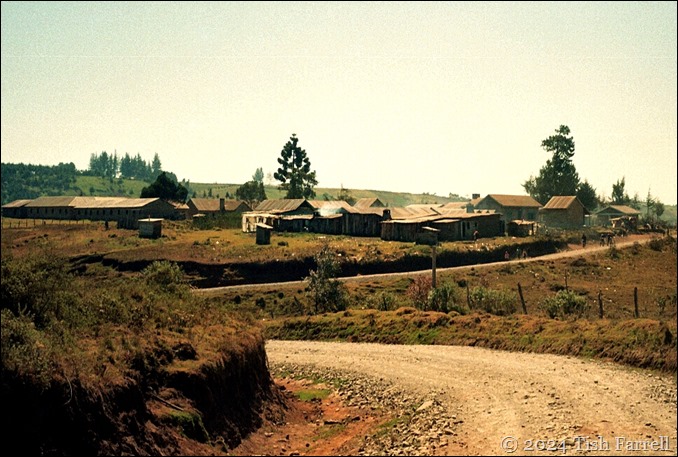
Kikuyu farmstead 11 ed

*

All in all, Graham’s smut survey was among the highest highlights of our seven year stay in Kenya. Although not everyone was always keen to speak to us:
img161ed

copyright 2024 Tish Farrell

Lens-Artists: This made me smile   Ann-Christine is making us all smile with this week’s theme.

The Grateful Gardener

IMG_6486ed

We have snow here in the Castle. We woke up to it early yesterday. What a shock. Snow in November. It’s much too soon. I’d seen the weather forecast of course, but was expecting only a spot of sleet that would soon melt away with the global boiling, not several inches of real snow, the sort perfect for snowballs.

Anyway, it’s not the snow I’m grateful for, but I do love the brilliant blue sky it’s brought with it. And also this golden Rowan tree in its white cocoon. It stands just outside our garden, and provides us with some borrowed treescape. And it, in turn, has recently been much loved by the birds, especially the blackbirds. Before the snow came they were busily stripping the stems.

IMG_6457

*

I’ll miss the berries when they’ve gone. On bright autumn days they light up like jewels. This is how they looked in early October. A tree full of joy. Thank you, Rowan.

IMG_6424ed

*

The snow fall also focused my eye on the latest garden addition: a Jelly King crab apple tree. Yesterday morning while sitting at the kitchen table eating my porridge, I could see its clutch of red apples glowing like little beacons at the bottom of the garden. Time for a photo then, and to say how very pleased I am with this Halloween birthday gift from my other half. Thank you, Graham.

IMG_6489ed

It came a few days before my birthday, delivered in a tall box to the front doorstep, whither I was directed to investigate the new arrival. Once I’d broken through the cardboard, I was surprised to find the little tree had come with eight tiny apples still firmly attached. There were also a dozen loose ones in the bottom of the box, sadly not quite enough to make crab apple jelly, but filling me with high hopes. I decided to keep them as a spur to locating a wild tree. I thought I knew where there was one. And so it proved. Last week I found a fine crop of fallen apples in a patch of woodland on the way to the builders’ merchants. We now have crab apple jelly. No need to wait for the little tree to do its stuff then.

*

And speaking of stuff – we still have some of the salad variety growing outdoors and in the greenhouse.

IMG_6466

This year I’ve grown Red Radicchio endive. For the past few weeks it’s been growing fatter by the day, and as temperatures lower, the more red it becomes. I’ve been plucking the outer leaves with hopefully plenty more to come. In the greenhouse I have tubs of red Chinese mustard, Moroccan Cress which grows like a cut and come again lettuce and a few oakleaf lettuces. Also some lettuces out in the garden, though they may have succumbed to the snow. Likewise the marigolds. But it makes me very happy to find a bowl full of fresh salad leaves in late November. Thank you, garden.

And one little plant that is standing up to the snow, once I’d dug it out it earlier today:

IMG_6508

These sweet little hearts ease type pansies have been flowering for weeks and weeks in a pot on the garden steps. And they’re still going strong. They were a gift from my sister. Thank you, Jo.

Lens-Artists: Gratitude  This week Tina sets the theme, both timely and thoughtful. Please visit her ever lovely blog.

The Silence Of Stones

100_6999ed

This is Shadwell Quarry on  Windmill Hill, Much Wenlock, part of the Wenlock Edge Silurian reef system.

There’s an air of brooding here, even on a bright winter’s day: of violation survived, albeit roughly; scrub and small silver birch trees recolonising the horizontal shelves. It’s a silence all its own, cupped by sheered off walls and the mysterious deep pool below. Then there is my own silence: awe at the scale of this one-time endeavour now shut down, truncated, closed as if it never mattered: the hard lives of the men who worked here, their injuries and doubtless deaths, unrecalled.

P1000657 Shadwell

Half a century ago, this hillside and the nearby town of Much Wenlock rocked with every quarry blast. Then came the soft fall of lime dust that clung to every surface.

The quarry closed in the 1980s, but in its heyday in the late 19th-early 20th centuries, steam powered goods trains huffed and clanked up the incline from the Ironbridge Gorge to the quarry’s own siding, there to take on stone to use as flux in iron smelting at the Coalbrookdale Works and the furnaces of the Black Country; industries that are also long defunct, or exported to China along with the roar of red-hot hearths, the crucibles’ hiss of pouring iron, shouts of foundrymen.

But then there’s another absent soundscape here, one so ancient it is hard for human minds to grasp. The limestone reef exposed in this quarry began to form over 400 million years ago in a shallow tropical sea somewhere off the Comoros Islands in the Indian Ocean. In waters teeming with corals, sea lilies (crinoids), bony fish, sponges, trilobites and molluscs began the depositing, compacting and solidifying of decomposing animal parts. And while this was happening there was apparently no terrestrial life, but instead there were endless howling gales rampaging across the landmass; brutal winds terrifying in their loudness.

Good that they’ve gone then. Instead we are left with other ungraspable events, for instance, envisaging how vast land masses shunted around the planet, ending up in places many thousands of miles from where they began; the slow, slow scrunch of tectonic plates; the gradual upthrusting and folding of ancient strata; a world we somehow think is in our power!

The stones beneath our feet, the rocky uplands maybe silent, but they have wider, wiser perspectives to impart if we choose to pay attention. I think our ancestors may have understood something of this.

IMG_1947 ed

Wenlock Edge quarry

*

Lens-Artists: Silence  This week Egídio explores the principles of silence in the work of American photographer, Robert Adams. Please see his photo essay and be inspired.

Looking Back: African Dawn

img20241008_12561103dawn flamingos ed

These last few weeks I’ve been immersed in a major displacement activity – both actually and metaphorically. While trying to find a good place to store Graham’s newish photo scanner, I decided I’d quite like to use it and revisit our old Africa negatives.

The Epson, however, was unknown territory. I’d done my original scanning using technology long since deceased, and I wasn’t altogether happy with the results, or with my editing. So first stop meant downloading software and all the nonsense that goes with it (compatibility/senescence issues – not mine – since both scanner and PC are only a few years old as far as their owners are concerned, but they are obviously superannuated in techno-ageist terms).

After several efforts, and two different apps later, I’m finally set to go, but then there is the issue of dealing with negatives that are twenty and thirty years old, were processed in Africa, have thus moved continents, survived several house moves, and not been stored very carefully. My original prints are in far better condition, some astonishingly sharp, but they are stuck in albums. So yes, as I said, a major displacement activity.

Yet it’s serious time travelling too, and every now and then a frame emerges and I am transported. The image may have lost clarity, but I’m there at first light, on the shores of Lake Elmenteita in Kenya’s Rift Valley.

The greater and lesser flamingos that inhabit this shallow soda lake never stop honking and grunting. It’s a seamless shifting soundscape that you hear all night if you are camping nearby. The loudness ebbs and flows, depending on where the flocks are feeding, but always strangely amplified across the shallow waters. At dawn though, you forgive the din, just for the sight of them through the mist. In the distance they look like scattered rose petals, and since the air is frosty at this hour, this sparks thoughts of celebratory champagne and ice bowls of strawberry sorbet…

img20241004_11291465 flamingo dawn

*

But let’s not get too carried away. If you venture out on the lake mud for a better view, beware. It’s slithery with flamingo guano, and the acrid smell of it, along with the soda, stings the nose, throat and eyes.

And yet…and yet these vistas have to be the most entrancing of all the many scenes in my memory archives.

*

When we lived in Nairobi during the 1990s we came here when we needed a break from city living, staying at Soysambu tented camp. The drive up the Great Rift had its own thrills, both the astonishing views of the Rift volcanoes, and the hair-rising truck driving along the way.  It was always a relief to turn off the tarmac and bump along dirt tracks to the camp. img20241003_14405356ed

*

The lake and its surrounding land is mostly in the hands of the Delamere family. From the late 19th century to the 1930s, the third baron Delamere was both an agricultural pioneer and prime mover in the shaping of the then British colony. Among other land holdings, he acquired 46,000 acres around the lake in the early 1900s. At some stage there were attempts to grow wheat there, but the soil was too shallow and the land reverted to bush. In our day, the fifth Lord Delamere, managed the place as a private game reserve (more recently the Soysambu Conservancy) and cattle ranch.

img20241005_19451737 flamingo dawn

*

The camp back then was sheltered by fever trees, sixteen tents each with its view of the lake and the remnant volcanic cone, known by local Maasai as the Elngiragata Olmorani, the Sleeping Warrior.  There was always something to look at. The light on the lake changed every second and there were 400 species of bird to watch out for not least the campsite superb starlings, weaver birds, orioles, babblers, herons and storks – and then you might look up to see impala slip noiselessly through the trees or waterbuck out on the flood plain…

It could all have been a dream of course.

img20241005_19075173 Sleeping Warrior

img20241008_12580861ed

*

Lens-Artists: Looking back  This week Sofia wants to see the things and places we treasure and would like to revisit.

img20241008_12561103dawn flamingos ed header

What’s In A Garden ~ Or Tales Of The Not Quite Planned

butter bean blossom and morning glory

The thing about making a garden is you never really know what will happen there. Not really really. You do of course ‘set the stage’ for growing to happen – from planting up a few doorstep pots to toiling over ground work and designing and filling borders.

And then when you sow seeds, as I did here for Gigantes butter beans, and Black Knight morning glory – you could well envision how they might be if they were planted out together and set to grow up the front garden obelisk. (Header photo)

But you can’t necessarily predict the actual ‘show’, which of course is what’s wonderful about gardening. In many ways it’s ever an experiment. The pleasure comes when you walk outside and notice something  special, the something whose actual disposition you had no control over.

IMG_6023

In the back garden I planted out some more Black Knights with purple climbing French beans Violette. But at the moment they seem more keen to keep company with the courgettes. The flowers have an unearthly look about them. I could swear they radiate light from their recesses.

IMG_6035

*

Then there are the wild and feral plants that invite themselves into the garden. Sometimes they are not too welcome. But sometimes they make one’s heart leap with delight. Here, entwined in our otherwise horrid hedge we have this glorious pink convolvulus (bindweed). The flowers are much bigger than the wild white version of themselves and they out-trumpet their morning glory cousins too.

IMG_6010

*

And then there are the garden invaders that invite more curiosity than delight. These delicate crimson-grey poppies are presently flowering above the terrace wall and, as far as I can tell, is a single plant with many branching stems. As the flowers fade, the more ashy they become.I’m not sure what to feel about them.

IMG_5878

IMG_6036

*

But I know I love this white marsh mallow, a shrub I bought recently to grow on and fill a gap along the back garden fence. A perfect moment – catching the early morning sun on its face:mallow

*

And then there are things that add to a garden that aren’t quite in the garden. Just over the hedge, on the roadside verge, is an ornamental cherry tree with deep burgundy foliage. At sunset, as we eat supper, we have a glimmering light show at our new kitchen window; not at all what we were expecting.

kitchen window

IMG_6006

P.S. For followers of the house renovations: the kitchen’s not finished yet. Last lap stuff still to do.

Lens-Artists: What’s In A Garden  Ann-Christine at Leya shows us some stunning gardens

Dreaming Places ~ From Shropshire To Lamu And All In A Day

balcony 2

One of Bishop’s Castle’s pioneering eco-homes

*

Today, as July winds down, we have a summer’s day. Only the third in a month of coolness and cloud. Sunlight floods the house front. Warmth even. No trace of the wind that has dogged us for much of the year. Stillness then. The soundscape, resonant, a part-song of church bells, bee hum and pigeon chorale.

There’s a sense of bliss.

And where does my mind go?

Why, off to Kenya’s Indian Ocean island of Lamu – a trip made decades ago and at Christmas too.

balcony

The harbour at Lamu’s Stone Town

*

Perhaps our recent spell of autumn-in-summer weather is seasonally disorienting me, although in mitigation, December in Lamu is the hot season, their summer; though rather hotter and steamier than ours.

But in the full-on Shropshire sunshine, the mind plays tricks. Meanders. Perhaps there’s another trigger to this farflung mental safari.

I soon spot it. Back in the days of the Lamu trip we lived in Nairobi, on one of Lavington’s tree-lined avenues of Jacarandas and flame trees and clipped grass frontages. (Strangely, I discovered later, I have ancestors named Lavington).

At nearly 6,000 feet, the climate there is mostly benign – a subtropical highland climate. In June and July the temperatures might drop as low as 48F (9C), and in December to March reach the upper 70s and low 80s F. The finest days there always had us thinking of perfect English summers (big skies and heat-hazy lawns), the sort from village fetes and school sports days.

Summers back then seemed, well, more summery.

And then amid my mind’s eye ramble arrives the Lens-Artists’ theme for the week: balconies. And so, by winding paths, I come to Lamu.

balcony 4

Stone Town – it is now a World Heritage Site. The surviving 18th century merchants’ homes, finely built of coral rag, are evidence of a once thriving city state, one of several Swahili towns and cities along the East African seaboard, stretching from Somalia to Mozambique. These settlements have origins back in the 8th and 9th centuries – the people who lived in them, their language, their culture born (literally) from a thousand and more years’ congress between Arab traders and indigenous African communities.

balcony 3a

The goods once traded out – ivory, leopard skins, tortoise shell, gold, mangrove poles (boriti) and slaves. The goods traded in – silks, porcelain, fine carved treasure chests, brass ware, jewellery and dates. In short this is Sinbad territory (Sendibada in KiSwahili stories). He doubtless plied the seas off East Africa; out from the Persian Gulf, the monsoon kaskazi bearing him south; and, after many hair-raising encounters, the kusi winds blowing him home again to Basra.

I’ve written more about this at Quayside Lamu. And about the Swahili HERE.

But now for more balconies. Those perfect places for dreaming. For today, bathed in unaccustomed warmth, I surely am dreaming.

balcony 2

balcony 5

Lamu donkey sanctuary. Donkeys are a key mode of transport on the island

*

balcony 7

Sundowner look-out over Shela village, Lamu

*

balcony 6

Lens-Artists: Balconies This week PR at Flights of the Soul sets the theme. Follow the link for a fine gallery of balconies.