Reflections From The Edge

P1060987

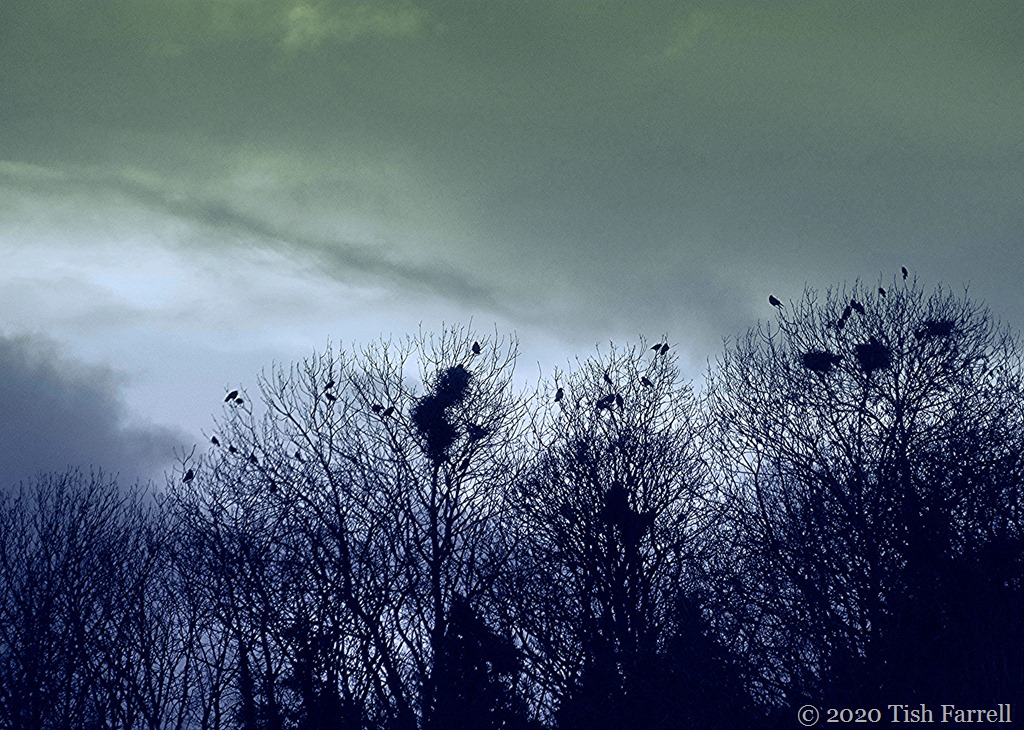
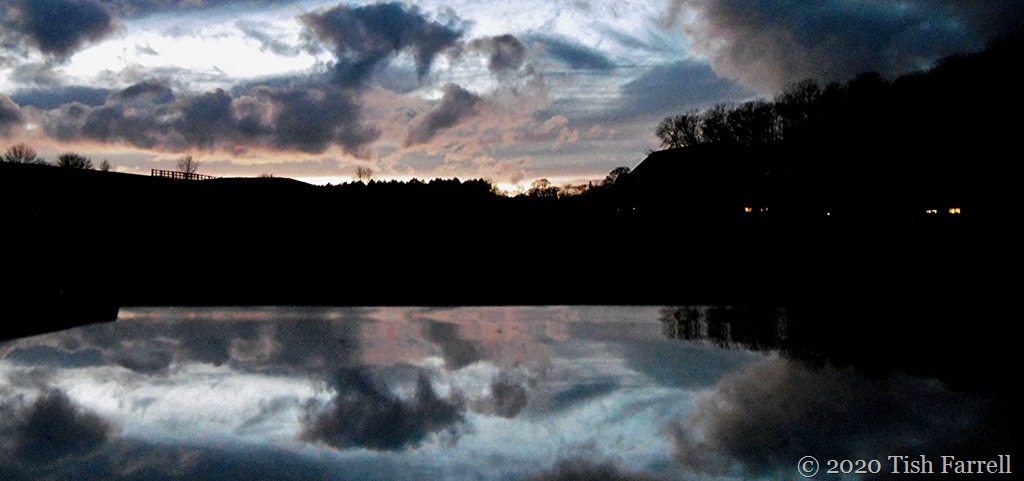
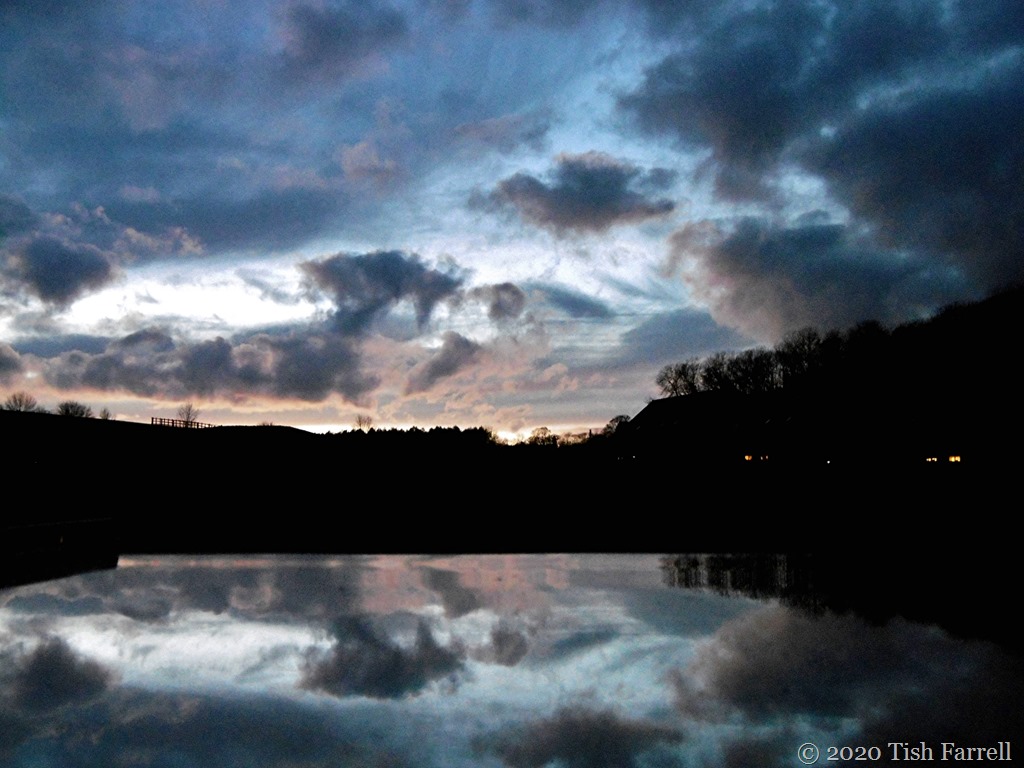
Twilight over Wenlock Edge and in my office roof-light; captured by opening the window to the horizontal and placing my little digital camera on the back of the frame. Click and there you have it – the Edge between two sky-worlds; cat’s-eye watchers looking on?


Lens-Artists: Reflections Thanks to Miriam at The Showers of Blessings for this week’s theme.


Windmill Hill From Many Angles

P1050007 resized

‘A good photograph is knowing where to stand ‘   Ansel Adams

This week Patti at Lens-Artists wants us to think about changing our perspective as we compose our shots. She prefaces her post with this very helpful quote from the great Ansel Adams. It’s certainly a tip worth chalking up in VERY BIG letters on the memory blackboard.

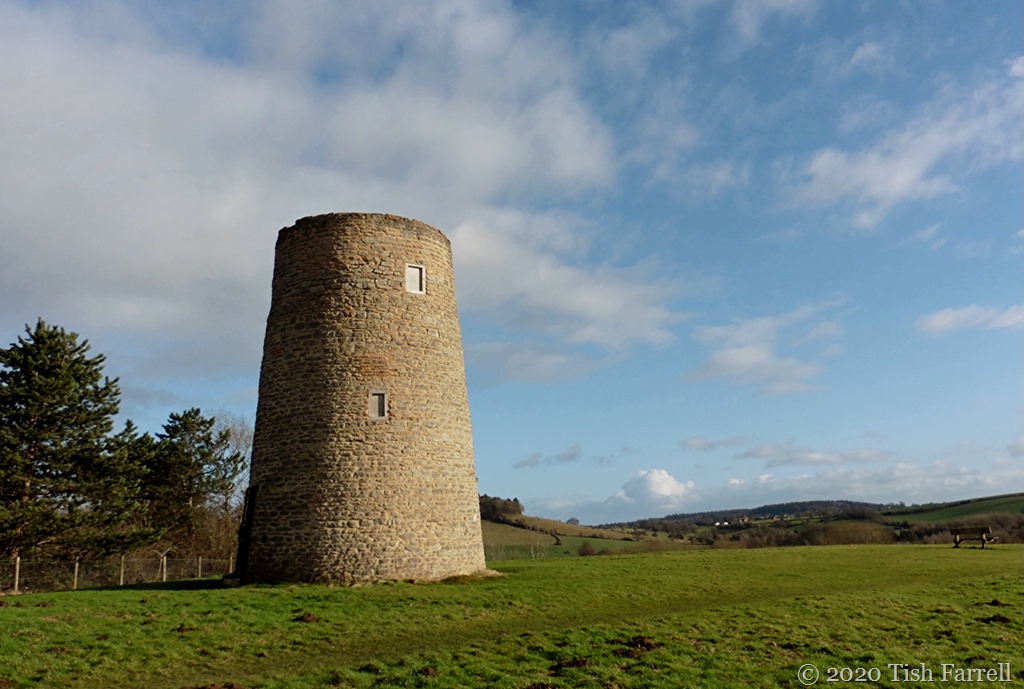
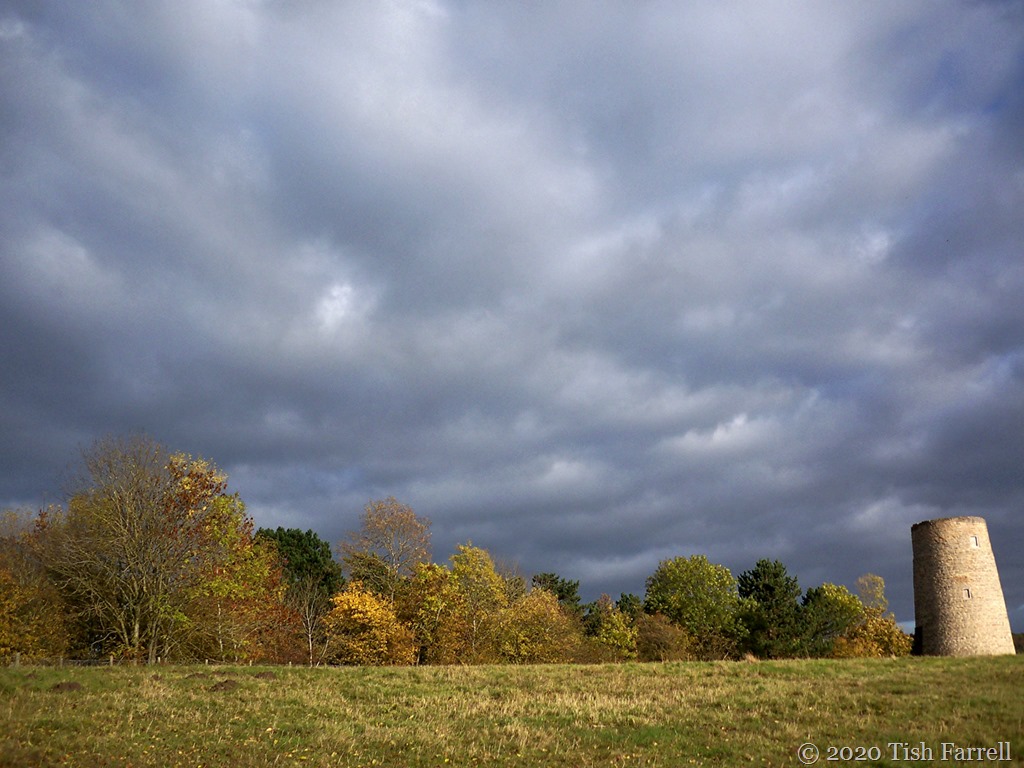
Of course there can be other options –  lying down for instance, which is what I was doing to take the header photo. Then there’s the matter of choosing the time of day, which will then affect where you stand (or lie). Different seasons may well provide new angles. And also the setting of your chosen subject. So with these notions in mind I thought I’d post a gathering of my Windmill Hill photos, taken over the last few years.

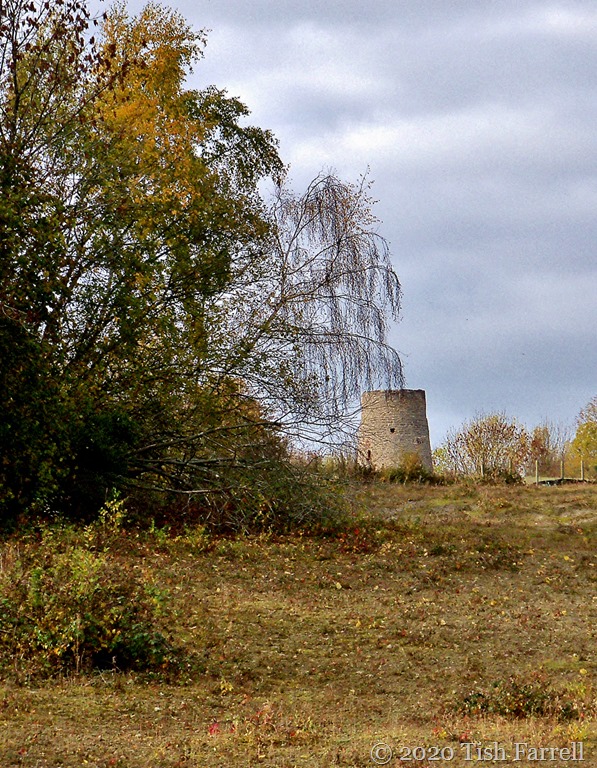
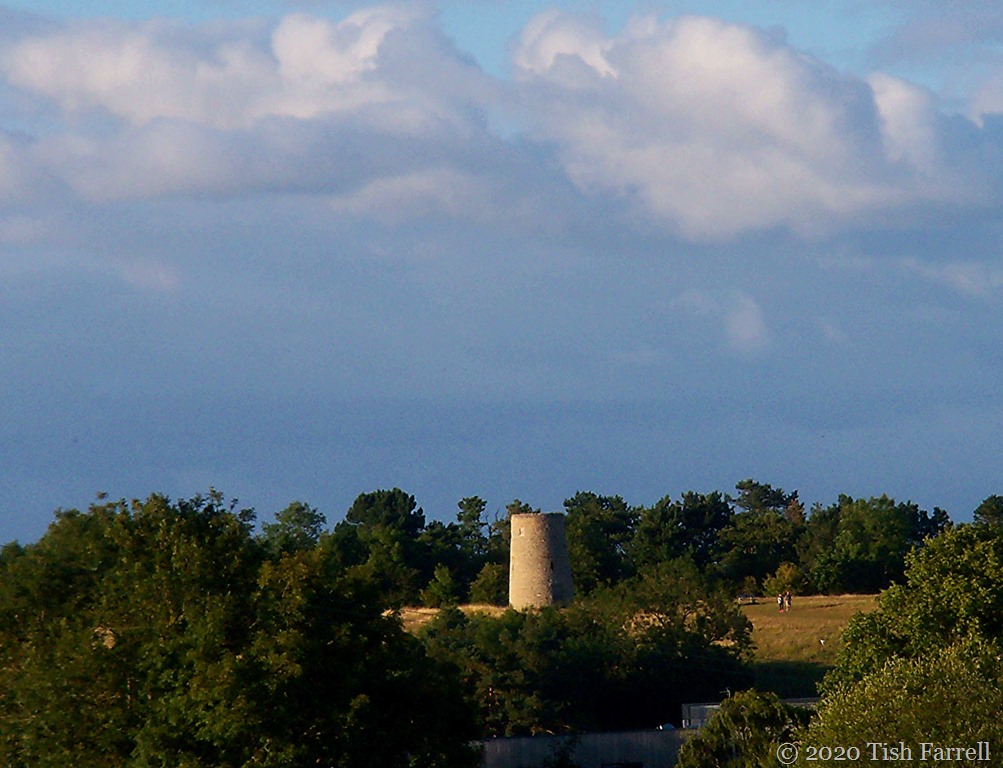
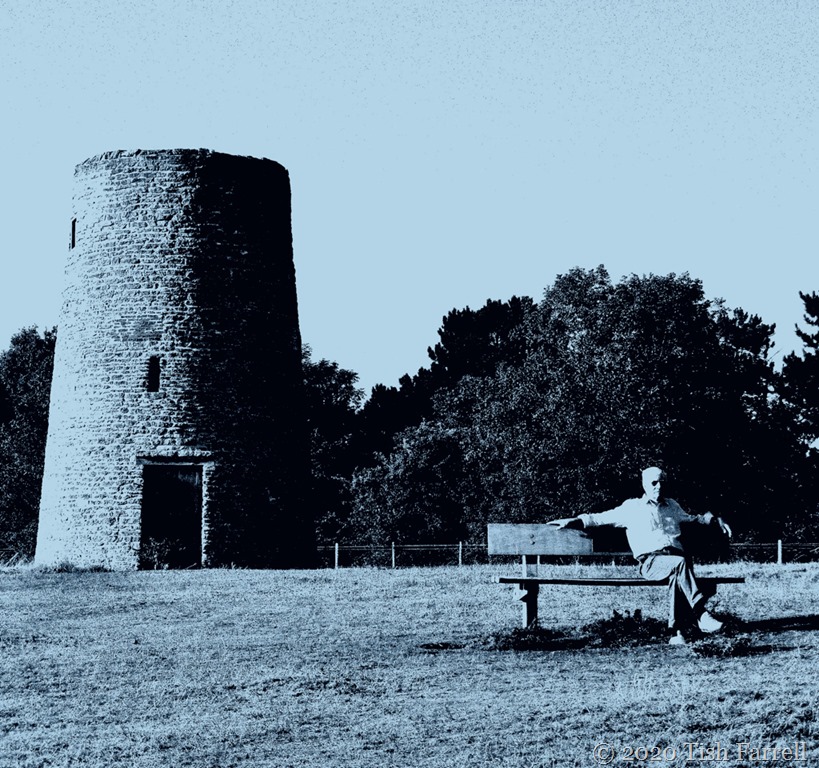
Of itself, the windmill is a rather underwhelming subject, and I have ended up taking masses of very flat looking photos. I have discovered that it helps to get beneath it somewhat, whether lying down or finding a good spot further down the hill. I’ve also found that late afternoon light can produce a bit more interest – even mystery. This next photo is my Wenlock version of Daphne Du Maurier’s thriller tale Don’t Look Now. Who is that swiftly retreating little figure in the gloaming?

P1030046resized

*

Here’s one of the more ‘obvious’ shots. The cloudscape and perhaps also the sun/shadow on the stonework add the main interest:

P1040246

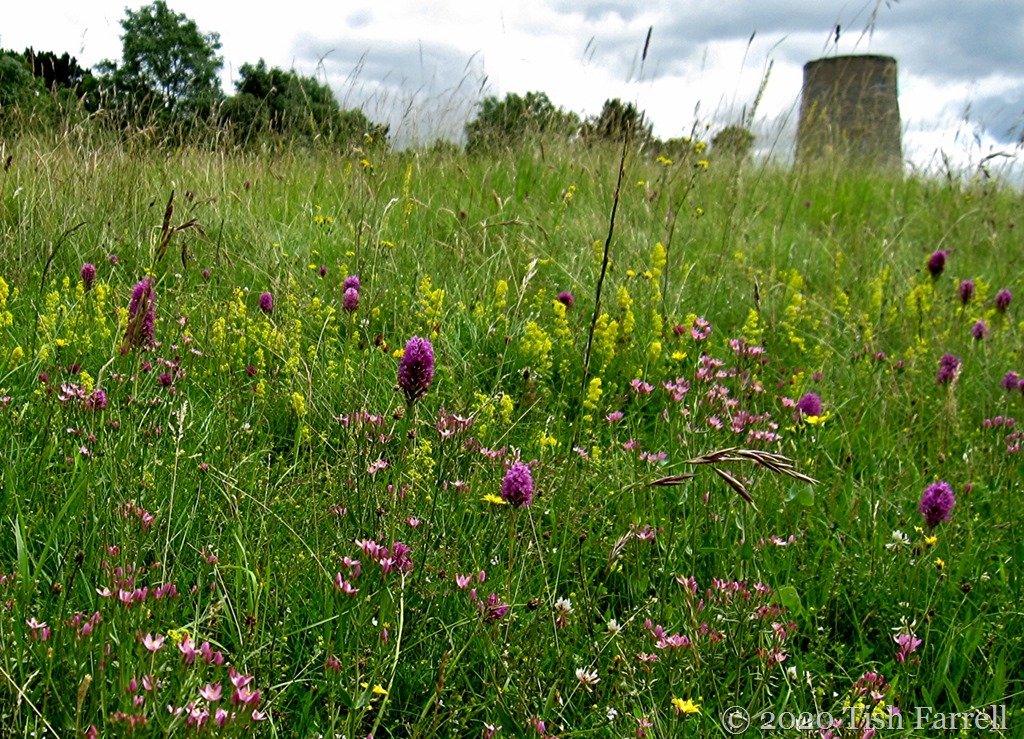
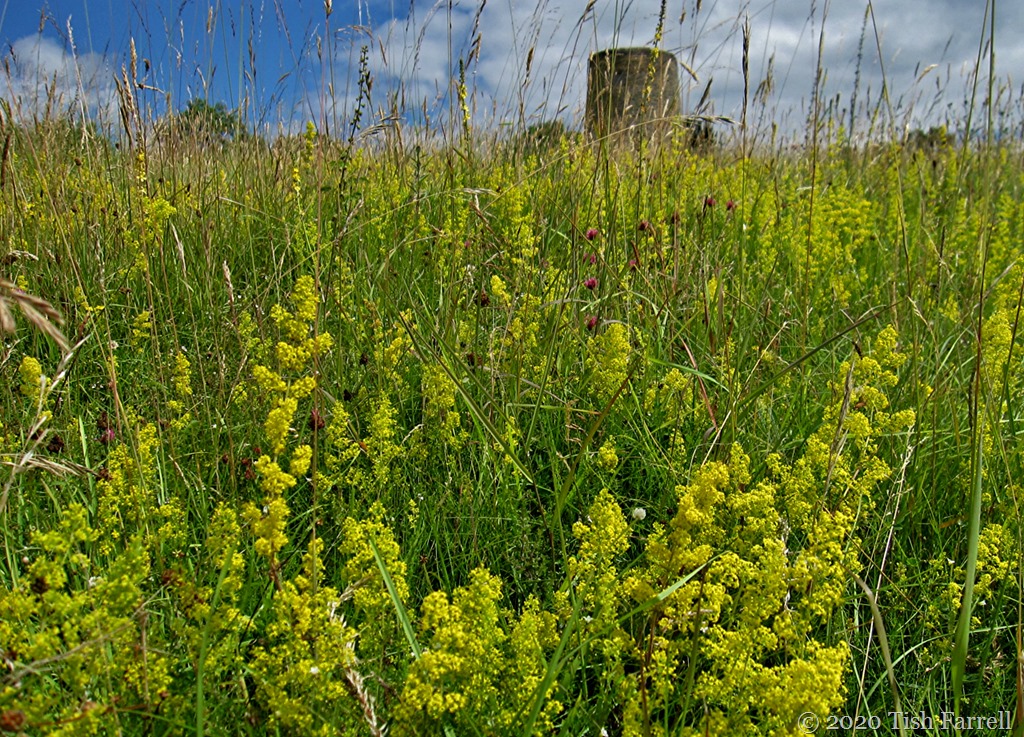
Another thought is that even when you’ve fixed on a particular subject, it’s always good to scout around it, to see what else might catch your eye/have some bearing on the composition. E.g. one of the important things about Windmill Hill, besides the windmill, is the fact its hill is an ancient limestone meadow – a rare escapee from the effects of industrial agriculture. So come early summer I’m often lying down, in the next photo among the pyramid orchids, soapwort, white clover and yellow ladies bedstraw. There’s an added benefit too – the close quarters inhalation of bedstraw fragrance. Aaaah! No wonder it was used in mattresses for women brought to bed during childbirth.

IMG_2154

IMG_2167

*

And in late summer my eye is on the knapweed and the great array seeding grasses:

IMG_2113

P1010975

Midsummer sundown

*

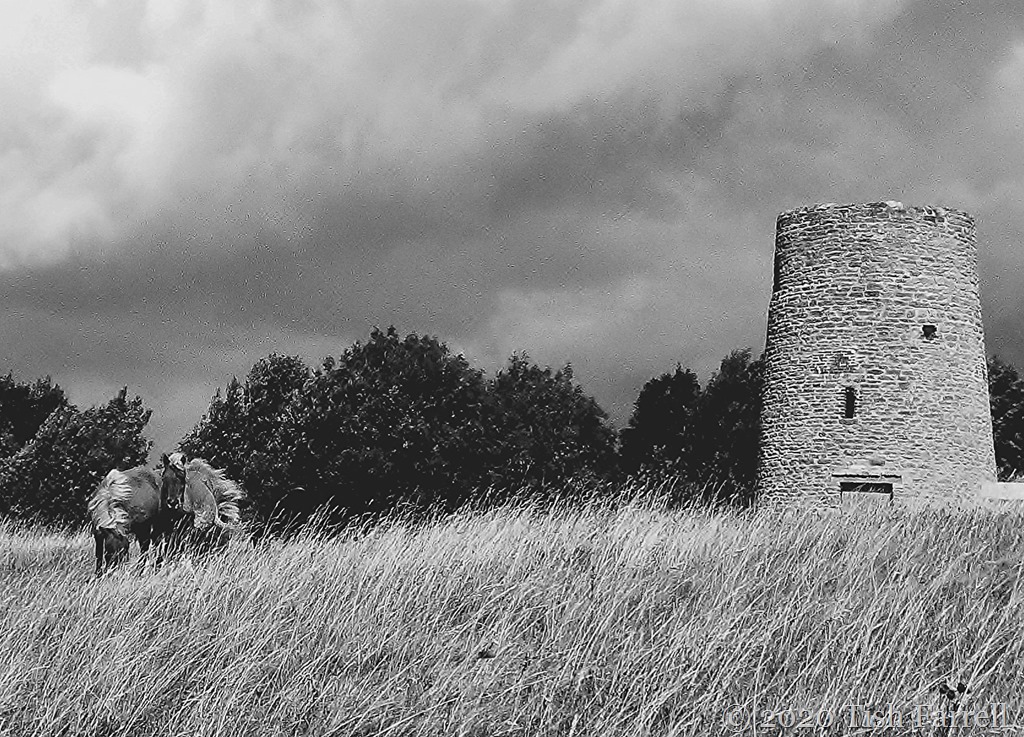
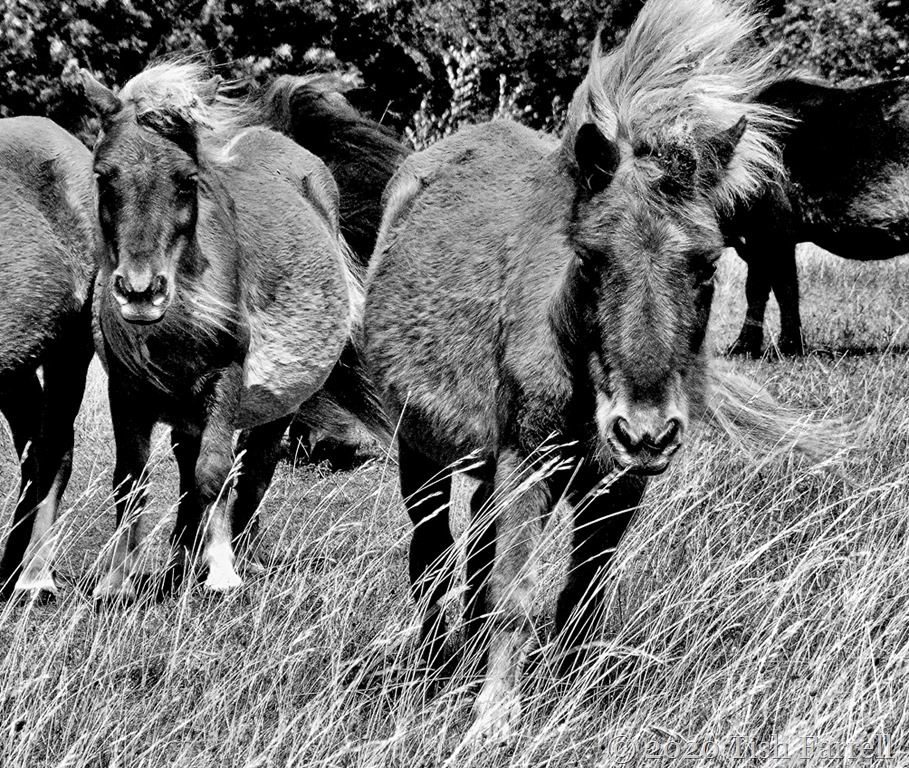
And then there are the autumn shots. A few years ago a bunch of small horses used to be brought in at summer’s end to graze the meadow. Then sadly their owner could no longer keep them and they had to be sold. For the past two years the Windmill Trust has had the hill mown and harrowed instead. This new approach has created a massive increase in orchids:

P1010942

P1010943

100_7835

100_7821

*

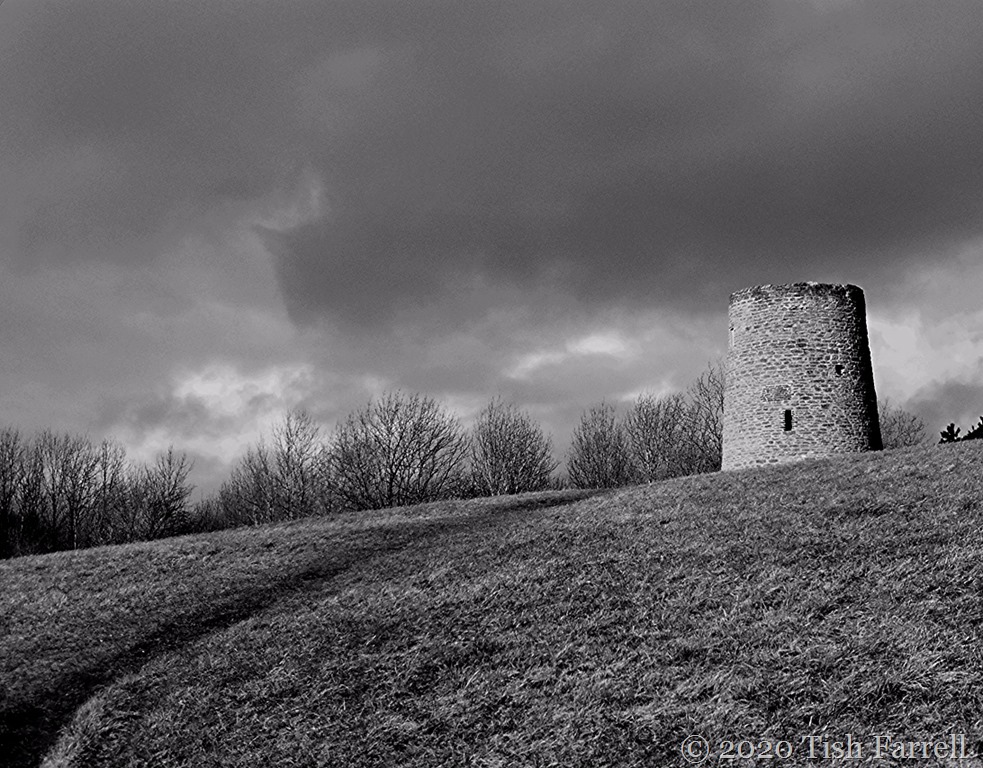
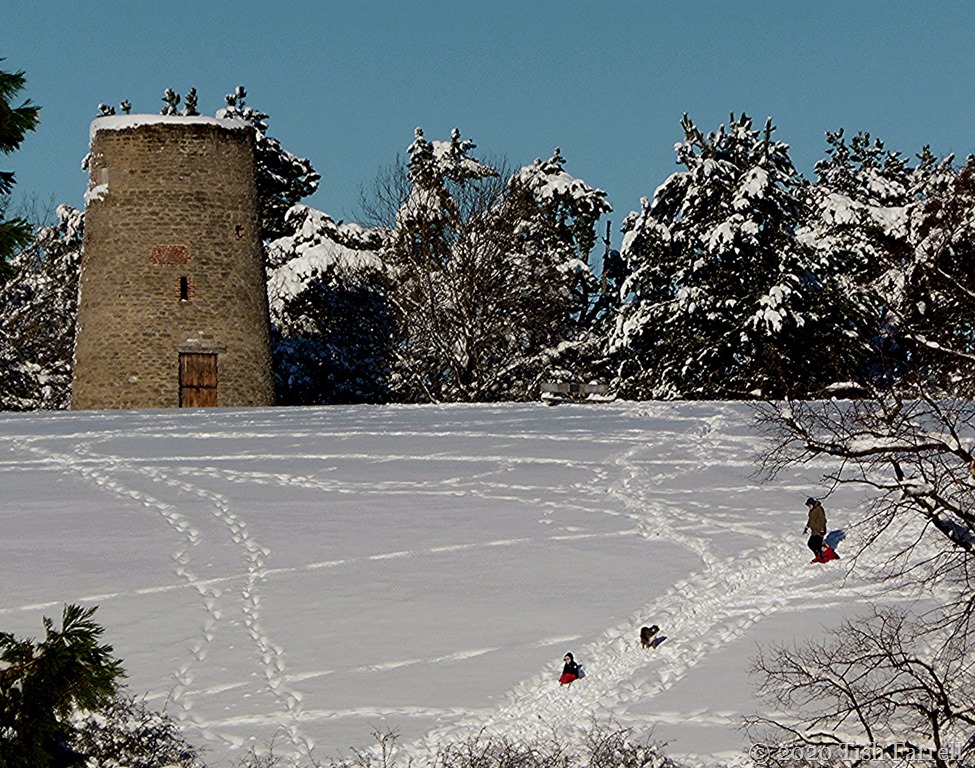
Winter:

P1040237

P1030665

P1040019

*

And then there are the views from Windmill Hill:

P1000684resizede

P1020259

Bunking off games? The William Brookes School is at the foot of the hill.

*

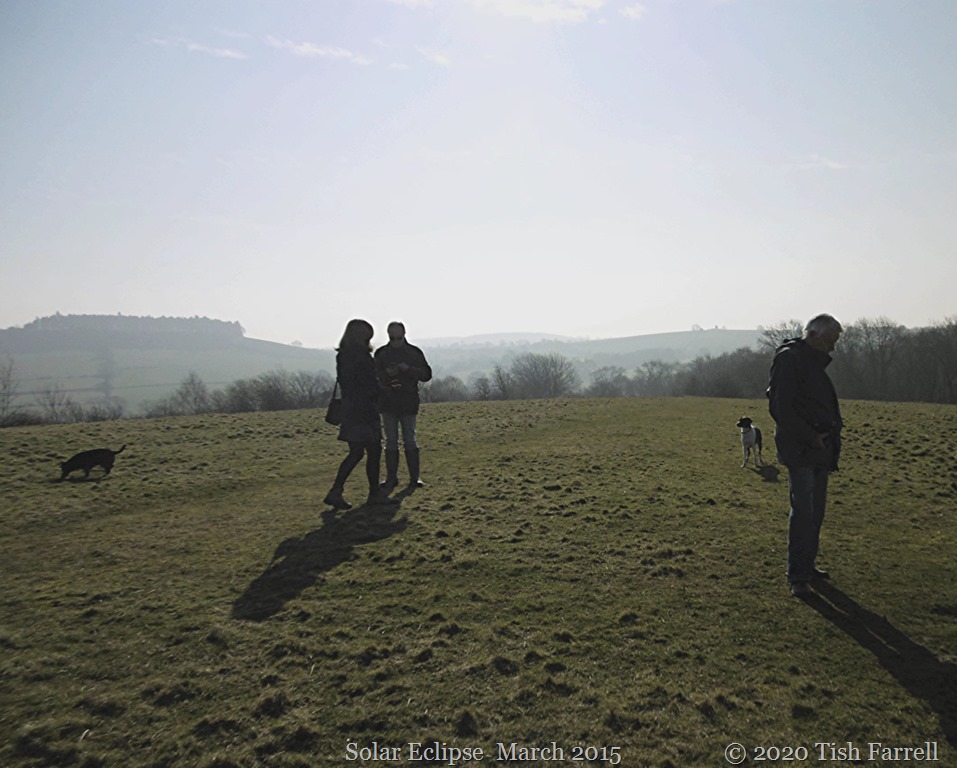
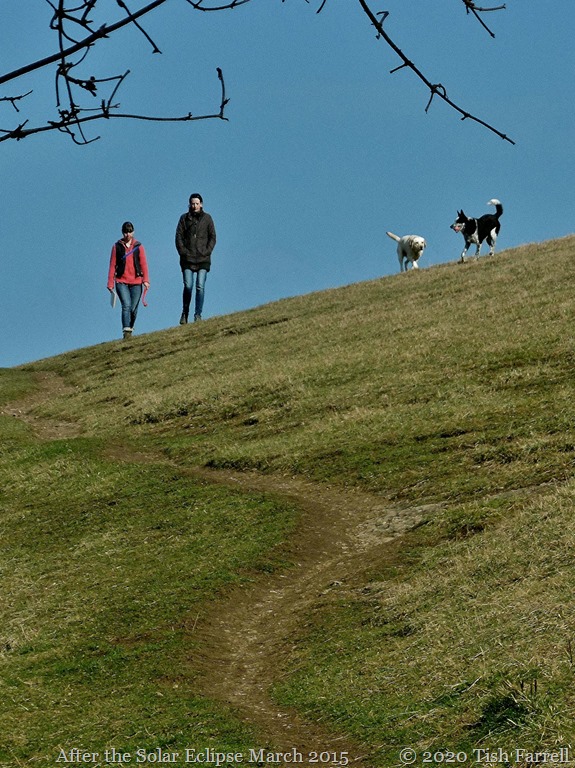
Windmill Hill can be a very sociable place. It’s a favourite spot for Wenlock’s dog walkers. There are other gatherings too: windmill open days, summer orchid counting; and in the next photo we are gathered during a solar eclipse when the world turned very still and cold and ethereal:

P1000747

P1000782

Last but not least, here are some long-distance views from Townsend Meadow behind our house. The final photo also shows the oil seed rape in full bloom and a corner of the William Brookes School:

100_6749

P1050568

Lens-Artists: Change Your Perspective


This slideshow requires JavaScript.

In Search Of Lost Time At Elmenteita ~ Back To The Old Africa album

IMG_0004

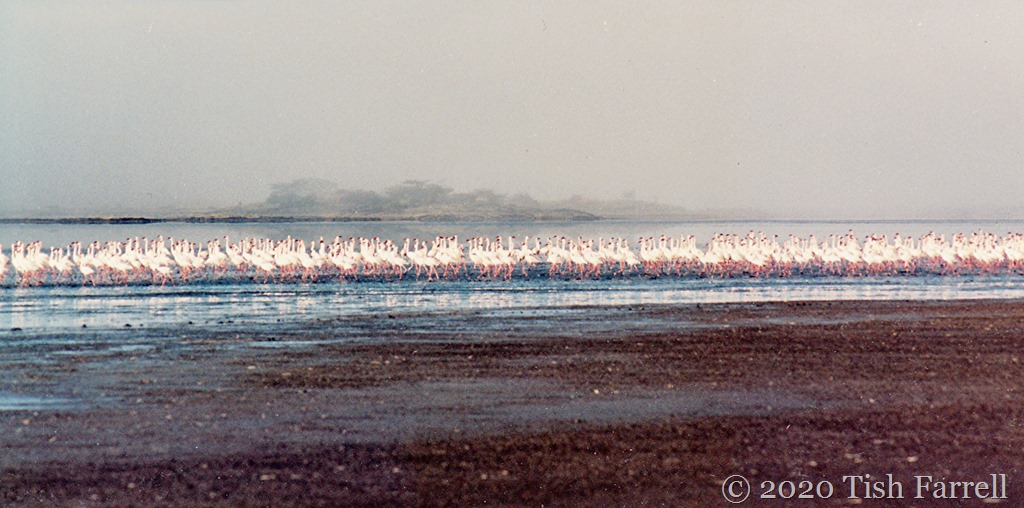
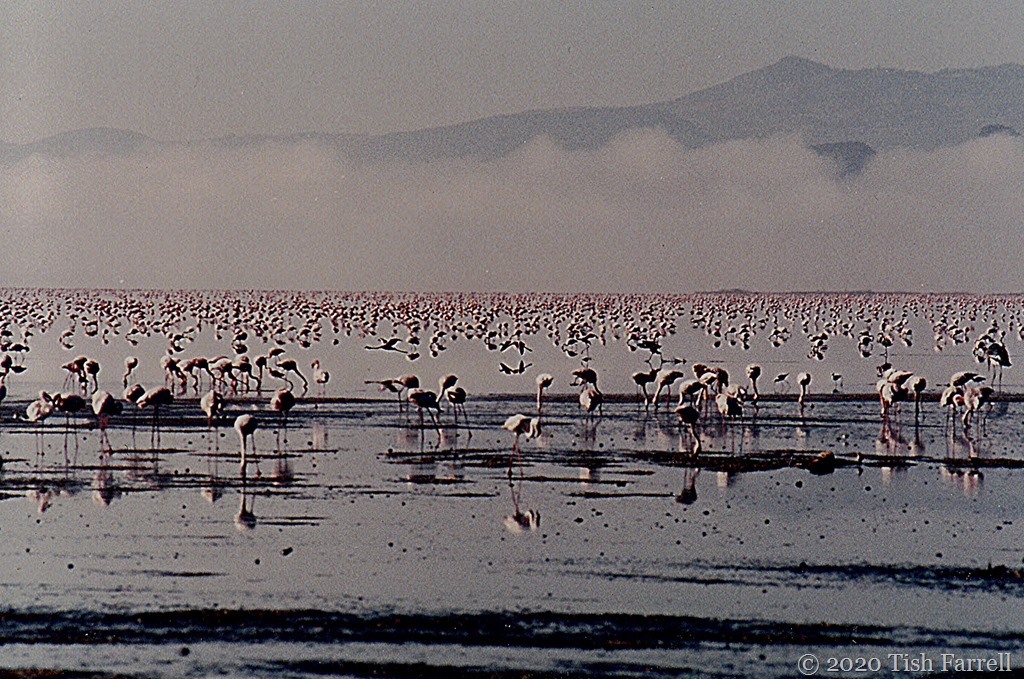
Flamingos at dawn on Lake Elmenteita, Kenya

What better way to spend wet and windy days than trawling through old photos: scenes of times past when we lived in Kenya. So all thanks to Tina at Lens-Artists who this week sends us off on a treasure hunt through the photo files. Images may include sunsets, sunrises, birds, mountains, expressive portraits and a host of other things – in combination or otherwise. For the full list, follow the link at the end of the post and be inspired by Tina’s own treasure-hunted photos.

Meanwhile, I’ve chosen photos taken at different times but in a single place where we often stayed – a tented camp on the shores of Lake Elmenteita – a 2-hour drive up the Great Rift Valley from Nairobi. The camp had gone now, but the 46,000 acre wildlife sanctuary that surrounds the lake may still be visited. It is now the Soysambu Conservancy, the land still owned by Lord Delamere, whose grandfather, in the early 1900s, was one of first British colonial settlers in Kenya.

001

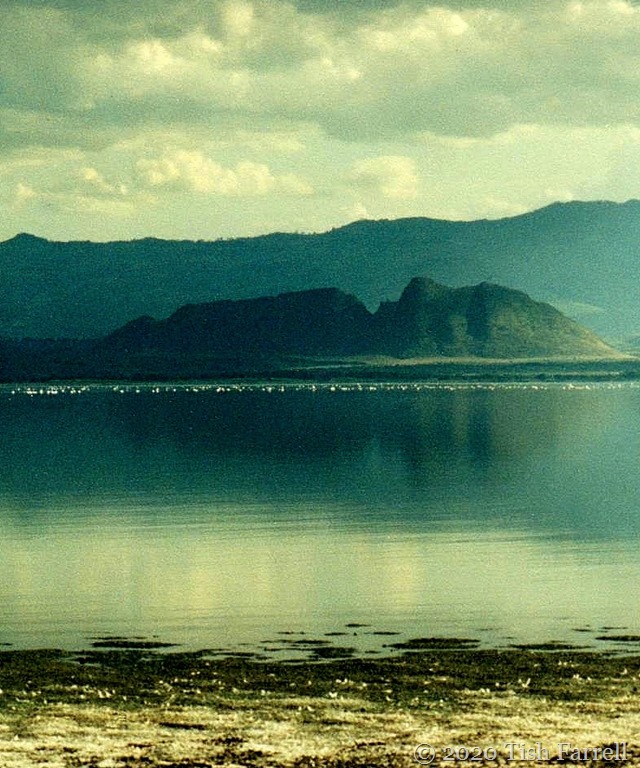
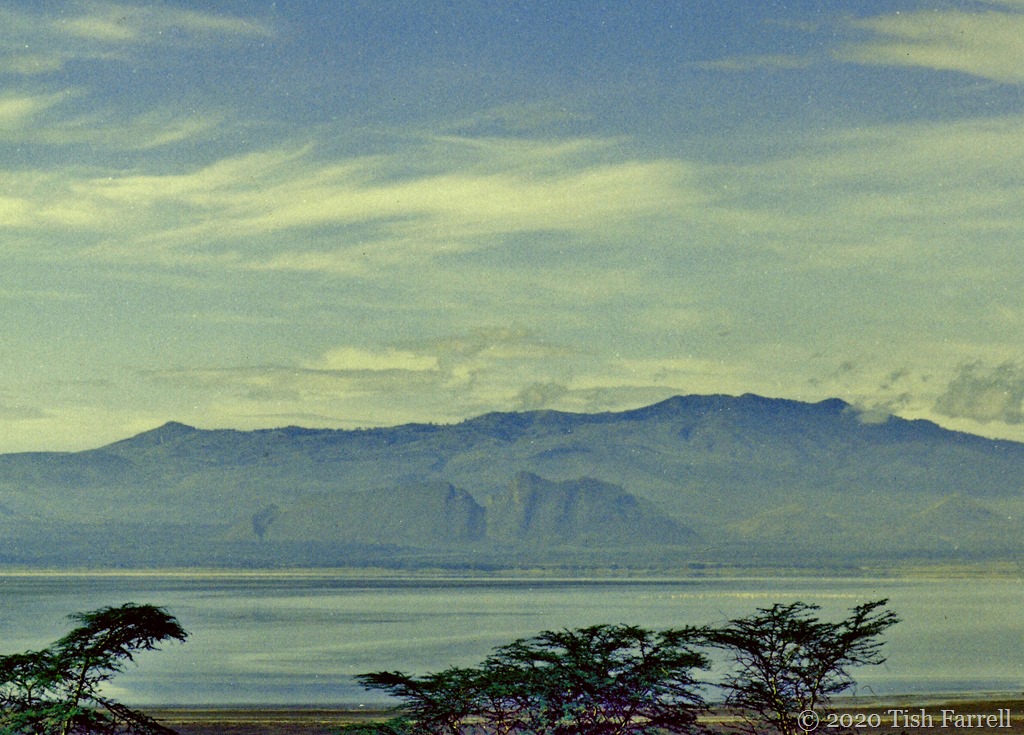
The Eburru massif is still volcanically active. The light here changes every second.

*

The pioneering Delamere ranch at Elmenteita was never successful, the soil too thin on volcanic bedrock and lacking in vital minerals, a fact well known to local Maasai herders who had long avoided grazing their cattle around the lake. Their name for the place could have offered further clues. In Ki-Maa Elmenteita means ‘place of dust’, their oral accounts telling of times when the lake blew away completely, leaving only a dust-plain.

These days the water levels rise and fall, but in any event the lake is both shallow and intensely alkaline, being one of a string of soda lakes along the floor of Kenya’s Great Rift. The waters are rich in crustacea and insect larvae which support large flocks of Greater Flamingos, and also blue-green algae that keep even larger numbers of Lesser Flamingos well fed. On rocky islands beneath the rugged cones and scarps of the Eburru massif pelicans breed.  While around the lake, in marsh and acacia scrub, some 450 bird species have been spotted. The sanctuary is also rich in all manner of plains game: gazelle, eland, impala, waterbuck, zebra, giraffe, warthog, dik-dik, buffalo. And then there are monkeys, aardvarks, spring hares, zorillas, porcupines and rock pythons.
IMG_NEW

My memories of course are forever fixed in the 1990s, and as an antidote to the kind of nostalgia-wallowing that inevitably overlooks the modernising needs of Kenyans, I should just mention that the volcanic steam vents of the southerly Eburru hills are now being exploited on an industrial scale to generate geothermal power as part of Kenya’s greener, cheaper energy initiative.

Now for my ‘treasure’ trawl:

elmenteita_0001

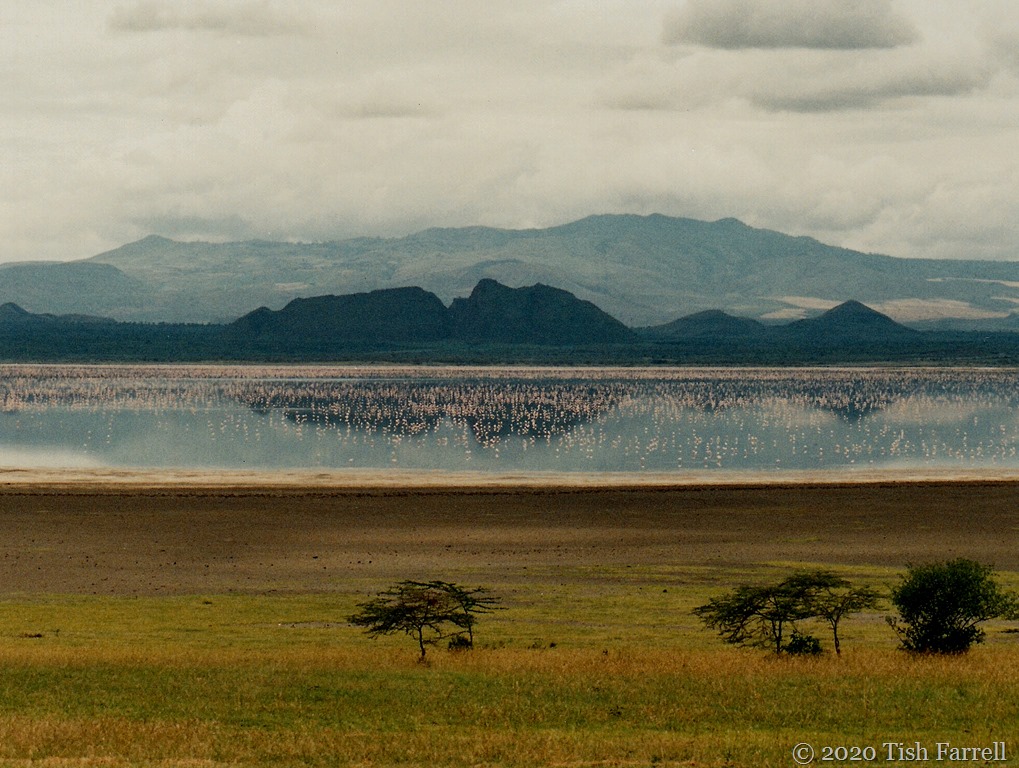
Who scattered  those rose petals on the lake?

I’m including this photo because it shows that East Africa can have very dull weather, often for weeks in July, August and September when it can also be quite cool. The bush is very dry during this period – the main rainy seasons being the short rains in late October – November and the long rains late March – June: if they happen, that is; some years they miss altogether. This last year there have been life-threatening deluges across East Africa. The other striking feature here is the exploded volcanic cone across the lake, traditionally known as the Sleeping Warrior, but also dubbed Delamere’s Nose on account of the original pioneering lordship’s hooter that so impressed the locals.

People portraits:

Scan-130601-0001cr

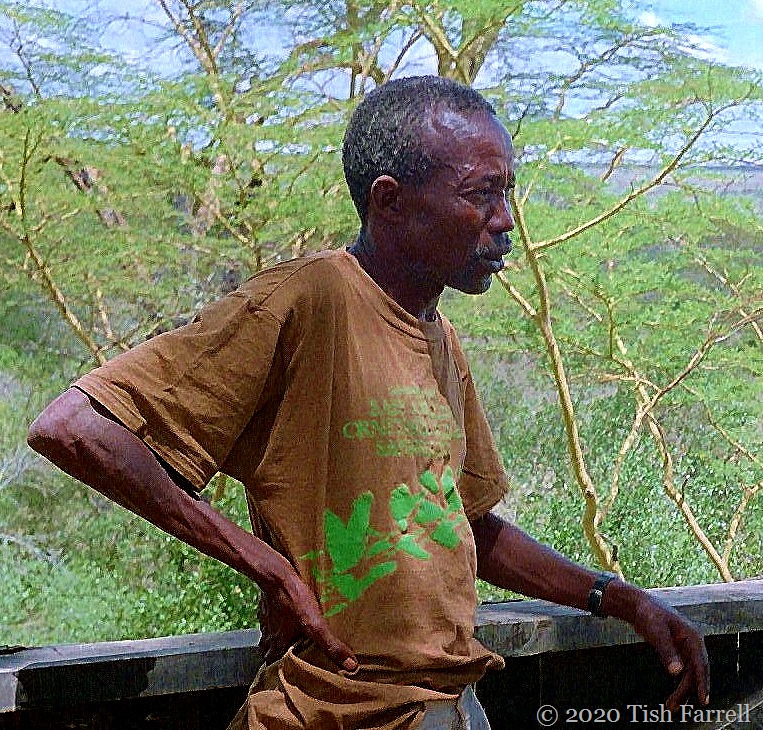
Paul Kabochi, camp ethnobotanist and medical herbalist. There was not much he did not know about the wilderness, the ways of its wildlife and the healing properties of plants and trees. His  animal tracking expertise was often called on by the BBC in the making of wildlife documentaries. The times I spent with him, walking through the early morning bush, or out on night drives, are fused in my heart.

002 (2)

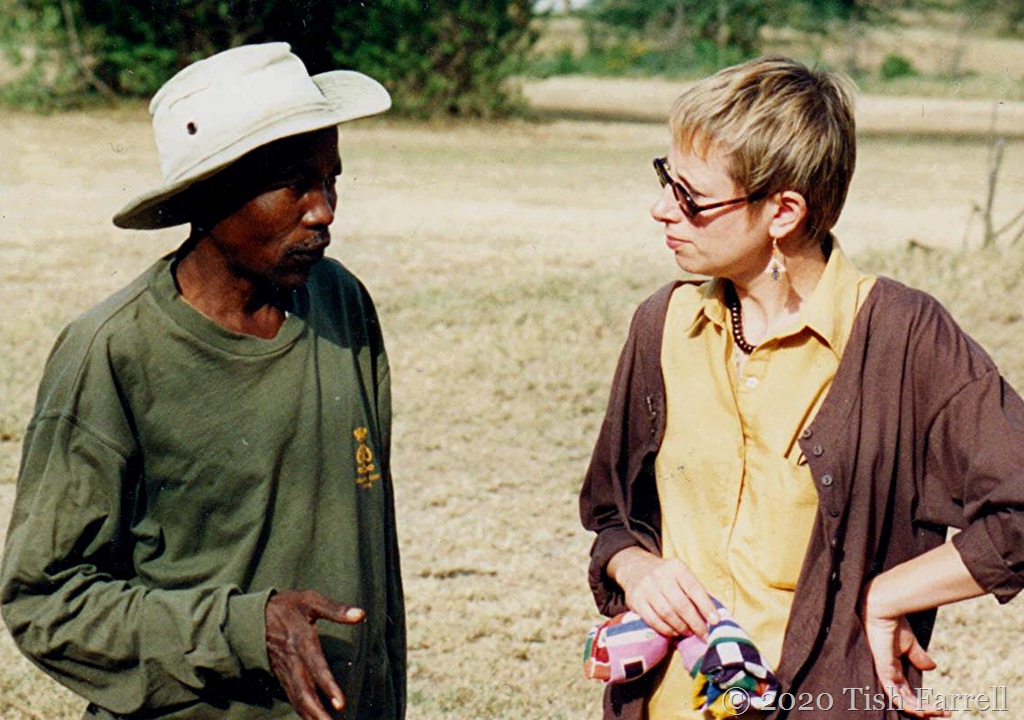
Paul Kabochi and Jo Bickerton on an ethnobotany walk.

I think it was at this point that Paul invited my sister to stick her finger in the top of a harvester ants’ nest. Jo, newly arrived in Africa, but quick as a flash, balked and suggested he might stick his own finger in the nest. This is not the best of photos, but I love the body language: total engagement in more senses than one.

An unexpected portrait:

scan-140504-0005resized

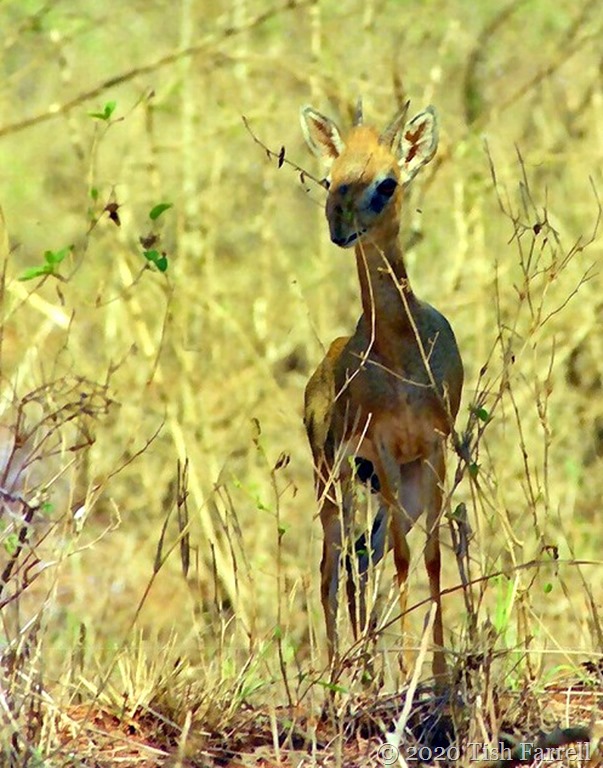
This tiny Kirk’s dik-dik is not much bigger than a hare. They are rarely spotted during the day, so I was lucky to see this one; even more that he stayed to have his photo taken.  Unlike most larger antelope, dik-diks live in monogamous pairs, staying closely together, the male marking their territory with dung middens and secretions from the  conspicuous glands at the front of each eye. Each couple generally avoids  their immediate dik-dik neighbours, though when boundary disputes do occur they can lead to fierce combat between the males.

*

IMG_0005_NEW

Lens-Artists: Treasure Hunt


Backwards And Forwards Planning ~ That Would Be Gardening Then

IMG_1946

The gardener travels hopefully, always looking ahead. It is the only way to go. But then there are also always ‘the now’ activities, the planning, preparing, nurturing, harvesting, recycling, whichever is appropriate at any given point in the cycle of things.
Knowledge gained from past endeavours – the successes, failures and ‘could-do-betters’ – also informs the way forward.  There can be neuroses too prodding you along – is now the right time to sow for the best mid-summer crop? Will this variety or that one provide the best tasting produce/be easier to grow/need staking or otherwise managing? Is it warm enough/too wet/too cold to plant the seed potatoes? What can I do this year to fend off pea moth/allium beetle/slugs/pigeons/carrot fly? What measures can be taken in case of drought/flood/heat wave? What else can be grown to extend the cropping season? What will best dry/freeze/be otherwise preserved over the winter? Shouldn’t I be making more compost/collecting more leaves/maintaining a cycle of green manure growing/weeding? What would the bees, bugs and butterflies like?

So much to think about for the coming year. And while I’m busy doing that, here are some ‘back-to-the-future’ successes from last summer that are spurring me onwards. Remembrance of things to come…

Lens-Artists: Future  This week Ann-Christine gives us ‘the future’ as her very thoughtful challenge. Please call in to see her evocative double-exposure images. You’ll be glad you did.

Lamu ‘Roof-light’ And A Room With Many Views

Scan-140802-0004 - Copy

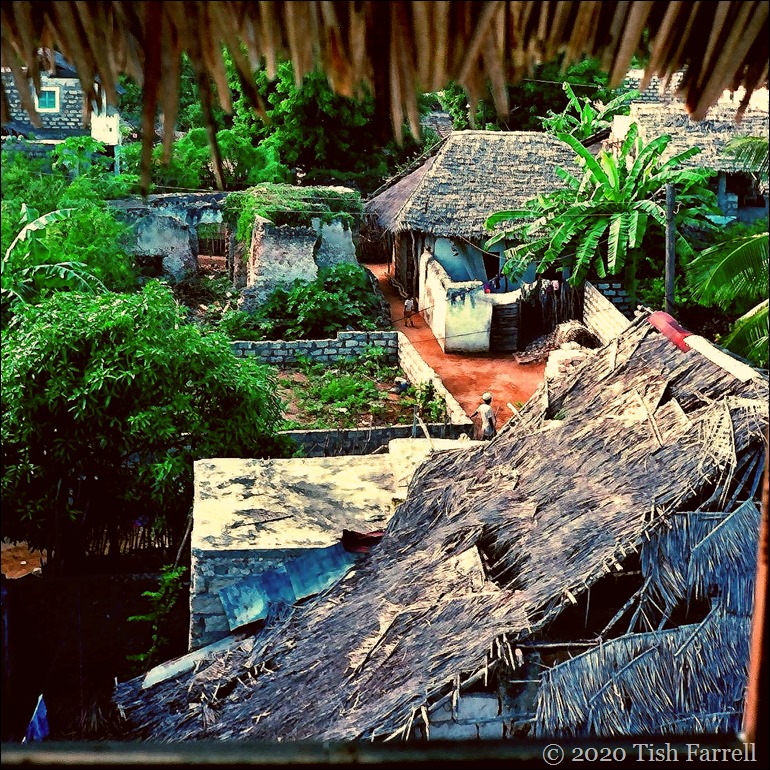
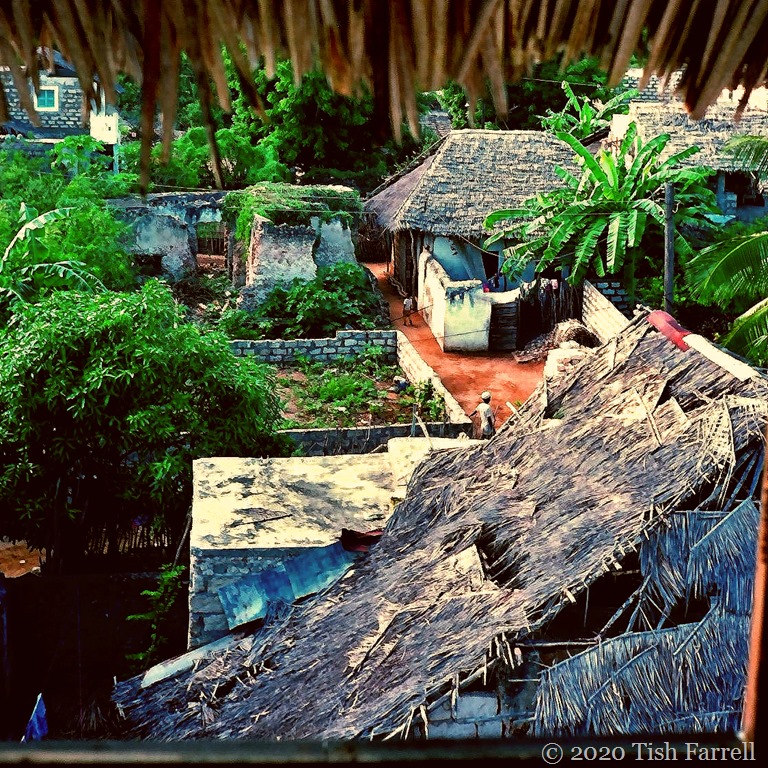
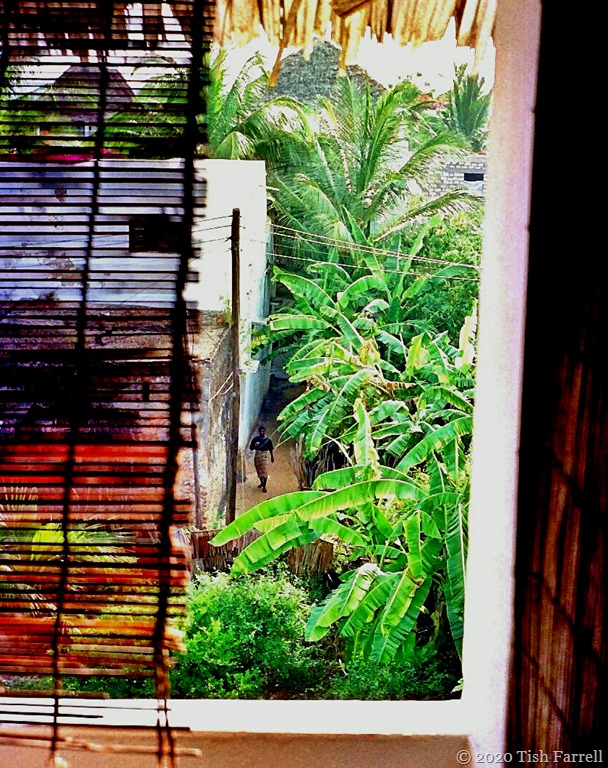
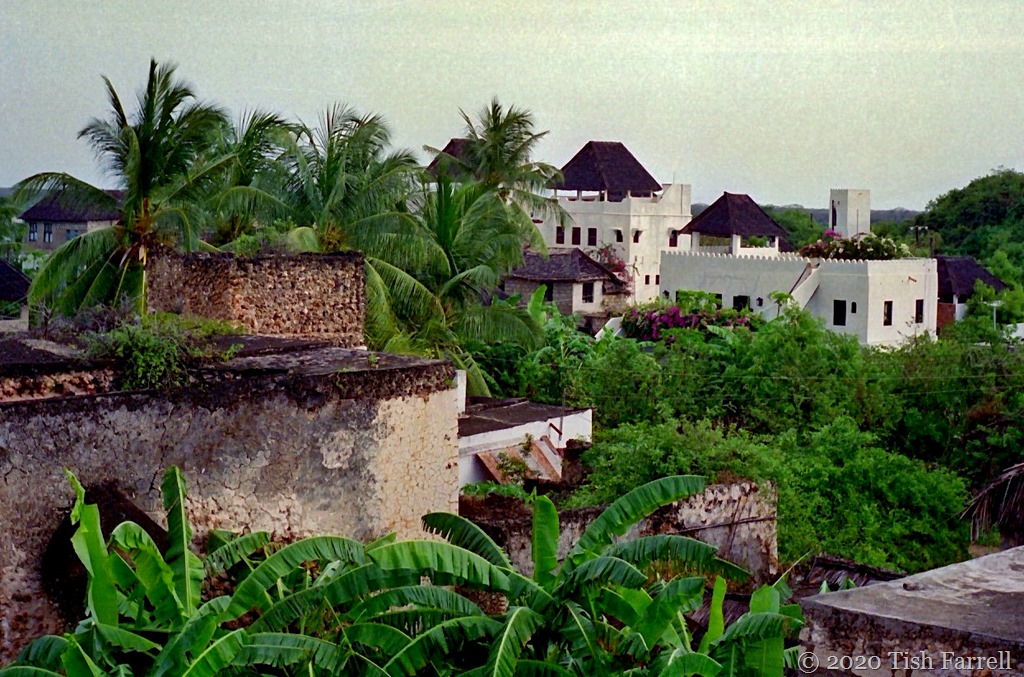
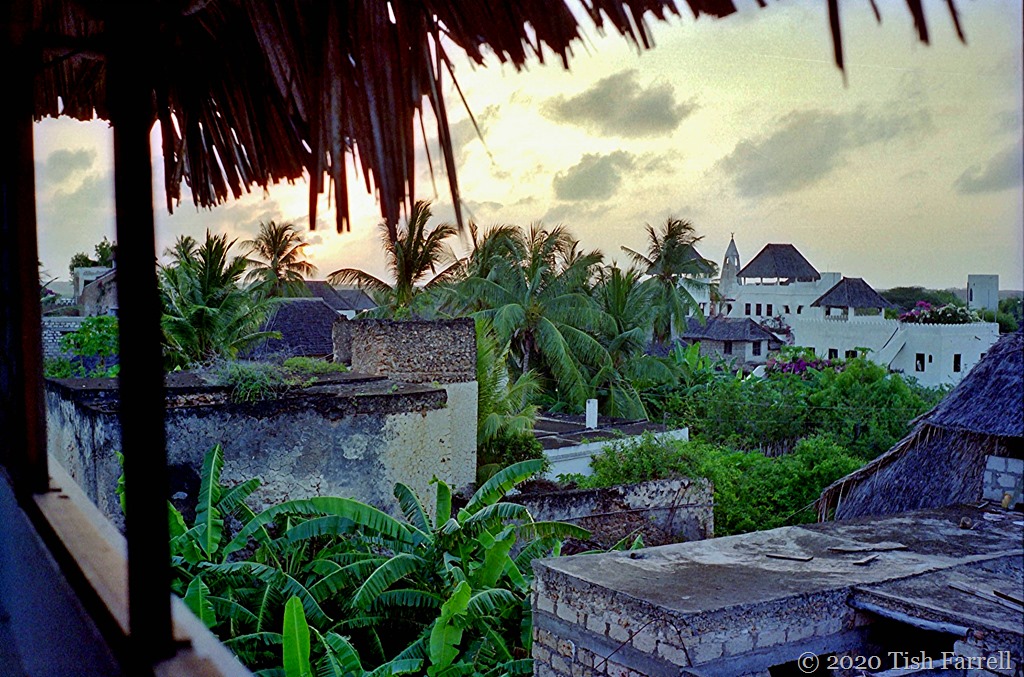
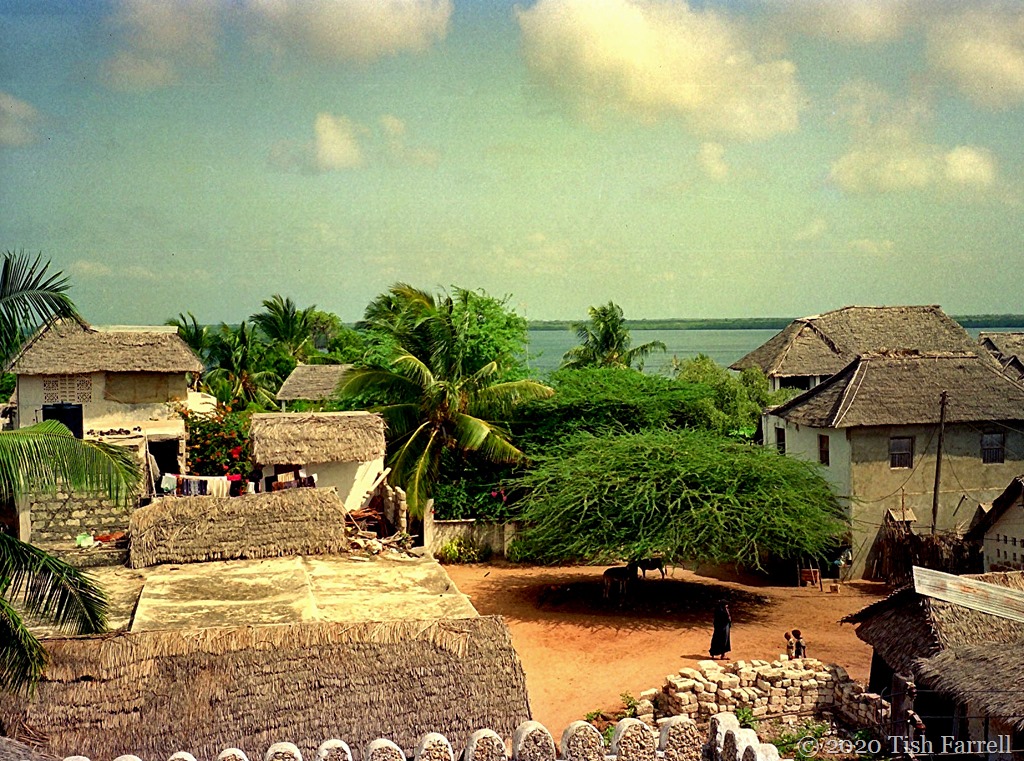
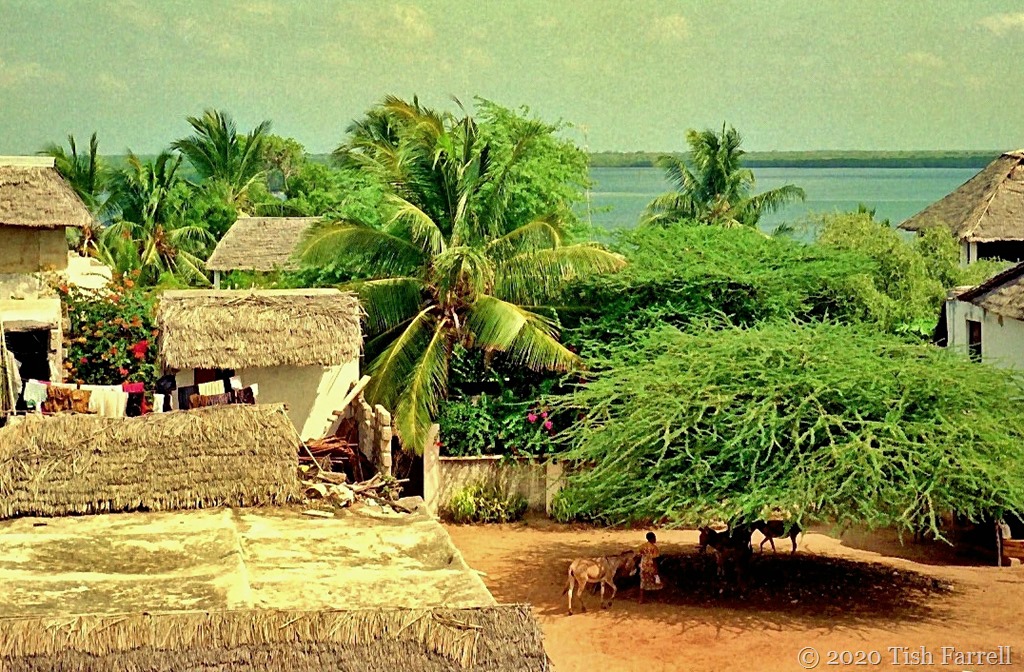
It’s back to the old Africa album for some rooftop views of Shela village on the East African island of Lamu. The photos are accruing vintage status, taken with a non-digital camera (Olympus trip) many Christmases ago when home for us meant Nairobi.

Many of you will have seen them before. We were staying in the grandly named ‘penthouse suite’ of the long gone Island Hotel, four floors up in the palm thatched rafters. The ‘penthouse’ status meant much empty space, basic cold water shower and loo, a too-narrow-for-two Lamu bed, a couple of locally made chairs, and best of all, windows on three walls. I have never had so many good views all at once. There was a breeze too off the nearby Manda Strait – always a blessing in the sticky hot season.

And of course this open-to-the-elements facility also came with a soundtrack – radios, family chatter, clattering saucepans, babies crying, cockerels crowing, cats yowling and donkeys hee-hawing. And if at night sleep happened at all, then all too soon there came the dawn call to prayer, the sonorous tones of Allahu Akbar  –  all of village life welling in our roof space like sea-sounds in a shell. It was utterly mesmerising. Perhaps we dreamt it.

Scan-130428-0012

Scan-130428-0118

Scan-130428-0124

Scan-130428-0140

Scan-130428-0135

Scan-140810-0001

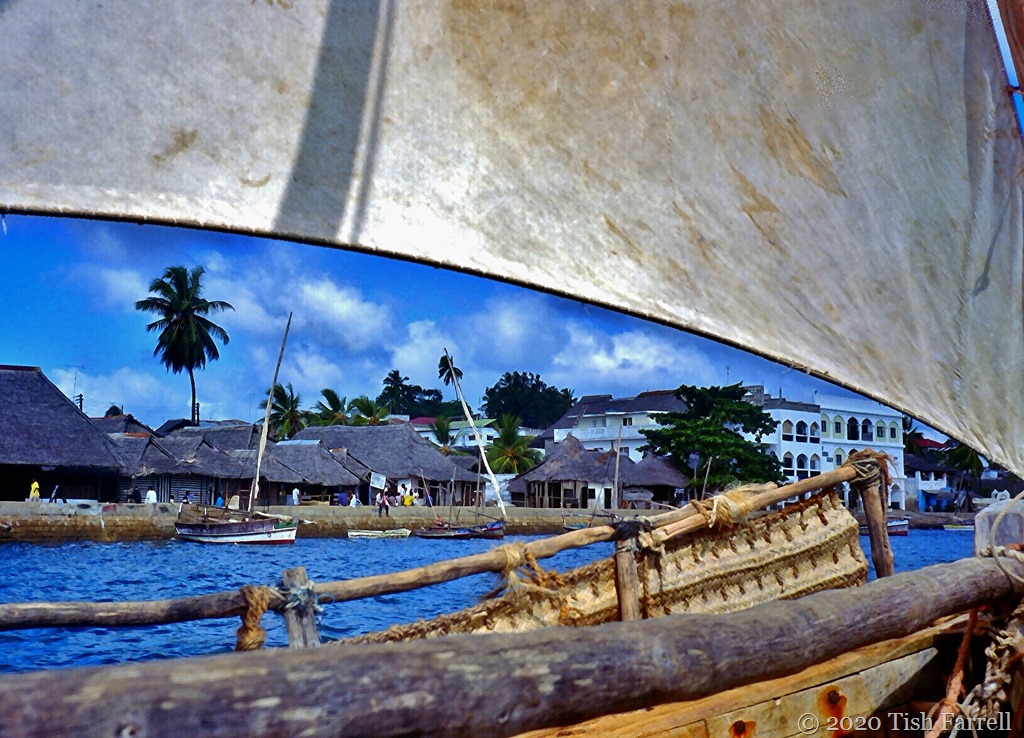
Taking a Lamu dhow into Stone Town. Another kind of window.

*

Related posts:

A brief introduction to the Swahili culture of the East African seaboard The Swahili

The original post about our long-ago Christmas trip Lamu Dreaming

copyright 2020 Tish Farrell

Lens-Artists: Window with a view

January Light #14

Wildegoose Rooflights

sq

Discovering Wildegoose Nursery was one of the high spots of 2019 – a plantsperson’s paradise set in an old walled garden on the edge of Corvedale in Shropshire.

We went there first in high summer, wandered through drifts of verbena, phlox, day lilies, cone flowers, alliums, grasses. The place was alive with butterflies and bee-hum. Buzzards mewed overhead and nearby, harvesters throbbed – the Corvedale farmers cutting their wheat. Far away over the wall, Clee Hill lay in a haze. A dreaming day.

We went again in November, and in its way, the garden was no less beautiful, the plants and grasses settled in muted tones, and the 1830’s glasshouse looking as magnificent as ever, the low light glancing off its 12,000 postcard-sized panes. It just goes to show – there’s treasure to be found on one’s doorstep. We’ll be back there in spring.

For now a pot pourri of summer and autumn views:

IMG_3328

IMG_3409

IMG_3446

IMG_3379

IMG_6077

IMG_6054

IMG_6061

IMG_6055

Lens-Artists: special spot shots

January Light #8

Roll up, Roll Up For The Much Wenlock Christmas Fair

IMG_8732

Feel your senses throb to the drummers’ beat, take a donkey ride, guess the name of the little pony, buy your Christmas trees, have nip of gin, or a nibble on a spicy Jamaican pastry, wander about on the Church Green and up and down the town’s main streets, shuffle round the two big crafts tents and buy your last minute special gifts, greet your neighbours, stock up on mistletoe to attract festive kisses, spot a meerkat (!!!?) No wonder Much Wenlock’s annual Christmas fair is the town’s most popular event.

IMG_8746

IMG_8742

IMG_8735

IMG_8747

IMG_8726

IMG_8743

IMG_8734

IMG_8758

IMG_8749

IMG_8750

IMG_8718

Lens-Artists: On display