Wind-blown: Thursday’s Special

172

I have always loved the desert. One sits down on a desert sand dune, sees nothing, hears nothing. Yet through the silence something throbs, and gleams…
Antoine de Saint-Exupéry, The Little Prince


We lived in Kenya during the late Moi years, the last days of the one-party state. By then the President was feeling under threat from external pressure to democratise, and whenever the President felt threatened, the crime rate rocketed – white collar crime that is, AK47 operations such as car-jacking that especially targeted expatriate aid workers, and organised by people whose elitist way of life was also at stake. There were episodes of ethnic clashes thrown in for good measure, stirred up in the same quarter. A German forestry consultant was murdered on his front doorstep for complaining about some bigwig chopping down Mount Kenya’s forests to grow hash.


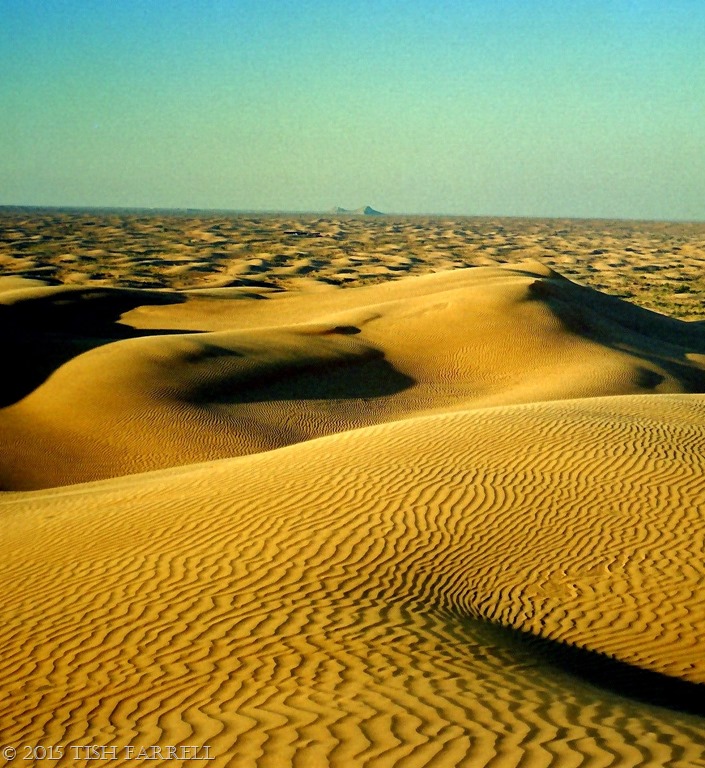
In some ways it was fascinating to observe the bloody devices by which some people cling to power – and by fascinating I mean in the way you might stand frozen, staring into the headlights of an oncoming car. It was stressful then, and especially as election time approached, and so one year we decided we’d had enough, and needed a break. We went to Dubai. While we were there we spent a night out in the desert. You will appreciate the bliss we felt, standing alone in all that emptiness, seeing for miles, and with not one thing on the horizon to trigger our internal security scanners. A landscape arranged by the wind, timeless and mysterious, and with a welcome absence of humans.

© 2015 Tish Farrell

Paula’s Thursday’s Special: Arranged

Elephants at Dawn

Scan-131109-0004

Scan-131109-0032

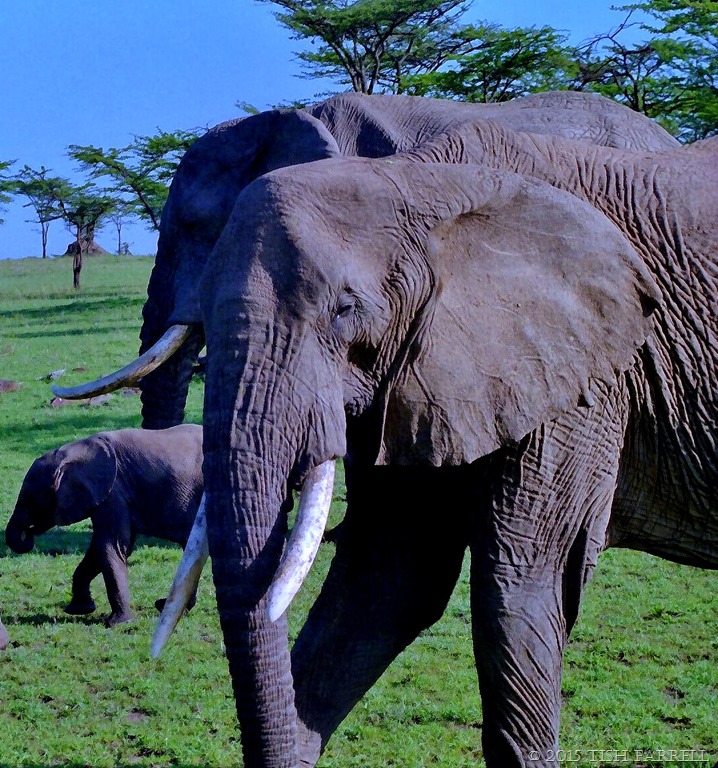
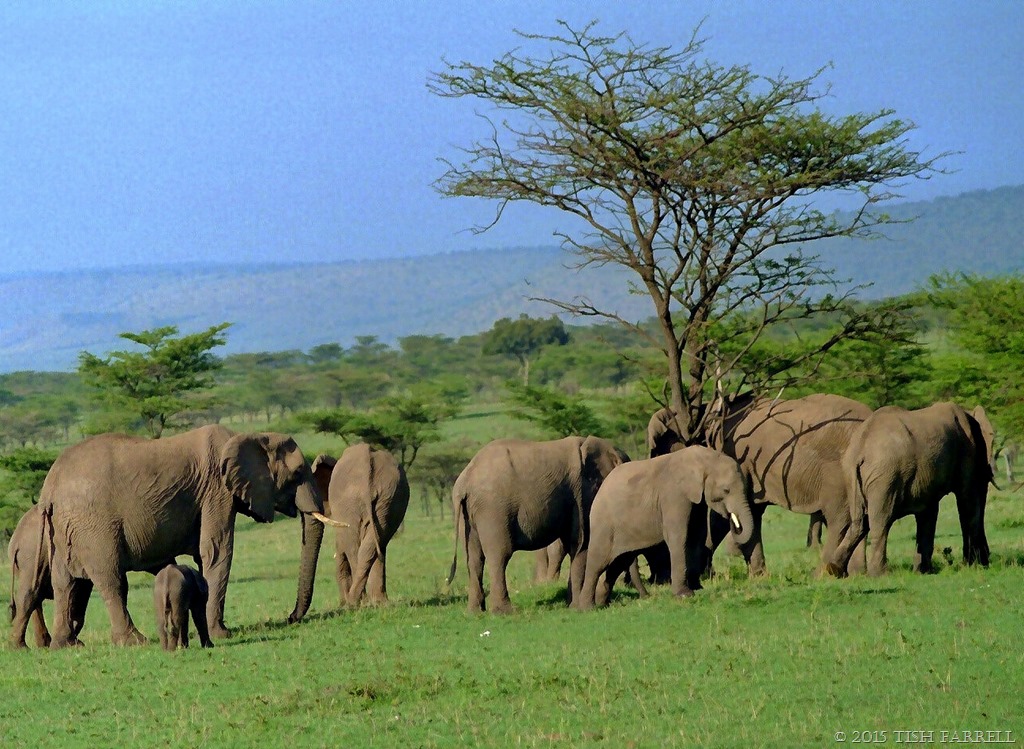
There is nothing more imposingly serene than a large herd of unruffled elephants on the move. We humans, on the other hand, may become thoroughly over-excited by such an encounter. The elephants are not impressed though. They note our existence, weighing us up with scant regard. We are quickly aware of being mentally ‘put in our place’. And as we watch, and watch the herd’s slow and steady progress through the Mara thorn trees, we find ourselves succumbing to the collective elephant will. There is the urge to follow, to step out, placing each foot with quiet intention on the surface of the earth, moving at one within ourselves instead of forever rushing about, seeking fresh excitement. As they disappear from view, we are left with a sense that something has changed. Have we been changed? In any event, it seems there is much to be learned from an early morning meeting with elephants.

Later that day, as dusk is descending, we meet the herd again. They are crossing the trail that leads back to our camp. The guide stops the truck, and we stand up, leaning out of the roof hatches as the herd moves all around us. It is breath-taking. This time they are close enough to touch. We can smell their musky hides. They move around the truck as if it is not there, then fade into the darkness as quiet as ghosts.

© 2015 Tish Farrell

Daily Post Weekly Photo Challenge: Serenity


*


image

Secrets, conspiracies, tragedy,

dark comedy – a fast-paced

novella of interwoven tales set

somewhere in East Africa

Available on ePud Bud 

5* Amazon Kindle Review


Serenity

My Most Read Post in 2014:

Caught inside a Kikuyu garden: a memorial to Karen Blixen’s lover, Denys Finch Hatton

I wrote this piece back in March. Every day since several people have clicked on it, and on one single day in the summer this rose to 170 viewings. I have no idea why this happened, or why, judging by the search terms, Denys Finch Hatton’s grave in Kenya’s Ngong Hills is of particular fascination.  I thought it was just me who was fascinated. Anyway, here is the post again – a tale of loss and romance in the tropics. It is timely perhaps too, since in the UK at least, now is the season for showing Sydney Pollack’s film Out of Africa once more on TV. Happy Holidays everyone.

Denys Finch Hatton obelisk Ngong Hills

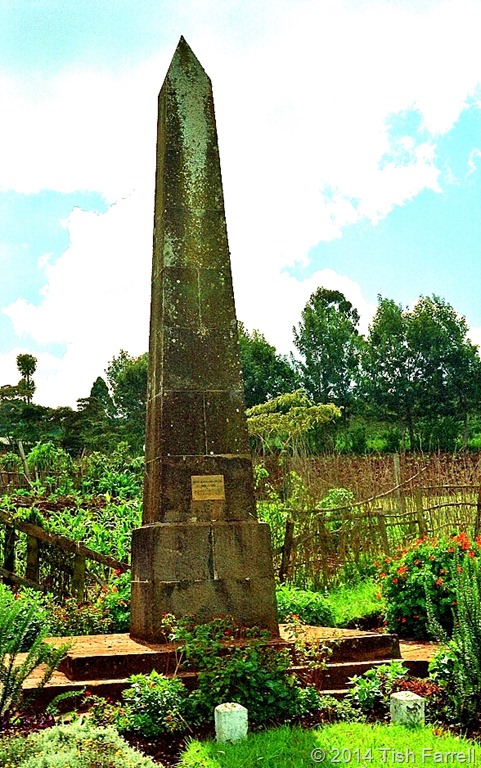
This was not supposed to happen. In fact you could say it adds insult to irony:  that a man so steadfastly dedicated to an unfettered life in the wilds should, in death, end up hemmed in, and so very domesticated within this small Kikuyu shamba. Yet here it is, the mournful stone obelisk, marking  the grave of Denys Finch Hatton,  son and heir of the 13th Earl of Winchilsea, Great White Hunter, and lover of two women far more famous than he is: writer Karen Blixen (Out of Africa) and aviator  and race horse trainer Beryl Markham (West with the Night).
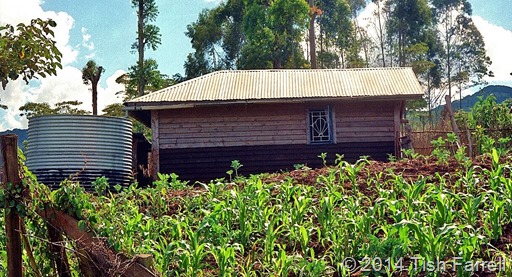
Finch Hatton's grave on the Ngong farm

Yet another woman, the one whose shamba this is, shows him a new kind of love, taking care of the garden around the obelisk.  If you want to visit the place it is not easy to find – either her little smallholding on the Ngong Hills, or the grave within. When we visited years ago we found only a hand-painted signpost nailed to a tree. We parked in a paddock outside the farmhouse door and were charged a few shillings. We could have bought a soda too, if we’d wanted. We could not see the grave though, and soon found that it was deliberately hidden from view by an enclosure of  old wooden doors. More irony here of course. More symbols of shut-in-ness.

Denys spent most of his life in Africa avoiding any kind of confinement – out  in the Tsavo wilderness, running shooting safaris for the rich and aristocratic. His clients included the Prince of Wales (later Edward VIII) . In fact it was during the safaris for the Prince in 1928 and 1930 that Finch Hatton began to promote shooting on film rather than with a gun.

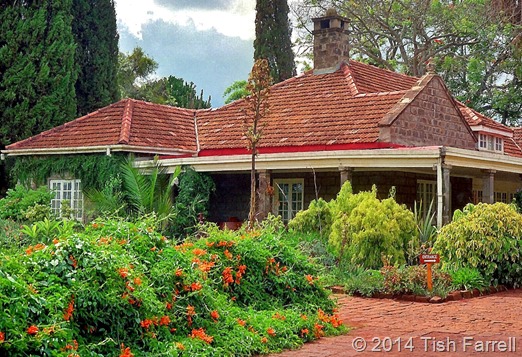
His lover, Karen (Tanne), Baroness von Finecke-Blixen lived in a small house below the Ngong Hills, some twelve miles outside Nairobi. By the time she started her affair with Denys she was divorced from her charming, but philandering husband, Bror, although they always remained friends. Her family had invested a great deal in the couple’s coffee farm, and Karen struggled to make a success of it. But the location was entirely wrong, and in the end she was forced to sell up and leave Kenya. It was during the period of selling the farm that she heard news of Denys’s death.
Scan-130429-0005

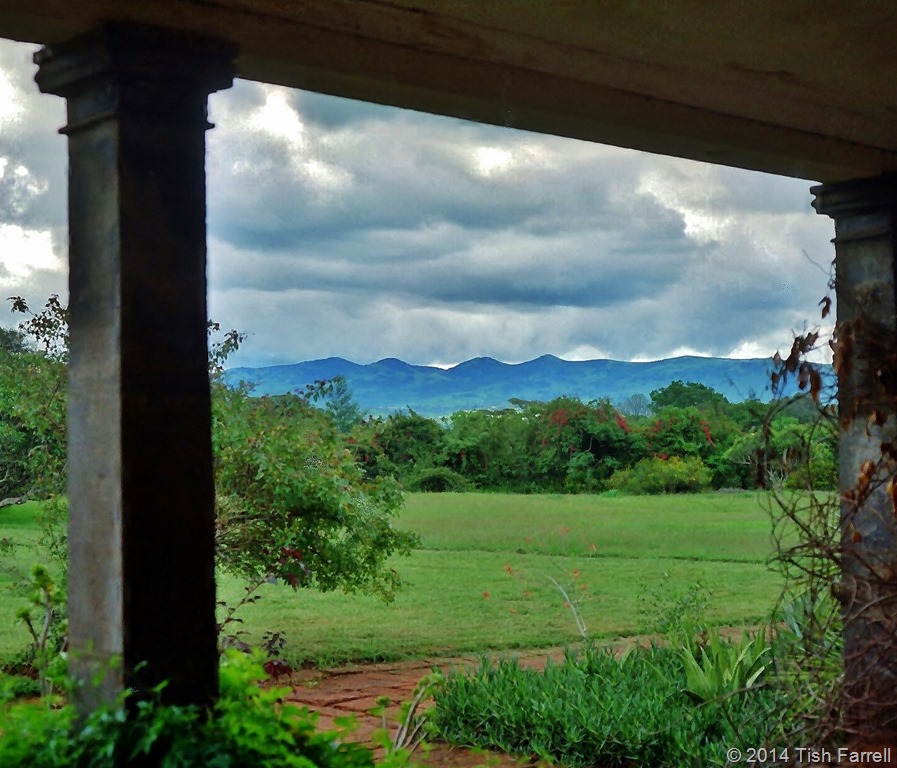
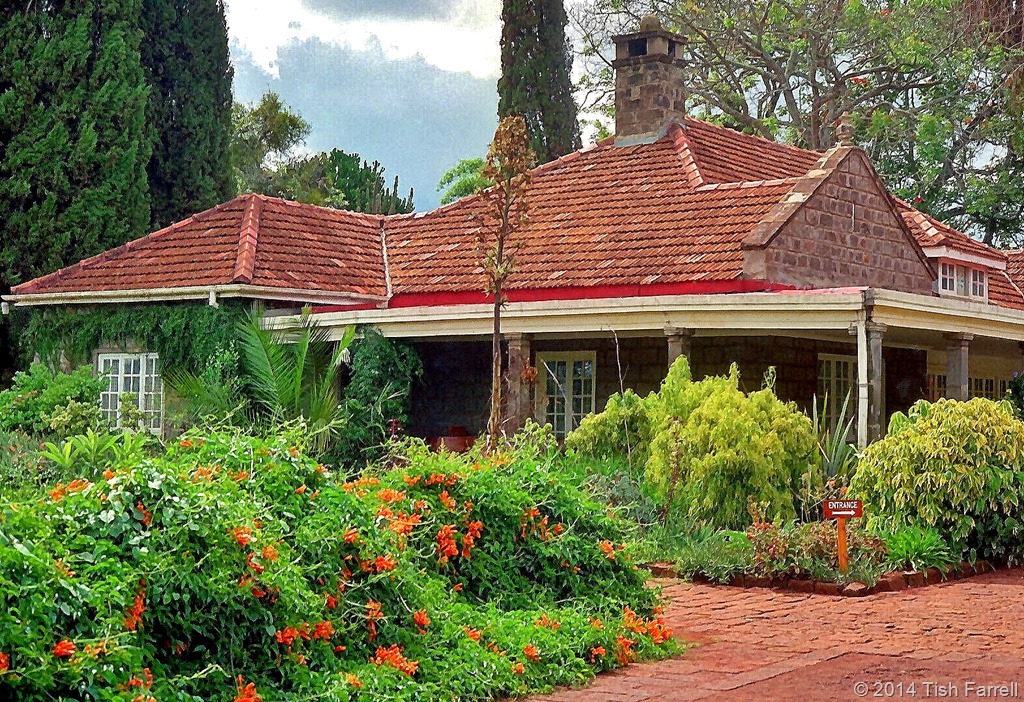
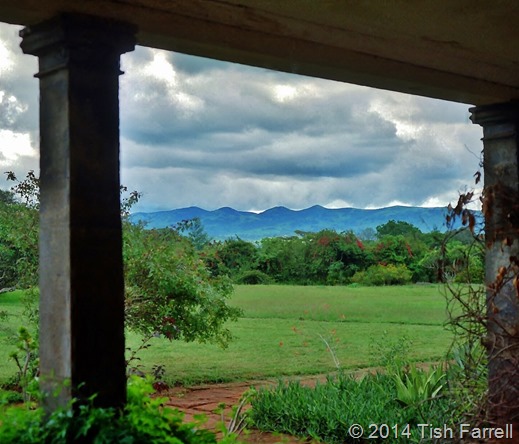
Looking towards the  Ngong Hills from inside the veranda at Karen Blixen’s house. The house now belongs to Kenya’s National Museums.

*
Scan-130429-0006

Denys Finch Hatton’s untimely end may be put down to his passion for flying. For those of you who remember Sydney Pollack’s 1985 film Out of Africa, some of the most elegiac moments of the film are when the celluloid version of Finch Hatton  (Robert Redford)  takes Karen Blixen (Meryl Streep)  into the skies above the Rift Valley.  Denys died in his Gypsy Moth in 1931, and in unexplained circumstances. He was taking off from the airstrip down in Voi in southern Kenya when his craft exploded. He and his Kikuyu co-pilot were killed. Denys was forty four.
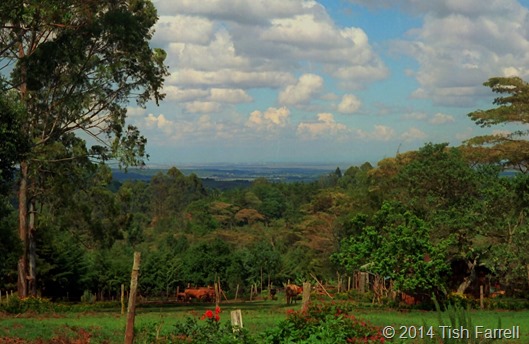
Scan-130429-0018

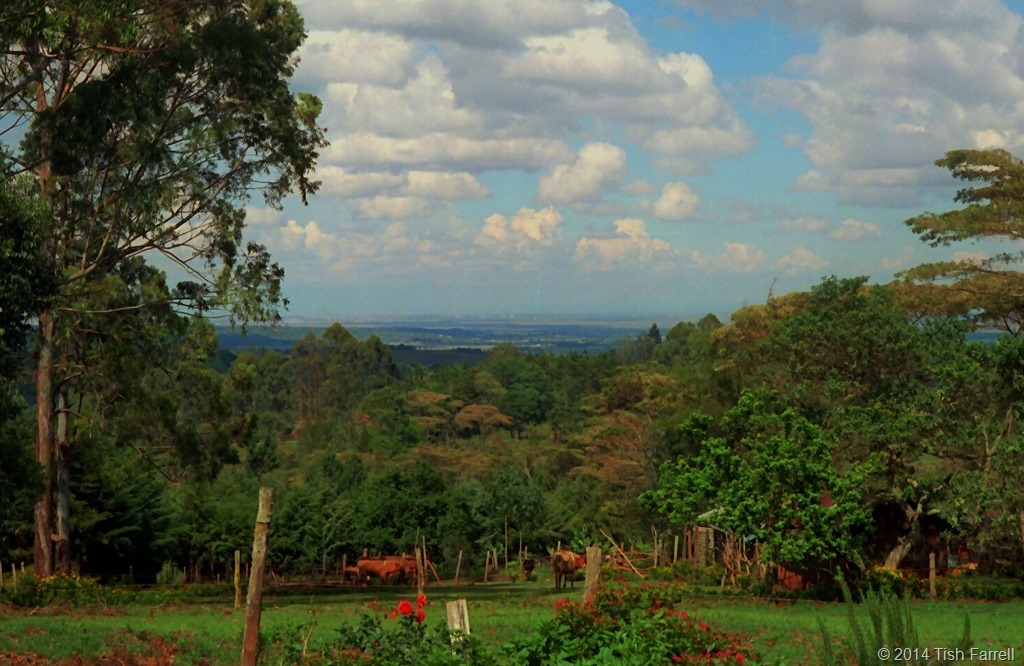
View towards Nairobi from Denys Finch Hatton’s Grave, and overlooking another Kikuyu smallholding.

*

By the time of his death, his relationship with Karen was  well on the wane, and he had already started an affair with the younger Beryl Markham. His biographer,  Sara Wheeler says in Too Close to the Sun, that there is circumstantial evidence to suggest that Beryl was pregnant with Denys’s child, but that she then had an abortion. To have known this would have truly broken Karen Blixen’s heart: her letters show that she had longed to have a child with Denys.

With yet another twist of irony, it was with his death, that Karen somehow reclaimed him, remembering that he had told her of his wish to be buried in the Ngong Hills. The spot he had chosen was one that Karen had decided on for her own grave.

013

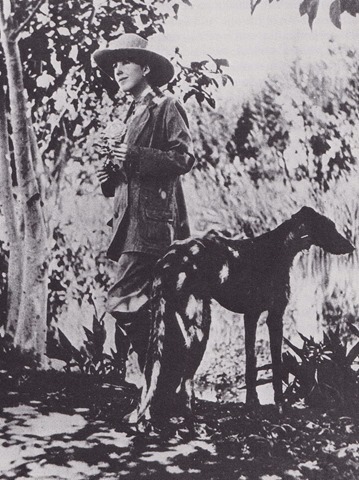
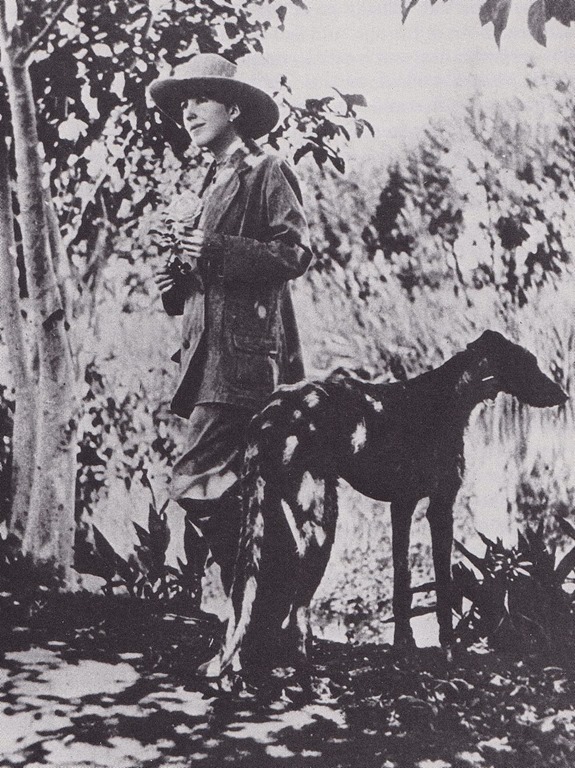
Denys Finch Hatton

Karen Blixen with her deerhound Dusk.
012

“There was a place in the hills, on the first ridge of the Game Reserve, that I…had pointed out to Denys as my future burial-place. In the evening, while we sat and looked at the hills from my house, he remarked that then he would like to be buried there himself as well. Since then, sometimes when we drove out in the hills, Denys had said: ‘Let us drive as far as our graves.’ Once when we were camped in the hills to look for buffalo, we had in the afternoon walked over to the slope to have a closer look. There was an infinitely great view from there; the light of the sunset we saw both Mount Kenya and Kilimanjaro. Denys had been eating an orange, lying in the grass, and had said that he would like to stay there.”  Out of Africa

The obelisk was only put up later by Denys’s brother. During Karen’s last days in Kenya she had the site marked with white stones from her own garden, and as the grass grew up after the long rains, she and Farah, her Somali house steward, erected a pennant of white calico so she could see the spot from her house, some five miles away.

Sometime after she had returned to Denmark she received a letter with some strange news about the grave:

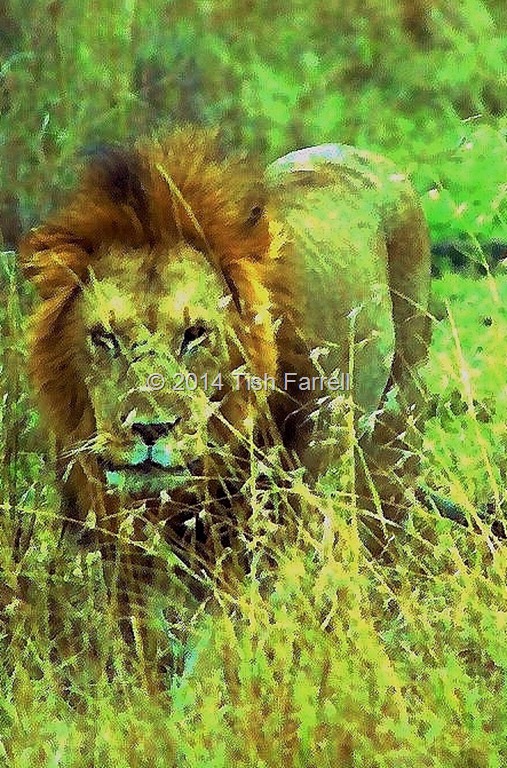
“The Masai have reported to the District Commissioner at Ngong, that many times, at sunrise and sunset, they have seen lions on Finch Hatton’s grave in the the Hills. A lion and lioness have come there, and stood, or lain, on the grave for a long time…After you went away, the ground round the grave was levelled out, into a sort of big terrace. I suppose that the level place makes a good site for the lions, from there thy can have a view over the plain, the cattle and game on it.”  Out of Africa
Scan-131109-0048 - Copy

copyright 2014 Tish Farrell

Over the Edge: Landscapes or Seascapes?

Rift Valley from Escarpment - Copy

Scan-130429-0001

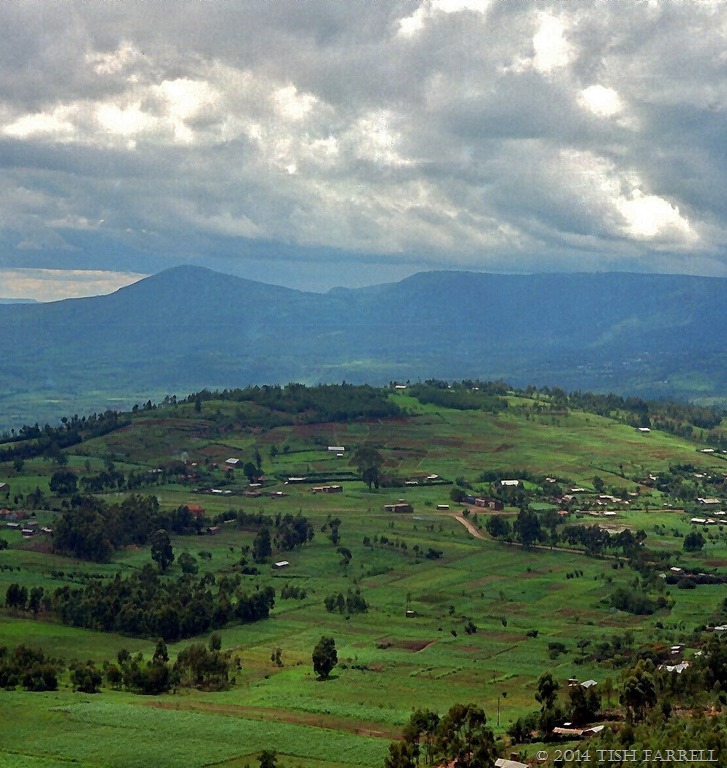
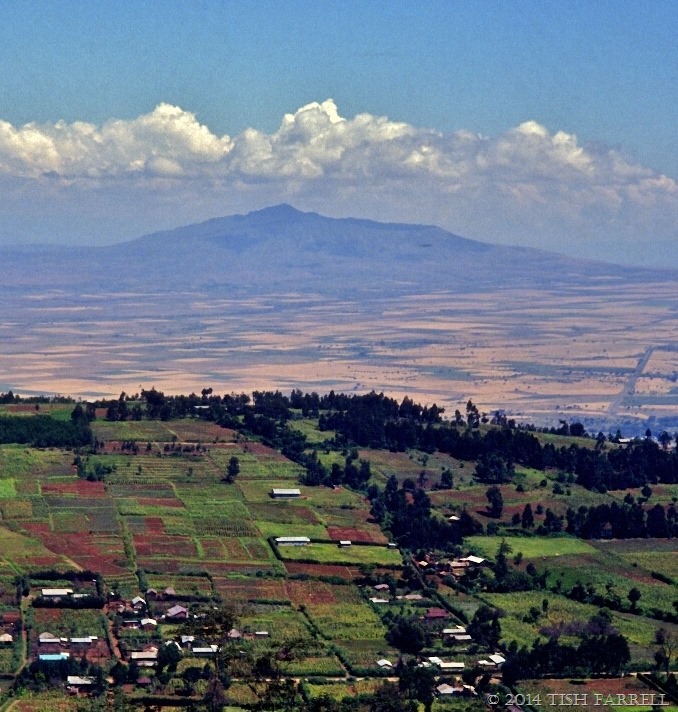
Looking down on the small holder farms of Escarpment in Kenya’s Great Rift Valley

*

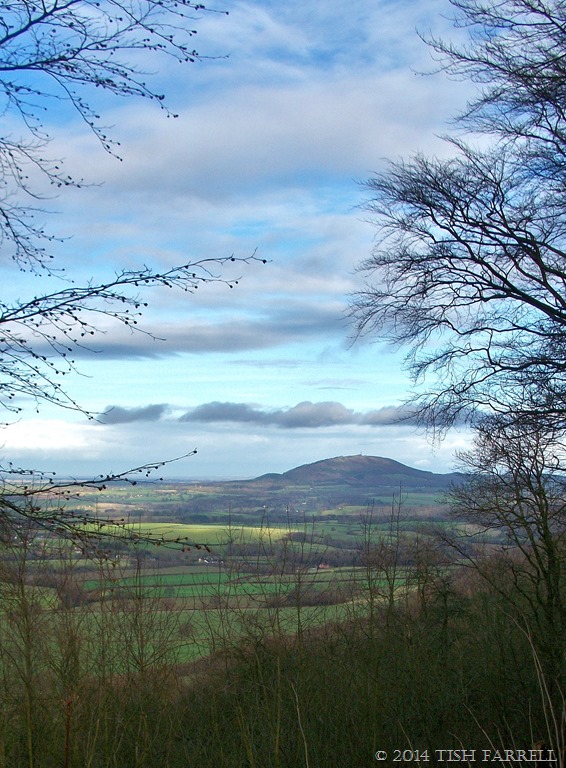
And on Shropshire farm fields from Wenlock Edge

IMG_1911

100_7057

It’s an interesting thought that in time the Great Rift Valley could become a seascape, for even now the earth’s crust is pulling apart along its 6,000 kilometre length.  The Horn of Africa, Somalia and the eastern half of Kenya would then become an island. Meanwhile these views of Shropshire show a landscape that was once covered in a shallow tropical sea. Also Wenlock Edge, on which I am standing to take this photograph, was once the bed of that sea before geological forces shunted it upwards. It makes you think, doesn’t it – the relentless forces of change?

And for the story that connects these vistas: First Post Revisited: By the Silurian Sea

For more about the Great Rift see an earlier post: Vulcanicity: welcome to the hot zone

Cee’s Fun Foto Challenge: Landscapes or Seascapes

Xanthophloea ~ Acacia, that is

Scan-130601-0012

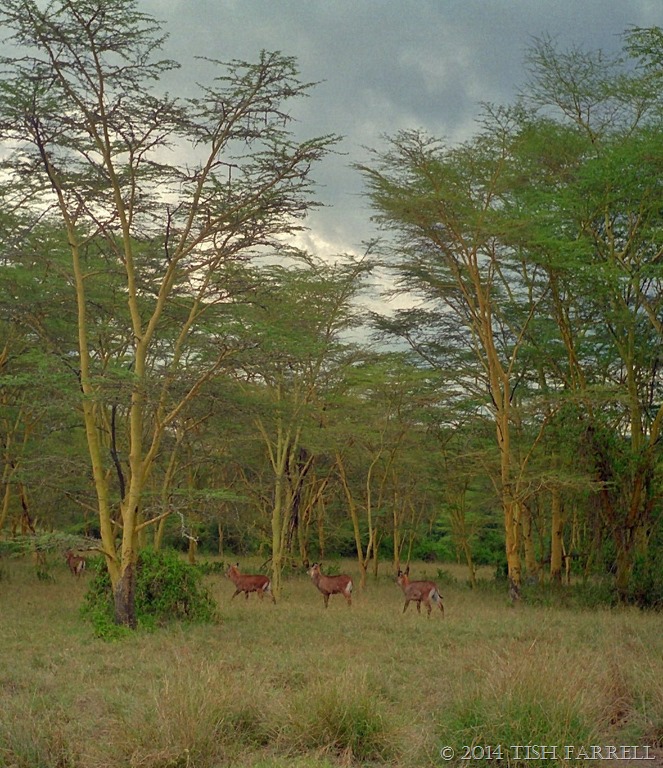
Fever trees, Acacia xanthophloea, and waterbuck at Elmenteita, Kenya

*

For those of you who follow Frizztext’s alphabet prompts, the tail end is always a challenge. What the devil begins with ‘X’? So here, yet again, I am cheating a bit, but at the same time introducing you to a tree I fell in love with while we lived in Kenya. It is well worth getting to know. It has a velvety golden bark, and feathery foliage, and it smells of…I don’t know what it smells of…perhaps something warm and faintly spicy, and a bit like gorse.

It  acquired its English name ‘fever tree’ from early explorers who thought it actually caused malaria, rather than the mosquitos that infested the water sources near which it was often found growing. It is also known as the Naivasha Thorn because the shores of this Kenyan lake (still much occupied by the descendants of white settler families) are characteristically populated by these graceful trees.

Its botanical name comes from xanthos  meaning yellow, and phloios  meaning bark or skin. A golden skinned acacia: I think that sums it up. I read somewhere, too, that it is one of the few trees where photosynthesis takes place in the bark as well as in the leaves.

One New Year we had a hangi pit roast party in our front garden in Nairobi. This involved heating up rocks in a big hole in the lawn, and then wrapping food in banana leaves and burying it until it was cooked. It was a good party, and later we filled in the hole and planted a fever tree sapling. It grew wonderfully in the ashy soil. We called it the Party Tree. 

Looking back, it seems like a good name. The fever trees in these photos do look as if they might break into a  dance given half a chance; a waltz perhaps; something gently wafting anyway.

Scan-130603-0004

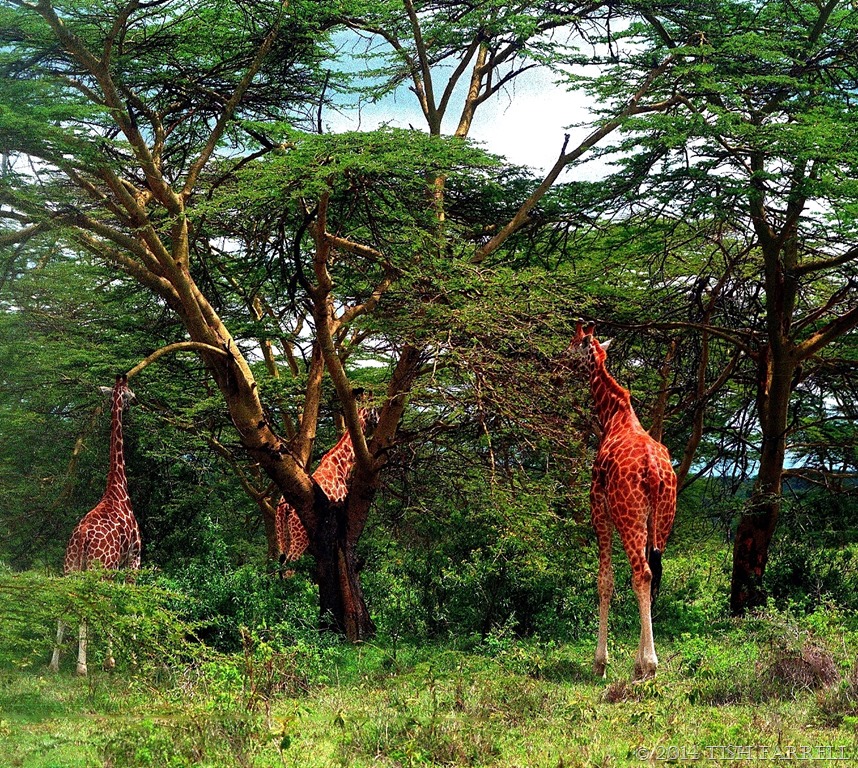
Nakuru National Park, Kenya. Giraffes like fever tree browse too. They steer their tongues around the thorns.

*

Traditionally, the timber is used for charcoal making, firewood and building poles. The foliage and the pods make good animal fodder. The trees can also be cultivated as a living fence, thus providing for many household needs all in one go. The roots are also nitrogen fixing, and the delicately scented pompom flowers are good bee forage. They are also elephants’ food of choice when they are not eating grass, although a Zambian zoologist once told me that they target fever trees for destruction because they are trying to stop them encroaching on their grassland reserves. In Australia, where it is an introduced species, the fever tree is regarded as a major and costly pest of pasture, so the elephants clearly have the measure of their tree.

In South Africa the tree is called Mukanya Kude by the Zulu people who revere it for its medicinal properties. They also use the bark to promote lucid dreaming and provide spiritual insight. Scientific analysis has shown that the tree’s parts comprise many active ingredients, and it is used throughout Africa to treat both physical and mental illness.  Paul Kabochi, the ethno-botanist whom I used to meet at Delamere Camp at Elmenteita, told me he had once successfully treated a local typhoid epidemic with decoctions of the bark.

Personally, I always find it heartening to remember that there is something bigger than Big Pharma – the still surviving natural world that harbours all manner of life-enhancing creation. We might also remember not to destroy it before we have learned of its many useful properties, or indeed learned to value other living things simply because they are there, and are in every sense magnificent.

Scan-130608-0001

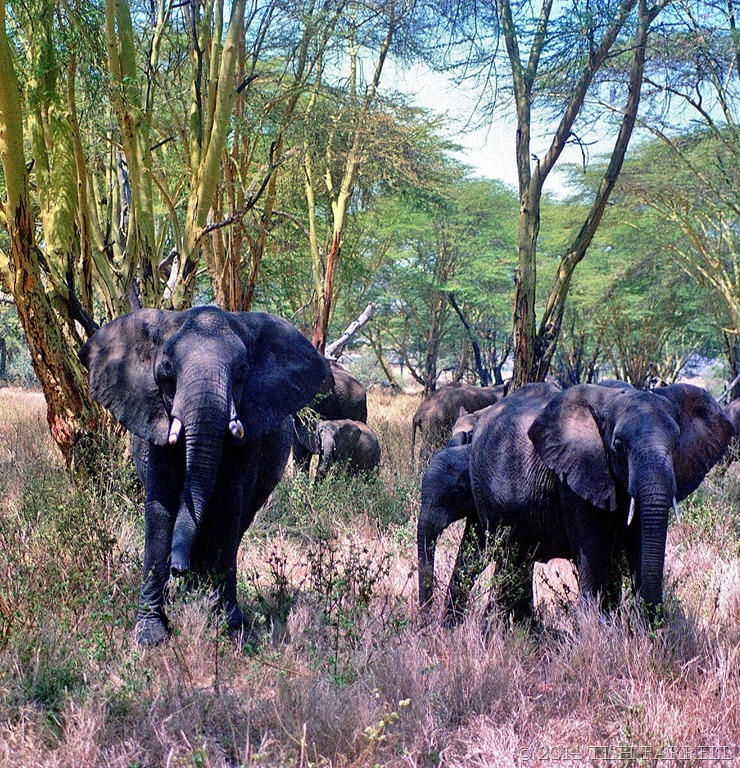
Meeting elephants in a fever tree thicket at Lewa Downs, Kenya

*

copyright 2014 Tish Farrell
Flickr Comments

A Long Road from Makindu

010

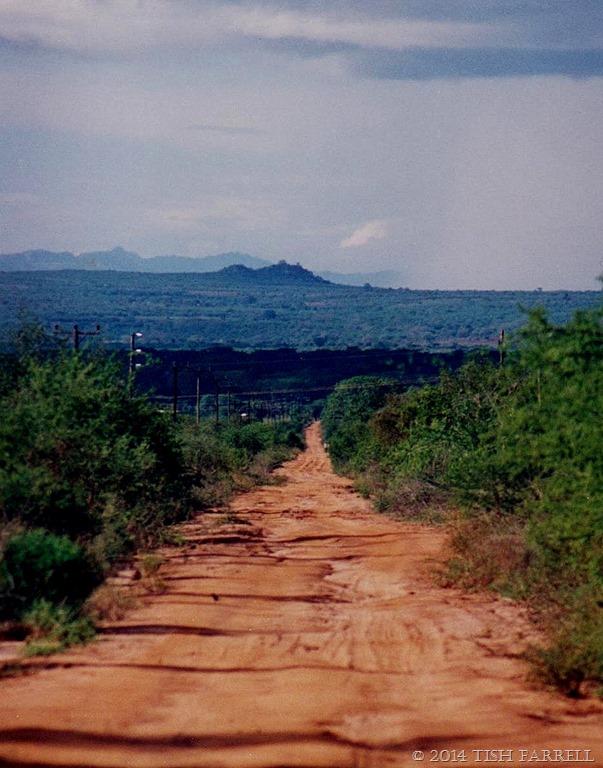
This long dirt road leads from Kenya’s Nairobi-Mombasa Highway to the National Range Research Station at Kiboko, about 100 miles south of Nairobi. The Range Station is a colonial relic, which (if I remember correctly) took over the land of a failed white settler sisal plantation. In more recent times, Kenyan scientists, both at the Range Station and the nearby Kenya Agricultural Research Institute field station, have been continuing the work begun there by British agricultural officers in the early 20th century. The emphasis, as then, has been on trialling crop varieties and developing livestock husbandry techniques to improve the lot of the people who live in this drought-prone region  – the Maasai pastoralists to the west, and the Akamba agro-pastoralists to the east and north.

The Range Station has been monitoring rainfall patterns for over 90 years. When it does rain, it occurs in two seasons – the long rains from March to May, and the short rains from October to December. But the fact is Kenya’s climate is  becoming drier, and it is  marginal regions such as these that are hardest hit. In the ‘90s when we were living in Kenya and Graham was regularly working in this area, it hardly seemed to rain at all. One Christmas I remember driving past roadside stands of maize that were blowing away to dust.

In pre-colonial times, and for several hundred years before the British arrived in East Africa, the indigenous peoples had their own methods of dealing with disaster: they simply moved somewhere else. This was usually to other quarters in their large clan territories, or to places where they extended kinship ties. They would then stay with better off relatives until the hazard had passed. Those who had been ‘taken in’ would be expected to reciprocate should the need arise. This was how things worked. It was pragmatic, and flexible. The migrants would then return to their own homes when they could.

The colonising British,  indoctrinated as they were with feudal-capitalist notions of land ownership, could not cope with such fluid community practices. Once the colonial administration had begun to encourage large-scale farming by European settlers, they felt obliged to establish fixed boundaries around tribal territories so that native land could not be sold to, or settled by the European incomers. It was seen as protecting “native interests.” The only problem was these officially designated boundaries did not take into account local emergency refuge strategies, or indeed many other traditional coping measures that involved moving somewhere else.

Today, and this is perhaps surprising to many outsiders, much of Kenya’s rural population still lives on ancestral land within these former tribal reserves. With little hope of acquiring new land, people’s clan and family holdings have been sub-divided, fathers to sons, down the generations,  often leaving the ground depleted, eroded, and/or wholly insufficient to support family needs.

This in turn has created a situation of migrant labour, where village men travel to the city to work. They rent a room in one of the slums, and live away from home for most of the year while their wives remain in their homeland, cultivating the farm plot as best they can, and rearing the children. The social issues that arise from this kind of fragmented family living do not need to be spelled out.

Now, on top of everything else, there are the effects of climate change to deal with, both globally and locally created. Competition for fertile land and water sources is critical in many places. In this context, then, the British system of land ownership remains one of the toxic legacies of colonialism.  At independence Crown Land became State Land, and so nothing much changed in the title deed/ownership department, apart from much grabbing of state-owned land by officials. It is hard to know how to unpick it all. We have all heard about Robert Mugabe’s attempts to do so in Zimbabwe.

As for the ordinary small holder farmer, they might not be physically confined to their reserves as they were under British rule, but if their land there can no longer support their families, then there is little choice but to trek up the highway to Nairobi and join the swelling millions of slum dwellers who eke out a living there.

However you look at it, this is a long, hard road .

001_thumb[1]

The Nairobi-Mombasa Highway, Makindu District, in the 1990s, looking north towards Nairobi. It has been much improved since our day, but plans to turn this  major trans-African route into a dual carriageway appear to have stalled.

copyright 2014 Tish Farrell


You can read more about what we were doing in Kenya here:

Looking for Smut on Kenya’s Highland Farms


For more long and winding roads travel over to Ed’s place at Sunday Stills.

Thursday’s Special ~ Take Two Elephants

225

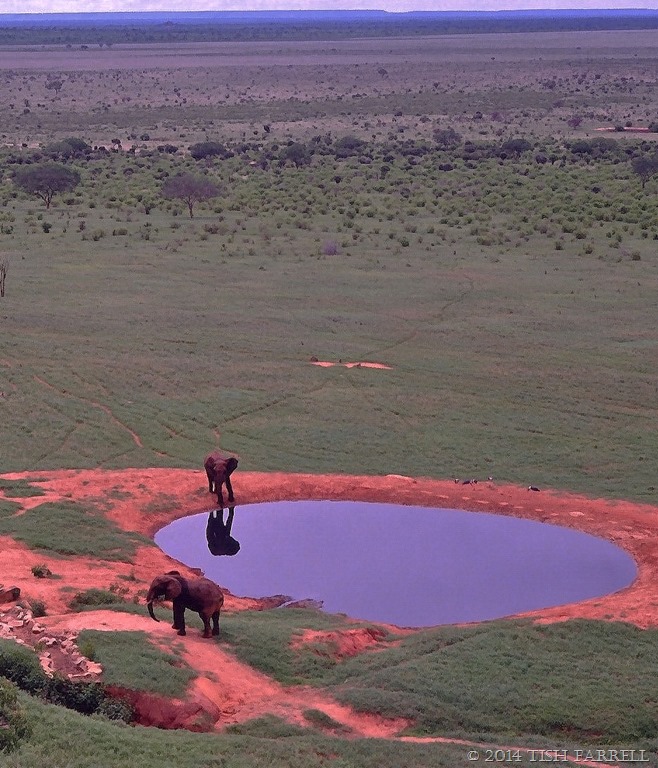
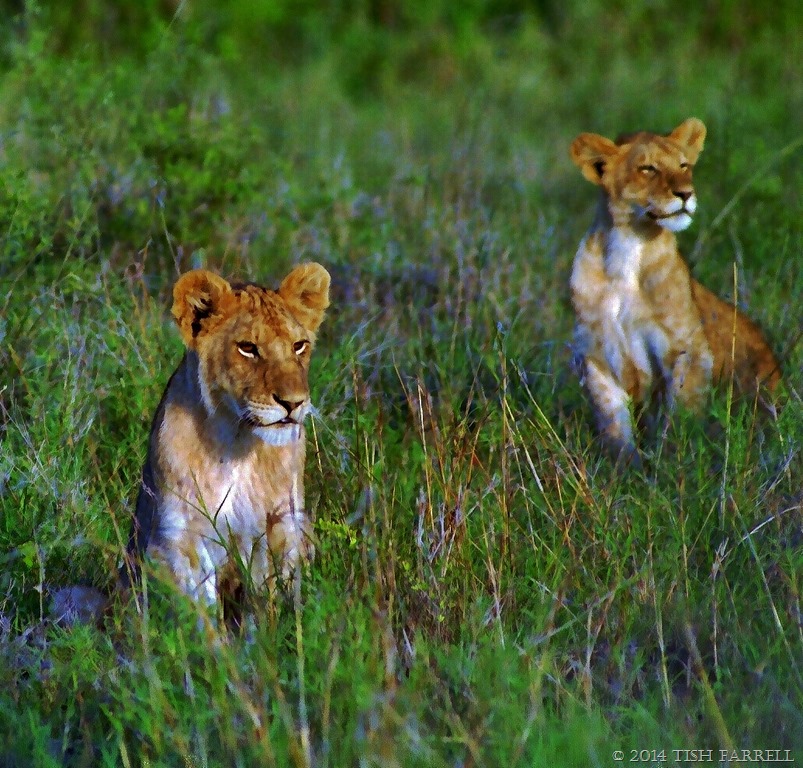
This week at Paula’s Thursday’s Special/Photo 101 the theme is ‘double’. I could have chosen several more striking close-ups of elephants and lions, but this shot is a double-take on double. I like that silhouette in the still pool. Also it is perhaps a more realistic view of how one most often sees wildlife on an East African safari: i.e. it’s usually too far away for a good photo, or else there’s a bush in the way. You can also drive round game parks for many hours and spot absolutely nothing – not even a bird.

This shot was taken from the terrace at the safari lodge in Kenya’s Tsavo East National Park, and such places can offer the best sightings, especially at dawn and sundown. Here you also get a good eyeful of Tsavo’s famously red earth. You can see, too, the web of game trails leading to the pool, and at the very top of the photo, part of the Yatta Plateau. This is a 180 mile long, single finger of lava that runs south east across Kenya from Thika near Nairobi.

Tsavo East  is a vast game reserve (4,500 square miles), mostly thorn scrub and much of it closed to visitors due to incursions by Somali bandits and poachers. Its elephant herds, however, are famous, though frequently under threat. For some truly fantastic images of them, accompanied by expert commentary please fly over to wildlife filmmaker, Mark Deeble’s blog. You will not be disappointed.

Dhow Dreaming ~ Lamu Angles

186

One Christmas, long ago, we went to Lamu, one of Kenya’s Indian Ocean islands. Our trip there was as peaceful as this image suggests, although the nearby mainland has long been preyed on by gangs of Somali Shifta. This then is an idyll with hidden angles, some of them tragic. But for now, please enjoy these Lamu dhows with their triangular lateen sails in this gentle display of synchronised sailing along the Manda Strait.

You could say that Swahili culture was born of the monsoon winds, from the human drive to trade and of prevailing weather. For two thousand years Arab merchants plied East Africa’s Indian Ocean shores, from Mogadishu (Somalia) to the mouth of the Limpopo River (Mozambique), arriving with the north easterly Kaskazi, departing on the south easterly Kusi. They came in great wooden cargo dhows, bringing dates, frankincense, wheat, dried fish, Persian chests, rugs, silks and jewels which they traded with Bantu farmers in exchange for the treasures of Africa: ivory, leopard skins, rhinoceros horn, ambergris, tortoise shell, mangrove poles and gold.

 copyright 2014 Tish Farrell Culture: The Swahili
See also: Christmas on Lamu: Views of a Swahili Community

Daily Post Photo Challenge: Angular

Indian Ocean Bliss

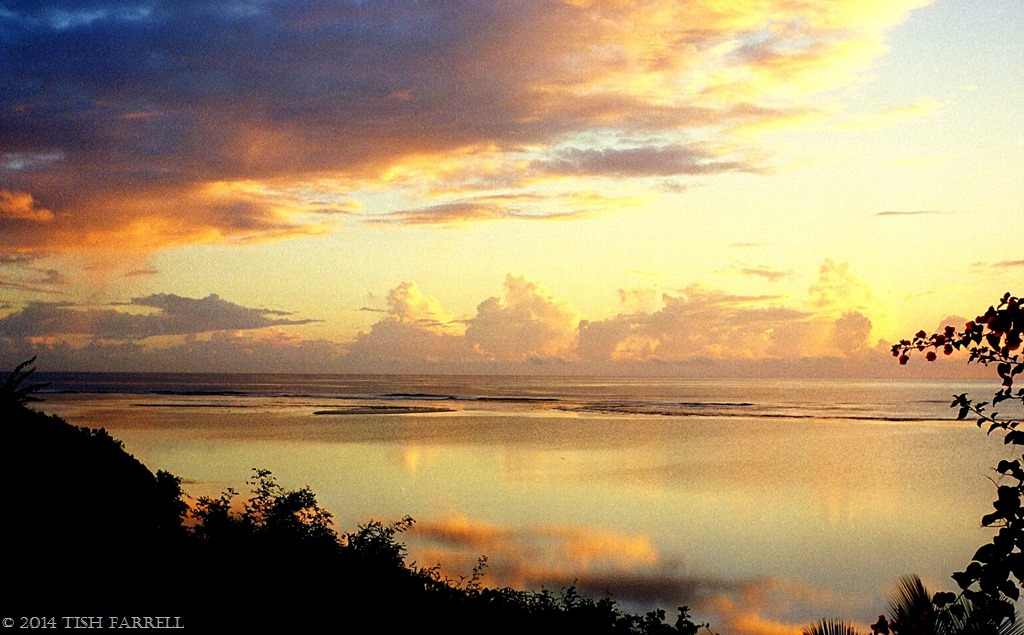
dawn over Tiwi lagoon

Dawn over the reef on Tiwi Beach, South Kenya Coast

It’s a dog’s life on Tiwi Beach, the white strand where ocean roars on coral and trade winds waft the coconut palms; and where, best of all, as far as the local canines are concerned, there are quiet coves sparse in holidaymakers. It means they may do as they please. For after all, it is their own resort, and every morning they set off there from the beach villages along the headland, nose up, ears blown back in the breeze, ready for the day’s adventures.

But the dogs are not churlish. They can take or leave the odd pale human wrestling to right his windsurfer on the still lagoon; ignore the sentinel heron that marks the reef edge beyond; pay no heed to the etched black figures of the Digo fishermen who search the shallows for prawns, parrot fish, or perhaps a mottled lobster or two.

© 2013 Tish Farrell

From Going to the dogs on Mombasa’s Southern Shore

Continues HERE

Post prompted by Paula at Lost in Translation where you will find more blissful images.