Copper elephants, copper land

221

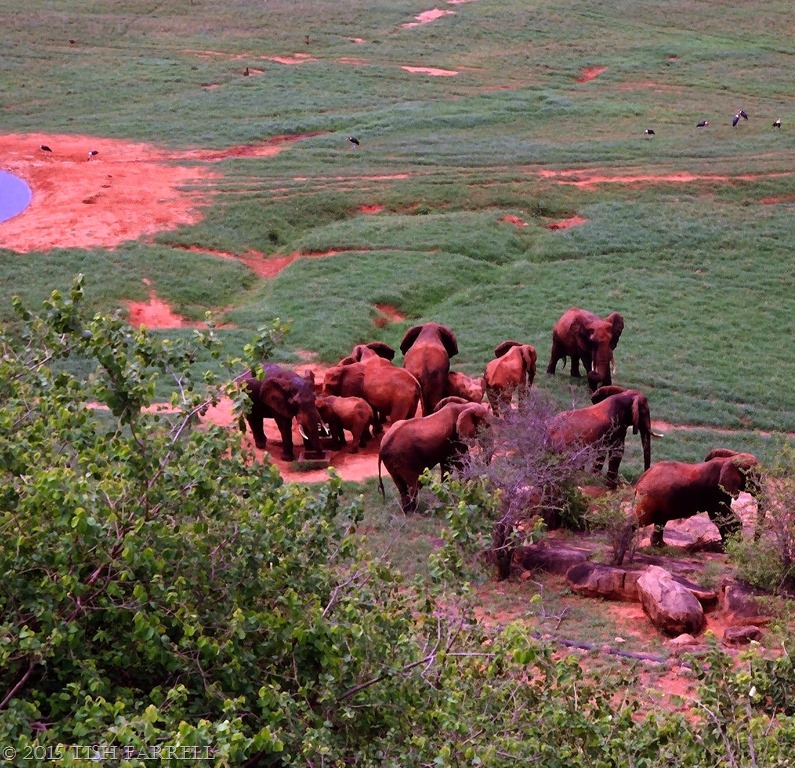
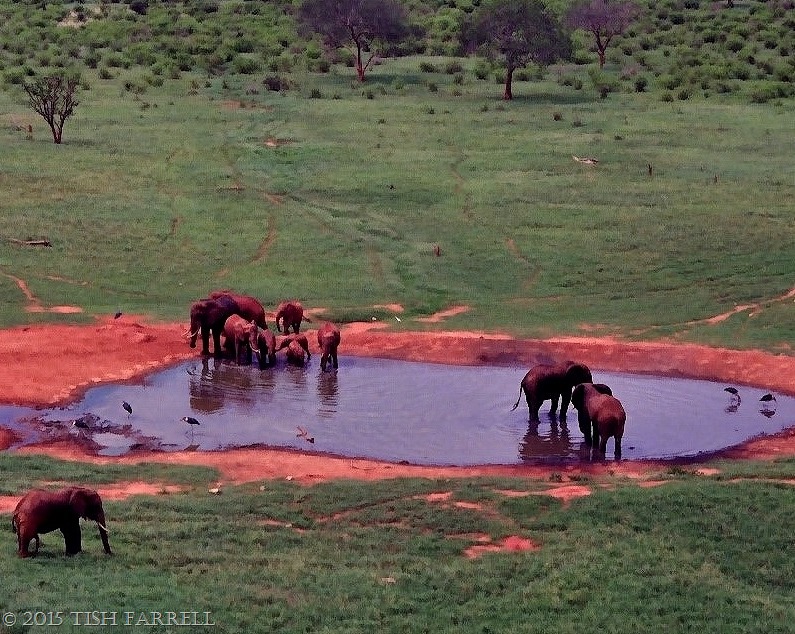
It’s a case of red elephants, then, in Kenya’s Tsavo East National Park. These red Tsavo soils are famous for their brilliance. They smell of red pepper too. But for the elephants it’s more about keeping their skins in good condition. Talk about glowing complexions.

222


For more of my Africa stories and more copper landscapes please see the backlist at:  https://tishfarrell.com/category/africa/


Jennifer Nichole Wells One Word Photo Challenge: copper

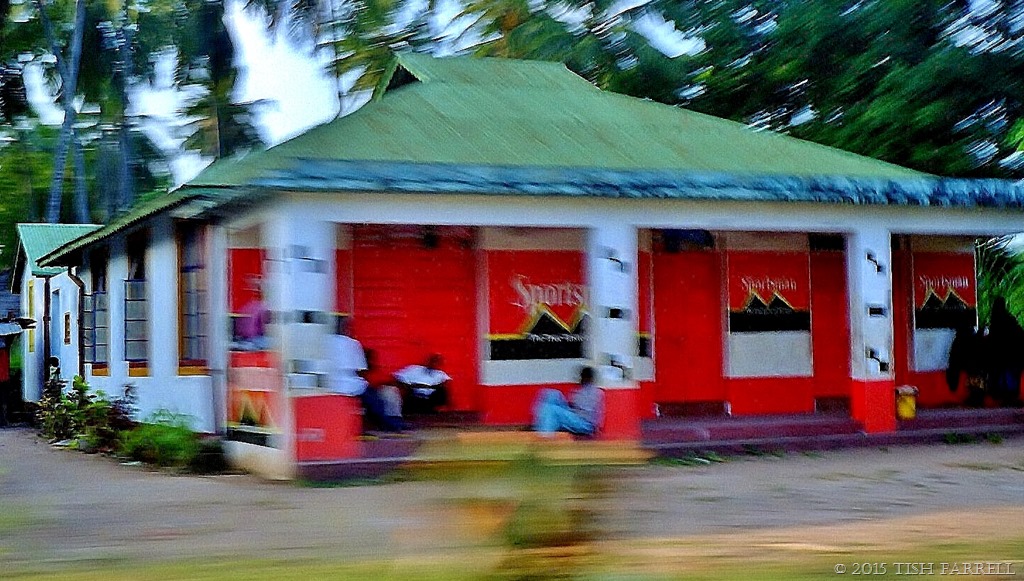
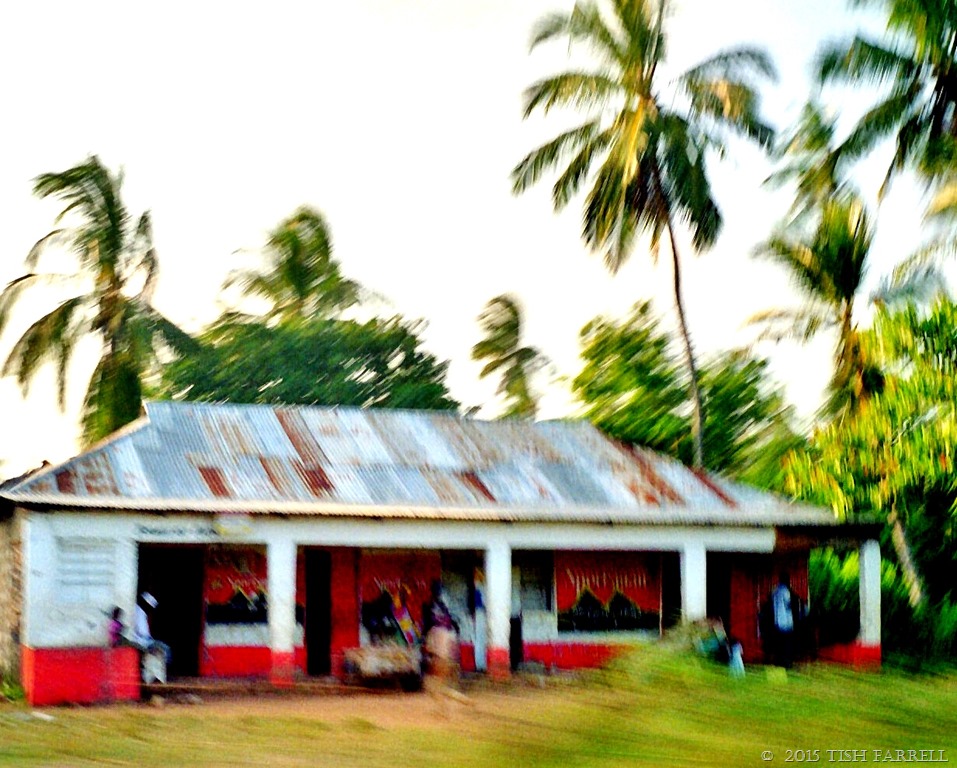
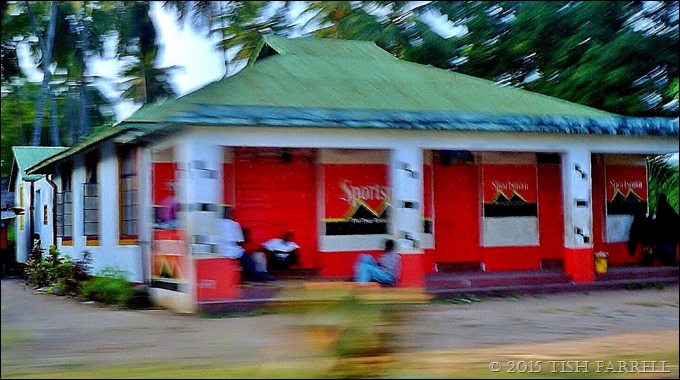
A little blurred on the road to Lunga Lunga

Scan-130603-0018

And blurred is often how we felt after driving down the Nairobi-Mombasa highway to Tiwi on Mombasa’s south coast. We used to spend Christmas down there. It was a three hundred mile trip, descending from the air-conditioned high plains of Nairobi to the  wet-hot steaminess of the coastal strip.  On a good day it would take around five hours. Other times we’d break the journey, staying at Tsavo Inn or Taita Hills. Sometimes the road was hardly there at all, washed out by December rains.  You never knew until you got there. The final leg of the trip also always involved the infamous Likoni Ferry  that carries traffic from Mombasa Island to the southern mainland.

To catch it, you first had to drive through Mombasa, negotiating mad matatu drivers and throngs of push-cart guys, shunting impossibly huge loads of cooking oil, coconuts, pineapples, coca cola. Then came the broiling wait for the ferry. If you timed it badly, the traffic tailed back into town.  Being tetchy Brits who do not bear overheatedness well, we did not welcome being sitting ducks for all the street traders, despite the fact that roasted cashew nuts were a favourite. Grumpy old us.

But then, when we found ourselves close enough to the head of queue to see the in-coming ferry, it was all change. Suddenly the excitement hit. This place was Africa with bells and whistles, and in every sense. All of life swarmed by as the ferry spilled out its trucks, multi-coloured matatus and crowds and crowds of humanity. The burst of colours under the tropic sun set the brain afire – the women in their vibrant kanga wraps, men in kanzus and embroidered kofia caps, the youth sporting the rich world’s recycled tee-shirts with every imaginable corporate slogan draped from skinny shoulders.

There was always a frisson of anxiety as we boarded. Would we make it to the other side? After all, the ferry had been known to cut loose and drift off towards the Indian Ocean. But no. It never happened to us.

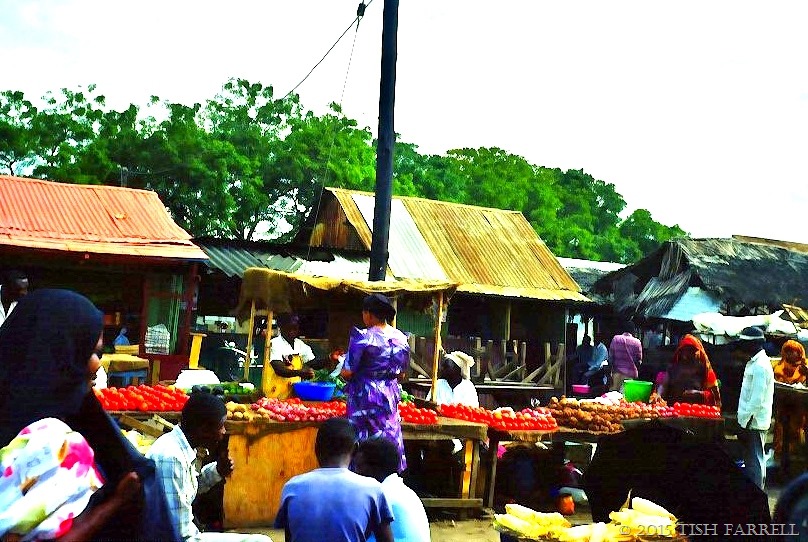
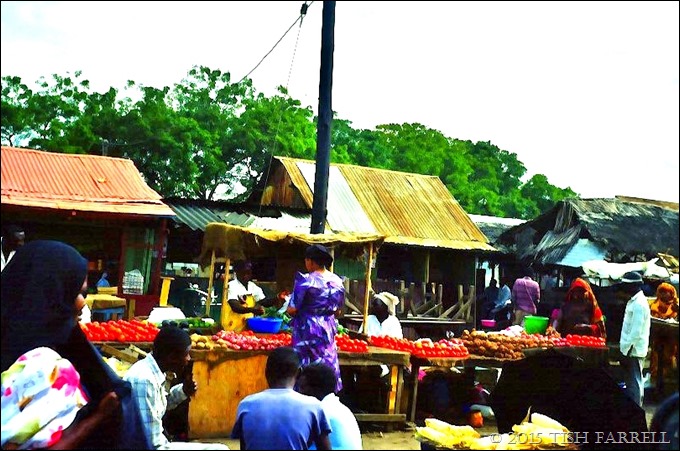
Even so, the final glide up the mainland slipway always seemed a minor miracle. We’re here! And here was Likoni market – throbbing with rhumba rhythms, and hooting-whistling matatu crews. Ramshackle stalls line the road – hoteli, hair salons, tailors’, fruit and veg sellers, Chinese multi-coloured enamel ware and plastics. There are smells of steaming market waste, hot mandazi donuts, joss sticks, cheap perfume, diesel and dust.
351

The foot passengers poured around us. We crawled through the melee. Until – at  last – the open road – the long straight causeway that runs south through Kwale District to  Lunga Lunga, the last town in Kenya before the Tanzanian border.

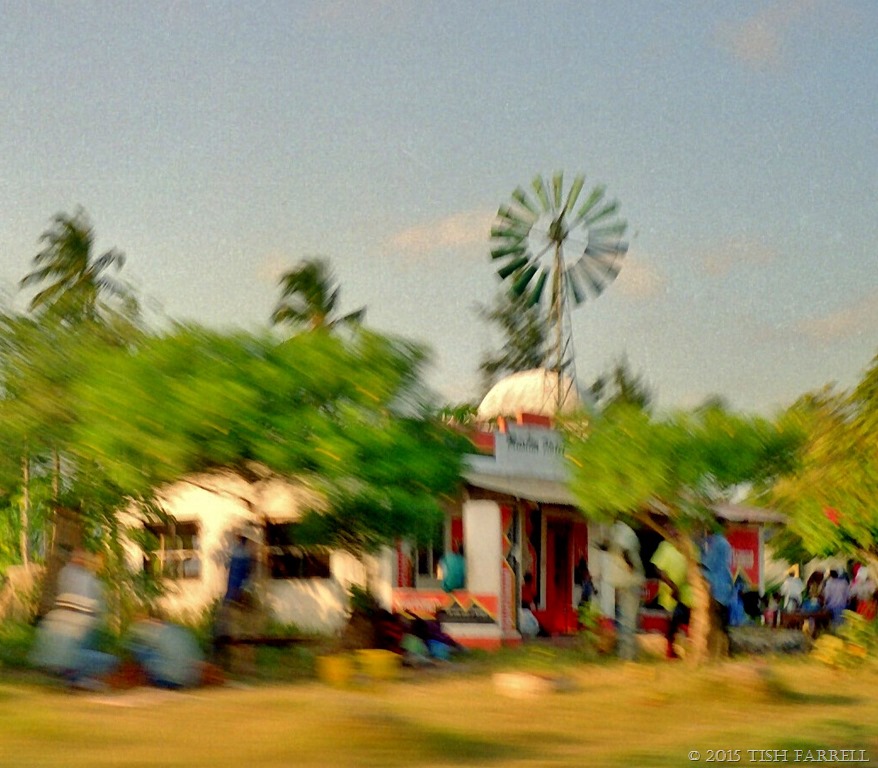
This road is lined with coconut plantations, the palms all leaning with the sea breeze.  Cattle graze beneath baobabs and kapok trees. There are guest houses, and small-holdings, schools and tiny mosques. The homes have corrugated iron or palm thatch makuti roofs. The walls are coral rag or wattle and daub. Verandahs feature. There are more trading centres, curio carvers, furniture makers, general stores, charcoal sellers, second hand clothes, kangas flying in the breeze like flags.

Scan-130603-0022

Scan-130603-0021

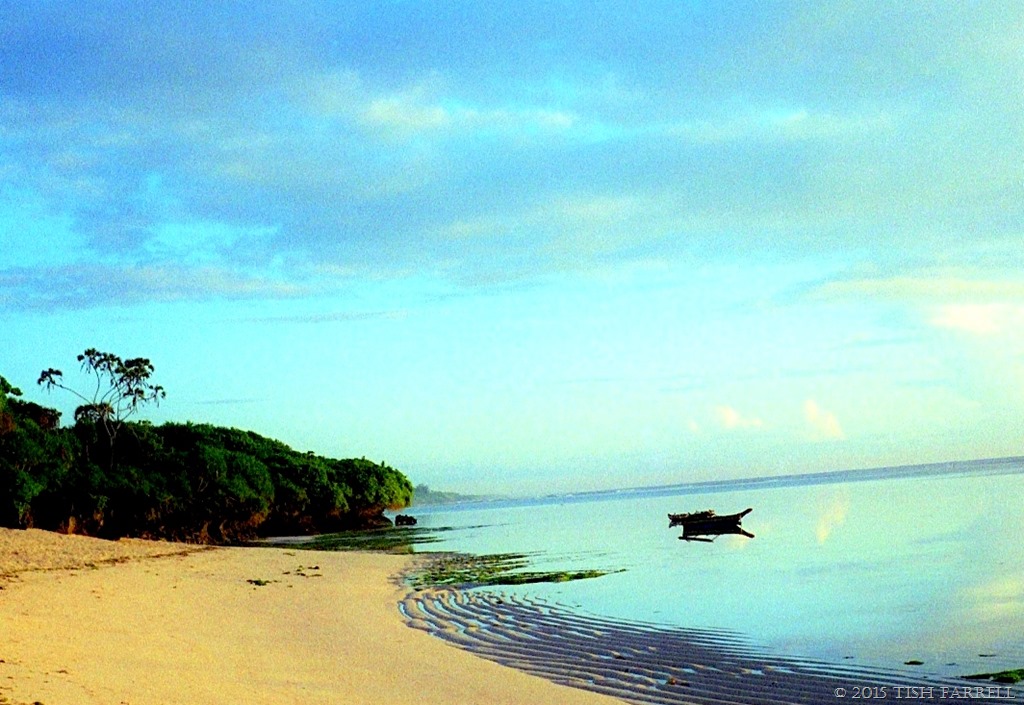
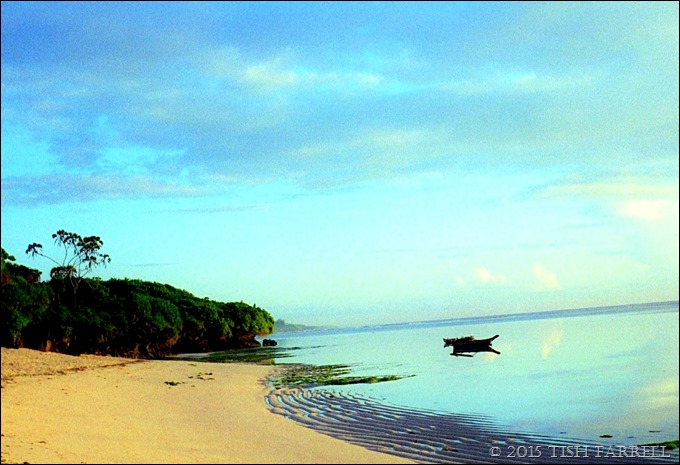
We never went as far as Lunga Lunga. Tiwi was far enough. To arrive at Maweni, the little beach village perched above the Indian Ocean, to immerse in clear waters, and finally unblur with bottle of Tusker beer – bliss.
dawn on Tiwi with dugout - Copy


copyright 2015 Tish Farrell

Blur
Flamingos in the Mist ~ Dawn on Lake Elmenteita

IMG

The light changes every second across the lake. From dawn till dusk there is always something to watch at Elmenteita in Kenya’s Great Rift. There are over 400 species of birds to spot for one thing – among them the endangered white pelican that breeds there. The main stars, though, are the surely the huge flocks of flamingos, both lesser and greater varieties, that turn swathes of the lake to rose-petal  pink. Even a passing glimpse  from the nearby  Rift highway  is enough to catch the breath. A pink lake – how can that be?

This story continues at: On watch at Elmenteita – the lake that blows away

Over at Paula’s Lost in Translation the challenge for this Thursday’s Special is ‘multitude’

Out in the Midday Sun: Running Ostrich and Ngong Hills

197

This week over at Paula’s  Thursday’s Special she is inviting us to break rules with our photo taking. This shot of a camera-shy, and thus fleeing male ostrich was taken in Nairobi National Park. I expect when I started to focus on him, he was facing the other way; after all, who wants a snap of an ostrich bum. (I should say that ostriches, so G tells me, are the only birds with external genitalia, and believe me they are surprisingly impressive when glimpsed, though thankfully not visible here).

Also one of the main rules of photography in Africa, particularly when  you are close to the Equator, was simply not to bother trying during the middle of the day. All colour tends to leach away; there may be a heat haze and also dust in the air; and the landscape maddeningly flattens out and stops looking magnificent.

But that is all very well. What else can you do when you find yourself in a Kenyan game park is in the middle of the day. It’s the kind of thing mad dogs and English persons do. Photos had to be taken, and of course later discarded.

The thing I like about this photo, being hooked on Karen Blixen’s Out of Africa, and the ‘I had a farm in Africa, at the foot of the Ngong Hills’ line, was that while I was concentrating on the ostrich, I inadvertently captured the Ngong Hills in distant blue profile. Though largely static, earth tremors apart, they were also hard to photograph. Here, though, I caught them, and you can well appreciate how they got their name, derived from a Maasai word meaning  fist. See those four clenched knuckles.

Otherwise, nothing much is in focus here except perhaps for big bird’s blousy white feathers. All sense of movement is truncated, ‘frozen’ in time under the fierce tropic sun. I still like the photo though.


copyright 2015 Tish Farrell

Elephant tribe versus Man tribe: and how the bees are helping

We’ve been watching a very heartening series on BBC i-Player The Secret Life of Elephants. It followed the magnificent conservation work being carried out by Save The Elephants, a charity that operates in Samburu, Northern Kenya, and relies on the cooperation between  the nomadic Samburu people, local smallholder farmers and scientists from Kenya and beyond.  One of the key initiatives is to put tracking collars on the matriarch leaders of particular elephant clans, and also on the large bulls who, outside the breeding season, lead more solitary lives.

Elephants may cover vast distances in the course of their annual migrations. But once they leave the national parks they are more vulnerable to poachers, and also to irate farmers who are tired of having their year’s livelihood consumed in a single night. By tracking and mapping the herds’ movements on computers, and  maintaining channels of communication with the pastoralists and farmers, Save The Elephants researchers  are working out ways to lessen conflicts, and present solutions, and above all, to secure the future for wild elephants.

The Samburu pastoralists have always been wise enough to respect elephants, and are now anxious to do what they can to protect them. This is their view on the matter:


The first man said the elephant is like us, like our brother, and we have to live together, not hunt elephant. That’s what we say we were told at the beginning. That’s what we still believe. The elephant has always been, and will always be, special to us. This is why we protect it now.

Samburu people on the importance of elephants


Scan-130608-0001


For farmers it is a very different matter. People are often killed trying to drive elephants out of their crops.  And so one of STE’s objectives is to work out the best place to erect elephant fencing so that elephants can be channelled away from farming communities as they pass by on their seasonal trek between the river where they congregate to breed,  and the mountain forests where they go to browse.

Fencing, though, is not always the total solution it seems. Elephants are not daft. The old bulls have learned  how to open gates onto the vast European wheat farms that lie to the west of Mount Kenya. But while the large-scale producers can tolerate some elephant grazing, smallholders cannot. For them it is a matter of living or starving.

One of the STE researchers, Dr. Lucy King has come up with a very simple, low-tech and productive approach to keeping elephants out of Kenyan farmers’ cabbage fields.  It began with the discovery that elephants will move off if they hear the sound of bees buzzing. African bees are especially aggressive, and on a very short fuse temper-wise. She thus came up with the notion of placing beehives around farm fields.

Traditional African beehives are made of lengths of hollowed-out tree trunks that are then suspended in trees. These were hung at intervals on the field perimeters, and connected up by tripwires. When the elephants tripped the wires, the hives were duly shaken and out would swarm the angry bees. Elephants would then beat a retreat, leaving farmers with both their crops and a new source of income from the honey.

As Colonel John ‘Hannibal’ Smith was so often wont to say in The A-Team: “I love it when a plan comes together.” In this case, though, it is clearly the work of the B-Team.

Copyright 2015 Tish Farrell


Related:

I’ve written more about elephants in Elecommunication: So Many Connections

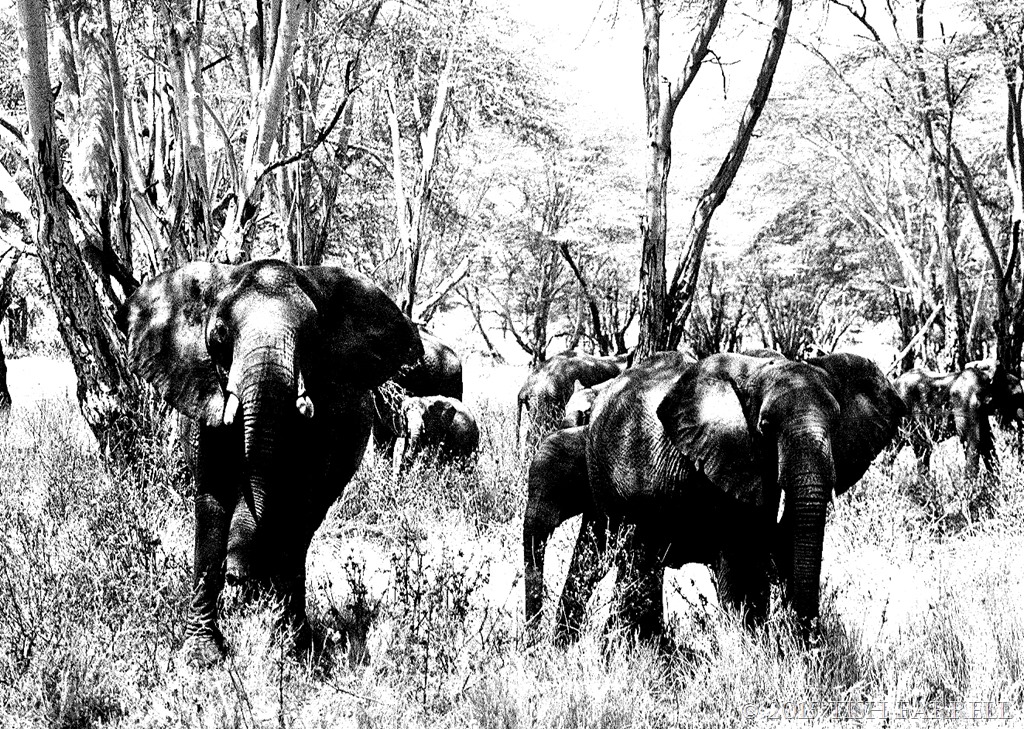
And last but never least, thanks to Paula at Lost in Translation and her guest challenger, photographer Guilhem Ribart. TRIBE is the prompt. For more interpretations, please also follow this link.  I should add that my photos here were taken in Lewa Downs which is part of Save The Elephants’ sphere of operations. The original negatives are very degraded, but seem to have a new lease of life translated into B & W. In fact they also seem to capture the elephantness of elephants rather better than the colour originals, which is interesting when you think about it.

One Word Photo Challenge: Seafoam

Scan-130428-0024

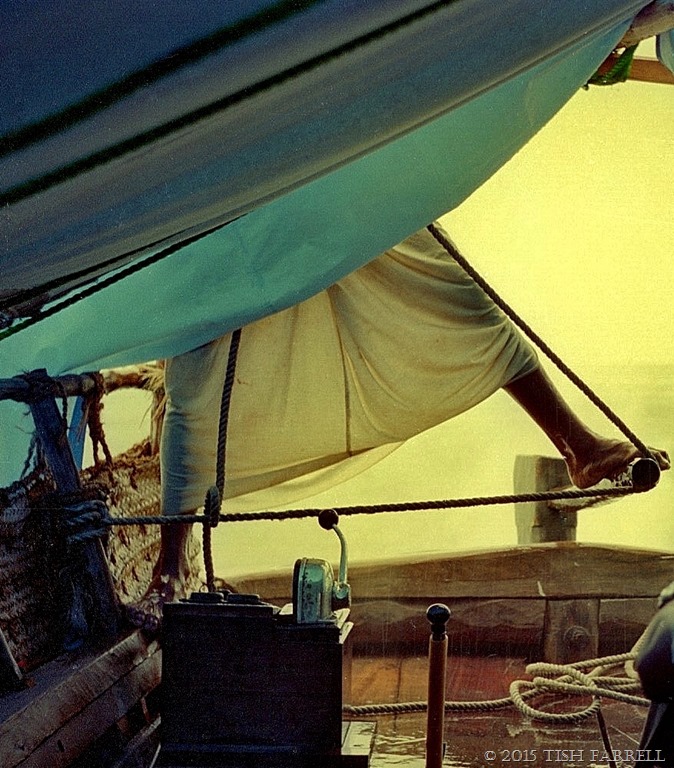
Here are some more Lamu photos (see previous post). Some of you will have seen the top one before, but it is one of my favourites, and I thought the colour of awning fits with Jennifer Nichole Wells’ one word seafoam challenge. It is a colour that I anyway associate with the Indian Ocean. This shot was taken on a dhow taxi in the middle of a tropical downpour. It was December, the monsoon season, and we had just flown in to the little local airport on Manda Island. The strait between the two islands looked suddenly grey and forbidding. It seemed strangely cold too in the midst of the hot season, and not the best start to our four-day Christmas break from Nairobi.

195

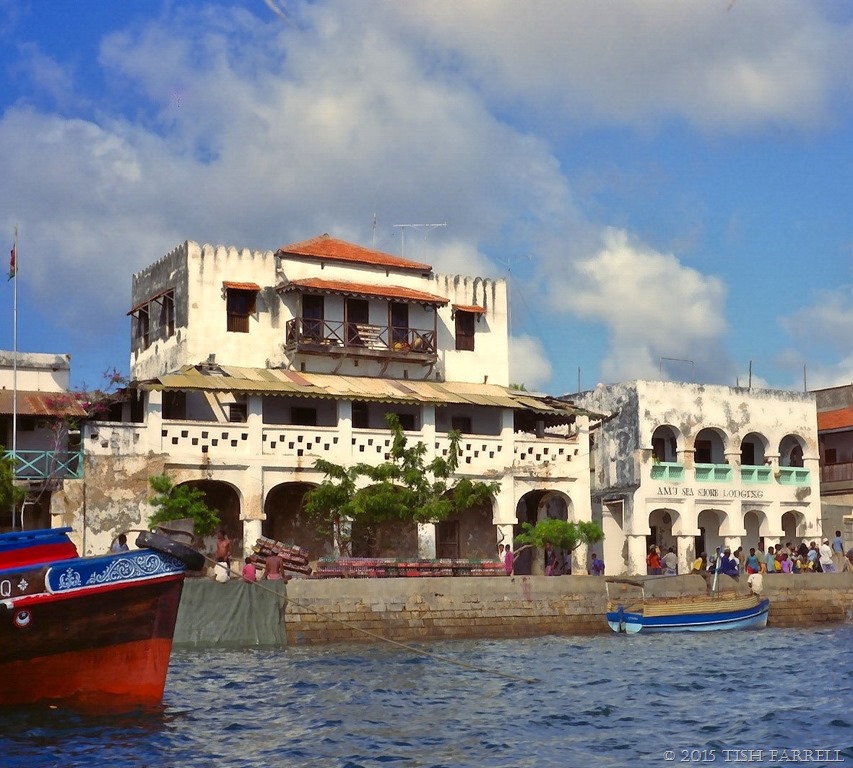
But then the rain passed. This is the waterfront of Lamu stone town, one of the best surviving Swahili settlements on the Indian Ocean seaboard, and a world heritage site. You will have to look harder here for the gentle shade of seafoam.

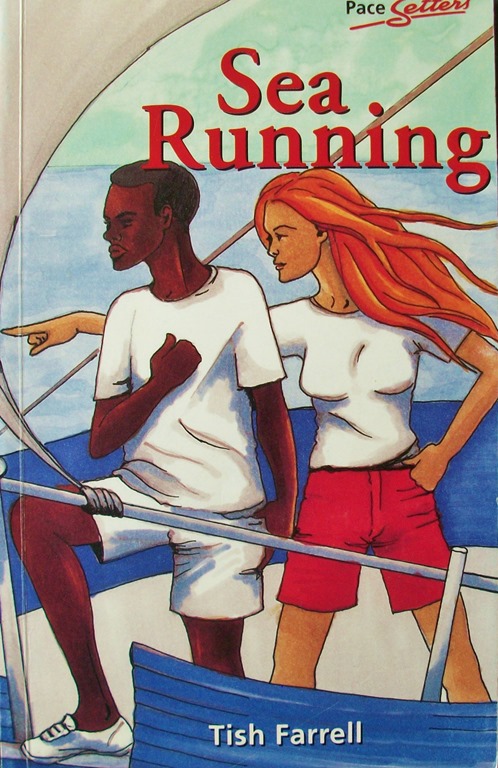
Lamu is a captivating place. I was so impressed by our four days there that I wrote a teen novel, Sea Running,  published by Macmillan Pacesetters for the African children’s literature market. It’s a good yarn about drug runners and first love. It also has a splash of seafoam on the cover.

100_3649 - Copy

For more posts on Lamu:

Dhow-dreaming

The Swahili

Christmas on Lamu

Stripes and High Rises: Diversity

park 11

You could say that Nairobi’s game park begins where the city stops. It is the only city in the world with a natural, unenclosed wildlife reserve on its peripheries: wilderness and urban sprawl side by side. There  is of course an electric fence along the urban perimeter to divide  man from beast, but the city is always pressing against the boundary. To the south the park is open to the Athi and Kapiti Plains to allow migrating herbivores such as wildebeest (there are a couple in the background) to come and go. These grasslands are important feeding grounds in the wet season, and so it is essential for the health and wildlife diversity of the park that the southern corridor remains open.  When we left Nairobi in 2000 there were fears that  it  would soon be closed by encroaching farmers, and community initiatives were being devised to avoid this.

By African game park standards the park is very small, 117 square kilometres, but it supports a breath-taking array of animals – lions, cheetahs, leopards, rhino, all the antelopes, and a host of small game. Only elephants are absent. The birdlife is equally diverse with over 500 species. And despite the proximity of the city, there still are wild places where the  high rises cannot be seen on the skyline. 

There is also another kind of diversity in this photo: the zebra’s stripes. Every individual has its own livery. Once when we were on a game drive on a private ranch in Zambia, our very tipsy guide was insistent that we grasp this fact. “Every zebra’s butticles have different markings,” he declaimed, “so their offspring know how to recognise their mamas.” I have been grateful ever since for that gift of the word  ‘butticle’.

copyright 2015 Tish Farrell

Lost in Translation: Diversity

Hidden Depths

005

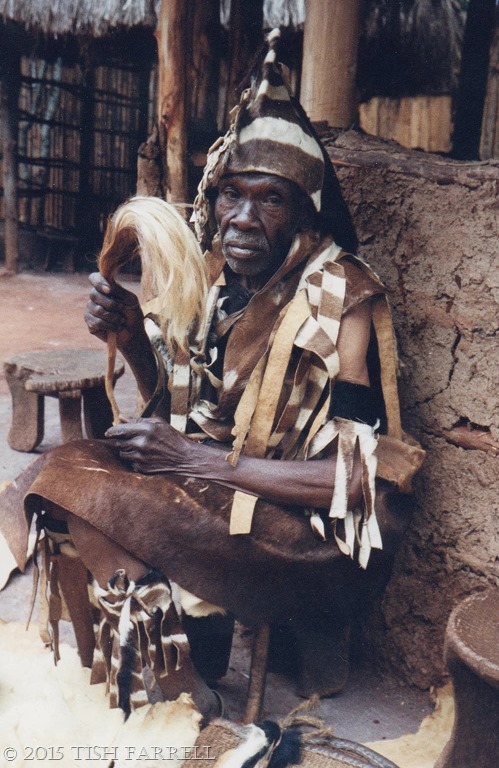
The Kikuyu Medicine Man

*

For the story behind the photo see The Medicine Man


*

 Shades FINAL COVERS Set 3_Layout 1

Kenya 1955

When war comes it can rip your

family apart. Then you have to decide

whose side you are on.

Ransom Books

Teen Quick Read/Adult Interest


More about this book and extract

Amazon.de

Amazon.com

Bokus.com and ebook Bokus.com

WHSmith.co.uk

Tanum.no


Depth