Passing Glory ~ Three Old Roses

100_7676

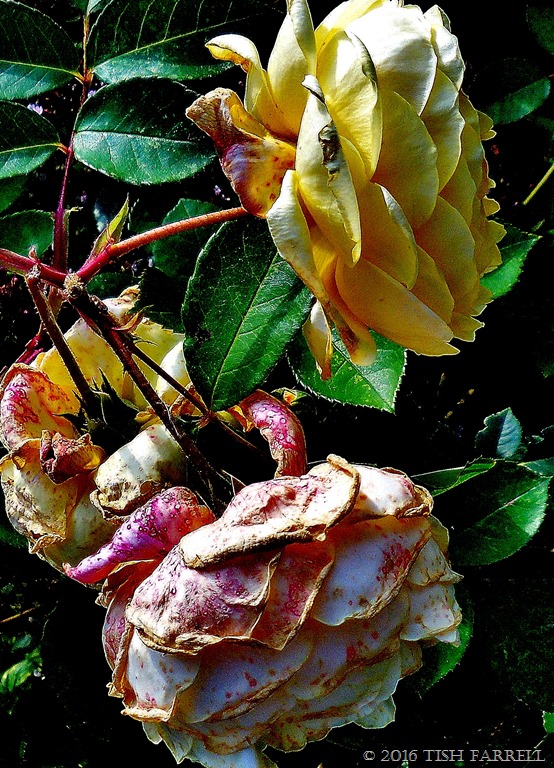
This lovely rose grows up the wall in our back garden. Please meet Gloire de Dijon, also known less picturesquely in English as Old Glory. It’s a cross between an unknown tea rose and Souvenir de la Malmaison, an old Bourbon rose, and was introduced to the world by one Pierre Jacotot in 1853. He lived in Dijon, France, a place also famous for its mustard.

When the rose is fully opened it has dense whorls of pale peachy-pink petals that change colour as they age. Their scent is mesmerizing – notes of clove and jasmine that transport me back to Zanzibar where jasmine sprigs were nightly placed beside our plates at the hotel where we ate dinner.

And once the roses have passed their best, even dead-heading them is a delight – crushing fading petals  between my hands, inhaling their last fragrance that also soaks into the skin, and can be smelled for hours.

Like Sue Judd at WordsVisual, I’m drawn to the aesthetic of decaying plant life. I think there is great beauty here – these lingering shades of erstwhile glory.

*

Thursday’s Special: Three of a kind

Please visit Paula to see her own lovely study for this challenge. And definitely go and see Sue Judd’s stunning daffodil study at the link above

Never Mind Warhol’s Banana…

100_4197

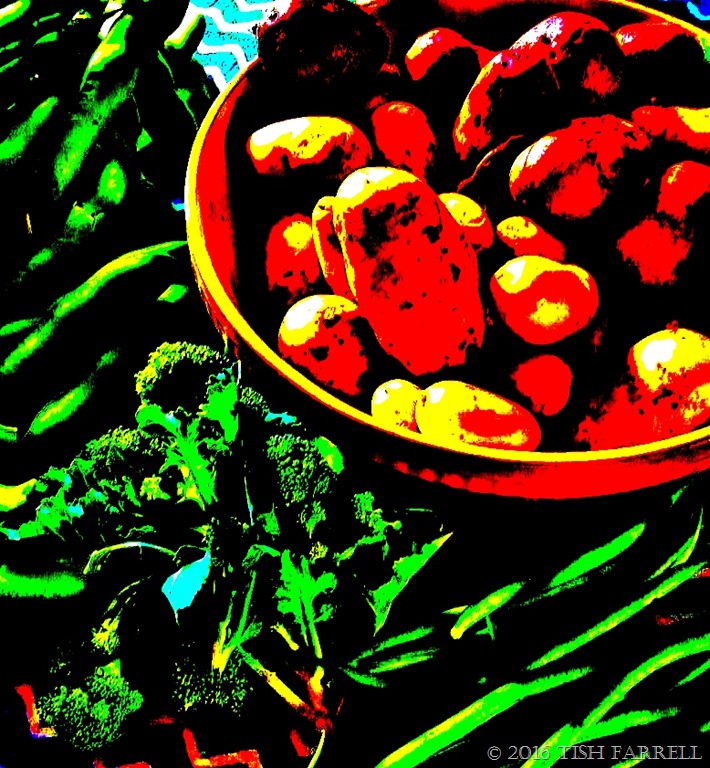
…just look at my spuds!


This is my take on the Daily Post’s ‘life imitates art’ photo challenge – a posterized  still-life of last summer’s allotment harvest. I suppose you could also call it a potato print. Anyway, it is my nod to Andy Warhol’s poster art:

image

Andy Warhol’s Banana

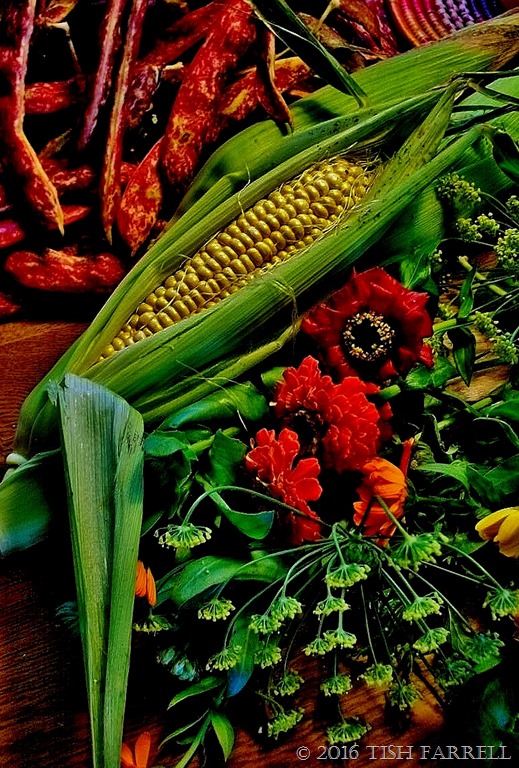
Of course, as a gardener, I regard anything I grow as a work of art. Coming up next are borlotti beans, corn, zinnias and dill – rendered on the kitchen table after the Flemish still-life school:

100_4927

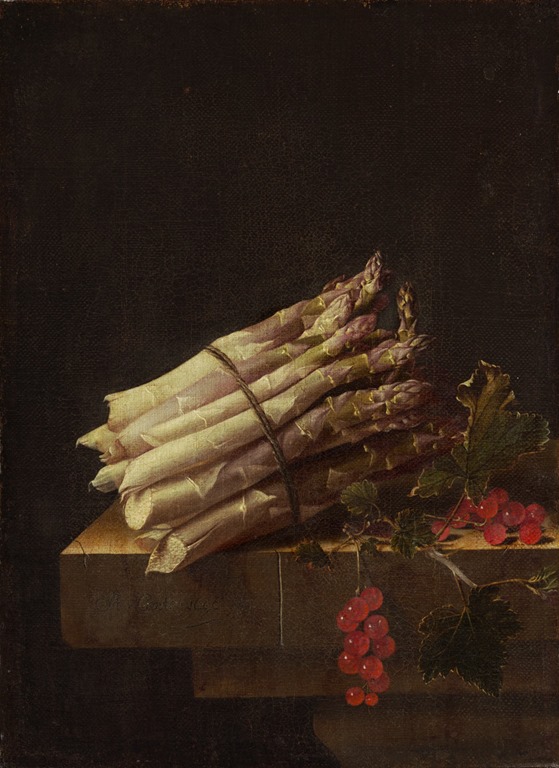
Looking ahead to this year’s garden produce art works, I’m  just hoping that my asparagus beds might do something wonderful, then I could come up with something like this. I have the red currants:

A11591.jpg

Dutch, active 1683 – 1707
Still Life with Asparagus and Red Currants
1696
Life Imitates Art

Winter Garden From My Window

P1030045

It’s the final week of Jude’s Winter Gardens challenge over at The Earth Laughs In Flowers. This, then, is the view of my garden captured on Saturday afternoon. It’s as much as I’m prepared to show you at the moment, so dreary is it after weeks  of rain. Also there was a definite lack of gardener-input in the autumn. Things just kept on growing and it was hard to know when to chop them back.

So they didn’t get chopped, and the place now has the look of a garden version of Miss Haversham’s attic. But you may just spot (in the bottom right hand pane) a small clump of tete a tete daffodils. Even they  aren’t planted, but are sitting on top of the soil. They were tipped out of a pot bought last spring, at which point I had every intention of re-planting them. Oh well. Neglect hasn’t stopped them thriving. They started flowering at the end of December.

I have to confess that I’m a fair-weather gardener, at least where dampness is concerned. And it really is too cosy indoors. Also unlike the garden, the house is now clean and tidy, which was the real reason I took the first two photos – to document that tidiness is possible. And I’m sharing the proof with the world in an attempt to stem backsliding tendencies.

P1030043

But housework and fair-weather gardening aside, I am getting twinges of planters’ itch. My first delivery of vegetable seeds arrived earlier last week – all those crisp packets of pent-up potential, and now it is February. Hurray! Time to sow the peas and leeks in the allotment polytunnel, and start off the aubergines and sweet peppers at home.

And talking of sweet things, my first sowing of sweet peas on the kitchen window sill is already sprouting. So apologies to Jude for not quite sticking to the winter garden plot. I’m  finishing  this post with thoughts of summer, and deliciously scented blooms to come. And I know she won’t mind because she knows very well that it’s forward-dreaming that keeps gardeners going through the long winter season.

100_7878

copyright 2016 Tish Farrell

Life, the universe and everything: all is (extra)ordinary

100_7579

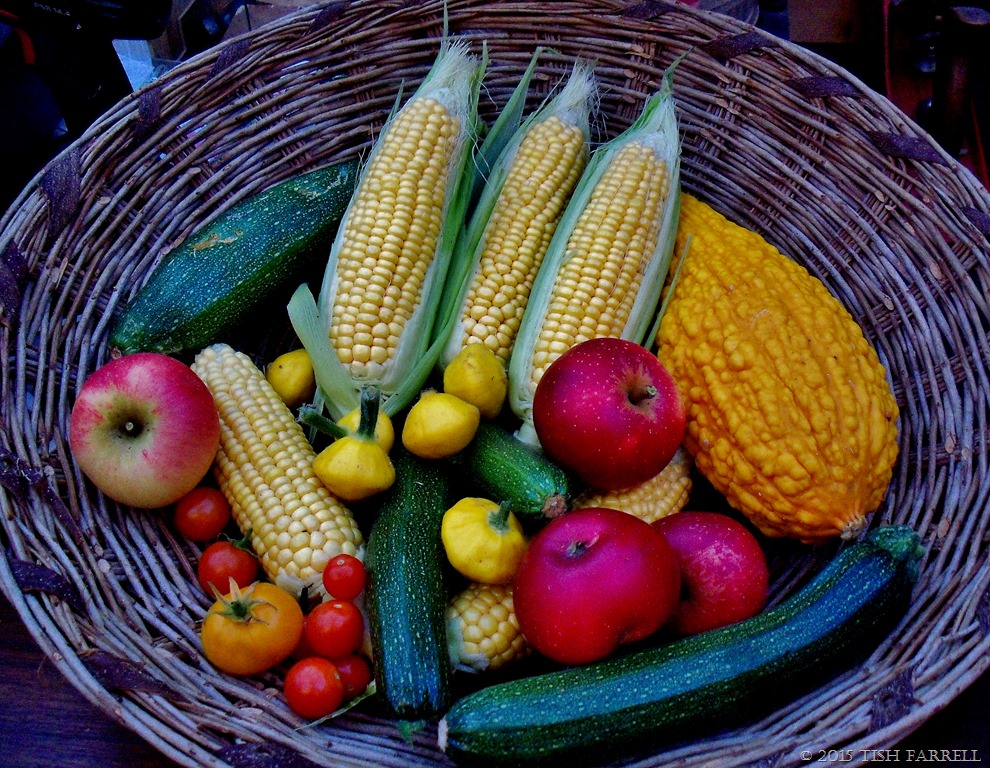
I whinged a lot during the year about this and that at the allotment – too much wind, too much rain, not enough rain, not enough sun, too many slugs, an invasion of dandelions and buttercups, too little compost, but even so – yes, even so – I have had a magnificent harvest, and it has made us, along with a few friends and relatives, and many of Graham’s workmates very happy.

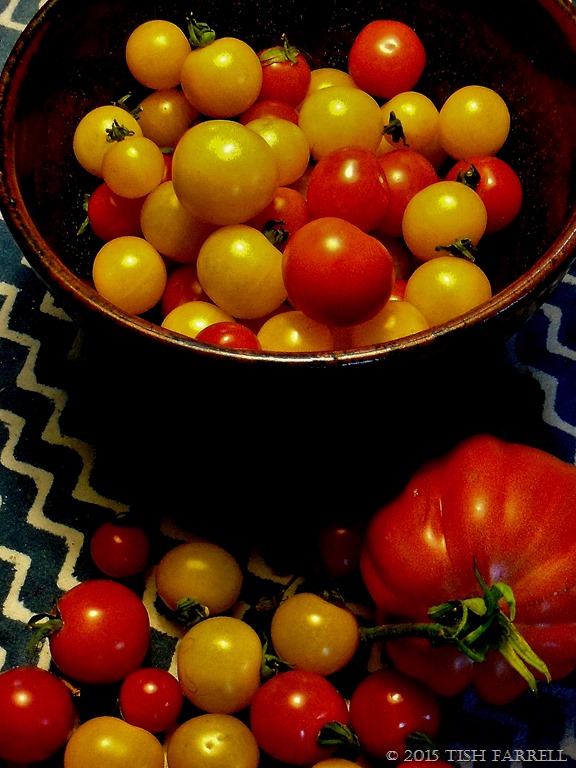
Excess runner beans have been recycled into a surprisingly delicious piccalilli-type chutney; cherry tomatoes have become tomato chilli jam, or Chillied Out Tom, as Graham named it when making the labels. I’ve made only a few pots of ordinary jam since we do try not to eat much sugar – raspberry, strawberry, damson, and we have a freezer full of field (fava) beans that I’ve discovered convert into the most delicious bean hummus if, after cooking, you relieve them of their skins, and add lemon juice and garlic.

Today, over half way through October, and I am still picking peas, carrots, beetroot and courgettes, and the last of the summer lettuce. Then there are the winter crops coming on: various kales, leeks, caulis, cabbages and Brussels sprouts. This week, too, I’ve been making a new strawberry bed, planting out Elsanta, and Alice varieties, and ordering a few Flamenco which are ever-bearers – fruiting from spring to the first frosts. Then there were overwintering onions to put in, Radar, being a reliable variety, and also garlic beds to make.

I have routed the tomato jungle from the polytunnel apart from a few plants, and it’s a relief to see some space. While I was doing this I came nose to nose with a large toad, which was very pleasing, once we’d got over being scared of each other. Eat more slugs, please toad. I’ve planted out the tunnel’s raised beds with winter salad stuff including purslane, winter lettuce, bunching onions, chard and lamb’s lettuce. I’ve sown a few seeds in there too, just to see what will happen – some herbs, rocket, and various Chinese leaves and mustards. As it gets cooler I will cover those that emerge with fleece.

Otherwise, it’s been all systems go, tidying the plot. This afternoon I was taking down the runner beans and their canes, and digging over the bed, but I was doing it to the heady scent of sweet peas that are lingering on. I also have some jewel coloured nasturtiums growing in the corner of the polytunnel. They smell delicious whenever I open the door, and of course you can eat every part of them – flowers, leaves and seeds, so I’m hoping they’ll keep going into the winter.

There’s just so much to be grateful for in this extraordinary world of ours, though we’d do well to nurture it a bit more so it can continue to nurture us.

100_6937

(Extra)ordinary

Pushing the boundaries: welcome to my new web design page

The following themes are now available at this address:

P1020229

‘The Miss Haversham‘

*

P1020239

‘Galadriel’s Garlands’

*

P1020250

‘Wired’

*

P1020252

‘WWW.’

*

100_7596

‘Web Apps ’

*

100_7634

‘The Neuron’

*

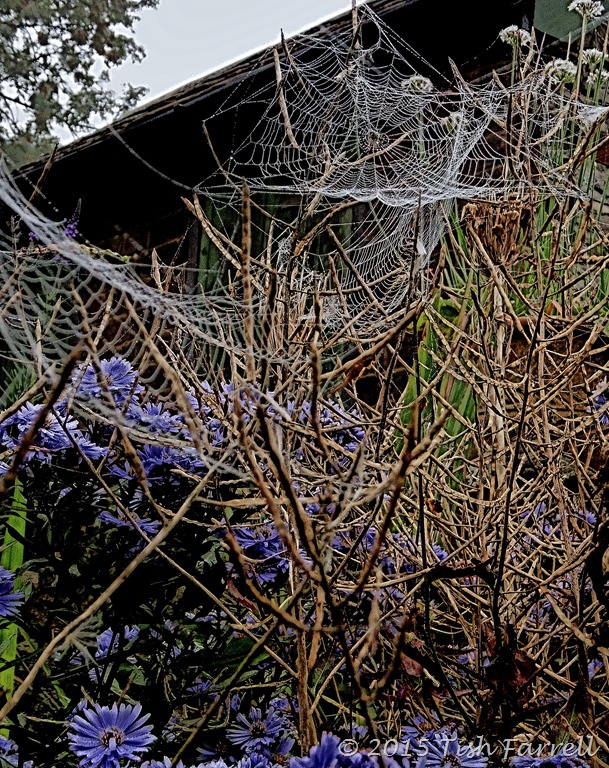
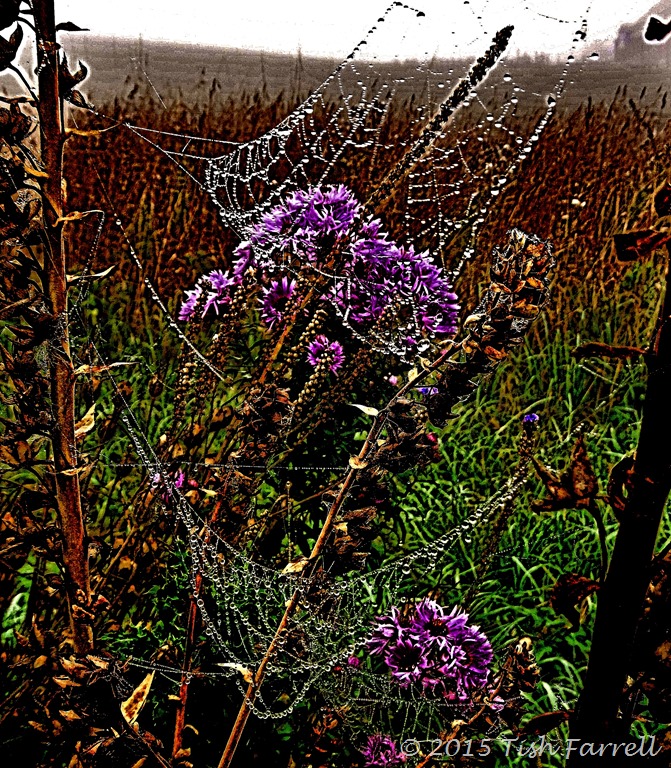
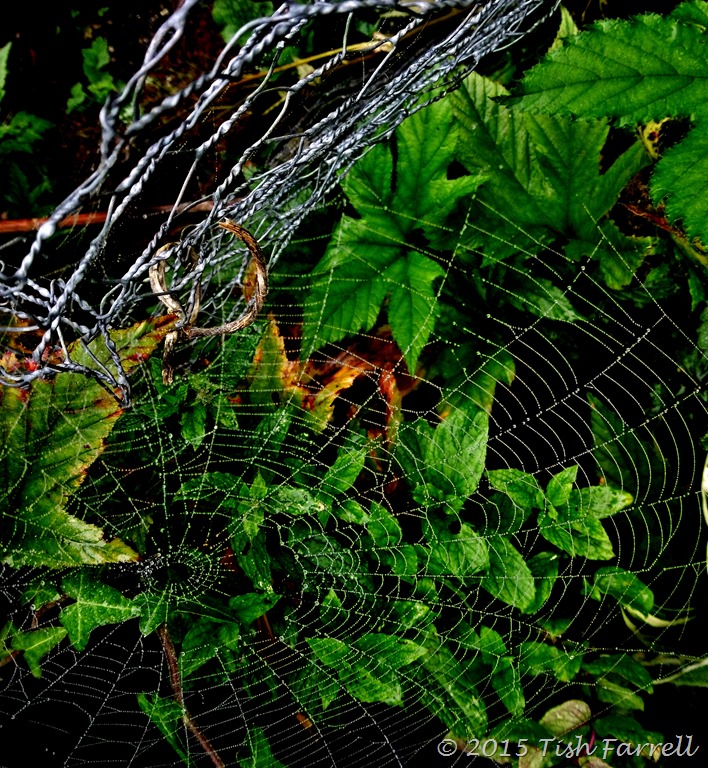
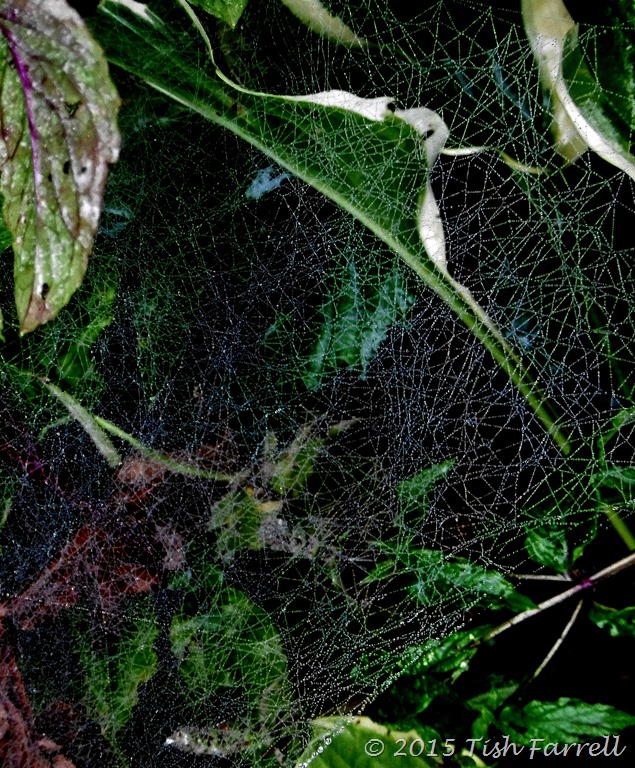
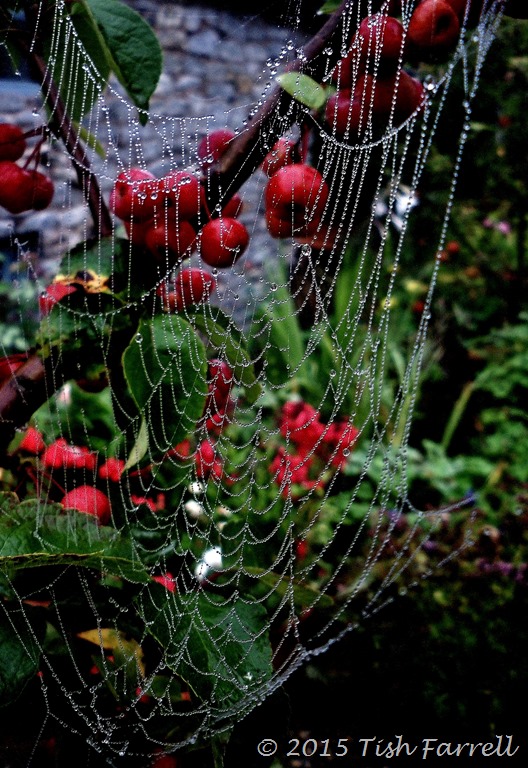
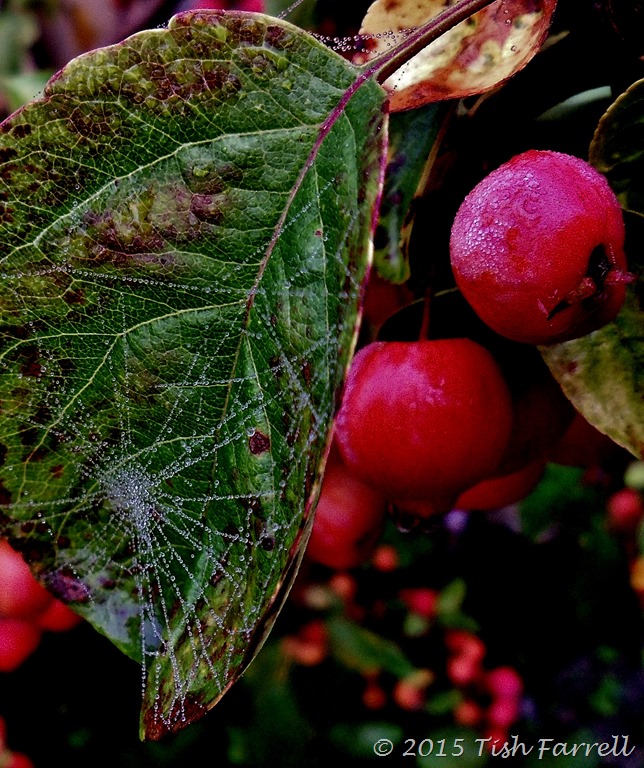
When I looked out of my bedroom window this morning all was dull and dank. There was no view of the Edge, only fog on the field that in the past two days has been  harvested, harrowed and re-sown, and is anyway looking gloomily autumnal. But when I walked out into the garden I found every leaf and stem was glittering with dewy webs.  So much spinning and weaving in the night – a thousand spider-stiltskins run amok. And even if you don’t like spiders, you can still admire their fog-enhanced artwork. Well, can’t you?


Boundaries

Help, Mr. King! My polytunnel needs editing

100_6203

I have written elsewhere how gardening and writing become mixed up in my life. But just see what happens when you don’t rein in your gardening writing, when you let your setting run riot. Words, like plants, need a certain space to perform well; to be the stars of the show; to say their piece effectively.

I never intend to over-create. In fact my internal critic warns against it, whether gardening or writing. The polytunnel mayhem is of course easily explained: I simply had to  plant out every last tomato seedling. How could I not, when I had nurtured each one through the cold spring months that seemed never ending?

All I can say if you write like this, and then don’t engage in some ruthless excision tactics, you will not be able to find the tomatoes for the overgrowth.

On the fiction writing front, Stephen King (On Writing: A Memoir) would call this kind of chaos “a thicket of description”. It’s what happens when writers become too attached to the minutely researched details of their setting, and then feel they can’t sacrifice a single beloved element.

It can also happen when you start a story in the wrong place, and then flounder about trying to write yourself to the right place. It’s like planting all your tall-growing tomato plants at the front of the bed, and then wondering why you, or anyone else can’t see what’s going on behind with short varieties. This, then, is also a setting problem: you have not planned the planting scheme and stuck to it (more or less).

All of which is to say, there comes a point when you have to take out a whole batch of words and shoot them – this so the survivors have room to expand and thrive (the excess tomato plants you could of course give to someone else.)

Stephen King explains the situation further (pp 138-9). He gives an example of using a real location as his setting for a piece of narrative, in this case the Palm Too restaurant in New York. It is somewhere he knows. As he starts to visualize the place, he summons the first four things that strike him. These, he says, are likely to be ‘the truest and the best’ details. He also says he can  make up a few other things too, but there is really no need for more:

“This isn’t the Taj Mahal we’re visiting…and I don’t want to sell you the place…it’s not about setting, anyway – it’s about the story, and it’s always about the story.”

Put another way, you could say that fiction writing is never about the writer. To create, you need to GET OUT OF THE WAY. And the better you succeed in this, the better the story. This is not to say that the writer’s experiences and cast of mind do not inform/infuse the narrative, but think conduit and transit time, rather than compendium drag.

Words are fiction’s conveyance to transport readers out of themselves and into the lives of others in new/penetrating/exciting /inspiring ways. The words need lift, energy, vivacity. Anything that snags transition must be cut.

This is probably the hardest lesson for the starting-out writer to believe, let alone put into practice. But it is a truism: less is almost invariably more. Not believing this is one of the reasons we have slush-piles, and why publishers now mostly shut their doors to unsolicited submissions. It’s the reason why I have too many tomato plants in my polytunnel, when I could have made the best of, say, half a dozen of the strongest plants.

But then as Stephen King advocates, practice (lots of practice) will yield improvement. So I vow to improve in my prose and in my planting. For now I leave you with Mr. King’s brief words on the means to create viable settings:

“The key to good description begins with clear seeing and ends with clear writing, the kind of writing that employs fresh imagery and simple vocabulary.”

100_6937 N.B.: use only the brightest and the best tomatoes, and not too many.

Happy writing!


Related: Errant muse? But there’s still life at the allotment

copyright 2015 Tish Farrell

Secrets, conspiracies, tragedy, dark comedy

– a fast-paced novella of interwoven tales

set somewhere in East Africa

In my garden after the rain

100_6854

Ladybirds seem to have been in short supply this year, so I was pleased to find this one nestling in my sage bush. Like bees, we absolutely need ladybirds. They are our natural pest controllers, preying on aphids and scale insects that can otherwise cause massive damage to food crops. As I was taking this photo, I was also delighted to scare off the harvestman spider that was creeping up on the ladybird. If you look in the bottom right corner above the copyright notice, you can just see the spider’s legs. Yikes!

*

100_6836

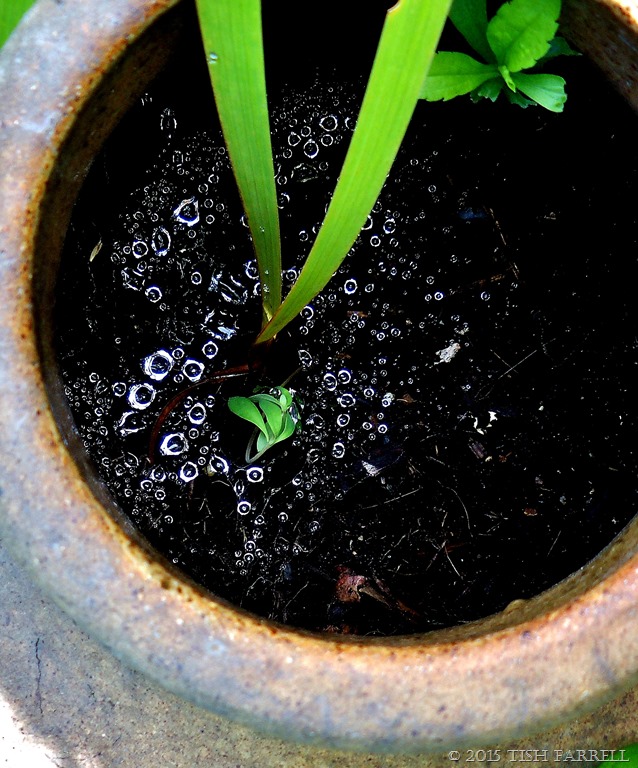
And here’s more evidence of spider activity: ambush exposed by raindrops in a garden pot.

*

100_6857

Now for one of my favourite plants in the garden. The flowers of this later flowering phlox remind me of jasmine and are half the size of the usual cottage garden varieties. It has just the faintest subtle scent, and doesn’t mind shade.

*

100_6863

Heuchera is another wonderful plant, and especially for ground cover. It comes in several hundred variations, and although understated on the floral front, it more than makes up for this with colour-bursting leaves that last all spring and summer. Also I see there’s spider lurking top left. I think it’s another harvestman. The bright green leaves amongst the heuchera are self-sown aquilegia seedlings. More granny’s bonnets to look forward to next year then. You never know what colour the flowers are going to be either – mauve, purple, pink, red, white. It’s one of the best things about plants that do their own gardening.

*

100_6832

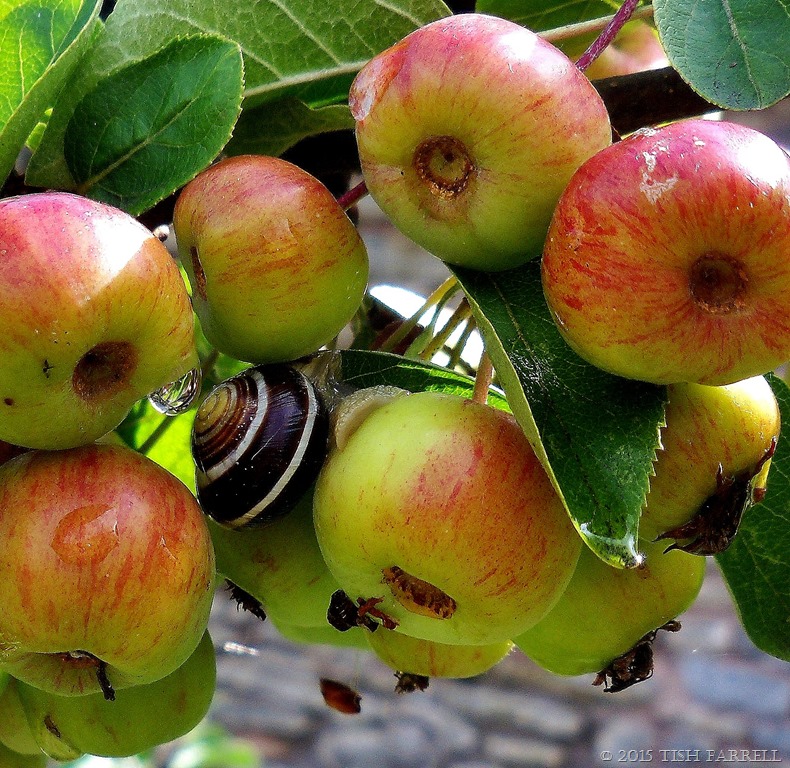
The tiny fruit on our Japanese crab apple are just beginning to take on their autumn colour. Soon they will be a deep russet red. I don’t think snails eat apples. At least I’m giving this one the benefit of the doubt; it’s probably just been sheltering from the rain.

*

100_5373

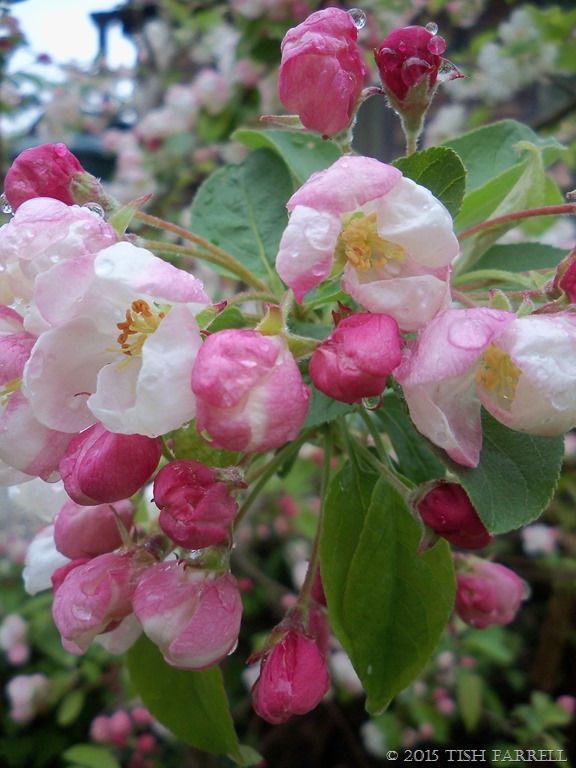
And now for a flashback-fastforward: the crab apple tree in April – spring past, spring to come…

Today Was a Good Day