The Winter Walker

100_7046

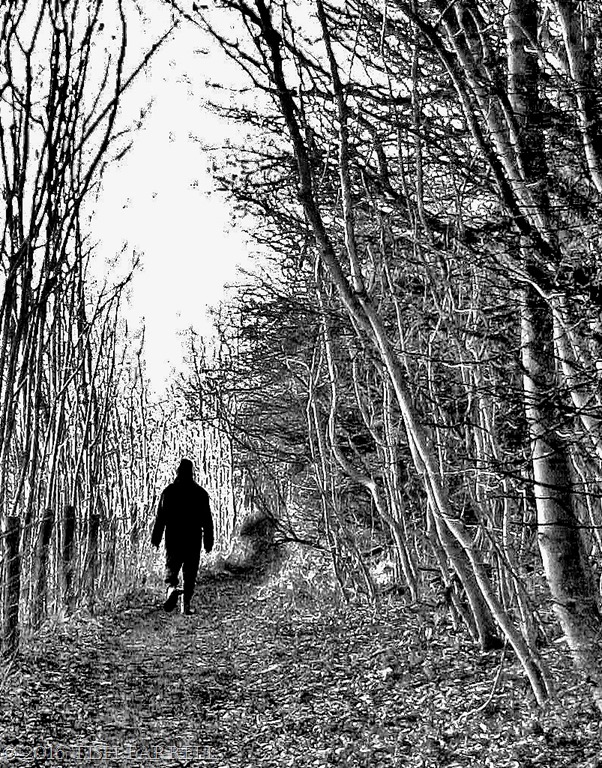
You can step back through time on Wenlock Edge. The trackways across the ridge-top have doubtless been trodden by itinerant traders since Stone Age times. In fact if I didn’t know that the lone figure on the path ahead of me was Graham, I might tell you that this is the shade of a six thousand year-old stone axe merchant, or a four thousand year-old Bronze Age smith. Or closer to our time, say two thousand two hundred years ago, it could be an Iron Age farmer trekking through the woods.

There are also traces of Roman farms either side the Edge, and from the Middle Ages until modern times the limestone from which the Edge is formed would have been quarried for building and for iron making, and also  burned in kilns to make lime mortar and fertilizer. And then there is the 400 million year geological history of the Edge itself – starting in times before fish had evolved, let alone mammals. (I won’t mention the four foot long giant water scorpions that lived back then).

But landscape as a portal to the past – it’s an intriguing notion.

*

This week at Black & White Sunday Paula’s guest, Lisa Dorenfest, gives us the theme of ONE. Please go and see her stunning photo, and Paula’s own response to the challenge.

Black & White Sunday: Delicate

P1020250

“There’s magic in the web of it”

The quote is from Shakespeare’s play Othello. And the web is from a shady corner in my garden, captured on a foggy morning last autumn.  It’s also my interpretation for this week’s Black & White Challenge at At Lost in Translation. Paula is  inspiring us towards a delicate frame of mind.

Black & White Sunday: Delicate

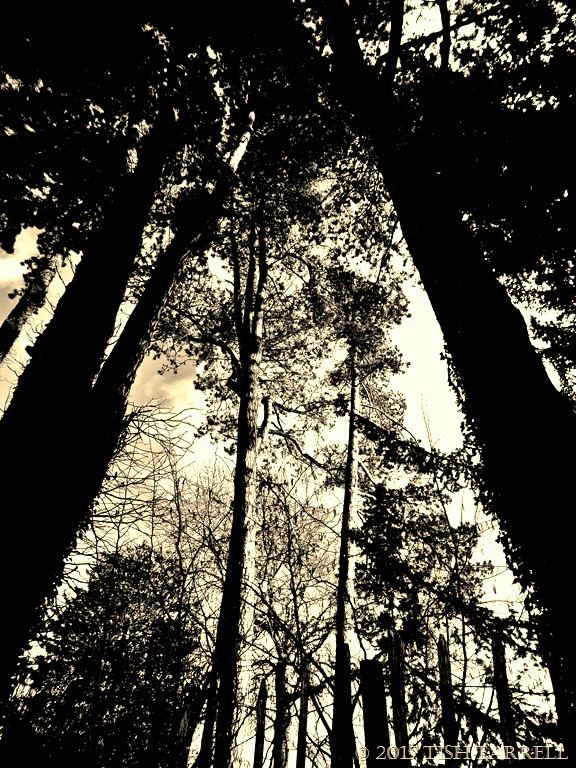
Heading For The Light ~ Wenlock’s Linden Walk In Winter

P1000516

I consider myself well blessed to have this avenue of venerable lime trees within a stone’s throw of my house. The Linden Walk is one of Much Wenlock’s treasures. The limes on the right were planted in October 1869 by the town’s physician and philanthropist, Dr.  William Penny Brookes. He apparently had help from his friends to do the job. Forty two trees were planted and forty two trees still thrive. Thank you Dr. Brookes.

The limes on the left are possibly older, and our local tree expert surmises that they may have been planted by the railway company in 1860-ish to demarcate the railway line when it first arrived in Wenlock. Dr. Brooks was a prime mover in bringing the railway to town. It’s only a pity he can’t bring it back to us.

The avenue forms the southerly boundary of the Gaskell aka Linden Field, where from the 1850s  Dr. Brooks held the Annual Wenlock Olympian Games, an event of his devising for improving the health and wellbeing of the general populace of Wenlock and beyond. He even designed the ornate medals and paid for them himself. And it was these games that went on to inspire and inform the modern Olympic Movement. A crown of laurels to you, Dr. Brookes.

The good news is that, according to an international lime tree specialist, who was brought in to inspect them,  this avenue has another good century and a half of life left in it – as long as we continue to care for it. I’m sure we will.

In this winter view, taken in Lumix monochrome mode, the walk looks very mysterious. In summer, though, it is so flush with leaf vigour and the soothing notes of linden blossom that you can walk beneath the trees and get high as kite: so much juice and joy – to misquote Gerald Manley Hopkins.

*

Over at Paula’s Black & White Sunday the theme is ‘convergence’.  Please go and see her work, and others’ converging interpretations.

Negative Space In The Mall

100_8969 - Copy (3)

100_8968

100_8964


This week over at Paula’s Black & White Sunday, her guest Sue Judd gives us a fascinating insight into the use of negative space in our compositions. Please go and see what she has to say at: Black & White Sunday: Negative Space

Meanwhile, here are some more of my shopping mall photos. As I mentioned a few posts ago when I showed another version of the second shot, to me the mall is usually a very negative space. I’m also thinking that my metaphorical interpretation of the theme might be rather stronger than my photographic rendering of Sue’s guidelines, but I thought I’d share these rather weird compositions anyway: my study of consumer alienation.

Let There Be Light!

P1000558

I have to say I’m rather pleased with this offering for Paula’s Black & White Sunday. The theme is ‘light’, and there are several interpretations of it here. The photograph was taken up at the allotment in a break from clearing winter weeds. This electricity pole stands slap in the middle of the back boundary fence, and for some reason I find it rather fascinating.

Please visit Paula at Lost in Translation to see her intriguing lamp-lit composition along with inspirational soundtrack from Keith Jarrett – a real Sunday treat.

Wenlock: “A Rip Van Winkle Kind Of Place”

P1010148


P1010704


P1010744 - Copy - Copy


P1010699 - Copy (2)

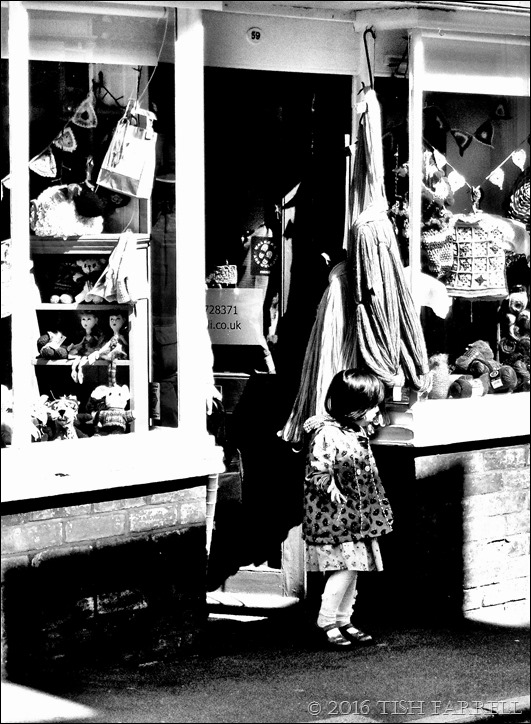
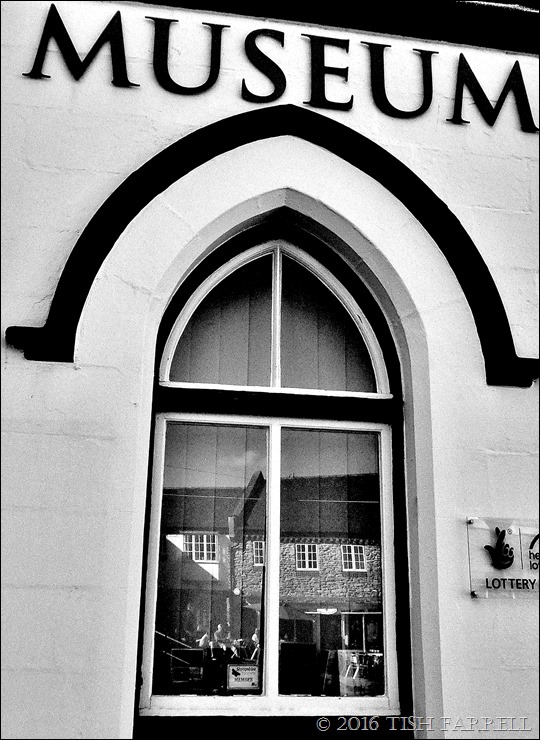
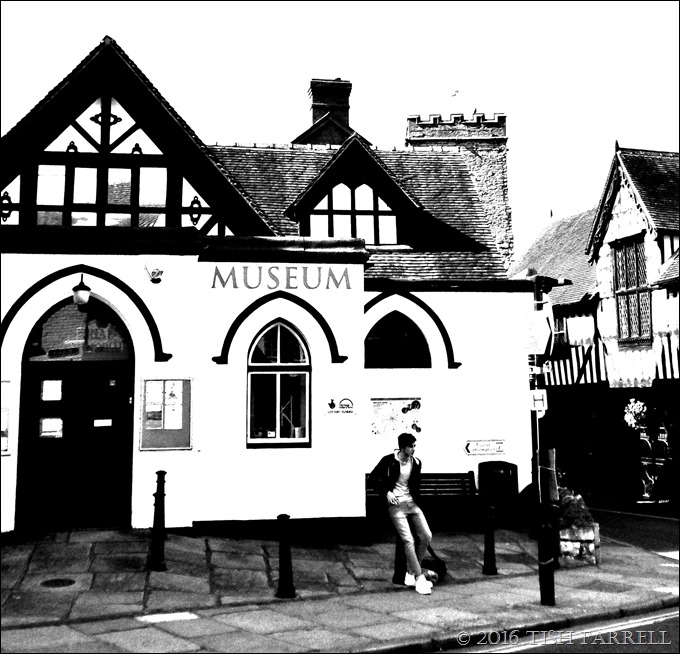
A Rip Van Winkle kind of place – that’s how Shropshire writer Mary Webb described Much Wenlock around a century ago. It was the home town of her teenage years, and the place where I now live and indeed have known for much of my life. Even when we lived in Africa we would visit Wenlock whenever we were on ‘home leave’. We had friends who drew us, and finally led us to settle here on our return to England.

And once we had arrived, we soon found that many of our neighbours, pitched up from far-flung places themselves, had also lived and worked all over Africa. I was therefore only briefly surprised to find that Henry Morton Stanley had once been in Wenlock, staying as a house guest of the Milnes Gaskells, the local gentry who once lived in the old Prior’s House and owned the ruins of Wenlock Priory from which the town had grown up throughout the Middle Ages.

Stanley is not a man I admire, although his brute tenacity is certainly impressive. We also have him to thank for selling the idea of the Congo to another brute of a man, King Leopold II of Belgium, a circumstance from which that Central African state has probably yet to recover.

Still, I won’t go into that now, but I do have a mind’s eye image of Stanley sitting up on Wenlock Edge (the Milnes Gaskells took all their guests there), and picture him scanning the Shropshire plains below as he contemplated the writing of In Darkest Africa.

The landscape that spread before him, with its distant ranges of Welsh hills, could well have reminded  him of that continent. I have seen such vistas in East Africa. But he was a man who ever took his darkness with him. And this makes me wonder. What might our grim legacy have been, in PR terms that is, if he had written of ‘darkest Shropshire’; would the tainted words still be sticking to us today?

It’s a rhetorical question obviously. And I mention all these dark tones and undercurrents only as counterpoint to the  quaint, quiet images above. Much Wenlock definitely has ‘chocolate box image’ tendencies in its now gentrified, ancient streets. I find it good to remember, once in a while, that all is not necessarily what it seems.

*

This post was inspired by Paula’s Black & White Sunday Challenge: ‘surreptitious photography’. It is a fascinating theme. The role of surreptitious photographer is something I rather relish, but rarely put into practice. I have a feeling that in this Rip Van Winkle place it risks becoming an obsessive pursuit and, as a writer, I already have enough of those.

But please visit Paula at the link above and be inspired by her photographs. There’s still time to take part. Also check in HERE to see her gallery of  slide shows of all participating photographers’ work. It’s a real treat.

copyright 2016 Tish Farrell

Still Life At The Mall?

100_8967

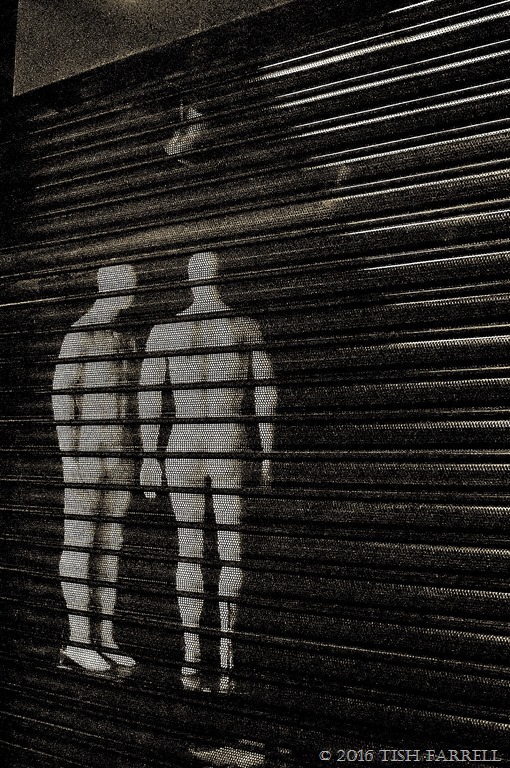
This image sums up how I feel whenever I go into a big shopping mall – soul sucked out, life signs shutting down, a sense of being processed, objectified in the drive to SHOP and SHOP and SHOP. On the other hand, when I came upon this scene through the strangely translucent shutters of a closed-down men’s clothing store I couldn’t have been more delighted. I didn’t have to arrange anything. It was all set out for me. I simply had to pull out my camera. Still life in the mall indeed, although sometimes you have to look hard for it.


Paula’s Black & White Sunday Challenge at Lost in Translation is Still Life. She has come up with a very intriguing take on the theme. Go see.

Iron in the Soul ~ Warrior of Llyn

100_4526 - Copy

I have been a multitude of shapes
Before I assumed a consistent form.
I have been a sword, narrow, variegated,
I have been a tear in the air,
I have been in the dullest of stars.
I have been a word among letters,
I have been a book in the origin.
From a translation of the Welsh medieval text of The Book of Taliesin, a sixth century Welsh bard and courtly singer.

 *


It is said that the Iron Man of Mynydd Tir y Cwmwd sings in the wind. I can believe it too: bold laments of long ago battles, a proud Celtic warrior fending off invading Roman governors and power-hungry English kings. Sadly, the cause was lost on both fronts, although at least these days Cymru,* Wales, has its own Welsh Parliament, and Cymraeg, the Welsh language, is nurtured, learned in schools and spoken widely with great pride. And so it should be. It is one of the world’s wonderful languages, the words formed from the rush of sea on rocks, the wind whistling down from the heights of Yr Wyddfa** (Snowdon, Wales’ highest mountain). Under past times of English domination much was done to stamp out the Welsh culture altogether. It is what invaders do – belittle, ban, override  heartfelt expressions of a conquered people’s culture.

{*roughly pronounced Kumree and **Ur Oithva}

You can read the rest of this earlier post about the Iron Man of Llanbedrog at Warrior Wind-Singer of Llyn

copyright 2015 Tish Farrell

This Sunday at Lost in Translation, Paula’s ‘Black & White’ word is ‘winding’. Please follow the link to take part her challenge and see more winding renditions.

Wenlock Priory through the pines ~ an enduring landmark

P1000492

P1000494


How impressive then must the beautiful church have been in the days of its prosperity, when the pilgrim came down to it from the grassy hillside and its bells made the stillness sensible.

Henry James on Wenlock Priory Portraits of Places

Much Wenlock has many historic landmarks, but its Priory is the one with the oldest roots, dating back to the seventh century when  the Saxon princess, Abbess Milburga, presided over a dual house of monks and nuns.  In medieval times, under Norman rule, it was expanded to become one of the most imposing (male only) religious houses in Europe.

Then along came Henry VIII with his marriage problems, and in 1540, as part of his Dissolution of the Monasteries campaign, (i.e.the  liberation of monastic wealth), the lead was stripped off the roofs. The Priory has been ruinous ever since. Meanwhile the Corsican pines have grown up along the boundary wall.  I don’t know when they were planted, or by whom, but spiring above the ruins, they somehow give a sense of lost architectural glory.

There is of course much romance in dilapidation as Henry James’ description in the quote above betrays. He was certainly taken with the place, and came here two or three times as guest of the Milnes Gaskells  who lived in the Prior’s House abutting the ruins. The Priory was at that time the Milnes Gaskells’ own private garden feature, and part of the tour for all their many house guests.  I particularly like this next, perhaps unlikely image of a recumbent Henry James gazing up at the remains:

You may lie upon the grass at the base of an ivied fragment, measure the girth of the great stumps of the central columns, half smothered in soft creepers, and think how strange it is that in this quiet hollow, in the midst of lonely hills, so exquisite and so elaborate a work of art  should have arisen.

You can read more about Henry James in Wenlock HERE.

Now please visit Paula at Lost In Translation for more Black & White Sunday  landmarks.