Never Mind Van Gogh’s Sunflowers: How About A Courgette? Or Maybe Even a Blooming Potato?

IMG_2393

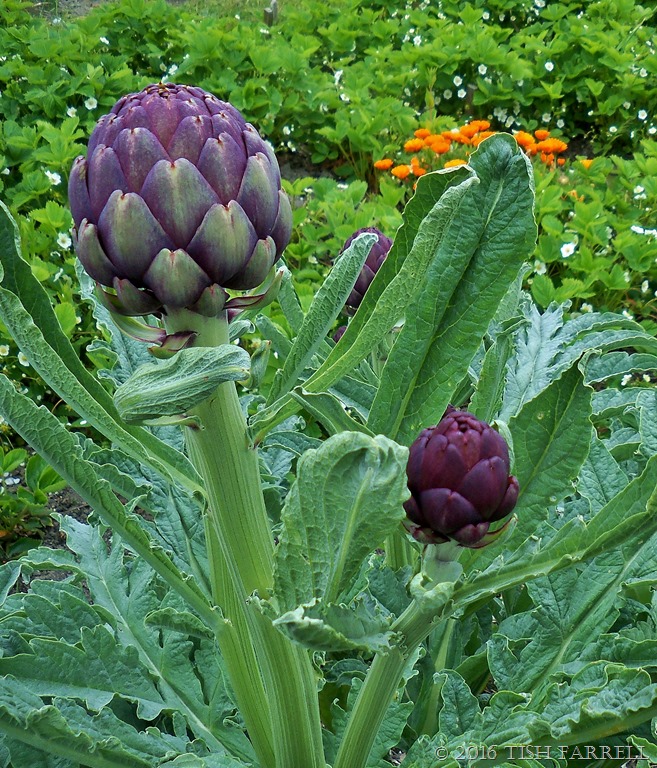
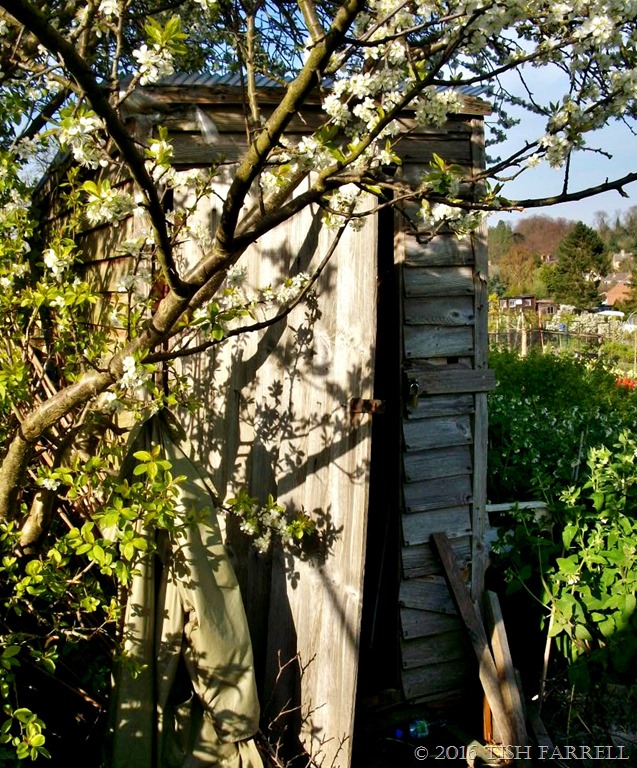
During the recent heat wave I managed to get myself across the field and to the allotment by 7.30 a.m. It was wonderful up there – full of birdsong and humming bugs and bees. (Note to self: must do this more often). All the vegetables were flowering full blast, and so instead of watering and weeding, I started taking photos.

IMG_2391

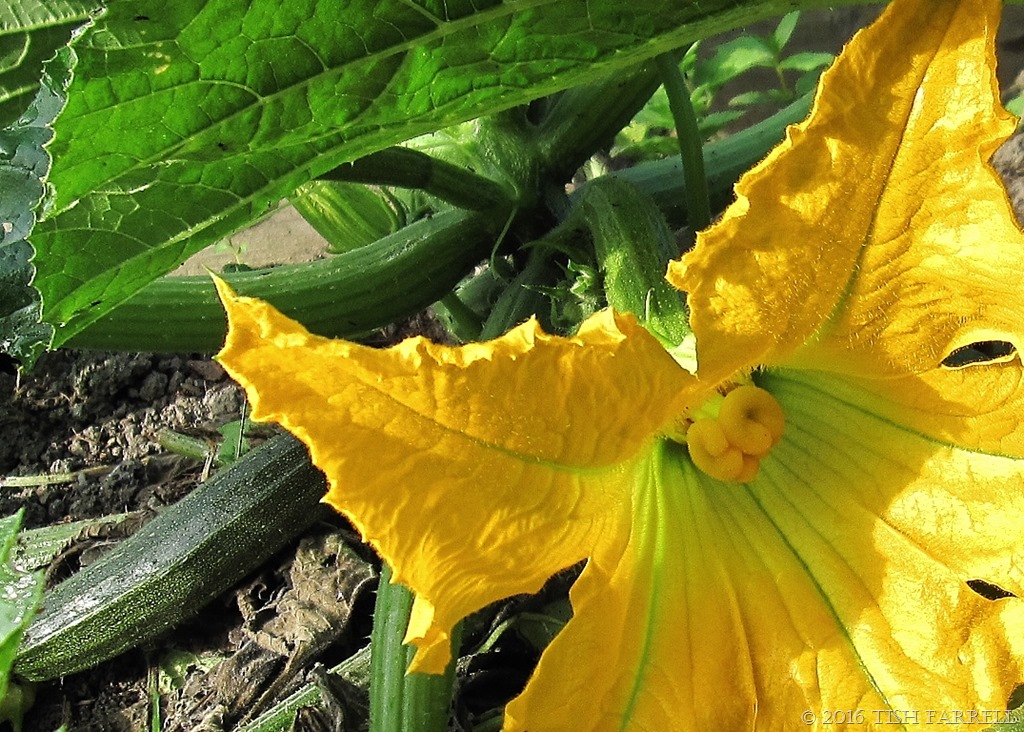
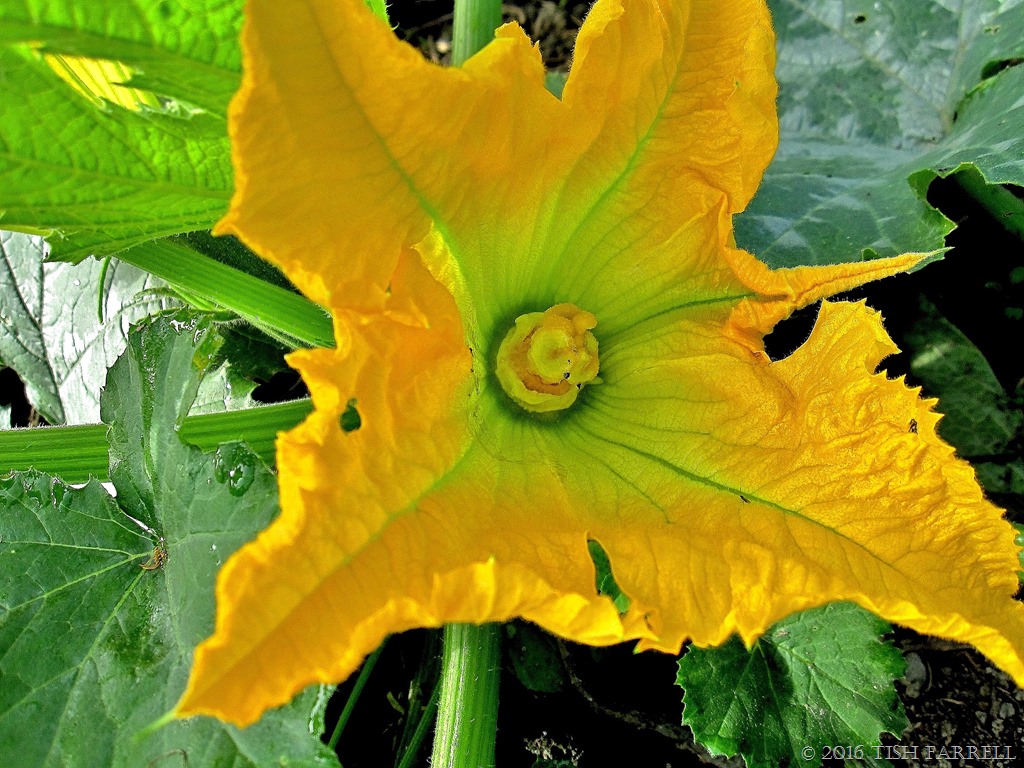
The courgette (zucchini) plants had broken out into multiple suns – each one big as a dinner plate.

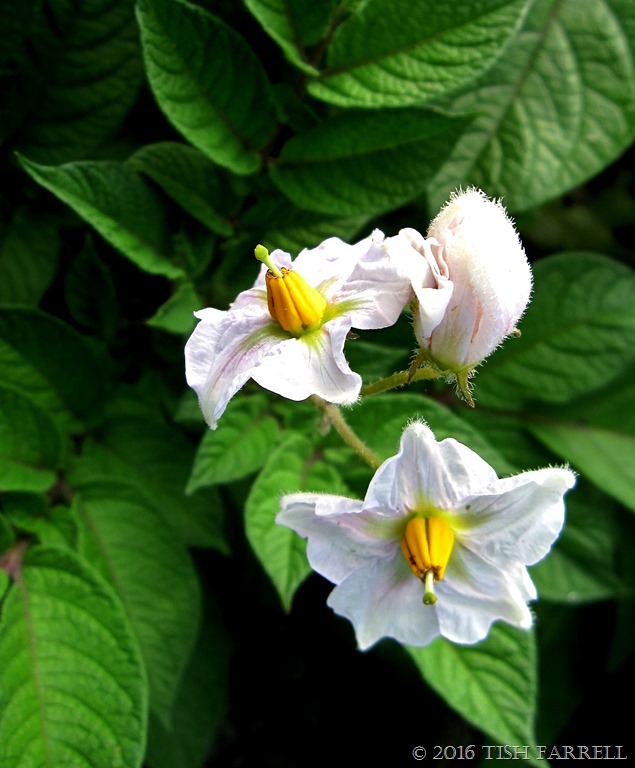
And then I spotted the potato flowers – I think they’re the French salad variety called ratte. (I couldn’t locate my plant label for spud leaves). Anyway aren’t they rather lovely?

IMG_2399

Then behind the potatoes the runner bean flowers were busy making the first beans of the season (thank you bees):

IMG_2408

And behind my polytunnel the Lark sweet corn was tasseling:

IMG_2423

So much excitement up at the allotment, and all before breakfast. Who’d’ve thought it.


P.S. This post was inspired not only by my vegetables, but also by Jithin at Mundane Monday #69, and Jude’s edible Garden Challenge. Please visit them for more inspiration and some very excellent photography.

Eminently Edible Or Too Much Like Hard Work: Plexit or Brexit Up At The Allotment?

100_5517

Some people – otherwise known as Graham – think I have secret ambitions to take over the whole of Wenlock’s Southfield Road allotment. He couldn’t be more wrong, although whenever I protest my intention to contract operations and reduce my current domain of one and half plots to a single half plot with polytunnel attached, he gives me that look. Oh yeah? The problem is, just like Britain leaving Europe, my exit strategy is complicated. But unlike Brexit, at least I do have a strategy for reducing my plot occupation. Indeed in this era of foolish contraction we could even call it Plexit.

The story of my initial expansionist tendency begins nine years ago, not long after we moved to Wenlock. I had known the town for much of my life, and lived for a long time in a neighbouring parish, but I had not known that the town had an allotment. It is well hidden behind a row of houses, a relic of much earlier times when a railway ran by our neck of the Edge, and railway workers had the right to demand that their company provide, along with their houses, some sizable garden plots on which to grow their own food.

It was a chance remark at a neighbour’s Christmas party that made me realize that the shed roofs that I could just see across the field from our new home were not in a row of private gardens as I had first thought. The hunt for a plot was on. When I finally tracked down the chairman of the Wenlock Allotment Society it was March, and I was champing at the get-gardening bit since our cottage garden was not big enough for vegetable growing. Though charming, the chairman told me all the plots were taken, and he would add me to the waiting list that already had several people on it. He did not sound hopeful, and disappointment descended. Yet by April he was on the phone saying that I clearly had a fairy godmother: my pumpkin dreams had come home to roost. Several plots had been unexpectedly surrendered, and there was a half plot left if I still wanted it. The rent was £20 per annum. So I said yes, site unseen, and we arranged for a convenient moment a few days later when he might introduce me to my new land holding and collect the rent.

Thus began allotment my life – with an inherited leaning shed, an ancient greengage tree just then in bloom, and a plot full of couch grass, sow thistle, docks, dandelions and buttercups that the previous incumbent had clearly been nurturing for some considerable time.

100_5374

And that’s the problem with allotments. Too many would-be cultivators take them on only to find themselves overtaken by the amount of labour involved. Yet the idea of allotment growing remains beguiling, and so time passes as they decide whether or not to abandon the plot. The upshot of this is that everyone gets the fall-out from the weeds on neglected plots. Also the general tendency to disorder that breaks out in such communal enterprises provides havens and harbourage for pests and diseases that then become endemic. It takes much gritting of teeth not to resort to a host of chemical applications.

The upside of allotments is of course the camaraderie – the like-minded people who will be there to commiserate over one’s sorrow at slug and allium weevil devastation, or to swap ideas for pest control, share the joy of success and in the ensuing excesses in crops, or generally to keep an eye on neighbours’ plots while they are away. All good stuff.

Also when I first started, there was one old gardener still hard at work. Crook-backed, and slightly crippled, he travelled by bus from another village. This also involved him in quite an uphill hike from the bus stop which he could only accomplish very slowly, and with a few stops for a cigarette. But once on the allotment he tended three full 20 by 5 metre plots on behalf of other elderly tenants or their widows who lived on Southfield Road. He was there most days too, and I think he had probably been there for centuries. He gardened in the way my grandfather would have done.

Often in the winter, when we still had a few really cold ones, we would be the only people there, and I would take the opportunity to quiz him over his tried and tested methodologies. I especially took note of when he sowed particular crops. His repertoire was limited, but he grew in bulk: broad beans, runner beans, beetroot, onions and potatoes. I don’t remember his growing much else. He knew what worked best, and he knew those crops that were within his capacities to manage on such a scale.
IMG_1740

And that’s another big lesson to be learned at the allotment. When you have your first plot – which can seem so large and roomy – and you have finally cleared all the weeds, it’s too easy to assume that anything will grow there. It won’t . Not unless you have been lucky to take on a well worked, and hugely well composted and sheltered site. It took me a while to learn that it’s best to start by taking a good look at what the seasoned growers are growing; see what thrives in the face of endemic pests, the plot’s micro-climate, the general environmental conditions, and soil structure limitations. That way you can be sure to get one or two decent crops of something, and these successes will keep you going while you get to grips with your plot’s potential and/or deficiencies.

For instance another experienced allotmenteer showed us newbies that the only way to grow decent carrots and parsnips on our heavy soil was to dib individual root shaped holes at sowing time, fill them with good compost and then sow the seeds on top. It’s a rather time-consuming process but worth it if you don’t want to waste packets of seed. For carrots it also reduces the need for a lot of thinning, and the plants can be left to grow throughout the season covered by horticultural fleece, so avoiding attacks by carrot root fly. I have now adapted this idea by using moveable raised bed, which Graham originally made for me as a cold frame. I place it on top of the existing soil level. Fill it with a good six inches of fine compost mixed with coir fibre and sow into that, and then cover the lot with enviromesh.

In those first years it was tough going. I thought I was a moderately experienced gardener, but there was  much unforeseen trial and error. The plot took monumental amounts of clearing, digging, and composting. Crop successes were patchy, apart from colossal amounts of black currants and broad beans. The heavy soil proved almost impossible for sowing anything other large seeded vegetables, and even then there was a tendency for them to rot if we had a spell of cold, wet weather. Or if they germinated, the roots became compacted and the plants effectively bonsai-ed themselves, and then got eaten by slugs or infested with aphids.

All the time I was casting covetous eyes on the other half of the plot. It had clearly been well cultivated over the years, and the soil looked lighter and much more promising. I saw it produce masses of strawberries and fine looking French and runner beans. It was also nearer the water point, a serious consideration given our erratic weather patterns which often involve a spring or summer drought. I watched two other gardeners come and go there before finally making my bid for it. At last. Now I could grow decent potatoes, strawberries, runners beans, leeks, carrots, and leave the old plot to produce what it did best – raspberries, blackcurrants, rhubarb, artichokes, and swathes of very useful comfrey for feeding the rest of the plot.
100_9865

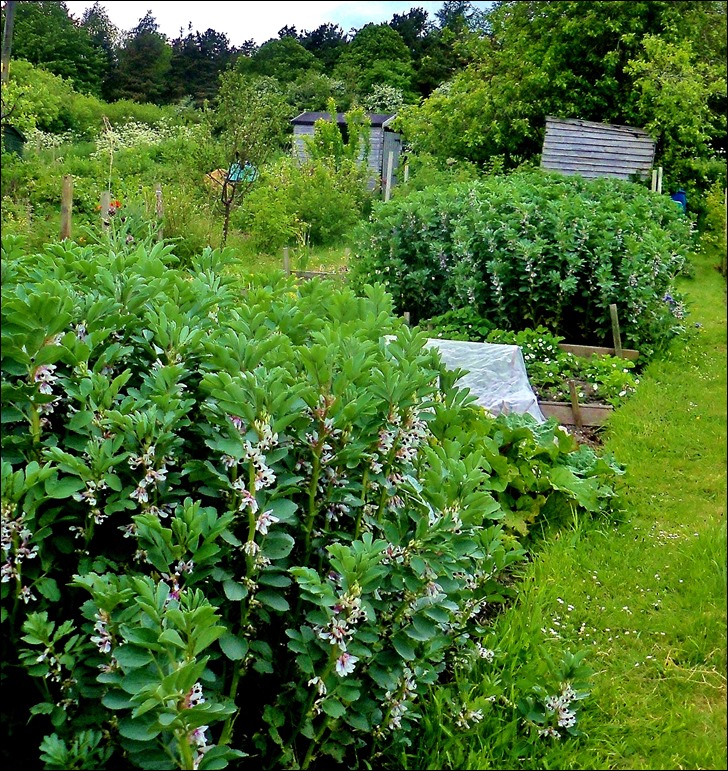
The half plot I began with nine years ago, this year growing cover crops of field beans. I should perhaps have dug some of them in before they flowered – this as a green manure. But I didn’t, and the blossom kept the bees very happy. And now I have tons of mini broad beans – to eat, and to dry for autumn sowing.

*

So now I had 70 feet of plot, and I had only just begun to get the measure of it when I rather recklessly found myself with a further half plot. This was two years ago. I was so fixated on taking over the polytunnel that Bob and Sally had erected there the previous season that I neglected to notice that it stood on an especially wide piece of ground that had once been the domain of the aforesaid aged gardener, and thus long neglected. And so quite apart from learning the new art of polytunnel cultivation, it was back to tackling another dense carpet of dandelions, buttercups and couch grass.

Even I could see the daft side. He who disbelieves in Plexit (that would be Graham), simply raised his eyebrows and saw (as with Napoleon’s invasion of Moscow) only evidence of wilful territorial overreach. ‘You’ve taken on too much,’ the look said.

‘But I have a plan,’ I said. ‘I mean to contract. It’s my ultimate objective.’

More raised brows.

‘It’s raised beds that I really need,’ I said. ‘Then I can start the retreat from the old plot.’

Being the kind soul he is, Graham agreed to making me some beds, though leaving me with the distinct impression that he was humouring a mad woman.

Last year then, and before I’d discovered ‘no dig gardening’ approach (see earlier post HERE), I started clearing the new plot, basically by skimming several inches of weedy compacted ground off the top and dumping it in compost bins where it might just rot down by the end of the century. I covered the bare ground with  the limited amount of compost I had available, sowed some trefoil for a green manure and inter-planted it with sweet corn, which to my surprise grew a magnificent crop of large cobs. I also planted out brassicas next to the corn and produced some rather fine purple cauliflowers, which also surprised me. Meanwhile Graham set about on the first consignment of raised beds, made from recycled pallets which he picked up for free from work.
100_9260

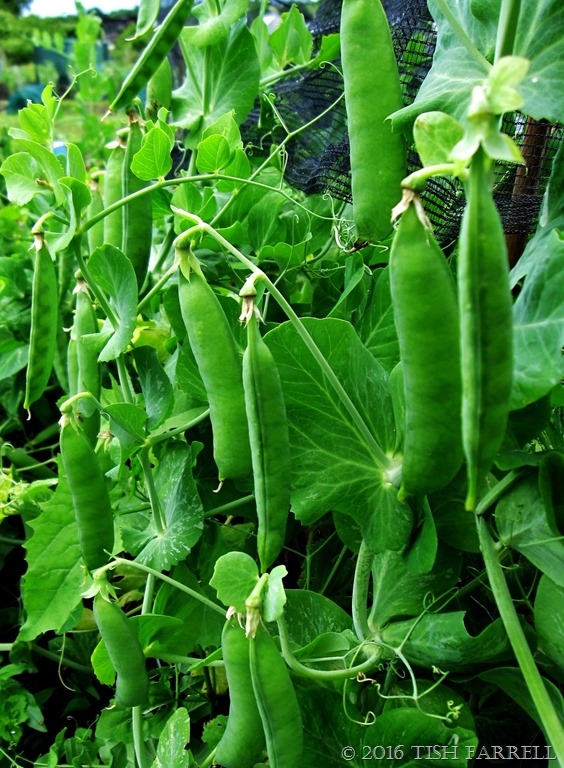
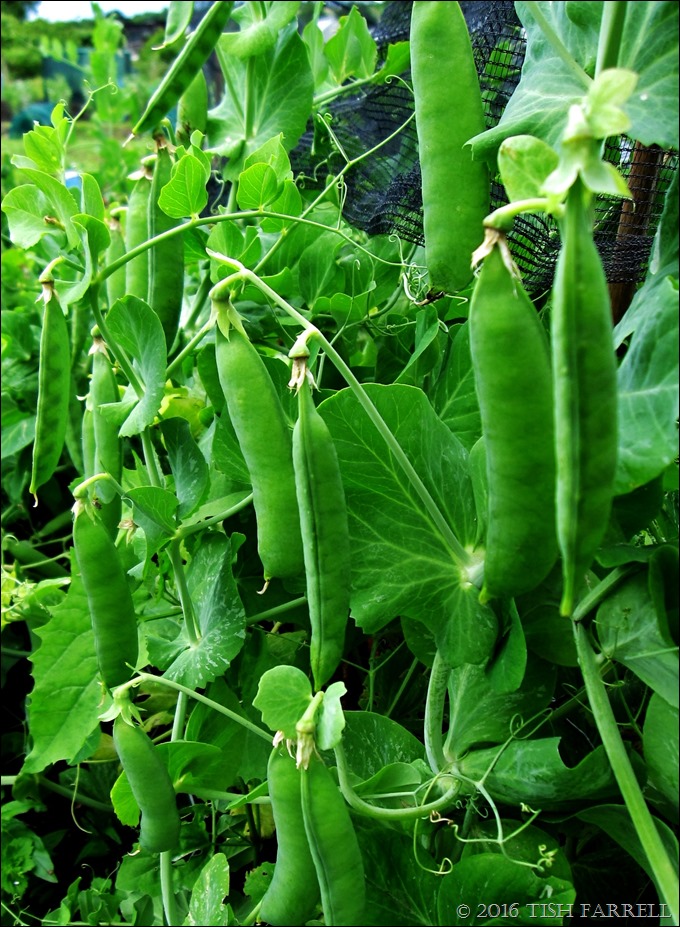
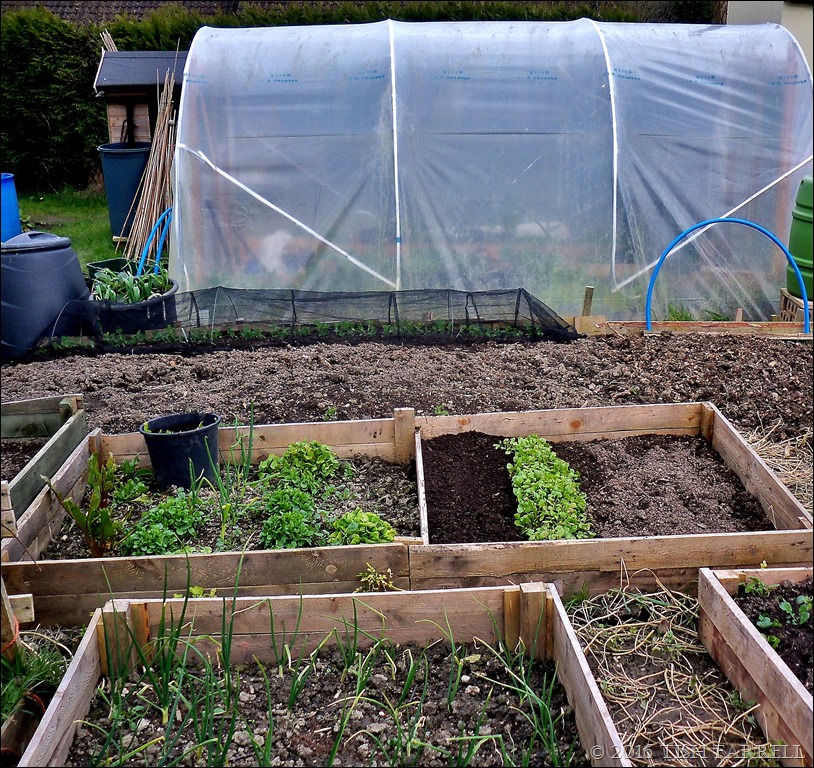
The new plot in early spring this year. Beds provided by Plexit sceptic, and planted with over-wintering onions, lamb’s lettuce and winter purslane. Behind the polytunnel the open bed has not been dug apart from some spot-weeding of dandelions, but covered with six inches of recycled soil from the allotment’s communal heap of ages (see next photo). It has been planted with Early Onward peas (just being harvested this week. See second photo above). These were pre-grown in 4 inch pots, five or so seeds to a pot, to avoid mouse devastation. I find that transplanted peas do really well, although it’s a bit of a faff having loads of pots. They also need to be well defended from pigeons as soon as they are planted out.

100_9876

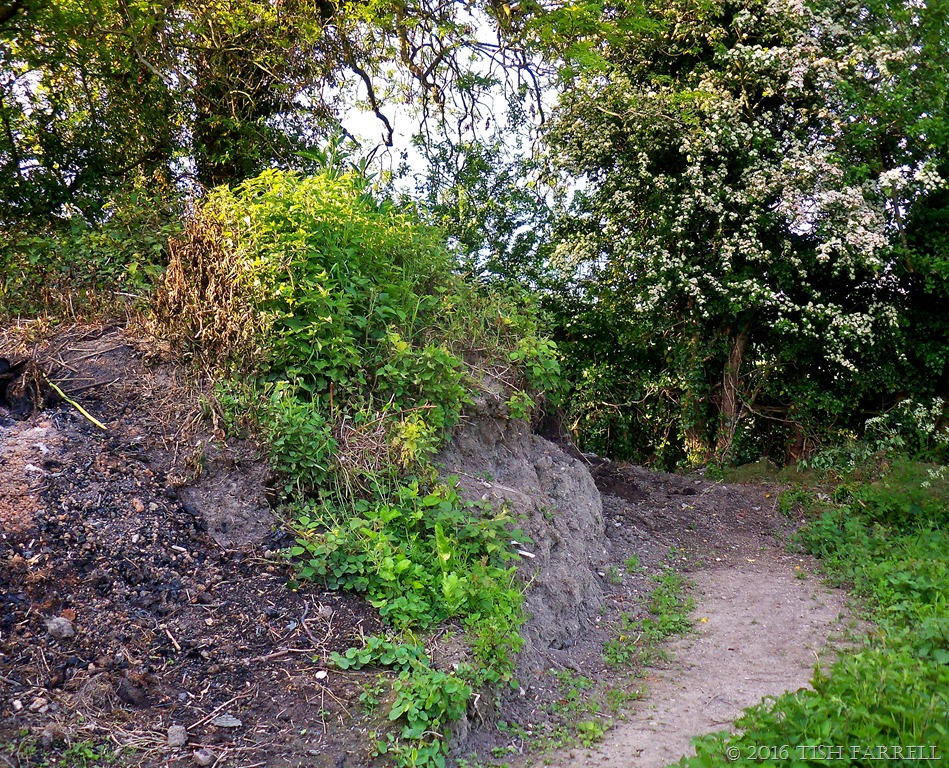
This heap was apparently some 40 years in the making. At the end of the winter, before some of us began to recycle it,  it extended beyond the weeds on the right, and was 6 or 7 feet high. I suspect I have moved around 100 barrow loads. Unavoidably, given that the allotment is a weed haven, the soil is filled with weed seeds, but at least it is lighter and more free draining, and gives crops a chance to get going. So far the crops in the new raised beds, or on areas where I’ve not dug, but covered the soil with several inches of stuff from my own compost heaps, are far superior to anything grown on existing dug-over soil. And while no-dig proponents claim that this method means fewer weeds, I don’t think this holds for a very weedy allotment, but at least perennials like dandelion and nettle are easier to remove from lighter soil.

IMG_1752

This year’s Lark sweet corn, growing next to the peas on a no-dig plot.

IMG_1751

Nautica French beans in a raised bed on recycled compost heap soil. So far so good, though a few nettle seedlings popping up.

*

And now for Plexit, and my plan for plot downsizing.

Ideally in terms of work load it would have been better if I had already relinquished the half plot I first started with nine years ago – along with the leaning shed and the greengage tree that only fruits every nine years. Despite all my compost input, pony poo additions and green manure growing, the ground is still the least promising. The only remedy would be to cover it with the rest of the communal soil heap, but then I reckon that (along with effort needed to move it) it would be far better deployed on the new plot where I’ve just started making a no-dig experimental bed by covering the weedy, long uncultivated ground with cardboard and six inch layer of soil, and then sowing it with cover crops – fenugreek and phaecelia. I’ve no idea how this will turn out. It’s also adjacent to my other experimental section of cardboard covered by 6 inches of tree shreddings – another unknown quantity with regard to next year’s cultivation potential.

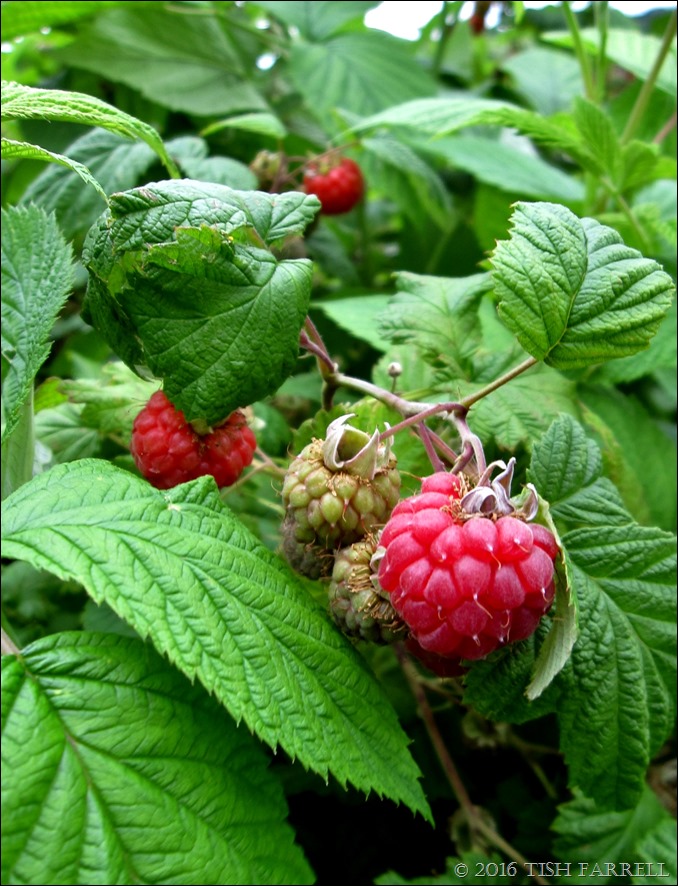
But the main block to immediate downsizing is the fact that the much loved raspberry patch is at the top of the old plot, and I can’t give it up until I’ve got a new bed going. The present one keeps us in fruit the year round, so can’t be surrendered lightly. I started a new bed behind the polytunnel last winter, but the canes are being very slow to get going, and I may need to replace some of them – all of which will put Prexit on hold.
IMG_1765

Nor am I keen to give up the bottom half of the old plot just yet because it’s doing rather well, and I also have my three massive compost heaps there, and several leaf mould silos. And anyway it provides plenty of room for potatoes and winter veg. And then well…

In the end I suppose it’s more than obvious. The Prexit sceptic has a point: I won’t be yielding territory any time soon.  But then that’s my point. I’m busy negotiating, doing essential groundwork, ensuring that what I give up will be in reasonable shape when I do so. Only when conditions are the best they can be, or I’ve run out of steam, will I start the retreat. Makes you wonder about Brexit, doesn’t it?

In the meantime, if don’t have a garden…
100_9851

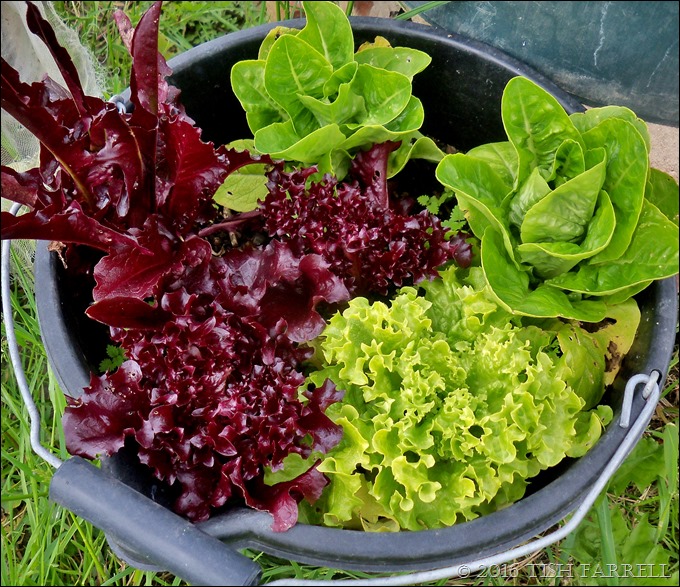
Lots of vegetables grow well in containers – leeks, garlic, carrots, spinach, salad stuff, tomatoes. A bucket with a few holes in the bottom makes an easily portable garden.

copyright 2016 Tish Farrell

Related: Trying not to dig the plot and 30 minutes of weird weather


This month Jude at The Earth Laughs In Flowers wants to see photos of the edible garden. Visit her to find out more and see her splendid allotment gallery.

The Power Of Green And Dappled Sunlight This Morning On The Linden Walk

P1040281

P1040271

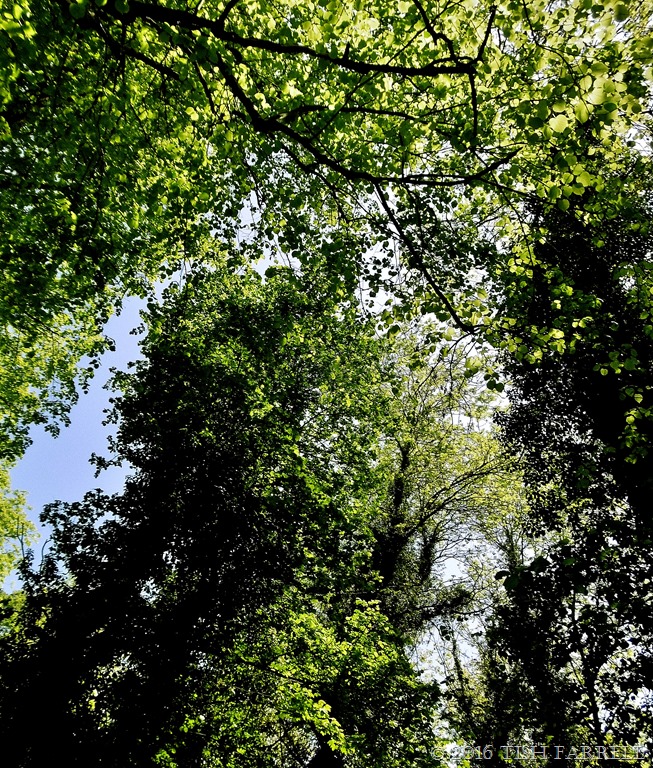
You can almost see the sap rising – gushing forth in fact to catch up after a slow-start spring. Anyway, walking amongst it this morning made the pursuit of allotment chores a complete and utter pleasure.

The chore in question is part of my on-going experiments with no-dig cultivation. So armed with my big green polypropylene bag I was out gathering up some of the piles of tree shreddings left around the Linden Field by the chap who comes to trim the lime trees’ overgrowth. I then haul them up to the allotment where I am covering a 6 feet wide x 20 feet section of uncleared plot with cardboard plus several inches of chippings on top. It’s rather a slow process, but I’m over half way there.

I’m hoping that by the time I get round to cultivating this section next year,  most of the worst weeds will have turned up their roots, and the mulch rotted down enough to produce a reasonable planting medium. Oh yes, and that in order to achieve all this both the cardboard and the mulch will have attracted a lot of very happy worms.

The thing is, though, once I’m out on the Linden Walk it is so easy to forget about heavy labouring, and slip into a complete green daze. And as you can see, I also had my camera with me. I was particularly taken by this fence post:

P1040256

And then at the end of the avenue near one of my target chippings piles, I noticed a nice flat area between the limes and the old railway line. I had not spotted it before, but it looked just the place for some qi gong. Secluded enough, I thought, not to frighten any of the Wenlock dog walkers who might otherwise come upon me in the midst of repulsing the monkey or being a wild goose flying.  So this is where I stood – beneath a canopy of limes and sycamores, accompanied by bird call and the soft flutter of pigeon wings. Aaaaah. Wishing you a similarly blissful, green-filled, sap-rising, sun-dappled day.

P1040265

*

This slideshow requires JavaScript.

Now please pop over to Jo’s Monday Walk for a truly inspiring excursion in beautiful rural Poland. And to add your own walks to Jo’s go HERE.

Bee In My Bean Blossom

100_5619

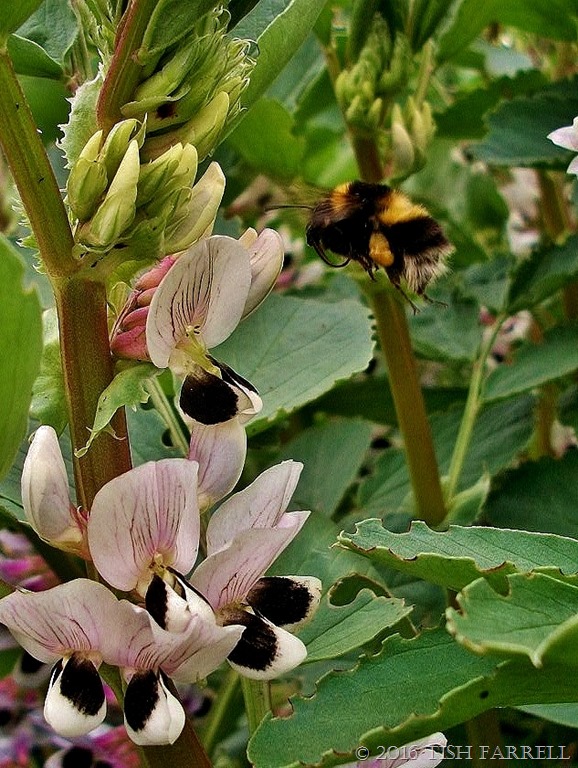
In April at The Earth Laughs In Flowers, Jude wants to see our garden macros. This is also the Day 5 of the 7-day nature photo challenge. So here we have a bumble bee heading for my field bean flowers. I don’t blame it. They smell divine on a still, spring day.

This photo was taken up on my allotment, probably last year. At the moment the current crop of field beans, sown in September-October and overwintered, is only a hand’s width tall, but they’re looking quite healthy. Once they get going, they will grow as tall as I am, and need some support. The photo also shows bean weevil damage on the leaves. This is one of the drawbacks of allotment gardening. Pests like this become endemic. On the whole, though, the beans seem to carry on regardless.

Field beans are related to the broad bean (aka fava or faba) and they look much the same, but are less than half the size. Mostly they are grown in the UK as a green manure, the plants dug in before flowering. I grow them to eat. They make great re-fried beans, soup and a bean version of guacamole, which is astonishingly good.

My crop was so productive last year, I was able to eat and freeze them, and save masses of seed to dry and sow for this year’s crop. It’s the first time I’ve done this, so it will be interesting to see how they turn out.  In consequence, I probably have grown too many. But once I see how the plants are faring, I shall sacrifice some of them. I mean to chop them down and leave them to rot on the soil surface, rather than digging them in. This will let the worms do the work, and keep the soil covered until I want to cultivate it.

I am beginning to see that digging is a very bad thing to do the earth. It wrecks the surface soil structure every time you do it, and so compromises fertility. Instead, the No Dig method relies on covering the soil surface with organic matter/compost every year, and then planting through it. The only problem is you need masses of compost. It also helps if you do your planting in raised beds. This way you do not walk on the soil, and can keep building up the fertility. Raised beds are easier to manage, and mulching the plants should massively cut down on the weeding, and the need to feed, or to water during dry spells.

Since last autumn I have been doing heavy labour on the new allotment plot that came with my polytunnel. (I hadn’t taken this into account when I got all excited about inheriting the tunnel from allotmenteers who were off to new territory.) The ground all round was heaving with dandelions and buttercups. And since this was before I discovered the no dig approach, I admit to using the quick and dirty method (though NOT weed killer) and slicing off the top layer of weeds, and dumping it in compost bins to rot down for a few years. The ground zero method of gardening.

I then commissioned He Who Does Not  Garden But Lives In My House to construct and install on my plot several raised beds made out of recycled builders’ yard pallets. A couple went into action straight away, and were planted up in October with over-wintering onion sets. The others I have been filling up over the past few weeks. So far the onions are looking healthy and a few weeks ago I sprinkled organic hen manure pellets over their beds, an alternative to sulphate of ammonia, which I didn’t have to hand.

By now you will be beginning to grasp the lengths that this writer will go to in order not to sit in front of her computer and cultivate the master work. So far I have shifted around 30 barrow-loads of an old garden rubbish heap that has apparently been in the corner of the allotment for the last forty years, and until recently was covered in brambles and nettles. Strangely too, it was my idea to recycle it.

Off course when I say heap, I really mean small mountain. It’s full of bonfires past, rodent nests, and decomposed leaves from the nearby ash tree, as well as nearly half a century of weeds and waste. There’s also broken glass, bits of plastic fertilizer bags, and all sorts of unidentifiable metal items that gardeners of yore thought could be disposed of in such a manner. As I sift through the heap, I think how good it is that I’m putting the field practice of my long ago archaeology degree course to some sort of use.

In fact I have been keeping an eye out for old coins, remembering that a few years ago I uncovered a 1725 halfpenny right outside my shed door. It helps to keep me amused during the boring process of extracting unwanted detritus and plant roots.

100_6630

I’ve also filled myself with a big enthusiasm infusion by deciding to dedicate one of the raised beds to growing flowering annuals to attract more bees. I shall also use it to grow on perennials (verbascum, heleniums, echinops) and biennial foxgloves that I’ve just germinated on the kitchen window sill. The thought of a raised bed bursting with summer flowers is so heartening. Doubtless you will see the results as time goes on.

But for now that’s enough talk about gardening. The sun is shining, and the weather forecast tells us we have a brief window of opportunity before the rain returns, so I’m off to the allotment with my pea and beetroot seedlings. I  may even sow some parsnips. Happy Sunday one and all.


#7-daynaturephotochallenge

We can see you…

100_6855

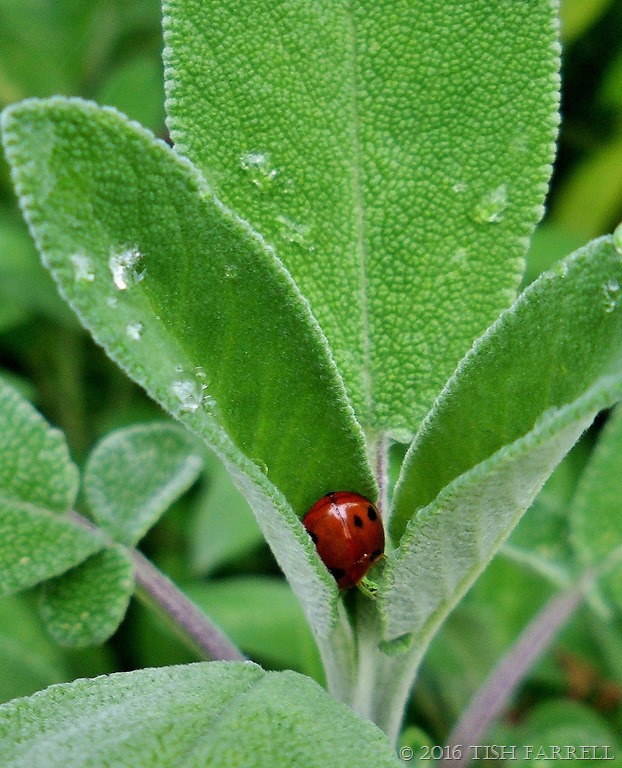
Ladybirds, as gardeners know, are good bugs to have amongst the fruit and veg. They eat aphids. Yay!

And they need to get gobbling now. For despite my recent whingeing about cold wind and lack of spring weather, the greenfly are already with us. And there’s a reason – our warmer winters.

We may have had endless rain, bad floods and storms this year in the UK, but we have not had the hard ground frosts that help to check slug and aphid populations; nor have had for several years. Back in early February when I was pruning the autumn raspberry bed up at the allotment, I was also finding ladybirds out and about.  They are supposed to be hibernating (overwintering) between October and March, so hopefully they were finding something to eat and hadn’t simply been fooled into waking up too soon by the unusually warm February temperatures.

The ladybird in the photo is nestling in my garden sage bed, spotted last summer. And for those of you who wish to find out more about ladybirds (Coccinellidae) there is a brilliant website at UK Ladybird Survey. And if you live in the UK, they want to have details of sightings.


#7-daynaturephotochallenge  #day 2

With thanks to Anna at Una Vista Di San Fermo who nominated me.


Related:  Warning: Reptile Alert #day 1

Our first autumn cauliflower

100_7997

Isn’t nature marvellous. I can’t believe that I grew this bee-eautiful purple-flowered cauli from one very tiny seed.  It looks a bit misty here, because it’s covered in fog. They weather has definitely turned here in Shropshire.

I was so excited when I first spotted it a couple of days ago. I’ve been nurturing the cauliflowers for a long time, feeding them liquid seaweed feed among other things. The seeds were sown in spring, then planted out in early summer in my new plot behind the polytunnel.

It was hard going too, clearing the ground for them. It had not been cultivated for several seasons and was choked with dandelions of epic proportions, and masses of creeping buttercups. The soil was heavy and claggy too. It seemed most unpromising, although I know that brassicas are fairly tolerant of these kind of conditions. For one thing, they like to be solidly rooted. In fact I’ve learned that caulis won’t flower properly if they are not well anchored from the start.

Once I’d planted out the young plants, (along with a handful each of Carbon Gold fertilzer, and worm casts, and an encircling of lime),  I had to make sure they were well defended with a covering of  mesh. This to stem the pigeon decimation that generally goes on at the allotment. The rotters line up on the overhead electricity cables and watch what we humans are up to, and plan their raids for when we’re not there.

Anyhow, they didn’t get this cauli, and we did. I steamed it, and then made a quick sauce with creme fraiche.  Here’s what I did.


Really Amazingly Quick Cauliflower Cheese

  • Break the cauliflower into florets and steam for a few minutes.
  • Drain, reserving a cup of the steaming water in case you might need it.
  • Melt a small piece of butter in the now empty pan.
  • Add some chopped garlic and/or sliced onion. Cook until soft and translucent.
  • On a moderate heat, stir in a small tub of creme fraiche. Stir it until it warms through. If it seems too thick, add a little of the reserved vegetable water, say a tablespoon at a time.
  • Season, and add any fresh chopped herbs of choice.
  • Stir in a couple of handfuls of grated hard cheese. I use pandano.
  • Then toss the cauliflower in the sauce and serve.
  • Any other quickly steamed vegetables can be included in this – peas, carrot sticks, chopped kale, chard, leeks, celery. Whatever appeals. Good served with a jacket potato, or Italian black rice.


So here you have MY flower of the day, as inspired by Cee’s Flower of the Day. I thought maybe we should give vegetables a look-in on the floral display front. Mind you, I don’t know what Cee will think. Aw, she’ll love it.

copyright 2015 Tish Farrell

Bees in the Sneeze Weeds

100_6723

The season of mists and mellow fruitfulness has arrived in Much Wenlock on the coattails of spring, missing out summer altogether.  Perhaps we’ll have it at Christmas instead, the barbeque months that, back in March, the tabloids were screaming we were in for, along with prolonged drought and associated mayhem that would, shock-horror, stop people from watering their lawns, or hosing down their Range Rovers. Mind you, these are the sorts of rags that would have us believing it is raining migrants. (That would be people so desperate that they risk all to run away from home).

Anyway, whatever’s going on with the climate, the upshot is that much of the garden and the allotment has a very ‘left-over’ look, which is why I almost want to dash out in the garden and hug the sneeze weeds – bees notwithstanding – for being so vivaciously red and yellow as too much autumn dullness descends.

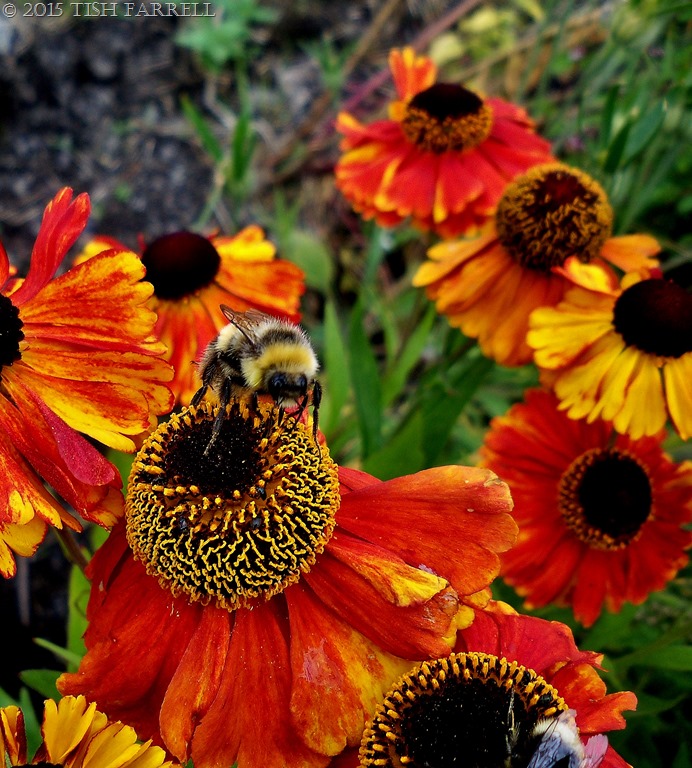
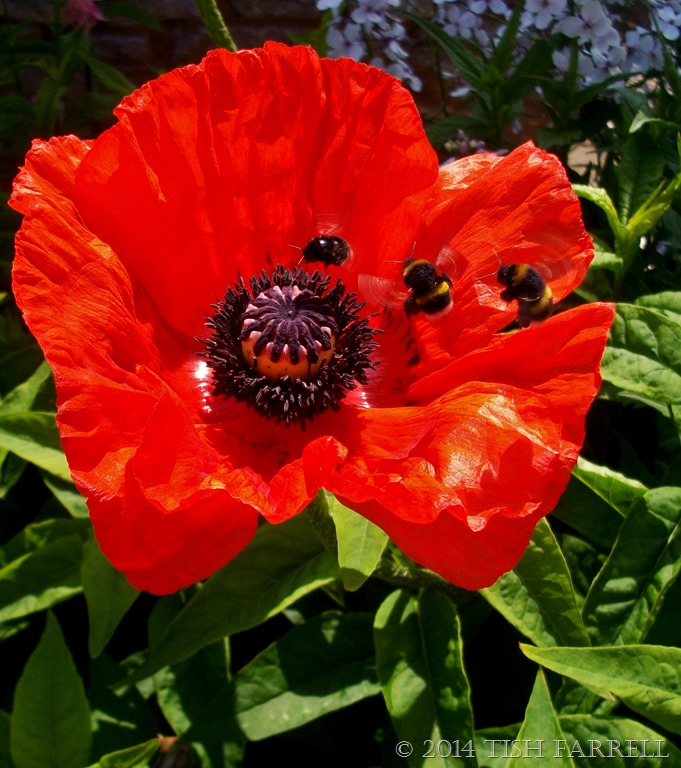
How can a plant so glorious be real? All the flowers in the photos, in all their wonderful variation, are growing on a single plant. And, as you can see, the bumble bees are gorging themselves. There are also some very tiny emerald beetles in amongst the pollen. Sneeze weed, by the way, is a country name for Helenium, which is a far more gracious name for such a generous plant, although one rarely used in the Farrell household.

100_6724

And it’s thanks to the bees and other precious pollinators that we are at least having fruitfulness, if not  harvest-hot weather. Up at the allotment apples are already weighing down the trees. They look like jewels:

100_6546

100_6681

Even the ornamental crab apples look good enough to eat raw. They’ll make brilliant jelly after a touch of frost, which hopefully won’t happen yet.

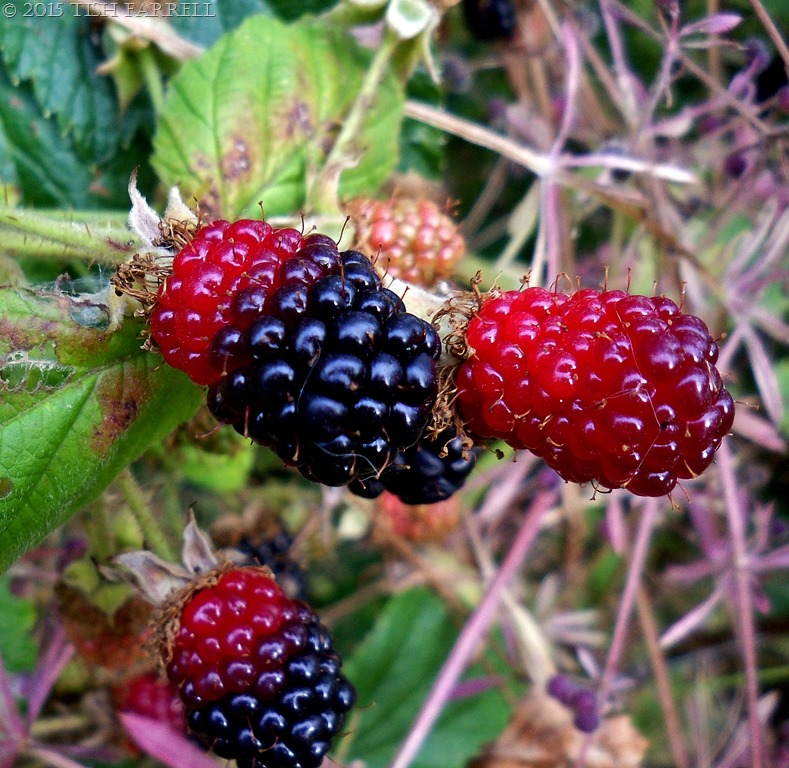
Then there are the brambles:

100_6682

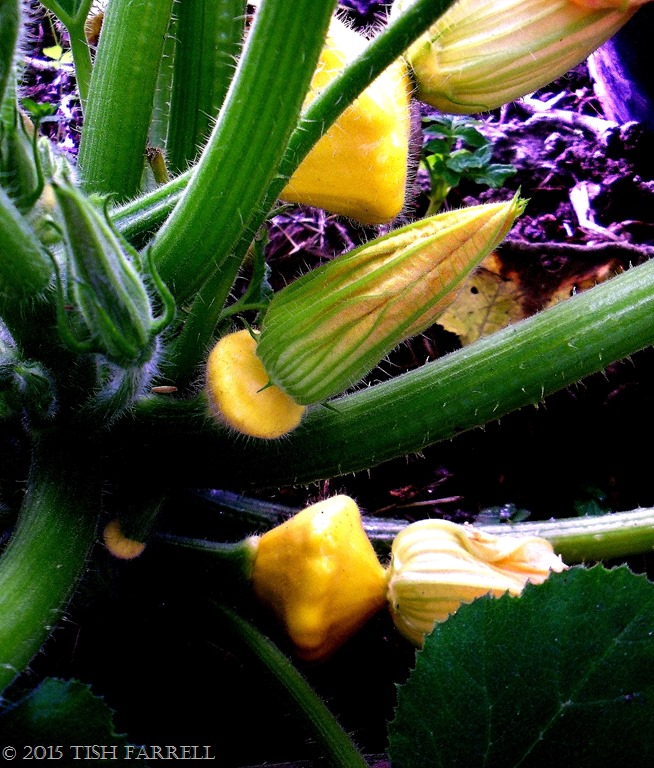
And the little yellow squashes that look like flying saucers:

100_6738

And the runner beans have started to crop (this photo was taken a week or so ago). The sweet peas on the end of the row are there to attract pollinators:

100_6503

Of course, when it comes to weather, we Brits are never happier than when we’re grumbling about it: too hot, too windy, too wet, too dry.  But then even if someone did steal summer, we still have so much to be thankful for. Feeling mellow, however, may not be an appropriate response these days. There may well be some hard lessons to learn when it comes to adapting to an increasingly erratic world climate, and not only for ourselves, but for the people who find their own lands are no longer habitable. We should not be surprised if they risk all to make for the lands of plenty.

copyright 2015 Tish Farrell

Mellow  is the theme over at Ailsa’s Where’s My Backpack

Let’s Hear It For The Bees ~ Three Big Cheers

100_3915

There are different kinds of achievement in this shot. The first is that I managed to capture it at all, teetering in a flower bed with my Kodak Easyshare. The sun was full on too so I could not see the camera screen. But by far the biggest achievement is the presence of three bumble bees all at once.

All over the world bee numbers have been declining. Swarms in the US have been especially hit. Over the last few decades many factors have played a part, including habitat erosion, lack of quality forage and disease. But in 2006 honey bee keepers began to report dramatic losses. It involved the deaths of whole hives and has been dubbed colony collapse disorder.

Environmentalists believe the cause to be the neonicotinoids in the new generation of pesticides. They want them banned until unbiased research proves otherwise. It is a sobering thought that without bees to pollinate fruit and vegetables, the US would be left with only three staples that do not require insect pollination: wheat, rice and corn.

To find out more, please visit Dear Kitty. Some Blog.  She has posted a good video that covers this topic. In the meantime, everyone needs to think about what they can do to encourage bees, including growing some bee-friendly plants. We also need to be prepared to pay a little more for organic produce, or to do what we can to grow our own food, WITHOUT chemicals.

This would be a real achievement – not only good for bees, but for us, the soil, and other wildlife besides.

copyright 2014 Tish Farrell


Strawberry & Rhubarb Cordial


100_4110

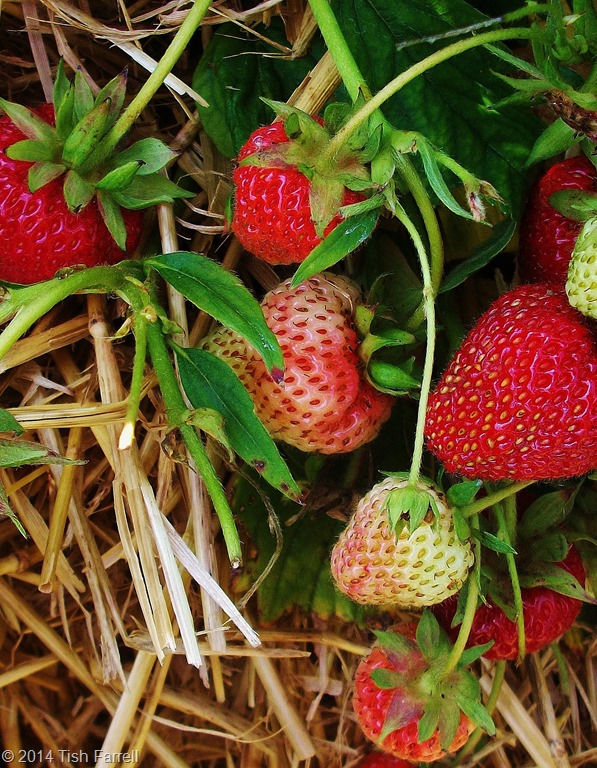
This photo did not involve much travel on my part, only a tramp across the field to my allotment where the juicy, chin dribbling strawberry season has just begun.  Nor am I being very original since I posted this recipe this time last year. But on the basis that many of you may have missed it, or forgotten it – here it is again. Also since the previous posting I have indeed tested it (several times) with prosecco  and can thus confirm that it does beat a bellini hands down. I froze some of the cordial too, and it was still just as delicious in our Christmas cocktails. I also think you could churn it in an ice cream maker and make a delicious sorbet, or turn it into ice lollies or lovely pink ice cubes to drop into champagne. Here it is then:


Strawberry and Rhubarb Cordial

4 sticks of rhubarb chopped

300 gm/10 oz ripe strawberries, hulled and cut in half

320gm/11oz caster sugar

1 litre/1.75 water

juice of 2 lemons

Place the fruit in a heavy based pan, add sugar and simmer on low heat for 10 minutes until the fruit begins to soften.  Add water and increase the heat slightly. Cook gently for a further 15 minutes until the fruit is completely soft.

Leave to cool then strain through a sieve, pressing the pulp into the syrup. Add lemon juice and store in the fridge.  For non-alcoholic moments, dilute with chilled sparkling water, and add a sprig of mint.

Enjoy…

100_4182

copyright 2014 Tish Farrell


Ailsa’s Travel Challenge: Fresh

Apple Blossom Time

100_5647


I confess that I posted this photo the other day, along with several other shots taken up at the allotment. But then I thought it deserves to be seen again, and on its own, and without me blethering on. So here you have it: apple blossom ~ what could be more lovely?

Ailsa’s Travel Theme: blossom


Related:

Rooti-toot-toot ~ spring at the allotment up close and vegetal