Enter The Dragon

IMG_3813ed

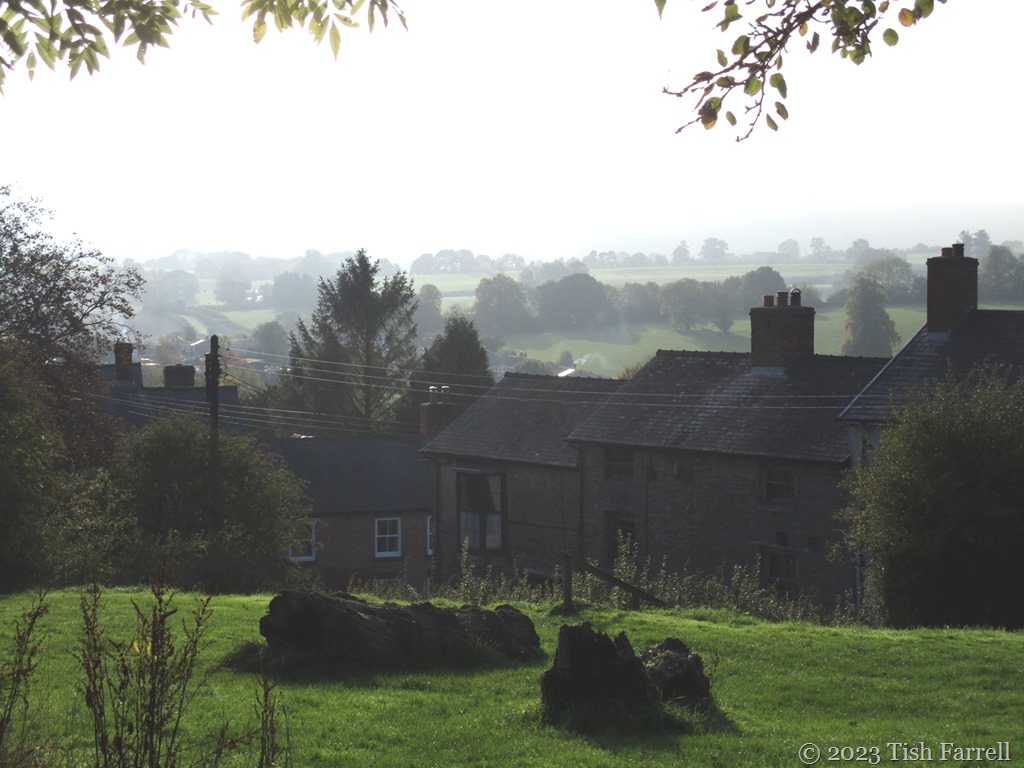
We’ve been ‘moving in’ to our new Bishops Castle home for a month now; more an ongoing state of flux than a settling in. There’s a lot to do and for months ahead, including work on roof and chimneys.  And so not a little frazzled, it was a relief to abandon the house and head for the streets.

Yesterday was Michaelmas Fair day. Time to find out what kind of a town we’d moved to. Time to mingle with our new community and connect. After all, it’s what humans most need beyond basic sustenance – connection. And when we think we don’t (because there’s just too much to do), it’s probably when we need it most.

Proceedings kicked off at noon with street stalls and roaming performers, bands on the Town Hall stage; classic cars lined up on the High Street – primped and prepped; fleet of steam traction engines huffing coaly steam in the cattle market, waiting on the 3 o’ clock grand parade.

IMG_3777ed

IMG_3768ed

IMG_3759ed

But as you can see, it was a dull old day – autumnal mist and drizzle plus intermittent showers, so we dipped in and out of the afternoon’s programme, met some new neighbours, reprised earlier introductions (yes, I do remember your name), bought a very fine rudbeckia, caught the Shropshire Bedlams Morris Dancers, but then listened to Jane the town’s singing florist (much amplified) while installing the new plant in the front garden. It was the evening’s events we wanted to go to.

The Lantern Procession began at 7.45. We stood at the top of the town to welcome it, wondering why the street was so sparse in humanity. (Was everyone in the pub? It surely looked like it. The nearby Vaults inn was full to bursting). And then down the hill the drumming began. Then out of the gloaming, the sinuous twists and twirls of the Hung Gar Light Dragon. And strung out behind him, the town’s lantern-bearing children and all their friends and relations.

IMG_3789ed

IMG_3791ed

IMG_3794ed

Now we understood. Most of Bishops Castle had been busy making lanterns in the Church Barn. They were all in the procession. What a throng.

And so as the dragon and Chinese drummers climbed the hill, so the Broseley Beats Samba Band struck up at the top. (I wish we’d discovered them when were living Broseley). A drumming play off then, the beats ripping from toe to crown. No choice. The body says, DANCE!

Then just when we thought the show over, the dragon came whiffling back round the Town Hall, heading off down the hill. Followed by the samba band. Followed by us and everyone else, the descent choreographed by the drummers, stopping at intervals to give a bravado performance.

IMG_3820ed

IMG_3832ed

*

When we reached the King’s Head at the bottom of the town, we (somewhat astonished) came on a line-up of several steaming traction engines outside the pub door. What a hoot, and literally too. One owner was a tad whistle-happy. I trust he wasn’t driving home.

IMG_3827ed

*

So there you have it, a fine finale to the Michaelmas Fair. All good spirits restored. And a taste of good things to come? I should think so.

Lens-Artists: recharge    This week Egidio sets the theme as he hikes Colorado’s fabulous trails.

Old As The Hills: That Would Be 570,000,000 years

100_9277ed

I recall being told by my geography teacher (aeons ago) that the Shropshire uplands comprised some of the world’s most venerable rocks i.e from the Precambrian era. The hills in question lie either side the Church Stretton fault, just across the Long Mynd from where we live now in Bishop’s Castle. On the east of the Stretton Valley are Lawley, Caer Caradoc and Ragleth, all formed from volcanic lava and ash around 570 million years ago. The Long Mynd lies to the west and began forming a little later with the build up of mud- and sandstone sediments in shallow seas.

Most astonishing of all, this whole process began when the earth’s crust beneath the land on which I now live was sited south of the Antarctic Circle. I’ll say that again: South Shropshire once lay south of the Antarctic Circle. Which obviously means this part of the British Isles has travelled from one end of the globe to the other.

On that journey, over millions of years, sea levels rose and fell; tectonic plates collided as continents shifted and shunted; uplifted landmasses were compressed, folded, tilted.

Then a succession of Ice Ages knocked the hills into shape. The Long Mynd is probably the most dramatic example – seen here in the the next photos taken in Carding Mill Valley, near Church Stretton. From 2.4 million years ago to 20,000 years ago glaciers shifted around the Mynd. When the ice sheets melted during interglacial periods, streams fed by melt water and rain carved out deep valleys, locally known as ‘batches’.

How mind-bogglingly amazing is this for a piece of landscape sculpting: water power plus the passage of time.

P1030461ed

P1030466resixws

IMG_6743ed

P1030464ed

P1030457

Lens-Artists: Time

Stiperstones Trail: Not For The Tender Footed

P1050992ed

*

In the last post you saw the Stiperstones in brooding monochrome. Those photos were taken on a dull and windy summer’s day. It was our first attempt to reach the Devil’s Chair. I had never seen it at close quarters. But in the end, the lack of light and the high wind across the tops put an end to the expedition.

The big problem on this particular trail is the surface. The higher you climb, the worse the path becomes, forming a devilish spread of upended pointy cobbles, designed to turn ankles and gouge soles, even when the walker is shod with sturdy footwear. The wind only made navigation harder: hard to focus with watering eyes. At one point I tried deviating through the heather, but it was a struggle to stride over; and it meant walking twice as far, and the rocks still ambushed me. A retreat was called.

We then made another attempt on a windless sunny day, when these photos were taken, but again were defeated by the terrain; nobbled by the cobbles. Still, despite hazy skies, there were some good views of the South Shropshire Hills as we headed down. And there is no doubting: this is one dramatic landscape, the quartzite rock of the the tors and outcrops laid down 480 million years ago, then fractured and shattered during recurrent freeze and thaw phases of the last Ice Age, 15,000 years ago. Back then, the ice sheet that covered much of Britain lapped against these hills.

It’s quite a thought: the repeated cycles of warming and cooling, cooling and warming that planet earth has gone through over many million years. And here we are in a warmish interglacial (it was apparently warmer in Britain in the Bronze Age, during Roman times and in the Middle Ages), and we’re probably due another cooling, since the geological timetable appears remarkably consistent, or at least it does when one’s dealing in millennia. I’m not sure we’ll like it though, the cooling.

 P1050981ed

P1050999ed

P1050988ed

Cee’s Which Way Challenge: walks
Mysterious In Monochrome: The Shropshire Borderlands

P1030697sepia

This week at Lens-Artists, Anne from Slow Shutter Speed asks us to think about monochrome and black and white photography. Click on the link below to see her post.

My first photo here was edited from a colour image, although however it comes, it’s an odd composition. It was taken at Mitchells Fold, the Bronze Age stone circle on the border with Wales, and I was only aware of the passing figure as I snapped the shot. I neither saw him arrive, nor leave the scene. Gives one a bit of a shiver.

These next two shots were taken with my Lumix point and shoot (before it gave up the ghost), using the ‘dynamic monochrome setting’. It was midday, and in high summer, but the light was penumbral; as if the sun had been switched off. Again very strange, although you can well see why these hills inspired tales of the Devil and gatherings of evil ones whenever mist shrouded the heights.

sepia

P1080542mono

*

This last photo was again taken on the Stiperstones, but on a brilliantly sunny day – a view of the Devil’s Chair (edited from colour). It looks like a ruined citadel, the quartzite rocks catching the sunlight.

IMG_0542bw

Related post: To Shropshire’s Mysterious Stiperstones

Lens-Artists: Black & White or Monochrome Please visit Anne at Slow Shutter Speed. She’s given us a snappy little essay on this topic.

Over The Hills And Far Away…

IMG_3673

At last. We’ve landed. I’m back. And on a whole new edge; no longer Wenlock, but on the border between Shropshire and Wales. And although we are finally here in body, there’s still a sense of too long in transit; a Rip Van Winkle dislocation in time and space. So just so you and  we know where we’ve come to (from Broseley in the east to the county’s south-west corner just north of Clun), here are some maps.

03b9b2d507fc78c58ec9a4fcc2a4bbc5-2720297223

shropshire-travel-map-407x430-1174062181

*

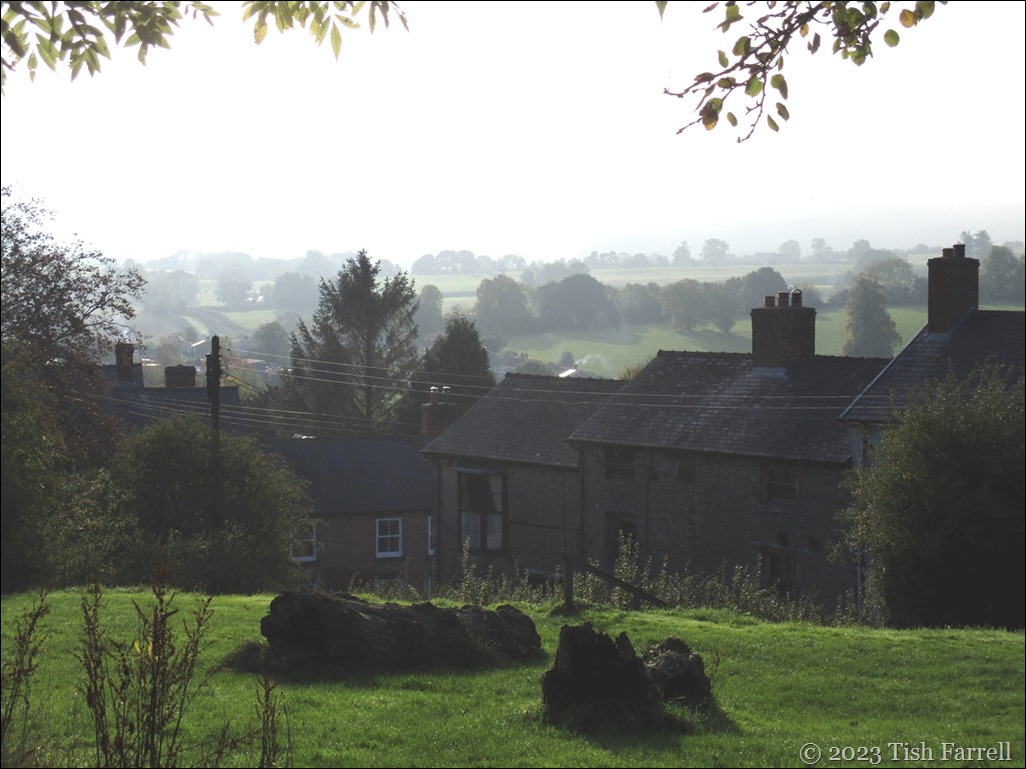
Here we are, then, in the midst of Shropshire’s hill country, not far from the Long Mynd and the Stiperstones. Nor far either from the Welsh uplands. Bishop’s Castle also sits on its own steep hill.

IMG_3642

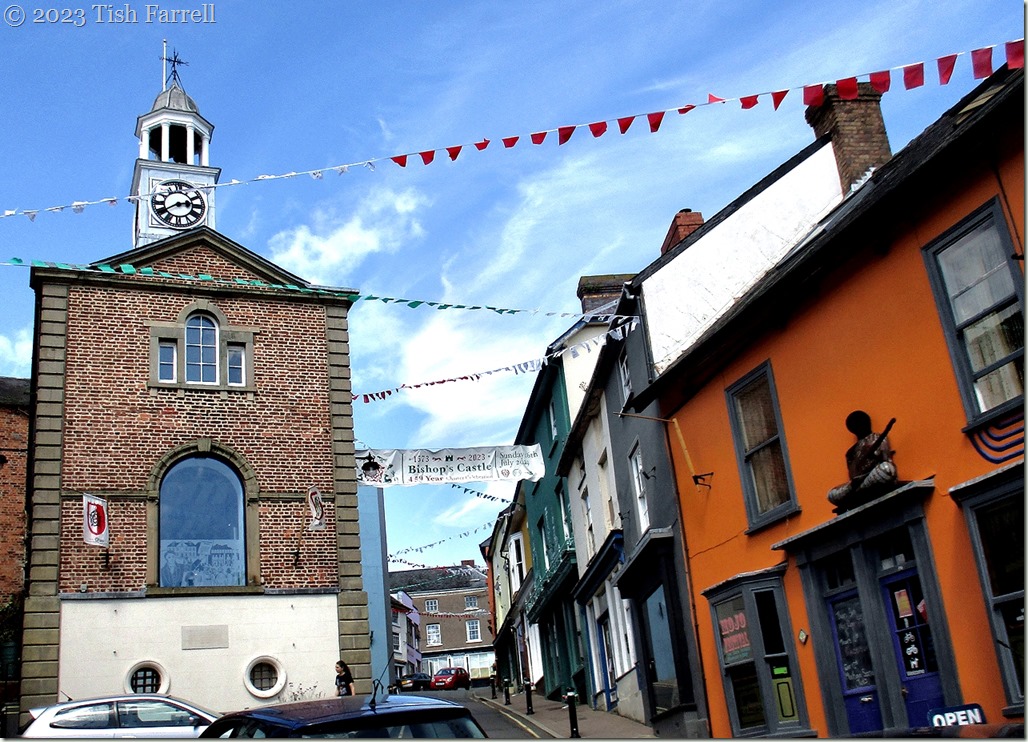
This is the Town Hall, not quite on the summit. The clock chimes the hours and quarter hours, the plangent tones (when one is half asleep) evoking vague notions of Dylan Thomas’s Under Milk Wood, for although we lack the slow black, crow black fishing boat bobbing sea, I feel sure I will discover some equivalent.

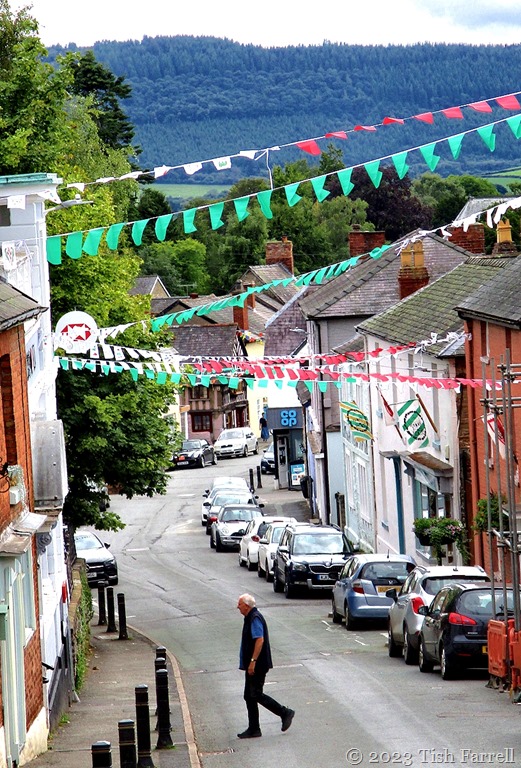
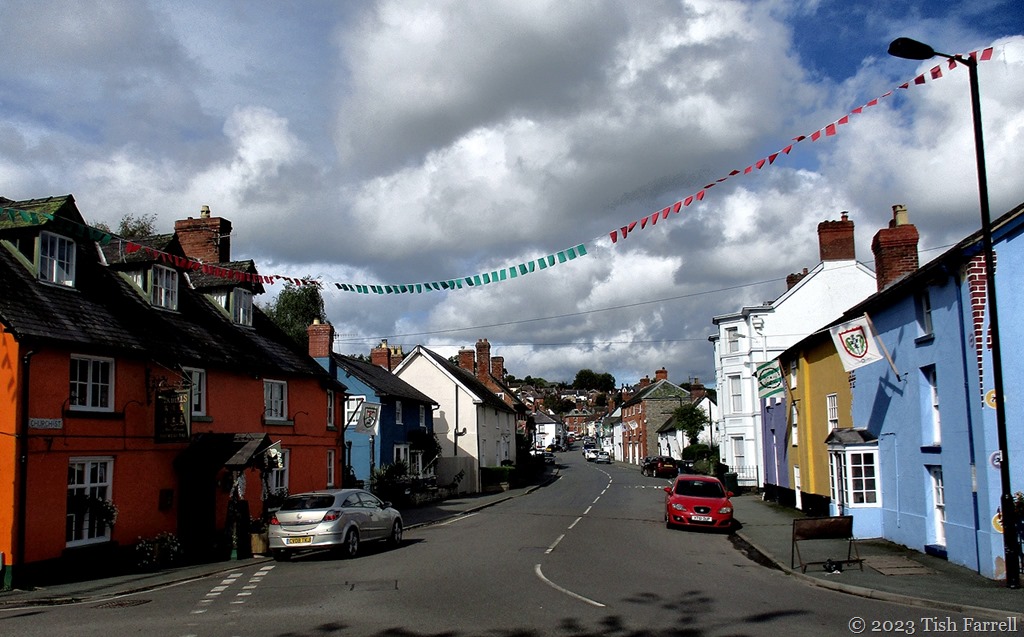
Here’s the downwards view:

IMG_3641

*

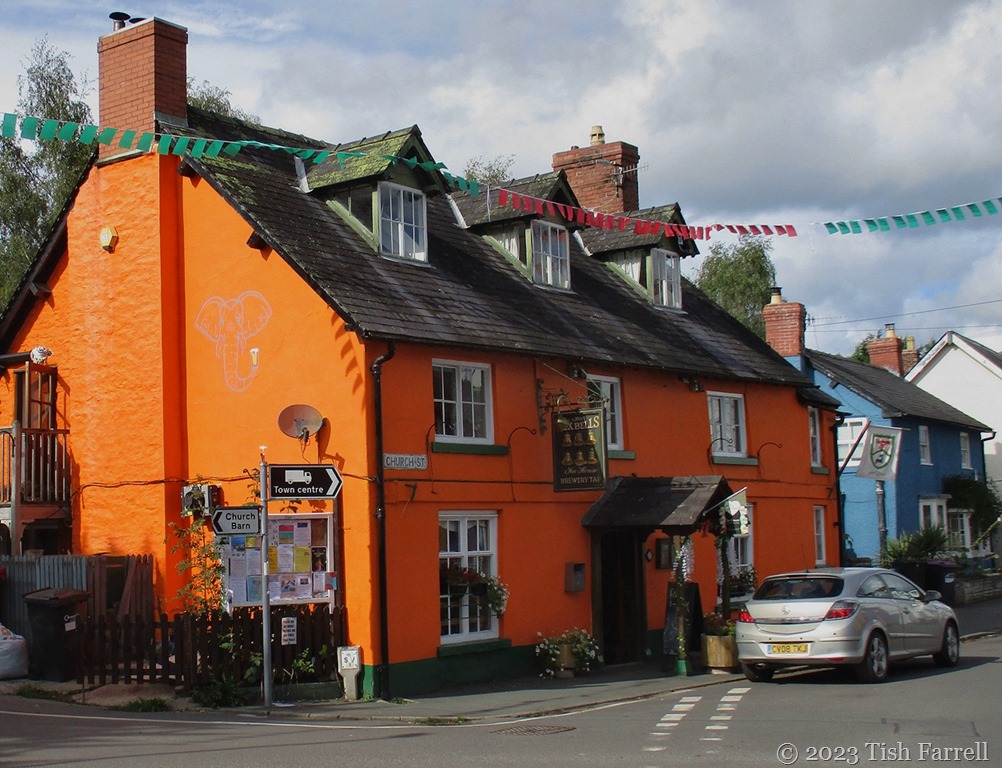
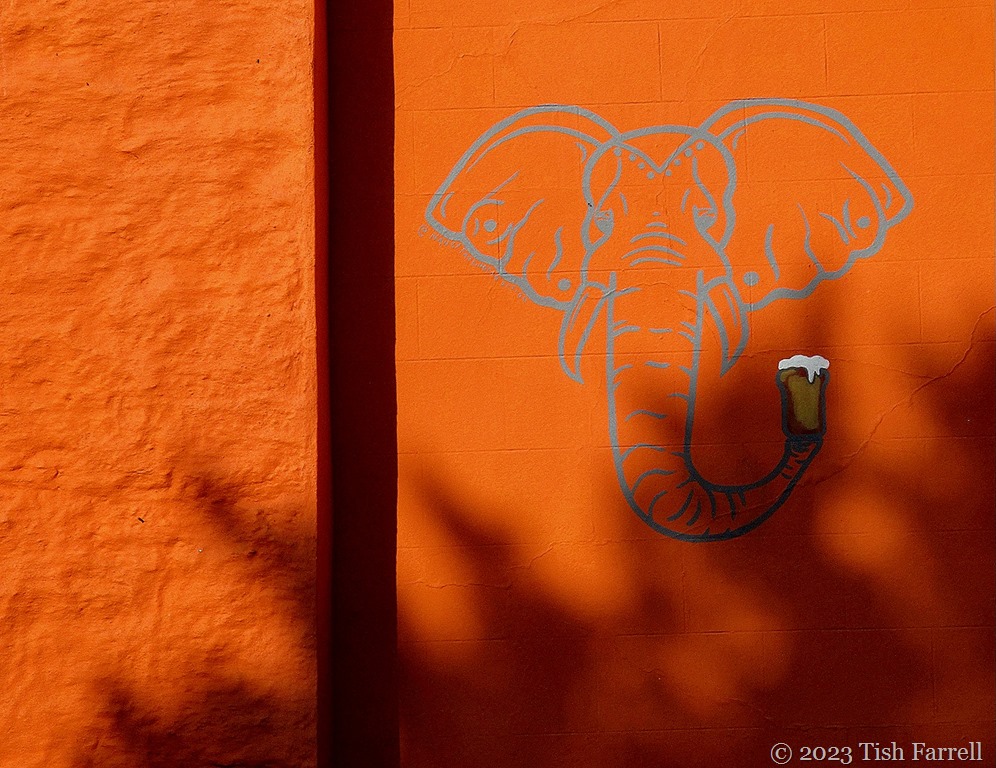
This is the High Street. Curiously perhaps, it features tributes to elephants here and there along its length. The most dramatic and near life-size version is just above the Town Hall:

IMG_3640

*

But half way down the hill we find a whole herd:

IMG_3658

IMG_3657

*

And on the corner with Union Street, our new-home road:

IMG_3668

IMG_3669

*

And why the elephants, you ask?

Well, there are two reasons.

1) In the 18th century, the rapacious Robert Clive aka Clive of India, returned to England with his haul of Subcontinental booty and became Member of Parliament for the rotten borough of Bishop’s Castle. Yes, he bought the votes, folks; married into the Earls of Powys dynasty and included an Indian elephant in his coat of arms (seen here at the top of the town)

P1050898

P1050899

*

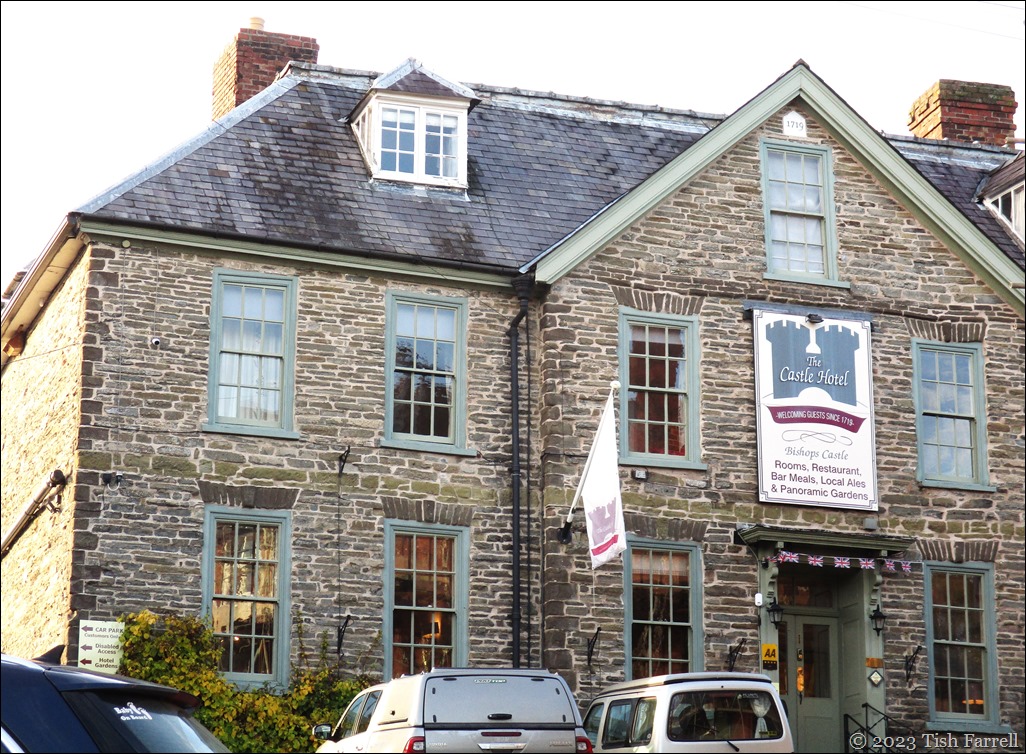
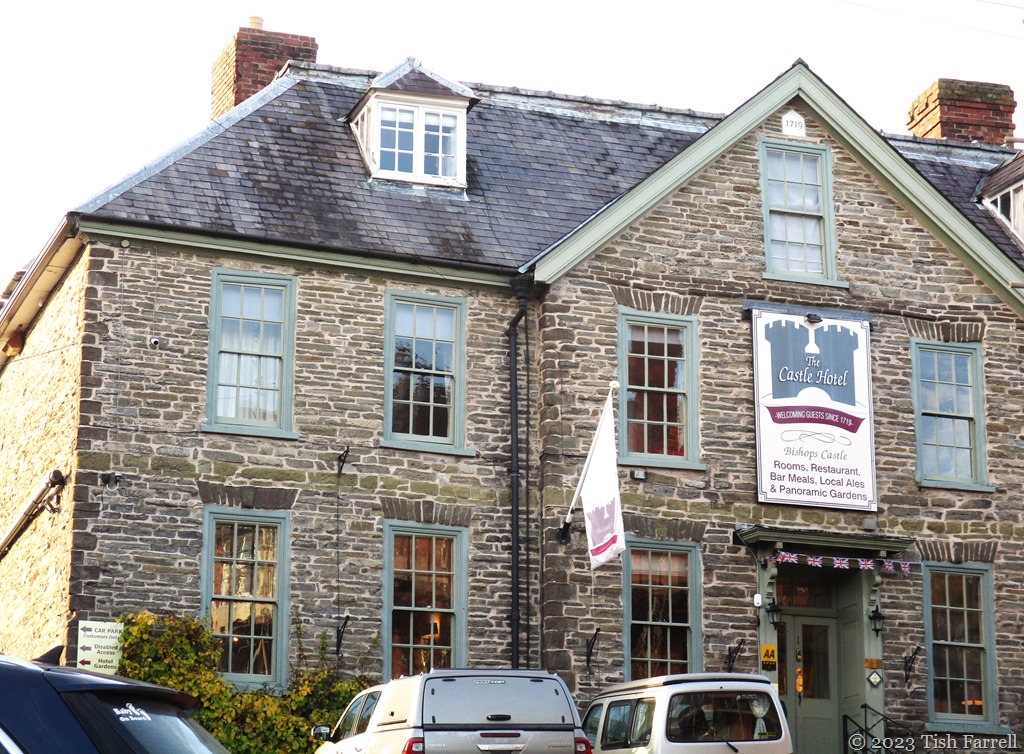
2) Across the road from the coat of arms is the Castle Hotel. During World War 2 its stables were used to shelter a number of circus elephants, keeping them safe from bombing raids. When peace resumed and the elephants returned to their owners, it is said that one remained unclaimed and continued to be a familiar sight on the town’s byways.

The Elephant Gate House where the elephants lived has been refurbished and these days is a welcoming holiday retreat for humankind.

And now there’s an elephant I haven’t mentioned, but certainly featured in earlier blog posts on Bishop’s Castle. Please meet Clive, the mascot of the town’s Michaelmas Fair which is due to happen in two weeks time (I shall report back). Meanwhile here’s a photo of him from an earlier fair day:

100_7181ed

*

While I’m here, I’d like to thank all of you who wished us well with second house move since March. Those kind thoughts surely worked, and all went smoothly, and without the snowstorms of the first move. Though on the leaving day I was mightily caught out. Such is the fickleness of the human heart, but I felt more sad about leaving Broseley after a mere six months than ever I did about leaving Wenlock after sixteen years. Goodness! Where did that come from?

But then I probably do know. I fell in love with Broseley’s Jitties, the town’s meandering alleys and pathways that resonated with centuries of people history – of miners and iron workers, potters and clay pipe makers, water carriers and maypole dancers; and all discovered in a place I thought I knew.

It’s a lesson to carry onward. Don’t take things for granted. Look beyond the obvious. And I know very well that Bishop’s Castle has a myriad of tales to tell, from the ancient and antique to the quirkily new. It’s certainly home to many busily creating people.

And on that note, here’s a cheery (elephant-free) artwork from the end of our road. You  can’t help but smile:

IMG_3670

*

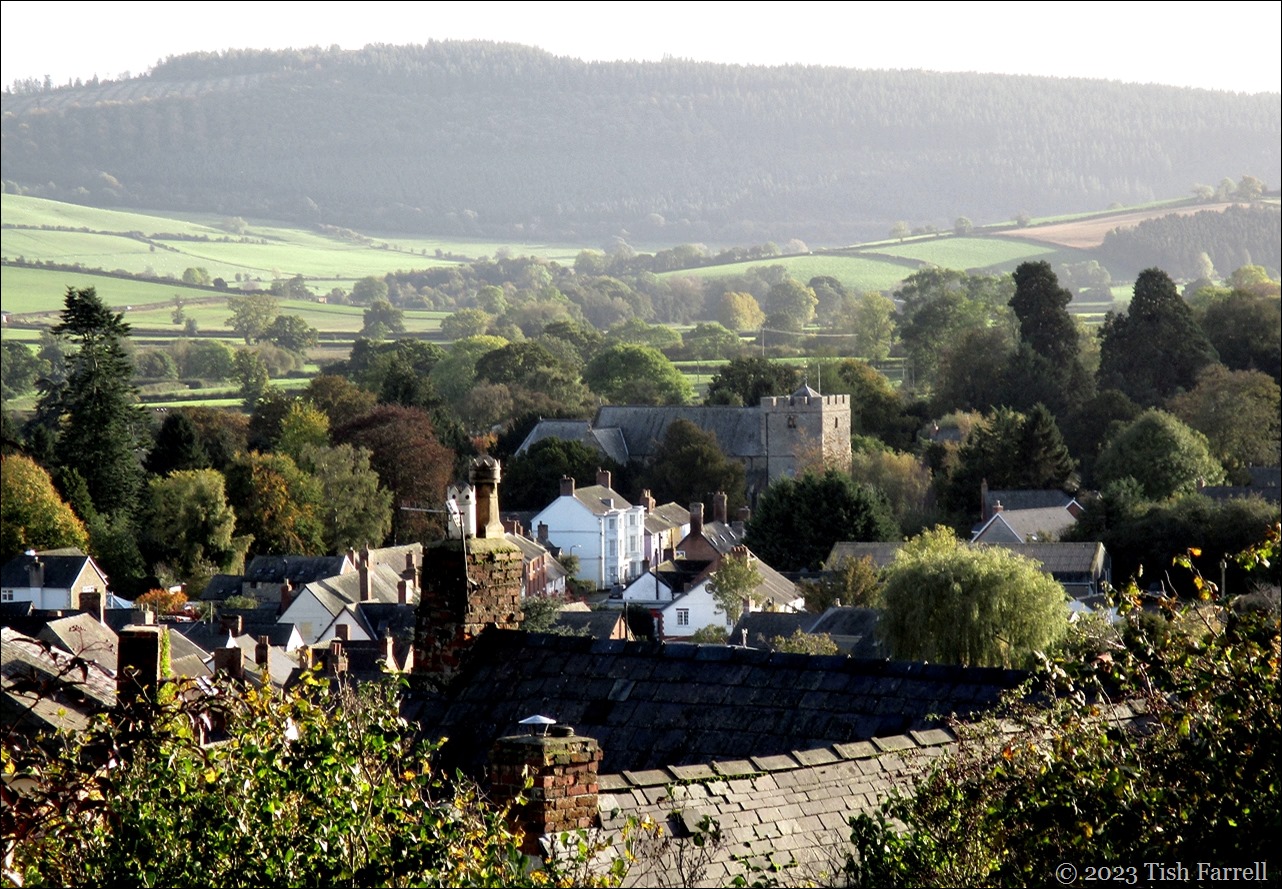
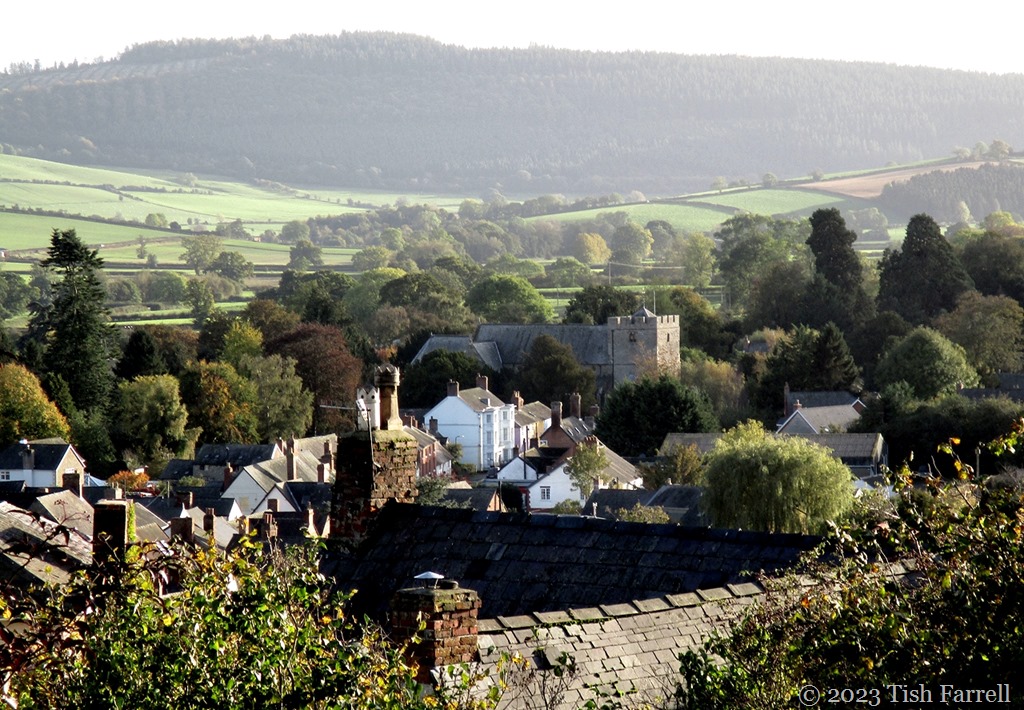
PS: the header photo is the view from our bedroom window – if I stand on tiptoes.

Bishop’s Castle Here We Come

IMG_3628

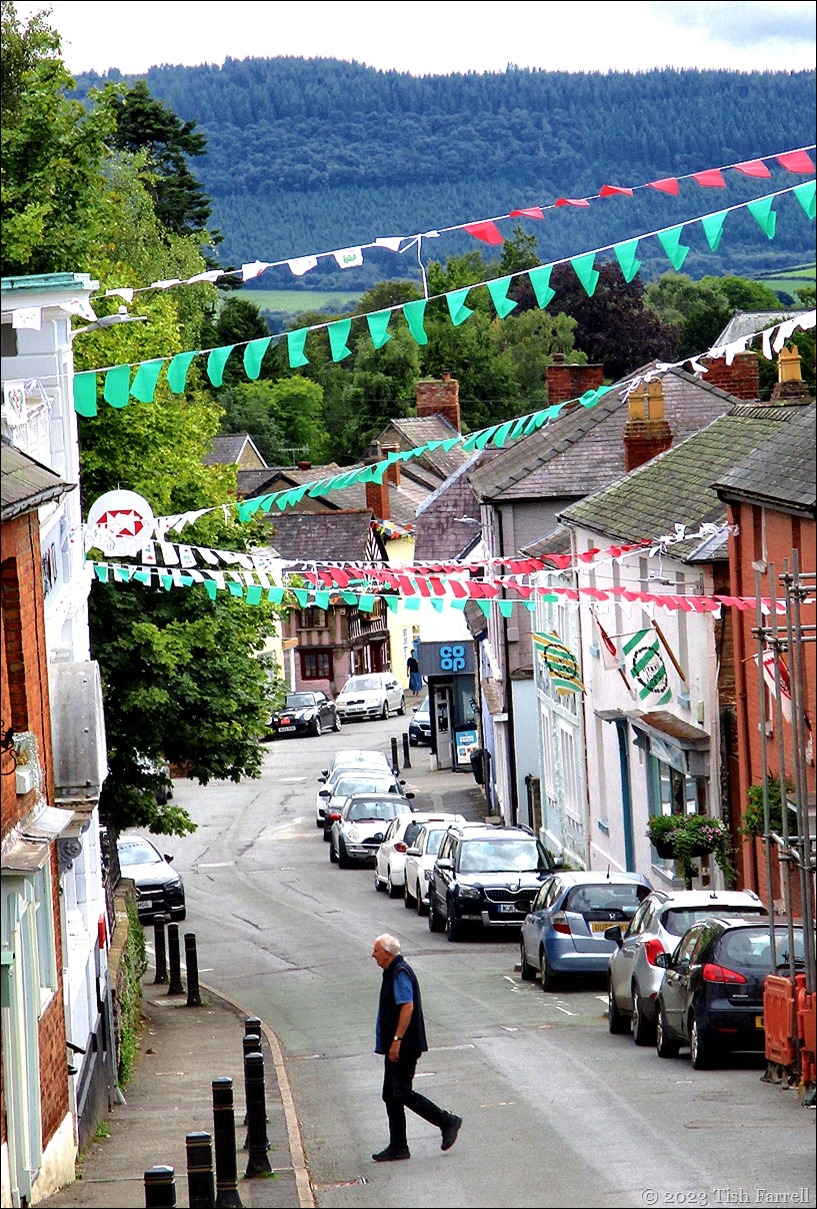
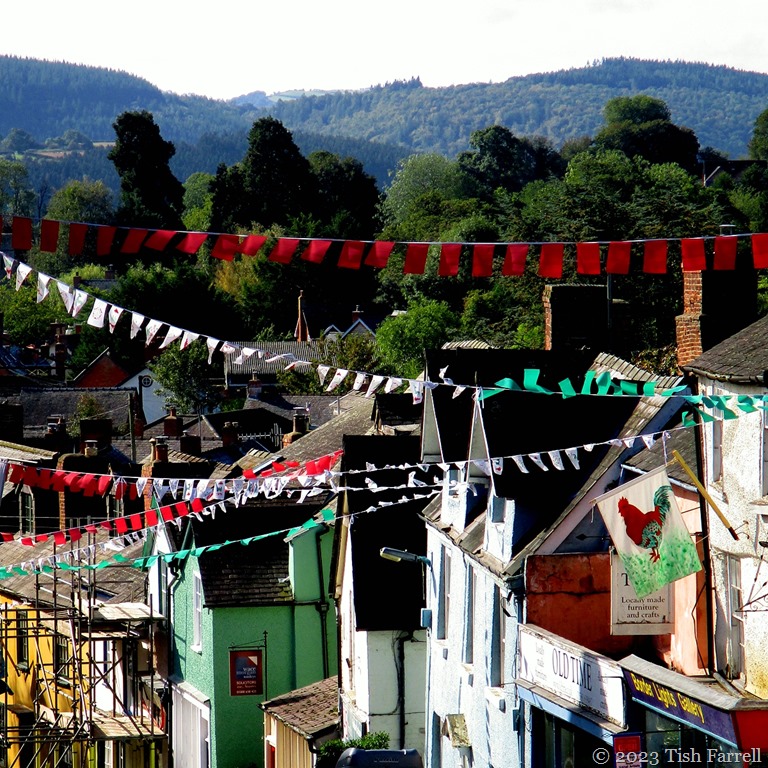
The flags were flying yesterday in Bishop’s Castle, though not for us. They were marking a recent festival, celebrating the town’s 450 years of self-rule, granted in a royal charter by Elizabeth 1 in July 1573. This fabulous document, bearing the queen’s portrait, freed the town from the bishops’ control and instead gave executive authority to a Bailiff and fifteen Capital Burgesses to administer the community’s affairs; a first bold step towards democracy then.

ElizCharter-Bishop's Castle Town Council

Photo: Bishop’s Castle Town Council

*

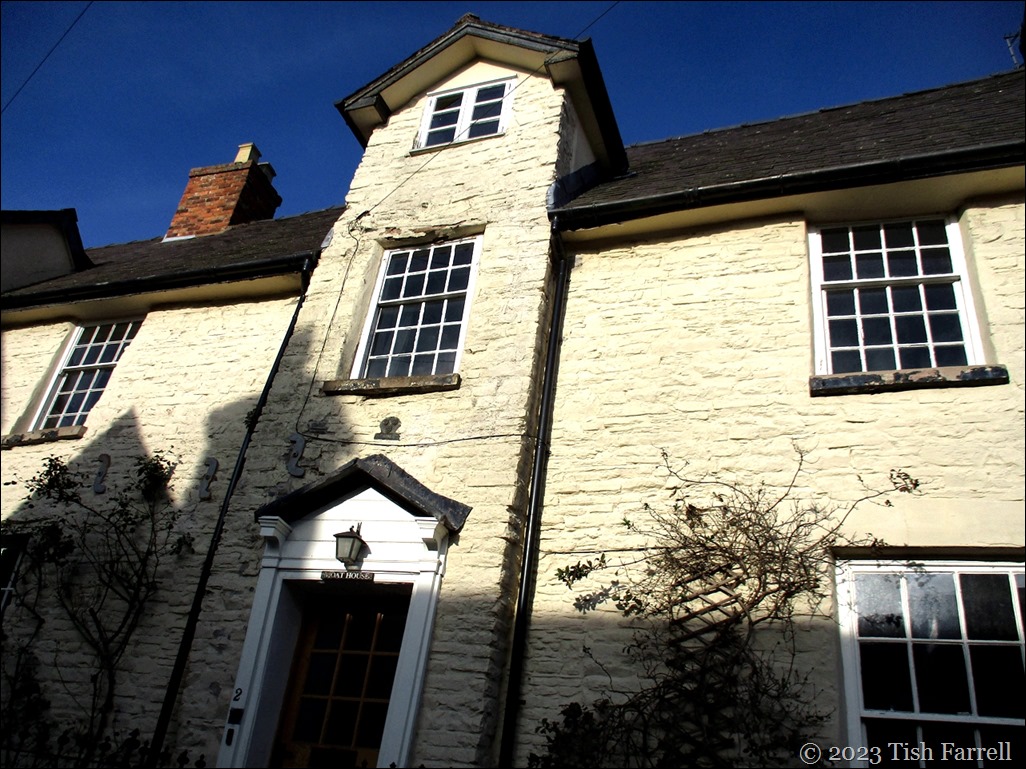
But if the flags weren’t for us, it felt as if they were. Yesterday we at last picked up the keys to our new home: a small red-bricked villa built by one George Nicholas in 1922 on a corner of land bought back then from a local brewery. The house sits above a narrow lane running parallel to the High Street, and is in walking distance of pretty much everything in the town.

And so begins the next stage: preparing for the actual move, hopefully in the next couple of weeks. Phew and double phew. I think the nerves are holding up – just.

So watch this space for some new tales from another ancient Shropshire town.

In the meantime here’s a couple of photos also taken yesterday. As  you can see- not the best of days, but proof that our cool and lacklustre July continues. And yes, that is an elephant you see performing on a vacant wall near the Town Hall.

IMG_3626

IMG_3627

And this is the Town Hall. We can hear the graceful chimes of its clock in our new garden. Yesterday it was hosting a wedding as we walked by. It also provides a regular venue for farmers’ markets and craft fairs, and of course council meetings are also held in its very handsome chamber on the upper floor.

To be continued…

Gone To Pot…The Backdoor Veggie Plot

IMG_3547ed

Most of you who come here often know that the Farrells are in transit, currently in a rented house while waiting to buy a new home. To say the process is stressful is an understatement. It’s also meant giving up my allotment plots, so I’ve been very glad to be able to potter about with some container growing.

Because it is true what they say: gardening is good for both mind and body, even in a scaled-down version.
The container approach also proves you can grow fresh vegetables with a fairly small amount of space or physical effort (if these happen to be issues) and any container will do, including small pots which are particularly useful for growing successional salad stuff.

But first, the big pot planting.

IMG_3578ed

With a further move on the horizon, I did have a very strong motive for resorting to container growing. If a pot is still cropping (or about to crop) when moving day arrives, it will be coming with us. To that end, the yellow courgette plant is in a builders’ two-handled bucket for easier transportation.

Then I was much perturbed about missing our usual tomato crop. To cover eventualities – as in just in case we’re lingering in Broseley longer than expected, I’ve planted a couple of cherry tomato plants in the garden border – Sungold and Piccolo, but I’ve also put some in large flower pots, two plants to a pot. And I’ve grown Tumbling Tom, which have been bred to dangle from hanging baskets and so don’t need staking.  Again, I have these in transportable builders’ buckets, and despite the ongoing gales, they are growing well with masses of flowers, and showing the first signs of fruiting.

IMG_3591

*

I do have lots of big clay pot, but realizing they would be too heavy and cumbersome to move when filled with compost and plants, I decided to use old compost bags (added drain holes in the bottom), with the tops rolled back to make a firm and grabble edge, and then popped into a clay pot for stability. These have proved excellent for growing successional crops of rocket and spinach. The latter usually bolts quickly in summer weather (not that we’ve had that since our few hot days in June; it’s more like early autumn), but growing it for baby leaf for salads or wilting into casseroles and curries seems to work just fine. It also grows very quickly.

IMG_3475

*

Lettuce can be sown all season, and best done anyway in small-pot, successional sowings. Some I’ve left unthinned, and just cropped the leaves; others I’ve thinned and planted out in compost bags to grow into proper lettuce.

IMG_3478

IMG_3590

*

For the last few years I’ve tended to grow carrots in buckets, especially late summer sowings which provide a crop for winter eating. This year I sowed some back in April, and now have a big bucket of carrots seedlings, some of them just big enough to pull. We ate this little bunch steamed with broccoli and tahini lemon sauce.

IMG_3606

*

And now a big shout-out for pea sprouts. This is a first for me, though why I’ve not thought of it before I really don’t know. I was able to use up all my old pea seeds too. Again, these can be grown in a series of 5 inch flower pots, sown successionally, or in standard seed trays (a layer of compost in the bottom, peas popped across the whole surface about an inch apart or a bit closer, and an inch of compost on top).

IMG_3480

This tray has been recently cut  i.e. when the stems are about 4 inches long. If the tray is kept well watered, then there will be further crops, maybe 2 or 3 more cuttings. We use the sprouts both in salads and for cooking.

Other potted crops include spring onions, leeks, pot marigolds and nasturtiums (for salads and prettiness), parsley, basil, dill, mint, coriander and oregano. I also have a bucket of climbing Violette French beans, and another of borlotti beans. I’m not sure how they’ll work out. The French beans have been beaten up by the winds (there has been no ‘hottest ever’ global warming in Broseley only shivering) but they are at least beginning to flower.

So there you have it: the Farrells’ moveable feast, and in the interim, the makings of a green salad to accompany every supper for the last couple of months. The exercise is making me re-think my gardening practice. The biggest advantage (apart from the moveability) is that container growing seems to help focus the mind on small, successional sowings, something I rarely seemed to manage on the allotment. You do need to keep an eye on the watering however. Wind, in particular, can dry out pots very quickly.

And now for some views of the back-door veggie plot:

IMG_3479

IMG_3473ed

*

I hope this might have enthused some of you to get potting. You can’t beat a freshly plucked green salad.

Simply Does It

P1070611cr

Wild oats and a summer storm brewing: I liked the muted tones in contrasting textures.

*

These convolvulus flowers seemed to light up a shady corner:

100_6691

*

The barley field: shades of green with front row sgraffitto effect:

IMG_0222

*

Ladybird sheltering in a sage leaf – what’s not to love?

100_6855

*

And finally – three photos taken at Penmon Point on the island of Anglesey. In descending order: view of Puffin Island;  looking across Menai Strait to the Welsh mainland;  boy looks at lighthouse.

P1060570cr

IMG_6205

p1060566

Lens-Artists: Simplicity  This week Philo at Philosophy Through Photography sets the theme. Please go and see his inspiring examples.

Quick Fix at The Opium Poppy Cafe

poppy bee and hoverfly

I’ve settled a few herbaceous cuttings in our rental house garden – geraniums, helianthus, Michaelmas daisies, centaurea, valerian, and oregano, and they’re all doing rather well.

But this opium poppy brought herself, and this morning proved a hot spot for a bee and hoverfly feeding frenzy. Visitors included a white tailed bumble bee and a flurry of marmalade hoverflies.

https://youtu.be/v3abVg6pwWE

When Creator Comes Visiting…

Mt Kenya

…this is one of his domains – the craggy summit of Kere-Nyaga, Mountain of Brightness, better known outside East Africa as Mount Kenya.

And the supreme being concerned is Ngai, maker of earth, the cosmos and everything. And it was to Ngai that the Kikuyu farmers of Mount Kenya’s southerly foothills once offered their sacrifices and prayers. Although they only did this in times of great crisis, since it was generally held that Creator was a remote figure, little concerned with human affairs. When his help was sought, he was addressed as Mwene-Nyaga, possessor of brightness (Jomo Kenyatta, Facing Mount Kenya 1938). Nyaga also has figurative connotations, meaning ostrich, but in this context suggestive of the white plumes of the male ostrich, a visual analogy for the glaciated zones among the dark mountain peaks.

You’ll see the thinking in this next photo:

ostrich and Ngong hills best

This shot of a retreating male ostrich also captures a distant view of the Ngong Hills, another landmark of spiritual significance, not least in recent times to Out of Africa  writer Karen Blixen and her lover Denys Finch Hatton whose burial place it is. For that story see Caught inside a Kikuyu garden.

I’m sorry I don’t have more and better photos of Mount Kenya. The ones I do have are a little odd, as if the mountain meant to tease by showing off parts of itself at times and in places where it was not expected to be. I remember spotting it early one morning as I stood in the garden of the Outspan Hotel in Nyeri, the jagged summit floating gauzily above the horizon.

For several moments I was fixed to the spot. By the time I thought of taking a photograph it was gone – only empty sky in the place where it was, and a visceral sense of loss. Kilimanjaro just over the border in Tanzania, plays the same trick. Both mountains spend much of their time being mysteriously invisible. Yet there are travellers’ tales that claim occasions when, looking north and south, both mountains appeared simultaneously. Just imagine!

002 (2) ed

*

And now for the Mount Kenya photos I do have. The first one was taken from a small plane on our way to Lewa Downs:

Mt Kenya from plane

Grevy's Zebra and Mt Kenya

Mount Kenya and elephants

This photo was taken beside the Lewa Downs air strip. At the time, it was the two elephants, just visible in the foreground, that caught my eye. It was only when I was scanning the image that I noticed the odd geographical juxtaposition of Mount Kenya’s summit. What are its lofty peaks doing just there, and so sneakily? They are over 17,000 feet high.

*

Kenya Aberdares

And finally a sunset view of Mount Kenya from the neighbouring Aberdares National Park. The Aberdare Range is also one of Creator’s dwelling places when he is checking out earthly doings. Its Kikuyu name is Nyandarua, which I believe means place of the crumpled hide – another interesting metaphor. Here’s an aerial view:

Scan-130608-0051

These vivid names for spiritual landscapes remind me that in traditional pre-literate societies, the natural world provided humans with unlimited scope for pondering, creating and observing. Its diverse parts were sources of inspiration and expression, things to think by, a resource for metaphor, analogy, riddles, song, dance and story telling as means for making sense of existence.

Particular mountains, trees, rocks, lakes, chosen as places to make sacrifices or pray to Creator, are gateways to congress with the divine, and so may be taken as sacred in the same way a church is sacred space for a Christian. More broadly, though, all land may be seen as sacred since it was made and given to humans by Creator.

And in this sense, then, there is no divide between spiritual and physical; all states exist in the same plane, which is interesting, if somewhat difficult for some of us to think about. We might call it respect. We might even call it love.

*

Lens-Artists: Spiritual Sites   Tina sets this week’s fascinating theme. Please take a look at her inspriting post.