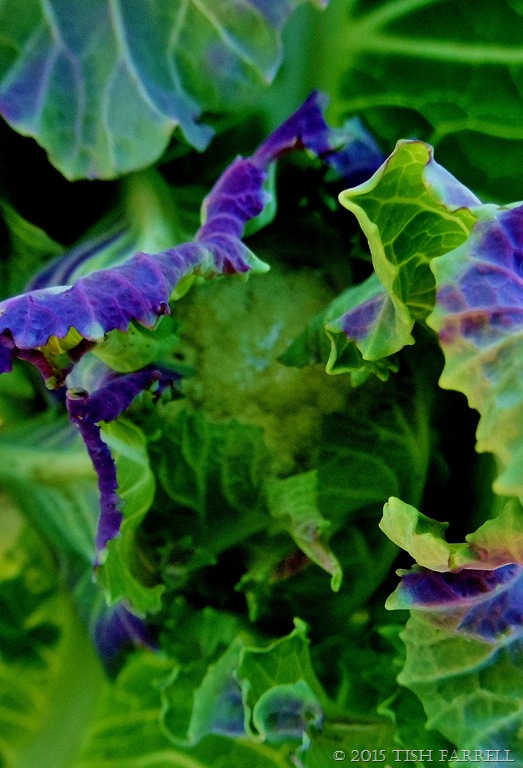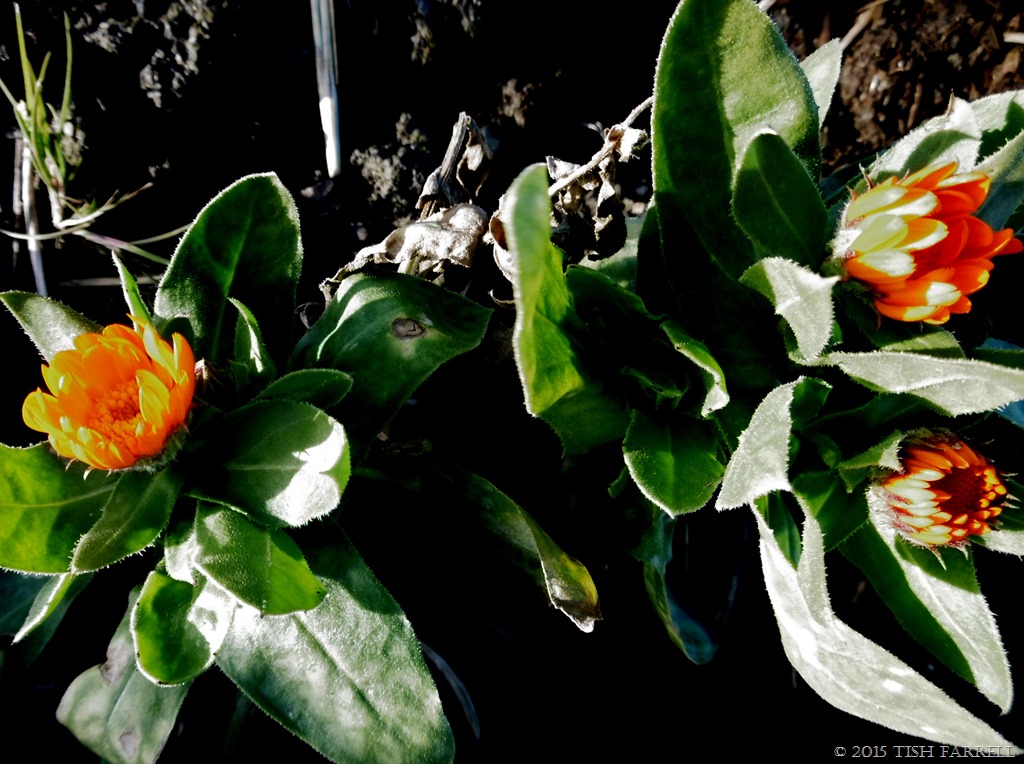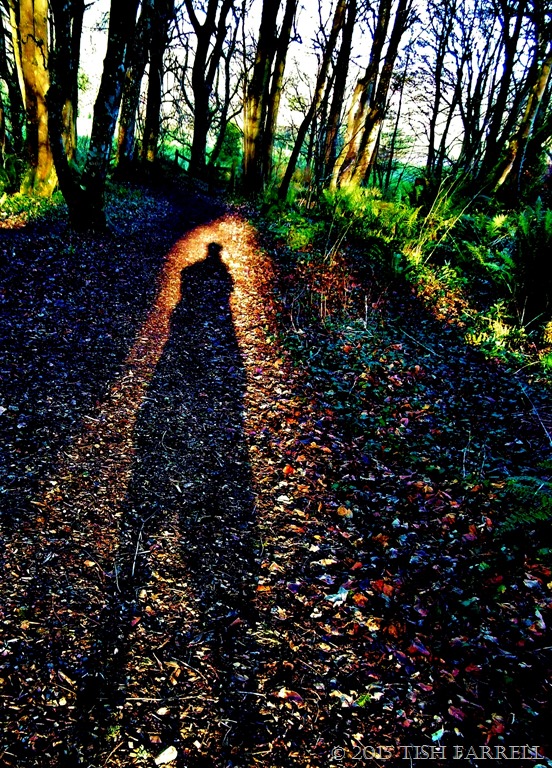
Trees

P1000076

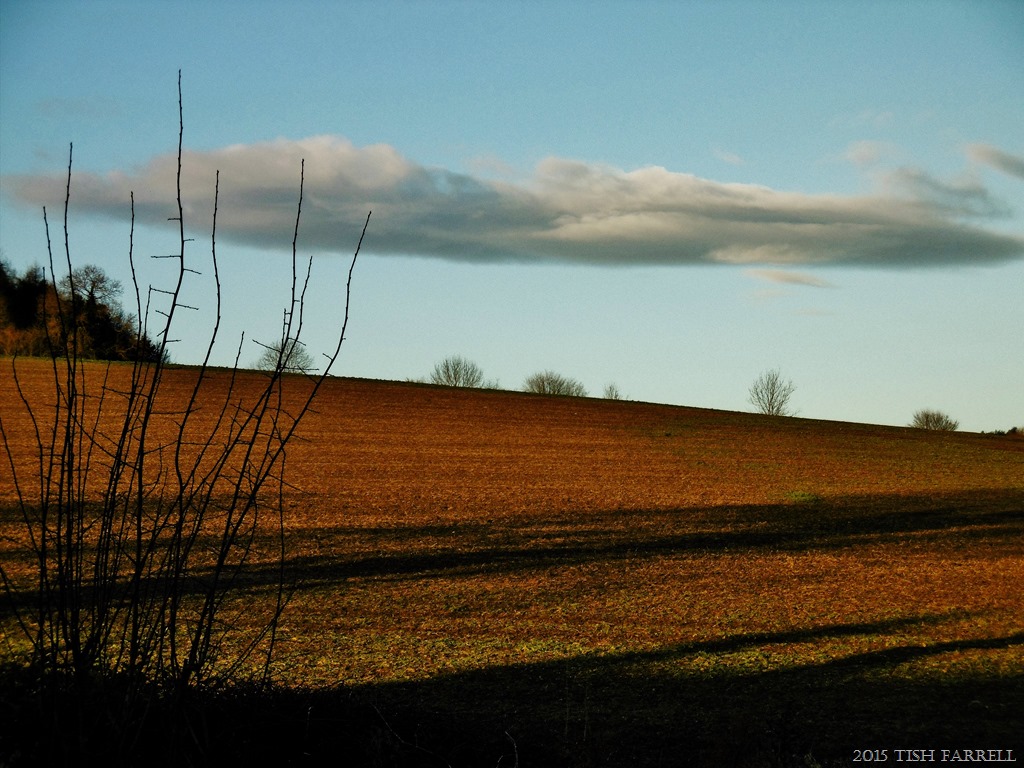
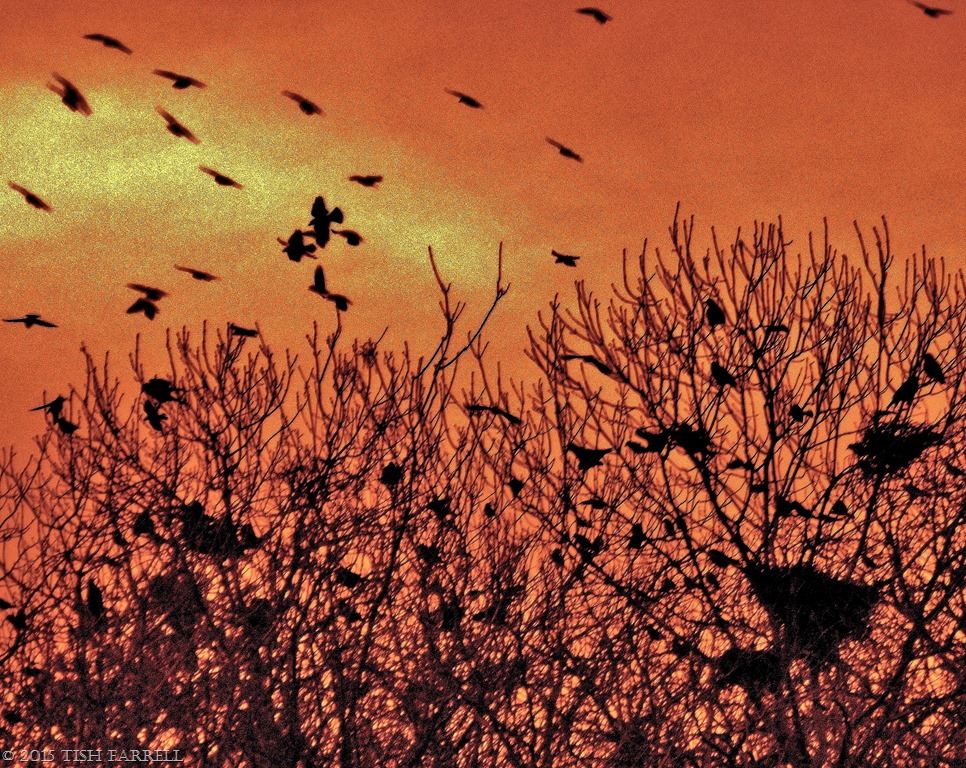
Storm lashed

Wind wrought

Winter’s tracery

*

Inspired by Laura Bloomsbury at  Tell Tale Therapy who was in turn inspired by Linda G Hill’s Friday prompt for Stream of Consciousness Saturday. I love the way one blog leads to another. Go to both links for quick-fire creative responses to Linda’s prompt: the letter ‘T’. The rule is no forward planning. Just write.

socs-badge

Badge by: Doobster @ Mindful

*


image

Secrets, conspiracies, tragedy, dark comedy

– a fast-paced novella of interwoven tales

set somewhere in East Africa

Farewell, Little Digital…

100_7187

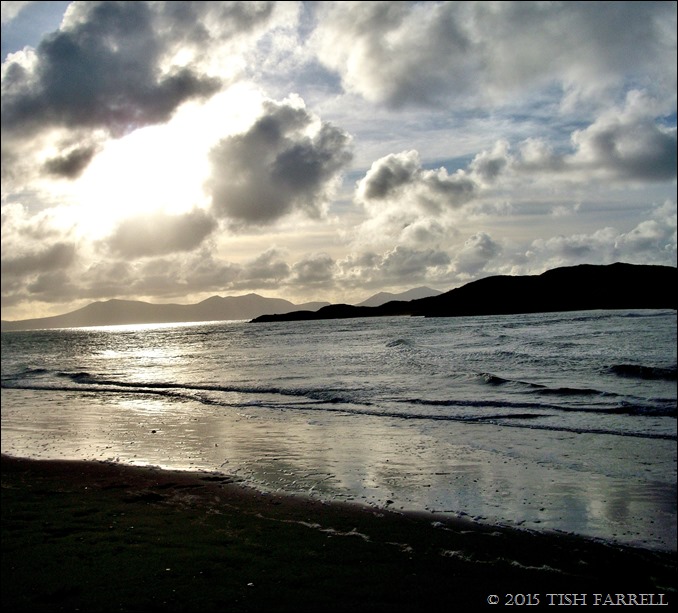
My trusty Kodak EasyShare camera died on Christmas morning. We were striding along Newborough Beach on Anglesey, in North Wales, me happily snapping away here and there. As you can see, the light was wonderful, and the mountains of Snowdonia across the Menai Strait, a mystic blue-grey. And then the camera began to die. Touchingly, it’s last shot is of me with my specs on, peering down at its lens, and wondering what on earth was going on with it. Under the circumstances, I’m not sure how the photograph happened, but happen it did. (An unintended selfie?) And so there you have it, little Kodak’s last click. Aaaah.

100_7193

Perhaps it knew what was coming; that I was about to desert it for a smarter, whizzier model. For yes, when we got back to the house, and the present opening, it was to find that Santa, aka the Team Leader, had bought me a new Lumix Panasonic. Oh, so many more modes and functions. But at least it has forced me to make one New Year’s Resolution: to learn how to use it properly. There! Now I’ve committed myself in print. Anyway, here’s a preliminary attempt in monochrome mode: looking towards mainland Wales.

P1000153

Ode to a Drum by Yusef Komunyakaa

290 - Copy

Here is one of the finest poems I’ve read in a long time, Ode to a Drum written by American poet, Yusef Komunyakaa. Please accept it as a festive gift and pass it on.


Gazelle, I killed you
for your skin’s exquisite
touch, for how easy it is
to be nailed to a board
weathered raw as white
butcher paper. Last night
I heard my daughter praying
for the meat here at my feet.
You know it wasn’t anger
that made me stop my heart
till the hammer fell. Weeks
ago, I broke you as a woman
once shattered me into a song
beneath her weight, before
you slouched into that
grassy hush. But now
I’m tightening lashes,
shaping hide as if around
a ribcage, stretched
like five bowstrings.
Ghosts cannot slip back
inside the body’s drum.
You’ve been seasoned
by wind, dusk & sunlight.
Pressure can make everything
whole again, brass nails
tacked into the ebony wood
your face has been carved
five times. I have to drive
trouble from the valley.
Trouble in the hills.
Trouble on the river
too. There’s no kola nut,
palm wine, fish, salt,
or calabash. Kadoom.
Kadoom. Kadoom. Ka-
doooom. Kadoom. Now
I have beaten a song back into you,
rise & walk away like a panther.


Source: Internet Poetry Archive

For more works by award-winning American poet, Yusef Komunyakaa

384px-Yusef_Komunyakaa_2011_NBCC_Awards_2012_Shankbone[1]

Yusef Komunyakaa  Photo: David Shankbone, Creative Commons

Flickr Comments: Y words

My Most Read Post in 2014:

Caught inside a Kikuyu garden: a memorial to Karen Blixen’s lover, Denys Finch Hatton

I wrote this piece back in March. Every day since several people have clicked on it, and on one single day in the summer this rose to 170 viewings. I have no idea why this happened, or why, judging by the search terms, Denys Finch Hatton’s grave in Kenya’s Ngong Hills is of particular fascination.  I thought it was just me who was fascinated. Anyway, here is the post again – a tale of loss and romance in the tropics. It is timely perhaps too, since in the UK at least, now is the season for showing Sydney Pollack’s film Out of Africa once more on TV. Happy Holidays everyone.

Denys Finch Hatton obelisk Ngong Hills

This was not supposed to happen. In fact you could say it adds insult to irony:  that a man so steadfastly dedicated to an unfettered life in the wilds should, in death, end up hemmed in, and so very domesticated within this small Kikuyu shamba. Yet here it is, the mournful stone obelisk, marking  the grave of Denys Finch Hatton,  son and heir of the 13th Earl of Winchilsea, Great White Hunter, and lover of two women far more famous than he is: writer Karen Blixen (Out of Africa) and aviator  and race horse trainer Beryl Markham (West with the Night).

Finch Hatton's grave on the Ngong farm

Yet another woman, the one whose shamba this is, shows him a new kind of love, taking care of the garden around the obelisk.  If you want to visit the place it is not easy to find – either her little smallholding on the Ngong Hills, or the grave within. When we visited years ago we found only a hand-painted signpost nailed to a tree. We parked in a paddock outside the farmhouse door and were charged a few shillings. We could have bought a soda too, if we’d wanted. We could not see the grave though, and soon found that it was deliberately hidden from view by an enclosure of  old wooden doors. More irony here of course. More symbols of shut-in-ness.

Denys spent most of his life in Africa avoiding any kind of confinement – out  in the Tsavo wilderness, running shooting safaris for the rich and aristocratic. His clients included the Prince of Wales (later Edward VIII) . In fact it was during the safaris for the Prince in 1928 and 1930 that Finch Hatton began to promote shooting on film rather than with a gun.

His lover, Karen (Tanne), Baroness von Finecke-Blixen lived in a small house below the Ngong Hills, some twelve miles outside Nairobi. By the time she started her affair with Denys she was divorced from her charming, but philandering husband, Bror, although they always remained friends. Her family had invested a great deal in the couple’s coffee farm, and Karen struggled to make a success of it. But the location was entirely wrong, and in the end she was forced to sell up and leave Kenya. It was during the period of selling the farm that she heard news of Denys’s death.

Scan-130429-0005

Looking towards the  Ngong Hills from inside the veranda at Karen Blixen’s house. The house now belongs to Kenya’s National Museums.

*

Scan-130429-0006

Denys Finch Hatton’s untimely end may be put down to his passion for flying. For those of you who remember Sydney Pollack’s 1985 film Out of Africa, some of the most elegiac moments of the film are when the celluloid version of Finch Hatton  (Robert Redford)  takes Karen Blixen (Meryl Streep)  into the skies above the Rift Valley.  Denys died in his Gypsy Moth in 1931, and in unexplained circumstances. He was taking off from the airstrip down in Voi in southern Kenya when his craft exploded. He and his Kikuyu co-pilot were killed. Denys was forty four.

Scan-130429-0018

View towards Nairobi from Denys Finch Hatton’s Grave, and overlooking another Kikuyu smallholding.

*

By the time of his death, his relationship with Karen was  well on the wane, and he had already started an affair with the younger Beryl Markham. His biographer,  Sara Wheeler says in Too Close to the Sun, that there is circumstantial evidence to suggest that Beryl was pregnant with Denys’s child, but that she then had an abortion. To have known this would have truly broken Karen Blixen’s heart: her letters show that she had longed to have a child with Denys.

With yet another twist of irony, it was with his death, that Karen somehow reclaimed him, remembering that he had told her of his wish to be buried in the Ngong Hills. The spot he had chosen was one that Karen had decided on for her own grave.

013

Denys Finch Hatton

Karen Blixen with her deerhound Dusk.

012

“There was a place in the hills, on the first ridge of the Game Reserve, that I…had pointed out to Denys as my future burial-place. In the evening, while we sat and looked at the hills from my house, he remarked that then he would like to be buried there himself as well. Since then, sometimes when we drove out in the hills, Denys had said: ‘Let us drive as far as our graves.’ Once when we were camped in the hills to look for buffalo, we had in the afternoon walked over to the slope to have a closer look. There was an infinitely great view from there; the light of the sunset we saw both Mount Kenya and Kilimanjaro. Denys had been eating an orange, lying in the grass, and had said that he would like to stay there.”  Out of Africa

The obelisk was only put up later by Denys’s brother. During Karen’s last days in Kenya she had the site marked with white stones from her own garden, and as the grass grew up after the long rains, she and Farah, her Somali house steward, erected a pennant of white calico so she could see the spot from her house, some five miles away.

Sometime after she had returned to Denmark she received a letter with some strange news about the grave:

“The Masai have reported to the District Commissioner at Ngong, that many times, at sunrise and sunset, they have seen lions on Finch Hatton’s grave in the the Hills. A lion and lioness have come there, and stood, or lain, on the grave for a long time…After you went away, the ground round the grave was levelled out, into a sort of big terrace. I suppose that the level place makes a good site for the lions, from there thy can have a view over the plain, the cattle and game on it.”  Out of Africa

Scan-131109-0048 - Copy

copyright 2014 Tish Farrell

Raindrops on Tulips…Whiskers on Kittens…What?

IMG_1019

100_5554

Thinking of spring to come, except I realise now that I forgot to plant any bulbs, so these memories of tulips past will have to serve. They were snapped at very close quarters in my garden last April, and with a Kodak Easy Share. The poor little camera has lost its zoom, but it’s quite good on macro. The same might be said of the photographer.


Daily Post Weekly Photo Challenge: Yellow

Over the Edge: Landscapes or Seascapes?

Rift Valley from Escarpment - Copy

Scan-130429-0001

Looking down on the small holder farms of Escarpment in Kenya’s Great Rift Valley

*

And on Shropshire farm fields from Wenlock Edge

IMG_1911

100_7057

It’s an interesting thought that in time the Great Rift Valley could become a seascape, for even now the earth’s crust is pulling apart along its 6,000 kilometre length.  The Horn of Africa, Somalia and the eastern half of Kenya would then become an island. Meanwhile these views of Shropshire show a landscape that was once covered in a shallow tropical sea. Also Wenlock Edge, on which I am standing to take this photograph, was once the bed of that sea before geological forces shunted it upwards. It makes you think, doesn’t it – the relentless forces of change?

And for the story that connects these vistas: First Post Revisited: By the Silurian Sea

For more about the Great Rift see an earlier post: Vulcanicity: welcome to the hot zone

Cee’s Fun Foto Challenge: Landscapes or Seascapes

Xanthophloea ~ Acacia, that is

Scan-130601-0012

Fever trees, Acacia xanthophloea, and waterbuck at Elmenteita, Kenya

*

For those of you who follow Frizztext’s alphabet prompts, the tail end is always a challenge. What the devil begins with ‘X’? So here, yet again, I am cheating a bit, but at the same time introducing you to a tree I fell in love with while we lived in Kenya. It is well worth getting to know. It has a velvety golden bark, and feathery foliage, and it smells of…I don’t know what it smells of…perhaps something warm and faintly spicy, and a bit like gorse.

It  acquired its English name ‘fever tree’ from early explorers who thought it actually caused malaria, rather than the mosquitos that infested the water sources near which it was often found growing. It is also known as the Naivasha Thorn because the shores of this Kenyan lake (still much occupied by the descendants of white settler families) are characteristically populated by these graceful trees.

Its botanical name comes from xanthos  meaning yellow, and phloios  meaning bark or skin. A golden skinned acacia: I think that sums it up. I read somewhere, too, that it is one of the few trees where photosynthesis takes place in the bark as well as in the leaves.

One New Year we had a hangi pit roast party in our front garden in Nairobi. This involved heating up rocks in a big hole in the lawn, and then wrapping food in banana leaves and burying it until it was cooked. It was a good party, and later we filled in the hole and planted a fever tree sapling. It grew wonderfully in the ashy soil. We called it the Party Tree. 

Looking back, it seems like a good name. The fever trees in these photos do look as if they might break into a  dance given half a chance; a waltz perhaps; something gently wafting anyway.

Scan-130603-0004

Nakuru National Park, Kenya. Giraffes like fever tree browse too. They steer their tongues around the thorns.

*

Traditionally, the timber is used for charcoal making, firewood and building poles. The foliage and the pods make good animal fodder. The trees can also be cultivated as a living fence, thus providing for many household needs all in one go. The roots are also nitrogen fixing, and the delicately scented pompom flowers are good bee forage. They are also elephants’ food of choice when they are not eating grass, although a Zambian zoologist once told me that they target fever trees for destruction because they are trying to stop them encroaching on their grassland reserves. In Australia, where it is an introduced species, the fever tree is regarded as a major and costly pest of pasture, so the elephants clearly have the measure of their tree.

In South Africa the tree is called Mukanya Kude by the Zulu people who revere it for its medicinal properties. They also use the bark to promote lucid dreaming and provide spiritual insight. Scientific analysis has shown that the tree’s parts comprise many active ingredients, and it is used throughout Africa to treat both physical and mental illness.  Paul Kabochi, the ethno-botanist whom I used to meet at Delamere Camp at Elmenteita, told me he had once successfully treated a local typhoid epidemic with decoctions of the bark.

Personally, I always find it heartening to remember that there is something bigger than Big Pharma – the still surviving natural world that harbours all manner of life-enhancing creation. We might also remember not to destroy it before we have learned of its many useful properties, or indeed learned to value other living things simply because they are there, and are in every sense magnificent.

Scan-130608-0001

Meeting elephants in a fever tree thicket at Lewa Downs, Kenya

*

copyright 2014 Tish Farrell

Flickr Comments