Abermawr Cove ~ It’s The Seal’s Whiskers

IMG_4697

It was hard to tear myself away from Tregwynt Mill; unexpected burst of hot September sun or no, there was a strong inclination to curl up among Welsh tweed quilts and cushions on the showroom bed. To distract myself from wool-lust I suggested we walked down to the sea. It’s not far, I tell Graham, he who too often suspects me of total map-reader-error. I was surprised when he agreed.

We followed the course of the stream that had once powered several mills in the valley. The lane was bosky, enclaves of deep and mossy shade, then sudden sprinkles of sunlight through sycamore, ash and alder. There were old walls, built in the local style of vertically laid stones wherein strap ferns and pennywort had found a root-hold.

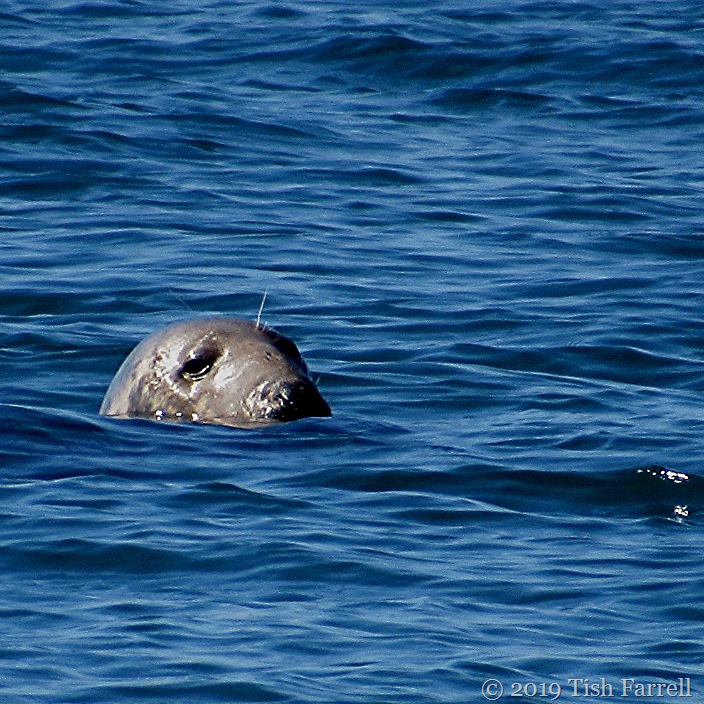
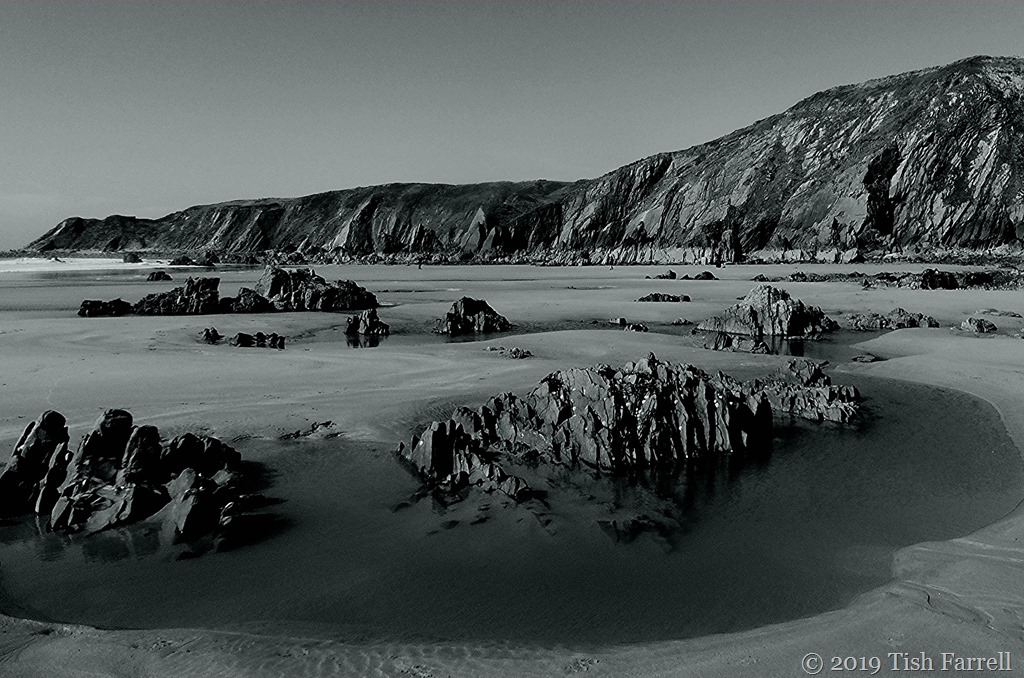
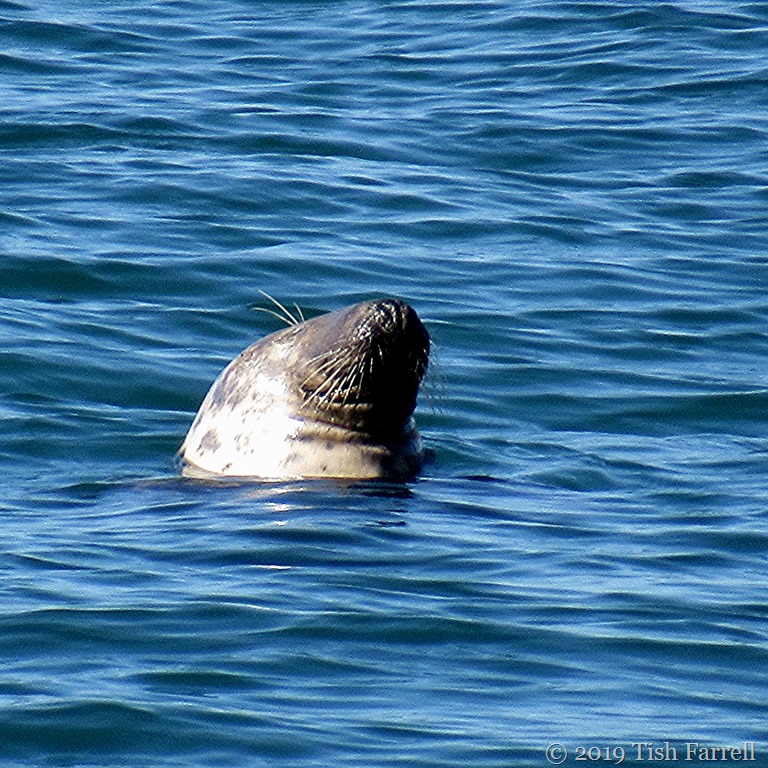
After about half a mile we found the sign to the coastal path, and almost at once, there we were, looking down on Abermawr beach. The cove itself was sparse in humanity, and we found out why when we got down there. The pebbles were so heaped up and huge they were almost impossible to walk over. Most people were passing by, following the cliff trail that crossed at the back of the cove.  We perched on some rounded rocks and tried to locate the source of the strange barking calls to seaward. And then we saw it. And it saw us. And in between sunning its face, it watched me taking its photo. Nor was it alone. Its partner (parent perhaps) was somewhere out in the bay, doubtless doing some fishing, but whenever it returned to the cove it did not seem keen to show much of itself.

And so a chance walk proved to be one of life’s blissful moments, a piece of happenstance that won’t be forgotten, sitting by a blue sea, under blue sky, dreamy warmth, blue coastline of Llyn Peninsula barely there on the sea-line, and now and then meeting the eye of a sun-bathing seal.

IMG_4707

Line Squares #6

A Line Of Defence ~ Fishguard Fort

IMG_4500

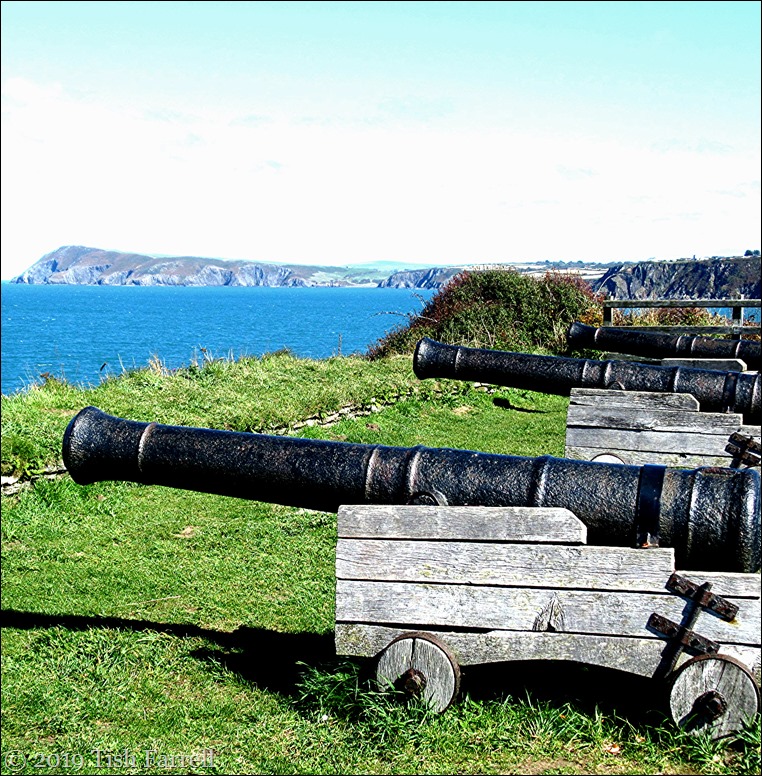
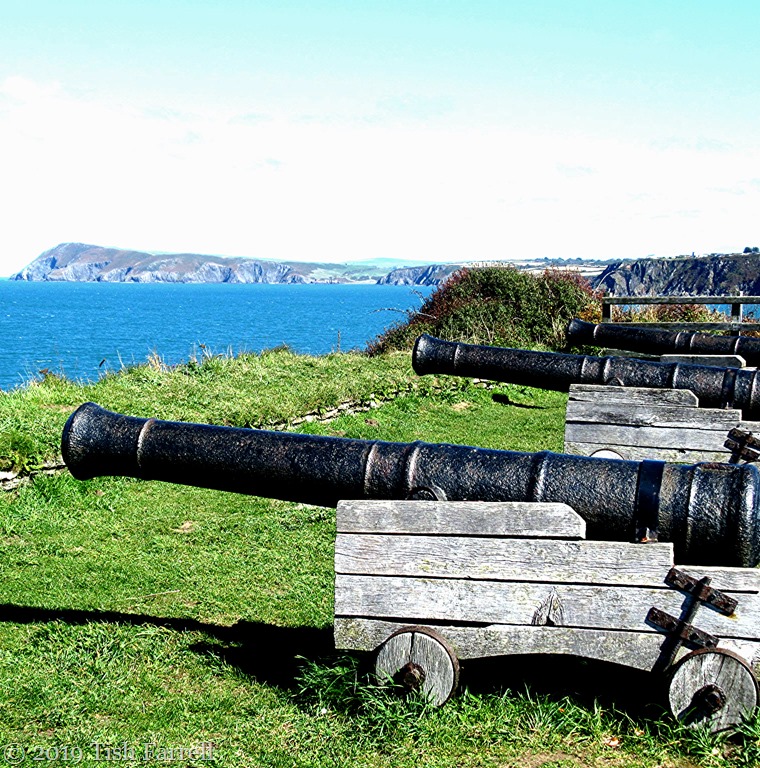
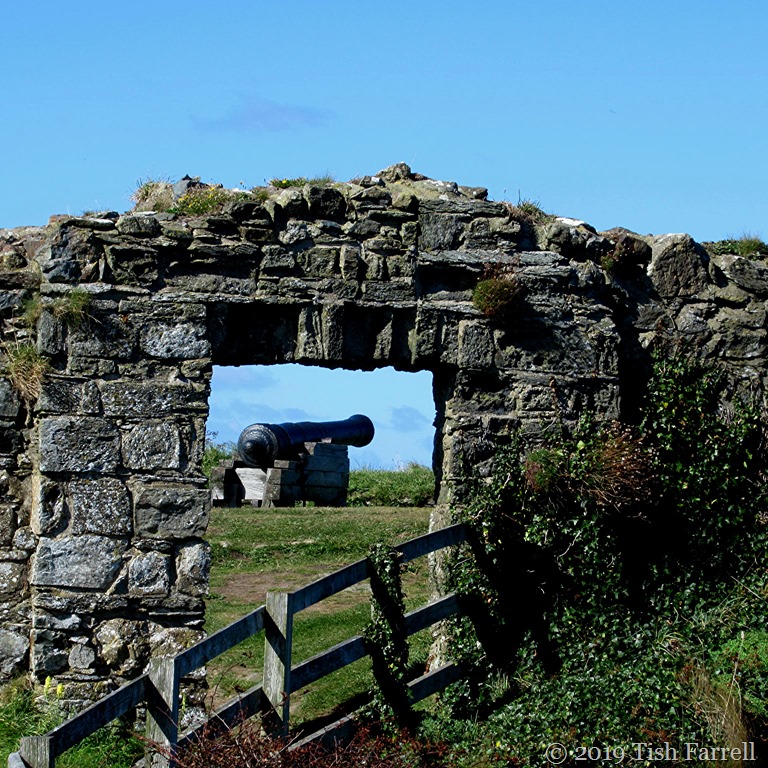
As defensive promontories go, it could not be better, eight 9-pounder guns set in a fan formation to protect the bays off Fishguard. The guns were in place too in February 1797 when the forces of republican France invaded nearby. (See previous post for ‘the last invasion of mainland Britain.’) Warning blanks were fired from the fort as soon as one of the invader ships was spotted approaching Fishguard, but thereafter it played no part in defending town from the invasion. There are various accounts as to why this was, one being the place was short of cannon balls.

The young commander of the local Fishguard Fencibles and Newport volunteer infantry, Thomas Knox, was at a party when news of invasion reached him by messenger.  He had bought his commission and never seen action and so, thinking the invading force too large to handle, he decided the best course of action was retreat south with his men towards Haverfordwest and there meet up with reinforcements.

He thus left Fishguard to its fate, ordering the fort guns to be spiked, an order that was in fact refused by the three invalid Woolwich gunners appointed to man the fort’s heavy ordnance. On the road, Knox met up with Lord Cawdor and his forces coming the other way, and after a dispute as to who was in charge, Lord Cawdor marched on with their combined manpower to Fishguard  and victory.

IMG_4521

In fact Fishguard Fort never does seem to have had much of a military function. It was finally built in 1781 to defend the town after an unfortunate incident that took place in 1779. It was the time of the American War of Independence when attacks on British shipping was considered fair game. An American privateer, Black Prince, captured a local ship and held it for ransom, demanding £1,000. When the townspeople refused to pay, the Black Prince bombarded Fishguard, damaging St. Mary’s church and some of the houses.

One account then has it that a local smuggler, sailing a much smaller vessel, moved in on the privateer and opened fire until the Black Prince departed. After that it was down to Sir Hugh Owen, Lord Lieutenant of Pembrokeshire, who decided to buy the piece of land on the promontory and finance the building of a small fort. But by 1815, and the end of the Napoleonic Wars, the fort was already falling into ruin. And so it remains.

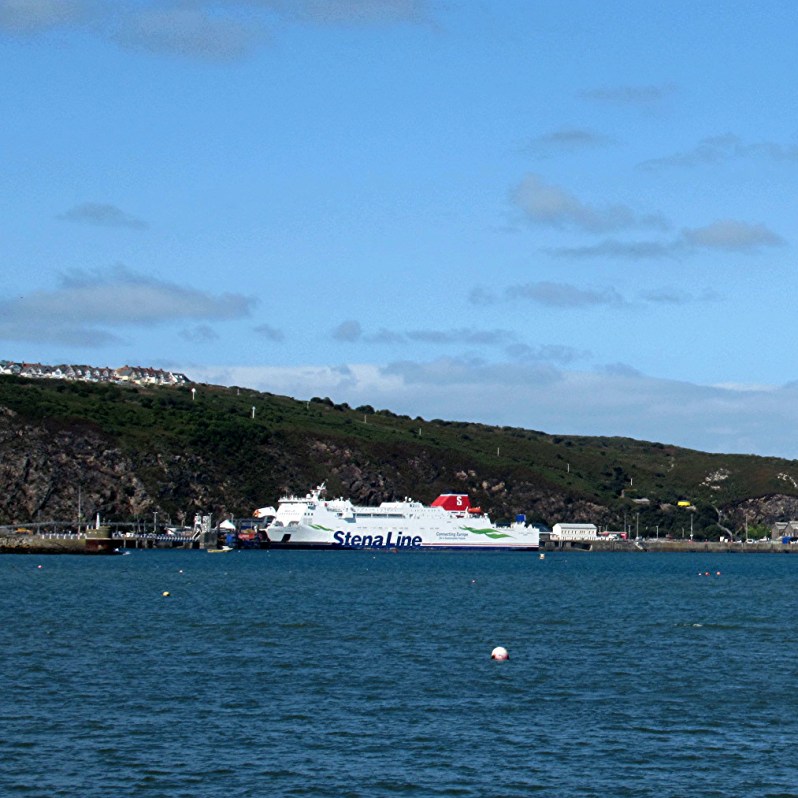
Today it is a very excellent look-out point for some coastal viewing along the Pembrokeshire Coastal Path. For one thing you can watch the coming and going of the Stena Line ferry from Goodwick Harbour, the four-times-a-day departures and arrivals between Fishguard and Rosslare in the Republic of Ireland, filling the heart with thoughts of voyaging.


Line Squares #4

A Stitch-in-Time-line? AKA ‘The Last Invasion Tapestry’

IMG_4431

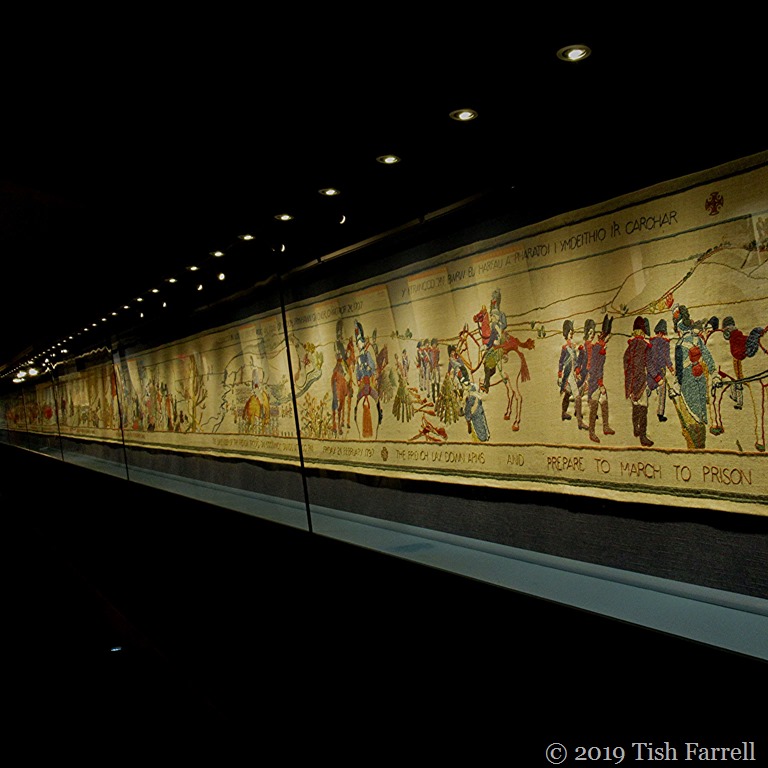
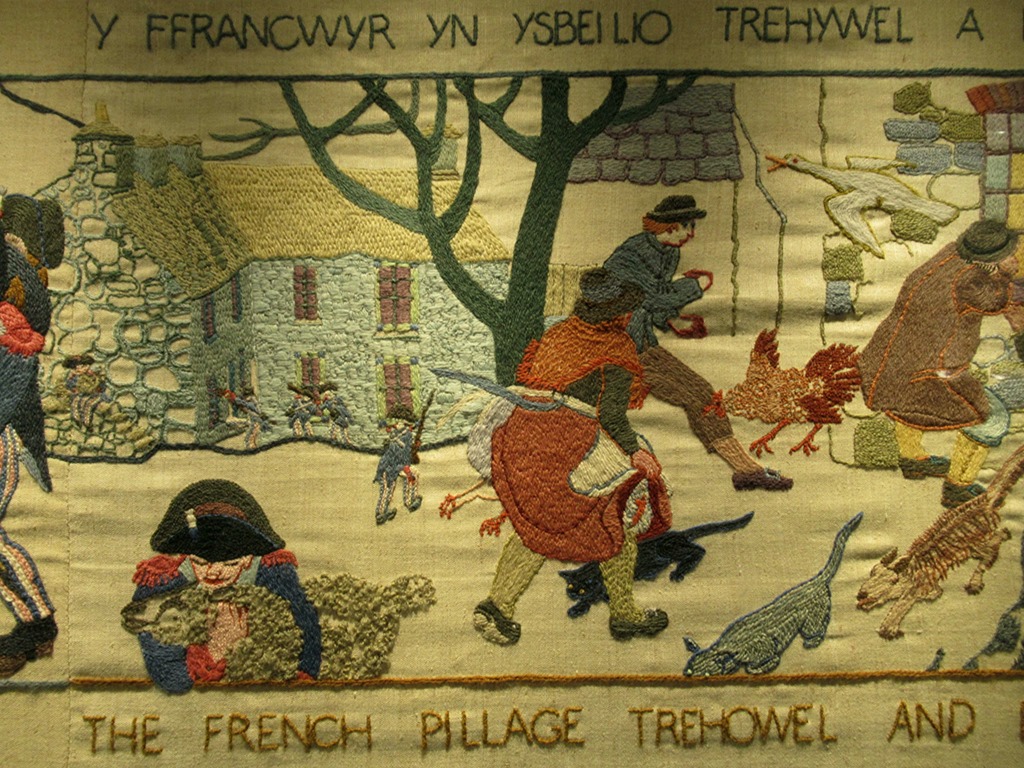
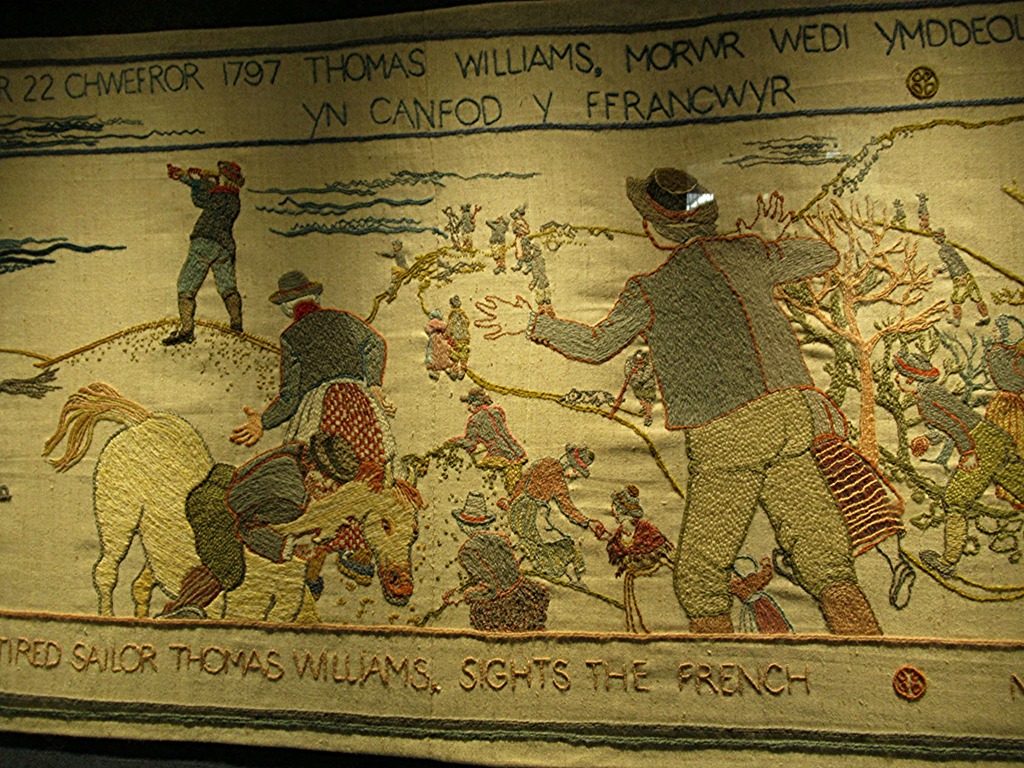
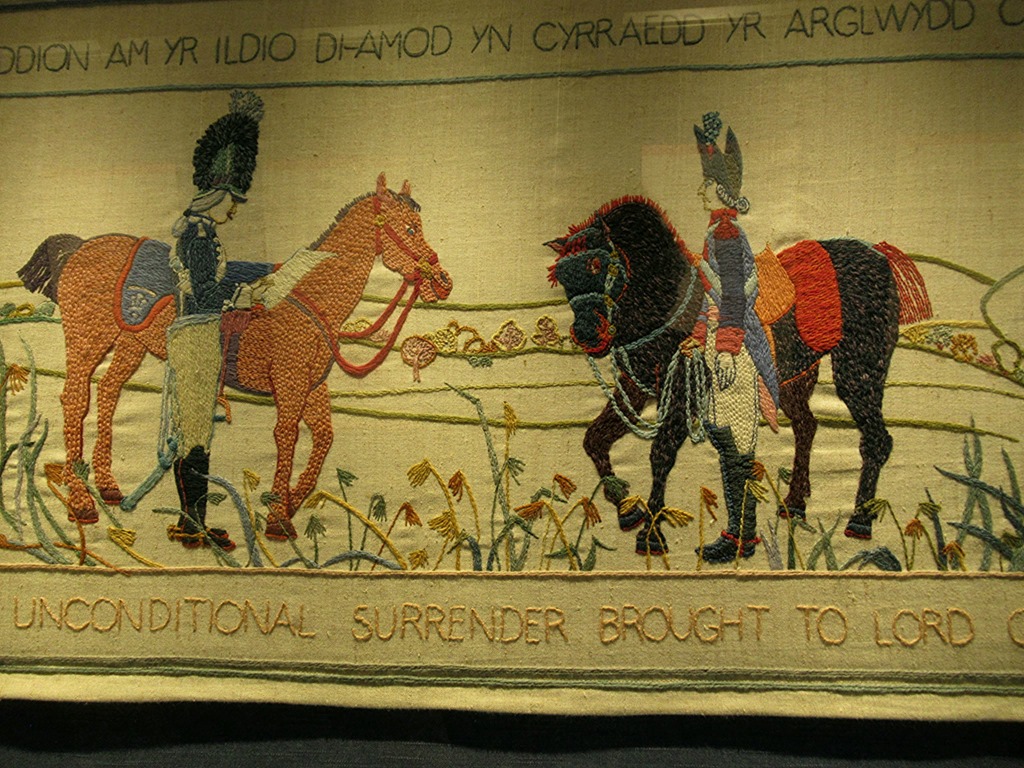
We’d only popped into Fishguard library for a map of the town so we could begin our explorations, and this is what we found: a magnificent creation of crewel-work that can surely hold its own alongside the Bayeux Tapestry which inspired it.

Both works tell of invasions of Great Britain by French forces, but whereas one is an 11th century account of ‘conquest successful’ (and probably everyone who knows a bit of British history will know about 1066 and William the Conqueror), the other marks a bicentennial commemoration of the last invasion of mainland Britain – a two-day shambles in February 1797, when 1400 soldiers of the French Revolutionary Government were put ashore near Fishguard with orders to conquer.

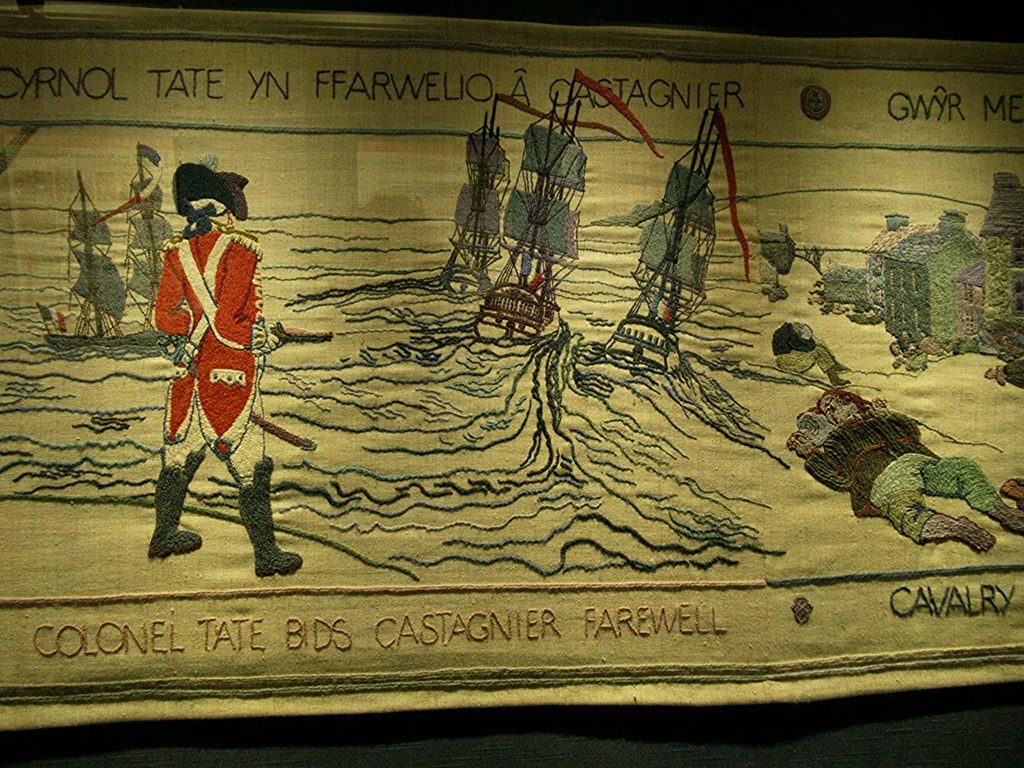
It seems the soldiers were not of the highest calibre militarily speaking. Only 600 were regulars, the rest were apparently  ex-convicts recently released from gaol, and all were under the somewhat elderly command of an Irish-American colonel, one William Tate. Things went wrong from the start. Bad weather prevented French ships from landing the troops at their intended objective near Bristol, and instead they retreated into Cardigan Bay. And when the force was finally landed, and their ships sailed off, abandoning them, many of the soldiers ran amok, looking for food, raiding farmhouses and were quickly beyond control.
IMG_4425

IMG_4422

IMG_4423

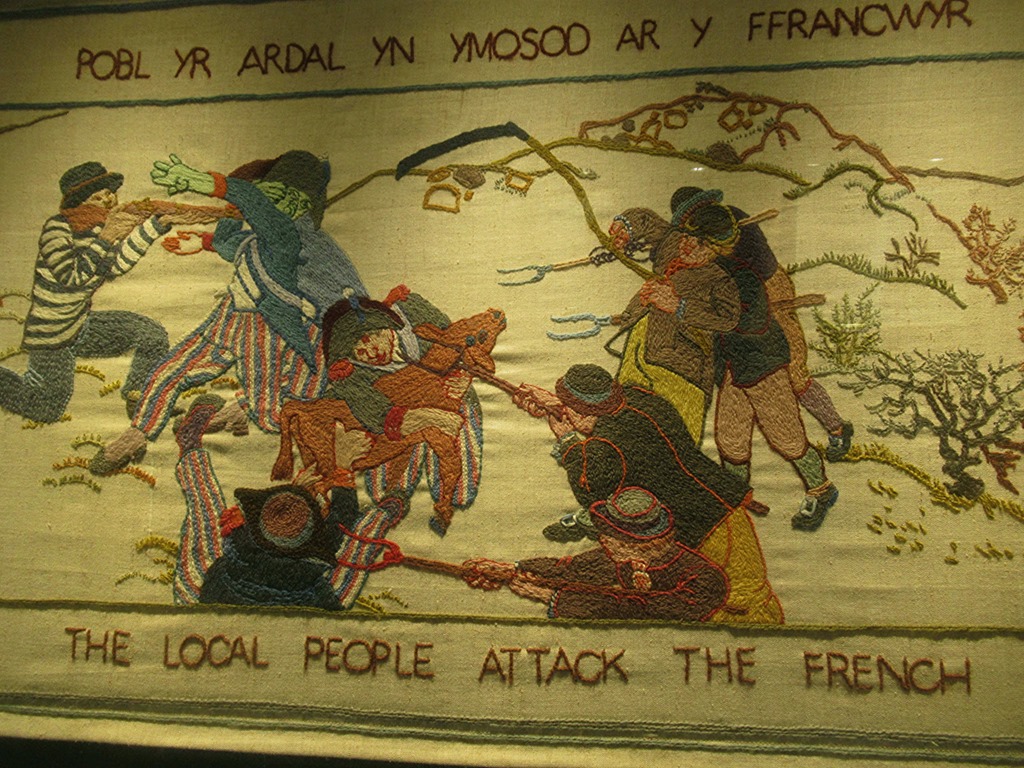
On the Welsh side there was also much pandemonium as the local gentry were charged to raise an army. Lots of summoning and gathering hither and thither, an inexperienced young gent initially put in charge of defending militia and making a hash of it. Meanwhile Jemima Nicholas (Jemima Fawr or ‘the great’ as she was later a known), wife of the local cobbler, set forth with a pitchfork, rounded up 12 Frenchmen and marched them into Fishguard where she locked them in the church before resuming her hunt.
IMG_4434

IMG_4424

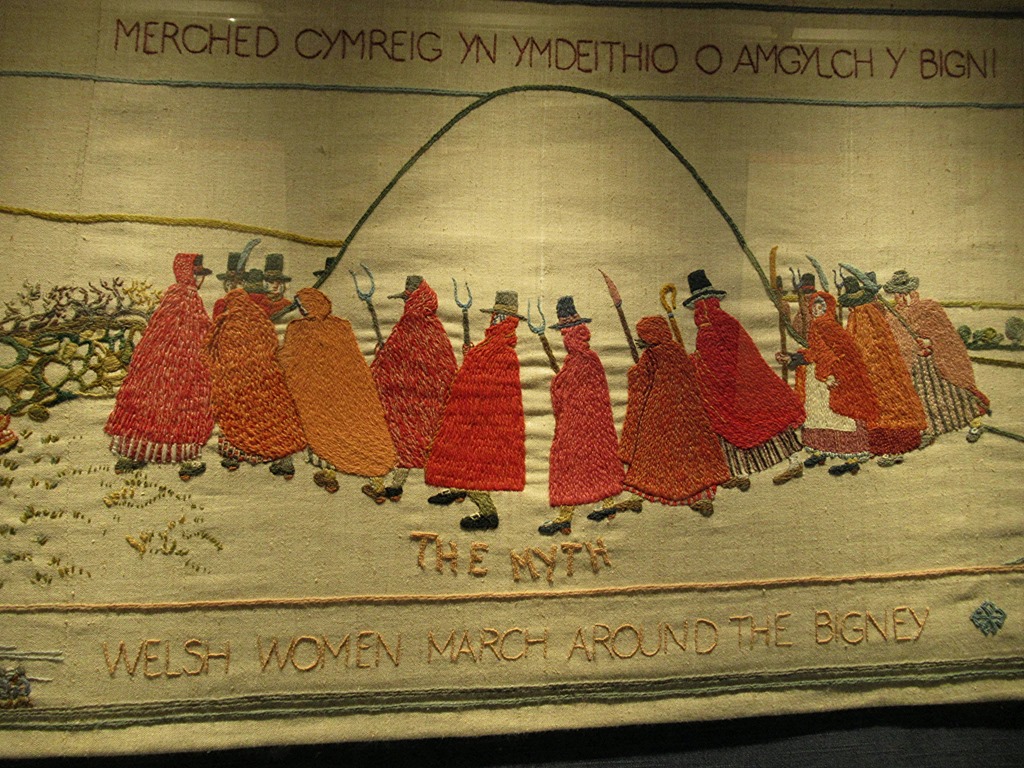
In the end Lord Cawdor, commanding British militias gathered from across Pembrokeshire, won the day, though a tale has it that the French only accepted unconditional surrender because they mistook the Welsh women come to watch as the gathering of  a large British army. The women were wearing their traditional tall black hats and red shawls.

IMG_4426

IMG_4427

As you can see, the tapestry is a delight. Every inch of it brimming with humour and finely executed detail, and all of it using much the same stitch work found in medieval embroidery. The designer, Elizabeth Cramp, also followed a similar lay-out to the Bayeux Tapestry. At 53 cm wide it is a similar depth, although its 30 metre length makes it less than half that of the Bayeux version. It anyway took 77 local people four years to complete and now belongs to a local charitable trust: Fishguard Invasion Centre Trust Ltd. A veritable tour de force.

It was also very difficult to photograph, what with the spotlights and reflections. And I’m sorry I missed catching Jemima Fawr with her pitchfork. But if you go to the link HERE you can spot her in the middle of the header photo and learn more about the making of the tapestry and the names of all those diligent workers who so skilfully applied their needles and threads.

copyright 2019 Tish Farrell

Line Squares #3  Join Becky with her October Squares challenge; the only rule: your header photo (showing lines however you see them) in square format.

Land And Sea Lines ~ Pen Dinas From Parrog Quay

IMG_4628

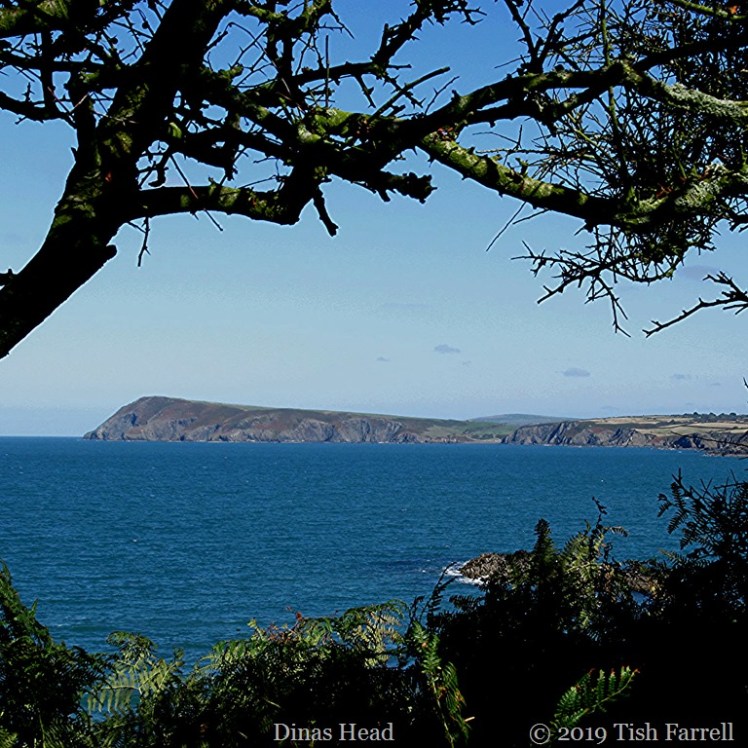
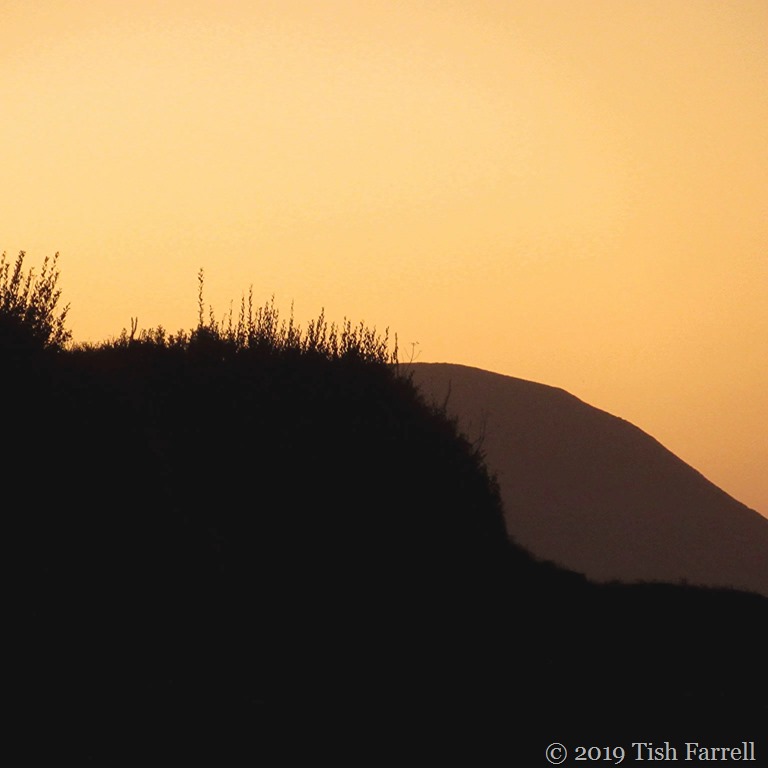
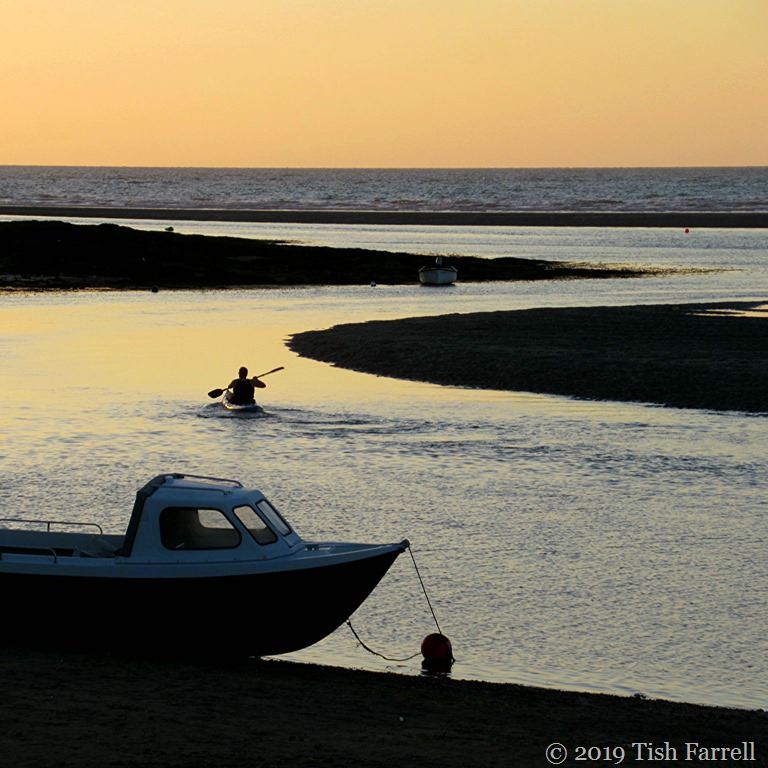
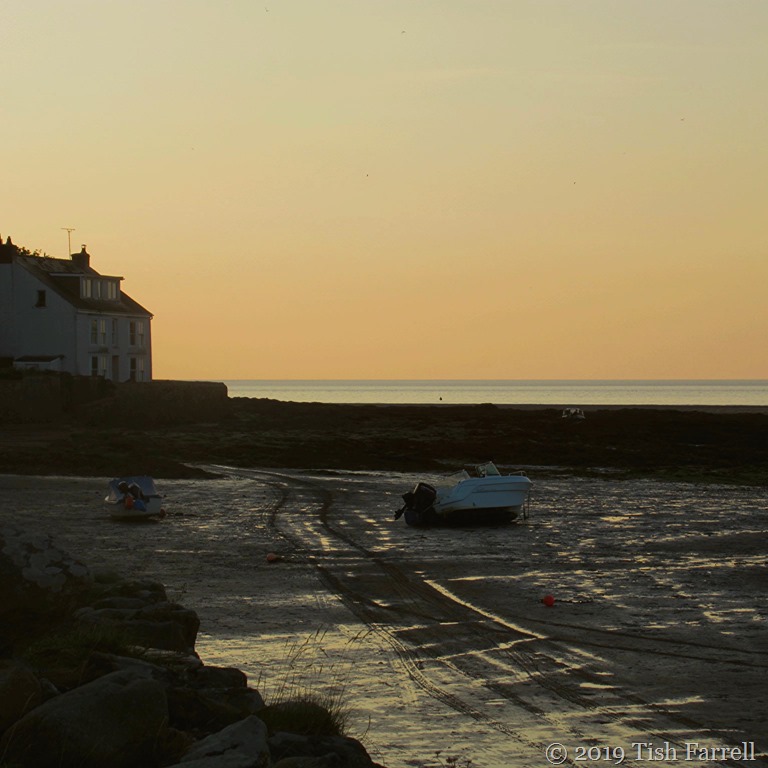
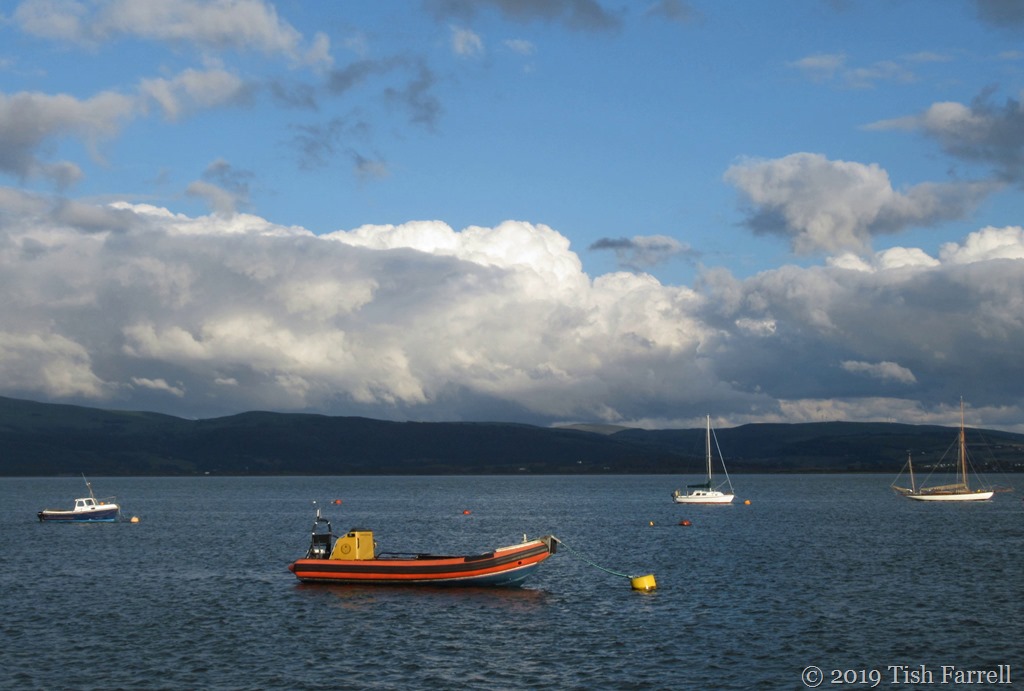
It was decided. We would have a sun-downer supper at Parrog Quay, sitting in the old seaside shelter above the little estuary. Behind us the Mountain of Angels, Mynydd Carn Ingli, already shadowy, to the west the rounded promontory of Dinas Head (Pen Dinas) backlit by sunset, the little row of stalwart, old sea salt dwellings along the quay, before us the mud flats and their moored small boats where the last of the light still lingered here and there, and curve of the Nevern with a lone canoeist heading out to sea, the still, wide expanse of Cardigan Bay beyond.

We’d gathered provisions in a delicatessen in Fishguard – runny Brie cheese, fat olives stuffed with garlic, some Welsh cheesy crackers that looked like waffles, black grapes and a few slices of salami. There was a bottle of French organic wine brought from home (grand merci Virgile Joly), and I’d also thought to bring my large wool Indian wrap in case we grew shivery later. The day had been warm but already the nights were saying autumn.

IMG_4613

*

And then we sat and we watched, and watched and watched, until the light was gone.

IMG_4976

copyright 2019 Tish Farrell


Line Squares #2

Spinning A Line At Tregwynt Mill: It’s All In The Warp And Weft

IMG_4666

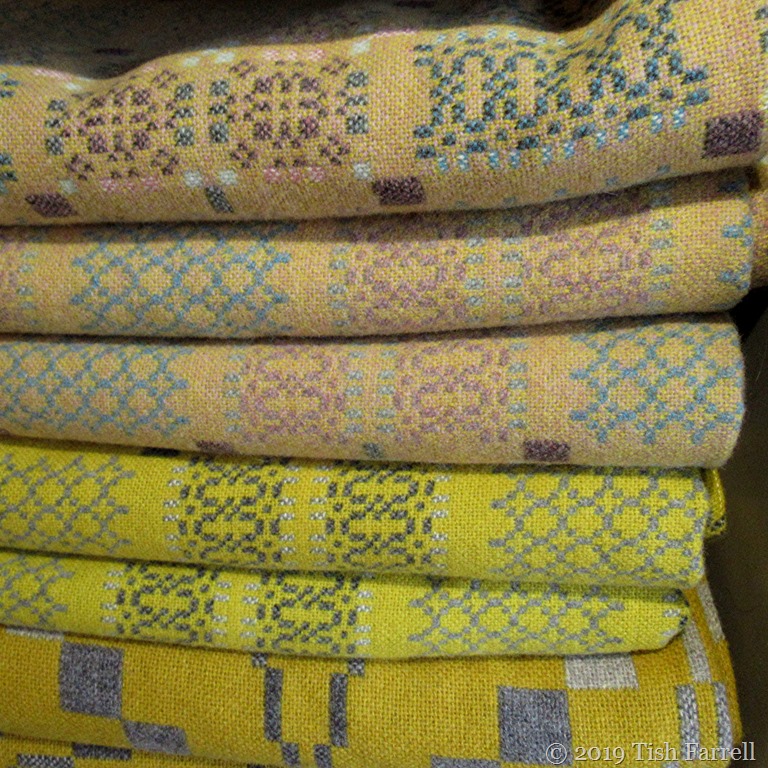
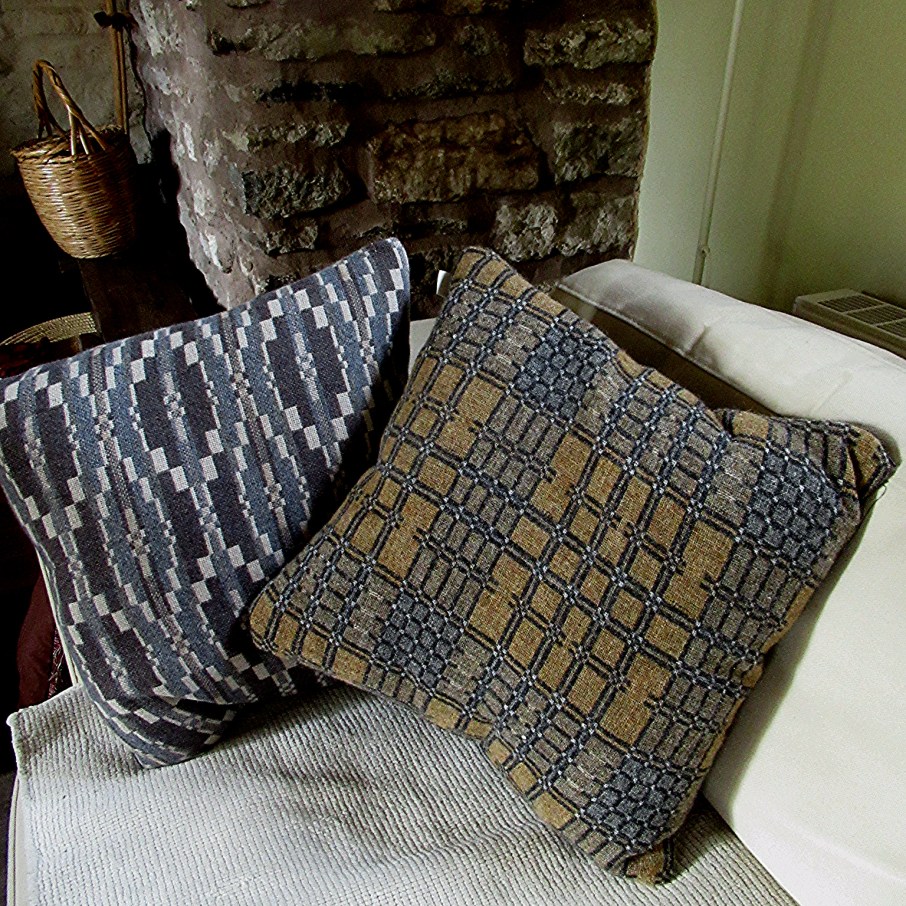
Who’d’ve thought it: Welsh Tweed that in the 1960s seemed so fuddy-duddy and old woolly tea-cosy-ish has been transformed into a substance of loveliness and huge desirability, and all thanks to some cunning tweaking on the design front. And the place where they are doing much creative tweaking of this most traditional of Welsh industries is Pembrokeshire, West Wales. (Some of you may remember my trip to Solva last year). Ten days ago we meandered our way down narrow lanes just south of Fishguard to visit Melin Tregwynt.

IMG_4668

It stands in a narrow wooded valley not far from the sea, and has been worked by members of the Griffiths family since 1912, when Henry Griffiths bought the place for £760. He took over premises that had their origins in the 17th century, the looms driven by water power from the nearby stream. Today Tregwynt’s looms are high-tech, but the weaving shed still houses an old waterwheel. And apart from producing wonderful cloth that feels like heaven, the other brilliant thing about this enterprise is that it employs over 30 local people, and is otherwise a fantastic place to visit with a very excellent shop and cafe.

And, in case you’re wondering, we did not come home empty-handed:


Line Squares  Today’s the first day of Becky’s October Squares: – lines, however you find them.

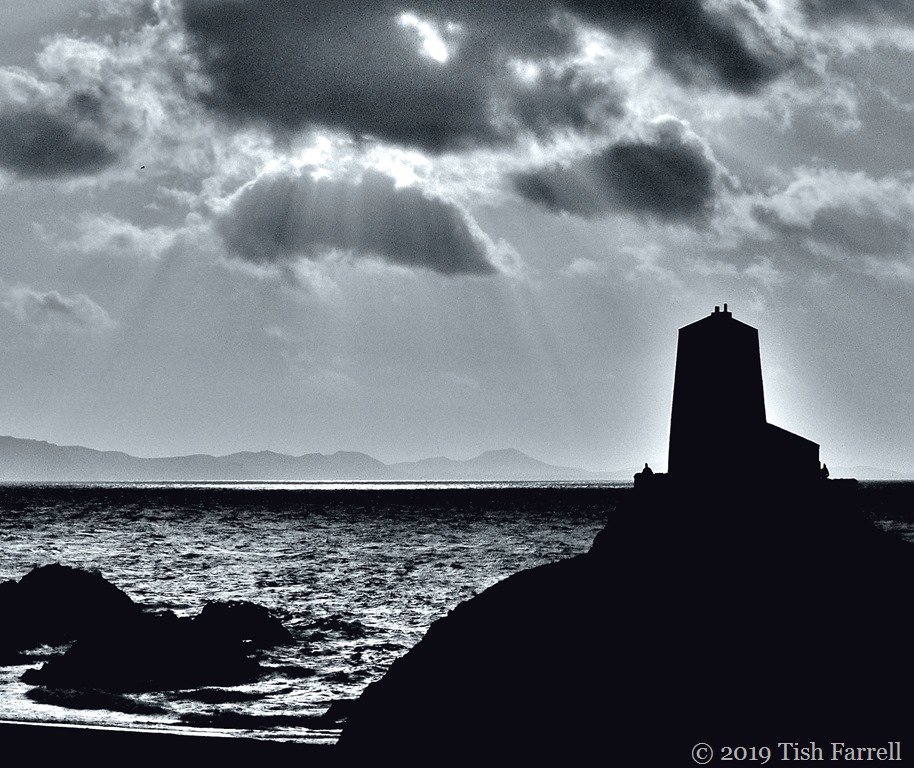
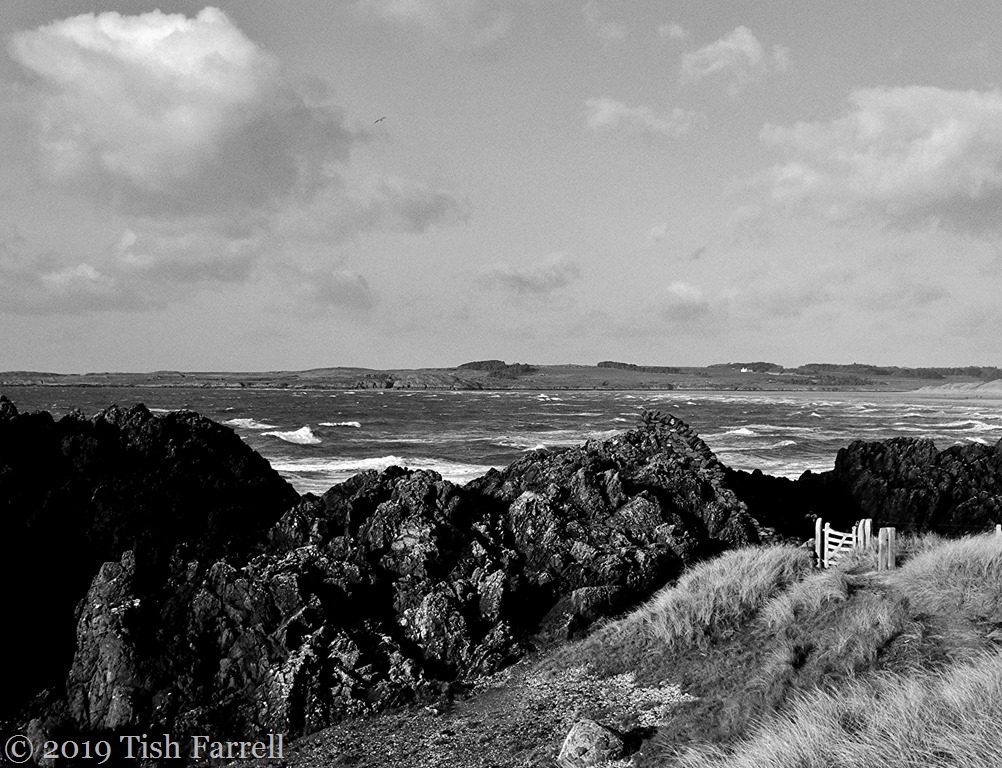
Twr Mawr Lighthouse On Llanddwyn Island

P1060377

Llanddwyn Island on Anglesey is only an island at high tide. Mostly it is a narrow spit reaching out across Llanddwyn Bay to the mountains of the Welsh mainland. It is named after the early 5th century Christian mystic, Dwynwen who, unhappy in love, is said to have retreated to the island, living out her days there alone. Later she became known as the Welsh patron saint of lovers, and in medieval times pilgrims would flock to the island in hopes of divining the faithfulness of their own loves at Dwynwen’s well. In fact so much revenue was raised from the pilgrims’ quest for true love that in the 16th century a substantial chapel was built on what was believed to be Dwynwen’s own place of sanctuary. You see the chapel ruins if you go there today.

The lighthouse was built in 1845 to guide shipping entering the Menai Strait from the south. Now it serves mostly as a very striking landmark, viewed here on a blustery Christmas morning a few years ago.

Lens-Artists ~ Seascapes

Dyfi Ospreys ~ ‘Reality TV’ At Its Best

Monday morning on the Dyfi Estuary and we woke to rain and lowering skies. Time to go home.

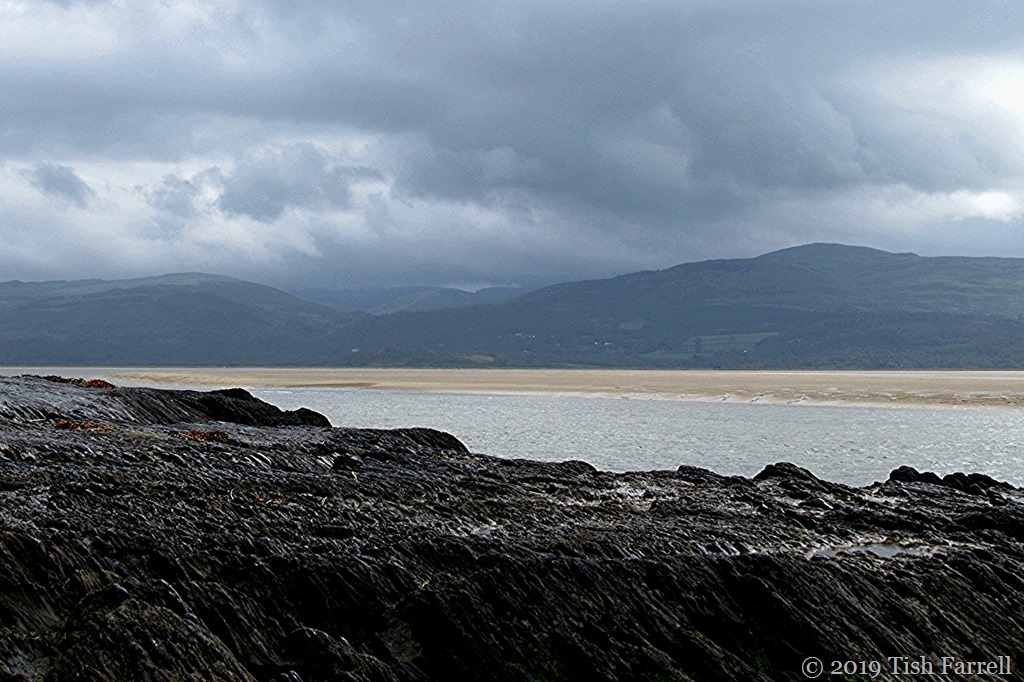
We’d just had a very good three days in Aberdyfi, in a flat overlooking the RNLI Lifeboat Station and the beach. More amazingly, given that we were in Wales and that the British Isles were/ and are continuing in rain-between-showers mode, we hardly got wet at all. We wandered on the beach that goes for miles, explored the narrow streets and paths of the old slate trading port, scrambled inland beside the River Dyfi, ate some very excellent fish and chips (in the car to avoid being mobbed by seagulls), and visited next-door Tywyn to watch steam trains at the Talyllyn Railway. (We Farrells know how to enjoy ourselves). There were even intervals of blue sky and sunshine.

But there was still one thing left to do. It involved a short deviation from our route home, and all weekend, as I’d been clutching the Cors Dyfi Nature Reserve leaflet, I’d been wondering if our weather luck would hold.

And it did. By the time we’d packed up, the rain had stopped. Next stop the Dyfi osprey family.

And that’s pretty much all I’m going to say for now. But we warned – live-stream watching can be addictive. There are three chicks in the nest, with both parents coming and going. When you click on this, YouTube will tell you the service is not available. Click on the Dyfi Osprey Project ‘Live’ window underneath the message. And if that doesn’t work, here’s a link on the Montgomeryshire Wildlife Trust site: http://www.dyfiospreyproject.com/live-streaming

Also if you want to see some wonderful photos of an American osprey family, pop over to Tiny Lessons Blog.