She Knows Where She’s Going ~ Thursday’s Special

P1030278b

We’ve just returned for a two-day trip to Hay-on-Wye, the second hand book capital of Great Britain, if not the universe. This ancient, tiny town stands on the banks of the mighty River Wye, on the Welsh side of the Wales-England border and, astonishingly for so small a settlement, has 23 book shops. Some are small and specialist – catering for poetry  enthusiasts, natural historians and sleuthers of good murder mysteries; others are labyrinthine emporia, the size of college libraries – where all topics are covered. Many sell new books too and also, since the advent of the famous annual Hay Literary Festival, have upped their game from being the fusty, dusty places I remember from years ago, and transformed themselves into smart bookish resorts where you can curl up in a big leather armchair and spend the whole day reading. Richard Booth’s Bookshop even has its own cinema and very popular cafe. Treats all round then.

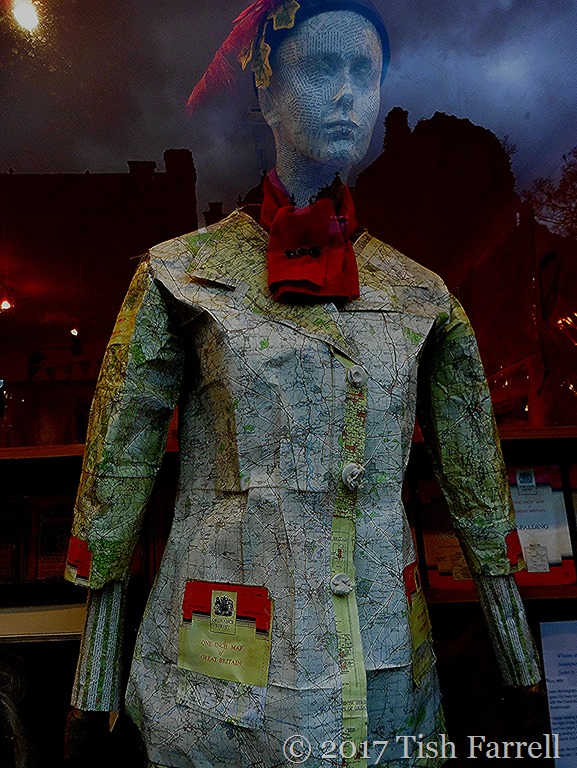
This photo was taken through the window of Mostly Maps and I think it covers all Paula’s word prompts for her December pick a word. Here we have the portrayal of a young woman by a non-human mannequin. She has the most sagacious looks too, clad in the re-worked remains of old ordnance survey maps. There are more remains reflected behind her – the dark silhouette of Hay Castle ruins. And then, here and there, are small stellar bursts from street and Christmas lights. Tarrah!

Now please visit Paula to see her and other bloggers’ cunning interpretations:

Thursday’s Special: pick a word in December

P.S. There will doubtless be more about Hay and our meanderings along the Wye in upcoming posts

The Hardware Shop In Harakopio

IMG_2483

I’m very fond of hardware shops, though I’m old enough to say they mostly aren’t what they used to be – those ill-lit aisles of childhood with their mysterious bins containing every size of nut, screw, hinge and widget. The cocktail whiffs of twine, Jeyes Fluid, paraffin and polish, and a little man in a brown cotton coat behind a high, gloss painted counter, he the unassuming master of this multi-component repository.

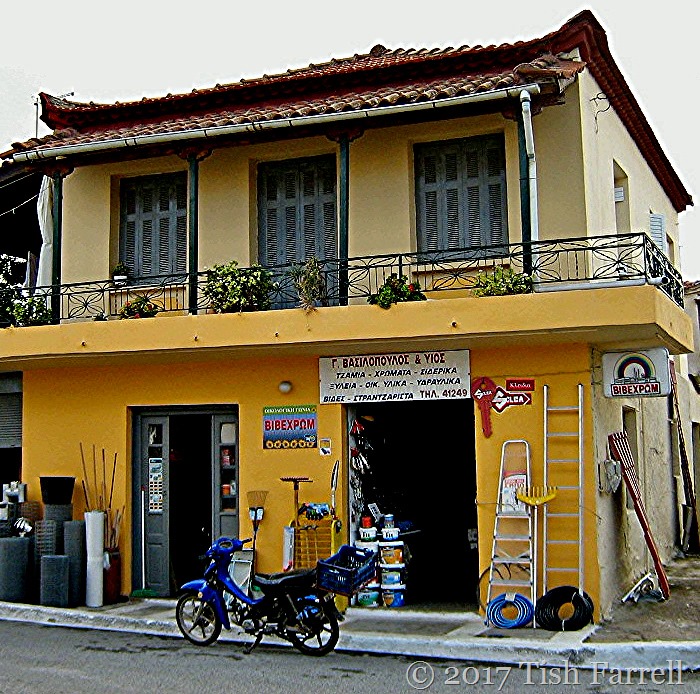
The shop in Harakopio looked promising on the authenticity front, and I was only sorry not to have the chance of a good mooch inside. But still, it was good to capture its jolly exterior, and nice of some local to park their blue motorcycle outside.

The Weather In Wales ~ Winter Sun

P1060474

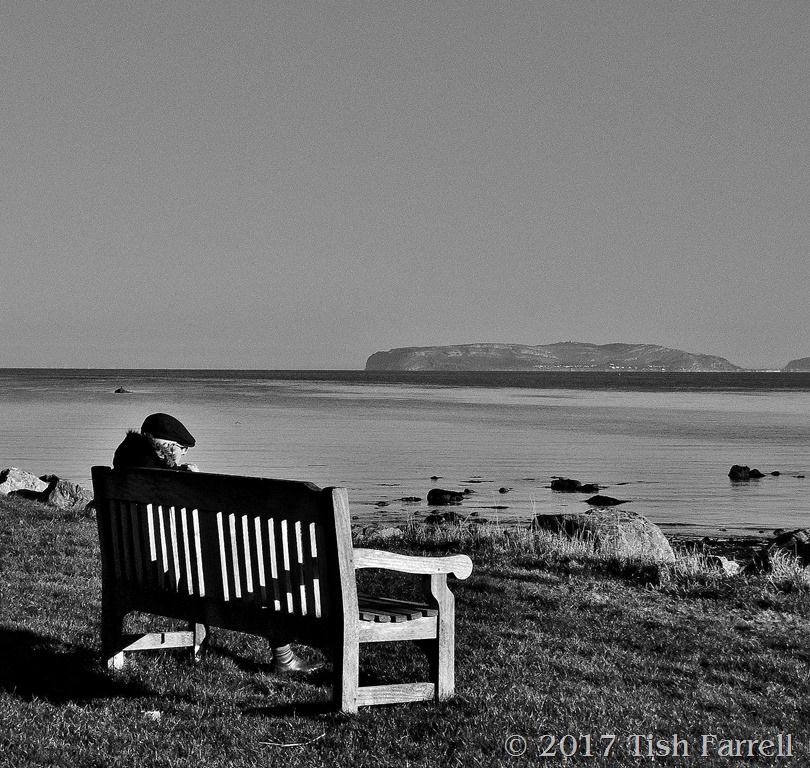
It’s hard to believe that I took this photo nearly a year ago – a late December day on the shore of  Menai Strait on Anglesey. There’s a view of the Great Orme across the water. Everywhere so still. Not a cloud in the sky. And sunshine warm enough to sit in.

I don’t know who the man on the bench is.  He was reading a book quite surrounded by this view. There’s something of an optical illusion about it – the dark cap above the seat back (echoing the nearby black rocks in the water), his foot below the seat, yet the corporeal lack of him in between head and toe,  where the sunlight seems to pass unimpeded through the bench slats. Curiouser and curiouser, said Alice…

copyright 2017 Tish Farrell

Cee’s Black & White Challenge: Weather

Inside The Old Fort At Pylos ~ Thursday’s Special

IMG_2592

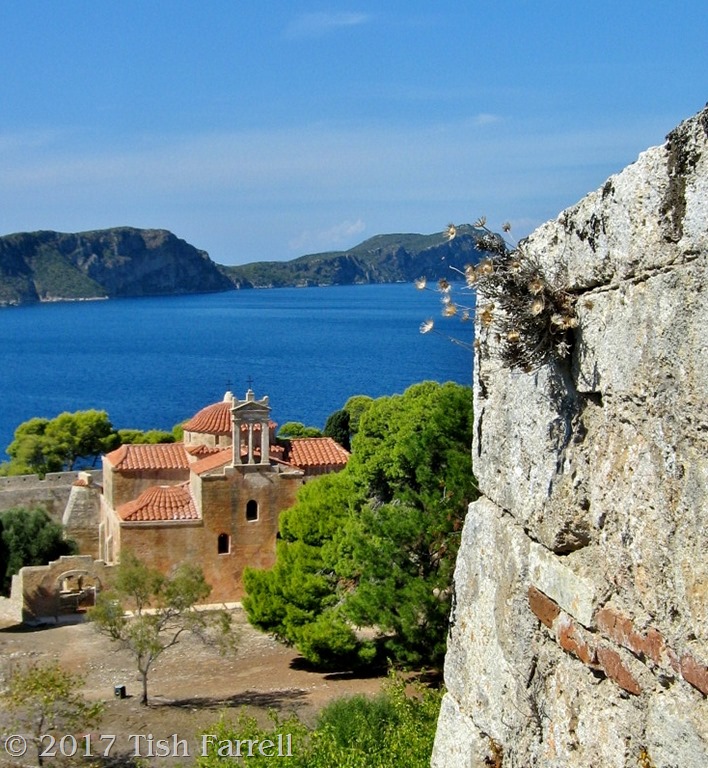
The Ottoman fort at Pylos is monumental, and comprised of an outer defensive wall and a citadel. It was built after the Turkish invasion of 1500, and apart from two brief interludes – one Venetian, one Russian, was held by the Ottoman regime until the Greek War of Independence in 1821. Even at the last lap, Ibrahim Pasha and his Turko-Egyptian army  proved hard to oust, and after an initial surrender of the fort in 1821, it was reoccupied by them in 1825, and hung onto until 1828.

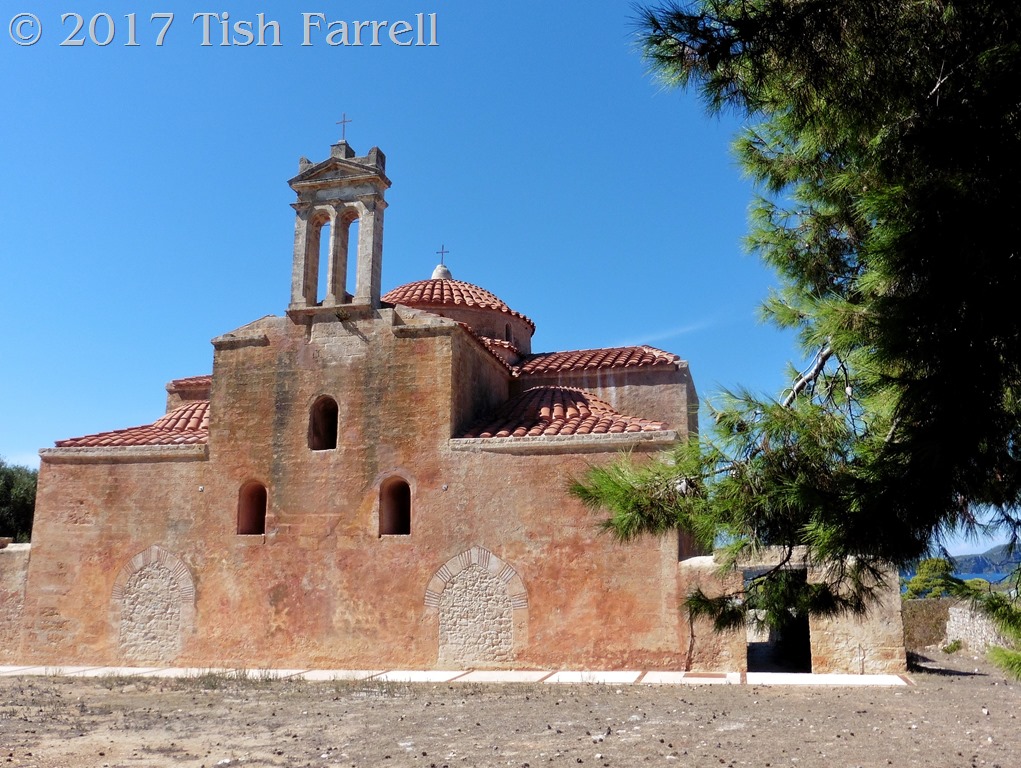
The first photo was taken from the citadel, which during occupation by the French in the 19th century was used as a prison. The church you can see below is the Church of the Transfiguration of the Saviour, and was originally built as a mosque around 1573. Under the brief Venetian rule of 1675 to 1715  and during the Orloff Revolt of 1770 it served as a Christian church, and it is in this capacity that it was restored by the Greek Government between 2011 – 2015.

P1020547

*

P1020572

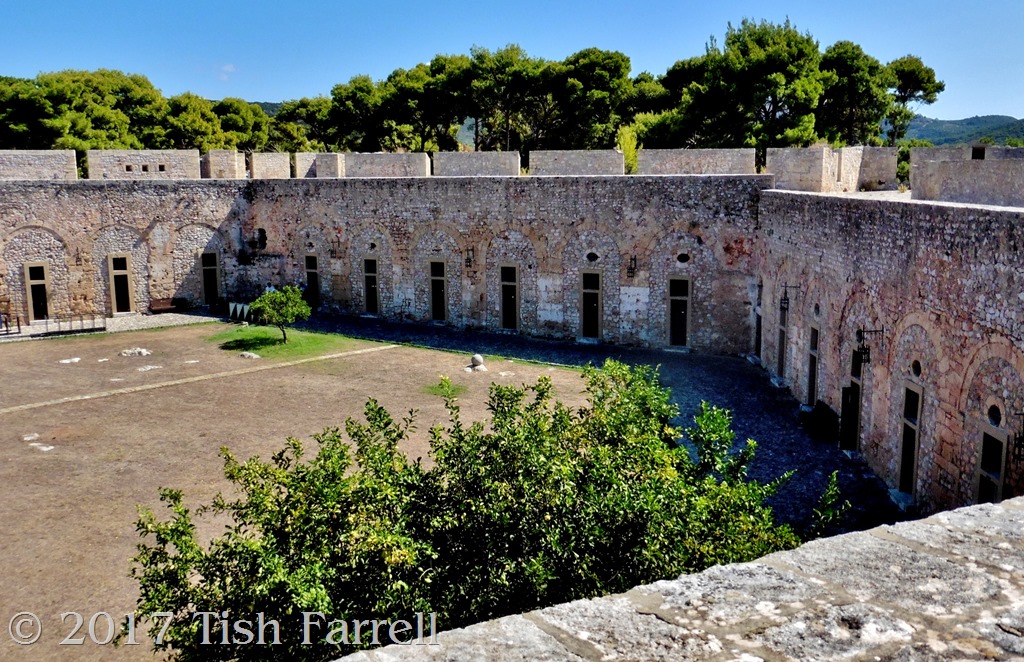
Inside the citadel, and the nineteenth century prison cells.

*

P1020571

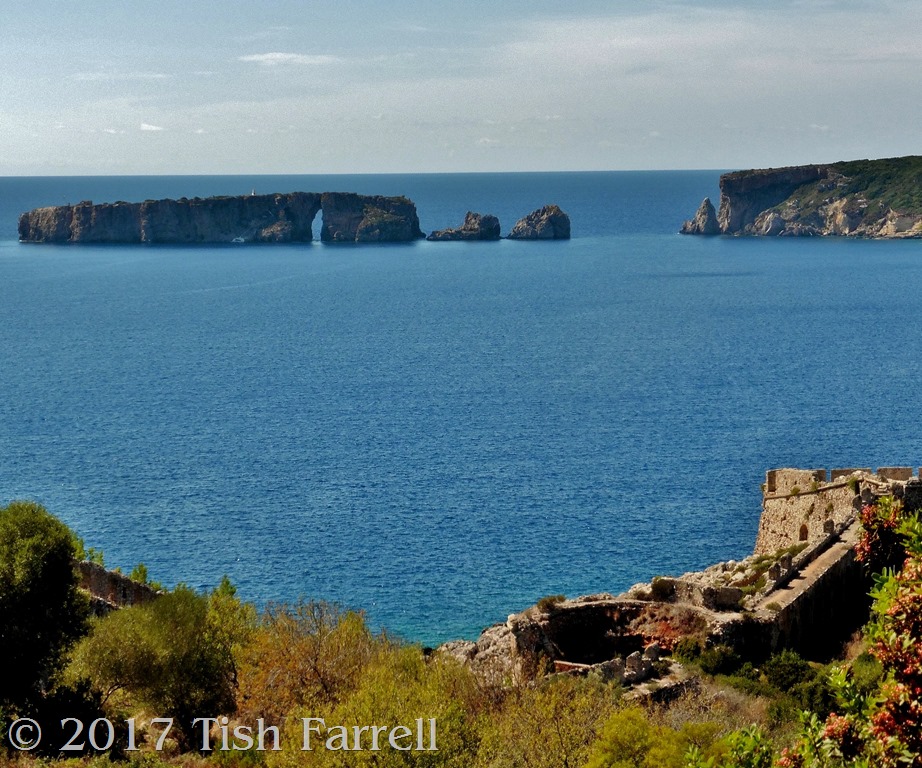
Looking down on the outer defensive wall and the sea-arch beyond.

*

P1020533

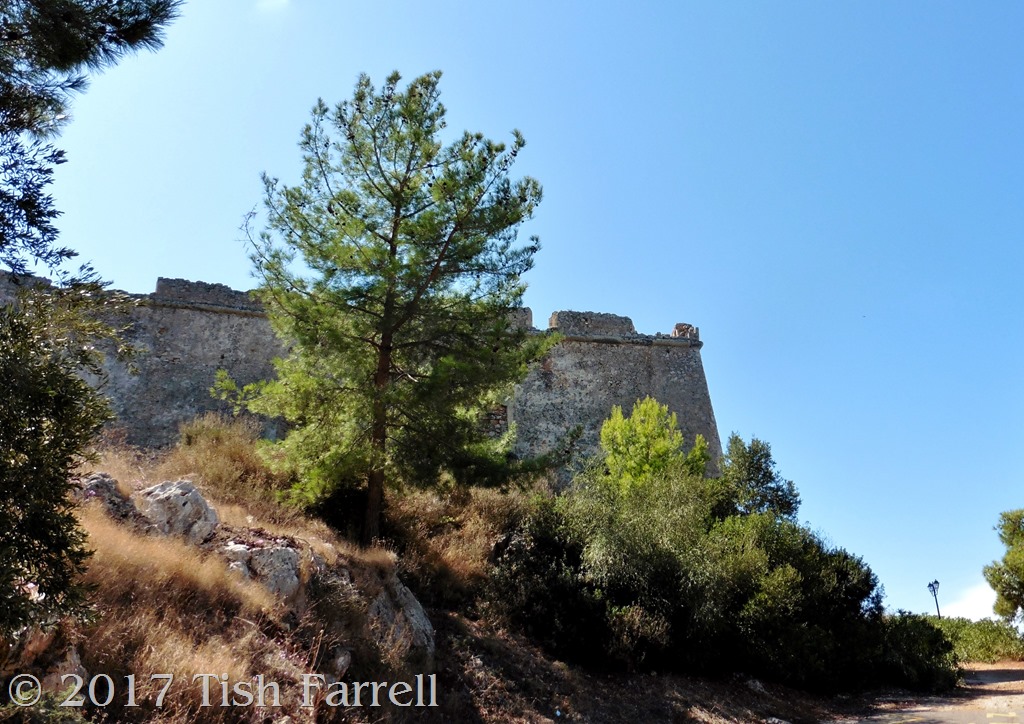
The outer walls on the seaward side. The hillside was heavy with the scent of pine trees, and cyclamen were growing everywhere among the cones and fallen castle debris.

*

P1020556

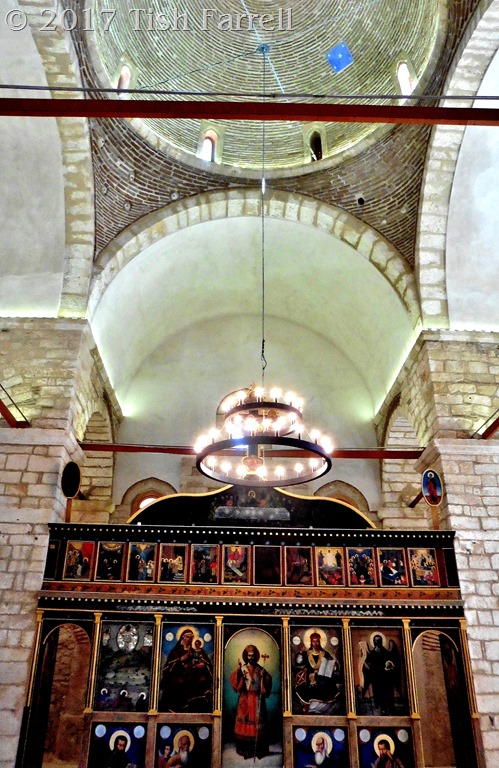
Inside the Church of the Transfiguration of the Saviour.


Thursday’s Special: Traces of the Past Please visit Paula to see her fine view of Alnwick Castle.

Cats’ Eye Views Of Koroni ~ Peroulia Dreaming 12

P1020673

IMG_2798

P1020677

P1020679

P1020674

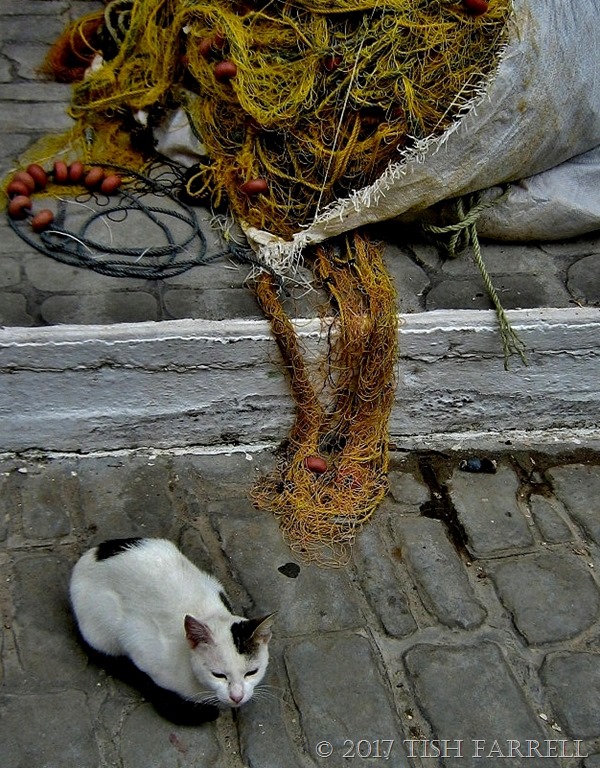
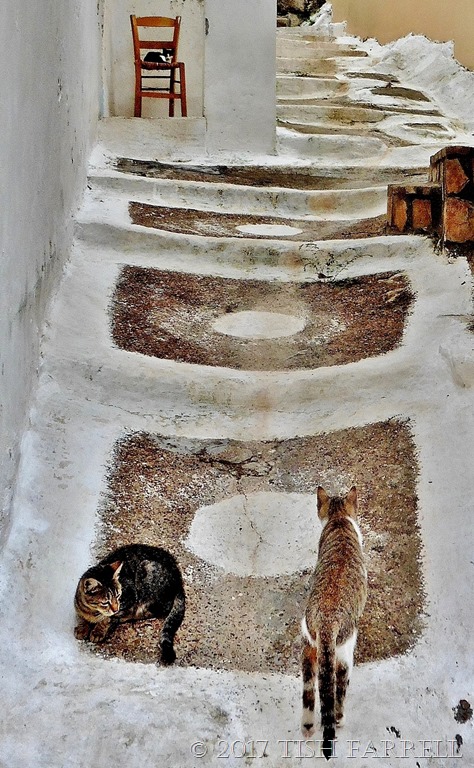
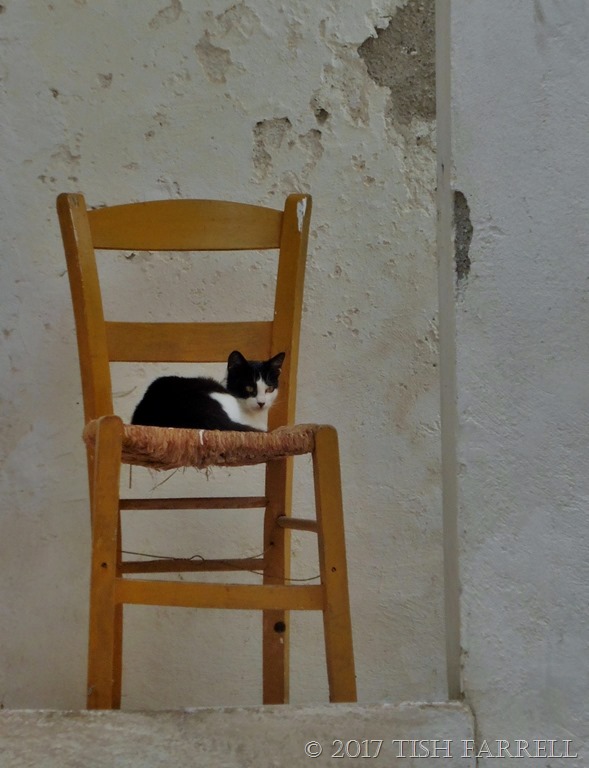
When it comes to pets, I have to admit to being a dog-lover first and foremost, but as we tramped up and down the many stepped byways to and from Koroni castle, we  met a number of very handsome cats. In fact there were cats and dogs everywhere we went along the coast. Some had more to say for themselves than others. The Koroni cats were particularly self-contained. One definitely had the impression it was THEIR village, and foreign interlopers were thus beneath their regard. They could take us or leave us.

The Last Turtle Of Summer ~ Peroulia Dreaming 11

IMG_2810


After wandering around Koroni Castle we descended down the stepped streets to the harbour front in search of ice creams and coffee. Greek ice cream is delicious and ours came in many astonishing flavours. We wolfed it down like five year olds. Next we settled ourselves at a seaside cafe and ordered coffee, but we had not been there long when the waiter came dashing to tell us there was a big turtle to be seen just off the quayside. ‘It is the last turtle of summer,’ he said. ‘Tomorrow it will be gone.’

A little crowd had gathered and was peering into the stormy looking water. The weather had changed, and there was a cool wind blowing off the Messenian Gulf. It was hard to spot the turtle between the dark ripples, and I missed a couple of chances to take a photo as it popped its snout above water. Then a silly young Frenchman decided he wanted to swim with it, jumped in and scared it away. ‘Merde’, said his girlfriend. Merde, indeed.

So here is my best shot. Little more than a peek. But then it is good to know that there are still loggerhead turtles around the Peloponnese. One of their breeding beaches is at Koroni on the far side of the castle. Every year between June and mid-September the turtles make some 46 nests there. These are monitored throughout the summer by ARCHELON, The Sea Turtle Protection Society of Greece, along with a host of volunteers from around the world. Good on them, I say, and bon voyage last loggerhead of summer.

You can find out more about Archelon, The Sea Turtle Protection Society of Greece HERE.


Daily Post: Peek

Related: The Castle At Koroni

The Castle At Koroni

P1020683

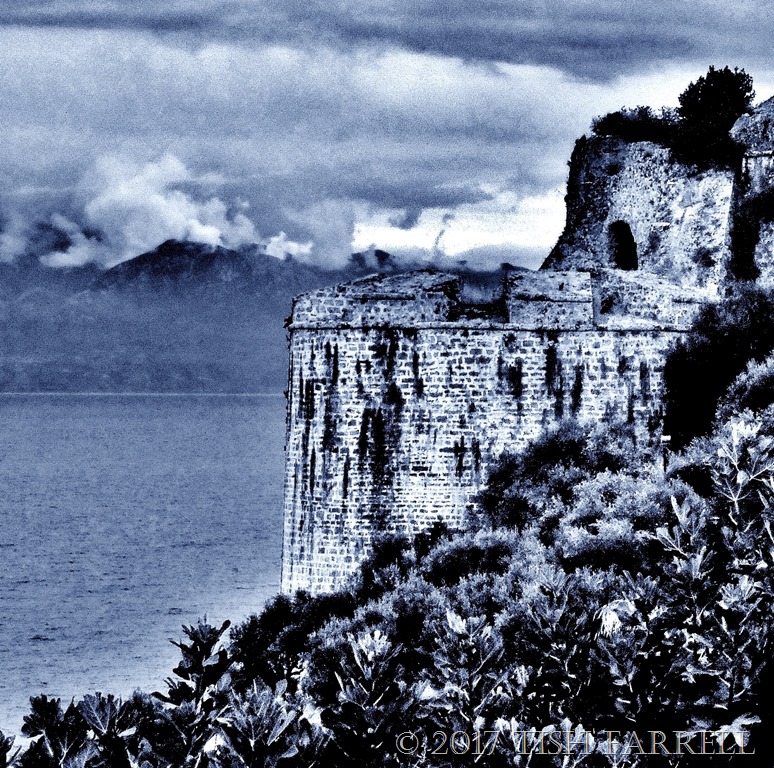
Over the past three thousand years the Messenian Peloponnese has suffered so many phases of foreign invasion it is hard to know where to start unravelling its history.  Best stick with the built remains then. This massive medieval bastion belongs to Koroni Castle, built in the early 1200s CE by the Venetians, and one of a string of Messenian coastal forts controlled by the Republic until 1500.

The Turks invaded next. After summary slaughter in neighbouring Methoni, so spurring Koroni to a quick surrender, they set about strengthening the  castle’s eastern defences, which perhaps included this tower. It is hard to track down details. One Greek writer, whose identity I am yet to discover, described Koroni Castle as ‘the architecture of hate.’ He had a point. Venice anyway regained control in 1685, and of course the Turks came back again later, staying until the Revolution of 1821, which finally ousted them.

Koroni’s historic heyday, though, was the thirteenth century. Under the first round of Venetian rule it was referred to as ‘the chief eyes of the Republic’, and as such, was one of the main ports of call for the ships and galleys of Venice’s Levantine trade. Its must-have product was cochineal, much desired by Venetians for the lustrous dye it yielded.  So now you know where that gorgeous Venetian red came from – this small corner of the Peloponnese.
P1020710 - Copy (2)

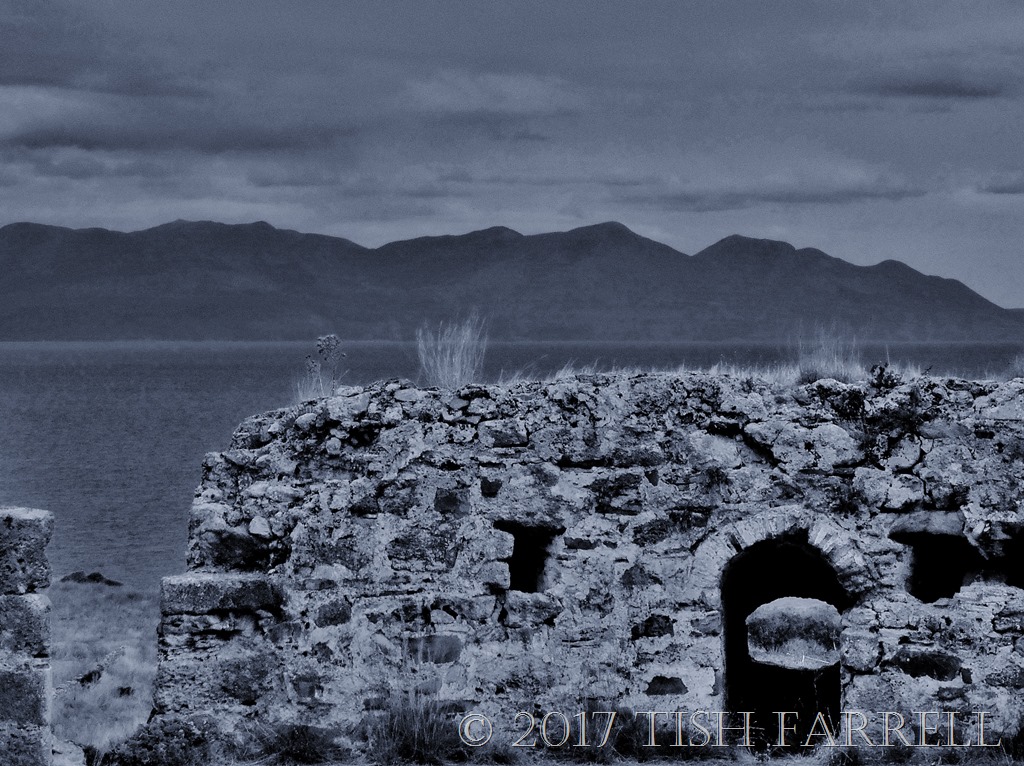
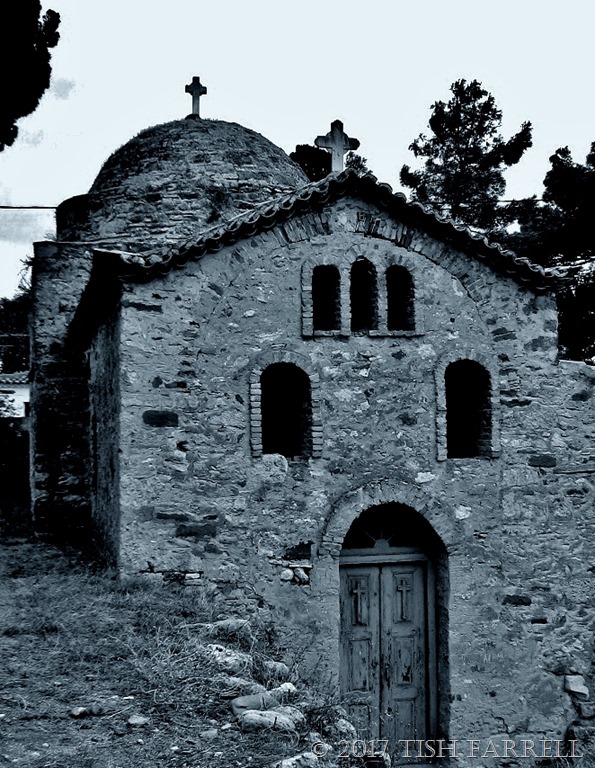
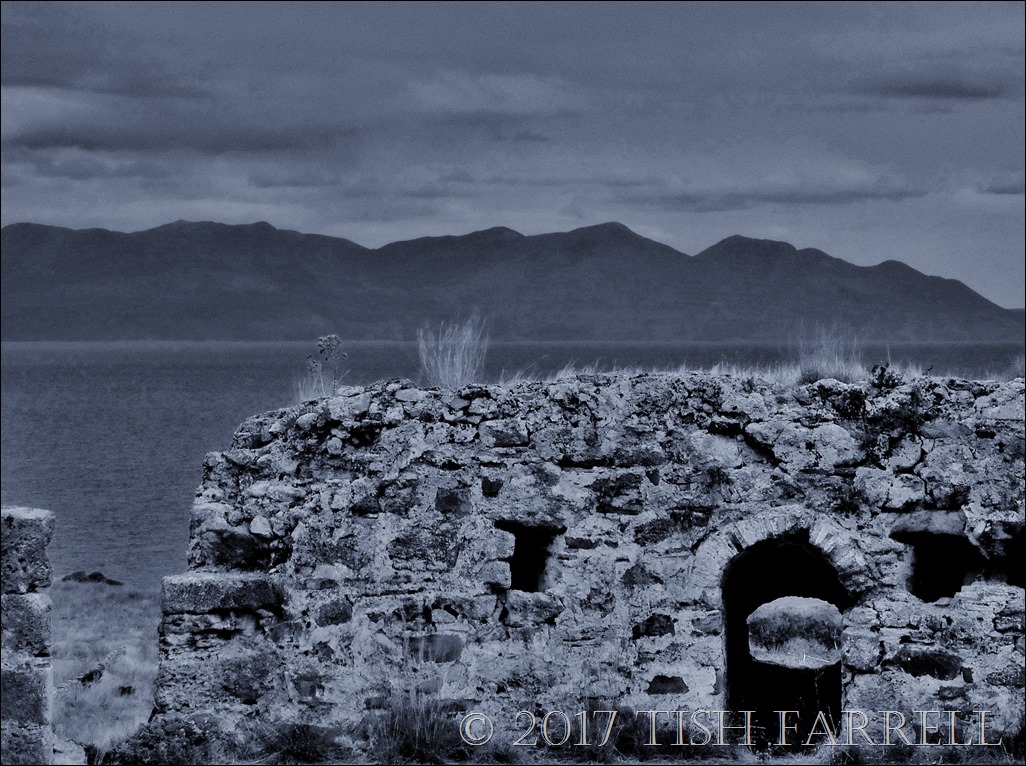
Today, you can spend many hours wandering around the castle’s 40 hectare interior. It is then you begin to grasp that before the Venetians occupied Koroni there were invader Franks on site – they of the French-Italian Crusader States. And before them, in the era of the Eastern Roman Empire of Constantinople, there was a Byzantine fort. This had apparently been built atop an ancient acropolis. And long before the Byzantine presence – that is from around 700 BCE and for a few hundred years, the Spartans were in occupation, so muddying the archaeological remains of the very much earlier Bronze Age Mycenaean period (1400-1100 BCE) and the ancient settlement of Assini.

And these are just the barest bones of Koroni’s history.
P1020707 - Copy (2)

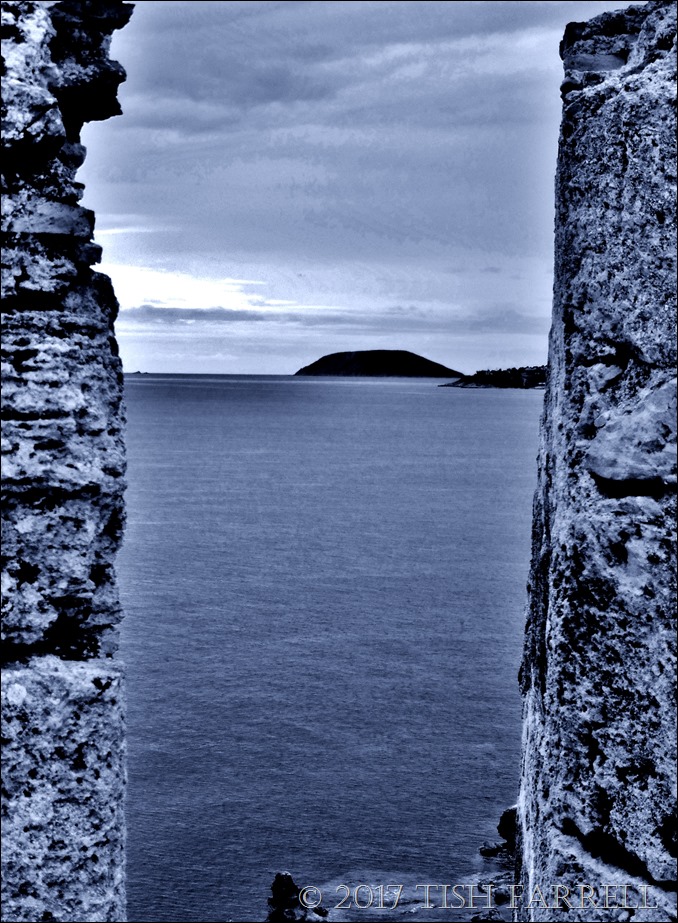
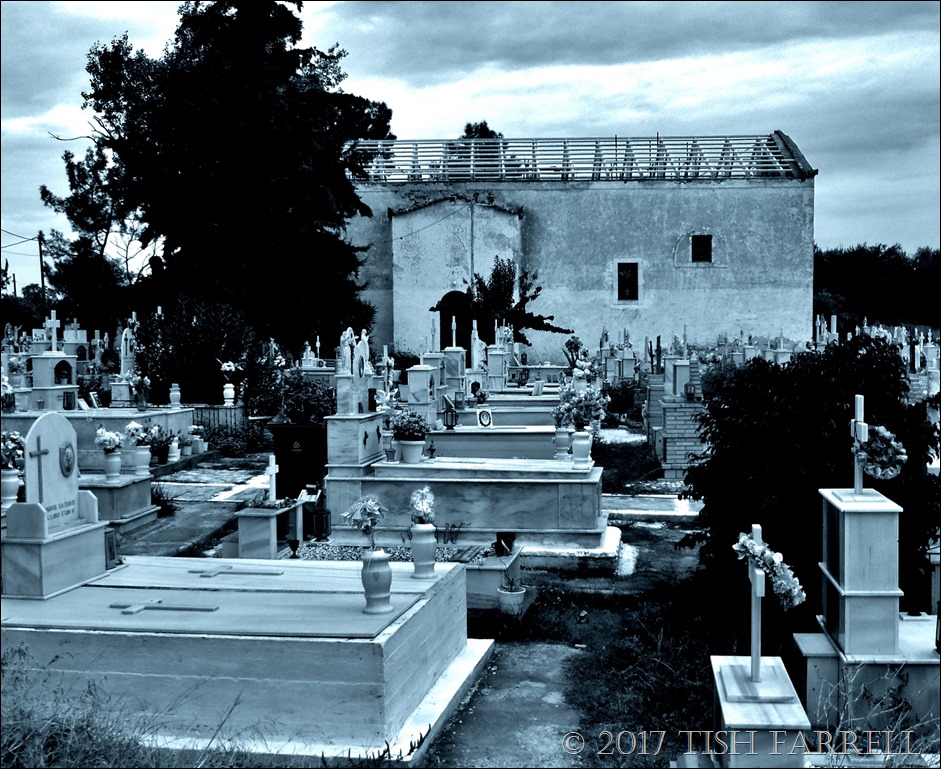
There are also astonishing present-day aspects. The first that strikes you is that people actually live inside the castle. As you walk up from the towering seaward gateway, you find yourself on an ancient cobbled street, and next there are cottages with pretty gardens, and later we come on an olive grove and a small holding. As ever, there are many cats about. There is also a cemetery which is in current use, several churches, ancient and modern, used and disused, and a monastery that is now only inhabited by nuns. The latter has a tranquil garden and a gift shop and picturesque cottages where the nuns live, and you are free to wander around.
P1020713

*

This next and final shot is was taken just outside the monastery entrance, one of the several sacred buildings built cheek by jowl in this part of the castle interior. It is dedicated to Saint Sophia and, dating from the 11th century Byzantine period, overlies the ancient temple precincts of Apollo. At which point you lose all grasp of time, since there is simply too much of it to fathom, and decide that a swift downhill return to a harbour taverna and an enlivening cappuccino is definitely called for.

IMG_2795

copyright 2017 Tish Farrell

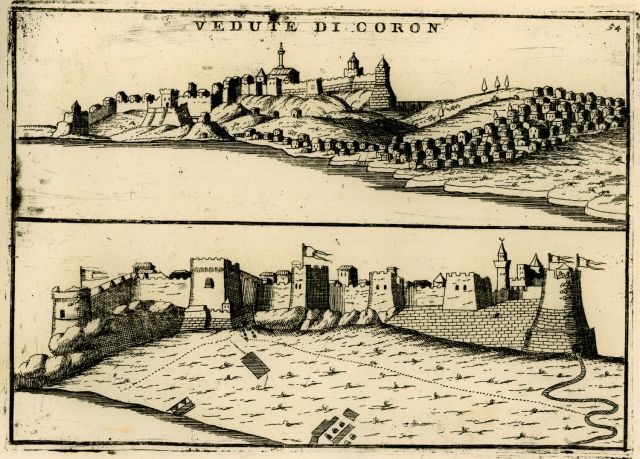
castle 1688

Koroni Castle CORONELLI, Vincenzo 1688  Aikaterini Laskaridis Foundation Library


Cee’s Black & White Challenge: Bricks or Stones

#PerouliaDreaming

Peroulia Dreaming 8 ~ Greece Out Of Sync

P1020362

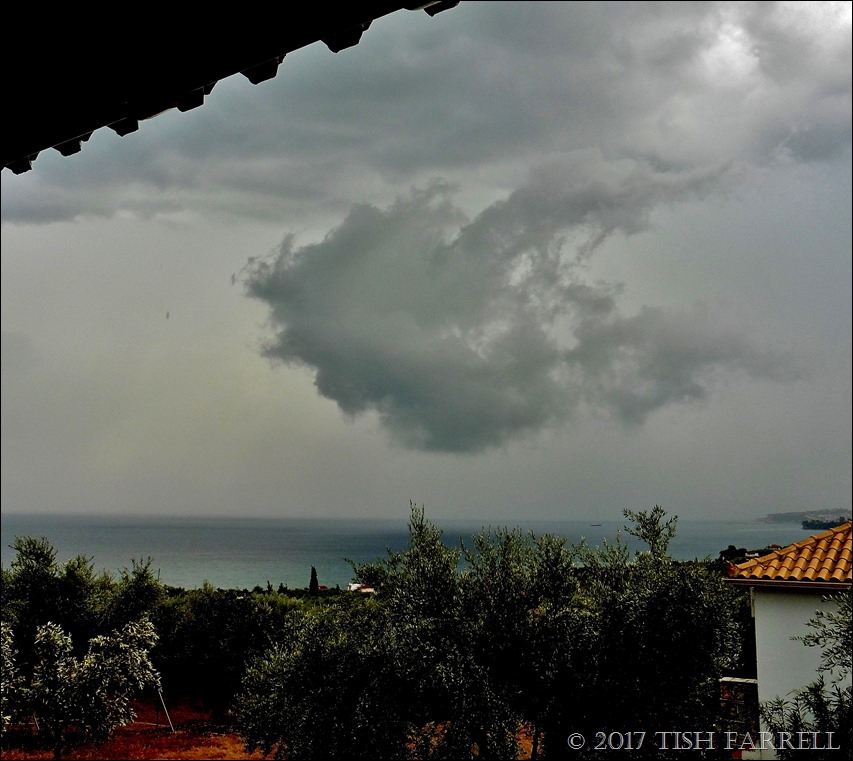
We’d tried to overlook the fact that rain and storm had been forecast during our seven-day trip to the Peloponnese. But here it came, quite dissolving the Mani peninsula, stilling the waters of the Gulf, giving them an ominously bruised look.

But then the drama of light and mood more than made up for the downpour, and once we had learned that the rain was responsible for boosting the oil content of the olives, and that the locals were pinning their hopes on a good harvest come November, it seemed churlish to feel resentful. Besides, Kalamata olive oil is some of the best there is. More power to its production and all who grow it is all I can say.

P1020659


P.S. I was sure I had posted this on Monday for Ailsa’s Travel Theme: Storm thus preceding Peroulia Dreaming #9 with the brolly.

But this morning I found I hadn’t. So here it is (with apologies for a few extra words) for Debbie’s Six Word Saturday