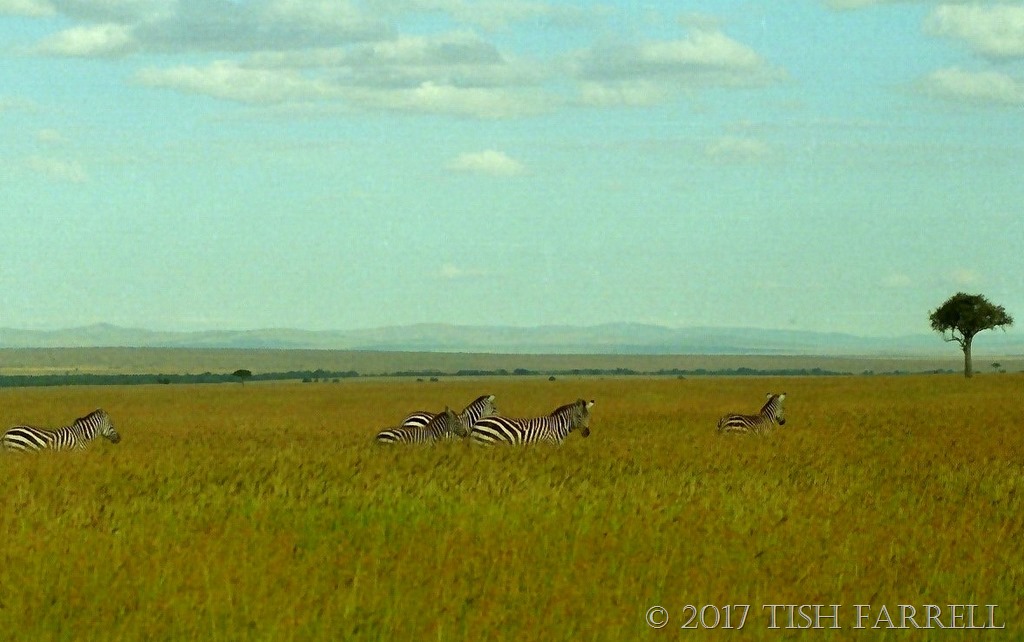
Wishing the Kenyan people well on this their election day.

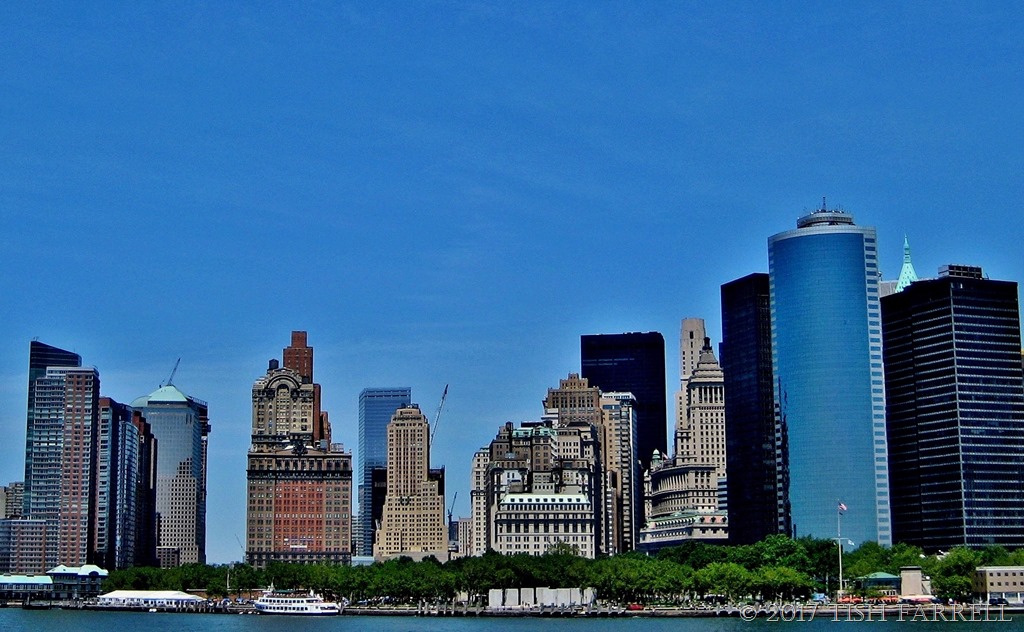
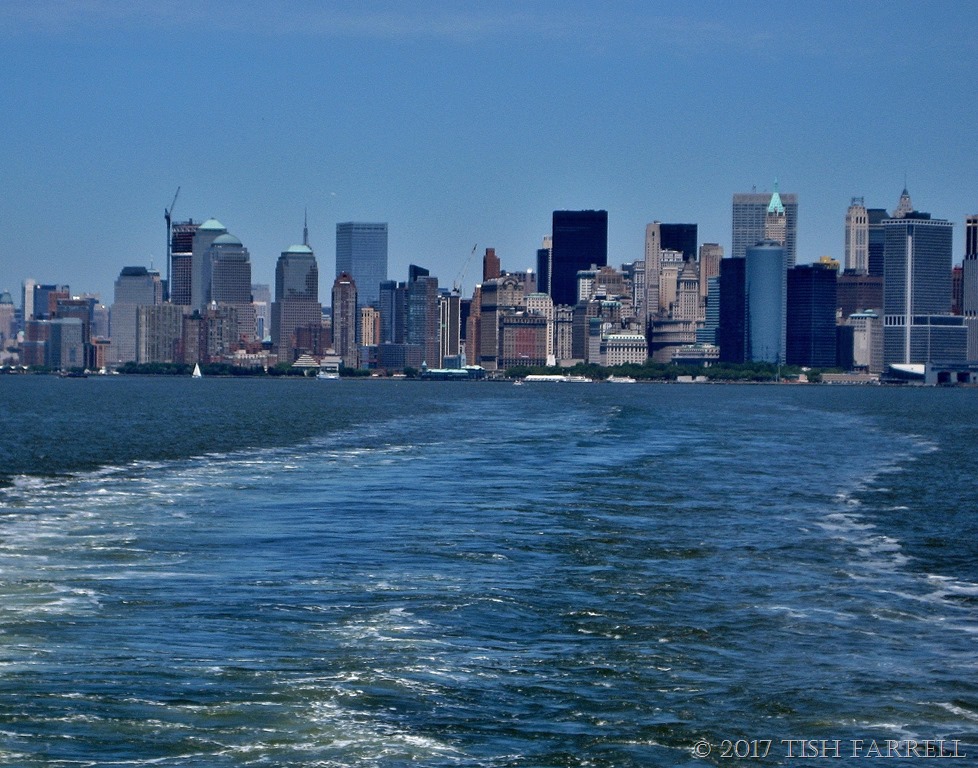
Our trip to New York a few years ago coincided with a heat wave. It was too hot to think or walk far from the iced coffee stalls in Central Park, or the cooling air conditioned corridors of the Met. The other best place to be was riding the Staten Island Ferry. Nice breeze. Stunning views of Manhattan and dead cheap.
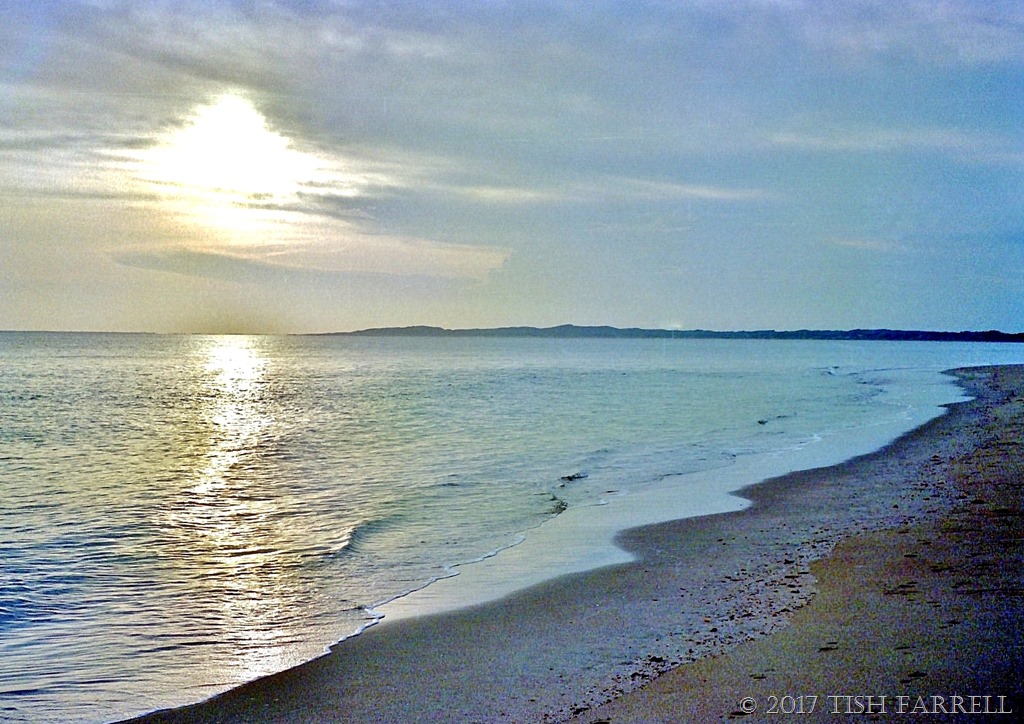
Thursday’s Special: please visit Paula and pick a word that inspires you. I’m going for ‘soaring’.

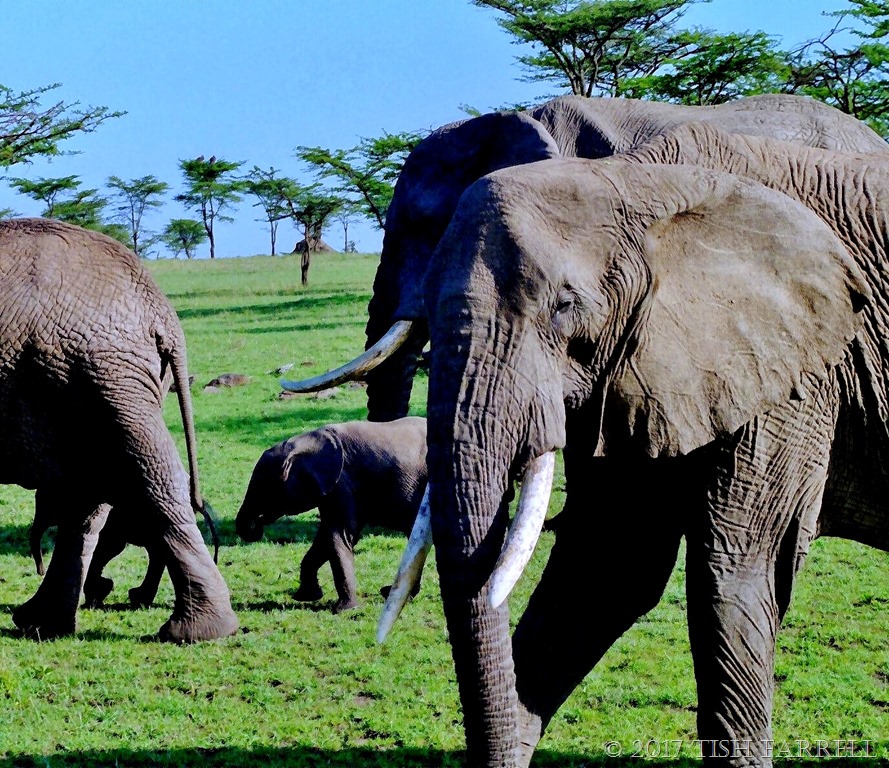
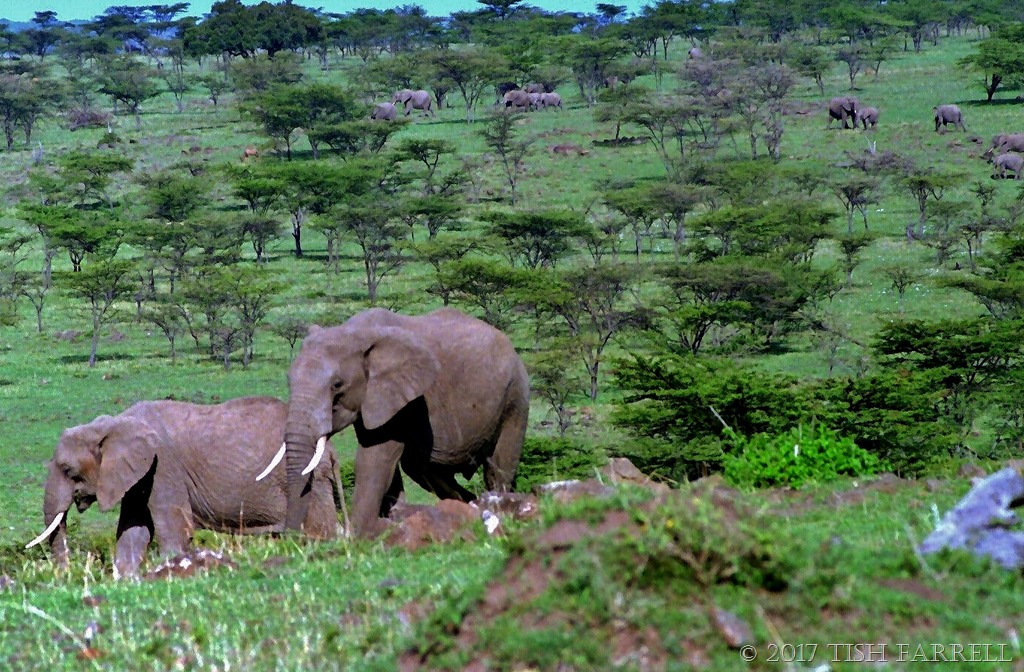
The thing is, they are noiseless as they move, their footfalls cushioned by pads of fat behind their toes. Of course there are the low frequency stomach rumbles that maintain lines of communication across the herd, but we weren’t close enough to hear those. Or maybe we were too intent on our own stomach rumbles. We had driven out of the Mara River Camp at first light, after only a 5.30 cup of tea. Breakfast was still a distant prospect when we found ourselves among this large, slow-moving herd.
They paid us no attention whatsoever. All we sensed was a wave of communal intention as they headed on through the thorn brush. In fact we were so beneath their notice, Daniel, our driver-guide, decided it would be fine to stop the truck and eat our picnic breakfast as the elephants moved on by. I remember thinking how incongruous it was to be standing out on the Mara plains eating a hard boiled egg while these majestic creatures slowly passed me.
This is not to say that elephants cannot be dangerous; sometimes murderous if they bear a grudge for some harm done them; or if the bulls are in musth. But nothing was amiss this day. It was like one big family outing, the epitome of good elephantine order wherein mothers and children always come first.
copyright 2017 Tish Farrell
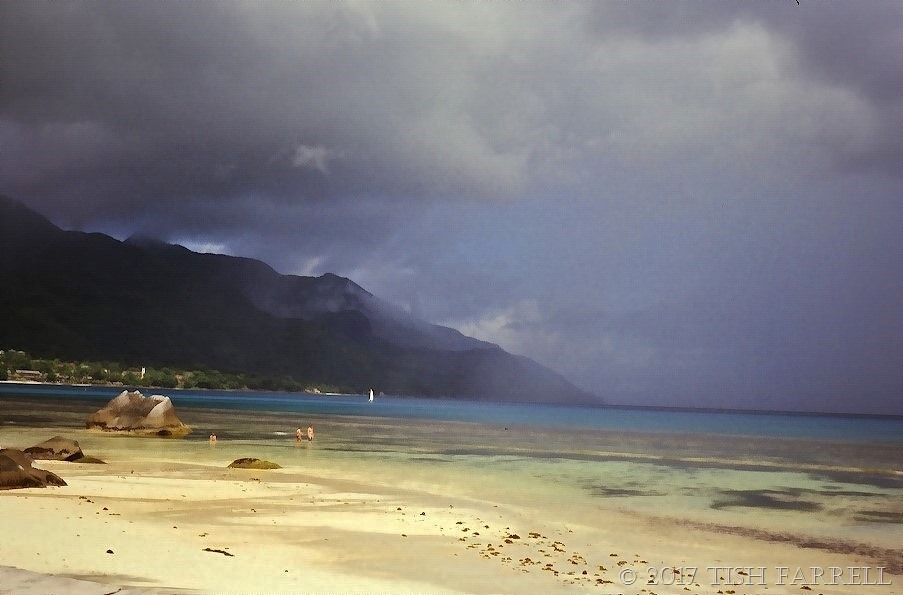
We were living in Zambia at the time – in Lusaka, a city that in 1993 was beset by cholera from infected boreholes, rumours of military coups, incursions over the border by predatory gangs of Zairean military making up for lack of pay, and the populace being structurally readjusted courtesy of financial rigours visited on them by the International Monetary Fund. Elsewhere in the country, people were starving due to severe drought and high maize prices; there was an outbreak of swine fever that caused small farmer chaos, and reported figures for HIV infection were sky high.
It was thus a relief to leave for two weeks of quietness on Mahé, the Seychelles main island. The place was blissful, but there were twinges of guilt nonetheless as we wandered barefoot on near empty beaches: we had the means to take a break from Zambia when most of Zambia’s ten million citizens did not.
For more of the Zambia story: Letters from Lusaka part 1 and part 2,
*
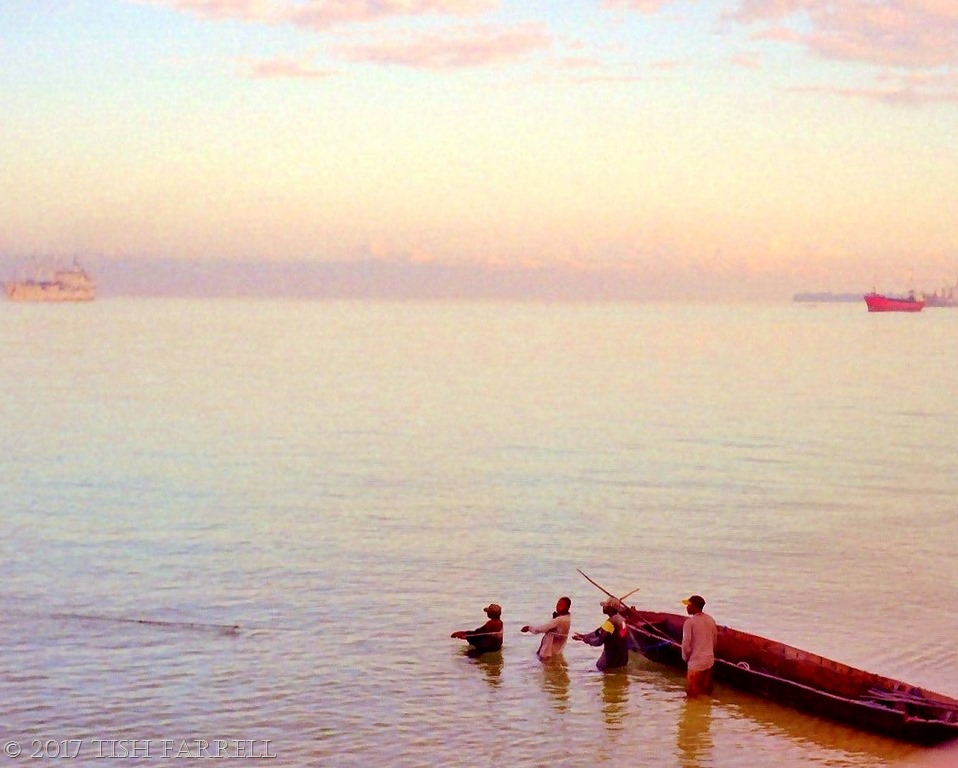
Perhaps I was never there at all. Perhaps I never saw this early morning scene. A figment of my imagination then.
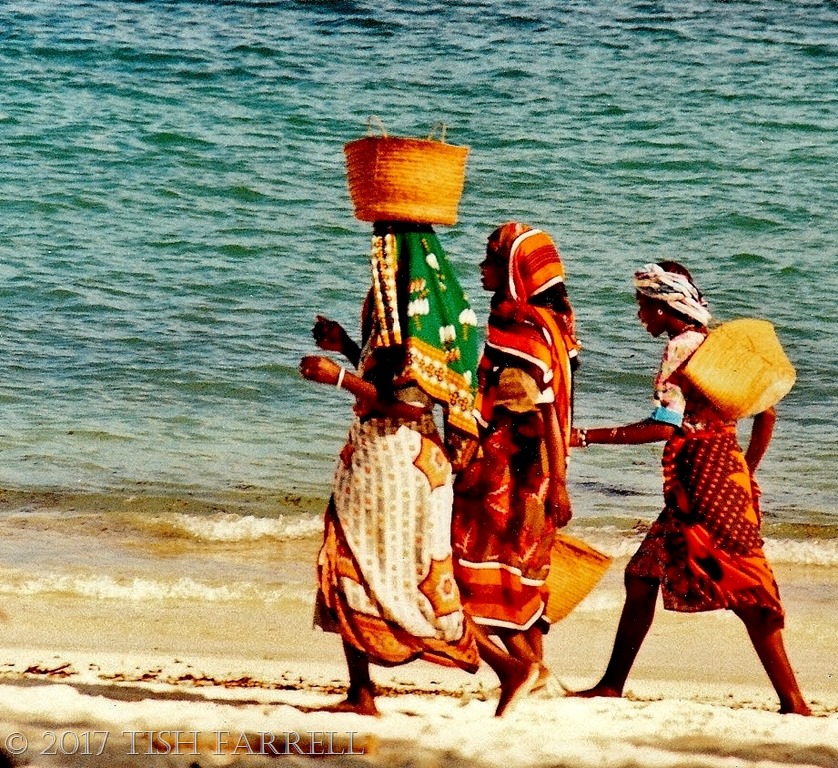
Another shot from the old Africa archive. I love the grace and energy captured here with a single click. What style.
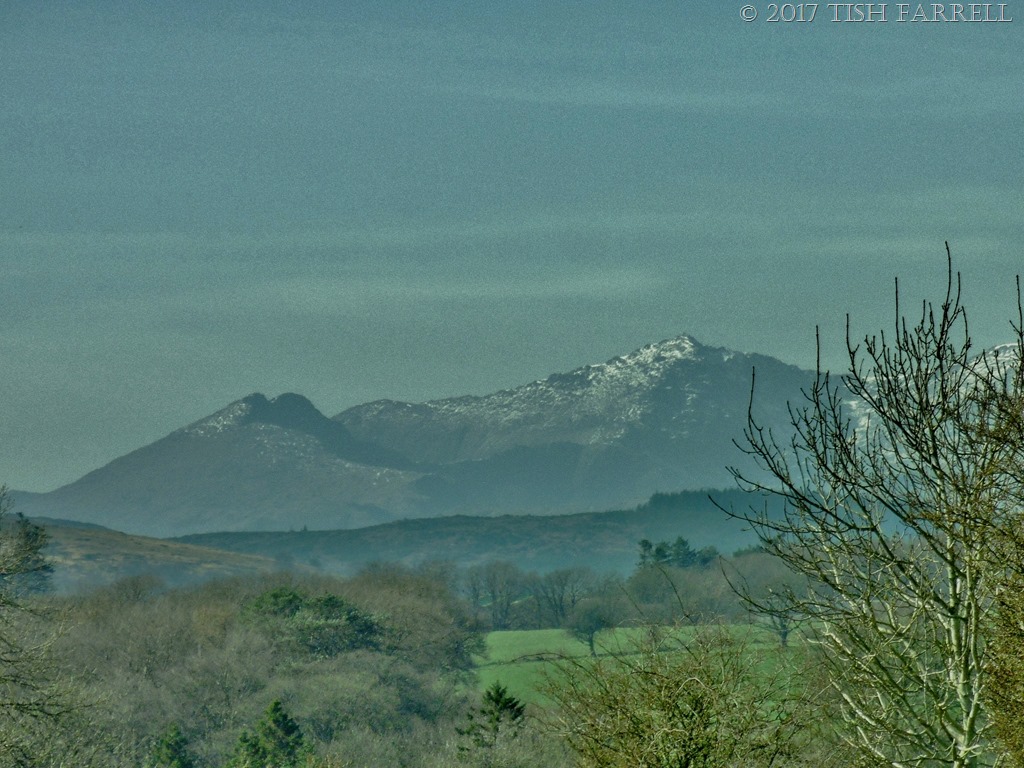
This week Paula’s Pick A Word challenge is giving me the chance to post more views from our March trip to the Conwy Valley in North Wales. Projecting, arresting, pastoral, convex and communal are the prompts, and this distant shot of snow-dusted mountains pretty much covers the first three. However, I won’t let that stop me.
Arresting is my word of choice for all the following images; Wales was at its magical, magnificent best – from the glittering waters of the River Conwy to the surreal towers and ramparts of Conwy Castle. It made you want to burst into song. Cue: Land of My Fathers, the Welsh National Anthem, which you can join in with at the end, and so definitely cover the communal. It doesn’t matter if you can’t speak Welsh; humming will do. Besides, there is nothing quite like the quality of Welsh singing voices.
Also look out for Thomas Telford’s amazing suspension bridge in the next shot of Conwy Castle. It was built between 1824-26 to improve access between Holyhead on Anglesey and Chester, and was also part of Telford’s larger road and bridge improvement scheme to enable swift and safer travel to London for Irish Members of Parliament. A triumph, then, in both function and form.
The castle was built between 1283 and 1289, and is another of Edward I’s overbearing edifices to oppress the Welsh. Not only did he invade, he also cleared out the monks who occupied the site and set about building both a fortress and a model town below it, the latter confined by massive defences. Today, these walls still surround the town, and you can walk around them, though I should issue a warning: the wall-top walk is not for the faint-hearted or those prone to vertigo. But if you don’t mind heights, they provide striking views in every quarter.


*
A few miles upstream from Conwy is the market town of Llanrwst. It is claimed that in 1947 its town council made an unsuccessful attempt to gain a seat on the United Nations Security Council as an independent Welsh state. One has to admire this piece of Celtic chutzpah. I’m sorry they did not succeed. 
Anyway, one of the present day arresting features of Llanrwst is this bridge, the Pont Fawr or Great Bridge. It was built in 1638 and still cars drive over it. There are other names too – the Shaking Bridge – because if you tap the central parapet the whole structure vibrates, and also Pont y Rhegi – bridge of swearing, explained by the fact that the carriageway is too narrow for vehicles to pass, and the height of the central arch too steep for forward visibility,meaning that everyone meets in the middle and this happens…!&?#!
The view through the central arch shows the ground on which the National Eisteddfod was held in 1989. The town is currently campaigning for a return of this annual extravaganza of Welsh culture in 2019. Which is a good point to bring on the choir. Croeso – welcome!
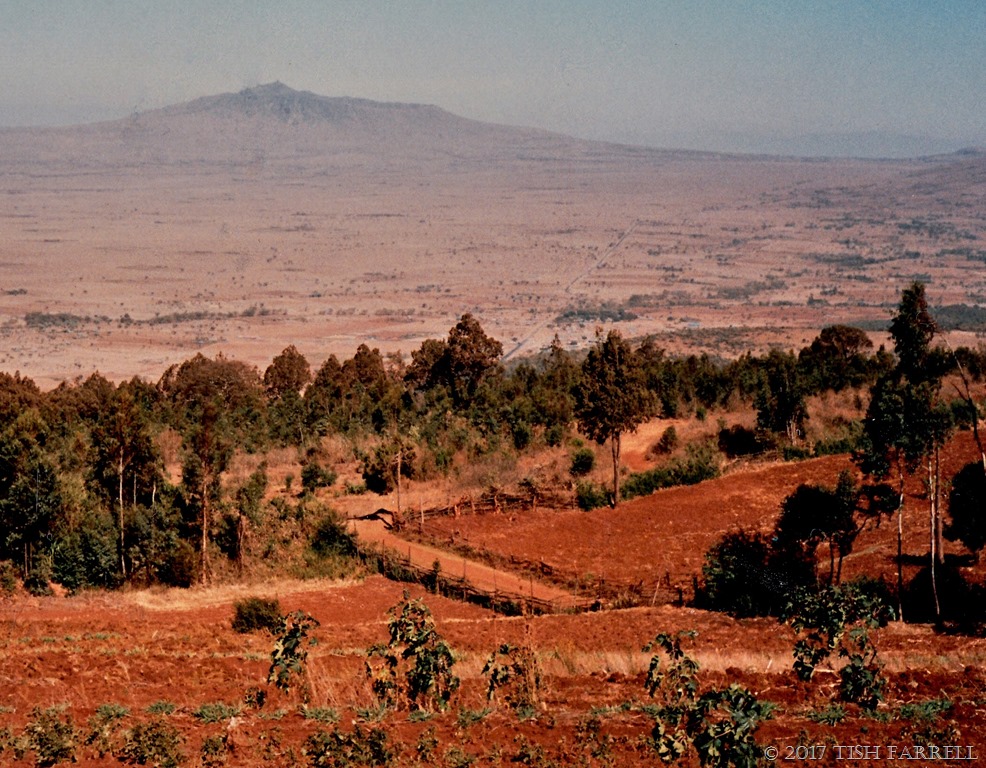
It is hard for many of us to imagine living in lands that have rain only in given seasons with little or none in between. In Kenya, in theory at least, the long rains come during March and April, and the short rains between October and December. All depends on the movement of the Indian Ocean monsoon winds, and long before awareness of serious climate change, Africa’s rainy seasons were known to be fickle.
So: the arrival of timely rains to plant or ripen crops is matter of survival for most rural households. Only 15% of the country’s land is fertile enough and receives sufficient rain to support agriculture, and most of this is cultivated by smallholder farmers, women for the most part, while their husbands go to the towns to earn cash to buy stuff – medicine, fertilisers, stone to build a house etc.
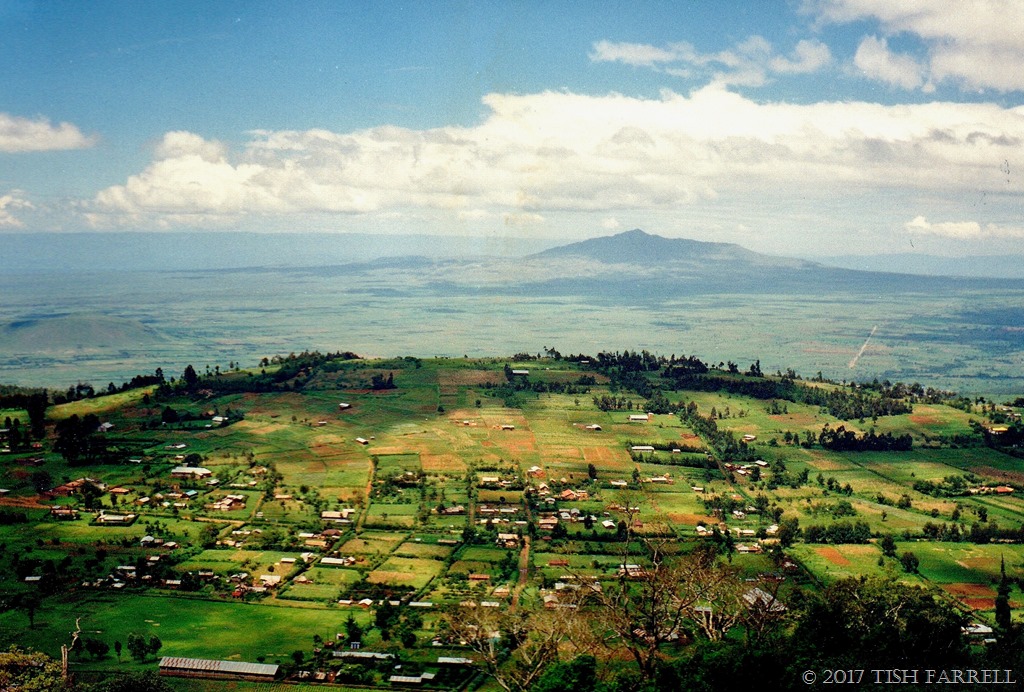
The second photo was taken just north of Nairobi, from one of the Great Rift view-points looking over the smallholder farming community of Escarpment. The farms here were originally a series of single 12 acre lots, distributed by the British administration around 1951. I’m not sure what prompted this land hand-out to Africans, or how the beneficiaries were chosen, or if they had to buy the land, although that seems unlikely as Africans were not allowed to own land as individuals. By then the native reserves, the only places where indigenous people could farm, were more than overcrowded. Land shortage, especially within the Kikuyu reserves, meant that the marriageable generation could not marry for lack of farm plots, and this was one of the main drivers of the Land Freedom Uprising of 1952 – aka Mau Mau.
When we visited Escarpment during Graham’s Napier Grass smut survey, Njonjo, our driver-guide played host, since this was where he had his own farmstead. He told us that his family’s 12 acre plot had been so subdivided (from father to sons according to custom) that he only had a quarter of an acre. He proudly showed it to us anyway, with his good crop of maize, and said it adjoined his brother’s plot.
Of course there comes a point when further subdivision is pointless, and there is not enough ground to support even the smallest family. Nearer the city such communities have turned ancestral farm land into room rental land, and erstwhile family gardens are now part of the city perimeter slum sprawl. It’s how it goes. As I’ve said in an earlier post, the British left their constructs of Crown land, landed gentry land ownership and native reserves well embedded when they so ‘graciously’ handed Kenya back to Kenyans, and made them pay for it too, thus creating a great big debt that was only paid off in recent times.
British feudal notions about land ownership never did fit with the more communally minded African ideas about land usage and proprietorship, although they certainly came to suit the current ruling elite, a family that has hung on to power (one way another) since the British bestowed it upon them in 1963. Let us hope we manage the exit from Europe with more wisdom. Much as we Brits like to think we went around civilising the world, we also left a lot of skeletons in cupboards when we beat our retreat.
copyright 2017 Tish Farrell
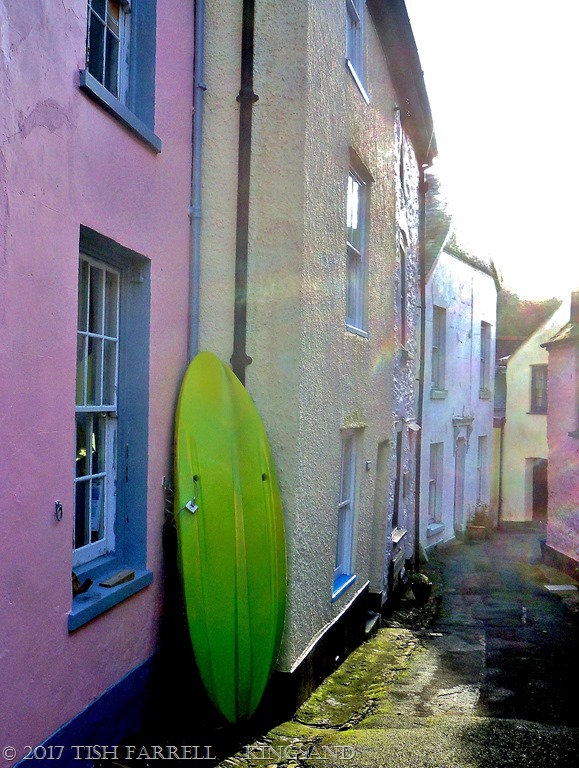
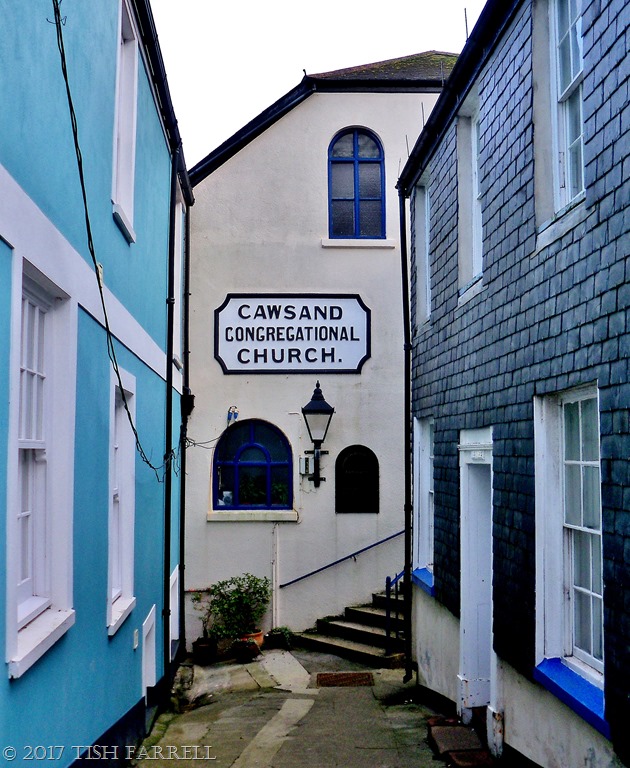
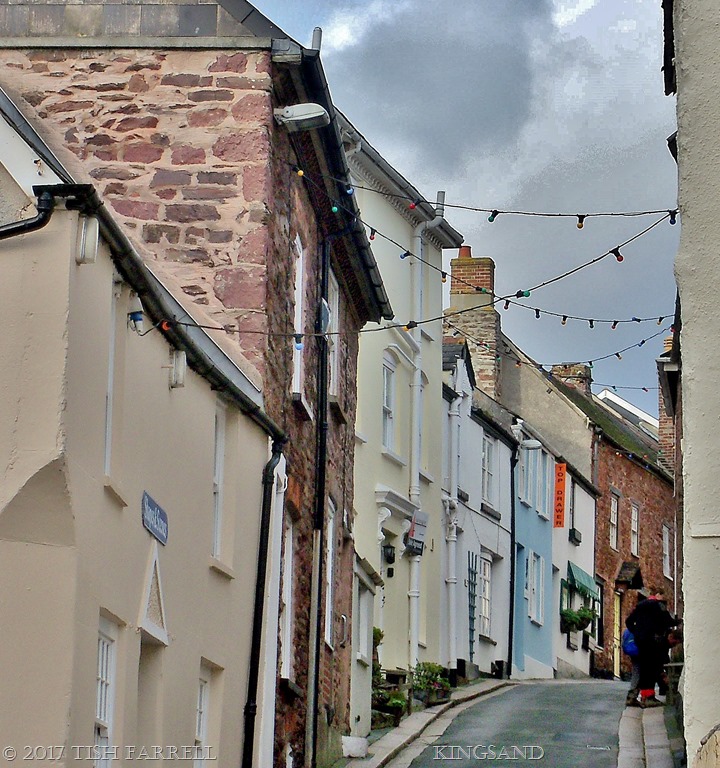
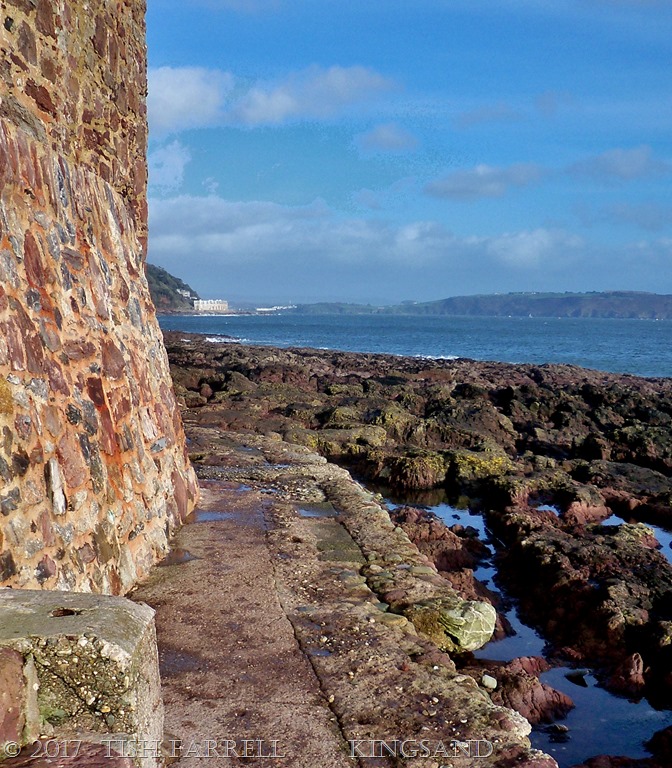
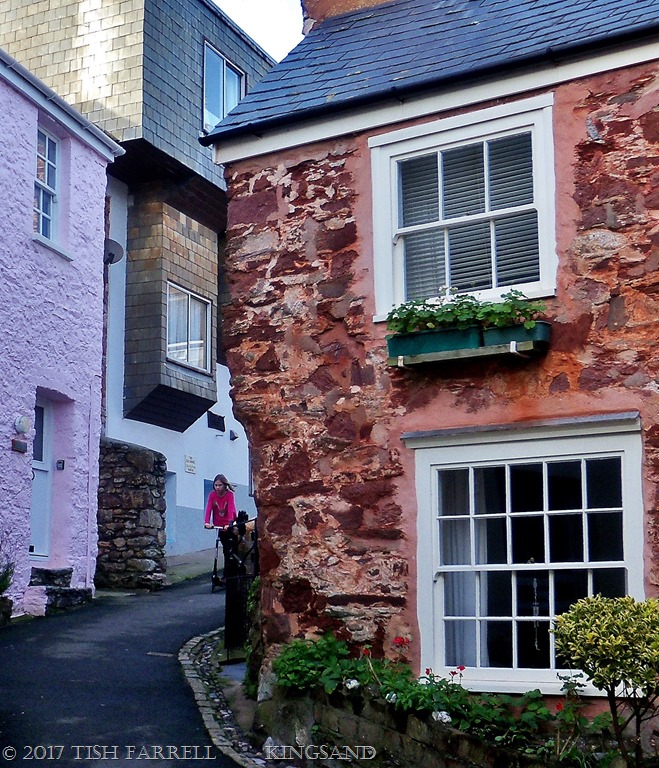
The meandering streets of Kingsand and Cawsand were all but deserted when we went wandering there one winter’s afternoon. The twinned villages fringe adjoining bays, clinging to the hillside above the Tamar Estuary in south east Cornwall. The river marks the county boundary – Devon, and the port city of Plymouth to the north, Cornwall to the south.
The communities of these rugged shores run together so it’s hard to know when you have left one and entered the other. They have always looked to the sea for a living, although these days this is more about providing seaside holidays for outsiders. The place had a determinedly deserted air during our December visit. Many of the houses are now second homes; unoccupied out of season.
Once, though, it would have been a teeming place – a thriving fishing community from the medieval period, and the centre of the pilchard trade from the early 16th century. You can still see the remains of the fish cellars, or ‘pilchard palaces’ that were built along the shore north of Kingsand. These were for the storage and processing of fish, and there’s a surviving example, the red sandstone building, on the far right of the next photo.
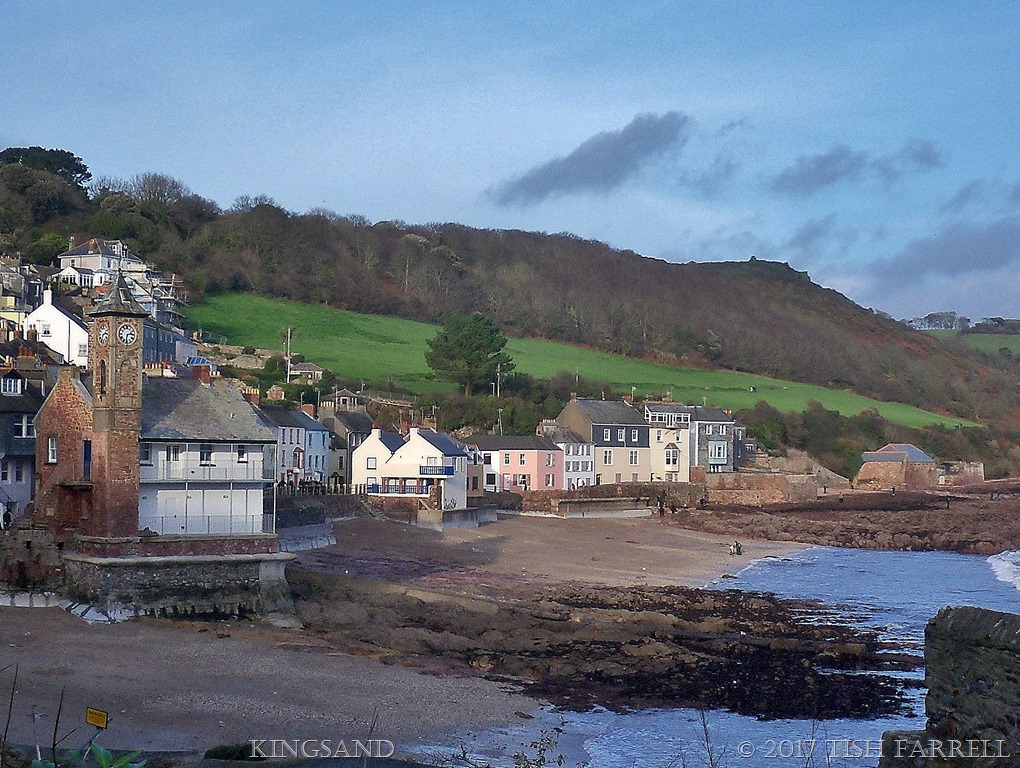
Smuggling was the other big business – its heyday running through the 1700s and into the 1800s. The place was a smuggler’s haven in fact – with some fifty vessels dedicated to the nefarious trade in contraband liquor.
And then there were the pirates. In 1604 one especially notorious rogue, a Kent man called John Ward, upped the stakes of his earlier career as a privateer, and decided to join forces with the Barbary pirates of North Africa. He stole a French merchant ship off the Scilly Isles and headed for Cawsand, even then a well known centre for Cornish smuggling. Mooring in the bay there, Ward went ashore and set about recruiting local smugglers to join his enterprise as a Barbary pirate.
The Barbary corsairs were slavers, mostly North Africans from Algiers, Tripoli and Tunis, but there were Dutch and Englishmen operating with them too. They terrorised Britain’s south west shores for 300 years, snatching people from their homes. By 1626 there around 60 Barbary men-of-war preying on communities of the Devon and Cornish coasts, and attacks were almost a daily event. A parliamentary committee of 1645 established that there were at least 3,000 English men, women and children held captive in Algiers. It was only in 1816 that combined British and Dutch forces ended their power, at which time four thousand Christian slaves were said to have been liberated.
As for Ward, he and his happy band of recruits wormed their way in with governor of Tunis, he who had made that city rich by providing a haven for pirates and taking a cut of their loot in goods and captives. Ward captured many ships, and directed his own pirate fleet. Then built himself a palace with his ill gotten gains and lived a life of drinking, gaming and swearing, to name the least of the vices he apparently indulged in. One wonders what happened to his Cawsand recruits. Did they ever go home? Ward himself gave up piracy, got married and took to raising chickens. He died of plague in Tunis 1622.
And now, after that little diversion, some more turny-twisty byways and shorelines from Kingsand and Cawsand, accompanied always by the sea’s ebb and flow on the nearby rocks, and the cries of gulls:
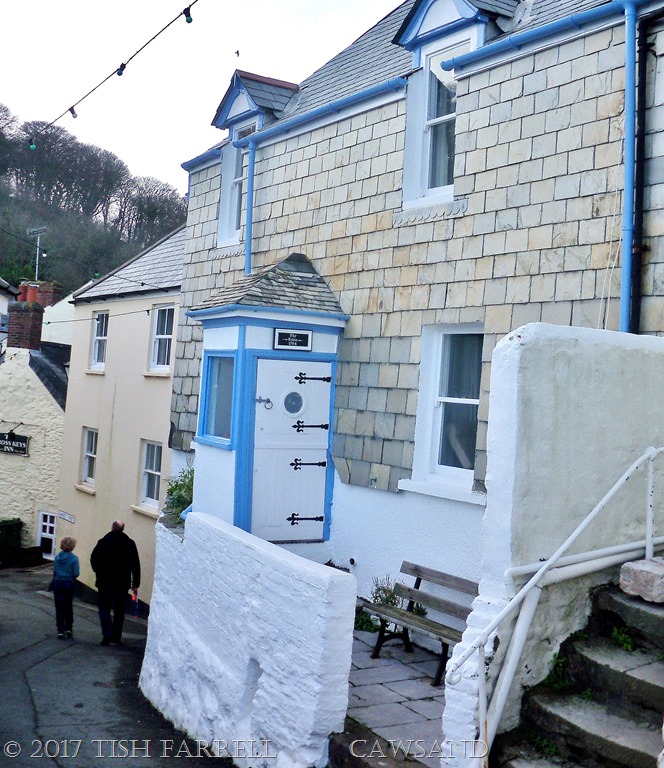
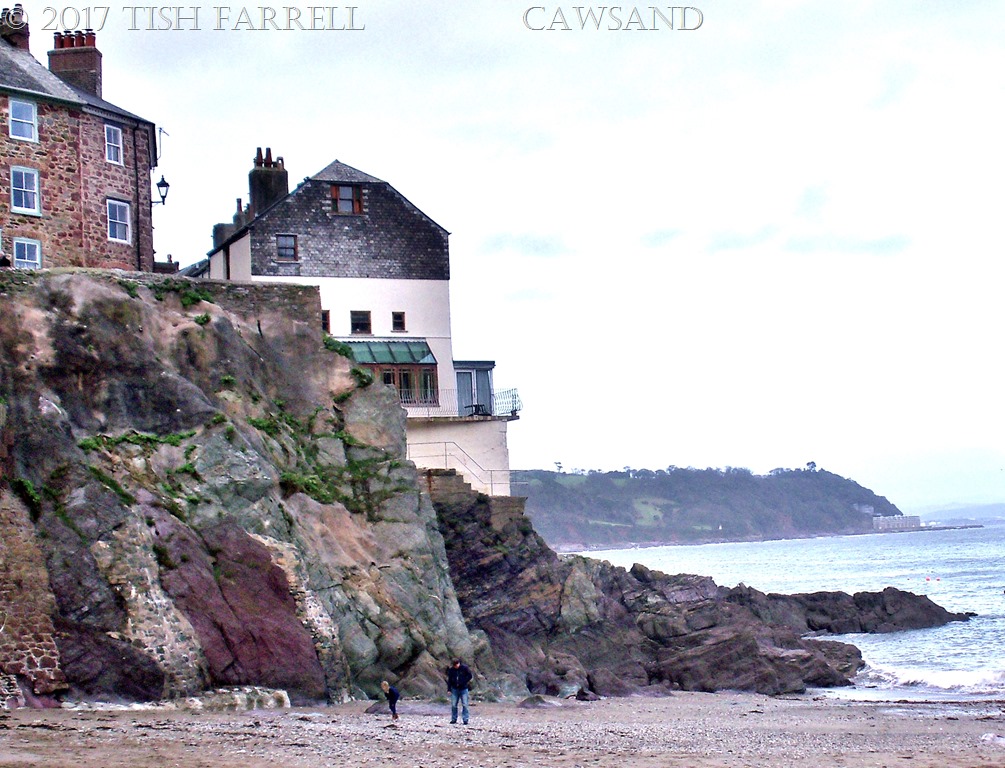
Thursday’s Special: winding. Please visit Paula to see her astonishing interpretation of this week’s theme.

