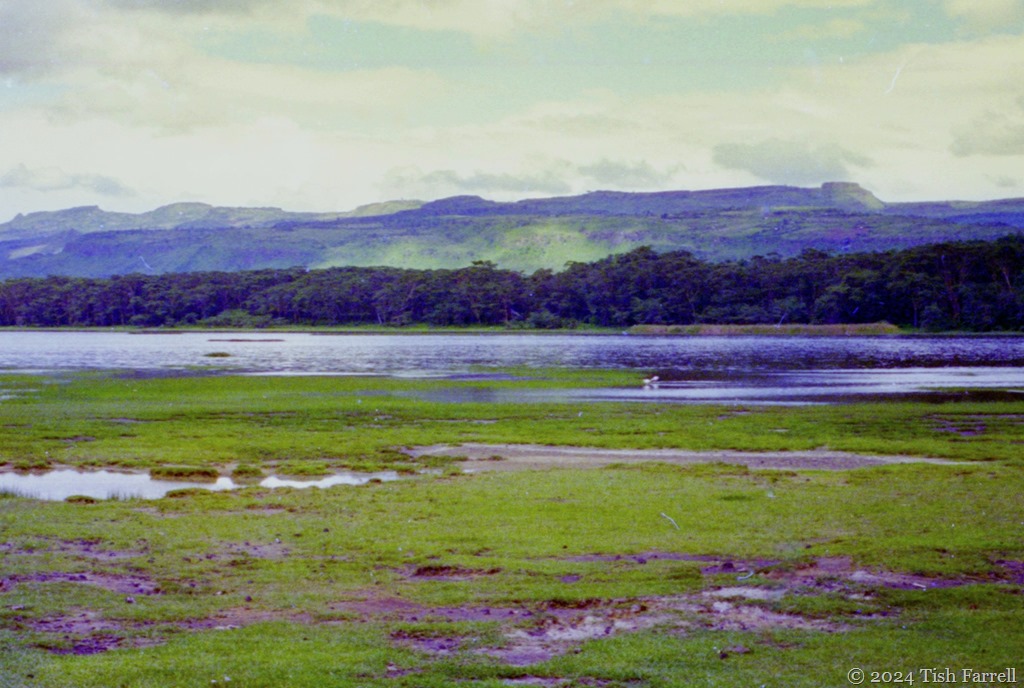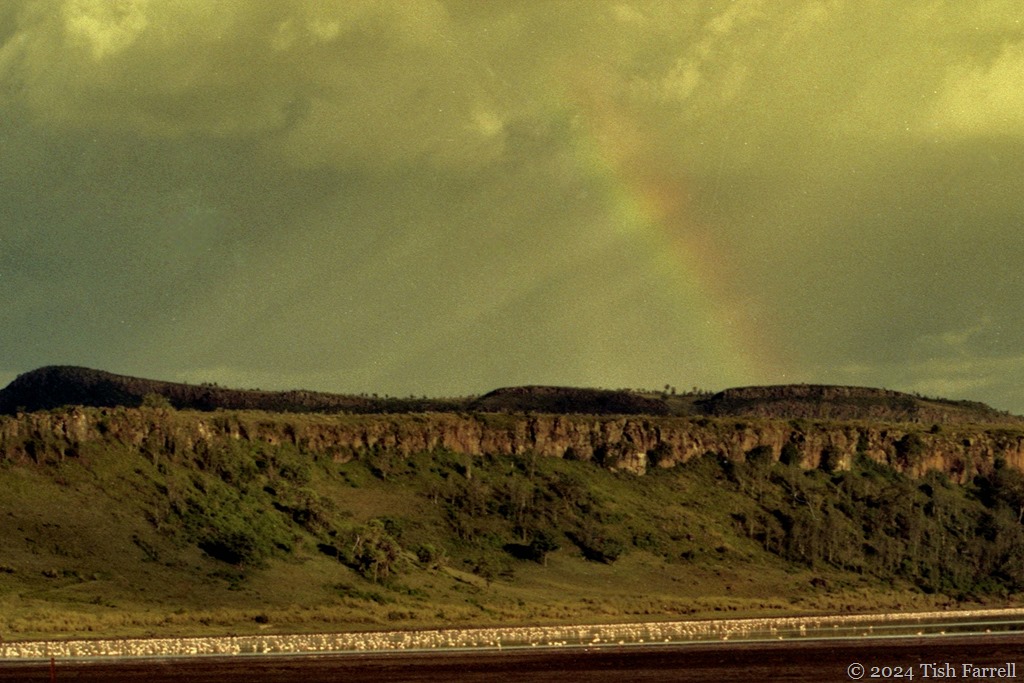
Scavenging The Old Africa Album

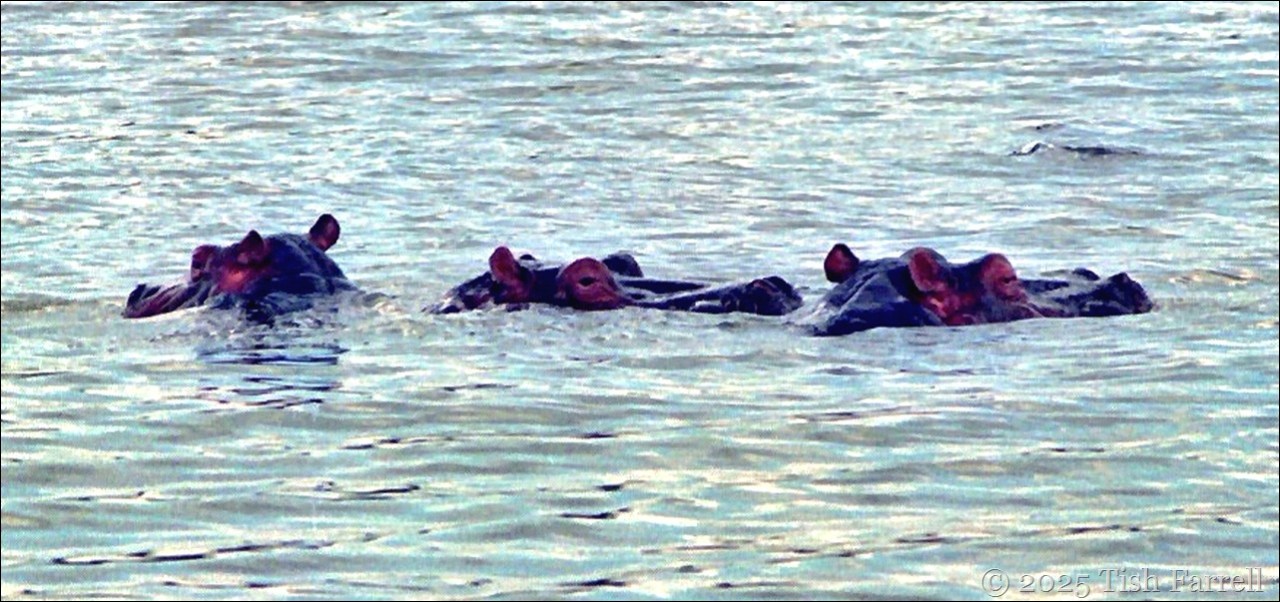
Hippos Naivasha

This week at Lens-Artists, Anne from Slow Shutter Speed sends us on a virtual scavenger hunt. I haven’t been in the old Africa album for a while, so I thought I’d have a rumage there. A virtual mini safari as well then.

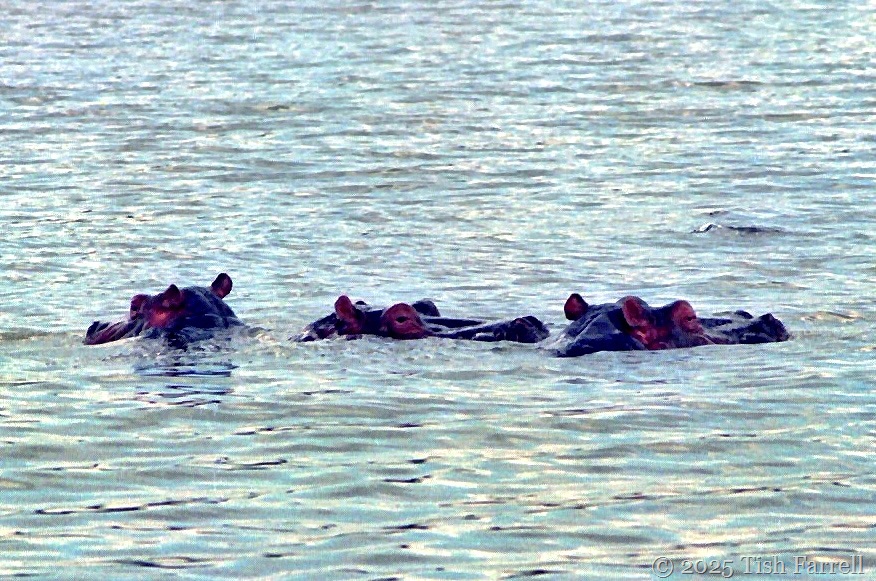
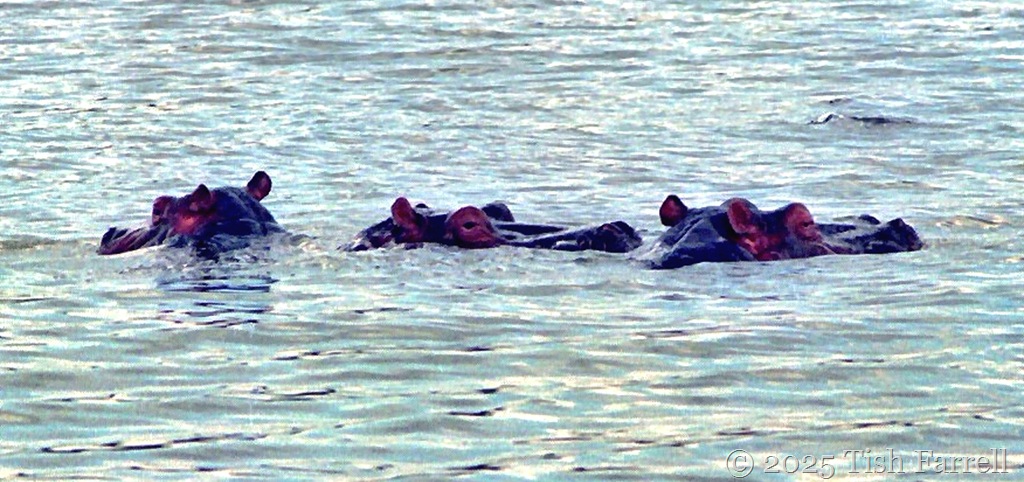
‘Wavy lines’ tops the list. The header thus features a wavy profile of hippo ears, eyes and noses in a wavy Lake Naivasha in the Kenya Rift Valley.

*

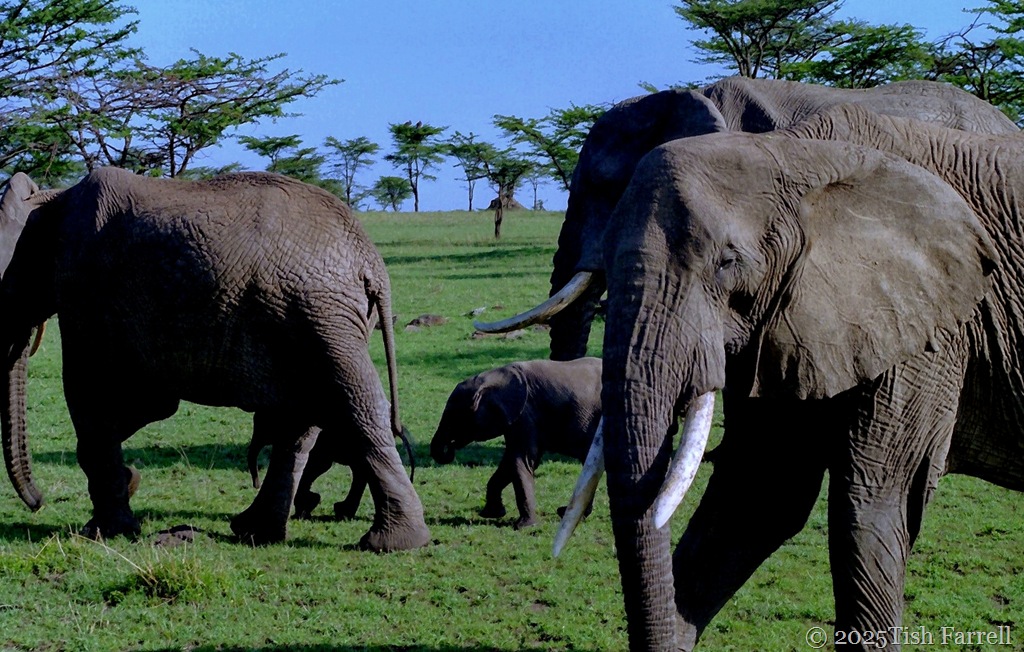
Maasai Mara elephants

This herd of Maasai Mara elephants was in a very peaceable mood. They walked around us as we were parked up eating a picnic breakfast. I’m thinking elephant hide would feel pretty ‘bumpy’ should one ever dare to try it, especially the trunks.

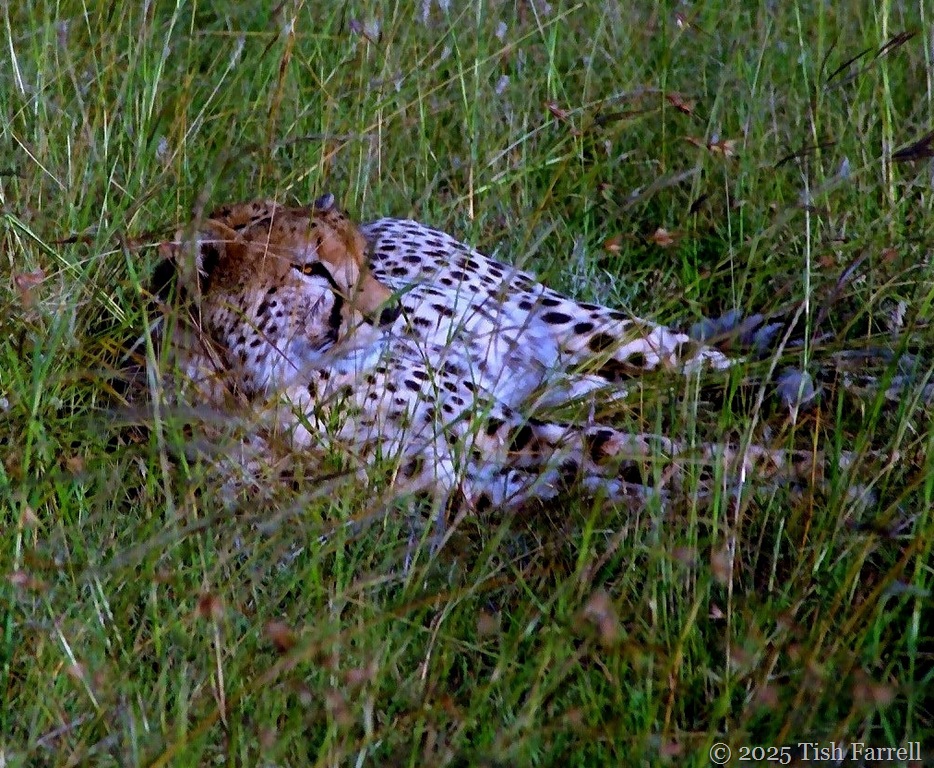
Whereas cheetahs must be wonderfully ‘soft’. They also wear nice ‘circular’ spots. This female was having an afternoon siesta when we pulled up beside her in a safari truck. She didn’t look at us, but simply posed like a professional, well used to having her photo taken.

cheetah

*

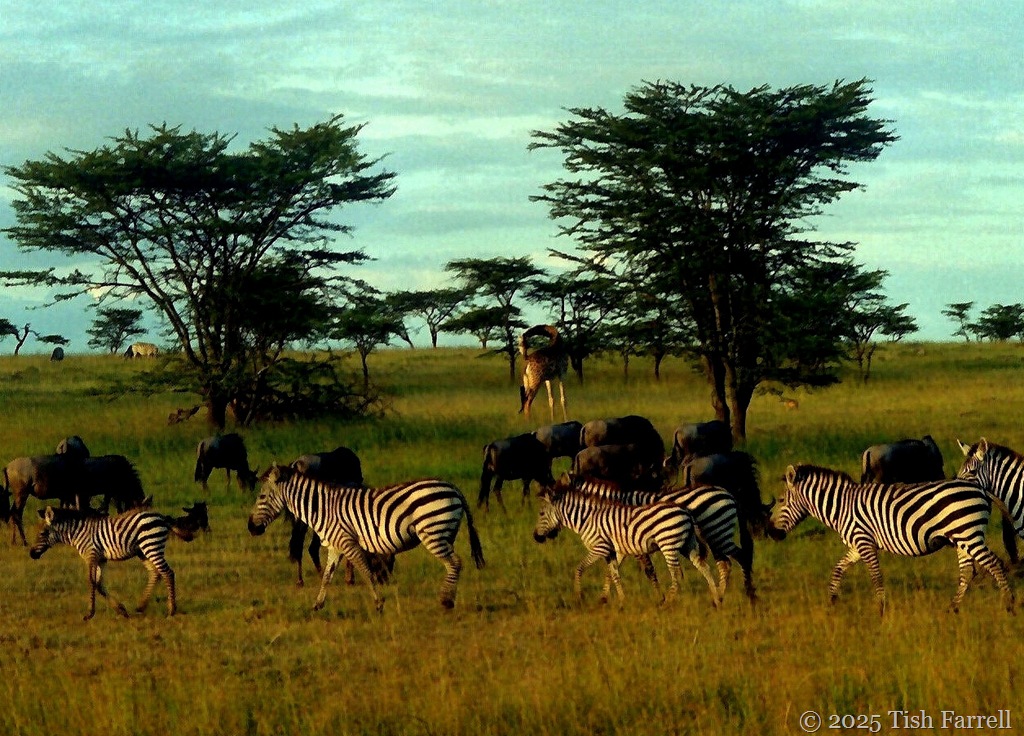
And more ‘patterns’. This time stripes. Zebras come with wavy ones:

Zebra sunset Maasai Mara

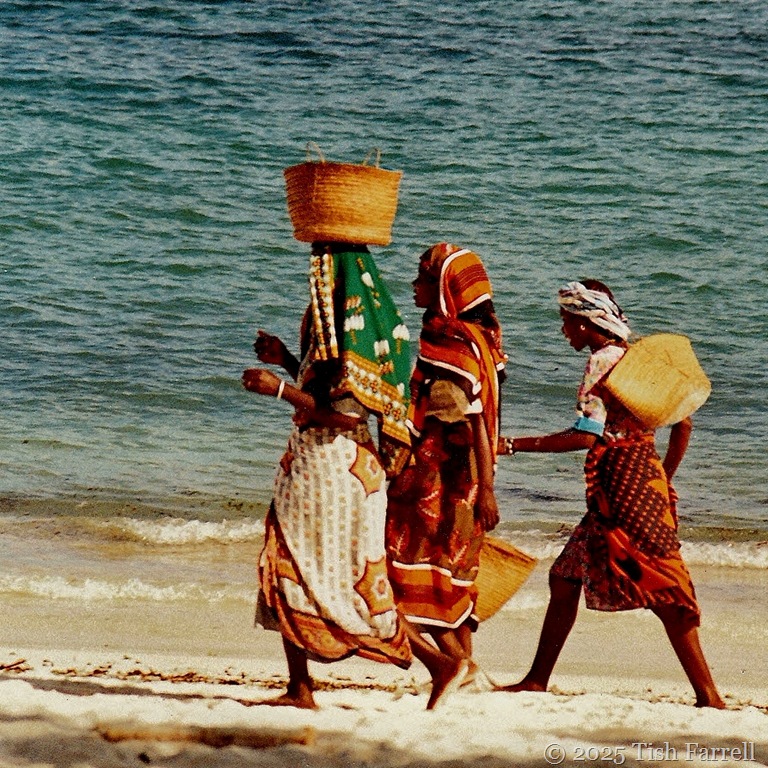
And then there’s another Kenyan speciality, patterns-wise:

Digo girls in kanga wraps

Cotton kanga wraps come in pairs with vivid designs and snappy Swahili slogans on the hems, here worn by Digo girls on Mombasa Beach.

*

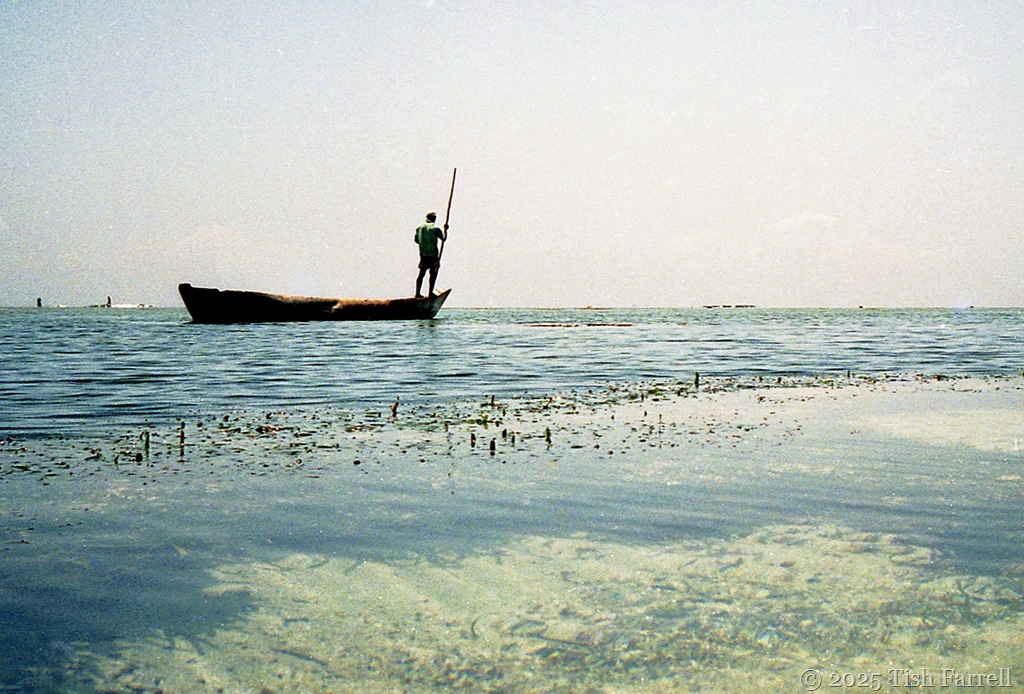
Tiwi fisherman

Now for ‘smooth’ water and a smooth dug-out canoe on Tiwi lagoon. A Digo fisherman under the midday sun. I’m guessing he’s looking for reef lobster.

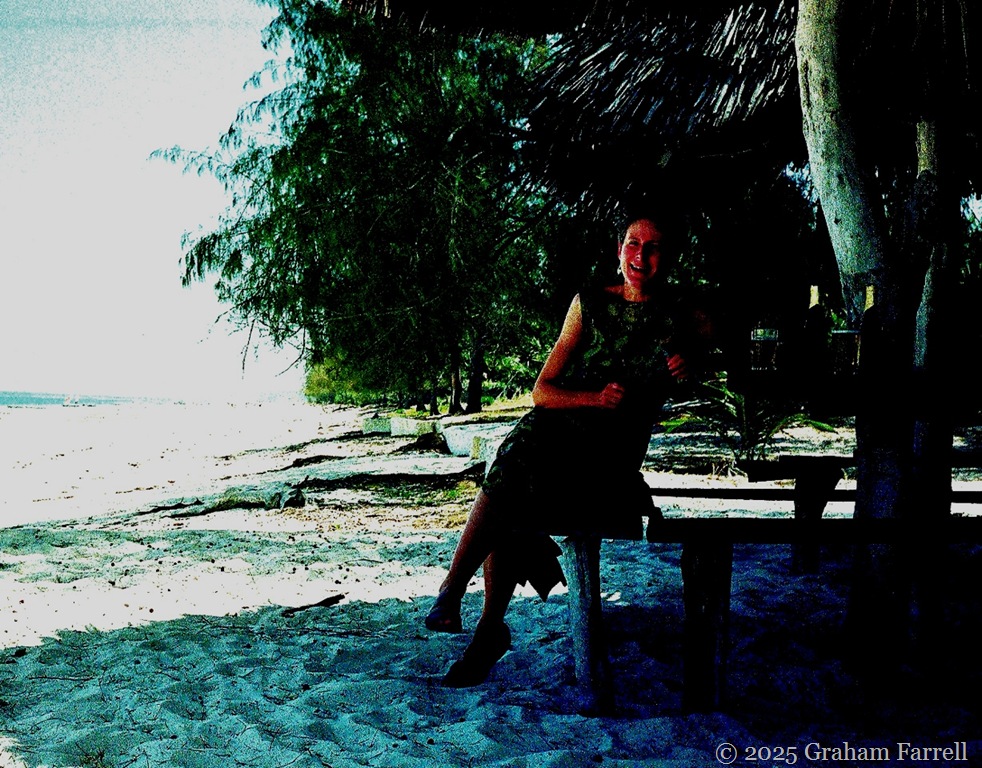
And as for ‘cool shadows’,  here’s me escaping to some at a Tiwi beach bar. Not so much too hot, as too bright to see out on the white coral sand. Aaah! Those were the days.

Cooling shadows

*

Lens-Artists: Virtual Scavenger Hunt  This week Anne at Slow Shutter Speed sends us on a photo quest, five to ten of the following: wavy lines, bumpy or soft texture, patterns, things circular, rectangular, smooth, made of glass, something with water in it, with green eyes, a wheel, a camera, cool shadows or jewellery…

Hippos Naivasha header

It Seemed Like A Big Day Out

IMG_8114 sq

We’ve not been gadding for ages. He who builds sheds has been much occupied during our rainless days, taking the internal house doors off their hinges and, one by one, stripping them down and repainting them. As may be imagined with a hundred year old house, there are many layers to remove. He’s working outside with wallpaper stripping gun which peels off ancient gloss and varnish like a dream.

It was during one such operation on the cloakroom door that we decided opaque glass panels in the upper door half would make for more light in the neighbouring gloomy utility room. Glass panels were duly ordered and on Friday we set off (from the somewhat isolated fastness of Bishop’s Castle) to collect them.

This involved a twenty mile drive to our county town of Shrewsbury. We’d not been there for over two years, not since our house selling days and foiled attempts to find a rental property there. In some ways the prospect of this outing made me realize how our horizons have shrunk, though not in a bad way. But once our life was repeated long haul flights between UK and Africa. Now, I feel I’ve been on a journey if we go to next door Clun, eight miles away or to  Montgomery, just over the Welsh border. But then both those places are so lovely, each in their own particular ways, what else could one want?

One of the reasons the Shrewsbury trip turned into a haul was because the main route out of Bishop’s Castle was closed and we were sent on a diversion, wending back and forth between Wales and Shropshire. But it was a sunny day and the countryside, with its undulating hillscapes, glorious, so why should we complain. We even had a red leg partridge step into the lane in front of us. (It withrew unscathed). And there were buzzards and red kites high in the blue, wafting over newly mown hayfields, the roadside hedgerows full of wildflowers – honeysuckle, willow herb.

After such bucolic byways, Shrewsbury with its multiple bypasses (internal and external), huge traffic islands, and peripheral industrial estates and retail zones is something of a culture shock. But the old town itself, on a hill and cupped in a loop of the River Severn, has been going since at least Saxon times, and so has many ancient and scenic parts. These days, too, it is cafe culture central. Just look at this LINK.

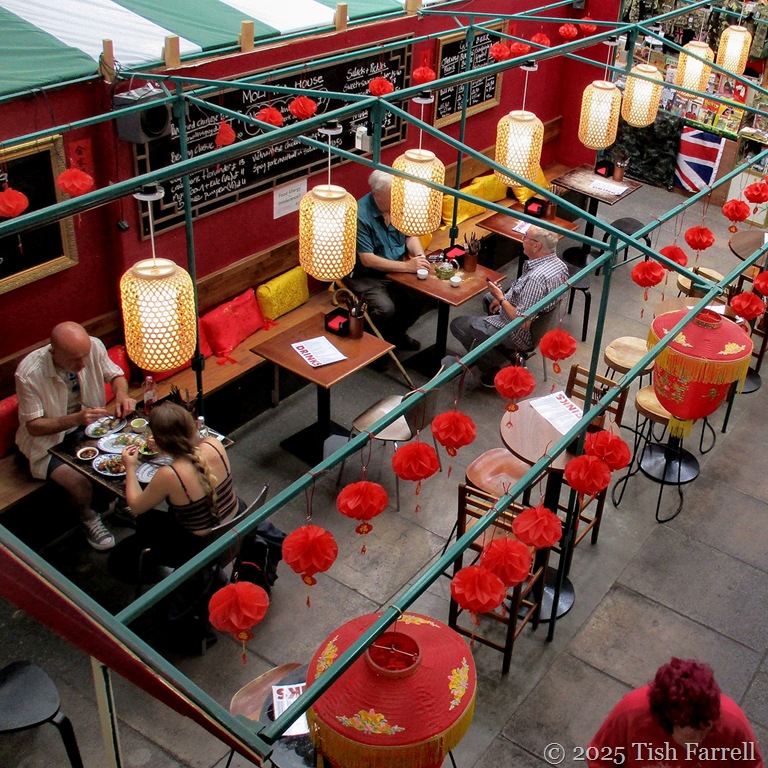
And one of the best locations for eating out is Shrewsbury Market. Which is where we headed (after negotiating the ring roads and industrial quarters)  for a spot of lunch at the Moli Tea House. To say their exquisitely served Asian offerings are delicious is an understatement – tiny Chinese dumplings with dipping sauce, delicate meat balls served in a crisp lettuce leaf wrap. Heavenly.

Later, we wandered around the stalls of artisan bread, fresh vegetables, farm eggs and meat, looked at what people were enjoying in the other eateries, bought some fresh fish. Then headed back to our border refuge, to the Castle that has no castle, this time on the truck-roaring A49, the main highway south, which is quicker if further. We were anyway glad to leave it behind, back to the quietness of our home terrain and a restful cup of tea.

IMG_6190

#SimplyRed Day 9


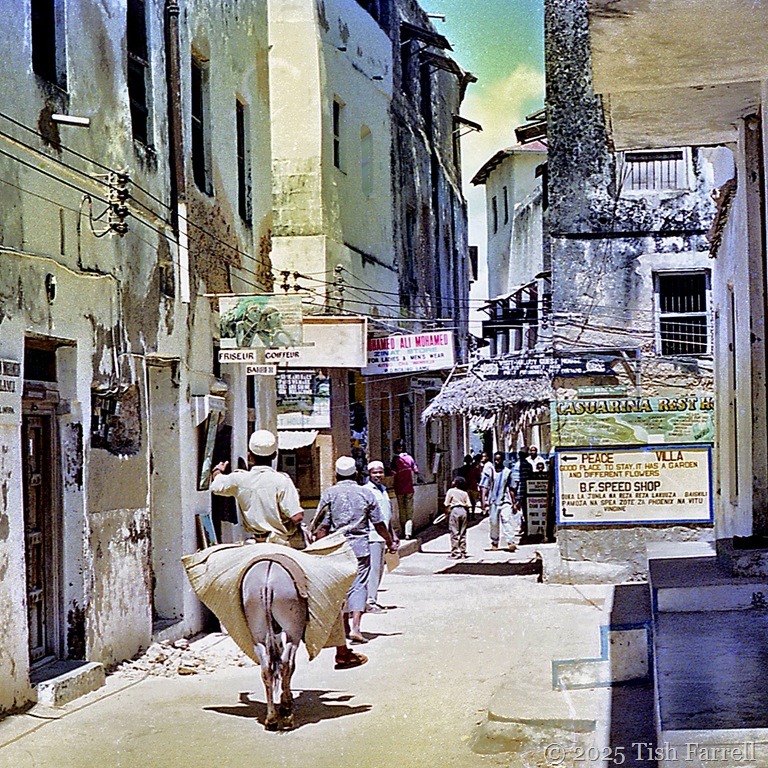
Swahili Geometry: Once In Lamu’s Stone Town

img479sq

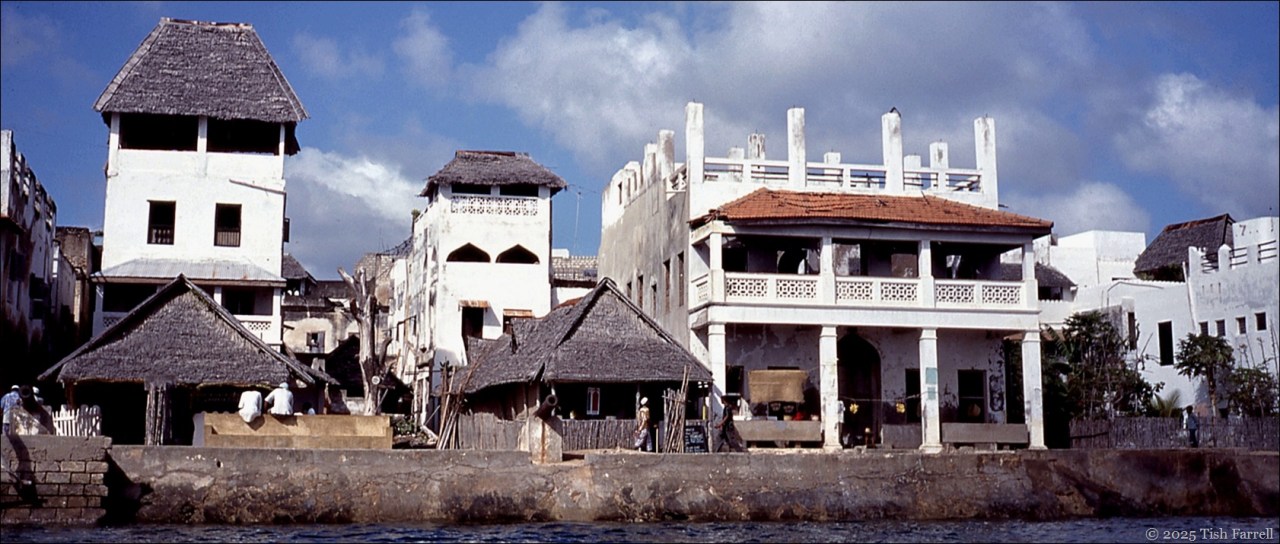
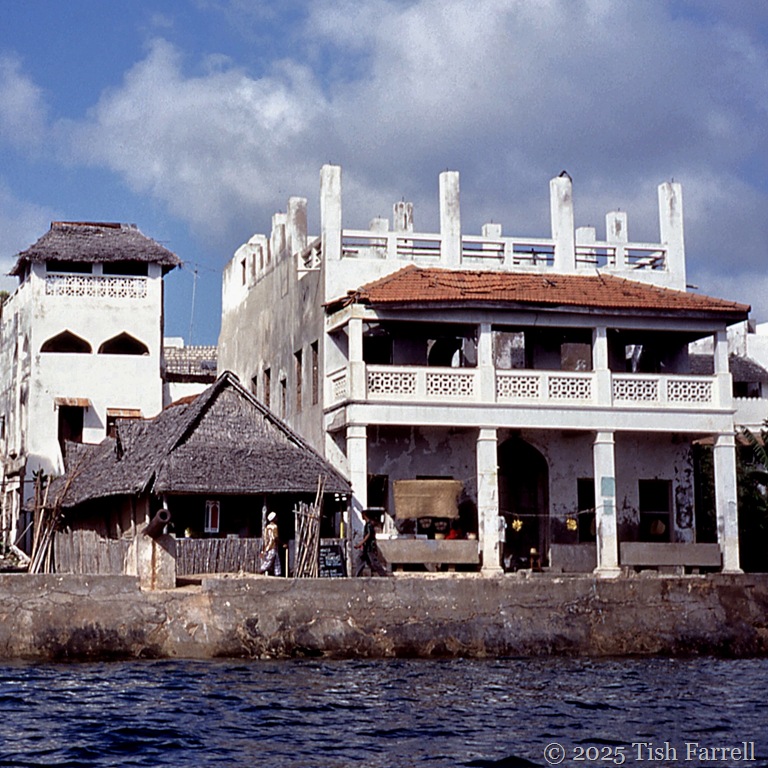
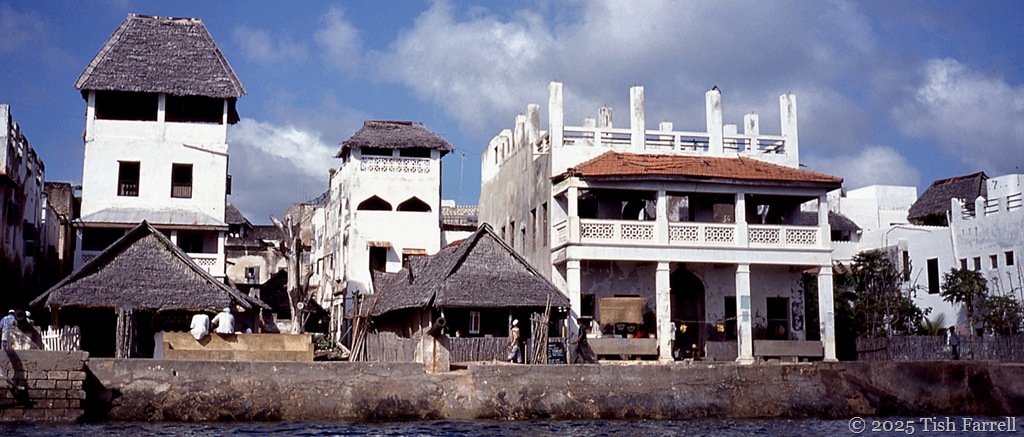
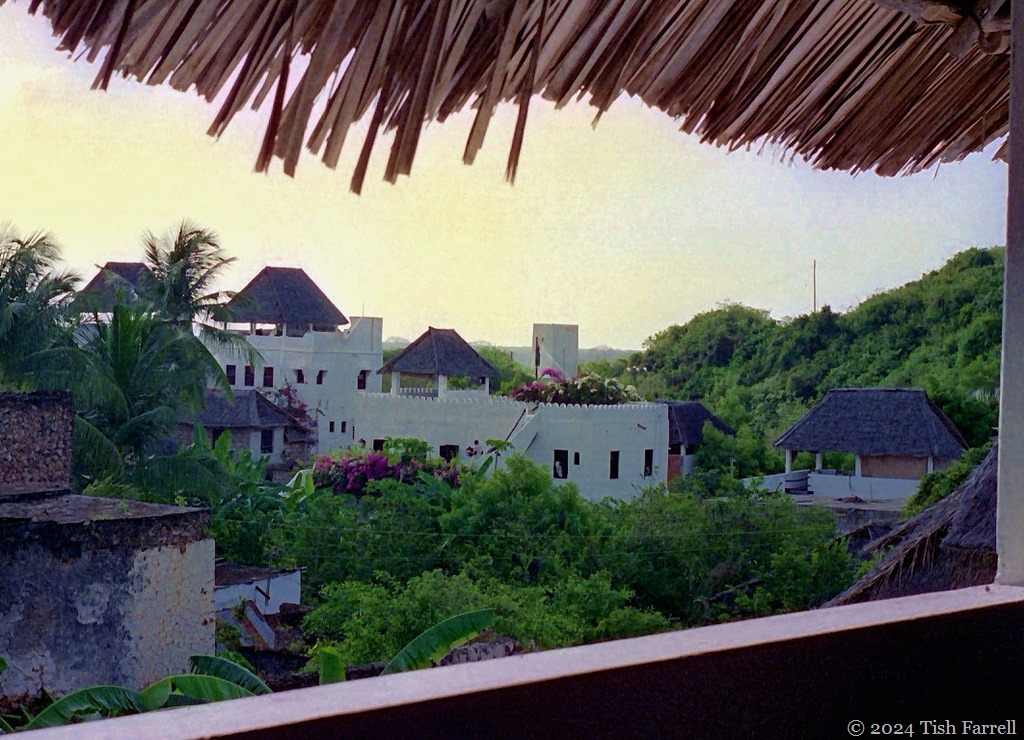
Long ago when we lived in Kenya, we spent one Christmas on the Indian Ocean island of Lamu – a never-to-be forgotten, all too brief safari.  We stayed in the roof-top quarters of an ancient merchant’s house in Shela Village, a thatched eyrie that, being open on three sides, allowed to us eavesdrop on all our neighbours. It was breezy too, the natural air conditioning more than welcome in December’s steamy heat.

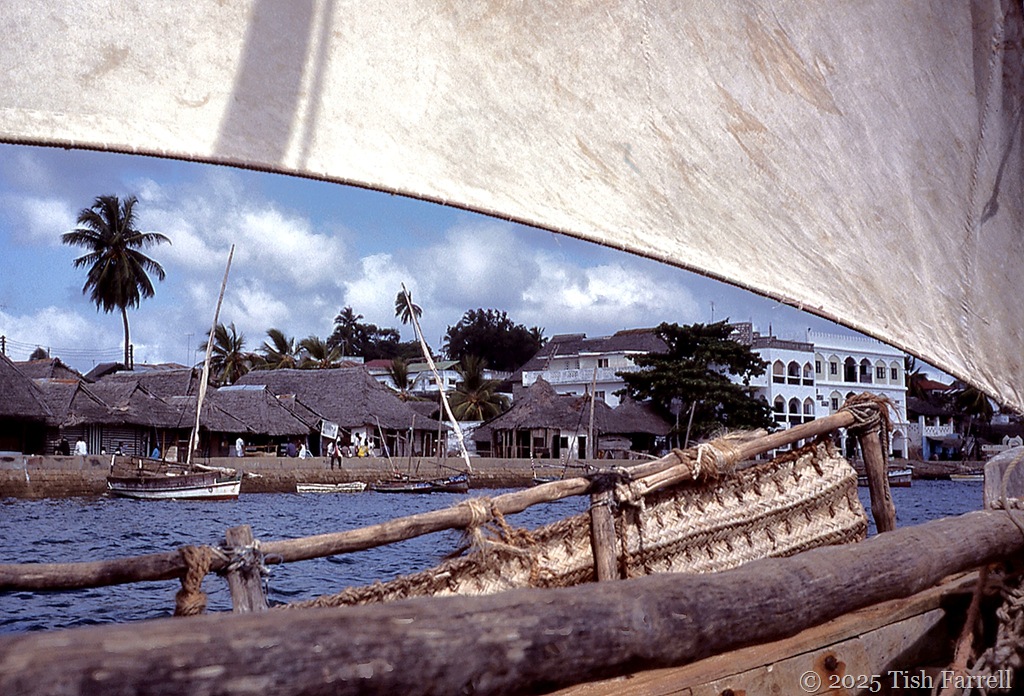
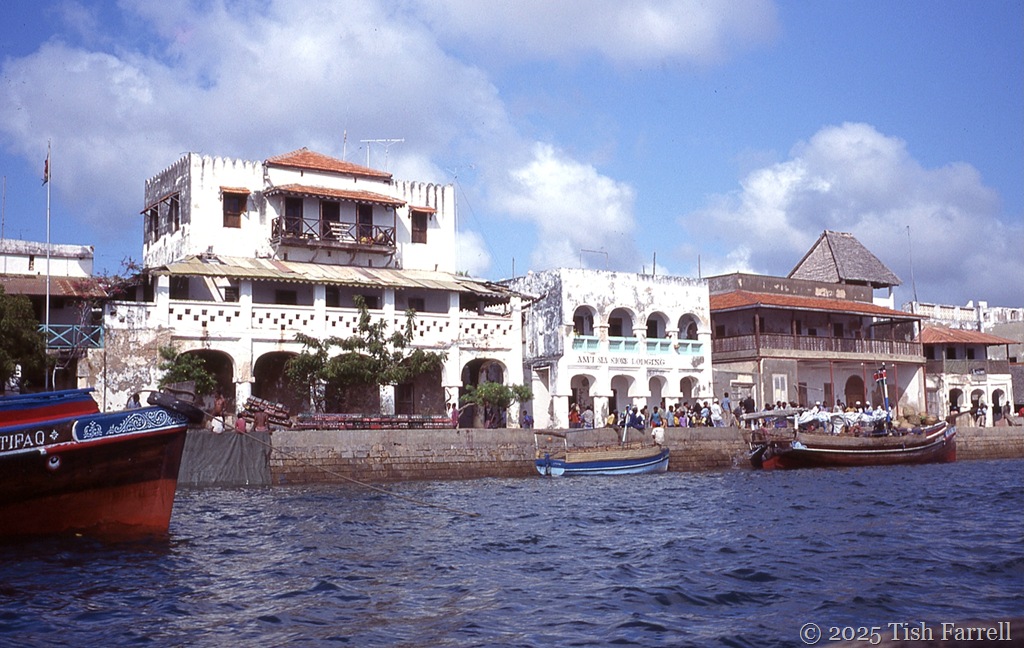
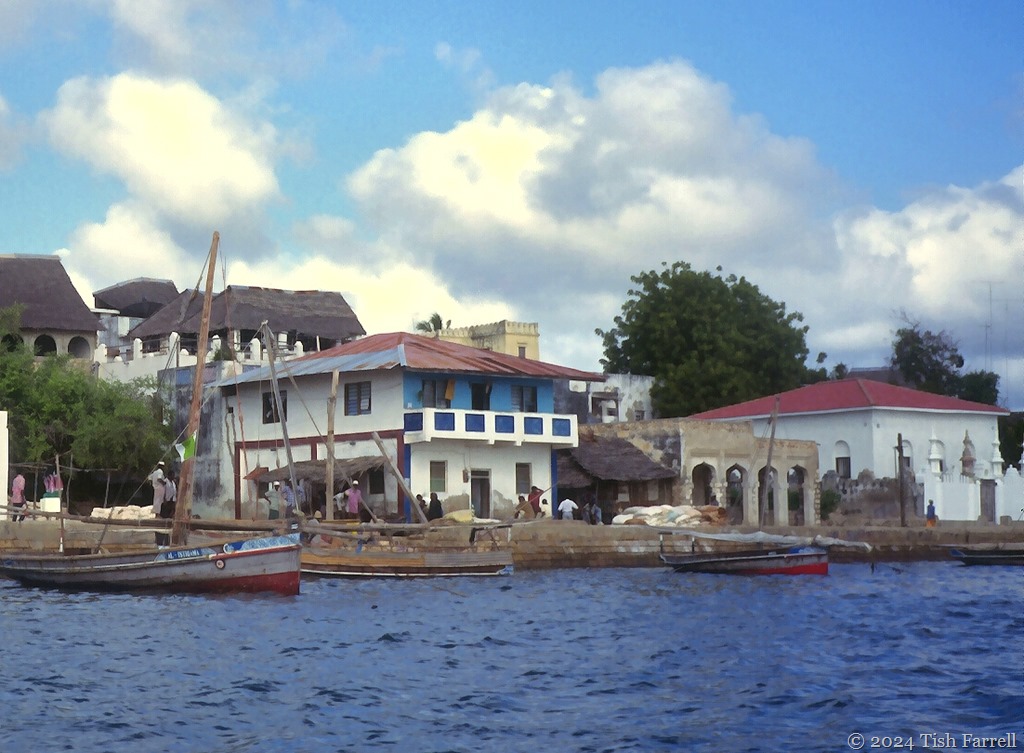
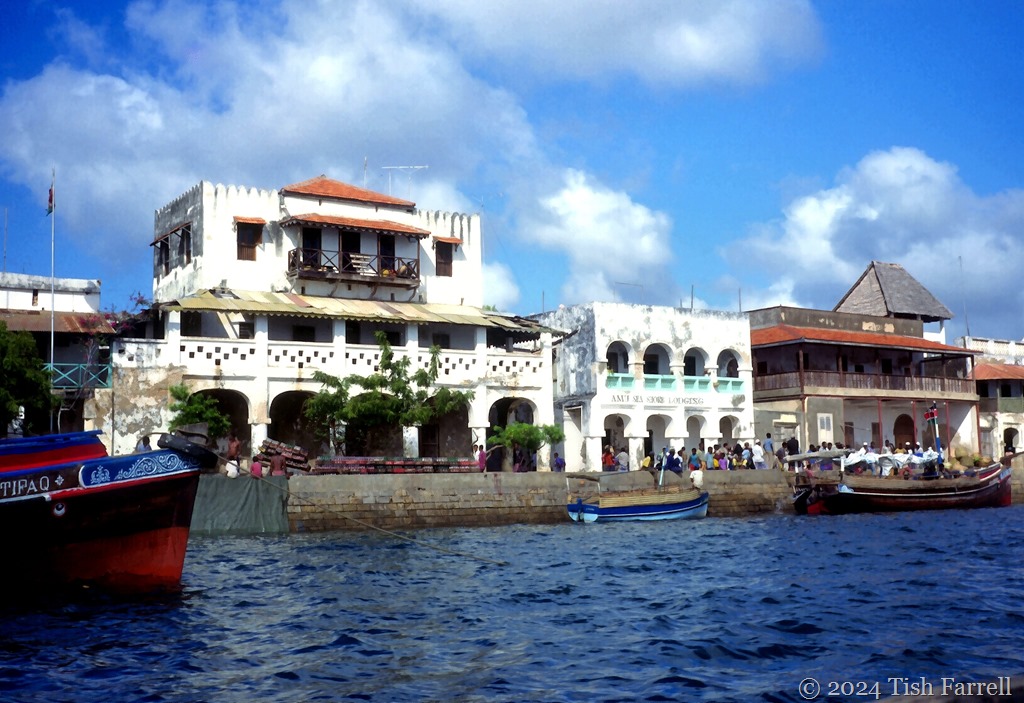
Our first view of Stone Town, Lamu’s main settlement, was on Boxing Day when we were taken on a dhow trip out to the reef. It was a good introduction, sailing along the entire quay, hints of Sinbad magic.

img483 ed

img469ed

Lamu’s Stone Town is one of the best preserved Swahili towns on the East African coast, lived in for over 700 years. It is not one of the earliest by any means, nor the finest, but it has its own particular history as a one-time city state, ruled by its own sultan. Its wealth back then was built on the seasonal dhow trade with Arab seafarers. Now its residents make their living from tourism, fishing, boat building and farming. It is also a place of pilgrimage. Lamu is devoutly Muslim, and each year holds a five-day Maulid festival, celebrating the birth of the prophet, Muhammad.

For more about the Swahili people here’s a segment from an earlier post:

“You could say that Swahili culture was born of the monsoon winds, from the human drive to trade and of prevailing weather. For two thousand years Arab merchants plied East Africa’s Indian Ocean shores, from Mogadishu (Somalia) to the mouth of the Limpopo River (Mozambique), arriving with the north easterly Kaskazi, departing on the south easterly Kusi. They came in great wooden cargo dhows, bringing dates, frankincense, wheat, dried fish, Persian chests, rugs, silks and jewels which they traded with Bantu farmers in exchange for the treasures of Africa: ivory, leopard skins, rhinoceros horn, ambergris, tortoise shell, mangrove poles and gold.

By 700 AD many Arab merchants  were beginning to settle permanently on the East African seaboard, and the earliest mosques so far discovered date from around this time. These new colonists would have married the daughters of their Bantu trading hosts and doubtless used these new local connections to expand their trading opportunities. Soon the African farming settlements were expanding into cosmopolitan port towns. Itinerant merchants and their crews would also have had plenty of chances to get to know the local girls. The weather served this purpose too. Between August and November the trade winds fail. Voyaging captains would thus put in to a known safe haven to wait for good winds. And while this was not a time to be idle, since boats had to be beached and the crew put to cleaning and sealing the underwater timbers with a paste of beef fat and lime, three months was a long time to be ashore and far from home… continues HERE

img595sq

Main Street, Stone Town

*

#GeometricJanuary

img479 header

Tales From The Lake Shore ~ Of Hot Springs, Cold El Nino Rains And A Leopard

img20241001_19513812ed

Elmenteita December 1997

*

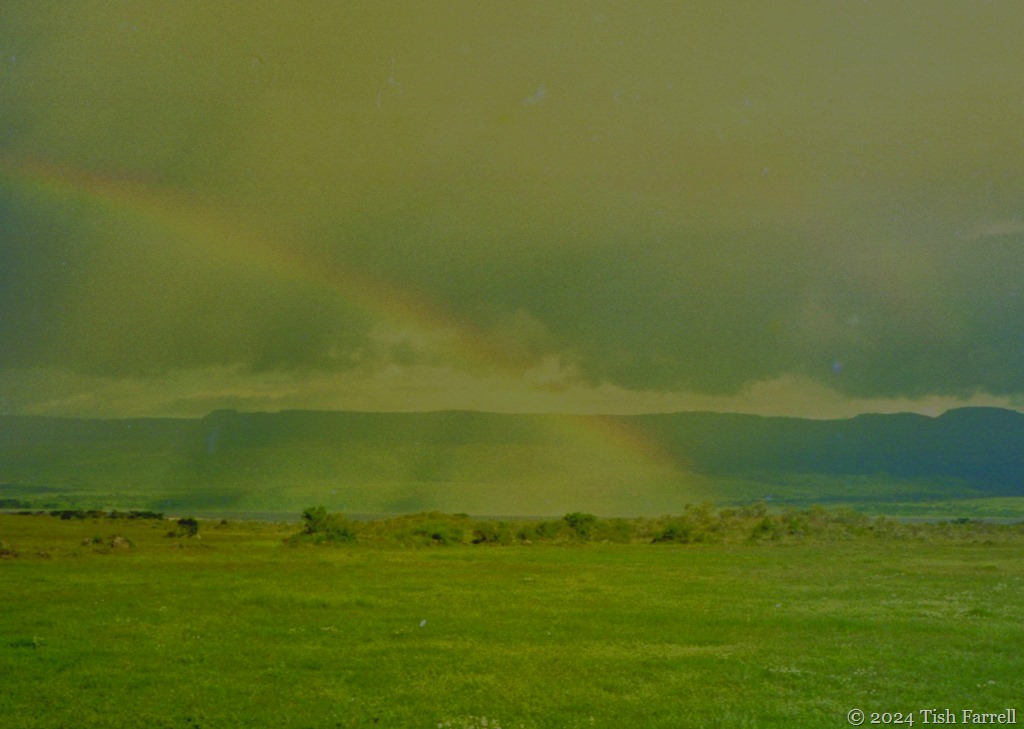
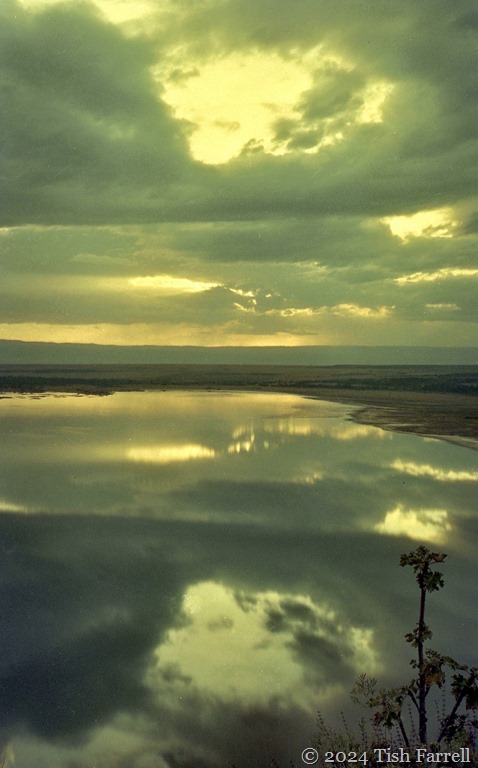
I’m having camera problems when I take this first photo, but in its way, it speaks of the times. It is early December 1997, our sixth year in Africa. There have been recent months of crazy weather with Kenya awash from El Niño floods and devastating downpours. When the rain rolls into the Great Rift, a lugubrious twilight descends, lowering in all senses. It feels cold too, and especially for a month that is usually hot; the equatorial summer in fact. Normally, too, October to December is the time of the short rains, the season for seed sowing. But instead of hopeful cultivation, there are reports of whole hillsides, entire farmsteads, being swept clean away.

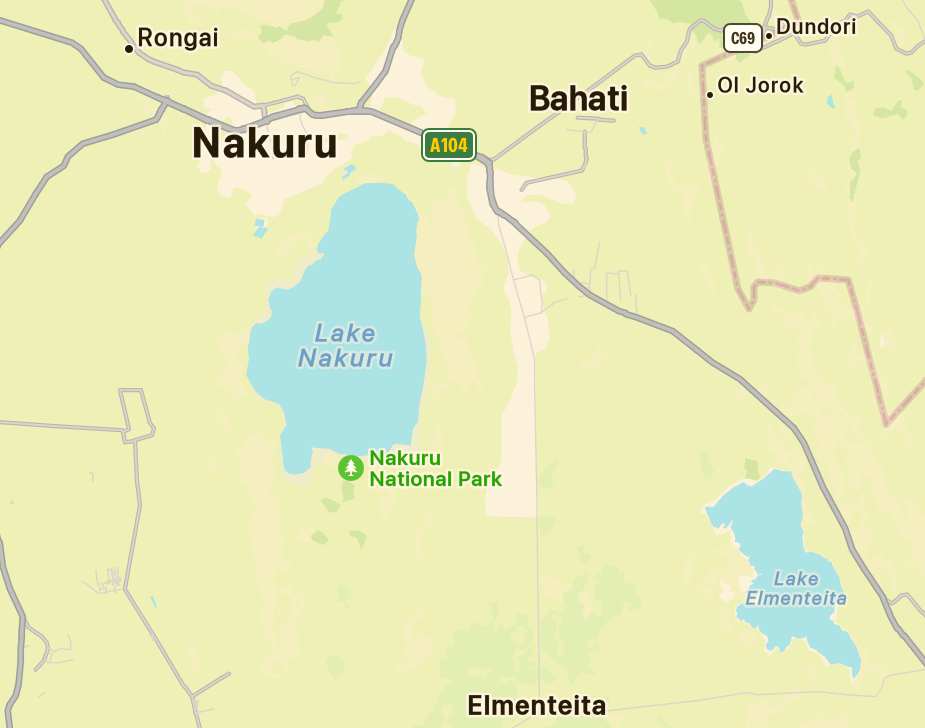
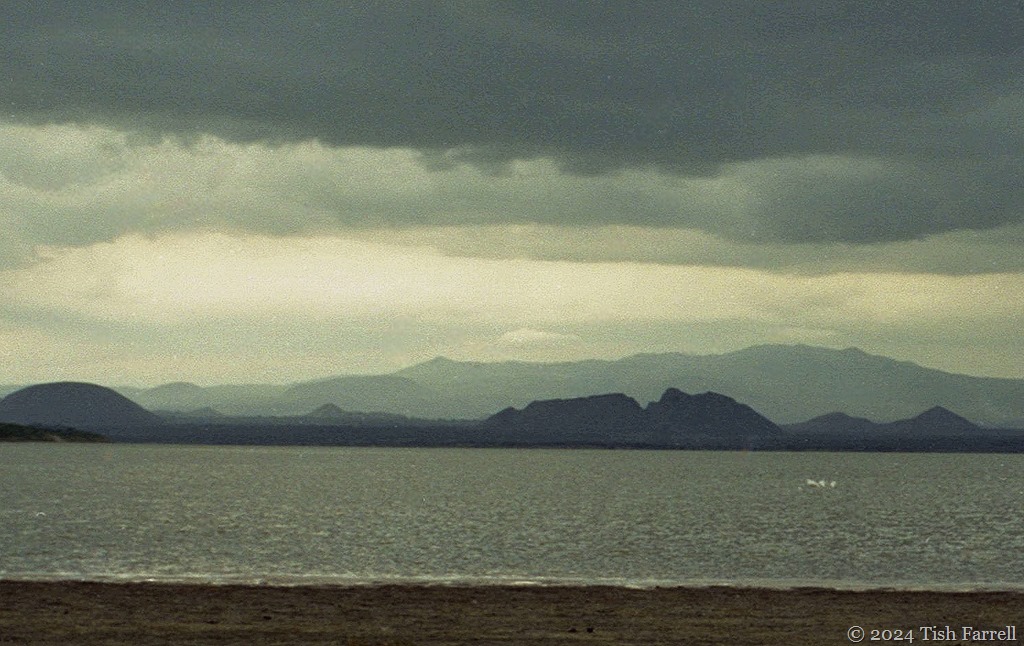
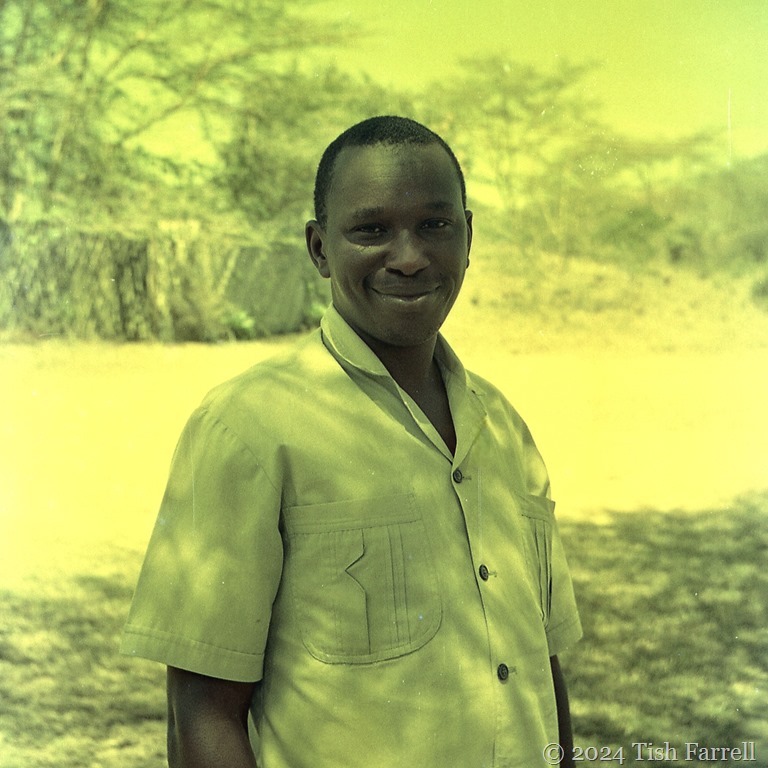
The day I take this photo I’m with a Kenyan ecologist, Michael, a quietly spoken young man whose community belongs to the Central Province highlands. He has driven me out from Delamere Camp for a day’s excursion across the westerly reaches of Lake Elmenteita. We don’t have rain, but the light is poor and the landscape, at times, looks as dreary as an English November. We are heading south to an area of the lake known for its hot springs. But that story comes later.

*map

*

And the reason this trip is happening is because my other half is some twenty miles further north up the Rift Valley, attending a three-day Crop Protection workshop at Lake Nakuru. And since he must drive past Elmenteita to get there, he’d had the kind thought to book me into the Soysambu Delamere Camp; once the workshop was done he would join me there for a couple more nights.

scan-140502-0013

*

When I am dropped off on a Sunday afternoon, I find the camp sorely lacking in visitors. The bad weather, plus political tensions in the run up to the general election, including riots and a killing spree down at the coast back in August, are keeping tourists away. The only other guests are an English couple who have won the Kenya trip in a charity raffle. They are well-heeled, with connections in publishing and arms dealing, but know nothing of Kenya’s current political unrest. Having flown to the tropics out of a wintery England, they are put out to find they should have packed sweaters, raincoats and sturdier shoes.

img20241004_11430944ed

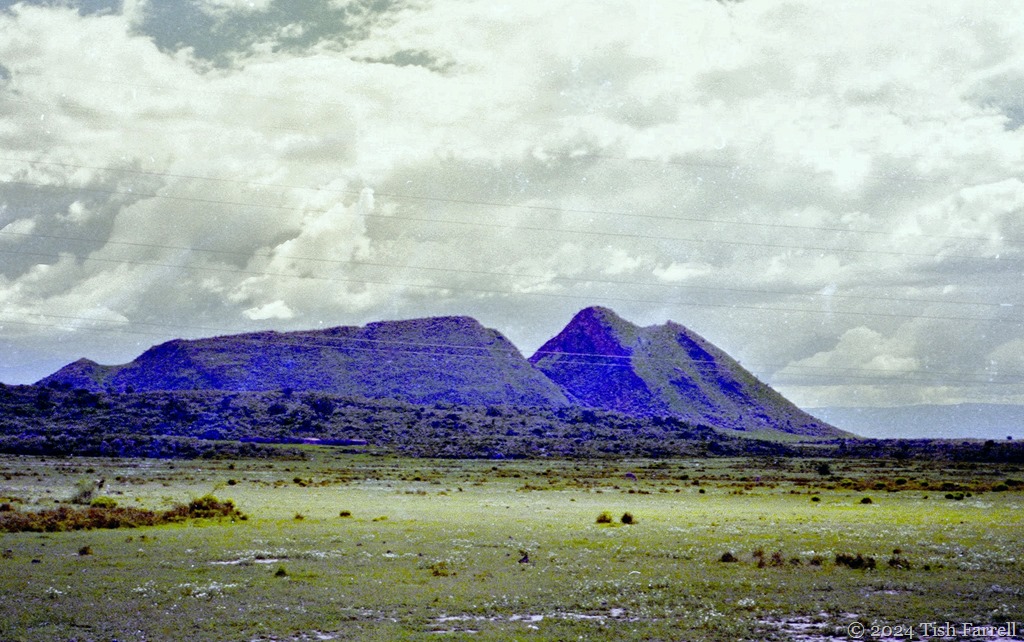
View from Soysambu Delamere Camp: rain in the Rift and the Sleeping Warrior, a volcanic plug also known as Lord Delamere’s Nose.

*

img185 Godfrey Mwirigi

*

I find myself in the care of Godfrey Mwirigi, the camp manager.  He quietly ensures I do not eat alone, and joins me at every meal. Like the best party host he also presides over the clifftop sun-downer that happens each day at around 5.30. It is part of the camp ritual, guests are driven up through the sage scented leleshwa scrub to a high terrace above the lake. There they are met by the catering team presiding over a full bar and trays of tasty hot canapes. There is no stinting even though there are only three of us to please.

It is more than a touch surreal, both of itself and the Great Rift setting. Below us, the Sleeping Warrior sinks into blackness, while the lake slips through many shades of washed out pink and grey, and the day drops swiftly behind the Mau Escarpment. It is both beautiful and unsettling, one of those many times in Africa when I ask myself: where am I exactly?

img343 sundowner ed

*

Come nightfall and it’s time for a game drive around the reserve. The truck is roofed but open sided. We’re given blankets to fend off the chill. The air is dank, and the lakeside tracks perilous even with 4 wheel-drive. Now and then, disagreeable swarms of tiny hard-cased beetles fly in our faces. But then discomfort dissolves as the night theatre begins. While Michael drives, Dominic, another expert guide, rakes the trackside vegetation with the spotlight.

Eyes glow in the dark: eland, Africa’s largest antelope that can leap its own height over farm fences; buffalo, the most vengeful of all the big game; impala; waterbuck and, then among the fever trees and sheltered by underbrush, a shy steinbok. Out on the flood plains, spring hares, curious jumping rodents, bounce in every direction, creating their own mad light show before our spot-lamp. We come upon a genet cat and an African wildcat out on their night prowl. Then mongooses, a zorilla, porcupine parents with tiny porcupine twins in their new quill coats. And then Michael stops the truck and slowly reverses as Dominic scans along a grassy ridge.

The damp vegetation glistens, and in the halo of light a face looks back at us. A large leopard face. We’ve clearly disturbed him, lying in the grass, the intrusion prompting him to lift his head to check us out. For several moments he simply regards us. I’ve no idea if he can make us out behind the spotlight, but I have a sense of amber eyes looking deep inside my head: a non-consensual injection of leopardness; it does change me.

Finally, he blinks and lies back in the grass. The audience is over.

*

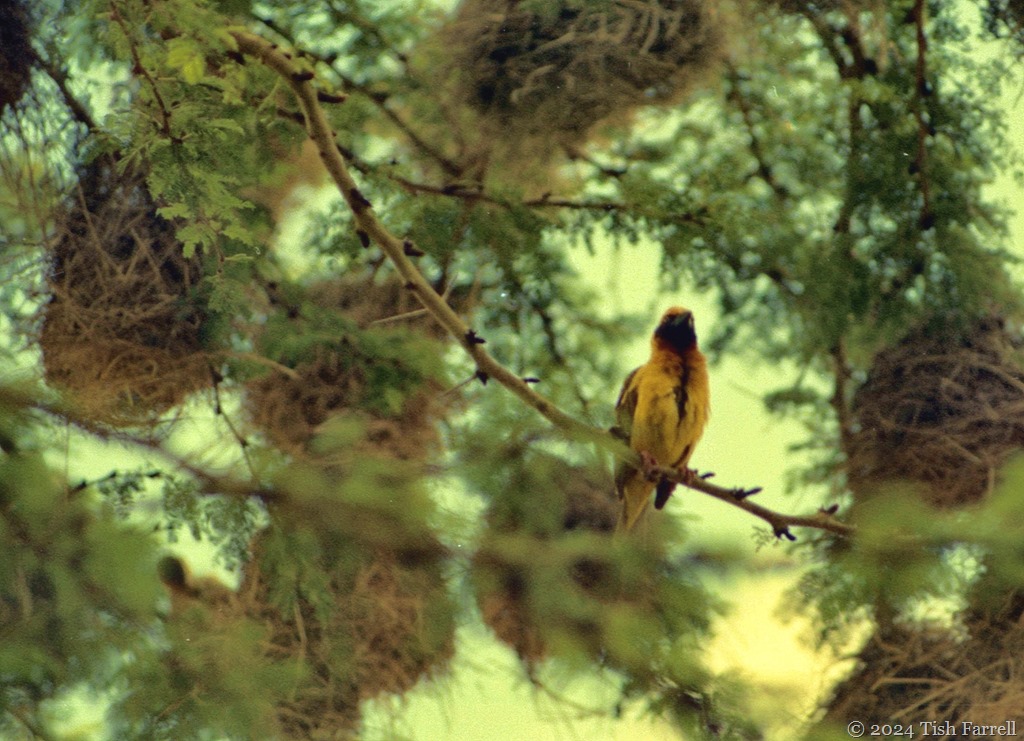
img20241003_19453803 weaver birds and nests

Masked weaver and nests

*

By day, the camp runs other activities. If you opt for the early morning bird walk, a tray of tea and biscuits is brought to your tent at 5.30. At six you set off with Dominic or Michael for an hour or two’s ramble around the camp perimeter. You can find yourself walking among impala and waterbuck while your guide runs off the names of all the birds that may be heard calling from trees and bushes.

If a bird reveals itself, you are told where to look for it, and the characteristics that define it. A morning walk thus can yield grey back fiscal shrikes, rattling cisticolas, Ruppell’s starlings (in brilliant violet and turquoise), the shy tchagra, a scarlet chested sunbird, and blue-naped mousebirds. You might also spot fish eagles or hear a golden oriel call or the song of an olive thrush or a robin chat whose repertoire makes me think of an English blackbird. There are 400 species to choose from here.

Later, after breakfast, there is usually a two-hour game drive, but on my third morning there is only me to be entertained. Godfrey says he has arranged for Michael to take me on a longer drive to the hot springs. We can take a picnic lunch.

*

As we set off along the estate’s perimeter road, Michael gives me the background on the Delamere Estate. He tells me there are 10,000 beef cattle on the Soysambu ranch, which adjoins the reserve. The name Soysambu is a Maasai word meaning mottled rock. He tells me, too, that the reserve was set up  by Lord Delamere in 1990 as a means of protecting the lake shore from developers.

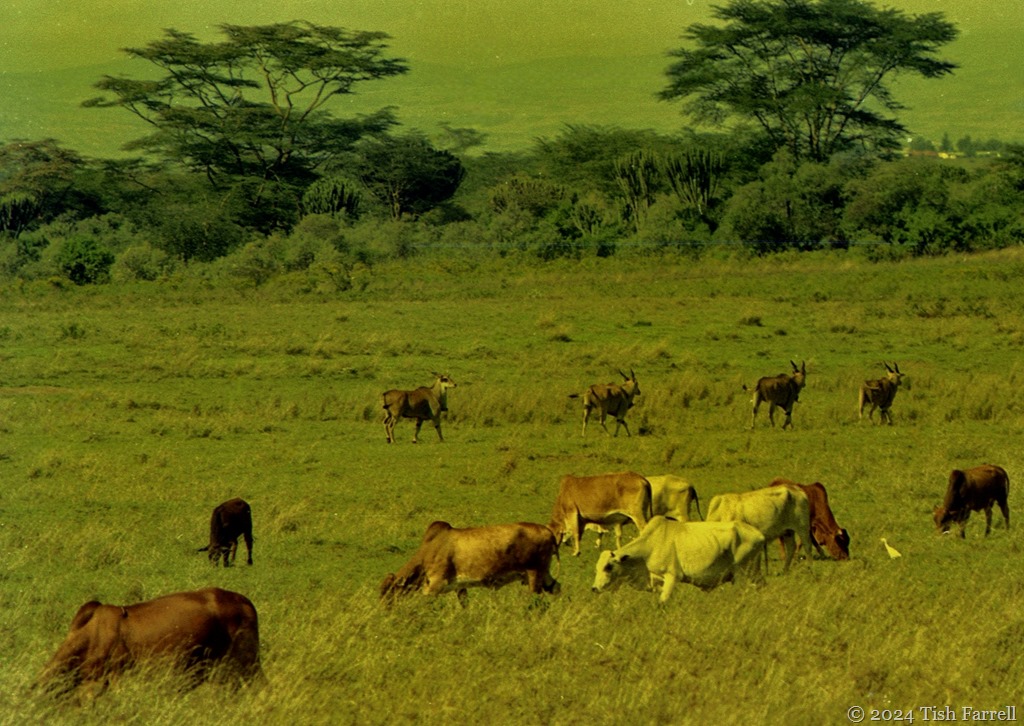
The estate had also included land on the East Rift escarpment behind the camp, but this had been sold off cheaply, and was now settled by some 15,000 people, each family farming 5 acre plots. Most of Delamere’s 200 employees have smallholdings there. But this has caused problems. Game that once lived in the former wilderness has now moved onto the ranch. And so his lordship’s cross-bred cattle also share their pasture with 600 eland, 300 buffalo and 200 zebra. It is literally a bone of contention among big landowners, that they are not allowed to cull the game for food.

img20241008_12180805 eland and cattle 2

Eland graze with Lord Delamere’s cattle

*

Michael also spots wildlife as he drives: a secretary bird, an augur buzzard, hoopoe, wheatear, Grant’s and Thomson’s gazelle, open-billed storks. There are zebra, giraffe and ostriches. The pink haze of flamingos across the water.

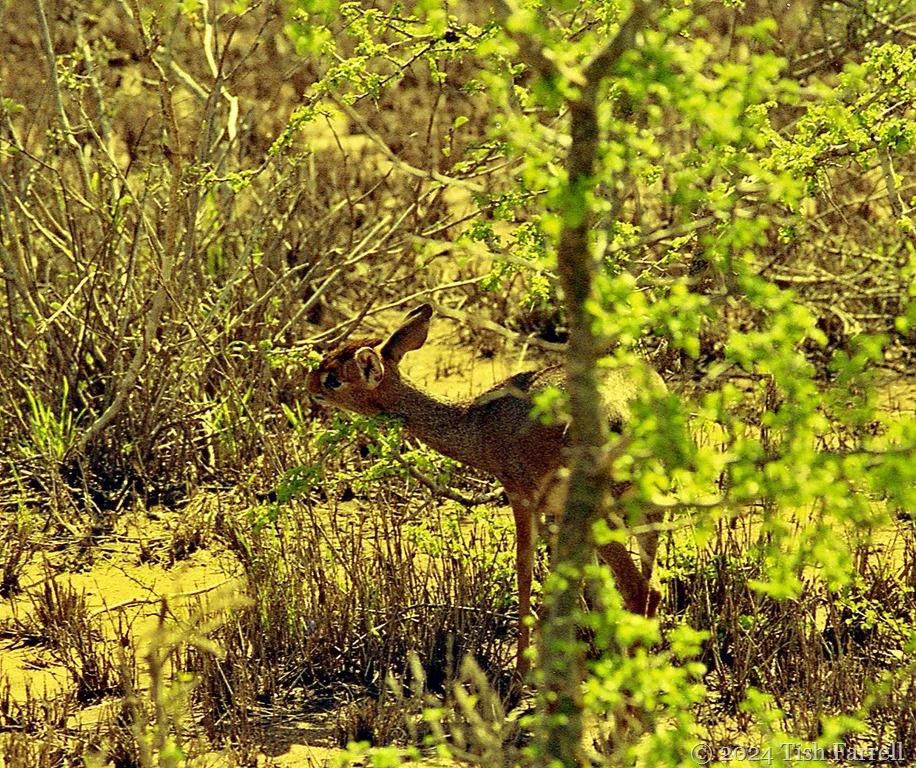
As we head out behind the lake, it looks as if we’ll be lucky with the weather. No rain, but very overcast. In a moment of brightness, as we rattle through thorn scrub, Michael spots a Kirk’s dikdik and I remember he has told me on an early morning walk how these tiny antelopes are fiercely territorial. They create middens where they go to defecate and urinate. While visiting, they scratch up the dung heap so their hooves can deposit their scent and reinforce the boundaries of their domain. It sounds a touch grubby for a creature so daintily pretty, but then that’s my problem.

img014dikdik

Kirk’s dikdik – not much bigger than a hare

*

We drive past the Sleeping Warrior. The skeins of power lines running by take me by surprise. Electricity is often in short supply. That year there are daily three hour cuts in Nairobi, and most rural areas anyway have little or no access to the grid. Michael tells me the lines import electricity from Uganda.

img20241001_19534122 lord delamere's nose 97

*

Then suddenly, as if fallen in a time slip, we are among the Maasai. I have noticed a settlement, an ‘enkang with its mud domed dwellings. Now an elder in red kilt and blanket passes by us with a herd of goats. There is no obvious exchange. I see the dark bare legs, ebony hewn; not a pinch of flesh.

When we roll up at the hot springs on the southern lake edge, Maasai women are finishing up their washing in the hot water. Children, fully clad, are whooping and wallowing in the shallows. All soon retreat as if they have never been. When I look back I see the elder standing on a ridge with his goats, the red shuka against a stormy sky. I do not attempt to photograph any of this.  This is not my place.

img20241001_19542210ed

The Eastern Rift from the hot springs in Lake Elmenteita

*

We sit under thorn trees and chat over the packed lunch. At some point the subject of Princess Diana’s death back in August crops up. I say am touched at how sorrowful Kenyans were, how they queued to sign the condolence book at the British High Commission, and how Graham’s colleagues at the research institute came to his office to offer their condolences. Michael tells me that his wife’s prized possession was a  video of the royal wedding, although the only place they could play it was at the pub in their home village. You can guess the name of our daughter, he says.

I ask him where he worked before joined the team at Delamere Camp. He tells me that soon after he graduated with a degree in wildlife management, he was posted, as deputy wildlife district officer, to the remote quarter of mainland Lamu, in north-east Kenya. Somali cross-border bandit country, in other words. There, his job was to coordinate anti-elephant poaching operations, using local police or military, whoever he could rope in, sometimes using helicopters. He said that whenever he went into the bush, he never knew if he was coming back. The gangs were often 20-30 men strong, and with an official policy of shoot to kill, the stakes were high.

I am shocked as I listen to this account, told with such detachment: that an ecologist should be expected to do this kind of work. But Michael simply says he is finding Elmenteita much more to his liking, and especially as his wife and family are not far away. In the quiet understatement, I sense a man who has seen too much.

I feel uncomfortable too – some people don’t know they are born, do they, with all their sheltered good fortune. That would be me of course. Though I am learning. Kenya’s gracious people never stop teaching me. They teach me even now as I retrace my steps down the years.

*

img20241004_11051850 east escarpment near camp

copyright 2024 Tish Farrell

Looking Back: African Dawn

img20241008_12561103dawn flamingos ed

These last few weeks I’ve been immersed in a major displacement activity – both actually and metaphorically. While trying to find a good place to store Graham’s newish photo scanner, I decided I’d quite like to use it and revisit our old Africa negatives.

The Epson, however, was unknown territory. I’d done my original scanning using technology long since deceased, and I wasn’t altogether happy with the results, or with my editing. So first stop meant downloading software and all the nonsense that goes with it (compatibility/senescence issues – not mine – since both scanner and PC are only a few years old as far as their owners are concerned, but they are obviously superannuated in techno-ageist terms).

After several efforts, and two different apps later, I’m finally set to go, but then there is the issue of dealing with negatives that are twenty and thirty years old, were processed in Africa, have thus moved continents, survived several house moves, and not been stored very carefully. My original prints are in far better condition, some astonishingly sharp, but they are stuck in albums. So yes, as I said, a major displacement activity.

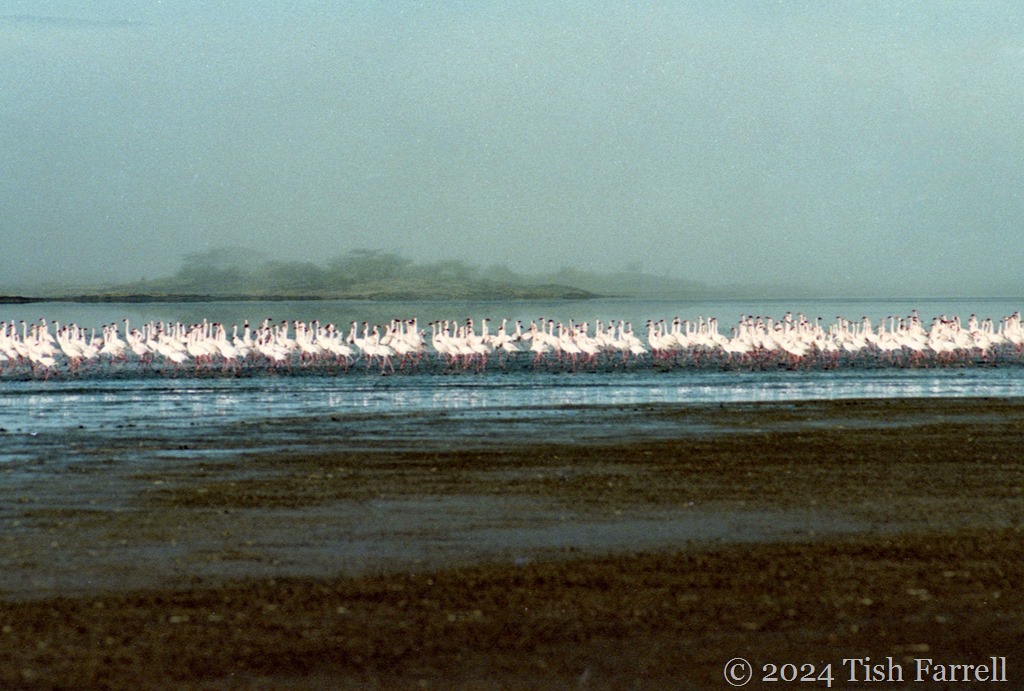
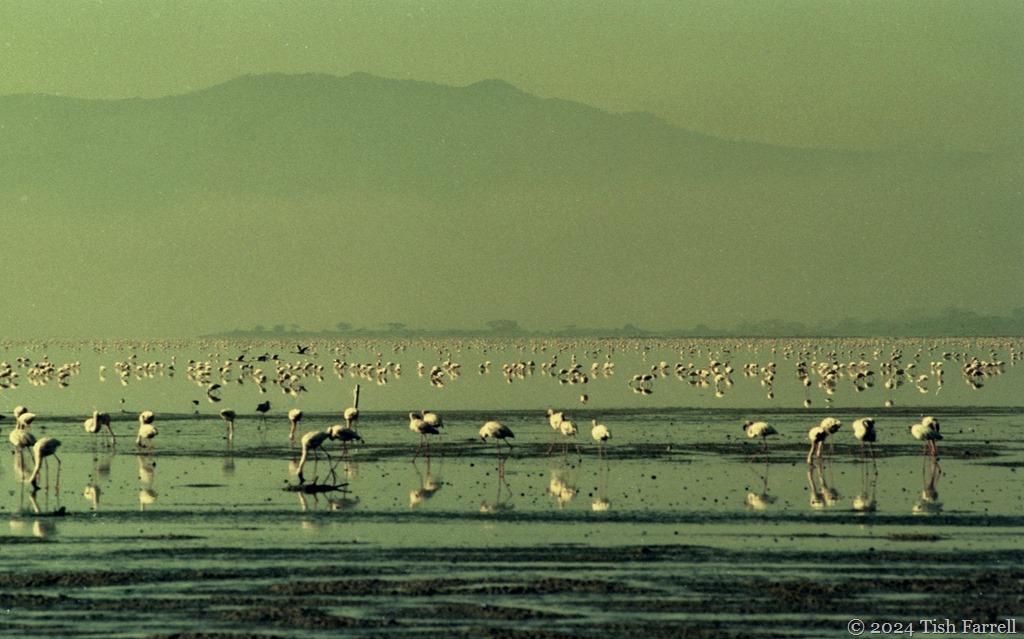
Yet it’s serious time travelling too, and every now and then a frame emerges and I am transported. The image may have lost clarity, but I’m there at first light, on the shores of Lake Elmenteita in Kenya’s Rift Valley.

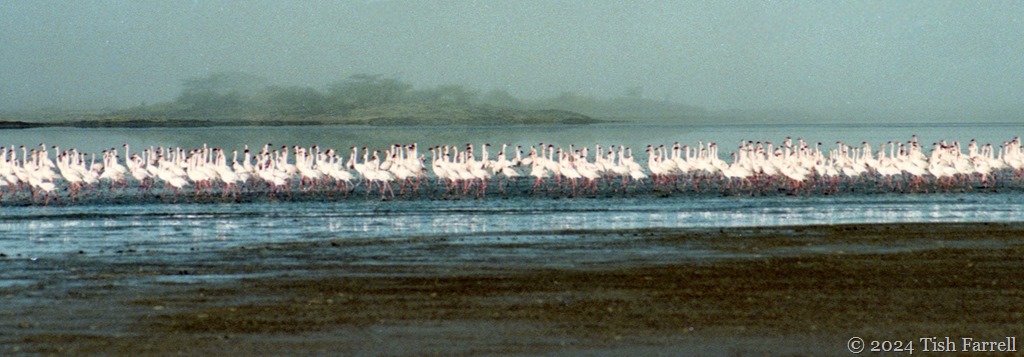
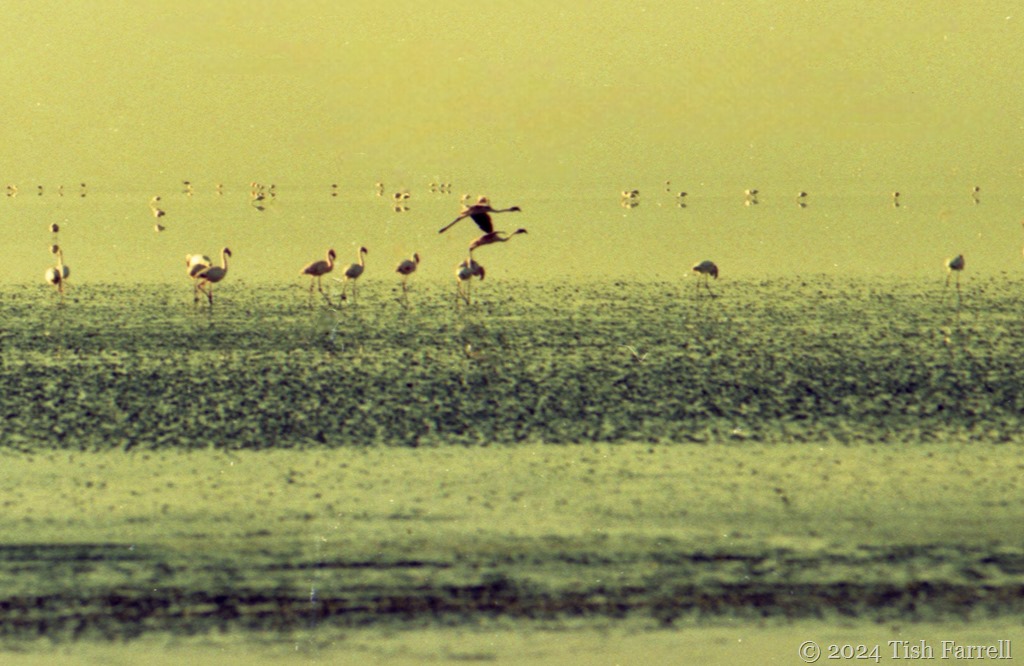
The greater and lesser flamingos that inhabit this shallow soda lake never stop honking and grunting. It’s a seamless shifting soundscape that you hear all night if you are camping nearby. The loudness ebbs and flows, depending on where the flocks are feeding, but always strangely amplified across the shallow waters. At dawn though, you forgive the din, just for the sight of them through the mist. In the distance they look like scattered rose petals, and since the air is frosty at this hour, this sparks thoughts of celebratory champagne and ice bowls of strawberry sorbet…

img20241004_11291465 flamingo dawn

*

But let’s not get too carried away. If you venture out on the lake mud for a better view, beware. It’s slithery with flamingo guano, and the acrid smell of it, along with the soda, stings the nose, throat and eyes.

And yet…and yet these vistas have to be the most entrancing of all the many scenes in my memory archives.

*

When we lived in Nairobi during the 1990s we came here when we needed a break from city living, staying at Soysambu tented camp. The drive up the Great Rift had its own thrills, both the astonishing views of the Rift volcanoes, and the hair-rising truck driving along the way.  It was always a relief to turn off the tarmac and bump along dirt tracks to the camp. img20241003_14405356ed

*

The lake and its surrounding land is mostly in the hands of the Delamere family. From the late 19th century to the 1930s, the third baron Delamere was both an agricultural pioneer and prime mover in the shaping of the then British colony. Among other land holdings, he acquired 46,000 acres around the lake in the early 1900s. At some stage there were attempts to grow wheat there, but the soil was too shallow and the land reverted to bush. In our day, the fifth Lord Delamere, managed the place as a private game reserve (more recently the Soysambu Conservancy) and cattle ranch.

img20241005_19451737 flamingo dawn

*

The camp back then was sheltered by fever trees, sixteen tents each with its view of the lake and the remnant volcanic cone, known by local Maasai as the Elngiragata Olmorani, the Sleeping Warrior.  There was always something to look at. The light on the lake changed every second and there were 400 species of bird to watch out for not least the campsite superb starlings, weaver birds, orioles, babblers, herons and storks – and then you might look up to see impala slip noiselessly through the trees or waterbuck out on the flood plain…

It could all have been a dream of course.

img20241005_19075173 Sleeping Warrior

img20241008_12580861ed

*

Lens-Artists: Looking back  This week Sofia wants to see the things and places we treasure and would like to revisit.

img20241008_12561103dawn flamingos ed header

Letters From Lusaka #7: South Luangwa Continued ~ Walking In The Wilds At Nkwali

img20240926_17333197sq

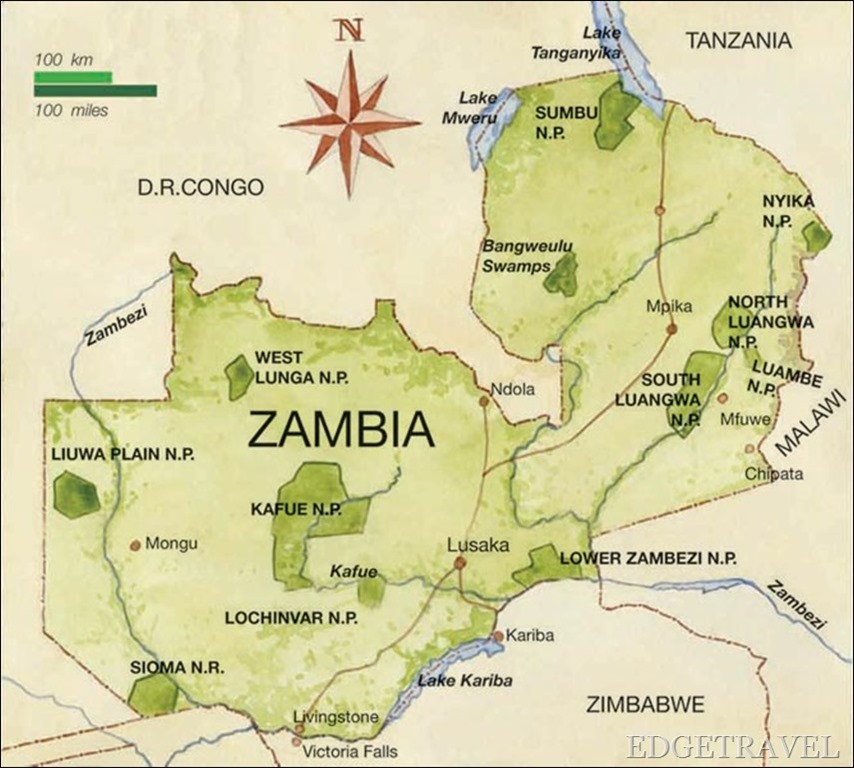
In 1992-1993, during the first years of Zambia’s multi-party democracy, we were posted to Lusaka, Zambia’s capital. Graham was charged with organising the distribution of European Union food aid to drought-stricken Zambians. (Part 1 is HERE, part 2 HERE, part 3 HERE, part 4 HERE, part 5 HERE, part 6 HERE)

*

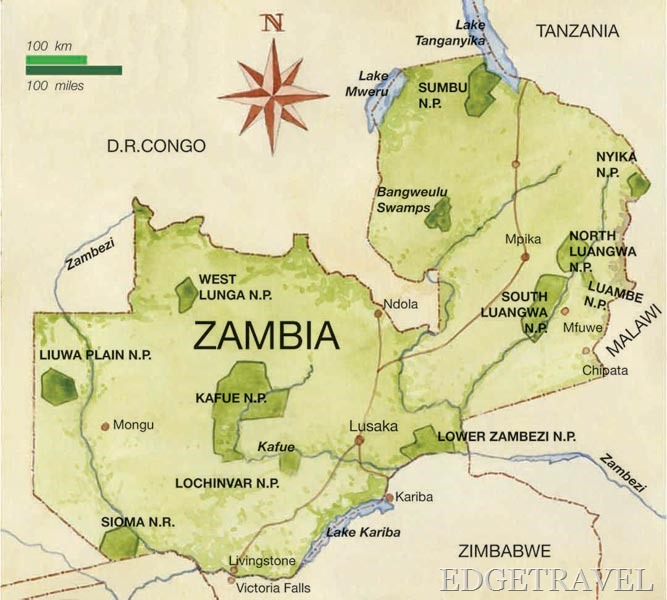
Zambia-map_thumb11

*

July 11th 1993

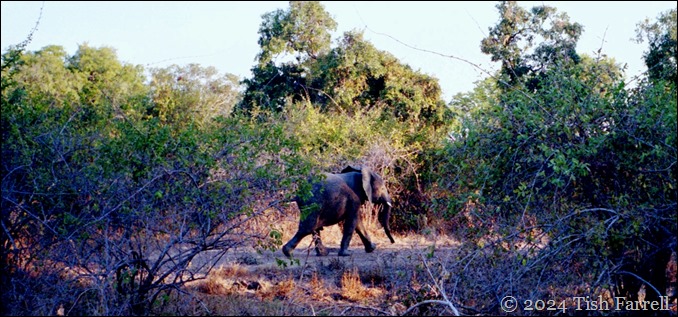
After two days at Tena Tena camp it’s as if we have fallen into a dream. As Robin Pope drives us across the game park to Nkwali camp, he talks about the problems of elephants ring-barking and uprooting trees. Their drive to create more grassland where once there was open forest is gradually changing the ecosystem right down the nature of the soil. It’s something to ponder on. Then we see two village men cutting sheaves of vegetation, and Robin says the dry season is thatch-mending time and local people are allowed in the park to cut the grass.

I’m trying to focus on his words, but my eyes are scanning the landscape. We pass through a zone of recent burning. The place is alive with birds mopping up the roast remains of insects and other small creatures. There are crowds of storks and a flock of stunningly coloured lilac breasted rollers. Flashes of purple, royal blue, turquoise and unlovely squawking.

One thing Robin says penetrates the reverie. He happens to mention that the current paramount chief for the district is a woman. That gives me something to think about.

*

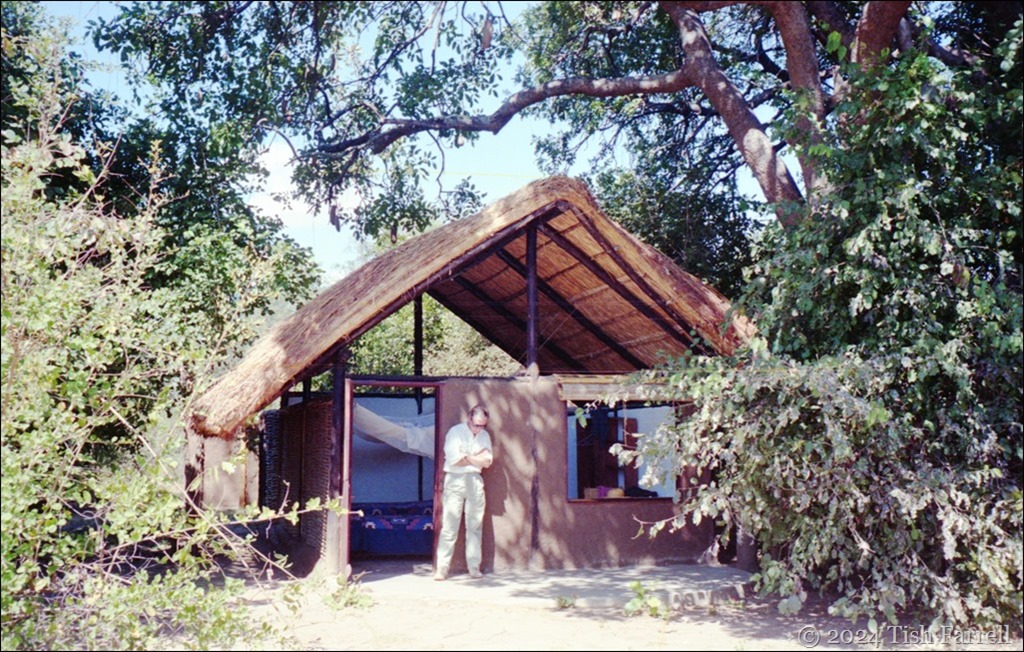
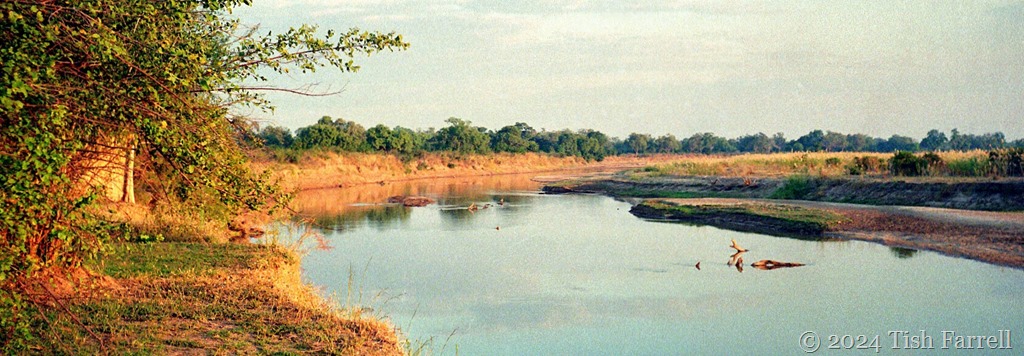
Nkwali Camp is on the banks of the Luangwa, outside the park, but within a designated hunting block. Our new temporary ‘home’ is very ‘open plan’, one of six cabins, with a high sheltering thatch, open at both ends, and a large unglazed window overlooking the river. Out back, the flush loo is housed in its own thatched cubicle, but the shower is open to the sky, the water heated up in an oil drum on a charcoal fire.

There are three other guests, and in late afternoon we are driven to a spot on the Luangwa where migrant carmine bee eaters flock to breed along the sandy bank. Again I long for a camera that might capture the startling flurry of colours – brilliant Titian reds with turquoise caps and rumps. Instead, I watch them until the sun goes down and wonder, will I always remember this?

img20240926_15450597ed

*

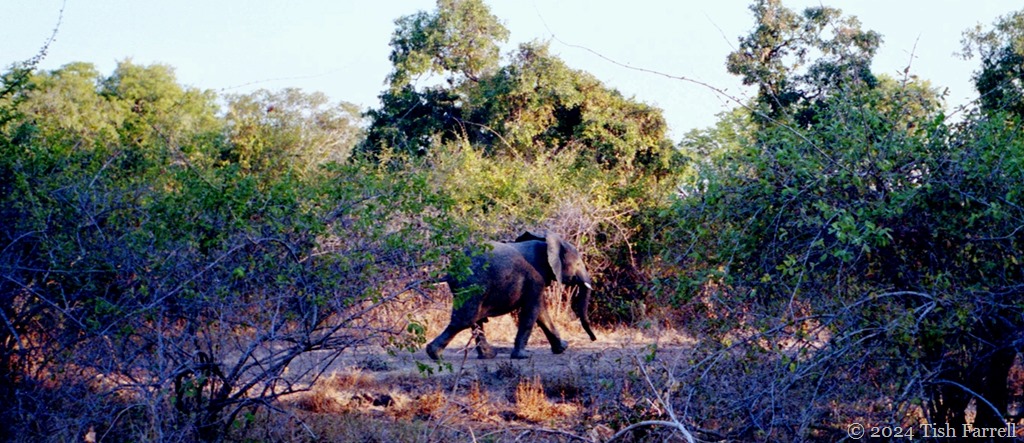
That night in our cabin, it isn’t hippos that keep us awake, but elephants. In the early hours they gather in the trees all around us, come there to eat chinzombo fruit. Now they are anything but silent. There are rumbling bellies and crashing vegetation and much munching. The cabin seems to shudder. I’m relieved when just after 5.30, our English guide, Hugh, comes to call us for the morning walk. He tells us he had to do much clapping before he could exit his own cabin; there was an elephant mother and child outside his door. He found three more in the camp bar, eating the thatch.

img20240926_17353051_thumb7

In the early hours our cabin is surrounded by chinzombo chomping elephants

*

img20240926_17344961ed_thumb[7]

Nkwali camp bar as it was in ‘93. These days camp facilities are far more luxurious

*

I hear angry trumpeting from across the river, and find I am happy to not see the elephant visitors at close quarters. Even so, after breakfast, Hugh says we will go and look for them. Graham and I follow, along with James the ranger and tracker Reuben bringing the tea things. It’s a beautiful morning and we begin our walk through tall grasses, yellow hibiscus, white jasmine and orange turbaned Leonotis (Turkish pompoms) that sunbirds love.

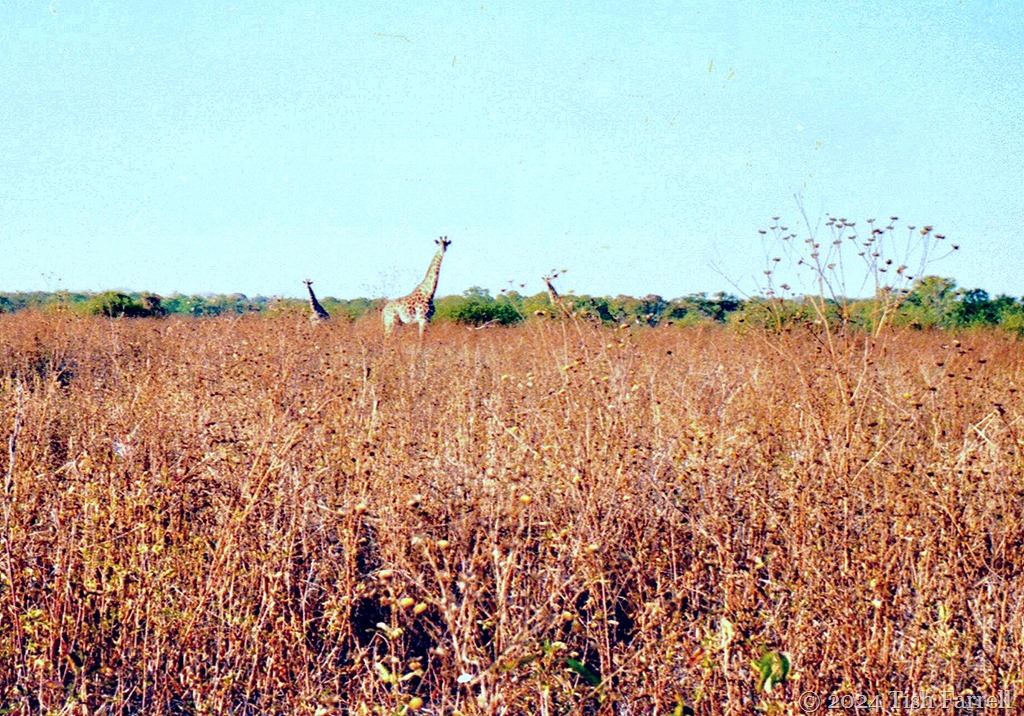
As we go, we are watched by a young kudu antelope. Hugh says it is an orphan, but it has attached itself to a herd of eland. Next we are watched by ten Thornicroft’s giraffe, a subspecies found only in Luangwa. They move quietly around us. It is like walking into one’s own wildlife film complete with knowledgeable narrator.

img20240926_17340984ed

*

There are blue helmeted guineafowl everywhere, the land all round resounding with their raucous calls. There are also yellow canaries and more sightings of eagle owls. We examine a termite mound that has evidence of an aardvark assault. Their heavy duty claws are built for demolition, and their thick skin impervious to termite bites and ant stings.

Hugh soon has Graham crumbling aardvark dung that has been deposited nearby, inspecting the contents through the wrong end of our binoculars, picking out beetle and soldier ant parts. We then taste the fruit of the  ebony tree, the fleshy part reminding me of lychees; we pick up porcupine quills; learn about the towering vegetable ivory palm, whose nutty kernel  is worked into small items like earrings and passed off as elephant ivory; regard the leaves of the mahogany tree that are stuffed into pillows to induce sleep.

James and Hugh between them test the wind and manoeuvre us into safe viewing distance of our early hours elephant visitors. Later Hugh finds a warthog hole and, stationing us well back, throws a rock in to dislodge the resident. Warthogs, he says, go into their holes tail first, enabling a speedy exit. This morning, though, the usual occupant is abroad. Instead, out comes a cloud of brown and mauve butterflies.

img20240926_17224534 Nkwale

*

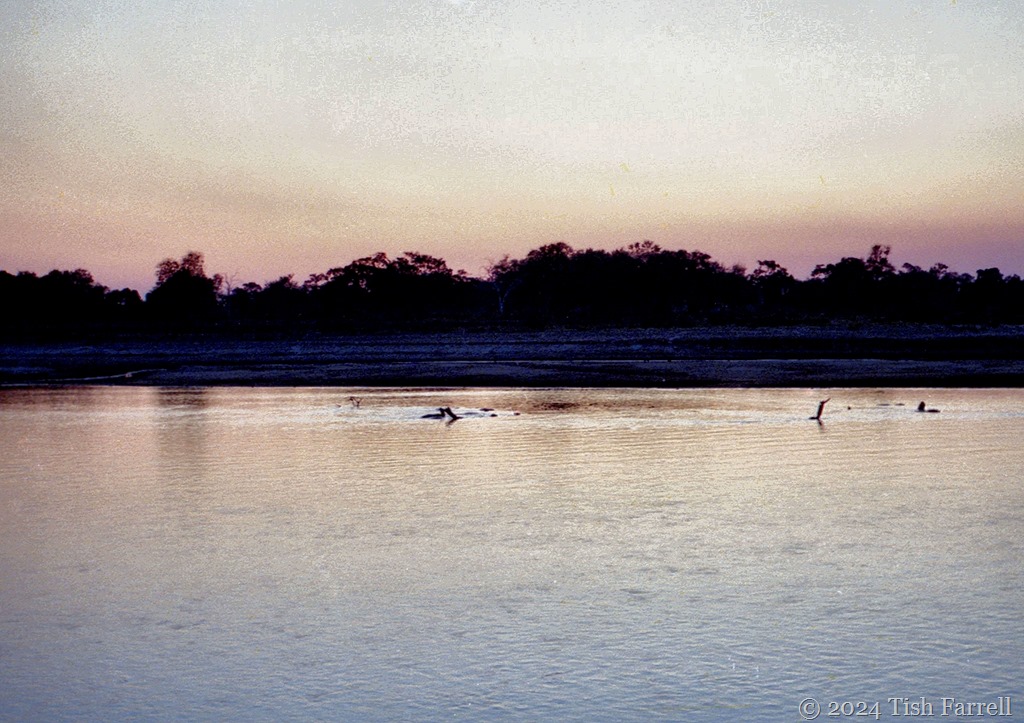
And then in early afternoon, after a scrambled egg brunch, it’s time to leave. We’re driven to Mfuwe airport, and soon we’re airborne above the Luangwa, and this time, thanks to something Hugh has said, I recognise features I missed before. The hippo trails striking through the bush from the river, their night-time paths to grazing. I think of the angry young bull who stayed out of the water too long. And I think about the fisherman killed by a hippo and wonder how it happened. And I remember a piece of vital safari wisdom I have read somewhere: never find yourself between a hippo and the water.

But now I realise I’m exhausted from the sights and sounds, the tramping, the bone jarring rides, the sleepless nights and early mornings. Come late afternoon, it’s a relief to find ourselves back in our little house on Sable Road. Perhaps none of it actually happened.

Copyright 2024 Tish Farrell

*

img20240926_17224534header

P.S. You can see the bee eaters here:

This year’s arrival of carmine bee eaters in South Luangwa – a short video clip

And the  video after it explains the history of South Luangwa National Park and the legacy of game ranger Norman Carr who developed walking safaris and was passionate that local people should gain some benefit from tourism. Robin Pope trained with Carr and his company carries on  vision for community orientated conservation.

https://www.youtube.com/watch?v=J4Q-ikCUiwU

Seven for September

Letters From Lusaka #6: Of South Luangwa, Elephant Gardeners, A Charging Hippo

img20240926_17260578ed

In 1992-1993, during the first years of Zambia’s multi-party democracy, we were posted to Lusaka, Zambia’s capital. Graham was charged with organising the distribution of European Union food aid to drought-stricken Zambians. (Part 1 is HERE, part 2 HERE, part 3 HERE, part 4 HERE and part 5 HERE)

*
Zambia map

*

July 9th 1993

At 19,000 feet we look down on a red-brown world of low escarpments, ridges and valleys. The brown is the tree cover, the scattered miombo and mopane woodland loosing its leaves; the red, the earth exposed between parched grasses. From  the cabin window the wilderness looks to run forever. Abstract the gaze and it could be copper sheeting, crumpled, etched and pecked: a visual metaphor for a land long plundered of this valuable mineral.

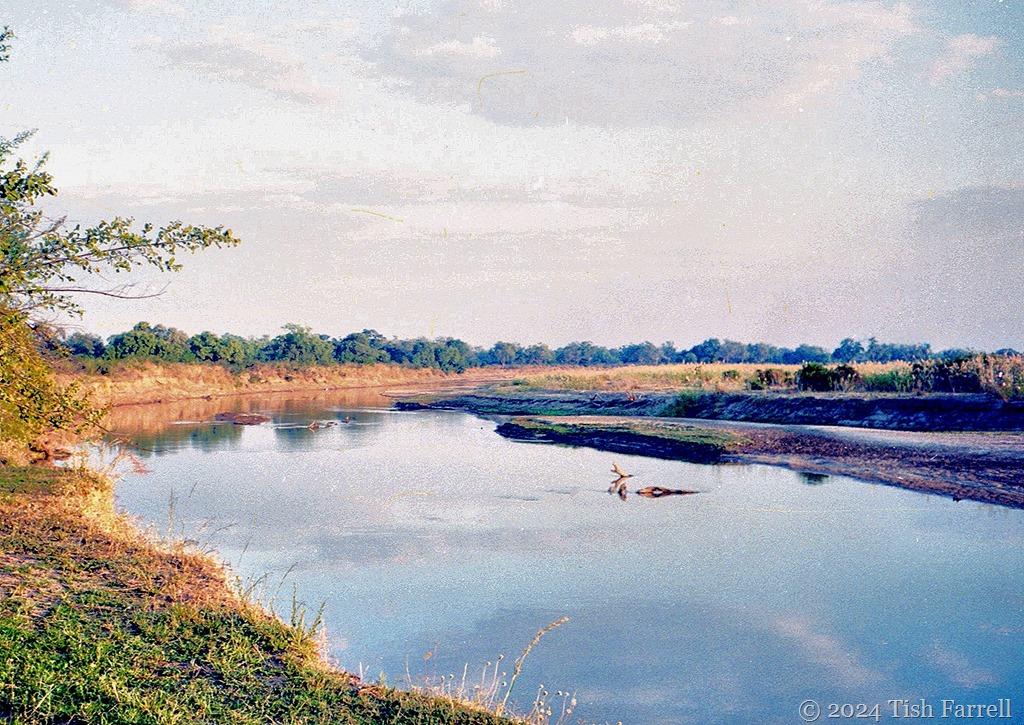
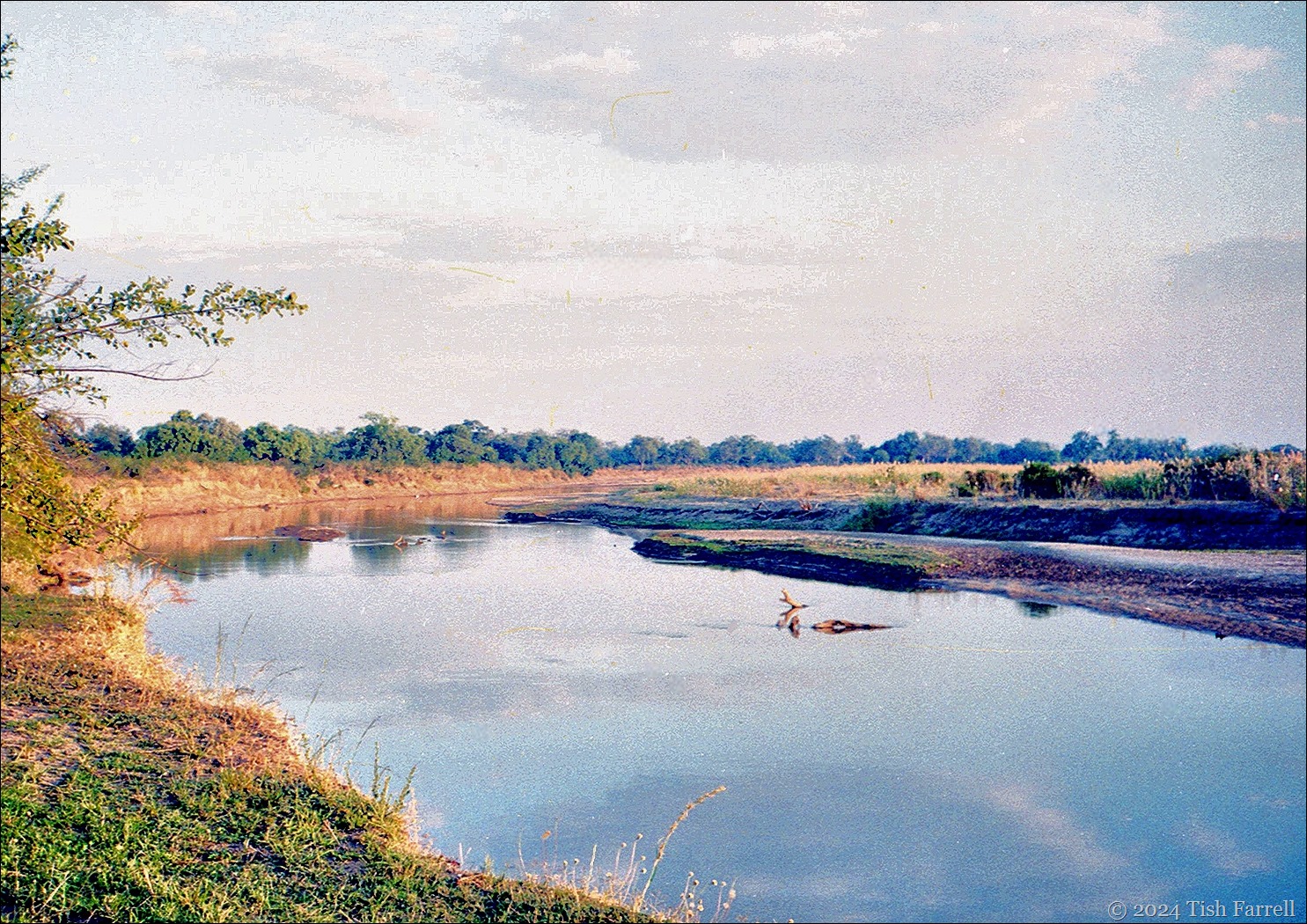
It is winter in Southern Africa, the dry season. Now and then ribbons of smoke drift up to us. Charcoal burners. The afternoon sun turns remnant streams to silver filaments. And then the plane banks and we’re over Luangwa. Sky blue shot with gold, the main channel looping between wide, pale beaches and exposed sand bars.

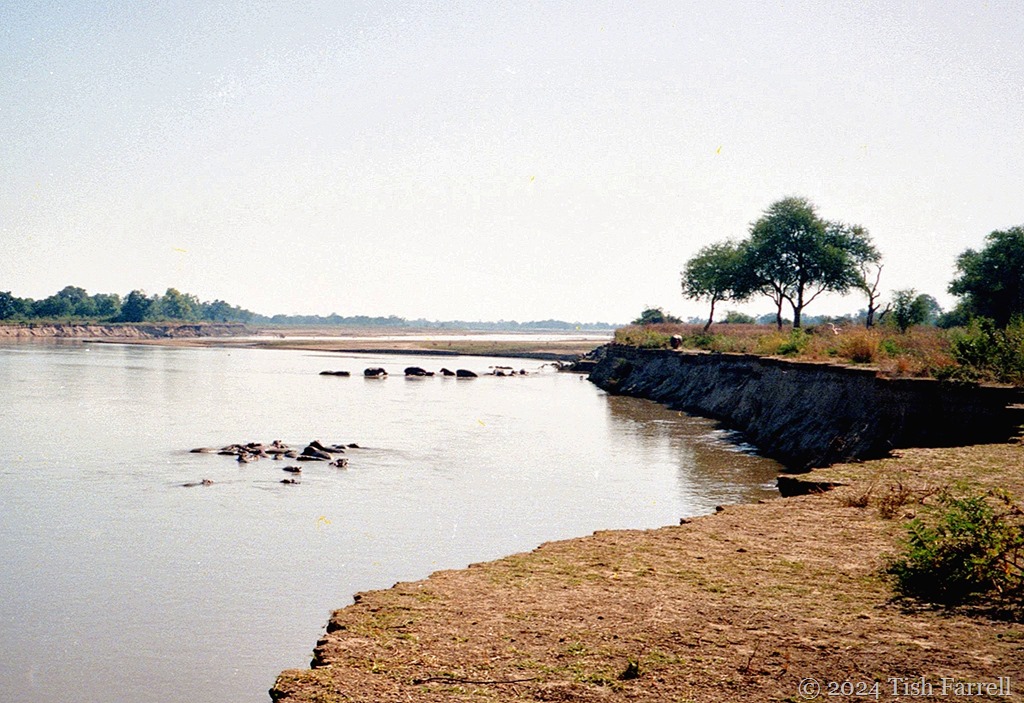
It is quite a sight. Even shrunk to its dry season flow, this river impresses. I wonder at the scale of it in rainy season spate. From above you see how it endlessly remakes itself, carving out new ox-bow meanders, stranding the old as stagnant lagoons that later, we learn, are called Dead Luangwa, Luangwa wafa, yet are important wildlife refuges at this time of year.
img20240926_15462570ed

*

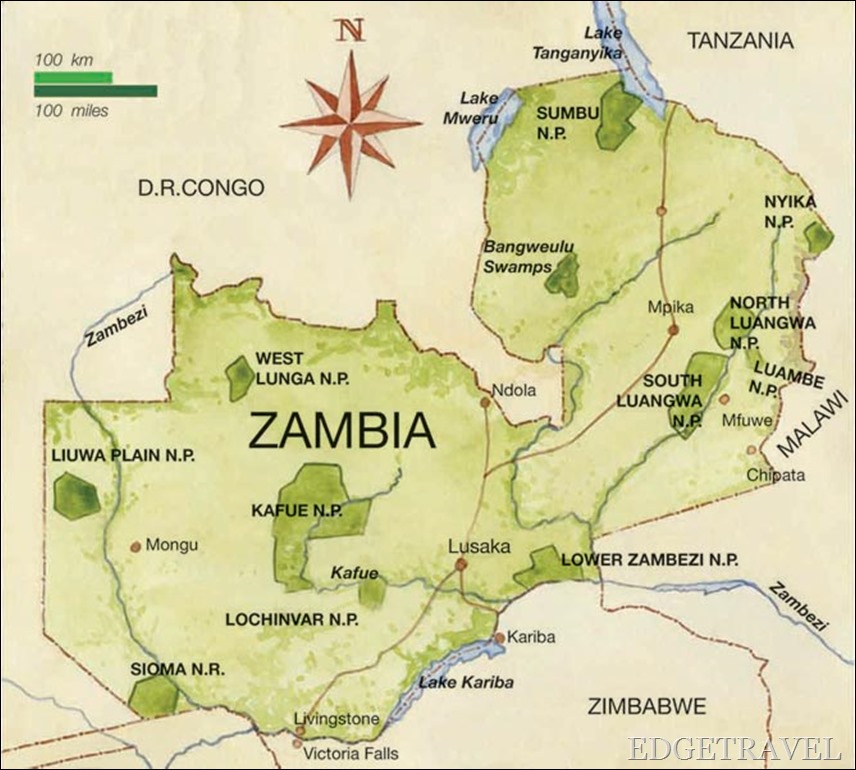
We are on the afternoon flight from Lusaka to Mfuwe – destination Tena Tena Camp, in South Luangwa National Park in Eastern Province. The park lies along the river valley, itself part of the Great Rift system,  and covers 9,050 square kilometres. The southern park and its North Luangwa counterpart are renowned for their wealth of wildlife, not least 450 bird species as well the big game.

The camp is run by Robin and Jo Pope, he a Zambian zoologist, and specialist in walking safaris in Malawi, Zambia and Zimbabwe; she a British expatriate and zoology graduate. The full scale walking safaris last a week and more and we can afford only a long weekend, 2 nights at Tena Tena, and one night at Nkwali, the sister camp outside the National Park.

Our plane is a 50-seater. We are welcomed with slices of Madeira cake and shortbread, iced Fanta or Cola. Later, coffee is brought round in a big jug. Somehow it feels more like a train ride than a flight. Touch down, we are told, is in one hour fifteen minutes.

Mfuwe turns out to be a tiny airport, there to serve National Parks’ visitors. Sammy, a young African, Tena Tena’s trainee manager, ushers us, along with a Dutch couple, into the open sided Land Cruiser. Our driver is the camp cook, a South African girl. We’re told it’s an hour’s drive. The Dutch couple are repeat visitors and they are very excited. There is much loud chatter. It’s somehow blurring the landscape.

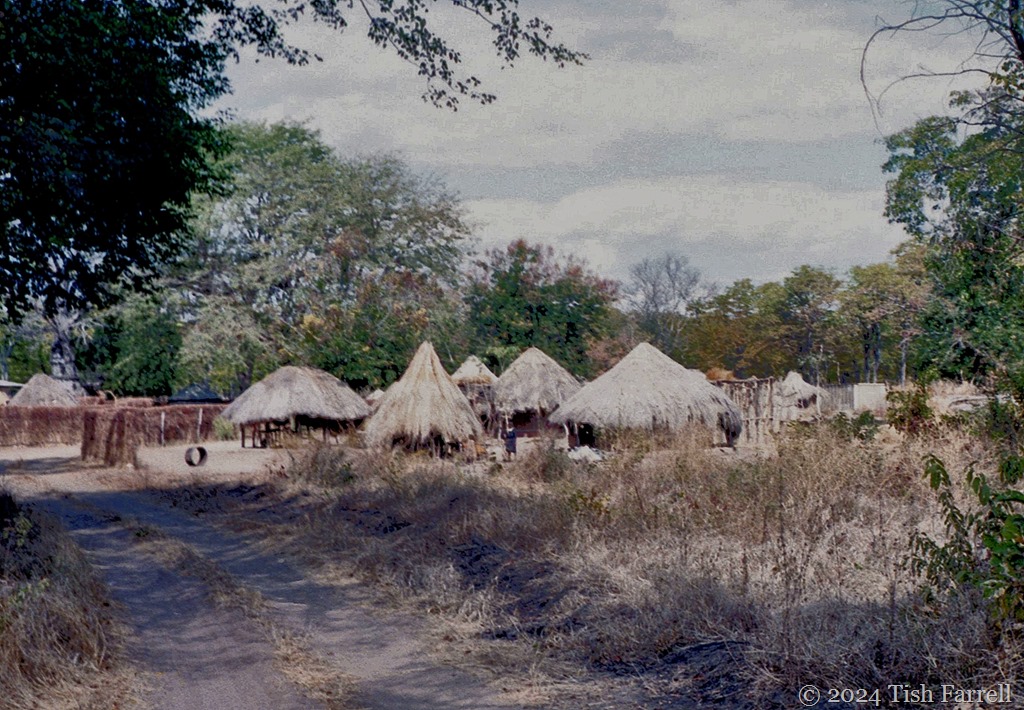
Soon we are leaving the tarmac for dirt roads, passing by homesteads of thatched houses. The roofs, made of thickly laid grass bundles, overhang red and white painted walls and are supported on tree posts. All around are well swept compounds. I also notice the refurbished granaries. After the previous years’ drought, this year’s rains have yielded good maize crops. There will be no further need of Graham’s services when his contract ends in September.
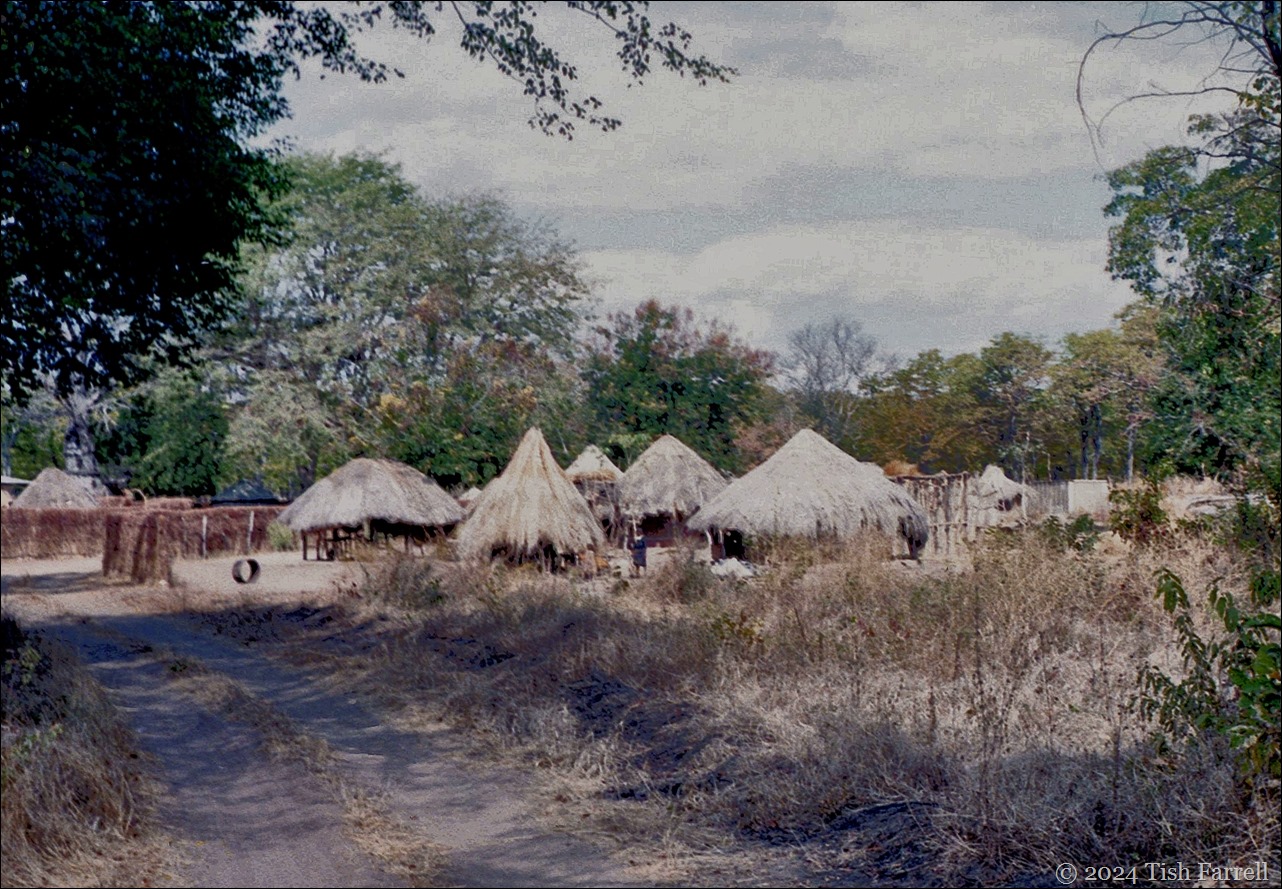
img20240926_16283638 village

But then comes a dose of reality. As we lurch across a dried up stream, I see a village girl digging into the sandy bed, waiting for a cupful of murky water to well up. A new strand braids-abrades in my consciousness. Why does it take such sights to teach me my good fortune?

I distract myself from inconvenient discomfort with the beauty of the mopane woodland. The trees are graceful and grow widely spaced, as if orchard-planted. The afternoon sun filters through, and I’m oddly reminded of an English beech wood; the suffused russet light on a late October day.

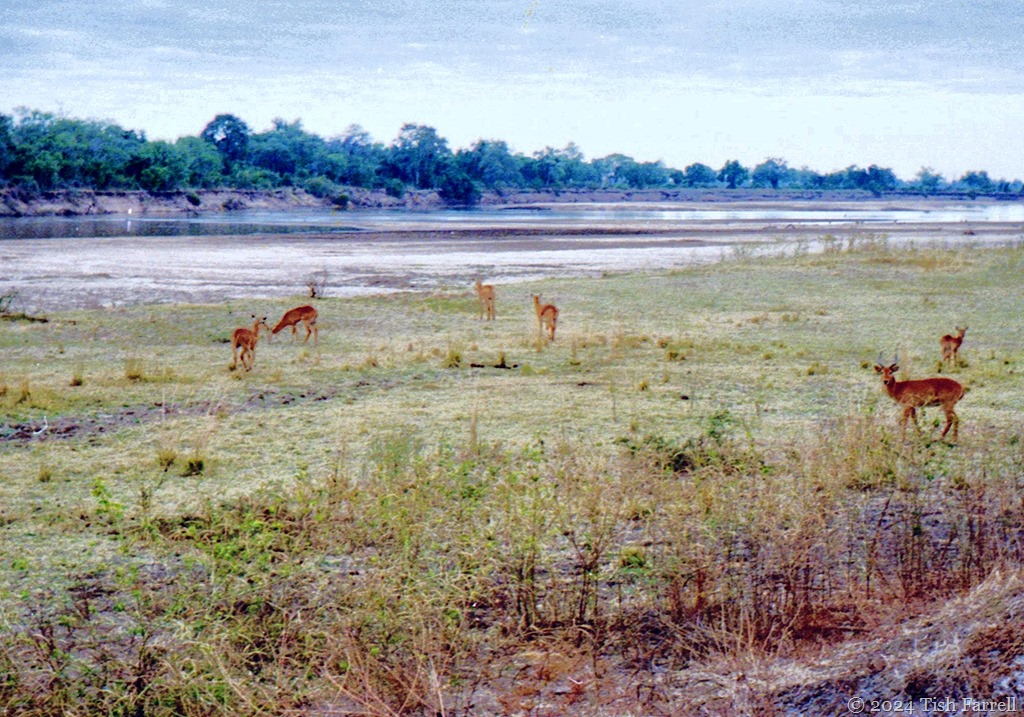
We are in the park now, and park is somehow the right word. There are green swards along the river’s flood plains where puku antelope graze. The disposition of trees in their winter tints suggests an overgrown country estate somewhere in my home county of Shropshire. Except the trees here are winter thorn acacias, lead woods, ebonies, mahoganies, sausage trees and baobabs.
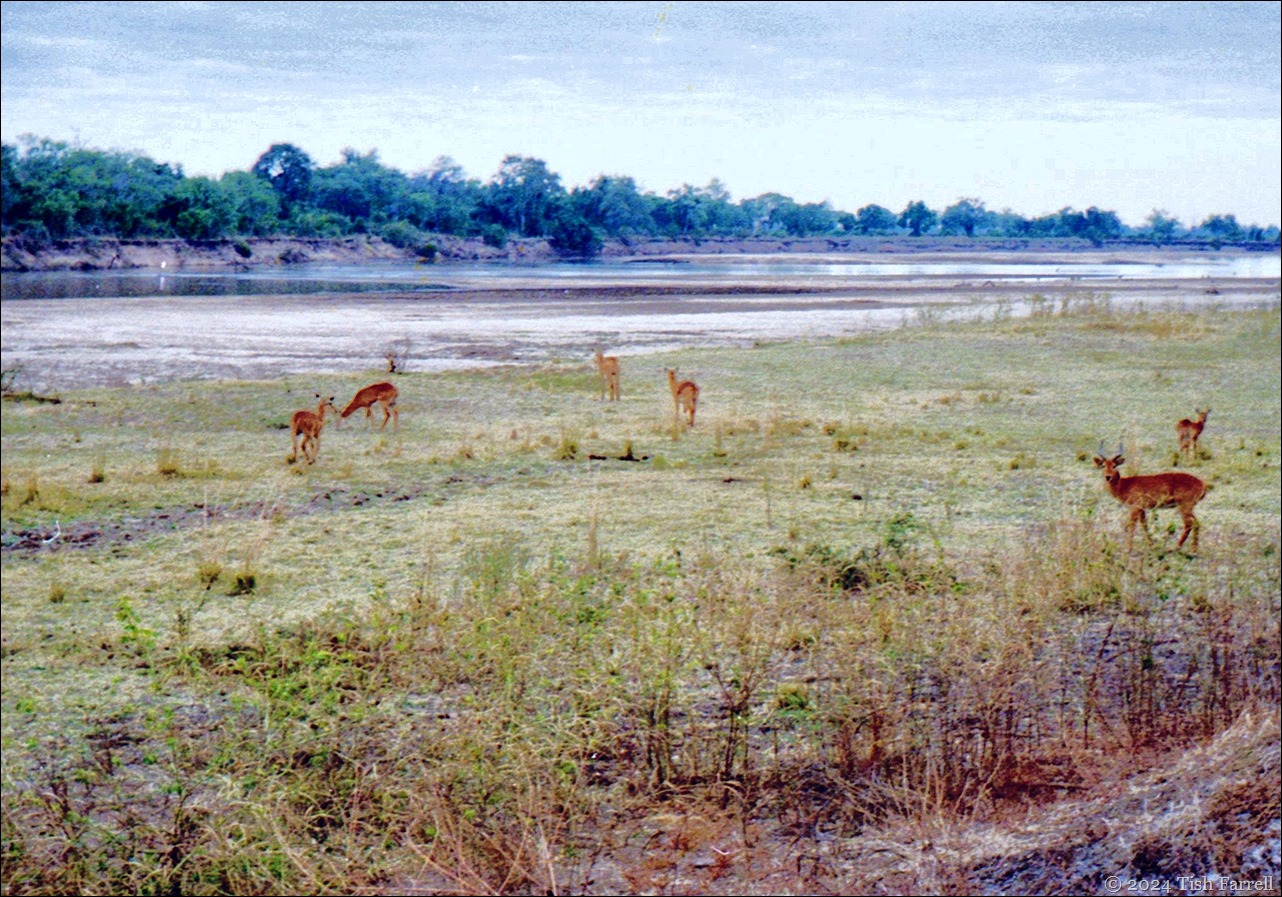
img20240926_15414181ed puku

*

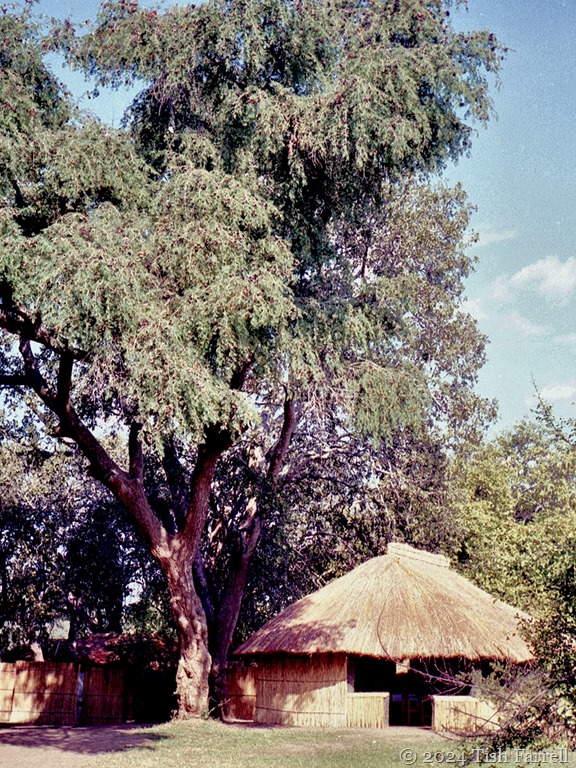
Tena Tena sits on a high bank above the Luangwa, its six thatched roof tents sheltered by trees. The name means temporary home in Nyanja, and we soon learn that, according to park regulations, the  camp may only be used in the dry season; no permanent structures allowed. So the whole enterprise (including the tents’ showers and loos) must be packed away before the rains.
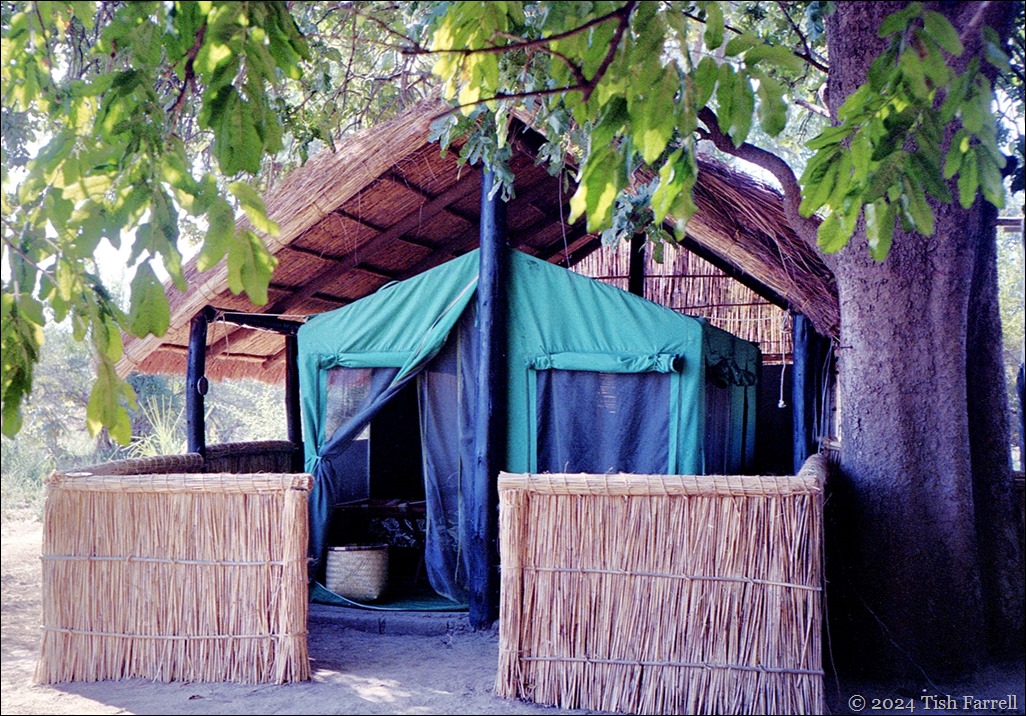
img20240926_16210951Tena tena camp

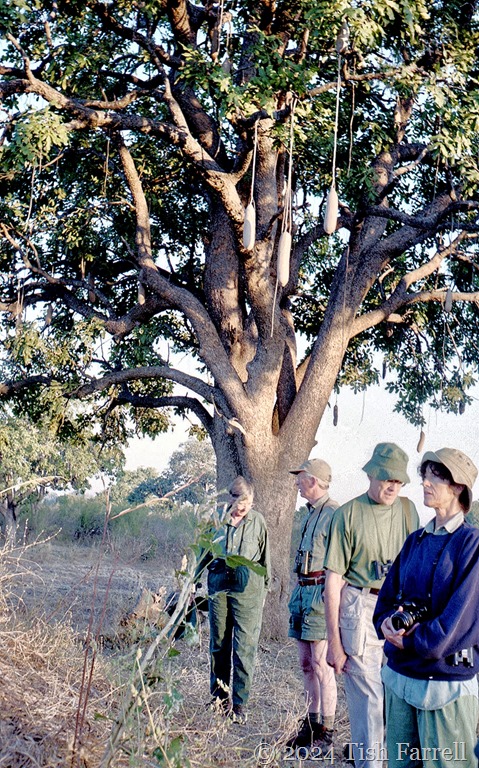
The Farrell tent is under a Sausage Tree (Kigelia africana), a stone’s throw from the shelving river bank and within close hearing of much hippo grunting. We’re served tea and cake and told to take a siesta until late afternoon. At sunset we’re back in the truck, and being driven to one of the lagoons, where we stop for sundowner drinks and to watch for any wildlife. Our fellow guests, along with Dutch couple, are Jo Pope’s parents. The foursome are old friends. It feels like a family party, and again there is much noisy chatter. But then the light in lagoons is so breath-taking, it’s hard to be too irritable. Instead, as I watch a flight of Sacred Ibis on a tangerine sky, I long for a camera with rather more range than my little Olympus-trip.
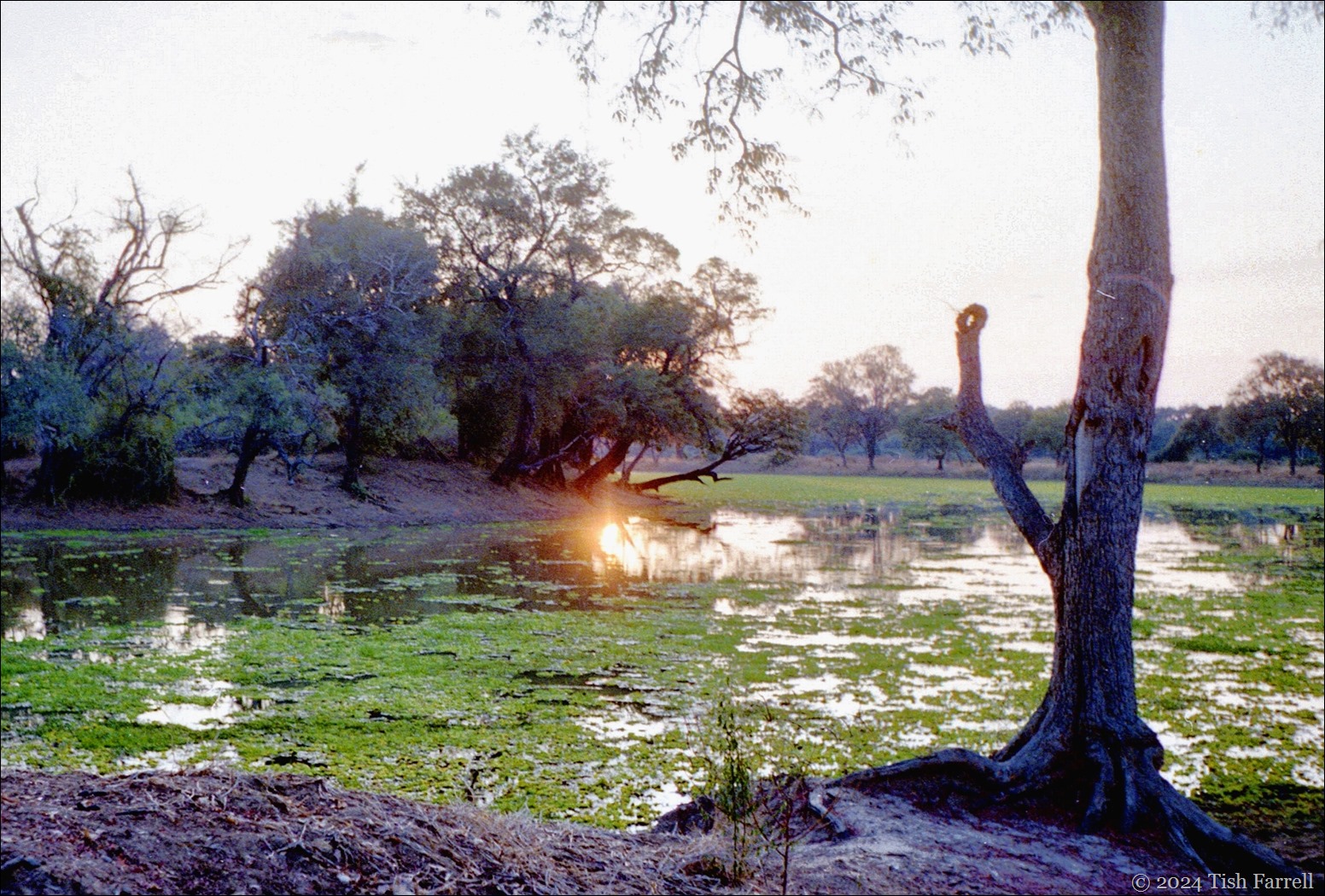
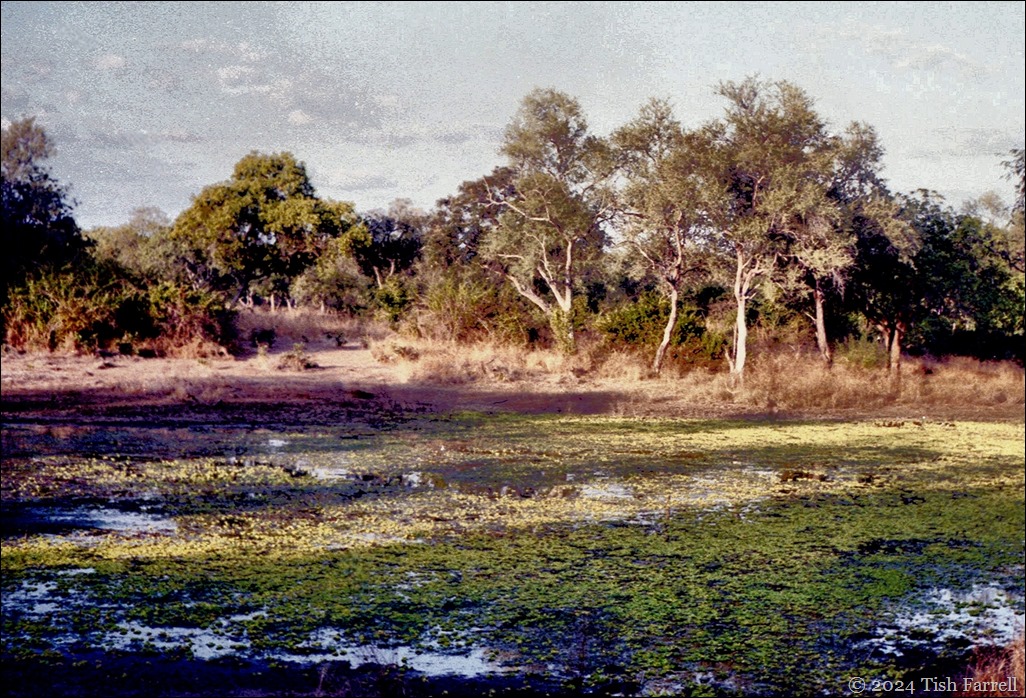
img20240926_16243268ed

img20240926_16230700ed

The lagoons, Luangwa wafa or ‘dead’ Luangwa

*
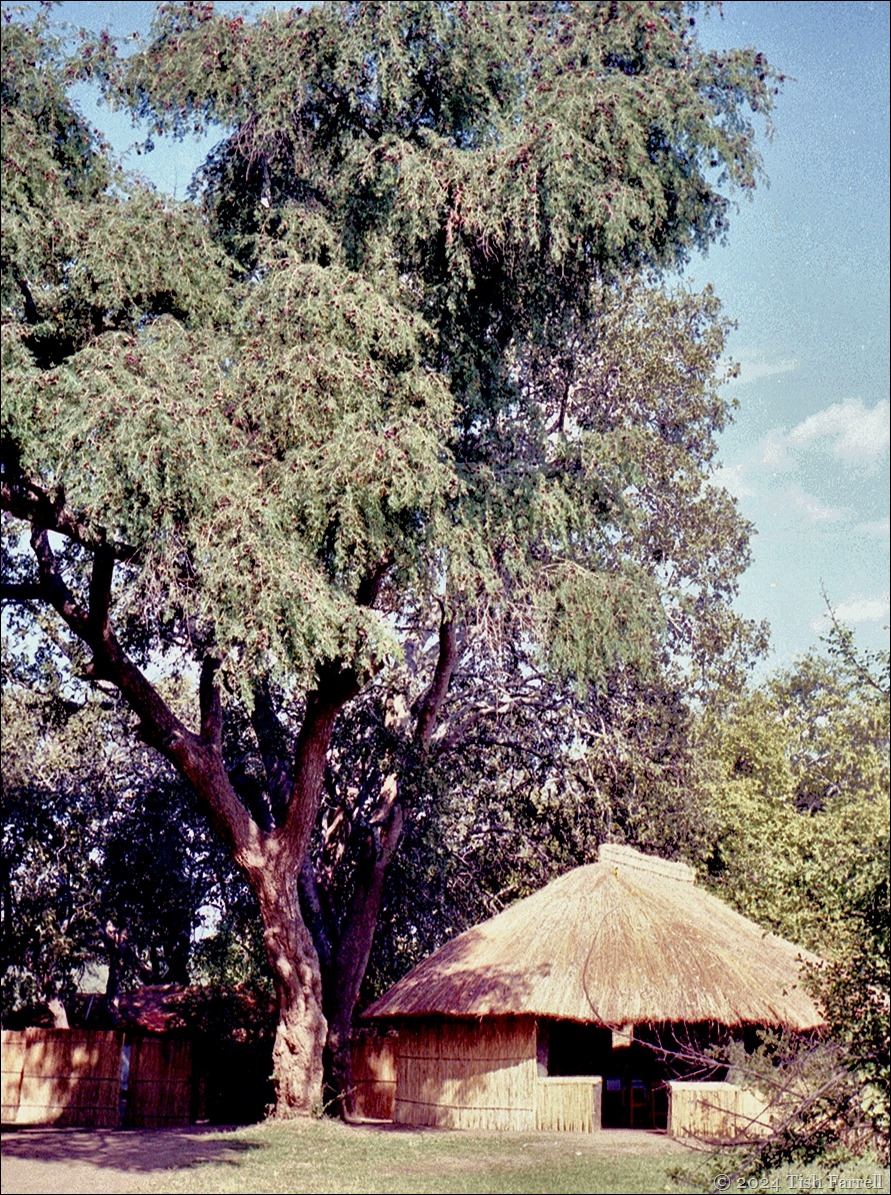
img20240926_16214688 tena tena dining room

Tena Tena dining room sheltered by a winter thorn

*

When darkness falls we set off across the park. Overhead a million stars. The universe. I find the Southern Cross and, not for the first time that day, wonder if I’m really there, seeing it. The truck is open sided with raised seats. But it’s chilly and dank by the river. I’ve put on all the clothes I have with me but, even with a thoughtfully provided rug, it’s not quite enough. Jo Pope stands beside the driver, wielding the spot light as we rumble into the night. When we brush by clumps of Vick’s bushes, their camphor scent sifts through the night air.

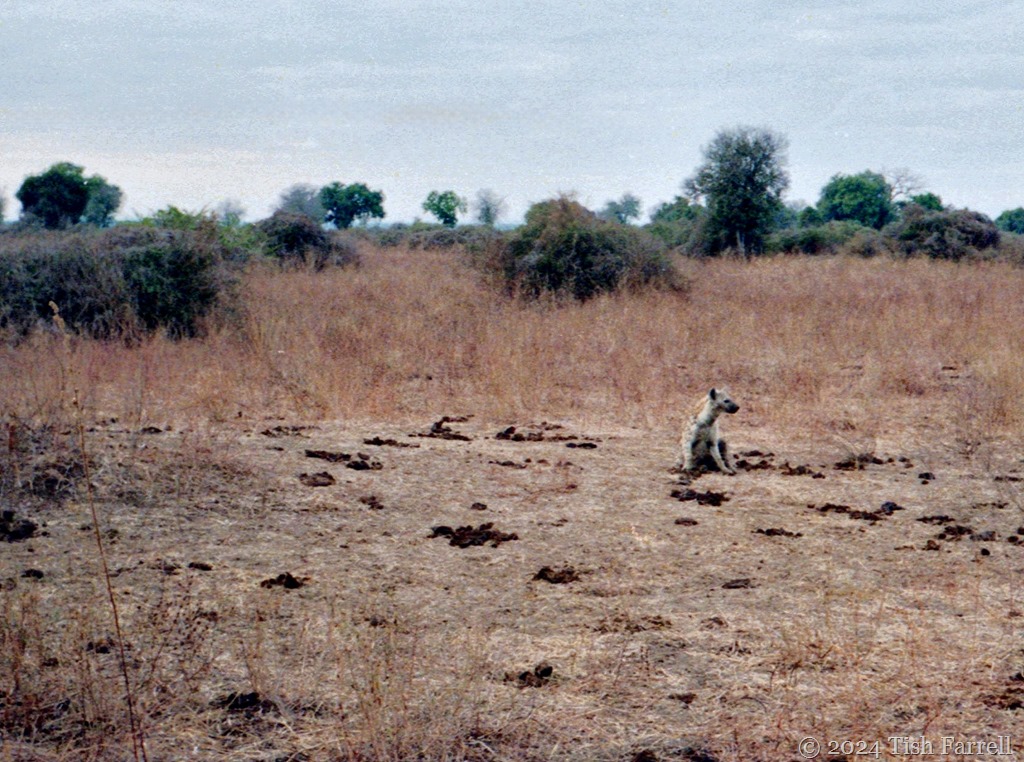
Out on the flood plains, the spotlight picks up hosts of wary eyes – herbivores – puku, impala, a pair of hippos lumbering out for their night-time grazing. We visit a hyena den. A young male cub comes out to look at us. On his second visit he whoops pitifully, a sound that makes the spine quiver.

As we head down riverside tracks, nightjars flutter up from the ground at wheel-height, plumage translucent when caught in the spot light. They look like giant moths. And while we’re focused on smaller things we also look down on elephant shrews going about the nocturnal business of bug hunting.

*

That night in our tent the hippo snorting is ceaseless. I believe I have scarcely slept when hot water is brought to the washstand outside our tent and the 5.30 wake-up drum sounds. Fifteen minutes later there’s a second drum call. The sky is steely grey with the first cracks of dawn. Breakfast is help-yourself tea, toast and cereals from a table by the river. There’s a camp fire to warm us up. As I stare down at the shadowy river, munching toast, I’m suddenly aware of the hippo just below me. It is on the bank, probably too close for comfort, but it’s too soon in the day to believe in such encounters.

By 6.15 we are again in the truck, bouncing on bone-jarring tracks. The light is gauzy so it’s hard to know if I’m  truly awake when two hyenas approach through the scrub. They are so gorged on the night’s pickings they can barely move. They slump in the open while we watch.
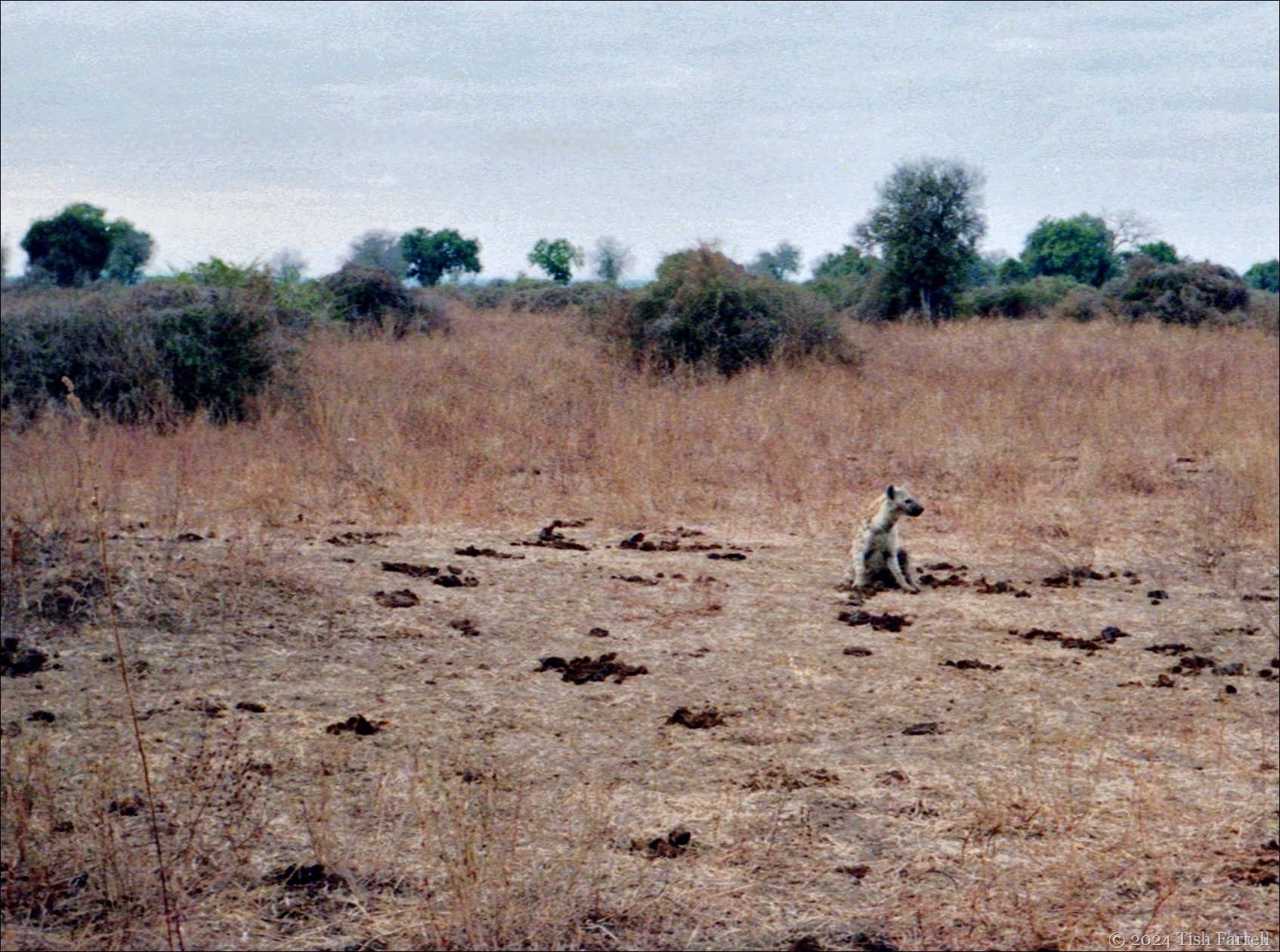
img20240926_15442838 hyena

*

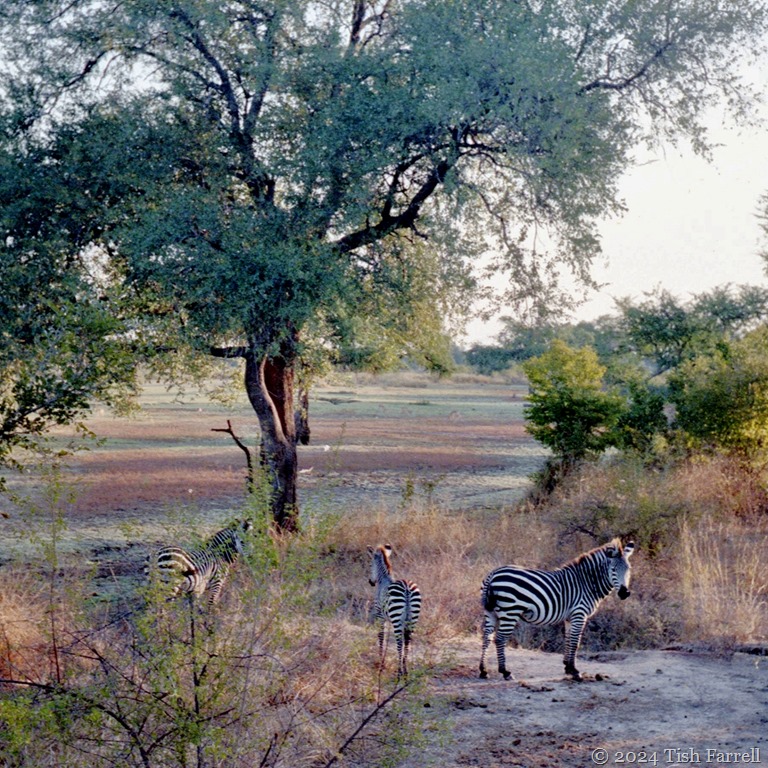
This morning there are many birds to see, pretty Fischer’s lovebirds (bright green with flame coloured heads, yellow bibs), saddle bill storks, eagles, a hammerkop. Then comes a huge herd of buffalo. For a full ten seconds we see it, and then it melts into the bush as if it had never been there. Another mirage then? Later, we have more certain views of warthog, baboon, eland, wildebeest, Burchell’s zebra.

After an 8.30 tea break by a lagoon we head out onto an open plain. It’s an eerie place in the wintery light. A forest of wrecked trees spreads out before us, nothing but burned out trunks, white-grey spikes, strangely luminous. Our guide, Guy, says this landscaping is down to elephants and their driving ambition to have more grassland. They ring-bark the mopane trees which slowly die and then when a bush fire comes through, it finishes them off.

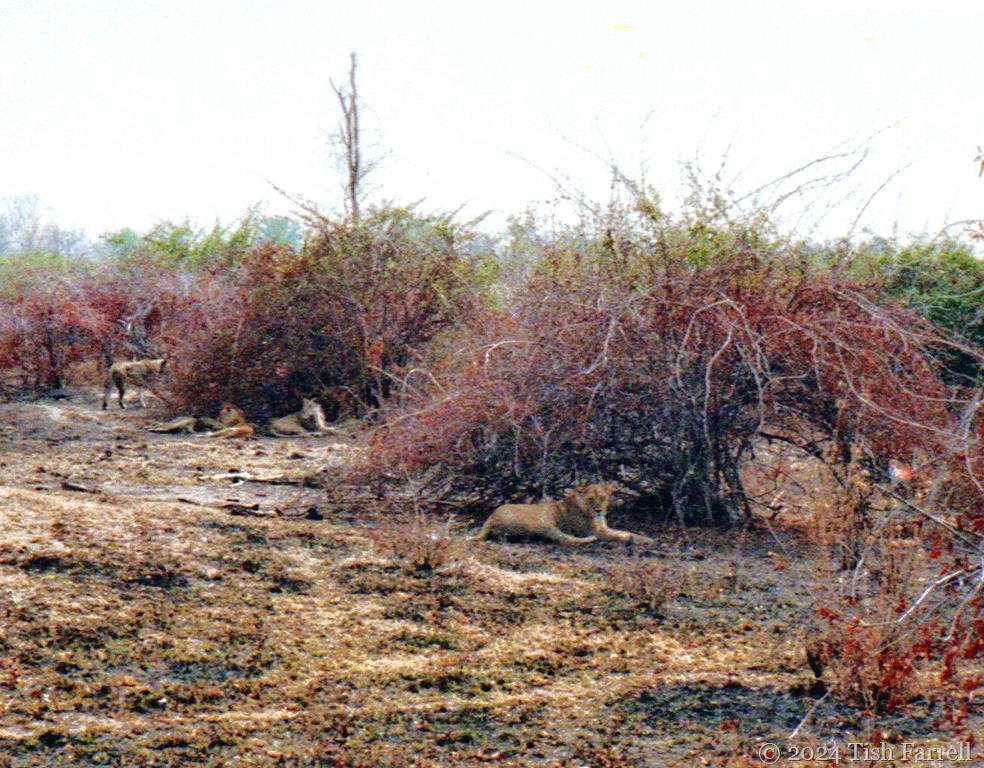
We drive to the salt pan, another strange locale, where salt water gushes forth at near boiling point. As we arrive, a flock of crowned cranes take flight with mournful mu-um cries. We inspect the spring and, it ‘s as we drive away, that we see the lions.
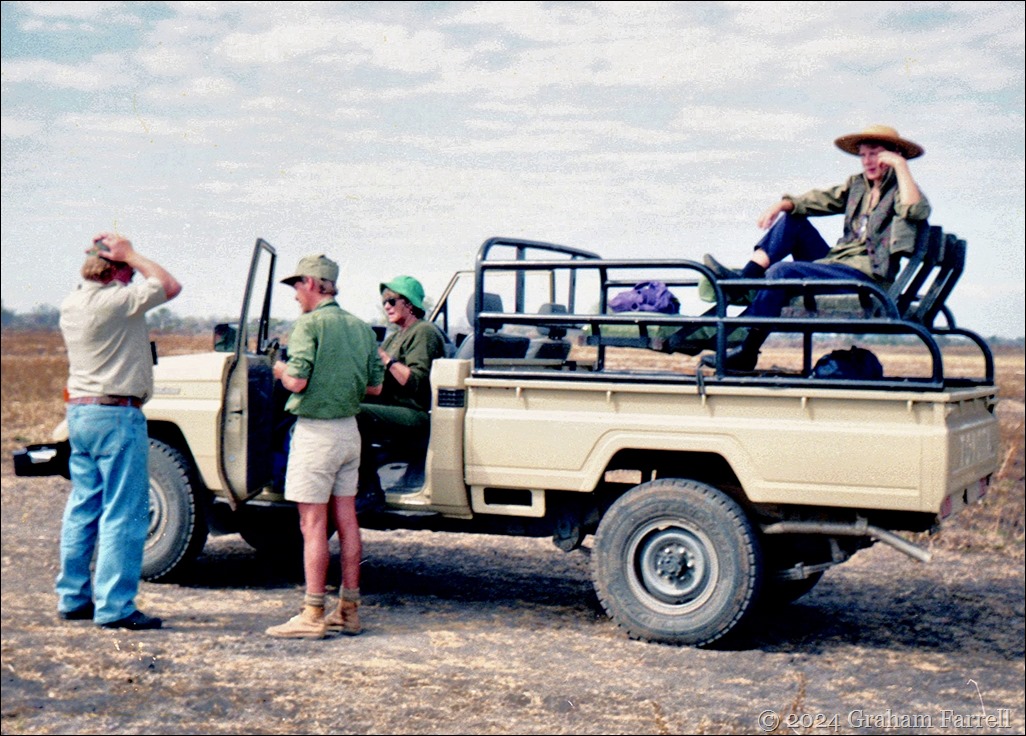
img20240926_15430429ed

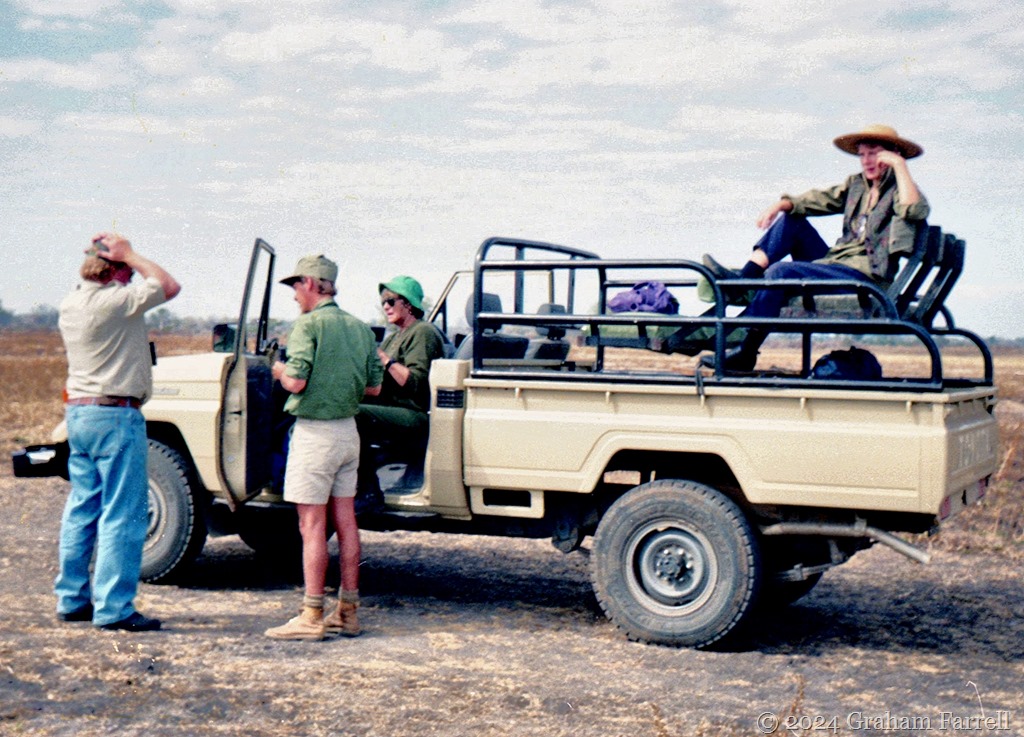
At the salt pans. That’s me in the back of the truck

*

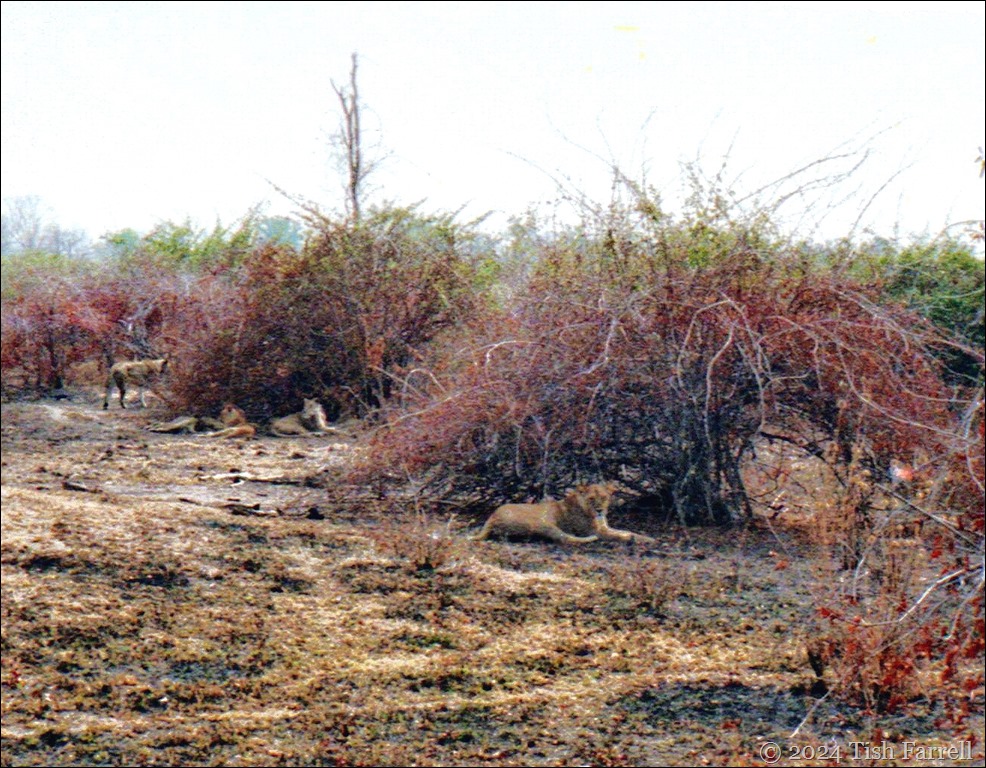
They are lying in heaps under brown bushes, possibly seven in all. Guy says we will take a closer look, but we must keep quiet and stay seated within the profile of the truck. That way the lions will see only the truck, which presents no threat to them.

And so it proves. The lions could not care less. Sleeping time amounts to some twenty hours a day. There are many more hours to get through. We leave them in peace.
img20240926_15434749ed

*

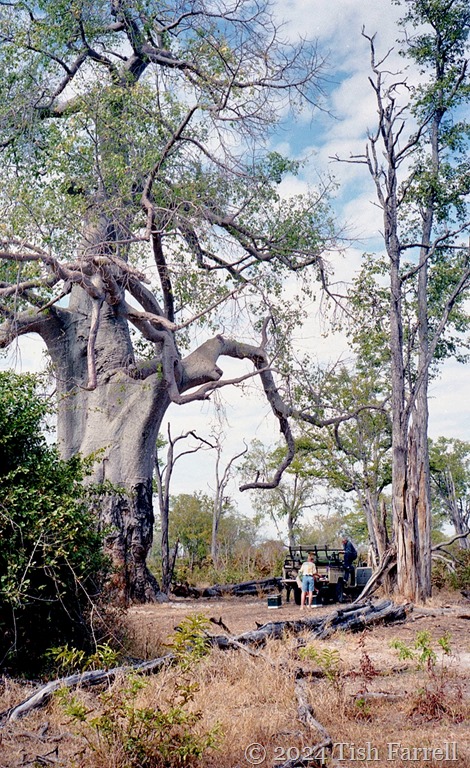
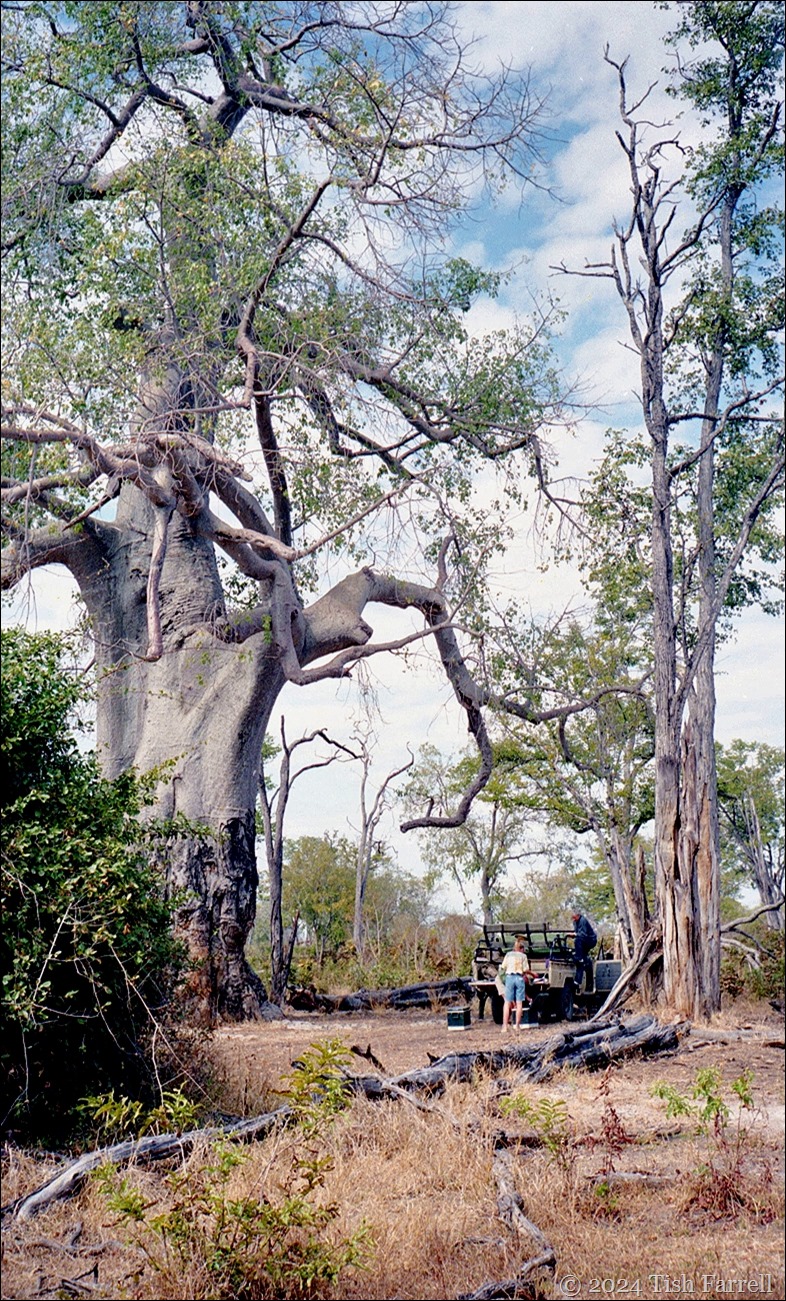
By now the sun has broken through the cloud, the day growing hot. Lunch is served under a massive baobab, perhaps a thousand years old, Guy says. While we eat coronation chicken and rice, he points out the old wounds on the baobab’s trunk. They were made by elephant poachers hammering in footholds so they could use the tree for a look-out post.
img20240926_16263110baobab

This baobab was once an elephant poacher’s look-out tree

*

That night on the drive we see a great eagle owl, two honey badgers, a genet and six porcupines. The porcupines seem to whiffle along, spines shimmying under the spotlight. Then there’s a moment when I look down from the truck into the dull yellow eyes of a crocodile. It is right alongside. There are two of them, each a metre or so in length, and they are shunting along a shallow channel.

It’s a surreal moment – looking in the eyes of a crocodile. Whatever is being registered there, you surely don’t wish to know. And then in the darkness, we find ourselves snarled up with elephants. They are crossing the track at a point where there are dense bushes either side. But they are moving slowly, since they are also browsing as they go, and there’s no knowing how many there are. But we see their huge shadows, and spot some smaller shadows, and then there’s always that odour. Musky. Earthy. Like nothing else. We quietly reverse and make a wide detour.

*

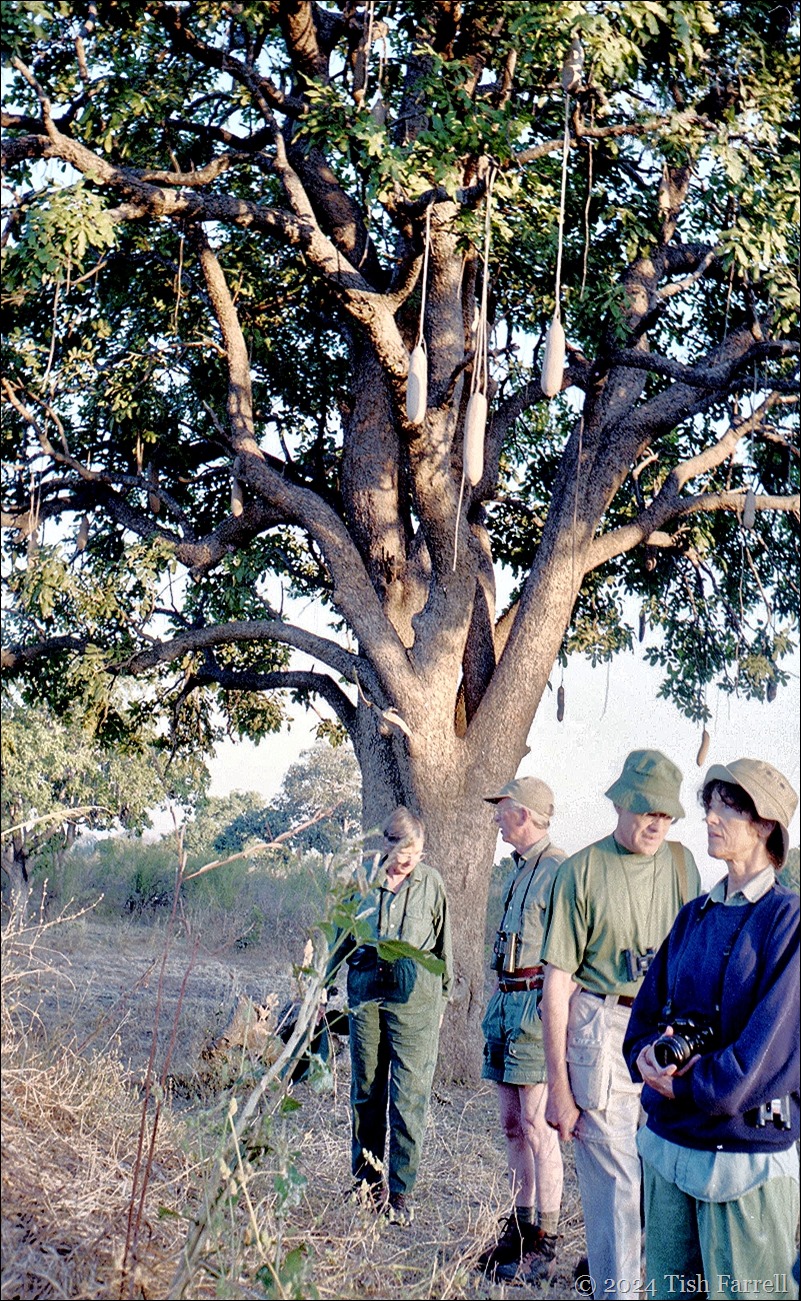
On Sunday morning we eat breakfast beneath a half moon and the morning star. At 6.30 we set out on a five hour walk. Sean, the South African zoologist is our guide. We also have with us a tracker with the tea things, and White, a national park ranger who carries a rifle. We set off across a dried up lagoon where the previous early evening we had glimpsed two leopard. It is a golden morning as we walk among sausage trees and lead woods whose leaves, we are told, are a cure for asthma. As we go, a grey headed bush shrike calls its mournful one-note call. It is a strange sensation to be walking rather than driving. For one thing, it’s hard to see very far ahead.
img20240926_18134026ed

The sausage tree is considered sacred by local people

*

Sean is following buffalo spore, this with a view to establishing the exact location of the herd we had glimpsed the previous day. But instead of buffalo we come on a big bull elephant, standing alone in a woodland glade. He is rheumy eyed and elderly. Sean speaks softly and says the elephant is wary: he can make out our shapes but can’t tell what we are. We see his head held high, trying to catch our scent. The trunk lifts and twists, the tip moving like a periscope. We only need worry, Sean adds, if his ears fan out and his trunk swings sideways.

We are all right then. It seems he is not thinking of charging. Then a herd of impala appears behind us and starts barking the alarm. ‘I hope he doesn’t think we’re lion,’ says someone. We retreat quietly.

Now it’s the vegetation that holds our attentions. We walk through tall grass savannah. There are potato bushes, daisies with mauve flowers and salt bushes that we are told are crushed like sugar cane to produce salt. And then, against the distant tree line, we see the huge buffalo herd that had done the vanishing trick yesterday. And  at the same moment the nosey impala herd backtracks to have another look at us.

Sean says if they bark again the buffalo may run. We step back among the trees just in time to see eight elephants, including a calf, moving quietly across the grassland, eating as they go. It’s like watching a silent film. We cannot hear them, and so then we are told that elephants effectively walk on tip-toe, the front foot supported by a bed of gristle much like a padded high-heeled shoe. We watch them go.

Sean kicks the dust to check the wind. He’s had it mind to show us some lion. Where there are buffalo, he says, lion are not far behind. But with all the detours, he gives it up and says we’ll have a tea break at a fisherman’s camp outside the park.
img20240926_17292984ed

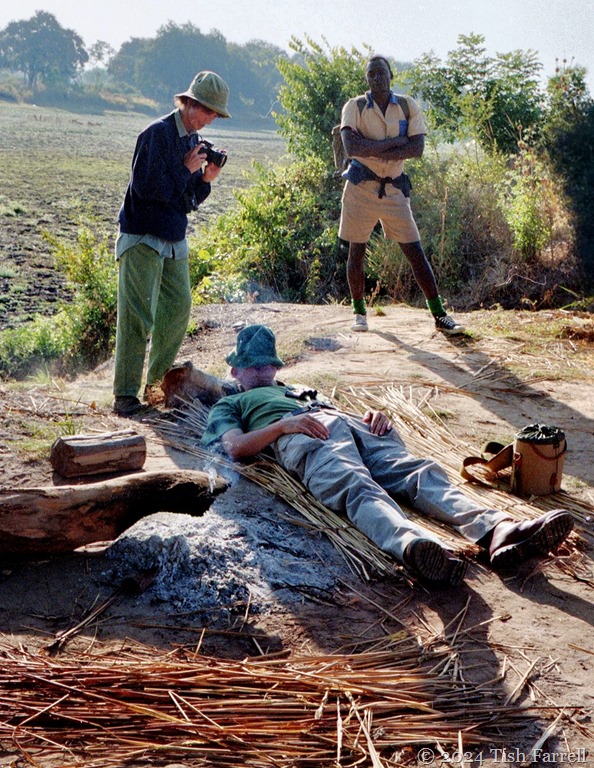
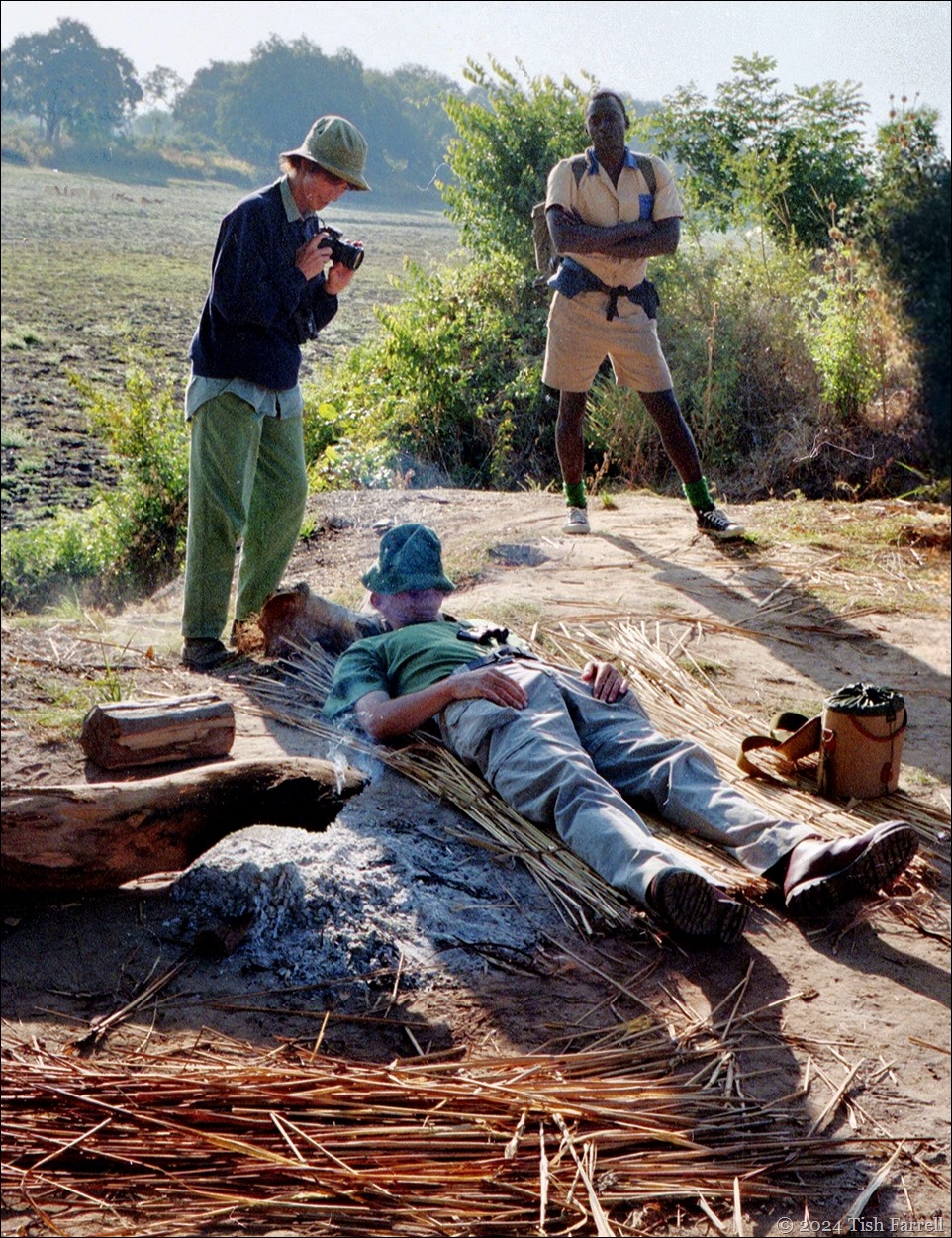
The camp is on the bank of a dried up lagoon. The fishermen who spent the night here are long gone, but their fire smoulders on, and one of our party tries out the bamboo sleeping mat. There’s a hippo skull for a neck support. There are also bamboo sheds with racks for drying the fish. Sean says some of the lagoons still hold bream, which are caught using dug out canoes and conical bamboo fish traps. In passing, he says it can be dangerous work; a few days earlier a fisherman was killed by a hippo.

We could take this last remark as a warning. Except we don’t.

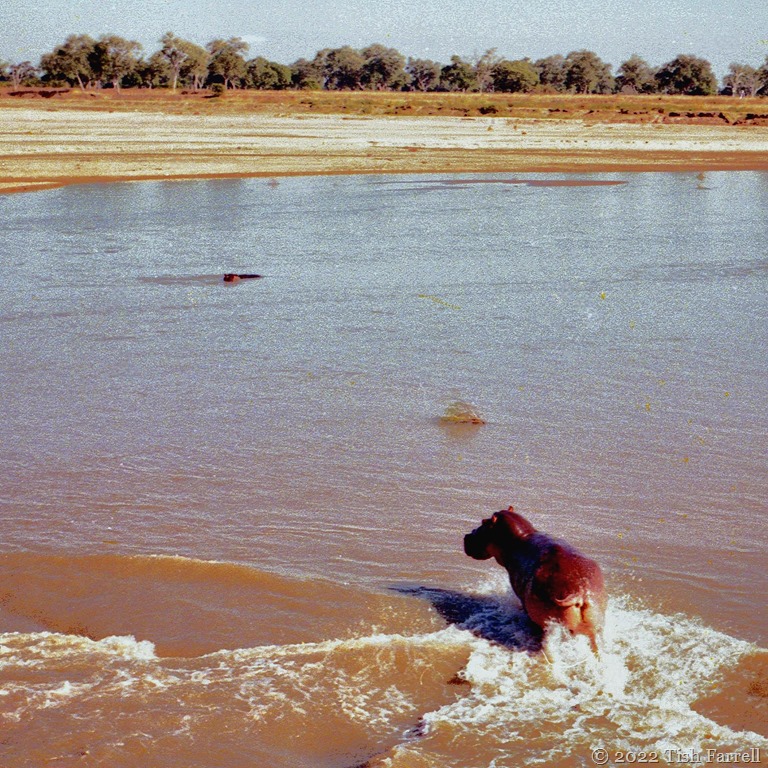
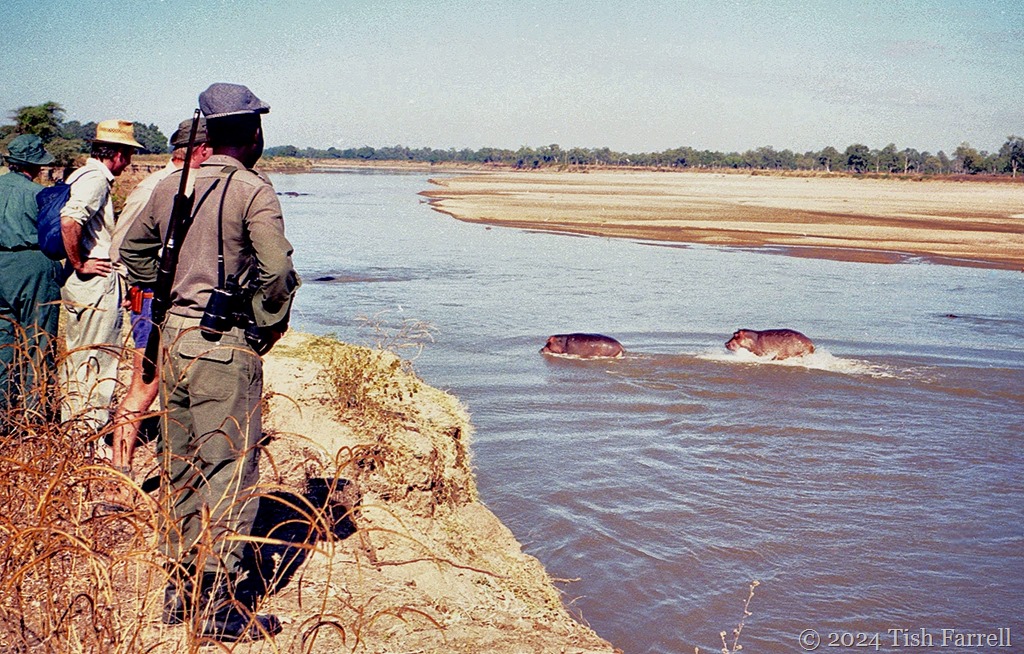
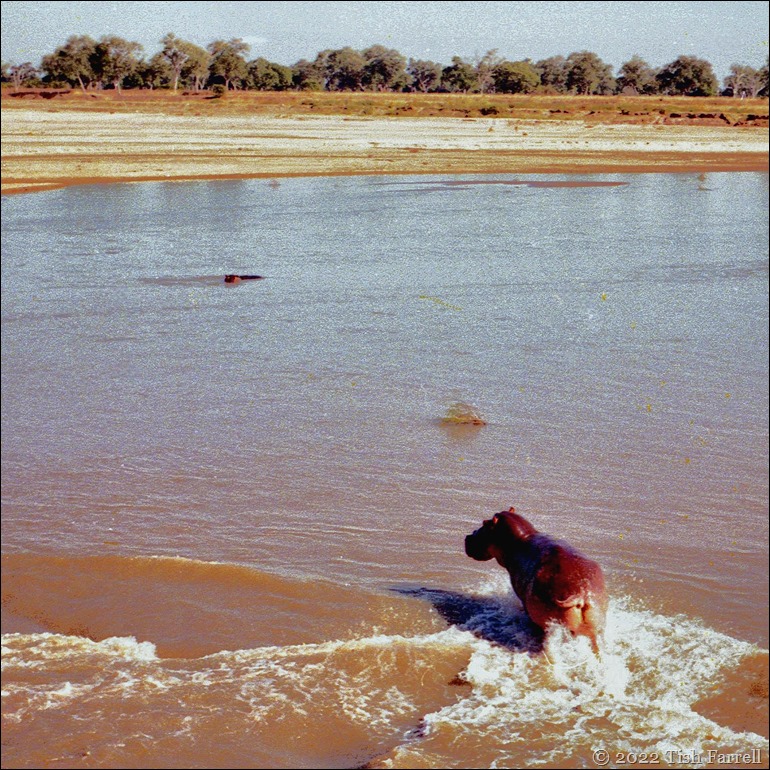
By the time we leave the camp and head back to main river, the sun is hot. From some distance away we spot a bull hippo trying to return to the water. He’s left it late after a night out grazing, and has come back to the river where the bank is high and steep. Being out in the sun risks serious burning and he is growing increasingly distressed with every failed attempt to descend.

We think ourselves well out of range as we watch his antics. Sean says he is probably a young bull expelled from his group, unable to win a herd of cows for himself. Someone laughs at another botched descent. And he hears.  And then he turns.
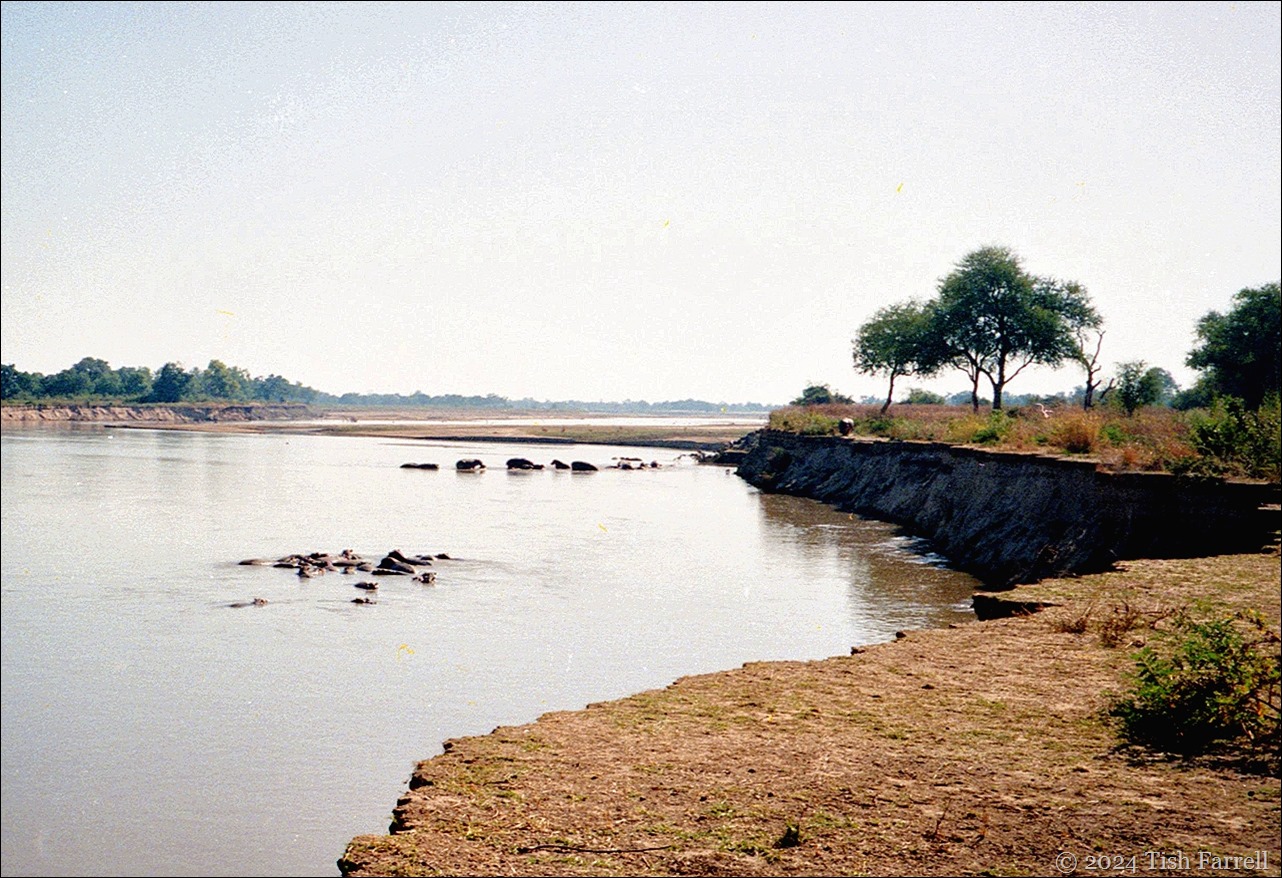
img20240926_17284698hippo charge

The bull hippo that charges us is on the bank under the small tree

*

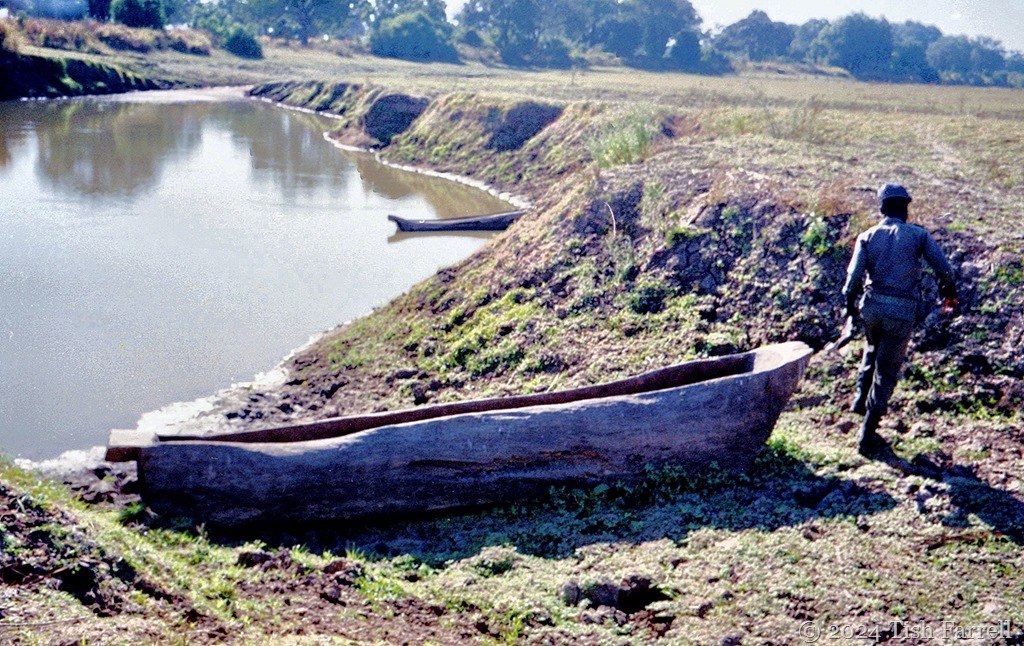
Sean and White react at once. They move forward clapping their hands, but when the hippo keeps coming, White ushers us back towards the fisherman’s camp, telling us to take refuge behind a beached dug-out. Meanwhile Sean is still clapping. White joins him, rifle at the ready.
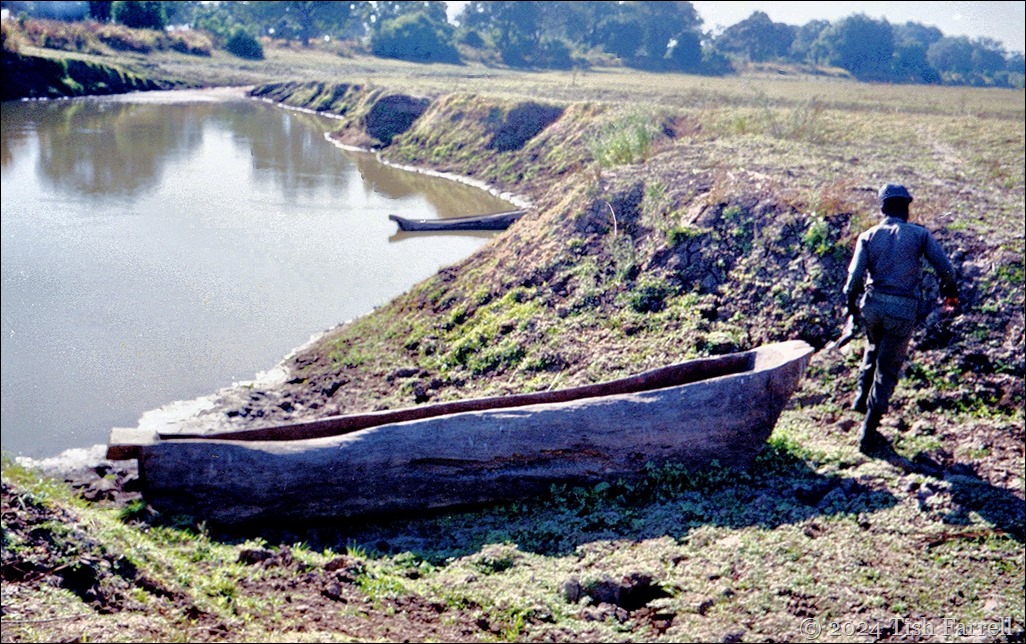
img20240926_17272601

White guides us to a suitable refuge, then returns to the river to deal with the charging hippo

*

It is a nerve-wracking few minutes. But then after the initial rush, the hippo runs out of steam and veers off into the bush. We regroup and Sean says White was indeed prepared to shoot the hippo if he had not backed down. It’s a disturbing thought – that our safari-goer carelessness might have warranted the bull’s despatch.

But then we see the problem is not resolved. We are near the camp, yet now there is an angry hippo somewhere in the scrub between us and it. We have to do a massive detour. It’s approaching midday by now, and I’m starting to know how the hippo felt in his overheated state. I’m hungry too, and only briefly diverted by the sight of fish eagles and African skimmers. And besides, too, I have already seen enough of hippos for one day.
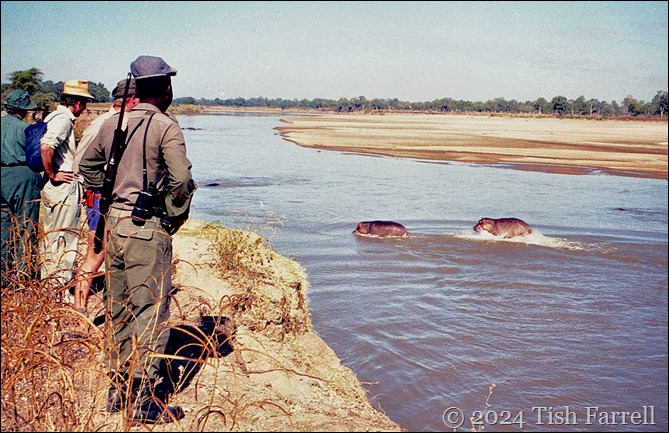
img20240926_17252587hippo walk

*

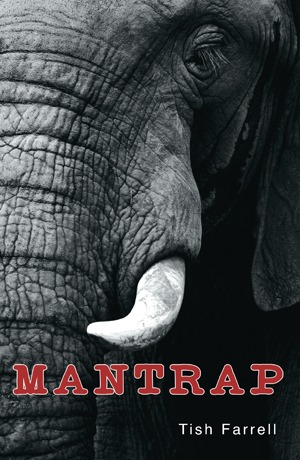
On Sunday afternoon we transfer to Nkwali. It’s outside the national park near Kopani, a good hour’s drive and we’re lucky to have Robin Pope as our personal chauffeur-guide.  He tells us so much, but by now it’s becoming hard to process. Later, though, I find the things I learn that afternoon inform a short story, Mantrap, published first in the US children’s magazine, Cricket, in 2003, and then in later teen quick-read chapter versions for Evans and Ransom Publishers.
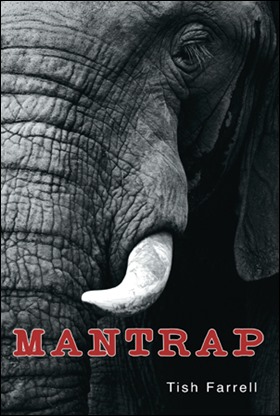
Shades covers for REPRO Batch 2_Layout 1

*

That night, in our new temporary home by the Luangwa, it is not hippos that keep us awake…

To be continued.
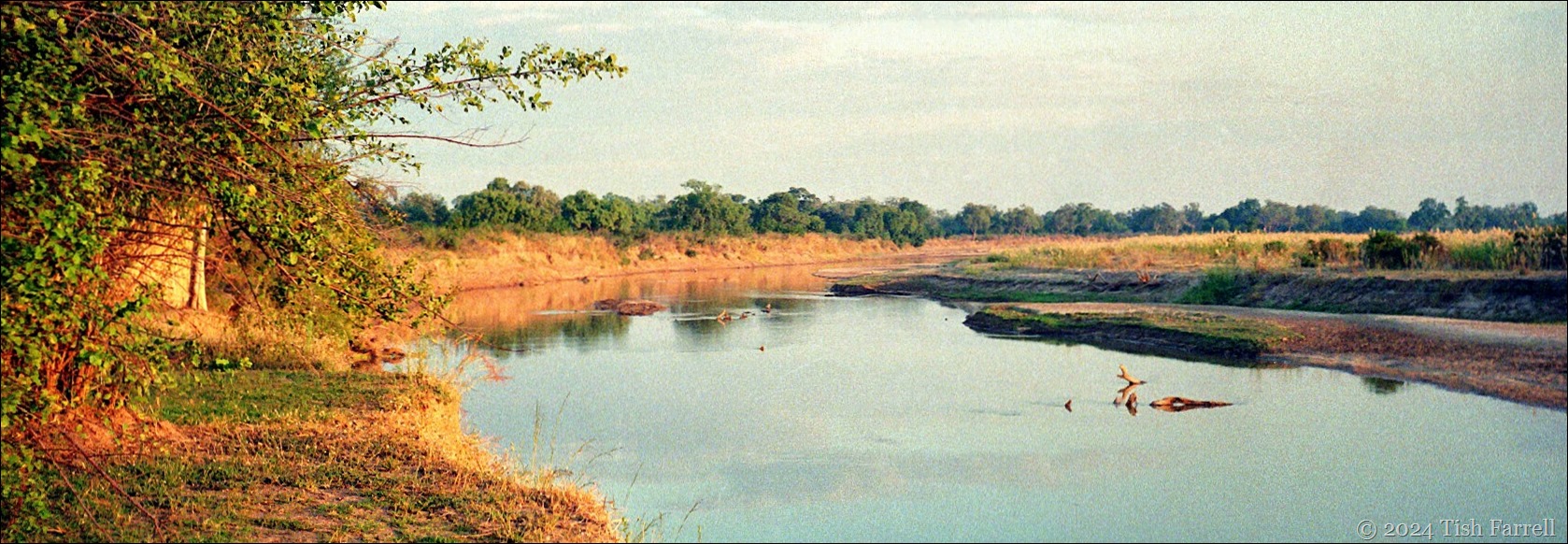
South Luangwa - Luangwa River header

copyright 2024 Tish Farrell

#SevenForSeptember

 

Cooling Off In Kiboko

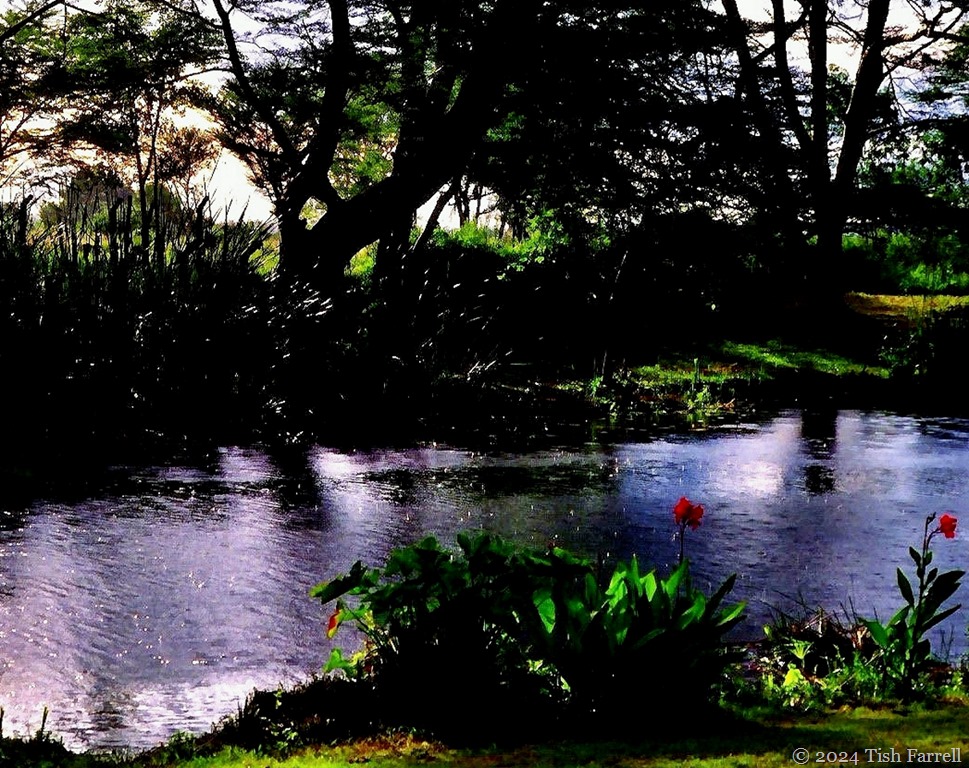
Kiboko ed sundowner rain 2

Every time there was that gasp of relief, as if we’d not been breathing for the last hundred miles. Ahead, through the heat haze, appeared the stand of fig and fever trees, rising tall and green above the dry bush country. After two hours of truck fumes, heat and dust and no shred of shade since leaving home in Nairobi, it seemed like an oasis.

It could be a mirage of course. But no. Next the scene would solidify and we’d see the Akamba wood carvers’ stalls set out under the trees. And then, thanks be, we’d be turning off the Mombasa highway, bumping along the dirt track, that was scarcely more bumpy than the road, and into the cool sanctuary of Hunter’s Lodge.

Kiboko ed 3

*

Kiboko ed header Mombasa highway north of Kiboko

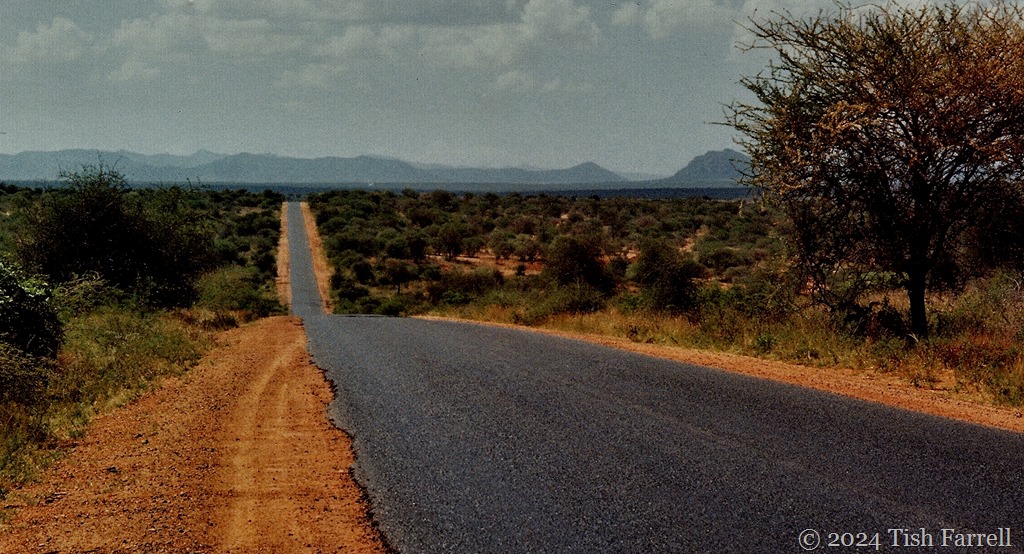
And this is what we had left behind – the highway looking north towards Nairobi, caught here in a rare truck-free moment. There is currently talk of this route being replaced by a 300-mile multi-lane, super highway-toll road to be built under the auspices of the US government. Some Kenyans are sceptical of its ever happening.

*

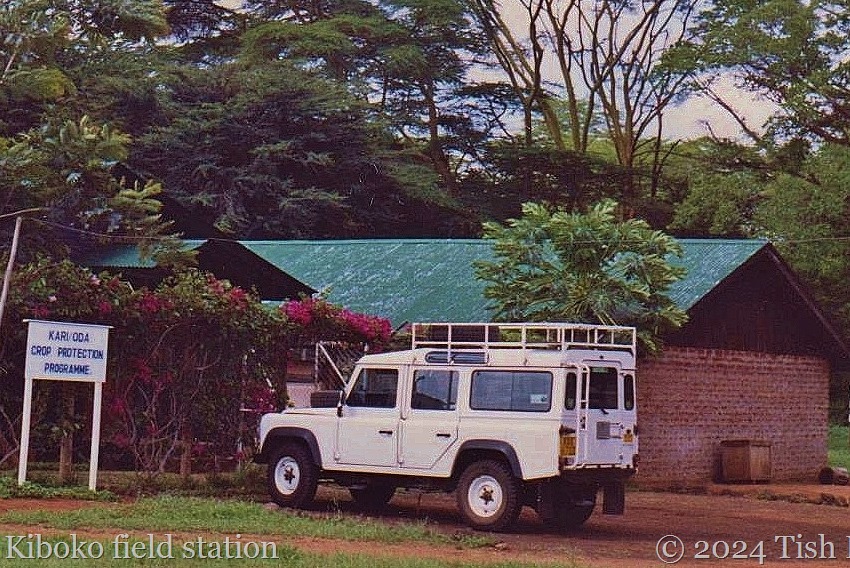
The trip to Kiboko and Hunter’s Lodge was one we made every other week during our first year in Kenya. Graham had been seconded to the Kenya Agricultural Research Institute to work on the eradication of the Larger Grain Borer, a voracious pest of stored grain, introduced to the continent on consignments of food aid. The project had its base at Kiboko field station, which, most conveniently, was behind the garden at Hunter’s Lodge.

There’s more back story here: Once in Africa: everyday moments at Hunter’s Lodge…until the crocodile

Kiboko ed sundowner

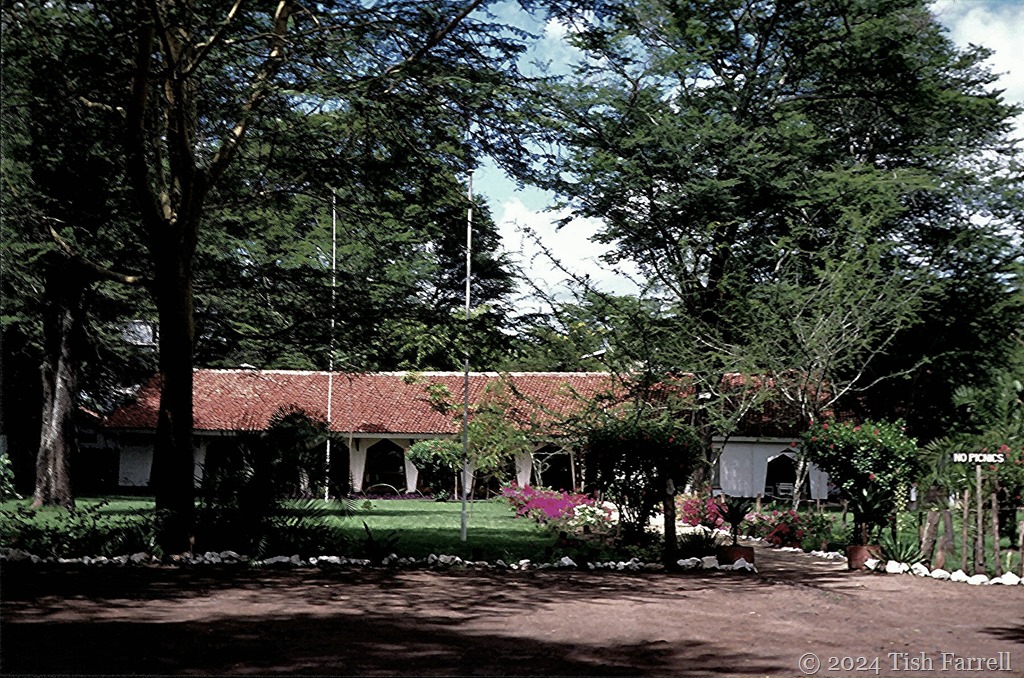
The Lodge was built in the 1960s as the retirement home of big game hunter, the blunt-speaking, no-nonsense Scotsman, John Hunter. He belongs to the era of grand shooting safaris for maharajas and European nobility. (Out of Africa Bror Blixen and Denys Finch Hatton were colleagues and friends). He also spent much of his shooting career working for the colonial game department, tracking down ivory poachers while ridding the lowland bush country around Kiboko of ‘troublesome’ rhino and elephants. The former were terrorising the Akamba farmers, the latter destroying the sisal and orange farms of British settlers. He chose this spot for his home because he remembered it as an elephants’ waterhole, where he had enjoyed much time simply watching them. He seemingly saw no irony in the fact that he’d helped eradicate the local population.

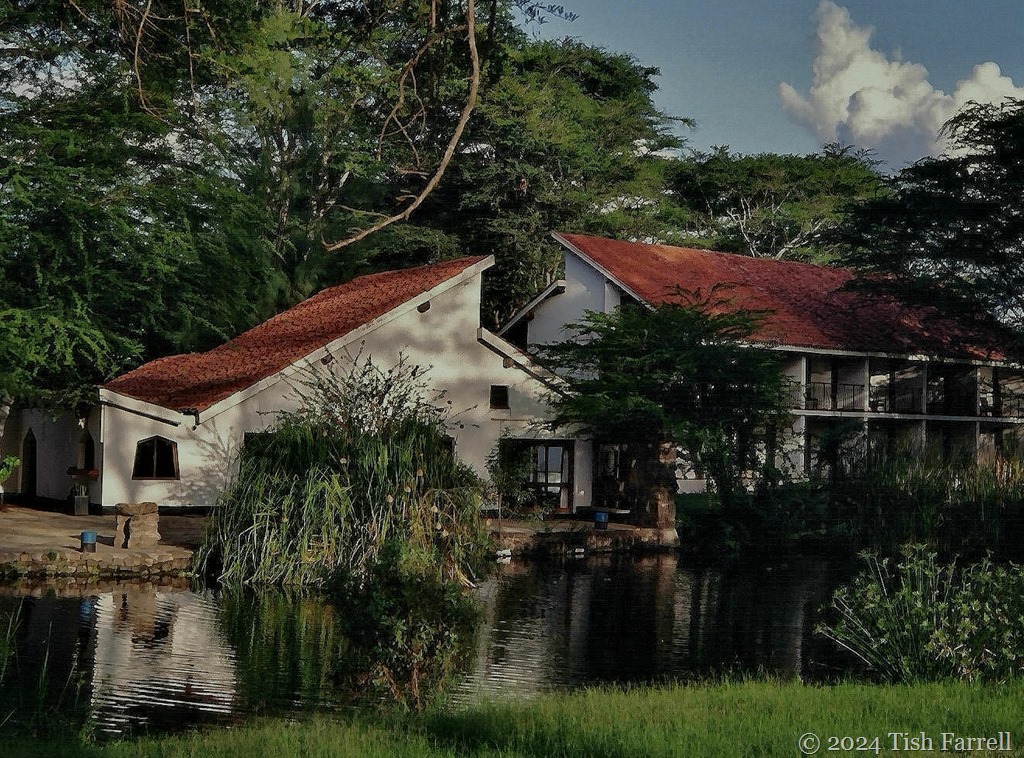
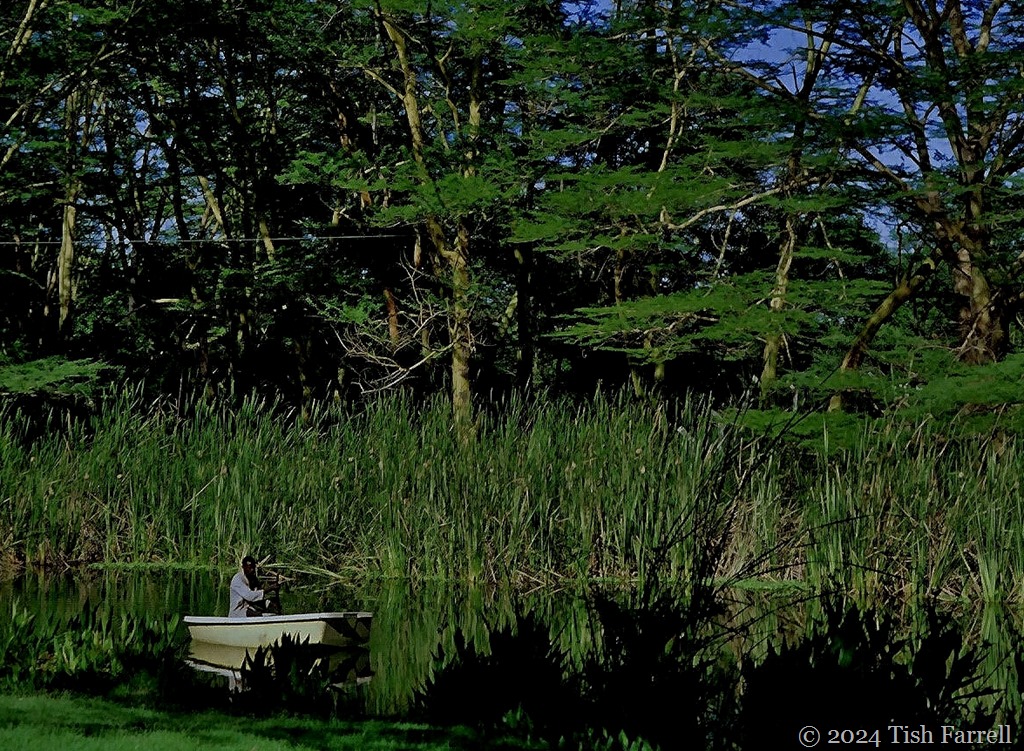
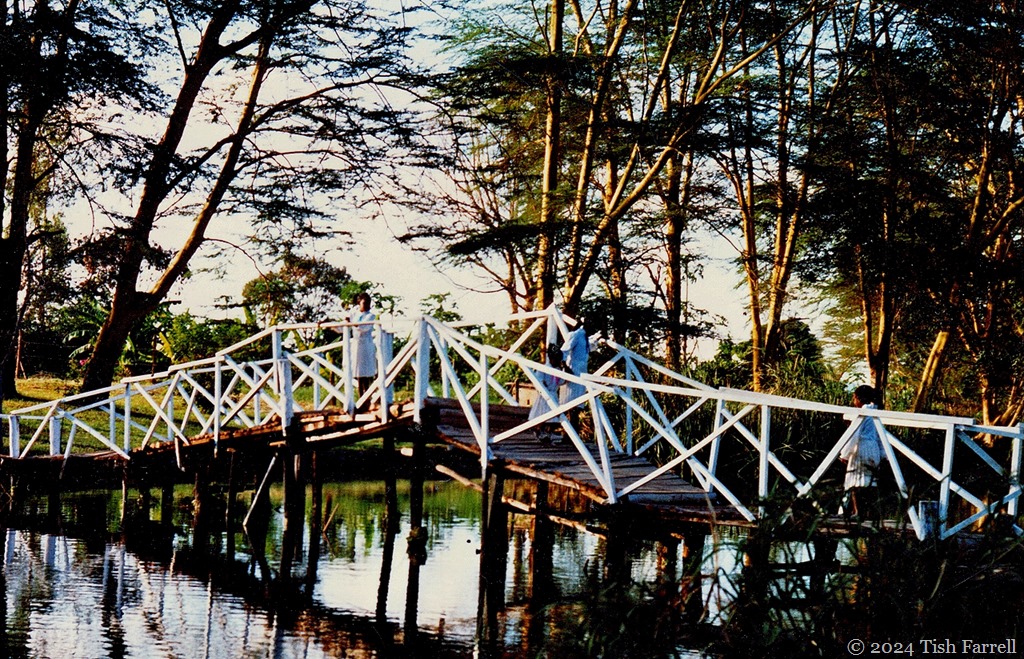
The waterhole, which was fed by a rare local water source, the Kiboko River, was remodelled into a garden lake, and traversed (in our day at least) by an extraordinary bridge that led to the vegetable shamba.

Kiboko ed pool

Kiboko ed garden bridge

There was said to a leopard living at the top of the lake, though I never saw or heard it. We did hear bush babies screaming at night, and also watched the nightly firefly show over the water. It was also a fabulous place for birds: over two hundred species including many varieties of kingfishers, weaver birds, herons and storks.  Sadly, I had only my small Olympus – trip camera, so there are few bird photos. The very distant marabou storks in the next photo’s tree tops are actually huge in real life.

Kiboko ed fever trees

Kiboko ed dining room

kenya_map best

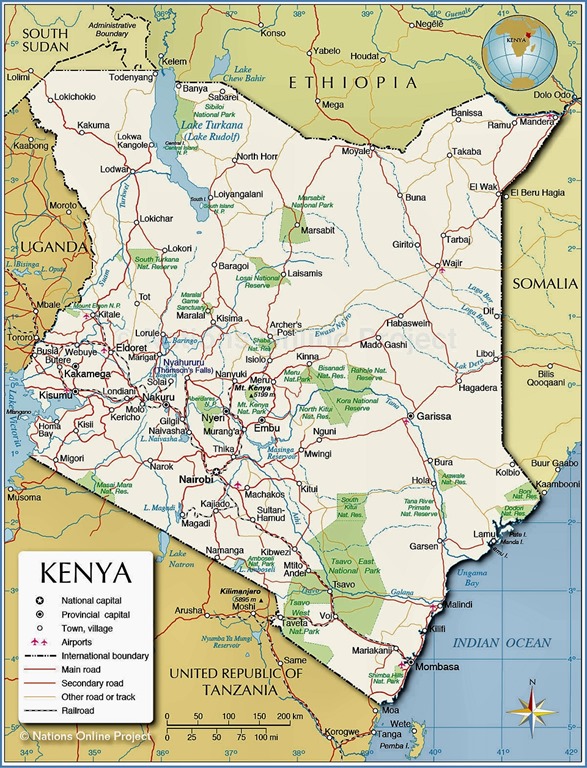
Kiboko isn’t marked on the map. It’s a centimetre above the border with Tanzania, due north of Kilimanjaro, roughly midway between Sultan Hamud and Kibwezi. The area east of the highway north of Tsavo East Park is Ukambani, traditional territory of Akamba farmers and herders. To the west is Maasai land, though you will of course see Maasai herders along the road, at the trading centres, and spot the red flash of their shukas as they drive their herds across the bush country north-east of Kiboko.

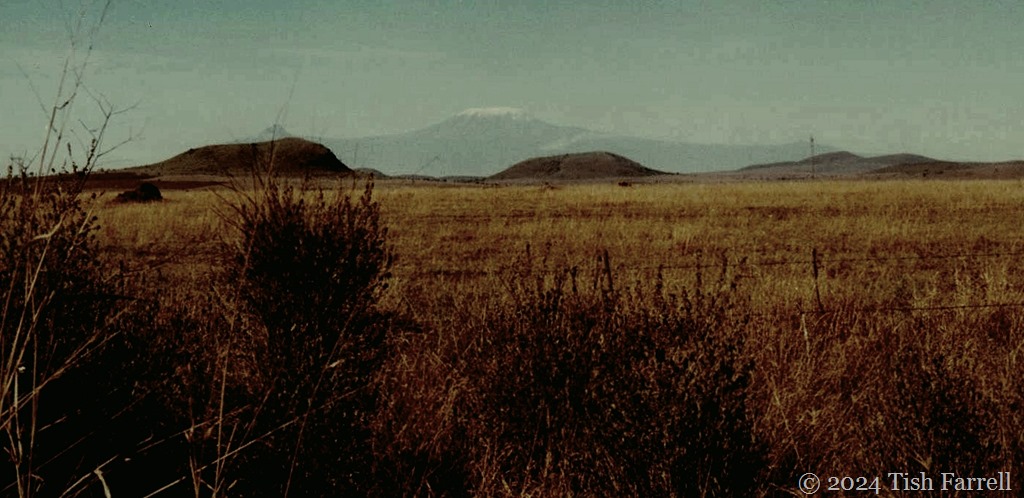
Sometimes along the road you may also catch a glimpse of Kilimanjaro, on those odd occasions when the mountain chooses to show itself. As you can see, lowland Ukambani is a sear land of thorn scrub and savannah. It hardly rained at all in the times we visited. The header photo was one of those rare moments.

Kiboko ed Kilimanjaro header

*

Lens-Artists: Cool Colours  John at Journeys with Johnbo sets this week’s theme and says he is open to any or all interpretations.

Dreaming Places ~ From Shropshire To Lamu And All In A Day

balcony 2

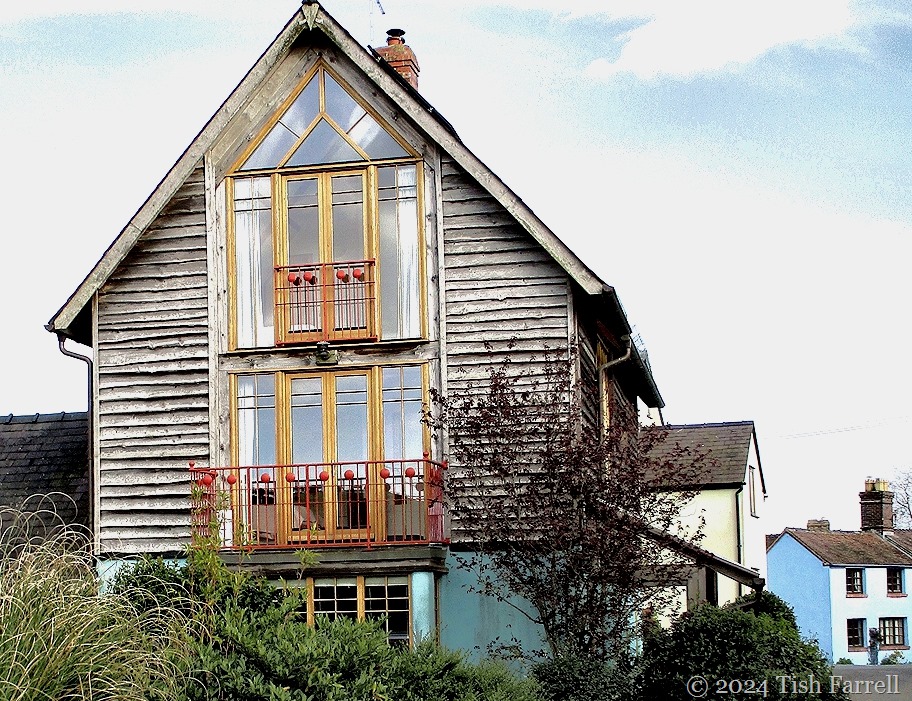
One of Bishop’s Castle’s pioneering eco-homes

*

Today, as July winds down, we have a summer’s day. Only the third in a month of coolness and cloud. Sunlight floods the house front. Warmth even. No trace of the wind that has dogged us for much of the year. Stillness then. The soundscape, resonant, a part-song of church bells, bee hum and pigeon chorale.

There’s a sense of bliss.

And where does my mind go?

Why, off to Kenya’s Indian Ocean island of Lamu – a trip made decades ago and at Christmas too.

balcony

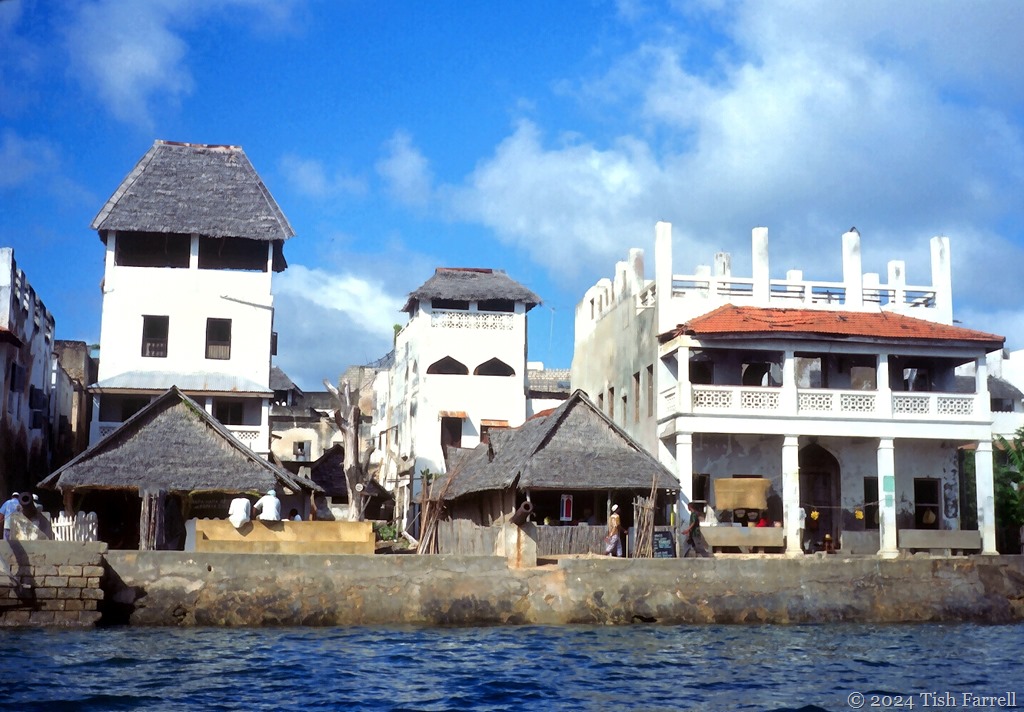
The harbour at Lamu’s Stone Town

*

Perhaps our recent spell of autumn-in-summer weather is seasonally disorienting me, although in mitigation, December in Lamu is the hot season, their summer; though rather hotter and steamier than ours.
But in the full-on Shropshire sunshine, the mind plays tricks. Meanders. Perhaps there’s another trigger to this farflung mental safari.

I soon spot it. Back in the days of the Lamu trip we lived in Nairobi, on one of Lavington’s tree-lined avenues of Jacarandas and flame trees and clipped grass frontages. (Strangely, I discovered later, I have ancestors named Lavington).

At nearly 6,000 feet, the climate there is mostly benign – a subtropical highland climate. In June and July the temperatures might drop as low as 48F (9C), and in December to March reach the upper 70s and low 80s F. The finest days there always had us thinking of perfect English summers (big skies and heat-hazy lawns), the sort from village fetes and school sports days.
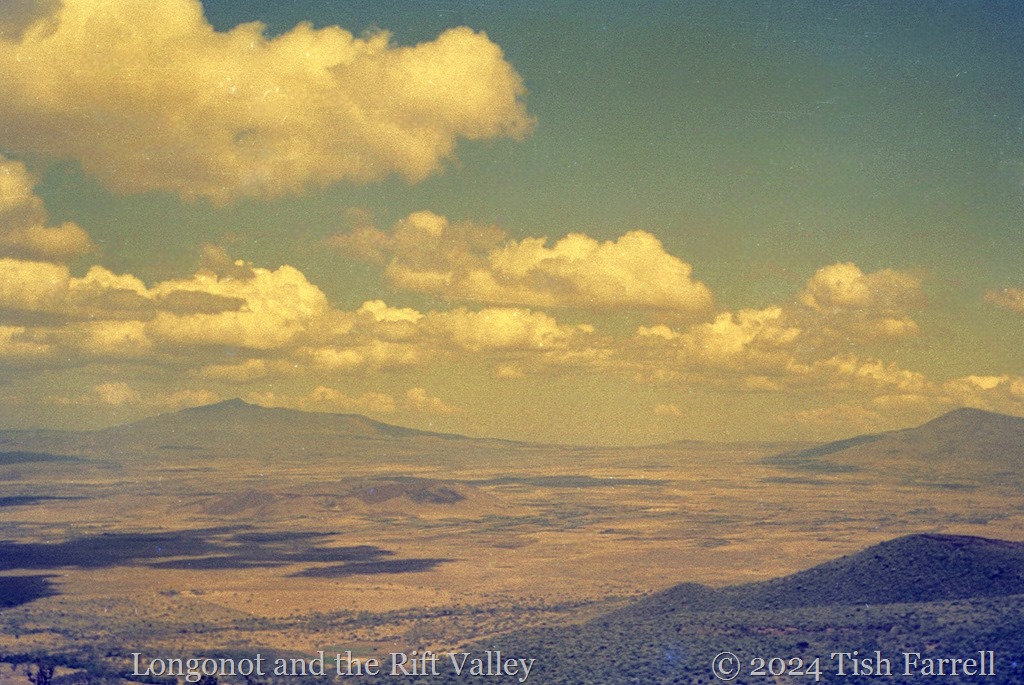
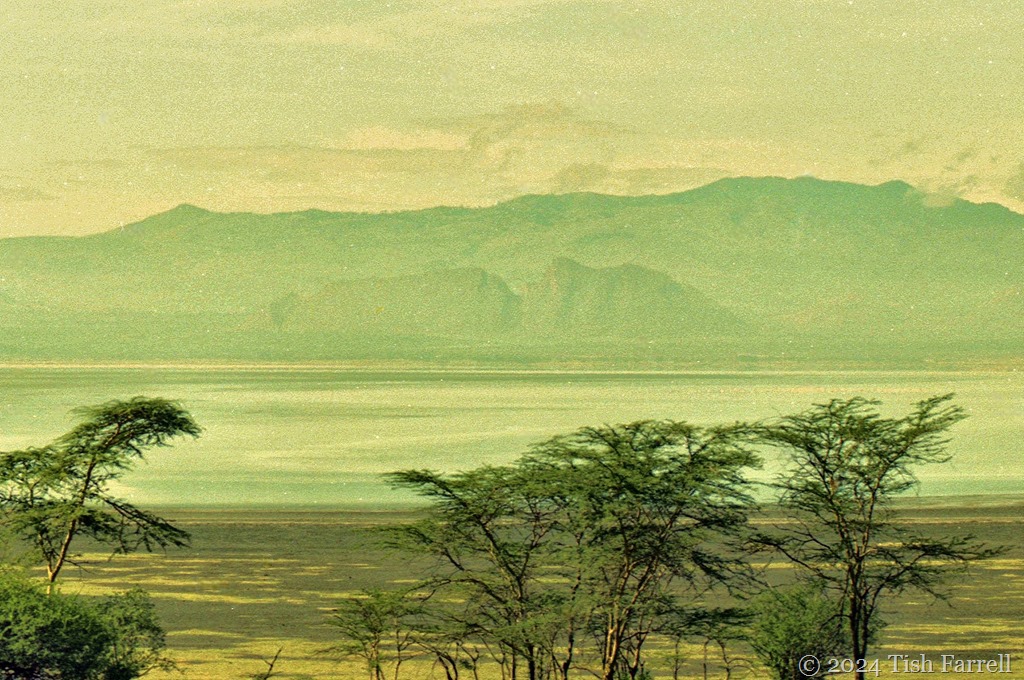
Summers back then seemed, well, more summery.

And then amid my mind’s eye ramble arrives the Lens-Artists’ theme for the week: balconies. And so, by winding paths, I come to Lamu.
balcony 4

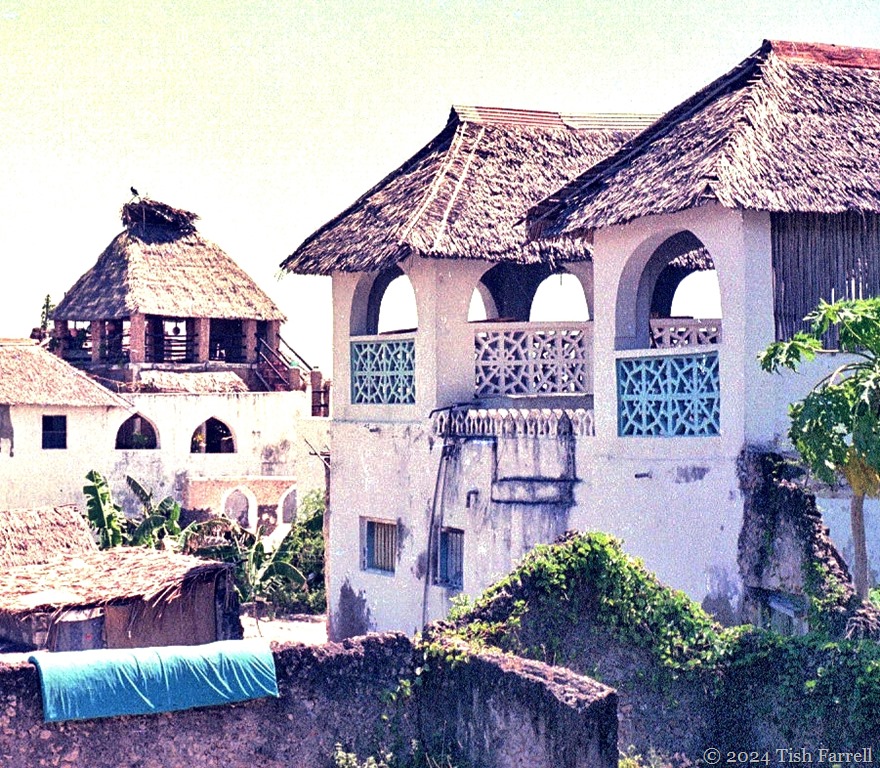
Stone Town – it is now a World Heritage Site. The surviving 18th century merchants’ homes, finely built of coral rag, are evidence of a once thriving city state, one of several Swahili towns and cities along the East African seaboard, stretching from Somalia to Mozambique. These settlements have origins back in the 8th and 9th centuries – the people who lived in them, their language, their culture born (literally) from a thousand and more years’ congress between Arab traders and indigenous African communities.
balcony 3a

The goods once traded out – ivory, leopard skins, tortoise shell, gold, mangrove poles (boriti) and slaves. The goods traded in – silks, porcelain, fine carved treasure chests, brass ware, jewellery and dates. In short this is Sinbad territory (Sendibada in KiSwahili stories). He doubtless plied the seas off East Africa; out from the Persian Gulf, the monsoon kaskazi bearing him south; and, after many hair-raising encounters, the kusi winds blowing him home again to Basra.

I’ve written more about this at Quayside Lamu. And about the Swahili HERE.

But now for more balconies. Those perfect places for dreaming. For today, bathed in unaccustomed warmth, I surely am dreaming.

balcony 2

balcony 5

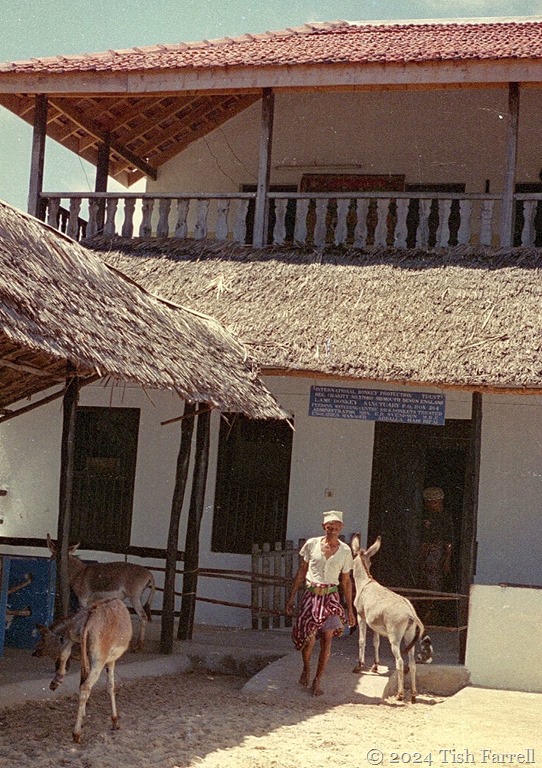
Lamu donkey sanctuary. Donkeys are a key mode of transport on the island

*

balcony 7

Sundowner look-out over Shela village, Lamu

*

balcony 6

Lens-Artists: Balconies This week PR at Flights of the Soul sets the theme. Follow the link for a fine gallery of balconies.

Looking Back ~ Moving Forward: From The Kenya Archive

giraffe2

I’m not sure that we’ll ever quite get over leaving Kenya, though it was never our homeland and, by 2000, when we left, our business there was done. But we had lived in Nairobi for seven years, seen many changes as Kenya moved uneasily from one-party rule towards multi-partyism: one externally imposed and alien structure to be replaced by another alien structure, this for a nation of many diverse communities that for centuries had each their own forms of traditional law and order, far closer, I might argue, to any form of democracy that the nations of the technocratic North might think they have invented or progressed towards.

And the reason we were there at all was because Graham (as plant pathologist and food storage specialist) was working on a British Government funded crop protection  project, working alongside Kenyan scientists and subsistence farmers in a bid to build in-the-field resilience against crop pests and diseases.

The project base was at the  Kenya Agricultural Research Institute (KARI) in Nairobi, but in the early days we did much travelling on the Mombasa highway, going back and forth between the capital and KARI’s Kiboko field station in Ukambani. Sometimes we drove the full 300 odd miles to Mombasa, sometimes less far to the Taita Hills. Mostly, though, it was the hundred mile trip that took us from the Nairobi plains at nearly 6,000 feet, down to the semi-arid lowland just north of Makindu and the Tsavo National Parks.

002

*

Ukambani, homeland of Akamba farmers and cattle keepers, is red earth, thorn-scrub country. You start to see mighty baobabs growing here too. They rise up in a natural parkland setting that you feel you must have imagined. Giant hornbills stalk around the verges. The farther vistas, heat-hazy towards the Yatta Plateau, may be dotted red from the shukas of Maasai as they fan out with their herds across the sparse grassland. You may also spot antelope and giraffe here too. For in Kenya it is said there is more wild game outside the huge national parks than inside them. Sometimes the great trucks that plied the highway back then would collide with a giraffe, thereby providing an unexpected meat meal for nearby farming families.

Kiboko ed Mombasa highway north of Kiboko

Mombasa highway at Kiboko looking north – Nairobi-bound

*

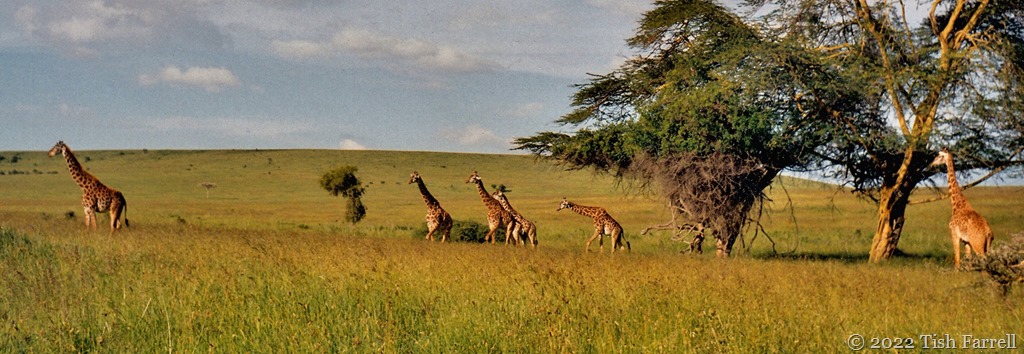
The giraffe in the header photo were spotted on the Kapiti Plains, south of Nairobi. We used to see ostrich, impala and gazelle on the roadside here too. But the sight of several giraffe moving across the plains, the peculiar gait that has them stepping in some shared slow rhythm all their own stopped the heart.

We were so very lucky to see such sights. Even now there’s a catch in my breath.

*

#SquaresRenew

giraffe 4 header