Conserving Geometrically ~ Sunshine In A Jar

IMG_6661

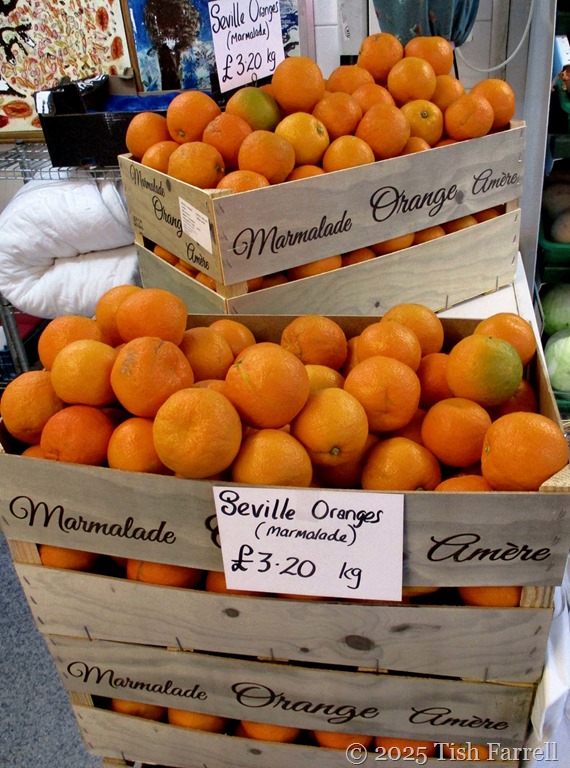
On Saturday we were in A.J. Pugh’s, our excellent Bishop’s Castle butchers. It was their first day of opening since Christmas, and so I was surprised to find the Seville oranges had already arrived. Sixteen crates of them, I think we were told.  To myself I marvelled at the crowds of marmalade makers that this prodigious quantity implied. Were there really so many in our small rural town? Clearly there must be. Andrew Pugh knows his stuff. He’s been serving the Castle since 1980.

This thought then induced an impulse purchase. Must get ahead of the marmalade makers’ stampede.

IMG_6677

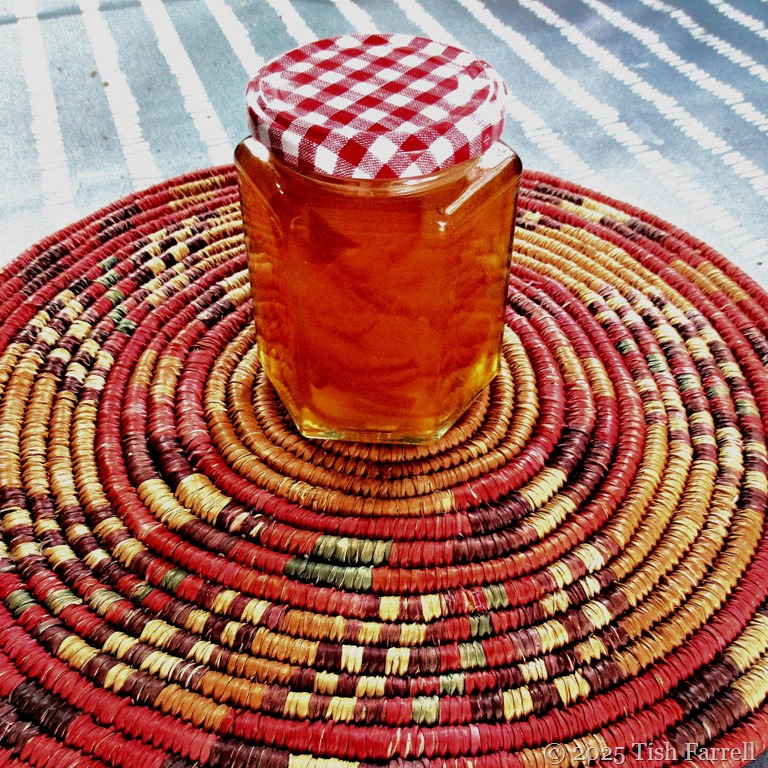
And so on Sunday afternoon, a day of gloom and wet snow (and after a quick consultation with Delia Smith HERE) I extracted pips and pithy innards, squeezed juice, and simmered the shredded peel till it filled the house with a heady orange fragrance. That alone lifted the spirits. And then, after a couple of hours, there was the pleasure of domestic produce: eight oranges, roughly a kilo, yielded eight assorted jars and a part jar, which should keep us going for at least a year, as well as providing a gift or two; this so long as Paddington Bear impulses don’t take over.

IMG_6675 header

*

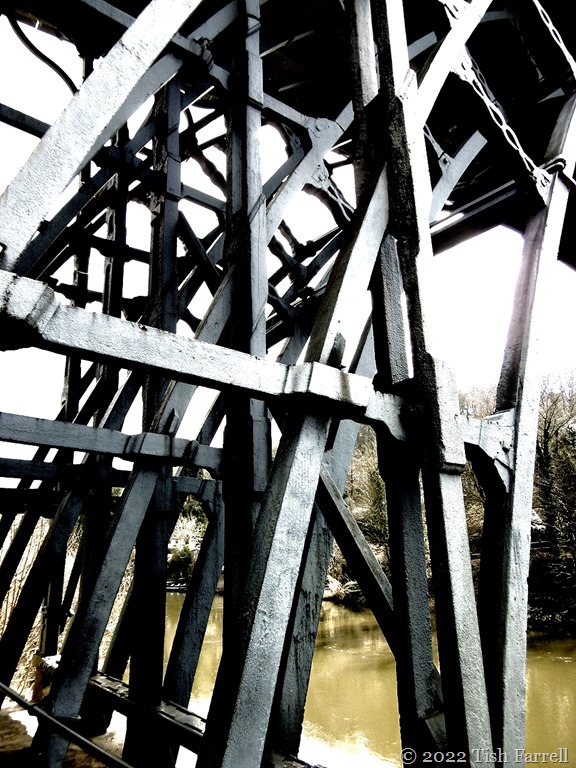
#GeometricJanuary Day 7

The Silence Of Stones

100_6999ed

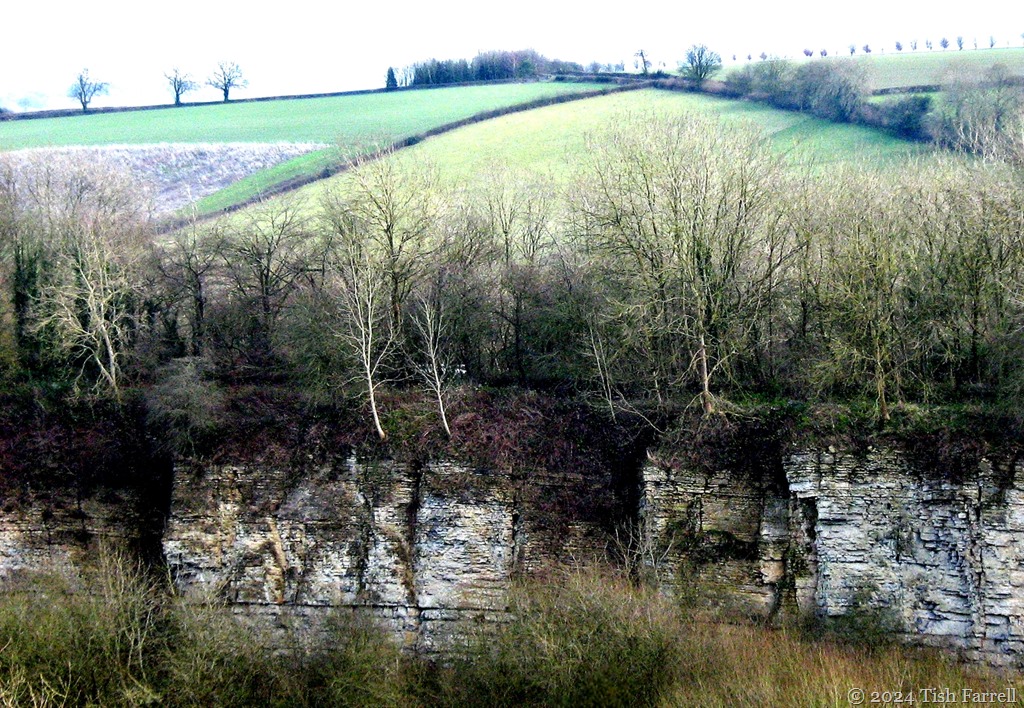
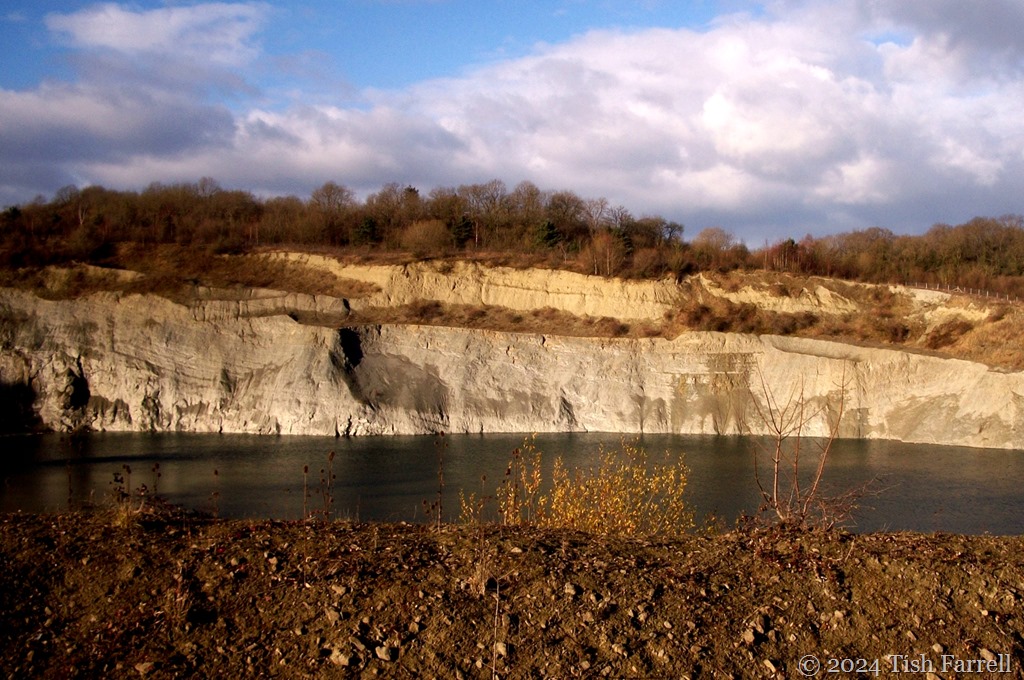
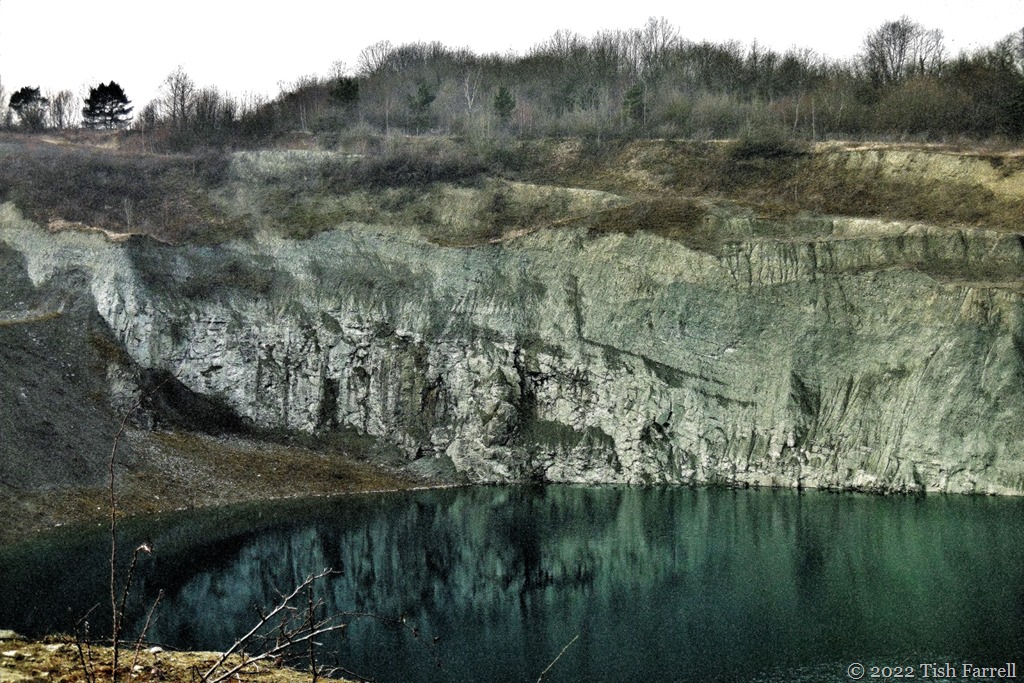
This is Shadwell Quarry on  Windmill Hill, Much Wenlock, part of the Wenlock Edge Silurian reef system.

There’s an air of brooding here, even on a bright winter’s day: of violation survived, albeit roughly; scrub and small silver birch trees recolonising the horizontal shelves. It’s a silence all its own, cupped by sheered off walls and the mysterious deep pool below. Then there is my own silence: awe at the scale of this one-time endeavour now shut down, truncated, closed as if it never mattered: the hard lives of the men who worked here, their injuries and doubtless deaths, unrecalled.

P1000657 Shadwell

Half a century ago, this hillside and the nearby town of Much Wenlock rocked with every quarry blast. Then came the soft fall of lime dust that clung to every surface.

The quarry closed in the 1980s, but in its heyday in the late 19th-early 20th centuries, steam powered goods trains huffed and clanked up the incline from the Ironbridge Gorge to the quarry’s own siding, there to take on stone to use as flux in iron smelting at the Coalbrookdale Works and the furnaces of the Black Country; industries that are also long defunct, or exported to China along with the roar of red-hot hearths, the crucibles’ hiss of pouring iron, shouts of foundrymen.

But then there’s another absent soundscape here, one so ancient it is hard for human minds to grasp. The limestone reef exposed in this quarry began to form over 400 million years ago in a shallow tropical sea somewhere off the Comoros Islands in the Indian Ocean. In waters teeming with corals, sea lilies (crinoids), bony fish, sponges, trilobites and molluscs began the depositing, compacting and solidifying of decomposing animal parts. And while this was happening there was apparently no terrestrial life, but instead there were endless howling gales rampaging across the landmass; brutal winds terrifying in their loudness.

Good that they’ve gone then. Instead we are left with other ungraspable events, for instance, envisaging how vast land masses shunted around the planet, ending up in places many thousands of miles from where they began; the slow, slow scrunch of tectonic plates; the gradual upthrusting and folding of ancient strata; a world we somehow think is in our power!

The stones beneath our feet, the rocky uplands maybe silent, but they have wider, wiser perspectives to impart if we choose to pay attention. I think our ancestors may have understood something of this.

IMG_1947 ed

Wenlock Edge quarry

*

Lens-Artists: Silence  This week Egídio explores the principles of silence in the work of American photographer, Robert Adams. Please see his photo essay and be inspired.

Six On Saturday: Of Flying Saucers, Scorpionweed And An End To The Great Gobbling

IMG_6143

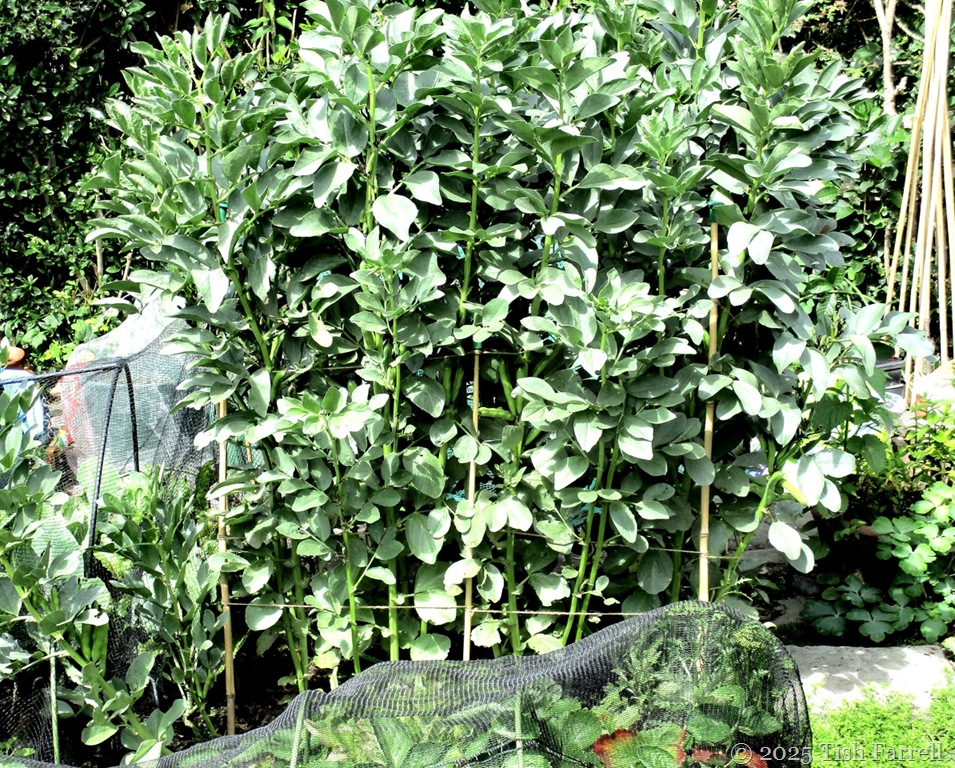
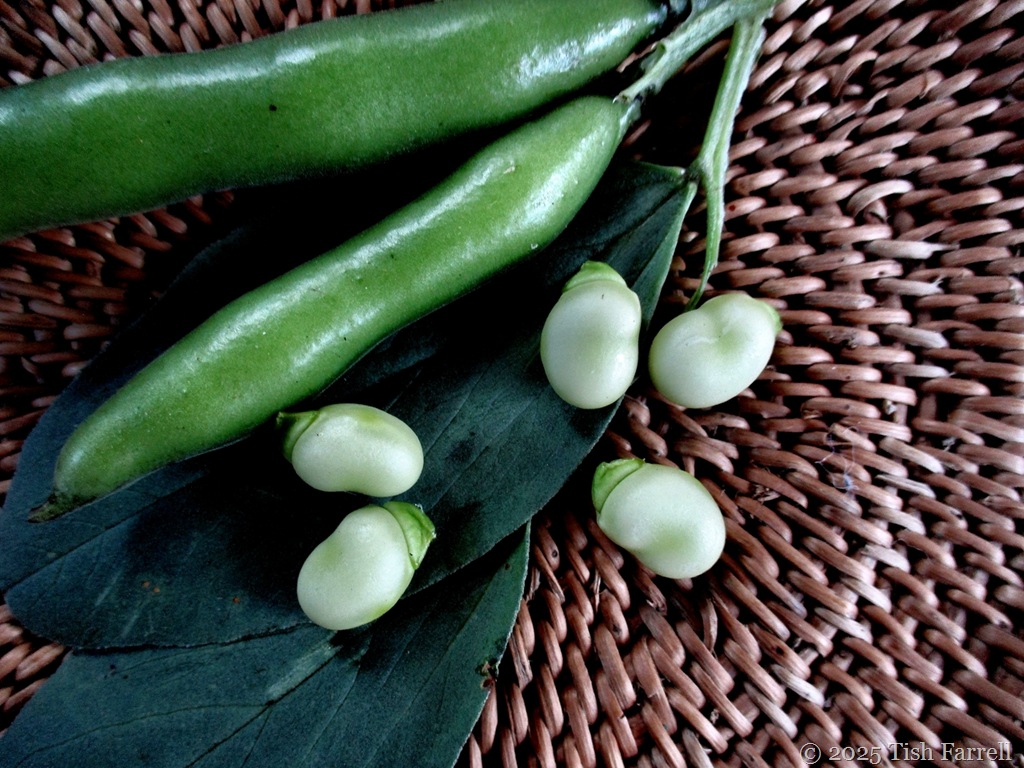
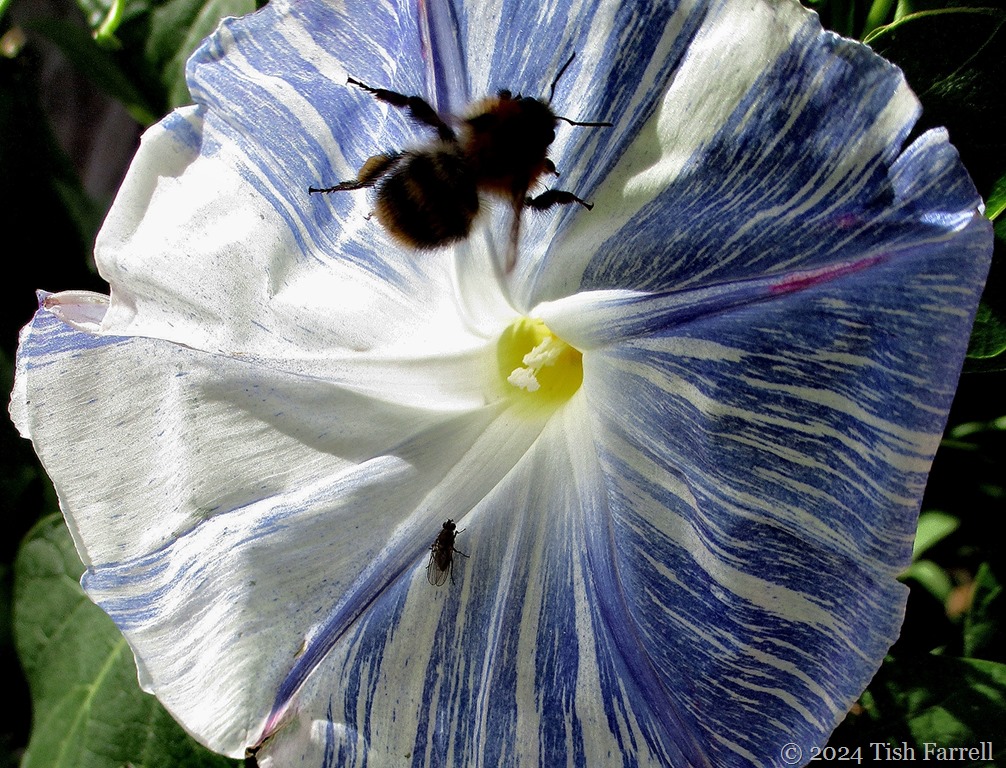
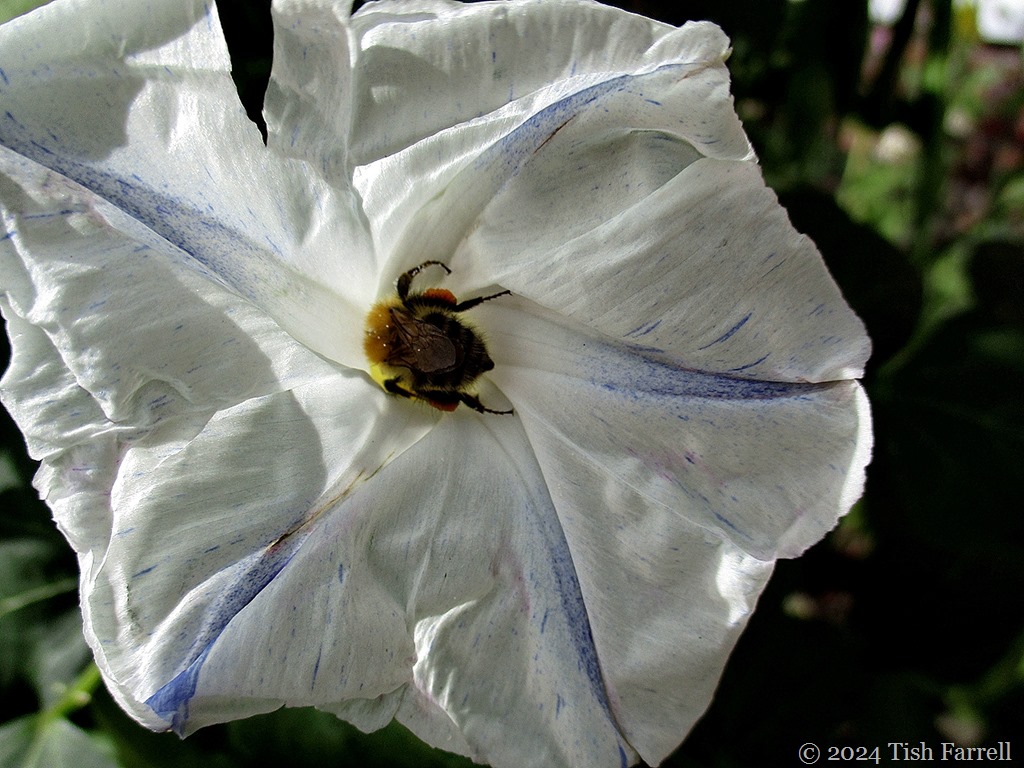
And no, we have no extra-terrestrial sightings here in Bishop’s Castle, at least not over The Gables, but I do have a few Flying Saucer Morning Glories. They are late on parade, growing up my obelisk of butter beans in the front garden.  I wasn’t really expecting them: the seed was several years old. Yet here they are, busy luring insectkind.

IMG_6145

*

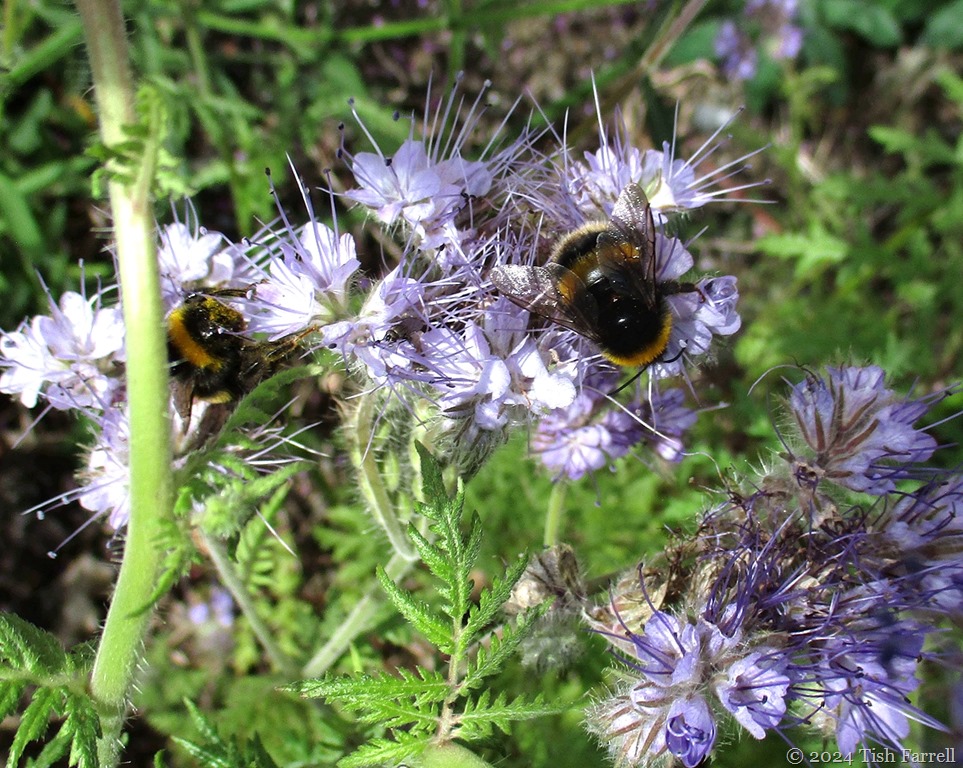
Also in the front garden, in the opposite bed, the phacelia has been flourishing for the past few weeks, every day alive with bee hum.

IMG_6172ed

IMG_6166ed

This borage family member hails from North and Central America where it also goes by the name of Scorpionweed, which sounds hair-raising. So far there has been no sign of cohabiting scorpions (no doubt a huge comfort to other half who was bitten on the foot by one while overlanding in the Sahara.)

I sowed the seeds quite late, probably around the beginning of July. As with the Flying Saucers, I was prepared for them not to germinate. The packet was left over from Wenlock allotment days. I grew it back then either as green manure or a cover crop. But then on a trip out in late June I’d spotted fields of it around Ludlow. I’d never seen it growing on an agricultural scale before. It was in full bloom and the fields seem to float in a mauve haze. More than a good enough reason to try it.

These days there is much farmer emphasis on improving soils and attracting insects on land taken out of food production (food security no longer seems to be a priority in government policy for British agriculture). Hairy crops like phacelia, vetch, linseed have been found to improve worm populations, this even in light and sandy soils.

I decided to try it on the ground where we had lifted paving slabs and left behind a layer of old mortar which had mostly been broken up into the soil. It looked very unpromising territory, and I wanted to see if anything would grow there. And it did. The seeds sprouted in a few days.

Usually if you’re growing phacelia to provide green manure, it should be dug in before it flowers to stop self seeding. But I thought never mind about that. The flowers are so pretty, their scent so subtle and, while they last, their kindness to insects immeasurable. The first frost will doubtless fell the plants, and I’ll probably leave them to dig in before spring.

*

IMG_6271ed

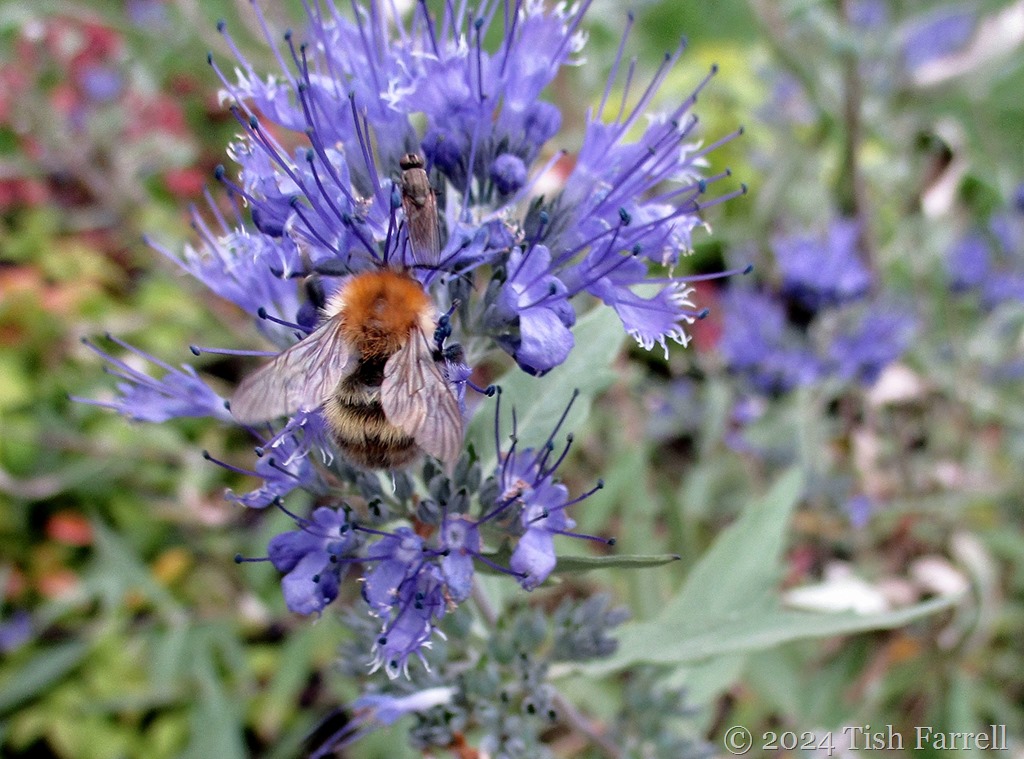
And here’s another insect friendly plant, doing its end of season feeding duty while looking lovely too: Caryopteris ‘Heavenly Blue’, a fairly compact hardy shrub bought back in the spring. It clearly loves our garden and has opened its branches so generously. The flowers are scented too, and it’s taken over catering duties from the neighbouring purple agastache, which is now a mass of dusky seed heads and no longer of interest to the bees.

Much of the rest of garden has a look of late-summer weariness. We had a couple of real summer days earlier this week, but there’s a real sense of autumn in the offing. My runner beans simply stopped producing at the end of August, for no reason that I can fathom. Although I did notice yesterday that a single plant has decided to grow a couple of strands worth. Perhaps one last small meal then.

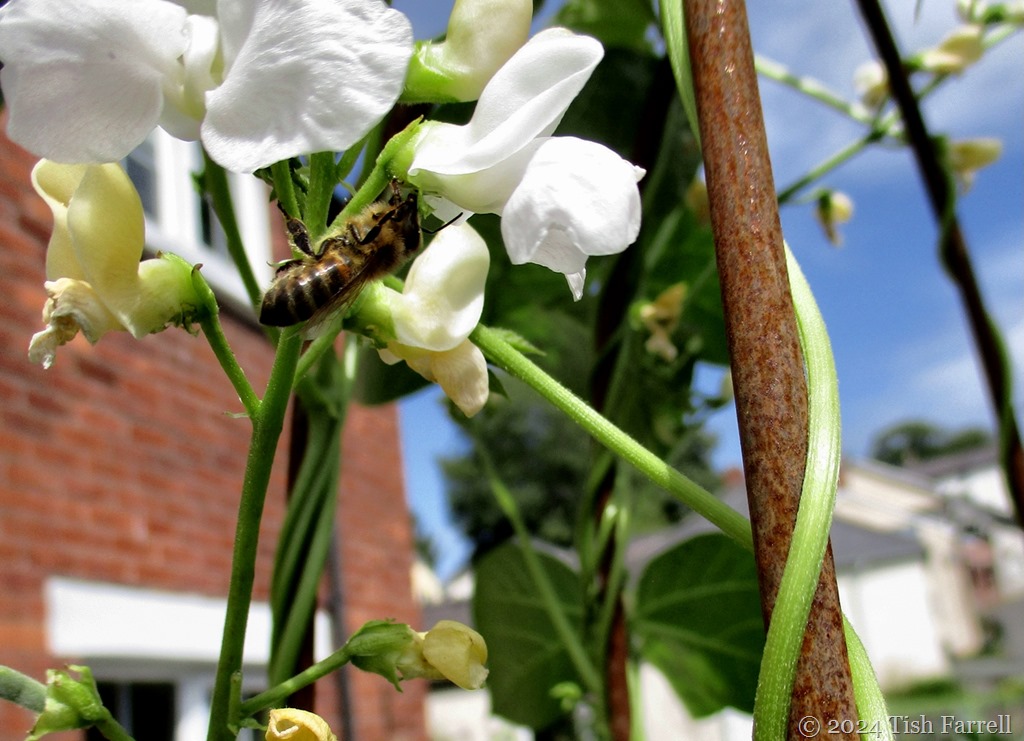
Meanwhile, the Flying Saucers’ hosts, the butter beans are still flowering like mad up the front garden obelisk. There are many pods but they are being very slow to fatten, doubtless down to the lacklustre summer and cold-spring start. I’m now hoping for an amiable October that might give the beans the chance to finish off. And for now, the blossom is still performing essential services.

IMG_5976

*

The good news, though, is that the horrendous brassica gobbling has ceased, this after the cabbage white caterpillars ate every kale plant down to the stalks. It did not matter that I’d covered crops with so-called butterfly netting and fine grade enviromesh. Somehow the butterflies sneaked in to lay their eggs. Patrolling the plants even twice a day proved a losing battle. They made inroads in the pointy cabbages too, but I’ve managed to save some of those.

Ever hopeful, I’ve replanted Russian and Tuscan kale plantlets under extra-fine mesh. The butterflies are still about, but not in the flocks we experienced earlier in the summer. Fingers crossed.

IMG_6282

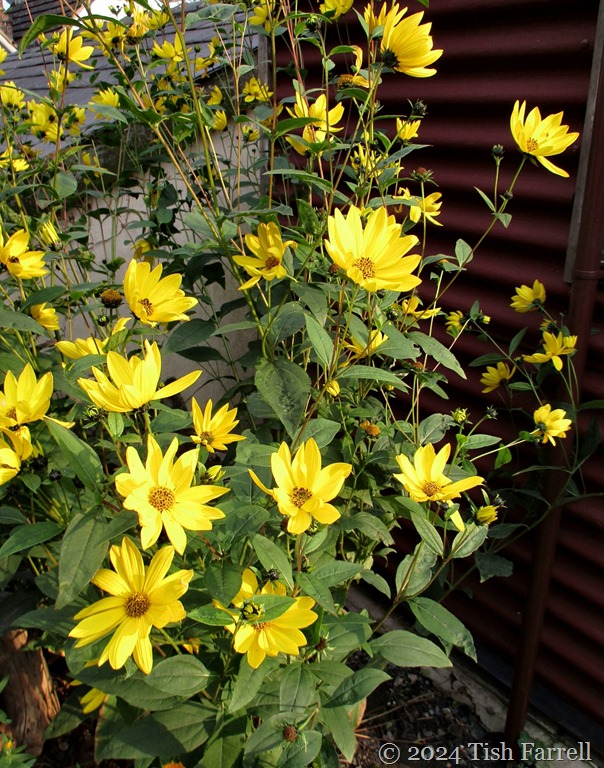
There are other bright corners in the garden, and especially this towering clump of helianthus, a perennial sunflower. Back in the spring when I planted it out, it was three single small stems with only a few roots between them. The cuttings came from my sister’s Little Stretton garden, descendants from plants that grew in our Aunt Miriam’s Devon garden. I’m so pleased to have it. I did not have a chance to grab a segment or two of my Wenlock helianthus before we moved. It used to be the star of the late summer guerrilla garden there. It’s growing even more vigorously in Bishop’s Castle.

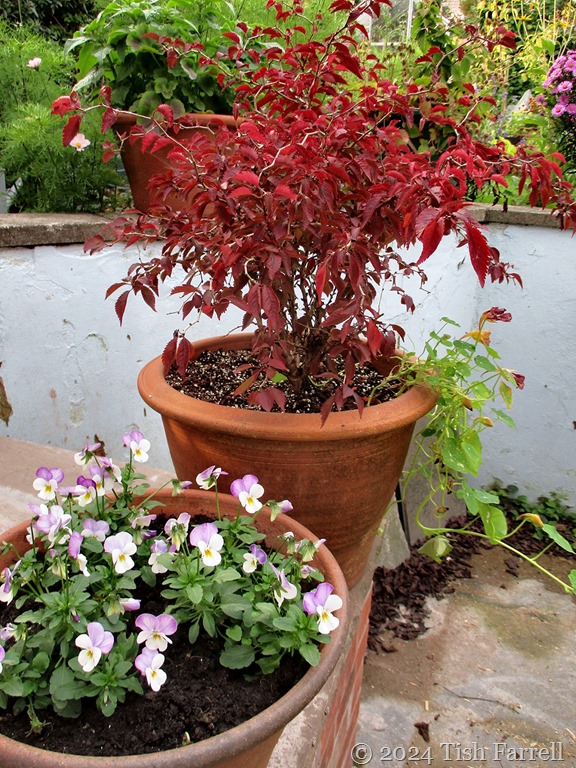
And last but not least, but definitely with an eye to autumn in its new russet foliage, this is a newcomer to the Farrell garden, Japanese cherry kojo-no-mai. (Posing here with some very sweet violas).

IMG_6254

It will eventually grow into a small tree, but for now seems happy in this pot.

*

Six on Saturday  Please visit Jim at Garden Ruminations. He needs some get-well wishes.

Oh, What A Perfect Day…

IMG_6231ed

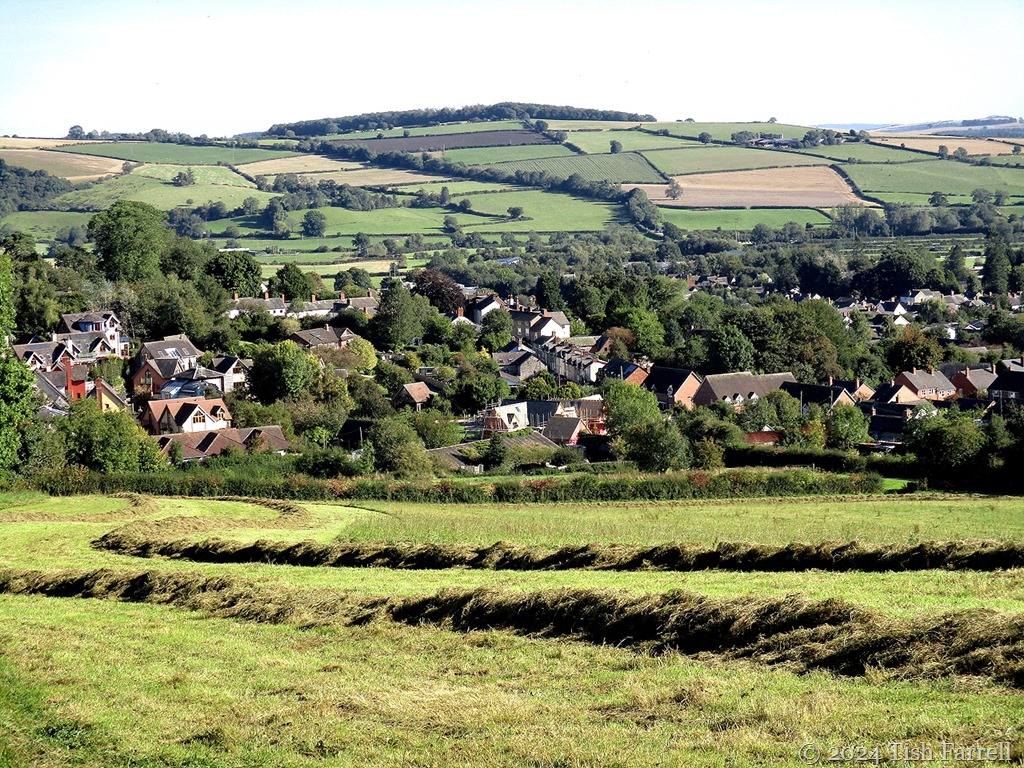
Yesterday felt as if all our missed summer days had been rolled into one. It was warm, the light golden, the sky a flawless blue in every quarter. In the afternoon I took myself off for a walk – up Laburnum Alley and into Welsh Street, and thence up a green lane out of the Castle and onto the uplands.

IMG_6233ed

IMG_6220

IMG_6191

*

There’s little to hear but the bleating of sheep, the thrum of a combine harvester just over the hill and rook call. The town lies quietly below.

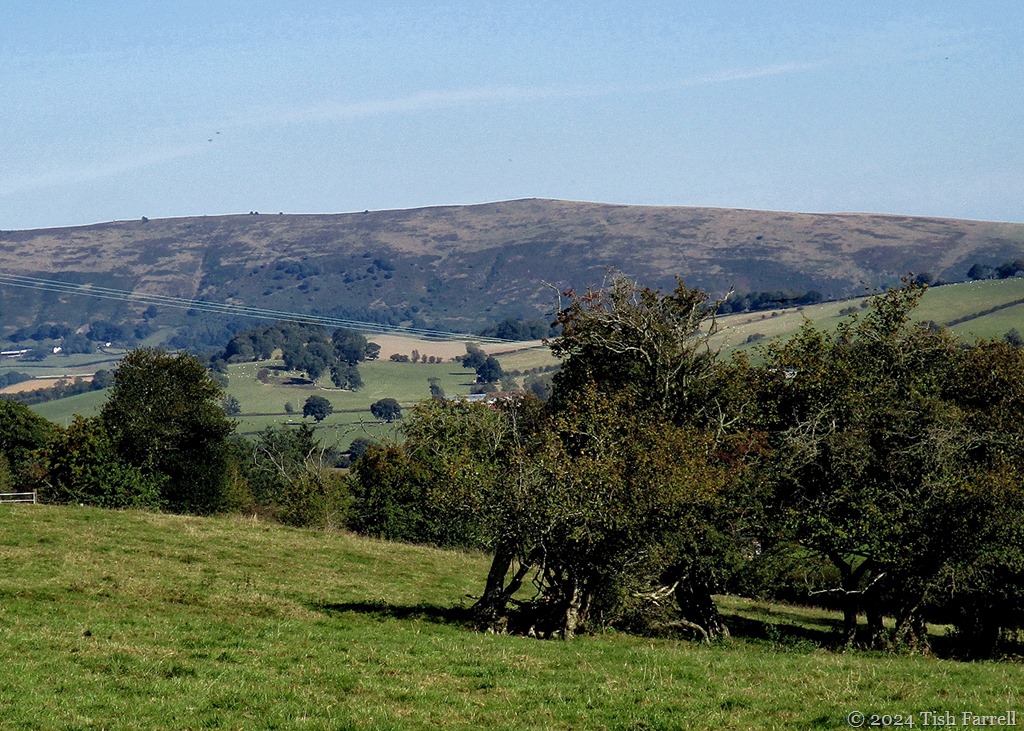
As I climb, I stop to scan the changing vistas. From the highest point there is a near 360 degree ring of hills surrounding Bishop’s Castle, the most obvious for its length being the Long Mynd. Whenever I see the Mynd I always give a mental wave to sister Jo, who lives on the other side. I sometimes thinks it’s odd to have this very big and ancient hill between us; some of the oldest rock in the world in fact.

IMG_6195

Looking east-ish towards the Long Mynd

*

And towards the opposing quarter…

IMG_6221

*

I need a Castle local to teach me the hills, particularly those to the north and west and into Wales. I know the names – Corndon, Lan Fawr, Roundton, Todleth …and I’m guessing they are in the next photo moving from right to left (?) and that the big wood below is Saddler’s Big Wood.

IMG_6228

*

For now, some other scenic spots…

IMG_6223ed

IMG_6196ed

copyright 2024 Tish Farrell

Six on Saturday ~ More From The Random Garden

IMG_5634

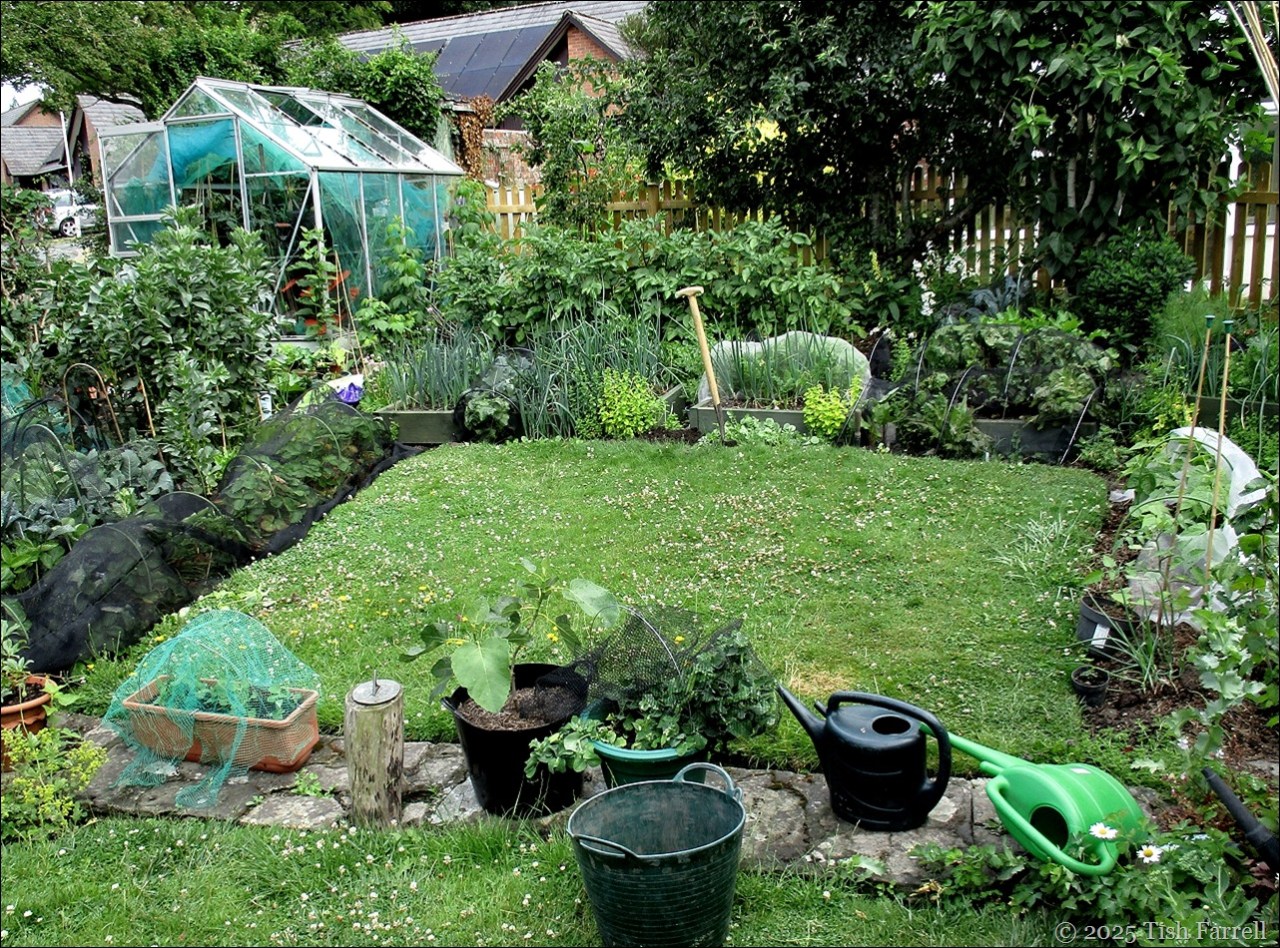
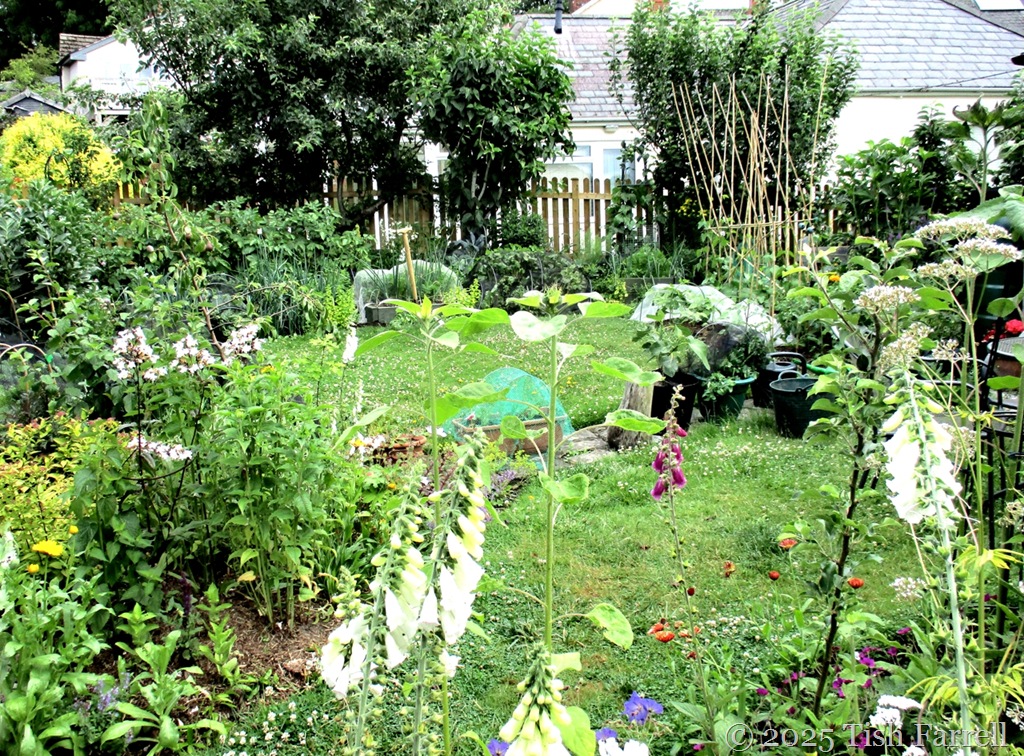
As I said in my last Six on Saturday post we have a new garden. I also said that for various reasons – rampant weeds to clear and too much wet weather from winter to spring – I was all behind come growing time; things got sown or planted out wherever there was space at that particular moment.
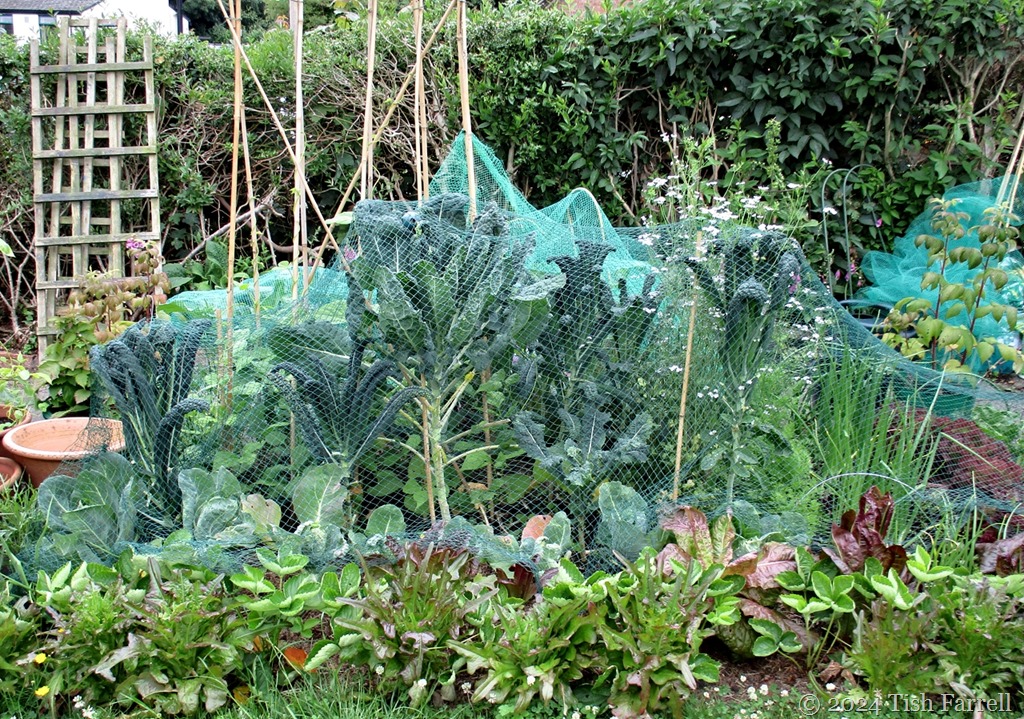
This has since made protecting cabbages, purple sprouting, kale and cauliflowers, first from pigeons, and more recently from hoards of cabbage white butterflies intent on laying their eggs, somewhat problematical, not to say given rise to a mishmash of netting and other protective devices rather too reminiscent of my former allotment contrivances.

So number 1, since it is preying on both my mind and on my brassicas: CABBAGE WHITE BUTTERFLIES…

IMG_5954

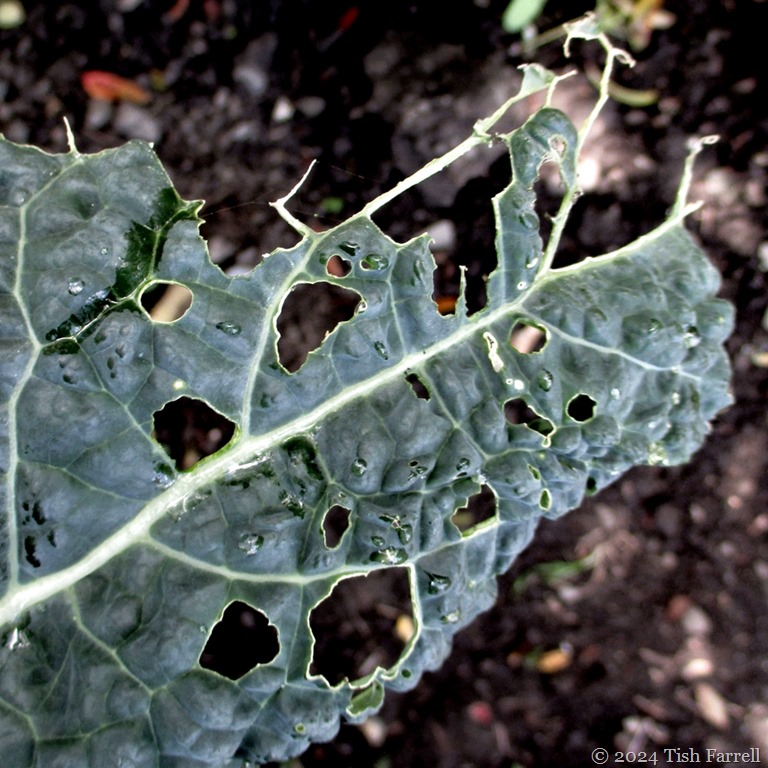
Caterpillar damage on Tuscan kale

*

cabbage white

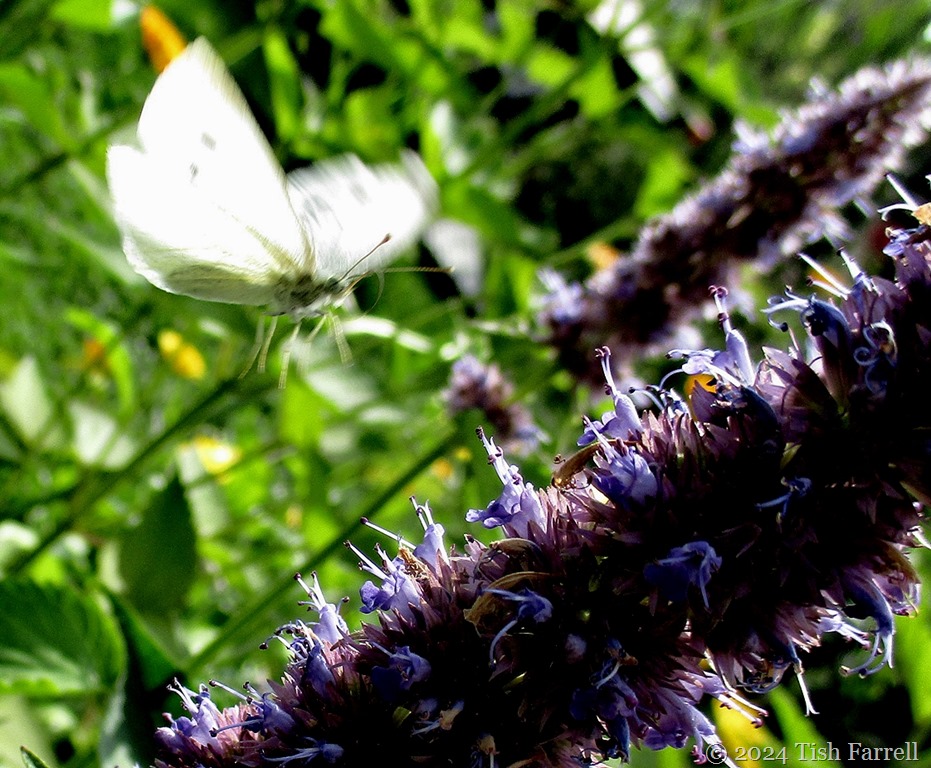
I actually quite like this photo. The more so as the target of interest is my SoS 2: agastache or Vietnamese Mint. The butterfly is calling in for an energy fix, which I suppose I should mind. (Enough procreation, thank you!)

IMG_5898

*

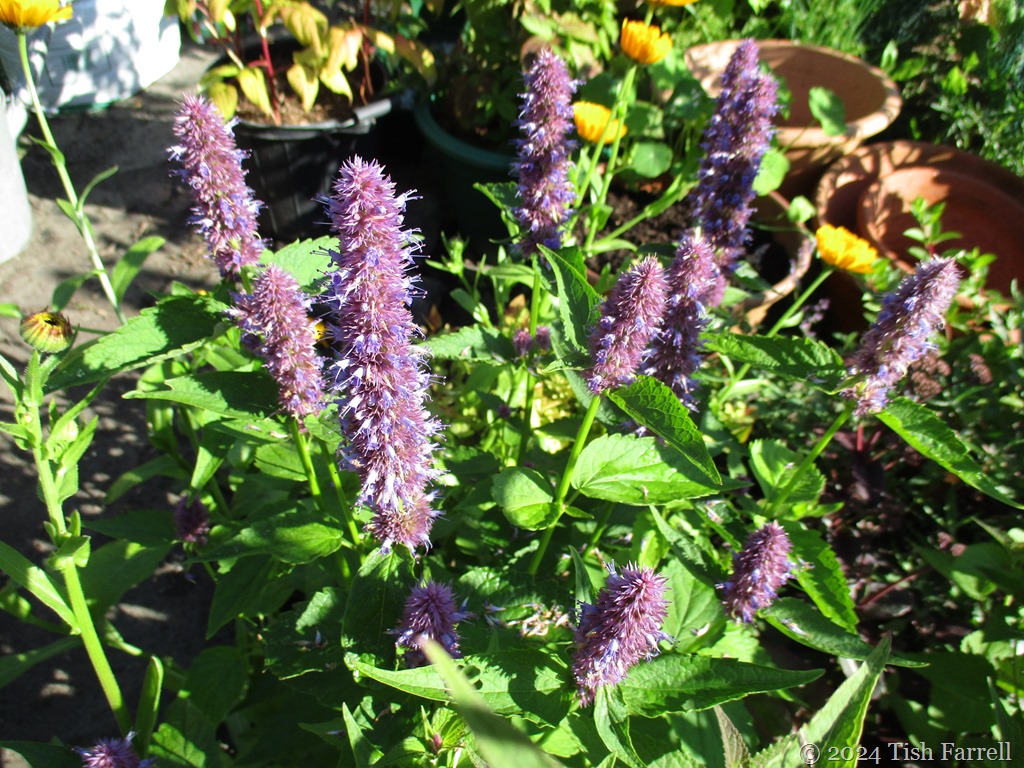
I love the agastache. It smells of aniseed and its leaves are edible. It’s a perennial (I grew lots of it from seed this spring), though I’m not sure how hardy it will prove in a Bishop’s Castle winter. Anyway, it is a very tidy plant, growing beautifully upwards with lots of purple-mauve spires – not easy to photograph well.

IMG_5844

*

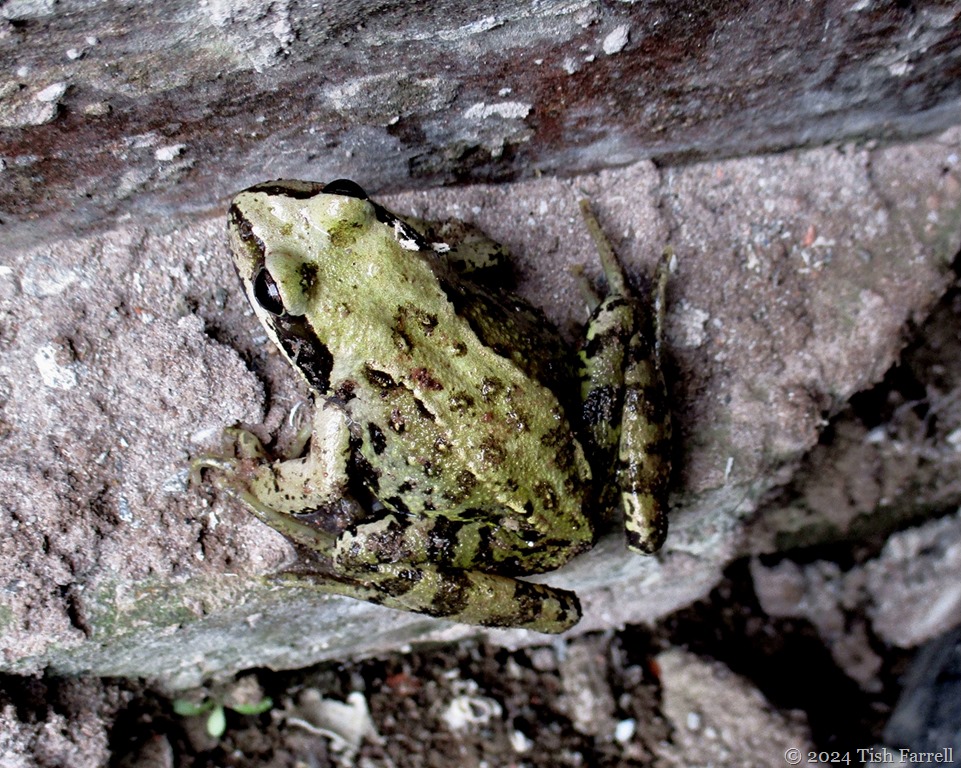
SoS 3 is one of this week’s very pleasing finds: a nice young toad lurking by the outside tap.

a young toad

We’d already found a much bigger toad hiding under an old tile by Graham’s new garden shed creation. I’m wondering if there may be more, because so far there has been very little slug damage along the vegetable rows – so little in fact, I can’t quite believe it. (Lull before storm?)  We were besieged with molluscs in Much Wenlock. We do have the odd big snail however.

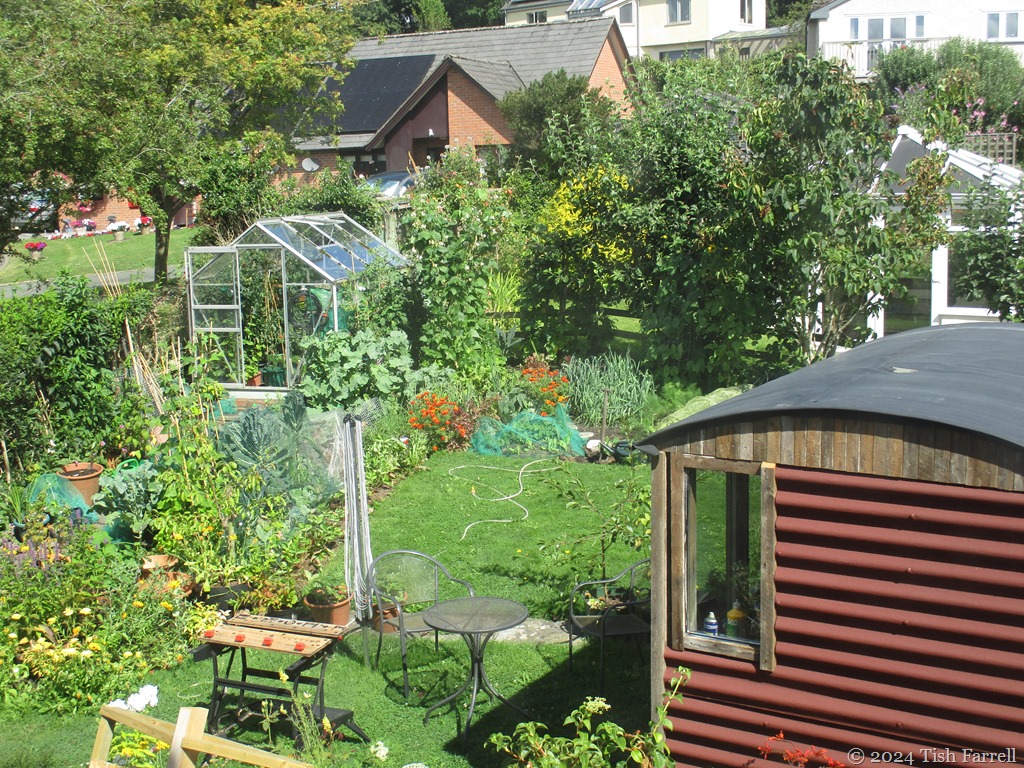
Talking of the new garden shed, this is number 4. I’ve mentioned elsewhere that it’s being built from scratch, incorporating recycled parts from our April roof makeover and other assorted materials, the whole inspired by a Great Western Railway goods wagon. I’ve had to sacrifice what might otherwise have been a large and useful garden border, but never mind. I’m liking the shed. It’s presently having its rubber roof applied.

IMG_5883

IMG_5942*

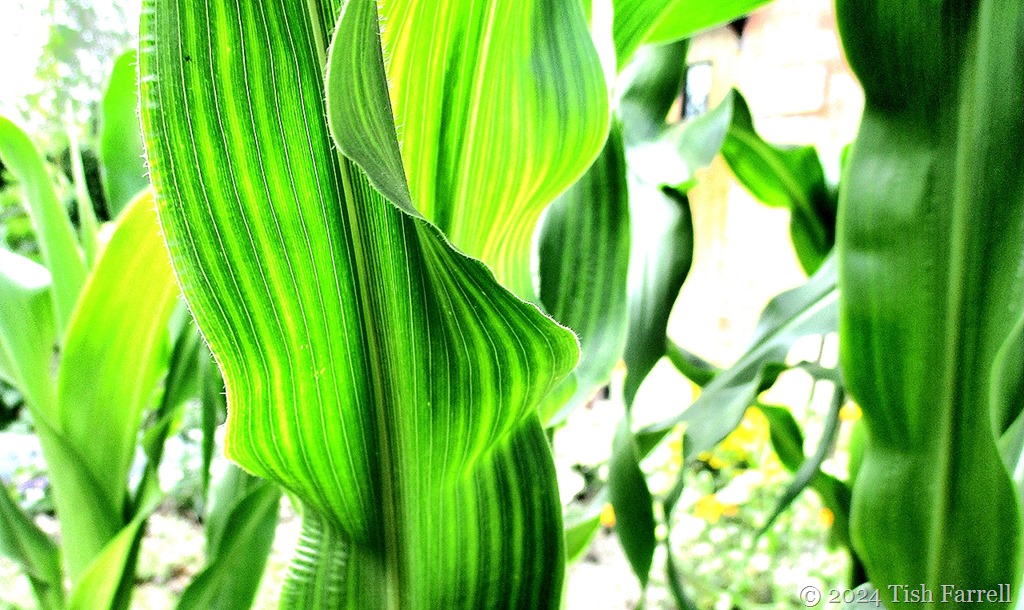
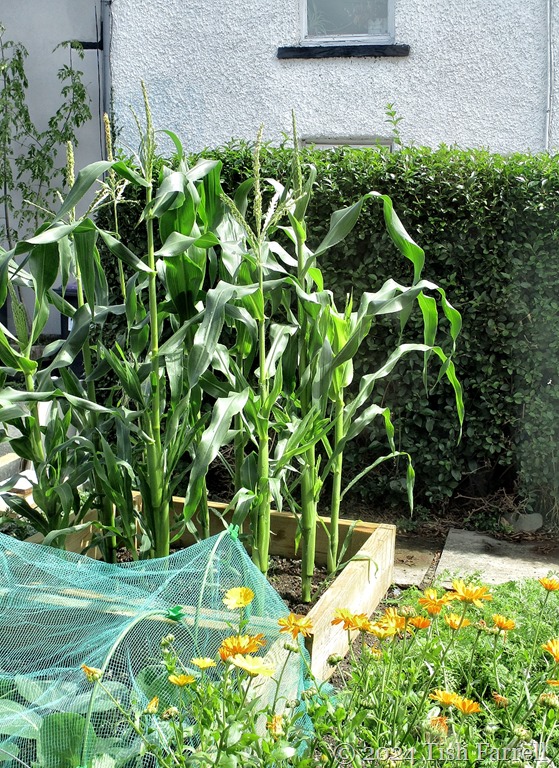
SoS 5 is the front garden sweet corn. It’s growing tall and starting to tassel. Possibly planted rather tightly, but so far the plants don’t seem to mind.

 IMG_5947

*

As seen a couple of weeks ago:

IMG_5912

I also have a neighbouring raised bed with cabbages and spring onions. On the farther side of the front garden there is now a row of purple sprouting growing where the potatoes were, netted of course.

The two raised beds seen here were made from building work off-cuts, and I’m hoping for more to be made when the shed is done, and eventually I’ll move these to the back garden.
Or maybe not. The front garden does seem a good growing spot.

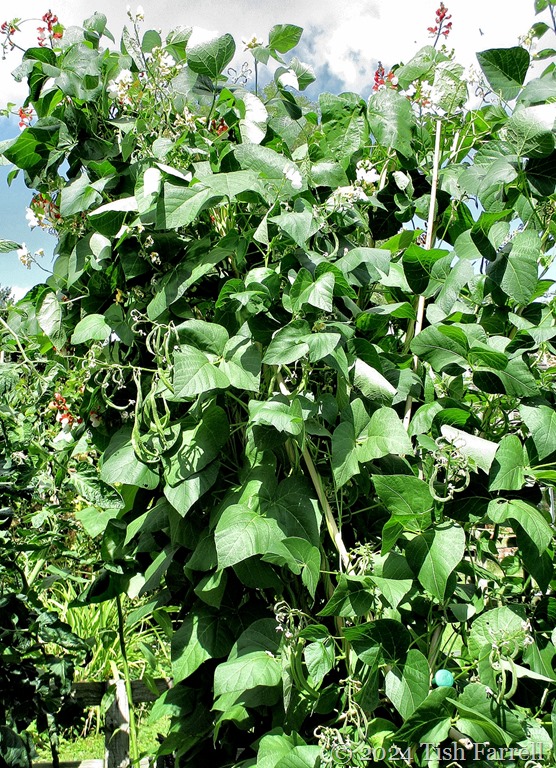
There’s also some good growing going on at the bottom of garden. I’m pleased that back in the winter I managed to make a good compost filled trench for the runner beans. It brings me to no. 6 – last night’s first meal of the season. Always a gardening landmark in Farrell household.
IMG_5944

IMG_5948

The trench of garden waste and hot bin compost certainly seems to be working  well for runner beans Emergo and Painted Lady

*

IMG_5958

Up, up and away…

*

Six on Saturday

Please visit Jim’s lovely garden at Garden Ruminations


header sweet corn

Shadows And Silhouettes

P1040281 cr

Herewith a reprise of some favourite monochrome shots from the Much Wenlock archive. The header is the entrance to the Linden Walk, which several of you (Jude especially) will well remember.

The next photo was taken on the shadowy cutting of the old railway line that runs alongside the Linden walk: top-lit horse chestnut leaves…

horse chestnut leaves

*

Next, a former back garden view of foxgloves: sun setting over the fence…

P1080211re

*

A couple of wintery scenes now. First the ivy clad ash trees in Townsend Meadow:

P1000348ed

*

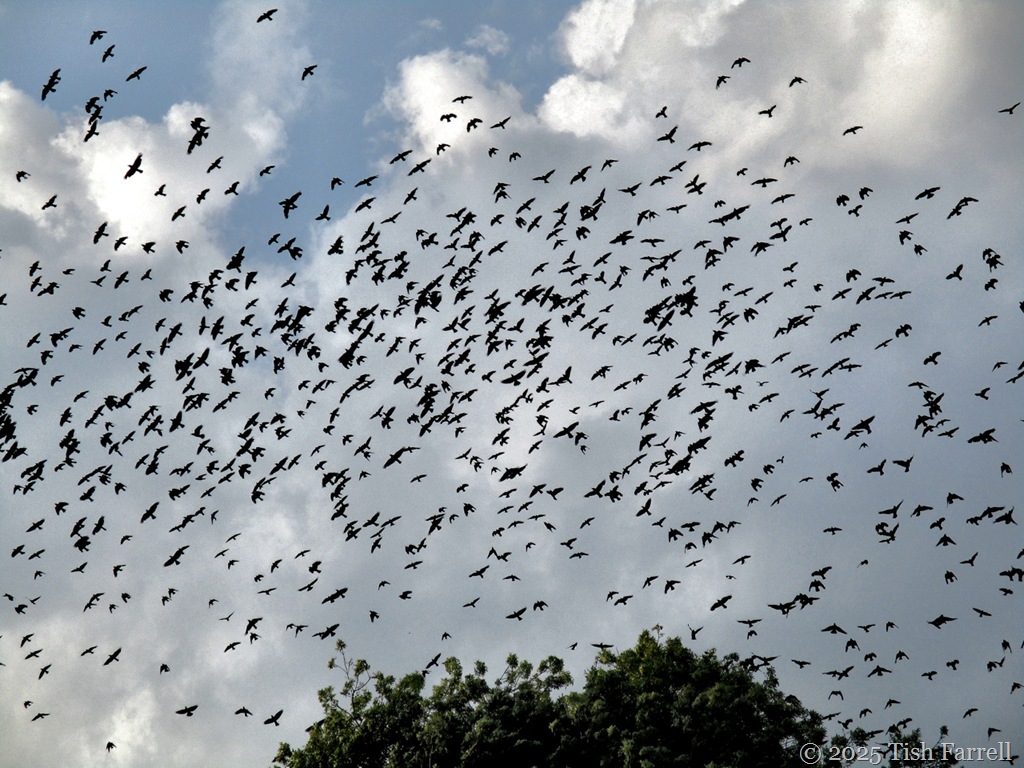
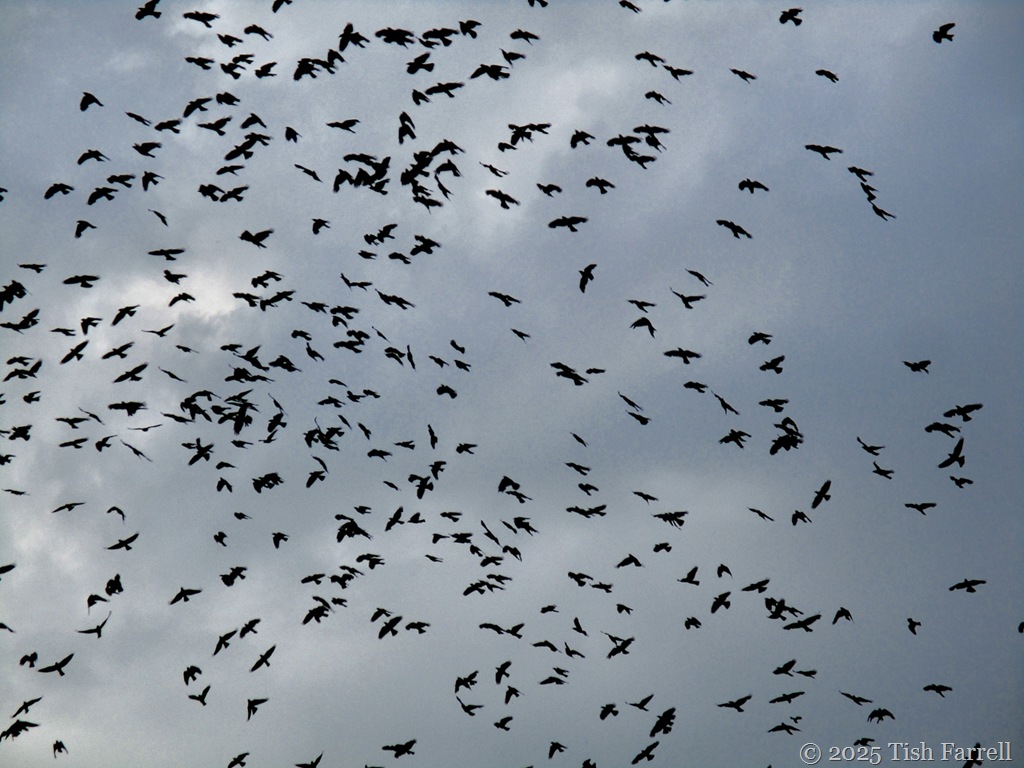
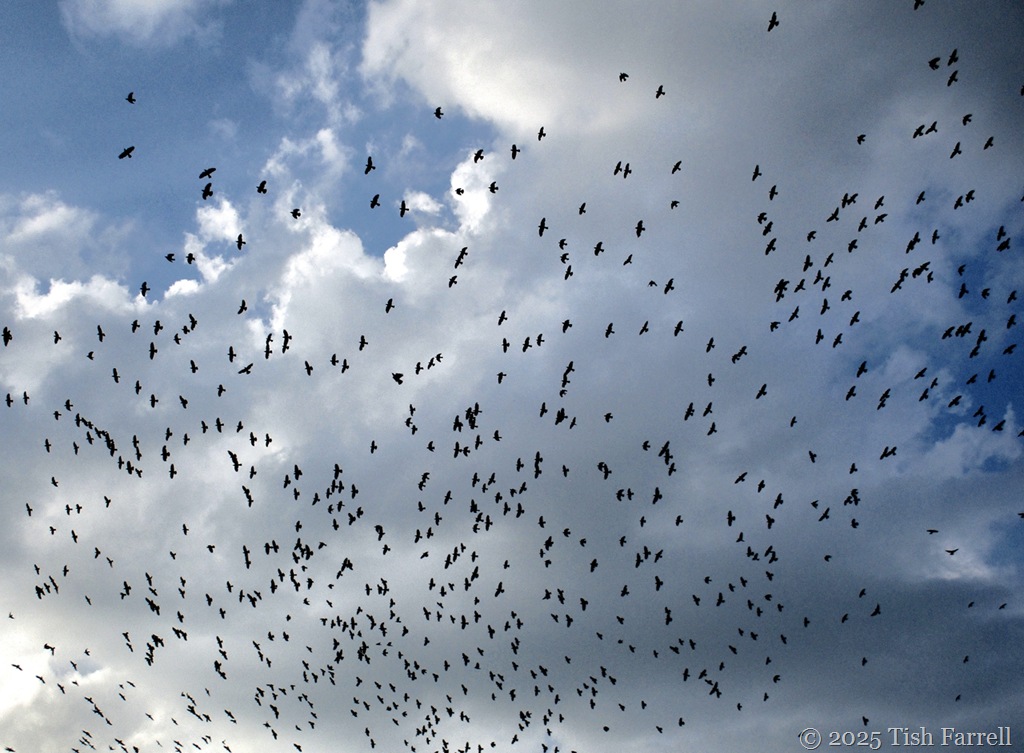
…and twilight over Rookery Wood: one rook (centre) and several jackdaws:

P1040737

Shadows & Silhouettes  Dawn at The Day After is this week’s host at Leanne’s Monochrome Madness

The Changing Seasons ~ This Was July ‘24

IMG_5817ed

Here in Bishop’s Castle, as in many parts of Great Britain, much of July was cool and overcast – more autumn than summer. The garden, however, carried on oblivious, although there was an obvious shortage of bees, hover flies, butterflies and other insects.

But then just on the last lap, summer happened. And not heat waves either; simply days of pleasing warmth  which certainly brought out the bees. And then whole flocks of cabbage white butterflies flew  in, wafting round the garden, dozens at a time, homing in on cabbages and nasturtiums to lay their eggs. I’ve given up chasing them away.

They also like to feed on the agastache (Vietnamese Mint), a perennial I’ve grown from seed this spring. The bees love it too. So I’m glad I planted out all the many seedlings that germinated, as well as giving some away. It’s a stately plant with purple-mauve plumes and leaves that smell of aniseed.

cabbage white 2

*

The switch to warm days has made all the lettuce bolt, but we’re still eating some of them. As ever, I have failed to organise a seasonal flow, so there will be a gap in salad content for a time. Instead, I’m picking the young leaves of Swiss Chard, a second crop which I’ve managed this time to protect from nibbling pigeons. There are also herbs – dill, basil, and lots of coriander and chives, and wild rocket (about to bolt) and masses of developing leeks which are good in salads.

But best of all, the runner beans are beginning to set, so I must keep an eye on them. They often fool me by producing the first crop near the ground inside the canes, where they can’t be seen.
IMG_5893

IMG_5854ed

IMG_5841

IMG_5847ed

IMG_5761ed

IMG_5639

*

And then this lovely mallow has started to flower…

IMG_5795ed

*

And there’s been a second flush of foxgloves…

IMG_5801ed

*

And then I noticed a happy partnership (growing out of the concrete on the front path) campanula and lavender perfectly arranged…

IMG_5859ed

*

And finally, in amongst the ongoing building work and general domestic confusion…

IMG_5867

*

…we take note that it is was a year last July when we exchanged contracts on The Gables and began planning our move to Bishop’s Castle…

IMG_5577

And in case you’re wondering about the big beer barrel, the town is famous for its historic pub and brewery The Three Tuns Inn, serving folk since 1642. Just one of many good reasons to settle here. The beer is delicious. Cheers!

IMG_5817header

The Changing Seasons: July 2024  Hosted by Ju Lyn and by Brian at Bushboys World

Six On Saturday: On Random Gardening

IMG_5631

Starting a new garden is always exciting; daunting too. And our particular garden, being a hundred years old, had traces of many a planting disaster venture. More recently, though, all had been overgrown, and invaded by rampant phygelius (Cape fuchsia), ground elder, vagrant raspberries, bindweed and Spanish bluebells. The two front garden beds (south-east facing) were covered with concrete slabs and Spanish bluebells.

Most of it had to go.

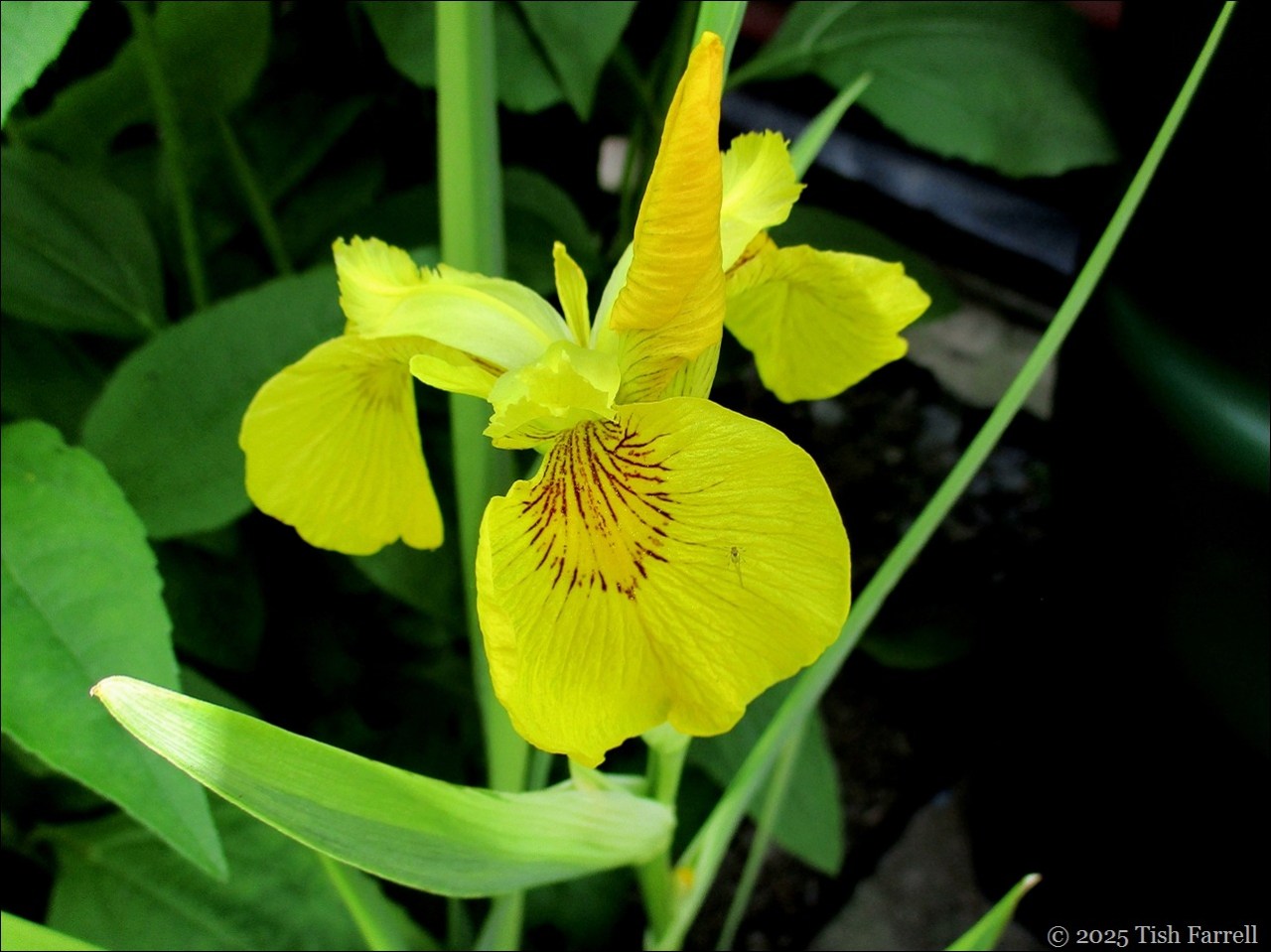
1: Because we’d had to rent between selling one house and buying another, I’d brought only a handful of plants from our Much Wenlock garden. Among them was yellow toadflax (Linaria vulgaris), a favourite flower since childhood when I’d first seen it lighting up the verges of the Shropshire Hills. I’d grown it from seed, bought on-line from Jekka’s Herbs. Now, by some pleasing accident, it seems to have grown up with some purple toadflax.
IMG_5791ed

*

When we moved into The Gables, just under a year ago, my most pressing concern was vegetable growing. I knew we would miss the produce from my allotment plots of 16 years (if not the heavy labour), so tackling the most weed-infested areas to make beds for food crops was my first priority. My thinking here was that these beds would be cleared every year, so repeat ground elder and bluebells wouldn’t be quite the same bother they would be in shrub or herbaceous borders.

I made a start last summer, but then the following months were mostly too wet and cold for gardening. And then in spring the house roof had to be taken off and rebuilt. And then the building work on the rear extension began, all of which saw parts of my territory invaded, first by a mountain of broken roof tiles and battens and then by piles of construction materials. There were times, too, when I couldn’t reach the projected vegetable plots in the back garden, it being uphill from the house, other than by climbing a ladder. All of which means that bed making efforts were piecemeal and, in the end, things (vegetables, herbaceous perennials, herbs, developing shrubs) were planted out wherever there was a space at the time.

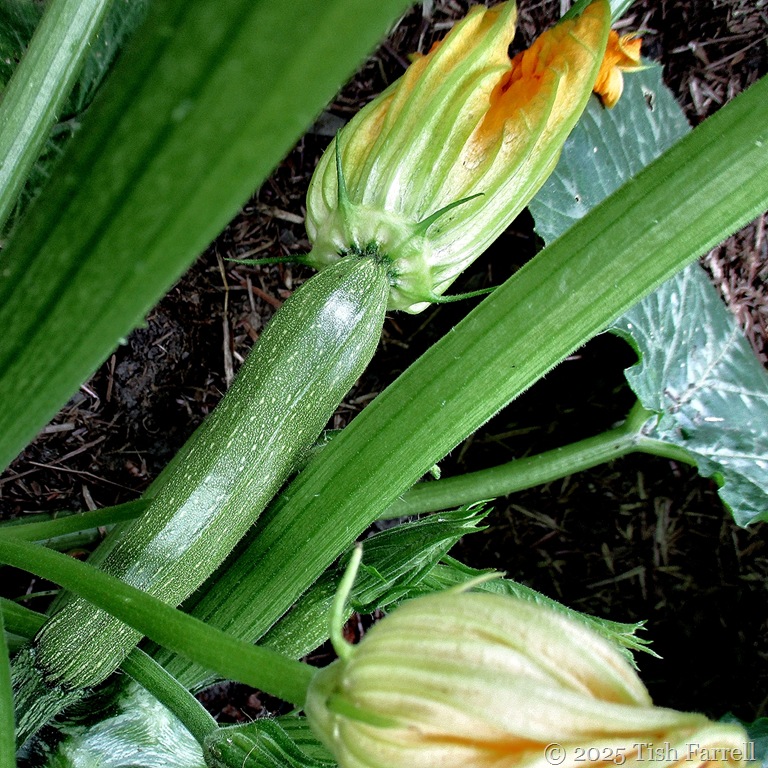
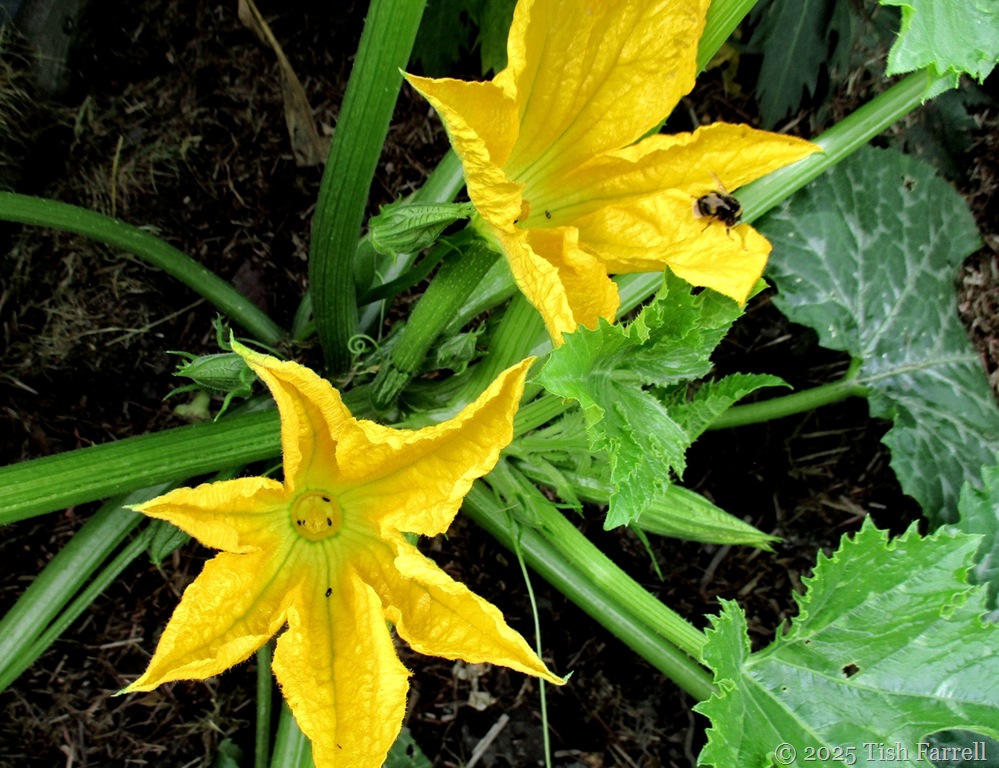
2: But it’s all alright. Everything is growing all over the place. I have yellow courgettes at the front door, which is actually quite handy…

IMG_5826ed

*

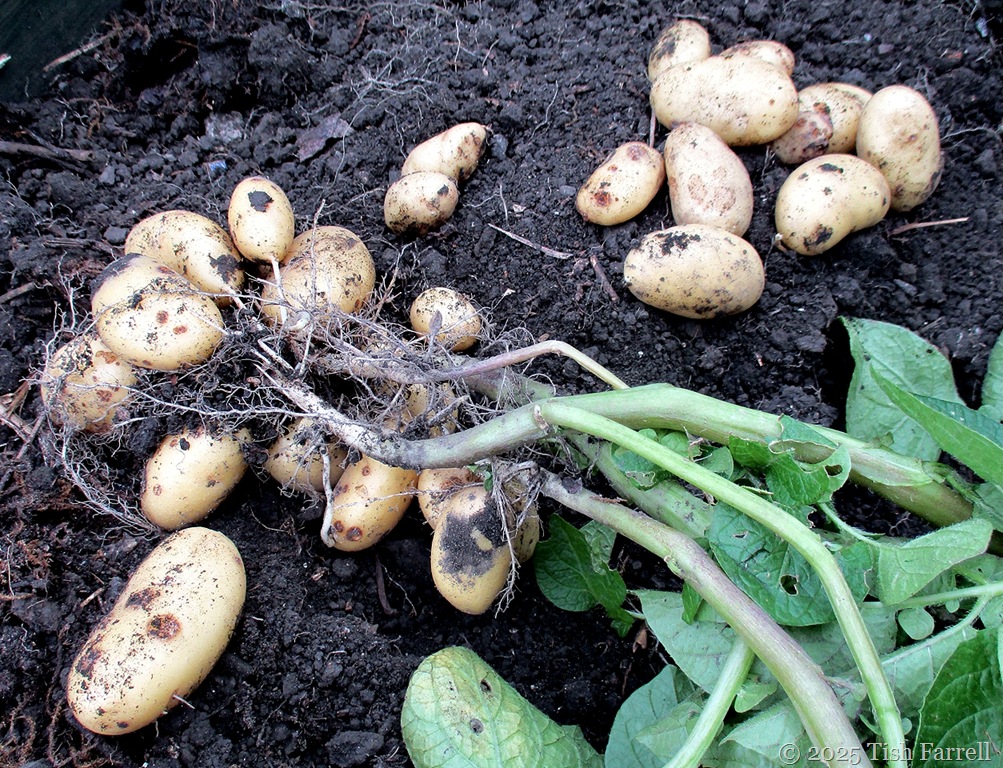
3: The front garden bed is also yielding some very nice Charlotte potatoes (despite going in very late). The building debris and old mortar from the lifted slabs seem to have provided some good drainage in our heavy-ish soil:

IMG_5679

*

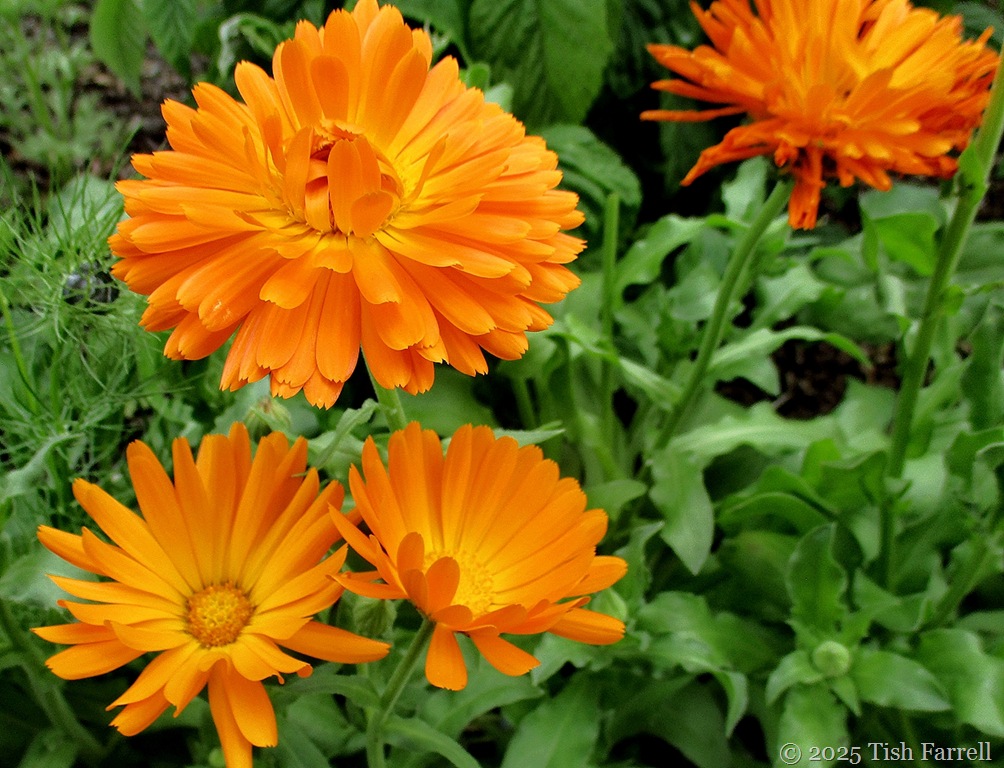
4: In the spring I’d sown some marigold (calendula) seeds, obtained from the Bishop’s Castle seed bank (local growers’ donations) and they’d germinated prolifically. So I planted them out all over the garden, front and back, because you can’t beat marigolds for their spirit-lifting qualities. And now we have masses of golden heads, which of course are edible too:

IMG_5817

IMG_5808ed

*

5: And on the eating front, since spring we’ve done rather well with all manner of greens, but most particularly the Romanesco cauliflowers, which I haven’t grown before. They are much sweeter than white caulis, and if you cut them and leave the stalk, they sometimes produce more sprouts. They don’t need much cooking either.IMG_5574

*

6: But best of all, are signs that the runner beans are thriving. I have three varieties growing together: Emergo (white flowers), Painted Lady (red and white as in featured photo), and St. George (red):

IMG_5800

IMG_5774ed

*

I mean to say, what could be lovelier than this Painted Lady bean flower. And then to think: there will be beans!

*

Six on Saturday  Jim at Garden Ruminations is the host. Please pay him and his splendid garden a visit.

Two By Two

P1060365 - Copy

P1060368

This week at Lens-Artists, Elizabeth of Albatz Travel Adventures has us thinking about diptychs. This is what she says:

“A diptych is two images placed in proximity to one another, forming a pair. To make a successful pairing there should be several things in common, and something very different, contrasting.”

Please see her post for a range of inspiring examples.

My header pair is perhaps a bit daft, but it appeals to my sense of humour: man ruminates deeply on the ebb and flow of the Celtic Sea.

Man makes up mind: enough is enough.

Location: Anglesey, North Wales.

*

The next pair also has a Welsh location, taken on the Tallyllyn Steam Railway. Some of the enthusiastic volunteers who help run the trains:

Tallyllyn

p1040806

*

Crab Apple Tree (with Japanese anemones) in our old Wenlock garden:

100_7062

100_7068

*

Townsend Meadow, Much Wenlock and a fine crop of wild oats:

P1070611

p1070625

*

Up in the Shropshire Hills: the Stiperstones

P1080552sepia

P1060001dia

*

Also on the Stiperstones – fields of gorse, once widely cropped for winter animal fodder; these days, more valuable to bees and other insects:

P1060009

P1060017sq

*

And finally some light and shadow. Leaves – back lit and top lit:

img_0580

img_0568

Lens-Artists: Perfect Pairs

A Spot Of Garden Flamenco?

IMG_5746

We have visitors, blown in from who knows where. All over the garden too. And what a show they’re giving us with their fiery frills and flounces. Papaver somniferum, the sleep-inducing opium poppy.

The bumble bees have been mightily excited by the poppies’ presence; their behaviour far from somnolent. In fact I witnessed much unseemly rummaging through floral petticoats as they hoovered round the creamy anthers.

IMG_5671

IMG_5672ed

*

Elsewhere in the garden there are more hot colours, this time courtesy of the Bishop’s Castle seed bank. This is a wonderful community venture whereby local gardeners donate flower and vegetable seeds. You can help yourself to the contents of the tray which lives upstairs in the Town Hall council chamber, and leave a donation to the seed bank.

These French Marigolds were grown to protect the carrots. Their minty-lemony scent camouflages the carroty smell so fooling carrot flies that like to lay their eggs in the developing roots. But by some failure of organisation they ended up by the cabbages where they do nothing to dissuade the egg-laying proclivities of cabbage white butterflies.

IMG_5637

*

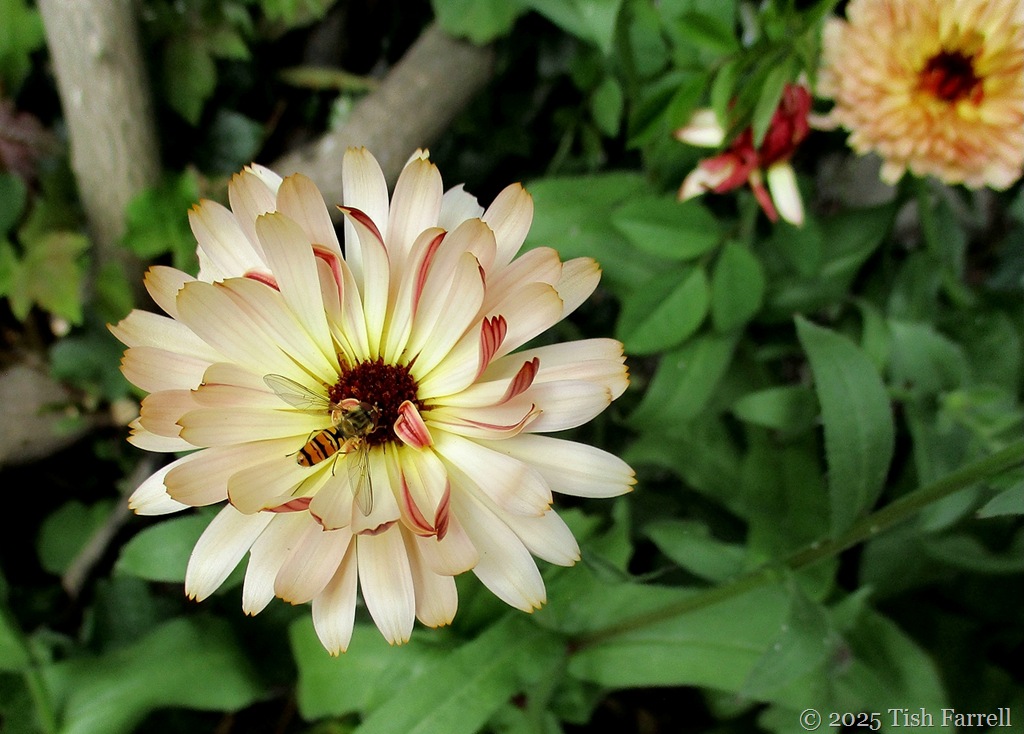
And then there are the seed bank pot marigolds. I’ve planted them out everywhere because I use the petals in salads. They have many beneficial medicinal qualities including a high lutein content which is good for protecting eyesight. Simply to gaze on them might suggest this particular property.

IMG_5735ed

IMG_5708

IMG_5701

Marigold with purple toadflax petals

*

But back to the flamenco. I don’t know about you, but this wild display makes me want to lift up my skirts and dance…

IMG_5747