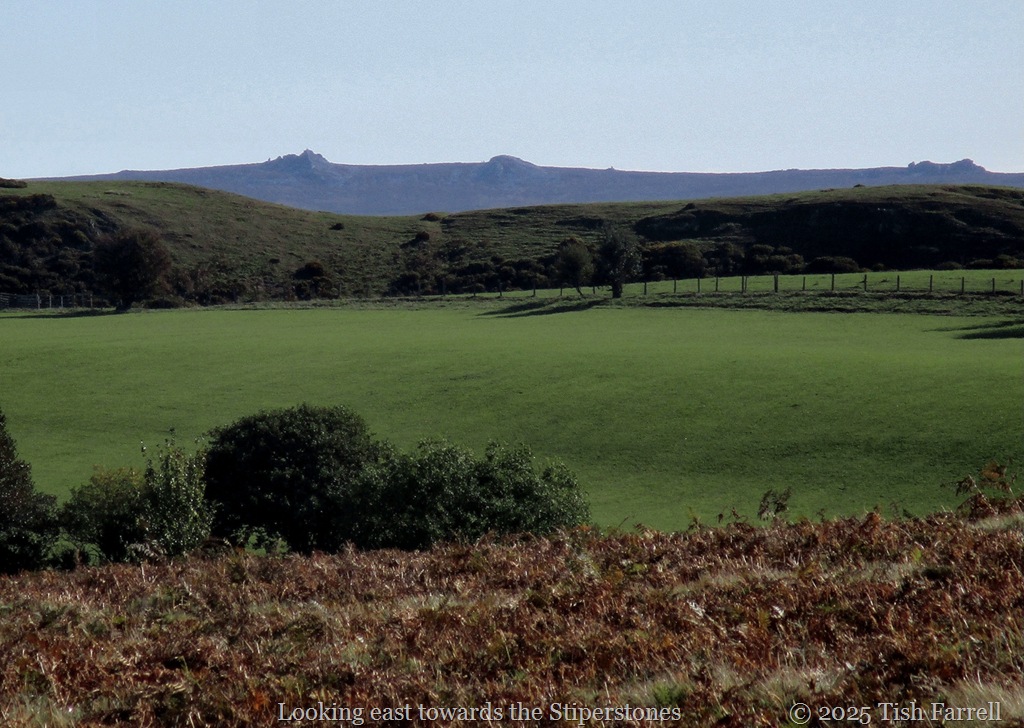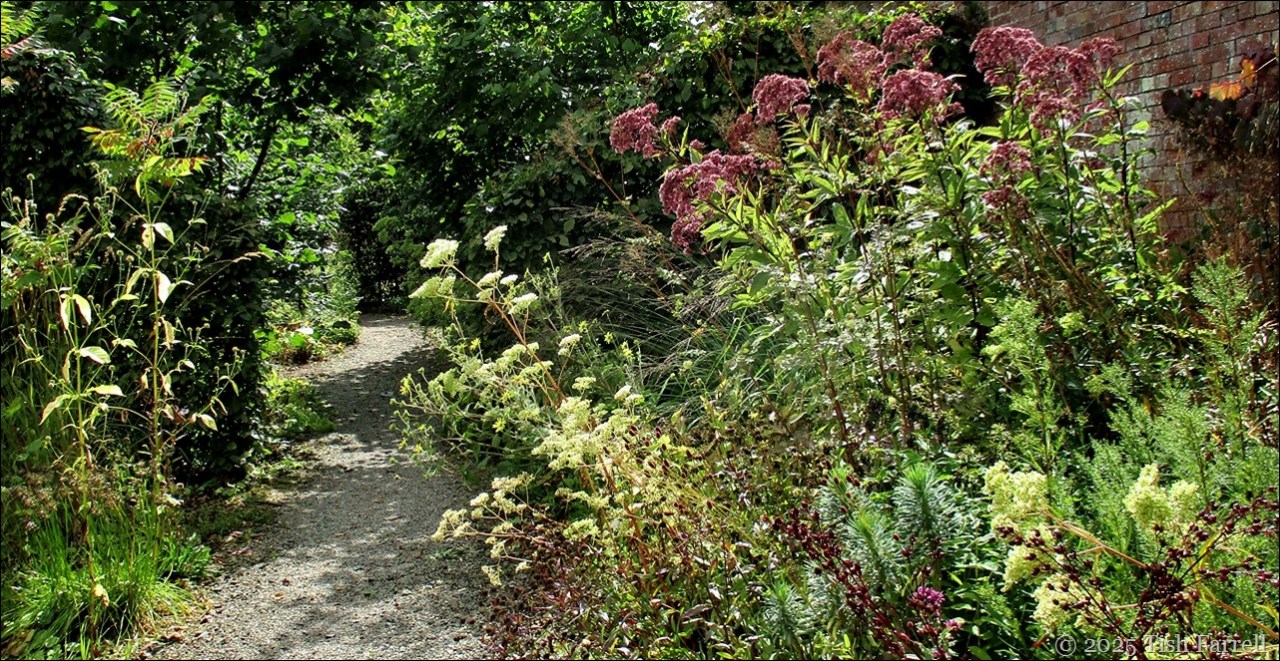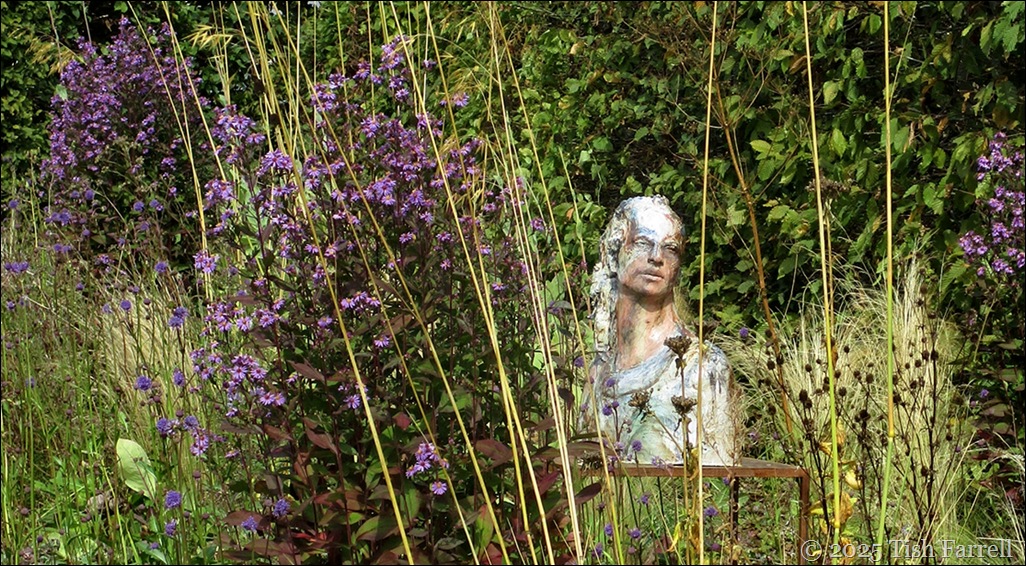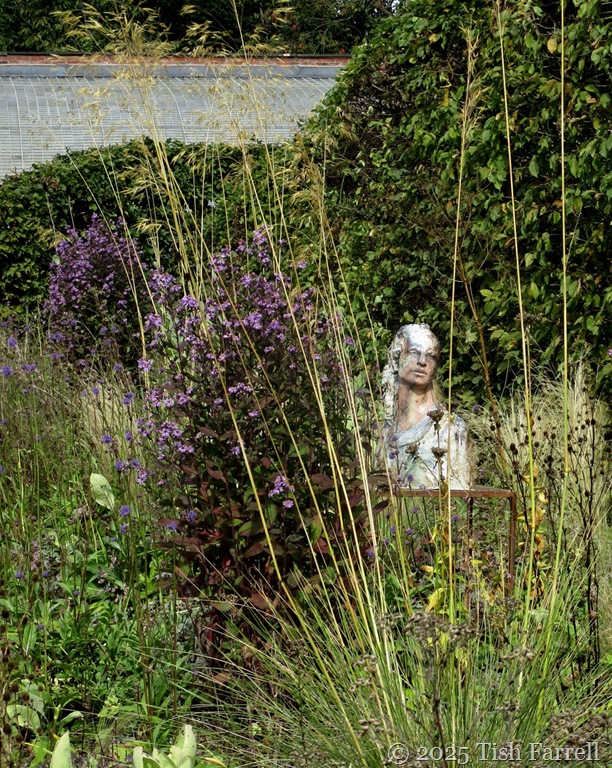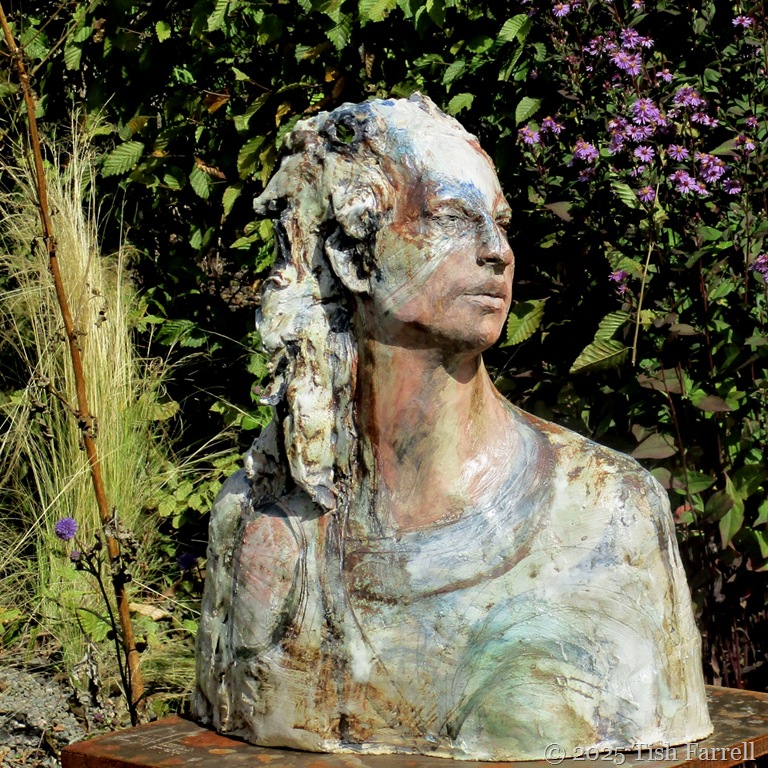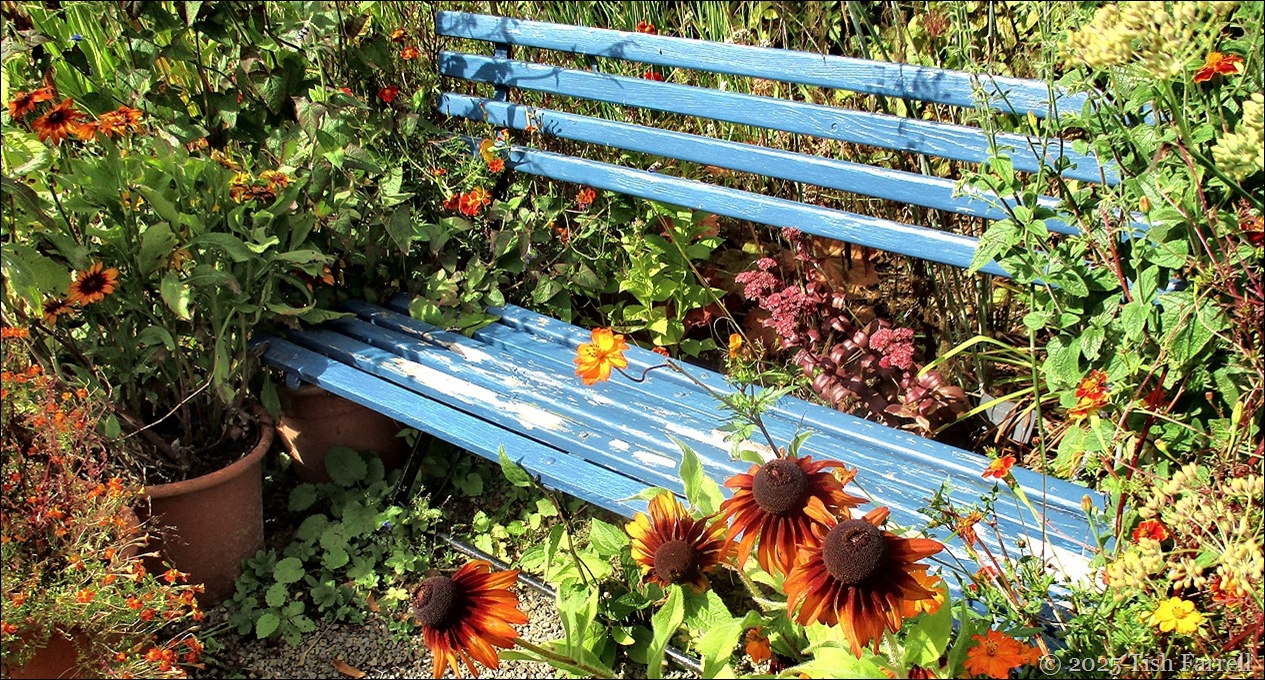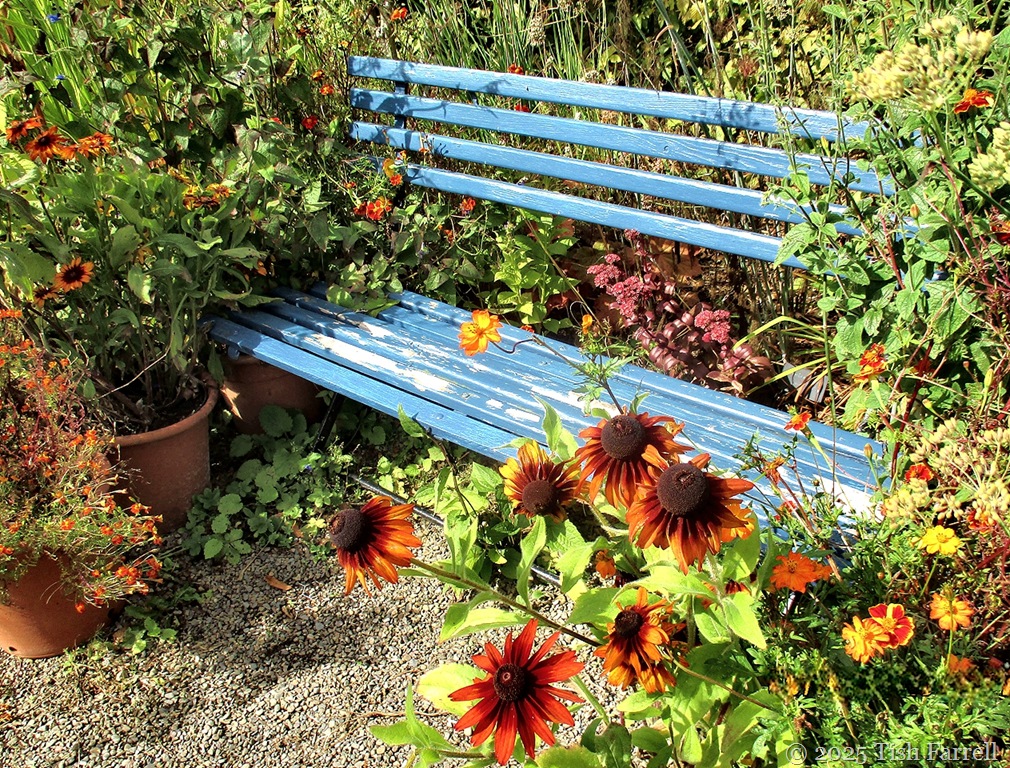
The Blue Bench At Wildegoose Nursery

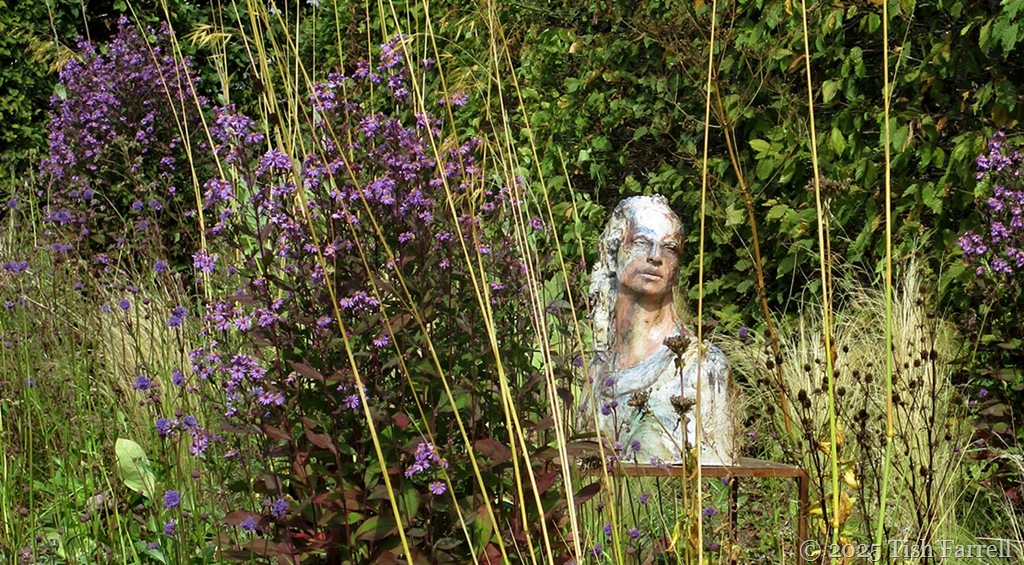
blue bench Wildegoose Nursery

It’s quite a while since we last visited Wildegoose Nursery. It’s a longer drive from Bishop’s Castle than it was from Wenlock. But this is no excuse. It is the most beautiful place, the nursery created in what was once the walled vegetable garden of Millichope Park, Munslow. (You can read the story of all that has been created, plus splendid photos HERE).

The walled garden itself is planted in a series of ‘rooms’, showcasing the nursery’s range of plants for sale. It is only open during the planting season from March to late September. There are umbrella-ed tables and a pleasing cafe serving delicious cakes and lunch-time snacks made from the garden’s produce. And there are some very magnificent Georgian glasshouses which have been restored and once more put to growing.

glasshouse 2

Every one of those several thousand glass panes had to be replaced. But the reason I’m showing this particular shot, is because there’s a potting bench in view – i.e. to go along with the header bench for Jude’s Bench Challenge. (I also know she knows all about Wildegoose.)

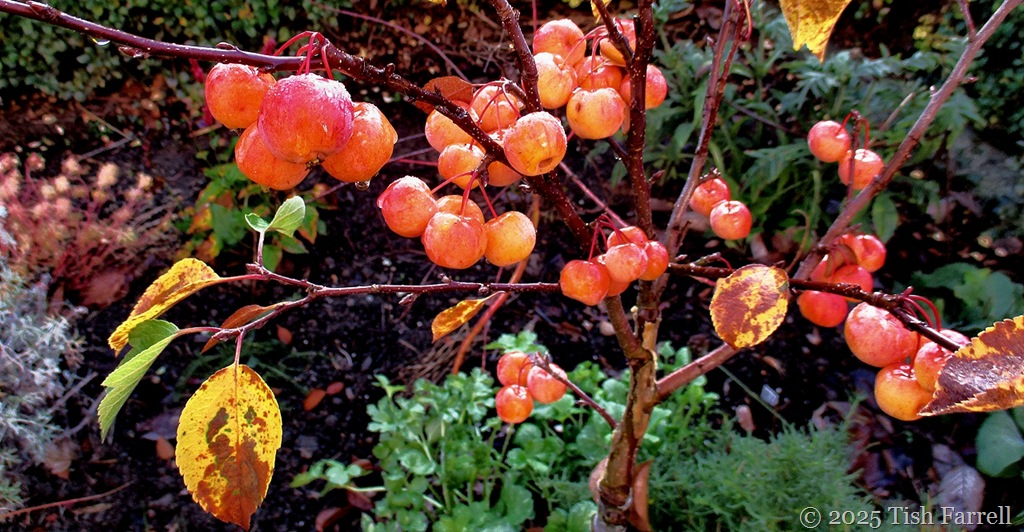
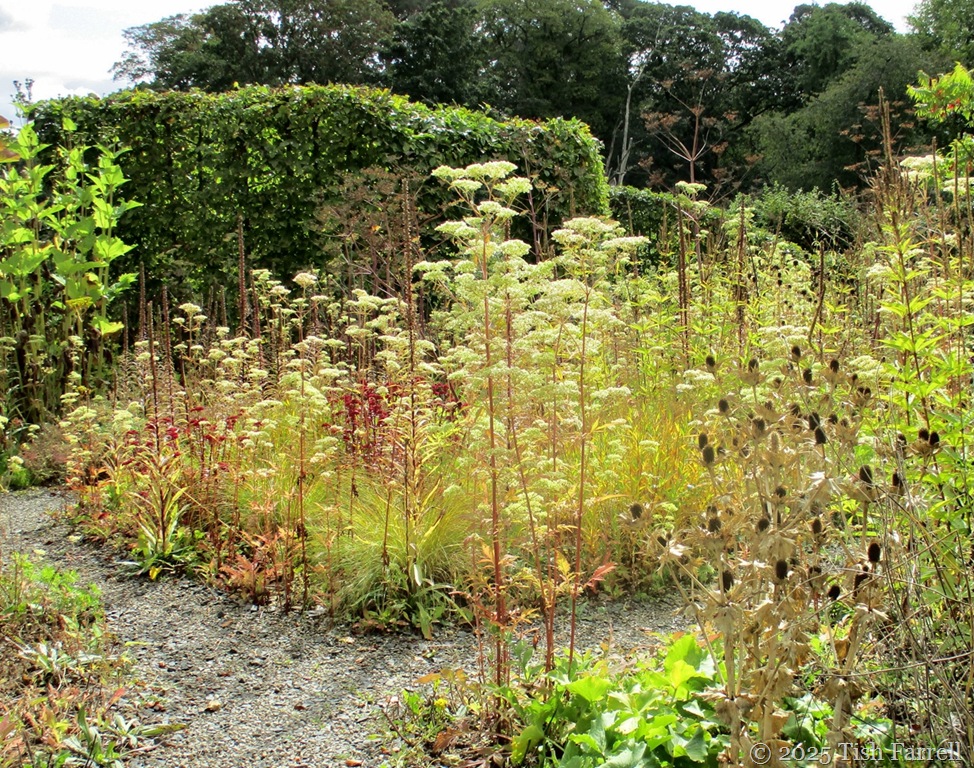
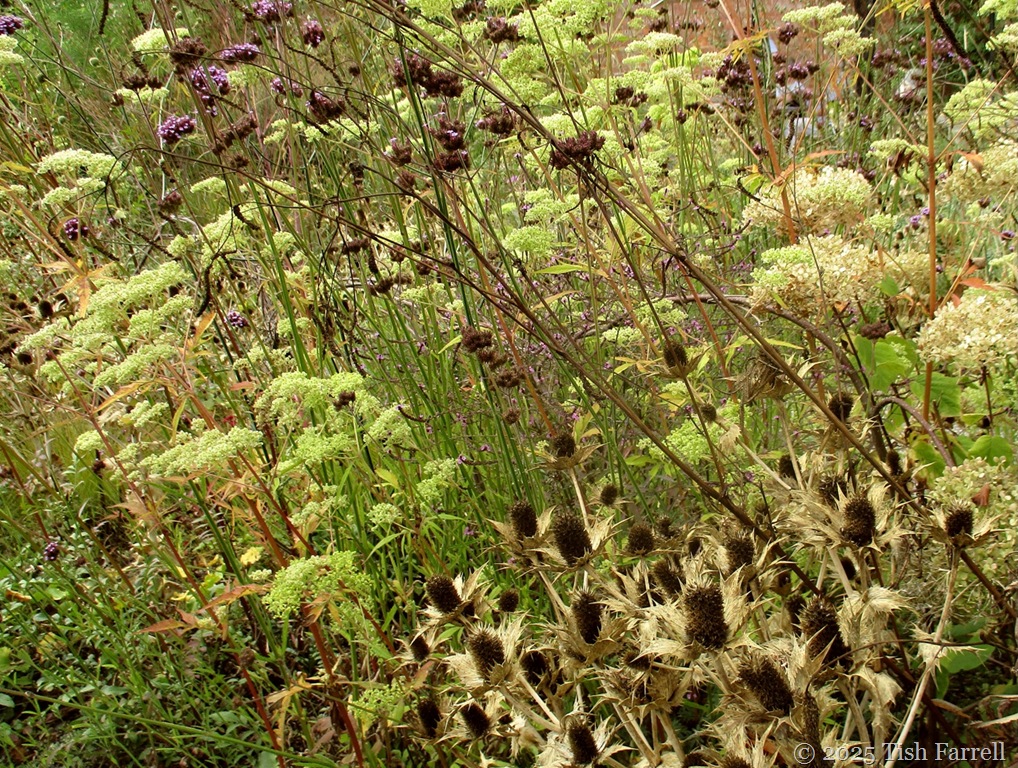
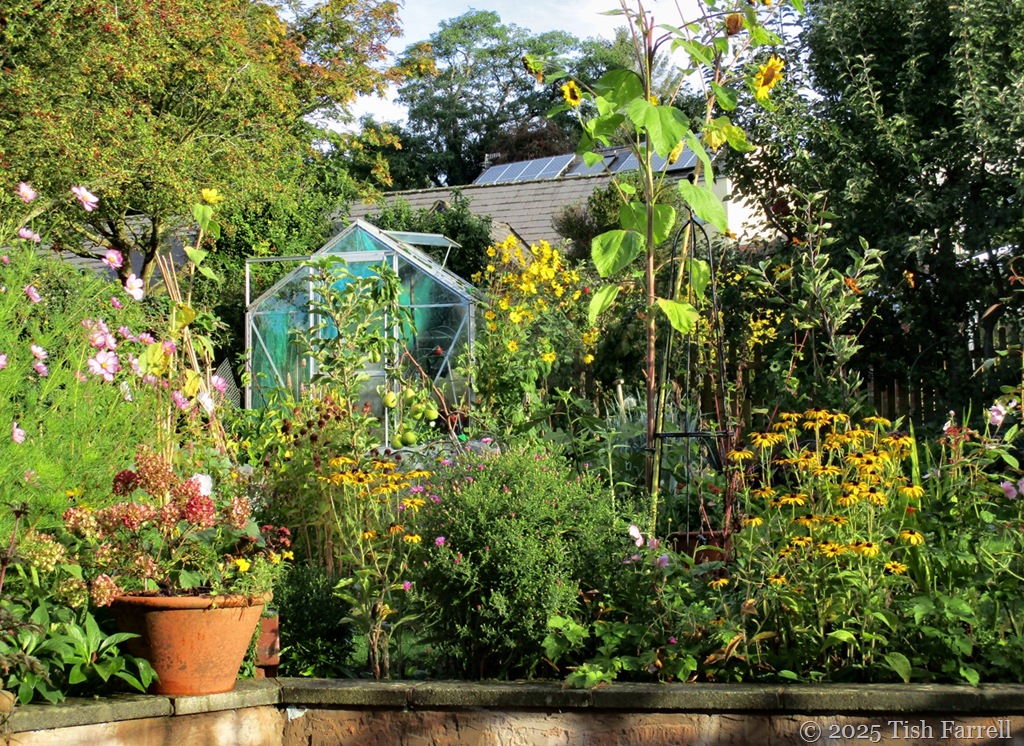
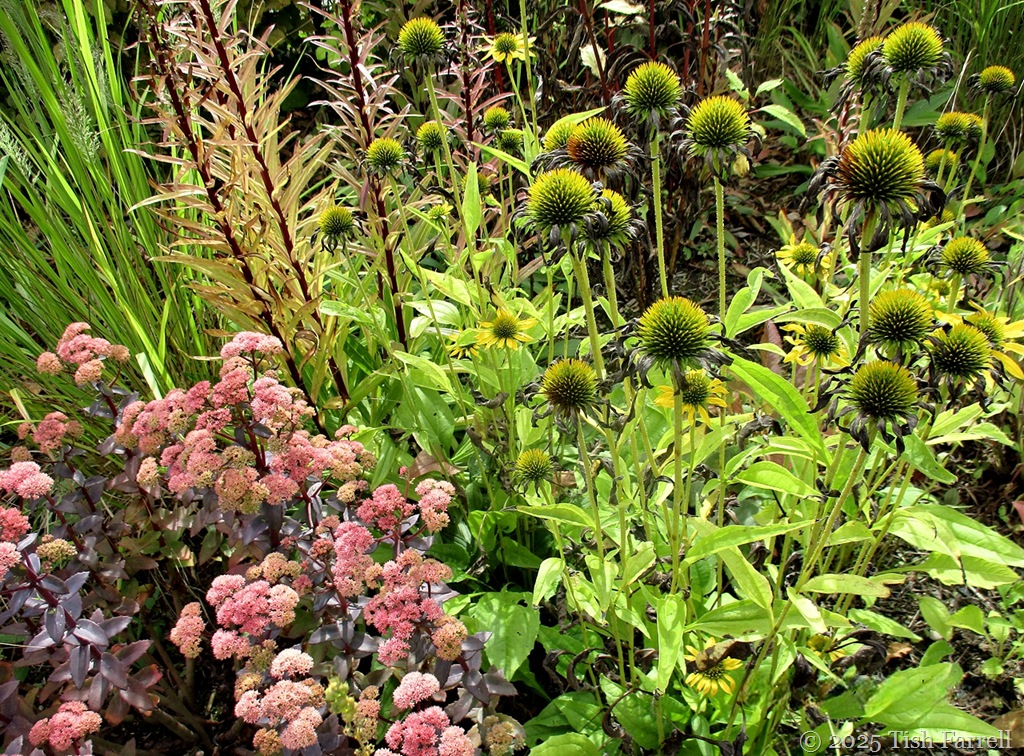
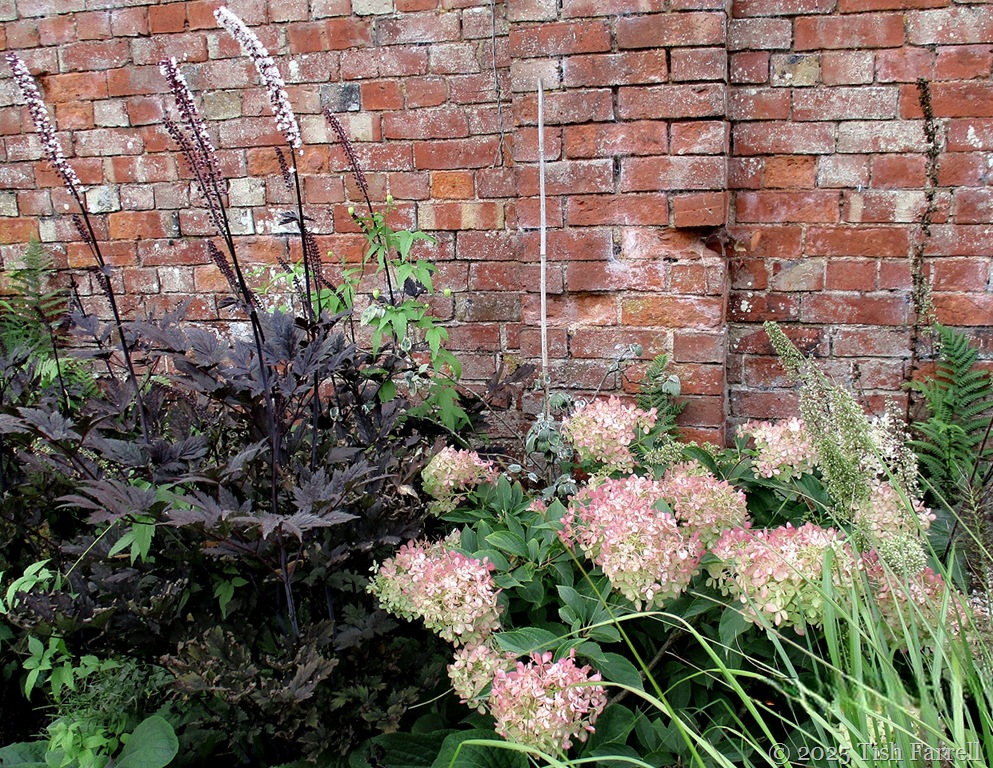
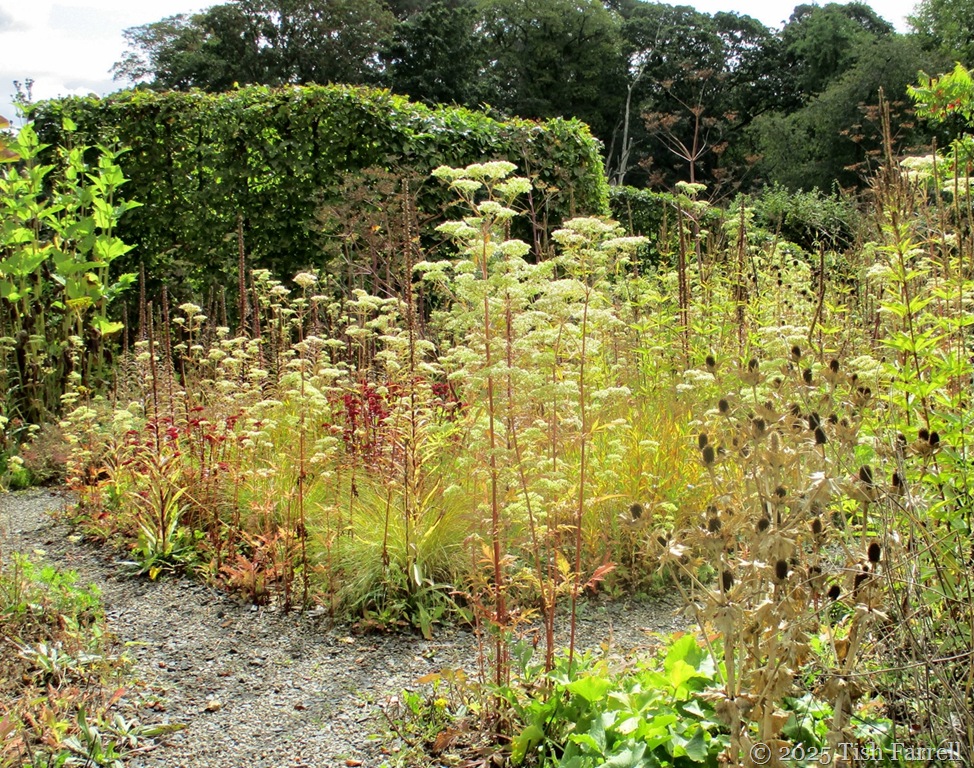
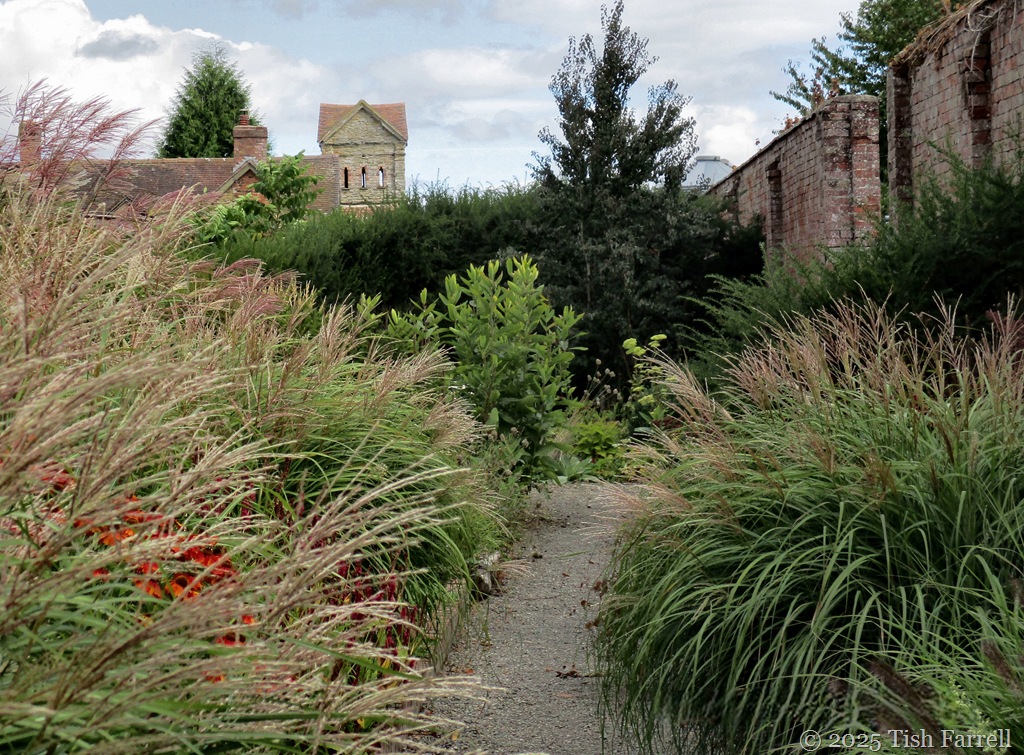
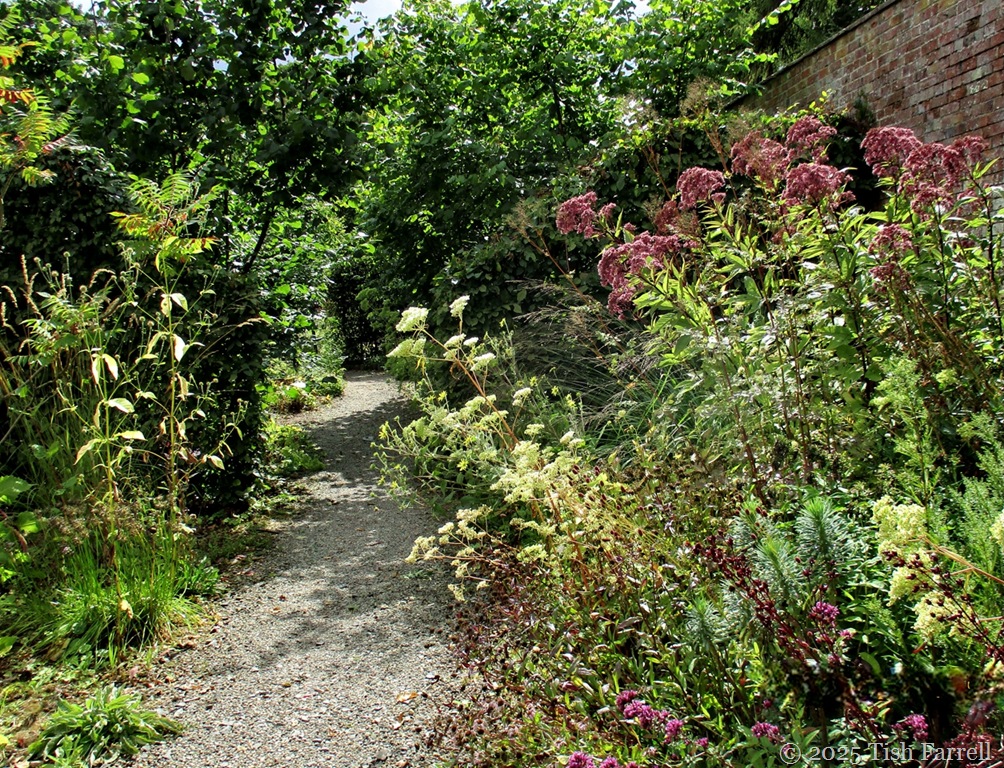
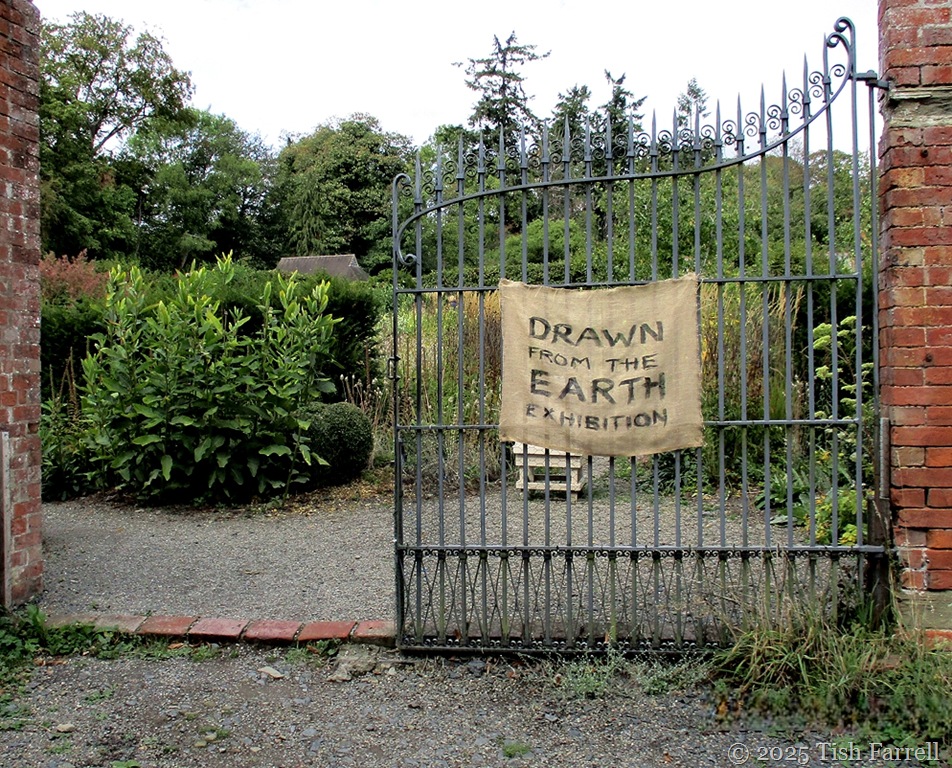
The reason we roused ourselves to go there last week was because one-time Wenlock chum, Mary Elliot, artist and former 20/20 Gallery owner had put on a four-day art exhibition there Drawn from the Earth. She was exhibiting some of her own work too (much of it inspired by the Wildegoose gardens) and we’d hoped for a general catch-up. There will be more of the exhibition in the next post. For now a glimpse of the garden in its autumnal colours:

wildegoose 3

*

And coming up in the next post:

drawn from the earth

*


As We Walked Out One August Evening

IMG_8622ed

So why don’t we have supper with the elephant? says I. We can take a picnic.

It was Sunday evening, and he-who-builds-sheds had been toiling all day on a new construction. (We call it ‘the car port’, but it’s not for the car.) The response was not altogether encouraging. I knew he was thinking of the hill climb in the heat. I thought of it too, but the notional destination outweighed resistance. I packed a couple of small cool bags with spicy cooked chicken, bulgar wheat salad, apples and some elderflower kombucha.

We set off a little after six. The sun beamed hotly. (What a summer we’ve had).

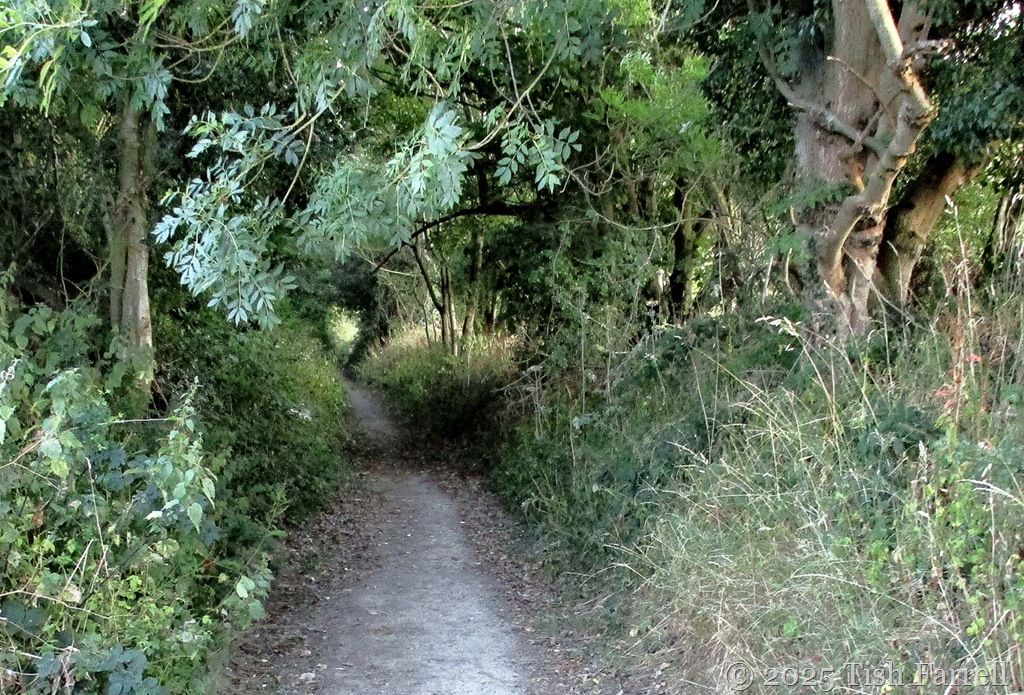
The walk I had in mind is a climb of two parts, the first being the short sharp yomp up our street to the top of the town. This haul can be alleviated half way up from our house by deviating into Laburnum Alley, a shady ginnel of ancient walls and overhanging greenery, that wends more gently around garden perimeters, and brings you, breathing easily, into Welsh Street.

Next there’s an even stretch along the road around the Wintles mini eco-village before we head into the shade of this settlement’s privately owned (but freely accessible) woodland enclave of vineyard, allotments, and bosky meanderings. The Shropshire Way also bisects it. We pass through the gate into the field behind the gardens, and start the main climb. We’re headed towards Wales now, the Long Mynd our right.

The field behind the Wintles woodland still looks remarkably green, this despite the months of drought. But above us, the fields are pale ochre, shorn of pasture or wheat, the hedgerows tousled, fringed with dead grasses and thistles bursting with down.

IMG_8613 ed

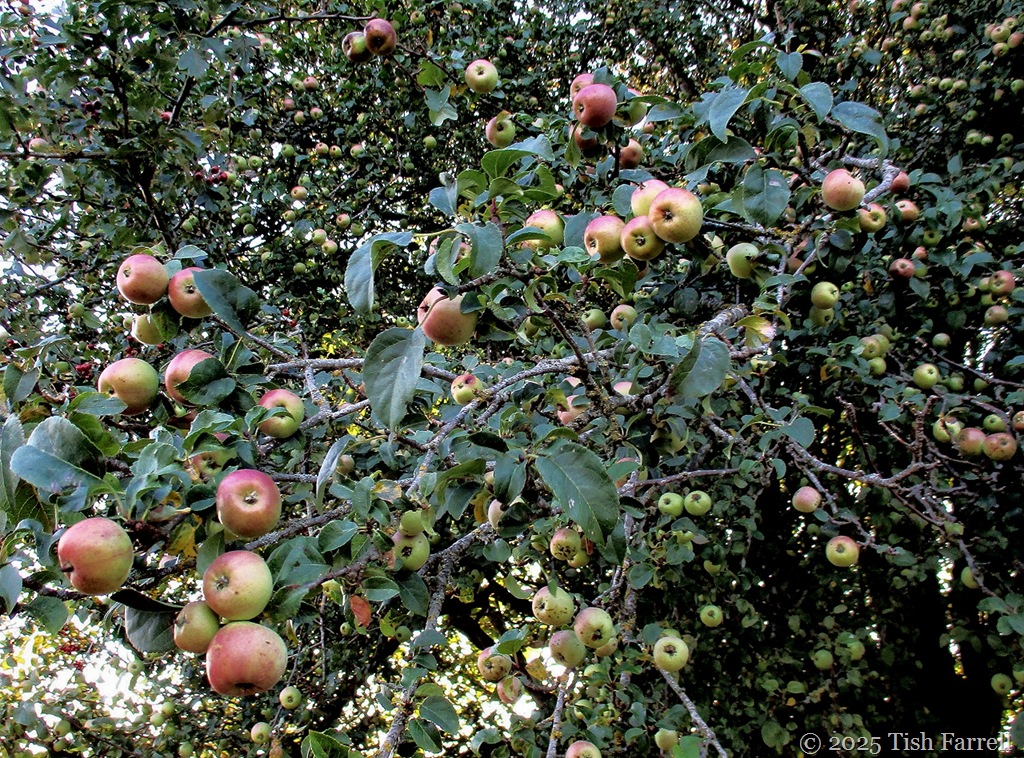
The few sheep we pass seem happy enough, and we begin to see that not everything has suffered from the lack of rain. The red clouds of the berry-laden hawthorns are astonishing, so copious is this year’s crop. The elders, too, are weighed down with ripe black berries, and later we see bushes of fat blue sloes (think passingly of making sloe gin), and then come upon a crab apple tree so crammed with fruit it is almost too good to be true. Excitement mounts. Crab apple jelly will definitely happen – if not yet, then very soon, and feasibly in quantities for all of Bishop’s Castle.

But first the picnic. We follow the footpath markers through two gates and into the trees below Foxholes Campsite. There’s a good view of the Longmynd now…

Longmynd

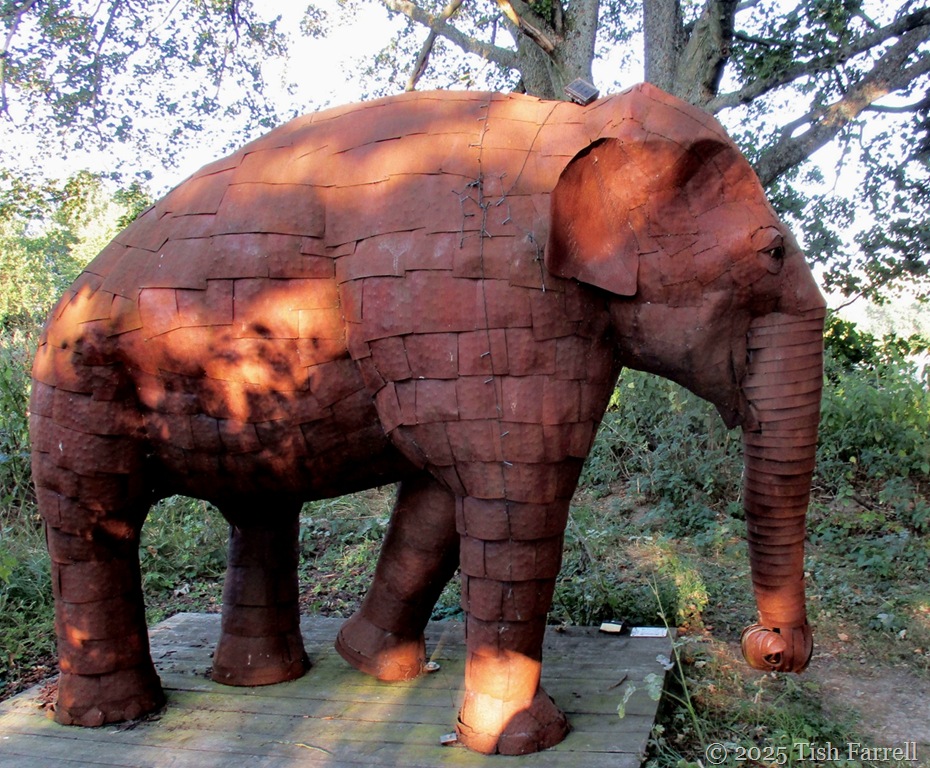
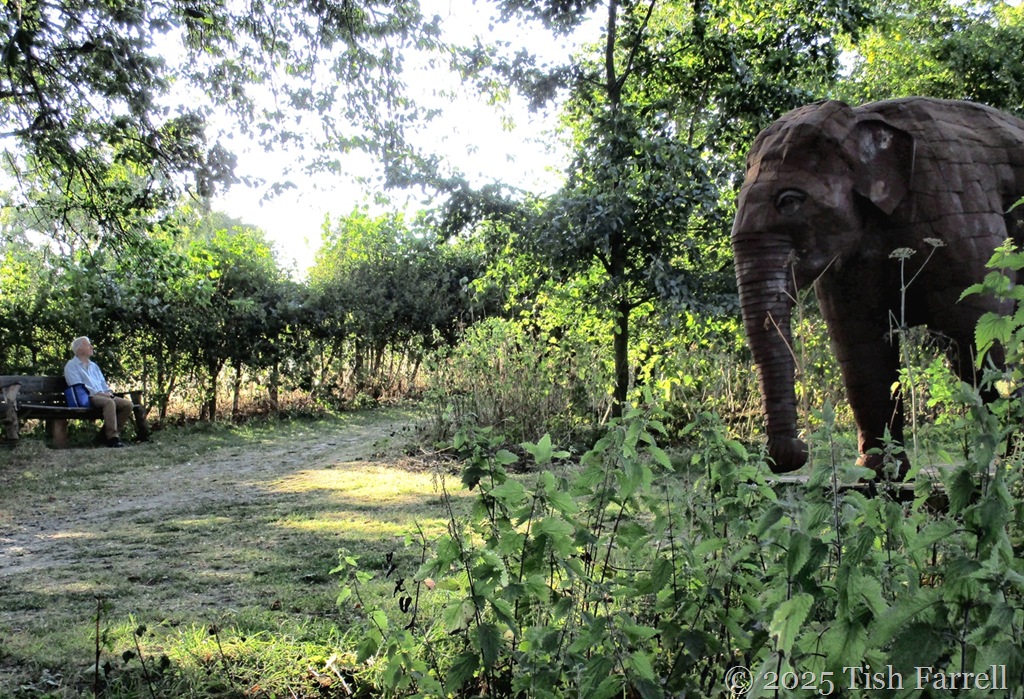
…and there is also an elephant…an Asian elephant…

elephant 2

*

Some of you will have seen this before, and I’m sorry to say that I’ve still not tracked down who made her or why she is here in this particular spot.

*

IMG_8627ed

But here, then, was the envisioned picnic spot.

We ate our supper, sitting on a fine seat commemorating a lost love, greeting camping folk as they passed by, listening to the breeze in the trees. The elephant did not have much to say. Nor did Buddha who was sitting near us:

Buddha

Just some quiet communing.

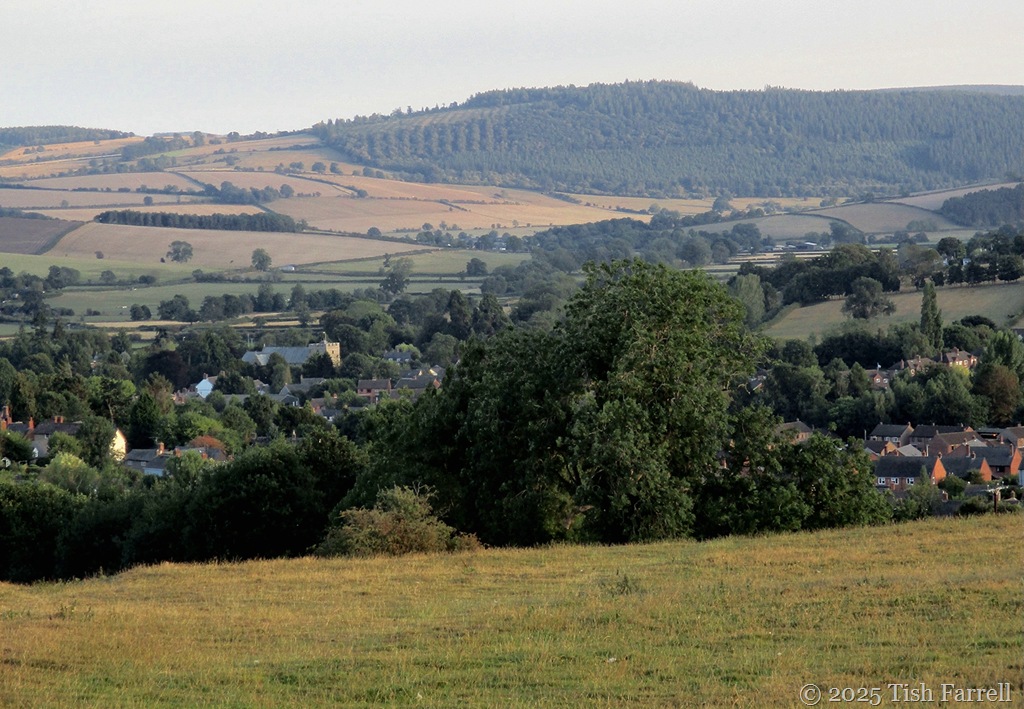
Once we’d eaten, I thought I could risk suggesting a little more climbing. This time to the top of the hill to see the views towards Montgomery.

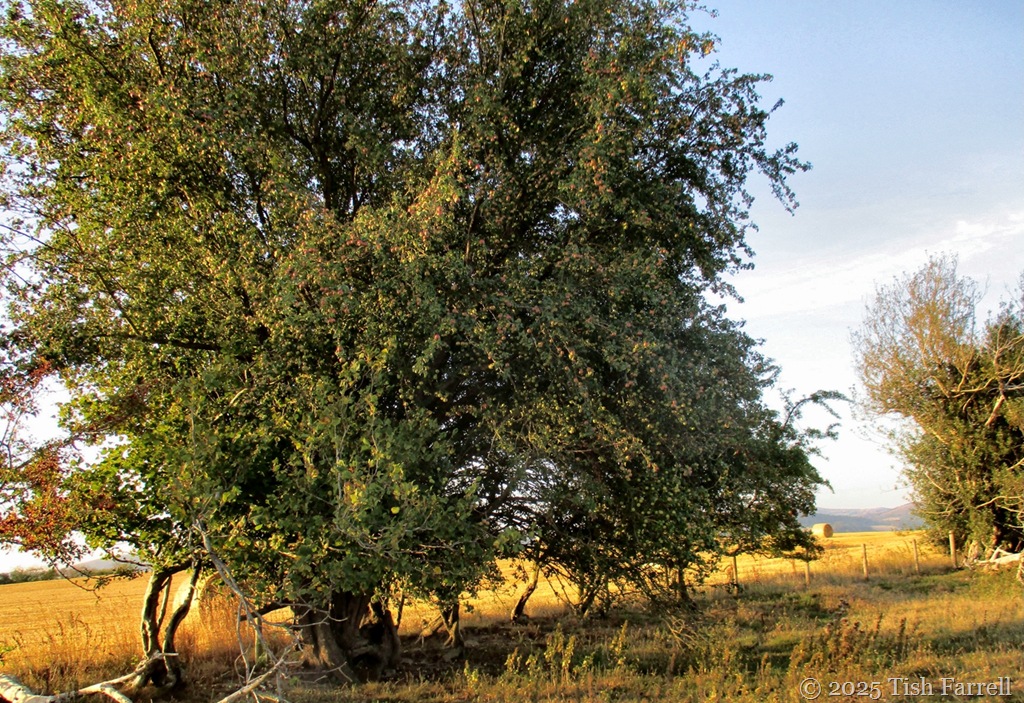
It was here we found the crab apple tree.

crab apple and haw accessories

crab apple tree

*

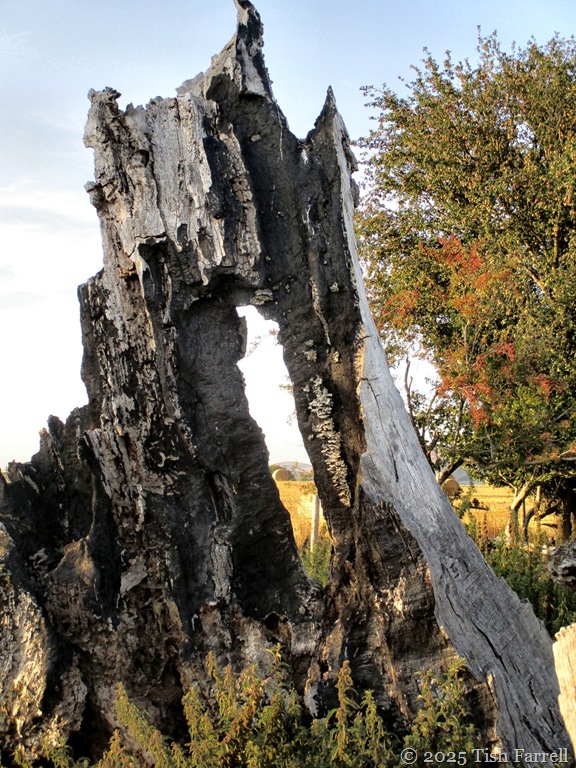
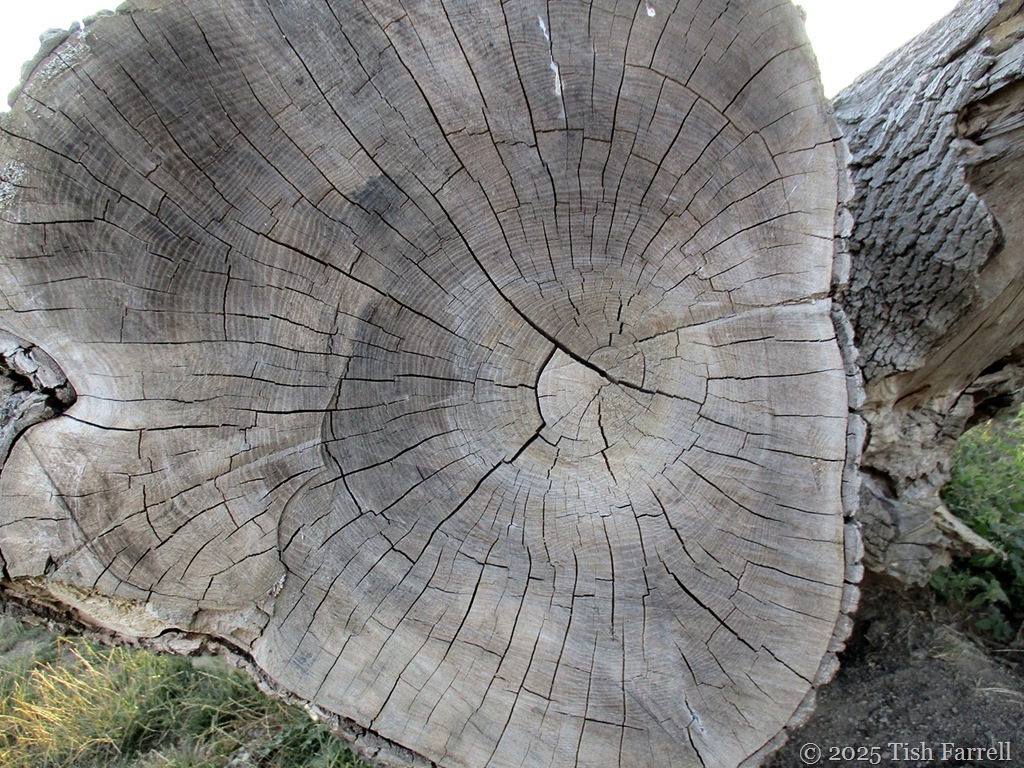
And next to it a fallen giant with its own elephantine qualities. It looks to have been struck by lightning many moons ago:

tree window

tree rings

*

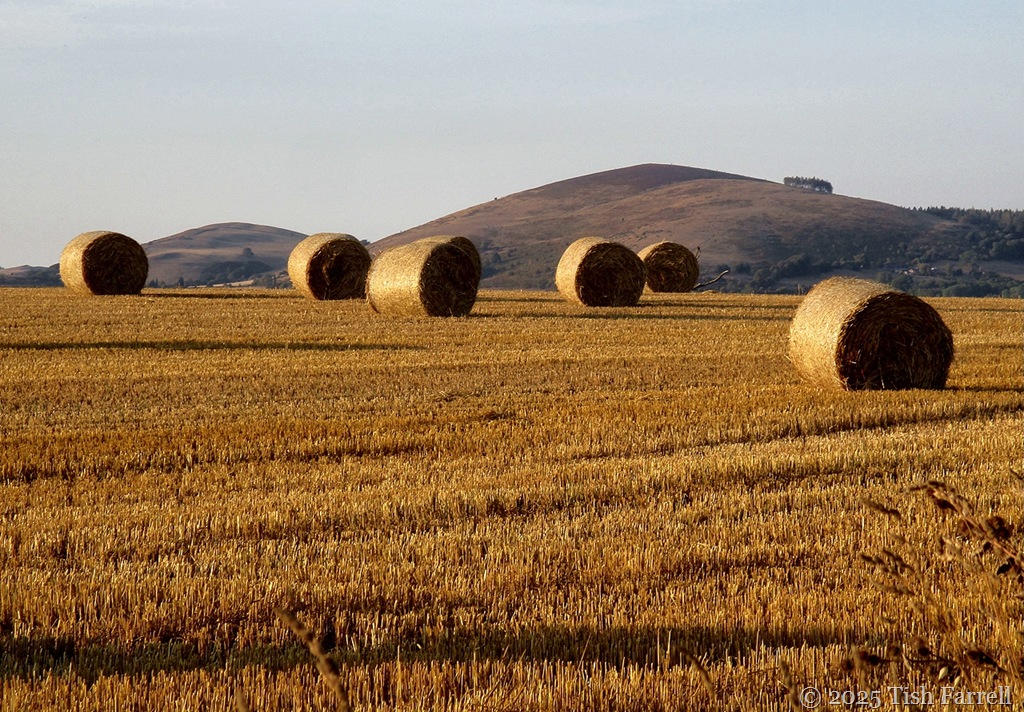
And beyond it the wheat field, the crop harvested and the straw bound in roundels, which for some reason are always appealing:

stubble

*

Then it was time to turn for home, slithering down the hill on sun baked ground…IMG_8666ed

*

…and on down the hollow way, back to the Wintles.

hollow way

*

We should do this more often, we said when we arrived back at the Gables.

copyright 2025 Tish Farrell

Bees, Bugs, Blooms and Borlotti

bees squash

[1]  Earlier in the summer I grew some uchiki kuri squashes from seed and planted a couple on the boundary wall. This is is the wall that had a ‘flower’ bed in the middle of it and was originally choked with Rose of Sharon shrubs, Spanish bluebells and ash trees. I wasn’t expecting too much of it once I’d cleared it, but it seemed like a useful space that could not be wasted. Much to my surprise the squashes have taken off like magic beanstalks. Even had to stop them heading off for the top of the town.

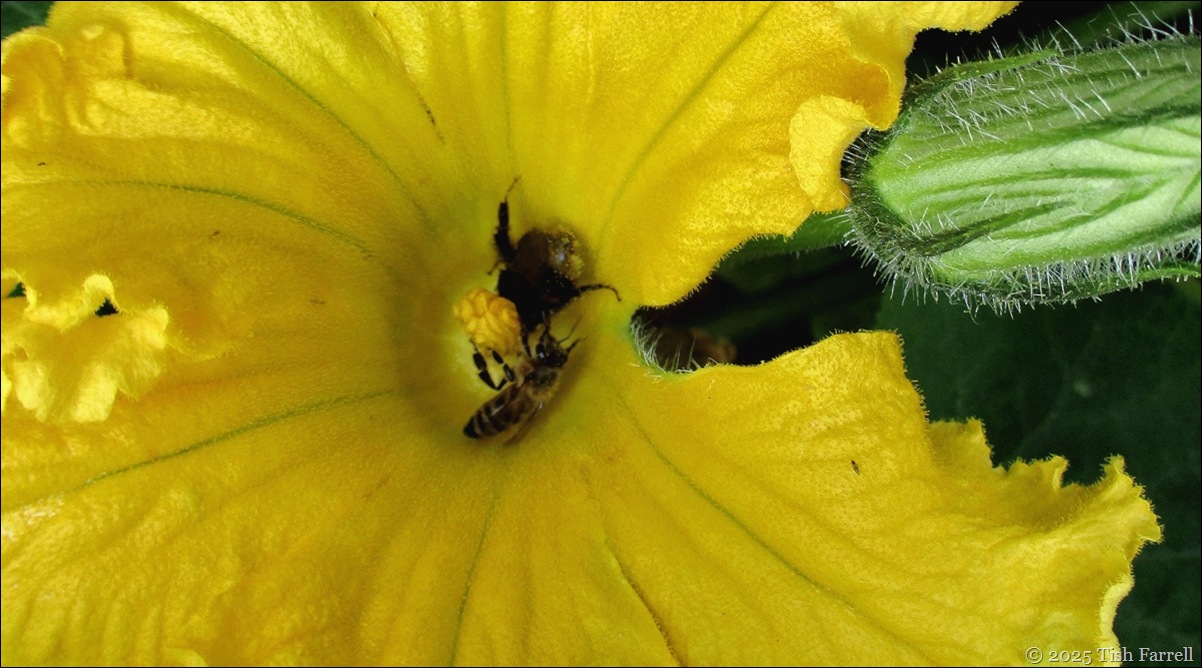
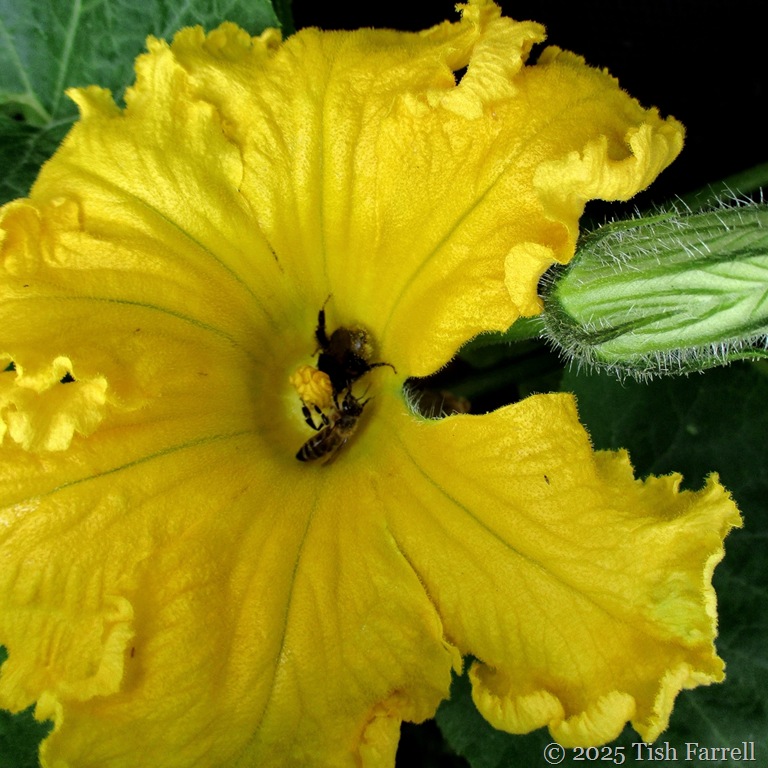
The leaves are huge and the flowers are wonderful. Bumbles, honey bees, beetles and hoverflies think so too. They are currently getting drunk, shoving their way into the male flowers, and drilling down into the nectar below the stamens. In the process they are bathed in pollen. They can’t seem to get enough nectar and don’t care how many of them squash in there, or if they are different species.

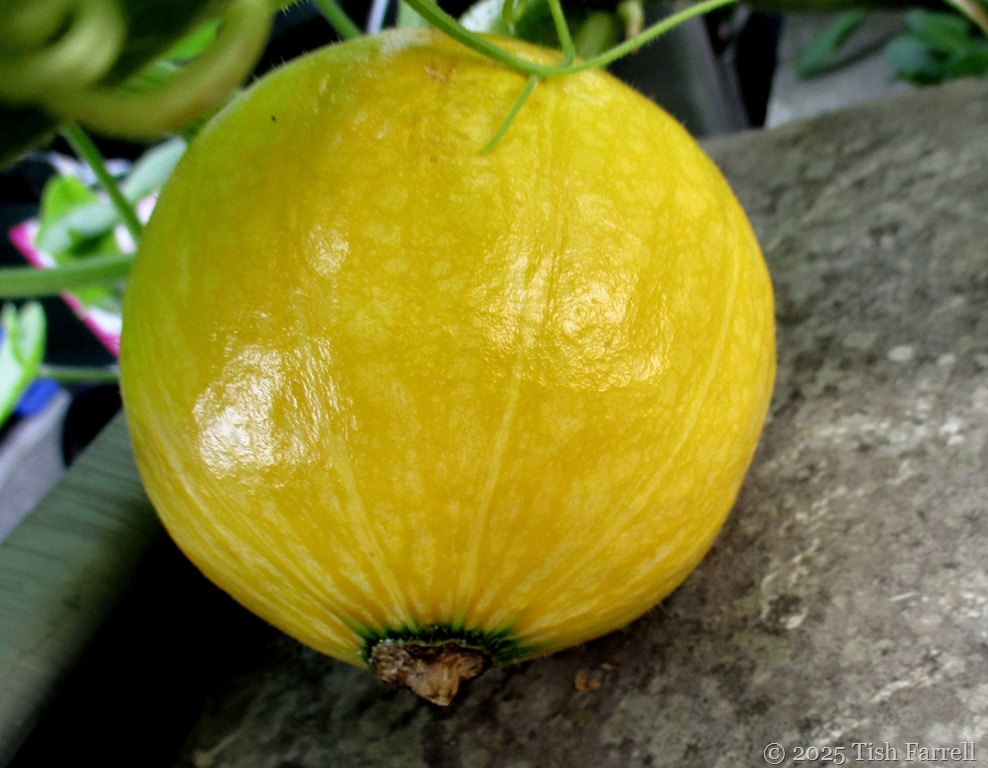
And this is what they have made.

squash

So far it’s about a hand’s width across. There’s a slightly larger one behind the oil tank, and a couple of smaller ones besides. Thank you bugs and bees. Some of you seem to be sitting around the garden with hangovers.

*

IMG_8437

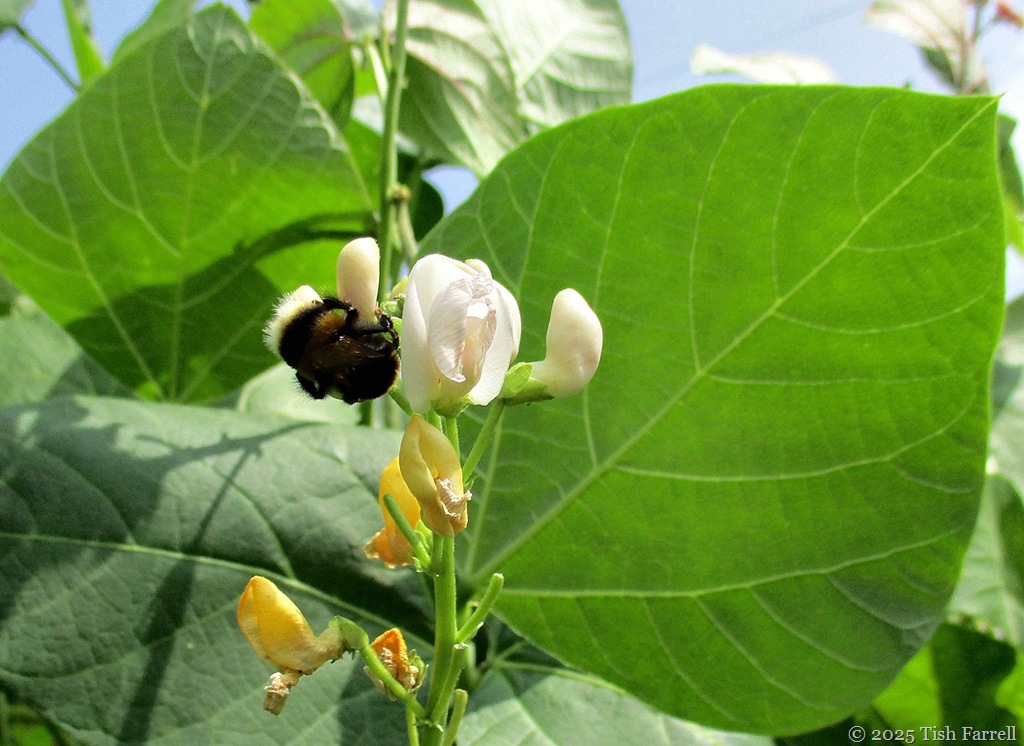
[2] The runner bean plants are still looking good and there is a mass of blossom, but so far they have been slow to set and the cropping sporadic. Too hot for them it seems. We’ve still had very little rain, apart from a good cloudburst on Thursday which added a few watering cans full to the water butt. And it certainly refreshed the garden, but did not last long enough to really penetrate the soil. The days have been much cooler though, and today there are signs of more beans coming. The bees have certainly been doing their best here too.

bumble and beans

*

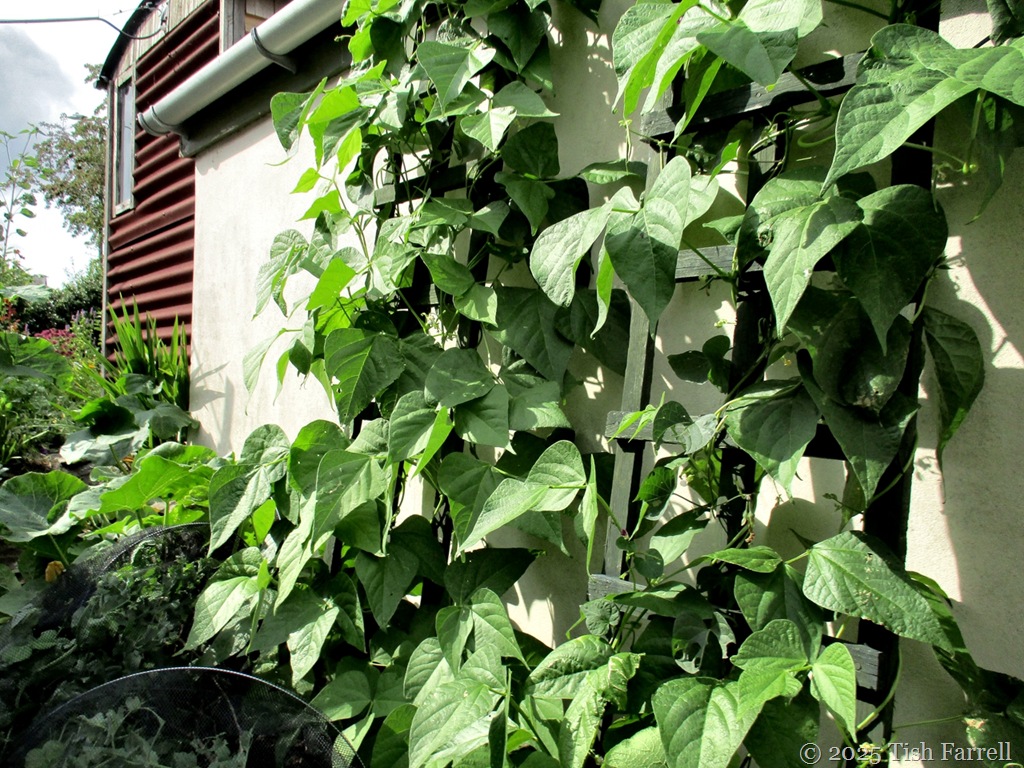
[3]  When I had my allotment I used to grow big rows or wigwams of climbing borlotti beans. Here at The Gables I haven’t the space. Instead, I have half a dozen plants growing up an obelisk in the front garden, and also a few more plants growing up some trellis beside the neighbour’s garage wall in the aforementioned border bed i.e. between the squashes. The beans are just beginning to set, but have a long way to go yet.

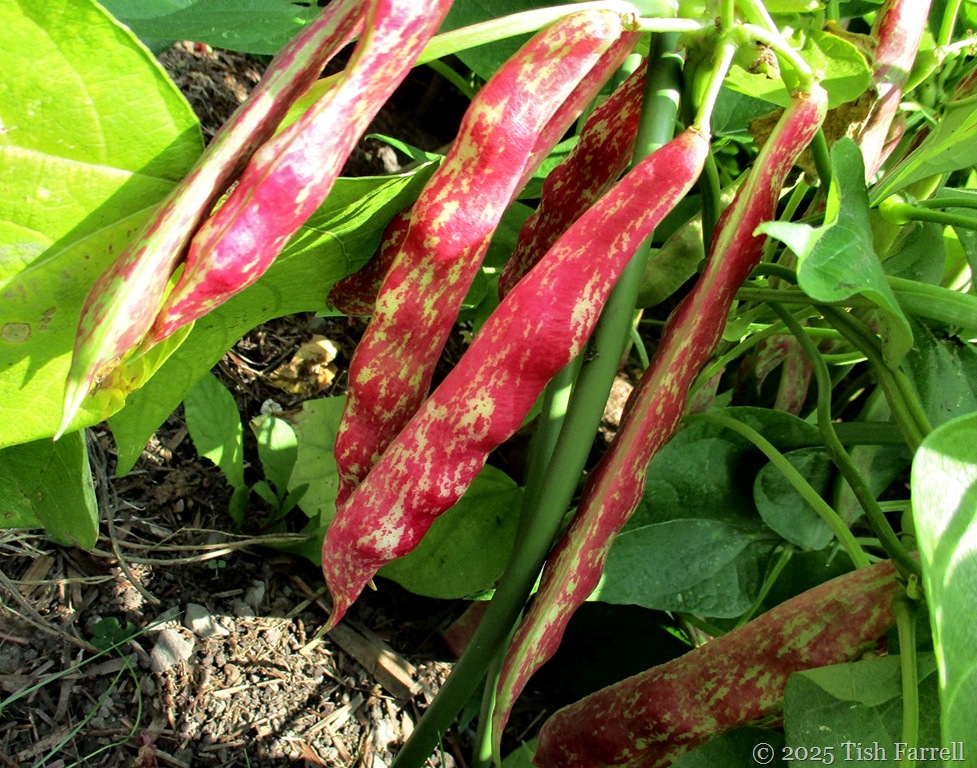
Meanwhile, in the bed in front of the runners, I have a short row of dwarf borlotti beans grown from seed. This was the first time I’ve grown them, and goodness, much like the squashes they zoomed off almost as soon as I’d planted them out. Already there are clusters of fattening pods. I love them for their colours as well as for cooking. So fingers crossed for a reasonable crop and no bean-boring bugs.

borlotti

IMG_8519

These are the climbing borlotti beans growing up some recycled trellis, and propped against next door’s garage, glimpse of squash plant to the rear. Some peas under the mesh in front are presently being nibbled. Graham, wearing his plant pathologist’s hat, tells me it is pea weevil. We entertain all bugs here – the good, the bad and the weevils.

*

[4]  It’s been a struggle stopping the herbaceous borders from flagging. In the front garden we left all the privet hedge cuttings on the flower beds to provide a bit of protection. I had mulched a number of plants earlier in the summer, but the blackbirds have kept moving it everywhere but under the plants.Most annoying.

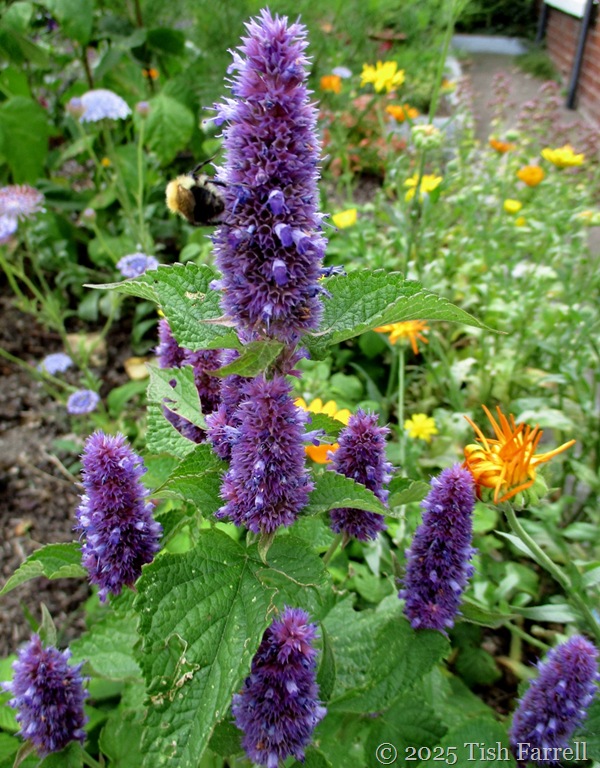
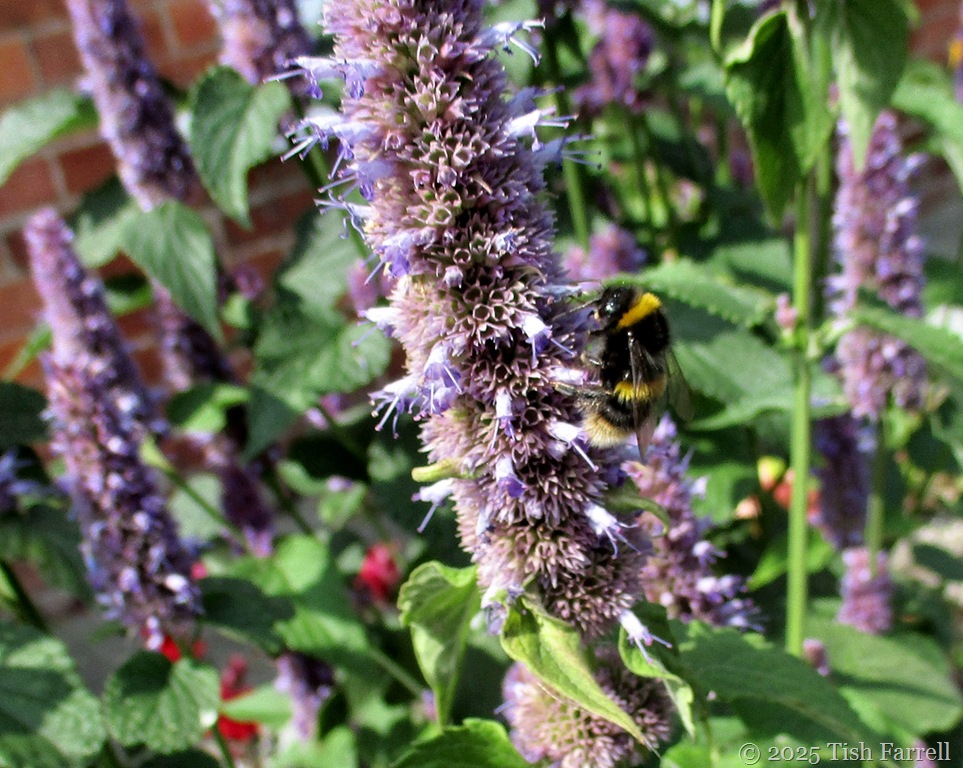
Still, things have survived, and now the late summer flowers are coming to the fore, and especially the Agastache, which I grew from seed last year. It’s another plant frequented by insects, including the cabbage white butterflies. I love its mauvy purple spikes, and the aniseed scent of its leaves.

IMG_8524

bumble agastache

*

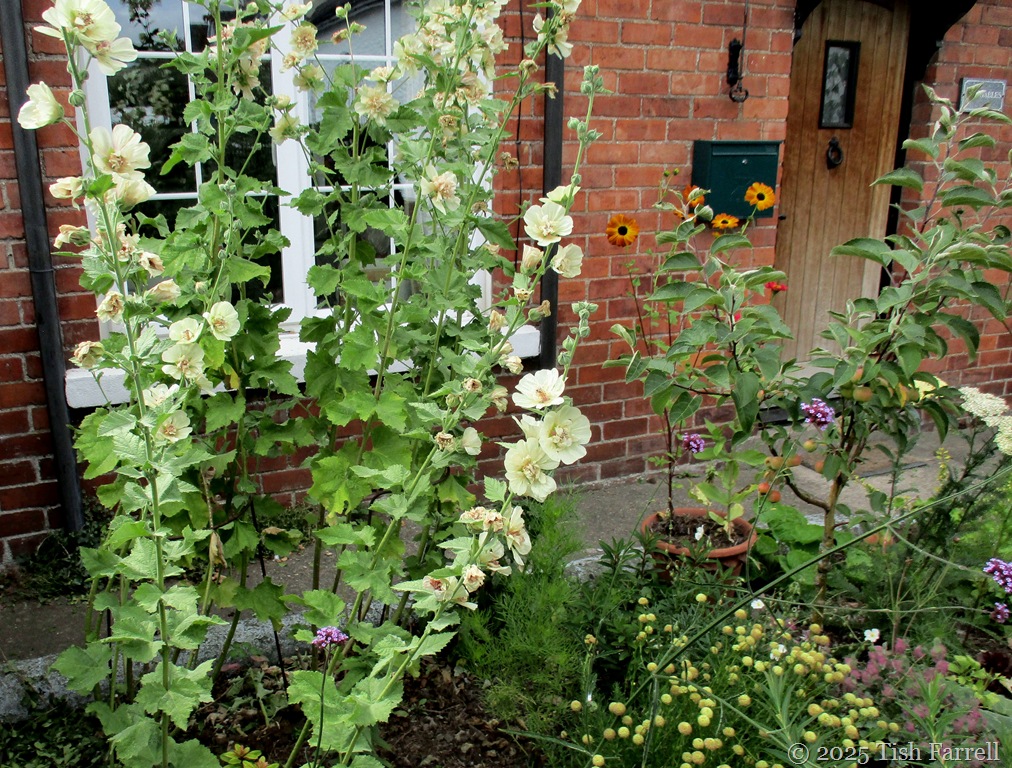
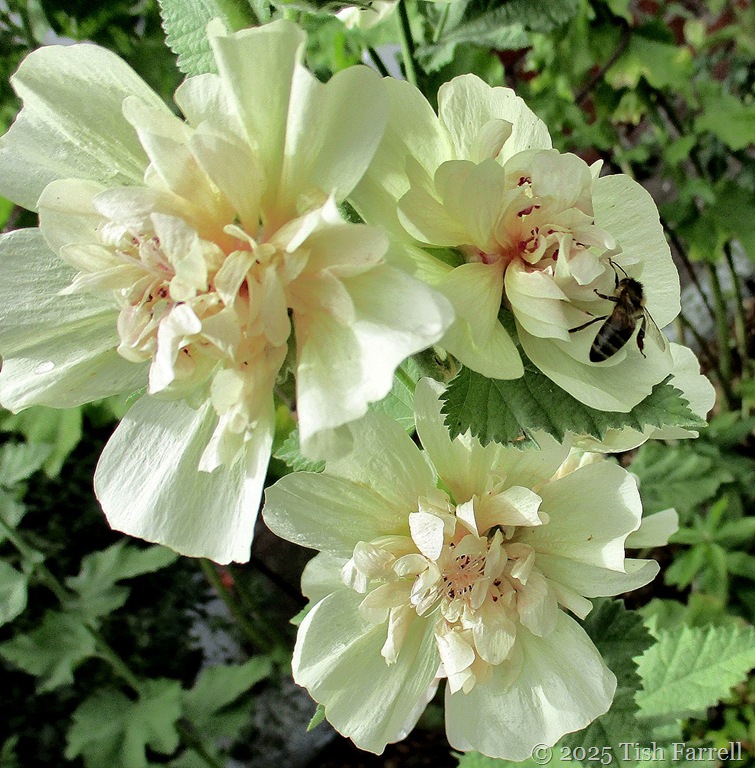
[5]  When I was thinking how to plant the front garden, I was much beguiled by Alcathaea ‘Parkallee’. I’d spotted it in a garden catalogue and was attracted by the fact that, as a crossbred hollyhock and mallow, it was immune from rust that frequently attacks hollyhocks. It also looked very pretty and so was among the first plants I bought for new garden.

It’s been flowering beautifully, despite the drought, but it does grow very tall, and thus has a tendency to flop over. I’ve found that cutting off the top few feet to put in a vase doesn’t seem to detract from the overall display. They anyway last very well as cut flowers too. Probably because they’re actually getting some water!

Alcathaea1

Alcathaea and bee

*

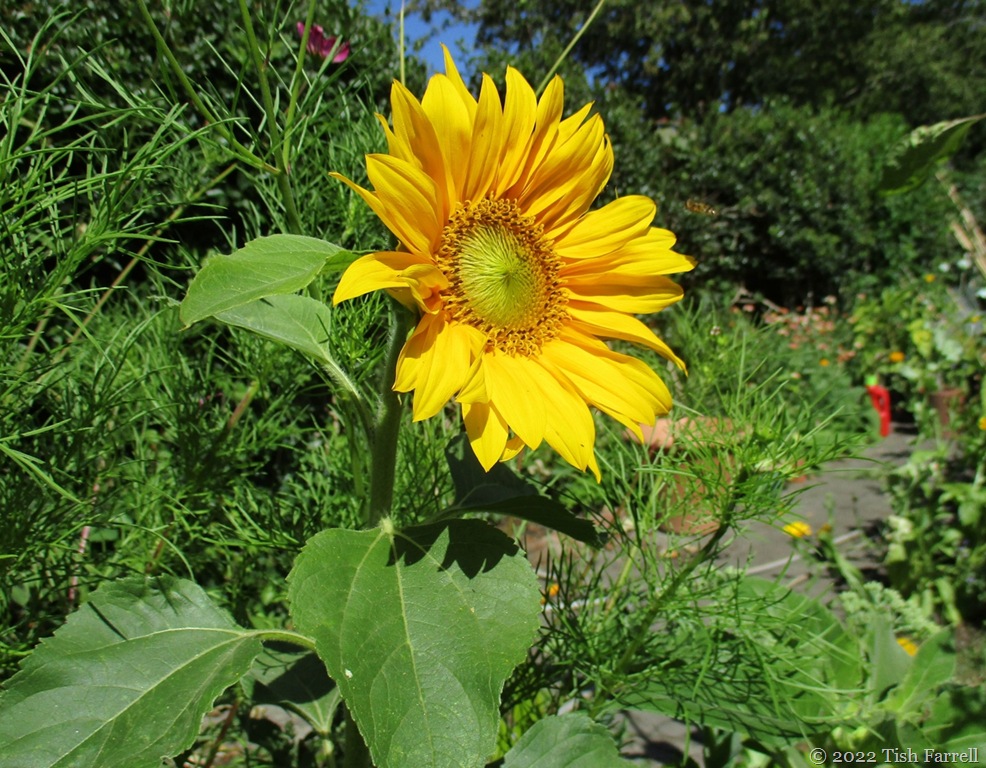
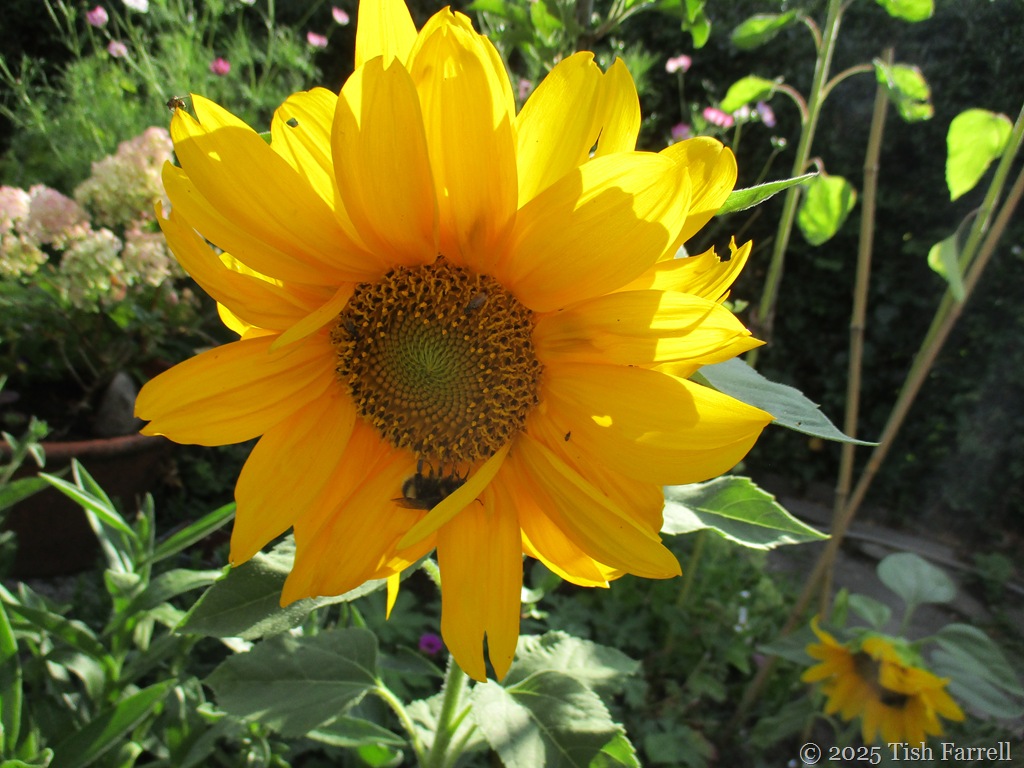
[6] And now it’s also time for sunflowers. I’ve grown all sorts, including the short Sunspot and some giant ones. Early summer plantings were zapped by some nasty bug and I had to cut off the main stems. Most annoying. Except now we have whole bushes of small-headed but long stemmed sun flowers which is actually very pleasing. You can see some orangey ones in the pot in the first Alcathaea photo.

 sun in sunflowers

The long…

…the tall

sunspot sunflower

…and the short Sunspot:

IMG_8432

*

It’s hard not to smile back at a sunflower Smile

Six on Saturday  Join host Jim at Garden Ruminations: lots of lovely plants and planting schemes.


After The Harvest: Of Stubble And Straw

BC lines

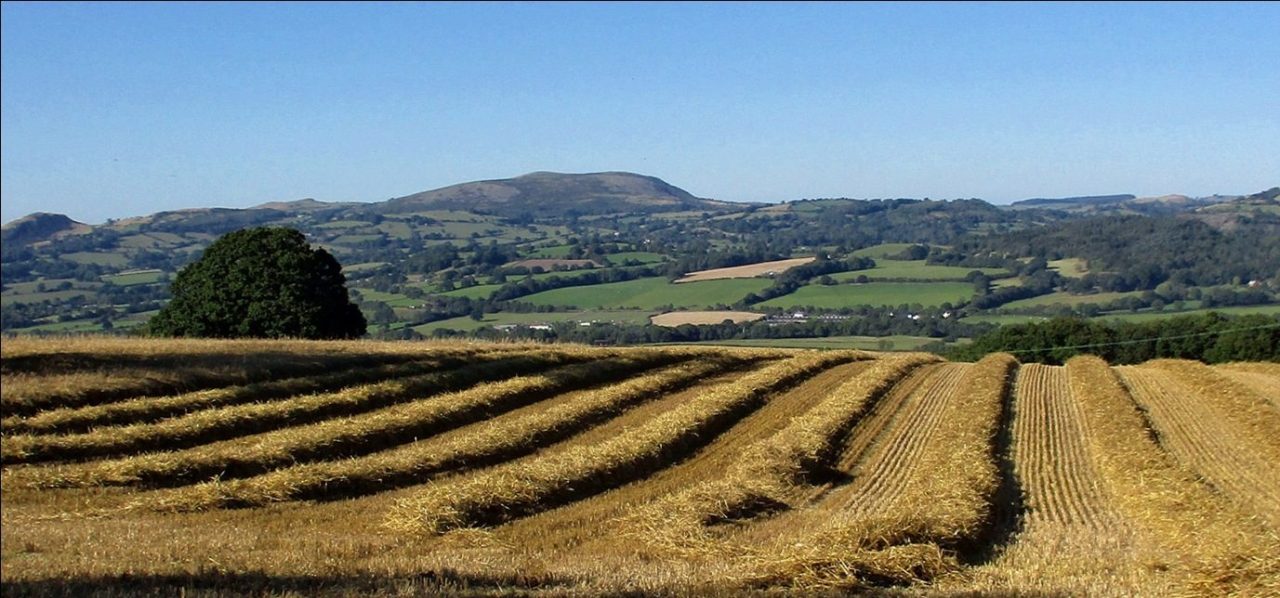
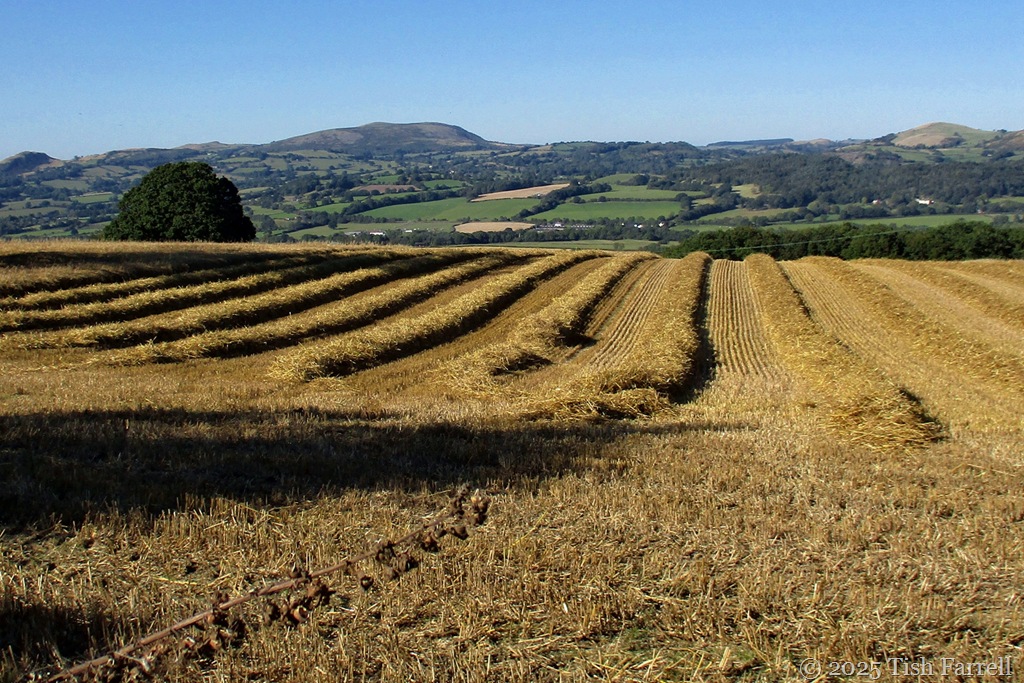
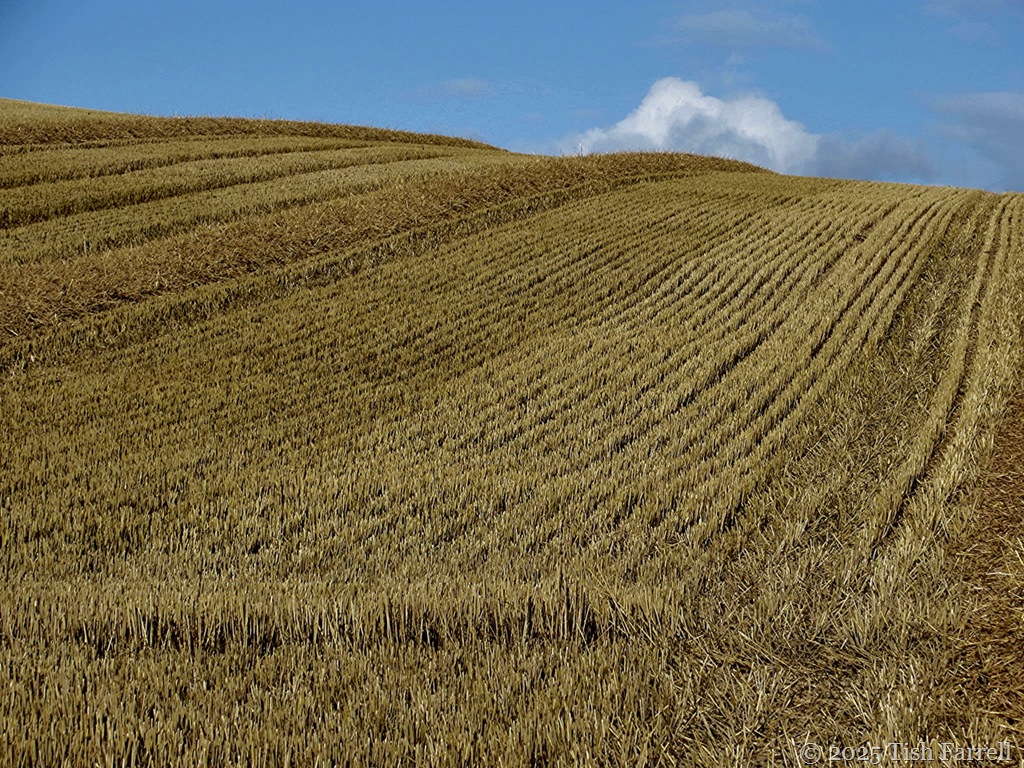
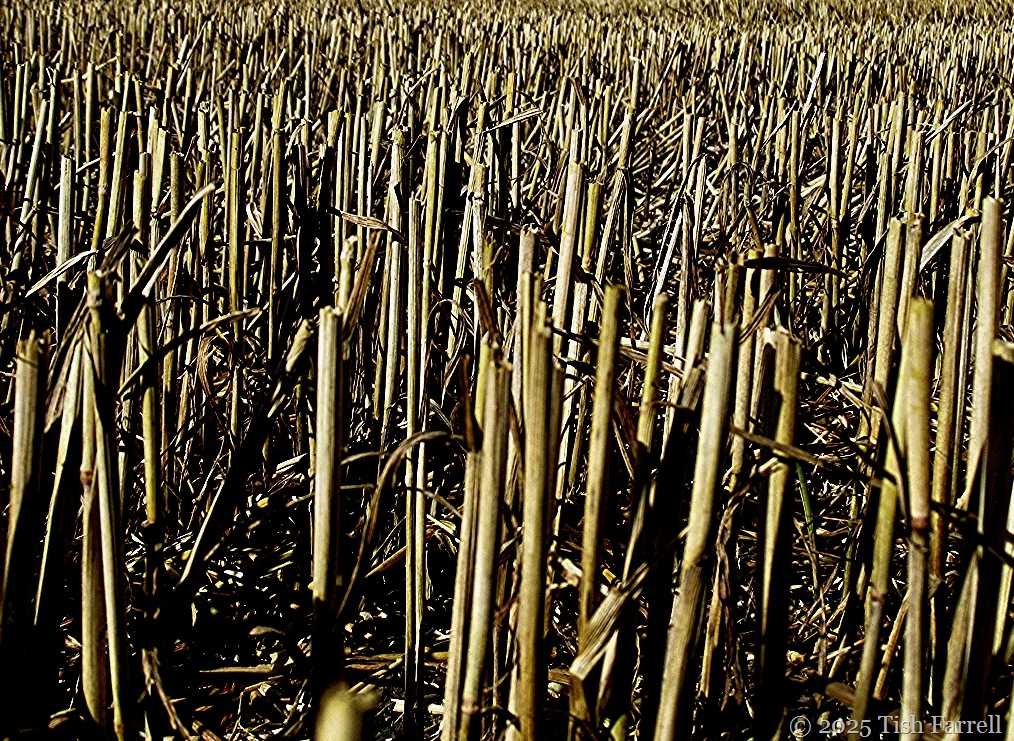
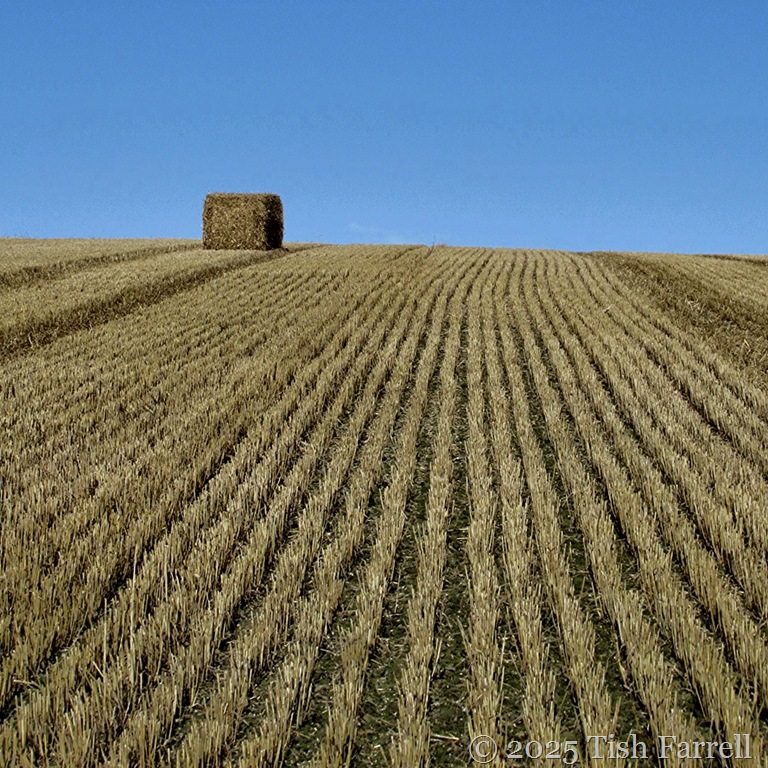
Come August and this year’s harvest has already been and gone. A good month earlier than usual. And somehow we missed it, we who live in the midst of rural Shropshire. In fact, when we drove out of Bishop’s Castle last Saturday, it was quite a shock: wherever you looked the wheat and barley fields lay shorn, the straw baled, or rolled in roundels, the remnant stubble pale and parched. Fields stripped.

How could we have missed so much activity and industry. Did we not hear the combines’ drone?

Along the lanes, too, the hedgerows had that dull and dusty out-grown look of late September. Dock and hogweed gone to seed: russet and deep umber shades of autumn. And again: how could this be? Had we been asleep, Rip-Van-Winkel-like, and lost a chunk of summer? Or had time skipped a month or two?

No. Simply distraction on the home front, gardening and household pursuits. Letting the world pass us by through weeks of day-on-day sun and rainlessness, which of course is the reason why the harvest was so early.

But now it has me reflecting on the beguiling looks of stubble fields, and thus a posting of photos of harvests past, of pared down textures, bare lines and simple colour palette of monocrop farming. I find myself attracted to the spareness of these humanscapes, although wary, too, of the high high-techery that produces such results. This is not the kind of farming I grew up with, the cut wheat stacked in stooks to dry, the arrival of the threshing machine, a monstrous sight over our garden wall, the contraption that, hung in sacking shrouds, throbbed and shuddered, spewing out clouds of chaff as it garnered precious grains from stalks and husks.

Hey-ho. More time slippage.

[The header and final photos were taken mid-September last year above Bishop’s Castle. The in-between shots are from Townsend Meadow, below Wenlock Edge]

lines 3

IMG_3993ed

lines stubble

lines 2

IMG_6231ed

Lens-Artists: Lines, colours, patterns  Johnbo asks us to explore these tools of photo composition.

Red For Danger?

19

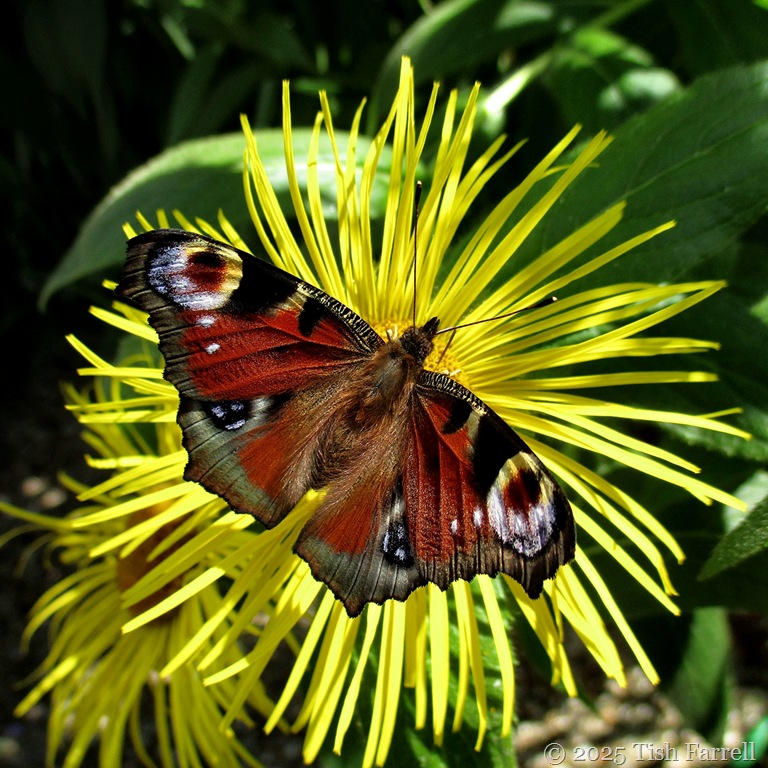
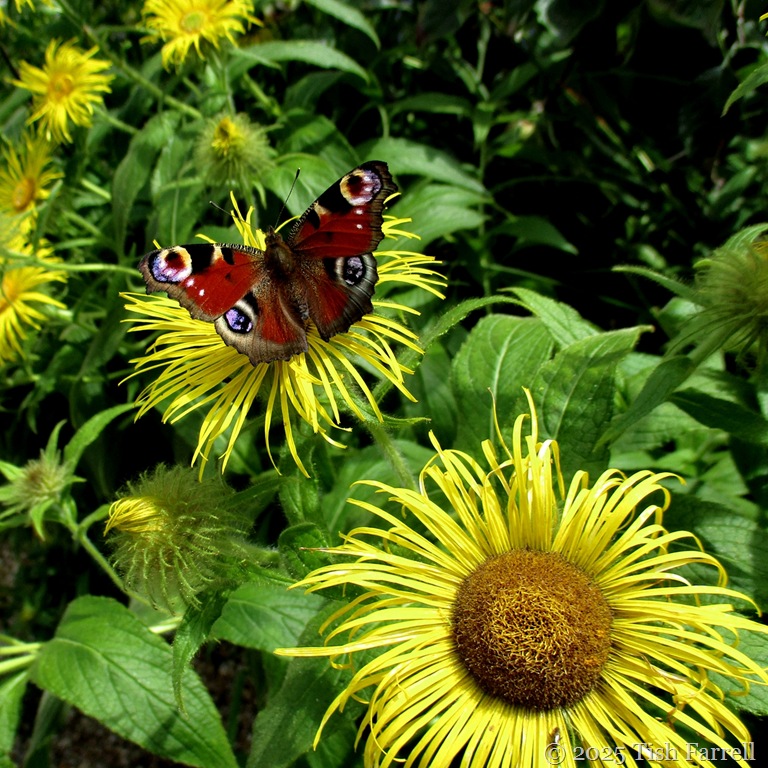
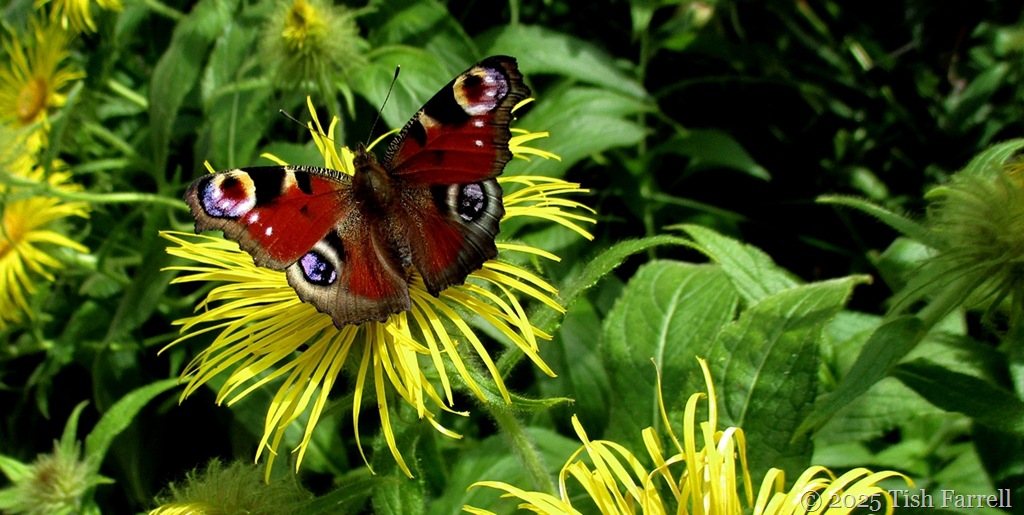
Actually, it’s probably the eyespots that see off birds that might prey on the peacock butterfly (Aglais io). But then the deep rusty red does show them off so well.

The peacock is said to be one of our commonest UK butterflies, although I’ve only seen one so far this year, and that was in our bedroom. I was more concerned with helping it escape than snapping it. These photos, then, are from our previous garden where they would often come in high summer to feed on Doronicum, aka Leopard’s Bane.

18

*

But how beautifully it has composed itself. And so it seems a fitting tribute to Becky who, for a whole month, has kept us so well amused with our respective photo archives.

THANK YOU, BECKY, QUEEN OF SQUARES


18 header


#SimplyRed Day 31

Heavenly Harvest

IMG_8275sq

A week or so ago we were on one of our periodic walks to the Builders’ Merchants. It sits on the edge of town, part of a small industrial enclave whose  buildings are screened from adjacent roads by a section of dense mixed woodland.

And this is what we found along the fence-line – a close-set row of cherry plum trees, laden with fruit.

The Cherry plum (Prunus cerasifera) is native to Europe and Asia and grown in the UK as an ornamental due to its early flowering. It is also used in hedging. (Which makes me wonder if this row is a hedge gone feral. There are a few of those in Bishop’s Castle and we should know.) Better still, the fruit, ripening between mid-July and September, is edible. I tried a couple of windfalls, fallen on the verge. Sun-warmed and juicy. Delicious.

Now, I can’t think why I haven’t been back to gather some more – before the wasps beat me to it.

IMG_8277 header

#SimplyRed Day 28

Ladybirds In My Borders, Bees In My Bergamot

ladybirds sq

I’m back in the garden today. The old Africa album is taking a break. Although actually, thinking about days long past in Kenya has been a happy diversion from fidgeting about the lack of rain. Yet another month now with hardly enough to fill a watering can. But at least the days are much cooler and today quite overcast. In the meantime, the weather forecasting bods keep teasing and teasing, saying there will be rain two days hence, and then when we get there, ne’er a drop. Even my computer’s been joining in the game – a little message popping up saying ‘rainy days’ ahead. I now understand that ‘ahead’ is the operative word. And, of course, this being England, we can be fairly sure that one day we will receive a proper soaking.

Anyway, it’s not all bad news on the gardening front, so long as I keep up the regular watering. In fact the bergamot has scarcely needed any attention. For weeks now it has been a riot of bright purple heads. The leaves smell wonderful too, crushed between soily fingers. And as for the white tailed bumbles which, on closer inspection, are probably garden bumbles – talk about bee-lines. These days whole tribes of them are foraging among the curiously structured flowers.

IMG_8303sq

*

I’m also very pleased to see a number of ladybirds in the garden, most numerously in the perennial cornflower (Centaurea). I’m puzzled as to why they are there, since I can’t see any aphid infestation, only ants. Unless they both ladybirds and ants preying on something too small for me to see.

Also spotted in the Centaurea are Common Carder bees, seen here with an incoming hoverfly:

IMG_8309sq

*

And in the neighbouring Sunspot sunflower a Red-tailed bumble bee:

IMG_8333sq

IMG_8334 sq

*

However, I am not so pleased this morning, to discover flea beetles on my Kabuki broccoli seedlings, planted out only two days ago. These tiny brassica-infesting bugs create a ‘scatter-shot’ appearance to all the leaves. Time to round up a few ladybirds and put them to work then. I’ve just read that they like flea beetles…


#SimplyRed Day 27

Six On Saturday ~ Still Waiting For Rain

IMG_8163

The evening garden

*

This gardener is beginning to panic. After weeks of rainlessness, we’re now having a spike in temperatures – the peak today  at 29 or 30 degrees, depending which weather forecast you consult. Thereafter, hopefully, we should feel a decline of several degrees, with finally a  promise of rain next week. 

But then we’ve had these promises several times over the last three months, with only one good downpour that yielded 8 watering cans’ worth from the shed water butt. And that was ages ago.

1. Hand watering is all very well, but it really only keeps plants ticking over. Or in the case of my onions and first sown carrots doesn’t. I pulled them up yesterday. They had simply stopped growing.

sos 2

*

2. Also my single seed potato in a bucket had had enough by yesterday. This was one I couldn’t fit into my planting row, so I thought I’d trial it in a container. Stopping it from drying out was of course an issue. And the bucket  itself was making it very hot. All the same, when I emptied it, I was quite impressed with this little haul.

sos 4

The Rooster spuds in the ground are still holding their own for now, so I’m hoping for a reasonable harvest. We’ve eaten most of the Belle de Fontenay, and I’ve popped in a few peas where she’s left some space.

*

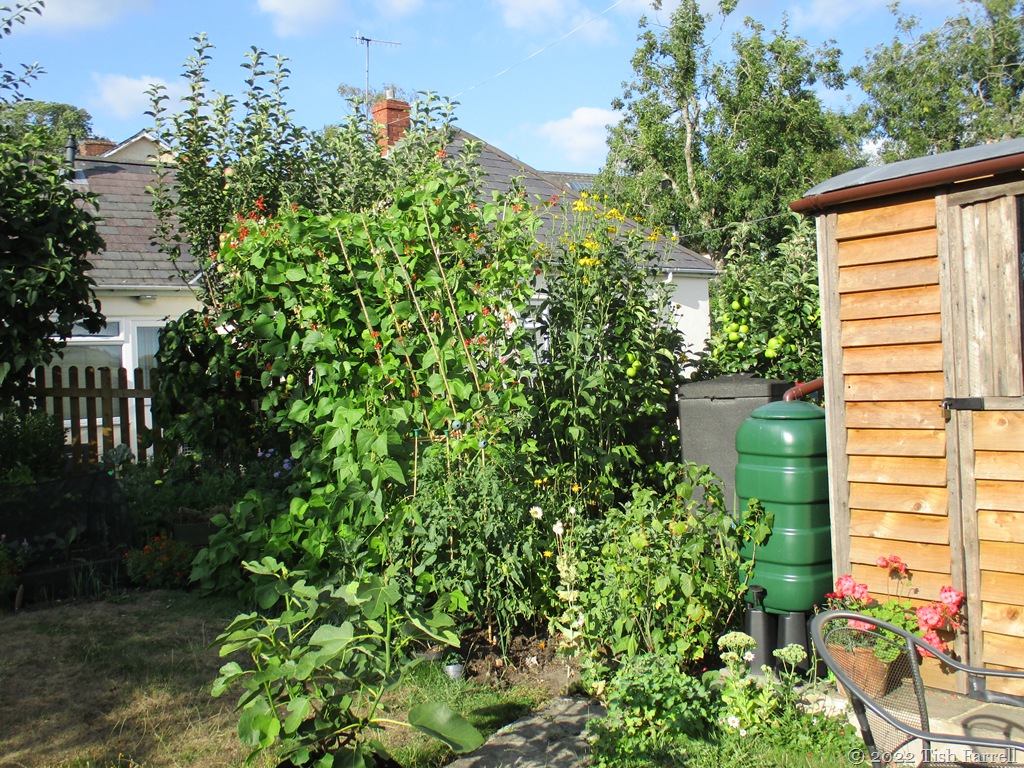
3.  In the bean corner things are looking fairly hopeful. Beans respond well to mulching, and anyway make some of their own shade. I’d also prepared a compost filled trench for the runners in the winter. The dwarf borlotti beans, planted out in front, are also sheltering the runners’ roots. They don’t seem to mind being hot and are already forming pods. A slight error in labelling has resulted in some of the dwarf borlotti in the row requiring sticks, which is annoying. I have the taller variety growing up some trellis against next door’s garage – i.e. in the once horridly hypericum infested wall-bed on our boundary.IMG_8213

This year I have a real mix of runner bean varieties. For some reason I had problems getting any of my seeds to germinate well, new and not so new packets alike. I ended up re-sowing, and putting in a few Scarlet Emperor seedlings bought from the butcher’s to be going on with. My small row thus also has some white Moonlight, red Lady Di and one Painted Lady which has very pretty white and red flowers although they’re looking pink at the moment.

sos5

IMG_8227

*

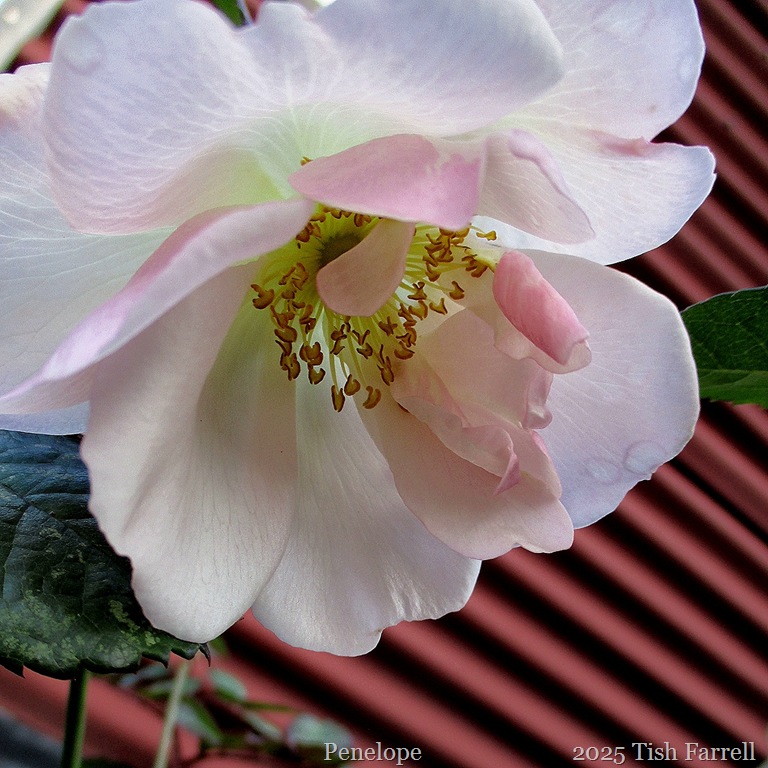
4. In the nonedible quarters, Penelope rose is still blooming hard, although the other roses have given up flowering now. I love her. She is like a wild rose, but with added flounces. And she smells delicious.

IMG_8171sos

*

5. Also my favourite Morning Glories have begun to live up to their name and are putting on an early-day show. I’ve planted them out everywhere where there’s something to climb up, amongst the beans and sunflowers, up the trellis disguising the oil tank. Hopefully, if it does rain next week, they will really get going, and hopefully, too, keep flowering until the first frost as they did last year.

sos12

*

6. And another success has been the sweet peas. Although the ones in the front garden are now beginning to fry round the edges, this despite the watering and mulching. Also, given my non-orderly manner of cultivation – randomly up an obelisk and a trellis, they have grown rather short stems. My dear Pa would have been aghast. He used to grow his in regimented tall-cane rows, with set watering intervals to ensure evenly spaced blooms along each dead straight stem. Then he would lovingly count them, five and six big flower heads, usually. And then he would snip a bunch of the best and take them off to his latest lady friend. Mother rarely got a look in when it came to sweet peas.

I’ve tried taking a photo of ours outside, but they don’t look their best. So here’s one of the several small vases we have about the house. Wall-to-wall sweet pea scent,  a soothing antidote to moments of over-heatedness.

IMG_8152

Six On Saturday Please visit our host Jim. Lots of interesting plants in his garden today.
It Seemed Like A Big Day Out

IMG_8114 sq

We’ve not been gadding for ages. He who builds sheds has been much occupied during our rainless days, taking the internal house doors off their hinges and, one by one, stripping them down and repainting them. As may be imagined with a hundred year old house, there are many layers to remove. He’s working outside with wallpaper stripping gun which peels off ancient gloss and varnish like a dream.
It was during one such operation on the cloakroom door that we decided opaque glass panels in the upper door half would make for more light in the neighbouring gloomy utility room. Glass panels were duly ordered and on Friday we set off (from the somewhat isolated fastness of Bishop’s Castle) to collect them.

This involved a twenty mile drive to our county town of Shrewsbury. We’d not been there for over two years, not since our house selling days and foiled attempts to find a rental property there. In some ways the prospect of this outing made me realize how our horizons have shrunk, though not in a bad way. But once our life was repeated long haul flights between UK and Africa. Now, I feel I’ve been on a journey if we go to next door Clun, eight miles away or to  Montgomery, just over the Welsh border. But then both those places are so lovely, each in their own particular ways, what else could one want?

One of the reasons the Shrewsbury trip turned into a haul was because the main route out of Bishop’s Castle was closed and we were sent on a diversion, wending back and forth between Wales and Shropshire. But it was a sunny day and the countryside, with its undulating hillscapes, glorious, so why should we complain. We even had a red leg partridge step into the lane in front of us. (It withrew unscathed). And there were buzzards and red kites high in the blue, wafting over newly mown hayfields, the roadside hedgerows full of wildflowers – honeysuckle, willow herb.

After such bucolic byways, Shrewsbury with its multiple bypasses (internal and external), huge traffic islands, and peripheral industrial estates and retail zones is something of a culture shock. But the old town itself, on a hill and cupped in a loop of the River Severn, has been going since at least Saxon times, and so has many ancient and scenic parts. These days, too, it is cafe culture central. Just look at this LINK.

And one of the best locations for eating out is Shrewsbury Market. Which is where we headed (after negotiating the ring roads and industrial quarters)  for a spot of lunch at the Moli Tea House. To say their exquisitely served Asian offerings are delicious is an understatement – tiny Chinese dumplings with dipping sauce, delicate meat balls served in a crisp lettuce leaf wrap. Heavenly.

Later, we wandered around the stalls of artisan bread, fresh vegetables, farm eggs and meat, looked at what people were enjoying in the other eateries, bought some fresh fish. Then headed back to our border refuge, to the Castle that has no castle, this time on the truck-roaring A49, the main highway south, which is quicker if further. We were anyway glad to leave it behind, back to the quietness of our home terrain and a restful cup of tea.

IMG_6190

#SimplyRed Day 9


Enter The Dragons

Michaelmas Fair chinese dragon

Yesterday I posted scenes ‘live’ from the Bishop’s Castle carnival, today we have photos from another of the town’s annual parties, last year’s Michaelmas Fair. It begins with a parade in which Chinese dragons and drummers steal the show. (Sadly no competing Welsh dragons in spite of the town’s closeness to Wales, but then you never know what might turn up this year).

IMG_6304sq

*

As happened yesterday, the weather was cool and gloomy, but there was no dampening of the spirits; not once the Rajasthan Brass Band took to the streets…

IMG_6324ed

*

…and the town’s own Shropshire Bedlams Morris men stepped out, all jingling bells and vigorous stick clashing…(More about local Morris heritage here)

IMG_6331ed

IMG_6335ed

*

The Michaelmas Fair takes place all over the town, in the pubs and park and church halls. A stage below the Town Hall hosts live bands all day. There are street stalls and street food, bubble blowing, fire eating, an afternoon parade of steam engines, tractors and classic vehicles, headed by Clive the elephant, another star attraction. (The town’s elephant connection is explained in a previous squares challenge post here.) And the whole is rounded off with an evening lantern procession through the town, all lanterns made by Castle folk.

IMG_6367ed

*

I didn’t catch Clive the elephant last year, but here’s a photo of him from a sunnier fair:

100_7180ed

*

This year’s fair is on the 20th September. More details HERE. But before that there’s another big fun event: the Party in the Park on the 19th July. A day of non stop live bands, workshops, and family activities from noon to 10.30 pm. Sometimes life in this small country town can sound a tad exhausting.

And on that note,  back to dragons, this one from the 2023 lantern parade:

IMG_3791ed

IMG_3813ed


#SimplyRed Day 6

IMG_6303 Michaelmas fair chinese dragons header