Peroulia Dreaming 2 ~ The Promise Of Rain

It was a family celebration that brought the six of us to the Peloponnese in late September. Thoughts of Greek sunshine lured us too – after a lacklustre English summer. But as the departure date drew near, and the scanning of world weather forecasts stepped up in the hopes of better news, it was clear that the weather in Messenia was set to change.  With the equinox, daily temperatures were to drop by several degrees. Now there would be cloud, rain and storm along with the sunshine. Ah, well. Better pack the waterproofs.

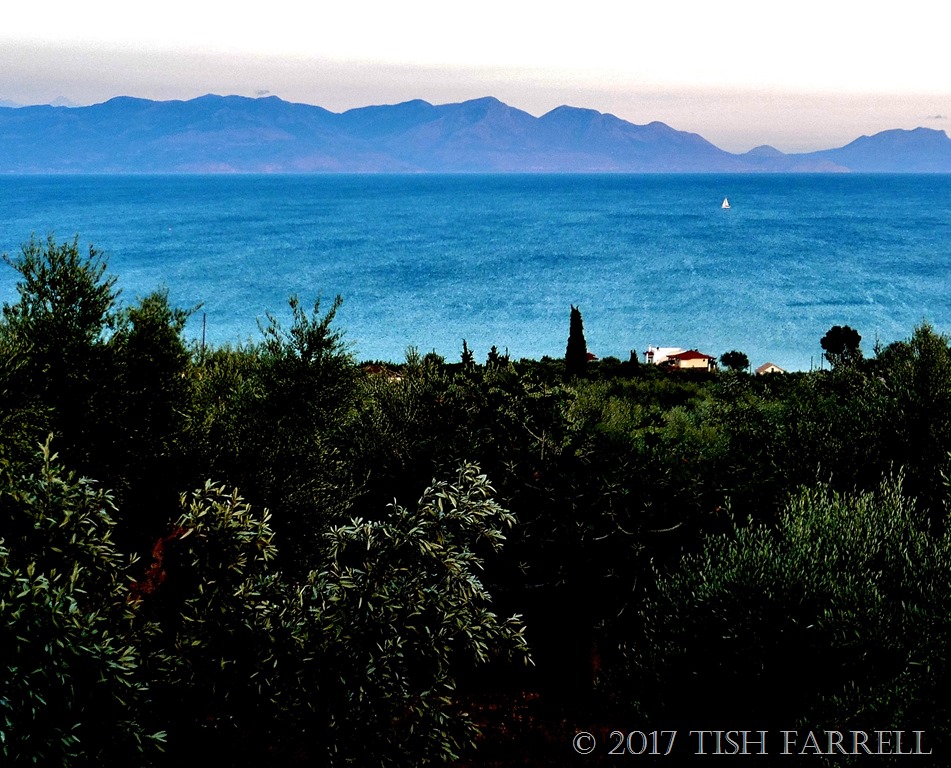
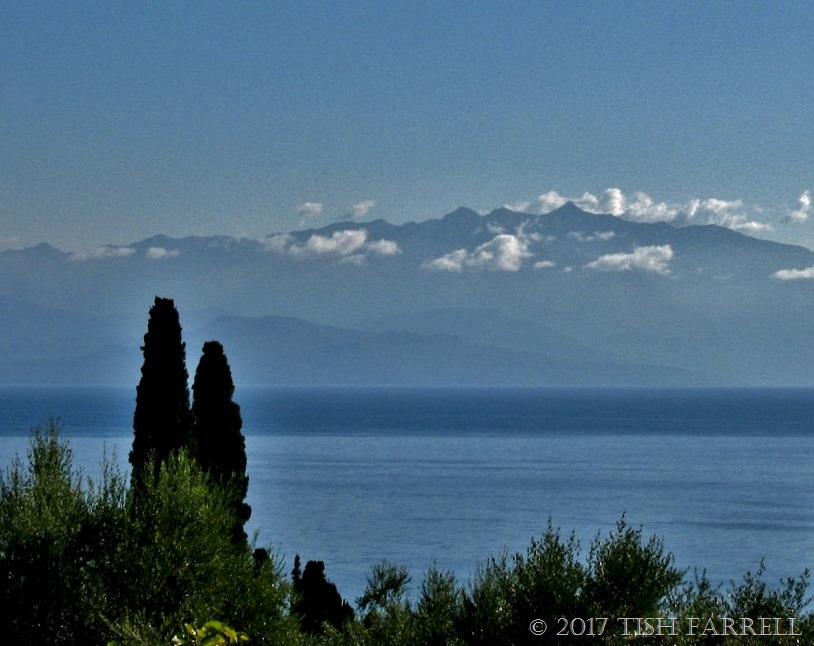
Yet when we came into land at Kalamata airport  on Sunday lunchtime all was blue. The plane banked over the Gulf of Messenia heading out to the Mediterranean before flying back up the Mani peninsula, following the Taygetos Mountains into the airport. Blue sea. Blue mountains. Blue sky.

We stepped off the plane into high-summer warmth to be met by Dimitri, who whisked us  off in his smart Mercedes people carrier. You have chosen a good time to visit, he said; not too hot.

And so it proved.

*

Hinterland Messenia is not pretty. It is a rugged, crumpled upland with deep valleys and winding roads, the vegetation parched from summer heat. Grass burned brown, bare earth between the trees and vines; wherever you look, the grey-green haze of olive groves spreading up and down hillsides and gullies, the dun colour palette spiked here and there: white-walled farmhouses, red tiled roofs, the odd designer villa, black spires of cypress  and, at the roadside, soaring clumps of phragmites grasses with their parchment coloured plumes. There is stuff and clutter among the trees – old tyres, beach loungers, broken down farm machinery, dead cars and stranded boats. Ramshackle stalls offer pumpkins and oranges. And then the road bends towards the Gulf and you glimpse the sea, glinting like jewels, the woodcut frieze of the Mani mountains beyond.

The road south from the airport to Koroni follows the coast – we pass by Messini, Velika, Petalidi, Hrani, Nea Koroni, Vounaria – more work-a-day farming communities than high-profile tourist territory. We know that when we reach Harakopio we must leave the main road and wend up the hillside above Peroulia Beach.  Michael and Maria, our hosts at the Iconpainter’s Villas, have provided a map, but in real life nothing looks straightforward. I’m relieved when it turns out that Dimitri mostly knows where he’s going.

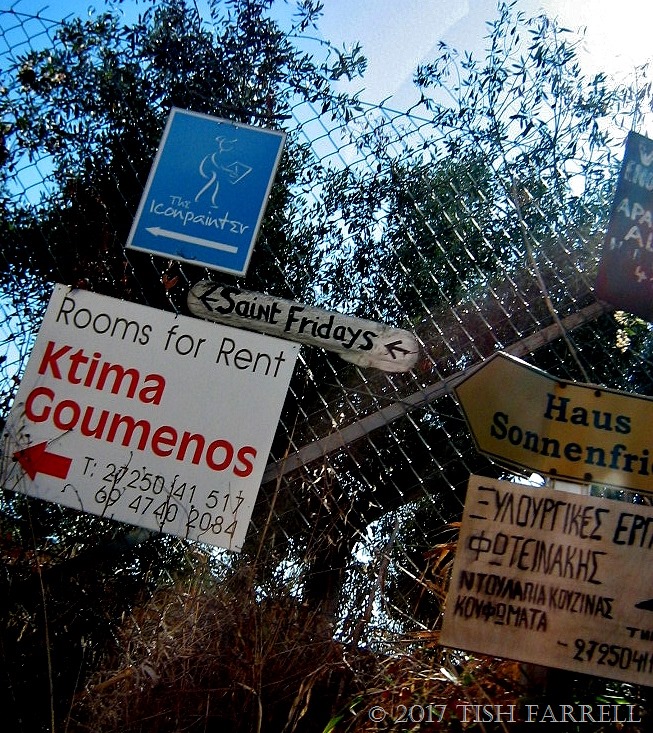
The turn is not obvious despite the clutch of signs on the fence, and almost at once we are ‘off the beaten track’ and seemingly in someone’s front yard. The road narrows so quickly I breathe in, and next we’re zigzagging round house ends, nudging round blind corners, Dimitri tooting the horn (not too loudly), then climbing up beside a whitewashed church, then on through olive groves.

The road is single track, mostly concrete, but in places broken down to rubble. It undulates with bold intention.There are small ravines and gullies. At one point there’s a frisson of alarm from Dimitri as he fears for his Mercedes. This is no game, he says, and we agree. But he is a game lad, and he presses on. IMG_2925
And suddenly we are turning into a smart gateway, pulling up the drive to a tall white house, and there is Michael to greet us and show us to three lovely little houses that will be home for the next seven days.

The bright turquoise doors are a good start. In our respective kitchens we find welcome boxes for lunch and the following day’s breakfast – tomatoes, oranges and figs from the garden, Maria’s home-made lemonade and bottled baby oranges, fig jam and chutney. In the fridge there are mini bottles of Ouzo, the Iconpainter’s own white wine, local yogurt, feta cheese and honey. There is also bread, milk, butter, ground coffee and tea, iced water, brown eggs, little fruit pastries, sesame biscuits, plums and bunches of grapes. It seems we have flown straight to heaven.P1020274We put out of our minds the fact that on Thursday there will be a big storm, and side line Michael’s apologies that the likelihood of rain is high. We have been longing for it, he tells us. All the olive farmers  are waiting. I know it’s not what you want.

We shrug. For now the sun is shining and it is time to eat our picnic lunch under the terrace awning hung with grapes. And then…And then it is time to throw off our travelling clothes, put on something looser and cooler and so take the path to Peroulia Beach…IMG_2919copyright 2017 Tish Farrell
PS I know I said I’d take you walking to Koroni. But that little trek will have to wait till the weather is cooler.
 Peroulia Dreaming Part 1

Look Out For The Giant Sunflower!

IMG_6034

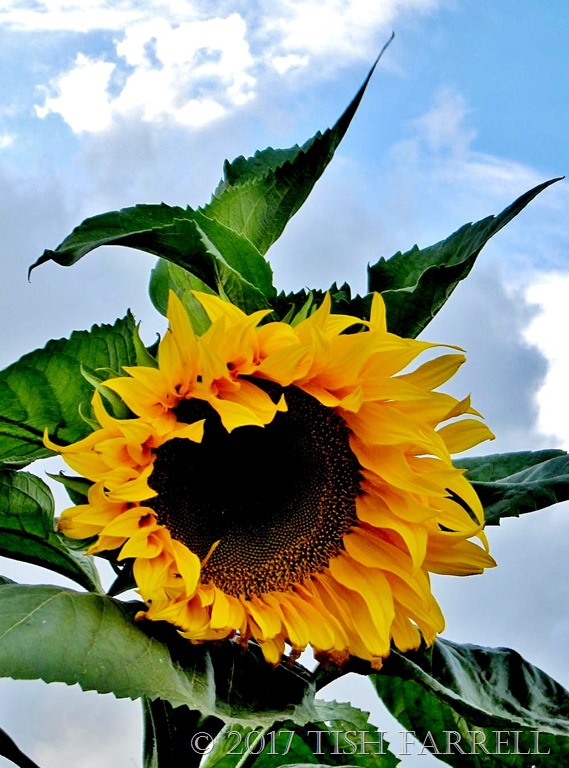
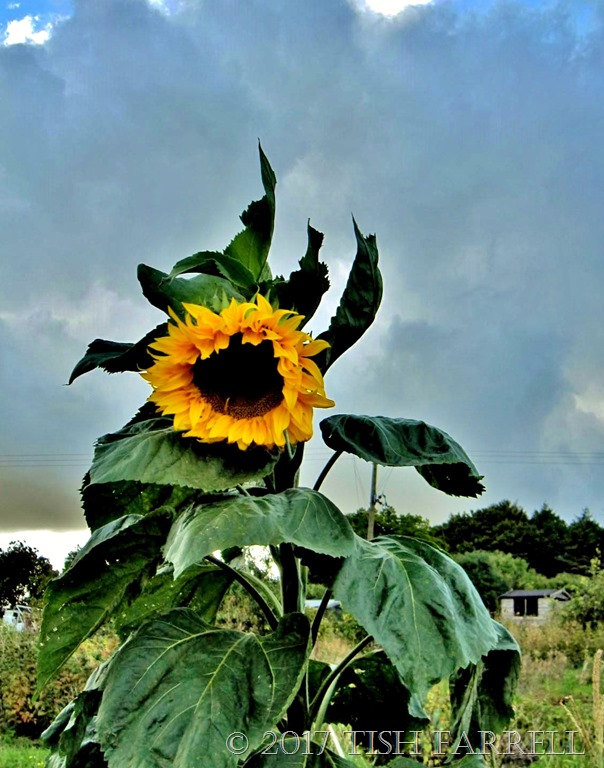
Out of the blue it came, a sunflower the size of a small tree, and towering over my bed of dwarf French beans. I think I must have a mouse or bird to thank for dropping a seed from someone else’s plot in my compost heap, whence it was transported to the bean bed early in the summer. I have certainly never grown a monster like it. Anyway, its suddenly overbearing presence hasn’t deterred the beans – a variety called Ferrari which have been more than living up to their name.

I’ve read conflicting reports as the companionability of sunflowers and beans, some sources saying that climbing beans will grow up a natural trellis of sunflowers, others saying that bush beans and sunflowers both should, and should not be grown together. Ah well. All I can say is beans and sunflower are doing well, the beans still producing even as autumn approaches, and despite some chomping by slugs. But it goes to show, anything can happen out on the plot.

IMG_6035

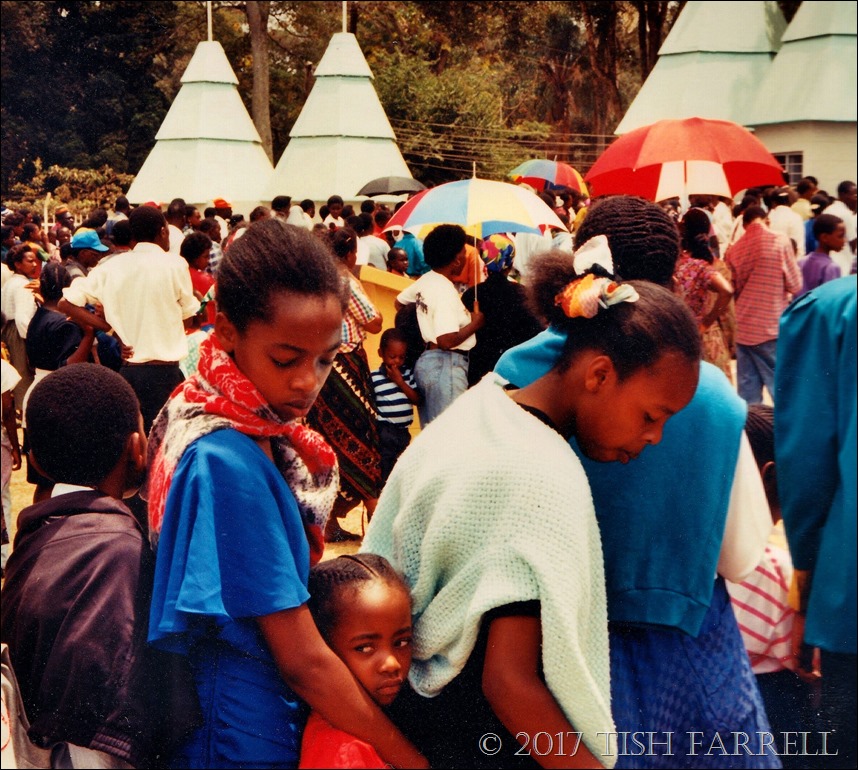
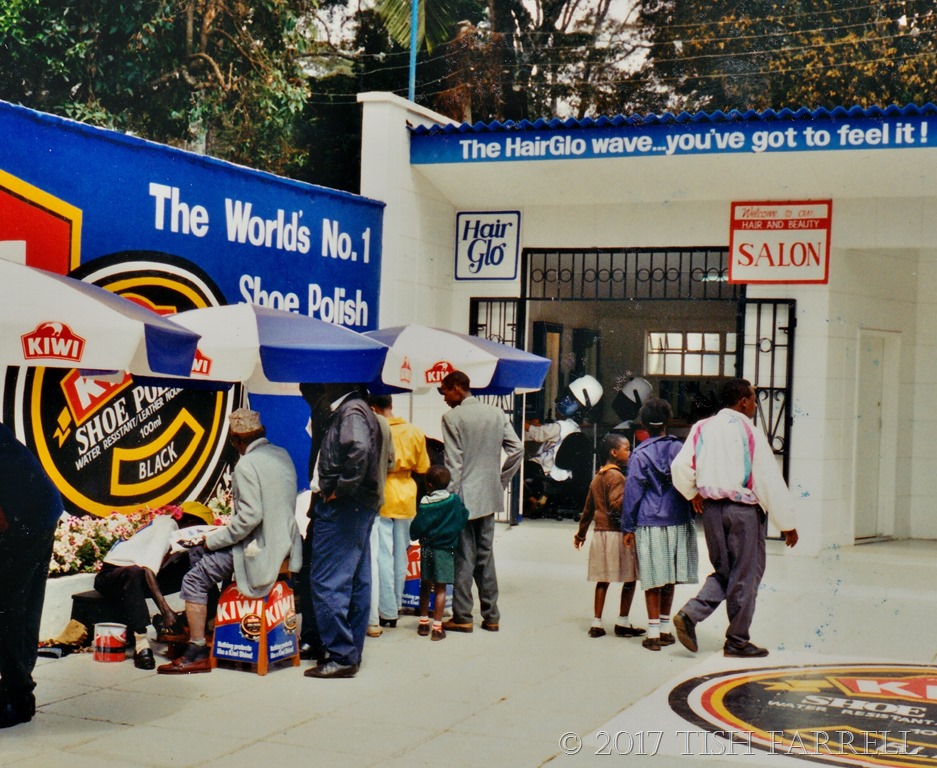
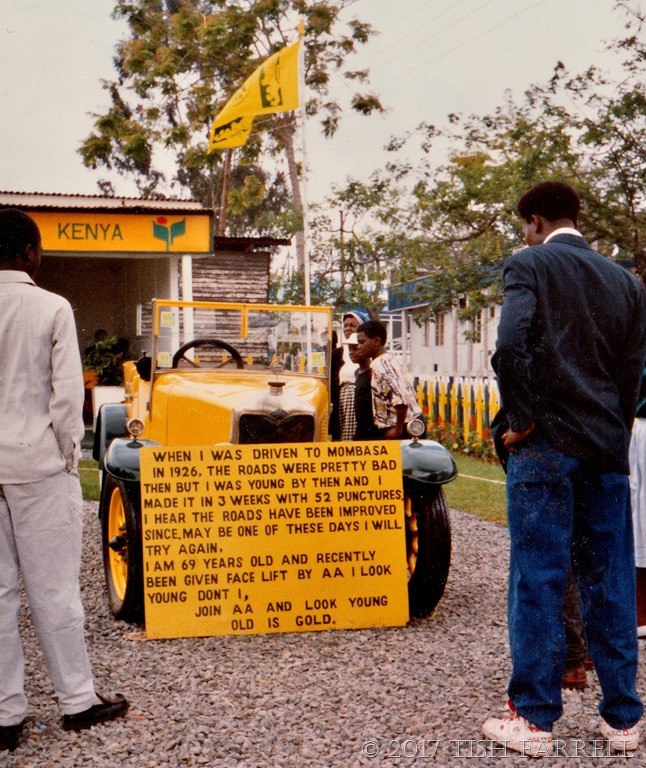
The 1995 Nairobi Agriculture Show ~ Waiting For Admission

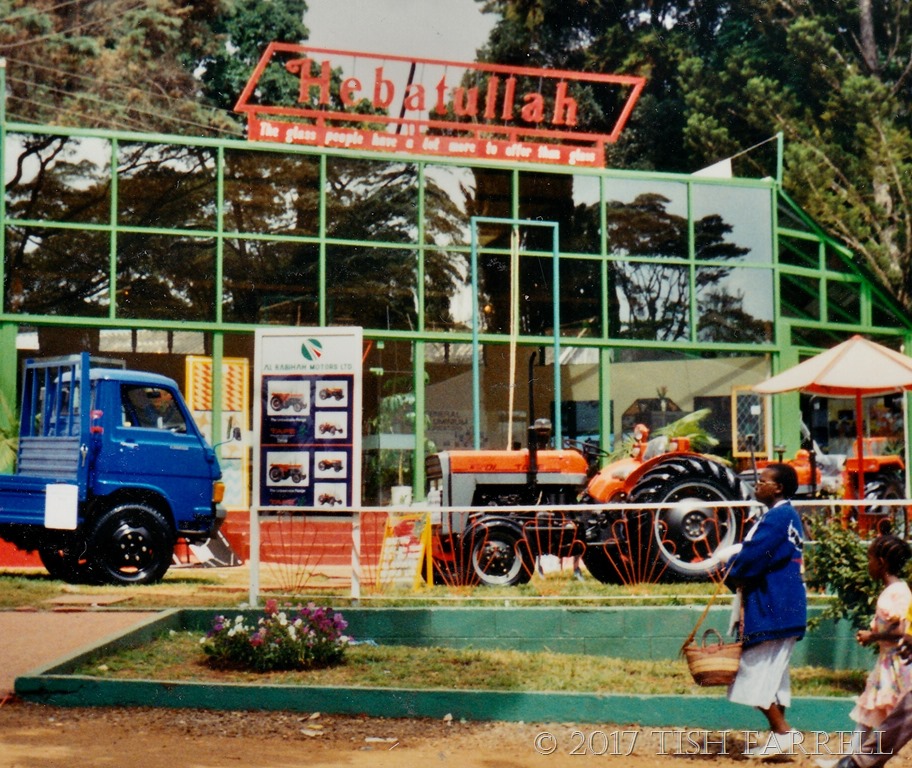
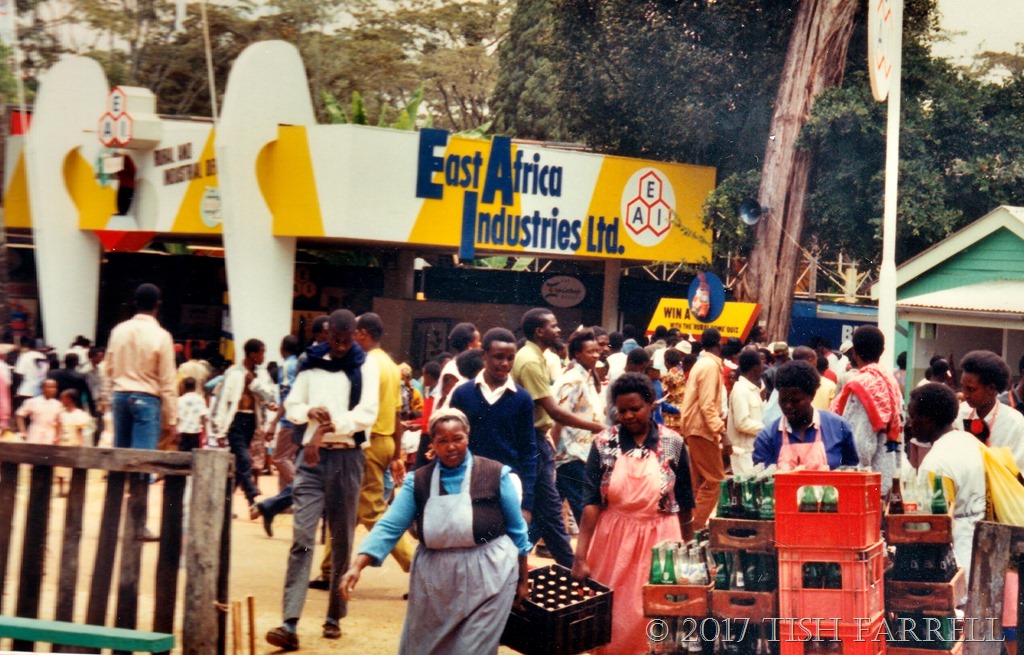
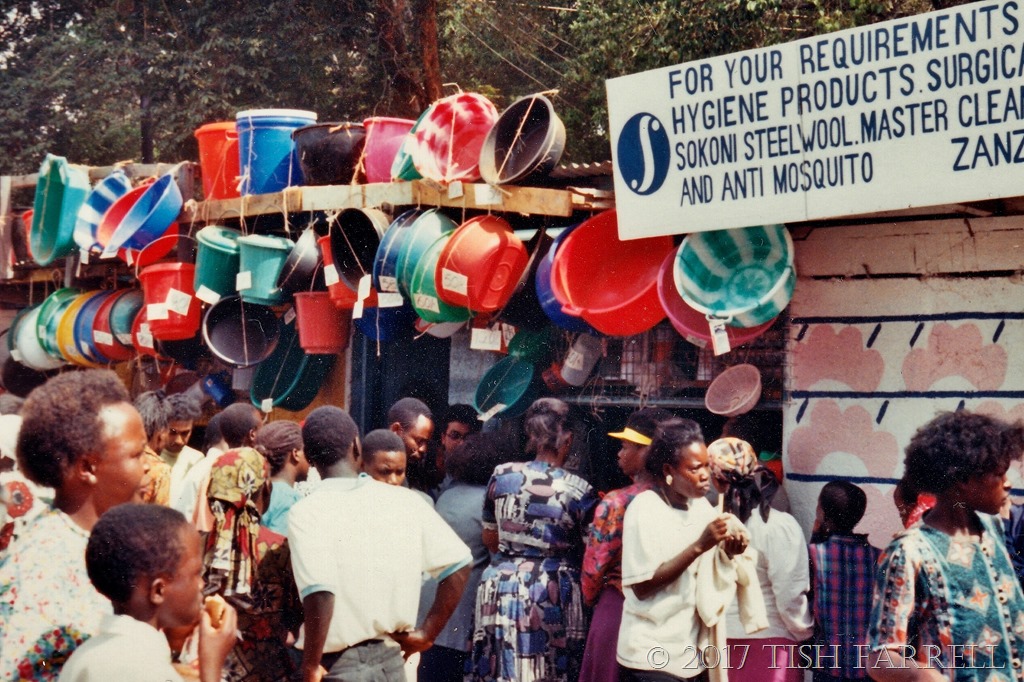
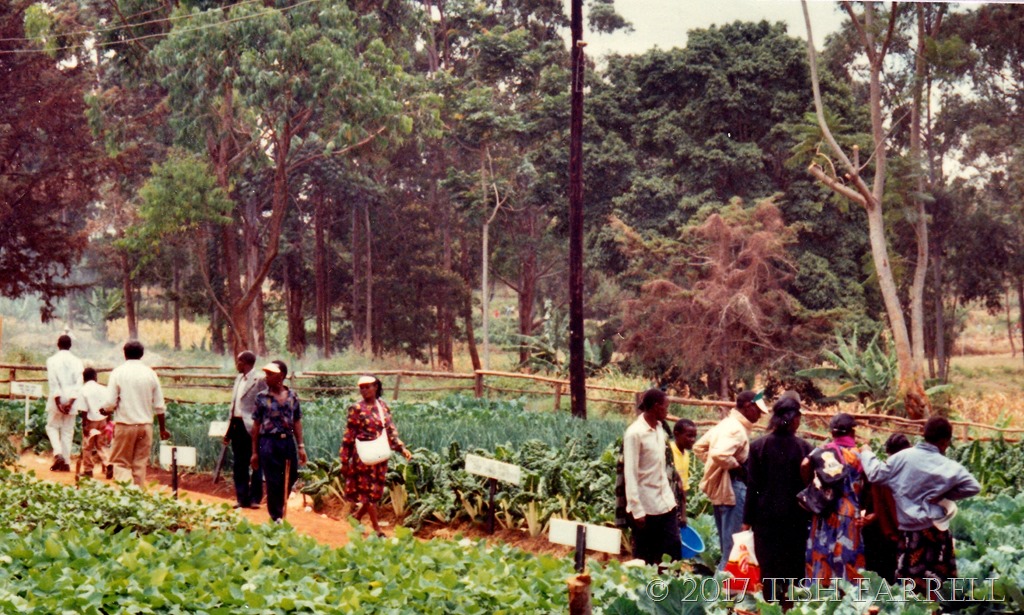
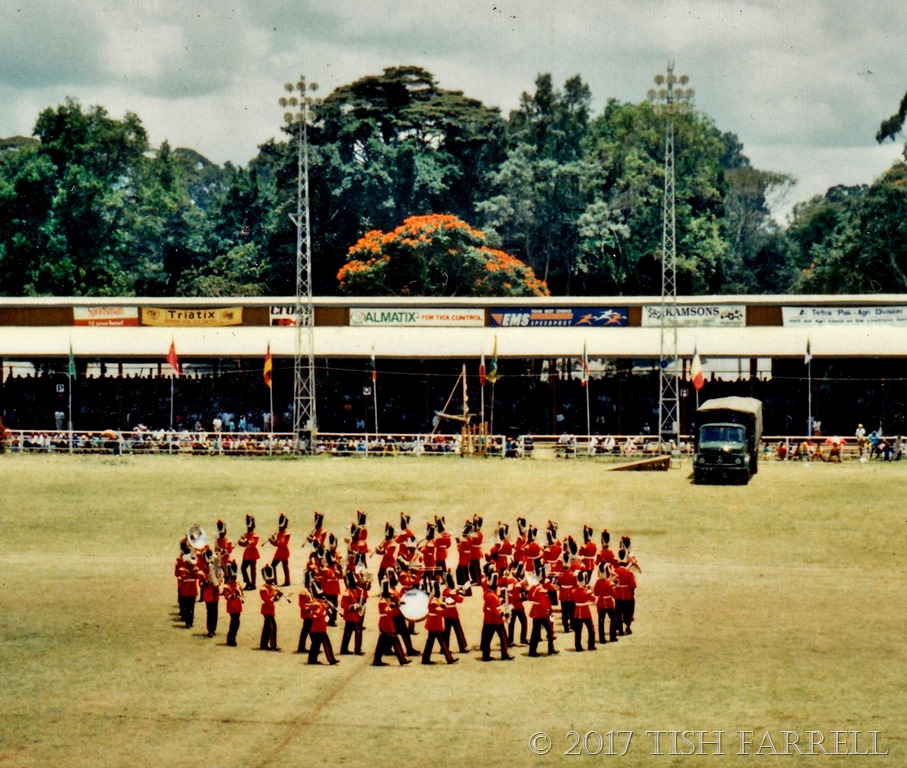
One of the truly useful institutions we Brits left behind in the African countries we invaded is the Annual Agricultural Show. We went to both Kenyan and Zambian versions, and found them hugely popular events, still held on their original dedicated show grounds. Nor are they simply about entertainment, shopping and crop and stock competitions, although there is plenty of all of these to be had. I remember one Kenyan smallholder being quoted in the national press. He had travelled many miles to attend the Nairobi show, and at some expense. ‘But,’ he said, ‘this show is my university. This is where I come to learn how to improve my farming skills.’

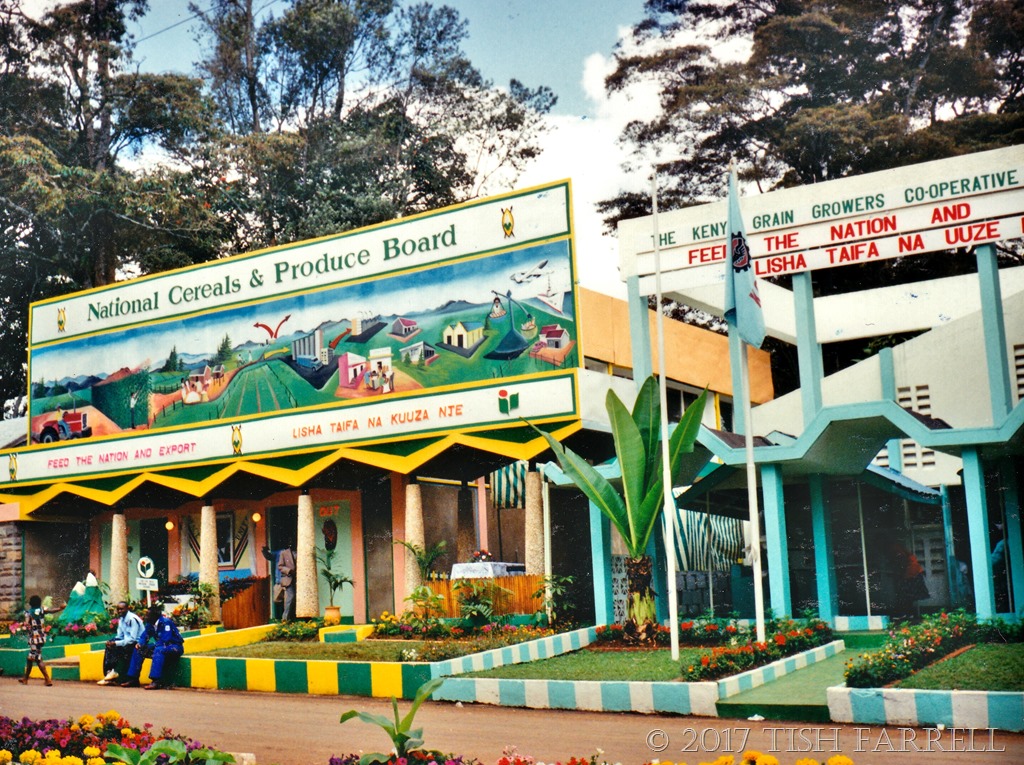
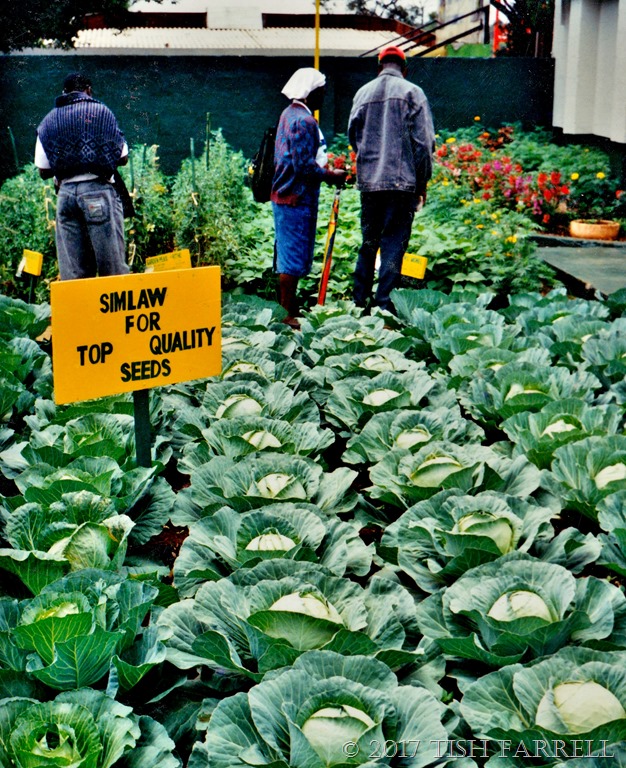
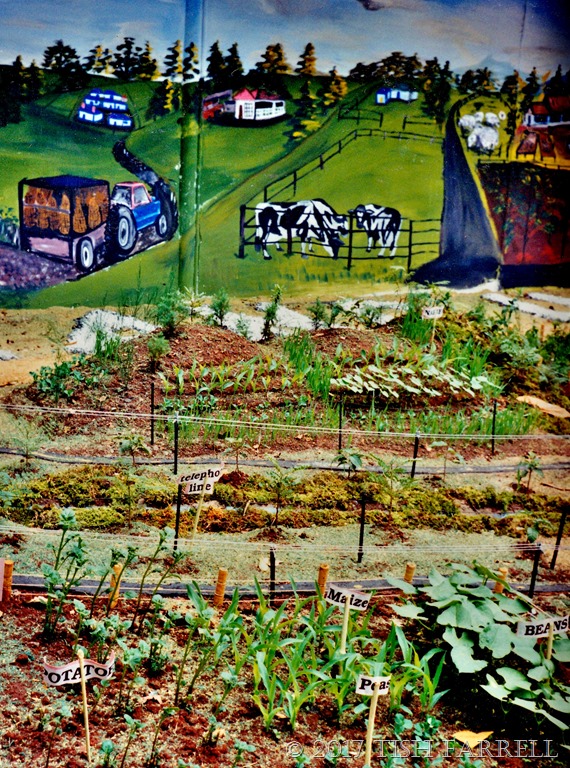
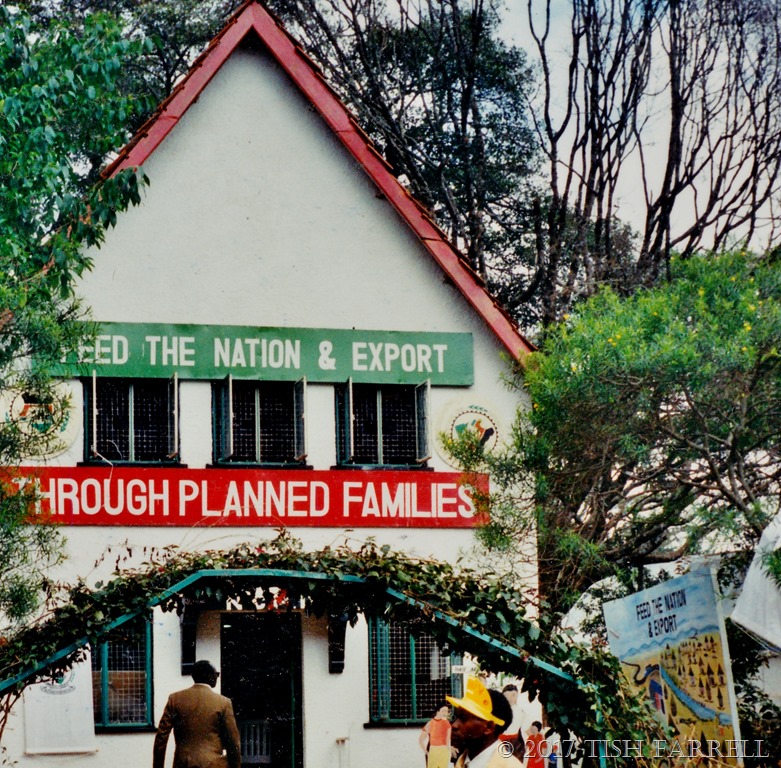
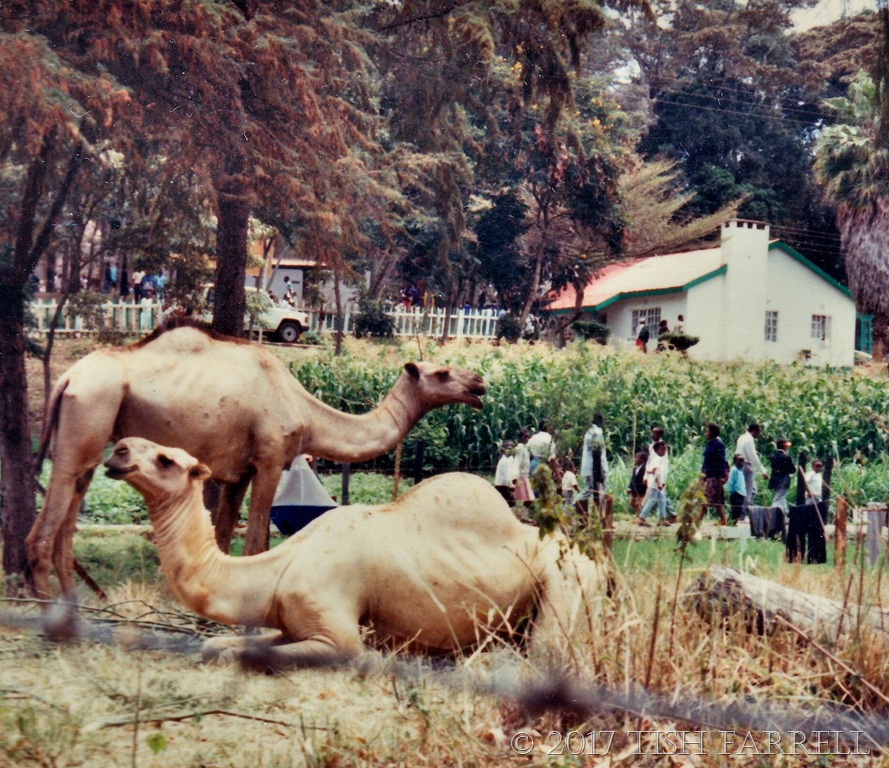
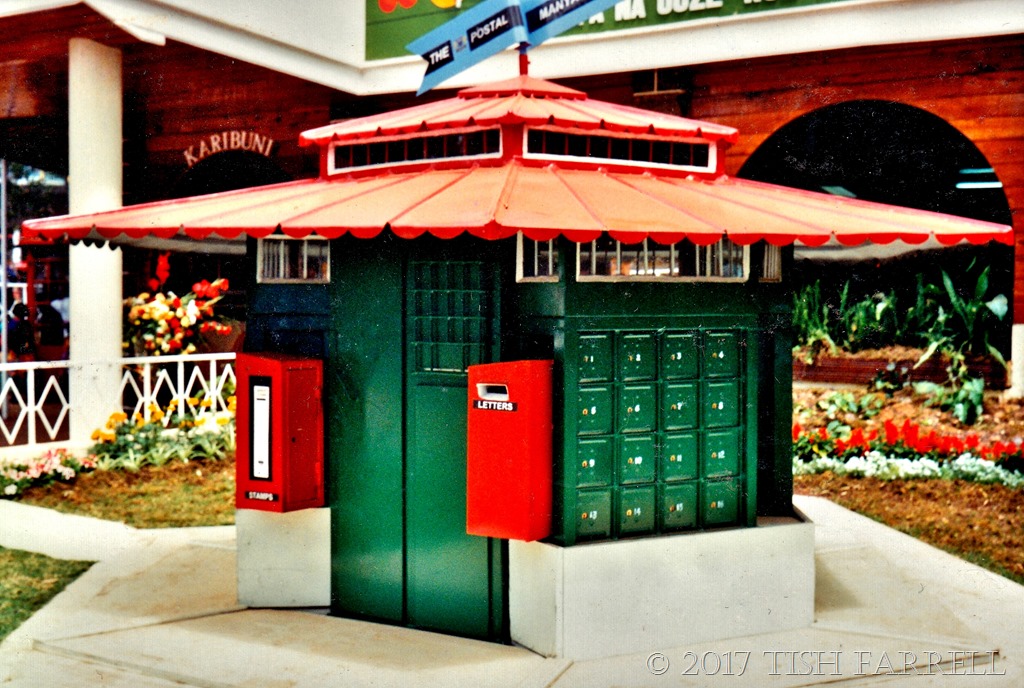
And as we wandered round we certainly found plenty of advice to hand, much of it rendered in model farm lay-outs. There was also that year’s exhortatory slogan to spur all  to action: “Feed The Nation And Export”. And there were promotional exhibits for small-scale battery chicken rearing, camel raising, the Post Office and family planning. Even the National Archives had a small pavilion in which they were showing 1950s film footage from the Land Freedom uprising aka Mau Mau. The Young Farmers were showing off their crop  growing and the Kenya Agricultural Research Institute (the place where Graham had his office) also had a big stand with plenty of experts to provide farmer guidance.

Welcome to Nairobi’s 1995 Agricultural Show:

Agri show 1995

Agri show 1995 b

Agri show 1995 c_0001

Agri show 1995 c_0006

Agri show 1995 c_0008

Agri show 1995 c_0009

Agri show 1995 c_0003

Agri show 1995 c_0013

Agri show 1995 c_0013 - Copy

Agri show 1995 c_0015

Agri show 1995 c_0015 - Copy (2)

Agri show 1995 c_0016 - Copy

Agri show 1995 c_0011

Agri show 1995 c_0010

Daily Post: waiting

This slideshow requires JavaScript.

After The Harvest Around Much Wenlock

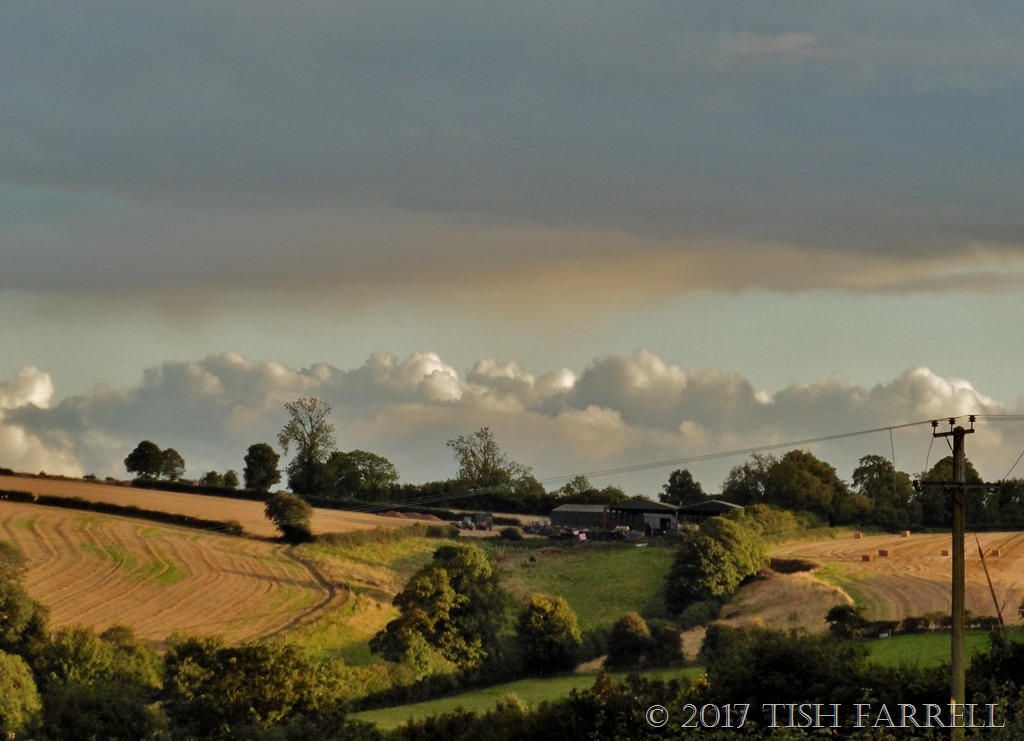
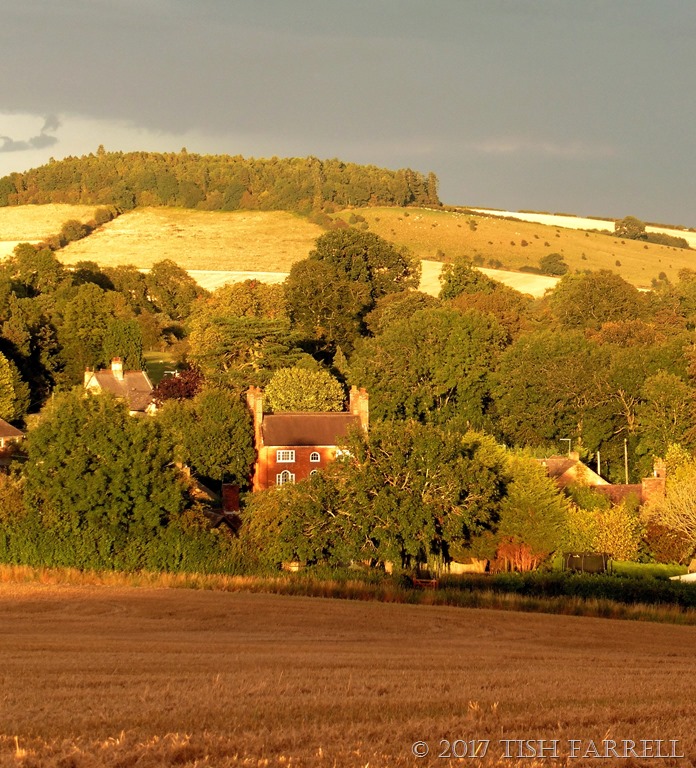
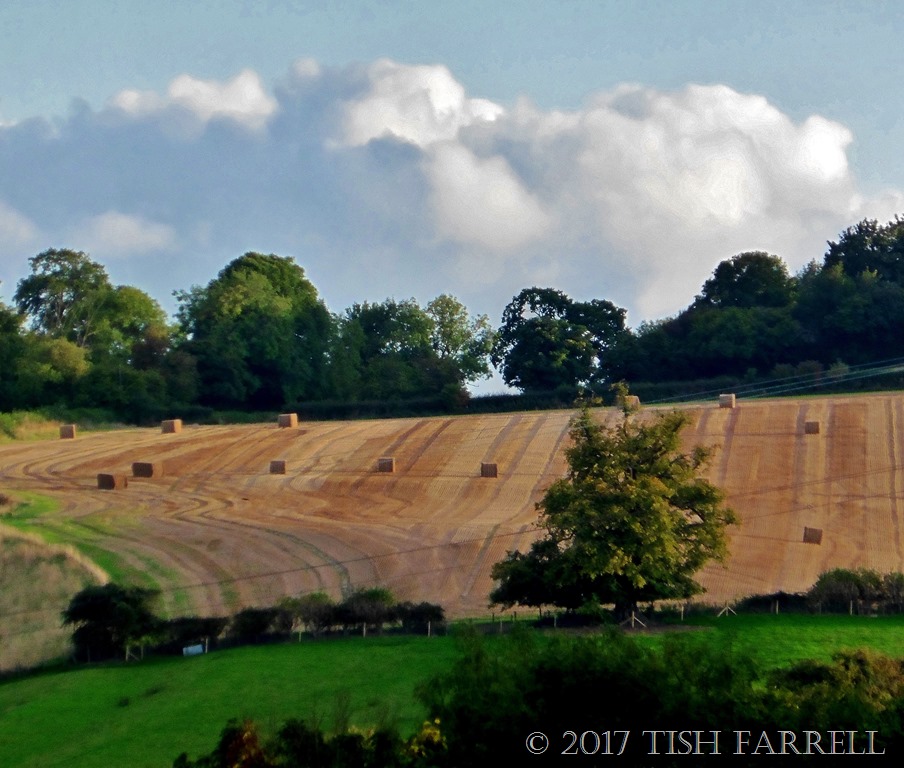
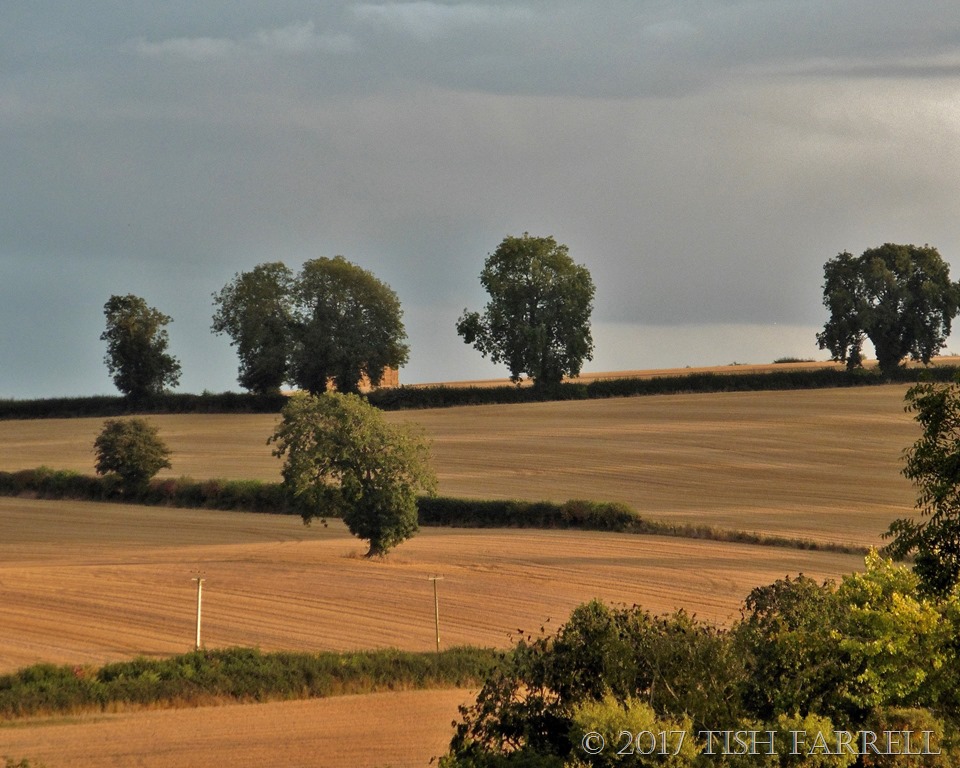
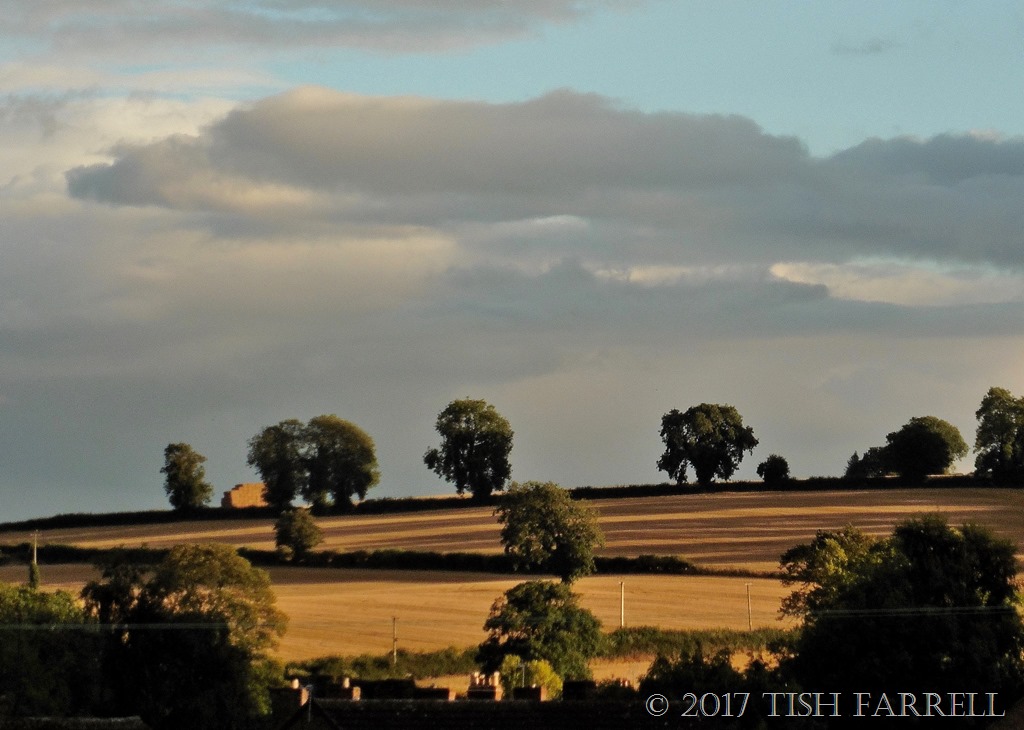
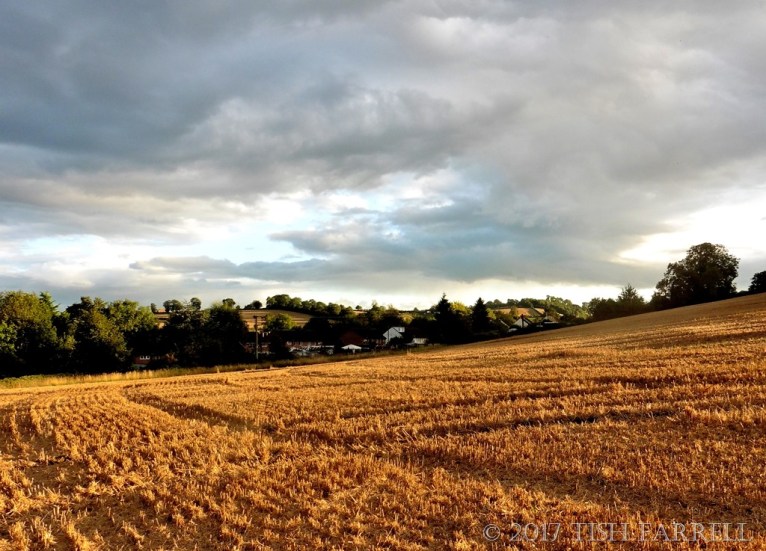
It’s the brief window of opportunity that comes when the wheat has been cut, and we Wenlockians can go in for a bit of unbridled scampering in the fields. Well, if not scampering exactly, at least walking up the hill behind the house for some fresh vistas of the town and its surroundings. I need to be quick. If past years are anything to go by, the ground will be harrowed and re-sown in the blink of an eye, so while I have the chance, I’m passing on some post-harvest views. I’ll also leave you with a paradox, because although we have good views around the town, within it there is an officially recognised deficiency in public open space; many of the footpaths that we use are permissive, that is to say, they are open only at the landowner’s discretion. In more ways than are often realised, feudal England, with its roots in patterns of Saxon landownership, still remains.

P1020123

Here you can see three of the town’s medieval relics, from middle left to right: the priory ruins, the priory gate tower, and the parish church that was once part of the priory. The town grew up around the priory, its residents subject to its rule, both in terms of paying tithes and providing labour. The monastic domain was considerable, based on the possessions of the 7th century Saxon Abbess Milburga. Her lands extended several miles – beyond the River Severn and the Ironbridge Gorge and into Madeley in Telford in one direction, and to Broseley, near Bridgnorth in the other. She was also the daughter of a Mercian king, and the setting up of religious houses ruled by princesses appears to have been a common and cunning Saxon strategy for maintaining control over the territory claimed by their regional kingdoms. After the dissolution of the monasteries in 1542, the monastic estate was sold off to members of Henry VIII’s court and merchant opportunists. Today, most of the land around the town is still in the possession of two large landowners. We are however fortunate that a good stretch of Wenlock Edge is owned by the National Trust which provides everyone with free access to a very special place.

P1020130

P1020111

The Red House, and a ghostly farm labourer off for an evening pint at the George and Dragon Inn?

*

P1020120

P1020121

I’m old enough to remember the days when the post-harvest straw was stacked in teepee-like stooks, and the wheat grains had to be detached from their ears in a hulk-like threshing machine. The farmer whose house we rented when we lived in Cheshire, would have the itinerant threshing man park his contraption the other side of our garden wall. I remember a sense of menace when I looked out of the bedroom window and find it had arrived. Once in action, it would throb hideously all day, spewing out great storms of petrol fumes and wheat dust.

*

P1020122

P1020114

Didn’t Rumpelstiltskin spin this stuff into gold?

*

P1020100


Six Word Saturday

Thursday’s Special ~ July and August photo recap


This week Paula wants to catch up on the photos we posted over the past two months. A quick trawl through the picture archive shows that my posts have been all over the place – both in space and in time: memories from our years living in Kenya, a trip to New York, more recent wanders in Wales, Derbyshire, Cornwall, and the nearby Shropshire hills, then allotment and garden shots around Wenlock. I’ve grouped them by colour:

And finally some monochrome:

Well, that was fun, Paula. Thank you!

Thursday’s Special: July-August recap Please call in at Paula’s for a photo-treat.


Changing Seasons ~ Is It August Or Autumn In Much Wenlock?

P1010872

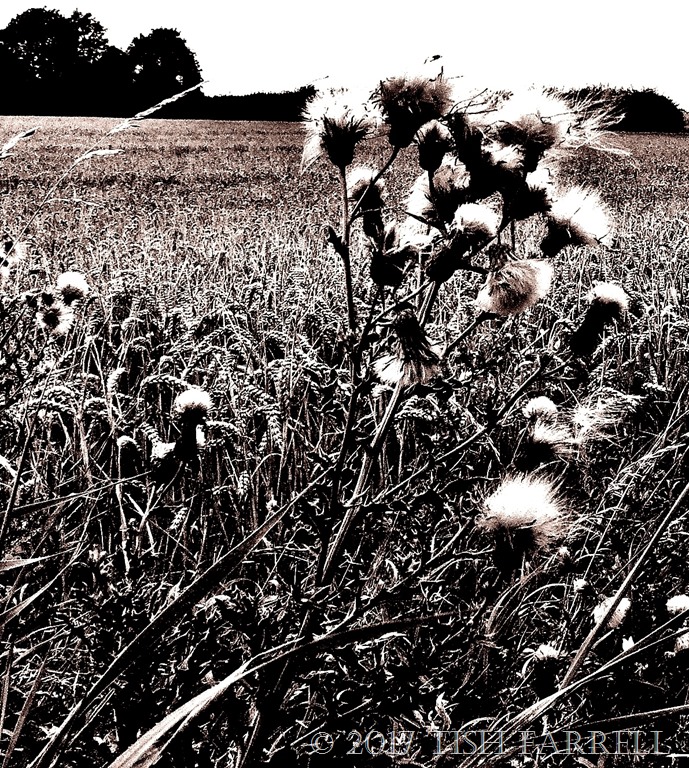
Much like this thistle down in the field behind the allotment gardens,  I’m feeling wind-blown; swept off course somehow; as if I’ve woken from a Rip Van Winkle deep-sleep and found myself in another time. I’m not the only one either. Others I’ve spoken to feel equally unsettled and disorientated.

One moment, around mid-June we were having sun-shiny suppers out in the garden, the evenings still warm after sunset; summer stretching  ahead and full of promise.

Next it was all change – to cool, wet and windy. It seems as if autumn  has been here for weeks. The fields above the town are harvested and already ploughed. The still-standing wheat has a grey look as if it has been  left in the field too long (or had too much Roundup). The apple trees are shedding apples, leaves are turning colour,  and the Linden Walk has browning drifts of fallen lime tree seeds.

The question is: has autumn come to stay, or will there be another shot of summer just when we least expect it. In November maybe?


This slideshow requires JavaScript.

The Changing Seasons Please visit Max for his take on Norway’s changing season, and also to catch up with the challenge rules.

Five Minutes In The Polytunnel ~ Regular Random

IMG_5255

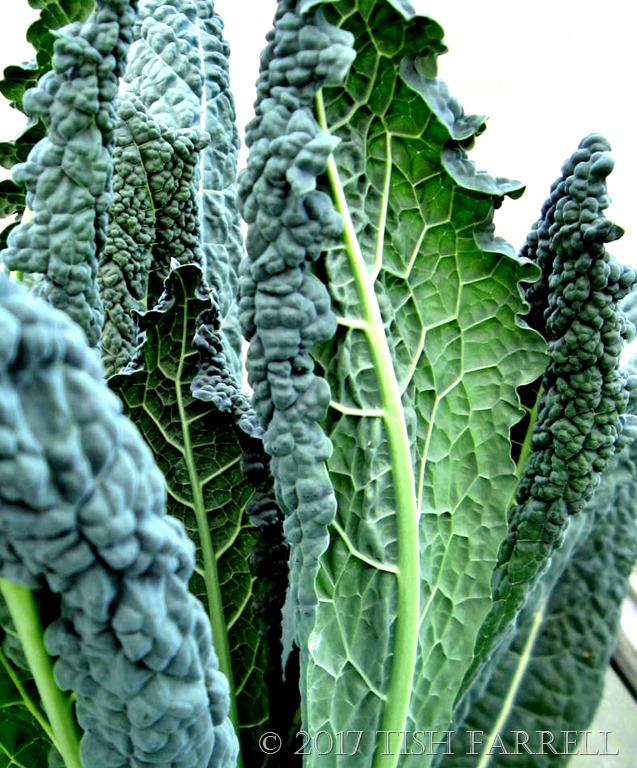
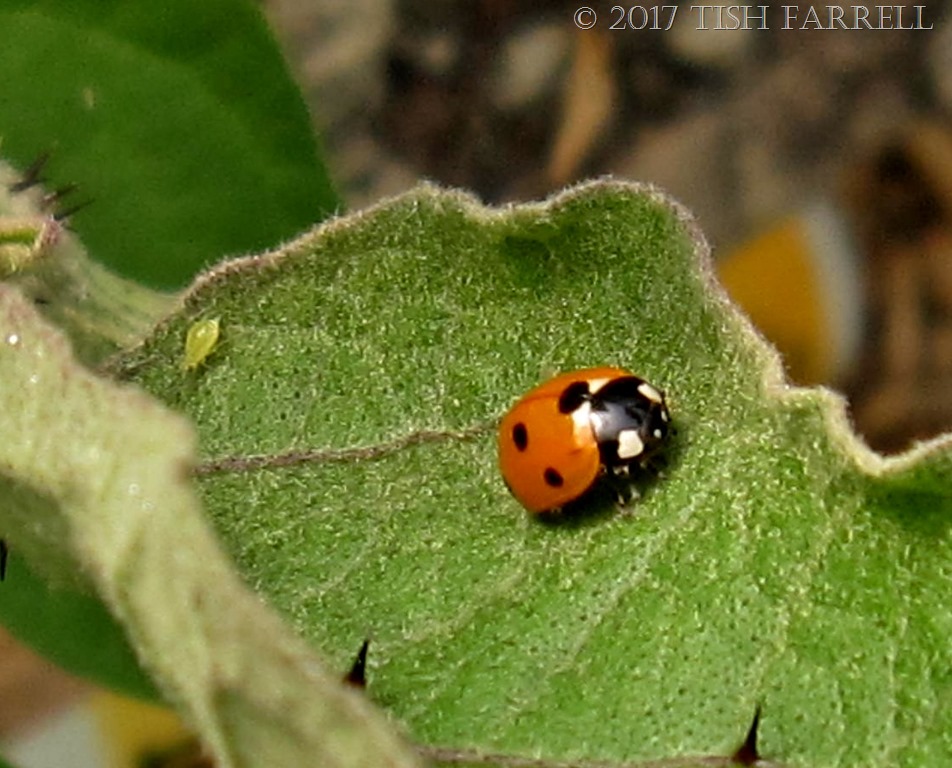
As ever, I have probably overdone things in the polytunnel, been too liberal with the seaweed extract. On the other hand the half dozen Tuscan kale plants have been producing succulent leaves since the winter. Almost undamaged too. I’m wondering how long they will keep going. Forever? I’m also pleased to find ladybirds in there, although the one featured below seems to have missed the aphid on the aubergine leaf. Maybe it’s trying to lull it into a sense of false security.IMG_5272

IMG_5277

IMG_5270

IMG_5269

IMG_5261

IMG_5264


Regular Random Please visit Desley Jane for more Five Minute Photo Shoots

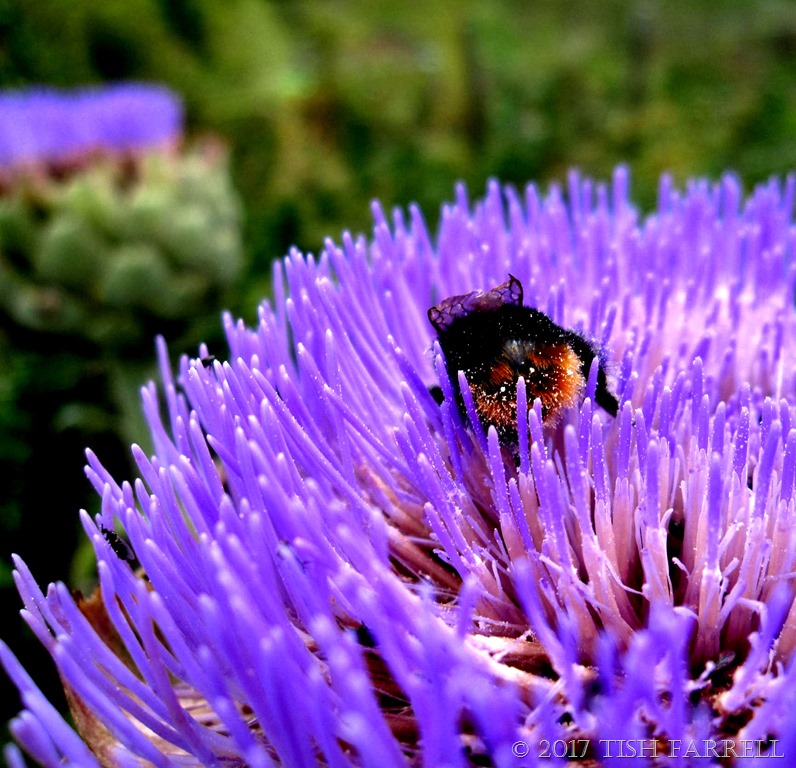
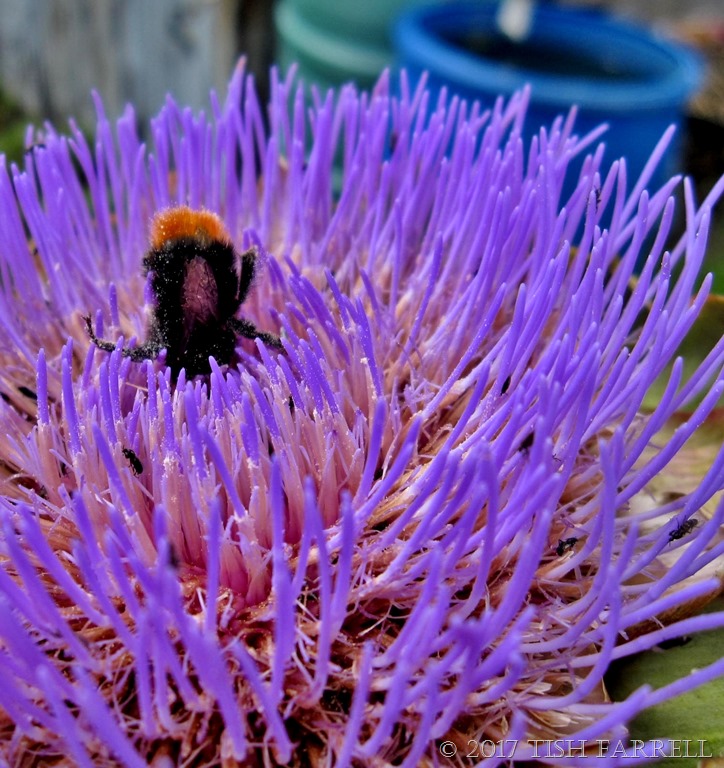
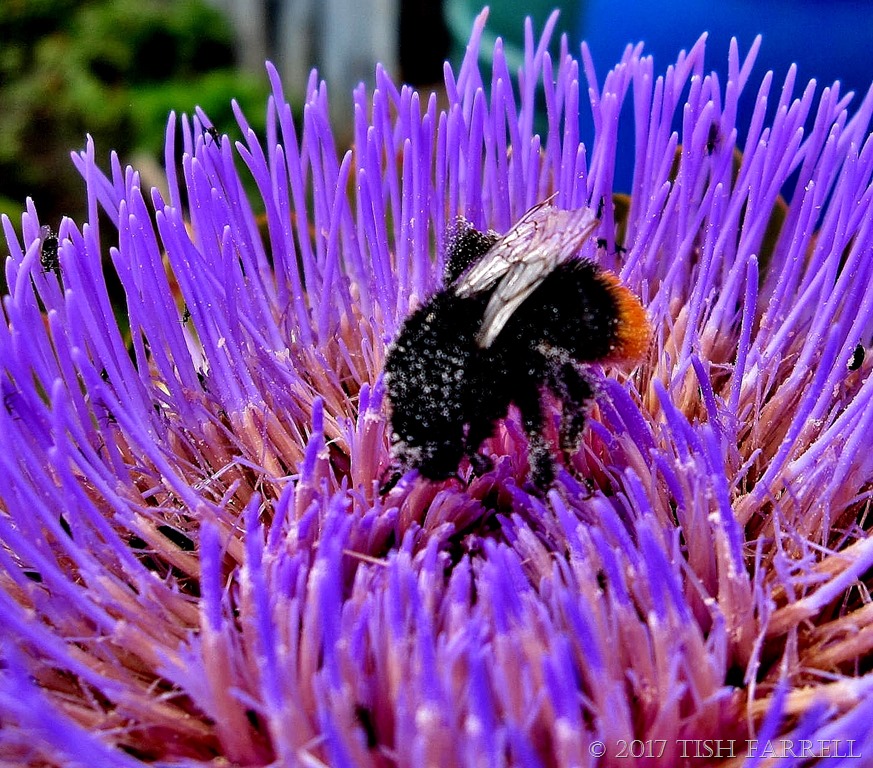
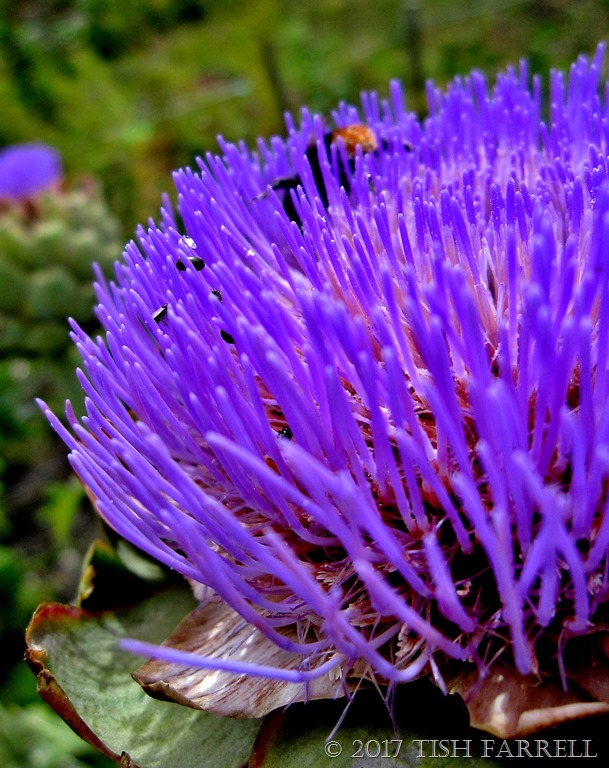
5 Minutes With An Artichoke And A Red-Tailed Bumblebee ~ Regular Random

IMG_5731

IMG_5748

IMG_5752

IMG_5754

IMG_5742

IMG_5741

IMG_5740

IMG_5738

IMG_5749

IMG_5745


Frequently Flying Scientist, Desley Jane, is a very talented photographer. Macro mode is a particular speciality, and especially when it comes to making delicious little cakes impossibly tempting. This week she has quite a different subject for her ‘Regular Random’ slot. So please visit her and join in the challenge. These are the rules:

  • choose a subject or a scene
  • spend five minutes photographing it – no more!
  • try to see it from many angles, look through something at it, change the light that’s hitting it
  • have fun!
  • tag your post #regularrandom and ping back to this post

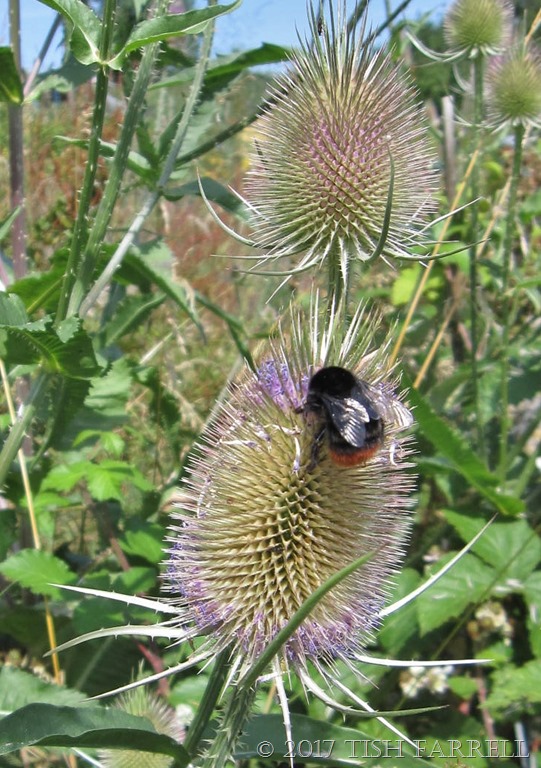
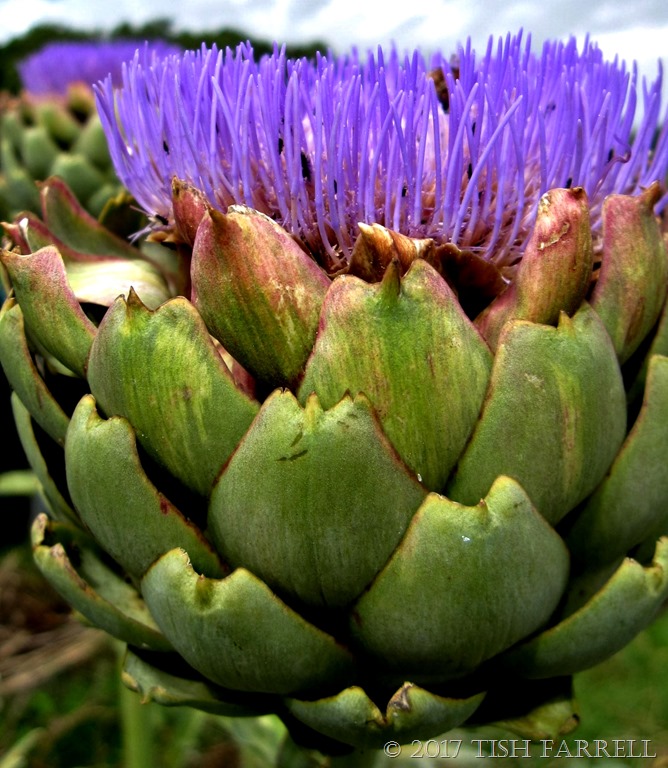
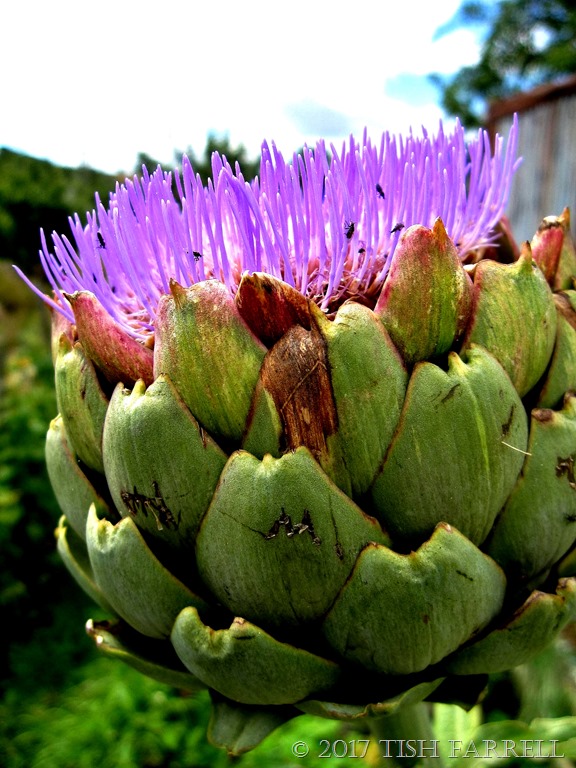
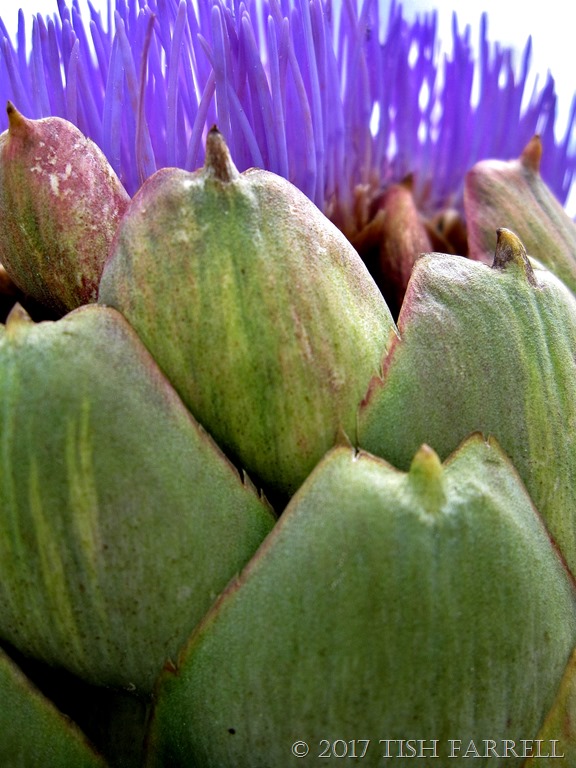
My five minutes was devoted to some allotment artichokes. The sun was full on, the artichoke flower rather too tall, and the wind kept gusting, so the outcome is definitely random. Nice performance by the pollen dusted bumblebee though.