Of Monumental Mysteries

“The past is a foreign country: they do things differently there.”   L P Hartley The Go-Between      
Scan-130804-0007


Scan-130804-0012

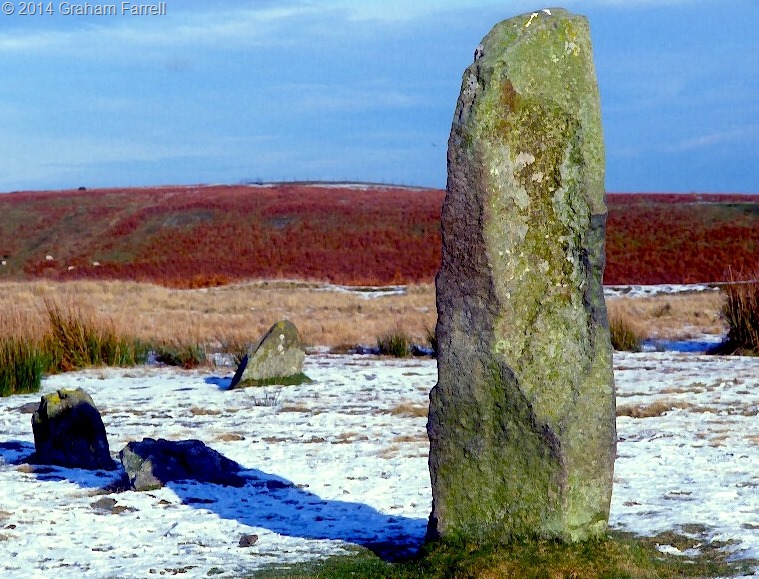
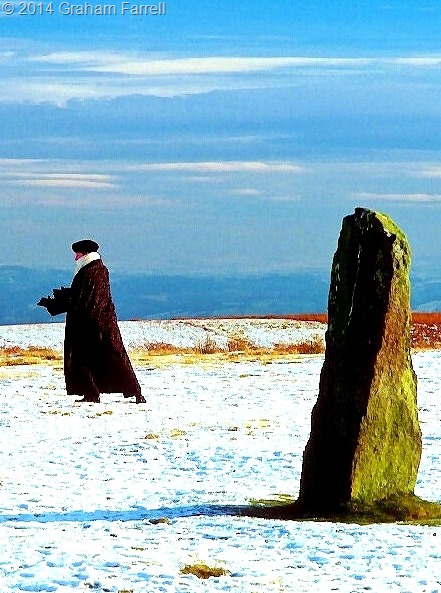
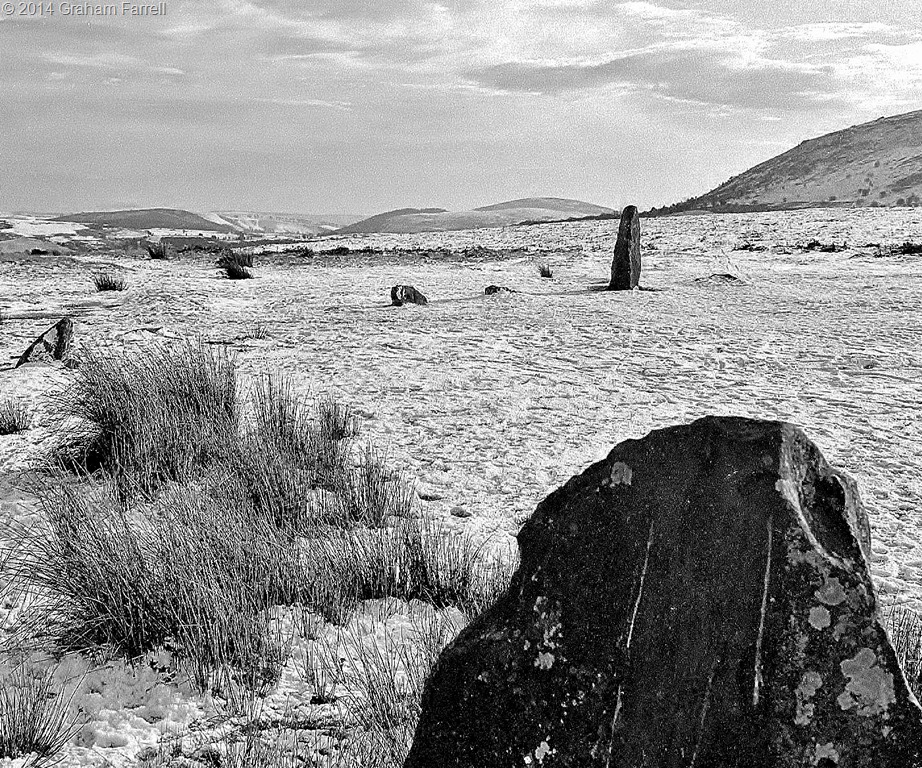
So what’s the mystery here? No, not that strange woman in a Welsh felted hat doing tai chi. (Actually,  I think I may be in the process of ‘grasping the sparrow’s tail’ Yang-style long form. I’ve rather forgotten).  I remember, though, the icy winter’s day, and the absolute stillness, and the hazy blue views of Wales over the border from my Shropshire homeland, and the feeling that this circle of ancient stones was a special place; that it stirred in me the sense that doing tai chi here would be a good thing.

I have written before about Mitchell’s Fold Bronze Age stone circle,  and you can find the witchy legend associated with it  HERE.  Historically speaking, little is known about the stones  beyond the fact that they were raised some 4,000 years ago. The surviving fifteen stones form a rough circle, although there may have once been as many as thirty. The tallest survivor is said to have originally been one of a pair, and so formed some kind of gateway or threshold at the circle’s edge.

These henges are, on the whole, unfathomable. There is no knowing how the people, who toiled to build them, made use of them, or what their precise significance was in their daily lives. The elevated location of Mitchell’s Fold, with its sweeping vistas, suggests to us a sacred function. There are also possibilities that the stones’ particular alignment served as some kind of calendar, marking solar and lunar events. And, for more prosaic purposes, in a world without maps and SatNav, prominently sited megaliths may also have provided travellers with landmarks to keep them on course through the upland wilds. The Bronze Age was, after all, a time of intinerant smiths and artisans who covered great distances to trade their goods and services.
Scan-130804-0041

This is borne out by the fact that not far from Mitchell’s Fold, just over the Welsh border in Powys,  is the Cwm Mawr Bronze Age axe factory. The distinctive looking axe-hammers that were made here have been found across Wales and England, their discovery demonstrating an extensive trading network. Nor is this henge an isolated monument in the immediate landscape. There are numerous cairns and two further stone circles nearby. This seemingly remote place, then, was very busy some four millennia ago.

As a Prehistory undergraduate, also in times long past, I spent three years in Sheffield University lecture theatres looking at images of barrows, chambered tombs, henges, hillforts, cist burials, urn cremations and other ancestral relics. This being the era of slide projection, the photographs were often shown upside down and back to front; it became a standing (or otherwise) joke, looking at remains from an inverted position. The fact is though, however you looked at them, their intrinsic meaning  could  not be divined. All that might be said is that these mysterious constructions were of immense importance to our forebears. We know this because of the great effort involved in their making; these were people who, by our standards, had very limited technology.
033

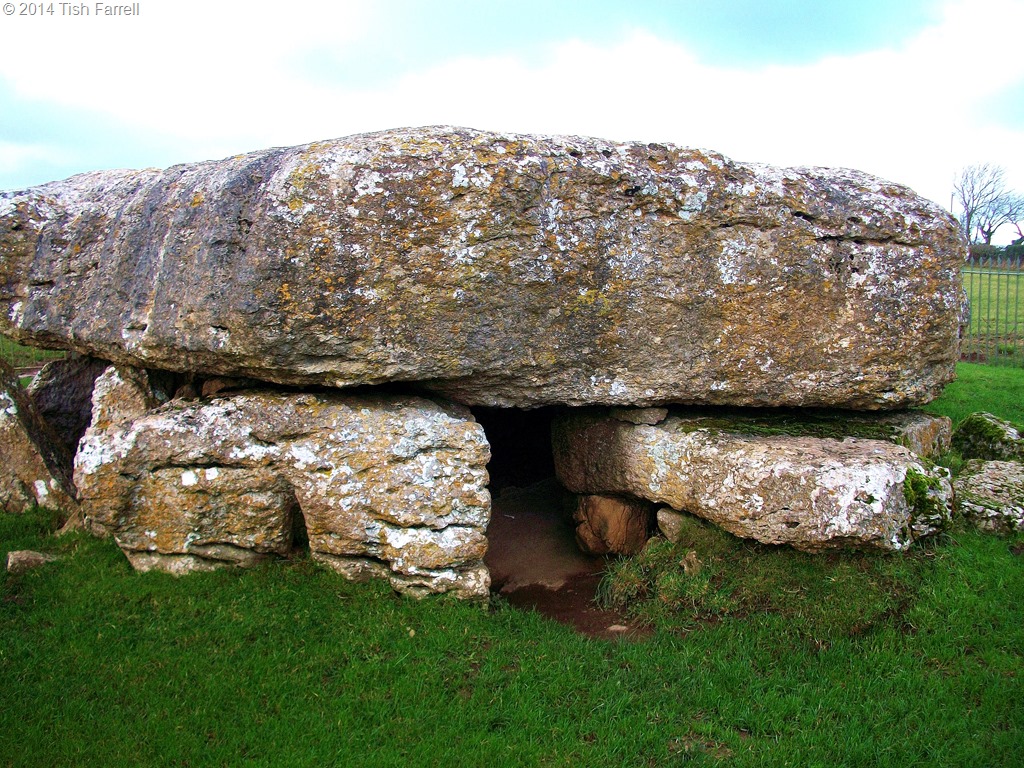
And so here is another example of megalithic mystery. This is the late Stone Age (Neolithic) Lligwy burial chamber on Anglesey in Wales. Excavation in 1908-9 uncovered the remains of 15-30 people, along with pottery that provided the dating evidence. It is estimated that the capstone weights 25 tonnes. This is truly mind-boggling. How did people without cranes lift this monstrosity onto the supporting stones? How  many people did it take? Wasn’t the population in prehistory supposed to be small?

Of course experimental archaeology has demonstrated that much may be achieved with the cunning use of tree trunk rollers and various simple pulley devices combined with muscle power. But even so,  the Lligwy burial chamber is surely  a triumph of human will  over an absence of hydraulic lifting gear. In this era people had only stone tools.

So yes, the past is a foreign country, and people did do things differently there, and in ways we cannot possibly know. And if I learned anything from three years of studying Prehistory and Archaeology it was not to judge people by their limited toolkit. These people were as intelligent as we are, maybe more so, since there was a greater need to apply it at all times.

Our current understanding of these  monuments may be fragmentary, wrong-headed even, but shouldn’t this be all the more reason to keep these ancient places safe? At this present time in England our heritage is daily under threat from a government that wishes to build its way out of  recession.  Worse still, current laws allow developers to take local authorities to judicial review  if their  planning applications are refused.

To avoid  incurring huge costs to the public in legal representation, local authorities are now being pushed to grant planning permission in close proximity to unique monuments.  At present, in Shropshire, the setting of  2 major sites  is under threat: Old Oswestry Iron Age hillfort, and the post-Roman Offa’s Dyke. Why this is happening is of course absolutely no mystery at all.  The past has cachet. It is a highly sellable ‘commodity’. Let’s sell it off, why don’t we?

© 2014 Tish Farrell

Related:

Valuing the Past: How  much for Old Oswestry Hillfort?

Open to Offa’s: yet another piece of Shropshire’s heritage at risk  in The Heritage Journal  along with many other excellent articles


Weekly Photo Challenge: Monument

Colourbridge

Life is great

Leya

Travel Garden Eat

PonderTheIrrelevant

The Human Rights Warrior

FRIZZ’S TAGGED ‘O’  GO HERE FOR MORE ‘O’ STORIES
No More Dining at these New York Diners

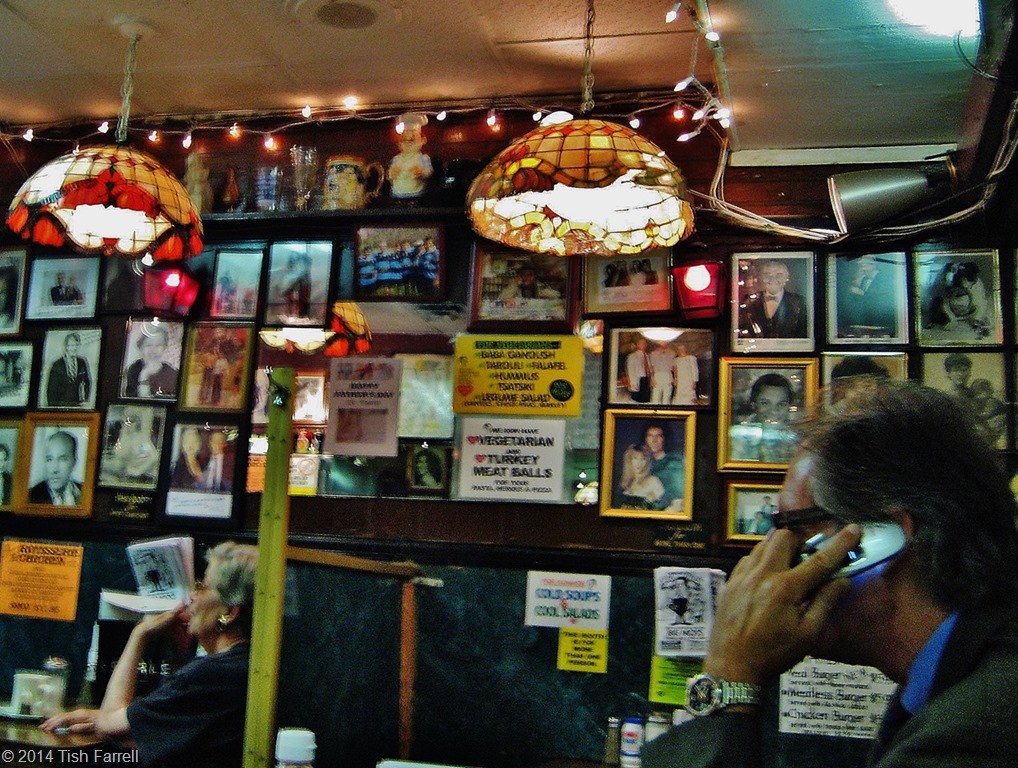
“We simply don’t want to live in a world without old-school staples like rounded coffee counters, shiny stools, leather booths, jukeboxes, prefabricated stone or steel exteriors and black-and-white photos of “famous clientele” hanging on the walls”

Best of Gothamist

*

New York 248 New York 213

Manhattan Diner Upper West Side 2008

*

IMG_0359 IMG_0382 IMG_0357 IMG_0385 IMG_0384 IMG_0358 IMG_0360

Big Nick’s Upper West Side 2008

*

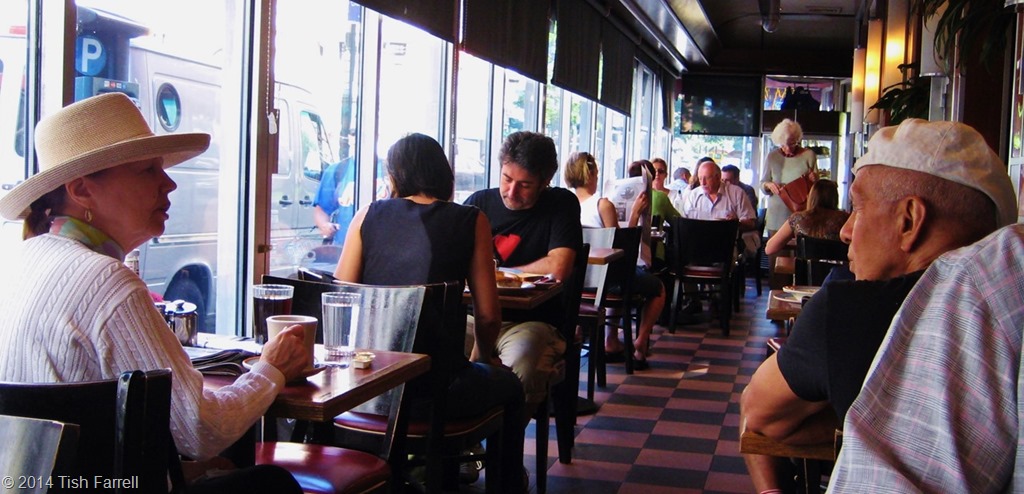
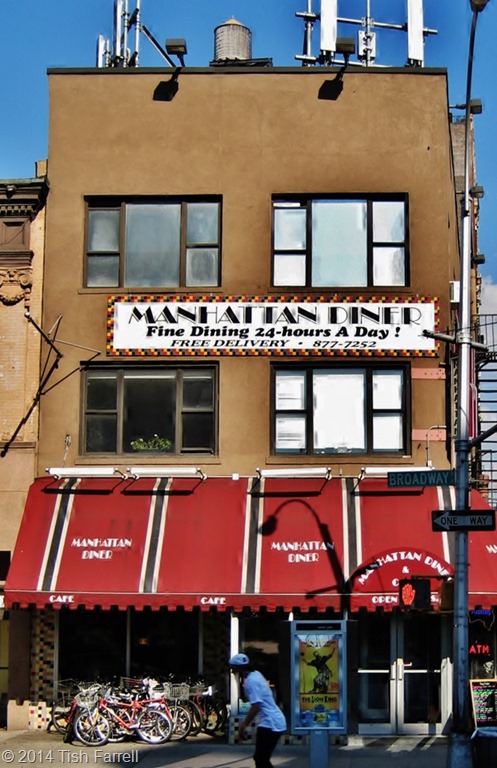
I’m posting these photos as a farewell to two New York diners. Being a bit of a food faddist (organic, unprocessed, no GMO), I never expected to like these places so much. Perhaps it was the sense of community that struck me most.  Big Nick’s closed its doors in July 2013, after fifty years in the business. Sad.  Though I have to say, some of  the decor on these shots looks as if it hasn’t been  ‘refreshed’ in all that time. The rather smarter Manhattan Diner, where we had breakfast while staying in Upper West Side’s Hotel Belleclaire, was  just across  the road from Big Nick’s, on the corner of Broadway and 77th. It was forced to close a few years ago to make way for development.

These diners were much loved and served neighbourhood locals and visitors 24/7. Perhaps they did  not offer the healthiest menus in the world, and dishes were served up with mega-portions. But fresh fruit and yoghourt at the Manhattan Diner made a delicious breakfast, to say nothing of their frittata. And all the coffee you could drink and huge glasses of iced water, and that feeling of being part of NYC even though we were strangers…

© 2014 Tish Farrell

FRIZZ’S ‘N’ CHALLENGE


Misty Mountains of East Africa


002 (2)

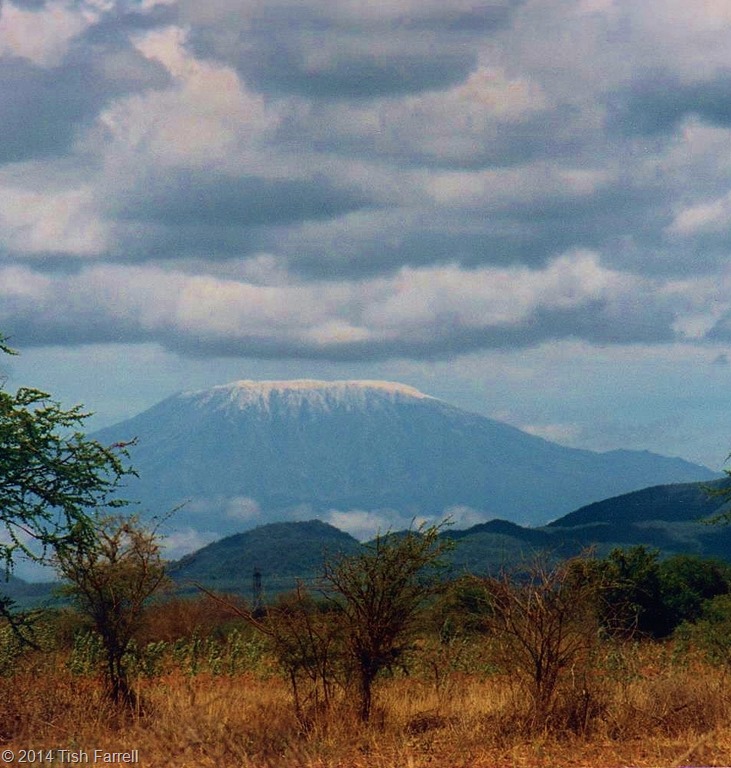
Kilimanjaro rising behind the Chyulu Hills, Ukambani, Kenya. Photo taken from the Mombasa Highway during the December short rains.

*

001

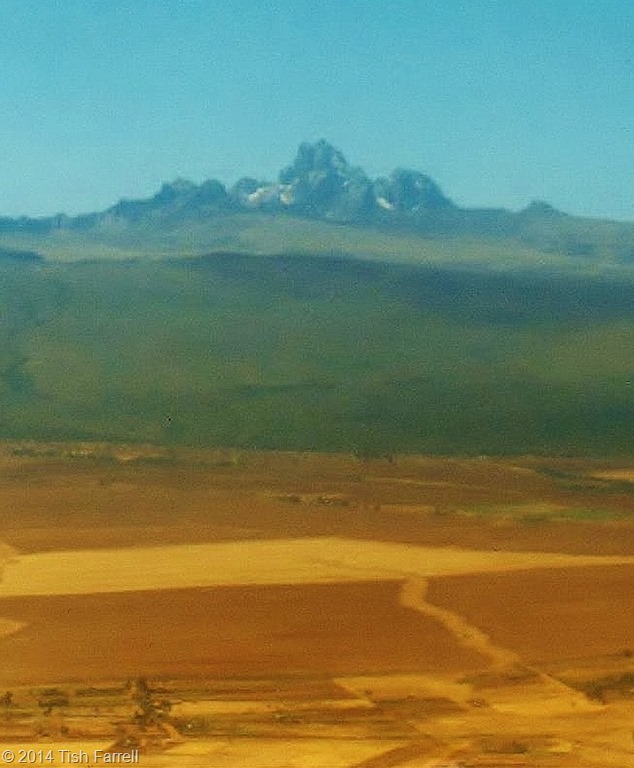
Mount Kenya from the plane window, looking over the European-owned wheat farms of Laikipia

*

It is one of history’s bizarre anecdotes, that one of these two old volcanoes was once given away as a birthday present. But before I reveal how this happened, please take a look at the map. Head for the centre.

4e1bbcd8-9af9-95ca[1]

Here you will see that Tanzania’s Kilimanjaro and Kenya’s Mount Kenya lie pretty much on the same north-south axis, albeit a couple of hundred miles apart. In an earlier post about Denys Finch Hatton’s burial place in the Ngong Hills (to the left of Nairobi on the map) I quoted Karen Blixen’s description of how  one sunset, she and Denys had witnessed a simultaneous sighting of Kilimanjaro and Mount Kenya. This must have been something to see, for these mountains can be frustratingly elusive when it comes to showing themselves. One moment you can be looking them full in the face; the next they have dissolved into a clear blue sky as if they were never there. You blink and wonder how this could have possibly happen. It is doubtless a quantum physics thing, but in the absence of more scientific explanations, the phenomenon anyway seems quite mystical. It is not surprising, then, that local people have long regarded these mountains as sacred places that may, from time to time, be visited by the Creator.

But to return to the mountainous birthday gift.

If you look again at the map you will see how the border between Kenya and Tanzania makes a sudden kink to encompass Kilimanjaro.  This daft piece of map-making is testimony of a tussle in colonial expansionism (Britain versus Germany) and the kind of queenly megalomania  that thought it perfectly reasonable to take possession of someone else’s mountain and then make a gift of it to a fellow monarch, a personage whom she rather despised even though he was a close relative.

I’m sure you will have guessed by now that we are talking of Queen Victoria  and Kaiser Wilhelm. One can only presume that someone who also called herself  the Empress of India would think nothing of the sharing out of stolen mountains. I dare say she thought it made up for the fact that she had bagged the territories now known as Kenya and Uganda when Wilhelm had wanted them too. Perhaps she also thought that giving Wilhelm the taller of the two would also help to placate him.  If she had stopped to consider the fact that Kilimanjaro was only a dormant volcano, she might have had second thoughts.  It was altogether too ominous a gift.

In the end the whole land-grabbing deal was  ratified in the Heligoland  Treaty of 1890, and the map-makers  then duly drew a line straight through the middle of Maasai territory coupled with the requisite detour round Kilimanjaro. They called one side British East Africa, and the other German East Africa. Meanwhile the locals, who comprised very many different ethnic communities, were largely unaware how far they had been scrambled, or indeed scrobbled, to borrow a term of dastardly rapine from John Masefield and The Box of Delights. They were soon to find out. On the British side it began with the setting up of forts along the proposed line of rail for the Uganda Railway. This 600-mile line from Mombasa to Lake Victoria would be the means by which the Empress of India would get her troops (mainly Indian ones) swiftly to the source of the Nile. Why she would ever need to do this will have to wait for another post. Suffice it to say that this project was substantially dafter  than the giving of mountains as birthday presents. Even at the time people thought so. In Britain they called it  the Lunatic Line. In East Africa the invaded called it the Iron Snake.

Scan-130510-0006

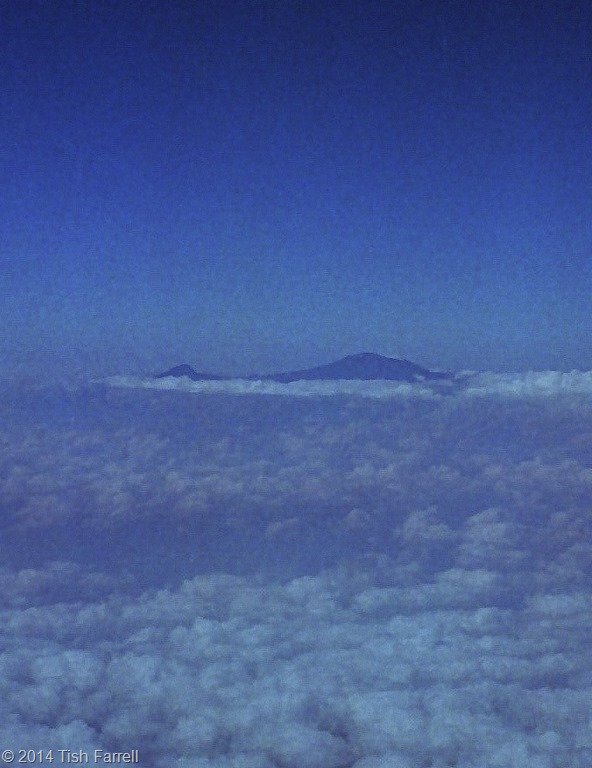
Glimpse of Kilimanjaro on the flight from Zanzibar to Mombasa

© 2016 Tish Farrell

*


Street-wise on Mombasa Beach

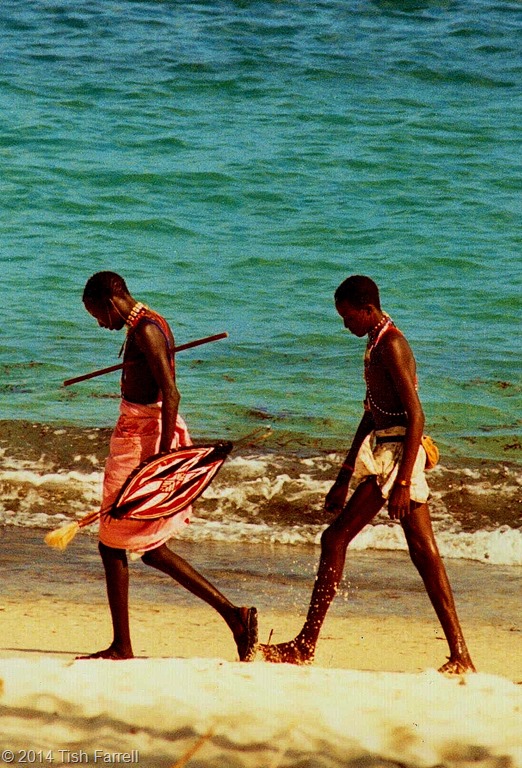
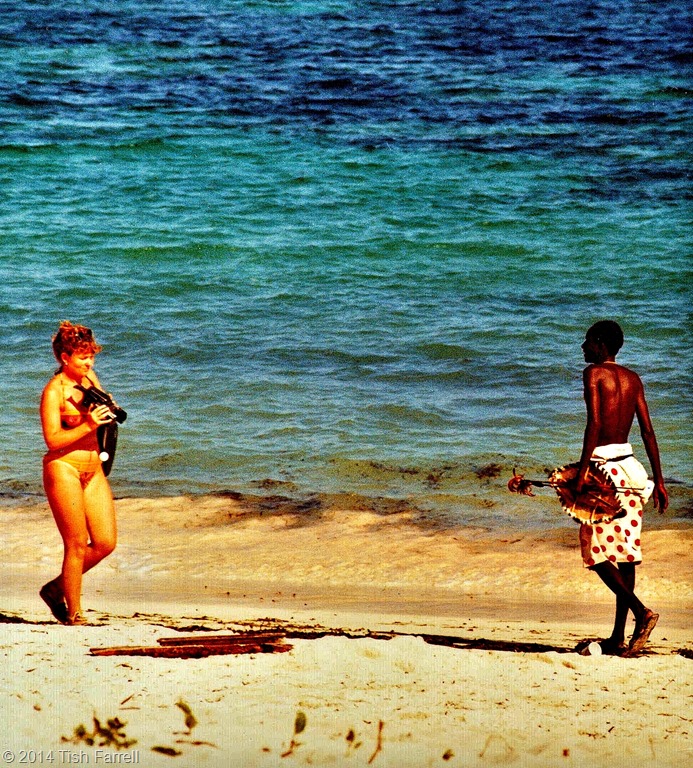
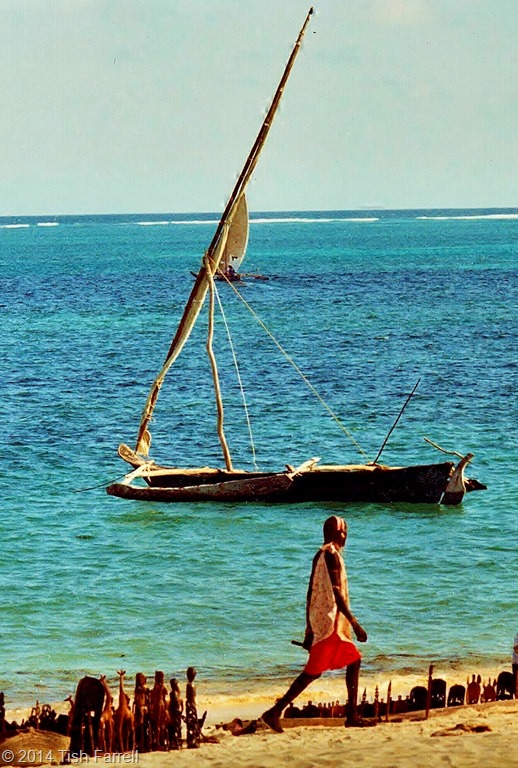
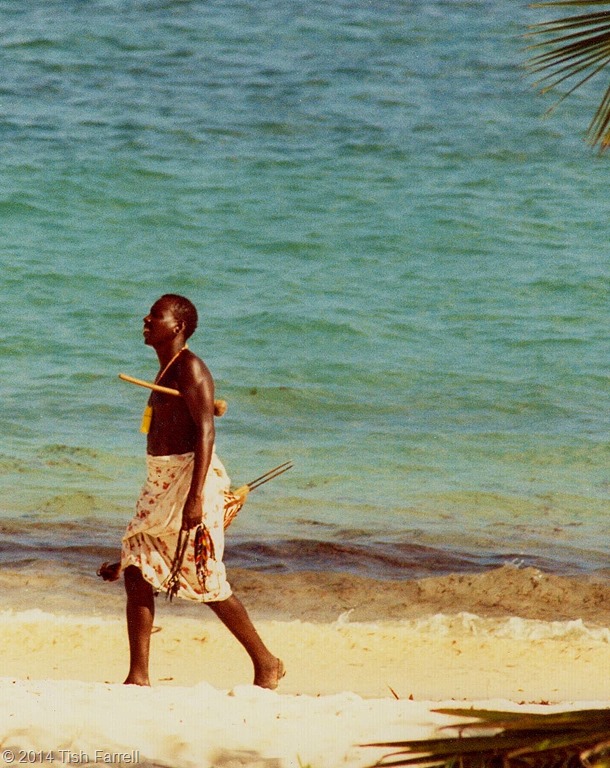
Mombasa Beach is as busy as any street, and like any downtown district anything can be traded there. In the margin between ocean and hinterland, people feel they can live outside accepted moral and  cultural bounds. Kikuyu boys may dress up as Maasai to cash in the ‘warrior’ cachet that is so attractive to European women; white women of a certain age think it OK to flaunt themselves on the sands with lovely young Kenyan boys whose real hope is to be adopted or sponsored through school; dope can be bought along with the kanga wraps and hand-carved giraffes. All, then, may not be quite what it seems in this Indian Ocean ‘paradise’.

003

002

005

006

004

012

013

010


Weekly Photo Challenge: Street Life

Reflections on Wolverhampton

IMG_0916 - Copy

Sometimes we rural Much Wenlock souls get to visit the city, our nearest one being Wolverhampton. A couple of Sundays ago we were lucky enough to have tickets to see the Tord Gustavsen Quartet at Wolverhampton University’s Arena Theatre (Jazz at the Arena). It was the final night of their British tour, and what a night it was – utterly captivating musicianship. You can see Peter Bacon’s review at The Jazz Breakfast.

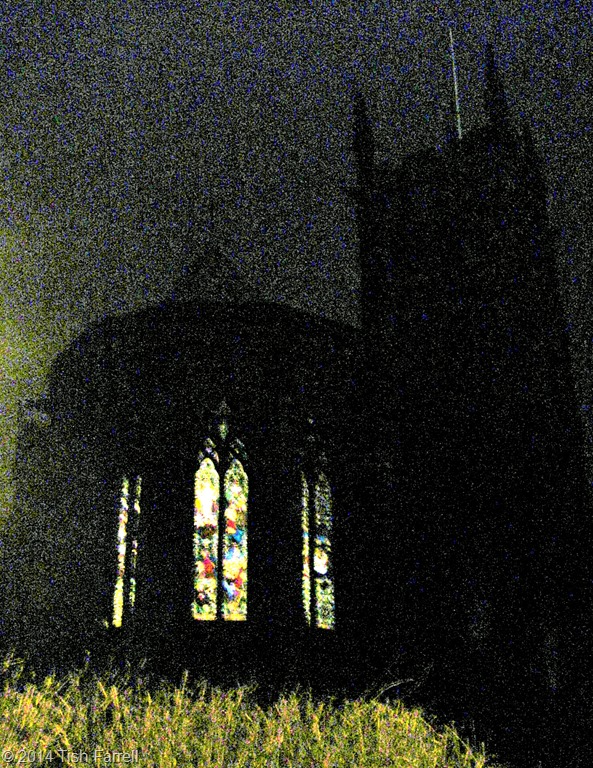
En route to the concert, and to prepare  myself for some Nordic introspection and reflection, I thought I’d dabble in a little West Midlands Noir. I used my Canon Powershot A430, bought on Ebay for twenty quid, and then fiddled about on Windows Live  Photo Gallery. The shots were taken near the theatre and include St Peter’s Church and  other University of Wolverhampton buildings. While I was in the Arena bar I also happened to notice that it had a reflective ceiling.

IMG_0901

IMG_0912

IMG_0911

IMG_0907

IMG_0905

IMG_0914

IMG_0904

Weekly Photo Challenge: reflections

TORD GUSTAVSEN QUARTET: THE WELL

https://www.youtube.com/watch?v=_3A6ziUPbdk

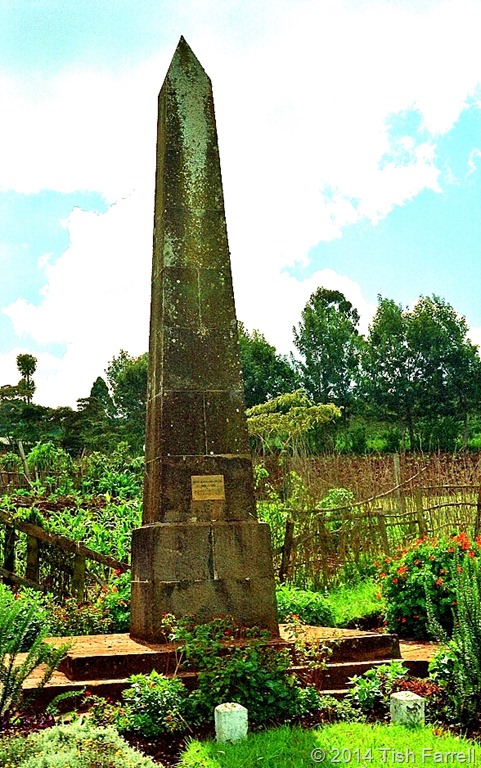
Caught inside a Kikuyu garden: a memorial to Karen Blixen’s lover, Denys Finch Hatton

Denys Finch Hatton obelisk Ngong Hills

This was not supposed to happen. In fact you could say it adds insult to irony:  that a man so steadfastly dedicated to an unfettered life in the wilds should, in death, end up hemmed in, and so very domesticated within this small Kikuyu shamba. Yet here it is, the mournful stone obelisk, marking  the grave of Denys Finch Hatton,  son and heir of the 13th Earl of Winchilsea, Great White Hunter, and lover of two women far more famous than he is: writer Karen Blixen (Out of Africa) and aviator  and race horse trainer Beryl Markham (West with the Night). 

Finch Hatton's grave on the Ngong farm

Yet another woman, the one whose shamba this is, shows him a new kind of love, taking care of the garden around the obelisk.  If you want to visit the place it is not easy to find – either her little smallholding on the Ngong Hills, or the grave within. When we visited years ago we found only a hand-painted signpost nailed to a tree. We parked in a paddock outside the farmhouse door and were charged a few shillings. We could have bought a soda too, if we’d wanted. We could not see the grave though, and soon found that it was deliberately hidden from view by an enclosure of  old wooden doors. More irony here of course. More symbols of shut-in-ness. 

Denys spent most of his life in Africa avoiding any kind of confinement – out  in the Tsavo wilderness, running shooting safaris for the rich and aristocratic. His clients included the Prince of Wales (later Edward VIII) . In fact it was during the safaris for the Prince in 1928 and 1930 that Finch Hatton began to promote shooting on film rather than with a gun.

His lover, Karen (Tanne), Baroness von Finecke-Blixen lived in a small house below the Ngong Hills, some twelve miles outside Nairobi. By the time she started her affair with Denys she was divorced from her charming, but philandering husband, Bror, although they always remained friends. Her family had invested a great deal in the couple’s coffee farm, and Karen struggled to make a success of it. But the location was entirely wrong, and in the end she was forced to sell up and leave Kenya. It was during the period of selling the farm that she heard news of Denys’s death.

Scan-130429-0005

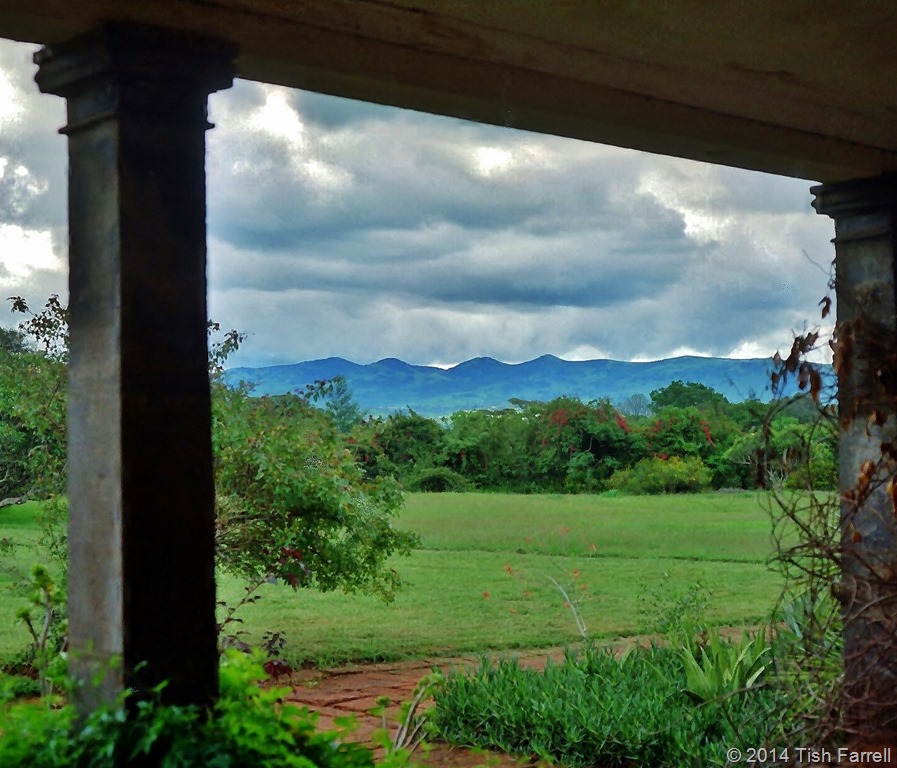
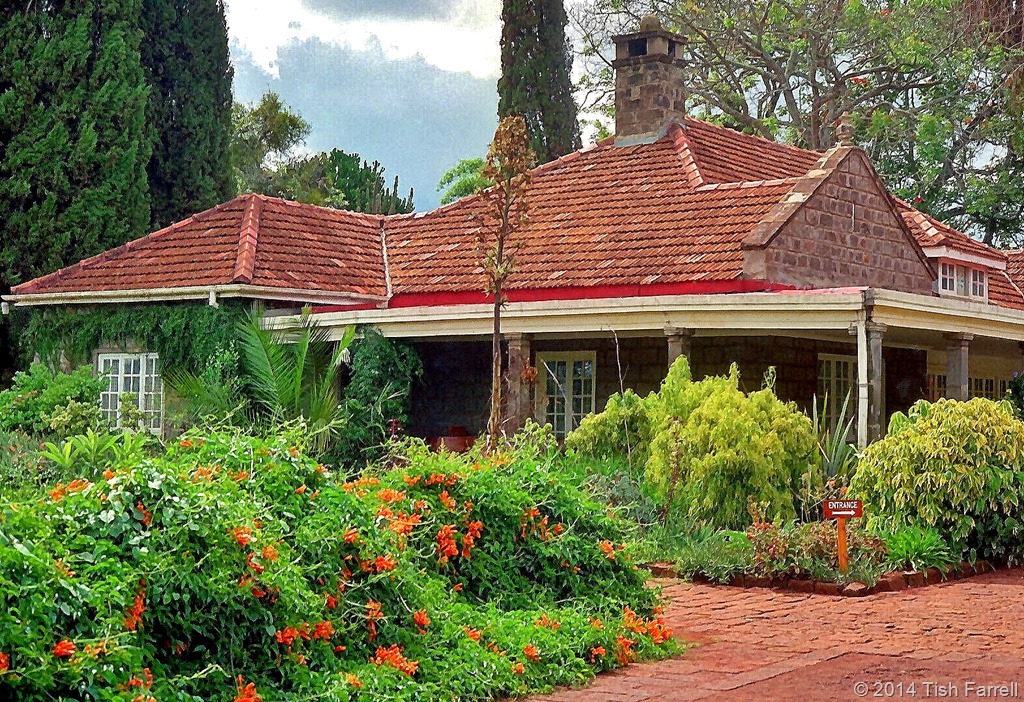
Looking towards the  Ngong Hills from inside the veranda at Karen Blixen’s house. The house now belongs to Kenya’s National Museums.

*

Scan-130429-0006

Denys Finch Hatton’s untimely end may be put down to his passion for flying. For those of you who remember Sydney Pollack’s 1985 film Out of Africa, some of the most elegiac moments of the film are when the celluloid version of Finch Hatton  (Robert Redford)  takes Karen Blixen (Meryl Streep)  into the skies above the Rift Valley.  Denys died in his Gypsy Moth in 1931, and in unexplained circumstances. He was taking off from the airstrip down in Voi in southern Kenya when his craft exploded. He and his Kikuyu co-pilot were killed. Denys was forty four.

Scan-130429-0018

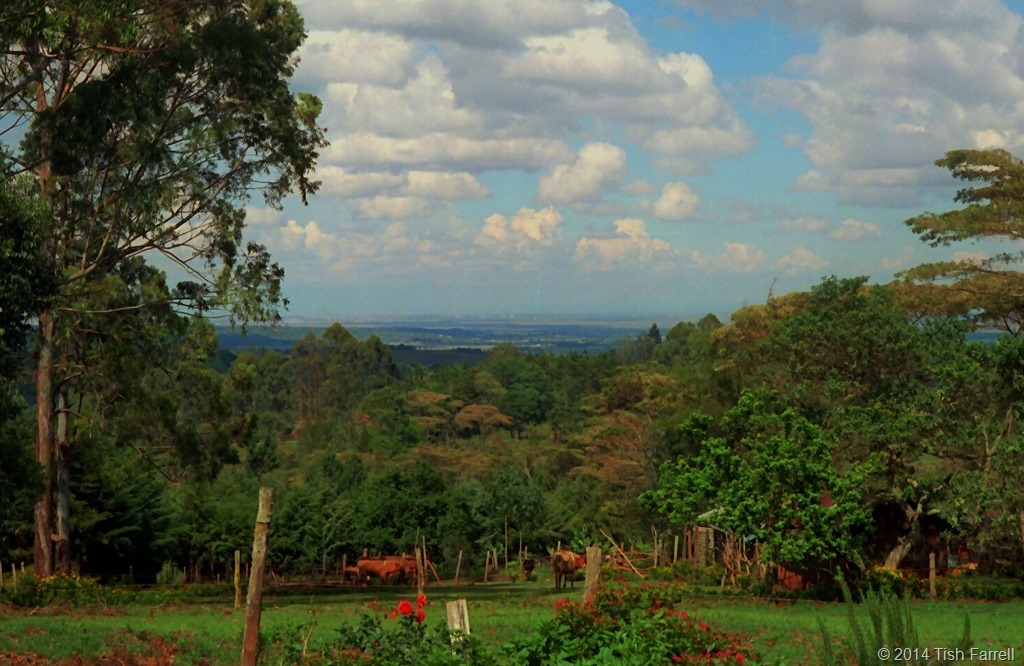
View towards Nairobi from Denys Finch Hatton’s Grave, and overlooking another Kikuyu smallholding.

*

By the time of his death, his relationship with Karen was  well on the wane, and he had already started an affair with the younger Beryl Markham. His biographer,  Sara Wheeler says in Too Close to the Sun, that there is circumstantial evidence to suggest that Beryl was pregnant with Denys’s child, but that she then had an abortion. To have known this would have truly broken Karen Blixen’s heart: her letters show that she had longed to have a child with Denys.

With yet another twist of irony, it was with his death, that Karen somehow reclaimed him, remembering that he had told her of his wish to be buried in the Ngong Hills. The spot he had chosen was one that Karen had decided on for her own grave.

013

Denys Finch Hatton

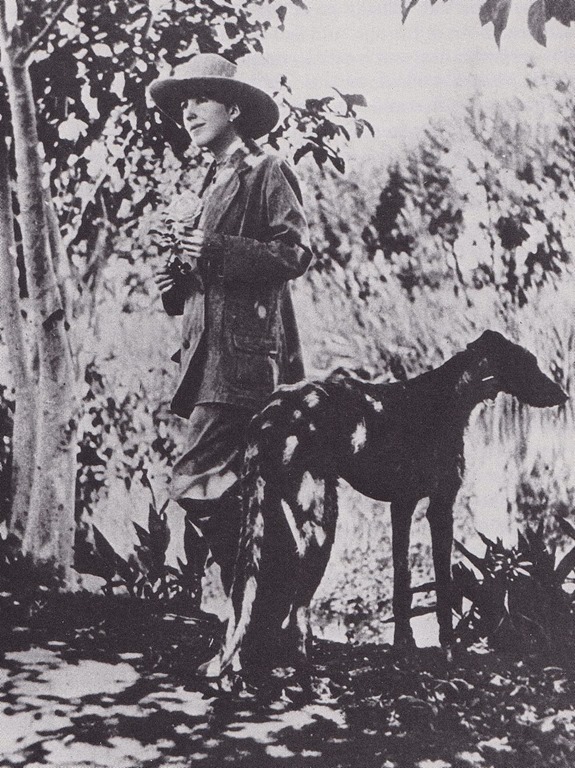
Karen Blixen with her deerhound Dusk

012

There was a place in the hills, on the first ridge of the Game Reserve, that I…had pointed out to Denys as my future burial-place. In the evening, while we sat and looked at the hills from my house, he remarked that then he would like to be buried there himself as well. Since then, sometimes when we drove out in the hills, Denys had said: ‘Let us drive as far as our graves.’ Once when we were camped in the hills to look for buffalo, we had in the afternoon walked over to the slope to have a closer look. There was an infinitely great view from there; the light of the sunset we saw both Mount Kenya and Kilimanjaro. Denys had been eating an orange, lying in the grass, and had said that he would like to stay there.

Out of Africa

The obelisk was only put up later by Denys’s brother. During Karen’s last days in Kenya she had the site marked with white stones from her own garden, and as the grass grew up after the long rains, she and Farah, her Somali house steward, erected a pennant of white calico so she could see the spot from her house, some five miles away.

Sometime after she had returned to Denmark she received a letter with some strange news about the grave:

The Masai have reported to the District Commissioner at Ngong, that many times, at sunrise and sunset, they have seen lions on Finch Hatton’s grave in the the Hills. A lion and lioness have come there, and stood, or lain, on the grave for a long time…After you went away, the ground round the grave was levelled out, into a sort of big terrace. I suppose that the level place makes a good site for the lions, from there thy can have a view over the plain, the cattle and game on it.

Out of Africa

Scan-131109-0048 - Copy

copyright 2014 Tish Farrell

*

Tish Farrell is an award winning writer for young people. Her latest novella is on Amazon Kindle (5 star review):

Secrets, conspiracies, tragedy, dark comedy – a fast-paced novella of interwoven tales set somewhere in East Africa. For young adults and adults alike.

Abandoned: Great Zimbabwe

Scan-130429-0005

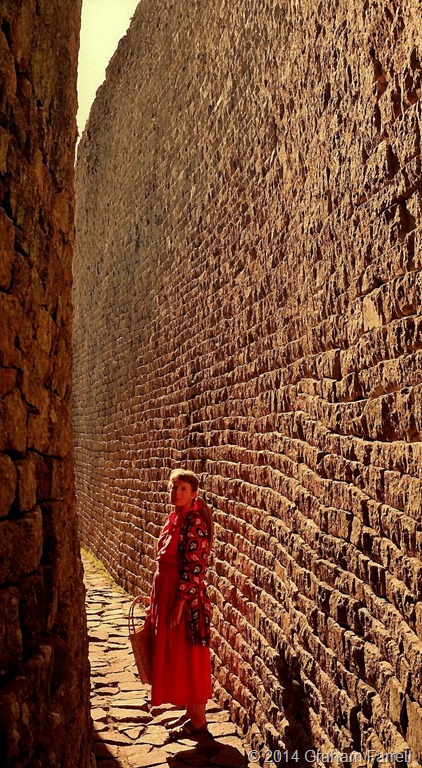
Inside the Great Enclosure of Great Zimbabwe. These magnificent walls have survived for nearly seven centuries, and not a lick of mortar to keep them standing.

Scan-130429-0010

No one knows exactly why this great African city  was abandoned. For some 350 years, until  around 1450 AD,  Great Zimbabwe had been a flourishing merchant centre that drew in from the surrounding country supplies of gold, copper, ivory, animal skins and cotton. The city’s entrepreneurs  then traded these goods on to the Swahili city states of Sofala and Kilwa on the East African coast. (You can read more about the Swahili HERE). In return, the traders brought back luxury goods –  jewellery, decorative pieces such as 13th and 14th century Chinese celadon dishes and Persian ceramics.

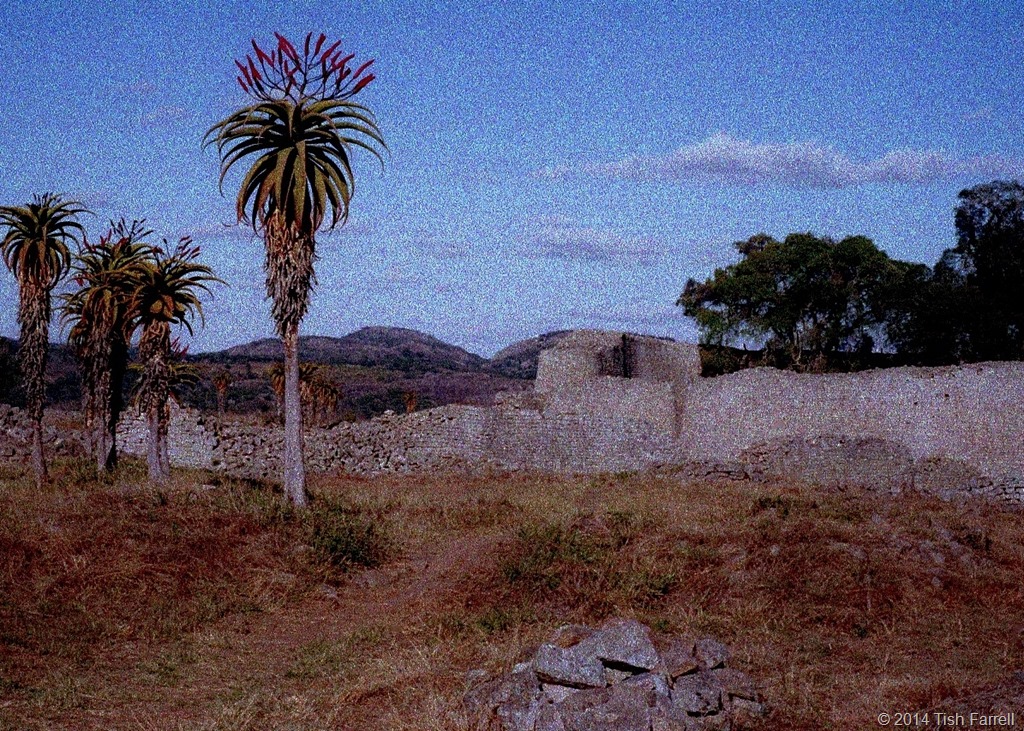
aloes and Great Zimbabwe

The city’s ruins cover 80 hectares, its many stone enclosures commanding the southern slopes of Zimbabwe’s High Plateau watershed between the Zambezi and Limpopo Rivers. The site is well watered with good grazing throughout the year. It is above the zone of the deadly tsetse fly that can infect both cattle and humans with sleeping sickness; and the plateau’s granite scarps provide plentiful building stone and other raw materials. Even so, these favourable circumstances do not explain why this particular settlement rose to such prominence.

For Great Zimbabwe was not a singular phenomenon. Contemporary with it,  and across the High Plateau region, are the remains of at least a hundred other mazimbabwe (houses of stone). Several were large enough to have been the capitals of rival states. Others may have been satellite communities occupied by members of Great Zimbabwe’s ruling lineage.

So who were the city’s builders?

During Zimbabwe’s colonial times, and until independence, the  Rhodesian government actively supressed  evidence that Great Zimbabwe was built by Africans.  Many of the other stone ruins were destroyed or re-purposed by European settler farmers. The official view claimed that the city was Phoenician, and that the Queen of Sheba’s fabled kingdom of Ophir had been discovered. Archaeologists, however, have long demonstrated  that it was the cattle-owning Karanga Shona who built Great Zimbabwe. The first phase of stone building began around 1100 AD. Thereafter, the city’s rising fortunes and successive building phases suggest its increasing control of the ancient High Plateau trade routes to the Swahili cities of Sofala and Kilwa.

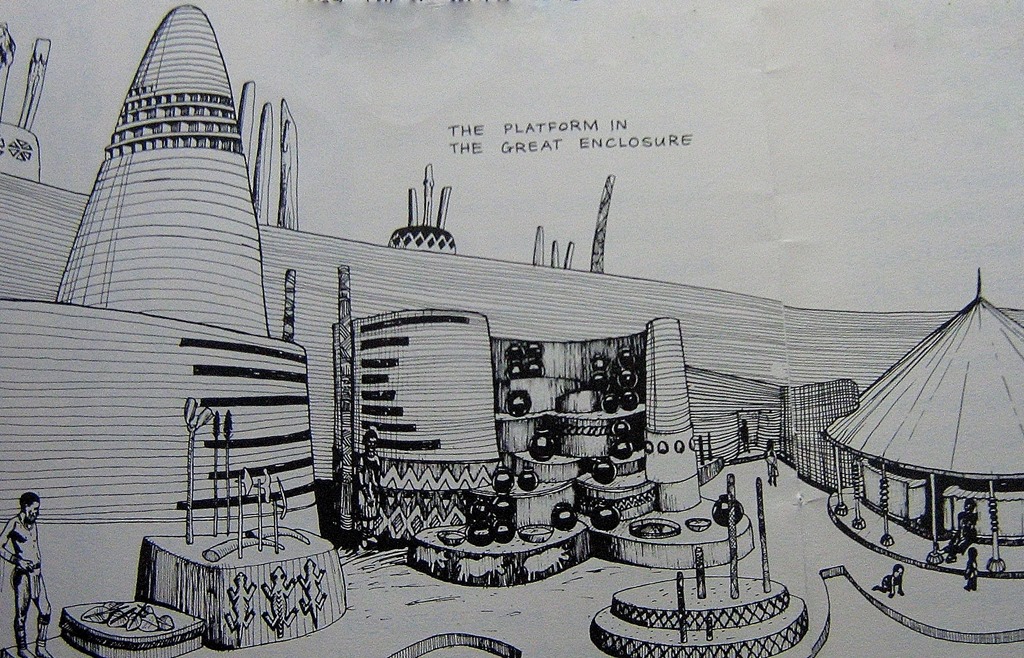
Gold was the key commodity, and it is likely that it was Great Zimbabwe’s successful cattle production that provided it with the trading power to secure gold supplies from mines some 40 kilometres away. The more prosperous the city became, the more sophisticated its demonstrations of prestige. In around 1350 AD  the Great Enclosure of finely dressed stone was built. This huge elliptical structure with its mysterious platform and conical tower is thought to be the royal court. There is no indication that the walls were defensive. This was  a regime confident in its power and authority.

IMG_0889

Peter Garlake’s reconstruction of the Great Enclosure Platform from Life at Great Zimbabwe,  Mambo Press 1982

*

Then why did the city decline?

There are various explanations: the people had let their herds overgraze the land; they had cut down all the trees; there was a prolonged period of drought as may happen in southern Africa. But somehow none of these theories quite explain why, after 350  flourishing years, a community of perhaps 20,000-plus people should simply pack up and leave. Did all these farmers, herders, miners, craftspeople, soldiers, traders, accountants, court personnel and the city’s rulers  leave on a single day, or did the city die slowly?  The archaeological evidence does not say.

But we do know there were disruptive external forces at work. In the 15th century the Portuguese invaded the Swahili coastal city of Sofala. They were on the hunt for gold and so pressed inland with Swahili guides. Their interfering presence drove the trading routes north, giving rise to the Mutapa state. This new state may well have been founded by people from Great Zimbabwe. Certainly by this time the Swahili traders were coming up the Zambezi to trade with the Shona directly, the old trade route through Great Zimbabwe no longer used. At this time, too, we see the beginning of another Shona city state  with the building of the stone city at Khami near Bulawayo in southwest Zimbabwe. In the following centuries this became the centre of the Torwa-Rozvi state whose other major cities during the 16th and 17th centuries included Naletale and Danangombe.

Great Zimbabwe entrance

The Great Enclosure entrance at Great Zimbabwe built c.1350 AD

*

And so into history…

Of course with the Portuguese incursions comes the first documentary evidence. From the early 1500s Zimbabwe’s royal courts enter the historic record in the accounts of the Portuguese conquistadores. In 1506 Diogo de Alcacova writes to his king, describing a city  of the Mutapa state

“called Zimbany…which is big and where the king always lives.”  His houses are “of stone and clay and very large and on one level.” Within the kingdom there are “many very large towns and many other villages.” 

The Portuguese historian Faria y Sousa also describes the King of Mutapa’s great retinue which included the governor of the client kingdoms, the commander-general of the army, the court steward, the magician and the apothecary, the head musician “who had many under him and who was a great lord”. Also noted were the vast territories over which the king ruled, the revenues and subject kingdoms of the king’s several queens.

And suddenly we have a true glimpse of what this land called Zimbabwe might have looked like in the past, a bustling, mercantile, metropolitan culture, supported by gold miners, farmers, cattle herders and craftspeople. And so it remained until well into the 18th century, albeit with a shift of Shona power to the southwest and the Torwa-Ruzvi state as the Portuguese presence caused increasing instability. Then in the 19th century came new invaders – the Nguni, the Ndebele and the British.

This centuries old heritage of royal courts is not a picture that the likes of Cecil Rhodes or, the later Rhodesian government of Ian Smith ever wanted anyone to see. And so in the end this is not so much a story of a city abandoned by its people, but of a people wilfully excluded from their past.  In 1980 when Zimbabwe became an independent state, some of this past was reclaimed: the new state took its name from the first great Shona city, and  adopted for its flag and coat of arms, an image of one of the city’s ceremonial soapstone birds. These are small steps forward, but there is still a long way to go before the world sees the indigenous histories of the Africa continent in their true perspective, and acknowledges their intrinsic cultural worth.

There is more about Great Zimbabwe in an earlier post HERE.

References: The classic work on the excavations of the city is Peter Garlake’s Great Zimbabwe 1973. For an overview of the mazimbabwe culture see Innocent Pikirayi’s The Zimbabwe Culture AltaMira Press 2001. For a wider historical perspective Randall L. Pouwels The African and Middle Eastern World, 600-1500 Oxford University Press.

© 2014 Tish Farrell