Wild Arum Days

IMG_3164sq

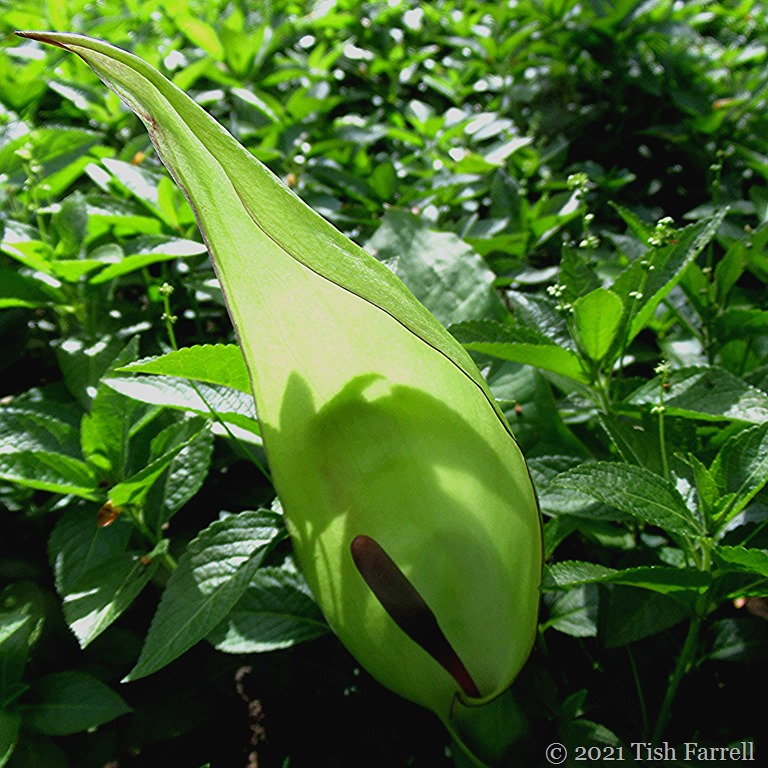
Here is another woodland find from Monday’s wood chip scrounging mission in the Linden Field. Freshly opened too among the Dog’s Mercury, this arum lily looks like a dryad’s lantern.

The flower’s mysterious (not to say phallic) looks have earned it a host of country names over the centuries, many obviously, but not so obviously, of the lewd variety. For instance the seemingly innocuous Lords and Ladies would have had particular connotations in its day. The same with Cows and Bulls. And the more modern Willy Lily is downright rude. I’ve always known it as Cuckoo Pint, the pint pronounced as in pint of beer. But back in the day it would, most likely, have been pronounced to rhyme with mint. In the sixteenth century, pint was an abbreviated version of pintle, slang for penis.

Other names are Red-hot-poker, Devils and Angels, Adam and Eve, Friar’s Cowl, and Wake Robin. There are many more. And it’s making me think of that classic anthropologist Claude Levi-Strauss’ contention in his book The Savage Mind, that human beings have ever used their observations of the natural world to think by. Food for thought in every sense – a trigger for metaphor and story-telling makings, the narrative impulse that defines human nature.

So I’m treasuring the bawdy names, even if I’ve often missed their meaning. Irreverent they may be, but then irreverence may be the only antidote we have to what Kenyan writer Ngugi wa Thiong’o, called “the colonisation of the mind.”

Bright Squares #28

Bright Glade

IMG_3157

Yesterday morning I set off across the Linden Field on one of my periodic scavenging missions. I’d found the stash back in the winter when it was frozen into a craggy hummock: too hard to prise open the constituent parts. We’re talking about wood chips here. Last year one of the oaks at the top of the field where it meets the foot of Windmill Hill had shed a large branch. The brash was duly shredded and left in a heap by the boundary fence. And what a sight to gladden this gardener’s heart, though I had to wait for it to dry out, first after the thaw, and then after weeks of rain.

It is amazingly useful stuff. Firstly it’s good to add to the garden and kitchen waste that goes into our hot compost bin. Secondly it makes an excellent mulch for the home flower borders. Thirdly, and mostly, I use it at the allotment where I pile it on layers of cardboard set between the raised beds; this in a bid to maintain weed-free paths. When, after a year or two, when the cardboard has melted and the chippings begun to break down, the whole lot can be added to the allotment compost bins, and the cardboard laying and scavenging begins again.

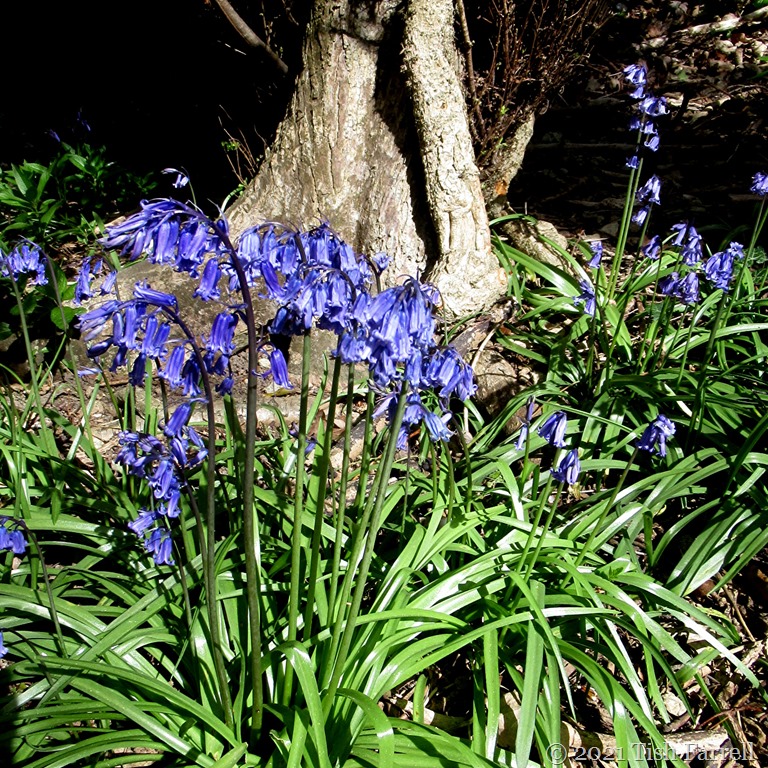
And so that was my mission – out in the brilliant sunshine and still frosty, frosty air to collect fresh path makings. Of course I always take the camera too, which meant that when I reached the heap, I was at once distracted by bluebells. There they shimmered on the flanks of Windmill Hill, proper native bluebells:

through the light/they came in falls of sky-colour washing the brows and slacks of the ground with vein-blue…

Gerard Manley Hopkins Journal May 1871

Bright Square #27

April evening bright, cold and clear

IMG_2944

Gosh, but the April air is chilly here in Wenlock, even when the sun shines and distracts us. I gather it’s all the fault of the North Atlantic Oscillation which has dropped into negative zones and is drawing cold air from an unusually frigid Arctic. The weather people say there’s more cold air to come so it looks like spring, here in the northern hemisphere, might be late this year.

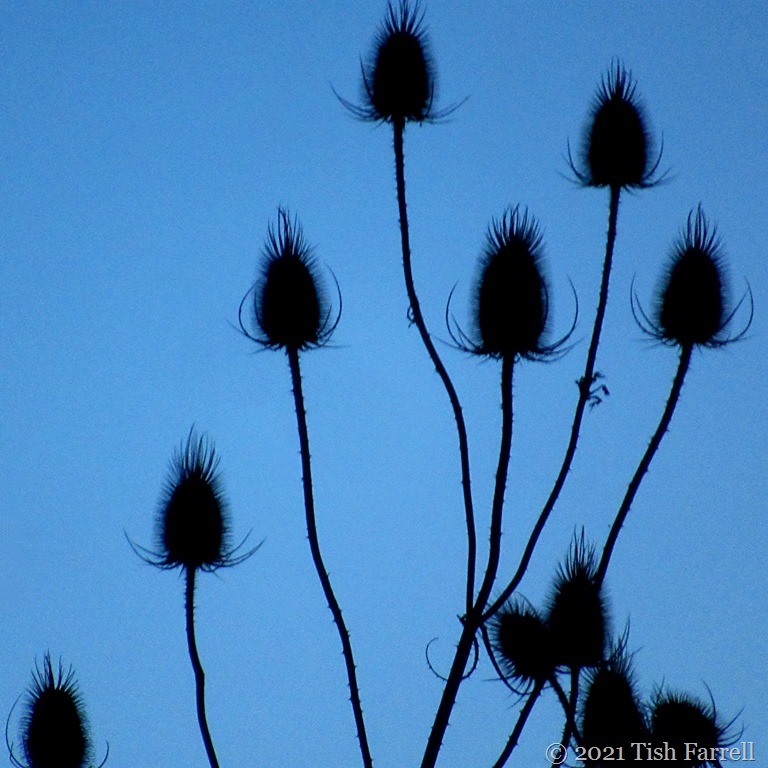
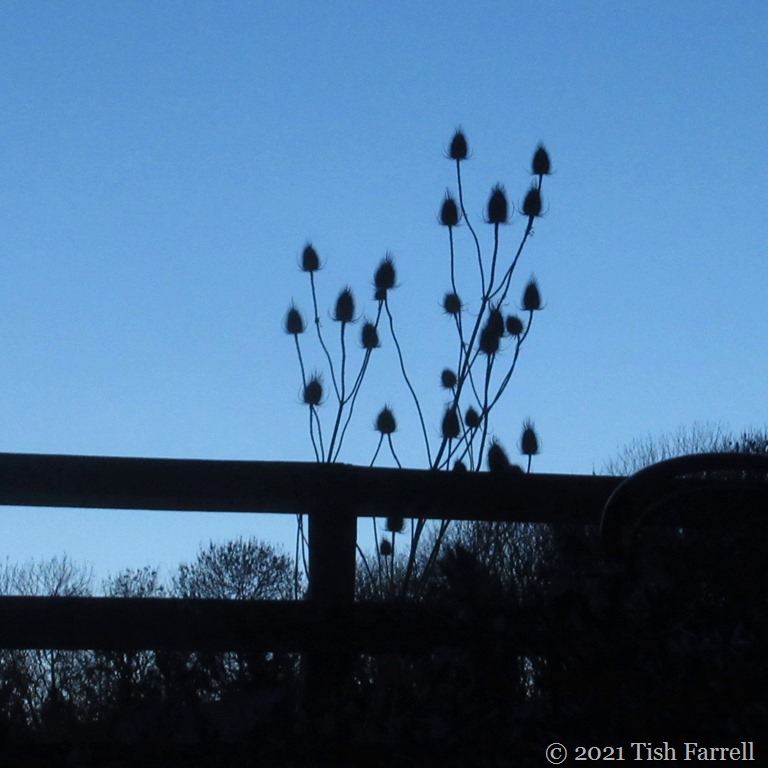
I took these photos from the kitchen door the other evening. As ever, the teasels up in the guerrilla garden continue to catch my eye, and I’m putting off cutting them down. At this time of year the garden-over-the-fence does not look promising. Very flat and wintered. But then it’s also just the moment to discourage some of the more tenacious weeds which are popping up there – couch grass and ground elder in particular. Except now the allotment plot is calling and that’s where all my effort is being deployed. So many compost heaps to turn over, and bins to turn out in hopes finding enough of something useful to spread on the raised beds.

Climbing peas and broad beans have been started off in pots, the onions and the first early Swift potatoes are in the ground, and it’s time to start clearing the polytunnel of winter greens to make space for the tomato and cucumber plants which are presently in the conservatory at home, along with trays of cabbage and cauli and perennial flower seedlings. They will all need hardening off, but not yet.

And there we have a problem. He-who-binds-books-in-winter-and-lives-in-my-house is now set on the outdoor pursuit of dismantling said conservatory (which though presently useful to this gardener, we both agree is hateful) and erecting in its place against our other back door, a lean-to greenhouse whose parts are presently lying in boxes in our sitting room.

It’s one of those projects that will be wonderful when done, but the getting there is fraught with many acts of plant juggling, issues of meteorological conflict and potential domestic unrest between gardener and demolition man. Prickly times ahead. I will  keep you informed.

IMG_2950

Bright Square #15

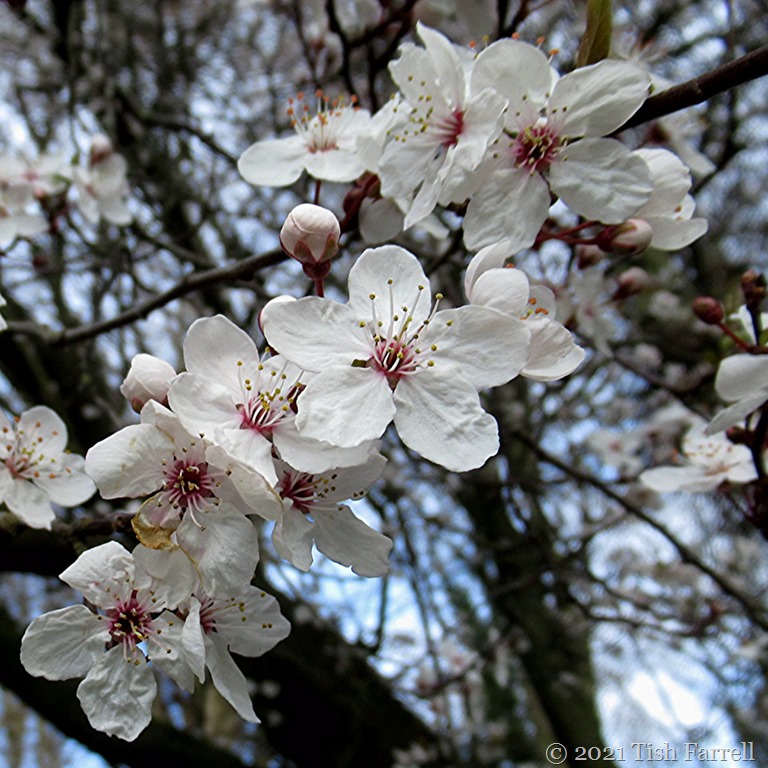
“Loveliest Of Trees, The Cherry Now…

IMG_2601sq

Loveliest of trees, the cherry now

Is hung with bloom along the bough,

And stands about the woodland ride

Wearing white for Eastertide.


Now, of my threescore years and ten,

Twenty will not come again,

And take from seventy springs a score,

It only leaves me fifty more.


And since to look at things in bloom

Fifty springs are little room,

About the woodlands I will go

To see the cherry hung with snow.

A E Housman A Shropshire Lad

IMG_2594sq

The Loveliest of Trees is the second poem from the Shropshire Lad  cycle, and probably the one best known.  It is easy from today’s perspective to dismiss the apparent simplicity, sometimes ditty-like quality of these poems. But Housman was a scholar of Olympian proportions, an atheist too and, it is said, suffering in love for a man who could never love him in return. Sensibilities run deep here.

The verses speak of love and loss and going to war; the fleetingness of things; all set against landscapes seen only in the mind’s eye, or as if looking from a long way off across time and space. There are many voices too, even ghostly ones, the sense of old country airs remembered. It is not surprising that they spoke so compellingly to composers who then set many of the poems to music: George Butterworth (Bredon Hill and Other Songs), Ralph Vaughan Williams (On Wenlock Edge), Ivor Gurney (The Western Playland), Samuel Barber (With rue my heart is laden ) to name a few.

Here is Butterworth’s evocation of the cherry tree, sung with perfect poise by Roderick Williams. If you choose to listen you may imagine Shropshire here today. As I write this we are having flurries of light snow just like falling cherry blossom.

Butterworth: Six Songs from ‘A Shropshire Lad’ (Excerpt) – BBC Proms 2014 – YouTube


Bright Square #5

“All A Green Willow, Willow…

IMG_2828

All a green willow, willow;

All a green willow is my garland.

From A ballad of the green willow  by John Heywood c.1497-1580 English Dramatist


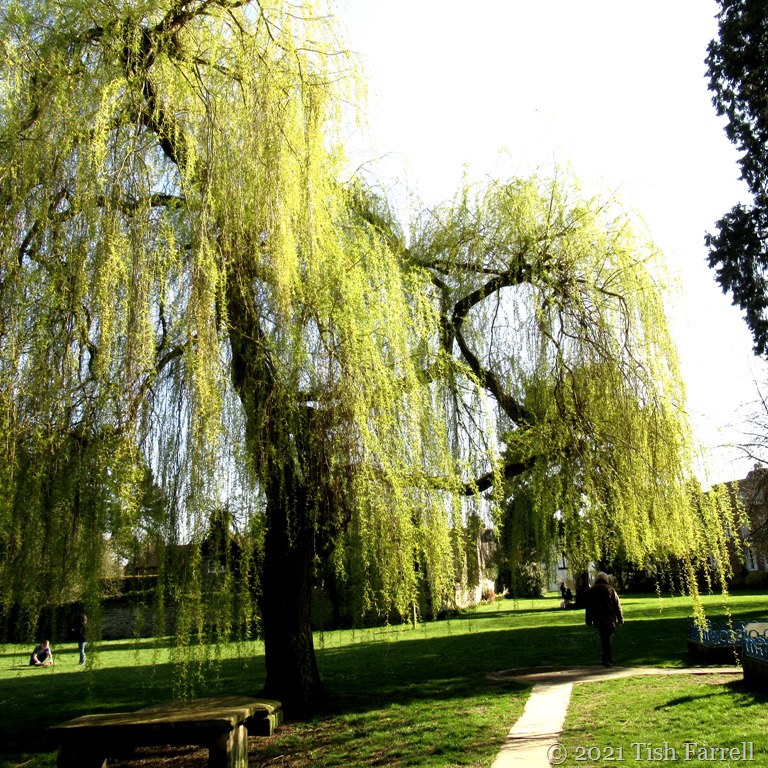
The weeping willow on Much Wenlock’s Church Green is in spring cascade mode.

For more about John Heywood see Regina Jeffer’s post England’s First Great Dramatist  HERE.

Bright Square #4

High-Wire Choir

IMG_2798sq

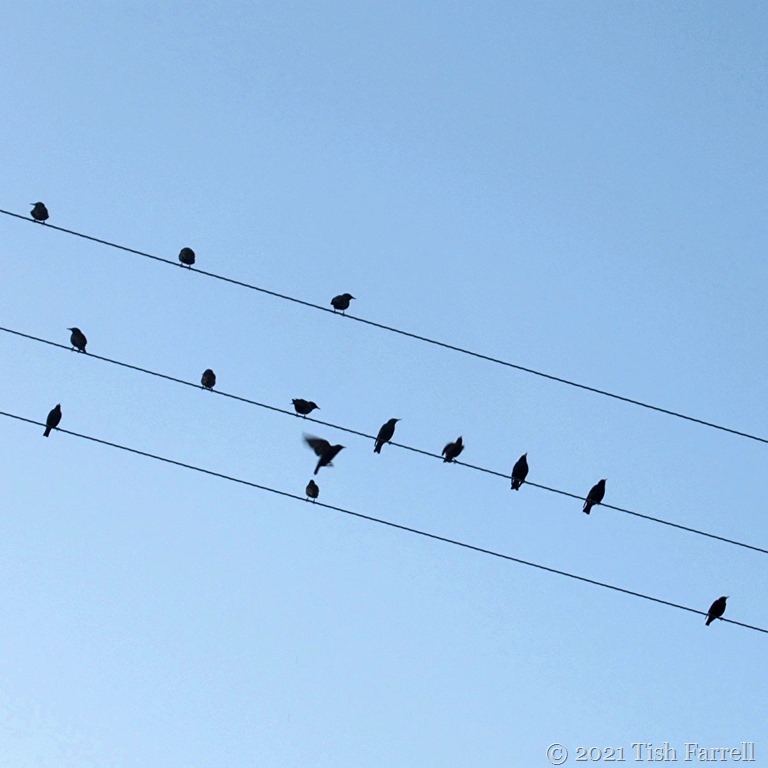
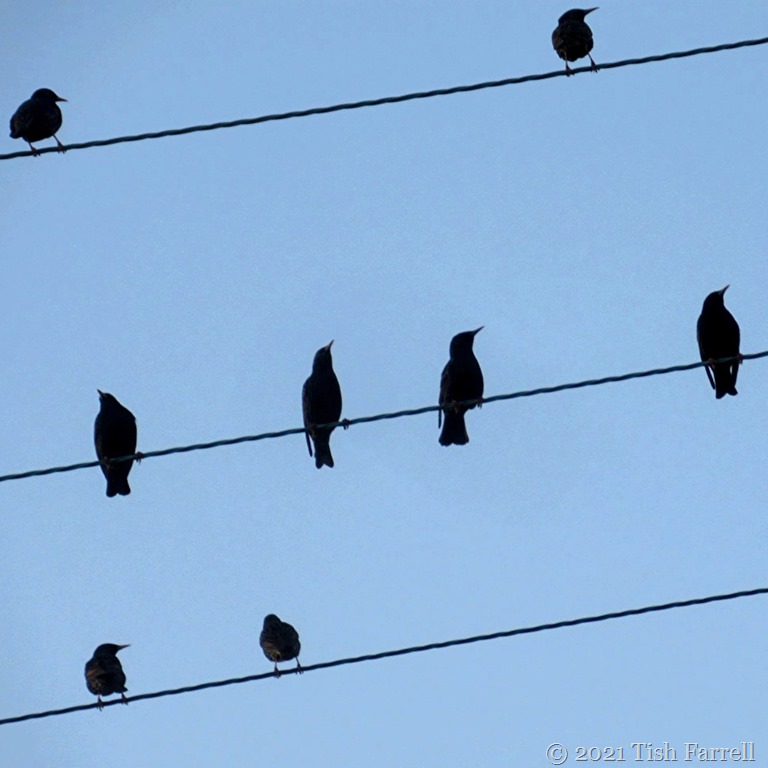
I was on my way home from the allotment (Wednesday’s summer’s evening before the big chill reverse) when I spotted the starlings. These once common garden birds are a rare sight nowadays, and this is a newish colony that seems to have established itself at the north end of the town.  I know for a fact that they go every day to a chum’s garden for their elevenses and try to eat all the bird food she puts out. Later in the day I see them around the gardens that border the field path to the allotment. On Wednesday they had gathered on the power lines and were singing away, darting from wire to wire, for all the world like moving musical notes. They made me laugh. Next time if they repeat the performance, I’ll try to film them. For now a couple more bright-spark shots of them.

IMG_2789sq

IMG_2790sq

Bright Squares #2

Before My Eyes: The Greening

IMG_2588

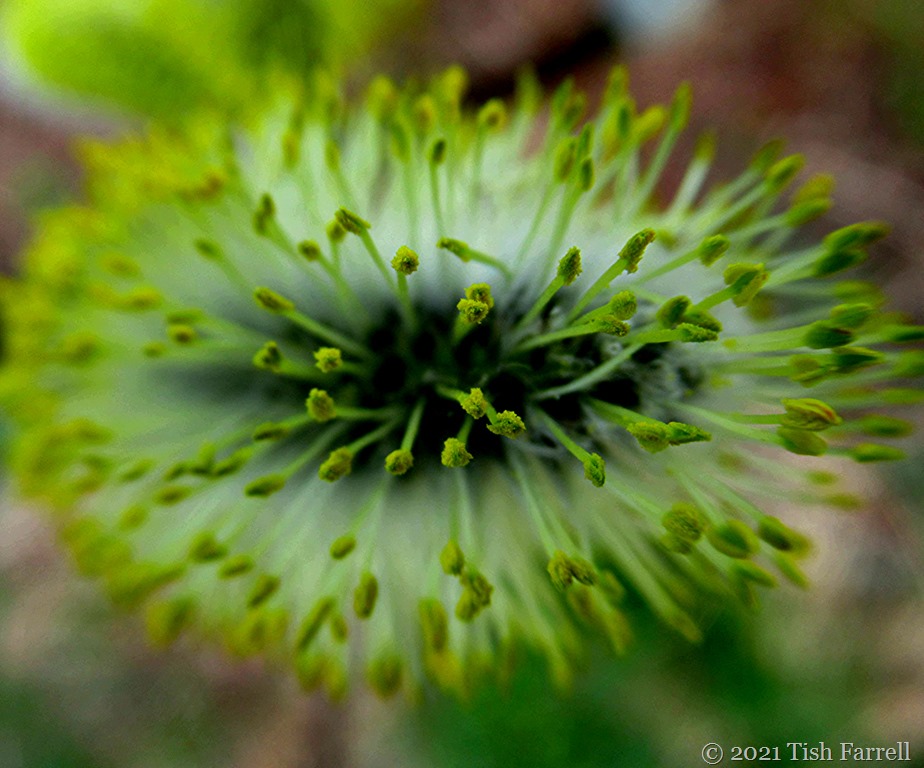
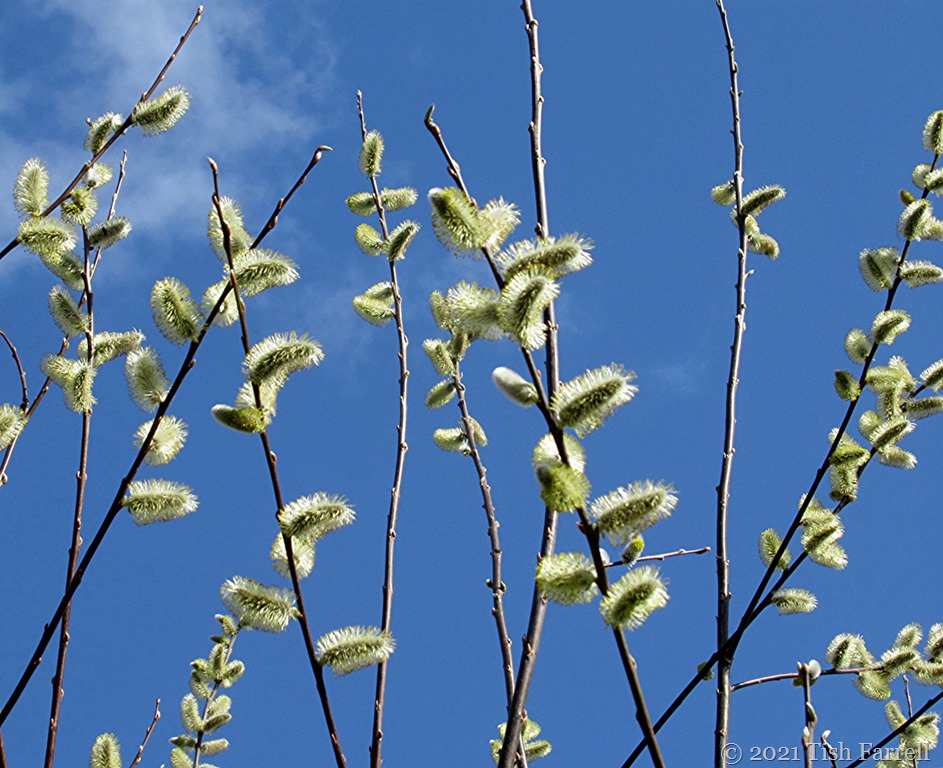
It has an extra-terrestrial look, doesn’t it – this exploding pussy willow catkin. In fact ‘catkin’ sounds too confining a word for such exuberant expression.

IMG_2630

Elsewhere around the town signs of coming spring are more reserved: delicate cherry and blackthorn blossom on otherwise bare branches, and earlier this week only a slightly seen green haze about the church yard weeping willow; while everything is otherwise accompanied by a bone-biting wind that has the daffodils and me bracing ourselves.

IMG_2559

IMG_2608

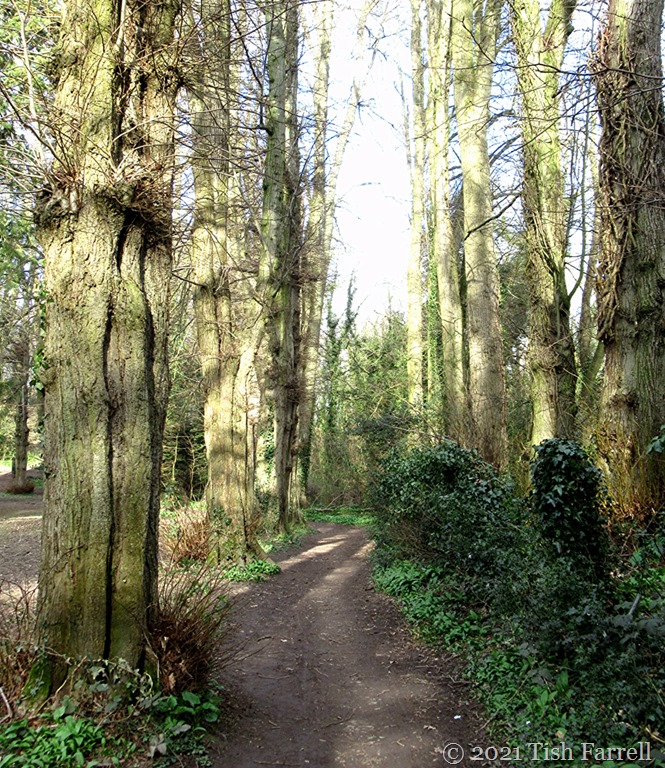
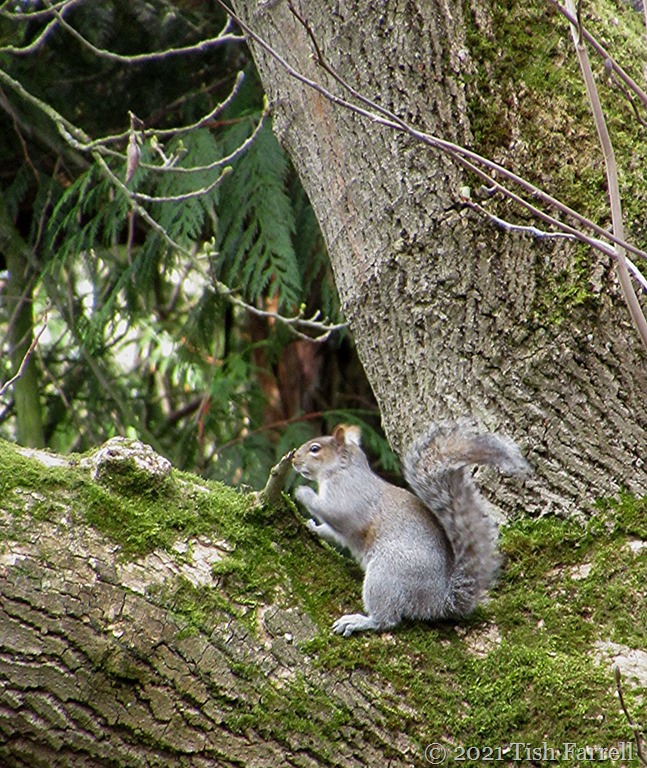
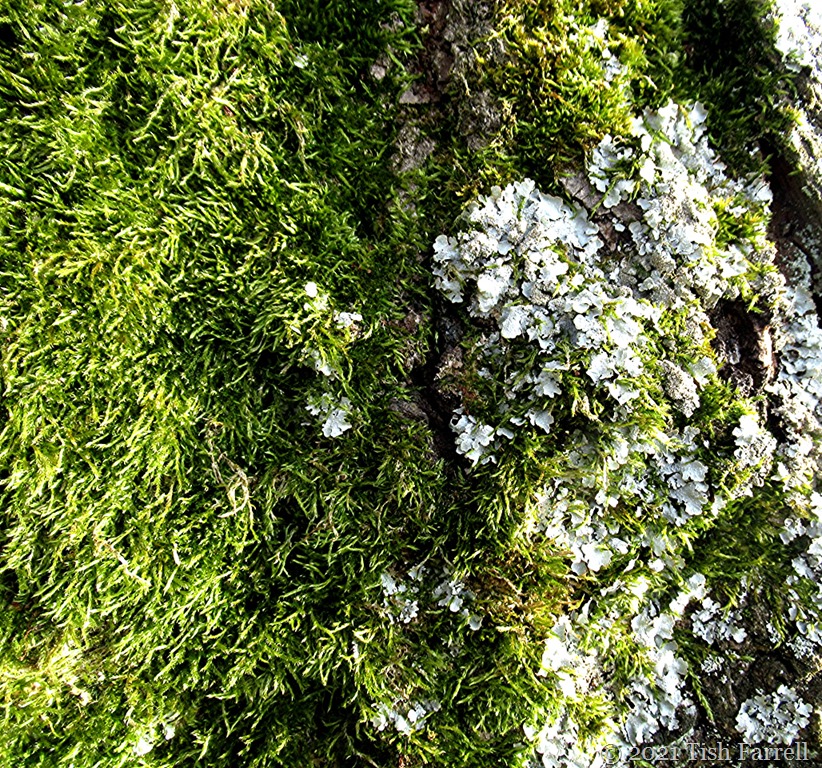
The Linden Walk still looks wintery, although there are carpets of wild garlic everywhere – the leaves good in soups and stews and salads and for making pesto sauce. I’ve also noticed interesting colonies of lower plant life on the lime tree trunks, lichens and mosses and the like. And squirrels…

IMG_2605

IMG_2438

*

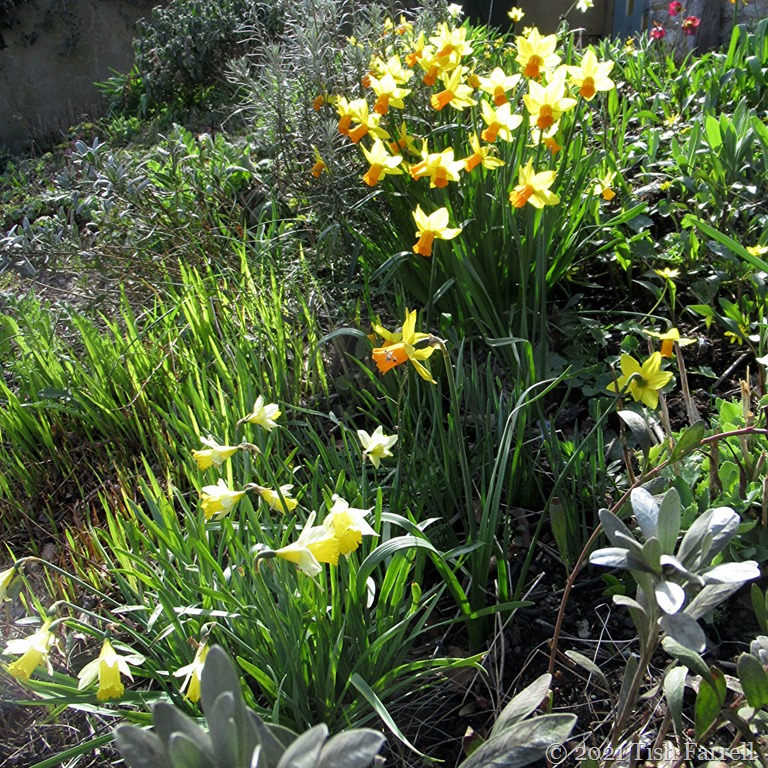
And on the home front the daffodils are lighting up the garden by the road.

IMG_2655

*

And stepping out of the back garden gate I came upon a cat with green eyes…

IMG_2550

Life in Colour: Green

Life In Colour: The Home Front In Shades Of Green

From Wenlock Edge

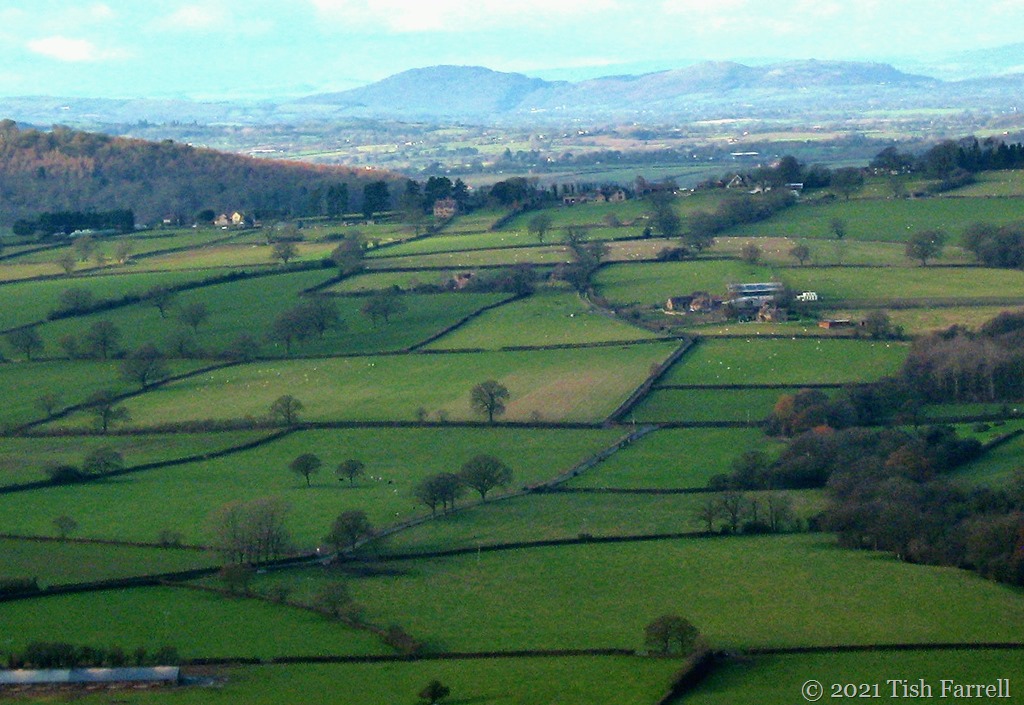
This month Jude at Travel Words  asks us to explore the colour green. So I thought I’d start with our home landscapes. Here in the English countryside we perhaps take  greenness for granted. Even our over-wintering fields are bright with sprouting wheat and pasture grass. The header shot is a December view, looking across Shropshire from Wenlock Edge.

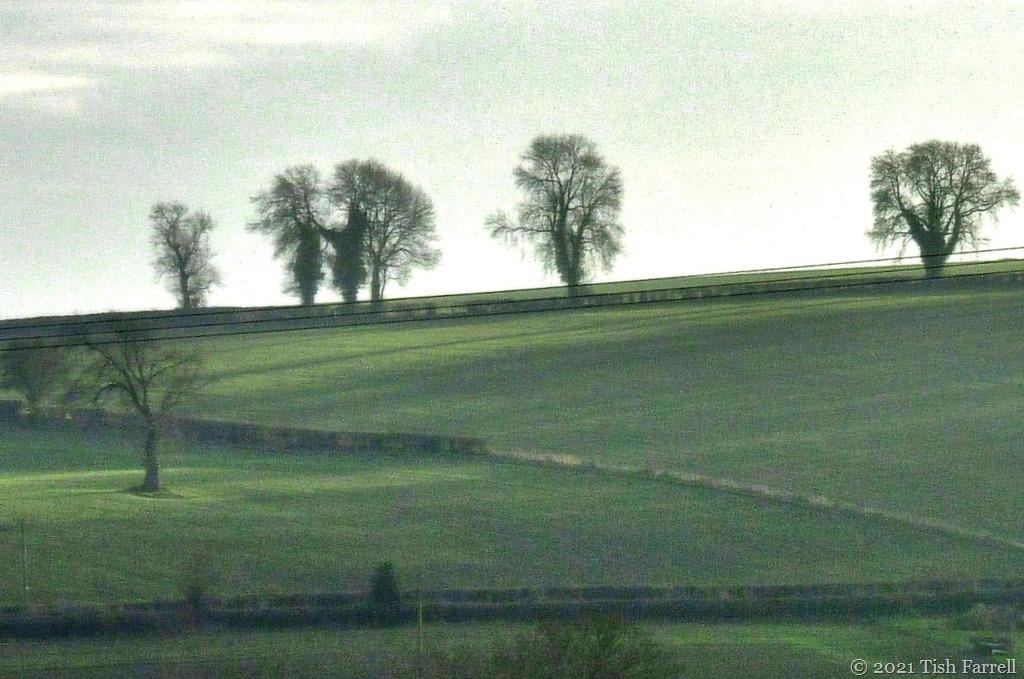
Closer to home is the long-shot view I see whenever I go to the allotment: Callaughton Ash on the southerly edge of Much Wenlock. It’s one I never tire of – those sky-line ash trees with their ivy cladding.

P1060829

*

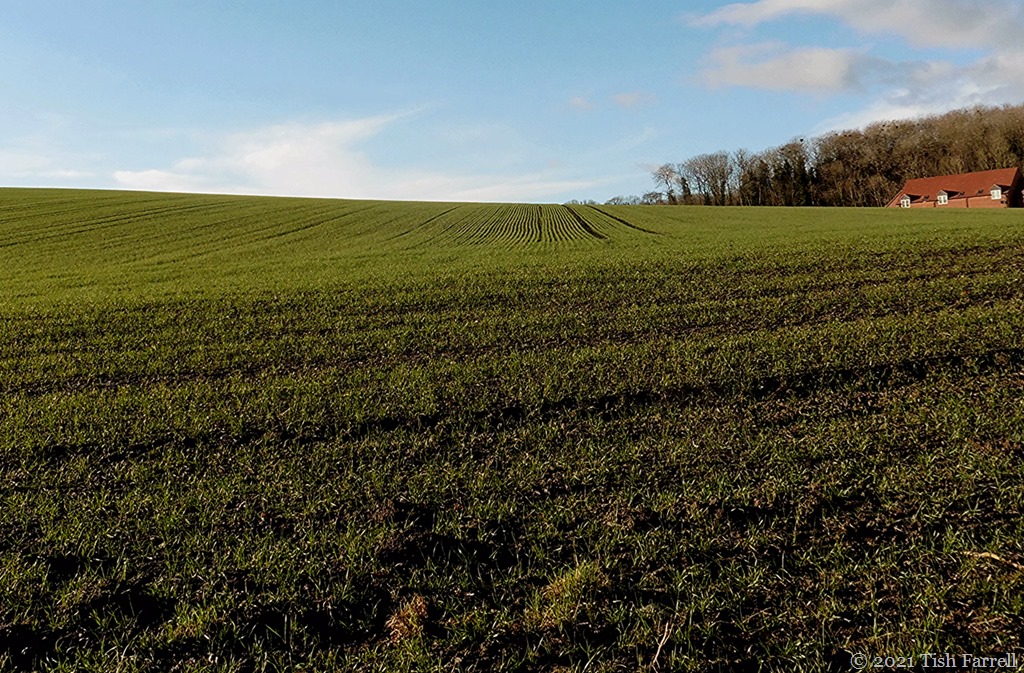
Then behind our house is Townsend Meadow. Wheat has been grown along the flanks of Wenlock Edge for centuries, and as proof has left its name ‘The Wheatlands’ in part of it. These days the crop is sown in October-November and is usually well sprouted by Christmas. I like the corduroy effect.

P1100710

P1100709

*

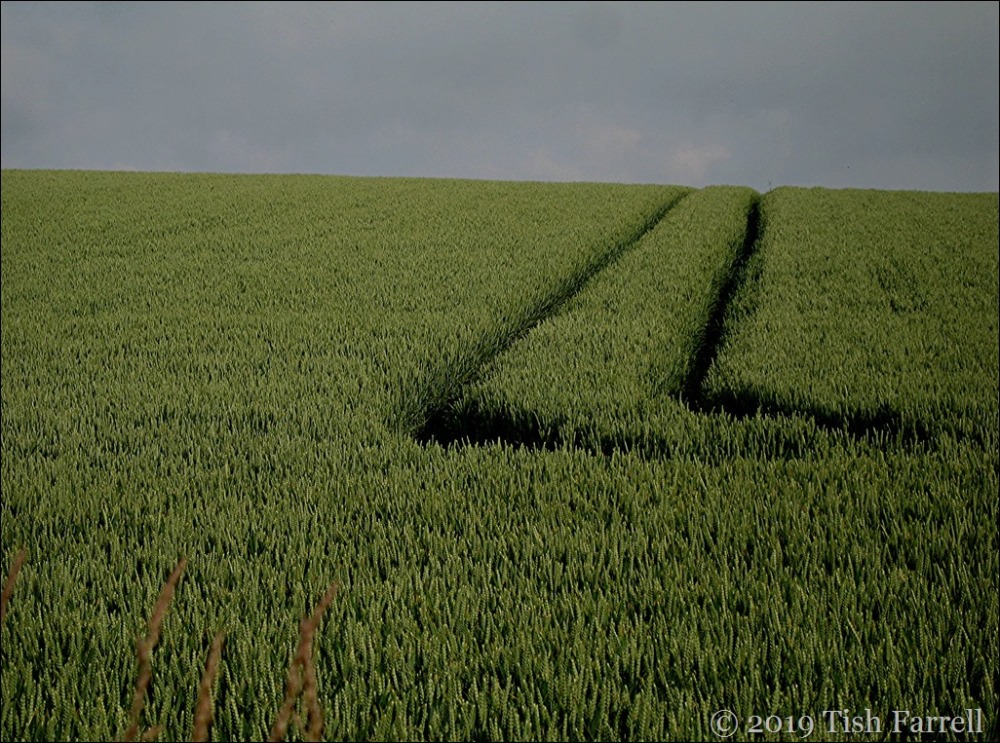
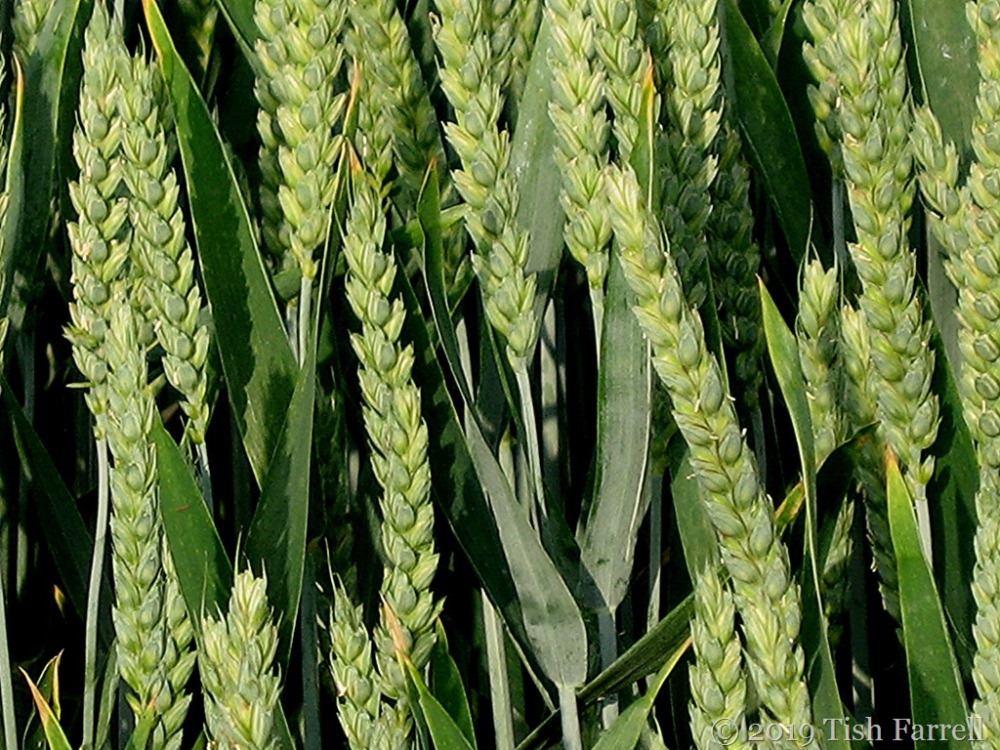
By summer, after serial dosing, the field looks like this:

img_2538_thumb

img_2527

*

And on our side of the fence, thanks to home-made compost:

img_8889_thumb

100_6855

*

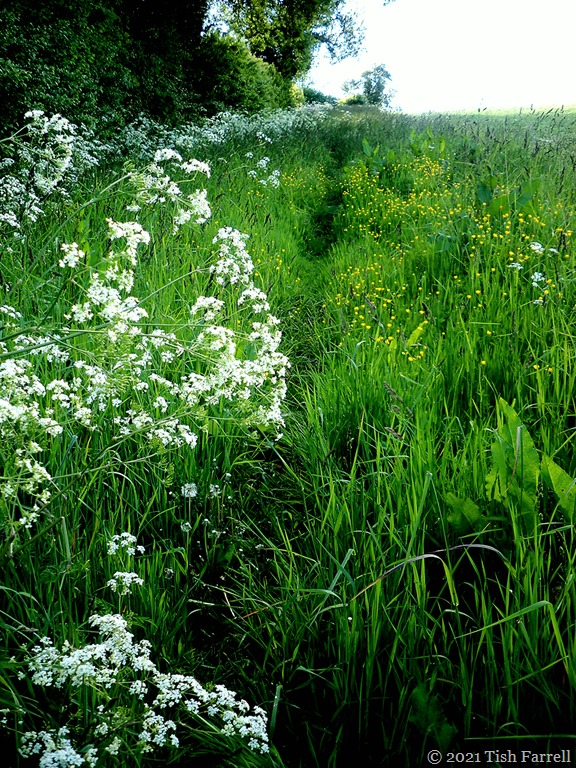
Meanwhile my summer route across the field to the allotment used to look like this – before the farmer cut the ‘wildlife’ reserve back to the ‘path’:

100_5602

*

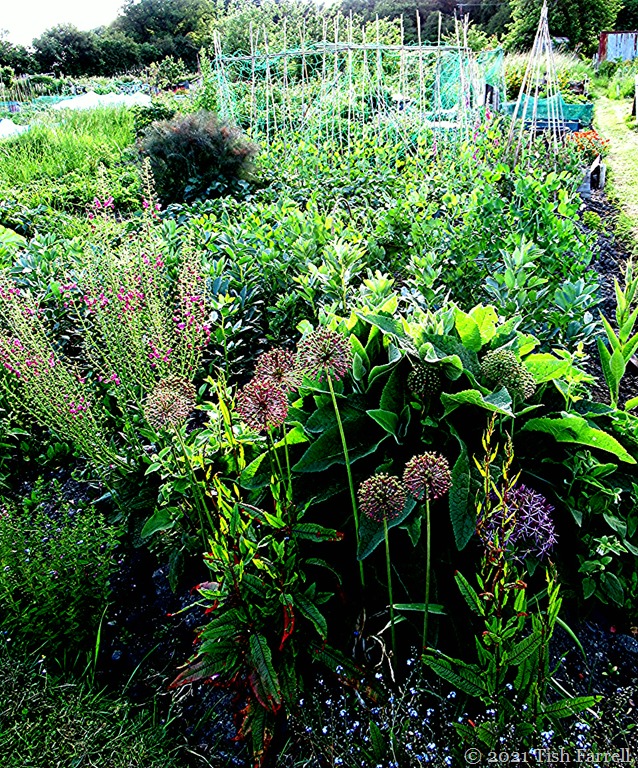
And when things go well on the plot:

IMG_1995 (2)

… we get other ‘greens’:

100_6169

100_4196


Life in Colour: Green