Over The Garden Fence At Sunset Yesterday

P1040528

After tropical days in Wenlock we now have rain and more rain. There were showers between downpours for most of yesterday, and only at the last lap, as it was about to set, did the sun coming bursting hotly through the clouds. I caught its last beams here before it disappeared behind Wenlock Edge.

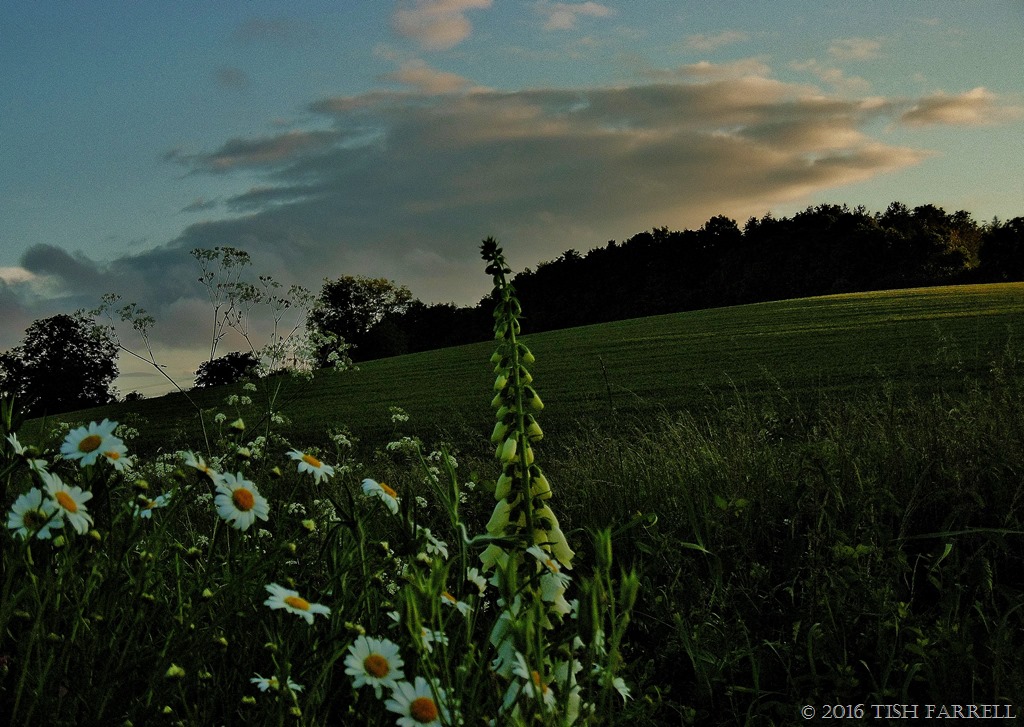
With all the sudden rain the wheat in the field behind our house is growing before our very eyes. So is our wildflower garden along the fence below it. Seen here are Moon Daisies (also known as Oxeye Daisy, Dog Daisy and Moonpenny). I love that last name. And keeping company with the daisies is one stately white foxglove, with a spray of cow parsley or Queen Anne’s Lace in the background.

According to Richard Mabey’s Flora Britannica  cow parsley (a member of the carrot family) has a whole lexicon of country names – some obvious, others not so. So here we go with a few more: Fairy Lace,  Spanish Lace, Mother die, Step-mother, Badman’s oatmeal, Blackman’s tobacco, Kecksie, and Rabbit meat.

And as for the foxglove, it was also known as Fairy Gloves and Fairy Bells. It has long been used as a herbal remedy that at times proved more killing than curing. And of course until recent times a compound version of  the toxin found in foxglove leaves was the drug of choice for various heart conditions.

It is anyway one of my favourite plants. I like the way it grows itself around the garden and crops up in a variety of subtle shades from white to purple, although it perhaps looks a little sinister, looming here in the failing light across Townsend Meadow.


*

Posted for:

Mundane Monday #63 at Jithin’s PhoTraBlogger

On The Diagonal ~ Around Wenlock In Winter And Summer

P1000582


P1010927


P1010920

P1000562 - Copy

This week’s diagonals theme at Black & White Sunday is right up my street, or at least in my neighbourhood.  Looking through my file of Lumix monochrome images, it seems that the diagonal often features. I think it’s because it appeals to both my visual and my writing mind. Things on the slant; one thing leading to another that’s not quite in view; unexpected angles; the monochrome subliminally suggestive of the written word and printed pages: storytelling then.

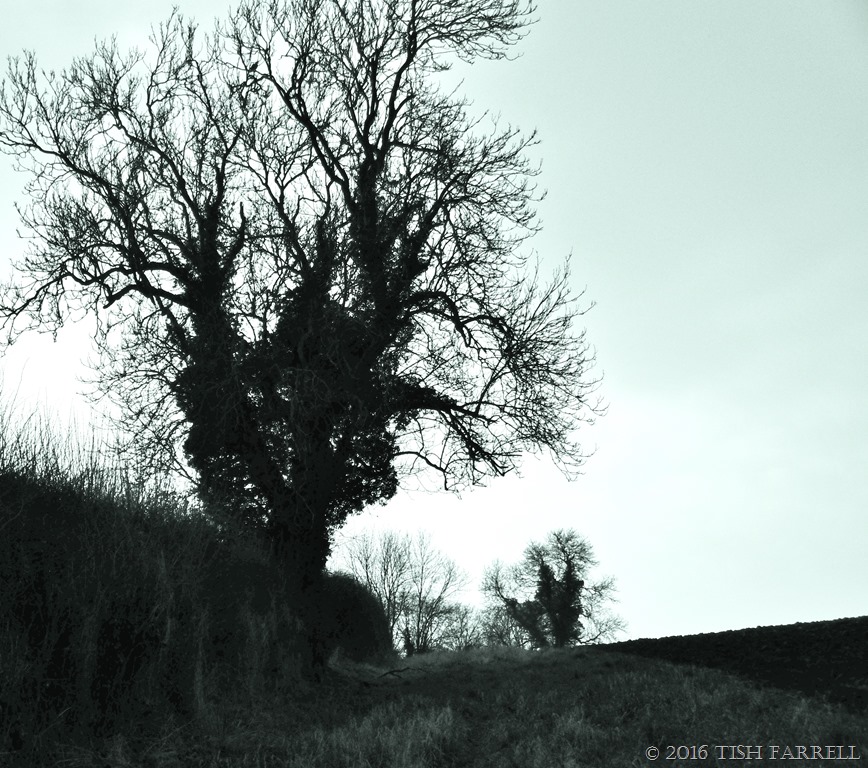
The first photo was taken on my well-worn path to the allotment. It’s a scene I photograph in all seasons, but I especially like the ash tree silhouettes in winter, their boughs cloaked in ivy which always reminds me of Tolkein’s Ents. I think this is where the lost Ent Women ended up, guarding our Wenlock Edge field boundaries.

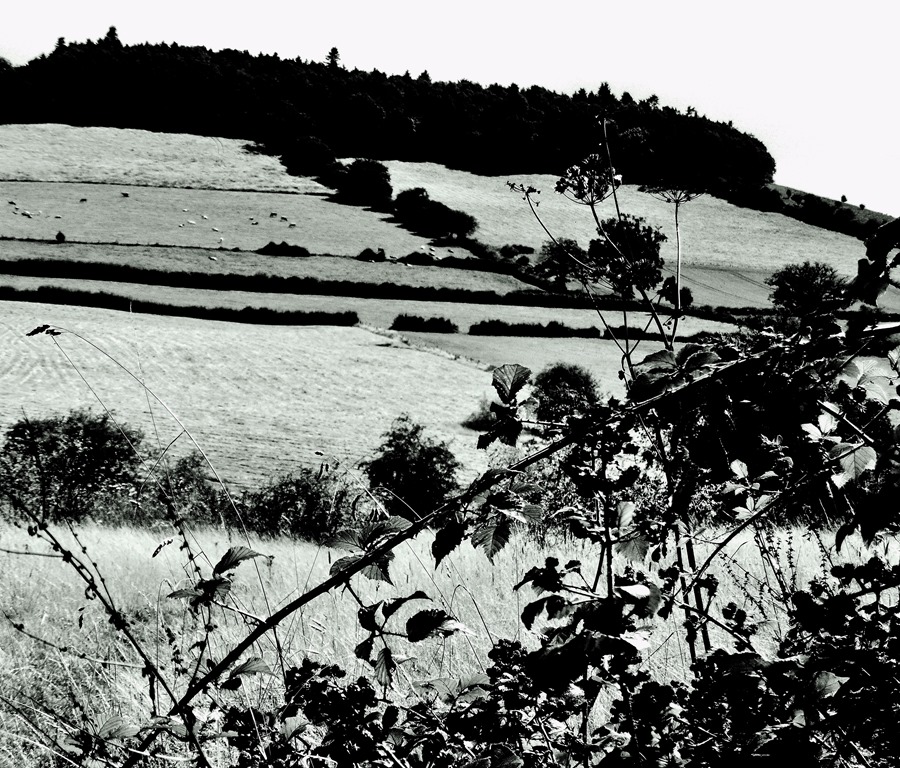
Photo 2 was taken from the old railway line, leaning over the fence and shooting from deep shade into bright sunlight and with some zoom – not quite the best thing to do, though it gives the hilltop wood a touch of dark mystery.

Photo 3 is the field path from Wenlock to Bradley Farm, once the site of a medieval settlement.

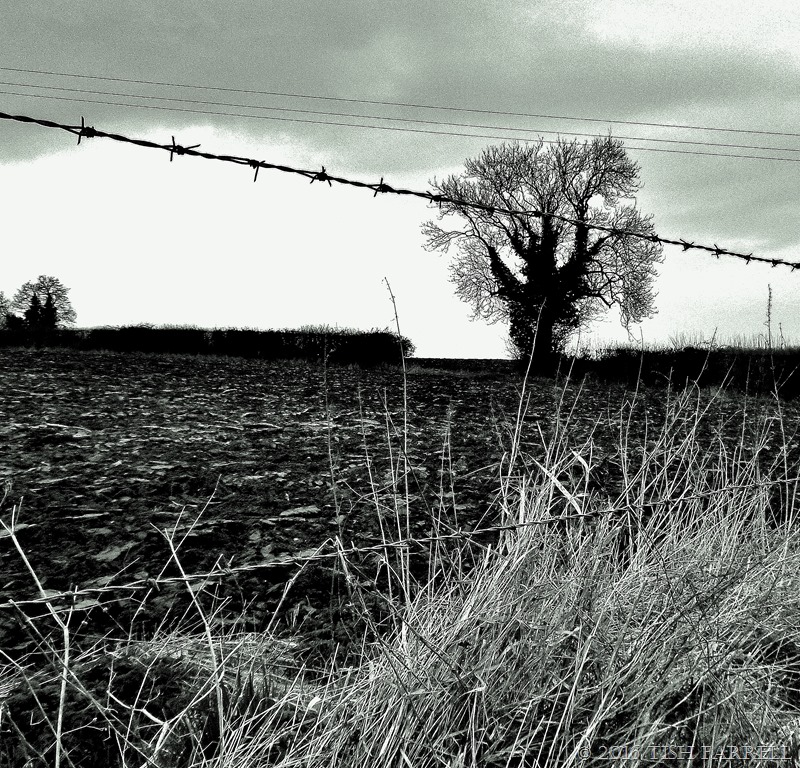
Photo 4 – we are back at the allotment, the field behind our plots looking at the ash trees from another angle. I like the way the barbed wire adds a bleak and faintly sinister air.

Now please visit Paula at the link above for more photo essays on the slant.

copyright 2016 Tish Farrell

Textures Of My Ancestral Landscape

P1000999

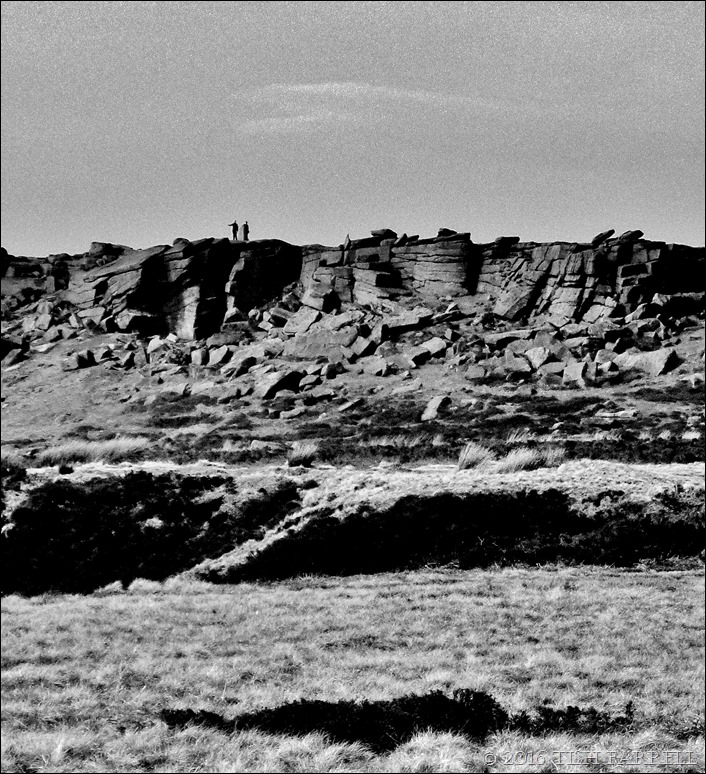
These are some of the landscape textures that my maternal ancestors, the Fox family of Derbyshire’s High Peak would have known well – windswept moors and weathered scarps of millstone grit. They were yeoman farmers and lead miners, and they made a living from this bleak and beautiful country for hundreds of years.

Family legend has it that the Foxes arrived in England with William the Conqueror, but Fox is a name with Germanic origins so they may well have been Saxons, belonging to the conquered rather than to the conquering forces. The earliest records for Foxes in the Hope Valley, and Offerton in particular – where my Foxes farmed until the end of the nineteenth century, are around the thirteenth century, although I and my fellow Fox researchers are yet to establish direct lineage from these times.

There were centuries of prosperity when various family members lived in large stone farmhouses, made ‘good’ marriages, and owned land and lead mining concessions, but by the early twentieth century there was only one member of my Fox line left in the area, and he was living modestly in Eyam. The family farm of Callow where he was born, and by then owned by the Duke of Devonshire had been relinquished with a farm sale in 1892.   High rents were besetting many Derbyshire farmers at this time. The Mr Fox mentioned in the sale advertisement is my great great grandfather, George Brayley Fox:


The Sheffield & Rotherham Independent

Saturday 29 October 1892

Callow Farm Sale

Important Sale of 23 cows, heifers, steers and calves, two horses and foal, 30 sheep, hays stack, three wheat stacks, seven oat stacks, farm implements etc.

Mr Hattersley has been honoured with instructions from Mr Fox who is give up the Farm, to sell by Auction on Wednesday, Nov 3, 1892, the very superior LIVE and DEAD FARM STOCK, as briefly enumerated below:

Black Mare, believed to be in foal, excellent worker;

Valuable Brown Horse, six years old, with splendid action, believed to be sound, and quiet in all work;

Roan foal by Bedford;

One Cow in calf for December 25th, four in-calf cows for April, two barren cows in milk, four very choice heifers in calf for April, two barren heifer stirks, five strong bullock stirks, five spring-reared calves, 11 superior stock ewes, six fat sheep, one two-shear ram, 12 strong lambs, two very fine ducks, one fine drake.

Samuelson’s 2-horse combined mower and reaper, nearly new with additional shafts; wood tippler, horse rake, Cooke’s wood plough, set of wood harrows, nearly new; set of three harrows, swingtrees, fallow drag on wheels, stone roller, with shafts, horse turnip hoe, sheep troughs, joiner’s bench and tools, quarry tools, hay rakes and forks, 2 1-horse carts, winnowing machine, wheel chopper, with rising mouth, in excellent condition; corn chest, cart gears, stone cheese press, lever ditto, cheese rack and boards, nearly new; vats, garths etc, cheese pan, two brewing tubs, two oak chests, and a portion of furniture.

One stack of very prime new hay, three stacks of wheat, five stacks of white oats, two ditto of black oats and a quantity of table and other turnips.

Sale to commence 12 noon.

*

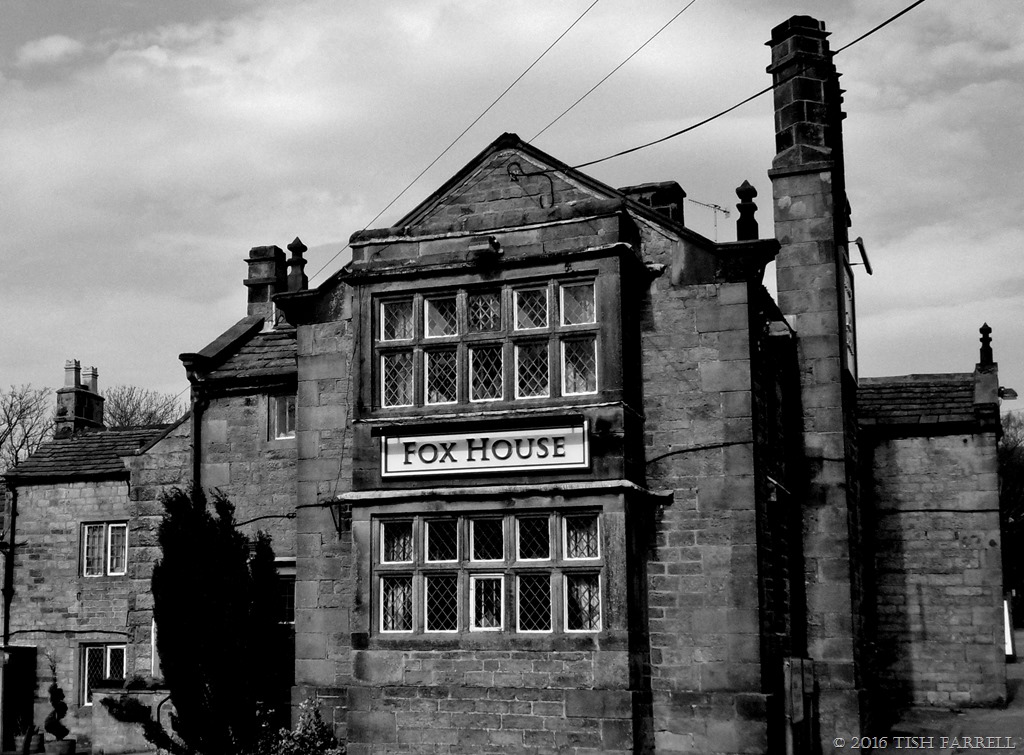
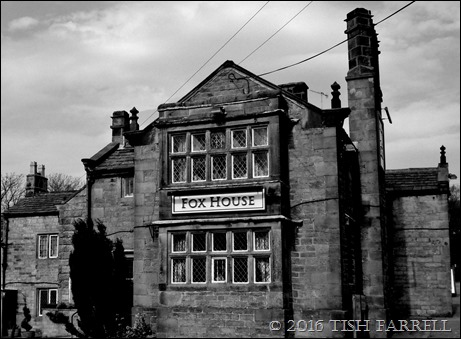
Every item here tells of great intimacy with the land. Just to read this notice gives me a painful sense of roots yanked up. I feel the touch and then the loss of the fine ducks, the strong lambs, the black mare in foal, the oats and the stone cheese press; even the turnips and the quarrying tools. But I would like to think, too, that somewhere in my bones are still traces of that High Peak millstone grit, the hardiness and courage that it took to carve a living from these uplands, and in my lungs the sharp, clean air of the moors of Longshaw where earlier generations of my family, so it is said, grazed four hundred sheep on their own run, and also owned the shepherd’s byre, that dating from 1399 was later sold and expanded into a handsome house for the Duke of Rutland’s agent, and is now the well known inn, Fox House, just outside Sheffield. Somewhere within this sturdy stone carapace is the earlier shepherd’s dwelling of quite another texture.
P1010003

copyright 2016 Tish Farrell


This week at Black & White Sunday, Paula has given us the theme of ‘texture’. She also included a quotation by novelist British Paul Scott, which is very much responsible for my take on the challenge:

“The past becomes a texture, an ambience to our present”

P.S. Paul Scott served in the Intelligence Corps of the British Army in India during the World War Two. He wrote the phenomenal Raj Quartet, set in India during these years, and which was made into a very excellent TV serial back in the 1980s. The TV version is available on DVD, and with its all star actors is well worth watching. But read the books too.

The Earth ~ Where Would We Be Without It?

DSCF9251

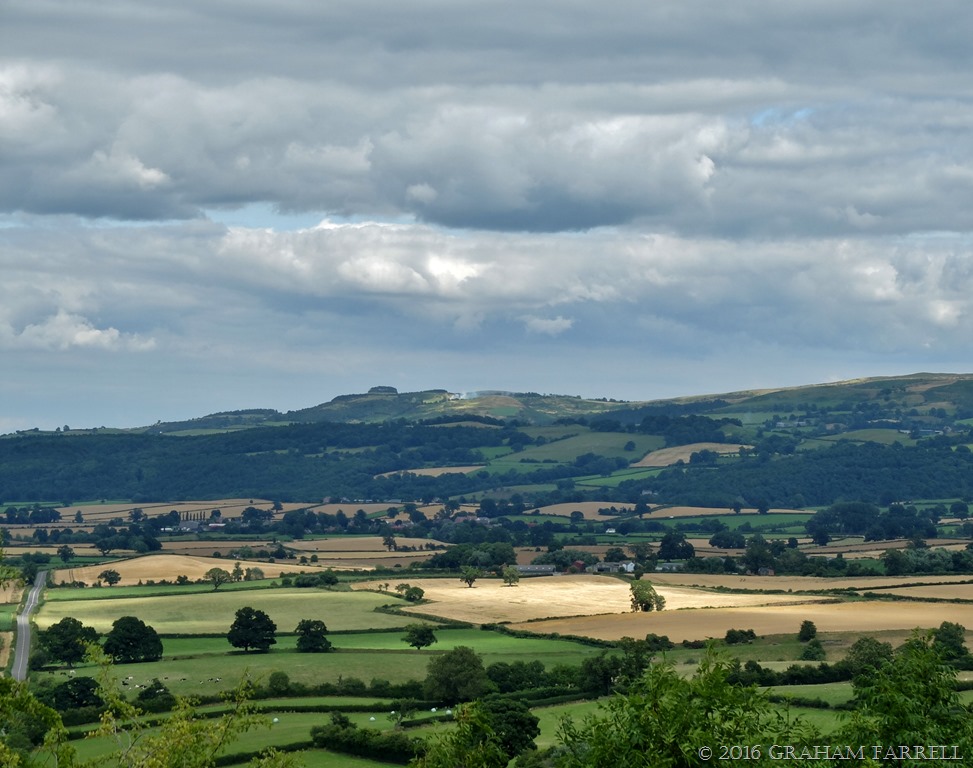
View of the Shropshire-Welsh borderland, a landscape shaped by farming communities since at least the Bronze Age some four thousand years ago

*

“I have seen the sun break through

to illuminate a small field

for awhile, and gone my way

and forgotten it. But that was a pearl

of great price, the one field that had

the treasure in it…”

Excerpt from the  The Bright Field  by R S Thomas


Earth

Winter’s Afternoon–A Shropshire Rhapsody

P1000347

This week Paula’s theme at Black & White Sunday is rhapsody. This instantly made me think of George Butterworth whose promising career as a composer ended with a sniper’s bullet on the Somme in 1916.

He is best known for his arrangements of English folk songs, and in 1911 and 1912 he set to music eleven of A E Housman’s A Shropshire Lad poems. In the recording at the link below you can hear a ten-minute melodic evocation of my home county. It begins with one of the songs,  Loveliest of Trees. This leads into the full orchestral Rhapsody which widens our gaze to embrace wide blue vistas – music of landscape, and of love and loss.

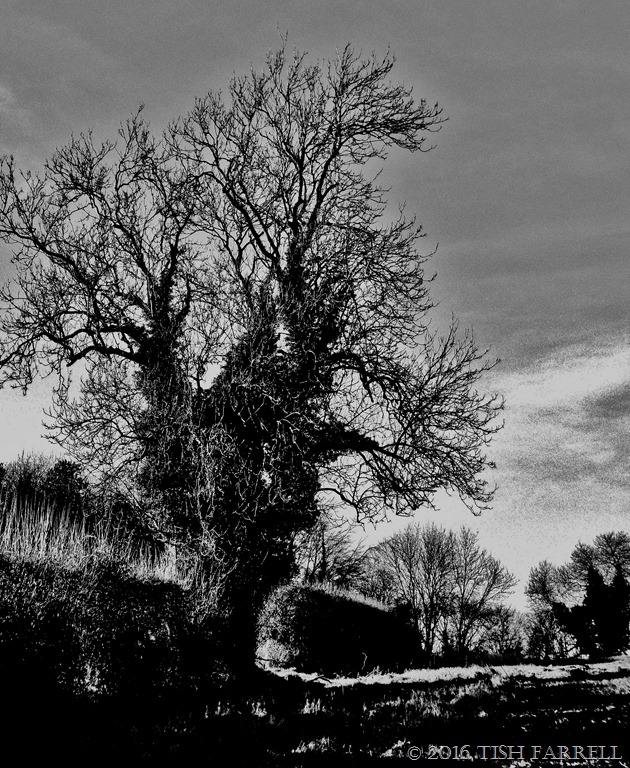
The photo was taken in the field behind our house. The tree is not a cherry as in the Butterworth-Housman song, but an ivy-clad ash. They thrive along Wenlock’s limestone Edge.

https://www.youtube.com/watch?v=1xMPichAUrM

Black & White Sunday: Rhapsody

#ShropshireHillsAONB

Happy Earth Day From The Shropshire Hills, Some Of The World’s Oldest Rock Formations

P1030457

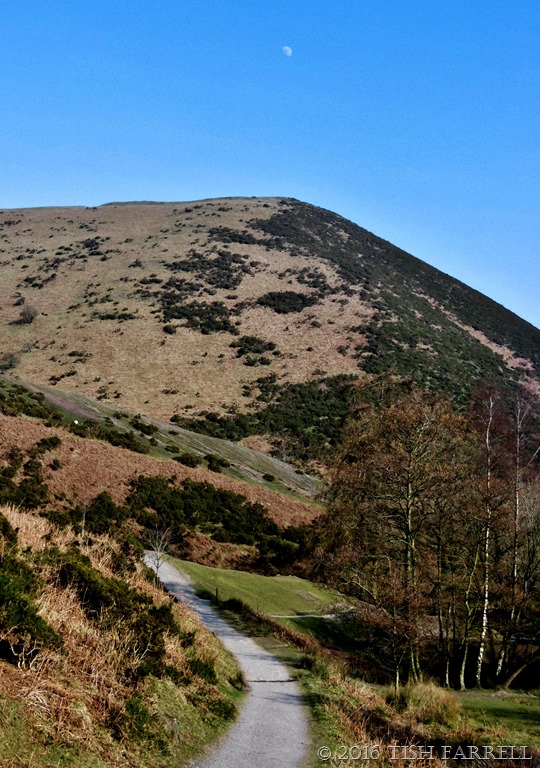
Not so much Monarch of the Glen as Sheep on the Long Mynd,  a hill so old that it has some Pre-Cambrian geology named after it. I’m talking here of Longmyndian shales, siltstones and sandstones (sedimentary rocks) that were laid down in shallow seas at a time when this part of the earth was moving up the planet from Antarctica.  This would be around 560-550 million years ago.

The Long Mynd (mynd means mountain in Welsh) lives up to its name too. It is a very long plateau with steep valleys, and was formed by a very big CRASH when sea levels fell and the seabed deposits collided with a plate of volcanic hills to the east. The result was the folding, tilting and compressing of the Longmyndian shales, siltstones and mudstones along the Church Stretton Fault. This was around 550-400 million years ago.

The Longmynd then continued to be knocked into the shape we see today by the following Ice Ages when glaciers shunted around its flanks, making it an island amongst frigid wastes. When the ice finally began to retreat around 30,000 years ago, rain and melting snow fed streams that cut steep valleys or ‘batches’ into the Mynd’s sides.

Isn’t geology wonderful when you forget about the hard words, the mind-boggling quantities of time, and just admire the consequences?

P1030462

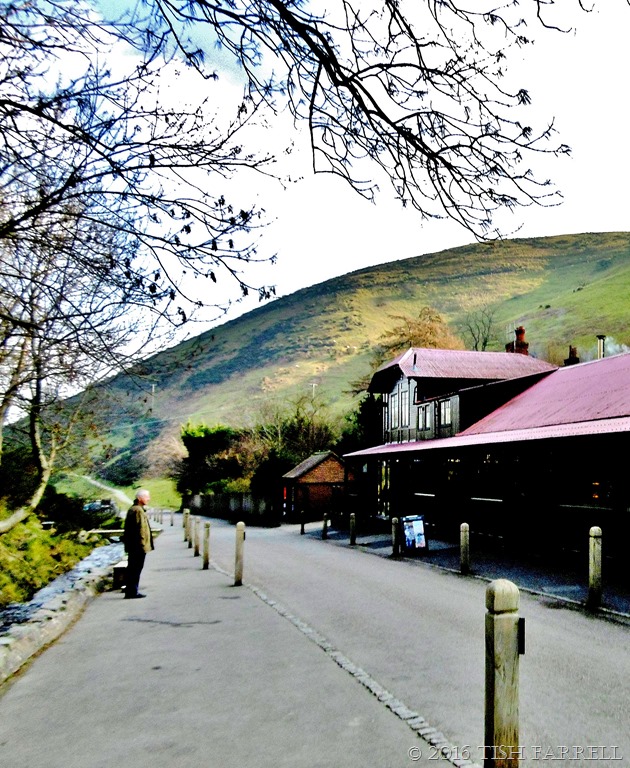
One of the Mynd’s best known features is Carding Mill Valley where these photos were taken. Since Victorian times it has been one of Shropshire’s most popular countryside resorts. Generations of Salopians (Shropshire folk) will have fond childhood memories of spending Bank Holiday Mondays picnicking there, feeding egg sandwiches to the sheep, getting soaked in the stream, and going home with green bottoms from sliding down the hillsides.

Today both valley and Long Mynd are in the guardianship of the National Trust that not only manages the landscape, but provides very excellent homemade refreshments in the Edwardian Pavilion tea-room  that’s coming up next.  If, while you are looking at that, you also scan towards the top of the hill, directly above the pavilion’s main roof, you might just discern the verge of a very hair-raising single-track road that takes you over the top of the Long Mynd to the small village of Rattlinghope, known locally as Ratchup. I have a grim memory of driving down there in a car with dodgy brakes, and only intermittent passing places beside precipitous drops.

P1030473

Unlike the geology, the landscape you see in the shots is not natural, but man-made. The valleys would once have been wooded. Archaeological finds from c 3,500-2000 BC indicate that Late Stone Age (Neolithic) people were travelling along the open top of the Long Mynd ridgeway, an ancient trade route between Cumbria in the north, Wales to the west, and Cornwall in the south-west. Earlier Mesolithic hunter-gatherers came this way too. But the main clearance probably took place during the Bronze Age (c.2,000-1,000 BC). These people farmed in the Shropshire Hills and buried their dead in cairns and burial mounds all along the ridgeway.

In the next photo you can just see the green ramparts of the Iron Age hillfort Bodbury Rings. It is lying right along the hilltop skyline towards the summit, and ending directly under the moon. This was a summer herding camp of the Cornovii people, and dates from around 400 BC.

P1030444

We may not know very much about the past peoples who lived and died in this landscape, but they did leave behind clues that showed us that they honoured it in significantly sacred ways. That would be a good thing to remember on this Earth Day. Much of the world is in dire need of loving care. We are lucky in Shropshire to have so many people, and charitable bodies who do take care of the place for everyone’s pleasure and inspiration.

copyright 2016 Tish Farrell

 *

Earth  Daily Post Prompt

I’m also linking this to Jo’s Monday Walk for when she’s regularly back with us. I think she would like this walk up Carding Mill Valley.

#ShropshireHillsAONB  #NationalTrustShropshire  #CardingMillValley

Not Any Old Bridge ~ But The World’s First Cast Iron Bridge Built By Abraham Darby in 1779

P1000831

For this week’s Thursday’s Special Paula is asking us to focus on traces of the past.  For those of you who have not seen my earlier posts on the Ironbridge Gorge, this bridge was the first to be made from cast iron, and in a single arch that spans the River Severn in Shropshire. It crosses the Severn Gorge just a few miles from my house, and is a World Heritage Site.

The height of the bridge was dictated by Quaker Ironmaster, Abraham Darby’s desire to show off – not only to prove the versatility and potential of cast iron, but also to build the first bridge on the the Severn that would allow the river’s big sailing barges (Severn trows) to pass under with out lowering their sail masts. One up on all the river’s stone bridges then! And what a sales (sails) pitch it was too, for people to see his bridge with a fully rigged sailing barge passing beneath it.

He also built the bridge in one of the most spectacular parts of the Gorge, and on the site of a treacherous ferry crossing. Before the bridge was built people had to cross between the two industrial settlements of Broseley and Coalbrookdale in a coracle, an ancient skin covered craft that was used by local poachers.

The bridge itself is a curious construction. If you look closely at the iron framework you can see that although Abraham Darby was breaking new ground (and in its day the Iron Bridge was definitely a world wonder), the building techniques include the kind of joints that people would expect to see in carpentry: mortise and tenon joints and dovetails.

It is hard to know if Darby was erring on the side of caution by sticking to tried and tested construction methods, or simply being innovative in ways that weren’t too innovative for people’s sensibilities. After all, one of the best ways to make people accept and welcome the new, is to start from something they already know and recognise. In such ways does the past follow us into the future.

P1000843

copyright 2016 Tish Farrell

Traces of the Past

The Winter Walker

100_7046

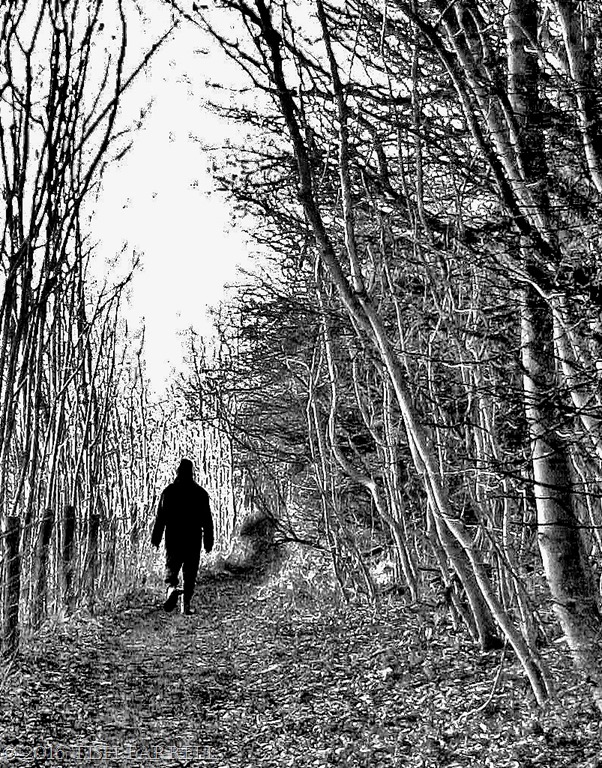
You can step back through time on Wenlock Edge. The trackways across the ridge-top have doubtless been trodden by itinerant traders since Stone Age times. In fact if I didn’t know that the lone figure on the path ahead of me was Graham, I might tell you that this is the shade of a six thousand year-old stone axe merchant, or a four thousand year-old Bronze Age smith. Or closer to our time, say two thousand two hundred years ago, it could be an Iron Age farmer trekking through the woods.

There are also traces of Roman farms either side the Edge, and from the Middle Ages until modern times the limestone from which the Edge is formed would have been quarried for building and for iron making, and also  burned in kilns to make lime mortar and fertilizer. And then there is the 400 million year geological history of the Edge itself – starting in times before fish had evolved, let alone mammals. (I won’t mention the four foot long giant water scorpions that lived back then).

But landscape as a portal to the past – it’s an intriguing notion.

*

This week at Black & White Sunday Paula’s guest, Lisa Dorenfest, gives us the theme of ONE. Please go and see her stunning photo, and Paula’s own response to the challenge.

Heading For The Light ~ Wenlock’s Linden Walk In Winter

P1000516

I consider myself well blessed to have this avenue of venerable lime trees within a stone’s throw of my house. The Linden Walk is one of Much Wenlock’s treasures. The limes on the right were planted in October 1869 by the town’s physician and philanthropist, Dr.  William Penny Brookes. He apparently had help from his friends to do the job. Forty two trees were planted and forty two trees still thrive. Thank you Dr. Brookes.

The limes on the left are possibly older, and our local tree expert surmises that they may have been planted by the railway company in 1860-ish to demarcate the railway line when it first arrived in Wenlock. Dr. Brooks was a prime mover in bringing the railway to town. It’s only a pity he can’t bring it back to us.

The avenue forms the southerly boundary of the Gaskell aka Linden Field, where from the 1850s  Dr. Brooks held the Annual Wenlock Olympian Games, an event of his devising for improving the health and wellbeing of the general populace of Wenlock and beyond. He even designed the ornate medals and paid for them himself. And it was these games that went on to inspire and inform the modern Olympic Movement. A crown of laurels to you, Dr. Brookes.

The good news is that, according to an international lime tree specialist, who was brought in to inspect them,  this avenue has another good century and a half of life left in it – as long as we continue to care for it. I’m sure we will.

In this winter view, taken in Lumix monochrome mode, the walk looks very mysterious. In summer, though, it is so flush with leaf vigour and the soothing notes of linden blossom that you can walk beneath the trees and get high as kite: so much juice and joy – to misquote Gerald Manley Hopkins.

*

Over at Paula’s Black & White Sunday the theme is ‘convergence’.  Please go and see her work, and others’ converging interpretations.

Views From The Silurian Sea

IMG_1911

I dare say the farm fields were neither so large nor so orderly when Africa explorer, ‘Livingstone-I-presume’, Henry Morton Stanley  looked out on this Shropshire landscape. For looked at it he would have when he came as a guest to The Abbey home of the Milnes-Gaskells of Much Wenlock. Stanley’s hosts were enthusiastic tour guides and brought all their visitors to Wenlock Edge to admire the view.

Those of you who come here often will know that Wenlock Edge is an 18-mile  limestone ridge that runs across southern Shropshire. It is very much a local landmark, and its geology is of international scientific interest. The Edge as we know it now was formed by the uptilt of fossilized strata that were once the bed of the Silurian Sea.

Some 400 million years ago, this shallow tropical sea, that pre-dated even the advent of fish, and long before terrestrial life had evolved, once lay off East Africa near today’s Comoros Islands. You can find out more about it in an earlier post: Old Stones of Wenlock: Repurposing the Silurian Sea

On Sunday I posted an African landscape. Today is my ‘Out of Africa’ landscape, both of itself (because this chunk of Britain once lay in African waters), and on account of the photographer (that would be me) who has yet to get over leaving that continent.

But it goes to show how landscape intimately affects who we are, both physically and spiritually. It feeds our imagination, and shapes the lives we lead in a multitude of ways. Its resources  may provide the basis for our livelihoods, and will have shaped communities and culture over countless generations before us. If we fail to value it, we will ultimately lose the best of ourselves, our true heritage. In Shropshire we owe great thanks to the National Trust and Shropshire Hills Area Of Outstanding Beauty, organizations that strive to creatively engage and reconnect people with the earth beneath their feet, and the natural beauty around them. More power to their purpose.

copyright 2016 Tish Farrell

*

Day 7 of my Nature Photo Challenge shots. Thanks once more to Anna at Una Vista di San Fermo who started me off on this jaunt.

And view 2 in the Daily Post weekly photo challenge: Landscape