Big Sky Over Wenlock Edge

P1000424

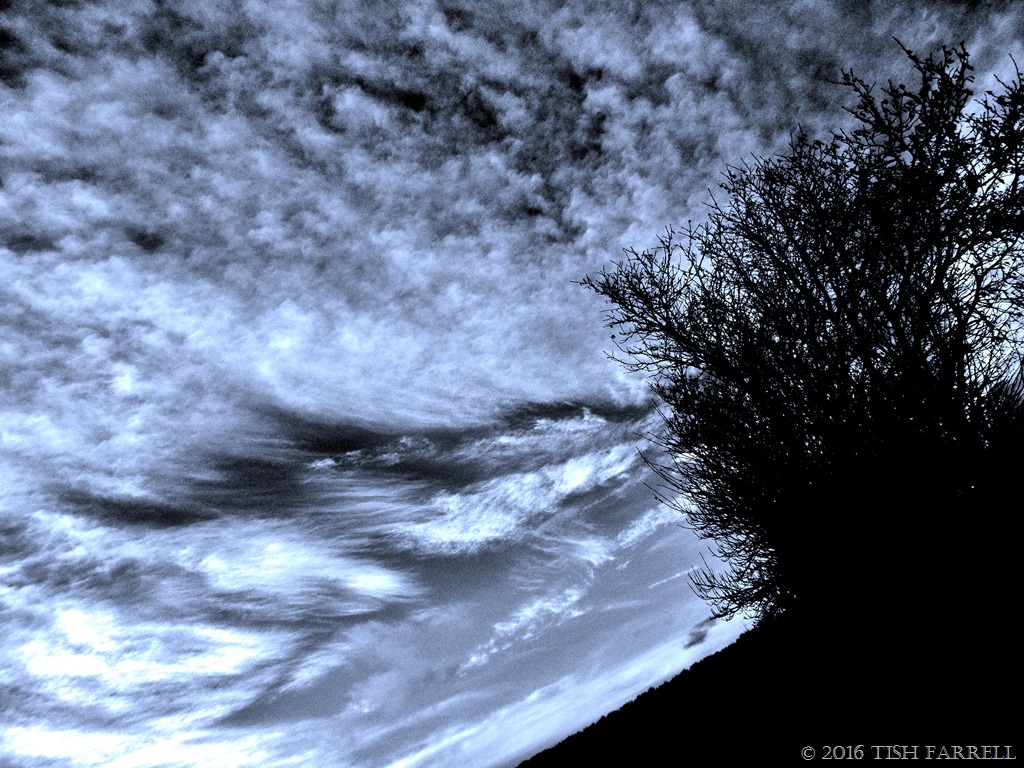
I am always fascinated by silhouettes. I also seem to do a lot of sky watching these days. This shot of a farm hedge in one of the fields behind the house was taken late one winter’s afternoon using the Dynamic Monochrome setting on my Lumix compact camera. There was just enough light left. I added the blue-ish tint in Microsoft Picture Gallery.

This week for Black & White Sunday Paula asks us to post a favourite b & w photo, so this is one of mine. You have the rest of the week if you want to join in, but please visit Paula’s blog where you will find more ‘favourites’.

Sun And Shadows On The Linden Walk And Olympic Games Connections

P1040386

The Olympic Games begin in Rio today – cue views of Copacabana Beach and Corcovado Mountain with its astonishing statue of Christ the Redeemer. Now switch scenes to a small town in rural England, to a meadow in Much Wenlock, and turn back the clock to 1850, for this is where it began – the source and the inspiration for the modern Olympic Movement.

The town’s physician, Dr William Penny Brookes was the man behind the revival of the ancient Athenian games. His objective was clear:

for the promotion of the moral, physical and intellectual improvement of the inhabitants of the town & neighbourhood of Wenlock and especially of the working classes, by the encouragement of out-door recreation, and by the award of prizes annually at public meetings for skill in athletic exercise and proficiency in intellectual and industrial attainments.

He had already started the Agricultural Reading Society and been hard at work raising funds from Shropshire’s gentry to establish a working man’s reading room, while lobbying every famous writer of the day to donate copies of their works to the cause. Much of the library still exists in the town’s archives and includes some heavy-going and esoteric histories of far-flung lands. It is hard to guess the appeal of such books to farm hands and quarrymen after their long day’s labours, but at least they would have had decent light to read by. Brookes was also behind the founding of the town’s gas works.

Wenlock’s Olympian Society grew out of the Agricultural Reading Society. The very first games were held on the town’s race course but in later years took place (as they still do every year) on the field below Windmill Hill, now known as the Gaskell Recreation Ground, or as Penny Brookes himself called it, the Linden Field.

Nor was it any rustic village fete affair. The local MP J M Gaskell provided seating on Windmill Hill to give everyone a fine view, and the event was heralded with much ceremony, the town streets decked out from end to end, a parade of competitors, flag bearers and officials all marching with the local band. From the start, then, pageantry was a key part of the games, lifting people from their humdrum, hardworking existences. And although there were many fun contests and traditional country sports, the athletic events were taken seriously, and attracted competitors from all over the country. Prizes included silver cups and ink stands presented by local worthies and Penny Brookes designed elaborate medals – gold, silver, bronze, and had them made at his own expense.

News of the games spread far and wide, and indeed were spoken of in very high places. In 1890, when the French aristocrat Baron Pierre de Courbetin had been charged with finding ways to improve the fitness of the French Army, he was advised to go and see the Wenlock games. He stayed in Brookes’ house on Wilmore Street during his visit, and what he saw and also learned from Brookes inspired him to found the International Olympic Committee. The IOC held their first games in Athens in 1896, and although Brookes did not live long enough to see the extent of his influence, de Courbetin gave him due recognition:

If the Olympic Games which modern Greece did not know how to establish again is revived today, it is not to a Greek that one is indebted, but to Dr. W P Brookes.

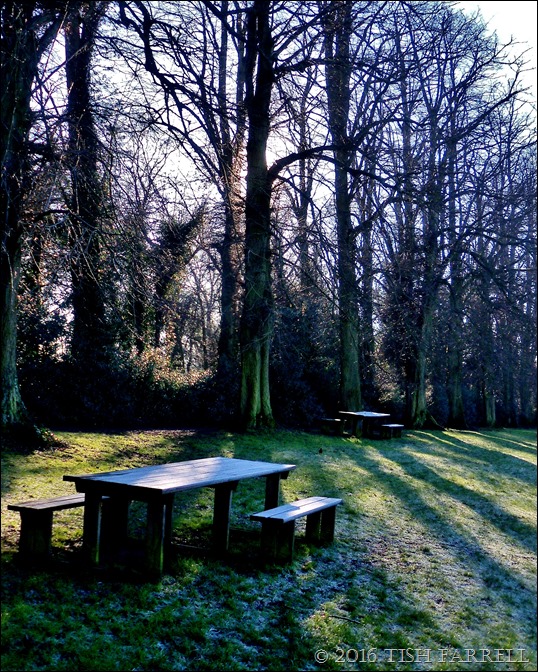
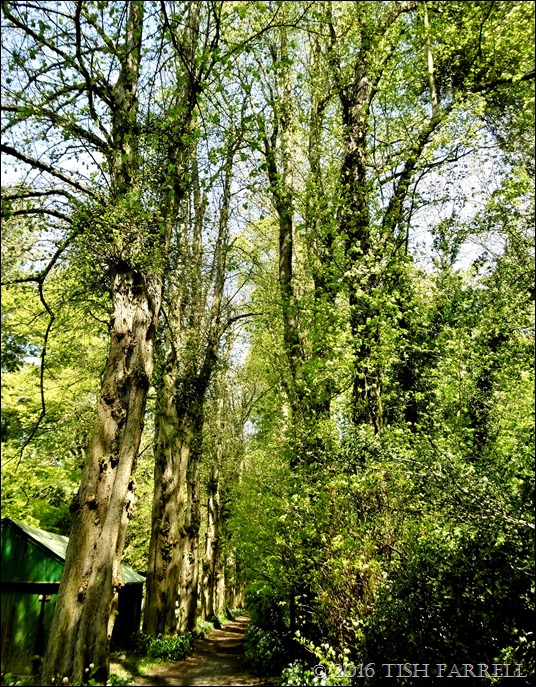
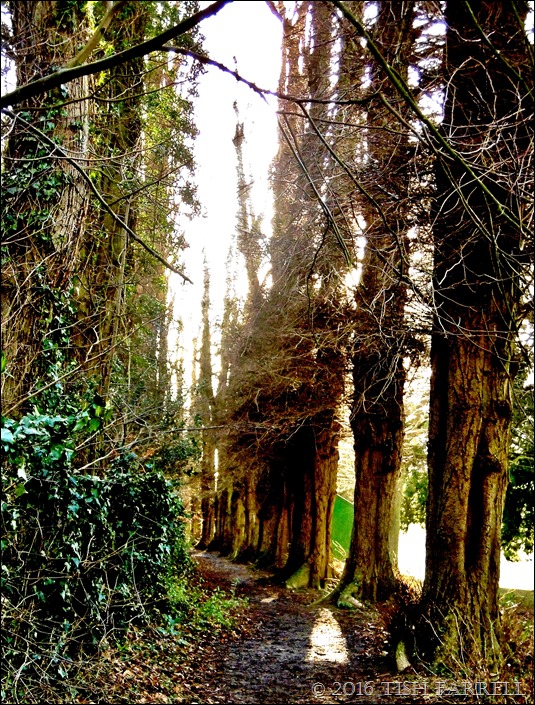
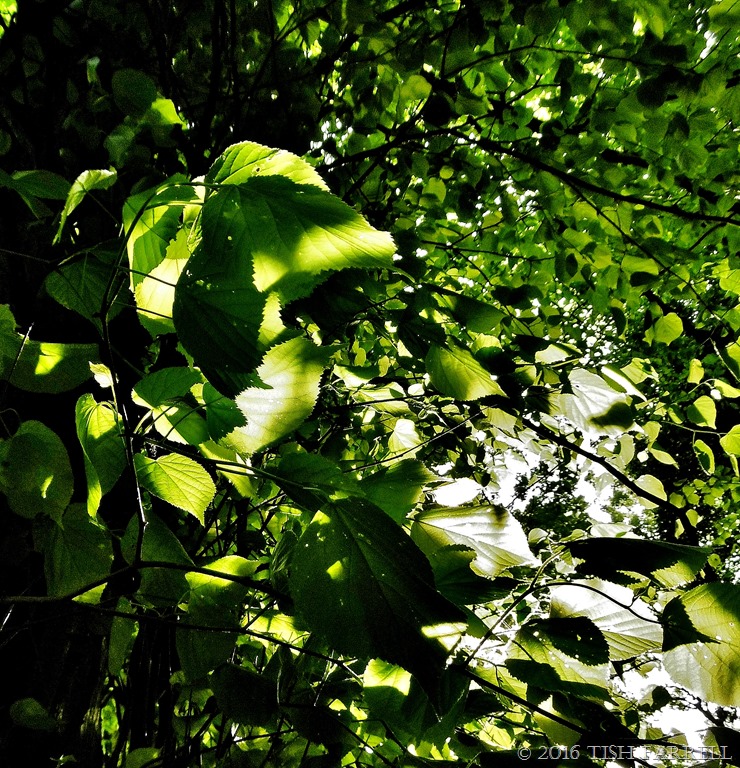
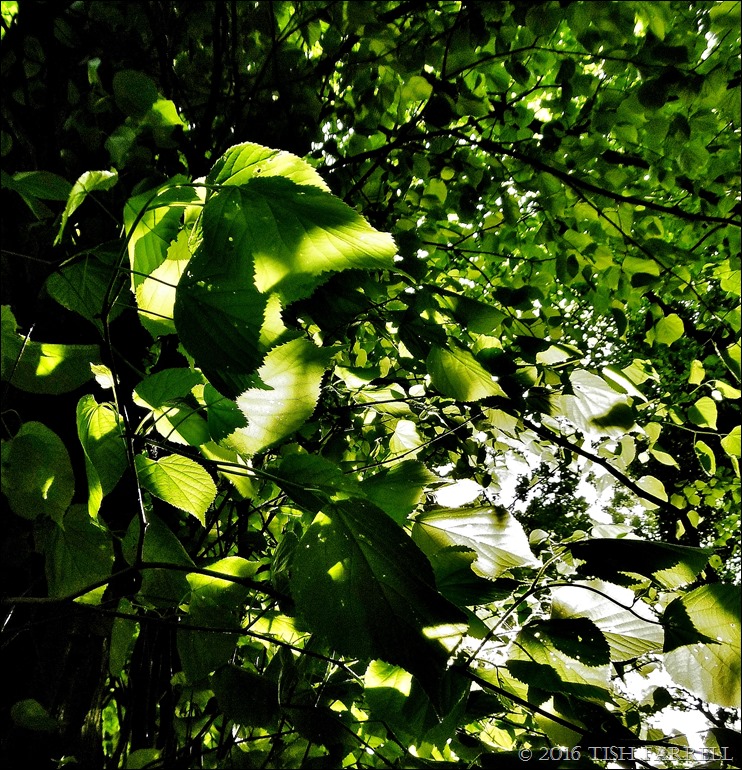
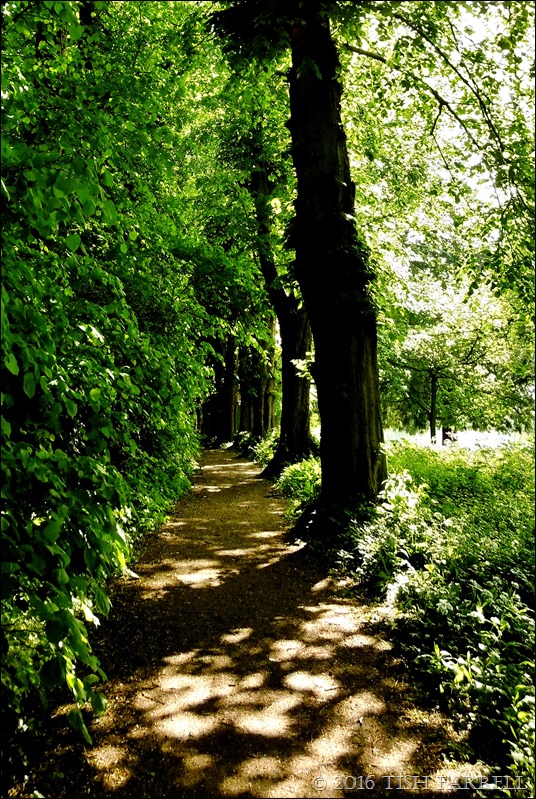
We the people of Much Wenlock are also indebted to Dr. Brookes for his planting of the lime tree avenue alongside the Linden Field where the games took place. As I’ve said before, it is one of the town’s enduring treasures. The trees are over 150 years old, and still in fine form. There is no time of the year when this avenue is not beautiful. In winter it is deeply mysterious, a colonnade to another reality. But whatever the season, there is always a play of light and shadow. And there is windrush in the high canopies, and crow call. And in summer the soporific scents of tiny green lime tree flowers.

Here, then, are a few more views, and so when you see the grand and glamorous opening of the Rio Olympics, give a thought also to this place and the Shropshire doctor, who with the well being of his townspeople in mind, inspired the modern Olympic Movement:
P1040407

101_0301

100_8822

P1040025

P1000514


This post was inspired by Paula’s Thursday’s Special theme ‘shadow’. Please visit her blog and join in this week’s challenge.

#2016OlympicGames

Changing Seasons ~ July’s The Time For Lady’s Bedstraw Up On Windmill Hill

P1050216

So far July in the UK has featured several seasons. We’ve had April showers, autumnal gloom, wintery downpours, mutterings about frost that just never happens around here in July, and now a heat wave of unprecedented temperatures outside the tropics. Yet three evenings ago when  I took this photo, it felt like October. There was a wild windiness about the place, and lowering skies, and that pang of melancholy that tells you summer is done.

But then as I lay in the grass to frame the shot all I could smell was the mignonette fragrance of Lady’s Bedstraw. Delicate. Hypnotic; gathering in waves across the hilltop. I can well understand why these golden flower drifts were once harvested to dry and fill mattresses. Their scent says essence of high summer. And so it proved. The next morning Octoberal tendencies had evaporated and we woke to wall to wall blue, and the overwhelming hotness, beneath whose onslaught we are currently sweltering. All this climatic chopping and changing of course suits us English. We’ve never had so much weather to talk about all at once.

This photo, by the way, was taken in low evening light conditions using the  ‘Impressive Art’ setting on my Lumix. I’d rather dismissed this setting, not liking the results of shots taken in broad daylight. But in low light the images acquire an other-worldly look – perhaps slightly sinister. I only added a touch of ‘contrast’ and  ‘highlight’ editing.


Changing Seasons July2015

Please visit the Cardinal for more about this challenge. There are two versions: use one or both. The latest version 2 features a single image/creation that sums up the month for you in some way. Version 1 is a gallery of several photos – all to be freshly shot.


#ChangingSeasons

In the Distance ~ Much Wenlock’s By-Ways In Black & White

P1040281

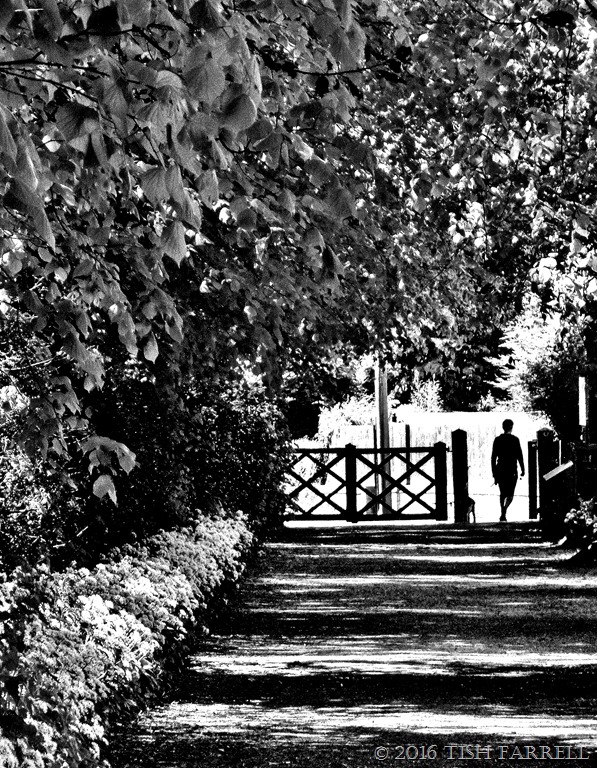
For once I wasn’t using my Lumix Dramatic Monochrome setting when I took this photo on Wenlock’s Linden Walk back in early June. But I think the manual colour version-turned black & white has come out quite well despite the deep shadow and lots of zoom.

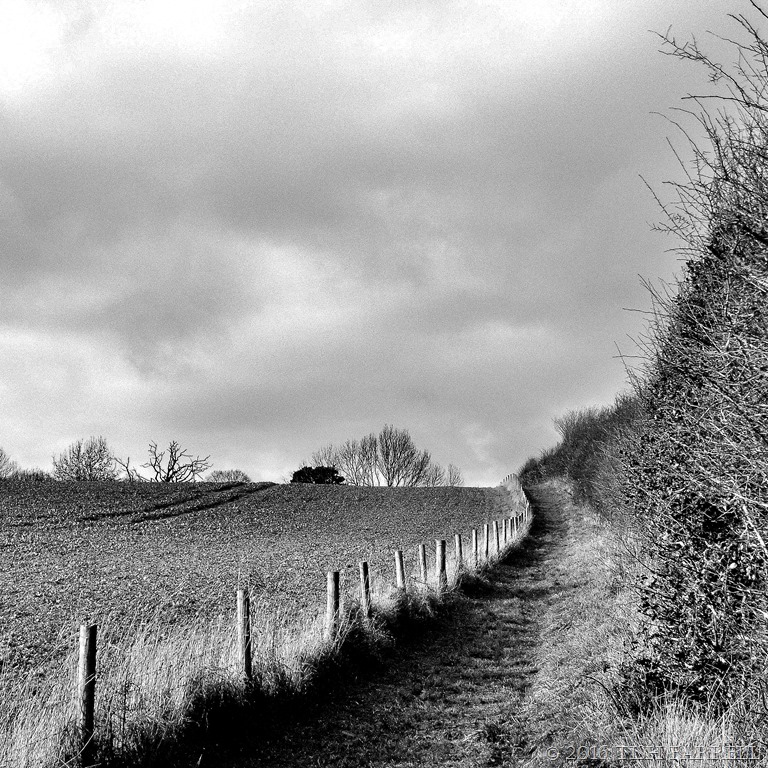
The next photo was taken on a winter’s day using the monochrome setting. It’s the path that runs from the field behind our house and up onto Wenlock Edge. The horizontal line of tree tops marks the top of the Edge. (I like the strange effect of false horizons). When you stand up there the land falls away from you rather hair-raisingly, dropping almost vertically through ancient hanging woodland. In winter, through the bare trees you can just make out the rooftops of Homer village way below.

P1030069

*

P1010921

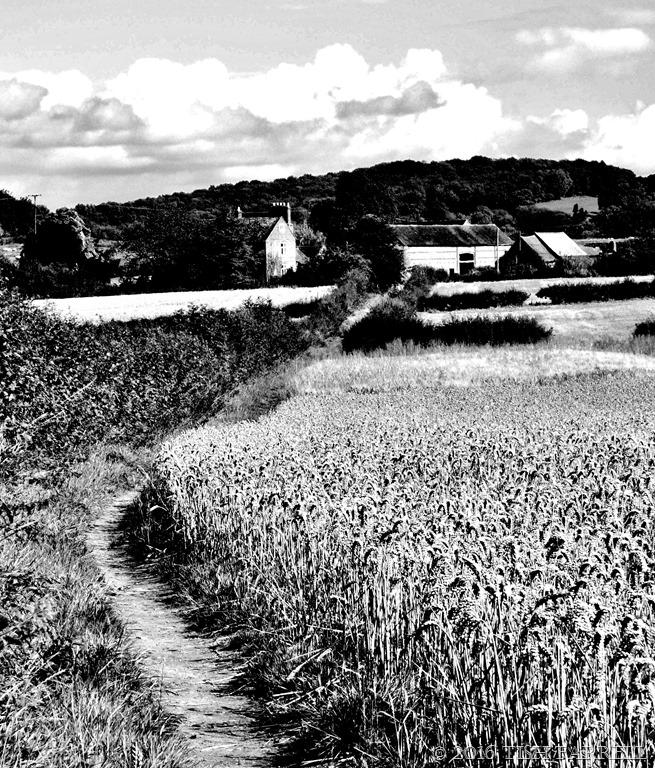
This is the footpath to Bradley Farm. It lies on the far side of the town away from the Edge. Also a change in seasons here: this was taken in full sun last August just as the wheat was ripening.

P1010968

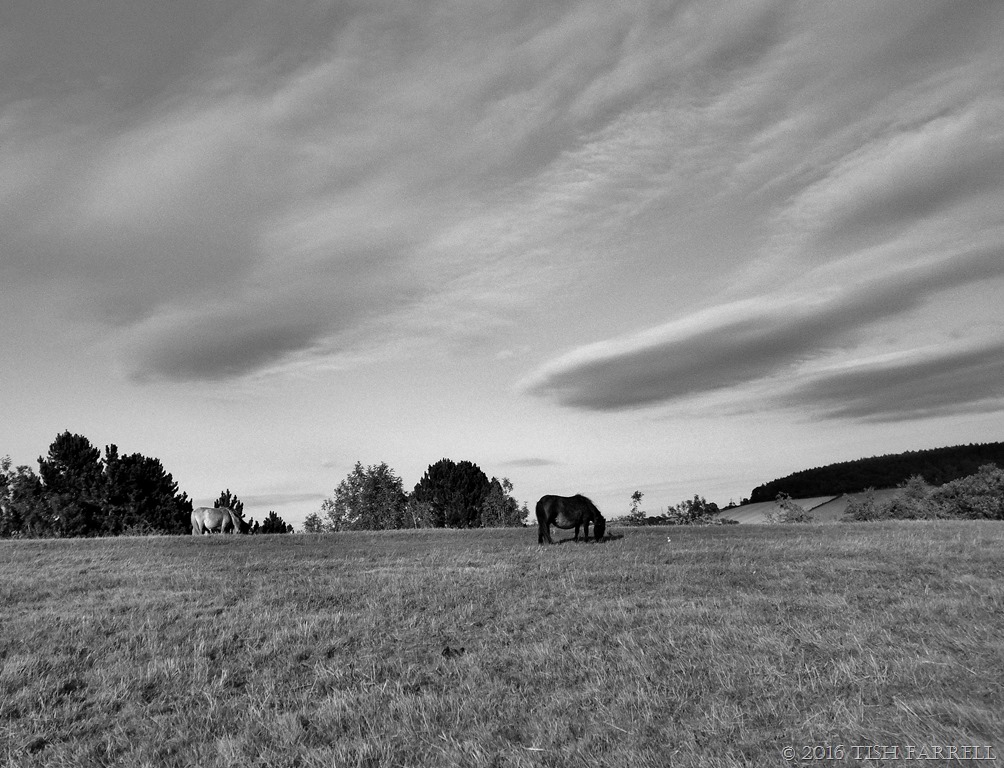
Windmill Hill sunset. I think it’s early autumn because the little ponies that are brought in to graze the hill have not yet been moved to their winter quarters.

*

P1020381

I take lots of photos of the hill on Down’s Farm. It’s an interesting shape and the spinney on top gives added character. But with distant views I always like some structure in the foreground too, in this case the Windmill Hill bench. I took the next photo with same idea in mind.

P1020167

The subject here is the cricket club’s shed on the Linden Field. It stands between the lime tree avenue and a line of Wellingtonia or Giant Sequoias. From this angle I think it looks rather mysterious. A Tardis type portal of some kind. It simply pretends to be the place where Wenlock’s cricketers keep the lawn mower.


Cee’s Black & White Challenge: In the distance

Please visit Cee for more distant compositions.

Over My Garden Fence This Morning

IMG_1827

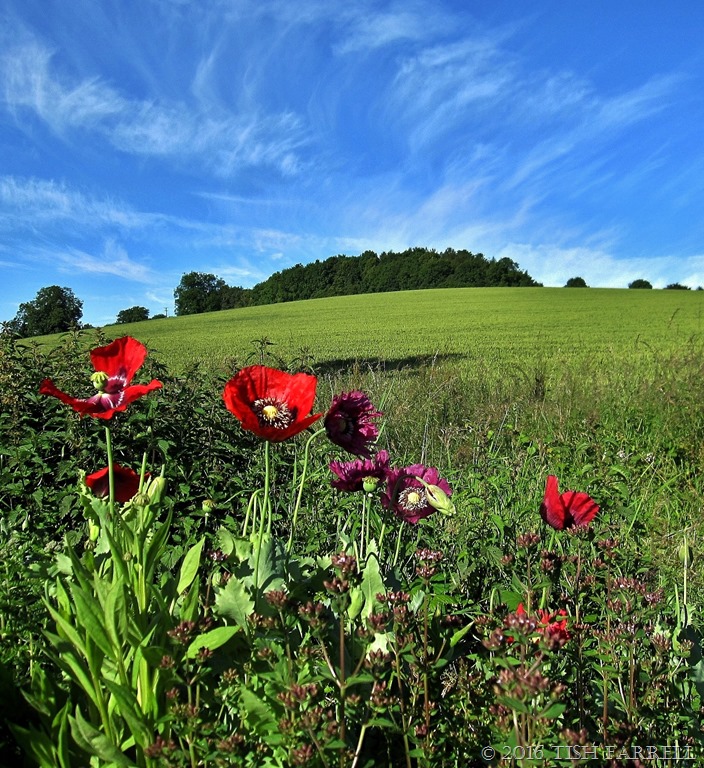
We didn’t invite them, but this crowd of opium poppies showed up anyway, pushing in behind the garden fence along with several other blooming gate-crashers. There’s a whole bunch more behind the garden shed. Papaver somniferum – the sleep bearing poppy, Asian in origin but now naturalised in Britain on waste ground and in field margins. And in case you are wondering, in our cool climate it does not produce the latex from which opium is derived. Better to get high by looking at them. And what a cheering sight it is on a Monday morning. So poppies, we’re glad you came. Please feel free to make yourselves at home here.

IMG_1803

IMG_1811

For more 4th July blooming visit Cee at Flower of the Day.

Wall to Wall Poppies In Wenlock

P1050054

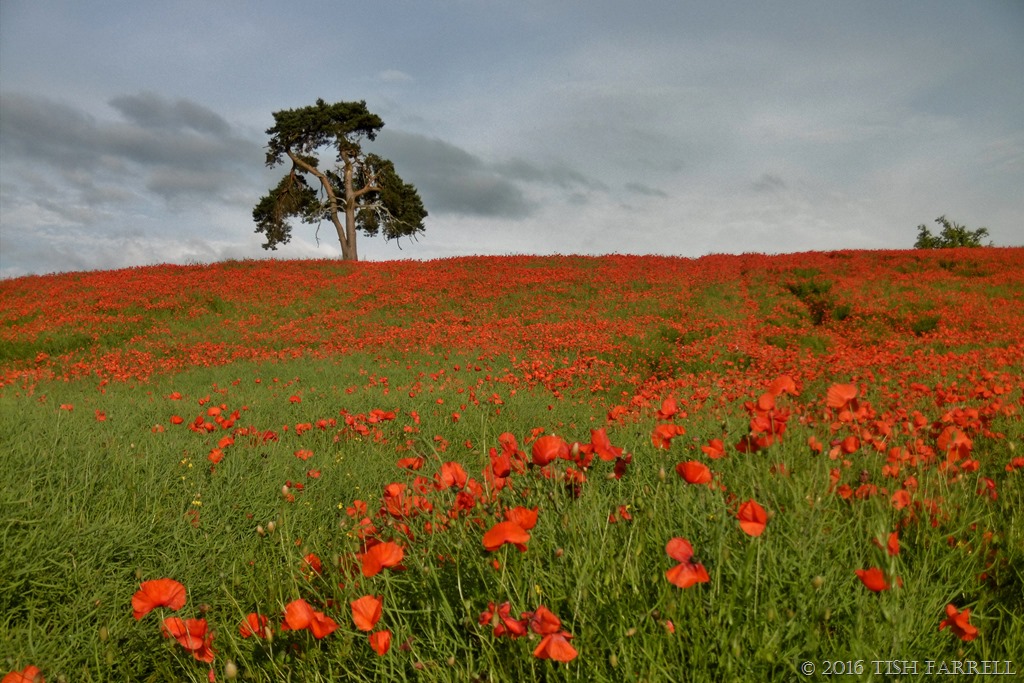
I spotted the blood red field across the town from Windmill Hill on Midsummer’s Eve. Yesterday at sunset, I gave up picking field beans and strawberries at the allotment, and went to seek it out. After a dull afternoon and early evening, the sun suddenly put in an appearance and I surmised it would be shining right on the poppies, and it was.

What a glorious sight. I have never seen such a profusion of scarlet heads, pushing their way up through the ripening stems of oil seed rape.

P1050068

Of course the question I ask myself – is this happenstance or has someone gone in for some guerrilla gardening on an epic scale? Either way, it cannot be rivalled as a piece of earth art. And of course with the hundred year anniversary of the Battle of the Somme upon us, it strikes other chords – the pointless waste of so much promise; of so many brave young men.  Today, too, just over half of the British voting public opted to leave the Europe Union, one of whose founding objectives was the avoidance of another European conflict. I feel very sad about this outcome. I think change can be best effected by participation and engagement from within. In fact we Farrells were so fed up this afternoon we had to visit the poppy field once more to cheer ourselves up.

So here’s to poppy power and creative cultivation. A potent beautiful force.

Changing Seasons: June On Windmill Hill

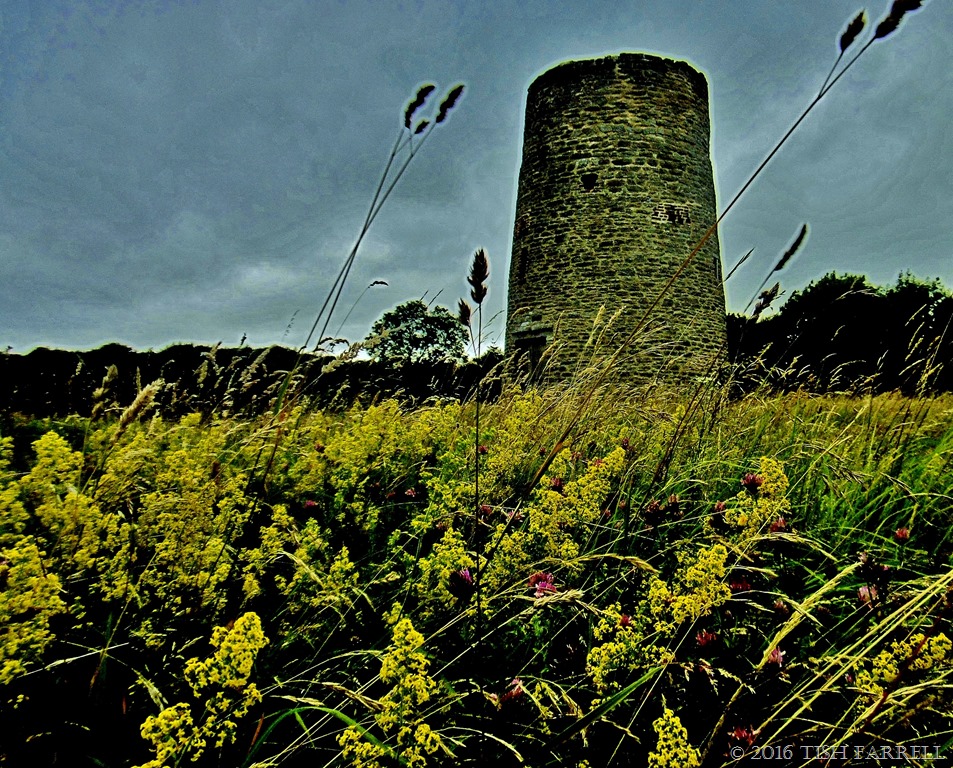
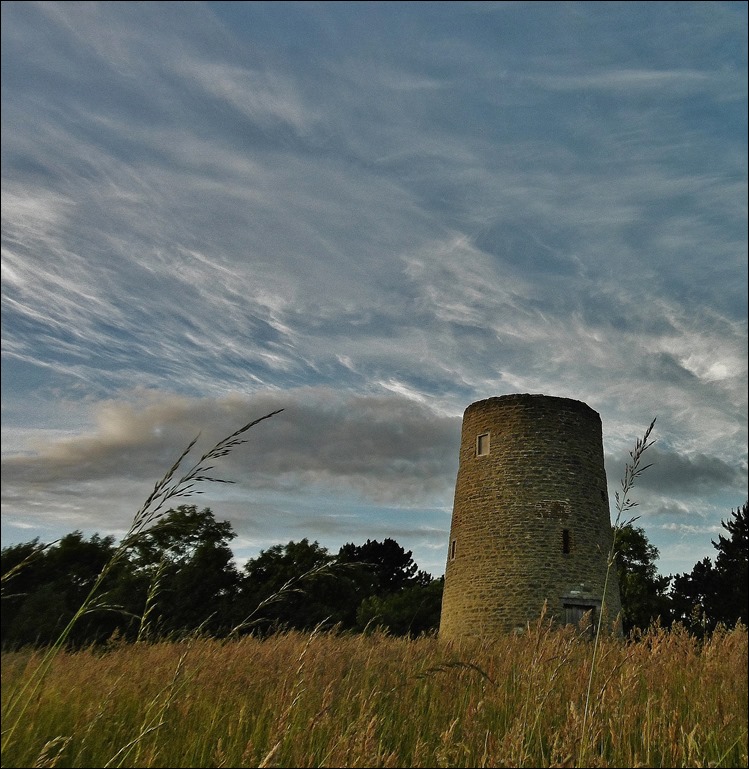
With this shot I’m back to what Meg at 12monthsinWarsaw calls my Monet’s Haystack mode – i.e. there just cannot be too many shots of the old windmill near my house. I succumb every single time I’m there with a camera to hand. I snapped it yesterday in celebration of the summer solstice, caught in a quick walk between supper’s first course of dhal and Staffordshire oat cakes, and the strawberry crumble that was to follow.

I was also taken by the midsummer meadow in all its lushness – so many different kinds of grasses that I cannot name, and masses of pyramidal orchids – far more than last year. There were also spotted orchids, meadow sweet, vetch, red and white clovers, ladies bedstraw, and white bladder campion which is most usually seen growing on seaside cliffs. And also the sky above was filled with clouds that looked like dragons.


Please visit Cardinal Guzman’s Changing Seasons for more on this challenge.

copyright 2016 Tish Farrell

Unexpected: Monochrome Mawddach Sunset

P1040714

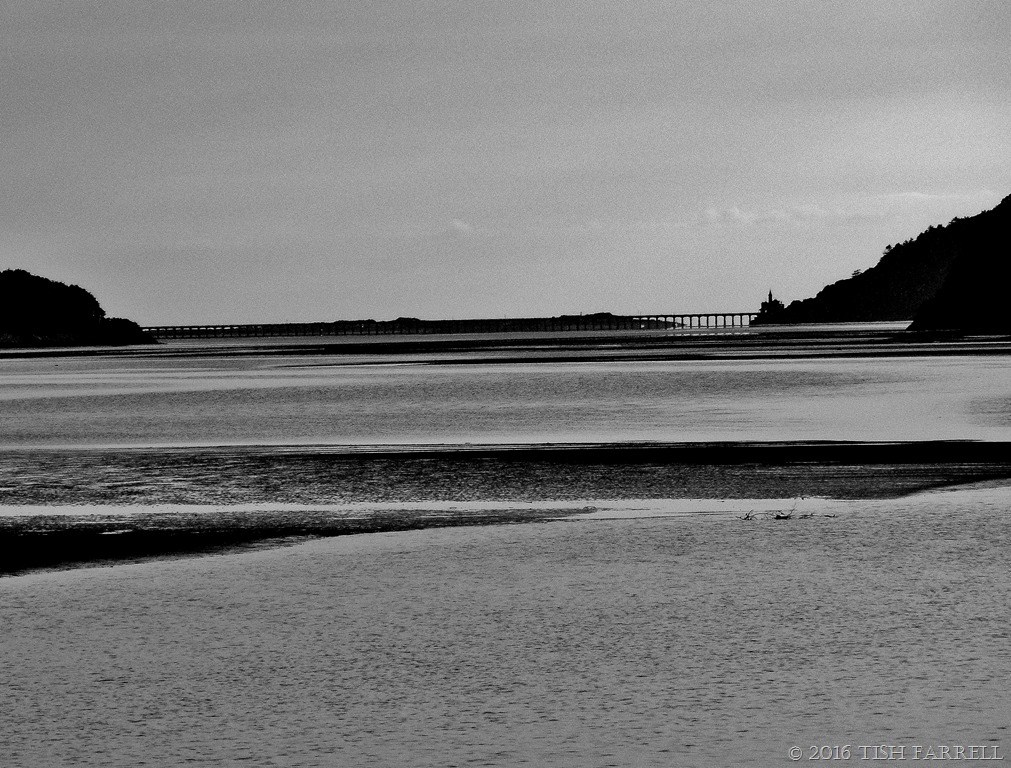
The most unexpected thing about this shot is that it came out at all in such low light conditions. I do love the Dynamic Monochrome setting on my Lumix. It creates all kinds of unforeseen magic, even with much added zoom.

I suppose the other piece of unexpectedness here is the perversity of shooting a limpidly pastel sunset in monochrome. But I like the way it silhouettes the old railway viaduct across the estuary mouth. In Welsh it is called Pont Abermaw, and in English, Barmouth Bridge. It was constructed mostly from wood during the 1860s, and included a drawbridge section that would open allow tall masted ships to pass through, sadly not a facility much needed these days.  It would be fine sight though, so please add your own sailing ship to this vista.

*

Black & White Sunday  This week Paula requests we show her the unexpected. Please drop in there for more creative renditions of the theme.


#MagesticMagicalMawddach

Magnificent Magical Mawddach

P1040909

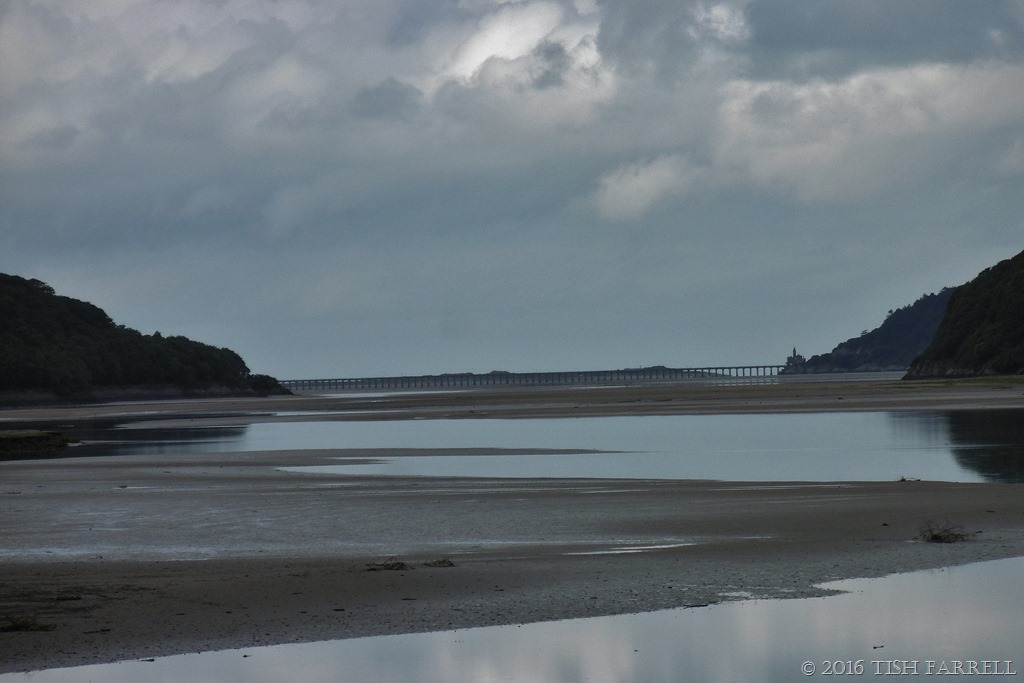
We drove through one hundred miles of rain to reach it. From South Shropshire to the Welsh coast clouds piled on clouds and the rain dashed down the windscreen with only brief interludes of drizzle. Climbing and climbing the precipitous road through Dinas Mawddy, sky and mountains closed in, reminding us that we humans are rather puny ineffectual things, and that the motorized carapace that transports and shelters us may just  not be enough in a land like this. Even the sheep, inured to the place, stand hunched and motionless on the hillsides, backs to the downpour.

And then at last we’re here, on the banks of the Mawddach Estuary, just downstream of Penmaenpool, and the rain recedes,  leaving stillness and shadow, the slow curves of the river, Welsh Black cattle grazing the salt marsh, a buzzard calling, canoeists returning to base, and on the far horizon the knowledge of the sea, though unseen,  marked by a sudden flush of brightness out in the bay.

P1040911

copyright 2016 Tish Farrell

Curve

#SnowdoniaNationalPark