For The Love Of Steam ~ Trains And Tracks At The Severn Valley Railway

IMG_1835 - Copy

100_6811

IMG_1857

IMG_1858 - Copy

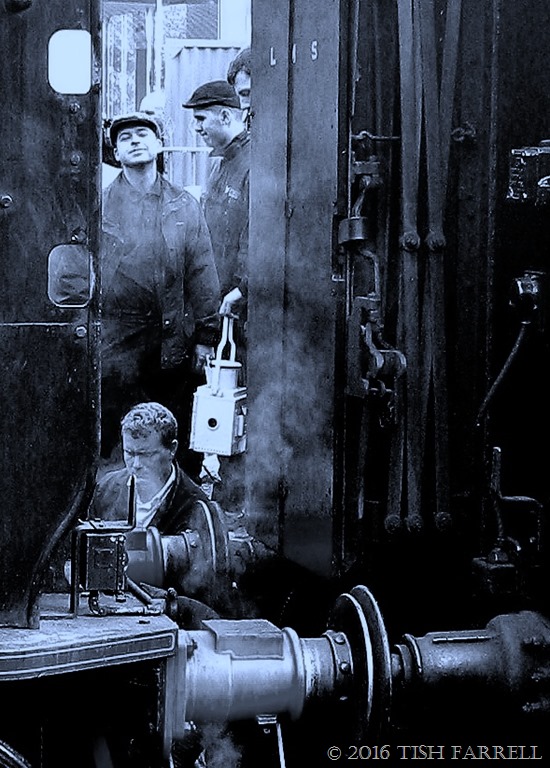
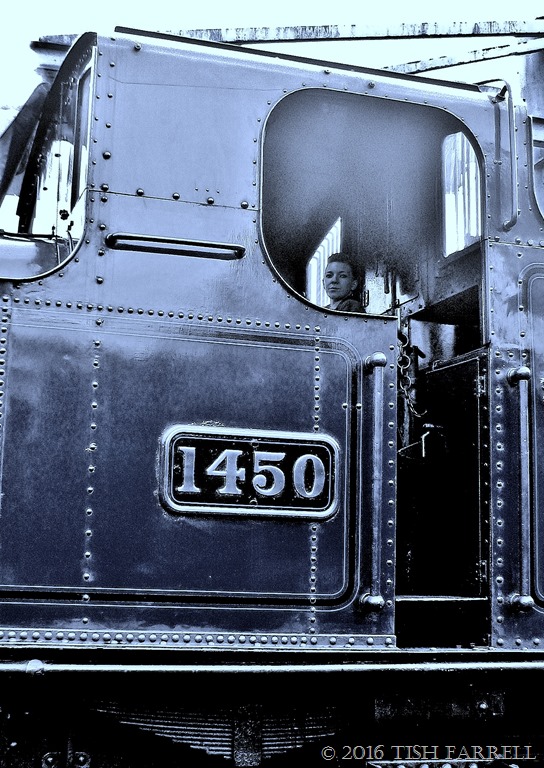
It was a gloomy, low-lit winter’s day when we went for a wander around Bridgnorth’s Severn Valley Railway. The reason for this visit is described elsewhere (Connected On And Off The Rails), so I will confine myself to mentioning that it had something to do with rivets and Graham’s model-making enterprise.

All these photos were originally colour shots which did not convert too well to straight black and white due to the aforementioned poor light. So I’ve added the blue-ish haze for interest’s sake. I think it suits the coal-burning, hard iron,  cold steel, railway yard feel of steam locomotion.

For more trains and tracks please clickety clack over to Cee’s B & W Thursday.

IMG_1840 - Copy

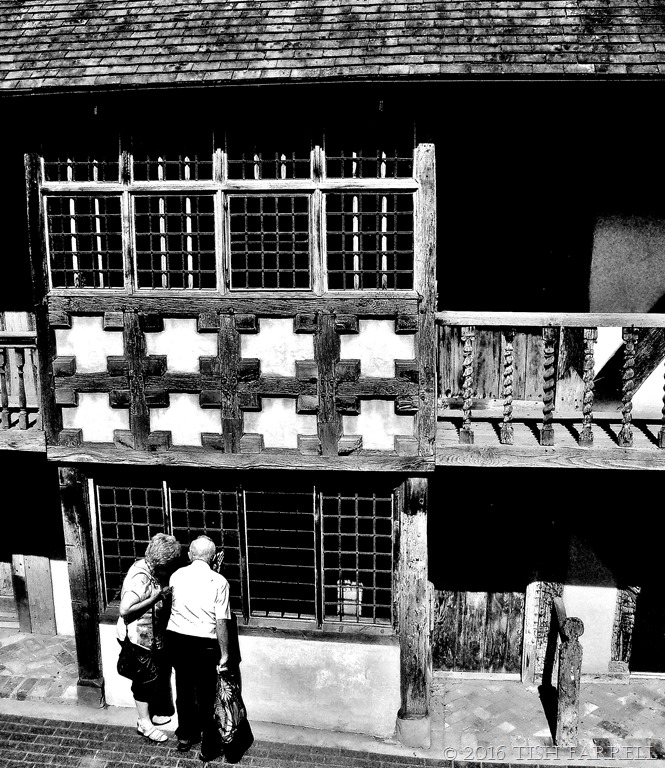
Two Being Nosy On The High Street ~ As Caught By Nosy Writer ~ (That Would Be Me)

100_6264

I do it myself of course when I’m walking along Much Wenlock High Street. The windows of Raynald’s Mansion are just too tempting for those disposed to be nosy. There are always interesting artifacts and pieces of unusual antique furniture inside. The place appears to be some kind of shop, but it is never open. The extraordinary timbered facade, built in 1682, was apparently a later addition to a fifteenth century hall. The Victoria County History for Shropshire rather sniffily suggests that this kind of construction was both crude and ‘old hat’ for a time when everyone who had money was going in for smart townhouse frontages in brick and stone. But  never mind the architectural snobbery. It is still one of the town’s most picturesque buildings. There are also said to be ghostly apparitions at these windows. Just the job for Halloween. I must look out for them the next time I’m out and about on the High Street.

 copyright 2016 Tish Farrell

Black & White Sunday: Couple(s)

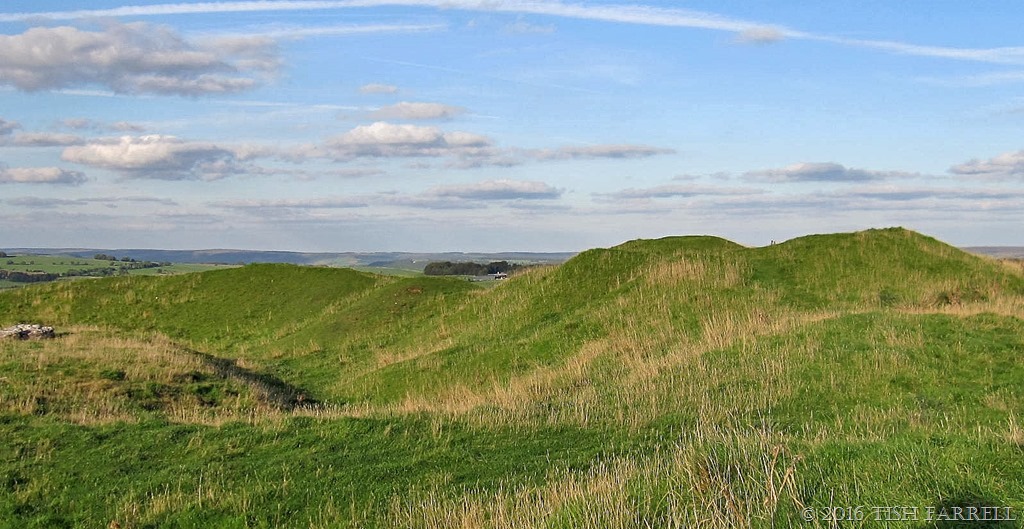
Derbyshire’s Arbor Low ~ They Call It The Stonehenge Of The North

IMG_3357

Unlike Stonehenge a visit to Arbor Low does not include accompanying hosts of fellow enthusiasts, tacky gifts and bad coffee, nor the parting with large sums of money to go in (adult ticket £16.50). In consequence there are absolutely no facilities, no opening or closing times, and thus no need to pre-book to avoid the rush.

There is, however, an honesty box by the farm gate, and a requested fee of £1 per person. This is fine by me. The monument, though scheduled, is on private land. The farmer has to put up with the repeated nuisance of standing stones devotees, although on the September afternoon of our visit, takings suggested that scarcely a couple of dozen others had preceded us that day, and as we set off from the car there were only three people ahead of us on the track.

The only problem with Arbor Low is that once you’ve trekked through the farmyard and across the field to visit Derbyshire’s most important Neolithic henge (one’s head inevitably full of Stonehenge images, and lots of anticipation) it all looks decidedly flat when you get there, and so quite lacking in the upstanding drama of its more famous southern analogue. And while Arbor Low surely has considerable edge when it comes to setting (a thousand feet up on a limestone crest of the White Peak)  one wonders why the comparison has been implied at all. Isn’t Arbor Low its own special place?

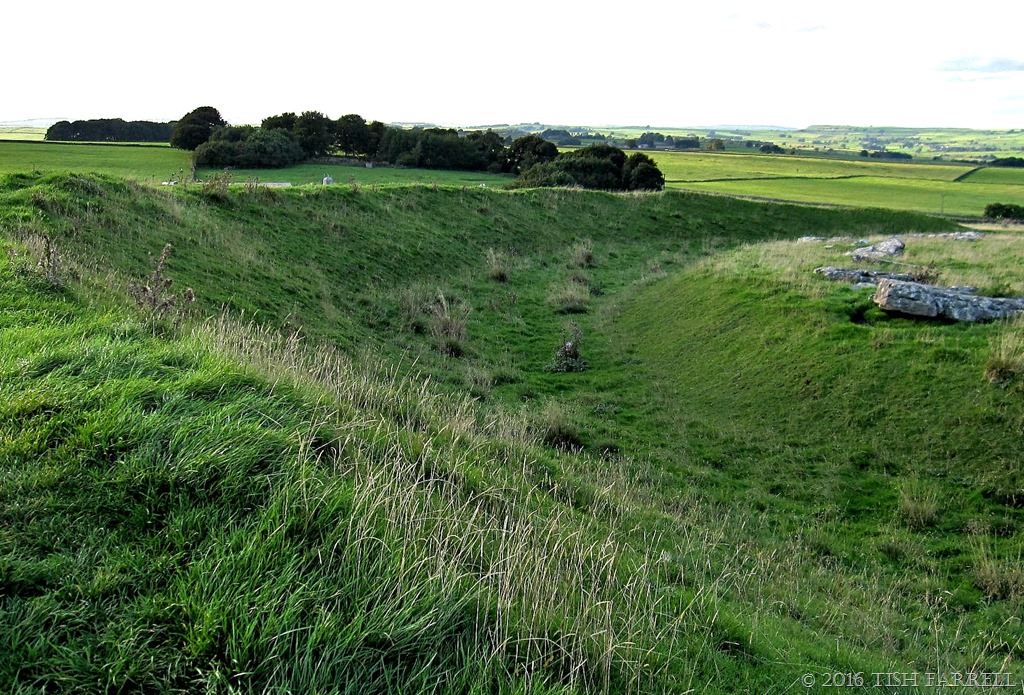
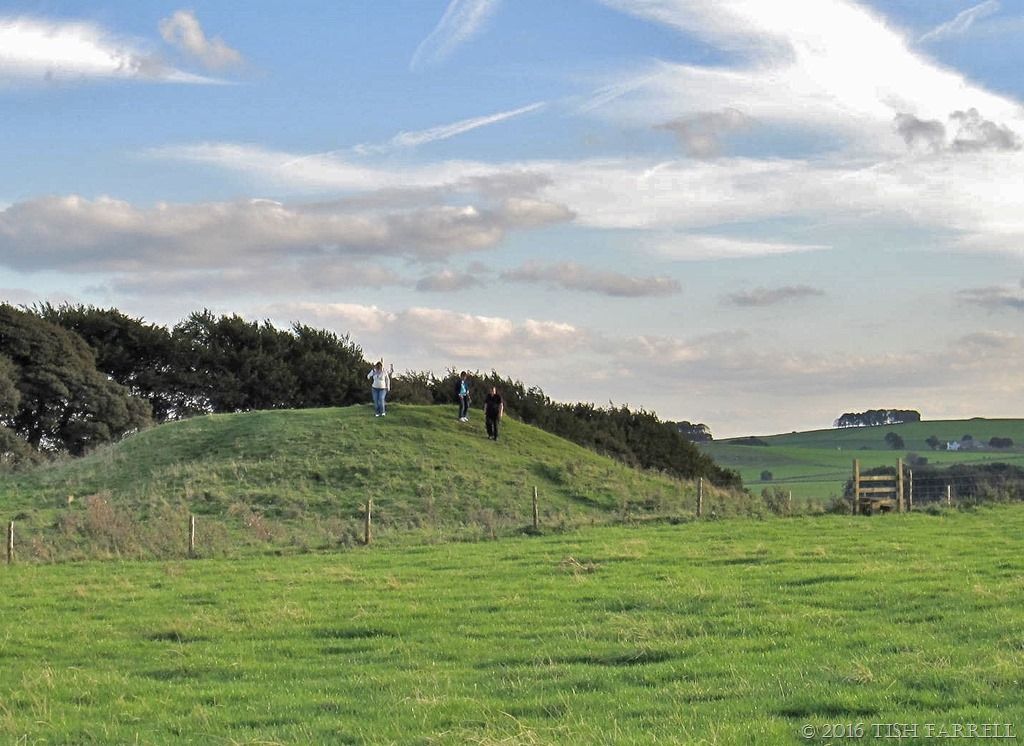
I suppose, then, that mentioning the two sites in the same breath is really more about emphasising their prehistoric importance than suggesting any correspondence in physical scale or appearance. Arbor Low is anyway a much smaller circle. But it does have its own unique features, apart from the recumbent stones that is. These include a very impressive encircling ditch and an outer rampart with the added extra of a later Bronze Age round barrow built across its southerly bank. You can see it on the right of the next photograph.

IMG_3358

So now that I’ve raised the vision of Stonehenge with its great sarsen lintels, I want you to forget it, and think about digging. The time is some four and half thousand years ago. I am the foreman, and I am handing you an antler pick, and maybe a cattle bone shoulder-blade to use as a shovel. We have marked out a circle some 70 metres across, and now you have to start digging 3 metres down into the limestone bedrock, while shovelling up your spoil to create the outer bank.

After many, many, many man-, woman-, and child-hours you can step back and regard the massive earthwork thus created. The freshly dug limestone of the rampart will doubtless have an unearthly white-grey glow. It will be visible from miles around, despite a more wooded landscape than today. At sunrise and sunset it will look spectacular against the skyline, the bank much taller and with a sharper profile that the present remains. In other words, it cannot be mistaken for anything other than a highly prestigious, and momentous man-made structure – the visual shock equivalent of coming upon a designer high-rise in the middle of a wilderness. Or maybe Starship Enterprise.

IMG_3354

After all the digging you are left with a central oval platform around 50 metres across. Perhaps the limestone slabs are already located there, set up on end, and bedded, after much hefting and shunting, in the rocky ground. They could have been worked during the making of the ditch, or sourced from somewhere nearby. In any event, they would have involved considerable effort given your limited toolkit of stone, wood and bone.

From outside the earthwork – and because of the height of the outer bank, you cannot see either the stone circle, or to observe anything that is going on within. Stepping through the entrance to view the newly built monument is thus perhaps a deliberately contrived catch-your-breath moment: the scene before you covert, unnerving, awe-inspiring, drama-filled. If some ceremony is in progress – a narrative declaimed or sung, the outer bank will amplify the sounds in mysterious ways – echoing, resonant, other-worldly; it may be a place of loud whispers.

There will perhaps be no grass cover, just an exposed limestone arena. Around the oval platform you will see some forty standing stones.

IMG_3347

In the centre there is also some kind of sanctuary, a rectangular configuration of more standing stones. The barrow on the southern bank is not yet there. It will be another thousand years before this spot is used as a burial site – perhaps by strangers, perhaps by the distant descendants of  you henge builders. These newcomers have also built another barrow, Gib Hill, just across the field from Arbor Low. Here they raised their own tomb atop the long barrow built by your forebears, a monument that possibly long preceded the stone circle. And so although you can no longer remember the rites and customs of these ancestors, you do know that, like the great mediaeval cathedrals of Europe with their roots in Roman and Saxon times, this place was considered ‘sacred space’ for a millennium and more…

*

And so back to reality and the flattened circle we see today. No one knows when the stones were laid low or why. There are other so-called recumbent stone circles in Britain. Sometimes some of the stones have also been buried. Superstitious dread could have much to do with it: an attempt to neutralise the stones’ power perhaps. There is also archaeological evidence in other contexts that suggests that the prehistoric occupants themselves have ritually ‘closed’ particular sites, perhaps prior to moving to a new centre of operations. There are other more practical reasons too: later farmers came along and simply re-used or moved the stones because they were ‘in the way’.

I also seem to remember from my student field-trip days to Avebury stone circle in Wiltshire that one of the stones had been buried in mediaeval times to cover up a murder. When the stone was being restored to its upright position, beneath it was found the grisly remains of a surgeon-barber, identifiable by the tools of his trade that were still with him. More fanciful interpretations of this find could of course suggest the presumed continuing practice in pagan sacrificial offerings, i.e. the kind of activity that we modern folk so very much like to associate with all ancient stones.

IMG_3353

I suppose one of the most surprising things I discovered about Arbor Low is that there has been no archaeological exploration of this site since early Victorian times when the local antiquarian Thomas Bateman of Lomerdale Hall, and serial excavator of prehistoric barrows, tackled the place. It was he who discovered a human burial in the stone circle barrow and, during his Gib Hill excavation, uncovered a stone cist (a slab built tomb) in which the cremated human remains were placed along with an urn and offerings of meat and flint tools. And this, it seems, is all that is known.

IMG_3364

So many mysteries then, and no likely answers. Instead I’ll leave you with the words of Thomas Bateman and his description of Arbor Low from his Vestiges of the Antiquities of Derbyshire 1848:

…the solitude of the place and the boundless view of uncultivated country are such as to carry the observer back through a multitude of centuries, and make him believe that he sees the same view and the same state of things as existed in the days of the architects of this once holy fane.


copyright 2016 Tish Farrell

The Local Garage, Much Wenlock

P1050141

As you drive over Wenlock Edge and descend into Much Wenlock town, this is one of our first eye-catching local landmarks. I don’t know when it was last open for business, but the blurb on the poster now seems a touch ironic:

The more we progress the further you go                                                                                                                   The Michelin Man

I should perhaps say we do still have a fully functioning motor repairs place, but it obviously isn’t here.

Daily Post Photo Challenge: Local

Thursday’s Special: Double Trouble?

P1040105

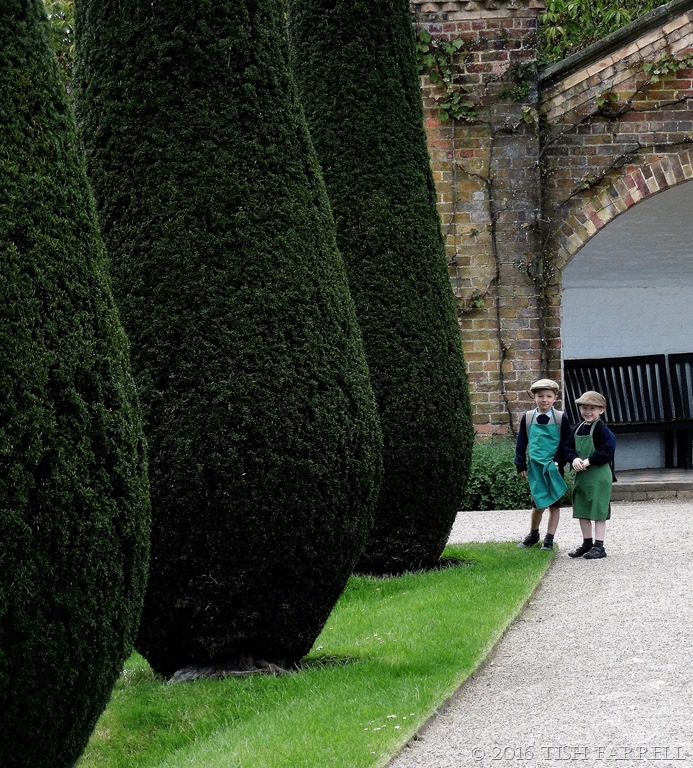
I was in the formal garden of Erddig stately home, thinking of photographing the avenue of shapely yews when these two young men walked into the frame. They lingered, clearly wanting to be photographed in their costumes as 1900s serving lads. Then the kitchen maids arrived  to send them back to their duties, and they were gone. On the other hand I could have captured a time slip: a  pair of fleeting Edwardian ghosts?

Now here’s the yew avenue I was aiming to snap.

P1040104


Thursday’s Special: Double

#ThursdaysSpecial

Stepping Stones Through Time

P1050609

This photo may serve better as an idea than an actuality. It’s the layers that attract me – not only of light and shadow, surface reflections and leafy river bed, but also of present and past: the stones that,for two and more centuries, my maternal ancestors used to cross the River Derwent.

Or at least so goes the family tale, the one my great grandmother, Mary Ann Fox, passed on to my grandmother, Lilian Hickling, who passed it on to her daughter, my aunt, Miriam Wilkinson, who passed it on to me. The photo, then, could be taken as a physical rendition of Chinese Whispers. Well, aren’t all family histories like this, word of mouth down the generations? There are bound to be omissions, distortions, total fabrications even.

But there are some certainties too.

Great grandmother Mary Ann was a Derbyshire lass, born and raised at Callow Farm, the child of tenant farmer George Brayley Fox and lead miner’s daugher Mary Ann Bennett. The land all around belonged, as it does still, to the Dukes of Devonshire. The stone-built farmhouse was (is) tucked high into the hillside below Highlow Hall and Offerton Moor. From Callow’s garden wall, the fields fall steeply down to the River Derwent. The stepping stones crossing was the quickest route from the farm into the Peak District village of Hathersage across the river, and the path there, across Callow’s meadows, still survives on OS maps. And so we have a scene, relayed to me by aunt via grandmother, of a young wife and mother living in the close and gloomy streets of industrial Farnworth. There she conjures her girlhood life, telling her four town-born children how, if she needed to buy the slightest thing she would have to traipse across many a field before reaching the stepping stones to Hathersage.

Other scraps have reached me. There is one that now lurks in my memory like a small haunting. For it seems my grandmother often told my aunt that Mary Ann was ‘a sad woman’. Nor is this surprising. She was widowed twice: at 30 and at 41. After the first loss, and with four young children to raise, she took up inn keeping beside the Manchester Ship Canal at Hollinfare. Grandmother said that as Mary Ann moved about the inn, she recalls the waft of her black silk dress always carried the scent of lily of the valley; a touching image until you learn the scent was dabbed on to cover the smell of gin.

But before the sorrow, I have a sense that, as a young woman, Mary Ann was headstrong and passionate. Though it may well be that those very characteristics were precisely  the source of some poor decision-making. In 1886, aged twenty two she went against family wishes and married Thomas Shorrocks, a spindle and flyer manufacturer, who worked with two brothers and a widowed mother in the family firm in Farnworth, Bolton, part of Greater Manchester. His first wife, Mary Ann Wright, had died around the time their first child was born, leaving Thomas with a young son. How Mary Ann Fox in Derbyshire met Thomas Shorrocks of Farnworth, Lancashire is still a mystery. Grandmother’s only surviving comment on the matter was that her mother fell for the first man she saw wearing a stove-pipe hat, that she was a country girl swept off her feet by a townie. Grandmother also said she scarcely knew her father. He had no time for children and kept away from home until they were asleep, staying on at the works or at his club. And then too, he died very young. Around 1891-2 the family firm of Robert Shorrocks & Co was in grave financial difficulties. The machinations to keep the business afloat involved a high profile court case, but then all was lost anyway. By 1893 Thomas Shorrocks was dead. He was only 39.

But how did Mary Ann adapt to life in industrial Farnworth?

Her first married home, 8 Kildare Street, Farnworth, was not far from the Shorrocks works on Bridgewater Street. It was a modest terraced villa with a small front garden and a back yard – a far cry from the sweeping high-moors vistas around Callow. And if she did not see much of Thomas during daylight hours, was she abandoned to her own devices? We know from the 1891 census that she did at least have the company of Lucy Stubbs, a young Derbyshire girl from Grindleford Bridge employed as a domestic servant. There were also other Shorrocks households along Kildare Street, including mother-in-law at number 23. Mary Ann also formed a close friendship with her husband’s younger sister Mary, though it was in every way subversive. Mary was being wooed by one John Hamer (later to become an wealthy mill owner), but Thomas and the Shorrocks family in general disapproved of him. It was Mary Ann who allowed the couple to meet in secret at Kildare Street, a kindness that was long remembered; for in the end John Hamer did marry Mary Shorrocks, and after Mary Ann died it seems they did much to support her children.

It also seems Mary Ann did not fall over herself to fit in with Farnworth mores either. There’s a clue in another of Grandmother’s snippets. She told my aunt that the traditionally dark clad women of Bolton and Farnworth looked askance when Mary Ann went abroad in her bright print country frocks. Did she ever back down, I wonder. Or did she flaunt? In my mind’s eye I see the flash of free-spirited obstinacy that brought her to that place. Much like the light flickering through the riverbank trees and onto the Derwent stepping stones.

The collapse of Shorrocks’ fortunes coincided in 1892 with Mary Ann’s father’s decision to leave Callow Farm where his family had been tenant farmers for four generations. Derbyshire farmers were having a hard time in the early 1890s: prices for crops were low, and rents were high, and landowners unwilling to compromise on the rents. It seems likely that some of the proceeds of the farm sale of stock, crops, horses and household belongings were used to secure the licence for the inn in Hollinfare, Cheshire, where Mary Ann began a new life as innkeeper.

My aunt said the Fox family had decided that taking the inn was the best means of securing a home and living for her with three young children and an adolescent stepson. It  stood on the south bank of the great Manchester Ship Canal, which linked the vast industrial heartland of northwest England with the port of Liverpool. It had only recently opened in 1895 when she took over the inn. In every way the Foxes must have thought it a shrewd decision, anticipating plenty of passing trade.

Mostly what it brought, and pretty rapidly too in January 1895, was another marriage to another widower – one Charles Rowles, a ship’s pilot on the canal and a former sea captain. My grandmother disliked him, although she adored her young stepbrother, Giles, born in 1896. She said it was only once her mother had married him, that Charles Rowles produced two teenage daughters from his first marriage. These young women apparently moved into the inn and tried to rule the roost which, I know for sure, would not have gone down well with my grandmother. If any roosts were to be ruled, she would be doing it.

When I tried to discover more about these interloping young women, I found a hint of scandal. It very much looks as if Mary Ann’s younger brother, George Fox, then aged 26, eloped with one of his sister’s new stepdaughters. Hannah Louisa Rowles was probably only 15 when she married George, although she claimed to be 18  on the marriage licence. At the time, November 1895, there were both living on York Street, Manchester. The following August their daughter Dorothy was baptised although she does not survive. In 1901 the census indicates that George was running ‘on his own account’ a large public house on Oldham Street, Manchester. By 1908 he had died, and in the 1911 census his young widow is listed as a servant, working in another Manchester pub. What happened to her remains to be discovered.

As for Mary Ann, in 1905 after ten years of marriage, Charles Rowles died. She survived him only by another four years, dying in the Manchester household of her stepson, Robert Shorrocks. She was 46. Her youngest child Giles was about 12 years old at the time. The 1911 has him living with a widowed Rowles aunt in Cardiff and employed as an apprentice shipping agent. He was to die at Gallipoli in 1915. Nineteen years old and buried at sea somewhere off Lemnos.

Now as I look at the stepping stones photograph, these are the thoughts that run through my mind. It is all too easy to look back to Mary Ann’s growing up at Callow Farm and see a rosy past. It’s how we tend to view things: the glamour of an imagined rural idyll – the stepping stones back to happier days. I had hoped to cross here too. I badly wanted a closer view of the farmhouse. But on the day of my visit there had been heavy rain, making the Derwent far too active to attempt to cross without rubber boots and a stout stick for support. A quest then, for another time? Perhaps.

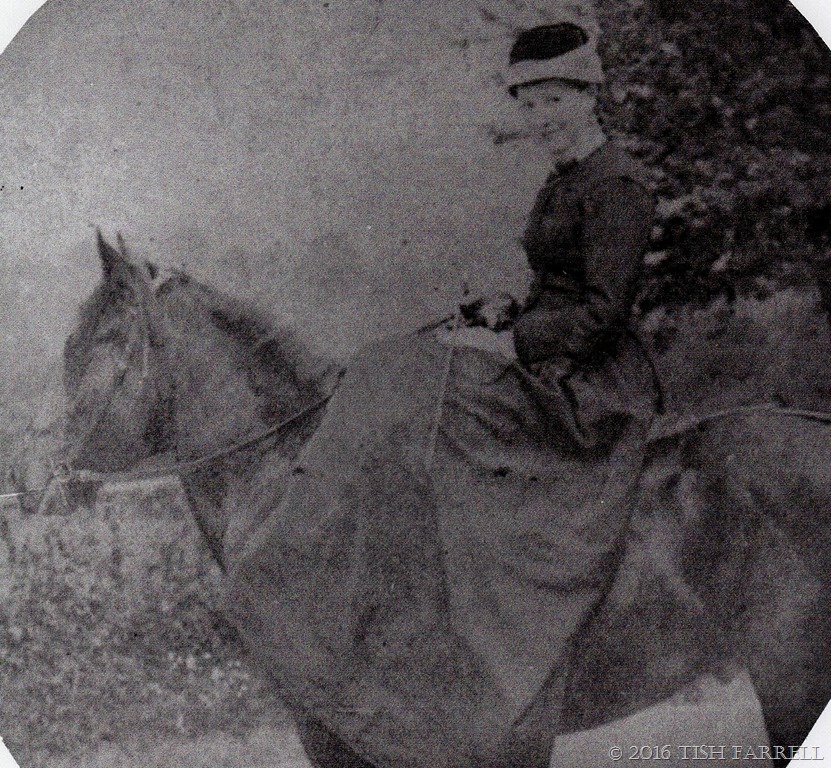
Mary Ann Williamson Fox of Callow b.1863

Mary Ann Fox (1863-1909) sometime before her marriage, and before her father sold her pony. He had threatened to do this if she persisted in jumping the farm gate on horseback. She did not listen. You can tell that she would not just by looking at her.

Copyright 2016 Tish Farrell

Spirit of the Past: Black & White Sunday

holiday 029

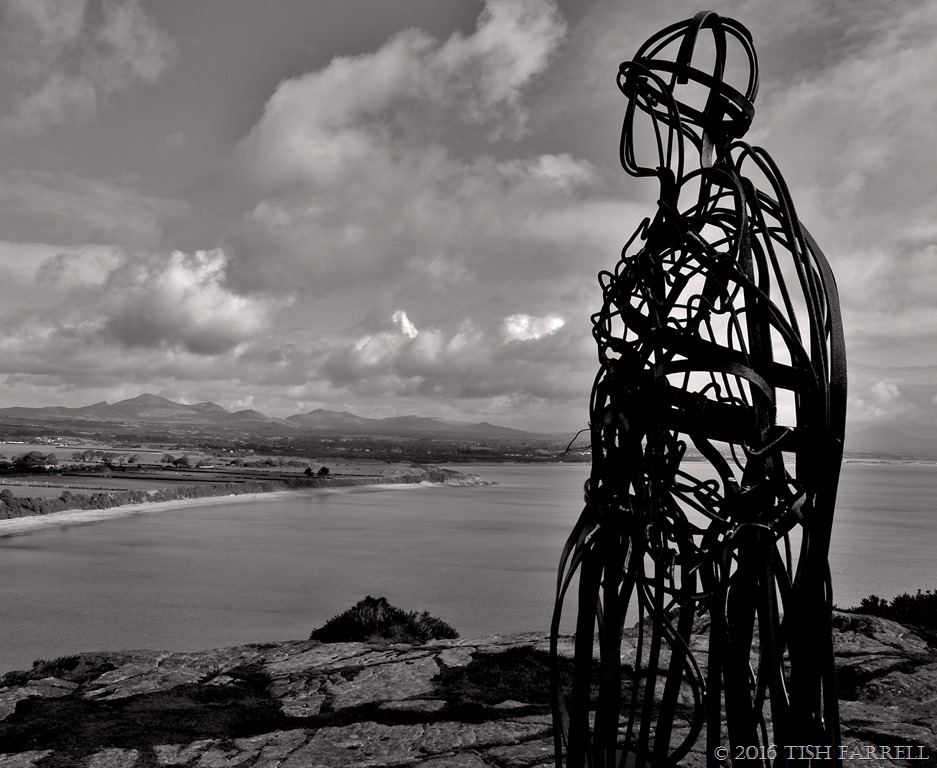
I’ve written about the Iron Man of Llanbedrog in other posts. (Personally I think it could be a woman – Boudica perhaps, the last of Britain’s Celtic warrior women). I’ve also posted variously edited versions of this shot before, but not this one exactly. This week at Black & White Sunday, Paula is reprising the popular Traces of the Past challenge, and I thought that although this iron figure is not especially old, everything about it speaks of the ancient Celtic spirit. And of course there are the ‘rocks of ages’ just visible in the distant mountain range of Snowdonia. In many senses, then, Wales is an old, old land, and the traces of the past are everywhere across the landscape.

 *

You can read more of the Iron Man’s story at Warrior Wind-Singer Of Llyn

The Railway Men 2 ~ Black & White Sunday

P1040806

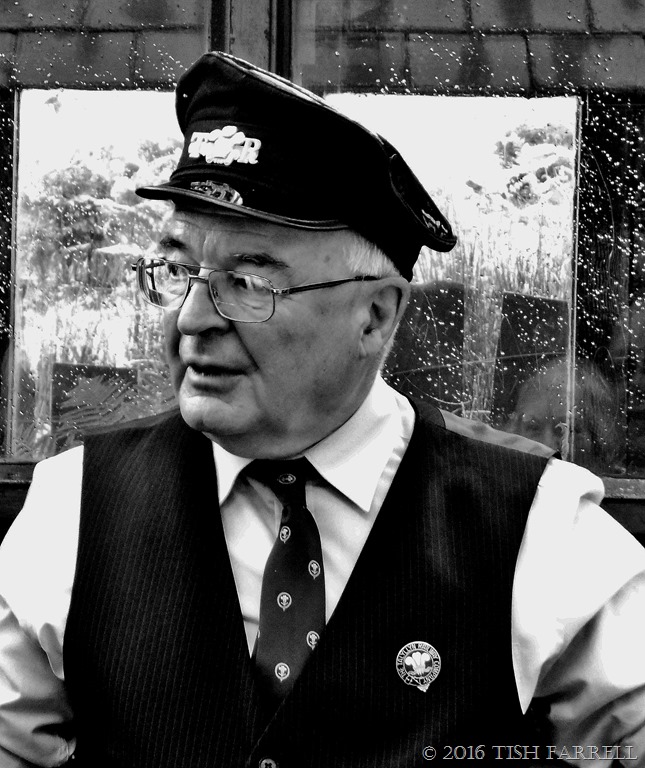
Here’s another portrait from our Victorian day out on the Talyllyn Railway in June. Looking at their website this morning I see they’ve got a very special trip coming up next month – The Halloween Steam and Scream. Oh what a hoot. I think I want to go. It’s my birthday too. There will be a choice of two Steam and Scream trains departing from Tywyn station at 5.15 and 7.15 on several October nights including the 31st. Everyone can dress up as ghouls, goblins and witches; there are prizes for the best carved pumpkin lantern, and you can book a feast at the railway cafe.

Join us for a fun spooky evening train ride along the Talyllyn Railway to the haunted woods at Dolgoch, says the blurb.  Those woods are pretty spooky in broad daylight, but on a dark autumn night in the Welsh hills…Watch out for the Hessian Horseman  and his Celtic brother. Yikes! And double yikes!

*

Now please visit Paula at Lost in Translation for more B & W Sunday portraits.


@TalyllynRailway

#RheilforddTalyllynRailway

The Railway Men: Black & White Sunday

P1040808 - Copy

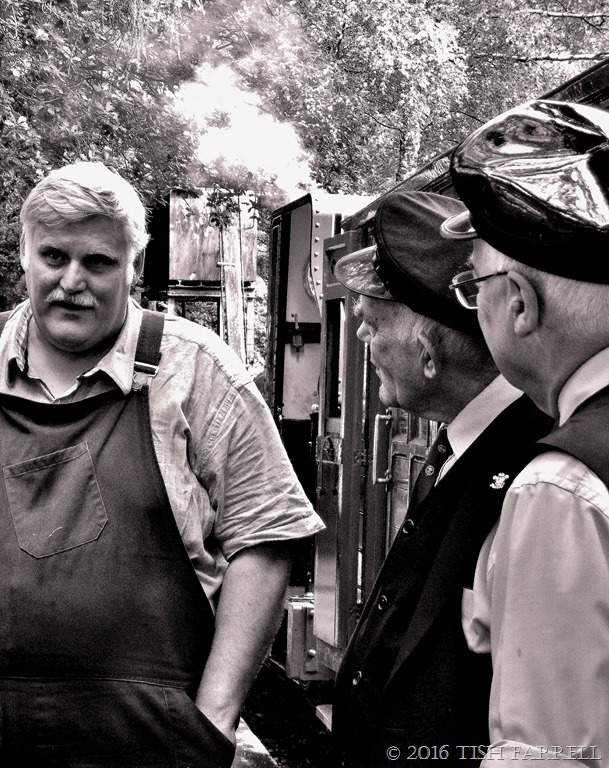
The Talyllyn Railway in mid Wales is the oldest preserved steam railway in Britain. Over the past half century it has inspired many other such ventures and there are now some 500 miles of restored lines across the country.

That they are there at all and can offer us steamingly enjoyable train rides is mostly down to armies of enthusiastic volunteers like these chaps in the photo. It’s an enterprise fraught with responsibilities too; the health and safety implications are momentous: track, rolling stock and passengers all to be kept in good order.

And in case you missed it back in June, you can read more about Tish and Graham’s big train day out at:

Partners in steam on the Talyllyn Railway – Woo-hooooo

*

This week at Black & White Sunday Paula’s challenge is COMPOSITION. Please visit to see her own very fine composition, and the other entries it inspired.

My own photo was composed in Dynamic Monochrome.

Who Said Morris Dancing Couldn’t Be A Whole Lot Of Fun?

KIF_0215

When we came home after eight years in Africa we lived for a time in Rochester, Kent, on the shores of the River Medway. It is an ancient town with cathedral, castle and cobbled streets. It’s also a place that goes in for plenty of fun activities.

For a start there’s a strong Charles Dickens connection. The writer lived in the area and in particular based some of the locations of his novel Great Expectations  in and around the town. Every year, and to mark this important literary association, there is a Dickens Festival. This mostly involves people dressing up in appropriate costumes and parading about the streets. For some reason we have no photos so you’ll just have to imagine the fun of bumping into multiple versions of Miss Haversham out on the High Street.

Instead here we have the Rochester Sweeps Festival, an annual gathering that mostly involves Morris groups from across the land, but with a scattering of chimney sweeps plus a few Green Men thrown in. This particular event has been going for nearly forty years, but it harks back to centuries’ old festivities.

I attempted to unravel the history in an earlier post. So if you wish to know more about arcane English pursuits go here: Unexpected with bells, sticks and hankies at the Sweeps Festival

For now, here are a few more of Graham’s photos that did not feature in the original post. You can draw your own conclusions about the multiple cultural references, some more eccentric than others. The young women in black ‘Miss Whiplash’ ensembles hailed from the US:

KIF_0164

KIF_0193

KIF_0195

KIF_0211

KIF_0183


Fun!