Windfalls – with thoughts of Andrew Wyeth
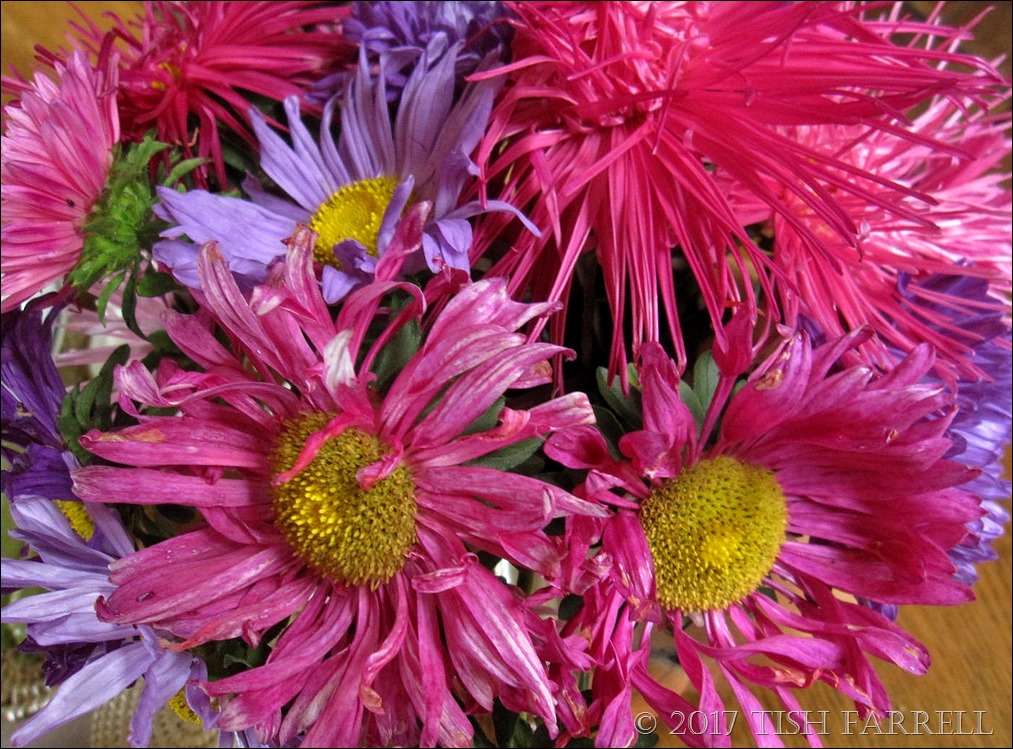
Yesterday’s post about goings on in and around the allotment and the fact our planet is now totally polluted by Roundup was a drearily disturbing topic. Today the allotment came up with floral fireworks, and a jug full of asters. Presents!
At lunchtime as I was on the plot, watering my peas and beetroot, fellow allotmenteer Siegfried came by. He was pushing a wheelbarrow full of produce – courgettes, runner beans, and a ton of red currants. I said he looked like a mobile vegetable stall. He told me it was destined for tomorrow’s Country Market – the Thursday morning local produce stall under Much Wenlock’s Corn Exchange.
Then he said would I please do him a favour, and go to his plot and pick as many asters as I wanted He said he had already picked masses for the market, but was afraid the rest would go to waste. He told me not to forget.
A little later I saw him go by my polytunnel. His arms were filled with sheaves of asters. What a wonderful sight – Siegfried in bloom, and I didn’t have my camera. And so on my way home I stopped for a greedy harvesting in the aster plot. And now I’m passing on Siegfried’s gift. All of which is to say, you meet some nice folk up at the allotment.
Frequently Flying Scientist, Desley Jane, is a very talented photographer. Macro mode is a particular speciality, and especially when it comes to making delicious little cakes impossibly tempting. This week she has quite a different subject for her ‘Regular Random’ slot. So please visit her and join in the challenge. These are the rules:
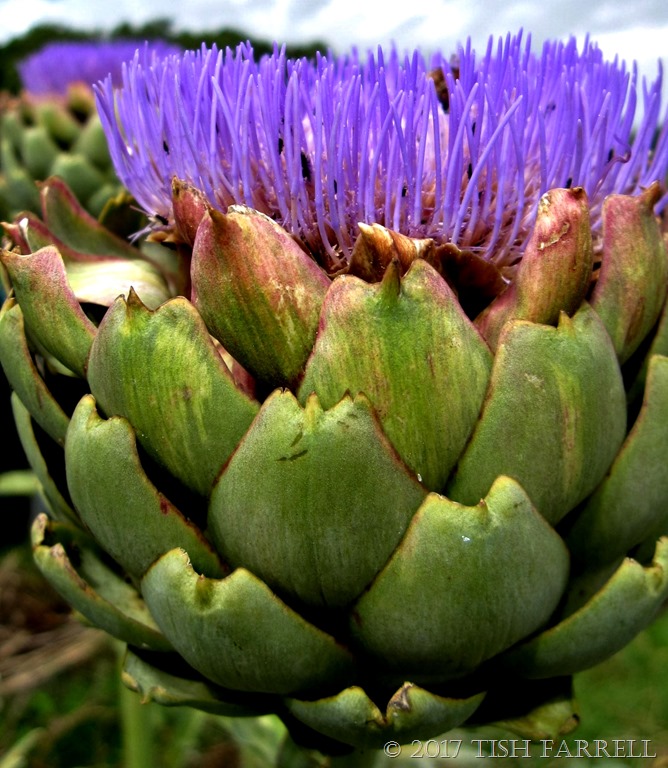
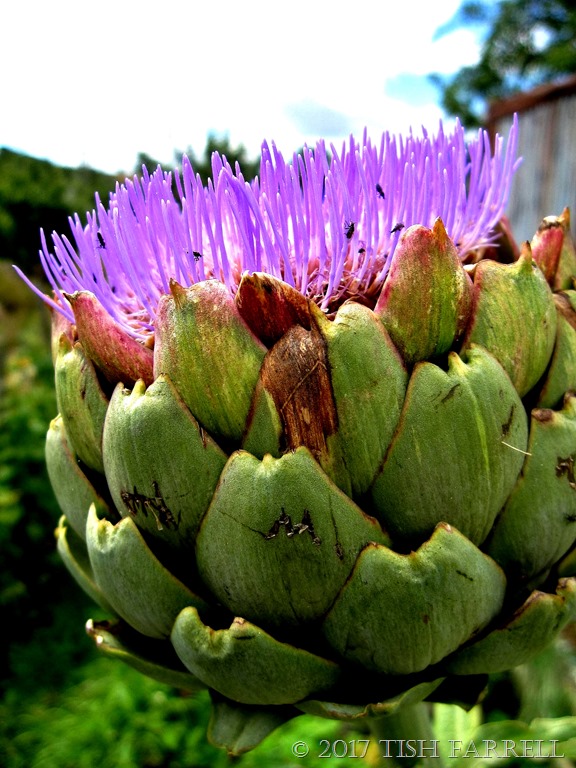
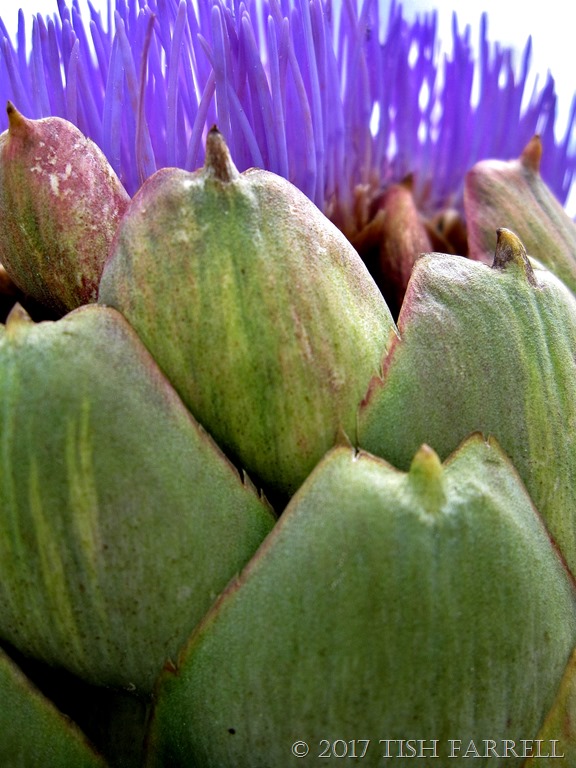
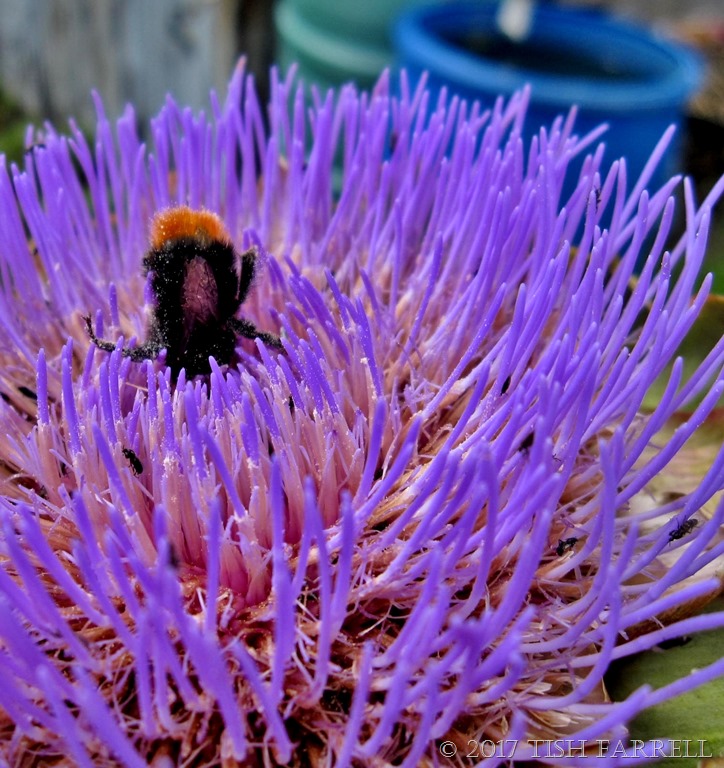
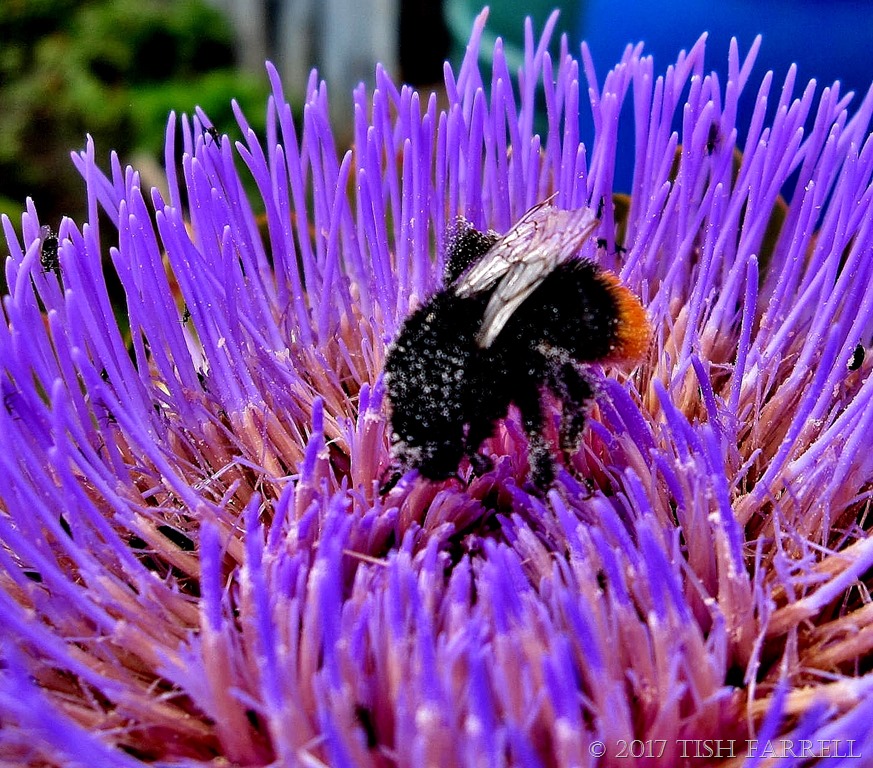
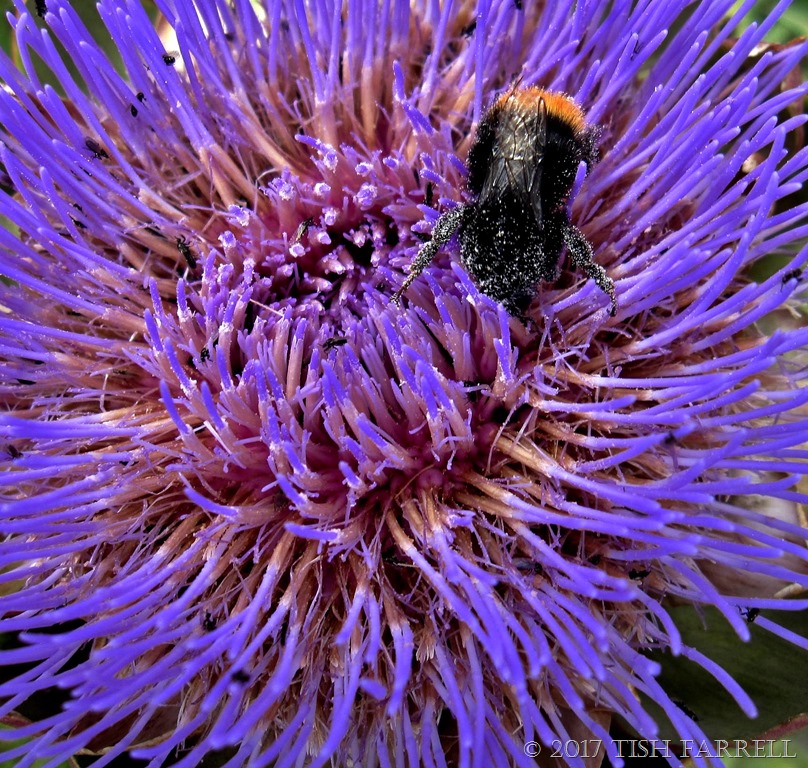
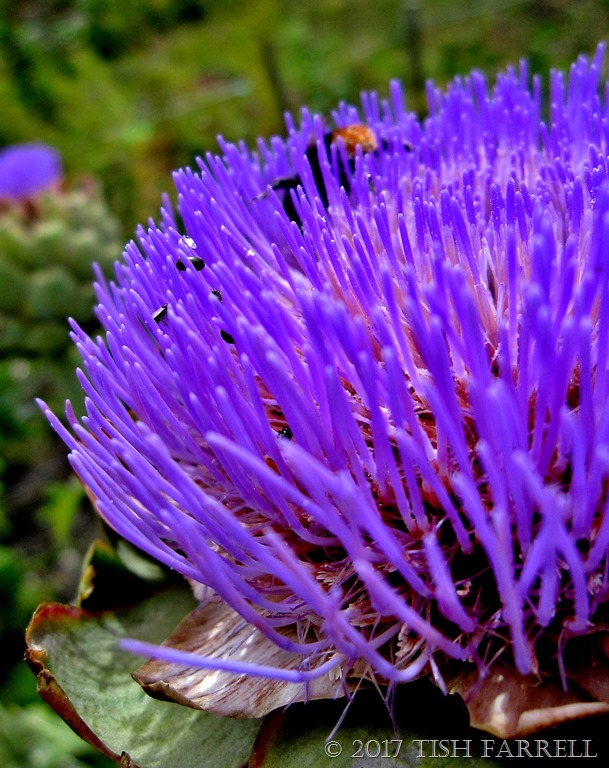
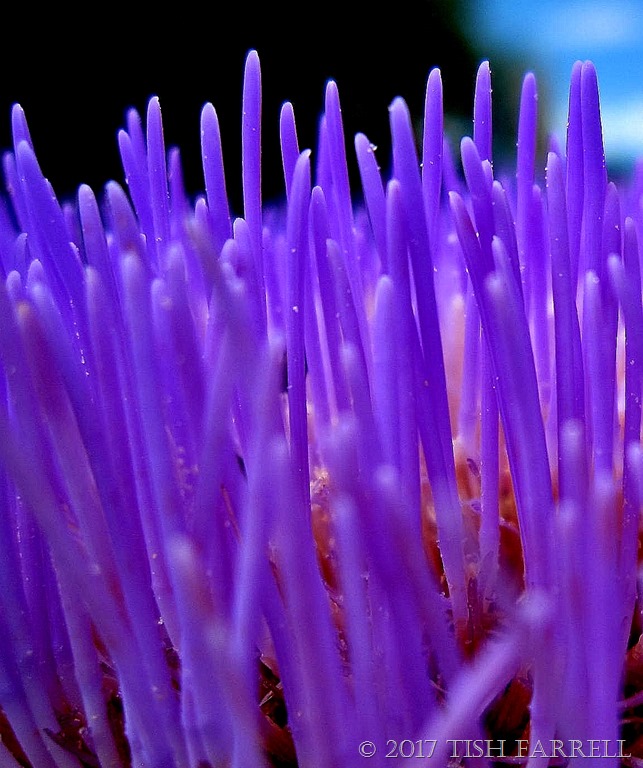
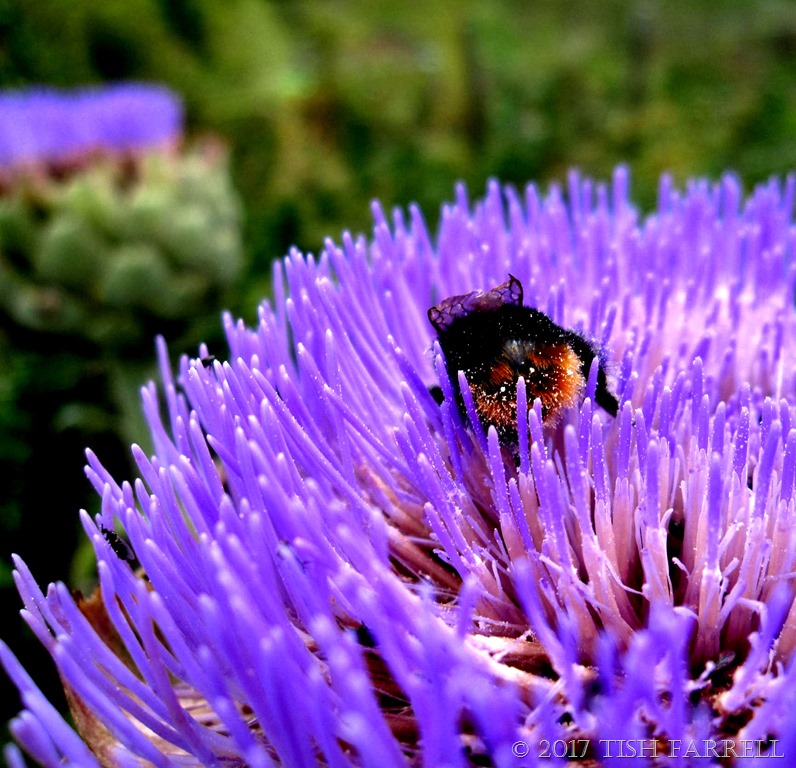
My five minutes was devoted to some allotment artichokes. The sun was full on, the artichoke flower rather too tall, and the wind kept gusting, so the outcome is definitely random. Nice performance by the pollen dusted bumblebee though.
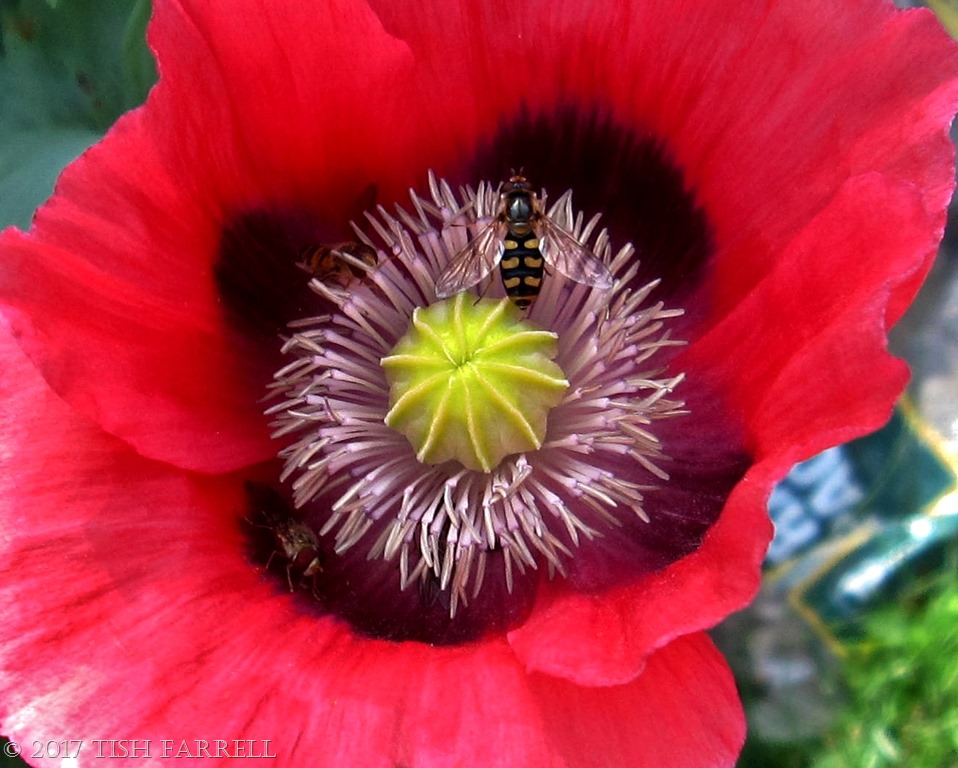
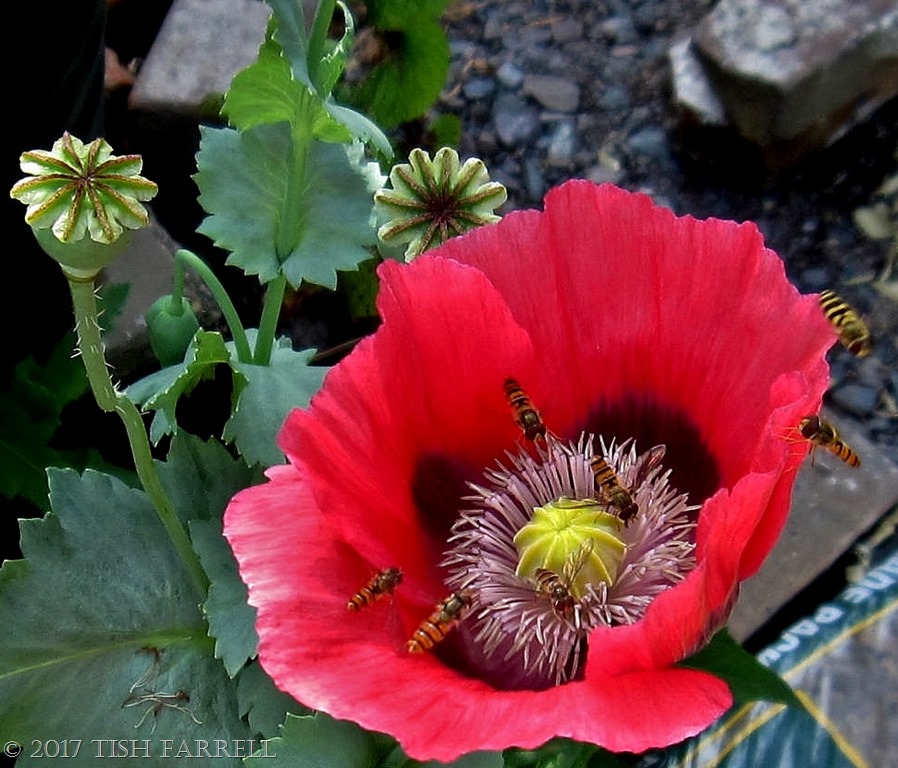
No, it’s not a joke question, but there’s clearly a lot of satisfaction going on in these photos. So many hoverflies, and different kinds too. Also photographer satisfaction – in that I managed to capture them so I could show you. Then there’s gardener satisfaction too – always something new to discover out in the garden, with or without camera. The only problem is I’m sure Ark is going to ask if I know what species they are. Nope, I don’t, but here’s the place to find out, which further adds to my satisfaction, because I can now provide this very fascinating link – at least as far as hoverfly lovers are concerned.
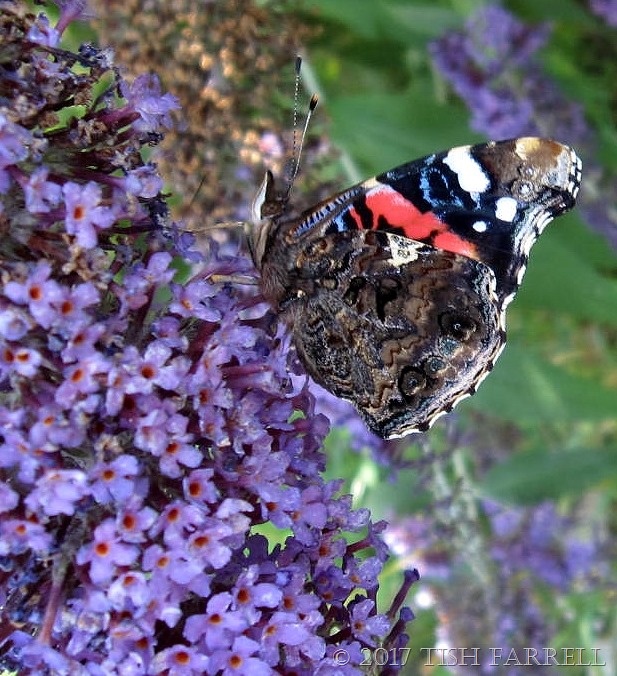
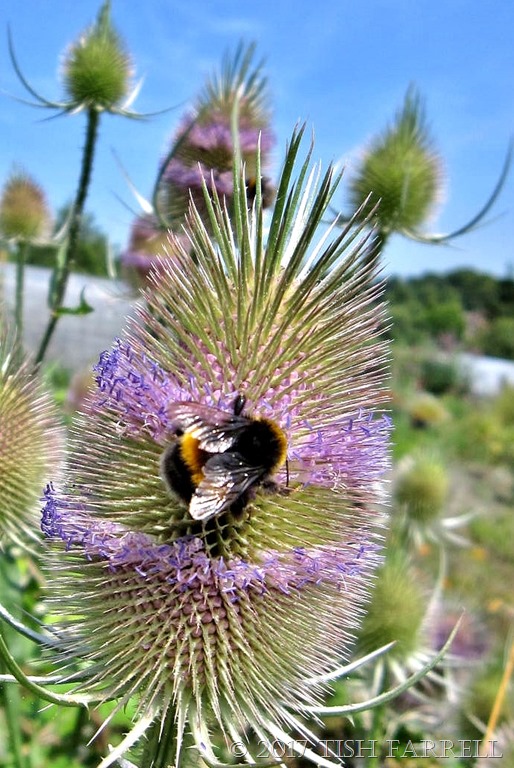
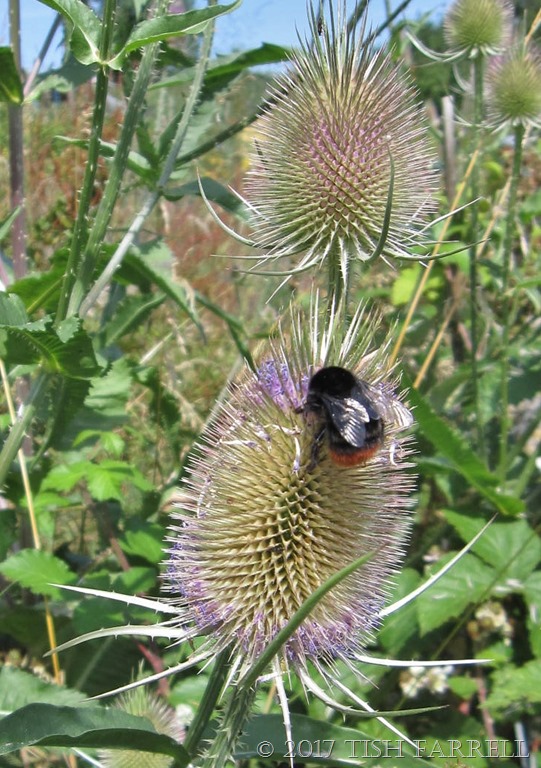
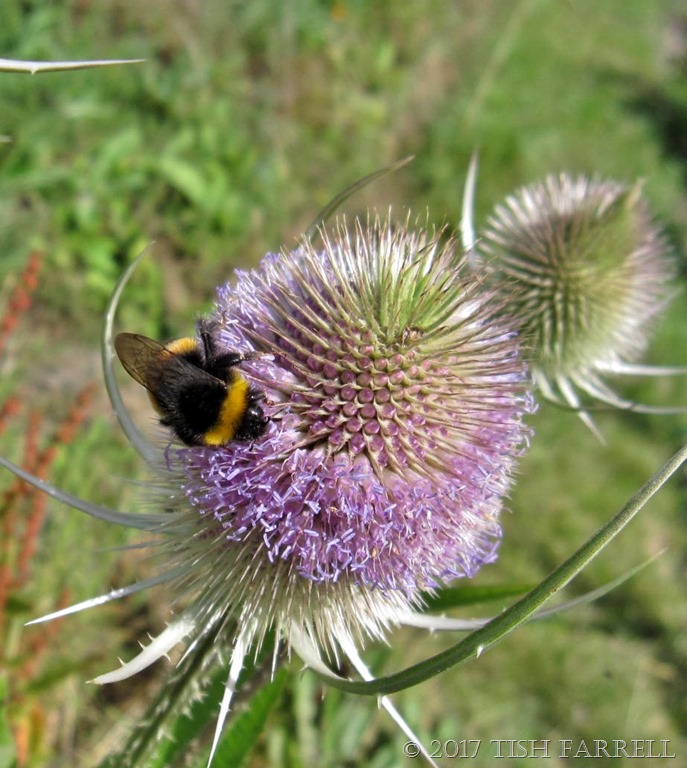
Over the past few days the butterflies have been feasting on the allotment buddleia bushes. From top down we have: Red Admiral, Comma, and Small Tortoiseshell. In the teasels we have assorted bumbles:
This morning when I arrived at the plot, there were insects everywhere. It was also very hot, so I was glad to take a break from sieving compost and wander round, capturing some of the busy foragers. Having had a nice little play with my Canon Ixus, I then went back to work. I harvested my onions, hung them in the sun to dry, watered the polytunnel jungle, fought the tomato vegetation into submission, discovered a neat little cauliflower out in the raised beds, picked French beans, courgettes, plucked a few beetroot to make borsch and a lettuce for our neighbours, sowed some golden beetroot, carrots and Florence fennel, then staggered home across the field whither I arrived a very dishevelled and grubby person. Back at the homestead, he who is building a shed in the back garden had erected the fourth wall to his edifice, or at least the framework for same. And having laboured all morning and well beyond lunchtime, we then retreated to the cool of the kitchen for a restoring cup of tea. And there you have it, Monday chez Farrell – overheated but happy.
Am linking this to Jo’s Monday Walk which (as ever) is totally fabulous this week. Please trot over there for a longer walk than mine to the allotment, and also for some very lovely candlelit scenes around the streets of Lagoa.
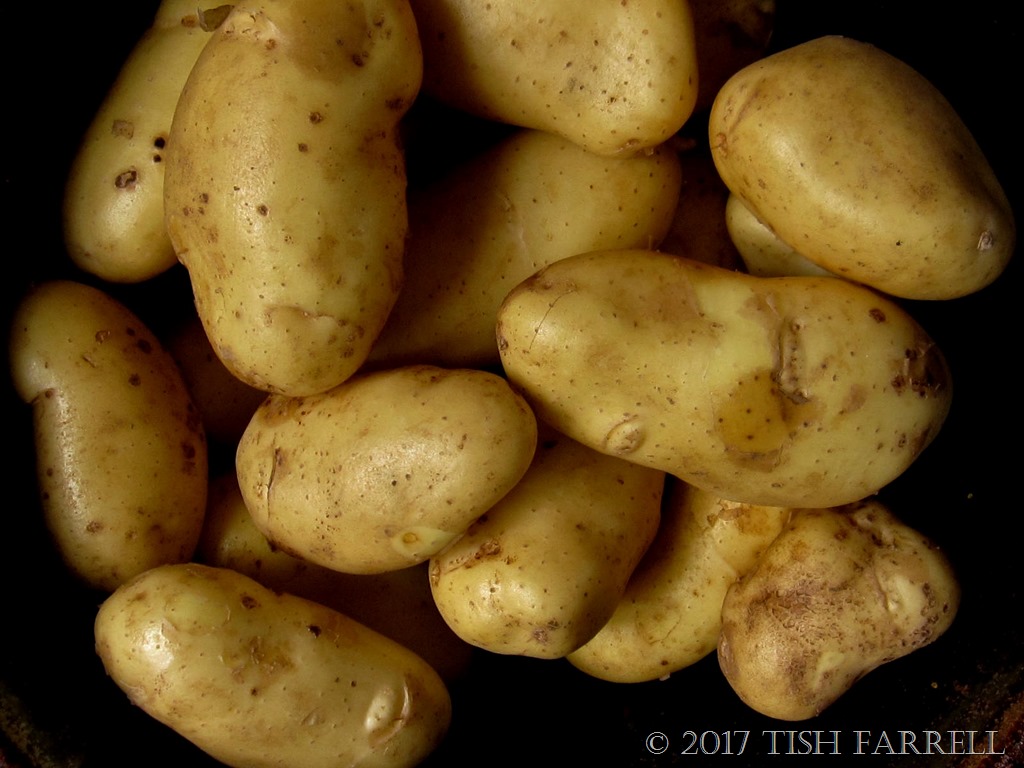
Next to my excitement in turning over a well-rotted compost heap, comes the joyous anticipation of lifting the first potatoes. Will they have grown well? Will the slugs and other pests have got in there first and had a feast? But no. Here they are – somewhat irregular in shape due to the long, long dry spell with only two or three rain showers to spur them on – lovely Belle de Fontenay.
This is an heirloom variety introduced in France in 1885. Pale yellow, firm, waxy – ideal for steaming or boiling, their flavour apparently improving with keeping , although I cannot verify that bit as we generally eat as I dig. And as well as arriving early, these pommes de terre have other obliging qualities. They don’t mind what kind of soil they are grown in, and they seem to love my allotment, which given its unyielding soil, is a huge plus.
This year I planted most of the potatoes on the ground I’d covered with several inches of partially rotted compost back in the autumn. I also sprinkled in some biochar and fish, blood and bone meal before planting in April. This was a half and half no-dig enterprise, in as much as the overwintering compost cover saved me from having to dig over the whole plot as I would have done in the past. I didn’t dig trenches either, just a row of holes, one for each potato.
The ultimate no-dig method would be to simply bury the spuds by hand in the compost layer, thereafter adding more compost to earth them up. But then that requires an awful lot of compost.
Anyway, compromise is everything when it comes to allotment gardening.
The spuds in the photo were delicious, steamed and shared last night with good friends from Buffalo, Jack and Kathy, who come each year like swallows to spend the summer in Wenlock. Also on the menu was Chicken Hymettus (recipe below), and also from the allotment, finely sliced greens (Tuscan kale, Swiss chard, beet leaves, Greyhound cabbage), Onward peas, lightly steamed, and served with a walnut and parsley pesto sauce.
Hymettus Chicken (serves 4)
chicken portions cut in half if large – I used thighs as they were
limes – juice and zest of 3 (or 2 lemons)
saffron strands – a good pinch
oil and butter for frying
honey – 2 tablespoons preferably light and runny though I used gooey dark African
thyme – 2 teaspoons fresh chopped/ 1 level teaspoon dried
mint – 2 tablespoons chopped
salt and pepper
almonds flaked – a handful
Prick skin of chicken pieces, place in shallow dish and pour over lime juice and zest. Marinate in the fridge for 1-2 days, turning meat occasionally.
When ready to cook, put saffron in a cup and add 4 tablespoons boiling water and leave for 20 mins.
Lift chicken from marinade with slotted spoon and fry in butter and oil till golden brown all over.
Strain saffron and mix liquid with honey and the remaining marinade. Pour over chicken, add thyme (I actually used Greek oregano), half the mint, and salt and pepper. Cover and simmer very gently for 45 minutes, or until the chicken is tender. Toast the almond flakes and to serve, sprinkle over the dish with the rest of the mint.
This recipe works well cooked a day in advance and then reheated.
copyright 2017 Tish Farrell
So much weather in June! The header photo rather sums up my feelings of rapid changeability – flowers in the garden one minute, then gone the next.
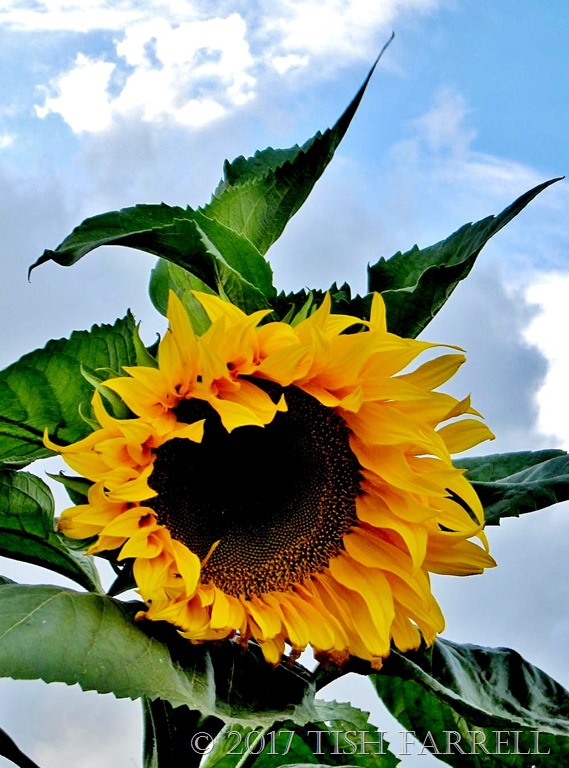
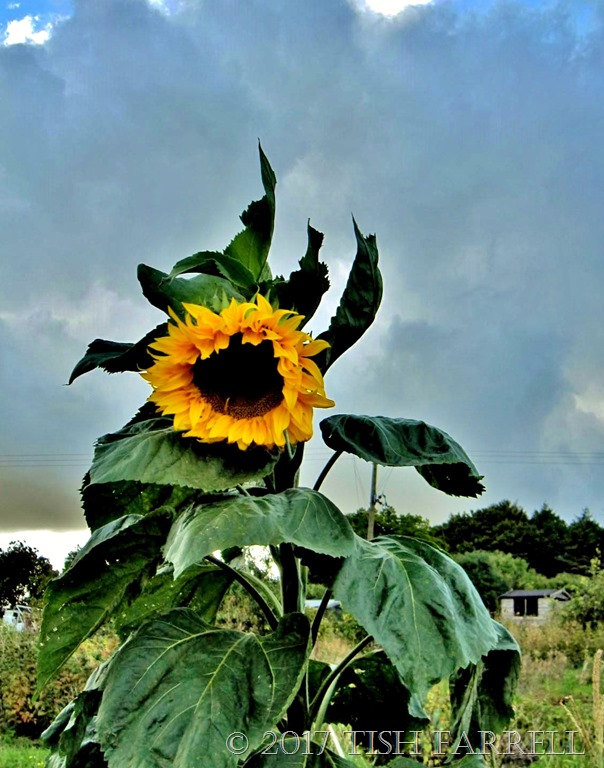
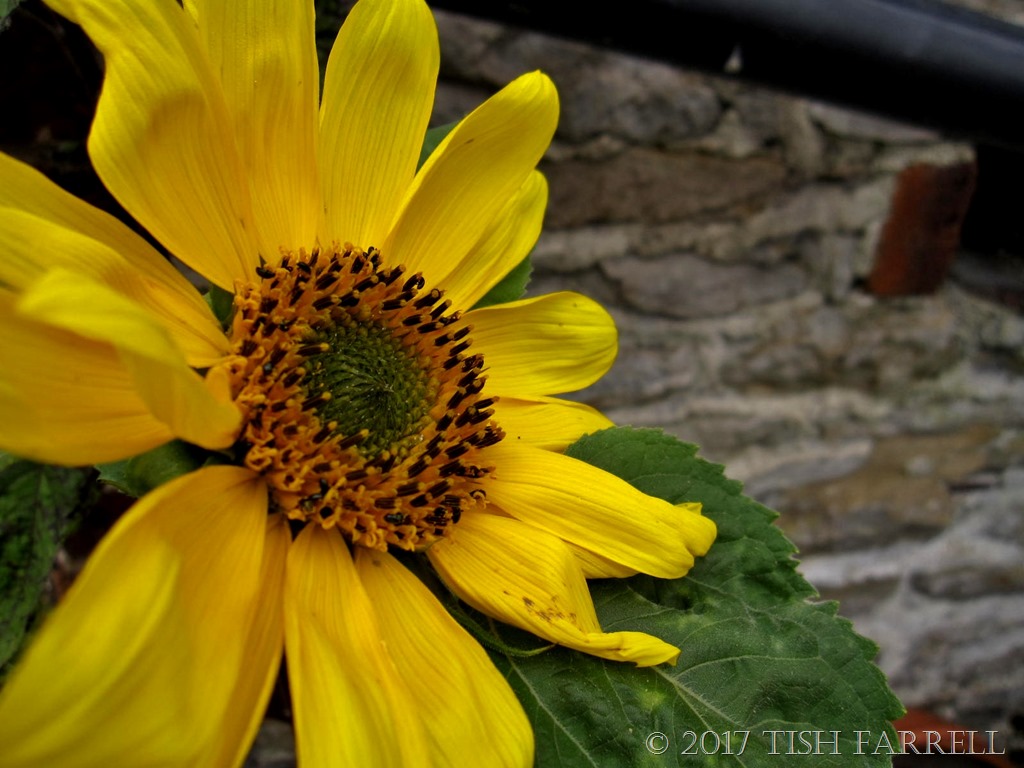
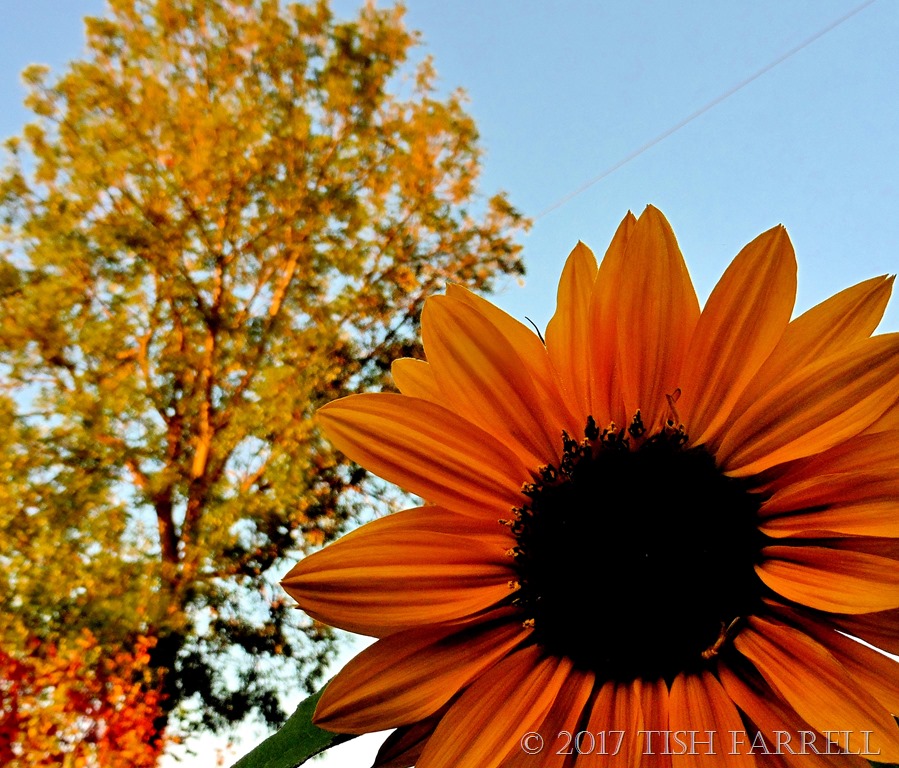
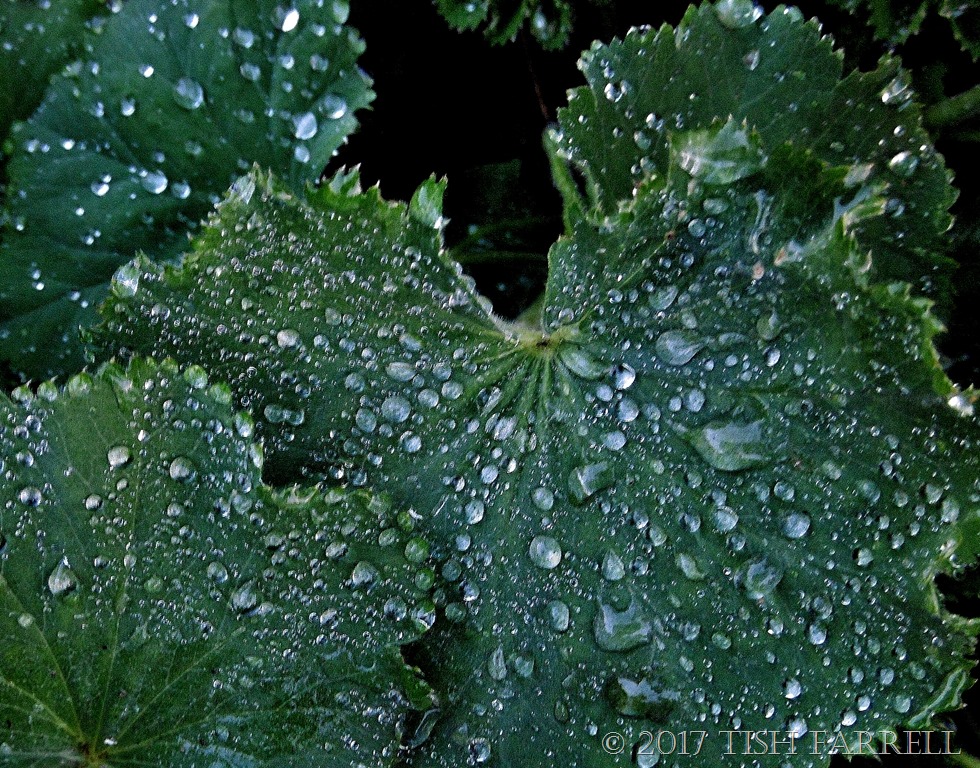
Here in the UK we’ve sweltered in temperatures above 34C. We’ve had prolonged drought. There have been cold winds. And now this week we’re having a ‘mini-monsoon’, the temperatures dropping so it feels and looks more like October. Yesterday along Wenlock Edge there was even fog, and this morning when I went outside to survey the plant life, it was to find autumnal spans of spiders’ webs glistening with raindrops, and the newly opened sunflower looking as if it wished to go back in its bud. It looked so forlorn staring at the place in the leaden sky where the sun should be.
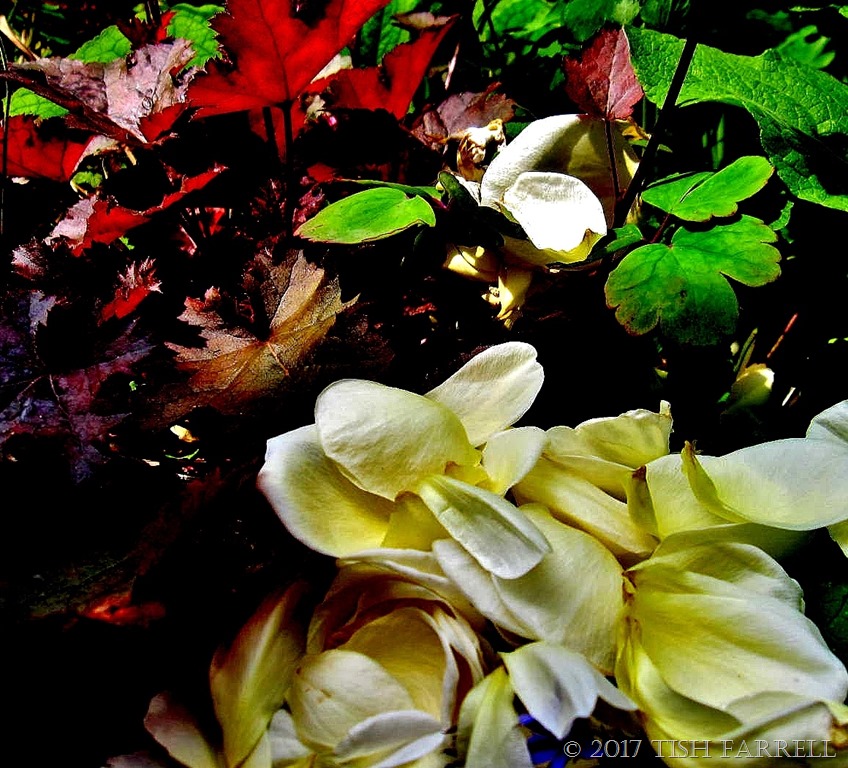
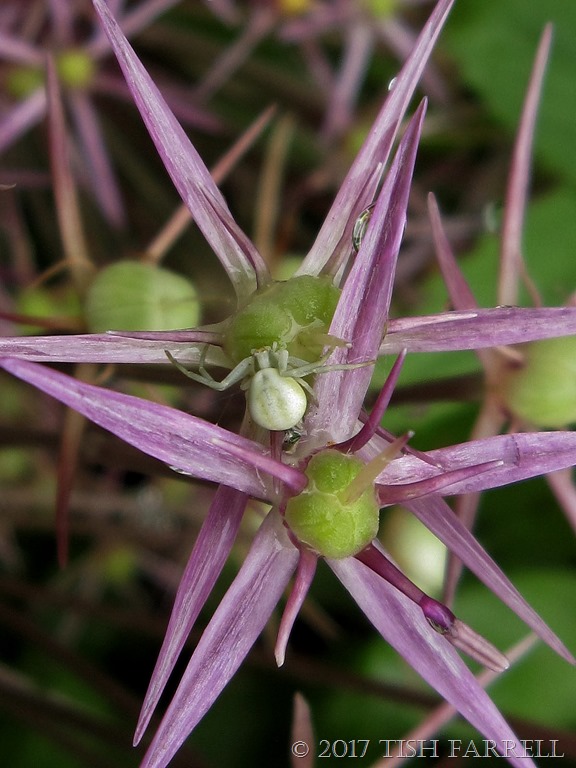
On top of that, the last of the Teasing Georgia’s roses have been trashed and mashed, the foxgloves that were so stunning are all gone, and the allium seed heads (that look like floral fireworks ) are alive with the tiniest crab spiders, all busy being rather sinister despite being scarcely more than two millimetres across, and just out of their eggs. This first photo makes said arthropod look monster sized. For a better sense of scale look out for the spider on the second allium shot. It’s near the bottom edge, left of the flower stalk.
*
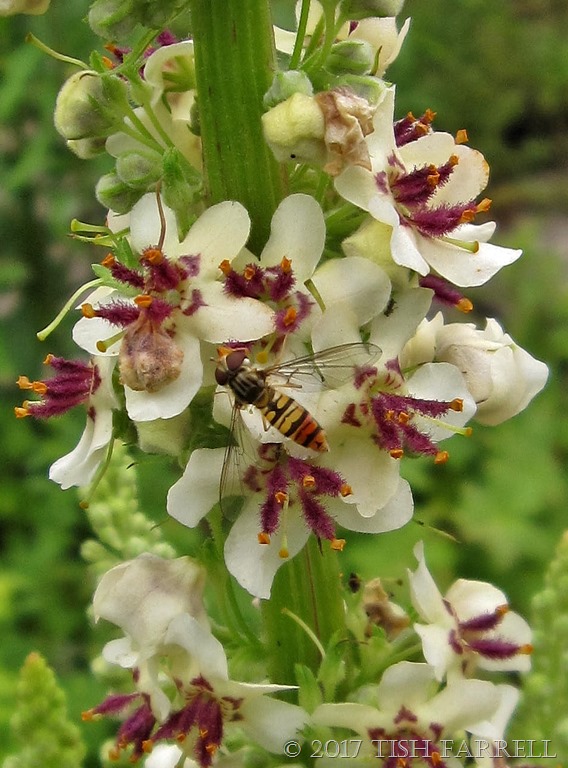
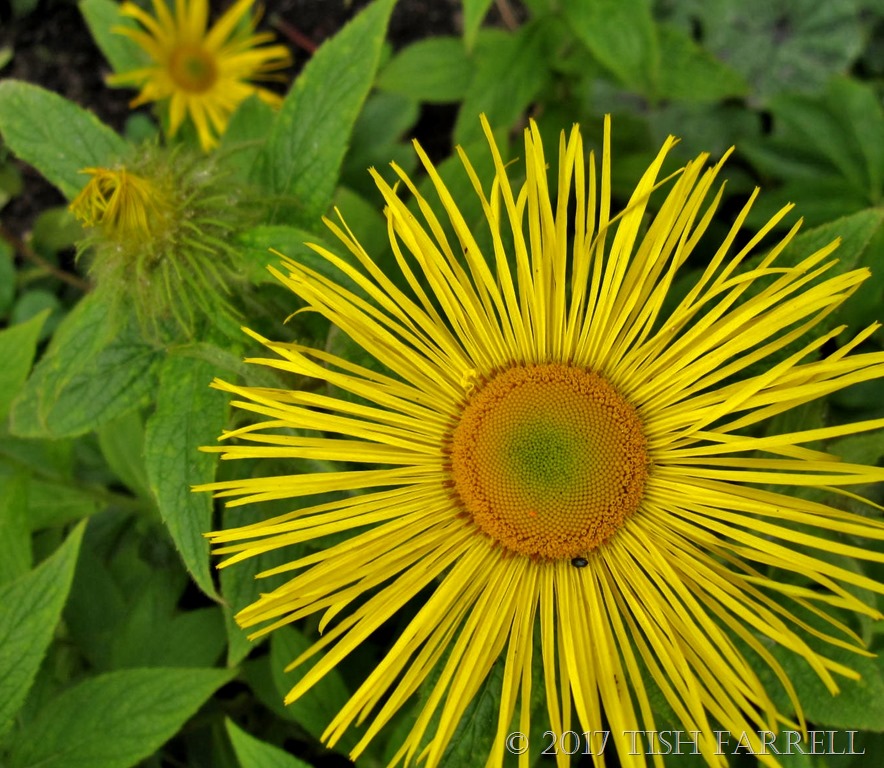
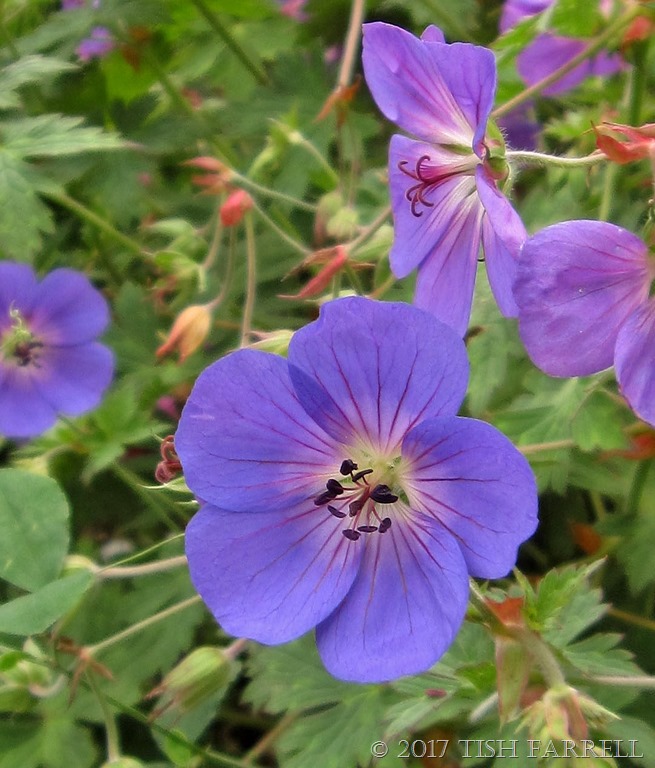
But all is not lost in the garden. The late spring flowers may have been washed away, but the spires of verbascum are just opening, the yellow doronicum is doing its best to stand in for the sun, and geranium Rozanne is now on parade until the first frosts. Of course, as things are going, that could be next week. Who knows?
Changing Seasons (versions 2 and 1)
The come-hither finery can be safely shed: the insect lure has done its work, leaving the fruit capsule primed and fattening; its contents – miniscule parcels of poppies-to-be – busy ripening, waiting on sun and wind to complete the enterprise. Nature in action. Where would we be without it?
Daily Post Photo Challenge: delta – i.e. an image showing transition, or the passage of time
The endless envisioning of how plants will grow and crop is what keeps us gardeners gardening. In the face of failure we regroup, and start again – perhaps a different variety is required, or more careful cultivation techniques; maybe weather conditions were against us, so prompting us to think how we might come up with new strategies to reduce the worst effects if the same thing happens next year.
So it becomes an on-going pursuit of forward thinking, learning, re-learning and visualizing. I find it also helps to try and see things from the plant’s point of view. If I were it, am I getting everything I need: food, appropriate levels of moisture, protection from extremes (which among others can include ravages by aphids, pigeons, drought and tempest). With climate change we may have to rethink entirely the kinds of fruit and vegetables we grow.
This year I am probably growing too many sweet corn plants. I thought the first lot of seedlings were set to fail after being assaulted by several days’ torrential rain while I was away. Just in case, I sowed more seed. But then the shredded little efforts rallied, and the second sowing burgeoned, so now I have about three dozen plants on the go. They are greedy crops too, and also need lots of watering, which is hard work up at the allotment where cans have to be filled and hauled from the water tank. The site is also very exposed, and its heavy soil prone to turning to concrete at the slightest hint of a drought.
To cope with this I have adopted two different approaches. The later batch of plants has been planted out in a bed of deep litter from a dismantled compost heap. Hopefully this will both shelter and feed the plants as they get going and stop them drying out or needing quite so much watering.
The earlier batch I set out in a plot where I have overwintered trefoil and fenugreek still growing. I sowed these plants at the end of last summer as a green manure, and had meant to dig them in this spring. Then I had a much better idea, one that relieved me of much digging. When it came to plant out the sweet corn, I simply popped the seedlings in amongst the green manure plants.
There are all sorts of advantages to this. The fenugreek and trefoil are nitrogen fixing so should nurture the sweet corn. They also act as weed suppressants as well as providing shade and shelter to the developing plants.
So far this seems to be working quite well. I’m also trimming back the trefoil and fenugreek as the corn grows, so acquiring a crop of green stuff for the compost heap and to use as mulch around the beans, which also like to keep their roots cool and moist.
So now my vision is of summer’s end and lots of juicy golden cobs – perhaps enough for us and all my allotment neighbours. We’ll see…