A Gate-Post Eye’s View In Derbyshire

IMG_7593cr

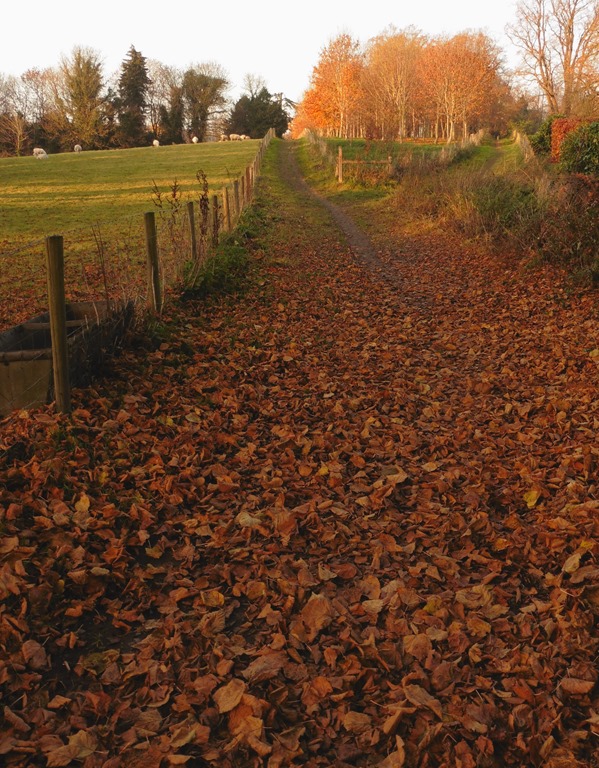
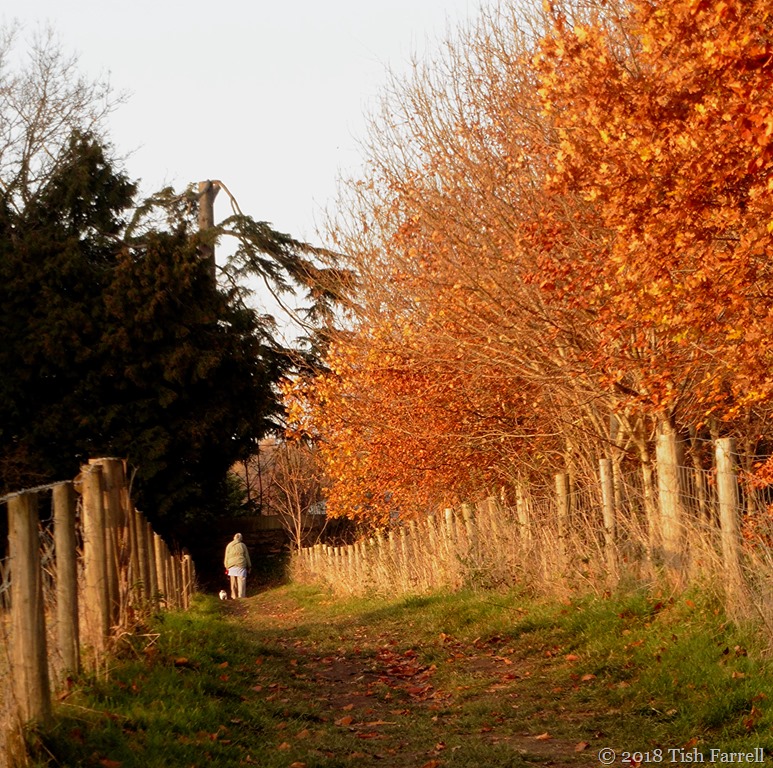
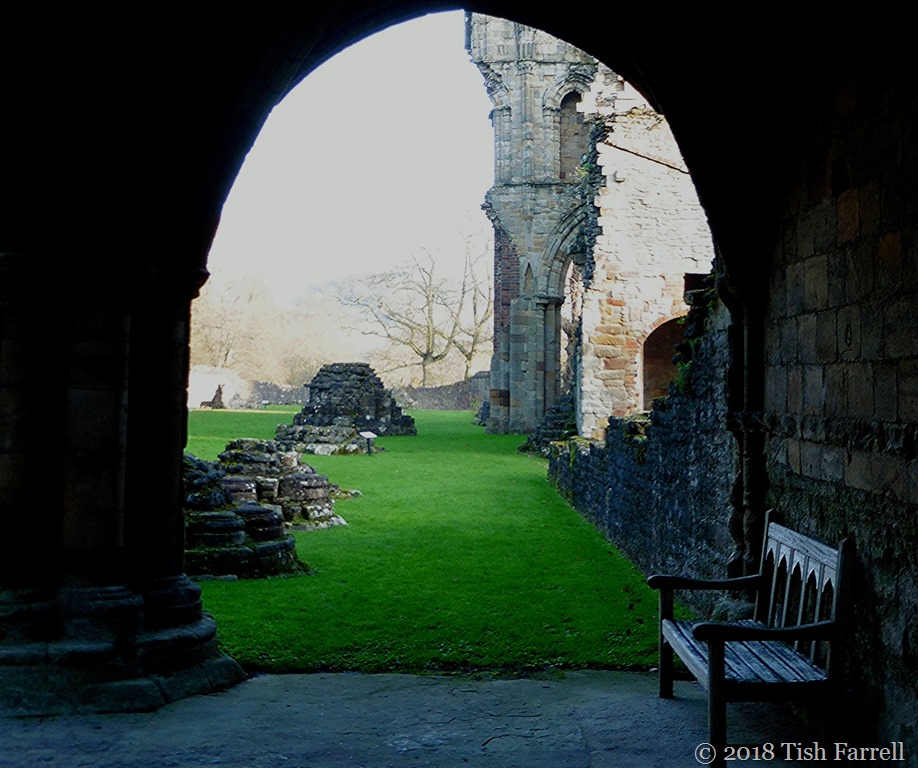
I took these photos a week ago as we were exploring the footpaths around Callow Barn. I have no idea why old Derbyshire stone gate posts often have holes at the top of them. I have considered that they might have once been used as slots for a wooden bar, but then why at the top; what function would it perform? The holes would have taken much effort to drill too. And so in the absence of knowing, I used this one to peep through. Looking up the path to Offerton Moor, and down the path towards the River Derwent, Hathersage and Stanage Edge and Higger Tor.

IMG_7594cr

And just so you can get a gist of the gate posts, here’s a one in the garden of Callow Barn where we were staying. There’s a sturdy iron hinge embedded on the left hand side of it, aligned with the hole, presumably to take a gate, so making my notion of a pole-bearing slot unlikely. Explanations welcome.

P1080302

Lens-Artists #14 Windows This week Ann-Christine gives us windows as the theme. Please pop over to see her wonderful examples.

So What Did Great Great Grandfather George Brayley Fox Keep In His Barns In 1892?

P1080297ed

Here we were then staying in the ancestral Callow barns and in the greatest comfort, each day looking out on the fields farmed by four generations of our Fox family, and wondering what it must have been like to have lived a life in these remote uplands above the Hope Valley, to have worked this land in all weathers.

The name Callow perhaps says it all – deemed to mean cold or bare hill in Old English. A hard life then, and especially for the women who mostly died in their forties and fifties after giving birth over and over. By contrast the Fox men tended to be long lived 2x, 4x and 5x-great-grandfathers all lasted into their eighties, and George Brayley’s grandfather, George, was 93 when he died. Tough old birds the lot of them, and some of them prone to a bit of competitive fist fighting, a pursuit that was illegal but much favoured and therefore well supported by the gentry.

In the last post I said that many of Derbyshire’s yeomen farmers were also much involved in lead mining and processing. This dangerous trade could make your fortune or kill you. The Barmote Court that regulated the industry’s practices was an ancient institution going back to 1288 when 115 square miles of Derbyshire’s High and Low Peak was established as the King’s Field, a free mining area. Surprisingly the construct pertains today, the last surviving Barmote Court still meeting at Wirksworth once a year.

According to Peak District Online the rules of the King’s Field were as follows:

Anybody was allowed to set up as a miner and work by very liberal rules permitting them to search for lead ore anywhere but in churchyards, gardens, orchards and highways. The miners had right of access, water and space to mine and dump their waste without regard. They did however have to pay a royalty on all ore mined, of one thirteenth to the Crown( known as a lot ) and one tenth or tithe to the Church.
The Barmote Court was established to deal with disputes and claims arising from lead mining and to collect the royalties due.

In other words, the lead miners were likely to be tough, free-booting individuals and, although answerable to the Barmote Court in the staking and working of their claims, their pursuit of lead gave them the chance to break free from feudal obligations as tenant farmers and manorial employees.  One 16th century yeoman, Arthur Mower, also bailiff to the Lord of the Manor of Barlow, became so rich from lead mining and exporting he soon outclassed his lordship in terms of wealth and property. Not so the Foxes, at least not the Callow clan. But then George Brayley Fox did have quarry tools in his barn. And many more things besides.

P1050618

The 1891 census shows that George is seventy years old and  a widower. He is living at Callow with his son George (22 years) and daughter Louisa (25 years). His 9 year old step-grandchild from Farnworth, Bolton in Manchester is also staying there at the time of the census, and this may be a clue as to the real reason why George B had announced his intention to sell up by the following year.

Giving up the tenancy of the farm where he was born must have been a wrench. It was certainly newsworthy, and reports of the Fox family finally leaving Callow were published in regional newspapers as far away as Leeds. The reports made much of the family’s connection with Callow’s environs since Norman Conquest days, a claim that was part of the Fox family narrative, much repeated down the generations, but so far lacking verifiable substance. The report below also says that the reason for selling up was due to the high rent, which was very much a common complaint of Derbyshire farmers at this time. But I still wonder if this was the chief reason, or the one meant for public consumption.

Derbyshire Courier 25 March 1893

Derbyshire Courier 25 March 1893

*

So back to facts.

On Saturday 29 October 1892 the Sheffield & Rotherham Independent newspaper listed items in the upcoming Callow Farm sale. It is a vivid snapshot of life on the farm, and the picture it gives is of a well-managed enterprise using up-to-date technology, not of a farm that is failing. Much of the equipment is stated to be new, and the livestock of good quality.

First there are the horses – a black mare in foal, and an ‘excellent worker’; a valuable six-year old brown horse with ‘splendid action’; a roan foal by Bedford. There are 23 cows including 5 strong bullocks, a cow in calf for 25th December, and 4 cows due to calf in April. Then there are ‘11 superior stock ewes, 6 fat sheep, one two-shear ram, 12 strong lambs’. Finally in the farmyard there are ‘two fine ducks and one fine drake’.

P1080344

And now for the barn contents.

These included some pretty high-tech (not to say cutting edge) gear of the day, including a nearly new Samuelson 2-horse combined mower-reaper complete with spare shafts. This was the sort of pioneering equipment that was shown off at national trade exhibitions of the day, produced by the Britannia Works, Banbury.

Samuelson mower reaper

There was also a plough, several sets of harrows, a stone roller, a horse turnip hoe, 2 horse carts, a winnowing machine, a joiner’s bench and tools.

Then there are clues as to what the farm was producing. There is a stone cheese press, rack and boards (nearly new), five stacks of white oats, three stacks of wheat, two brewing tubs, a quantity of eating turnips – all of which reflect the standard staple diet of Derbyshire farming folk. For the animals there was one stack of ‘prime new hay’ and two stacks of black oats – probably horse fare.

The whole lot up for auction at 12 noon on the 3rd November 1892.

*

And the reason for the sale – well my big guess is that it has much more to do with his eldest daughter, my Great Grandmother, Mary Ann Williamson Fox. According to my aunt she was engaged to the Squire of Abney (just over the hill from Callow), but at the age of 22  she ran off and married a young widower, a shuttle and flyer manufacturer from Farnworth, Bolton. And not very long after that, it was all downhill for the last generation of Callow Foxes. But that story will have to wait for another time.

Mary Ann Fox

copyright 2018 Tish Farrell

Blessed Earth ~ Our One And Only

P1080441

And when we’ve trashed this one, there won’t be another (see postscript).

*

In case you’re wondering where I’ve been for the past week – we’ve been staying in a barn in the Derbyshire High Peak where we woke to views of Higger Tor and Millstone Edge (haloed here) and the wide vistas of Hope Valley. The barn in question was one my maternal ancestors would have known and used, though not in its current luxurious holiday-let manifestation of five bedrooms, three bathrooms, plus central heating, range cooker, vast TV screen and free Wifi.

For around two centuries the Fox family lived at Callow Farm, tenants of the Eyres, and later of the Dukes of Devonshire who bought the Highlow estate from the Eyres/Archers in the early nineteenth century. The Foxes were also in this particular vicinity (around Highlow and Offerton in Hathersage Outseats) for at least the preceding 500 years, although trying to unravel the multiple generations of Georges and Williams is proving pretty impossible. All the more tantalizing when we know a 19th century list of Derbyshire Charters has a certain William Fox holding a few acres at Offerton in the late 1200s.

The more recent tenant Foxes owned some land too, and so in their way were very minor landlords. This in itself is a puzzle, since from earliest times this whole territory was controlled by abbots and monarchs and thence parcelled out to sundry lords and lordlings who taxed, tithed and generally reaped the rewards of ordinary mortals’ labours.

In High Peak the bulk of those returns included a large annual cut from the proceeds of the lead mined and processed by  Derbyshire yeomen farmers like the Foxes – a raw and life-threatening trade carried out when they were not engaged in growing oats, making cheese and butter from their small dairy herds, cutting mill- and grinding stones from the precipitous millstone grit edges or minding their sheep. I have evidence of some of these multiple activities from local newspaper details of October 1892 when my great great grandfather George Brayley Fox sold off the Callow Farm stock before leaving the farm. This also means I know precisely what was in those barns at that particular time.

I have also now witnessed what the Dukes of Devonshire did at Chatsworth with the income from their tenant farmer-lead miners. The extravagant display of the 6th Duke in particular is jaw-dropping. But for all this and more – see upcoming posts.

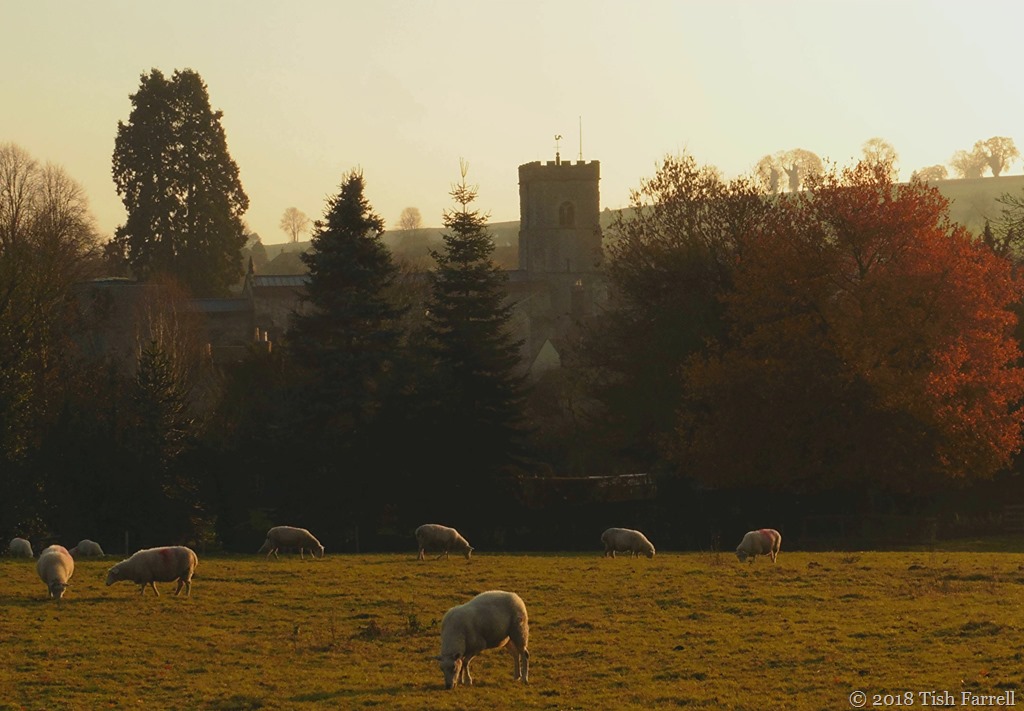
For now here’s a daylight view from Callow farm fields, looking across the Derwent Valley to Hathersage: Higger Tor on the far right, Stanage Edge along the skyline to the left.

P1080480

IMG_7531

And here is Callow Barn – now cut off from the next door farmhouse, the properties being privately and separately owned and perhaps originally sold off from the Chatsworth Estate in either the 1930s or 1960s, both occasions when the estate’s massive death duties required the sale of extensive property and farmland.

And finally Callow Farmhouse as seen from the public footpath to Leadmill:

P1080338

*

P.S. Much of Derbyshire – the uplands and dales – lies within the National Park. I learn this morning from the Campaign to Protect Rural England (CPRE is an organisation well worth supporting) that our government wants to bury nuclear waste in our National Parks, wilderness areas that are now used by many hundred thousand citizens for walking and cycling, and whose consistent presence there through much of the year significantly supports local rural economies. The Derbyshire national park in particular positively teems with humanity at weekends, happy families and dogs out for a jaunt and some very fresh air, away from the nearby cities of Manchester, Sheffield and Derby. Words fail.

Six Word Saturday

#AncestralLandscapes

copyright 2018 Tish Farrell

Flamingos At Dawn On Lake Elmenteita And Remembering Paul Kabochi

IMG_0003

It looks like a mirage, I know – not helped by aging photo/collapsing scanner syndrome. But even when I was taking it, it was hard to believe I was there. This despite some very particular sensations that still lurk in my memory – the sting of soda in nose and eyes (Elmenteita is one of the Great Rift’s soda lakes)  plus the pungent whiff of flamingo guano, and under foot, the slimy droppings-rich mud along the shore. There was also the noise – the continuous honking of the birds as they jostled among  rich algal pickings.

On one of my dawn visits to the lake shore, I bumped into Paul Kabochi. Or rather he bumped into me. He had driven a Japanese bird enthusiast down to the lake to take photos.

Scan-130602-0002

Paul Kabochi wildlife expert and ethnobotanist 1942-2003

*

As I said in an earlier post:  “Paul Githinji Kabochi was a man I am lucky to have met, and I mourn his tragic loss in what was, for him, the strangest of accidents. He was a true path-finder, and not only for the likes of me, a traveller, wanting to experience the African bush with someone who knew it intimately, but also for august naturalists such as David Attenborough.  Paul had been one of the expert guides during the making of The Life of Mammals, and his special knowledge was often called upon by the BBC’s outpost in Nairobi.”

For more of his story…


In the Pink #27

Water Lily Moat– Back At Brockhampton’s 600 Year Old FarmHouse

P1080230sq

Moats were once quite a feature of English manor houses in the late Middle Ages, though more to demonstrate affluence than as a defence against marauders. In case you missed the story and photos of our recent visit to this ancient lovely farmhouse, follow the links below.

P1080231sq

P1080237

An English Moated Farmhouse And Why It’s Still Here

The Thing I Didn’t Tell You About Lower Brockhampton Farmhouse

In the Pink #26

Bee-fuddled Bumble ~ A Case Of Too Much Pink?

IMG_4723

To my eye this looks like one inebriated bee, O.D-ed on pollen and caught here, flat-out among the rhododendrons at Rosemoor.

It was a year last May and we were on our way back to Shropshire from Cornwall after a very special event, the christening of Graham’s god daughter, and we decided the route home must include a deviation through Great Torrington in Devon, and thus a visit to the Royal Horticultural Society’s garden at Rosemoor. It is a magical place, both of itself and its setting in the River Torridge valley, and you probably need to spend a whole day there to do it justice; or better still, stay several days in Rosemoor House and so see the gardens out of hours. Here are a few of the RHS website highlights – not one garden but several gardens.

And here are some of my highlights, pink and otherwise, though we weren’t too lucky with the light. Click on any image to view as a slide show:

In the Pink #25

Monday Morning In The Garden–Miniscule Is Marvellous

IMG_1765

Here on Sheinton Street the water butts are brimming, and the garden has received a truly good soaking. On the one hand this is very good, on the other the water butts always seem to be full when there isn’t actually anything in need of water. Also the weekend downpours have left flower-life a bit washed out and droopy, especially these soggy phlox petals. But I was fascinated to spy amongst them a flock of tiny, tiny crab spiders, scarcely a couple of millimetres across.

Some seemed to be curled up, asleep in the sun. This one, however, did not care for my intrusion. But if you want to see a really whopping pic of a crab spider, though I’m guessing some of you may not, pop over to Ark’s.

In the Pink #24 The final week for pinkness over at Becky’s. Not too late to join in.

A Path For All Seasons ~ Wenlock’s Linden Walk

P1030637

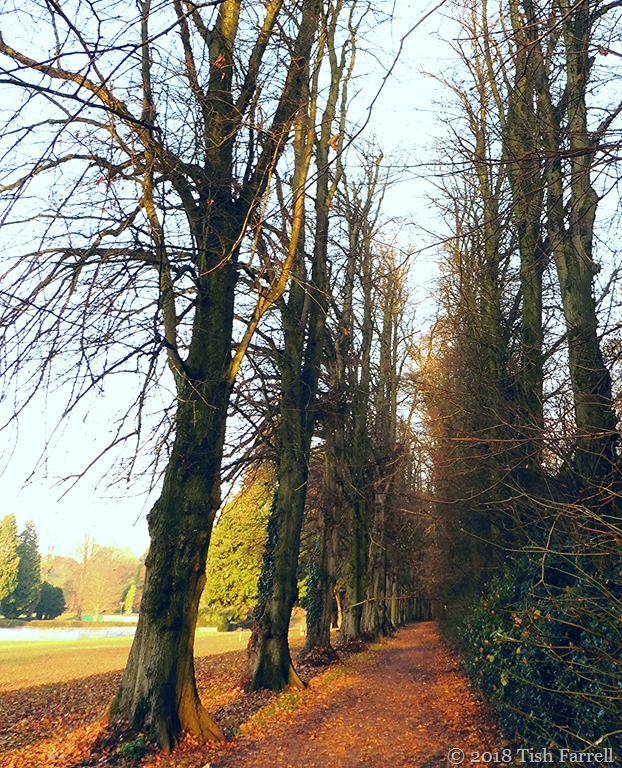
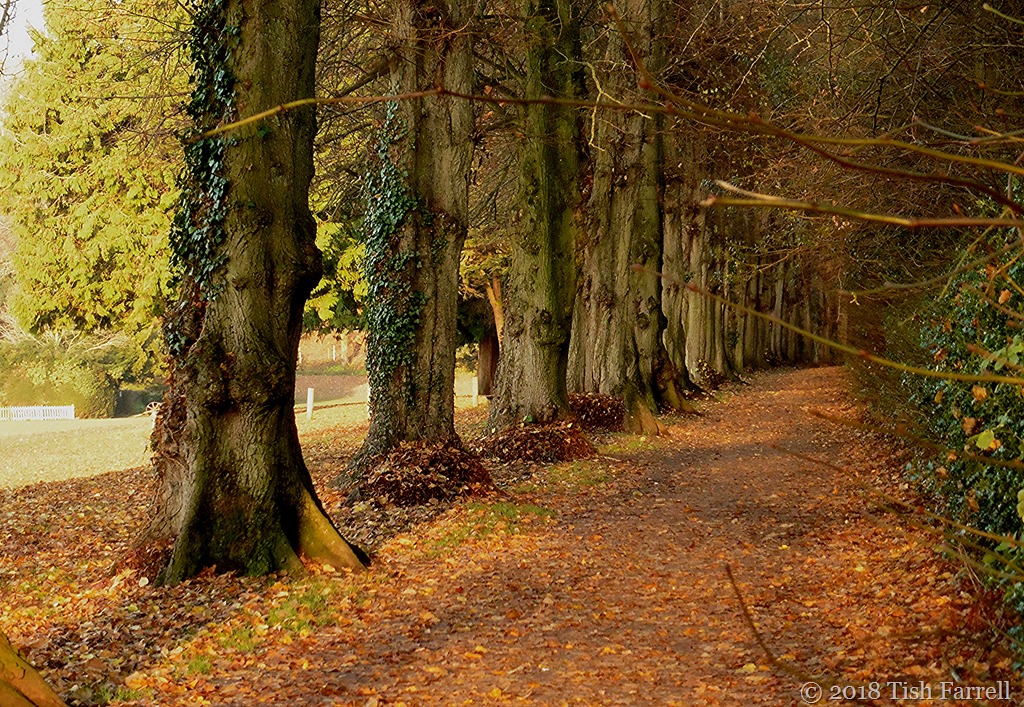
Those of you who come here often will know that the Linden Walk is Much Wenlock’s best loved path; mine too as it is only a couple of minutes from the house. It is always beautiful – whether in storm, snow, rain, sunshine, with or without leaves. It is also the enduring gift of the town’s physician, Dr. William Penny Brookes, who with his friends planted it in the 1860s. Thank you. Dr. Brookes. I should remember to say this more often.

100_6680

a

Lens-Artists: path

Persian Gulf Sunset And Wondering: Isn’t Travel Always A Moral Issue?

It was still winter in Dubai, the hotel palm trees along the beach well wrapped up against the wind. We were on a two-centre trip – a week in the Maldives with stopovers in Dubai either side. It was 1998.  We needed a break from Kenya. There were times when crime-and-politics wore us down. The long-term one-party presidential incumbent and his backers were more than a little reluctant to admit the construct of multi-party politics into the regime. And it seemed to me that whenever the power-brokers felt nervous, the crime rate soared. Just to make us all feel uneasy.

It  began at the top of course – the crime. And doubtless still does. It is the same here in the UK, I lately discover, and is also officially-unofficially sanctioned. It is just not visible to most of us, and is massively more clever, being wrapped up in trusts and shell companies parked in the ‘hot-money archipelago’ of the Cayman Islands et al. I am indebted to British economics professor Baron Nicholas Stern for this phrase. (He’s also written a good deal about climate change). Such offshore financial services (so anodyne in their terminology) apparently provide safe places for the world’s robber elite to hide their loot, so maintaining the status quo of tyranny and poverty meted out to ordinary hard-pressed folk in the places whence the loot was stolen.

And so we were in Dubai and Maldives for some light relief, destinations where in 1998 crime was not permitted to exist. The only problem was, even then, both locations seemed more than slightly bonkers (and probably more so now in sustainability terms). On the one had – a complex of luxury island paradises, where both the tourists and every consumer item they might want was flown in, and the resultant minute-by-minute packaging residue disposed of in a massive concrete silo embedded in the sea off the capital Male. Not only that, but contact with the locals was very tightly managed (not that I blame Maldivians for that. Someone has to make a stand against nasty European sex predators – women as well as men). But it also meant that you felt as if you’d just holidayed in a stage set. Very lovely, certainly – but synthetic.

And as for Dubai (and it’s probably ten times wider and taller now) it was wall-to-wall shopping malls, eight-lane highways, building sites, apartment blocks and hotels of the top-end plush variety. Since our visit this last notion has gone stratospheric. I mean, what does it say about us humans? How much consuming do we need to do and in how many weirdly fabricated environs?

Actually in ‘98 there was not much shopping going on. The malls were magnificent but eerie – scarcely a soul in the marbled halls of designer boutiques. Though we did see mature dishdasha-ed gents in the cosmetics stores treating their black-gowned wives to Chanel perfume and Estee Lauder lipstick. It appeared to be a popular family pastime. We also saw similarly garbed gents in the bar of the Radisson, drinking lager. Interesting, I thought. It was the  particular brand that was said to reach parts that others didn’t. I wondered if it also granted dispensation to Muslim transgressors. Or if perhaps the territory of a European owned hotel provided the equivalent of diplomatic immunity for the drinking of alcohol.

The best part of Dubai is the Creek. Tied up along its banks were still the great dhows of the Gulf – Indian Ocean trade routes – timeless somehow, despite being loaded up with refrigerators, expensive motor cars, crates of coca cola. Once such dhows plied the coast of East Africa as far south as Mozambique and the Comoros, borne on the outward voyage by the monsoon north-easterlies, returned six months later on the south-westerlies – this before the advent of petrol engines of course.

Over two thousand years, the dhow merchants of Persia and Arabia traded with the coastal Bantu peoples of Africa. In return for consignments of dates, rugs, silks, jewels, treasure chests, they bought, gold, mangrove timber, animal skins, ivory and slaves. And their centuries’ long congress with Africans gave rise to a string of coastal city states of mixed race Arab-Persian-African people, the Swahili, who both owned and traded in humans, and did so until at least the 1920s when the British occupiers of British East Africa (now Kenya) finally outlawed the practice – the unintended consequence of which was hundreds of homeless and unemployed ex-clove plantation workers whose former owners could no longer afford to employ them as  plantations ran to bush and their fortunes rapidly dwindled.

Ah, the tangled webs we humans weave. (And this is not an apology for slave owning. Only an example of what happens when you unpick/ban other people’s economic practices, customs and beliefs in a piecemeal fashion.)

Which brings me full circle really. Kenya. After two weeks away in odd places, we were fairly glad to go back there, never mind the moral dilemmas. And that I suppose is the point of this little travel ramble. Moral dilemmas. The more we ignore them, the more things stay the same.

copyright 2018 Tish Farrell
 

P.S. There are things we can do about the present state of global inequality. The Tax Justice Network outlines some of them.

30


In the Pink #20