You have to admire the determined aim of this little bee – heading for the heart of the cornflower (Centaurea).


You have to admire the determined aim of this little bee – heading for the heart of the cornflower (Centaurea).
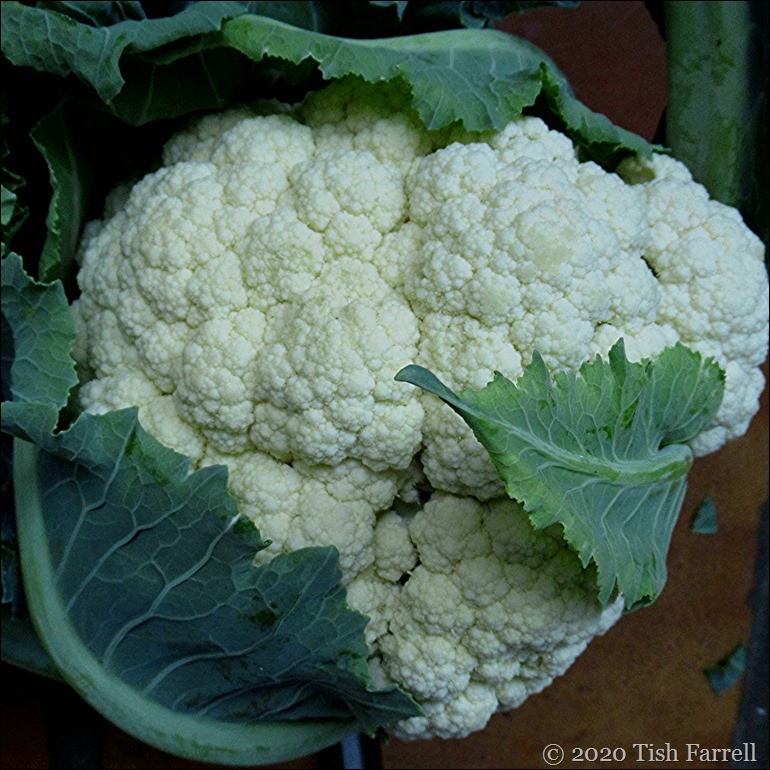
Many may not know this, but cauliflowers are the sneakiest vegetables – not to say the most covert in their growing habits. You may watch over them for months – from plantlet module to big leafy crown; you may peer frequently into their tight green hearts, even peel back a few leaves, and there will not be the smallest signs of a cauli. Then one day – last Monday to be exact -THIS HAPPENS!
I was just leaving the allotment polytunnel after my usual late-day visit, and thought I caught a glimpse of curd in the corner bed. When I pulled back the monster leaves there is was, the size of a football and utterly perfect. How could I not have noticed it sooner? Did it grow overnight like Jack’s beanstalk?
I don’t usually grow cauliflowers in my polytunnel, but back in the autumn when I bought the modules, I had three weedy ones left over from my outside planting, and thought I’d try them under cover. When I go up to the allotment today there may well be two more like this.
The problem with cauliflowers’ sneaky habits when grown outdoors is that by the time you discover curds big enough to harvest, more often than not they have already been found by slugs and earwigs (also sneaky) and been well nibbled under the cover of leafiness.
Anyway, I guess a lot of you might not find cauliflowers especially appealing. But there are many approaches besides the usual cauliflower cheese. Grated raw and briefly sauteed in oil it makes a good rice substitute. Steamed and pureed cauli is also delicious (spot of cream and chopped herbs added). And the whole head can be sliced into 1” thick steaks, given a good olive oiling/seasoning, and roasted in a hot oven for 35 mins, turning after 20mins. I also tried this the other day with celeriac and it was brilliant served with a mushroom strogonoff sauce. I’m thinking one of the polytunnel caulis might be in for similar treatment this evening.
The next photo is just to give you an ideal of the scale of leaf disguise adopted by this paricular cauli. I had to peel off masses take this portrait, and rather wished I had some livestock to feed them too i.e. rather than the compost bin microbes.


No doubt about it, the Sunshine Deity is showering us with her beneficent rays. You can almost hear the plants crying YIPEEEEE! as they break free from the winter’s rain battered soil, which here in Silurian Sea Wenlock sets like cement. Things are definitely thriving best in the parts of the garden that received an autumnal mulch of tree chippings (gratefully gathered from a big heap in a neighbour’s yard). The front garden by the road is a mass of foliage with bursts of blue and (nearly) black centaurea, and the little crab apple tree that went in a couple of years ago is weeping prettily. I can also see that an allium-oriental poppy break-out is imminent. Any day now!
But back to the top garden: the Coxes apple tree is just blooming and underneath it the miniature tulips are saying ‘see me, see me’. It’s all too exciting.

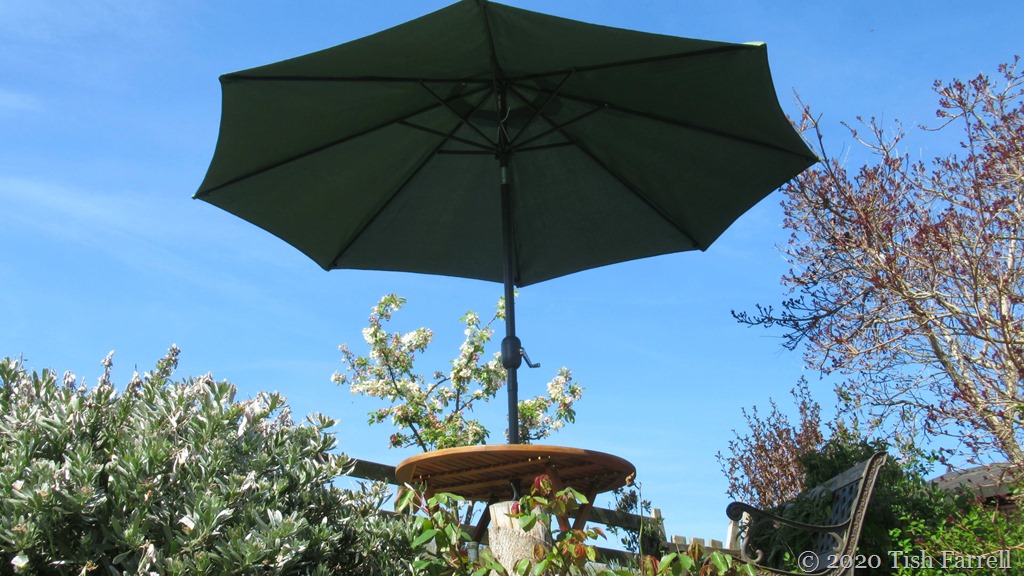
HAPPY BIRTHDAY, BECKY! A TOPPING DAY TO YOU.
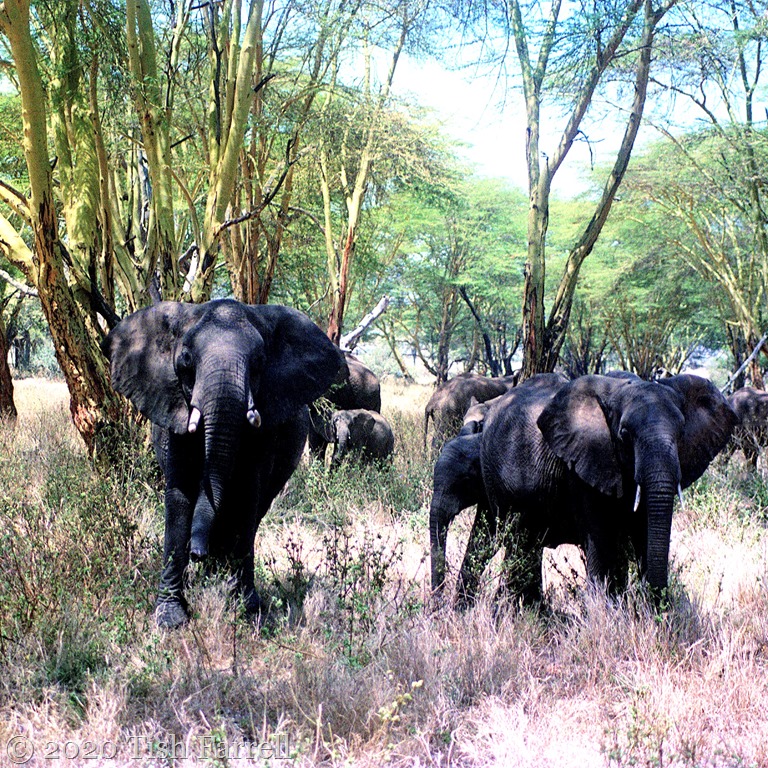
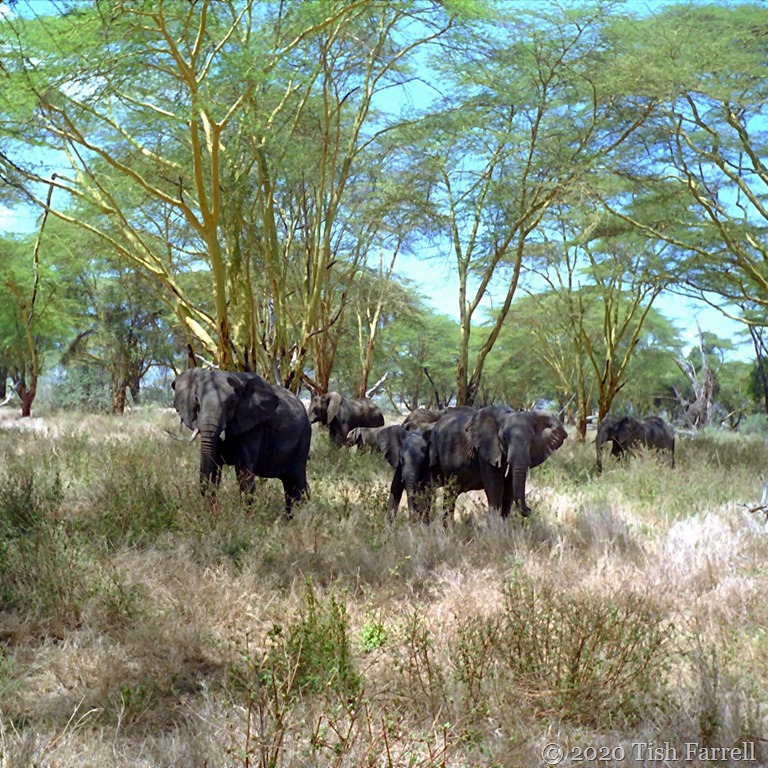
The elephant on the left is the matriarch of this little family group of six adult females and three infants. She is giving us the once over before concluding we are no threat to her charges. In elephant world, the matriarch rules; she is the keeper of the family knowledge; the guide and decision maker. She will also kill any creature that is deemed a threat.
Following on from yesterday’s post on Lewa Downs Conservancy, here are some notes from that trip. We’re out on a morning drive with Kevin our expert guide:
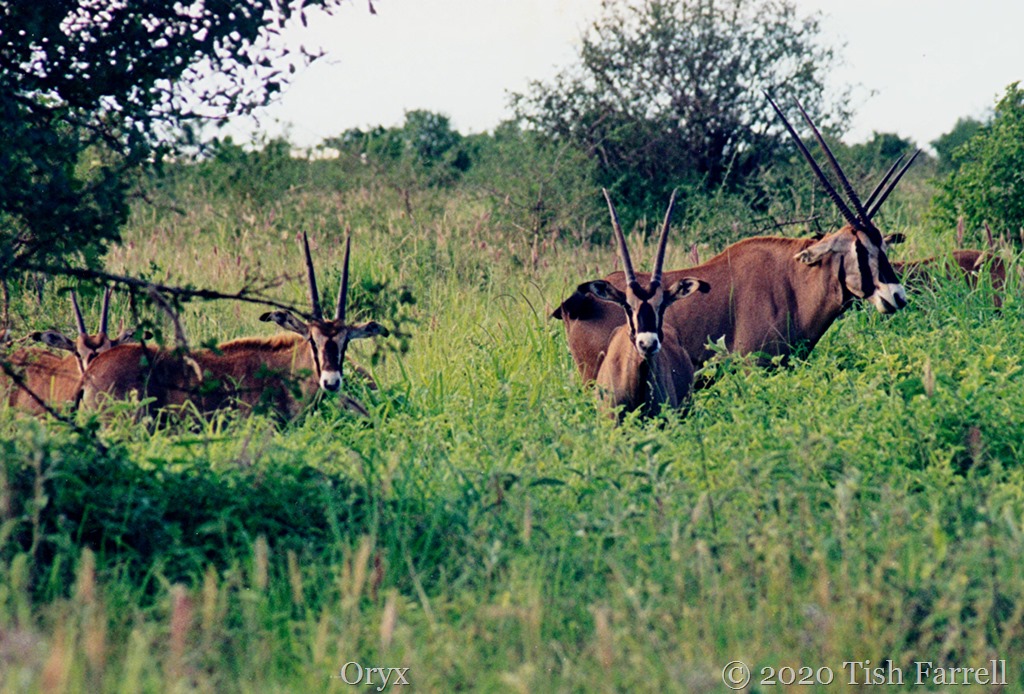
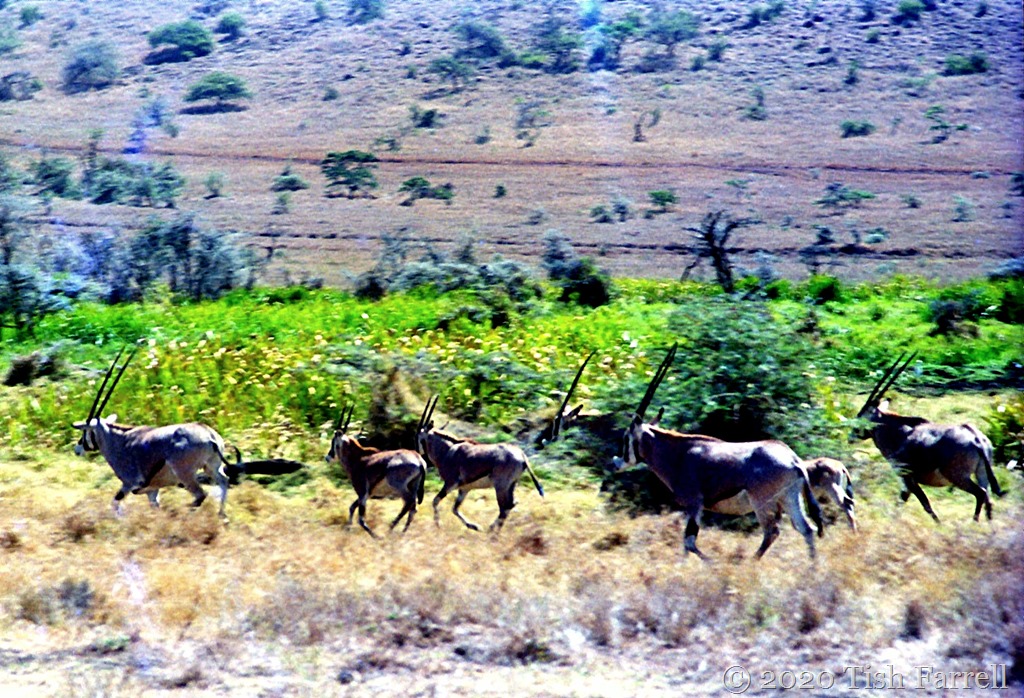
By now it’s late morning and we’re down by the swamp. The waterbuck stare out at us, and as we follow the track that skirts the reed bed we come upon a herd of oryx. They’re very shy though and won’t stay.
Kevin drives on towards a clump of fever trees, now following elephant prints along the track, and as we reach the acacias there is a lone old bull, large as life and very close. Too close? When it comes to elephants the warning signs to look out for are ears spread and trunk up and to the side. But we’re not bothering him. He views us serenely through long lashes, shakes his battle torn ears, ambles alongside the truck for a while then wanders off.

Graham meanwhile spots a group of elephant across the swamp and Kevin sets off for a better view. For a while we park on the track, torn between watching brilliant carmine bee eaters in one direction and the little herd in the other. The elephants are about fifty yards away in the fever trees, and I think that’s close enough, but no, Kevin is eyeing up the lie of the land, picking out a line of solid ground. Soon we are parked with swamp on our right and elephants on our left.
At first the matriarch adopts an intimidating stance, but then changes her mind. Our presence in no way interrupts tree browsing and bottom scratching, and no attempt is made to shield the youngest calf from our view. We watch for ten minutes or so, listening to the taptapping of a nearby woodpecker, the call of hadada ibis, spot a vervet monkey watching us watching the elephants. Then Kevin decides it’s time to leave them in peace. As we pull away over the rough ground we’re left with the musky, goaty, muddy smell of elephant in our nostrils.

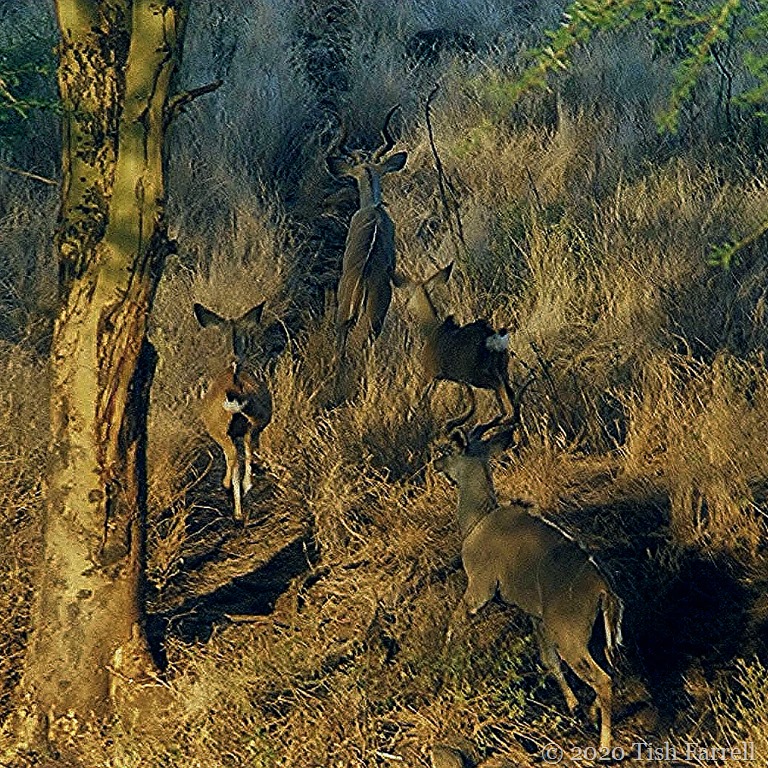
This sunset view of retreating greater kudu was taken at Lewa Downs, a private nature conservancy on the northern foothills of Mount Kenya near Isiolo. The reserve is 62,000 acres, and was once a colonial cattle ranch. The descendants of the original settler family still own the land, but now their focus is on wildlife conservation, upscale tourism, improving the lot of local communities and helping to protect surviving members of Kenya’s black rhino population.
When we visited years ago we stayed in the small Lerai tented camp run by the same outfit whose camps we stayed in at Mara River and Elmenteita, i.e. fairly low key by comparison with Kenya’s super luxury safari ‘camps’, and aimed more at visitors with dedicated interests in wildlife, particularly ornithologists and professional wildlife photographers.
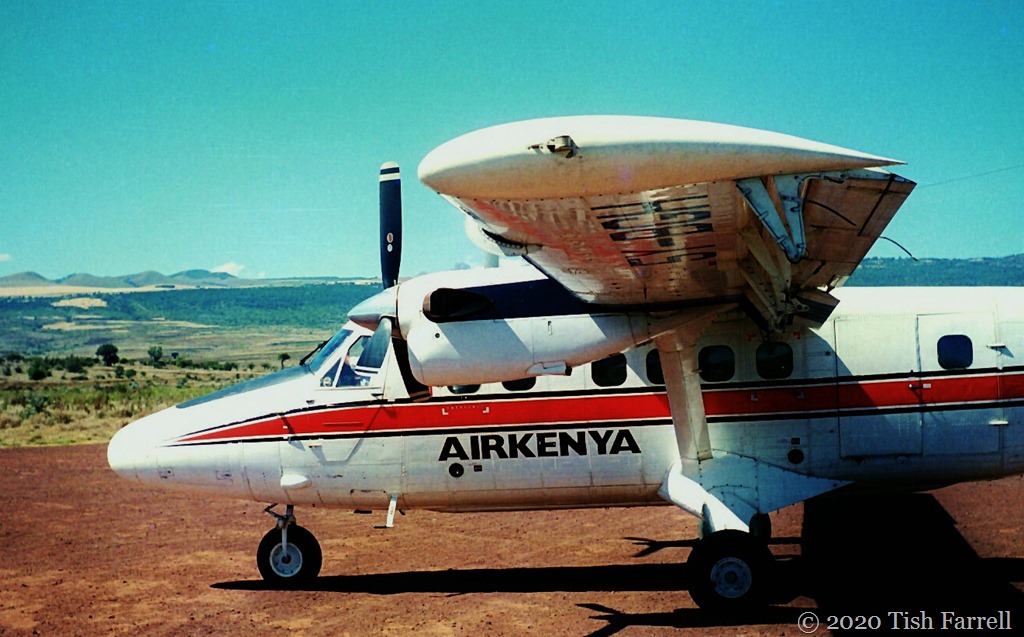
We flew up there in a Kenya Airways Twin Otter 20-seater plane. (Kenya’s internal aerial bus service is brilliant). There were only two others aboard and, after running through the safety procedures, the co-pilot leaned out of the cockpit with a bowl of boiled sweets and a cheery ‘pass it back!’ The next moment we were sprinting off the tarmac at Nairobi’s Wilson airport and banking over the nearby national park where small groups of wildebeest were gathered along city perimeter fence. So even before the safari is properly begun there’s a little wildlife spotting to do.
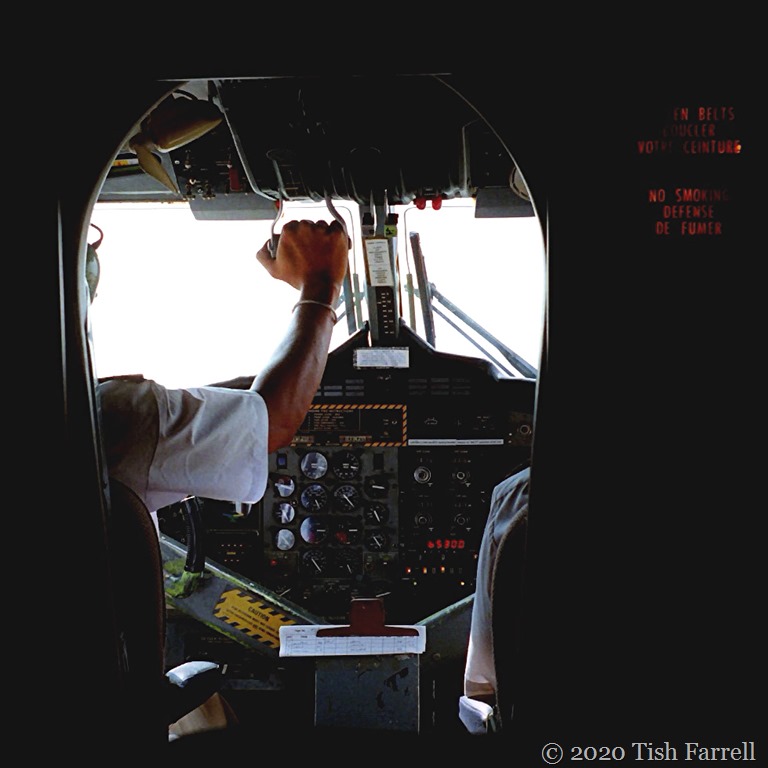
Next we whipped up the Great Rift, the old volcano Longonot in the valley bottom, the smallholdings, tea and coffee farms of Limuru up on the eastern escarpment. And in no time we were over Nyandarua, the Aberdares Range, and looking the dark snow-streaked spires of Mount Kenya in the eye. In fact in the same amount of time it had taken us that morning to get through Nairobi’s traffic jams to the airport we had covered the couple of hundred kilometres to Lewa.

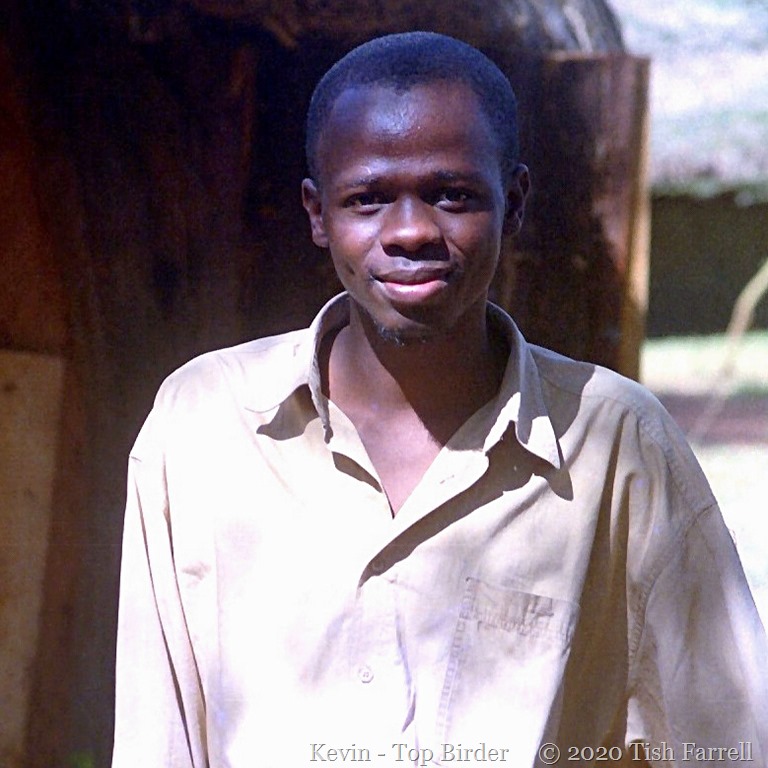
Soon we were flying low over the marsh buzzing zebra before putting down on the dirt landing strip whose only permanent structures then were a windsock and a thatched hut. Our transport, an open green safari truck, sped towards us in a cloud of pink dust. Kevin, our guide for the two-day stay, greeted us with a big grin. We found out later that his family were originally from Tanzania, his people the Chagga who live on the slopes of Kilimanjaro, and are renowned for their capacity for running up the mountain. Kevin also turned out to be a very passionate ornithologist, especially interested in the European migrants that were just then visiting Lewa. A bit of an irony I thought: a case of the reversed ‘exotic’ when he became, to my mind, rather over absorbed by the presence of a migrant tufted duck. That’s not what we came to see! Here’s some more of what we did see:
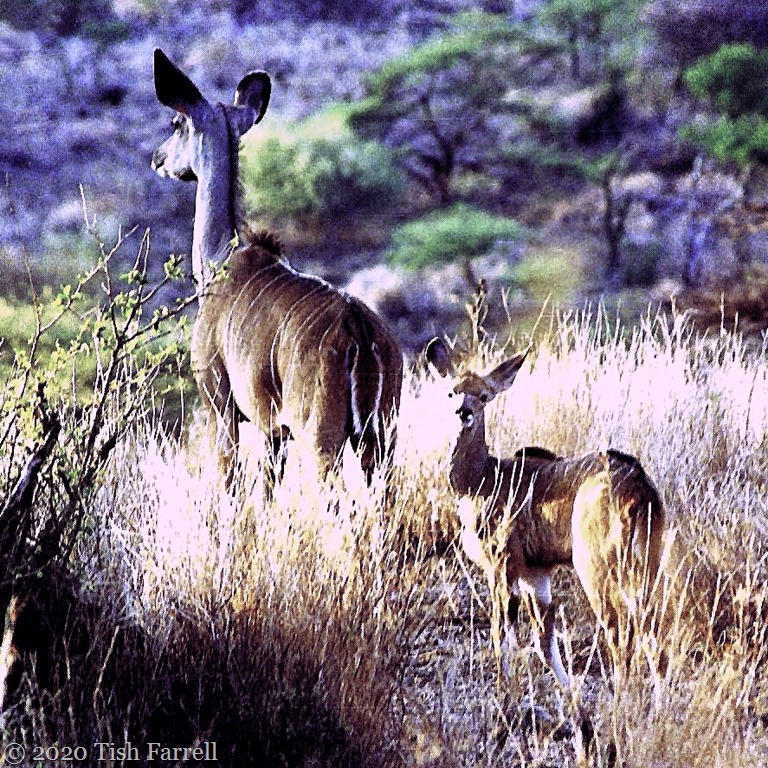
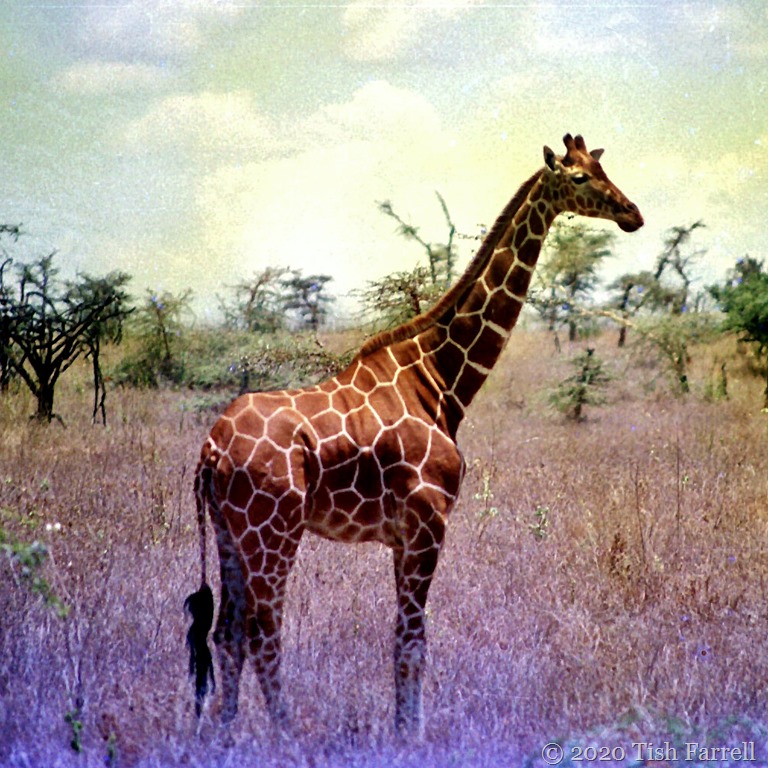
A reticulated giraffe, one of the three main giraffe races in Kenya. It is mostly found in the northern districts. This photo’s for Brian at Equinoxio. (The weird colour flashes are due to poor film processing at the time).
Our guide:
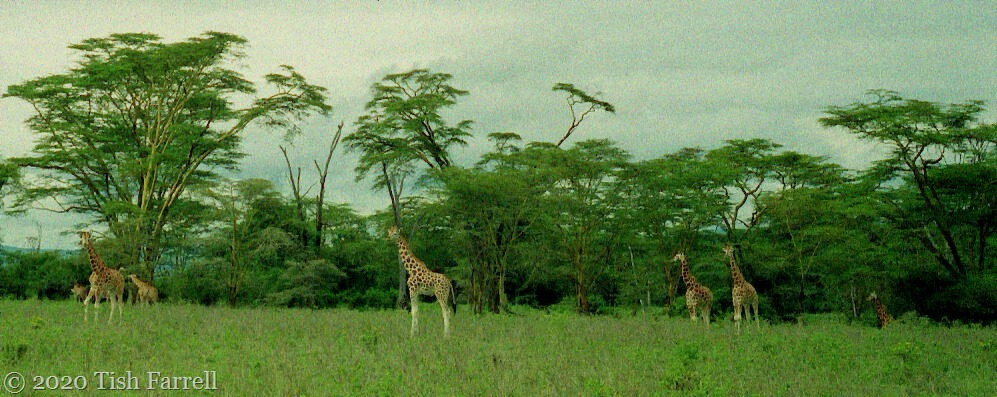
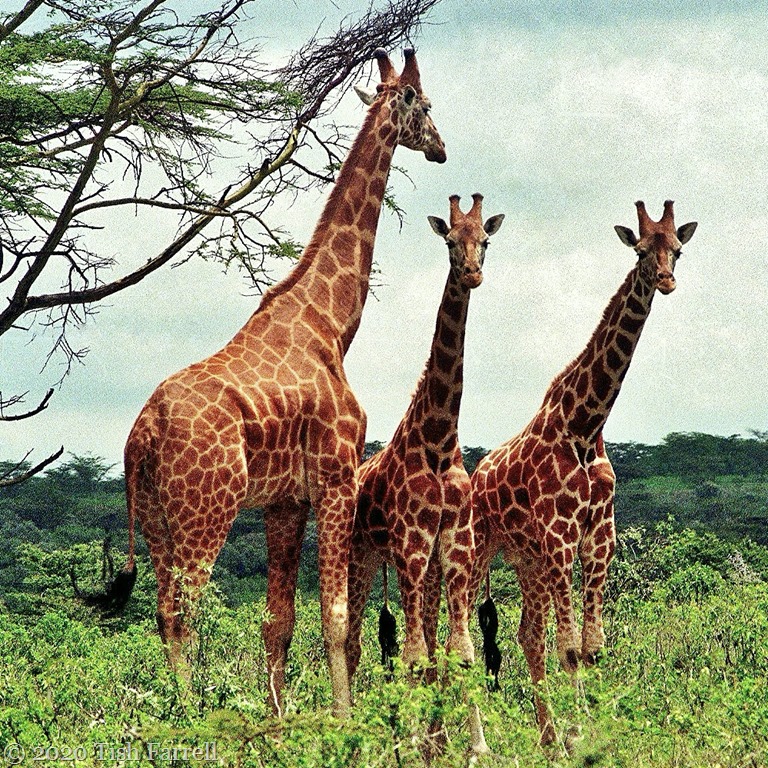
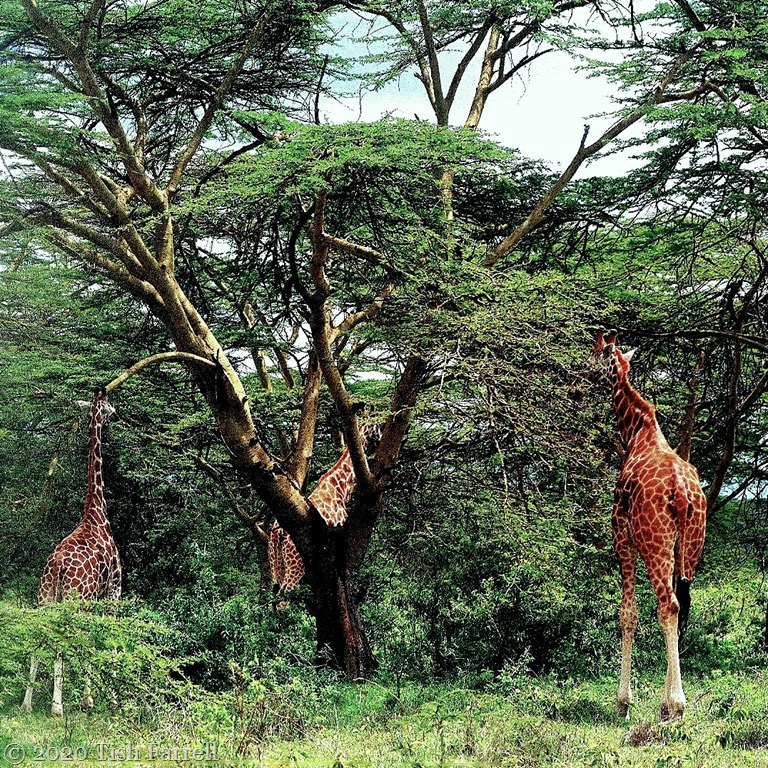
These are Rothschilds giraffes spotted on a drive around Nakuru National Park in Kenya’s Great Rift Valley.
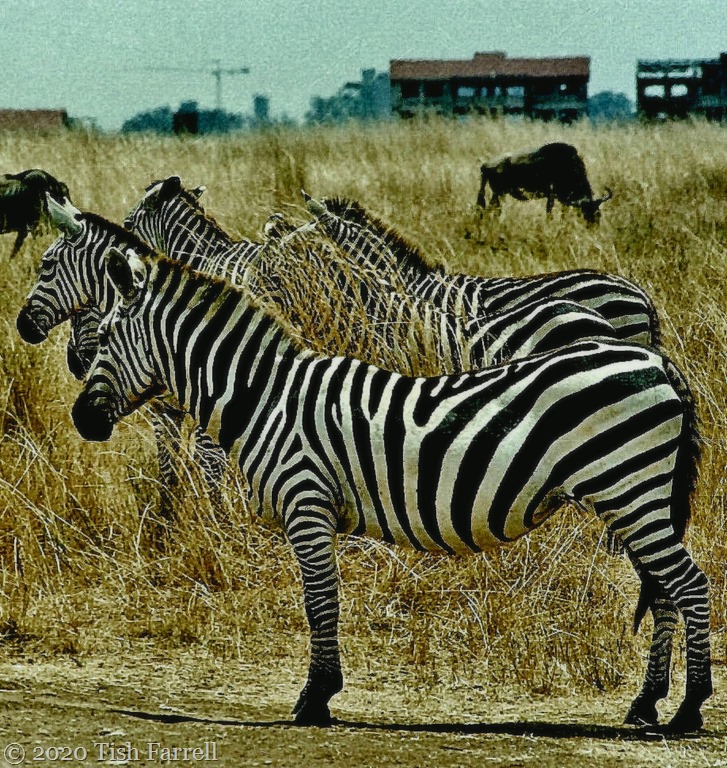
It’s rainy, grey and cold here in Wenlock this morning. But the weather people tell us this is only a temporary set-back and spring should resume tomorrow. In the meantime it seems a good excuse to return to the old Africa album for some equatorial warmth, although it has to be said East Africa can be extremely chilly too. (Not a lot of people know this). Anyway here’s a snap taken on an unchilly day in Nairobi’s National Park, city construction work and wildebeest in the background.
So: not so much a zebra crossing as a zebra pile-up.
Happy weekend one and all, however it comes.


Lots of people around the town have been keeping fit. Hats off to them. And so, as well as admiring the energetic zeal of this determined young woman, you also get to see the august lime trees of Much Wenlock’s Linden Walk just coming into leaf. Every day the green haze grows greener.
There’s a strong connection too, between these trees and physical exercise. The limes were planted by the town’s physician and his chums in around the 1860s. Dr William Penny Brookes knew a thing or several about people staying healthy – in body, mind and spirit. It was why he invented the Wenlock Olympian Games (begun in 1850) which still take place every year on the field to the left of this avenue. On the right of the Linden Walk ran the railway – whose arrival in town was also facilitated by the wise doctor’s lobbying. It once brought thousands of people from far and wide to see the games. I think Dr. Brookes would be very pleased us – we’re all shifting ourselves one way or another – gardening, walking, cycling, running.
Talking of shifting, it’s gone 5 pm and the allotment calls. Time to trot across the field and get some spuds in.
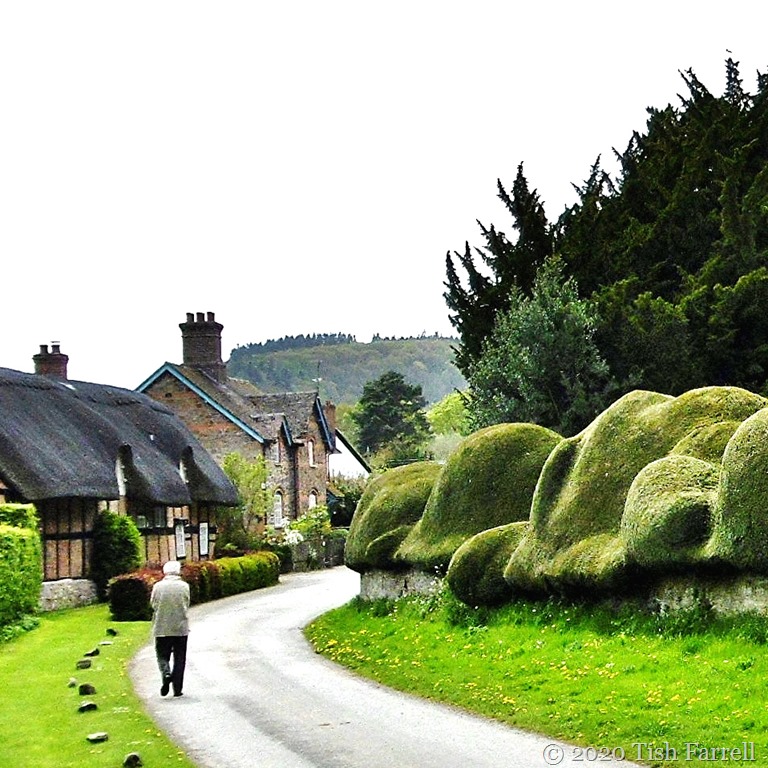
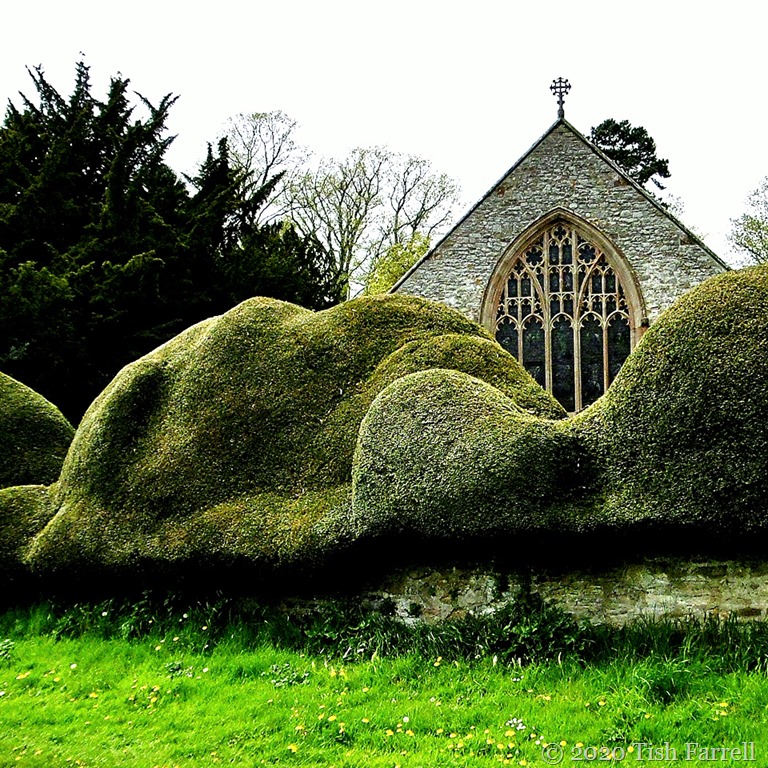
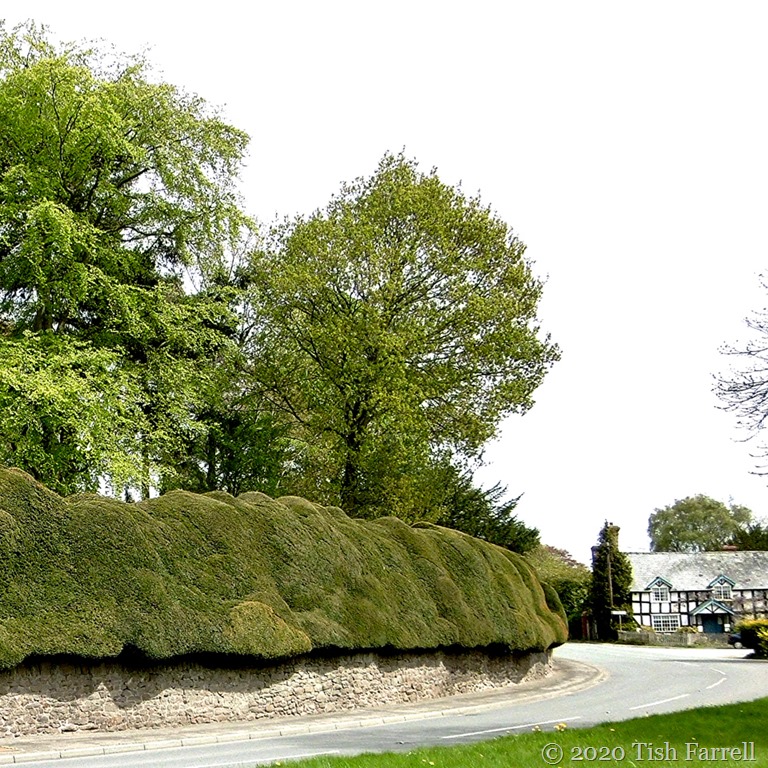
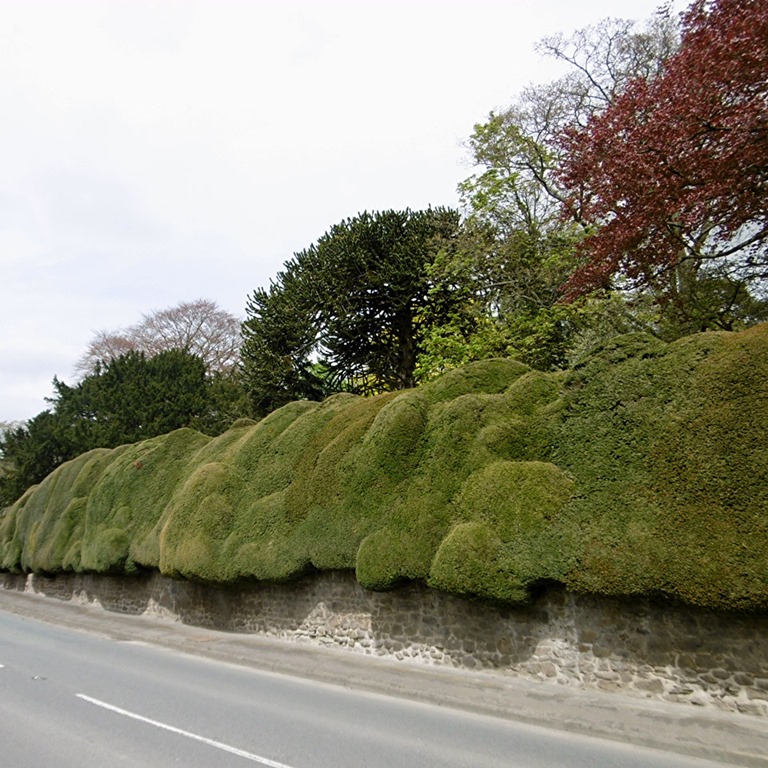
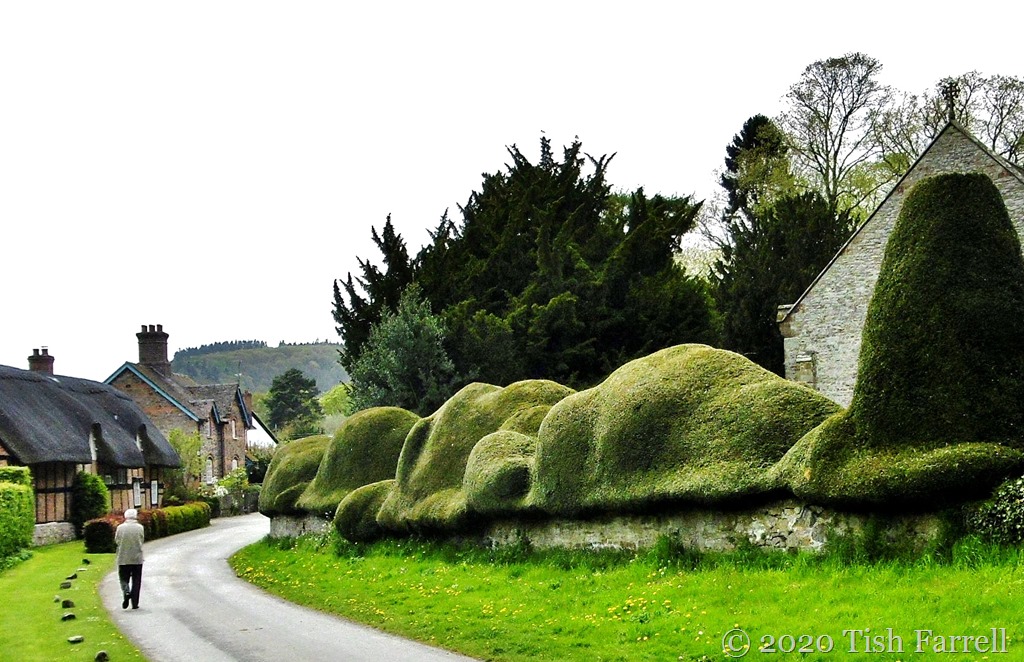
Yes, I know. This shot has featured in another of Becky’s square extravaganzas, but it has to be worth a second look. This is the Cloud Hedge in the Herefordshire village of Brampton Bryan. It is an astonishing 300 yards long, and you can find out more about its history in the (back in) Time Square post: The Ancient Cloud Hedge of Brampton Bryan.

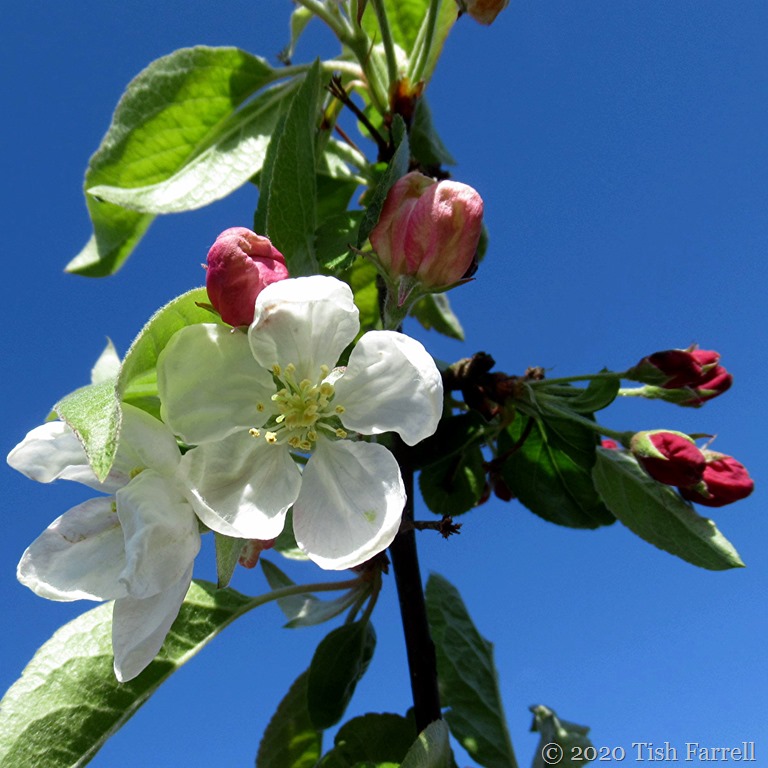
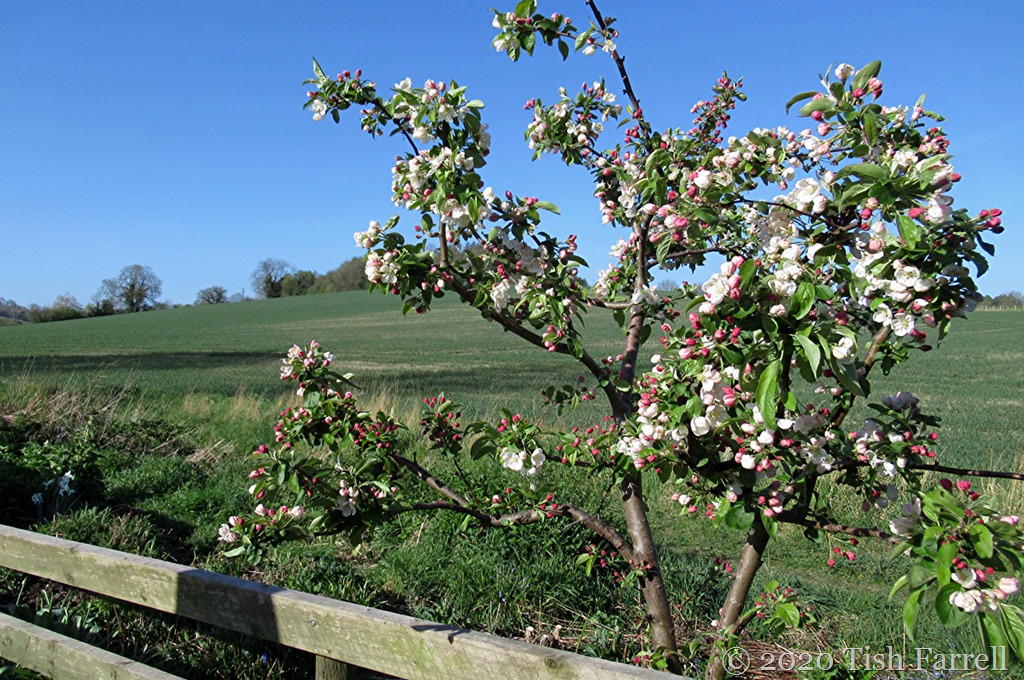
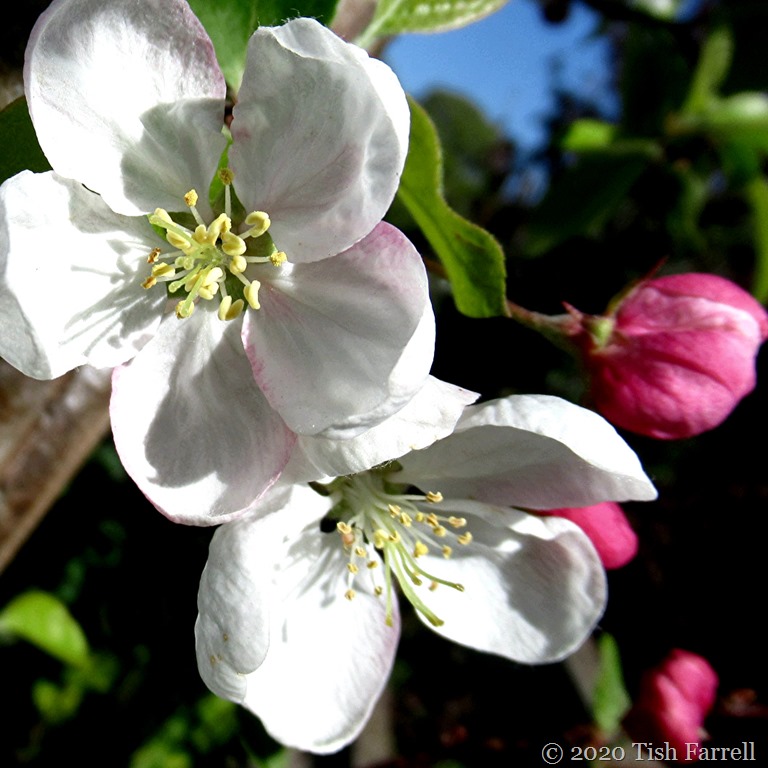
Here she is, our Japanese crab apple tree, Evereste, caught this morning in first flush over in the guerrilla garden. Full-on sun too, though the air is icy. It is both heartening, and yet surreal to see spring vegetation unfolding so graciously around us. Such strange and unprecedented times we’re living through; so many unsubstantiated and unchallenged narratives. Only time will tell which ones are true (or maybe not). In the meantime there are the small certainties, the truth that this apple flower is perfect in its own particular way. And that if a bumble bee happens by to pollinate it, then in October there will be a miniature rosy apple growing here, which in turn will give us pleasure and in December make a meal for a hungry blackbird.