Thursday’s Special: Seaside Disorder

IMG_0788

For some reason we mostly go to the seaside at Christmas, and not at all in high summer. Of course a beach can be a dramatic place any time of the year – changing and unchanging all at once, figuratively and physically. How we treat with it reflects our current mood or emotion – heightening  or lowering it, depending on our inclinations.

This photo was taken on Ynys Mon,  the island of Anglesey in North Wales. It was Boxing Day. The wind was perishing yet spirit-filling too, but then I always find ‘going to the beach’ exciting, in much the same way as I did when I was four. You just never know what you will find there in the margins between land and sea.

So here we have a tumble of razor shells embedded in a beach stream that was running off the marshy hinterland. I think there’s a viscid quality about the stream in the winter’s light, as if the shells have fixed there by the water rather than by the shift of sand.  I like the slashes of greyish-white across medley of ochre shades. An intriguing state of disorder, then: the beach endlessly creating its own artwork.

Thursday’s Special

To the Isle of Dwynwen, Welsh Saint of Lovers

100_7117

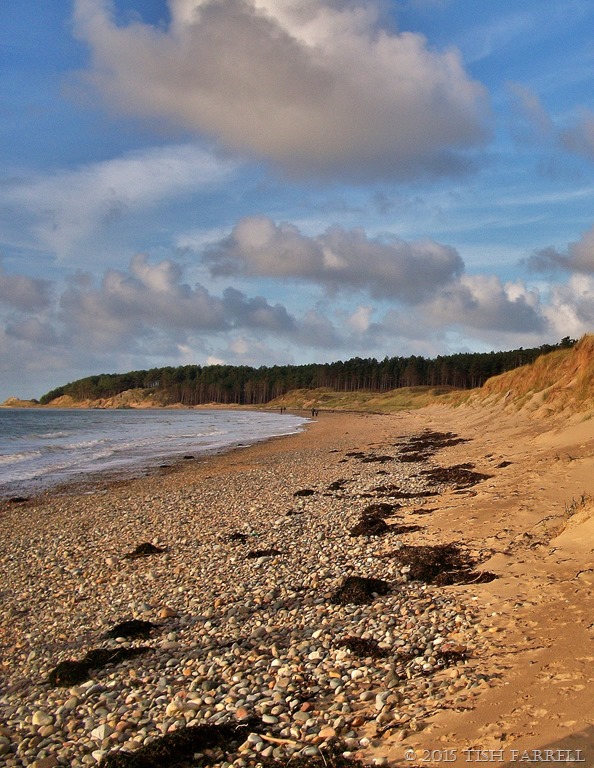
Christmas morning and we find ourselves in a general pilgrimage of families and dogs. We have all had the same idea: to trek along Anglesey’s Newborough Beach to Ynys Llanddwyn, the island sanctuary of Dwynwen, Welsh patron saint of lovers.

100_7140

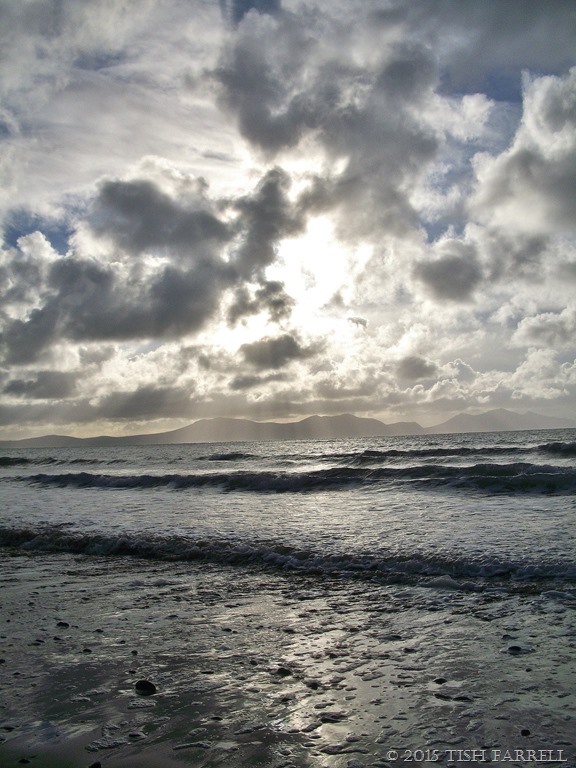
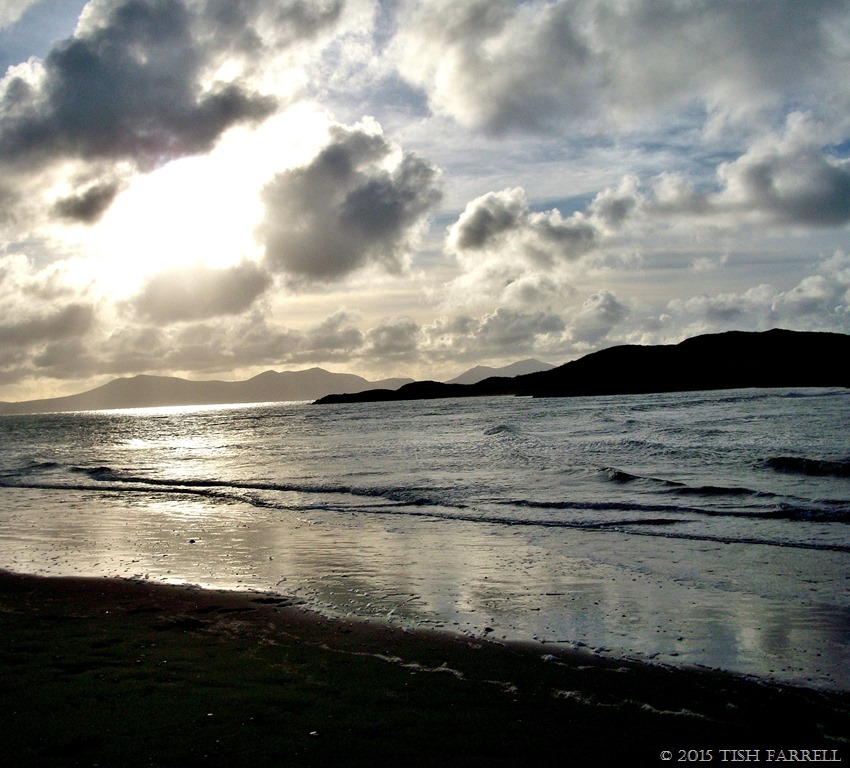
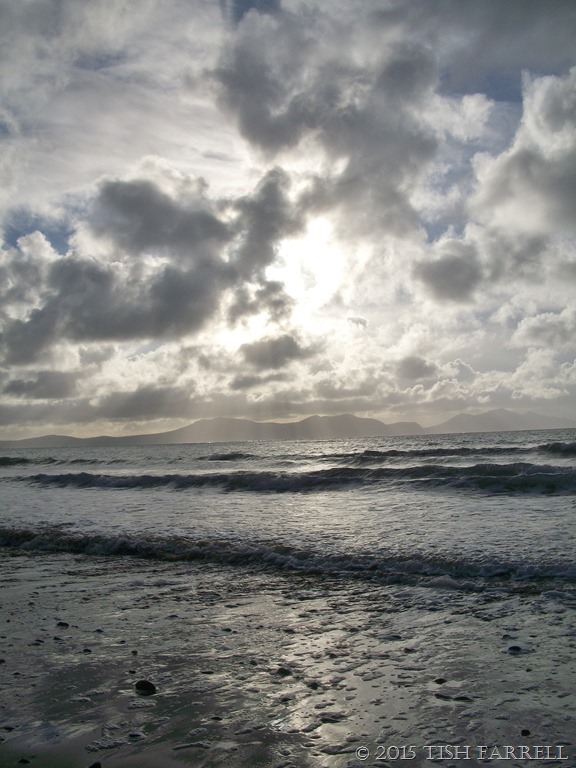
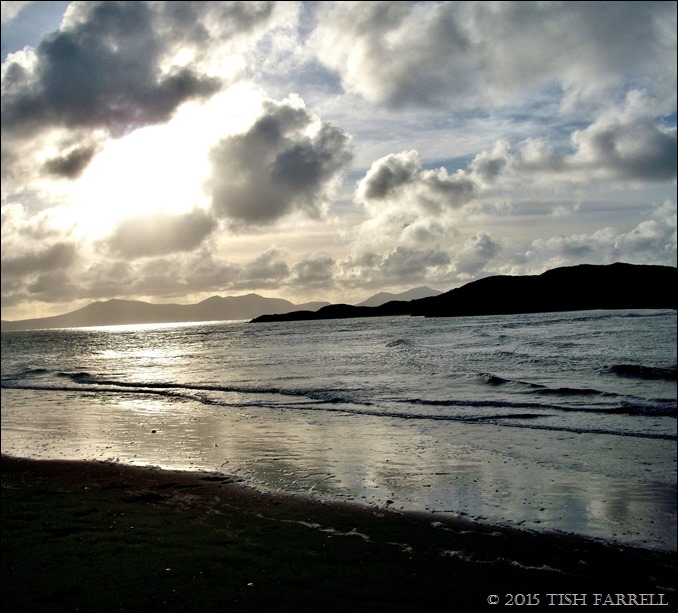
As you can see, the day was brilliant, but down on the shore the wind was bitingly cold. It was a challenge to take photos, but taken they must be. For one thing, the views across the Menai Strait to the mainland’s Llŷn Peninsula were mesmerizing, and had to be captured.

100_7187

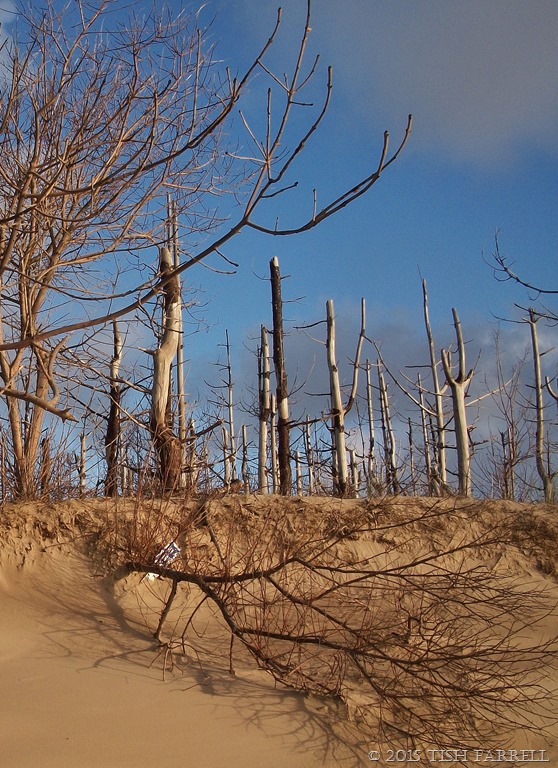
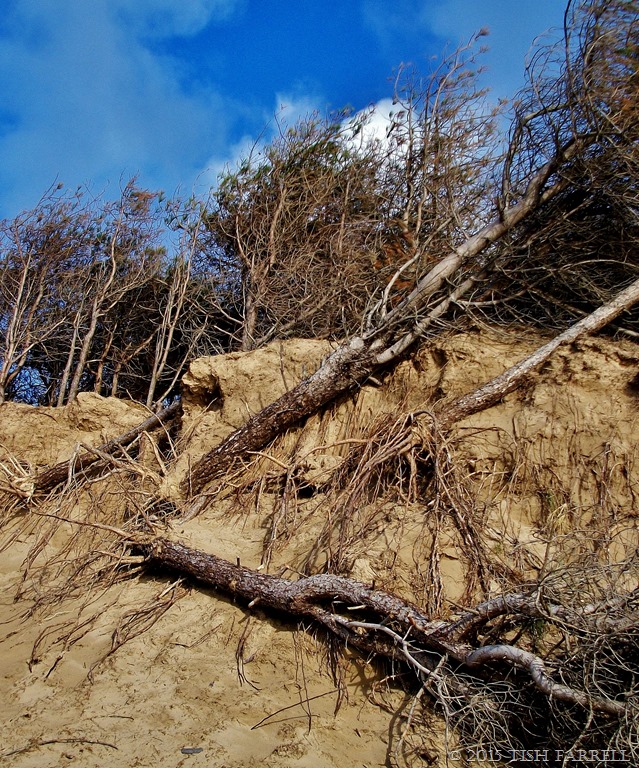
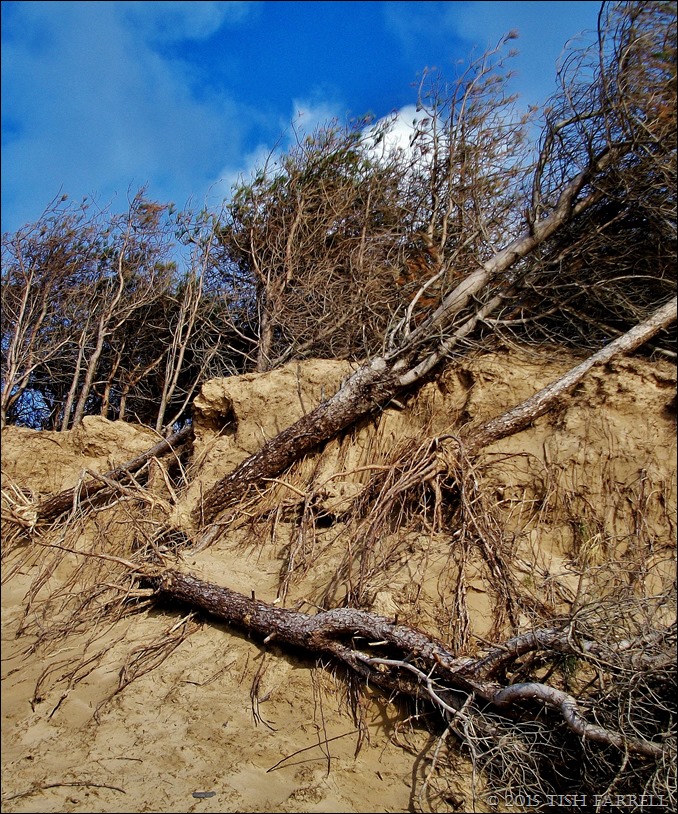
For another, there were some rather shocking scenes of coastal erosion. I promise, though, when we reach the island I will tell you the story of Dwynwen.

First things first. Newborough Beach is some two miles long and ends at the promontory that forms Llanddwyn Island. It is famous for its dunes which apparently arrived there in the great storm of 1331. It was the Feast of St Nich0las (December 6) when the disaster struck, and on that day the wind and sea rose to such a pitch that they drove, from the shores across the Strait, great mounds of sand and deposited them on the once fertile fields and dwellings of the medieval Newborough.

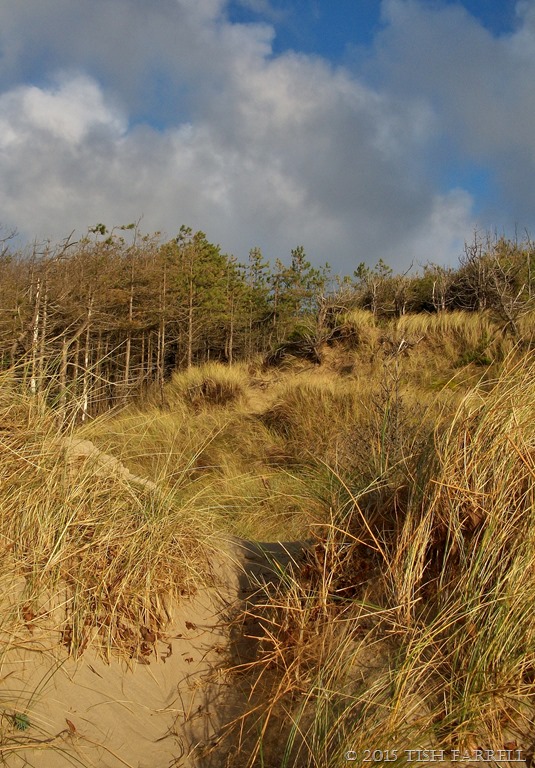
Ever since, many of the dunes have continued to shift, although there have been various strategies to stabilize them. In the sixteenth century marram grass was planted, and this gave rise to a successful local industry wherein the grass was cropped to weave into mats and baskets. Far more recently, in the 1940s, the Forestry Commission planted the promontory with conifers. The small forest that has thrived there since is home to ravens and red squirrels.

100_7131

Now, though, there are new threats from the weather. Last winter severe storms lashed the Welsh coast, causing great damage and much local concern about a future where rising sea levels and erratic storms are likely to figure more prominently.

100_7122 - Copy

100_7128 - Copy

It is a simple demonstration of the power of weather, and instead of arguing about its precise causes we should perhaps be wondering what is best to be done. At the present, the people of Newborough are doing just that. There is an on-going public consultation as to how the forest and nearby salt marsh may be protected. This whole corner of Anglesey is a much treasured resource to locals and visitors alike.

100_7135

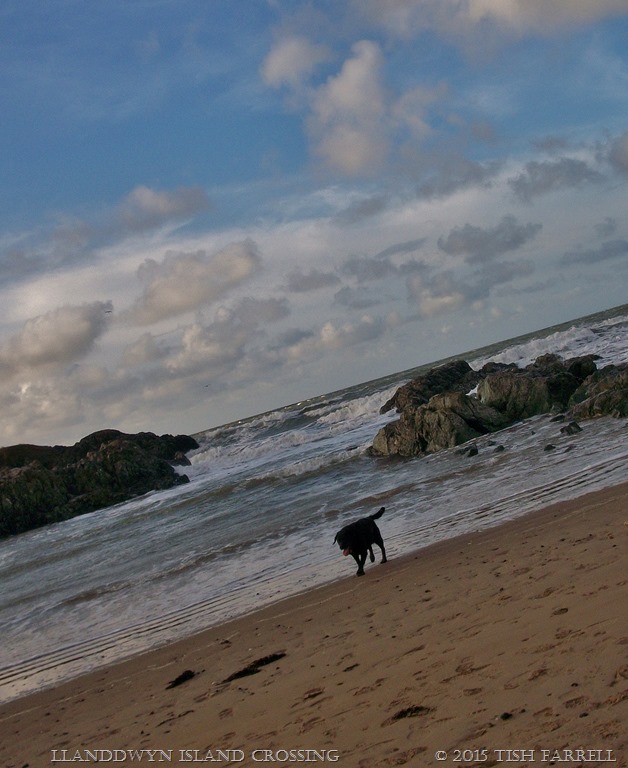
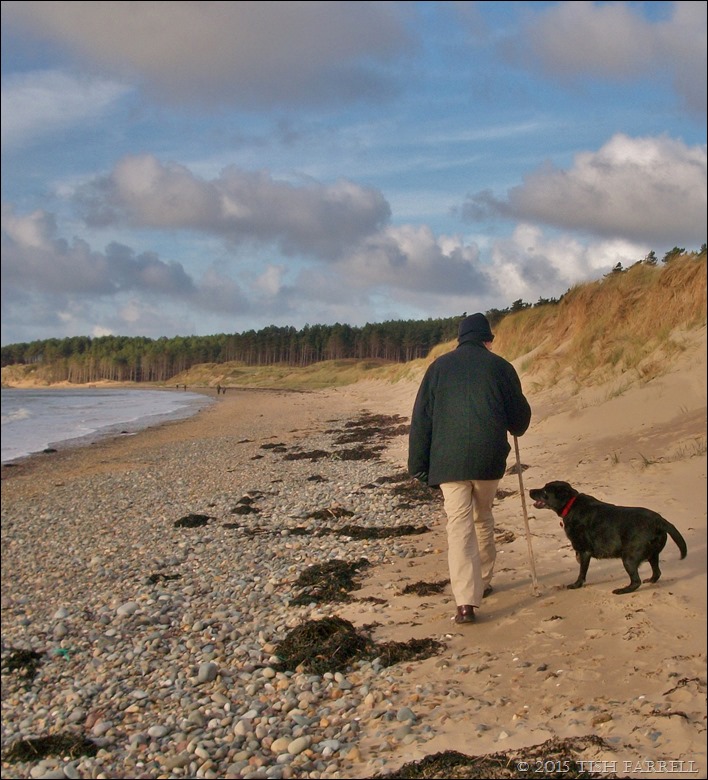
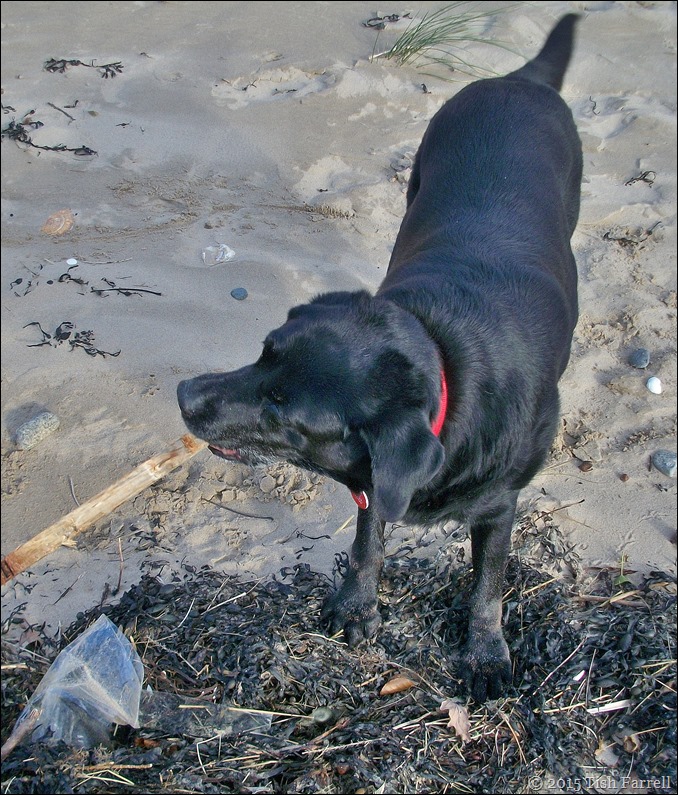
Meanwhile, sister Jo’s labrador Molly is hardly concerned with matters of coastal erosion. Nothing a dog likes more than sand in its paws, wind in its ears, some smelly crabs and dead fish to nose, and also to lay claim to everyone else’s stick.
100_7141

She always wins. ALWAYS. Bad luck, Graham.
100_7144

When we reach the crossing place to the island, the tide is still too high to walk across. So we ponder the rocky deposits of pillow lava, that were apparently blown up from undersea volcanic eruptions in the Precambrian era, and wonder if Dwynwen really did choose this exposed promontory for her sanctuary some fifteen hundred years ago. There is no doubting the elevating beauty of the place.
100_7161100_7158

100_7160

And so, as I promised, to Dwynwen’s story. She lived in the fifth century CE, and was one of Prince Brychan’s twenty four daughters. She fell in love with a young man called Maelon Dafodrill who apparently returned her feelings. Yet in a fit of caprice, Dwynwen refused his proposal of marriage. Some say it was because she wished to remain chaste. Others say it was because her father had arranged for her to marry another man. For his part, Maelon made his displeasure at the refusal known by spreading tales that cast doubt on Dwynwen’s honour.

In a frenzy of anguish, she thus took herself off alone to a wood where she prayed to be cured of her passion. And so it was that an angel appeared to her in a dream and gave her a potion that not only erased her feelings of love, but also transformed the spurned lover into a block of ice. Heaven also granted her three wishes. Dwynwen thus asked that Maelon be unfrozen. She then requested that if any true-hearted lover invoked her name, they should be granted their heart’s desire or relieved of their painful emotions. Finally, she sought never to be married, and thence withdrew from the world, founding a convent on Llanddwyn Island which, after her death in 465, became a place of pilgrimage. Her feast day is 25 January, and is celebrated by many in Wales with cards and flowers in the same way Saint Valentine’s Day is marked in many European countries.

100_7175

And so unable to complete our own pilgrimage and reach the island with its ruined church, we retraced our steps, thinking more profanely of a turkey to be roasted, presents to be opened, and a glass of champagne to drink.
100_7191

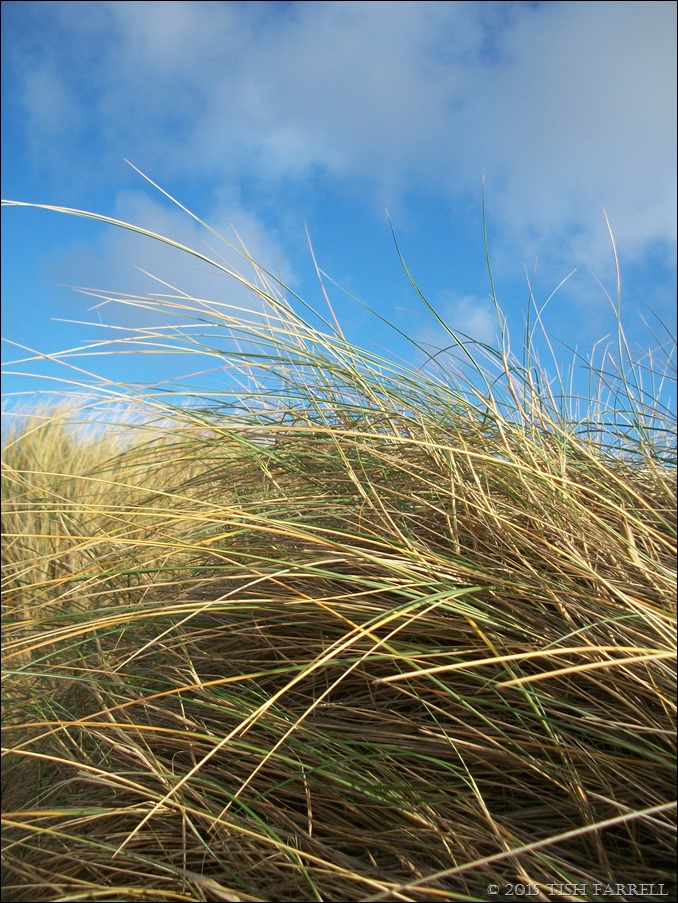
And it was under this patch of marram grass, as we left the beach, that my Kodak EasyShare gave up the ghost. You could say, then, that this post is its last post. Just as well I still have the memory…

copyright 2015 Tish Farrell

Inspired by Jo’s Monday Walk

See her latest post and other bloggers’ walks at Roker Pier

*

Losing Kui -Final[1]

ON AMAZON AND ePUB BUD

Secrets, conspiracies, tragedy,

dark comedy – a fast-paced

novella of interwoven tales set

somewhere in East Africa

The Hounds of Henllys: Shadowed

P1000194

P1000193

We spent our Christmas with my sister, Jo, and chap, Bob, and their labrador Molly, staying in a cottage in the grounds of Henllys Hall on Anglesey. These huge sculpted dogs guard the entrance drive to the cottages, and are caught here in light shadow with the sun on the scene behind them. I find them intrinsically noble, and they unavoidably remind me of the story of the great dog Gelert, owned by the thirteenth century Welsh prince, Llywelyn of Gwynnedd. But beware, this tale does not end well. Here it is.

One day Llywelyn went hunting with his court, leaving his faithful hound, Gelert, to guard the stronghold, and in particular to watch over the Prince’s young motherless son who was still only an infant. At sunset when Llywelyn returned to his castle, Gelert rushed to meet his master, but something was horribly wrong. The dog’s muzzle was all smeared with blood. Filled with alarm, Llywelyn ran to his son’s chamber and, seeing the cot upturned, and bed clothes  strewn about and streaked in blood, he leapt to conclusions, and drawing his sword, he killed his beloved dog. As the dog yelped his last, so a child’s cry rang out from under the cot. When Llywelyn ran to right it, he found his son quite safe beneath. But he also found the corpse of a large wolf that Gelert had killed to save the child. Filled with remorse, Llywelyn built a cairn of stones to honour his faithful friend, and the place where it may be seen is at Beddgelert (grave of Gelert), beside the River Glaslyn, on the road to Porthmadog.

copyright 2015 Tish Farrell

Daily Post Weekly Photo Challenge: Shadowed

image

Secrets, conspiracies, tragedy,

dark comedy – a fast-paced novella

of interwoven tales set somewhere in

East Africa

Farewell, Little Digital…

100_7187

My trusty Kodak EasyShare camera died on Christmas morning. We were striding along Newborough Beach on Anglesey, in North Wales, me happily snapping away here and there. As you can see, the light was wonderful, and the mountains of Snowdonia across the Menai Strait, a mystic blue-grey. And then the camera began to die. Touchingly, it’s last shot is of me with my specs on, peering down at its lens, and wondering what on earth was going on with it. Under the circumstances, I’m not sure how the photograph happened, but happen it did. (An unintended selfie?) And so there you have it, little Kodak’s last click. Aaaah.
100_7193

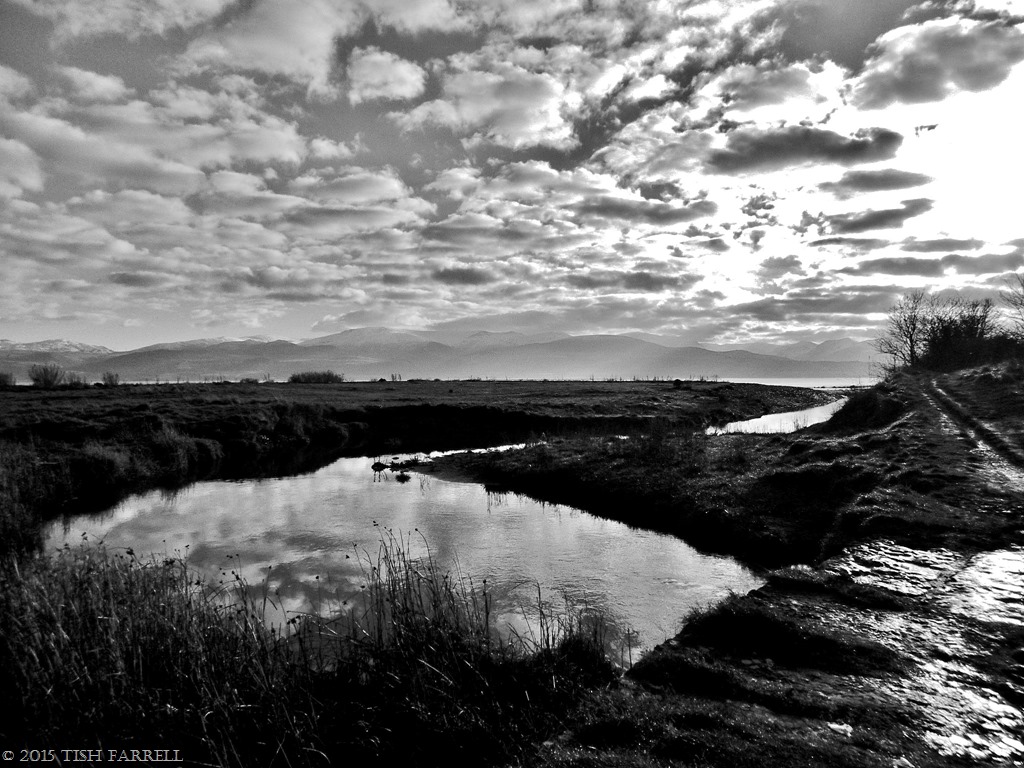
Perhaps it knew what was coming; that I was about to desert it for a smarter, whizzier model. For yes, when we got back to the house, and the present opening, it was to find that Santa, aka the Team Leader, had bought me a new Lumix Panasonic. Oh, so many more modes and functions. But at least it has forced me to make one New Year’s Resolution: to learn how to use it properly. There! Now I’ve committed myself in print. Anyway, here’s a preliminary attempt in monochrome mode: looking towards mainland Wales.

P1000153

strait edge

IMG_0834

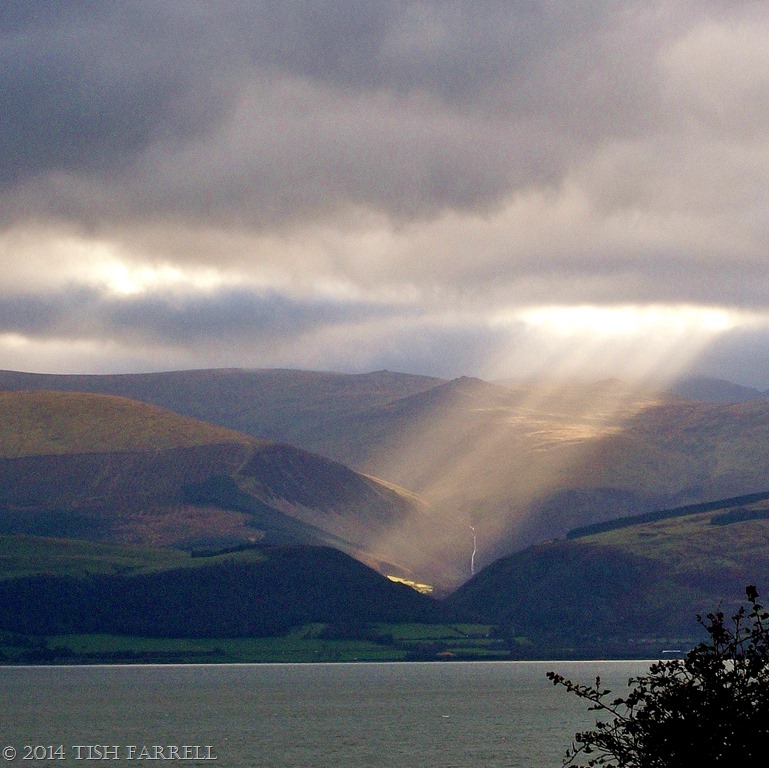
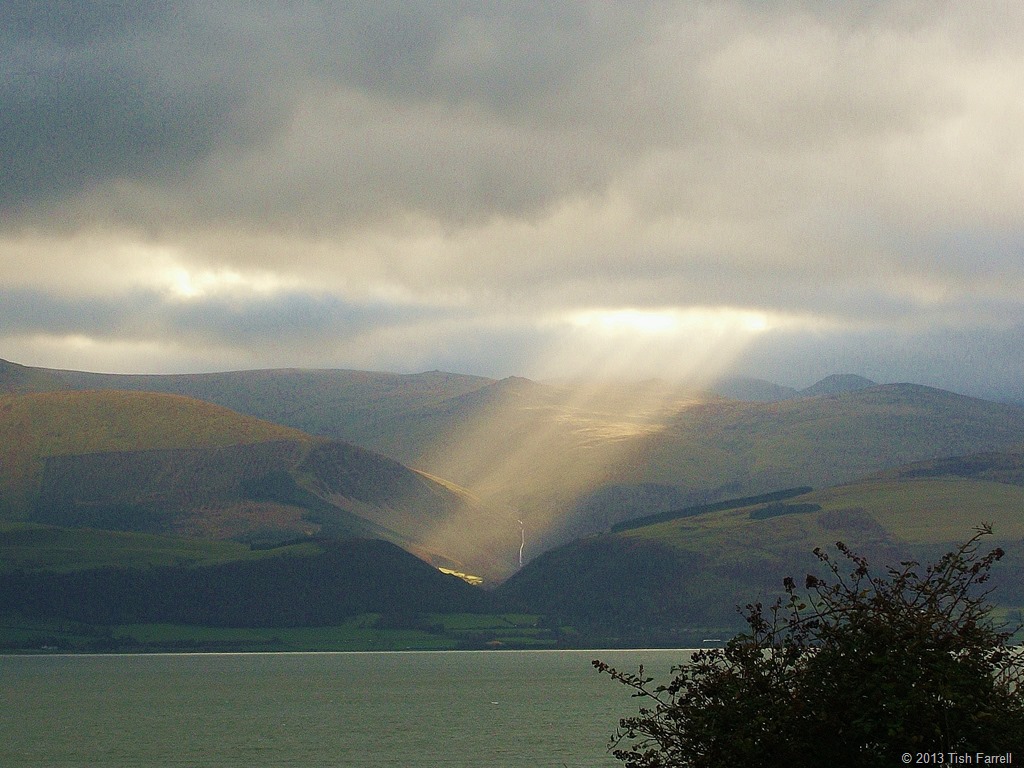
This awe-striking effect of cloud and sunlight seems to be a feature of Menai Strait, the narrow stretch of tidal water between the island of Anglesey (Ynys Môn) and the North Wales mainland. This photo (looking towards the mainland) was taken around midday in December last year. The cloud had banked so thickly it seemed we were heading into night. Over the previous days there had been horrendous winds that had torn across the island, ripping up trees and closing roads. And then quite suddenly the sun broke through – a moment of luminous tranquillity after all the storms.

Anglesey has a long and dramatic history extending back to at least the Neolithic. At the start of the Common Era it was also the stronghold of the Celtic peoples’ priestly caste, the Druids. These warrior mystics were slaughtered in a terrible battle by the army of the Roman Governor of Britain, Suetonius, which in 61/62 AD bore down on them across this Strait. You can read more about it in Island of Old Ghosts.

copyright 2014 Tish Farrell

Ailsa’s Travel Challenge: Edge for more edgy photo stories

Cloud shadow: contrasts II


IMG_0834

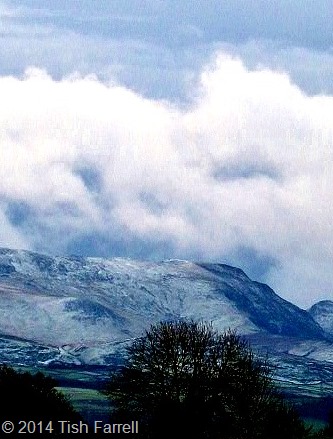
The light, the clouds, the sun do extraordinary things over the Menai Straits, the narrow sea channel between the island of Anglesey, Ynys Môn, and mainland Wales. This photograph was taken at midday in late December.  I was standing on Beaumaris seafront and looking towards the mainland. To the southwest the mountains of Snowdonia were frosted with a light cover of snow. It was all very dreamlike. And it made me think that  it was no accident that the Druid priests of the ancient Celtic tribes made the island their sacred stronghold, or that after the Romans withdrew from Britain, the early Celtic Christian missionaries established their sanctuaries and churches on the island. Whatever your faith, or even if you have none, such glorious vistas surely speak straight to heart, spirit and soul.

For more images of Ynys  Môn see my earlier post Island of Old Ghosts.

100_5196

© 2014 Tish Farrell

Weekly Photo Challenge: Contrasts

Island of Old Ghosts

014

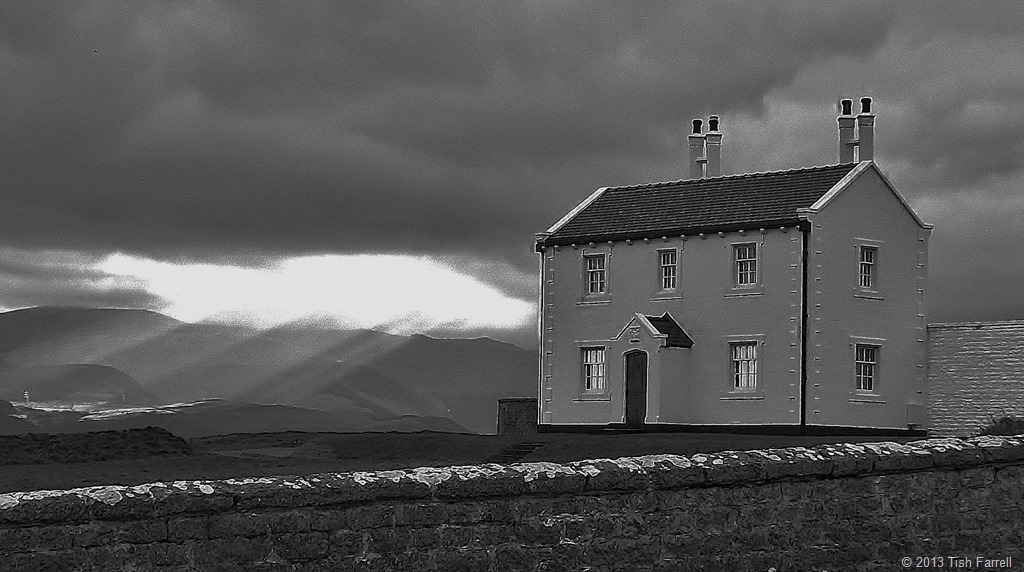
There are ancient, bloody-minded spirits here on Ynys Môn, the island where the Celtic druids made their last stand during the Roman conquest of Britain. This place, otherwise known by its Viking name of Anglesey, lies just off the coast of Wales, the narrow Menai Straits between. One Christmas morning we came here to Penmon on the island’s north-east tip. The light was very strange that day, darkness already gathering at noon. Then across the Straits, above the mainland, the sun bore down like a searchlight.

002.jpg

Penmon is the site of an early Christian monastery, founded in the 6th century by St Seiriol, but the roots  of Ynys Môn’s sacred, and now mysterious practices, are far older than this. Across the island there are Neolithic and Bronze Age chambered tombs, and then there is the spectacular Celtic Iron Age hoard from Llyn Cerrig Bach, a seemingly sacrificial lake offering of weapons, chariots, slave chains, and highly crafted regalia. The Romans claimed that in their groves the druid priests made human sacrifices, but little is known of these people beyond the gory account in the Annals of Tacitus. What is known is that the Romans conducted a ruthless campaign against the Celtic clans of Wales. Anglesey, with its powerful druid priests, was the last bastion of British resistance. Here is how Tacitus describes the Menai Straits battle of nearly 2,000 years ago. Suetonius Paulinus, Governor of Britain, was in command.

He therefore prepared to attack the island of Mona which had a powerful population and was a refuge for fugitives. He built flat-bottomed vessels to cope with the shallows, and uncertain depths of the sea. Thus the infantry crossed, while the cavalry followed by fording, or, where the water was deep, swam by the side of their horses.

“On the shore stood the opposing army with its dense array of armed warriors, while between the ranks dashed women, in black attire like the Furies, with hair dishevelled, waving brands. All around, the Druids, lifting up their hands to heaven, and pouring forth dreadful imprecations, scared our soldiers by the unfamiliar sight, so that, as if their limbs were paralysed, they stood motionless, and exposed to wounds. Then urged by their general’s appeals and mutual encouragements not to quail before a troop of frenzied women, they bore the standards onwards, smote down all resistance, and wrapped the foe in the flames of his own brands. A force was next set over the conquered, and their groves, devoted to inhuman superstitions, were destroyed. They deemed it indeed a duty to cover their altars with the blood of captives and to consult their deities through human entrails.

Annals of Tacitus translated by Alfred John Church and William Jackson Brodribb 1884.  XIV chapters 29-30. You can read the original work by following the link.

*

008

For more about Anglesey