5 Photos 5 Stories: Hidden Wenlock #5

100_3612

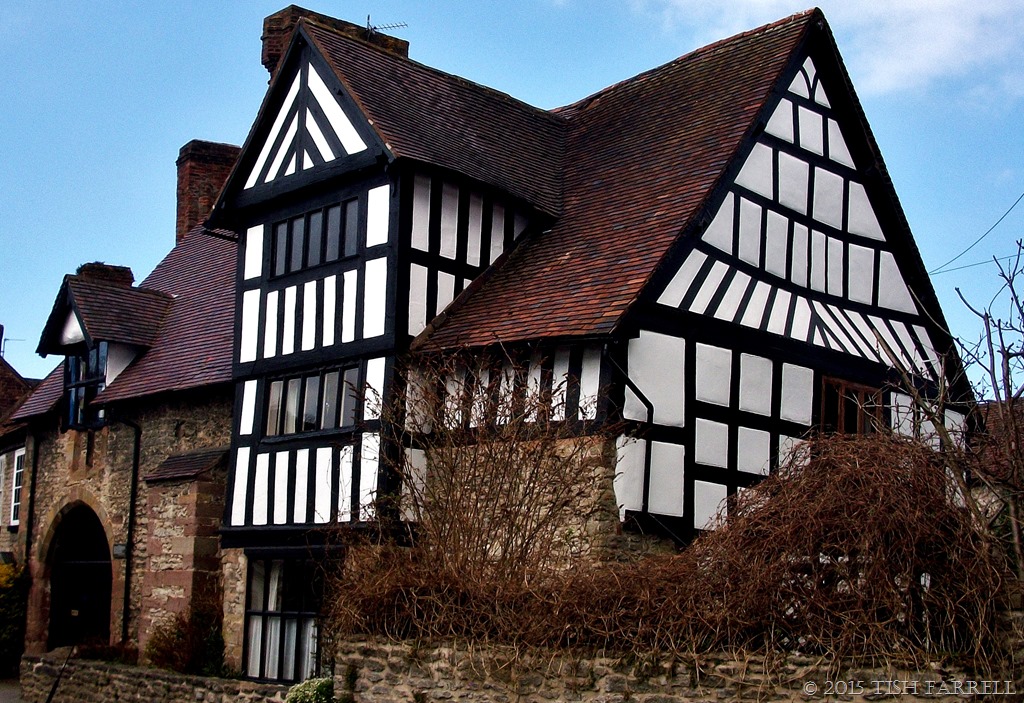
For the final post in this Hidden Wenlock series I thought I’d show you Ashfield Hall, one of the most impressive houses on the High Street. Yesterday I said how many of the town’s ancient timber-framed buildings had become hidden within later stone exteriors. With this house it was rather different.

The left-hand wing with the arch was built some time between 1396 and 1421 by one William Ashfield, a town resident. The impressive timbered wing was added in the 1550s for Richard Lawley. He and his brother, Thomas, were members of a leading local family, and it was they who, after the Dissolution of the Monasteries, bought the Priory and its estate from Henry VIII’s physician, the Venetian, Augustino Augustini.

Augustino seems to have been a slippery type, always short of money. He had been Cardinal Wolsey’s physician before Wolsey lost royal favour. He then became embroiled in the intrigues of King Henry’s ‘fixer’, Thomas Cromwell, who had also been  a Wolsey retainer. One of Augustino’s missions was to go to Germany to lobby support for Henry’s divorce from Catherine of Aragon. The Priory was thus his reward for services rendered. He wasted little time in selling it off, and the Lawleys paid him £1,606 6 shillings  8 pence for it. On the proceeds of the deal he then headed home to Italy.

In the 17th century Ashfield Hall became the Blue Bridge Inn, named after the bridge that crossed the malodorous stream, the town’s open sewer that ran down the main street, and was known for good reason as the ‘Schet Brok’.

Despite the insalubrious quarter, legend has it that King Charles I stayed at the Blue Bridge in 1642, en route for Oxford and the Battle of Edgehill. Thereafter, the place went seriously downhill, and became a lodging for itinerant labourers.

But there are earlier stories than these relating to Ashfield Hall. The High Street used to be called Spital (Hospital) Street, and it is believed that the archway probably gave access to the Hospital of St. John whose existence is first documented in 1267. In 1275 an appeal went out for the Master and Brethren of the hostel “to which lost and naked beggars are frequently admitted for their relief, the house being in great poverty.” Merchants coming to town with grain and other goods to trade were called on to give some assistance. By 1329 the Priory was taking over the premises, although it is not known if they continued to run the charity.

This reminds me, though, of a statistic I read years ago in an economic history of Medieval Europe. It shocked me at the time, but it seems it was the norm pretty much everywhere in the Middle Ages for 20% of the population to be beggars (professional or otherwise) and living off lordly charity. Giving to the poor was apparently an important means by which the rich got over their guilt at being rich, and so gained grace. It was how society worked.

100_4920

By the 18th century, we have a different story. Much Wenlock has some of the most comprehensive pre-1834 English Poor Law records still surviving. The dismal picture they paint is more about local bureaucrats trying to save the town from the expense of supporting any more poor than it absolutely has to.  The destitute were mostly women and children. The women, often no more than girls who had been sent off as apprenticed labour and returned, impregnated by their overseers and masters, were subjected to pre-birth, and post-birth bastardy examinations to determine their right to stay in the parish. If churchwardens and overseers found against them, they were subject to removal orders. Pauper children were sent as indentured apprentices to anyone in need of cheap labour. I have a copy of a Much Wenlock churchwardens’ indenture of 1805 which places

Thomas Williams aged eight years or thereabouts, a poor Child of the said Parish ~ Apprentice to James Barker of Madeley Wood, Whitesmith…with him to dwell and serve…until the said Apprentice shall accomplish his full Age of twenty one years ~

In return, James Barker is to train the lad in the business of a whitesmith (tin working), and give him “sufficient (the quantity is unspecified) meat, drink, apparel, lodging, washing and other things necessary and fit for an apprentice.”

It’s a sobering glimpse of life for the powerless and underprivileged. It shows, too, the disparities between rich and poor, the respectable and socially unacceptable in a small, but  largely prosperous town like Much Wenlock.

Which rather brings me back to the Schet Brok, the town’s once infamous open sewer. In fact it was not until Victorian times that the stream was finally enclosed and culverted, and a proper sewerage system installed. These improvements were down to the town’s good physician, Dr William Brookes, he who also masterminded the Wenlock Olympian Games and inspired the modern Olympic  movement.

The brook still causes the town problems, even though (mostly) we can no longer see it. Come heavy storms on Wenlock Edge, and the culvert has been known to cause terrible flooding, the last event being in 2007. But that, as they say, is another story, although I’ll leave you with some pictures courtesy of Much Wenlock’s Flood Action Group. It is a good example of how the doings of the past, hidden though they may be, can be very much with us.

copyright 2015 Tish Farrell

collagehighst[1]


5 Photos 5 Stories Challenge

Pauline at Memories Are Made of This nominated me to take up this challenge. The idea is to  “post a photo each day for five consecutive days and attach a story to the photo. It can be fiction or non-fiction, a poem or a short paragraph, and each day nominate another blogger for the challenge”.

So today I would like to nominate Anke at Life in Baku. She has been living and working in the capital of Azebaijan since 2012. Her blog is an on-going quest to reveal in words and photos, places and people, their ways of life. Join her on this fascinating journey. 

P.S. To those who are taking up my challenges, I gather from Jo at Restless Jo (who is also doing it this week) that it should be ONE photo. Oh well.

Hidden Wenlock #1

Hidden Wenlock #2

Hidden Wenlock #3

Hidden Wenlock #4


Reference: W F Mumford Wenlock in the Middle Ages
Seeking Spring ~ A Walk on Wenlock’s Wild Side

100_5445

I knew there was only a small window of opportunity. At nine thirty yesterday morning there was sunshine. Go out there at once, I told myself. The way the weather is these days, it might be the last you see of it. Carpe diem and all that.

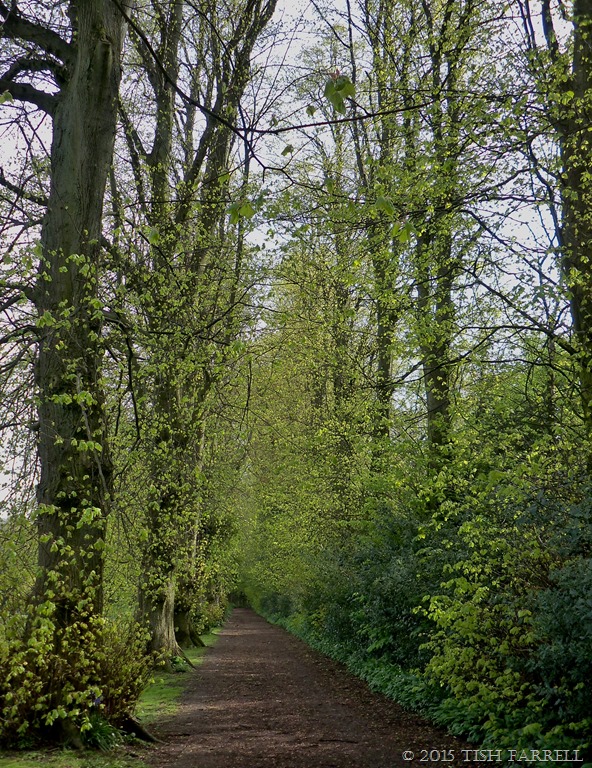
So seized it I did, and it was certainly warmer to the touch than it has been for many days, and as you can see from the above photo, the ancient, and thus arboreally wise lime trees on the Linden Walk definitely think it is spring.  Drifts of green. Blissful.

P1010309

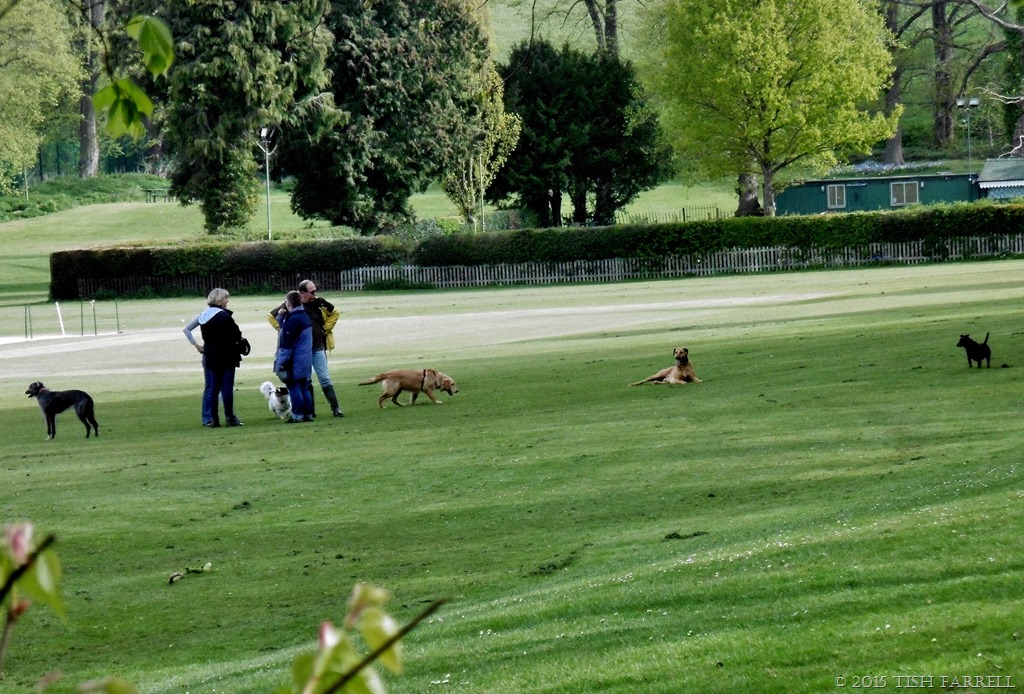
The dog walkers, too, were out en masse, owners chatting amiably on the Linden Field quite as if it were – well, spring. And despite Thursday’s appalling election results (Scots Nationalists excepted) and the return of a government that treats food banks as something to be proud of, and regards the nation as a resource for unbounded fracking, everyone I met seemed pretty cheerful. I will thus make no further mention of Tory attrition and spoil the moment.

The little green building you can see in the background behind the dog walkers is Much Wenlock’s Bowling Club HQ. It occupies a re-cycled railway carriage, a relic from our erstwhile lovely railway that once ran beside the Linden Walk and, until the 1960s, when the wretched Dr. Beeching axed thousands of miles of Britain’s railways, linked Much Wenlock to the outside world. But enough! Too much negativity already.

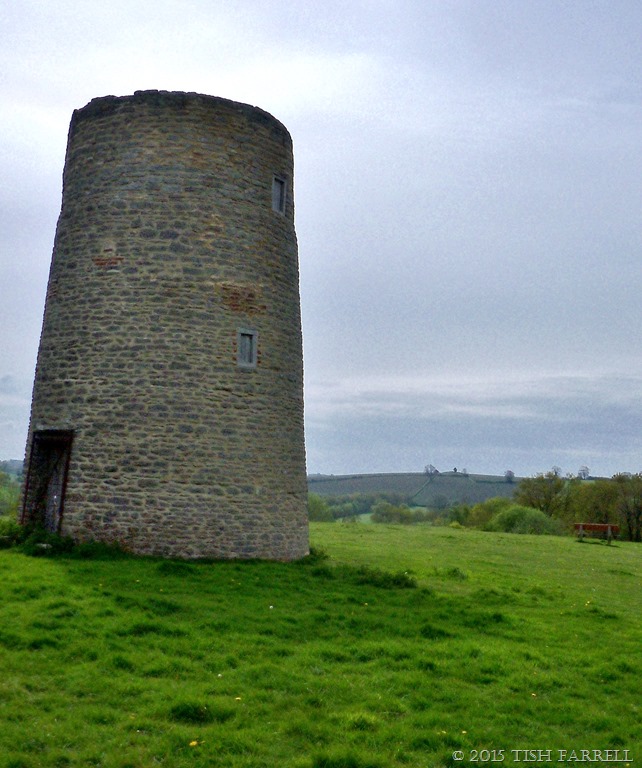
I headed off behind the Bowling Green to see what was growing on Windmill Hill. This quest was motivated by Meg at Snippetsandsnaps. In response to an earlier post here, she said she would like to see more of what happens on the old limestone pasture on which the windmill stands. I’d mentioned the wild orchids for one thing, so I thought  (given our erratic climate) I’d better go and check if they were flowering yet.

100_5459

They weren’t. Still too early. But the first thing I spotted were the cowslips, also known in Olde Shropshire as cowslops. The richly eggy coloured clumps were growing here and there. In the past they would have grown in yellow meadowsful all around Much Wenlock. I even remember them. When I was a child, my parents would make a point of driving out from Shrewsbury where we lived, simply to visit them. We’d have picnics amongst them.

P1010322

Once, too, cowslips were an important resource. In the days before modern farming methods seriously reduced their habitat, Wenlock’s school children would absent themselves from class at the National School in order to help with the annual gathering. The flowers were used to make herbal infusions to combat coughs and bronchitis, and in a town regularly doused in limestone dust from the quarries, bad chests would have been a common problem.

Doubtless, too, the town’s doctor, William Penny Brookes, (he who inspired the modern Olympics and planted the avenue of lime trees that we have just walked along), supported such an activity. He practised for the last fifty years of the 19th century and, as well as being a physician, he was also a highly knowledgeable herbalist, having trained both in medicine in London and herbalism at the renowned University of Padua.

And this was by no means quackery in action as some are wont to call herbal medicine. After all, from where does Big Pharma get so many of its notions if  not from trying to concoct synthetic (patentable) analogues of the deemed active chemicals teased from botanical compounds? All of which is to say, we lose our plant heritage at great cost to our future well being, to say nothing of the planet’s well being.

Besides which, flowers can mean fun and festivities. Cowslips were also used to make wine, and to strew the paths of spring brides. Mm. Just think of the air filled with their subtle, sunny scent in times when May was WARM.

And talking of warmth and nuptial pursuits, the next thing I came across while snapping cowslips, was a pair of mating molluscs, also known Cepaea nemoralis (Linnaeus, 1758), Britain’s commonest snails. Spring has certainly made this pair frisky, but I will spare you the more intimate shots, and leave you with their rather pleasing  Northamptonshire dialect name of pooties. Canoodling pooties then.

100_5452

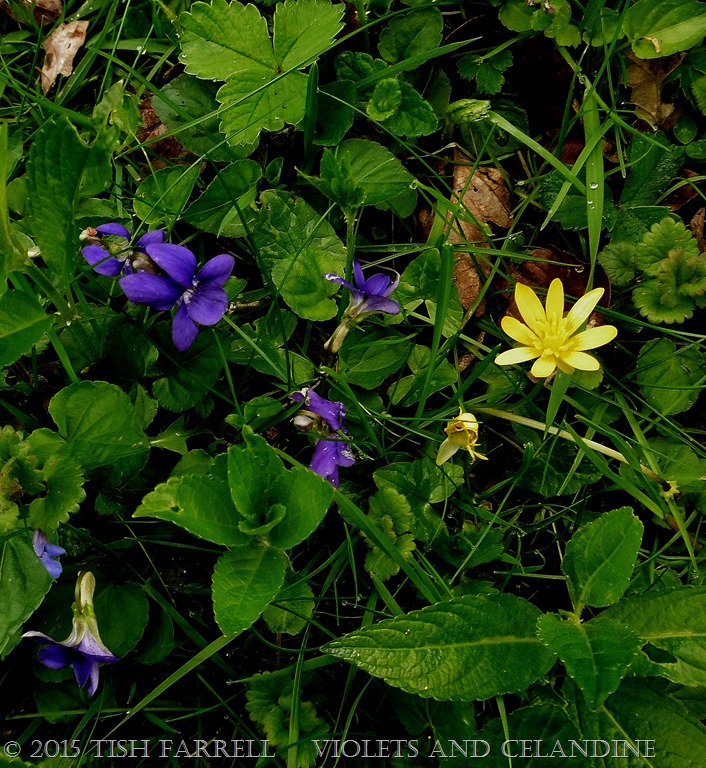
Windmill Hill has more than its open, calcareous pasture. There are wooded flanks to the north and south and here, beneath the trees, I found violets and celandines. You can also see leaves of tiny wild strawberry plants (north of violets), germander speedwell (northeast of the celandine), and sprigs of Dog’s Mercury at the bottom of the shot.

P1010366

*

And coming up is Dog’s Mercury (Mercurialis  perennis  or Boggard Posy) in full flush. This unremarkable looking plant is a member of the spurge family and very toxic, a fact reported in a letter from Shropshire in 1693 and published that year in the Philosophical Transactions of the  Royal Society, 203 VIII. The letter gave a detailed account of how one  Mrs. Matthews had gathered, boiled and then fried the herb with bacon for her family’s supper. Two hours later there was much purging and vomiting followed by heavy sleeping. Sadly one of her children died after remaining unconscious for several days. Mr. Matthews, however, reported going to work the next day three hours late, but feeling as if “his Chin had bin all Day in the Fire.” He had therefore been forced keep his hat at his side as he worked, filled with water, so he could keep dipping his chin in it.

100_5469

*

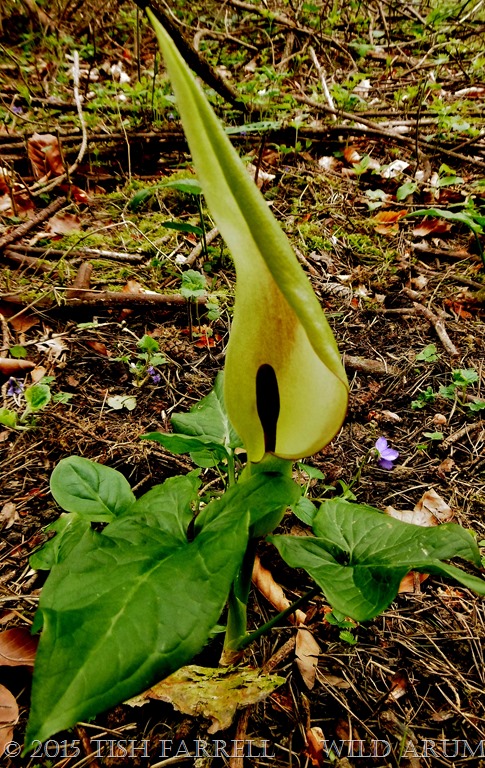
This next plant, Arum maculatum,  also has toxic characteristics. And it has a host of intriguing country names, some of them certainly alluding to what William Shakespeare referred to in Hamlet as ‘country matters’. For instance we have Lords-and-ladies, Ladies and Gentlemen (Shropshire version), Devils and Angels, Willy Lily, Cows and bulls, Red-hot-poker. Then there are the more curious Jack in the Pulpit, Cuckoo-pint, Fairy Lamps and Shiners. Its hooded sheaths (spathes) do glow in a faintly sinister, not to say priapic fashion in the shadiest spots. When done flowering, and presumably duly fertilised, the sheath collapses in a disturbing manner. In the autumn, though, there are spires of fire-red berries that light up gloomy days.

As to usage, in the times when people still wore lacy ruffs, the arum roots were crushed to make starch, although the processing apparently gave the launderers nasty blisters on their hands. It presumably did not do much for the ruff-wearers’ necks and faces either. So yes, it’s also good to remember the toxic properties of plants along with their more healthful aspects.

P1010337

*

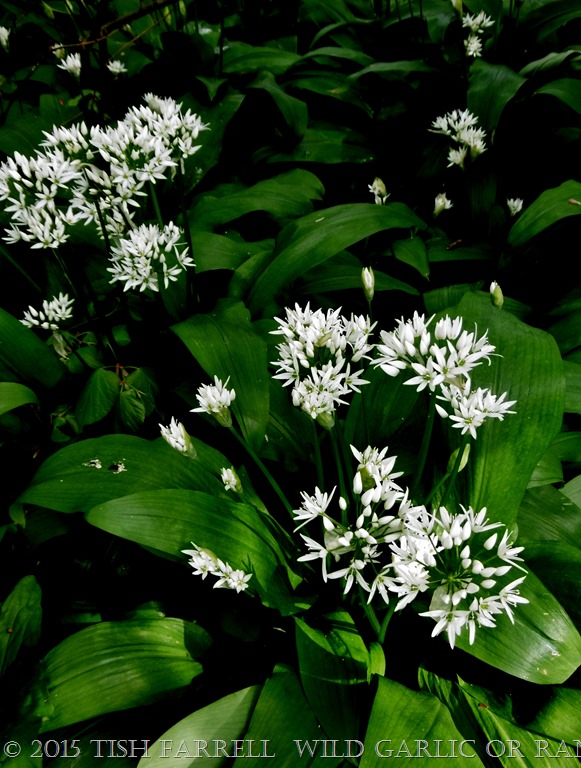
And now for something seriously edible, if you like garlic and onions, that is. The Wild Garlic or Ransoms (Allium ursinum) grows in profusion at the foot of Windmill Hill, and especially along the banks of the old railway line. Those who don’t care for the smell will appreciate its vernacular names of Stink Bombs and Stinking Nanny.

P1010304

But you can certainly cook, or add to salads, both the leaves and the flowers, and their flavour is not as strong as the smell suggests. Excellent wilted in olive oil with pasta, for instance, or in soups – cream of potato and wild garlic say.

This wild garlic photo was taken while the sun was still shining, and as I said at the start, I knew it wasn’t going to last. Even if I hadn’t read the Friday forecast of rain by noon, followed by more rain all day, the green woodpeckers would have warned me. As I headed down the hill and along the old railway line their cries, known as yaffling, dogged my footsteps. It’s interesting how this member of the woodpecker family likes to alert everyone to a coming downpour. In Africa it is the red-chested cuckoo that performs reliable rainbird duty.

100_5494

Those yafflers were dead right too. As I turned for home, the sky was leaden, and the first drifts of rain were falling through the trees. Bye bye sun!  But then the old railway line is a good place to be whatever the weather. It is one of the town’s most popular footpaths, and it is hard to imagine that along it the Great Western steam engines once came rattling into Wenlock – the Olympic special bringing thousands of spectators to the annual Wenlock Olympian Games on the next-door Linden Field; goods trains from South Wales coming to collect limestone from Shadwell Quarry behind Windmill Hill. These days, then, there a trees as well as leaves on the line (NB for those living outside the UK,  ‘leaves on the line’ has long been the old British Rail’s excuse for non-arriving trains.)

Finally, I’ll leave you with a few more shots of botanical specimens discovered round Windmill Hill and along the railway line. Clearly the natural world is busy cracking on – full of vim and vigour – even as I shiver in the cold wind, and hang on to my much layered clothing. That’s good to know though – that nature will out, even if, as time goes on, it may not quite do what we expect.

100_5488

100_5483

100_5490

copyright 2015 Tish Farrell

Reference: Richard Mabey Flora Britannica

Forces of Nature

This post was also inspired by Jo’s Monday Walk at restlessjo, a great venue for walkers, whether in body, mind or spirit.


Sun Setting Over Wenlock Edge ~ Or Did The Earth Move?

P1000591

From my house I often watch the late-day sun slip behind the Edge. But which of us is moving: me, or the sun? It’s the sort of displacement-activity question I ask myself when I should be doing something more constructive. It also makes me think about the Edge, the fact that something so apparently static is, of itself, an embodiment of movement; a geological exemplar of extreme process and change.

The limestone ridge on whose foothills we Wenlockians dwell, is 425 million years old. It runs for some twenty miles while rising up to three hundred feet above the land.  And so it goes without saying that a structure of this size cannot help but evoke a sense of monumental immobility.

How can it  move?

Yet move it has, and move it does, although these days not on quite the colossal scale of the Silurian Age when it was formed.  Its constituent parts, the sea-creature fossils that have fascinated the world’s geologists enough to earn them their own Wenlock Epoch, clearly indicate that our Edge is neither where it was, nor what it was in the aeons before fish were invented.

In fact during the Silurian era, and some 200 hundred million years before one cosmic hint of a Stegosaurus or Diplodocus was abroad, the strata that would become Wenlock Edge were quietly forming. Layers of dead and decomposing corals, sponges, sea lilies and molluscs were building up beneath a shallow tropical sea, and in a location somewhere off present-day East Africa and well south of the Equator.

Today, however, this former sea bed is an up-tilted escarpment, a steeply wooded ridgeway of ash, birch, hazel and oak trees. It bisects a temperate, rural Shropshire in the middle of England, which as most people know, is and often feels hugely north of the Equator. The power of tectonic shift and uplift is thus truly marvellous.

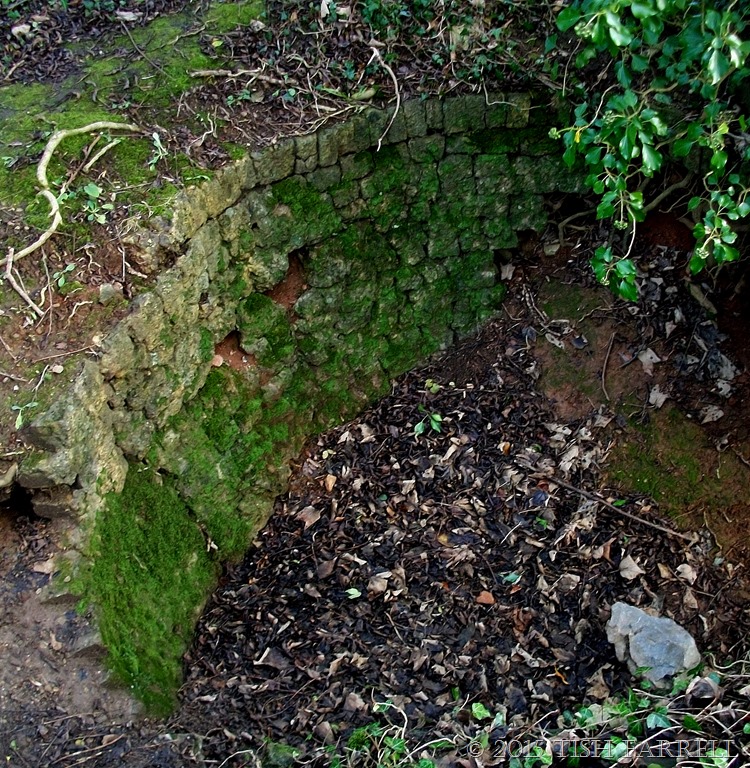
For the last couple of millennia, though, it has been humans who have been responsible for the Edge’s biggest movement. They have hacked, drilled, and blasted out the limestone with dogged persistence. At first the spoil would have been carried away on packhorses, then on carts, and finally by train and truck to wherever it was needed. Chunks of fossil sea bed hauled off to build grand monastic houses, feudal mansions, churches and cottages; limestone mortar to make them weather-tight; limestone to burn to make quick-lime for fertilizer; crushed limestone to pour into the top of massive blast furnaces, and so draw the impurities from smelting iron.

100_7035

One of the many old lime burning kilns on Wenlock Edge

*

In such ways did Wenlock’s broadcast and reconstituted Edge come to play its part in Britain’s Agricultural and Industrial Revolutions. Yet way before this, in the late 600s AD of Saxon times, it probably also gave us our curious sounding name. In those days it was the habit to paint the early Christian religious houses with lime-wash so they glowed luminously white against surrounding terrain.  It was also around this time that Milburga, daughter of a Mercian king, became abbess of a dual monastic house of monks and nuns that stood where the town’s parish church now stands .  Gwen/Wen means white, and Loc/Lock means chapel or religious house. So there you have it – Wenlock – the place of the white church.

In more recent times, aggregates for highway construction have been the Edge-product of choice, and supplies are still outstanding in one of the quarries. At intervals convoys of motorway construction trucks come rattling through the town to fill up – and all this so more and more traffic can rush about the place.

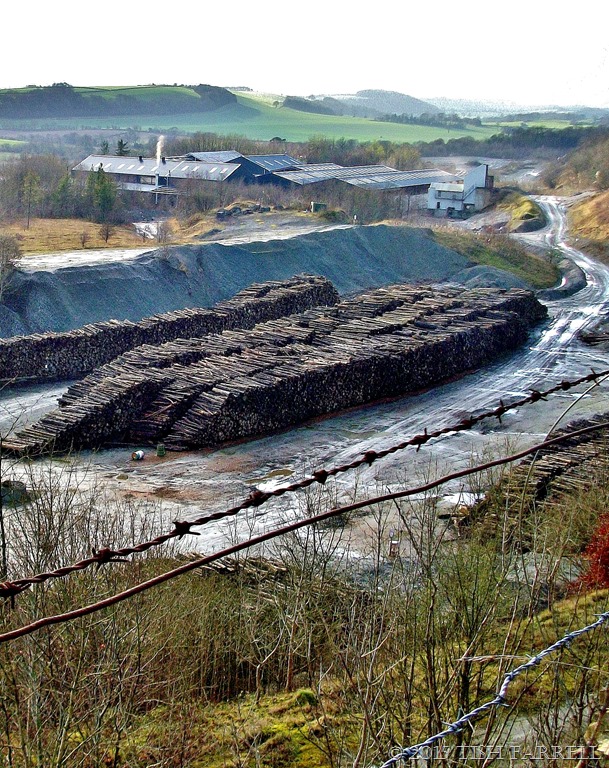
The mopping up of the aggregates marks the end of quarrying,  although the quarries themselves have now been occupied by other industries  – garden fencing  and woodchip fuel producers, paint and packaging companies – all taking advantage of the huge spaces left behind by the evacuated limestone.

100_7059

100_7071

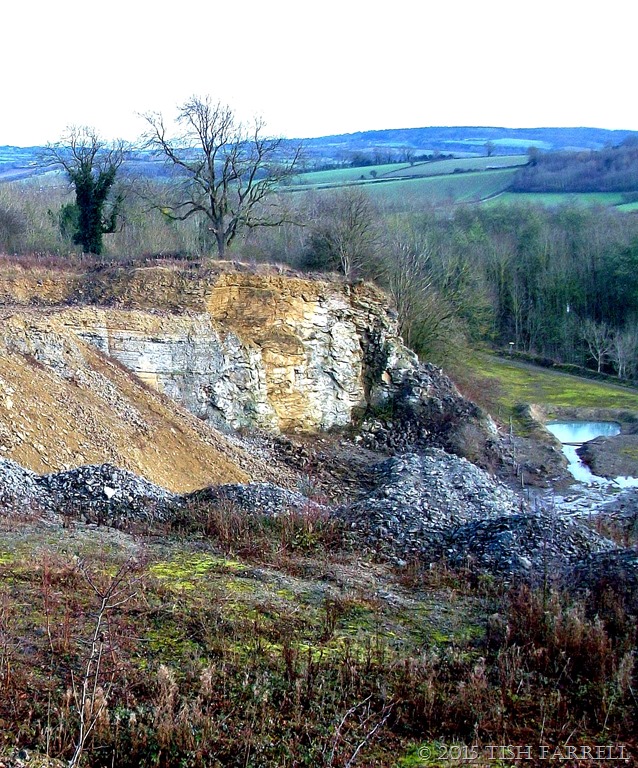
Yet where the old workings and exploded cliff faces have been left to themselves, there are signs that the vegetation is reasserting itself, slowly extending the habitat for the Edge residents: deer, badgers, hares, weasels and mice.

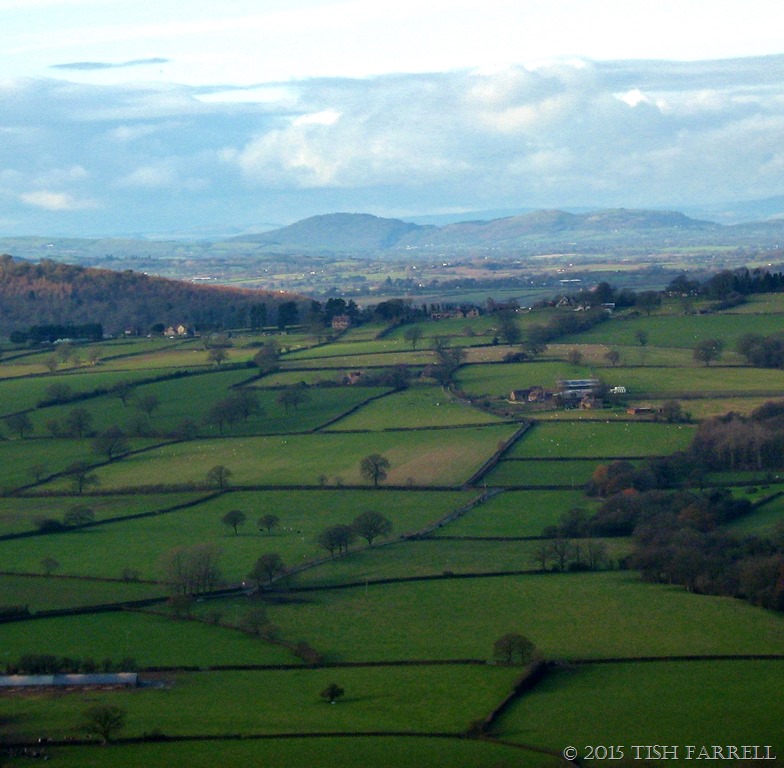
I find the old quarries fascinating in a  morbid, Edgar Allan Poe-ish kind of way. Ravens like to nest there for one thing, which adds to their brooding allure. However, if you turn your back on the quarries, and look the other way, through breaks in the tree cover, you will see broad sweeps of Shropshire’s hills and farmland. And this, for most people, is the main reason why the twenty-mile-long vantage point is one of the county’s great treasures. The National Trust who own a long stretch of the wooded slopes, and manage the woods and paths, want to ensure it remains that way – a valued public resource.

IMG_1911

This  view looks towards the Welsh borders and, in the past, would have been gazed on by writers such as Thomas Hardy and Henry James, and by Africa’s darkest explorer, Henry Morton Stanley, all of whom were, at various times, guests of the Milnes-Gaskells, Much Wenlock’s erstwhile gentry who lived in the Prior’s House at Wenlock Abbey. The Milnes-Gaskells were good hosts and tour guides and made sure that their visitors always took in the best views.

On reflection, though, I’d say that this particular fieldscape would have looked very different a good century ago – smaller fields, many more hedges and trees back then. Much bigger trees too, for all the huge oaks were culled by the late nineteenth century, and those of us alive today have never seen their like other than in old photos, where their magnificence has been felled and stacked up, ready to serve some apparently pressing human purpose.

Life for ordinary people would have been tough too – with many more labourers working the land, horses pulling ploughs, vistas of scenic rusticity that did not fool Thomas Hardy for one moment. He is said to have been mightily appalled by the impoverished state of Wenlock’s workers.

P1000594

And so back to the setting sun/moving earth where this post began. The Edge then, is still in motion, although mostly in ways not much noticed by us. The limestone scarps are degrading. Rock becoming soil and mixing with the leaf mould to create new niches and microclimates, the old lime kilns, moss and ivy coated, weathering into the earth, the quarry scars and debris gradually being colonised by trees and plants.

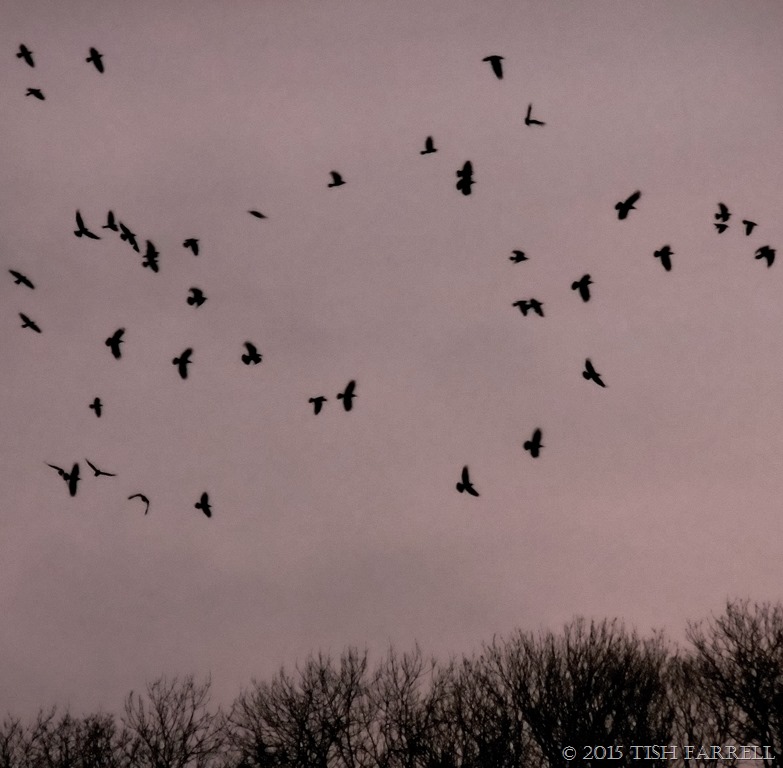
Then there are the kinds of movement that I observe day after day behind our house: the march of clouds, weather; the change of light, dawn , dusk, the stars, the seasons, the rooks and jackdaws going out, and coming home. Everything shifting, transforming, recycling as the earth rotates around the sun. I find that thought – the revolving planet and the endless motion of its life forms – very joy-making. It is good to stand still and watch, and especially as the sun sets, or the earth moves.

100_5072

P1000341

Rooks and jackdaws coming home


copyright 2015 Tish Farrell

Jennifer Nichole Wells: sun

Motion

Killing words ~ a case of verbal decomposing?

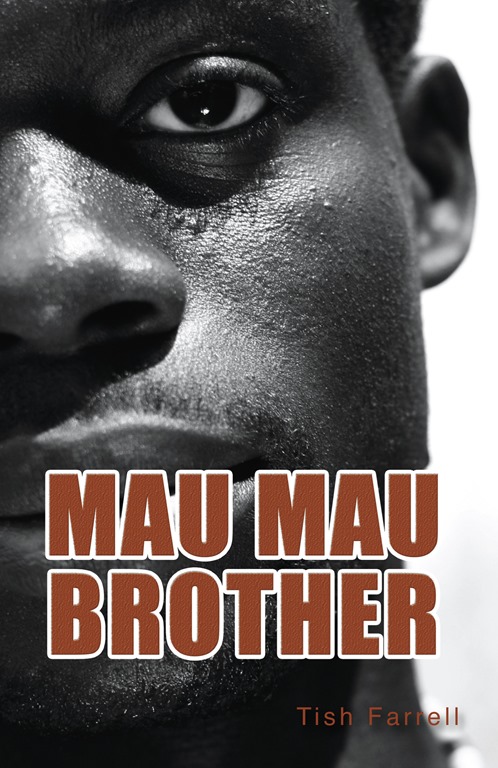
Shades FINAL COVERS Set 3_Layout 1

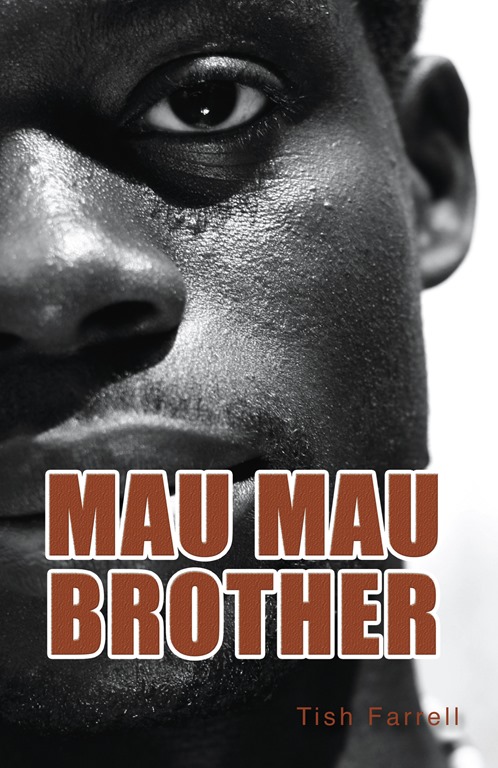
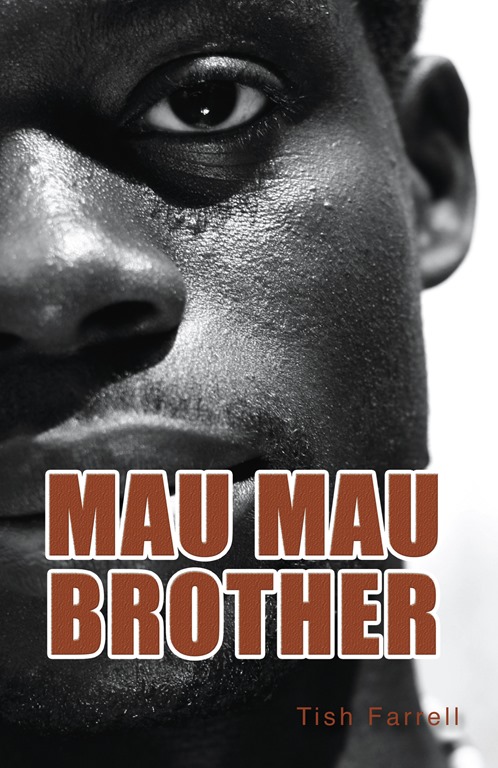
It’s all my publisher’s fault that I haven’t been writing so much on my blog. He, the lovely Creative Director of Ransom Publishing published my quick teen read Mau Mau Brother  in their Shades 2.0 series last summer. As with most of my stories, there are many earlier versions. The Ransom Shades edition is aimed at teens with a reading age of around 10 years. Its 6,000 words have been arranged into 11 chapters spread over 64 pages. The purpose of this kind of presentation is to keep an unkeen reader reading, and so give them the satisfaction of finishing a book.  And so yes – maybe they will then want to read another. ( I do have other titles in the series).

The story, though undauntingly presented on the page, tells of challenging times during the 1950s Kenya Emergency.  The narrator is 15 year old Thuo, and his story is one of personal conflict. His hero elder brother, once a British Army sergeant who fought in Burma, has gone to the forest to join the Land and Freedom Army. These are the men and women fighters whom the Europeans dub Mau Mau; their sworn aim is to drive the British from their land.

As the terrifying events unfold, Thuo finds himself hating his own brother: surely it is Kungu who is the root cause of all his family’s terrible troubles. But at the heart of Thuo’s hatred is another fear – that he, Thuo, is a coward. Only when the forest comes for him, does he find out what kind of man he truly is.

In this excerpt Thuo tells how he helps the wounded Kungu out of the fortified village-camp where Thuo’s family have been forced to live under the British Emergency regime. The village is surrounded by barbed wire and a deep ditch set with bamboo spikes. Kungu is now a wanted man and must escape back to the forest.

I haul Kungu from the hut. He half-walks, half-leans as we creep past our neighbours’ huts, across the compound to the ditch.

Behind us comes Mugo with a broom, ready to back off fast and sweep away  our footprints. Kungu flinches as I help him slide into the ditch.

Watch out for the stakes! Mugo throws me his sheepskin. I’m carrying a gourd of gruel in a sling, holding a branch to wipe away our footprints on the other side. I slither into the ditch behind Kungu. We edge between the spikes.

It takes a lifetime.

At last I push him up the far side. Then he pulls me up. Then it’s through the wire, our sheepskins saving us from the worst barbs.

Beyond the wire, a zone of bare earth surrounds the whole village. It is swept before the night curfew and checked  for footprints at dawn. We shuffle backwards. I hold Kungu with one arm, while brushing away our tracks with the other.

The sweat runs down my face like tears. Any second I think the watchtower searchlight will find us. The brushing takes precious times, but if our tracks are found in the morning the whole village will be beaten, or worse.

When at last we reach some cover Kungu stops dead. I am stunned when he hugs me.

“Go back, Thuo. God go with you. You have proved your courage. I was wrong to taunt you.”

I stand in the darkness, the wire, the ditch, the village-camp all behind me. I think of my mother and the promise I am breaking. I think of my father, maybe dead in Manyani detention camp.

I think of my real home that the Home Guards set on fire. But mostly I smell my brother, the unwashed forest warrior who is fighting for my freedom.

Again I make my choice.

And now to the reason for the lack of writing in recent blog posts. A few weeks ago Ransom suggested I might write a new version of Mau Mau Brotherthis for their Sharp Shades series that caters for teens with a reading age of 8-9 years. The books will still have 64 pages, but half the number of words, plus some B & W illustrations.

Half the words – 3,000 instead of 6,000; 250-300 words per chapter. Heavens, that’s tight.

Yet the interesting thing is how much I’ve been enjoying killing off my words. I’ve done for about 1,200 so far, this in a story where I thought I’d already pared it right to the bone. And there’s a lesson here for all writers. Being pinned down to a tight word count can be good for your prose. Of course in this case, it’s not only about self-editing and the removal of all superfluous words. The original text had already been well edited. Now it’s more about re-composing the original into a shorter form.

At every point I must ask myself how I can convey meaning in the most vivid, yet briefest form, tackle the body with a forensic eye. Later, I will need to restore rhythm and check for any lost meaning.

And I’ve still a long way to go. There is also the lurking doubt that I won’t be able to do it without killing off the story completely. But then that’s a challenge too. Time, then, to get back to the bone-trimming and resuscitation department.


copyright 2015 Tish Farrell

Shades FINAL COVERS Set 3_Layout 1

For ePub version

For book and Kindle versions:

Amazon.co.uk

Amazon.com

Nook ebook

One of my treasures ~ introducing Kapp 1890-1978

P1000577

I stumbled on this print almost literally. It was years ago and I was treading warily around a rackety riverside warehouse in Shrewsbury. The place called itself an Antiques Centre, and as I climbed the stairs to the ‘showroom’ the chances of sudden building collapse loomed large. Having reached the first floor, I remember creeping around on tiptoe, trying not to challenge the timbers. So it was, in mid negotiation with  uneven floor boards, my hand reached down to an old picture frame. It was propped against a cardboard box underneath a table. When I turned it round, there it was – a caricature of The Rt. Hon. Viscount Cave, signed by Kapp.

I’d never heard of either the subject or the artist, but who cared. It was love at first sight – the colours, the ‘cut-out’ two-dimensional form,  that two-thirds frowning, pasty face of the viscount.  The whole thing made me smile, inside and out. Best of all, the price tag said £2.50. What luck – to find something so pleasing for such a paltry sum.

My tracking down of information about the work and its creator has continued off and on ever since. I discovered first (and long before the days of Google) that my ‘print’ is an offset lithograph, and one of a series called Ten Great Lawyers  created in 1924 for The Law Journal. I also learned that Edmond Xavier Kapp was an artist, and caricaturist of note, born in London in 1890, and a Cambridge graduate.

I came across him again when reading poet, Edmund Blunden’s World War 1 memoir Undertones of War. Kapp, already well known for his drawings and short stories before the war, was serving on the Western Front, a 2nd Lieutenant, in the Royal Sussex Regiment. He provided some of Blunden’s lighter moments in the trenches. Blunden himself was only twenty years old at the time of their encounters, and newly arrived at the Front:

Second in command, Edmond Xavier Kapp appeared, ready with scribbles and charcoal drawings not unworthy of his reputation as a satirical artist…[He] was a lively hand to have in a dugout; his probably imaginary autobiography, peeping out at intervals and enriched by other versions, was also a diversion; but one day he was called away to an interview with the Colonel, and soon he disappeared into the irrelevant air of GHQ, far beyond the stars.

Kapp was twenty-four when he enlisted and, until his promotion to Intelligence and the rank of Captain on General Haig’s Staff, had withstood three nightmare years in the trenches. In Time Will Tell: Memoirs  his first wife Yvonne Kapp says that he witnessed the wipe out of his own platoon twice over, and never was able to lay the ghosts of lost comrades.

That he survived at all is remarkable. Because he spoke German fluently, he was sent out alone to occupy a dug-out in No Man’s Land, the objective being to interrogate German prisoners as they were brought in. On one occasion, in the bloody chaos of shifting lines, Command forgot he was out there. Under constant bombardment and gas attacks, he survived for several weeks on tins of bully beef. When he was finally rescued he was deaf and half blind, and almost dead, and thereafter spent several months in hospital. Later, he apparently relished his senior officers’ less than whole-hearted commendation of his military service: “his zeal sometimes outruns his discretion.”

In the light of all he must have endured, and in what he described so sparely as those “five long dreadful years”, it is astonishing that he went on to serve as Official War Artist in the World War Two. Between the wars he produced many drawings of well known personalities, both for periodicals and exhibitions. He also ventured into oil painting after working with American artist, Maurice Sterne. Then in the 1930s he deployed his lithographic skills to produce portraits of the twenty five members of The League of Nations, and this led to his meeting and friendship with Picasso who sat for him in 1938.

Kapp himself disliked being called a caricaturist . He considered himself to be a “character-portraitist”, producing works of psychological rather then satirical intent (Chris Beetles Gallery ). And perhaps, now  that I look again at The Hon. Viscount Cave, this is the quality I most admire. After all, the stuffy old gent is rendered with such gentle humour. It speaks, I think, of the artist’s humanity, and of a good, and kindly eye.

copyright 2015 Tish Farrell

Post inspired by Jennifer Nichole Wells One Word Photo Challenge: Melon

Follow the link for more bloggers’ responses.

Fiction Writers, Are You Reading Enough? Just Thought I’d Ask…

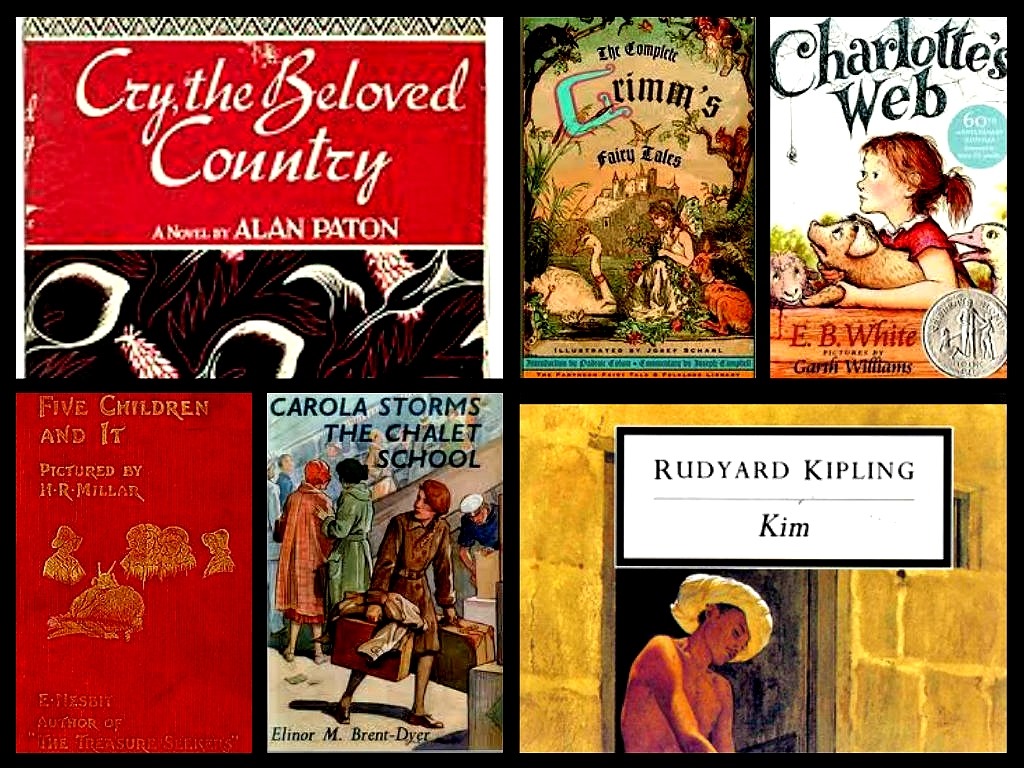
pizap.com13626625098761

…because there was a time in my adult life when I read no fiction at all. I went from avid child-teen reader (some favourites above) to wilful adult non-reader. The reason was not reasoned. As a child I decided I would be a writer ‘when I grew up’, and when I grew up I further decided that reading other people’s works would block the ethereal visitation that, any day soon, would deliver the lightning bolt of writerly inspiration, that in turn would drop into my mind the fully formed novel idea, and thus spur me to sit and write the thing.

It was not a good start – a case of locked-in block before I had written one word.

There was a further obstacle, one I did not even see until I had returned to reading. By then it had also occurred to me to buy a writing magazine, and that was a turning point. Instead of a lightning bolt of inspiration came a thunder blast of reality: I might be a whizz at writing dissertations and museum guide books, but I knew nothing of the mechanics and craft of writing fiction. I was astonished to discover that people had so much to say about it: story arcs, characterisation, foreshadowing, pace, mood and setting etc etc. Good heavens. Who knew!

Of course it might be said that you can become too knowing, that absorbing too much ‘how to’ can lead to self-consciousness and a lack spontaneity or originality.  I think my answer to this is you need to cover the ground, embed what you can through practice, then move on. It is rather like a painter learning how to prepare their canvas and mix their pigments before the real composition can begin. It is also about opening up mental pathways that clear the way for the story-making. This means reading other writers critically, and not simply reading with your discretion turned off. Two and three readings might be needed to see how and why a piece of fiction works. The best writers, after all, aim to be seamless, not to display their working methods.

So for some swift and pleasurable enlightenment on the fiction writing process I can suggest no better start than to visit the children’s section of your book store or library.  Some of the most impressive and imaginative fiction around is for young adults. Works for this age group are tightly written, multi-layered, have memorable characters, affecting themes and energetic plotting that is character-driven. The writing will be economical, but also resonant, and often very deep. The best and most telling words will be chosen. There may also be a repeating motif that is more suggestive of poetry than prose, and which may lift the tone of the book in unexpected and magical ways. There is also the overall impression of the story having been well distilled, and thus being refreshingly free of the kind of self-indulgence found in some adult literature. In other words, every word will count.

My own favourite writers for this age group include Geraldine McCaughrean (The Kite Rider), Sharon Creech (Walk Two Moons), Kate di Camillo (Because of Winn-Dixie), David Almond (Skellig and Kit’s Wilderness ), Philip Pullman ( Dark Materials Trilogy), Frances O’Roark Dowell (Dovey Coe) and Gillian Cross (The Great Elephant Chase). All these stories may be characterized by the fact that they have something worth saying, and that this ‘something’, framed in highly original ways, gives their stories stature and substance as well as making them darn good reads.

And aside from learning fiction’s nuts and bolts, there are other good reasons why writers must keep reading.  It is not so much about borrowing (stealing) ideas, but more about drawing on the creative energy of other works, and using it to fuel your own writing.  And I am not talking about plagiarism, but of tapping into the spirit of someone else’s creation. Reciprocating, if you like. Striking up an engaging conversation.

If you think about it, it is obvious. As children, we learn to speak our native tongue through exchanges with others. We learn not only vocabulary, but also rhythm, inflexion, idiom, innuendo, puns, riddles, jokes, and narrative skills – all the tools we need to communicate effectively.

With writing we thus have a paradox. Writers, as some of the world’s great communicators, generally struggle to wring out their words in isolation. It has to be done that way. There are no answering voices except the writer’s own. But if that is the only voice, how is the writer to learn, grow and and test the boundaries of their art? How will they keep their edge? And yes I do know that many writers, new ones especially, fear losing their own voice if they resort to reading other writers’ fiction.

I would argue that through continuous reading, writers replenish their imagination banks, hone their language skills, explore different modes of expression, learn new things, grow wise, develop insight and understanding, find new ways of telling a story. What they read in the external world, and their reactions to it, will all be stored in the subconscious for further processing and reworking.  And I believe that this is all part of learning how to make oneself heard, of building one’s true and distinctive voice.

Best of all, if  a project has stumbled into a dead end, then visiting another’s writer’s world may provide the very thing  to turn the work around. I personally find that I write best when I am reading a book that carries me away. My most recent writer’s refuelling came courtesy of Malaysian writer, Tan Twan Eng  and The Garden of Evening Mists.  This is an adult book, but I will also return to Geraldine McCaughrean’s The Kite Rider  whenever I need a fix of this writer’s airy prose.

So for those of you writers who have not been reading much lately, time to join the big fiction conversation. Read, read, read. You will be glad you did.


Related: Fun and Games at the Writer’s Block Party

copyright 2015 Tish Farrell

Release Your Inner Artist

P1000210

We are each of us born brimming with potential, creators in the making. But then something happens – at least for most of us it does. Somewhere between the childhood dreaming, and the adolescent wake-up call we make a decision. For each of us this will be the result of particular, often very painful circumstances, but the outcome will be the same. From that point on we will tell ourselves we are not good enough, and what we do is not good enough and that even if we toil until the crack of doom, it never will be good enough. We give up. Surrender, often before we have given ourselves half a chance. Somehow – through repeated expressions of contempt, denigration, ridicule, bemusement from peers and elders – we learn that it is dangerous to be too extraordinary, and that if we persist in following our dream we will end up alone, and worse still, hated.

At the same time, reinforcing our sense of uselessness, the dominant culture peddles the notion that geniuses are born, and that true talent is ‘natural’. In other words Beethoven’s symphonies, Shakespeare’s plays and Picasso’s Blue Period simply manifested themselves via the gifted hands and minds of said geniuses.

This model of spontaneous creation, artist as divine conduit, somewhat like spontaneous combustion, does not take into account the actual years of preparation that preceded the creation of these works.

To compound this whole misunderstanding of the creative process, there is then the popular belief that ‘inspiration’ is the be all and end all, when in fact it is only the starting point for any work. Added to this are the ideas that you must ‘wait for it’ and thus be someone ‘special’ to receive it at all. Yet in reality ideas do not happen in a vacuum. They  need triggers, and you need to actively invite those triggers otherwise it is indeed a self-fulfilling prophecy; do not engage and sure enough, nothing will come.

I have no idea whether or not geniuses are born rather than nurtured, but my own feeling is that the nurturing has an awful lot to do with it. We all have capacity to create something. We are all artists. What we go on to create, should we be determined enough to follow our inclinations, will be influenced by our experiences, past, present, conscious and subconscious, and by the encouragement, assistance and wisdom we may receive from considerate others.

Sometimes we are lucky to have long-lasting mentors who are generous enough to stand by, ready to open our eyes to new ways of looking and making; sometimes we have to do much of this work for ourselves.  In this sense, then, it is a quest, an honourable labour. The learning process can take a huge amount of time and dedication. It might take a lifetime. There are craft skills to learn and hone, stimuli to absorb and decipher. Most of all, there are failed attempts and mistakes to learn from.  But nothing in this process is ever wasted: every part informs another part, even if you are the only person who knows it is there.

The final onslaught that the dominant culture visits on the creative process is the commoditisation of art, judging it by its selling power. I include in this the idea of competition, and the presumption that it is in some way useful to judge one piece of well-crafted work against another piece of well-crafted work.  Of course it creates publicity, and boosts sales, but this is a distraction from what really matters – the work itself, and how it ‘speaks’ to people.

Creating art is a mediumistic pursuit not a commercial production. Our gut reactions, whether as creators or observers tell us the difference. It is about integrity, craftsmanship and telling the truth at some level. It is about doing the best we can. And we can all choose to take this path, and make of the journey what we will. The things we create are worth creating. So I say again, we are all artists. And if you don’t believe me, imagine yourself at life’s end when you still have hidden, and unrealised in your heart that story you longed to tell, the picture you did not finish, the film script lying in a box in the attic. How does this make you feel – not to have seen them through?

So what are you waiting for then? Set free the captive. Who knows what wonderful things will happen next.

copyright 2015 Tish Farrell


This post was inspired by Bill at Pinklightsabre and his poem Moon Song for Marz

Thank you, Bill Star


Related:

How I Write: telling the truth in fiction

Pondering on what makes us human: that would be shopping, then?

96_thumb[19]

So what does make us human? What differentiates us from our closest relatives the great apes? These were some of the questions posed to us as students of Prehistory & Archaeology way back in the 1970s. Naturally, the philosophical framework of a course with such a title is going to be artefact-driven. Archaeologists deal in physical remains. Prehistory means there is no written record. Mostly all we are left with are bones, stones, post-holes, hearths, bits of wood (if we’re lucky), stains in the soil, and that prehistorian’s joy of joys – the rubbish pit and/or midden.

(After all, there is nothing so fascinating as poking through other people’s garbage – as long as it doesn’t smell too much. Just think what future archaeologists will make of our landfill sites, and what their contents will say about us. See WALL.E  the movie for starters.)

But back to that ‘what makes us human’ question.

In the early 1970s it was widely thought that the appearance of tools was a key criterion. Their construction suggested evolving cognition and the ability to forward plan. Tool-making further  presupposed the facility to walk upright, thus leaving hands free to access materials, and to fashion them for preconceived purposes.

For a time this seemed a useful marker, but then as palaeontologists delved ever further back through the remains of our pre-human ancestors (mostly in Africa’s Rift Valley) it became clear that even by 2.5 million years ago, pre-humans were making tools. The picture was further confused by the realisation that chimpanzees also make tools, albeit crudely fashioned ones – e.g. hammers to crack open nuts, or break into bee hives.

Large brain size was another criterion (judged back then on the basis of the cranial capacity of skull remains), this supposedly indicating a well developed intelligence. I’ve never liked this much, feeling it had a whiff of eugenics about it.  I also remember finding it perplexing to discover that Neanderthal brains were apparently larger than those of modern humans even though Neanderthals were supposed to be ‘inferior’.

None of this seemed to advance my understanding at that time, and besides, now we find that back in the Paleolithic, and  in two distinct phases hundreds of generations apart, humans of the northern hemisphere interbred with Neanderthals. The evidence is there in our genomes.

88_thumb[7]

I left Prehistory behind long ago. As a discipline, I felt it never would be capable of revealing the aspects of humanity that are truly important. And while inferences might be drawn (read: guesses made) about social, religious, political and economic systems from the fragmentary remains of ancient humans, archaeology alone cannot retrieve the all important drivers of human development, the intersecting sets of shared beliefs that create human culture.

After all, we do not know why Stonehenge was built, or what people actually did there, or who organised its building and the activities that took place within the great stone arcades. We never will know. But we can date associated remains, source materials, conjecture on construction techniques, work out how long the place was used, and then we can admire it as an astonishing edifice built by people with an apparently limited technology.

The physical remains,then, are indeed important, but what I really want to know is what was the intention of  its builders; what beliefs led to Stonehenge’s conception and realisation.

By now you may be wondering why this post includes scenes from Dubai, including the 9th century pot above. Here’s a clue from the bazaar:

128_thumb[7]

And another from the Gold Souk:

127_thumb[5]

And at the Dhow Harbour:

118_thumb[8]

And in the mall:

72_thumb[11]

Yes, you have guessed it. Trade is the clue. And so, having ruminated on archaeology’s limitations, I can say that one of the things it does do well is reveal ancient trading  patterns across the globe. In fact only last week it was announced that a study of sediments from a waterlogged 8,000 year-old Mesolithic (ostensibly hunter-gatherer) settlement in the English Channel contained introduced wheat grains that suggest trade with European farmers.

In this regard then, the movement of goods, the origins and spread of food species can be tracked across the millennia. We can thus surmise that even 8,000 years ago humanity was already out shopping, and that, down the ages, this would seem to be one shared behaviour pattern that is exclusively human. We all do it, and probably always have, because whatever territory was commanded on a day to day basis, it probably did  not provide for all its inhabitants’ wants and needs.

There may have been the need to share with other groups a particularly good source of flint for tool making. Inland and maritime communities would have met to exchange materials and foodstuffs. There would also have been the pressing need to find mates well outside the group of related family members. And there might have been a yearning for salt or, in season, for honey or for a particular fruit, all of which might have involved negotiation with outsiders. Fresh water sources might also have been at issue, or the need for extra hands for some seasonal hunting or farming pursuit. And so, for these reasons and more, we would have traded, bartered, exchanged, made treaties and contracts, formed alliances, given and received gifts. This was also probably how some us of ended up with Neanderthal DNA in our genomes.

From the historical record we also know that when it comes to dealing in resources and commodities, hostilities may be instigated, or suspended depending on those whose interests rule. Safe havens, forums, fairs, markets, shopping centres, bazaars, souks, malls are places we all recognise. In the past such gathering points would have also provided venues for song and dance, spiritual and ritual observance, political rallies, exchanges of information and specialised services, the telling of tales.

Dubai, these days, is one of the world’s shopping capitals, reinvesting its wealth from oil refining and trade in the ’shop till your drop’ model. It brings together the concepts of the marketplace and the caravanserai, but on a mega, upmarket 5* scale. Yet it also draws on ancient roots, and on actual trade routes that go back to at least 3,000 BCE. Back then copper and the pearls dived for off Dubai Creek were the stock in trade. Later, as commerce between the Mediterranean and the East began to thrive, dhow merchants made the most of Dubai Creek’s favourable geographical position. The trade continues, only now it is western cars, refrigerators and Coca Cola going east, while the spices, as they have for centuries, come west.

100_thumb[11]

Shopping then, provision and consumption, is, I suggest, what makes us uniquely human. And while I admit that this does not seem a particularly elevating pursuit for our time on this wonderful planet, it nonetheless engages pretty much all of us, from Manhattan bankers to Congo hunter-gatherers. Multifarious  mechanisms of exchange bind us in relationships of largely peaceable cooperation.  The squabbling over resources, and corporations’ drive to make profits at others’ expense threatens us and our planet. But either way, it is hard to see where this never-ending shopping spree will take us. Maybe we need to take a hard look at those landfill sites of ours, and consider what future archaeologists will have to say of us.  I’m not sure we will want to hear it.


copyright 2015 Tish Farrell


Inspired by Jennifer Nichole Wells and her One Word Photo Challenge: teal


How I write: telling the truth in fiction

P1000151 - Copy - Copy

“Begin at the beginning,” the King said, very gravely, “and go on till you come to the end: then stop.”   Lewis Carroll  Alice in Wonderland

*

I sometimes feel I know too much about the process of fiction writing; I’d like to unknow it, and begin again from scratch. Sometimes I think I don’t know enough, and will never make it over that learning-curve hump. In between these two positions, there is also the problem of having taken in too much ‘how to’; the ensuing overburden of advice that can make for self-consciousness, and lead to an unappealing tendency to manipulate characters and events in ways that lack integrity.

The narrative content becomes inauthentic. Untruthful. You see it a lot in book-packaged series for children, the kinds of titles that are written by a host of poorly paid writers under the name of a pretend author whose persona has been created by the packager. (I worked on one of those deals once, but you won’t see my name on the Harper Collins title).

But then isn’t that the point of fiction, that it’s fictional; not real; make believe; just a story.

Well yes and no. Mostly no, I find.

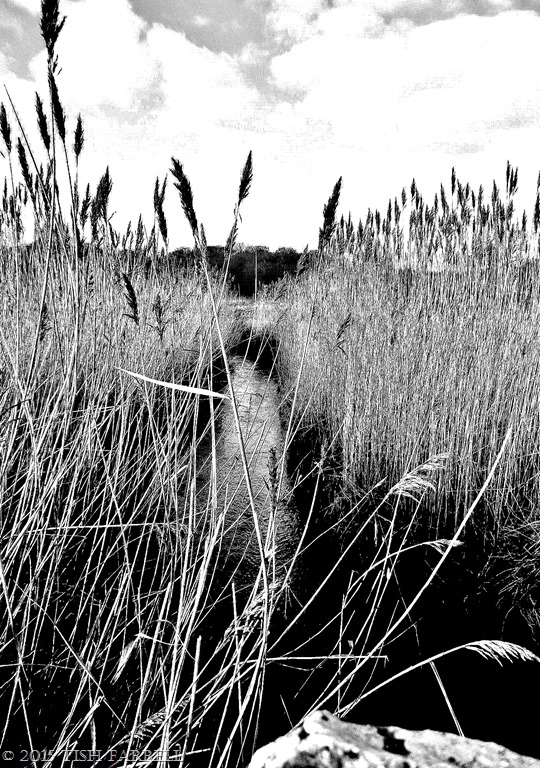
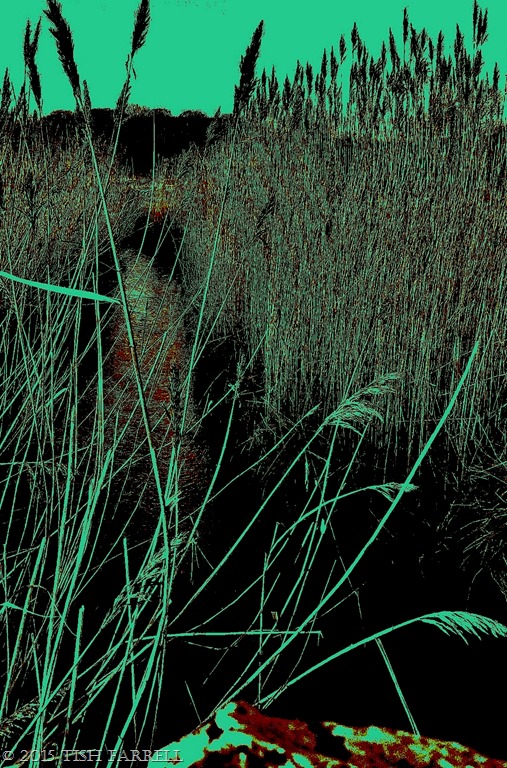
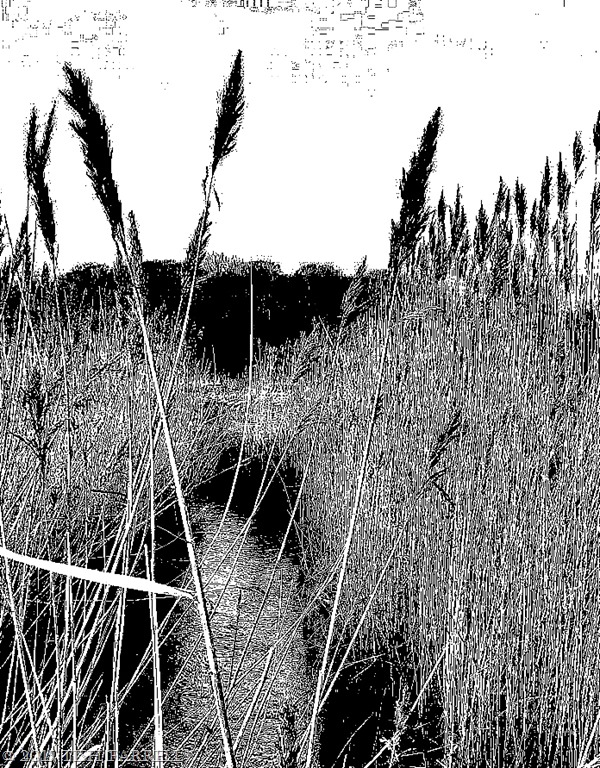
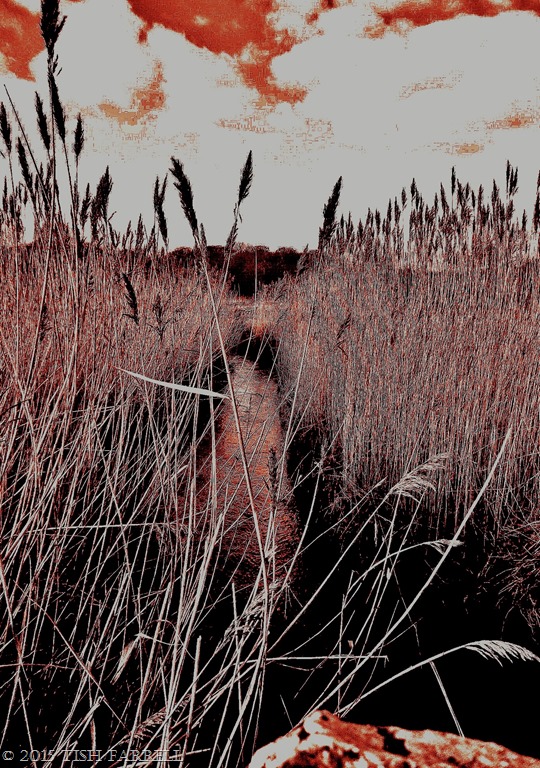
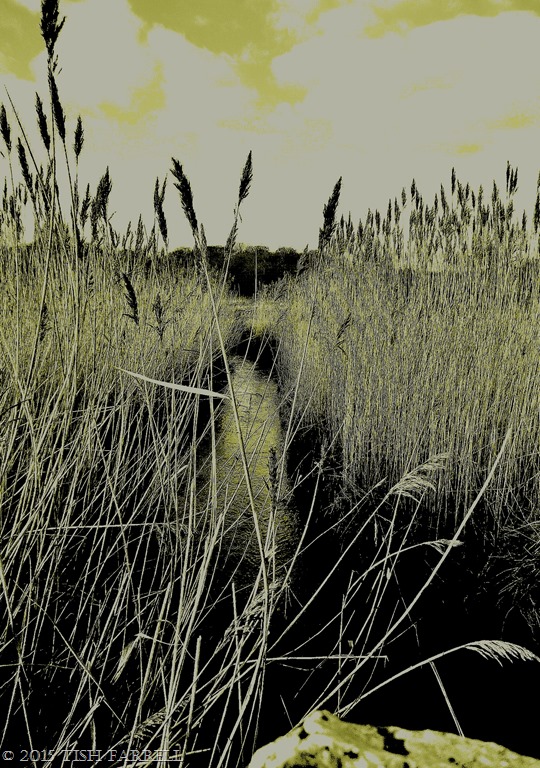
Perhaps this photograph might help to unravel the paradox. I will do as the King of Hearts commands, and begin at the beginning: the laying of a story’s foundations.

In any good opening you are quickly introduced to the protagonist(s). In the photo let’s suppose the main characters are the marsh grasses in the foreground. The eye is drawn to them; they are the most obviously defined; they stand out from the crowd. There is also something particular about their disposition, their relationship to/place within their setting which adds to their interest. At this stage we do not yet know them, but they have attracted our attention and we want to know  more.

P1000151

Along with meeting the story’s protagonists, and in accordance with the usual conventions of storytelling, the reader will, either  immediately, or very soon, become aware of some conflict affecting them. Trouble is brewing, or has just descended. 

The ‘trouble’ can  come in many forms and moods from gritty realism to high comedy. In the photo it might be represented by the soft focus rock in the foreground. We can see it is a rock, but only the top of it is looming. In other words, we sense the imminent drama, but we don’t altogether know what form it will take, or the full implications for the protagonist. Now we’re hooked: we want to know what is going to happen, and in particular how the characters we have glimpsed will confront and resolve their difficulties.

P1000151 - Copy

To use another kind of image, then, these elements are the storyteller’s warp and weft. They are key to the construction process, but they are not the actual story. What is needed is substance and texture, the interweaving of details that will give life to the story’s characters and their situations.

This all about creating an internally convincing context, a believable world, a setting within which its inhabitants and their preoccupations articulate authentically. Everything must ring true.

And when a storyteller succeeds on all these fronts, then the fiction does indeed become a kind of truth. This is what Stephen King means when he says a story is a ‘found thing’. The storytelling process is about discovering something that already exists. In this sense, it is not ‘made up’. I think the analogy King gives is the retrieving of a fossil from its rocky matrix; how good a specimen you end up with depends on the quality of your excavation techniques and your understanding of the materials involved. You also need a steady hand, and a sharp eye.

P1000151 - Copy (3)

Looking again at the photo, the stream, the marsh, the distant wood and the sky are all part of the context for the foreground grasses and rock. They are the setting. The wood adds depth of field and also a  sense of mystery. It contrasts coldly with the pale sky. Perhaps, after all, the trouble is coming from that direction; the rock in clear sight is just a distraction, or only a foretaste of worse to come. Storytelling requires cycles of tension, building in intensity. The triple helix is a useful image to think of.

While we’re here, we might also imagine the stream as the narrative thread. No matter how the storyteller chooses to reveal the series of events that make up the story (and of course they need not be consecutive or chronological in the way that the King of Hearts demands of the White Rabbit) there must always be onward momentum, pressing the reader along, piquing their interest, not losing them on the journey.

This means creating a balance between revealing and withholding information – adding suspense or a new twist. And it’s at this point the storyteller needs to look out, and  stay true to context and characters – no rampant extraneous invention and manipulation to create gratuitous excitement.

“A good story cannot be devised; it has to be distilled. ”

Raymond Chandler

This does not mean flat writing. Far from it. There must be light and shade, surprise, variety, and glorious detail (though not too much), yet all must arise naturally from within the story, have believable existence within the created story world. It is a form of alchemy. Or conjuring. Or mediumship, and the makings have their source deep within the storyteller’s subconscious.

The narrative that emerges is the result of dialogue between the subconscious and conscious mind. Although, just sometimes, the subconscious will do all the work. And it is then that the writer will say the story simply downloaded/was dictated to their inner ear, and all they did was type.

Of course all I have told you here is the ‘how’ of story, and not the ‘what’. And so where does the ‘what’ come from? All I can say is that any writer must find and stake out their ‘territory’, explore every inch, and command it the best they can, only then will the full story emerge.

Hilary Mantel’s muscular recreation of the Tudor world of Thomas Cromwell (Wolf Hall, Bring up the Bodies) is an excellent example. She has done her homework, and then she has conjured. Most of my own published short fiction has grown from years of living in, and reading about East Africa. A host of characters without stories lives in my head. The gathering process, the interrogation of data never stops. One day I will excavate the perfect fossil.

P1000151 - Copy - Copy

But before I leave this photo, I have to say that of course the actual story is not about the upfront grasses or the rock. There is someone in the foreground who does not appear in the shot. A dark-haired girl. I think her name is Eirwen and she has come to the seashore to gather the marsh grasses for thatching. As she cuts the sheaves, she is thinking of Ifor, the seer’s son, and if he will come as promised. She is sad because he won’t, and thrilled because he will. Then a cry of a heron makes her look towards the sea. A fleet of dark ships is heading ashore. She sees the glint of iron – shields, spears, men on horseback leaping into the shallows. The cry of the heron becomes her cry…

 © 2015 Tish Farrell

Related: Also see my post about creating setting/world building at Knowing Your Place

This post was inspired by Paula’s Black and White Sunday: Inspiration


*

image

Secrets, conspiracies, tragedy,

dark comedy – a fast-paced

novella of interwoven tales set

somewhere in East Africa

Available on ePub Bud

5* Amazon Kindle Review

Shades FINAL COVERS Set 3_Layout 1

When war comes it can rip your

family apart. Then you have to

decide whose side you are on.

Ransom Books Teen Quick Read

My Most Read Post in 2014:

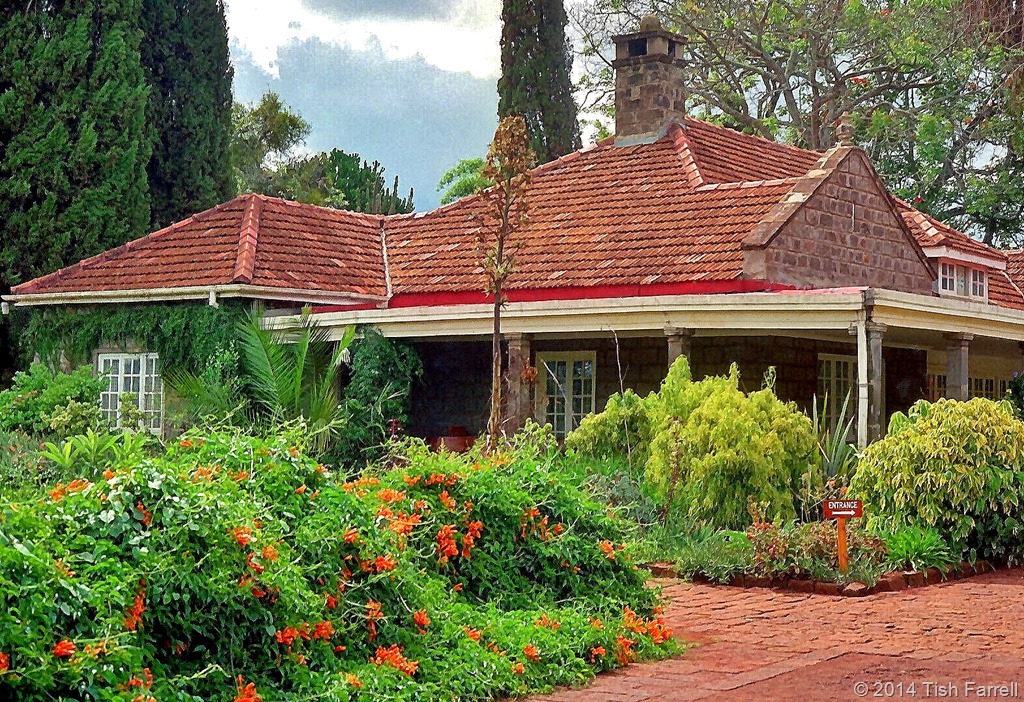
Caught inside a Kikuyu garden: a memorial to Karen Blixen’s lover, Denys Finch Hatton

I wrote this piece back in March. Every day since several people have clicked on it, and on one single day in the summer this rose to 170 viewings. I have no idea why this happened, or why, judging by the search terms, Denys Finch Hatton’s grave in Kenya’s Ngong Hills is of particular fascination.  I thought it was just me who was fascinated. Anyway, here is the post again – a tale of loss and romance in the tropics. It is timely perhaps too, since in the UK at least, now is the season for showing Sydney Pollack’s film Out of Africa once more on TV. Happy Holidays everyone.

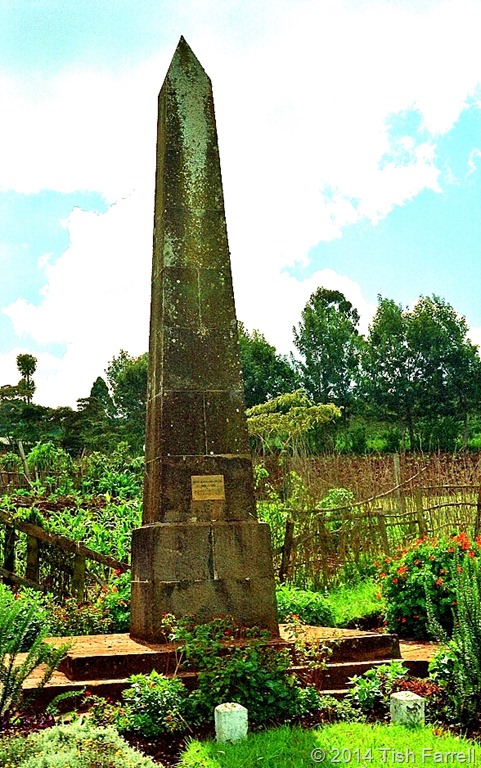
Denys Finch Hatton obelisk Ngong Hills

This was not supposed to happen. In fact you could say it adds insult to irony:  that a man so steadfastly dedicated to an unfettered life in the wilds should, in death, end up hemmed in, and so very domesticated within this small Kikuyu shamba. Yet here it is, the mournful stone obelisk, marking  the grave of Denys Finch Hatton,  son and heir of the 13th Earl of Winchilsea, Great White Hunter, and lover of two women far more famous than he is: writer Karen Blixen (Out of Africa) and aviator  and race horse trainer Beryl Markham (West with the Night).

Finch Hatton's grave on the Ngong farm

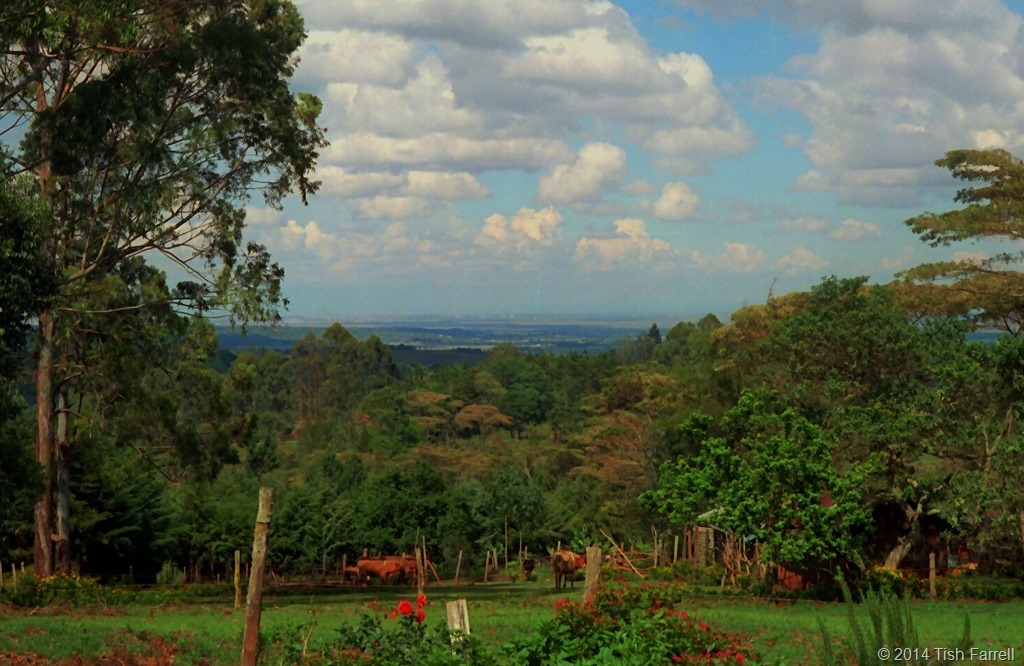
Yet another woman, the one whose shamba this is, shows him a new kind of love, taking care of the garden around the obelisk.  If you want to visit the place it is not easy to find – either her little smallholding on the Ngong Hills, or the grave within. When we visited years ago we found only a hand-painted signpost nailed to a tree. We parked in a paddock outside the farmhouse door and were charged a few shillings. We could have bought a soda too, if we’d wanted. We could not see the grave though, and soon found that it was deliberately hidden from view by an enclosure of  old wooden doors. More irony here of course. More symbols of shut-in-ness.

Denys spent most of his life in Africa avoiding any kind of confinement – out  in the Tsavo wilderness, running shooting safaris for the rich and aristocratic. His clients included the Prince of Wales (later Edward VIII) . In fact it was during the safaris for the Prince in 1928 and 1930 that Finch Hatton began to promote shooting on film rather than with a gun.

His lover, Karen (Tanne), Baroness von Finecke-Blixen lived in a small house below the Ngong Hills, some twelve miles outside Nairobi. By the time she started her affair with Denys she was divorced from her charming, but philandering husband, Bror, although they always remained friends. Her family had invested a great deal in the couple’s coffee farm, and Karen struggled to make a success of it. But the location was entirely wrong, and in the end she was forced to sell up and leave Kenya. It was during the period of selling the farm that she heard news of Denys’s death.

Scan-130429-0005

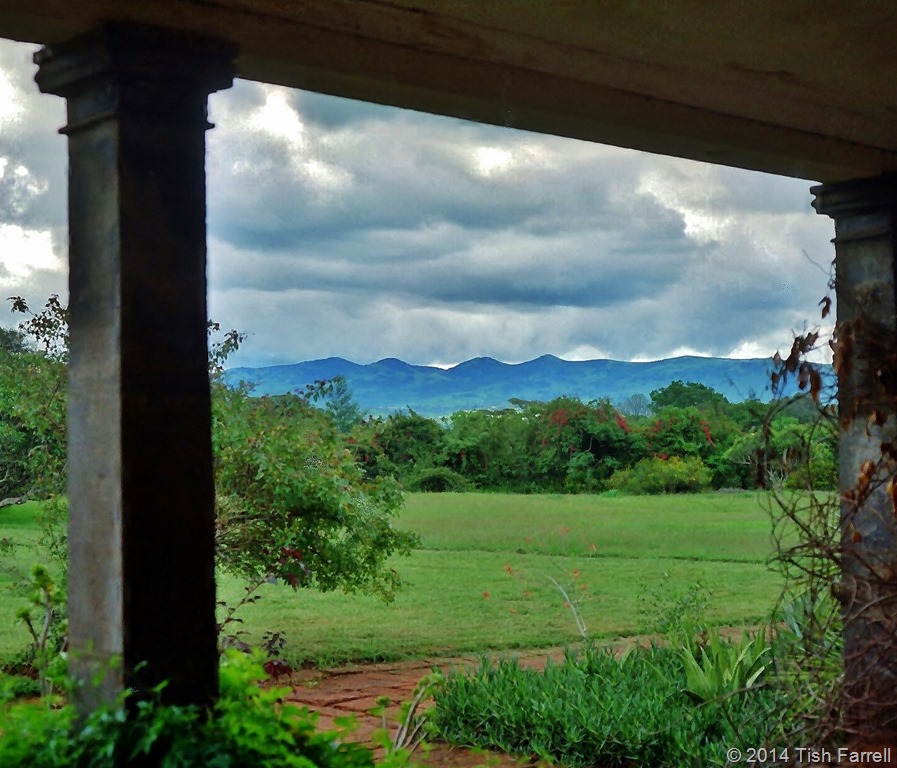
Looking towards the  Ngong Hills from inside the veranda at Karen Blixen’s house. The house now belongs to Kenya’s National Museums.

*

Scan-130429-0006

Denys Finch Hatton’s untimely end may be put down to his passion for flying. For those of you who remember Sydney Pollack’s 1985 film Out of Africa, some of the most elegiac moments of the film are when the celluloid version of Finch Hatton  (Robert Redford)  takes Karen Blixen (Meryl Streep)  into the skies above the Rift Valley.  Denys died in his Gypsy Moth in 1931, and in unexplained circumstances. He was taking off from the airstrip down in Voi in southern Kenya when his craft exploded. He and his Kikuyu co-pilot were killed. Denys was forty four.

Scan-130429-0018

View towards Nairobi from Denys Finch Hatton’s Grave, and overlooking another Kikuyu smallholding.

*

By the time of his death, his relationship with Karen was  well on the wane, and he had already started an affair with the younger Beryl Markham. His biographer,  Sara Wheeler says in Too Close to the Sun, that there is circumstantial evidence to suggest that Beryl was pregnant with Denys’s child, but that she then had an abortion. To have known this would have truly broken Karen Blixen’s heart: her letters show that she had longed to have a child with Denys.

With yet another twist of irony, it was with his death, that Karen somehow reclaimed him, remembering that he had told her of his wish to be buried in the Ngong Hills. The spot he had chosen was one that Karen had decided on for her own grave.

013

Denys Finch Hatton

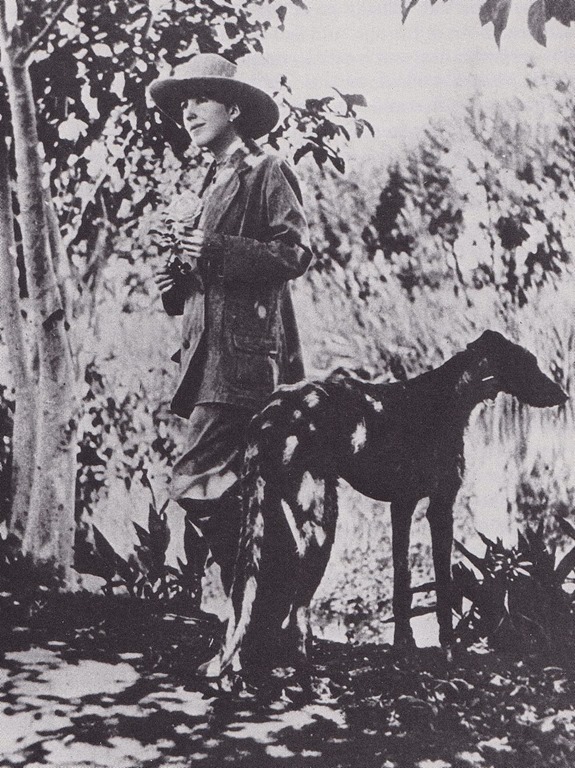
Karen Blixen with her deerhound Dusk.

012

“There was a place in the hills, on the first ridge of the Game Reserve, that I…had pointed out to Denys as my future burial-place. In the evening, while we sat and looked at the hills from my house, he remarked that then he would like to be buried there himself as well. Since then, sometimes when we drove out in the hills, Denys had said: ‘Let us drive as far as our graves.’ Once when we were camped in the hills to look for buffalo, we had in the afternoon walked over to the slope to have a closer look. There was an infinitely great view from there; the light of the sunset we saw both Mount Kenya and Kilimanjaro. Denys had been eating an orange, lying in the grass, and had said that he would like to stay there.”  Out of Africa

The obelisk was only put up later by Denys’s brother. During Karen’s last days in Kenya she had the site marked with white stones from her own garden, and as the grass grew up after the long rains, she and Farah, her Somali house steward, erected a pennant of white calico so she could see the spot from her house, some five miles away.

Sometime after she had returned to Denmark she received a letter with some strange news about the grave:

“The Masai have reported to the District Commissioner at Ngong, that many times, at sunrise and sunset, they have seen lions on Finch Hatton’s grave in the the Hills. A lion and lioness have come there, and stood, or lain, on the grave for a long time…After you went away, the ground round the grave was levelled out, into a sort of big terrace. I suppose that the level place makes a good site for the lions, from there thy can have a view over the plain, the cattle and game on it.”  Out of Africa

Scan-131109-0048 - Copy

copyright 2014 Tish Farrell