Witch-catching in the Shropshire wilds

Naturally, suffering as I do from Out-of-Africa-itis (some of you may just have noticed this)  any mention of ‘wild’ instantly conjures the sweeping Mara grasslands and herds of wildebeeste.  Or scenes of Zambia’s South Luangwa as featured in the last post (here). But then I thought it was time I took more joy in the place where I actually live  and, indeed, grew up – the wonderfully rural county of Shropshire. And for those of you who do not know England, Shropshire is in the Midlands, along the border with Wales. Also as I have mentioned in other posts, this segment of Great Britain was once (400 million years ago) to be found somewhere off East Africa. Shropshire’s rocks are thus among the world’s oldest, and its hills a magnet for geologists from all over the planet.

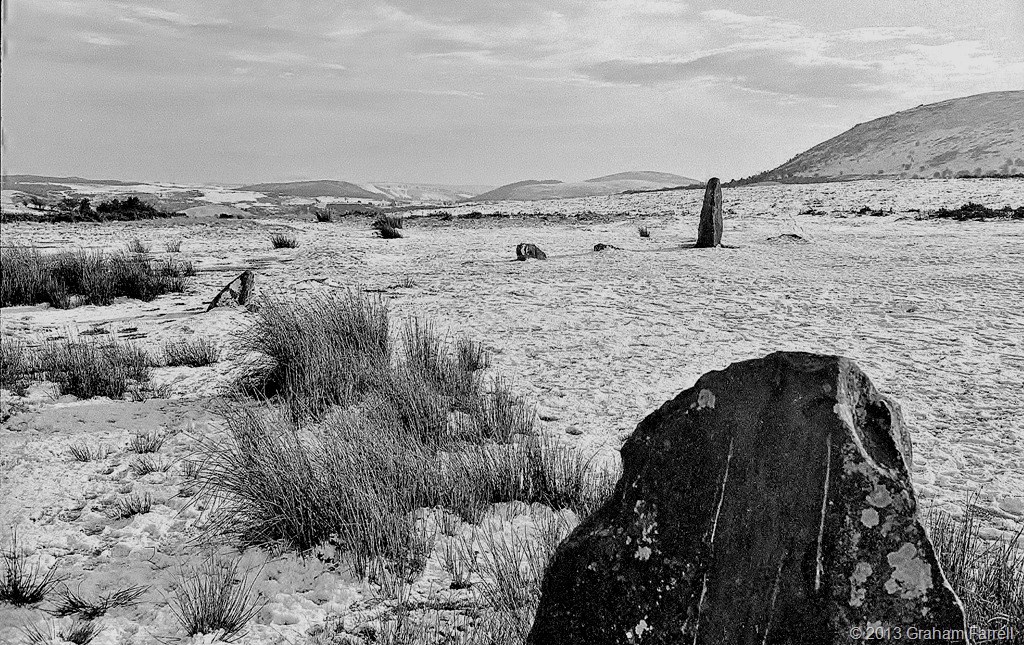
My home county, then, is largely farming country – dairy, sheep, and arable – the population living in scattered small settlements and market towns, many dating back to Roman times and the early Middle Ages. But there are also many wild places, especially up in the hill country overlooking Wales. One such place is Mitchell’s Fold, a Bronze Age stone circle.
Scan-130804-0041

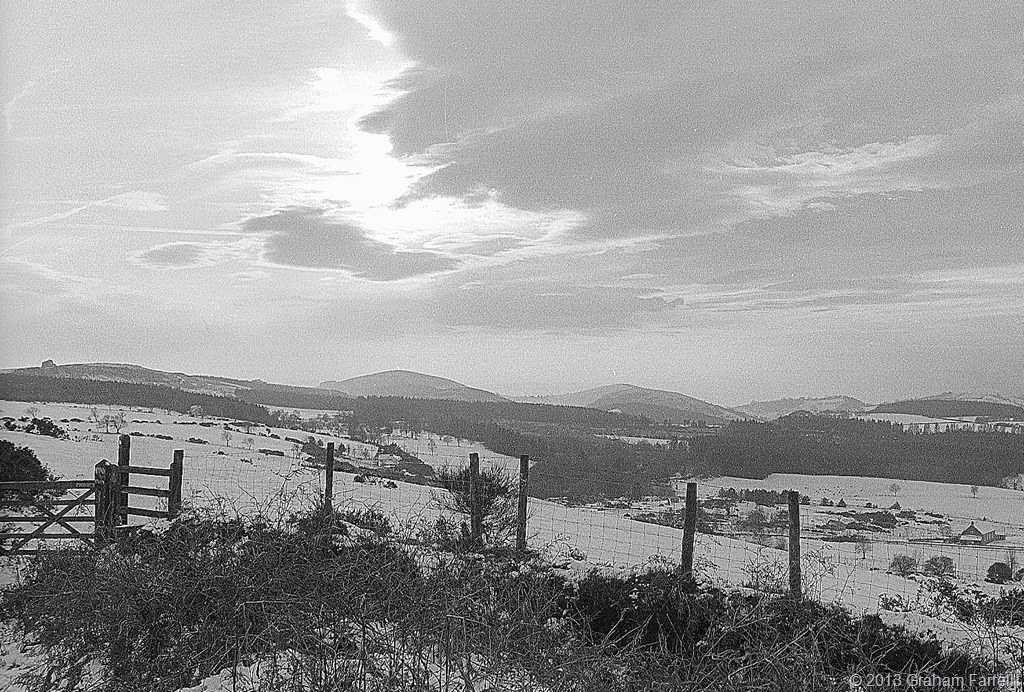
This bleakly sited  monument comes with a strange legend attached – the tale of a wicked witch and a fairy cow. And so one December day Nosy Writer and the Team Leader set off to explore. Winter seemed a good time to go searching for the spirits of the past. The photographs, by the way, are all Graham’s. Nosy Writer said she could not possibly take her gloves off in such frigid conditions.

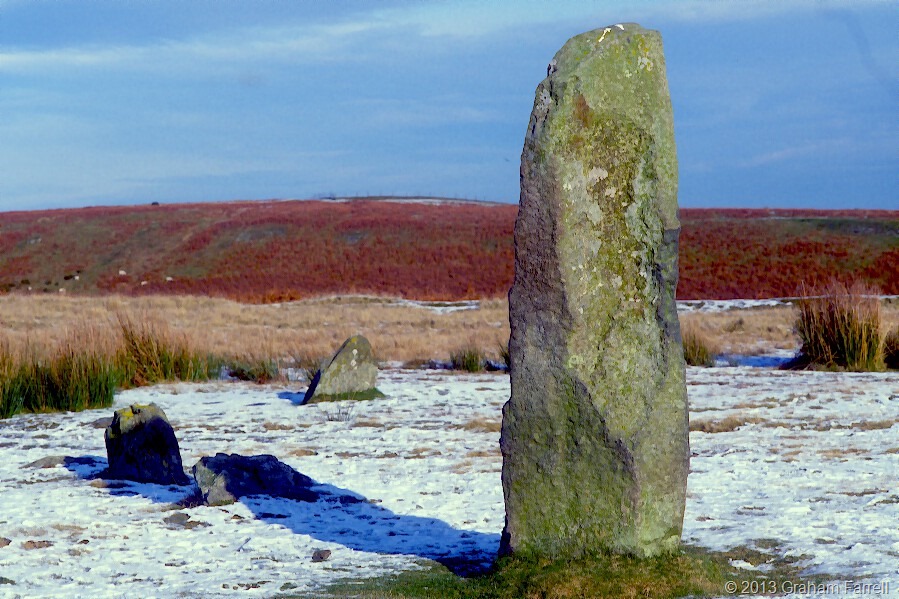
The site itself is near the Welsh Border on Stapeley Hill, south west Shropshire. The stone circle was created between three and four thousand years ago, and originally comprised thirty stones of local dolerite. Today, only fifteen are visible. Some were perhaps re-purposed by subsequent generations; others buried. Often such circles were regarded with superstitious dread, particularly during the Middle Ages.
Scan-130804-0012

In the prehistoric past, though, the place was not so isolated as it appears today. In the vicinity are two other stone circles, although one of these, known as Whetstones was blown up in the 1860s. The other, Hoarstones, was said by locals to be a fairy ring, where on moonlit nights, six ‘fairesses’ would dance. There are also numerous cairns and a long barrow, and, not too far away,  the Bronze Age stone axe factory of Cwm Mawr whose finely carved mace heads were traded far and wide across England and Wales. Of the reasons for this and the other circles, all is shrouded in mystery. All that may be said is that once these upland places were of great importance to the people who laboured to make them.

Scan-130804-0039

But what about the witch-catching story, I hear you ask. Well that I can tell you. It goes like this.

Once, when there was a terrible famine in the district, the fairies took pity on the starving peasants and sent them a snow-white cow. The cow was kept in a circle of stones on Stapeley Hill, and, as with all such gifts, there were strict conditions as to usage. Every person was allowed to milk the cow by turns, but only so long as  the cow was never milked dry, and each person took no more than one pail full.

Everyone followed these instructions, and all went well until the wicked old witch who lived nearby grew envious of the peoples’ good fortune. Why had they not called on her to solve their problems? Her name was Mitchell, and out of sheer spite, she thought up an evil plan.

And so one night, when all honest folks were asleep in their cottages, she approached the cow and began to milk it. The only thing was, the bottom of her bucket was full of holes. She milked and milked until the cow was dry, thus breaking the fairy charm. At once the cow sank into the ground, never to be seen again. But Mitchell did not escape either. She had challenged the forces of good too far and found herself trapped inside the stones. And when the people came next day and saw their fairy cow gone,  and they saw the false pail and pool of wasted milk, they knew exactly what the witch had done. So just to  make sure she never escaped, they walled up old Mitchell inside the stone circle, where she was said to have finally starved to death.

Scan-130804-0008.jpg

And just in case you are wondering, no, this is not Mitchell’s ghost in the photo, but me, wrapped up in many post-Africa layers. And beyond me, the Welsh hills.

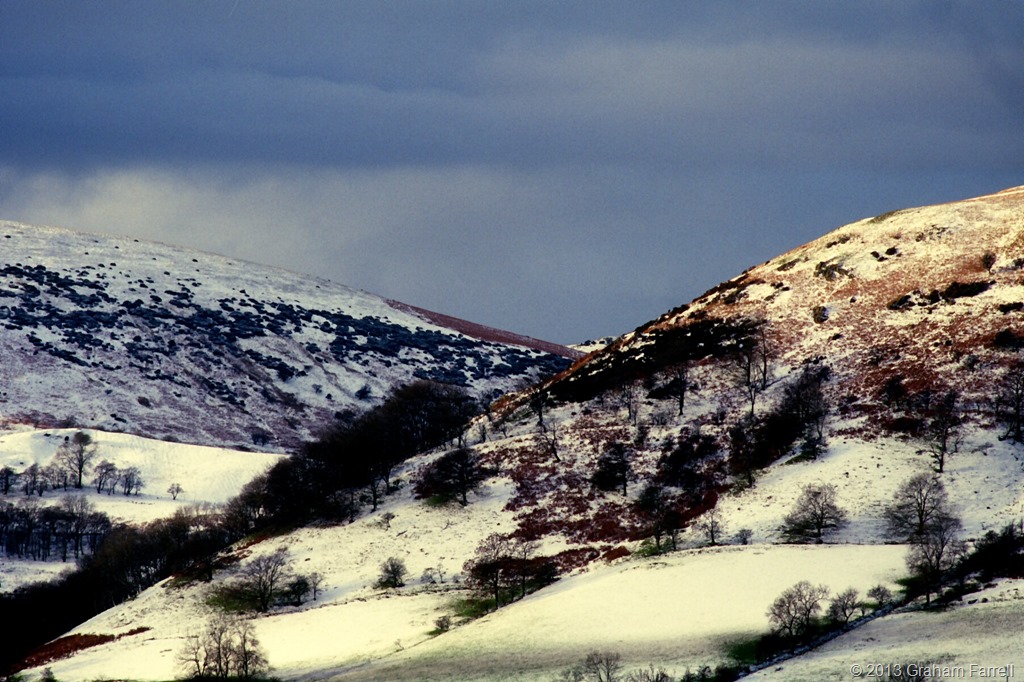
Finally, here are more scenes of Wild Shropshire – in particular, the hills known as the Stiperstones, which featured often in the novels of Shropshire writer, Mary Webb. The last photograph shows one of the Stiperstones’ natural ‘cairns’, just visible from Mitchell’s Fold. These bleak hills also feature in many local legends, but they will have to wait for another post.
Scan-130804-0006

Scan-130804-0018

Scan-130804-0026

Elephants, E-books and Enticing Reluctant Readers

Two at once challenge – DP : Reel Talk and Frizztext’s  EEE

Everyone who comes to this page is a reader. Bloggers love to read as well as write: poems, flash-fiction, memoir, novel excerpts, reportage, long pieces, short pieces; it’s how the blogweb works: exchanges to entertain, enchant, enthuse, encourage and elucidate.

Some of my stalwart followers and followees boldly read and create in second and third languages, which for me who only has proficiency in English is a great source of admiration and envy. And if that’s not enough ‘Es’ already, I have some more. But first a question: what about those (old and young) who find reading a struggle? What about those who find a page loaded with text a total turn-off, or the average sized paperback too daunting in scale to broach?

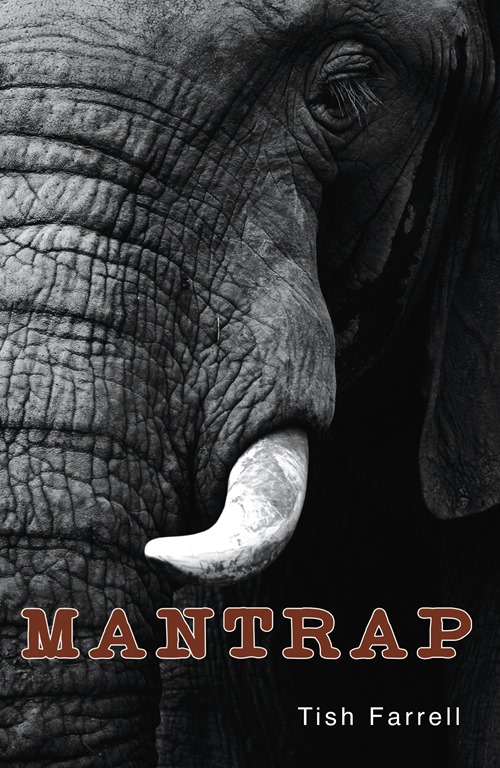
And to answer my own questions, this is where the book cover below comes in, because one of the things I do besides loitering in cyberspace is to write good stories for unkeen teen readers, (or for anyone else I can corner for that matter).

Shades covers for REPRO Batch 2_Layout 1

Cover: copyright 2013 Ransom Publishing.

The title of this new edition of my very short book Mantrap clearly begins with ‘M’ ( which means you can look forward to more mentions further down Frizz’s alphabet.) So what is it doing here now? The elephant is of course the excuse I needed to write this piece, also the fact that Ransom Publishing will shortly be bringing out  an e-book version for Amazon Kindle and Apple, as well as a paperback edition. It is part of their Shades series. Full details of this and other books in the series can be found HERE. The series is being printed as I write this and will be launched in August.

Interest-wise, the stories are aimed at readers of twelve years and upwards, but whose reading ability is deemed to be a few years younger. The text is a piece of short fiction but presented in a novel format i.e. 6,000 words divided into several chapters, and over 64 pages. There is plenty of white space on the page.

Banner 

Ransom publishes a wide range of fiction and non-fiction for all ages. Personally, I think the Shades’ quick-read formats are ideal for just about anyone who wants a good story, but has limited time to read it. You can slip these nice little books into your pocket. However, this is not so much a sales pitch as an explanation: the why, where and how this story about ivory poaching came into being. There’ll be an excerpt at the end.

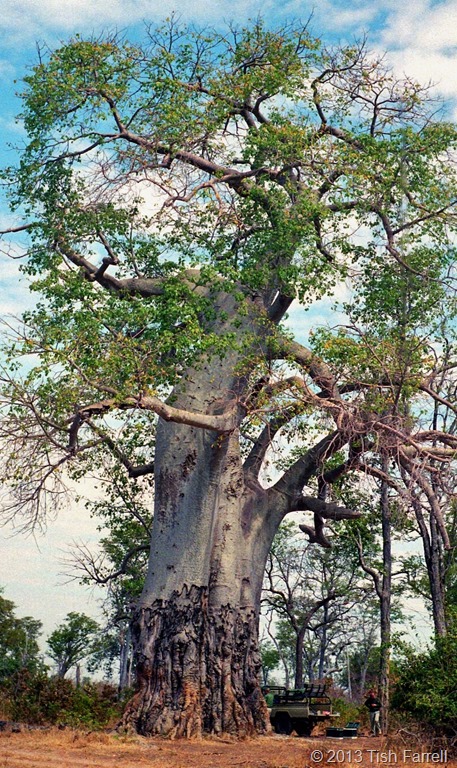
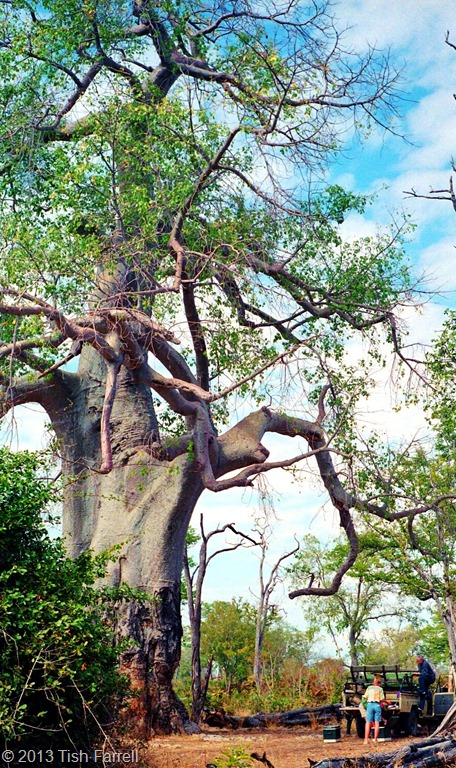
I can also tell you precisely where the Mantrap story began – under a baobab tree. And here it is, the very one:

South Luangwa - mighty poachers' baobab

The fact that it was in leaf at the time was perhaps auspicious. Baobabs are usually bare. This one could be a thousand years old. We stopped under it for a noonday picnic after a get-up-while-still-asleep and go on a dawn game drive. The location is South Luangwa National Park in Zambia. It is a glorious place with parkland vistas, much shaped by the local elephants who knock down the thorn trees, but rarely the baobabs, to encourage the growth of their favourite food – grass. 

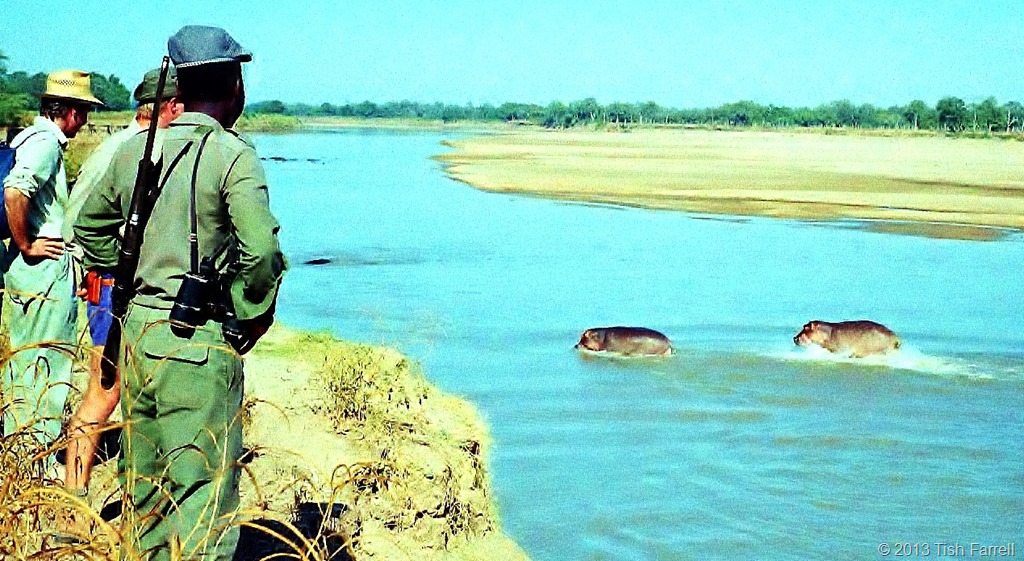
The other great shaper of the territory is the mighty Luangwa River as it endlessly carves new meanders through the bush country.

South Luangwa - dawn walk and hippos

*

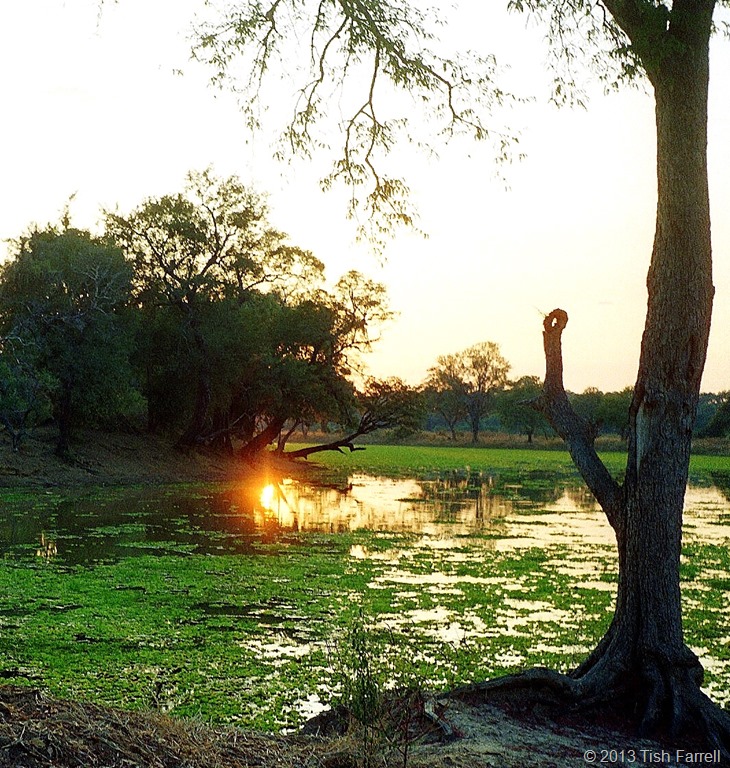
As the river shapes a new channel, so the old meanders are left behind, some becoming stagnant lagoons where hippos wallow amongst the cabbage weed. The local people call such places Luangwa waffa or Dead Luangwa.

South Luangwa - lagoon with cabbage weed 2

But back to Mantrap. It was while I was standing under the baobab, and peeling a very English hard-boiled egg, that our guide happened to point out the narrow strips of wood that had been driven unobtrusively  into the tree’s hard, smooth trunk. 

South Luangwa - mighty poachers' baobab 2

“It’s a poachers’ ladder,” the guide told me. “Ivory poachers. This tree has been a look-out post for years.” He went on to tell me how earlier that week an elephant had been killed nearby. The tusks had been taken, but then later, when the coast was clear of poachers, the local villagers had come to grab the meat.

My spine tingled:  horror and pity, and not only for the elephant. I knew that rural Zambians were  in a poor state. This was the reason why we had come to Zambia. Team Leader Graham was responsible for the logistics of delivering EU food aid to drought-stricken villagers. (See Letters from Lusaka.) Also, elephants and other game can destroy a farmer’s whole crop in a single night. The conservation of wild game, then, and the protection of neighbouring people’s livelihoods are matters  not easily resolved.  Game parks across Africa generally do not have fences. Animals move about at will, and many farmers are maimed or killed by buffalo, crocodiles, hyenas and elephants. Their families rarely receive compensation.

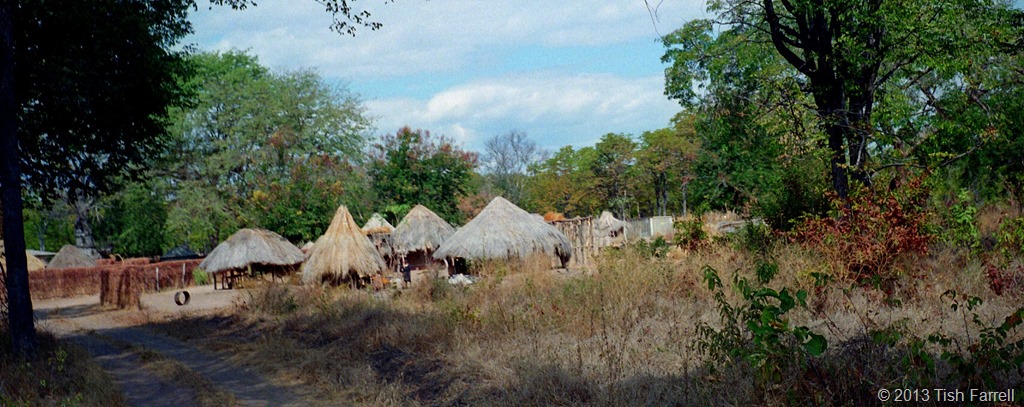
South-Luangwa-Zambian-homestead.jpg

We, however, belonged to the fortunate segment of the world’s population that had no shortage of food and also the leisure to take a few days holiday, staying in a small tented camp run by Robin Pope Safaris. On the way to our campsite from Mufuwe airstrip we crossed a dried up river where a girl was digging deep into the sandy bed in hopes of scooping out some water. In the gardens of a nearby farmstead, the maize was blown to dust. It was hardly surprising that there was a poaching problem in the district. People were starving.

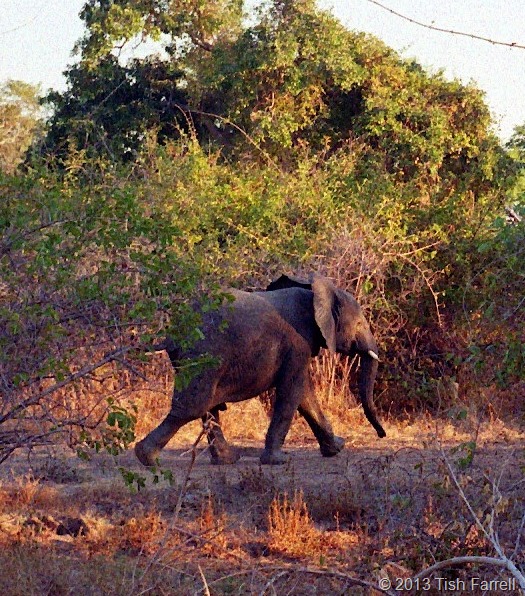
But then to my  mind, there’s a big difference between hunting antelope and small game for the pot, and particularly when the park and surrounding licensed hunting blocks occupy the local people’s former hunting territory, and the obscene and pointless slaughter of elephants solely for their ivory.

South Luangwa - young elephant

Yet the temptation to some locals must be enormous. They have families to support, children to send to school, medicine to buy. Big business cartels, especially in the Far East, are apparently more than glad to arm and fund local hunters in the pursuit of ivory and rhino horn. This means that park rangers are at great peril. Many are murdered in their attempts to protect wildlife so tourists like us may come and stare, and snap away.

One way to combat poaching is to give people good reasons to protect the game. Robin Pope’s Safaris have pioneered schemes to involve local communities in conservation.

Helping communities to gain from tourism

*

So these, then, were some of the things I wanted to explore in my story. What emerged was a life-and-death adventure that had its beginning the moment my fingers touched the rungs of the poachers’ ladder.

Here then is an excerpt – the opening scene. It is dawn in Luangwa. Hunger has finally driven Danny and his father, Jacob, into the National Park to hunt antelope. But Danny is a schoolboy, not a hunter; it is not surprising that, in his panic, he makes a mistake – a mistake that lands them in the clutches of a corrupt ranger who has a far more dangerous quarry in mind.

Chapter One: The Kill

Impala. A small herd among the sausage trees. Jacob stopped dead and held up a warning hand. Danny froze on the spot and this time, without a sound, dropped behind a potato bush. He peered through the leaves, fixing on a big ram. He was about twenty paces away, grazing the yellow grasses, his harem of females all round. Danny’s eyes stung with longing. There was that beautiful ram. So near, and yet so far. The smallest sound might send him bolting. Out of reach!

Danny willed Jacob to shoot. Now, Dadda, now. Then nearly howled when the ram raised his lyre-shaped horns and sniffed the breeze nervously. The ram had scented them. He had. Danny prayed and prayed. Please let our luck change. Please let Dadda shoot. Then we can get out of here. Before the sun comes up. Before the park rangers start their patrol. Before we’re caught and sent to jail…

And finally, here’s a short clip that shows Luangwa in all its rain-soaked glory. One of the earth’s most beautiful places, and over four hundred species of birds.

© 2013 Tish Farrell

Links:

http://dailypost.wordpress.com/2013/07/29/reel-talk-writing-challenge/

http://flickrcomments.wordpress.com/2013/07/30/eee-challenge/

Carnations, crooks and colobus at Lake Naivasha

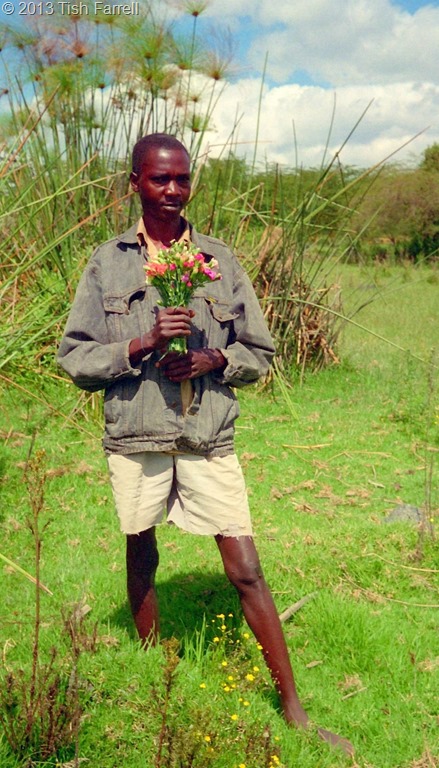
Even locals told us that  anything could happen in Kenya.  And  so one Lake Naivasha morning, when I thought I was  alone in the grounds of an old safari lodge, I was both surprised and unsuprised when a young man suddenly stepped out from the papyrus swamp clutching two bunches of carnations. Fifty bob, madame, he said after the customary greeting. He seemed nonplussed  when I started to laugh.

“Do you always keep your carnations in the papyrus,” I asked.

“Yes,” he said.

“What, waiting for people like me?”

“Yes,” he said.

Scan-130602-0001

This exchange seemed to seal the deal. I didn’t even bother to haggle. And although I have no idea why I would have 50 bob on me in such a place, I bought a bunch. Given the general lack of wazungu humanity in that particular location, I also wondered  how long he had been waiting for the likes of me to come along; or how long he would have been prepared to wait for a customer. Or if I was just the unexpected thing that happened to him, rather than he to me. (You could tie yourself in knots second guessing). The rest of the lodge guests, I knew, were male entomologists, engaged all day in seminars and workshops; only I was free to wander about the hotel’s straggling  grounds buying flowers for which I had no particular need.

*

Scan-130716-0012 (3)

*

We had driven up the Rift from Nairobi the day before. Team Leader Graham was to attend a four-day international conference on the Larger Grain Borer. Along with his Kenyan colleagues there were some forty delegates from such places as Honduras, Mozambique, Italy, UK, Benin, Zimbabwe.  Anyone who has read my post, Letters from Lusaka Part 1,will know that this small maize-grinding beetle, aka LGB, was introduced into Africa in a consignment of US food aid in the 1980s. Its natural habitat is in South and Middle America where it also has natural predators to keep it in check. In Africa it has no natural enemies and can thus eat itself silly while villagers, deprived of their staple crop, starve.  Seventeen years on from this conference, it is still a problem.

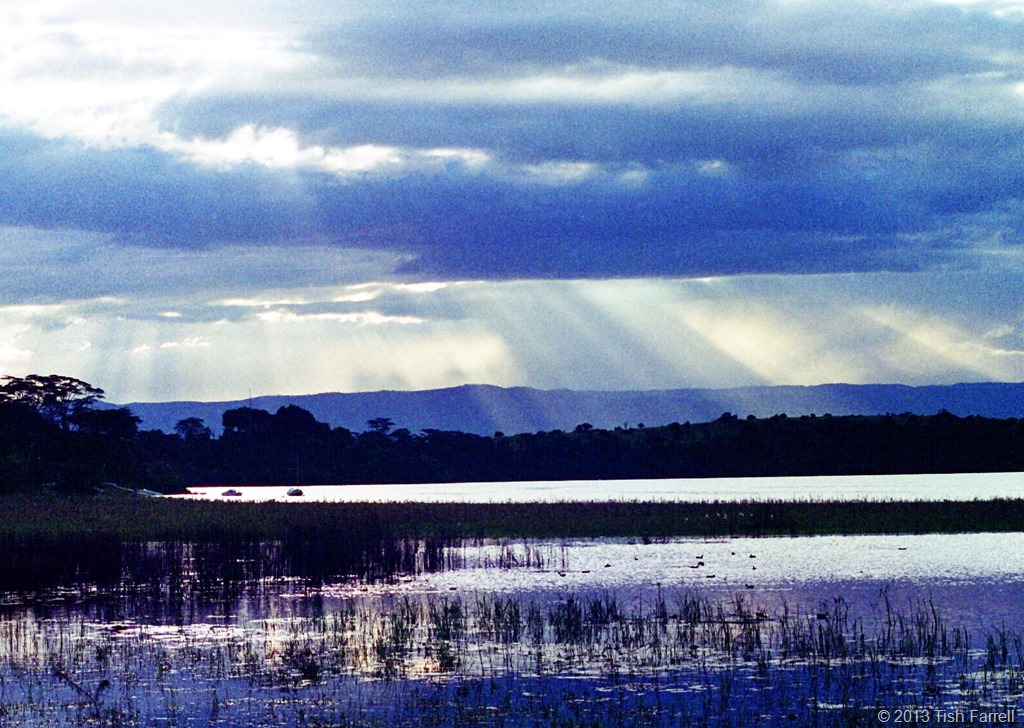
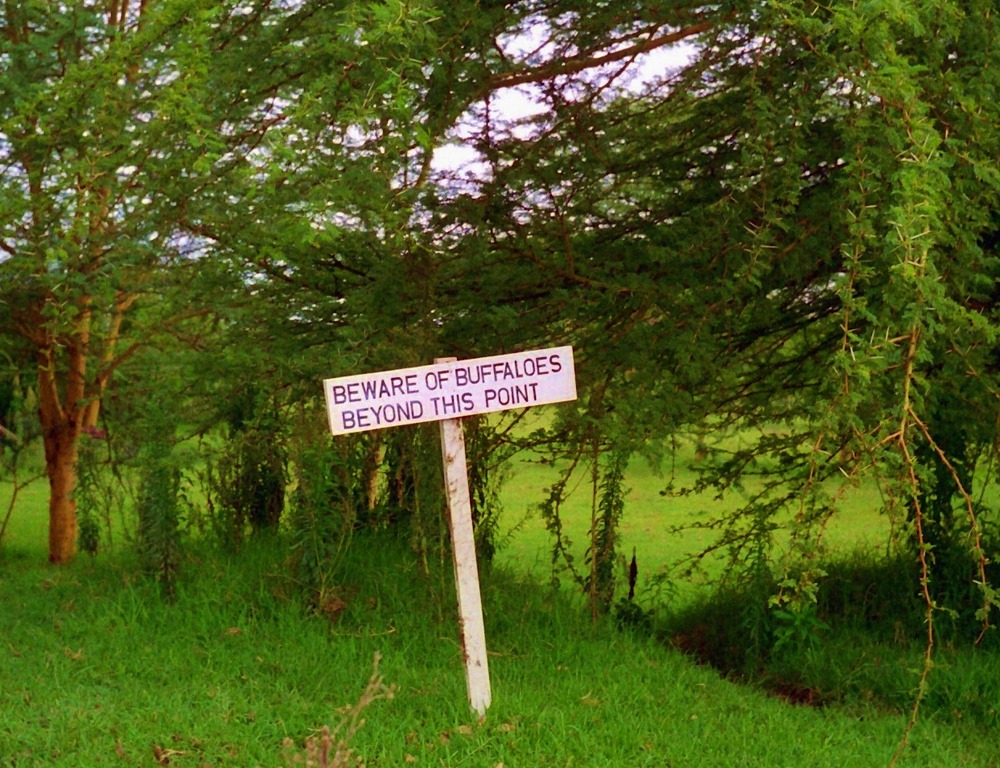
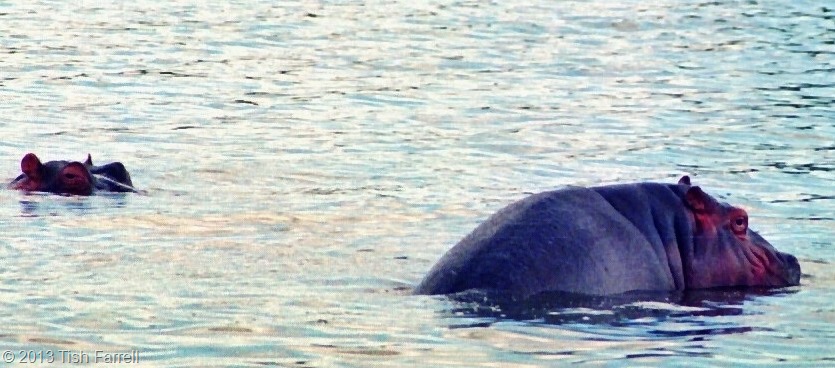
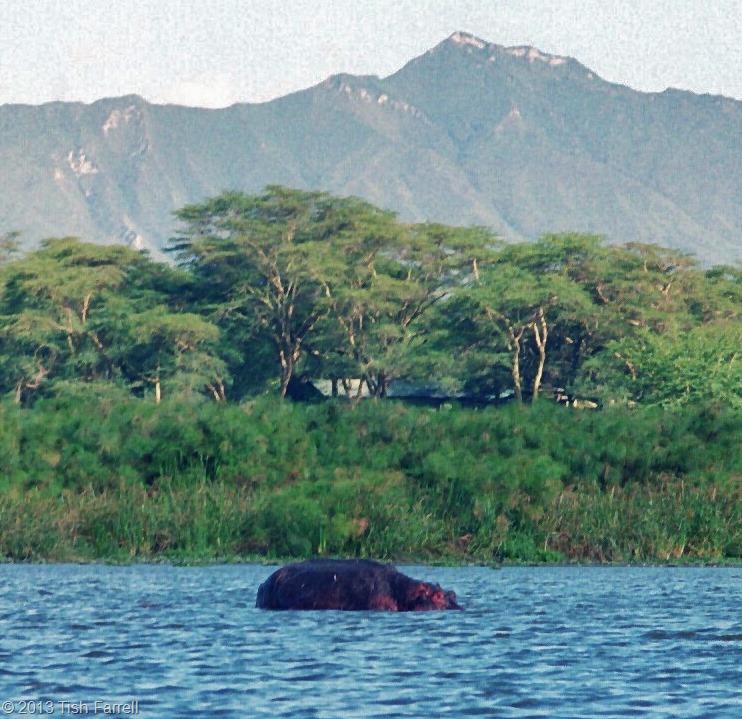
So: while delegates debated what might be done about the ravages of this particular storage pest, Nosy Writer, like some latter-day colonial ‘mem’, dilly-dallied about the lake shore and its hinterland. At the time I was recovering from some strange digestive malady, so wandering and bird watching were all I could cope with. When the young man popped out of the papyrus I was still weighing up whether or not I should be deterred by the sign I had just read amongst the fever trees.  I could anyway hear the hippo grunting, and having once been charged by a big angry bull in Zambia was already a little wary. The appearance of a boy with a bouquet, then, seemed like a piece of magic.

Scan-130602-0003

When I asked him where he got the flowers, he told me there was a flower factory ‘next door’. (Many international growers have their flower factories around the lake. There are strawberry and asparagus growers there too). At the factory (think acres of pink poly-tunnels under the tropical sun) he gathered the discarded side stems and inferior blooms from the refuse heap and made them up into bunches. Later, when I told this to Graham’s Kenyan boss, Gilbert, he told me that export stems had to be between 70-100 cm long, which meant there were probably plenty of rejects.

He also told me that the factory ‘next door’ was reputed to be owned by one of Kenya’s top crooks, a notorious Kenyan-Asian wheeler-dealer. Gilbert then added that he also owned the safari lodge where we were all staying. I could only blink in response. It seemed like another of those ‘anything can happen in Kenya’ moments; another of the endless moral conflicts. Here were a bunch of diligent, respectable scientists all funded by international development money patronizing the establishment of a member of the criminal elite who, from behind a front of untouchable respectability, was bleeding the nation on breathtakingly colossal proportions.

It’s the moment when you say, oh, bloody hell, I can’t cope with this, and go back to reading a book or bird watching, or listening to the plaintive call of a pair of fish eagles resounding off the water, or to the companionable  grunting of hippos.

Scan-130716-0012.jpg

Scan-130716-0010-2.jpg

I also tried to distract myself from thoughts of the flower factories around the lake. There was talk of them abstracting too much water, and polluting the only freshwater lake in Kenya’s Rift with pesticide residue  – all so the citizens of London, Paris, Amsterdam can buy the perfect, but scentless, long-stemmed rose, or metre-long carnations. Of course these places provide work for scores of labourers, and increasingly there are well qualified Africans in managerial positions.

The companies probably provide clinics and primary schools too, but the bulk of the profits from these huge concerns go to Europe and to their shareholders, not to Kenya whose human and natural resources are being exploited in the meantime. Then there’s the row about multi-nationals not paying local taxes. It’s the same old story – colonialism in a new form – the need for cheap labour to justify the cost of the daily absurdity of flying fresh-cut flowers out of Africa.

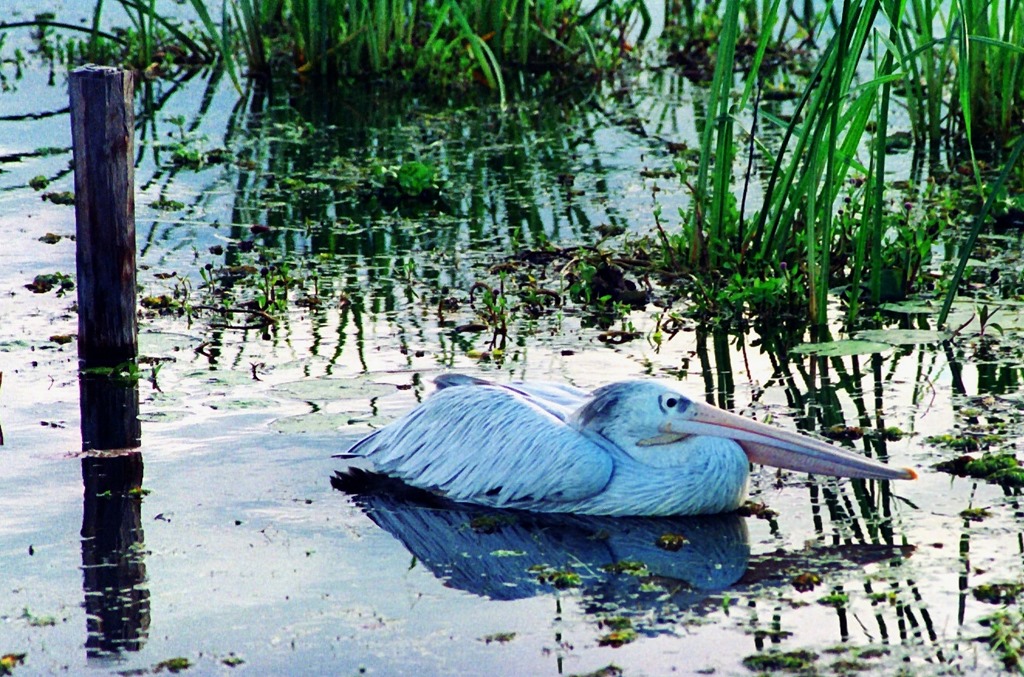
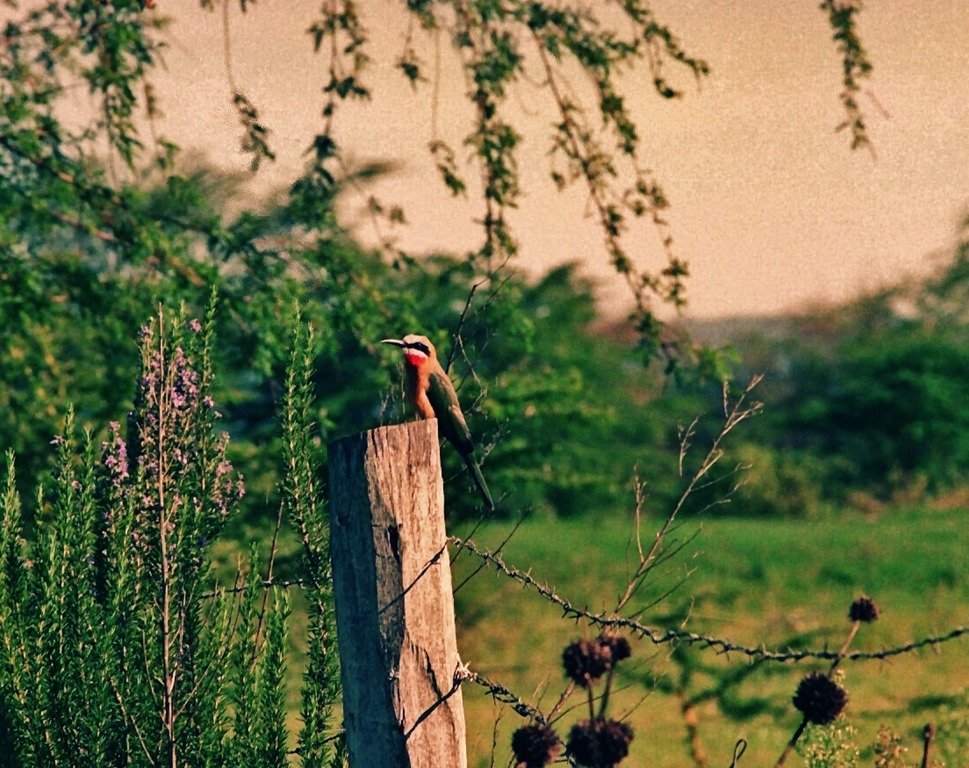
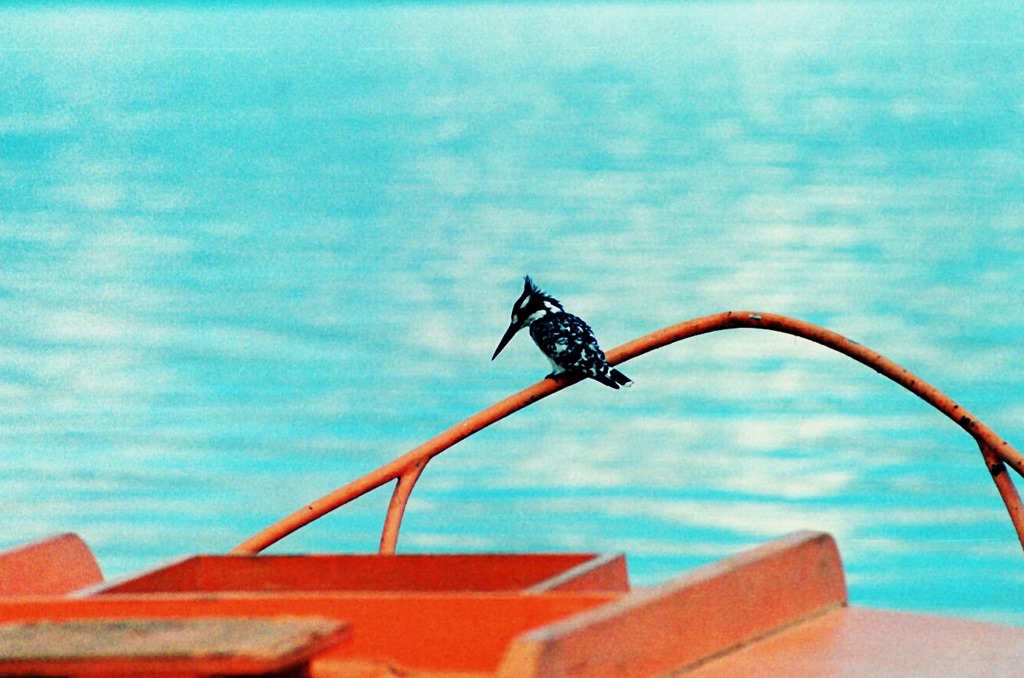
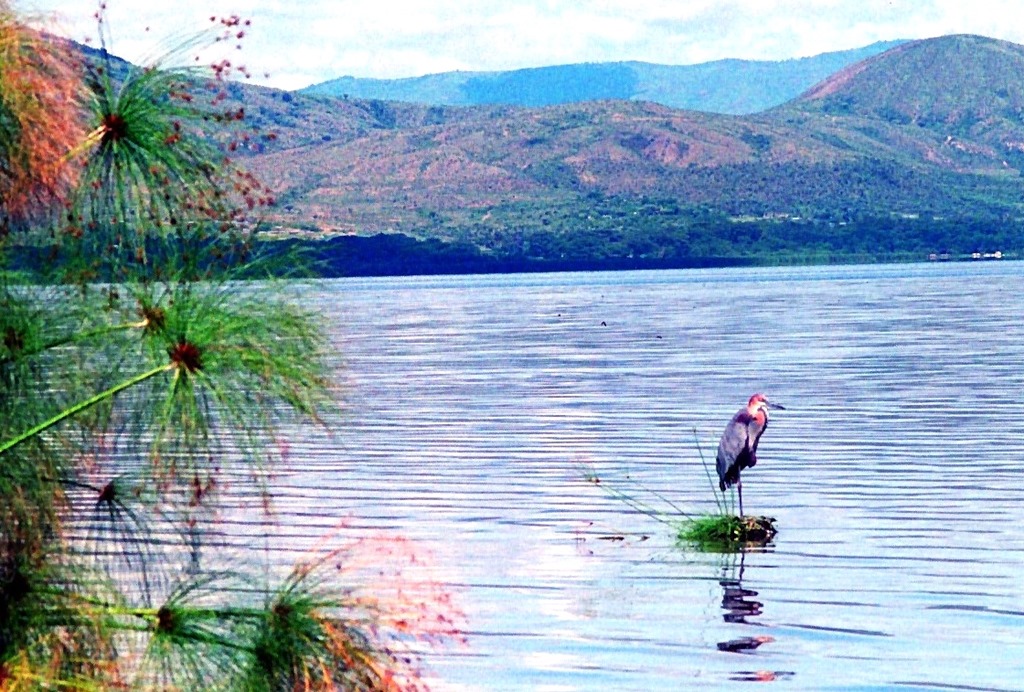
How do you begin to unpick all this. I can’t. It is easier to bird watch, and there are hundreds of species around the lake to look out for.

Scan-130716-0013

Scan-130716-0008.jpg

Scan-130716-0014-2.jpg

Scan-130716-0011 (11)

From the top down: pelican, bee eater, pied kingfisher, goliath heron – just a few of the 400 bird species around the lake.

*

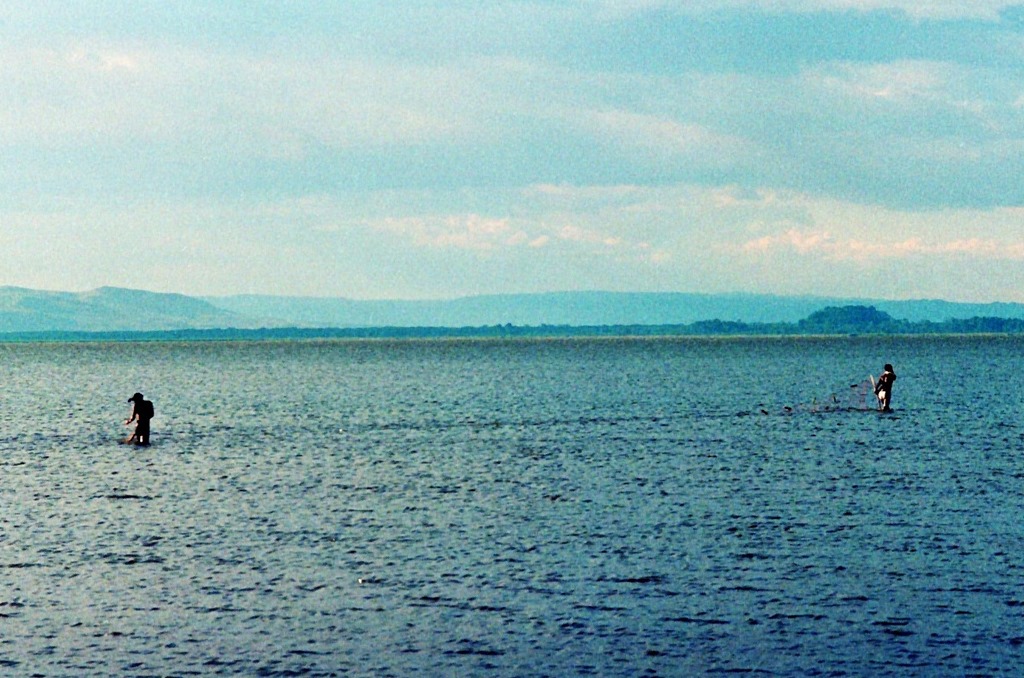
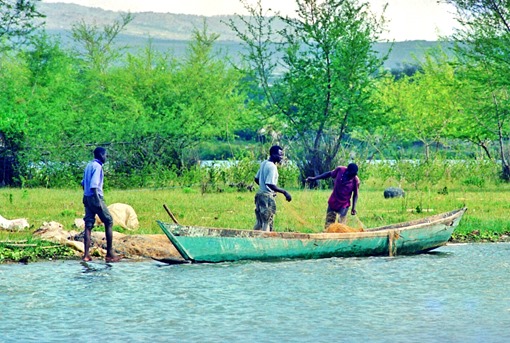
There are the fishermen too, seine netting and scooping up buckets of freshwater crayfish, although accidentally introduced carp is now the dominant fish species.

Scan-130716-0011.jpg

Scan-130716-0011-6_thumb.jpg

*

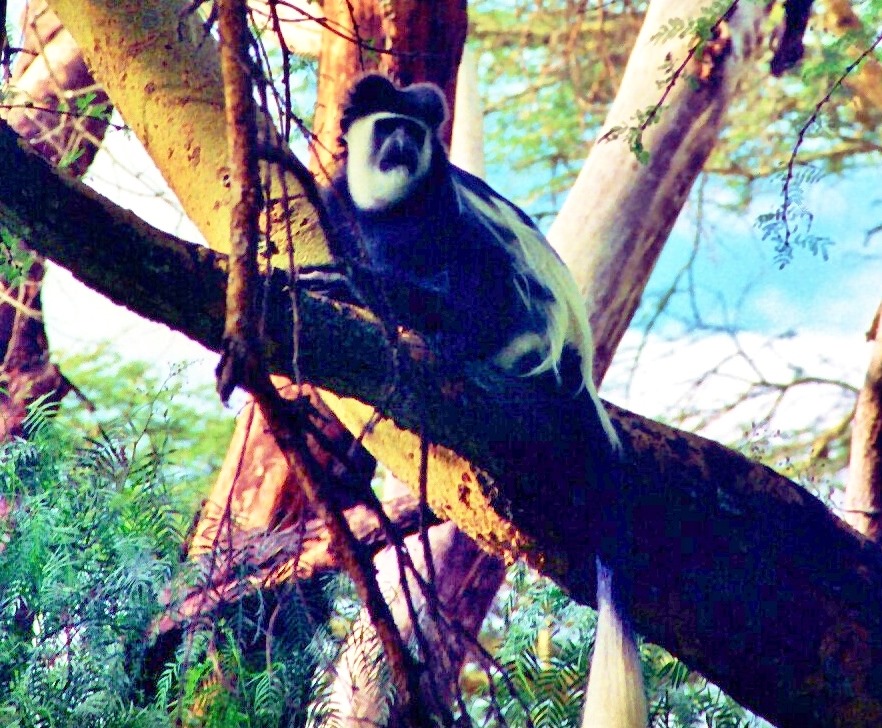
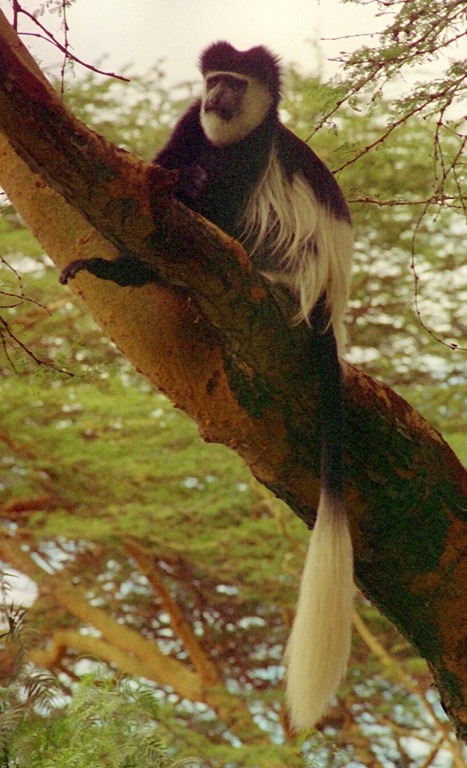
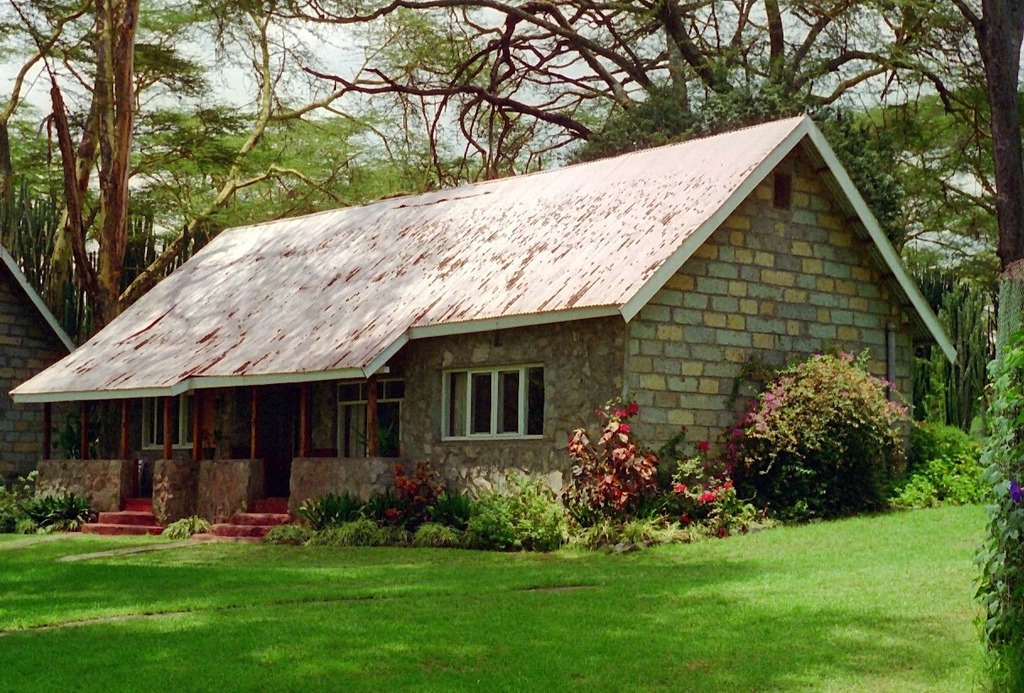
And finally every afternoon around four, a family of colobus monkeys come to the lodge garden and play on the guest cottage roofs. It’s easy to tell yourself that this is paradise.

Scan-130716-0012 (2)Scan-130601-0007.jpg

Refs:

Urban society and the fishery of Lake Naivasha, Kenya – Balancing ecosystem and stakeholder demands by Phil Hickley, Mucai Muchiri & Ros Boar

Kenya Birds Lake Naivasha

Flower power keeps Kenya’s Lake Naivasha blossoming – video Guardian 2012

Kenyan flower industry’s taxing question Guardian 2011

P.S. I took the carnations home to Nairobi where they lasted a further ten days. Excellent rejects.

© 2013 Tish FarrellScan-130602-0002Scan-130602-0004

The Golden Hour on the Rift Plains

  1. http://dailypost.wordpress.com/2013/07/12/the-golden-hour/

First off, before the best bits, I should say that there’s a bug in the Word Press system, so dear followers and followees, please check your SPAM for any comments from me or other afflicted bloggers and (only if you want to of course) upspam them. Otherwise, on most blogs, my comments are currently going straight to SPAM. It’s a cunning way to stop us from talking to each other. Curses on the joyless little bug that is doing this.

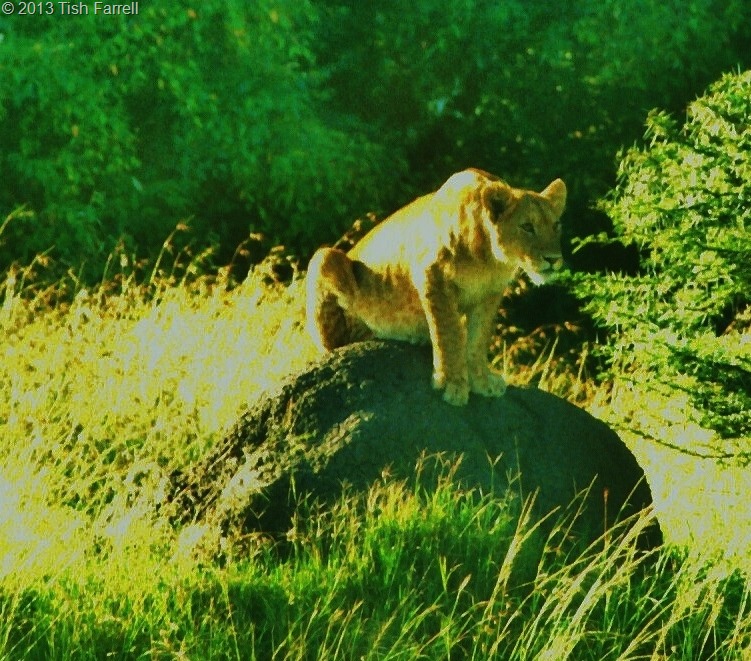
Now for some late afternoon views of big cats and other animals in the Maasai Mara.  This photo shows just how easily lion conceal themselves in quite short grass. Here, as sunset approaches they are becoming watchful, although they could scarcely care less about us watching them. Soon it will be time to go hunting.

Scan-130520-0011

*

Mara lioness 2

Just to the right of the lioness is another lion. It makes you appreciate how intrepid are the Maasai who daily have to graze their herds, and also fetch firewood and water out on these plains. (For more about this you can read my short story ‘Flight’ HERE. It was one of the Bath Short Story Award winners and tells the story of a Maasai girl’s life in this extraordinary land.) Doubtless the herders keep an eye on where particular prides are spending their sleeping hours, but even so, walking into a laid-out lion seems a distinct and chilling possibility.

*

Scan-130520-0017

Scan-130520-0018

Scan-130520-0021

Mara at dawn 2

Mara grassland 4 (2)

Which Way in Africa: It’s Often Hard to Know

http://www.ceephotography.com/2013/07/10/cees-which-way-challenge-week-1/

More views from our time living in Africa. For more of the stories behind the photos, you can follow the links.

*

Scan-130429-0003

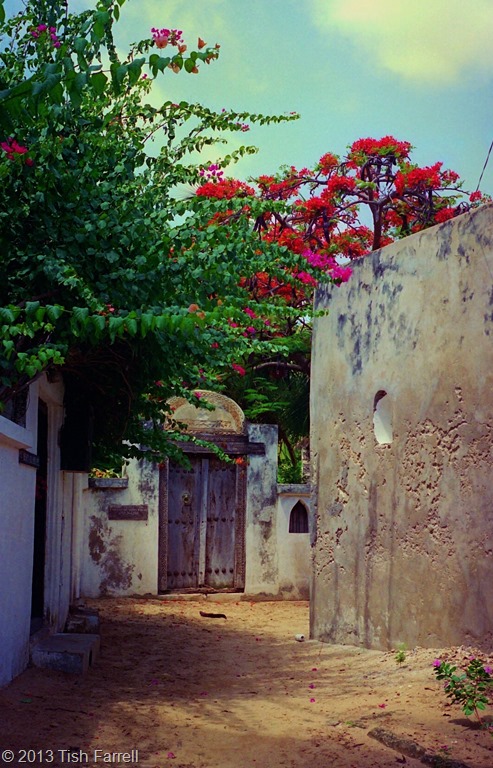
Village path, Shela, Lamu Island, Kenya

*

Scan-130429-0102

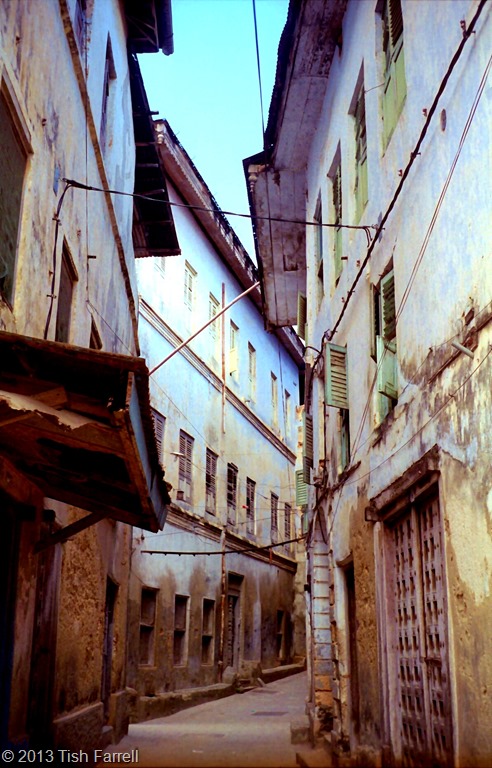
It is easy to get totally lost in the by-ways of Stone Town, Zanzibar

*

trading centre after El Nino rains

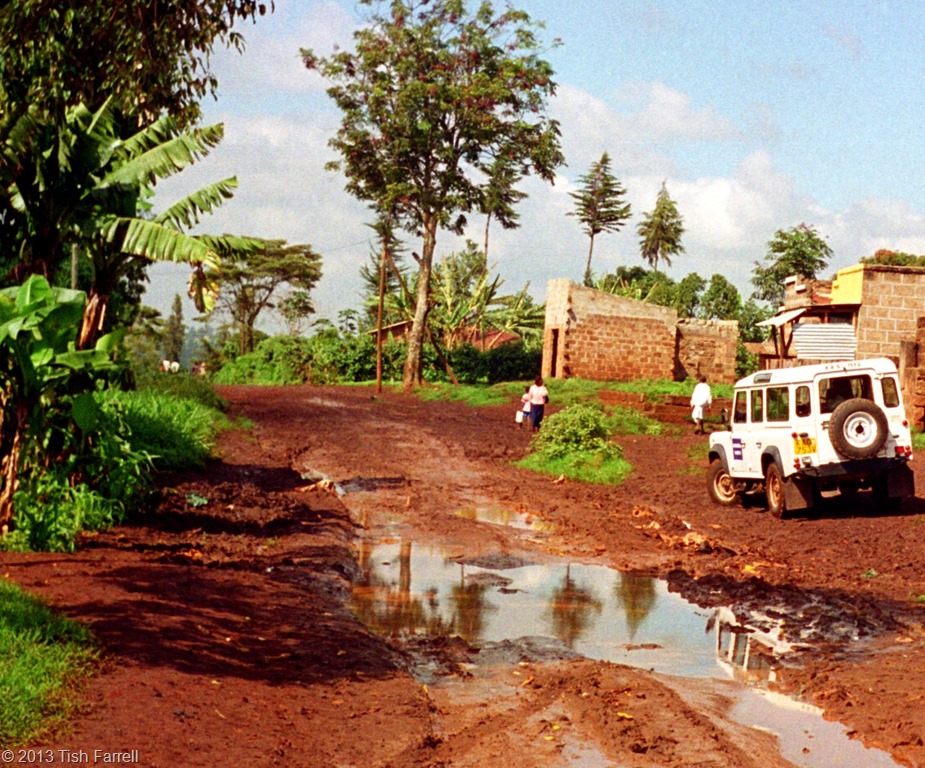
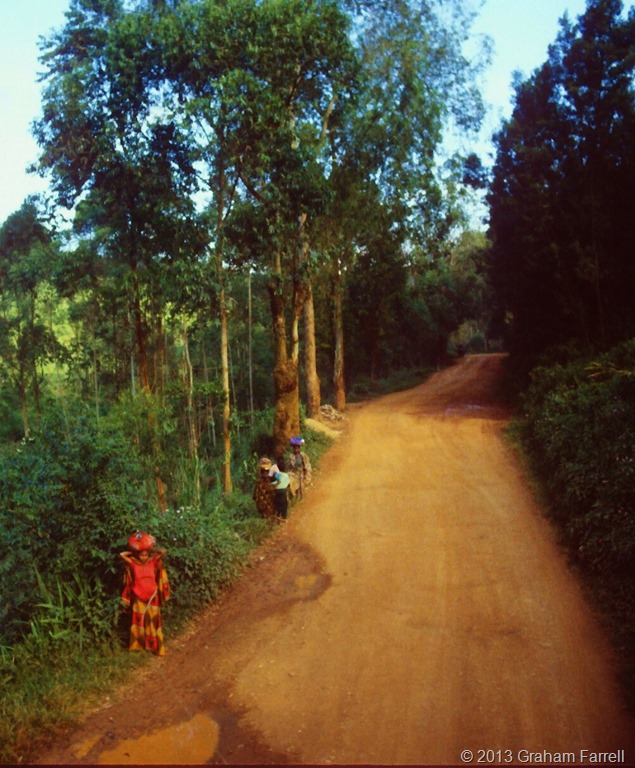
Or totally bogged down during the rains. This road is in Kenya’s highlands in Central Province, taken when we were out on the farms surveying crops for smut fungus.

*

Scan-130603-0061

Village path down to Tiwi Beach, Mombasa, Kenya

*

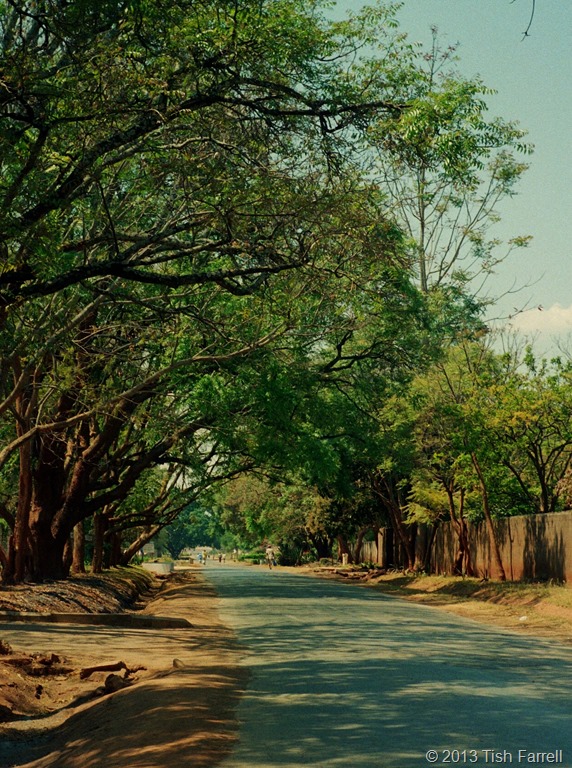
Sable Road in the dry season 2

Sable Road, Lusaka, Zambia, where we lived in 1992-3. This was taken in the dry season.

*

Scan-130703-0009

Heading for Uganda from DR Congo. Or maybe not…

http://www.ceephotography.com/2013/07/10/cees-which-way-challenge-week-1/

Travel Theme: Beaches (Mombasa)

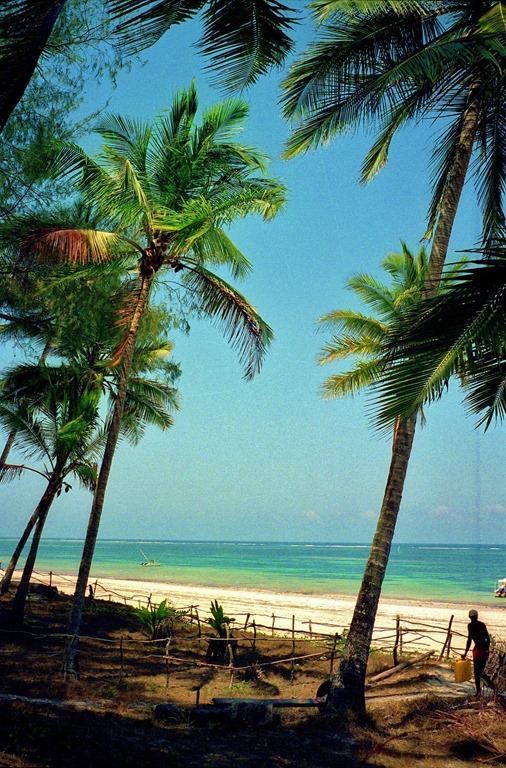
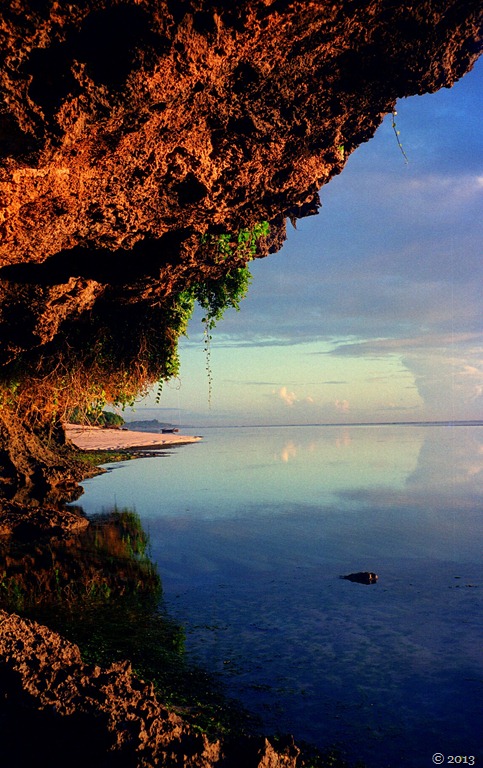
sea and sky on the reef at Tiwi

Tiwi Beach and lagoon at dawn, South Mombasa, Kenya

Going to the dogs on Mombasa’s Southern Shore

It’s a dog’s life on Tiwi Beach, the white strand where ocean roars on coral and trade winds waft the coconut palms; and where, best of all, as far as the local canines are concerned, there are quiet coves sparse in holidaymakers. It means they may do as they please. For after all, it is their own resort, and every morning they set off there from the beach villages along the headland, nose up, ears blown back in the breeze, ready for the day’s adventures.

But the dogs are not churlish. They can take or leave the odd pale human wrestling to right his windsurfer on the still lagoon; ignore the sentinel heron that marks the reef edge beyond; pay no heed to the etched black figures of the Digo fishermen who search the shallows for prawns, parrot fish, or perhaps a mottled lobster or two.

Digo fisherman on lagoon, Tiwi 2

But in this last respect at least, the dogs are smug. For the fishermen come down to the beach only to make a living. And when they are done hunting, they must toil along the headland from beach village to beach village, then haggle over the price of their catch with the rich wazungu who come there to lotus eat. Hard work in the dogs’ opinion.

The dogs know better of course; know it in every hair and pore. And each morning after breakfast, when they take the sandy track down to the beach, they begin with a toss of the head, a sniff of the salt air, a gentle ruffling of the ear feathers in soft finger breezes. Only then do they begin the day’s immersion, the sybaritic sea savouring: first the leather pads, sandpaper dry from pounding coral beaches, then the hot underbelly. Bliss. The water is warm. Still. Azure. And there can be nothing better in the world than to wade here, hour on hour, alongside a like‑minded fellow.

There’s not much to it; sometimes a gentle prancing. But more likely the long absorbing watch, nose just above the water, ears pricked, gaze fixed on the dazzling glass. And if you should come by and ask what they think they’re at, they will scan you blankly, the earlier joy drained away like swell off a pitching dhow. And, after a moment’s condescending consideration, they will return again to the sea search, every fibre assuming once more that sense of delighted expectation which you so crassly interrupted. You are dismissed.

For what else should they be doing but dog dreaming, ocean gazing, coursing the ripples of sunlight across the lagoon and more than these, glimpsing the electric blue of a darting minnow? And do they try to catch it? Of course they don’t. And when the day’s watch is done, there is the happy retreat to shore ‑ the roll roll roll in hot sand, working the grains into every hair root.

Maweni beach at dawn 2

And if as a stranger you think these beach dogs a disreputable looking crew, the undesirable issue of lax couplings between colonial thoroughbreds gone native: dobermanns and rough‑haired pointers, vizslas and ridge‑backs, labradors and terriers, then think again. For just because they have no time for idle chit-chat, this doesn’t make them bad fellows: it’s merely that when they are on the beach, they’re on their own time. But later, after sunset, well that’s a different matter. Then they have responsibilities: they become guardians of the your designer swimwear, keepers of your M & S beach towel, enticing items that you have carelessly left out on your cottage veranda.

For by night they patrol the ill‑lit byways of your beach village, dogging the heels of a human guard who has his bow and arrow always at the ready. And when in the black hours the banshee cry of a bush baby all but stops your heart, you may be forgiven for supposing that this bristling team has got its man, impaled a hapless thief to the compound baobab. It is an unnerving thought. You keep your head down. Try to go with the flow, as all good travellers should.

Scan-130429-0016

But with the day the disturbing image fades. There is no bloody corpse to sully paradise, only the bulbuls calling from a flame tree, the heady scent of frangipani, delicious with its sifting of brine. You cannot help yourself now. It’s time to take a leaf out of the dogs’ book, go for a day of all‑embracing sensation ‑ cast off in an azure pool.

And in the late afternoon when the sun slips red behind the tall palms and the tide comes boiling up the beach, the dogs take to the gathering shade of the hinterland and lie about in companionable couples. Now and then they cast a benign eye on you humankind, for at last you are utterly abandoned, surrendering with whoops and yells to the sun‑baked spume. They seem to register the smallest flicker of approval: you seem to be getting the hang of things.

© 2013 Tish Farrell

Travel Theme: Beaches

headland from the reef

International Women’s Day 8 March

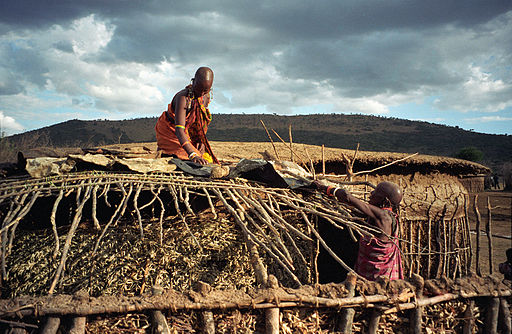
House BuildingCreative Commons photo: Jerzy Strzelecki

House Building
Creative Commons photo: Jerzy Strzelecki

I’m thinking of women whose life is immeasurably harder than mine. Could I, for instance, walk the Maasai woman’s barefoot daily trek across wild bush country, searching for firewood, fetching water, taking produce to market? Could I have reared children in the dung and wattle hut that I had built myself? Could I live obeying a husband’s commands even when I thought them wrong? What kind of bravery, tenacity and inner strength would I need to live this way, and to still live well? These days, things are slowly changing for Maasai women, not least because campaigners from their own communities are pressing for girls’ education, the end of genital mutilation and forced teen marriages. But for outsiders visiting the Mara it is all too easy to see only the grinding poverty and the reconstituted, fit-for-tourist shreds of former warrior glamour. But before jumping to too many conclusions about what is really going on, here is my version of a Maasai traditional story that sheds some light (literally) on their own views of the man-woman relationship.

And the moon still shines

Long ago Sun wanted a wife
so he married Moon and they made a pact,
to ply the sky in endless round,
Sun ahead, Moon behind.
And each month, tiring of the trek,
Sun carried Moon-Wife on his back.

But then one day they came to blows.
Moon crossed Sun and Sun lashed out,
beating his Moon-Wife black and blue.
Moon struck back. She slashed Sun’s brow.
He gouged her cheek, plucked out an eye.

Later Sun fumed: I’ll shine so hard
that none will ever see my scars.
While Moon tossed her head:
Why hide my wounds?
I still light up the night sky.

Creative CommonsPhoto: William Warby (flickr.com)

Creative Commons
Photo: William Warby (flickr.com)

Text: Copyright 2013 Tish Farrell