


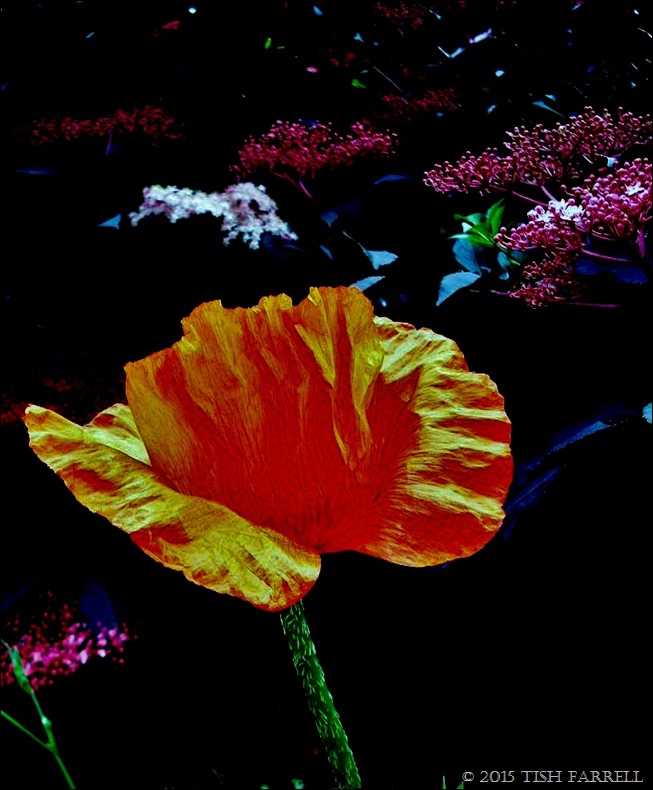
Orange you glad it’s photo challenge time?

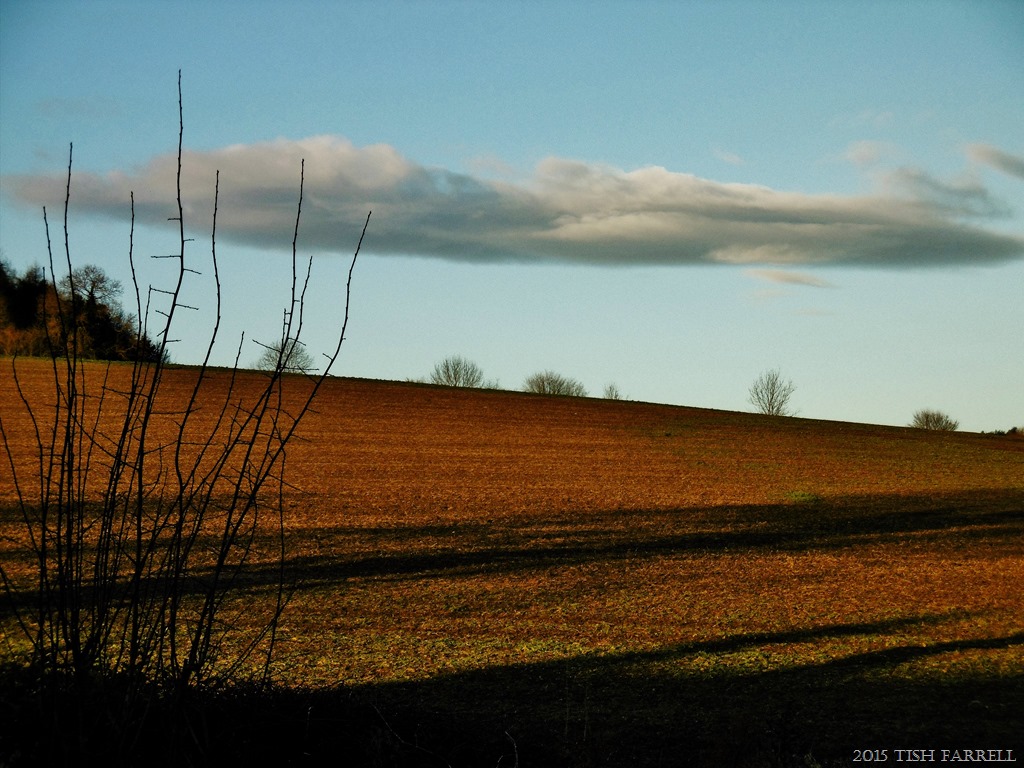

I snapped this the other morning with my little Lumix ‘point and shoot’. It’s the view from our bedroom window. The light was extraordinary, and when I looked at the image again it reminded me of René Magritte’s The Golden Legend – also a view from a window, although with the interesting addition of flying baguettes. What do you think?

You can find out more about Magritte HERE. I like the way he challenges our ingrained perceptions.
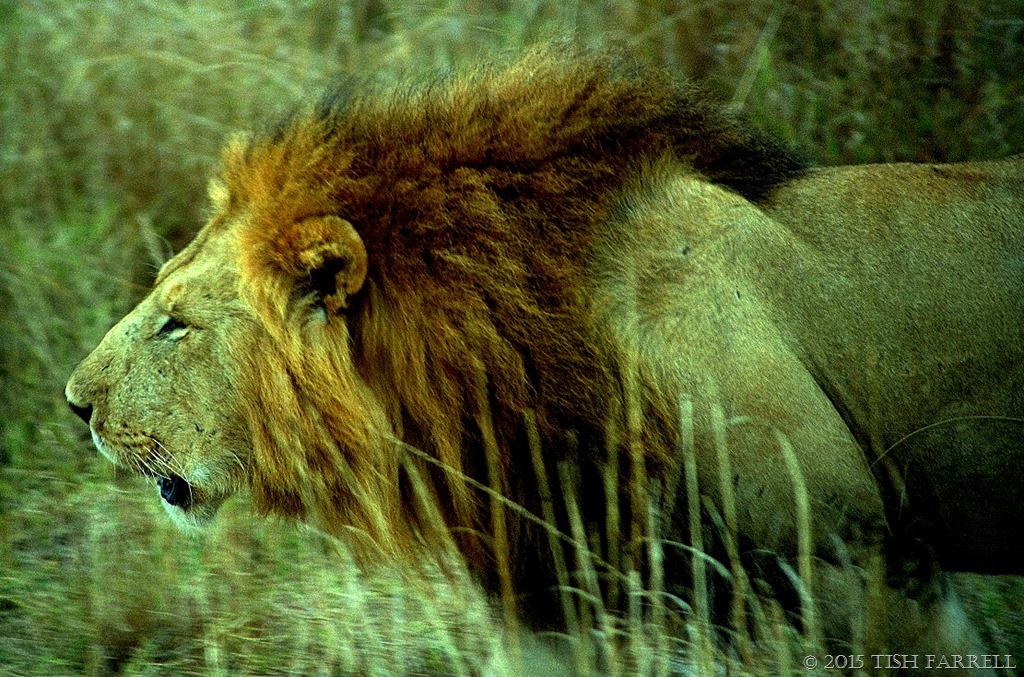


Related: …of Maasailand a travel piece that was long-listed in the Brandt Travel Guide writing contest 2000

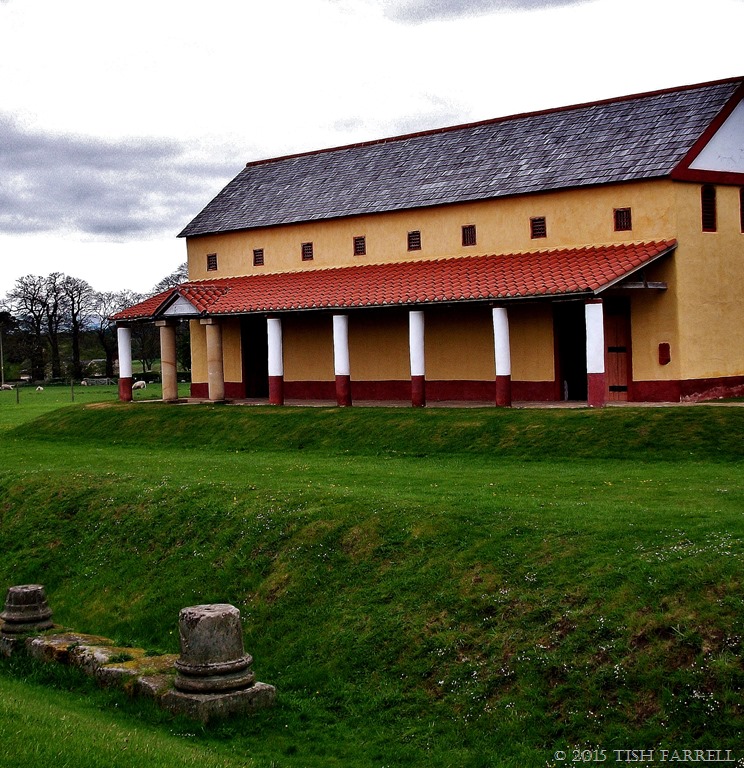
I think I may have mentioned somewhere on this blog that, a few miles up the road from Wenlock, we have the remains of Wroxeter Roman City aka Viroconium aka Uriconium. In its day it was one of the largest urban settlements in Europe (AD 47 – AD 650). Most of it still lies under farm fields within the broad sweep of the River Severn, although the outlines of houses and roads have been eerily revealed in aerial photos and LADAR surveys.
For centuries, too, farmers at their ploughs have turned up marvellous Roman artefacts. Even now, if you walk the fields after harvest you can easily spot the polished terracotta shards of fine Samian pottery among the wheat stubble. Archaeological excavations have been on-going for decades. I dug there myself aeons ago, as an undergraduate archaeology student who needed to rack up some fieldwork experience. The exposed remains are now in the care of English Heritage, and many of the finds are on display in the site’s small museum. More of the collection has been recently re-displayed at the county’s new Shrewsbury Museum.
But now we come to the Roman Villa in the photo – this ‘desirable town residence’. Its appearance here was prompted by Jo’s ‘restoration’ challenge. Strictly speaking, this is not so much a restoration as a reconstruction. Although on the other hand, you could say that its builders did attempt to use only Roman construction methods – thus ensuring the restoration of long-lost skills. They did, however, have to apply for present day planning permission before they could start work.
And the whole project came about as part of a TV series on UK’s Channel 4 – Rome wasn’t built in a day. You can have virtual tour of the villa HERE
*
Of the original city, there is not a great deal to see, although the remaining high-standing basilica wall is pretty impressive, and did feature rather splendidly in Simon Schama’s epic A History of Britain TV series. You can see the first episode in which it and the surrounding remains feature at 40 minutes in:
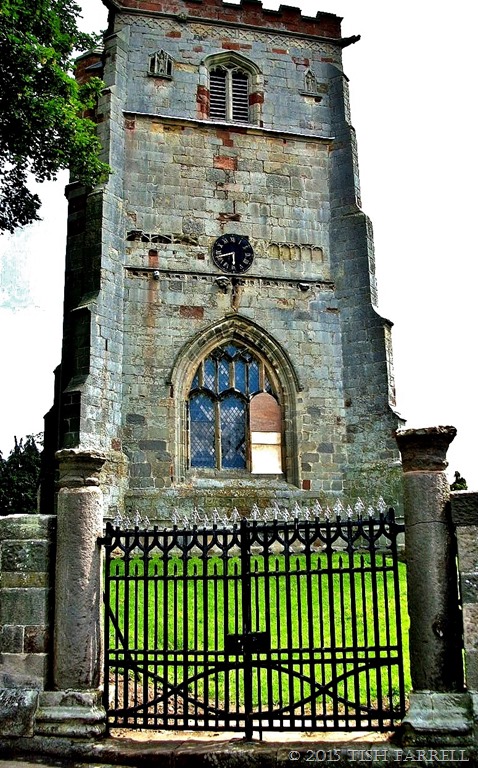
One of the reasons why the physical remains of this large and long-lived city are so few is because the building stone was recycled through the ages. If you walk down the lane to Wroxeter Church you will find that Roman pillars have been used to make the gateposts. Doubtless much more of the Roman stonework found its way into the body of the original Anglo-Saxon, later Gothic church. The church is redundant now, and looking rather sad.
And finally, I can’t leave you without showing off some more Roman treasures that may be found in Shrewsbury Museum’s Roman gallery. The finest object of all is a polished silver mirror, made in the Rhineland but found in Wroxeter forum’s courtyard. It dates from the AD 2oos. Its convex design, and the weight of the silver suggests it would have been held by a slave or servant so ‘my lady’ could admire her latest hair-do. Enjoy!
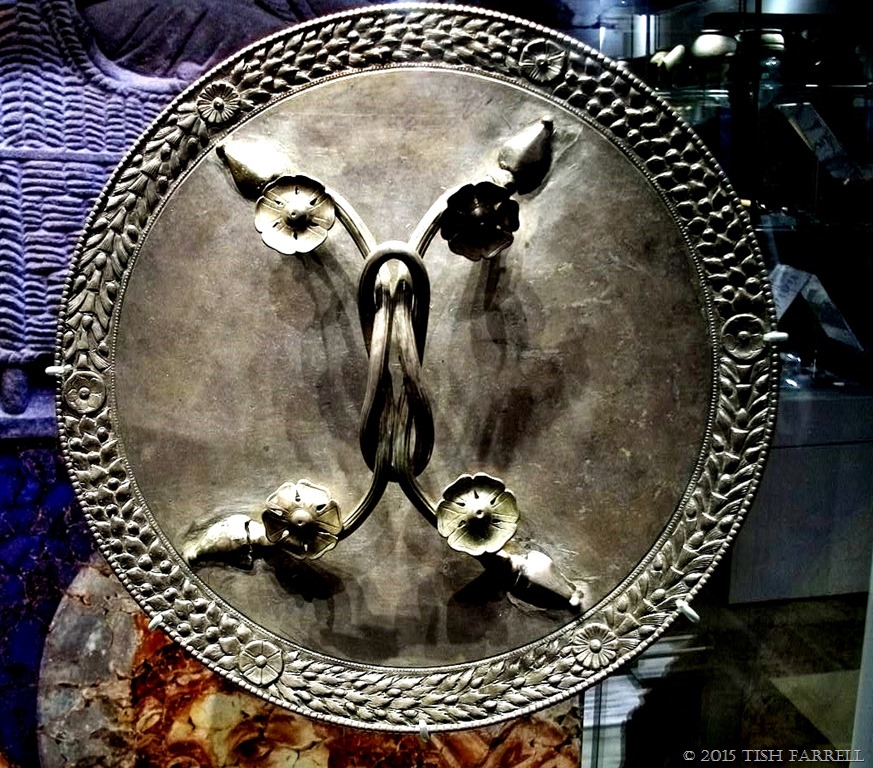
Back of a convex silver mirror, circa 3rd century AD, Shrewsbury Museum.
*
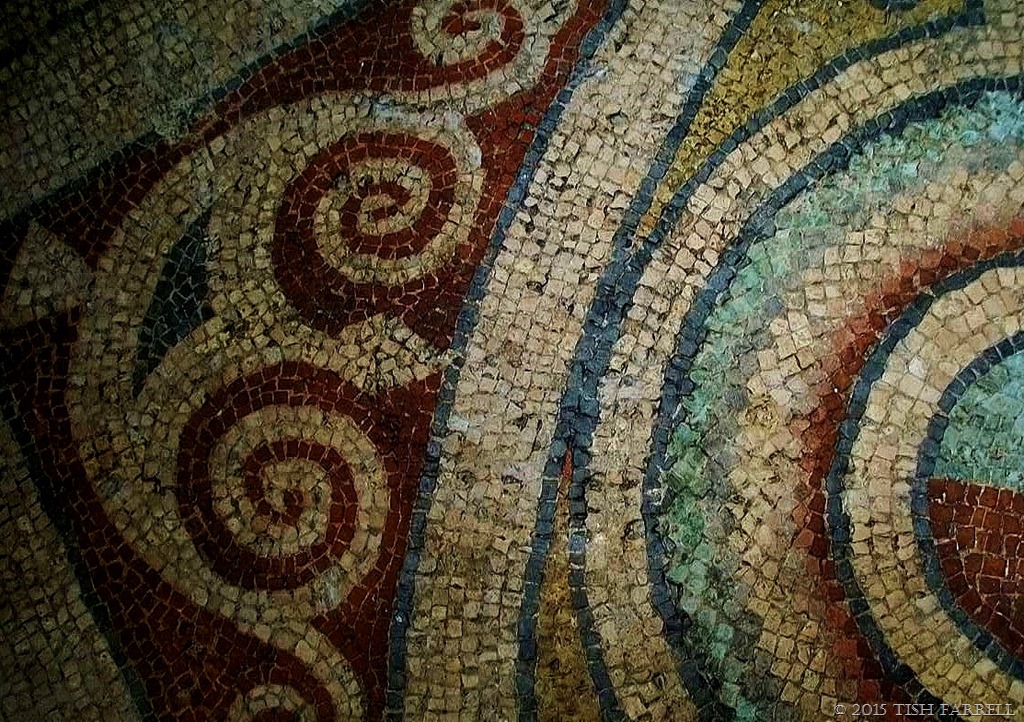
Restored section of Roman mosaic floor from Whitley Grange Roman Villa, near Shrewsbury.
*
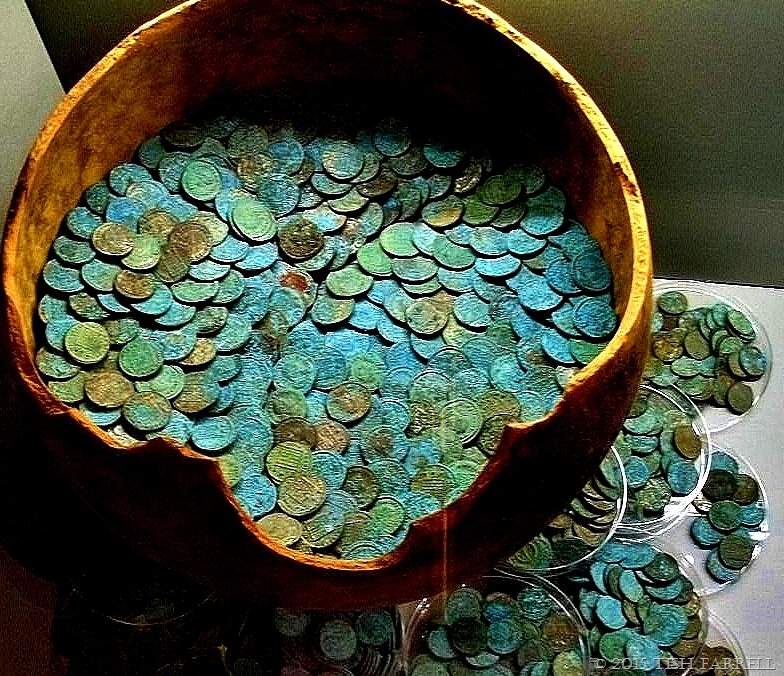
The Shrewsbury Hoard: over 9,000 coins dating from 280 AD to the following century. The coins were wrapped in cloth bags and buried in a big storage jar.
*
copyright 2015 Tish Farrell
For more restored pieces go to: Jo’s guest challenge ‘restoration’. Also check in at Paula’s response at Lost in Translation Thursday’s Special
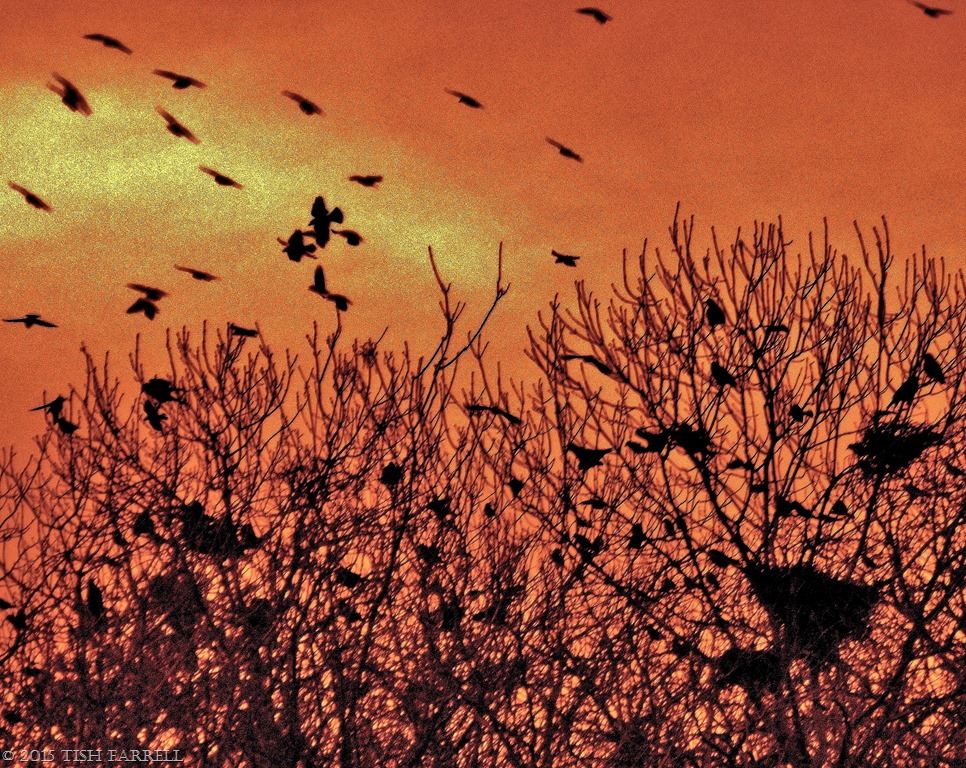
With sunset there is a general homecoming behind our house: hundreds of rooks and accompanying jackdaws return to the rookery in Limekiln Wood. The corvid air fleets head in from all points, returning from the day’s foraging grounds around the town. There are the strident greeting calls – a caw-cophony if you like – of passwords given and passwords received, as the early-bird returnees acknowledge the arrival of others. Sometimes, it seems, an incoming squadron ends up in the wrong tree, and then there is an avian explosion, black silhouettes shot into the sky. Much rook-shouting and abuse ensues.
They sort themselves out, and the wood soon echoes to sounds of companionable muttering.
As the year progresses we will be treated to elaborate twilight fly-pasts and synchronised acrobatics that resemble the murmuration of starlings. And, as the weather warms and we sleep with open windows, so the night will be sound-tracked by the chuntering of rooks. I know from the sleepless small hours that they talk all night. ALL NIGHT. Sometimes I want to tell them to settle down in their nests, and SHUT UP.
The collective term for rooks, of course, is ‘a parliament’, and anyone who has listened to the proceedings of Britain’s House of Lords or Commons on the BBC will have a rough idea of how a rookery sounds. Some might say the corvids are the more intelligent. I could not possibly say.
The rookery wood thus gives us much pleasure, but there are strains of melancholy too in the resonant kaah-kaahing, and the tchaka-tchak counterpoint of jackdaws. It evokes the kind of nostalgia that is so very English, the longing for a lost and perfect England that never existed; a feeling that A E Housman conjures so well in stanza XL of A Shropshire Lad:
Into my heart an air that kills
From yon far country blows:
What are those blue remembered hills,
What spires, what farms are those?
That is the land of lost content,
I see it shining plain,
The happy highways where I went
And cannot come again.
*
Post inspired by Jennifer Nichole Wells’ One Word Photo Challenge: Bittersweet, a colour that is roughly the colour of the sky in the photo.
copyright 2015 Tish Farrell
A Shropshire Lad by A E Housman – you can read the full work HERE courtesy of Gutenberg Press
To see/hear rook acrobatics click on the link below to my brief video …OF ROOK DANCING
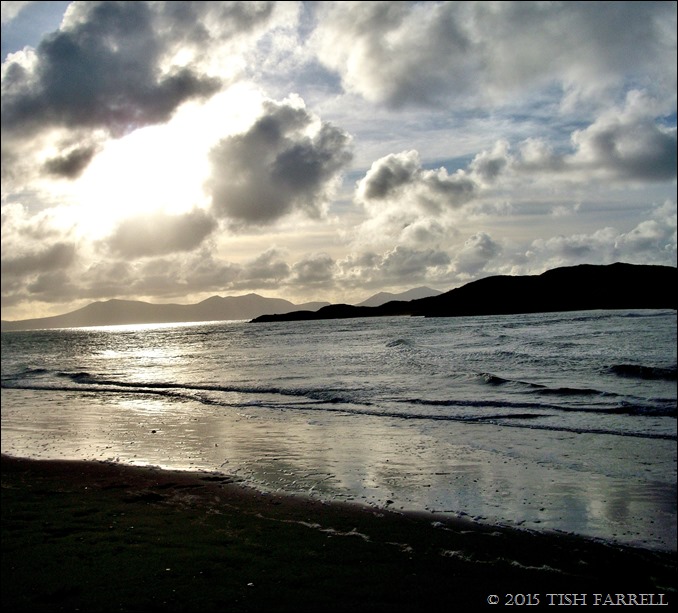


This climate change business is most perplexing. There was a time when winter was a time to get the digging done. Not so the last few years. With the autumn comes rain and more rain. By November the ground is sodden, the soil claggy. My wellies become giant boots in seconds if I am unkind enough to the soil to walk upon it. This year the situation looks set to last until March.
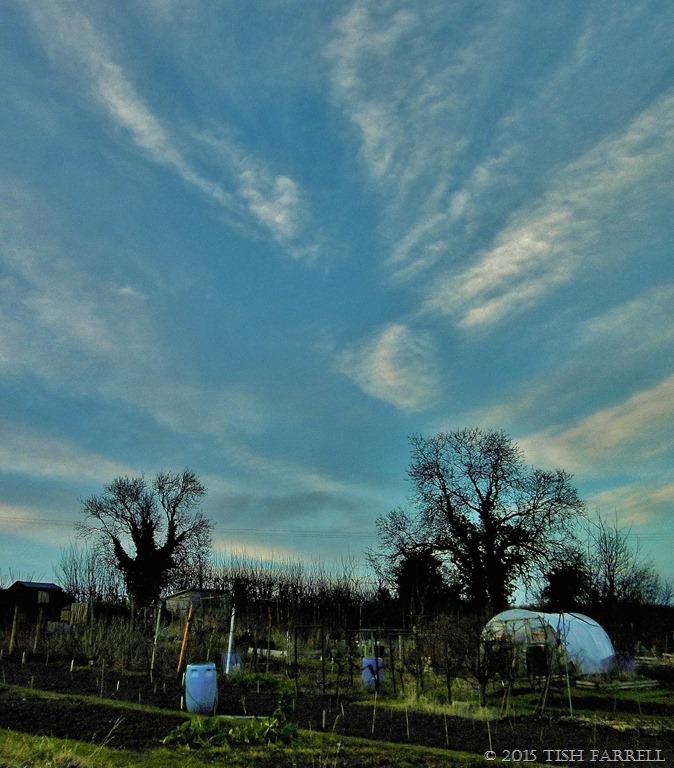
Certainly we have intervals of splendid skies like this, but these periods of unrain never last long enough for the soil to dry out. All I can do on my plot is pick a few overwintered vegetables (leeks and greens), add fresh supplies of pony manure to my compost bins (a nice man who keeps horses dumps regular supplies out in the lane), and well, take photographs.
The light was just going when I took this first photo, but the burst of clouds above the bare ash trees made me think of Ailsa’s energy challenge over at Where’s My Backpack. Simply to see them filled me with energy, and made me think that the generally dreary look of allotment gardens in February had its scenic qualities too. And of course there are signs of spring. Lurking inside this nest of purple and green is an emergent winter cauliflower, in real life, little more than an inch across.

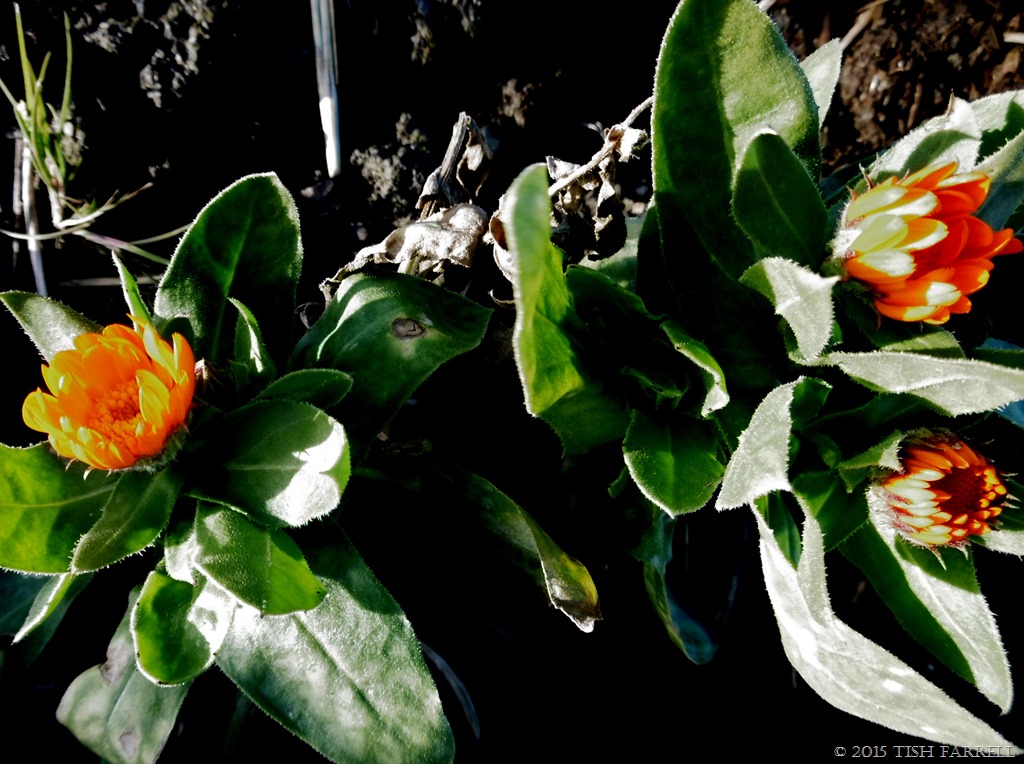
And the marigolds that grow themselves all over my plot, are coming into flower, although they proved a little hard to capture in the biting wind. Perhaps these hopeful signs mean that I will soon be out digging.
Where’s My Backpack – go here for more responses to Ailsa’s ‘energy’ photo challenge
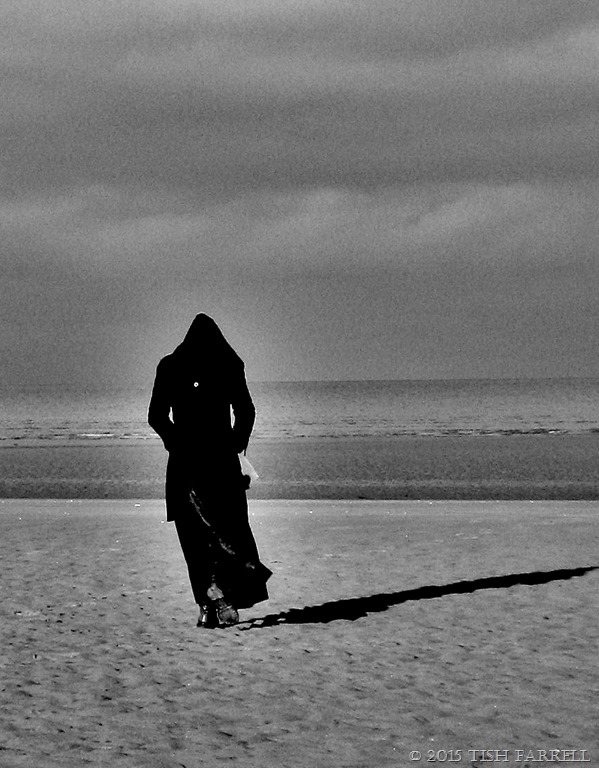
This photo was taken two Christmases ago on the island of Anglesey (Ynys Môn) in North Wales. The island saw the last stand of the Celtic druids, who were defeated there during the Roman conquest of Britain. This edited image, with the faint glow of light around the dark silhouette, suggests to me the lingering Celtic spirit – quiescent and contained now, but still purposeful.
Inspired by Paula’s request for quiet. For more hushed compositions in black & white please visit her blog at Lost in Translation
Related: For more of the Druid’s last battle see my earlier post Island of Old Ghosts.
Rule of Thirds
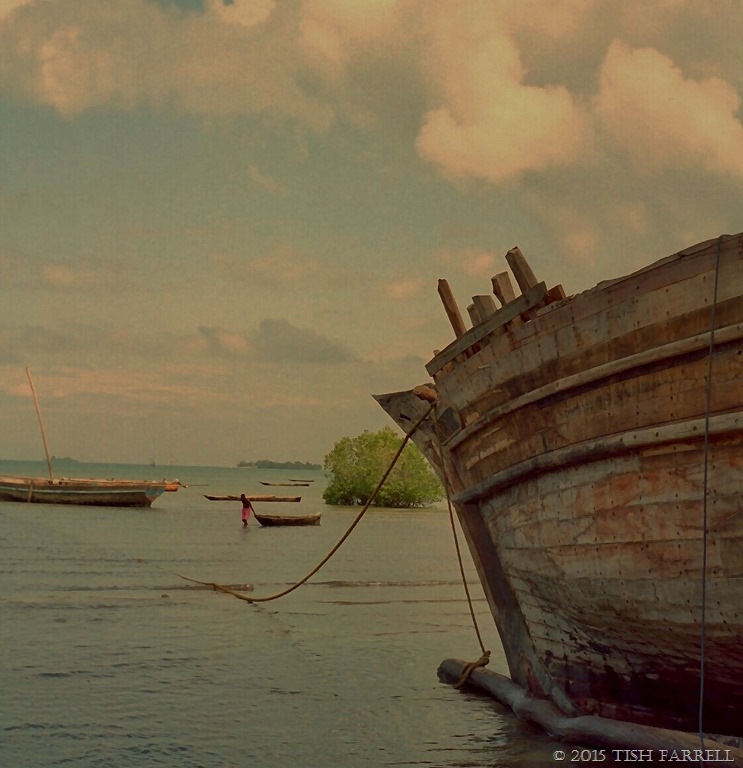
Zanzibar’s days of building large ocean-going dhows were on their last gasp when this photo was taken in 1999. Hari, our guide, told us that the large dhow on the right had been commissioned by a Somali trader at a cost of around £7,000. The building yard is on Maruhubi Beach, not far from Stone Town, and on the edge of a mangrove forest which provides much of the construction timber. All the work is done by hand, following centuries old traditions. It is a slow and painstaking process, and dhow builders camp out on the beach while working on a big contract like this.
